Brookston Beer Bulletin

Jay R. Brooks on Beer

  • Home
  • About
  • Editorial
  • Birthdays
  • Art & Beer

Socialize

  • Dribbble
  • Email
  • Facebook
  • Flickr
  • GitHub
  • Instagram
  • LinkedIn
  • Pinterest
  • RSS
  • Twitter
  • YouTube

Powered by Genesis

Beer In Ads #654: Rheingold Beach Fishing

July 19, 2012 By Jay Brooks


Thursday’s ad is yet another Rheingold Beer ad, this one from 1949, featuring Miss Rheingold for that year, Pat McElroy. In this ad, she’s fishing on the beach, rod and reel in hand. Not surprisingly, the food pairing suggestion for their beer at the bottom of the ad is fish. Imagine that.
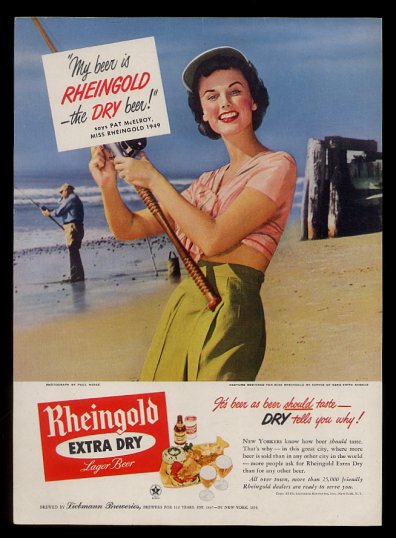
Ballantine-1949-fishing

Filed Under: Art & Beer, Beers Tagged With: Advertising, History

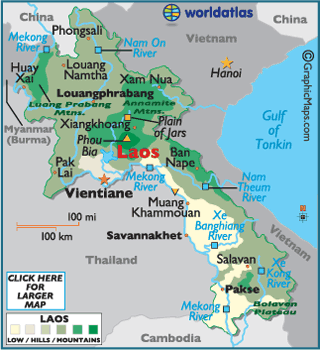
Laos Beer

July 19, 2012 By Jay Brooks

laos
Today in 1949, Laos gained their Independence from France.

Laos
laos-color

Laos Breweries

  • Lao Brewery

Laos Brewery Guides

  • Beer Advocate
  • Beer Me
  • Rate Beer

Other Guides

  • CIA World Factbook
  • Official Website
  • U.S. Embassy
  • Wikipedia

Guild: None Known

National Regulatory Agency: None

Beverage Alcohol Labeling Requirements: Not Known

Drunk Driving Laws: 0.80 mg per 100 ml of blood

laos

  • Full Name: Lao People’s Democratic Republic
  • Location: Southeastern Asia, northeast of Thailand, west of Vietnam
  • Government Type: Communist state
  • Language: Lao (official), French, English, various ethnic languages
  • Religion(s): Buddhist 67%, Christian 1.5%, other and unspecified 31.5%
  • Capital: Vientiane
  • Population: 6,586,266; 103rd
  • Area: 236,800 sq km, 84th
  • Comparative Area: Slightly larger than Utah
  • National Food: Larb with sticky rice
  • National Symbols: Elephant; Plumeria; the Pha That Luang
  • Affiliations: UN, ASEAN
  • Independence: From France and the UK, January 1, 1960

laos-coa

  • Alcohol Legal: Yes
  • Minimum Drinking Age: 18 (on premise); None (off premise)
  • BAC: 0.08%
  • Label Requirements: N/A
  • Number of Breweries: 1

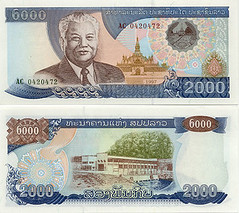
laos-money-2

  • How to Say “Beer”: ເບຍ
  • How to Order a Beer: ໜຶ່ງ ເບຍ لئوتفن
  • How to Say “Cheers”: ສຽງໂຮ
  • Toasting Etiquette: N/A

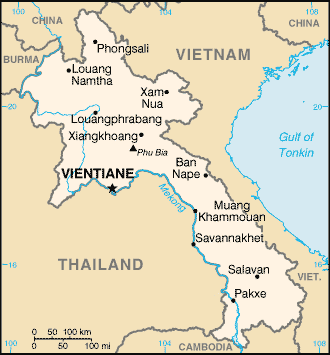
laos-map

Alcohol Consumption By Type:

  • Beer: 25%
  • Wine: <1%
  • Spirits: 75%

Alcohol Consumption Per Capita (in litres):

  • Recorded: 5.73
  • Unrecorded: 1.00
  • Total: 6.73
  • Beer: 1.42

WHO Alcohol Data:

  • Per Capita Consumption: 5.7 litres
  • Alcohol Consumption Trend: Stable
  • Excise Taxes: Yes
  • Minimum Age: 18
  • Sales Restrictions: Time
  • Advertising Restrictions: No
  • Sponsorship/Promotional Restrictions: No

Patterns of Drinking Score: 3

Prohibition: None

laos-asia

Filed Under: Beers, Breweries Tagged With: Asia, Laos

Beer In Ads #653: Rheingold Polo

July 18, 2012 By Jay Brooks


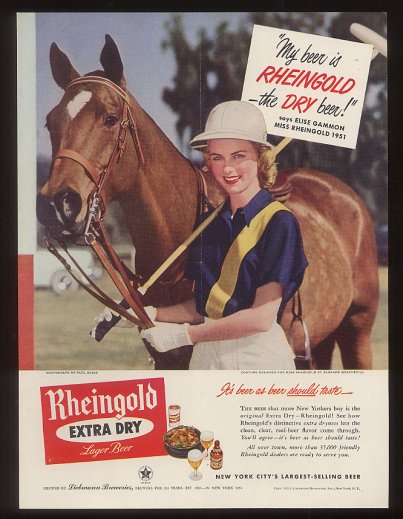
Wednesday’s ad is also a Rheingold Beer ad, this one from 1951, featuring Miss Rheingold for that year, Elsie Gammon. In this ad, she’s dressed for polo, with her mallet over her shoulder as she holds the reigns to her horse. It doesn’t seem like associating it with polo is the best way to make Rheingold a beer of the people.

Rheingold-1951-pony

Filed Under: Art & Beer, Beers Tagged With: Advertising, History

Beer In Ads #652: The Rheingold Cowgirl

July 17, 2012 By Jay Brooks


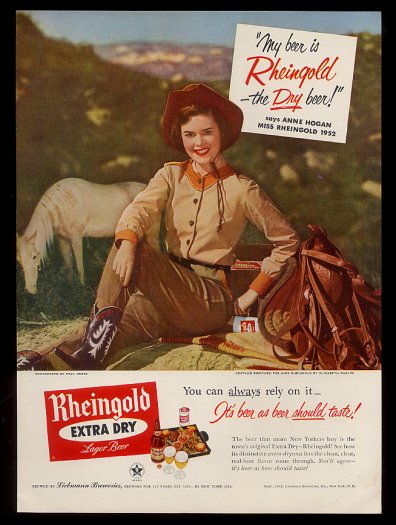
Tuesday’s ad is another Rheingold Beer ad, this one from 1952, featuring Miss Rheingold for that year, Anne Hogan. In this ad, she’s all decked out in a cowgirl outfit, posing out in the mountains, while her horse presumably rests from the long trail ride. The saddle and blanket are by her side, as is a can of beer.

Rheingold-1952-cowgirl

Filed Under: Art & Beer, Beers Tagged With: Advertising, History

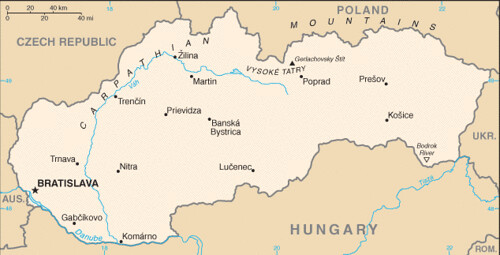
Slovakia Beer

July 17, 2012 By Jay Brooks

slovakia
Today in 1992, Slovakia declared their Independence from Czechoslovakia.

Slovakia
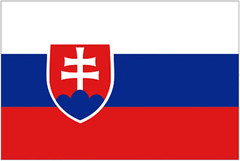
slovakia-color

Slovakia Breweries

  • Banskobystrický Pivovar
  • Bratislavský Meštianský Pivovar
  • Corgon
  • Kaltenecker
  • Minipivovar Buntavar
  • Minipivovar Golem
  • Minipivovar Kvačany
  • Minipivovar Richtár Jakub
  • Minipivovar Sessler
  • Patrónsky Pivovar Bratislava
  • Pivovar ERB
  • Pivovar Hotel Barbakan
  • Pivovar Hurbanovo
  • Pivovar Pilsberg
  • Pivovar Popper
  • Pivovar Šariš
  • Pivovar Steiger
  • Pivovar Stein
  • Pivovary Topvar

Slovakia Brewery Guides

  • Beer Advocate
  • Beer Me
  • Rate Beer

Other Guides

  • CIA World Factbook
  • Official Website
  • U.S. Embassy
  • Wikipedia
  • Wikipedia’s Beer and Breweries in Slovakia

Guild: None Known

National Regulatory Agency: None

Beverage Alcohol Labeling Requirements: Not Known

Drunk Driving Laws: BAC 0.00%

slovakia

  • Full Name: Slovak Republic
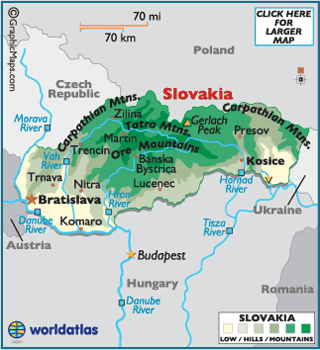
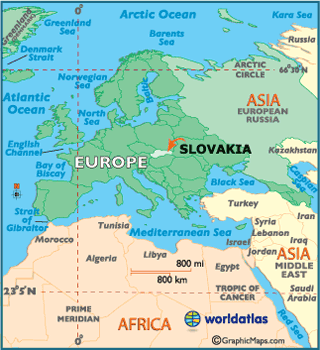
  • Location: Central Europe, south of Poland
  • Government Type: Parliamentary Democracy
  • Language: Slovak (official) 83.9%, Hungarian 10.7%, Roma 1.8%, Ukrainian 1%, other or unspecified 2.6%
  • Religion(s): Roman Catholic 68.9%, Protestant 10.8%, Greek Catholic 4.1%, other or unspecified 3.2%, none 13%
  • Capital: Bratislava
  • Population: 5,483,088; 113th
  • Area: 49,035 sq km, 131st
  • Comparative Area: About twice the size of New Hampshire
  • National Food: Bryndzové halušky
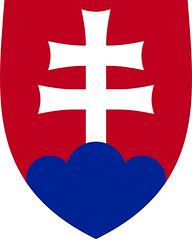
  • National Symbols: Linden; patriarchal cross and three mountains
  • Affiliations: UN, EU, NATO
  • Independence: Declared from Czechoslovakia, July 17, 1992 / Effective January 1, 1993

slovakia-coa

  • Alcohol Legal: Yes
  • Minimum Drinking Age: 18
  • BAC: 0.00%
  • Label Requirements: N/A
  • Number of Breweries: 18

slovakia-money

  • How to Say “Beer”: pivo
  • How to Order a Beer: Eno pee-vo, pro-seem
  • How to Say “Cheers”: Na zdravie (“to your health”) / Stolicka
  • Toasting Etiquette: N/A

slovakia-map

Alcohol Consumption By Type:

  • Beer: 36%
  • Wine: 15%
  • Spirits: 49%

Alcohol Consumption Per Capita (in litres):

  • Recorded: 10.33
  • Unrecorded: 3.00
  • Total: 13.33
  • Beer: 3.90

WHO Alcohol Data:

  • Per Capita Consumption: 10.3 litres
  • Alcohol Consumption Trend: Stable
  • Excise Taxes: Yes
  • Minimum Age: 18
  • Sales Restrictions: Time, places
  • Advertising Restrictions: Yes
  • Sponsorship/Promotional Restrictions: Yes

Patterns of Drinking Score: 3

Prohibition: None

slovakia-eu

Filed Under: Beers, Breweries Tagged With: Europe, Slovakia

Beer In Ads #651: Duck, Duck, Rheingold

July 16, 2012 By Jay Brooks


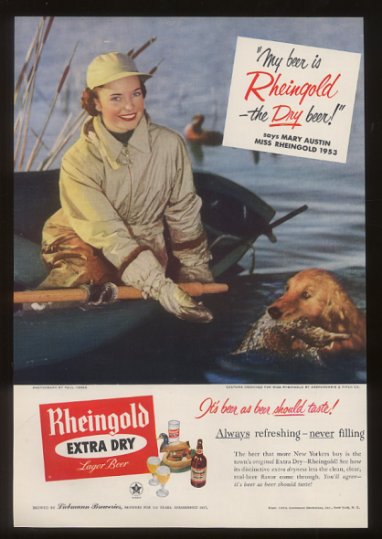
Monday’s ad begins another week of Rheingold Beer ads, another one from 1953, featuring Miss Rheingold for that year, Mary Austin. In this ad, she’s hunting ducks from a rowboat, and her faithful dog has retrieved her latest kill. Whenever you look at beer ads from the 1960s and before, scenes depicting hunting are far more common than nowadays. Does anyone know if hunting is less common now or is it simply that’s it’s not a politically correct activity anymore.

Rheingold-1953-duck

Filed Under: Art & Beer, Beers Tagged With: Advertising, History

Moderate Drinking Prevents Bone Loss In Women

July 16, 2012 By Jay Brooks

bone
The ABMRF is reporting the results of a new study conducted at Oregon State University published in Menopause, the Journal of the North American Menopause Society. The study, Moderate alcohol intake lowers biochemical markers of bone turnover in postmenopausal women, appears to conclude that “Drinking alcohol in moderation with a healthy lifestyle may benefit women’s bone health, lowering their risk of developing osteoporosis.”

From the abstract:

Objective: Epidemiological studies indicate that higher bone mass is associated with moderate alcohol consumption in postmenopausal women. However, the underlying cellular mechanisms responsible for the putative beneficial effects of alcohol on bone are unknown. Excessive bone turnover, combined with an imbalance whereby bone resorption exceeds bone formation, is the principal cause of postmenopausal bone loss. This study investigated the hypothesis that moderate alcohol intake attenuates bone turnover after menopause.

Methods: Bone mineral density was determined by dual-energy x-ray absorptiometry in 40 healthy postmenopausal women (mean +/- SE age, 56.3 +/- 0.5 y) who consumed alcohol at 19 +/- 1 g/day. Serum levels of the bone formation marker osteocalcin and the resorption marker C-terminal telopeptide (CTx) were measured by immunoassay at baseline (day 0) and after alcohol withdrawal for 14 days. Participants then consumed alcohol and were assayed on the following morning.

Results: Bone mineral density at the trochanter and total hip were positively correlated to the level of alcohol consumption. Serum osteocalcin and CTx increased after abstinence (4.1 +/- 1.6%, P = 0.01 and 5.8 +/- 2.6%, P = 0.02 compared with baseline, respectively). Osteocalcin and CTx decreased after alcohol readministration, compared with the previous day (-3.4 +/- 1.4%, P = 0.01 and -3.5 +/- 2.1%, P = 0.05, respectively), to values that did not differ from baseline (P > 0.05).

Conclusions: Abstinence from alcohol results in increased markers of bone turnover, whereas resumption of alcohol reduces bone turnover markers. These results suggest a cellular mechanism for the increased bone density observed in postmenopausal moderate alcohol consumers. Specifically, the inhibitory effect of alcohol on bone turnover attenuates the detrimental skeletal consequences of excessive bone turnover associated with menopause.

The ABMRF report on the study:

Bones are in a constant state of remodeling with old bone being removed and replaced. In people with osteoporosis, more bone is lost than reformed resulting in porous, weak bones. About 80% of all people with osteoporosis are women, and postmenopausal women face an even greater risk because estrogen, a hormone that helps keep bone remodeling in balance, decreases after menopause.

A study by Oregon State University researchers assessed the effects of alcohol withdrawal on bone turnover in postmenopausal women who drank one or two drinks per day several times a week. A significant increase in blood markers of bone turnover was measured in women after they stopped drinking for just two weeks. Alcohol appears to behave similarly to estrogen in that it reduces bone turnover, the researchers said.

Investigators studied 40 early postmenopausal women who regularly had one or two drinks a day, were not on any hormone replacement therapies, and had no history of osteoporosis-related fractures.

Results suggest evidence for increased bone turnover, a risk factor for osteoporotic fractures, during the two week period when the participants stopped drinking. Less than a day after the women resumed their normal drinking, their bone turnover rates returned to previous levels.

“Drinking moderately as part of a healthy lifestyle that includes a good diet and exercise may be beneficial for bone health, especially in postmenopausal women,” said researchers. “After less than 24 hours to see such a measurable effect was really unexpected.”

Filed Under: News Tagged With: Health & Beer, Science, Statistics

No Defense For Light Beer

July 16, 2012 By Jay Brooks

miller-lite
Ever since I first read about this in Beer Business Daily, it’s been bothering me, but I’ve been unable to read the original editorial by David Ryder, who’s the Vice-President of Brewing for MillerCoors. It supposedly ran in the Chicago-Sun Times, but they apparently do not have that particular editorial online and their search engine only allows searching their archives for articles written in 2011 or before. But apparently on July 4, he wrote an op-ed piece, “In Defense of Light Beer,” though I imagine he would have preferred the spelling “lite beer.” Now, without having even read it, you have to be suspicious of it for no other reason then he owes much of his living to the continued sales and popularity of low-calorie light beer. As Upton Sinclair famously observed. “It is difficult to get a man to understand something, when his salary depends on his not understanding it.”

But here’s what I do know, as reported by Beer Business Daily:

“It’s absolutely true that U.S. beer drinkers have more choices than ever before, from spicy saisons to big imperial stouts to hoppy IPAs. It’s a wonderful development that brings energy and excitement to brewing.

“But it’s also true that, faced with all those choices, American beer drinkers still overwhelmingly choose American light lagers over all others.

“That fact often draws the scorn and condescension of beer ‘aficionados,’ not to mention the news media. Not too long ago, the financial newswire Bloomberg News derided light lagers as ‘barley water’ in a story on our sales trends.

“The lighter take on beer exemplified by American pilsners and lagers is an authentic and widely admired style. In fact, it is the very first style of beer listed in the Beer Judge Certification Program. I have worked as a brewer in some 20 countries on five continents. I can assure you that this is the most emulated and difficult-to-brew beer style in the world.”

David points out that in the old days before light beer, “beer was a food staple” but Adolph Coors and Adolphus Busch changed beer to be seen as “as a form of refreshment and pioneered new brands to meet changing consumer preferences.” He also points out that “light beers are incredibly difficult to brew. Heavy, sometimes cloudy, beers can mask brewing imperfections. But with light beers, the slightest irregularity is glaring to the taste buds. Consistently replicating these delicate flavors and aromas requires a remarkable level of brewing skill and precision.”

To the point he makes about the difficulty of making light beer, while I generally admire the science of brewing that the big breweries have developed and the difficulty of consistently brewing light beers, where flaws are nearly impossible to hide, that admiration does not extend to the products themselves. No matter how difficult they are to make, that still doesn’t excuse their existence, or make them a beer that I’d ever want to drink. To me, they are still an abomination, a science experiment gone awry. There’s no reason to sacrifice flavor to save a mere pittance of calories. Beer is not particularly fattening, especially if you drink it in moderation. The easiest way to reduce your caloric intake of beer is not to choose the latest scientifically engineered slightly lower-calorie beer, but to simply drink less bottles, cans or pints. Drink less, but drink better is always a good rule of thumb.

A little over a week after Ryder’s op-ed appeared, Chicago Sun-Times columnist Herb Gould also examined Ryder’s assertions. In his column Thirsting for some better pilsners, he claims to be a homebrewer, but one who will drink apparently any beer. He offers that he’s “not a beer snob,” but “simply like[s] beers that, well, taste better than what the Big Two offer.” Despite this apparent contradiction, he applauds Ryder for his “much-needed defense of American pilsners,” continuing. “As he said, it’s an American classic. When you’re watching a ballgame on a hot day, when you’re enjoying a big steak, or a nice piece of salmon, nothing’s better than a well-bittered but not too heavy lager.”

Except that light beers are not “well-bittered” and they’re not pilsners, American or otherwise. They may have been based upon pilsners once upon a time, but they have diverged so far from that purported origin that they bear little resemblance to pilsners from the Czech Republic, Germany or any other place on the planet. They have become, as even David Ryder notes, a separate category of beer all to themselves.

He claims surprise “that the little breweries don’t seem interested in making a nice pilsner — or a better version of Budweiser or Miller High Life” and later in his column challenges what he terms “earnest little micro-breweries” to “[g]ive us more and better All-American pilsners.” I’m not sure where he’s been going to find his beer, because there are literally hundreds of great pilsners made by craft brewers of all sizes. Right in my backyard, the Trumer Brauerei in Berkeley only makes one beer, a fantastic pilsner that’s exactly what Gould claims to want in a “quality pilsner — a beer that’s on the lighter side but has nothing to be ashamed of. A beer that’s got a little bite, has a nice layer of flavor but doesn’t shout out anything fancy.”

A beer fitting that description, frankly, is not all that difficult to find. Of the Top 50 Czech Pilsners on Beer Advocate, 36 of them are made in the U.S. and for the Top 50 German Pilsners, 34 are American-made. Good American pilsners are everywhere if you know where to look.

And quite frankly, the reason he may be having trouble finding one is that he admits he “will drink MillerCoors or Budweiser products, but only if more ambitious choices are not available, which is often the case.” But that’s never going to change if he just accepts what beers they have and fails to tell the bars he frequents that he would prefer “more ambitious choices.” If he keeps ordering whatever is available, there’s absolutely no incentive for the bar to stock “more ambitious choices.” He seems to wear not being a beer snob as a badge of honor, but he’s doing himself and craft beer no favors by settling for whatever beers a bar decides to carry. Asking, or even insisting, on the beers you want is not being a snob, but is simply the only way to effect change and get the beers you actually want. Can you imagine being hungry for a steak and going to a restaurant, only to find out the only kind they have is Salisbury steak, and just settling for that, especially when there are other steak restaurants right around the corner? Vote for what you want with your wallet. Buy what you actually want, don’t just settle for whatever’s put in front of you. Seriously, who lives that way?

But I think his way of thinking is pretty common, and is a big reason why light beer and other less-flavorful beers continue to be so popular. It’s simply that people who are not as fanatical as the average beer geek just don’t care enough to bother. There’s enough to worry about in people’s everyday lives, and we all decide what things we’ll make a priority and what we’ll just accept and not fuss too much about. And in that, the big breweries have the advantage.

Think about colas, for example. There are people who really care that they drink only Coke or Pepsi. They’re fanatical about it. My grandmother was a Pepsi person. She hated Coke. But there are countless people who just don’t care. You see it at restaurants all the time. “Can I have a Coke, please.” The waitress replies, “we only have Pepsi.” And how often have you heard this? “That’s fine. No problem. Whatever.” And so it is with beer. You’re out for lunch or dinner and want a beer. More often than not, most people will just accept whatever beer is offered. It’s the reason that distribution and availability are so crucial to success. Simply have your beer available at more places than your competitor and you’ll most likely do better. Because most people in such a situation will just capitulate and order from what’s available rather than make a fuss or ask for something else or, perish the thought, not patronize that bar or restaurant.

So simply having deep distribution and being available everywhere will sustain light beer for years to come, so long as people don’t speak up. Because until Gould and a majority of people do care enough to insist on what they put in their bodies, the big companies that can afford national advertising budgets and can make their products available everywhere, those light beer makers will continue to flourish, and little will change in the world of beer.

But let’s get back to Ryder, and some of his arguments in defense of light beer. Here’s just a few of the earlier statements Ryder makes that I disagree with.

  • The lighter take on beer exemplified by American pilsners and lagers is an authentic and widely admired style:

    Widely admired by whom, exactly? Sales do not automatically equal admiration. The reasons any product is popular is not that it’s the best one available. Often it’s the cheapest, most available or has the highest advertising budget. Wonder bread my be the best-selling bread in America, but does anyone actually think it’s the best bread money can buy? People drink light beer because they’re bombarded with marketing and advertising, have been tricked into thinking they’re not sacrificing flavor and/or don’t really think (or care) about their choices. And as for its “authenticity,” I don’t even know what he’s talking about, do you? They’re not “pilsners” by any stretch of the imagination and they may be among the groups of beers described as lagers, but they exist in their own world, as a separate category. That a new category was created so that similar beers could be tasted and judged with other similar beers, does not make them authentic, which is defined as “not false or copied; genuine; real.” Given that “light beers” are lighter, less flavorful beers copied from true pilsners and rendered into a false version of them, I’d argue they’re the very opposite of authentic.

  • In fact, it is the very first style of beer listed in the Beer Judge Certification Program:

    Why yes, yes they are. But that fact has absolutely nothing to do with authenticity or any positive attribute. The BJCP style guidelines are organized roughly by lagers, ales and hybrids, from lightest (and sometimes) weakest to darkest or stronger. Light lagers, being the lightest in color and weakest in terms of flavor are listed first. It is not because they are the most authentic or any other reason that anyone might consider because they are somehow more favored or the best. And, I suspect, Mr. Ryder must know that their position in the list is utterly meaningless such that trying to defend light beer using this argument is completely disingenuous and intentionally misleading.

  • It’s also true that, faced with all those choices, American beer drinkers still overwhelmingly choose American light lagers over all others:

    Yes, that may be true but it hardly proves that this is because light beer is somehow a superior product. As I argued above, marketing, advertising and manipulating consumers over decades is responsible for light beer’s popularity. It’s certainly not its taste or any actual health benefits over other beers.

The true reason that the big breweries have focused on low-calorie beers has more to do with business, and the bottom line, than health or any altruistic reasons. In fact, the earliest diet beers had a very difficult time finding a market. Men, by far the largest gender drinking beer when they were introduced, had to be convinced over a long period of time that they should drink light beer. And let’s not forget that low-calorie beers use less ingredients than their more flavorful counterparts, but yet are sold for the same prince point. You don’t even have to be very cynical to realize that they’re more profitable and to see why breweries might have put more effort into selling them.

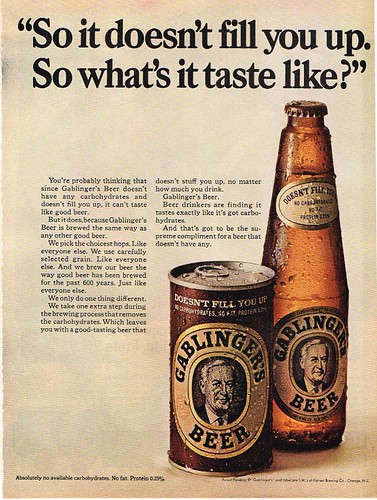
Gablingers-Beer

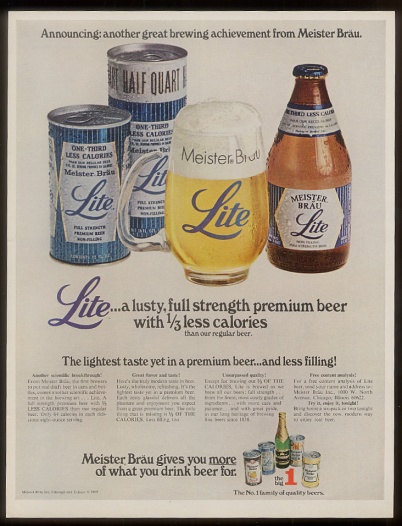
The first low-calorie beer was created by Joe Owades, who, it must be said, had some very strong opinions about beer. He once told me that all ale yeast was dead and inferior to lager yeast. Around 1967, he created Gablinger’s diet beer, the first light beer, while working for Rheingold. It flopped. Big time. Not everybody agrees on what happened next. Some accounts credit Owades with sharing his recipe for light beer with Meister Brau of Chicago while others claim that the Peter Hand Brewing Company (which marketed Meister Brau) came up with it independently on their own. However it happened, Meister Brau Lite proved somewhat more successful than Gablinger’s, primarily due to its superior marketing. Miller Brewing later acquired Meister Brau, and in 1975 debuted Miller Lite, complete with the distinctive, trademark-able spelling.

Meister-Brau-Lite-1969

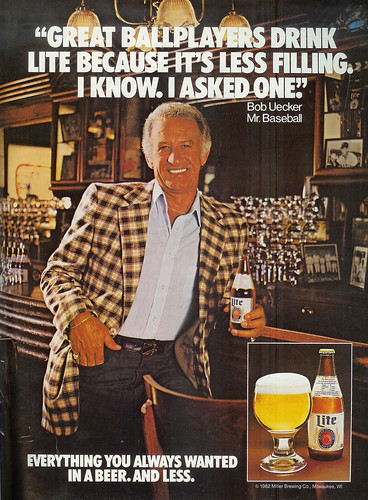
But it took marketing the new low-calorie beer in a new way so that it removed the “diet” stigma to make it work. They had to trick people into drinking it. Miller’s famously successful “tastes great, less filling” campaign was the primary reason for the category’s success. But it was hardly overnight. It took fifteen years — from 1975 to 1990 — for Miller Lite to reach 10% of the market. Over that time, the other big brewers (loathe to miss out on any market share) introduced their own versions, such as Coors Light and Bud Light, so that whole segment of low-calorie beer was nearly 30% of the beer market by 1990.

miller-lite-uecker-1982

Today, seven of the top ten big brands are light beers. Despite its recent dip in sales, it remains a $50 billion segment of the business and still hovers close to half of all beer sold in the United States. That fact, I find to be incredibly sad, frankly. What a great triumph of marketing over common sense and actual taste.

Earlier this year, Ryder gave a talk on beer in Milwaukee, entitled the Science of Beer, where he extolled the recent changes in people’s attitudes toward beer. “‘People are rediscovering beer,’ he said. ‘They’re gaining a brand new appreciation of what beer is and what beer could be.'” And to my way of thinking, what beer is and what beer can be is just so much more than low-calorie light beer. I find that there’s just no defense for light beer.

Filed Under: Beers, Breweries, Editorial, Politics & Law Tagged With: Light Beer, Miller Brewing, MillerCoors

Firestone Walker Sells Nectar Ales

July 16, 2012 By Jay Brooks

nectar
Yesterday, Firestone Walker Brewing announced that it’s selling Nectar Ales to Total Beverage Solution of South Carolina.

Nectar Ales was originally a line of beers brewed by Humboldt Brewing Company. The brewery was founded by Mario Celotto in 1987 in Humboldt County, California. Celotto was a linebacker with the Oakland Raiders. Shortly after being part of the 1980 Super Bowl team, he retired from football and used his Super Bowl bonus to start the brewery. Steve Parkes, who now owns and runs the brewing school, American Brewers Guild, created the original Red Nectar Ale.

Over lunch with Celotto around 1997, shortly after Frederick Brewing’s Hempen Ale became the first hemp beer, I suggested that Humboldt Brewing should make a hemp ale, it seemed like such a natural given Humboldt County’s reputation. I’m sure I wasn’t the only person to suggest such an obvious idea, but shortly thereafter, Humboldt’s Hemp Ale debuted and has proved very popular ever since. After some financial hardships, Firestone Walker Brewing bought the label in 2003, and has brewed them in Paso Robles ever since.

From the press release:

“It is sad to let these beers go, but production and operational demands will require us to focus on our core line of Firestone beers in the years ahead,” said co-proprietor Adam Firestone.

Added co-proprietor David Walker, “Nectar Ales was always a labor of love and our nod to keeping a pioneer of the California craft revolution healthy. It’s now time, however, for this iconic family of beers to become something more than we are able to provide.”

Total Beverage Solutions (TBS) is primarily an importer and distributor. Their current beer portfolio includes Affligem, Czech Rebel, Fischer, Gosser, Greene King, Maes Pils, Moretti, Mort Subite, Sea Dog, Shipyard, Southampton and Weihenstephan. So I’m still a little confused about the brand’s fate. Will Firestone Walker continue to brew the line, or will TBS take over that aspect of the brand. They don’t own a brewery as far as I can tell so will they have it contract brewed, or what? I made a few calls to Firestone Walker but it is a Monday morning, so I’ll update this when I find out more details.

UPDATE: I spoke to Adam Firestone yesterday and for the near term, Firestone Walker will continue to brew the Nectar Ales line. At some point in the future, he believes that TBS will most likely make other arrangements and will move production but for now, the brewing will remain the same.

Filed Under: Beers, Breweries, News Tagged With: Business

Beer In Ads #650: Rheingold Flower Cart

July 13, 2012 By Jay Brooks


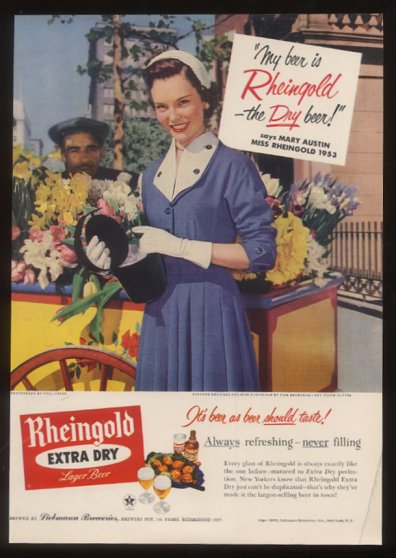
Friday’s ad is also for Rheingold Beer, this one from 1953, featuring Miss Rheingold for that year, Mary Austin. In this ad, she’s standing in front of an old-fashioned flower cart (I never see these anymore, has anyone else?). She’s also got on white gloves and is holding a black object for contrast, but what the hell is that? Is it an oddly-shaped pocketbook? A weird vase or pot for flowers? What?

Rheingold-1953-flowers

Filed Under: Art & Beer, Beers Tagged With: Advertising, History

« Previous Page
Next Page »

Find Something

Northern California Breweries

Please consider purchasing my latest book, California Breweries North, available from Amazon, or ask for it at your local bookstore.

Recent Comments

  • Bob Paolino on Beer Birthday: Grant Johnston
  • Gambrinus on Historic Beer Birthday: A.J. Houghton
  • Ernie Dewing on Historic Beer Birthday: Charles William Bergner 
  • Steve 'Pudgy' De Rose on Historic Beer Birthday: Jacob Schmidt
  • Jay Brooks on Beer Birthday: Bill Owens

Recent Posts

  • Beer In Ads #5227: It’s Here! Bock Beer By Bosch April 20, 2026
  • Beer Birthday: Drew Beechum April 20, 2026
  • Beer Birthday: Des De Moor April 20, 2026
  • Beer Birthday: Brenden Dobel April 20, 2026
  • Historic Beer Birthday: Henry Becker April 19, 2026

BBB Archives

Feedback

Head Quarter
This site is hosted and maintained by H25Q.dev. Any questions or comments for the webmaster can be directed here.