Brookston Beer Bulletin

Jay R. Brooks on Beer

  • Home
  • About
  • Editorial
  • Birthdays
  • Art & Beer

Socialize

  • Dribbble
  • Email
  • Facebook
  • Flickr
  • GitHub
  • Instagram
  • LinkedIn
  • Pinterest
  • RSS
  • Twitter
  • YouTube

Powered by Genesis

Beer Birthday Again: Jay Brooks

March 3, 2012 By Jay Brooks

brookston
Today was my 53rd birthday, and I’ve once again been overwhelmed by an embarrassment of riches from well-wishers sending me notes via e-mail, Twitter and Facebook. My sincere thanks to one and all. As it’s usually me posting embarrassing photos of my friends and colleagues, for the fourth year in a row, here’s some howlers of me from over the years.
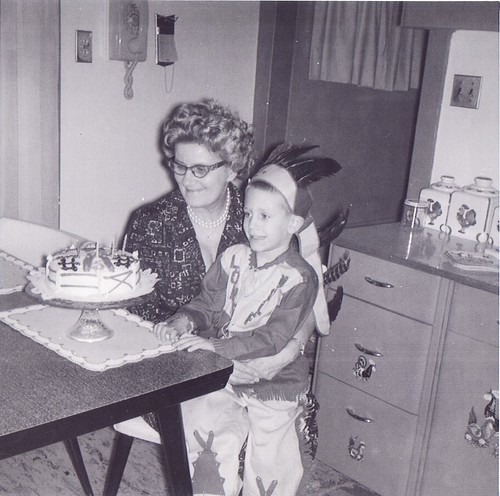
indian-birthday
An indian birthday at my grandmother’s house. No idea what year this was. It couldn’t be later than the mid-1960s.
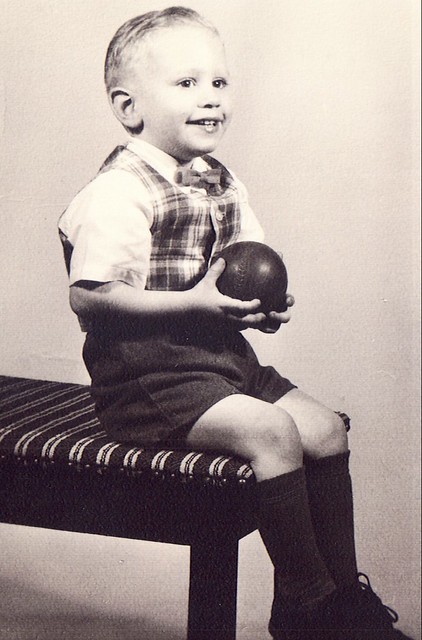
having-a-ball
I can’t even believe this is me, it’s so posed. And what’s with the black baseball? Why is that the prop they chose?

moms-2nd-wedding
At my mom’s second wedding to my stepfather in 1964, before he became a psychotic alcoholic.
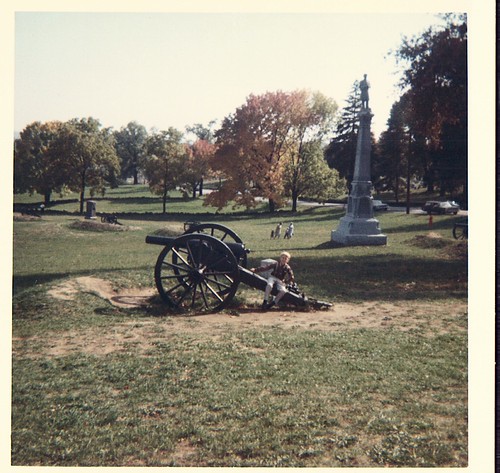
gettysburg-cannon
Sitting on a cannon at the battlefield in Gettysburg.

comb-over
An elementary school photo, where they wet my hair and combed it in a way that I never, ever did, except in this photo. It almost looks like I’m bald and it’s a comb-over.

green-and-purple
It’s hard to tell in this early 1970s photo, but that outfit was green and purple; green jacket and tie with a purple shirt. Sheesh.

There’s many more where these came from, for a good laugh just check out the photos from the last three years at Beer Birthday: Jay Brooks, Beer Birthday: J (Yes, Embarrasing Myself This Time) and Beer Birthday Overkill, from 2009, when I posted a bunch encompassing my first 50 years on planet beer. Oh, and thanks once again to everybody for the generous birthday wishes.

Filed Under: Birthdays Tagged With: Bay Area, California, Pennsylvania

Guinness Ad #109: The Cellist

March 3, 2012 By Jay Brooks

guinness-toucan
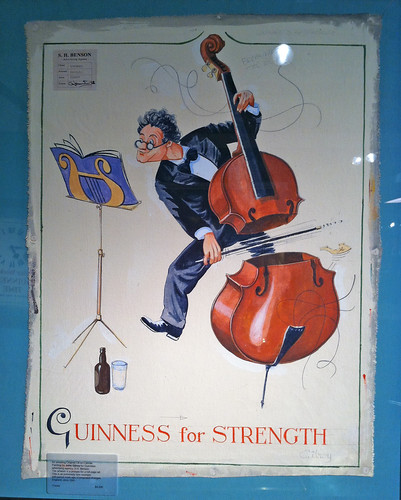
Our 109th Guinness ad is from around 1945, an original by John Gilroy. I’ve never seen a final version of this ad, but I have to assume it was used at some point. It shows a cellist so engrossed in his music, and so strong thanks to the Guinness under his music stand, that he’s sawed his cello in half. I didn’t realize horsehair was so sharp. The tagline is, of course, “Guinness for Strength.”

Guiness-for-Strength-John-Gilroy-1945

Filed Under: Art & Beer, Beers Tagged With: Advertising, Guinness, History

Beer In Ads #555: A Sunday Supper Success

March 2, 2012 By Jay Brooks


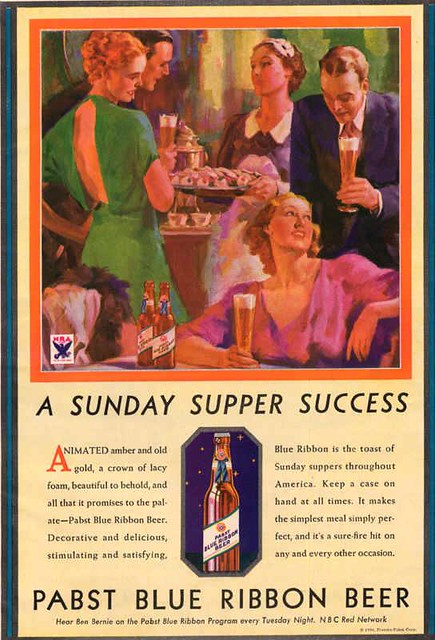
Friday’s ad is for Pabst Blue Ribbon, from 1934, with nice alliteration. I like the description of the beer in the ad copy. “Animated amber and old gold, a crown of lacy foam, beautiful to behold, and all that it promises to the palate.”

pbr-sunday-supper

Filed Under: Art & Beer, Beers Tagged With: Advertising, History, Pabst

Session #61: What Makes Local Beer Better?

March 2, 2012 By Jay Brooks

locavore-text
Our 61st Session is hosted by Matt Robinson — a.k.a. The Hoosier Beer Geek — and he’s asking us to consider the question What Makes Local Beer Better? Here’s how he puts it:

The topic I’ve been thinking about is local beer. The term is being used by just about every craft brewer in the country. What does it really mean though? Is it more of a marketing term or is there substance behind the moniker? This month I want to think about what makes local beer better? I’m not just talking about the beer itself, although it’s the focal point, but what makes local beer better? My connection to local beer is far from thinking that my beer is actually “local.” Maybe you don’t agree with me, and you can write about that. Bonus points for writing about your favorite local beer and the settings around it being local to you.

session_logo_all_text_200

I’ve been thinking about this one a bit lately, too, mostly in terms of what most people aren’t talking bout, which is that for many, possibly most, climates the two most common agricultural ingredients of beer cannot be grown and what that means for their ultimate status as local products.

I’ll ignore the question about whether local beer is better, because as far as I’m concerned, that’s not as interesting to me personally. Bad beer can be made halfway around the world as easily as next door, and vice versa. To my way of thinking, good beer is the result of a skilled brewer, using good ingredients, regardless of where they happen to be brewing.

local-beers-logo

There used to a phrase you’d hear as the craft beer movement was gathering steam in its early days: “Think Globally, Drink Locally.” A play on words of “Think Globally, Act Locally,” a phrase that was coined in the late 1960s or 70s (no one’s quite sure); it originally related to town planning and the environment.

But it’s no surprise that early craft brewing placed an emphasis on drinking local, since for most of beer’s history it was only a local product. Beer didn’t used to travel very well, or very far. That’s why at its peak in the 1870s, there were over 4,000 breweries in the United States alone. Every town had at least one brewery to slake the thirst of its residents. When you went to the next town, you drank their beer. When you went to the nearest big city, you could drink perhaps dozens of different beers from their local breweries.

locavore-badge

The First Locavores

In fact, I think craft breweries presaged the newer locavore movements taking place in most communities over the last few years. When the word “locavore” was chosen as Oxford’s 2007 “word of the year,” it was only two years old, having been coined right here in the Bay Area by a group of four women in San Francisco. The original idea was to restrict your diet to food grown or produced within a 100-mile radius. But it also emphasizes that local ingredients are fresher, more nutritious, taste better and are ultimately better for the environment, too. And that message certainly seems to spreading. Are there many towns today that don’t have a farmer’s market?

That’s also the same idea that early craft breweries were trying to get across. Fresh beer tastes better. So the closer to the source one is, the fresher the beer is likely to be, not to mention the economic advantages. By buying local, there’s the added benefit of keeping the money circulating in your local economy and not sending it to a corporate headquarters hundreds of miles away.

Many early microbreweries recognized that advantage from the beginning, and worked tirelessly to be good local citizens, and most I know of are still very active in their local communities, raising money for good causes, donating kegs for worthy events, giving their spent grain to local farmers to feed their livestock and partnering with other local businesses for the benefit of the places where they both live and work.

What Makes a Beer Local?

In 2012, it’s immensely satisfying that no one in America has to travel very far to find local beer. Several years ago, the Brewers Association crunched the numbers and determined that more than half of all Americans lived within 10 miles of a brewery. Since then, hundreds of breweries have opened (with literally hundreds more in various stages of planning) so that factoid is only getting closer. I wouldn’t be surprised to learn it’s more like 75% live within 10 miles of a brewery now.

But as terrific as that is, there is an elephant sitting at the bar, wondering what it means to be a local beer. What exactly makes a beer local? The obvious answer, of course, is that it’s brewed right here. Brewpubs, which brew where they serve, are the most local you can get, from that point of view. And breweries that only deliver their beer in a local area likewise would have to be considered local.

But as many people are beginning to point out, some of the ingredients that go into beer come from all over the world. Beer is an agricultural product, and its two most well known ingredients — barley and hops — do not grow well everywhere. They need the right climate to flourish. Hops grow best in Washington and Oregon, and also in parts of England, Germany, the Czech Republic and even New Zealand. One of pilsner’s signature ingredients is Saaz (or Zatec) hops, which grow best in the area around the Czech Republic. You can grow them other places, but they take on different characteristics when you do that. Beer brewed with the same hop variety grown in different places will often taste slightly different.

And barley does grow in a lot of places, but most it for brewing comes from Europe, the Ukraine, Russia, Canada and Australia. If you want specialty malts, they’re mostly likely available only from where they’re created. Even if you grow your own barley, you have to go through the malting process, which is typically done by a maltster. And there’s not a malthouse in many places, either.

The point is, there are a lot of places where it’s simply not possible to get all the ingredients to brew beer locally, and that raises the specter about whether a beer brewed locally, but with ingredients flown in from around the world, still can be considered a local beer.

Because beer is mostly water, the majority of your bottle will always be almost entirely local, both by weight and by volume. The malt and hops and yeast constitute a very small portion of the finished beer. But as more and more people are taking seriously eating and drinking locally, it’s hard to ignore that arguably beer’s most important ingredients may not come from down the street.

Not that some breweries aren’t trying to address this. Thirsty Bear, in San Francisco, a little while back created a beer using all locally sourced ingredients, which they called Locavore Pale Ale. Likewise, the relatively new Almanac Beer Co. is creating all of their beers with mostly local ingredients, and working toward making that all. And Sierra Nevada releases annually their Estate Brewer’s Harvest Ale, which they make using both malt and hops grown on their own property in and around Chico.

In California, we are fortunate enough to have the right climate where both hops and barley can grow, even though the majority of it is grown elsewhere. But in many other states that traditionally haven’t grown these crops, brewers and farmers are trying to do just that, with an eye toward making their beers even more local.

But in some locations, there isn’t anything that can be done. Alaska isn’t going to start growing hops and barley anytime soon, but I’d have a hard time considering a beer brewed there not being a local beer. Regardless of whether or not 100% of the ingredients are local, it does still have local character. The water, the air, the industry, the people brewing it and selling it, the economy: those are all very local.

For me that’s enough. In the end, I personally don’t think it diminishes beer’s ability to be seen as local. While I believe this is a debate worth having, undoubtedly there will always be some purists who won’t be able to budge from a position that if all the ingredients aren’t local, then it can’t be considered local. If they choose not to drink those beers for that reason alone, that’s a shame. Because with beer, the most important thing is how good it tastes. If it’s all local, that’s just a bonus. Or as friend of mine once quipped, “If I can drink it, it’s local.”

buylocal

Filed Under: Beers, Breweries, Editorial, Just For Fun, The Session Tagged With: California, local

Beer In Ads #554: Blatz Fashion Design

March 1, 2012 By Jay Brooks


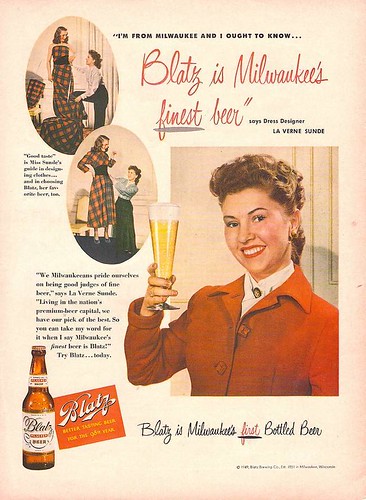
Thursday’s ad is for Blatz, whose 1949 claims they they were “Milwaukee’s first bottled beer.” It’s also a celebrity endorsement ad, albeit a rather odd choice. Perhaps there was a series of these done with Milwaukee residents, since the top line reads “I’m from Milwaukee and I ought to know…” The endorsement comes from local dress designer La Verne Sunde, whose “good taste” is demonstrated with inset photos of her fitting someone with a dress she’s created. I’m not quite sure how that translates to beer knowledge, but I guess it’s no sillier than a baseball player doing the same thing.

blatz-fitting

Filed Under: Art & Beer, Beers Tagged With: Advertising, History, Milwaukee, Wisconsin

South Korea Beer

March 1, 2012 By Jay Brooks

korea_south
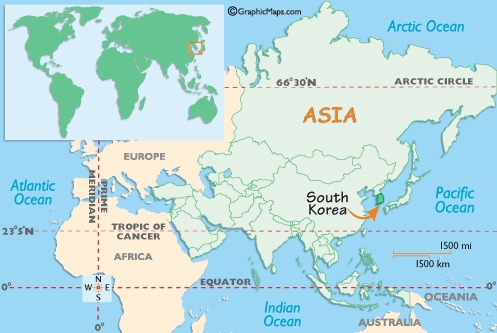
Today in 1919, South Korea gained their Independence from Japan.

South Korea
south-korea-color

South Korea Breweries

  • Hite Brewery Company Limited
  • Hotel Ariana
  • Jinro Coors Brewing
  • O’Kim’s Brauhaus
  • Oktoberfest
  • Oriental Brewery Company
  • Rosenbrau

South Korea Brewery Guides

  • Beer Advocate
  • Beer Me
  • Rate Beer
  • Wikipedia’s Beer and breweries in South Korea

Other Guides

  • CIA World Factbook
  • Official Website
  • U.S. Embassy
  • Wikipedia

Guild: Korea Microbrewery Association

National Regulatory Agency: Korean Food and Drug Administration

Beverage Alcohol Labeling Requirements: Labels must include the following information:

  • Name of the product
  • Country of origin
  • Type of product
  • Importer’s name and address
  • Importer’s business license number
  • Date of bottling
  • Alcohol percentage and product volume: Tolerance of +/- 0.5% with regards to accuracy of alcohol content
  • Location where product may be exchanged or returned in the instance of a defective product
  • Instructions for storage, if applicable
  • Mode of distribution, must specify one of the three: “Discount store sale only,” “Restaurant sale only,” or “Sale for home use only” (taxes on beverages vary depending on the mode of distribution)

Drunk Driving Laws: BAC 0.05%

South-Korea

  • Full Name: Republic of Korea
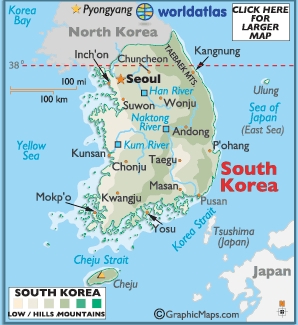
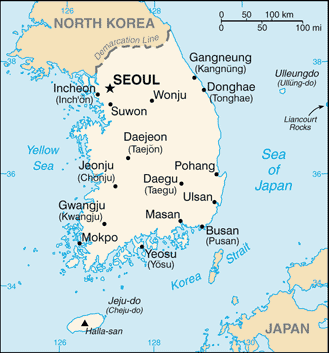
  • Location: Eastern Asia, southern half of the Korean Peninsula bordering the Sea of Japan and the Yellow Sea
  • Government Type: Republic
  • Language: Korean, English (widely taught in junior high and high school)
  • Religion(s): Christian 26.3% (Protestant 19.7%, Roman Catholic 6.6%), Buddhist 23.2%, other or unknown 1.3%, none 49.3%
  • Capital: Seoul
  • Population: 48,860,500; 25th
  • Area: 99,720 sq km, 109th
  • Comparative Area: Slightly larger than Indiana
  • National Food: Kimchi and Bulgogi
  • National Symbols: Korean Tiger; Hibiscus; Pine tree; Taegeuk, Namdaemun
  • Nickname: Hanguk; Choson, the Land of the Morning Calm
  • Affiliations: UN, African Union, Commonwealth
  • Independence: From Japan, March 1, 1919 / Liberation Day, August 15, 1945, regained independence from Japan after World War II

south-korea-coa

  • Alcohol Legal: Yes
  • Minimum Drinking Age: 19 (If a person is at least 20 according to Korean age reckoning, that person may drink alcohol)
  • BAC: 0.05%
  • Label Requirements: N/A
  • Number of Breweries: 21

korea-south-kso047_f

  • How to Say “Beer”: mek-ju (maek-joo) / 맥주 / 발포성 음료
  • How to Order a Beer: 맥주 한 병 더 주세요 / Mekju han byung du juseyo (in a bottle) [Mayk-joo hahn-jahn, joo-se-yoh]
  • How to Say “Cheers”: Chukbae / Kong gang ul wi ha yo / Konbe
  • Toasting Etiquette: The most common toast is “gonbae,” which is the equivalent of “cheers!” If the toast is proposed as “wonshot” (one shot), guests are expected to empty their glasses in one drink. Formal toasts are usually made only by the host. Visitors may offer to pay for the bill, but the host will usually decline the offer.

    The most common South Korean toast you will hear is ‘Gun-bae.’ When you raise your glass, be sure to do so with your right hand. To confer extra respect toward the person being toasted, support your right arm with your left hand. Be aware that the minute you drain your glass, it is a cue to your host that you would like a ‘refill.’

korea-south-map

Alcohol Consumption By Type:

  • Beer: 18%
  • Wine: 1%
  • Spirits:81%
  • Other: <1%

Alcohol Consumption Per Capita (in litres):

  • Recorded: 11.80
  • Unrecorded: 3.00
  • Total: 14.80
  • Beer: 2.14

WHO Alcohol Data:

  • Per Capita Consumption: 11.8 litres
  • Alcohol Consumption Trend: Stable
  • Excise Taxes: Yes
  • Minimum Age: 19
  • Sales Restrictions: No
  • Advertising Restrictions: Advertising
  • Sponsorship/Promotional Restrictions: No

Patterns of Drinking Score: 3

Prohibition: None

south-korea-asia

Filed Under: Beers, Breweries Tagged With: Asia, South Korea

Bosnia and Herzegovina Beer

March 1, 2012 By Jay Brooks

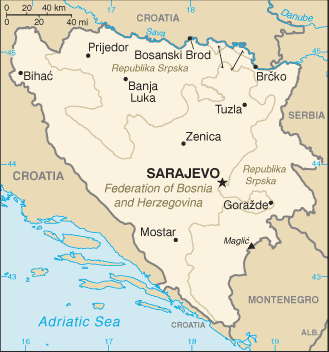
bosnia
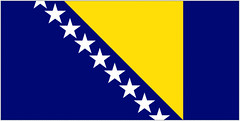
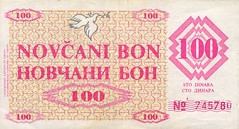
Today in 1992, Bosnia and Herzegovina gained their Independence from Yugoslavia.

Bosnia and Herzegovina
bosnia-color

Bosnia and Herzegovina Breweries

  • Bihacka Pivovara
  • Grudska Pivovara d.o.o.
  • Hercegovačka Pivovara
  • Pivara Tuzla

Bosnia and Herzegovina Brewery Guides

  • Beer Advocate
  • Beer Me
  • Rate Beer
  • Wikipedia’s Beer and breweries in Bosnia and Herzegovina

Other Guides

  • CIA World Factbook
  • Official Website
  • U.S. Embassy
  • Wikipedia

Guild: None Known

National Regulatory Agency: None

Beverage Alcohol Labeling Requirements: Not Known

Drunk Driving Laws: BAC 0.05%

Bosnia

  • Full Name: Bosnia and Herzegovina
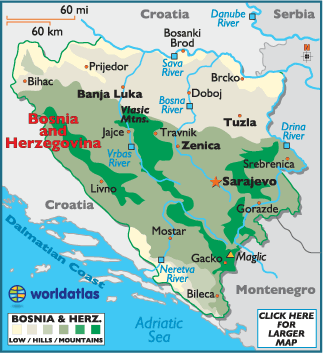
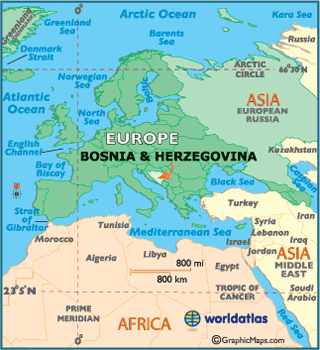
  • Location: Southeastern Europe, bordering the Adriatic Sea and Croatia
  • Government Type: Emerging Federal Democratic Republic
  • Language: Bosnian (official), Croatian (official), Serbian
  • Religion(s): Muslim 40%, Orthodox 31%, Roman Catholic 15%, other 14%
  • Capital: Sarajevo
  • Population: 4,622,292; 122nd
  • Area: 51,197 sq km, 129th
  • Comparative Area: Slightly smaller than West Virginia
  • National Food: Bosnian pot, Ćevapi, and Pljeskavica
  • National Symbol: Lilium bosniacum
  • Affiliations: UN
  • Independence: From Yugoslavia, March 1, 1992

bosnia-coa

  • Alcohol Legal: Yes
  • Minimum Drinking Age: 16 (to drink); 18 (to buy)
  • BAC: 0.05%
  • Label Requirements: N/A
  • Number of Breweries: 9

BosniaHerzegovinaP6g-100Dinara-1992_f

  • How to Say “Beer”: pivo
  • How to Order a Beer: Molim vas, još jedno pivo /
    Još jedno pivo, molim
  • How to Say “Cheers”: Zivjeli
  • Toasting Etiquette: N/A

bosnia-map

Alcohol Consumption By Type:

  • Beer: 23%
  • Wine: 4%
  • Spirits: 73%

Alcohol Consumption Per Capita (in litres):

  • Recorded: 9.63
  • Unrecorded: 0.00
  • Total: 9.63
  • Beer: 2.22

WHO Alcohol Data:

  • Per Capita Consumption: 9.6 litres
  • Alcohol Consumption Trend: Stable
  • Excise Taxes: N/A
  • Minimum Age: 16
  • Sales Restrictions: No
  • Advertising Restrictions: Yes (some)
  • Sponsorship/Promotional Restrictions: N/A

Patterns of Drinking Score: 3

Prohibition: None

bosnia-eu

Filed Under: Beers, Breweries Tagged With: Bosnia, Europe

Beer In Ads #553: Budweiser’s Tossed Salad

February 29, 2012 By Jay Brooks


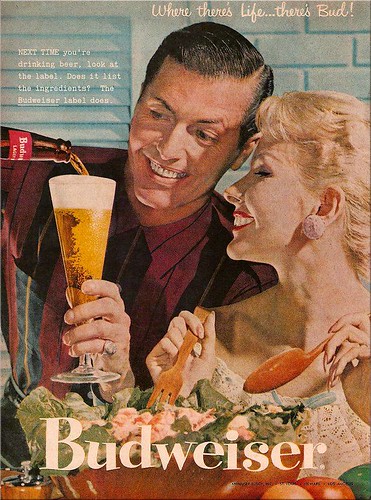
Wedneday’s ad is for Budweiser, from their 1950s ad campaign “Where There’s Life ….” Like a lot of them, the ad copy talks about whether other brands list the ingredients on their label. While the woman is tossing a salad, the gentleman is pouring a Budweiser. Is is just me, or does he look a lt like Jeff Goldblum?

bud-ingredients

Filed Under: Art & Beer, Beers Tagged With: Advertising, Budweiser, History

Beer In Ads #552: Russian Beer Queen

February 28, 2012 By Jay Brooks


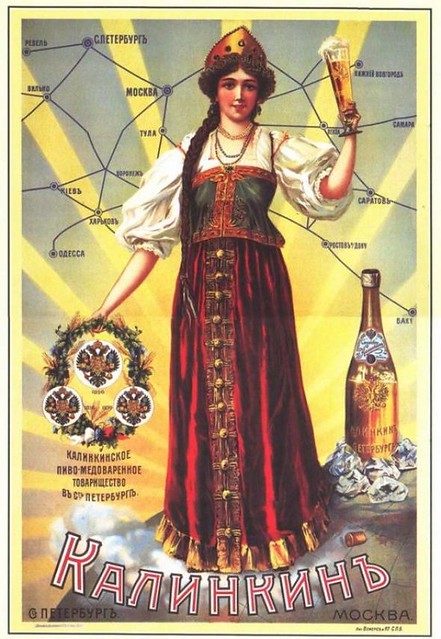
Tuesday’s ad is for a Russian brewer, though which one is a bit of a mystery, primarily because I don’t know the cyrillic alphabet. Though I’m pretty sure “Mockba” is Moscow, so that’s probably where the brewery is/was located. But the woman with the beer looks like she’s wearing a crown and holding a wreath of hops and barley.

russian-beer

Filed Under: Art & Beer, Beers Tagged With: Advertising, History, Russia

Beer In Ads #551: It’s Time To Apply The Brakes

February 27, 2012 By Jay Brooks


Monday’s ad is for the English beer Brakspear Bitter. Though the ad appears old, I think It’s actually a fairly recent ad that’s designed to look retro. The glassware looks too modern, too. Perhaps one of my friends from across the pond can set me straight on that point. Still, who wouldn’t like slowing down and having a few pints by the water?

brakespear-apply-brakes

Filed Under: Art & Beer, Beers Tagged With: Advertising, UK

« Previous Page
Next Page »

Find Something

Northern California Breweries

Please consider purchasing my latest book, California Breweries North, available from Amazon, or ask for it at your local bookstore.

Recent Comments

  • Bob Paolino on Beer Birthday: Grant Johnston
  • Gambrinus on Historic Beer Birthday: A.J. Houghton
  • Ernie Dewing on Historic Beer Birthday: Charles William Bergner 
  • Steve 'Pudgy' De Rose on Historic Beer Birthday: Jacob Schmidt
  • Jay Brooks on Beer Birthday: Bill Owens

Recent Posts

  • Beer In Ads #5225: Fabled Ambrosia Of The Ancients April 17, 2026
  • Historic Beer Birthday: William O. Poth April 17, 2026
  • Beer In Ads #5224: Harvard Bock Beer April 16, 2026
  • Historic Beer Birthday: William H. Biner April 16, 2026
  • Historic Beer Birthday: Alan Eames April 16, 2026

BBB Archives

Feedback

Head Quarter
This site is hosted and maintained by H25Q.dev. Any questions or comments for the webmaster can be directed here.