Our 63rd Guinness ad shows our intrepid toucan as a miner, working away down below. But instead of finding gold nuggets, he instead finds black gold, not Texas tea, but Guinness. It’s one of the usual slogans again, “My Goodness, My Guinness.”
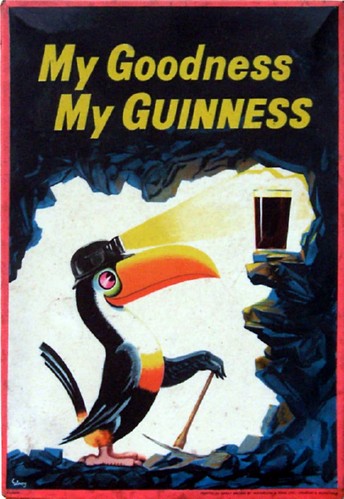

Our 63rd Guinness ad shows our intrepid toucan as a miner, working away down below. But instead of finding gold nuggets, he instead finds black gold, not Texas tea, but Guinness. It’s one of the usual slogans again, “My Goodness, My Guinness.”

I just learned the sad news from my friend Pete Slosberg that brewmaster Pierre Celis passed away today, around 8:00 p.m. Belgian time. He was 86. A funeral is scheduled for next Saturday in Hoegaarden, after which, according to his wishes, he’ll be cremated.
Celis was a true brewing legend, he single-handedly revived the style witbier in the 1960s when he was a brewer at Hoegaarden. He later moved to Texas to start a microbrewery with his daughter Christine, which was sold to Miller in 1995. He was still brewing, making three cave-aged beers under the label Grottenbier at St. Bernardus in Belgium. Join me in raising a toast to Pierre’s memory this evening, with a Hoegaarden if you can get one, or if not a Belgian or Belgian-style witbier.
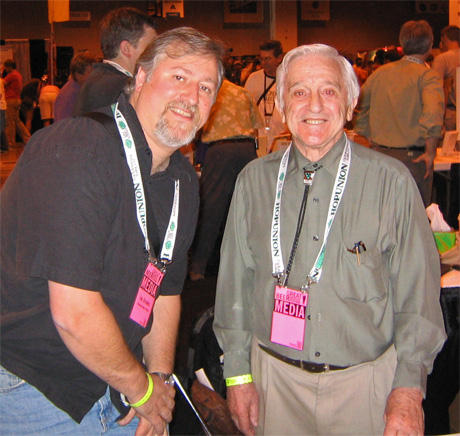
Me and Pierre at GABF five years ago in 2006.

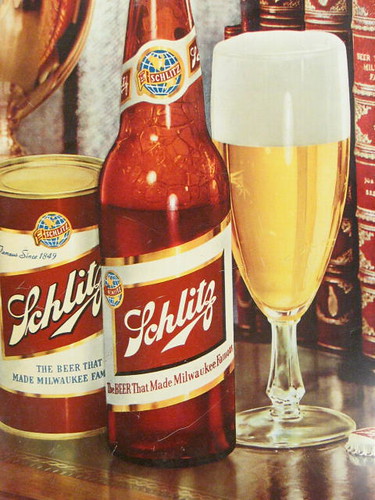
Friday’s ad is for Schlitz from 1949 showing a close-up of a can and a bottle, with a full beer glass in what appears to be a library setting. You can just make out on one of the leather-bound books that the first word in the title is “beer.” Though there is one discrepancy. Notice that the bottle isn’t even half empty but the beer glass is full. There’s no way that portion of the bottle could fill a beer glass that looks to be at least 12 oz., if not a full pint. Hmm.

There was in an interesting op-ed piece in the New York Times a few days ago. A wine blogger, David White (founder of the Terroirist), tackled the thorny issue of shipping wine (and beer and liquor) from state to state in a piece entitled Wholesale Robbery in Liquor Sales.
He begins with this obvious logic:
IMAGINE if Texas lawmakers, in a bid to protect mom-and-pop bookstores, barred Amazon.com from shipping into the state. Or if Massachusetts legislators, worried about Boston’s shoe boutiques, prohibited residents from ordering from Zappos.com.
Such moves would infuriate consumers. They might also breach the Constitution’s commerce clause, which limits states from erecting trade barriers against one another. But wine consumers, producers and retailers face such restrictions daily.
While he’s focusing on wine, the same is true for beer, too. When it comes to alcohol, the general rules of commerce tend to get thrown out the window because — gasp — it’s alcohol, and people can’t be trusted with the stuff. Therefore separate laws have to be set up to protect us from … well, I’m not sure from what. You can order all manner of dangerous things through the mail and have them sent right to your door, from guns and ammo, knives, crow bars along with all the stuff you need to make good size bomb. But try to get bombed and forget it. That’s where the line has been drawn.
It’s been over 75 years since Prohibition ended and few of the laws enacted to ease alcohol back into society have been updated much in that time. The way of the world, I’d argue, is quite a bit different than it was in 1933. The way people do business, both as companies and consumers, has changed dramatically but the laws governing alcohol have remained largely static, in large part because there’s always a hue and cry any time someone suggests relaxing or changing them. White points to wholesalers as having the greatest incentive to keep the status quo, and he’s certainly partly correct, but it’s also the anti-alcohol types and the overarching belief by many that because a few people can’t handle themselves with alcohol, that the rest of us have to suffer under these anachronistic laws that never envisioned the internet or considered that most adults might actually take personal responsibility for their actions.
At any rate, White makes some great points and his article is definitely worth a read.

Our 51st Session is the third of our run at nostalgia, albeit a mere four years worth of it. Stan Hieronymus first proposed the Session four years ago, and was the first host, too, followed by Alan (from A Good Beer Blog) and then I hosted the third outing.

So here I am venturing into Area 51, and while I tried to keep things simple, I just couldn’t help myself and have made the topic one that will require a little work, but I think the challenge will be worth it and great fun in the end. It involves two of my favorite things: beer and cheese. Before I spring the particulars on you, first a little background about where the idea came from.

I’ve been to many cheese and beer tastings, whether part of a structured dinner or a separate dedicated cheese event. In almost every case, whoever put on the tasting chose the beer and the cheese. If you’ve done likewise, I’m assuming you’ve had the same experience. Some pairings work, others don’t. Whichever way it goes, you usually only get one shot at it, that is just one cheese paired with one beer.

But finding that divine pairing always made the effort worthwhile because when it works, boy does it ever. A perfect pairing of cheese and beer is practically spiritual. At least to me, but as I say; I love cheese.

So I was thrilled when someone figured out another way to sample cheese and beer. During the first SF Beer Week three years ago, Vic Kralj — who owns The Bistro in Hayward — hosted a different kind of cheese and beer event: the “cheese-off.” What Vic did was pick five cheeses and then invited five breweries to play along. Each brewery took the five cheeses and paired each with one of their beers.
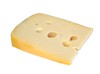
So then on the night of the event, attendees got a plate of each cheese, in turn, along with the five beers (one chosen by each of the five breweries). You then tried each beer with the cheese and then picked the pairing you thought worked best. That continued through each of the five cheeses. Then they tallied up the votes — just for fun — to see which beer was the most popular with each cheese. The Bistro hosted a cheese-off two years, and you can read the write-up for the 2009 Cheese-Off and the 2010 Cheese-Off to get a better idea of how it worked.
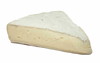
That brings us back to Session #51, and the topic of cheese and beer. Below are three cheeses. I chose ones that I believe are available throughout the U.S. and quite possibly beyond our shores. And they all sell via mail order, too. So pick up some of each, or if you can’t find those specific cheeses, choose similar ones. Pick a beer to pair with each one and post your results on the first Friday in May.
There are at least a few approaches you could take:
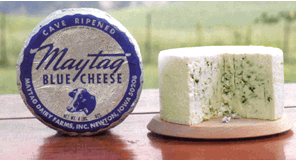
This is one my favorite blues, and not just because it’s owned by the Maytag family, who until recently owned Anchor Brewery. The Maytag Dairy Farm was founded in Iowa by Fritz Maytag’s father in 1941, making it one of the first artisanal cheese companies in America. One of my favorite ways to use Maytag Blue is to crumble some on top of a bowl of chili, something I tried at an Anchor event where both were being served. It’s a terrific combination.
To get you started, Stephen Beaumont and Brian Morin, in their “beerbistro cookbook,” suggest barley wine or even imperial stout for blue cheese. In the “Brewmaster’s Table,” author Garret Oliver doesn’t mention blue cheese, but does suggest Barley Wines with Stilton, which is a specific type of blue cheese.
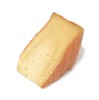
I wanted to make sure I included at least one Wisconsin cheese — I am a cheesehead, after all — and Widmer’s Cheese Cellars makes some great golden orange cheddars. Even the one-year old aged cheddar is very full-flavored. Widmer’s website described it as having “rich, nutty flavor [that] becomes increasingly sharp with age. Smooth, firm texture becomes more granular and crumbly with age.”
For milder cheddars, Beaumont and Morin suggest brown ales or pale ales, and for older, sharper cheddars, IPAs or strong abbey ales. Likewise, in the “Brewmaster’s Table,” Oliver suggests India Pale Ales with cheddar cheese.
Humboldt Fog is a goat cheese from Cypress Grove Chevre in California. It’s described on their website as a “soft, surface ripened cheese. The texture is creamy and luscious with a subtle tangy flavor. Each handcrafted wheel features a ribbon of edible vegetable ash along its center and a coating of ash under its exterior to give it a distinctive, cake-like appearance.”
In the Brewmaster’s Table, Oliver suggests “a spicy Belgian beer with residual sweetness,” and specifically Ommegang’s Hennepin. Beaumont and Morin recommend Belgian-style wheat beer or doppelbocks for goat cheese generally.
You can also find some general information about cheese at Artisanal Cheese, the American Cheese Society and the California Artisan Cheese Guild. And there’s some more pairing tips available from Lucy Saunders, the beer cook, Taste of Home and Artisanal Cheese
So that’s the three cheeses. To participate in the May Session, pick them (or similar ones) up and pair them with whatever beer you feel will best enhance the two, using whatever method you want. Then on May 6th, post your results. Let everybody know what you think are the best beers to pair with these three cheeses.
So that’s the regular Session. But wait … there’s more.
Okay, I know not everyone will want to go for this, but if you’re with me so far here’s the idea for part two. As soon as I can after the May 6th Session, I’ll post the round-up with a list of all the beers that everyone suggested to pair with each of the cheeses. Then over the subsequent two weeks, whoever wants to participate, pick up some of the other beers that were suggested, and try them with the same three cheeses and do a follow up blog post on Friday, May 20 — let’s call it Session #51.5 — to explore more fully pairing cheese and beer.
You can write about how your choices compared, or what you learned from the other suggestions, or which out of all the ones you tried worked best. What recommended pairing most surprised you? Which didn’t seem to work at all, for you? It’s my way of taking the Session concept and making it more interactive and collaborative, essentially an “online cheese-off.” First, we each make our best recommendations for pairing a beer with these three cheeses, and then we try as many of the suggestions as we can, and discover which is the best one. I’ll then do a second round-up and try to report the findings of the group as a whole to the beers and the three cheeses together.
Spread the cheese .. er, the word. Even with making this next Session as difficult as possible, I’m hoping the fun factor of trying these cheeses with a lot of beer will make for a lively and interesting Session, with a lot of participation. If you agree, let’s get the word out and get people on board to do some beer and cheese pairing.
To participate, post a comment here with a link to your blog post for Session #51. To keep going with Session #51.5, post your link on or after May 20 to the round-up which should be up on May 7.
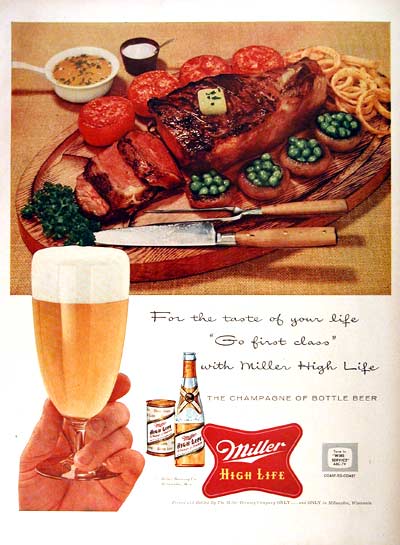
Thursday’s ad is for Miller High Life from 1957 showing a delicious-looking meal of steak with a number of side dishes, like roasted tomatoes, peas in mushroom caps(?) and onion rings. And how about that big pat of butter on top? I’m hungry now. The tagline is great, too. “For the taste of your life ‘Go First Class’ with Miller High Life.”

Seems like it’s a food sort of day. There was an interesting press release from the National Association for the Specialty Food Trade (or NASFT) — the folks that put on the various Fancy Food Shows — entitled Specialty Food Industry Shows Renewed Strength. It’s a teaser for the actual report, The State of the Specialty Food Industry 2011, “an annual report from the NASFT prepared in conjunction with market researchers Mintel International and SPINS. The report tracks sales of specialty food through supermarkets, natural food stores and specialty food retailers, and includes research from interviews with food retailers, distributors, brokers and others involved in the supply chain.” The actual report will be presented April 13 in a “webinar” and for a mere $90 clams you can listen in, too. But the press release does reveal some of what to expect:
Consumers are spending on specialty food again after a period of holding back. Sales of specialty food and beverages rose 7.7 percent in 2010, topping $70 billion, according to new research released by the National Association for the Specialty Food Trade.
“The rebound is impressive,” says Ron Tanner, Vice President, Communications and Education for the NASFT. “As consumers feel more confident about the economy, they are coming back to specialty foods.” In 2009, sales rose by a more tepid 4.5 percent.
Cheese continues to dominate spending for this segment of the food industry, with $3.23 billion in sales in 2010. Rounding out the top five categories are meats, chips and snacks, bread and baked goods and condiments. Functional beverages are the fastest growing specialty food category, followed by yogurt and kefir.
Last year specialty food makers focused on their existing items, with new product introductions about even with 2009. Launches of premium private-label products, such as store brand cookies and sauces, declined to 455 in 2010 from 518 in 2009, demonstrating a return to branded products.
It’s interesting to see artisanal cheese continue to hum along, the 500-lb. gorilla of the specialty food world. I attended a cheese conference a few years ago with a panel that discussed the parallels between craft beer and American craft cheese. At that point, the experts on the panel claimed that our artisanal cheese industry was roughly 15 years behind where craft beer was at that point. But based on this, it would appear that cheese is indeed keeping pace and even catching up. Given how good the two are together — is there anything better the perfect beer and food pairing? — that’s very good news indeed.
Here are some more highlights from the report:


I just learned that there are a few seats left for the annual Toronado Belgian Beer Lunch taking place this Sunday, April 10. For the third year — or is that fourth? — the food is being done by Sean Paxton, the Homebrew Chef. If you love Belgian beer, good food and especially pairing the two, you don’t want to miss this. And if you’ve never been to one of Sean Paxton’s gastronomic extravaganzas, you’re in for something special. Tickets are $150 each, which might sound steep until you consider that this is a twelve-course meal that includes 20 Belgian beers! Lunch begins at 11:30 and is expected to last until at least 4:30. You read that right, it’s a five-hour lunch. Call the Toronado to reserve your seat as soon as possible. You won’t be disappointed. Payment can be in cash or check (I believe on the day of the event) but best check that when you make your reservations. See you there!
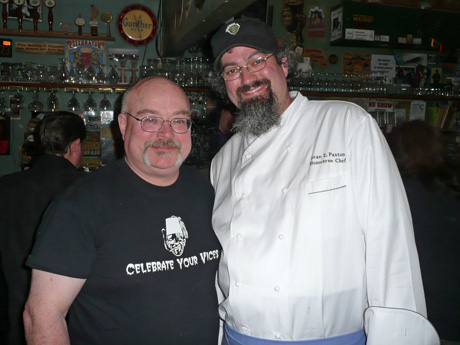
Toronado owner Dave Keene with the Homebrew Chef, Sean Paxton, at an earlier Belgian Beer Lunch.
Pre-Lunch Reception:
Beer served: Van Steenberge Ertveld’s Wit
First Course
Belgian Sushi: Wit-flavored brioche infused with foie gras, roasted eel, Poperings Hommel Bier duck egg green aioli, pea shoots
Paired with DuPont Avril
Second Course
Charcuturie Platter: Duck rillettes braised in Russian River Consecration with a Supplication gelee, duck pistachio apricot infused with Sanctification terrine, pork/duck liver and Orval beer pâté, cornichons, heirloom radishes, house-made Goulden Carolus Noel mustard, currant & Consecration compote, and served with local The Bejkr breads
Paired with Chimay Grand Reserve 3 Liter and Duvel Triple Hop
Third Course
DuPont Avec Les Bons Voeux Poached Sole: On a bed of leek and turnip purée, topped with a lobster crawfish mussel Tripel Karmeliet waterzooi sauce
Paired with De Dolle Arabier and Moinette Blond
Fourth Course
Goat Butter Poached Sea Scallop: Smoked in Mort Subite lambic barrel staves, De Ranke Guldenburg demi glaze, celery root purée infused with Affligem Noel, fennel pollen
Paired with Petrus Aged Pale
Fifth Course
Seared Duck Breast with Sour Cherry Sauce: Sonoma County duck breasts cooked sous vide with shallots, thyme, with a dried sour cherries Hannsen Oude Kriek sauce on a bed of black barley simmer in Delirium Noel and TCHO cocoa nibs
Paired with Bocker Cuvee De Jacobins and Drie Fonteinen Oude Kriek
Sixth Course
Medium Rare Short Ribs: Cooked sous vide for 48 hours in Rochefort 8, caramelized shallots and thyme, served on a bed of Flemish-style mashed potatoes, with a fig, date Petrus Oud Bruin gravy
Paired with Echt Kriekenbier and Rochefort 10
Seventh Course
Crepenette: Westmalle Dubbel infused Spring Sonoma lamb, mixed with creamed leeks, wrapped in caul fat topped with a sirop de Liége (pears, date simmered in a Chimay Red ale syrup) and Belgian endive salad
Paired with Rodenbach Grand Cru 2008 keg
Eighth Course
Foie Gras: Lobes of foie gras poached in Boon Kriek, made into truffles and coated in Cantillon Rosé De Gambrinus gelee, garnished with hibiscus sea salt
Paired with Malheur Brut Reserve 2006
Ninth Course
French Lentil Salad: Lentils simmered in Fantôme Saison, curry-scented green cauliflower, ‘wit’ candied cashews, mâche greens and toasted hemp seeds tossed in a Straus yogurt bergamot orange Lindemans Gueuze Cuvée René dressing
Paired with Oud Beersal Oude Geueze Vieille
Tenth Course
Assorted Belgian Cheeses: Grevenbroecker, Wavreumont, “St. Maure,” Charmoix, Meikaas, and Kriek Washed Fromage served with pomegranate Supplication honey, The Bejkr Biologlque bread, hazelnut fig crackers, dried fruit, honey blood orange peel candied pistachios
Paired with Liefmans Cuvee Brut and Orval
Eleventh Course
Crêpe: Boon Oude Geuze Mariage Parfait beer curd, Hanssens Oudbeitje rhubarb jam, Westmalle Tripel chamomile syrup wrapped in a Sara Buckwheat Ale crepe
Paired with De Struise T’sjeeses
Twelfth Course
Chocolate Pot de Crème Deconstructed Pie: Speculoos cookie crust, Belgian dark chocolate infused custard, Chantilly cream
Paired with De Struise Pannepot 2007, Scaldis Noel 1998 Magnums and De Struise Black Albert 2009
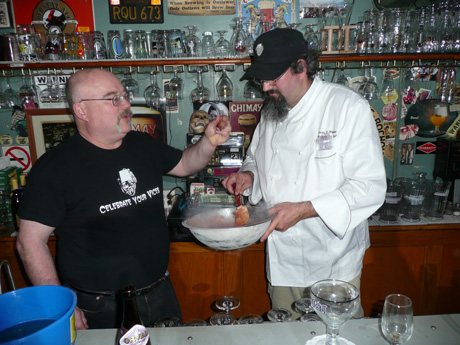
The Homebrew Chef cooking with nitrogen behind the Toronado bar.

This is not a beer post, but we gotta eat, too. Tom Philpott, at Grist, details an interesting interactive chart created by Andrea Jezovit at Civil Eats.
Using USDA data for “average daily calories available per capita, adjusted for spoilage and waste,” it tracks our eating habits since 1970, separating our foodstuffs into basic categories: grains, dairy, vegetables, fruits, proteins (“meat, eggs, and nuts”), added sugars, and added fats.
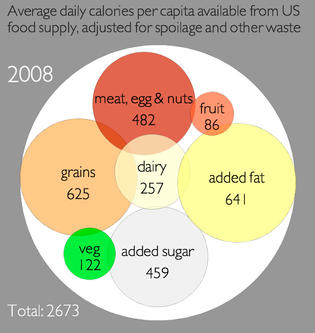
Both Philpott’s The American diet in one chart, with lots of fats and sugars and Jezovit’s Where Do Americans Get Their Calories? are worth a read. Be sure to check out the interactive version of the chart which graphically shows how the mix of calories we eat has changed over the last 40 years.
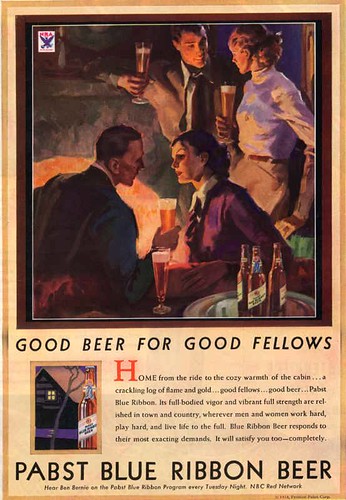
Wednesday’s ad is a World War 2-era one for Pabst Blue Ribbon which despite depicting two couples, uses the curious slogan “Good Beer For Good Fellows.” Sure, women are explicitly mentioned in the copy, but the slogan and art just don’t seem to jibe, though it is a cool painting.