
Monday’s ad is for Rheingold, from 1952, featuring Miss Rheingold for that year, Anne Hogan, putting up a bird house on a fine Spring day.


Monday’s ad is for Rheingold, from 1952, featuring Miss Rheingold for that year, Anne Hogan, putting up a bird house on a fine Spring day.

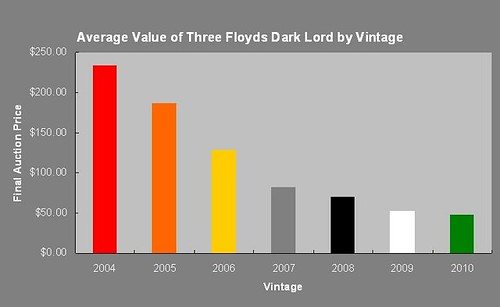
A GT Wharton posted an interesting survey that he conducted about the prices people will bay for rare beer on eBay. His article, entitled Market Behavior for Rare Beer: eBay Auction Prices in Review appeared today on Rate Beer’s Hop Press. It appears to be a quite thorough look at auction prices realized over a one-month period. His dataset included 887 auctions. The average price was $122 ($137 w/shipping included). $9.50 was the low price and $999 the highest.
The five most expensive auctions by 12oz volume were:
- Midnight Sun M: $544.77
- Cantillon Don Quijote: $312.40
- Cantillon Rose de Gambrinus 1992 Vintage: $284.00
- Russian River Depuration: $265.07
- Flossmoor Station Wooden Hell: $260.12
And here, for example, is a chart showing “Average Value of Three Floyds Dark Lord by Vintage.”
Interesting stuff. He doesn’t go into the moral dilemma of selling beer on eBay and the fact that most brewers decry the practice, but from a merely numbers perspective it’s worth a read.

Ugh. To me there’s nothing worse than junk science, especially when it’s in the service of an agenda. And that’s how this latest “study” in the journal Alcoholism: Clinical and Experimental Research comes across. The title of the “study” is Effects of Energy Drinks Mixed with Alcohol on Behavioral Control: Risks for College Students Consuming Trendy Cocktails and was conducted at the Universities of Northern Kentucky and the Maryland School of Public Health. Here’s how the press release for the study explains it:
- A new laboratory study compares the effects of alcohol alone versus alcohol mixed with an energy drink on a cognitive task, as well as participants’ reports of feelings of intoxication.
- Results show that energy drinks can enhance the feeling of stimulation that occurs when drinking alcohol.
- However, energy drinks did not alter the level of behavioral impairment when drinking alcohol, particularly for impaired impulse control.
- The combination of impaired impulse control and enhanced stimulation may make energy drinks combined with alcohol riskier than alcohol alone.
Energy drinks mixed with alcohol, such as Red Bull™ and vodka, have become trendy. While this consumption has been implicated in risky drinking practices and associated accidents and injuries, there is little laboratory research on how the effects of this combination differ from those of drinking alcohol alone. A recent laboratory study, comparing measures of intoxication due to alcohol alone versus alcohol/energy drink, has found that the combination of the energy drink enhanced feelings of stimulation in participants. However, the energy drink did not change the level of impairment for impulsive behavior. These findings suggest that energy drinks combined with alcohol may increase the risks associated with drinking.
But take a closer look at what that says. The caffeine stimulates. Well, duh. That’s what caffeine does. Did anybody doubt that? Then the study goes on to say that “energy drinks did not alter the level of behavioral impairment when drinking alcohol,” meaning it didn’t make people more drunk. Then they conclude combining caffeine and alcohol “may increase the risks associated with drinking [my emphasis].”
Here’s how they conducted it:
Marczinski [lead author] and her colleagues randomly assigned 56 college student participants (28 men, 28 women), between the ages of 21 and 33, to one of four groups that received four different doses: 0.65 g/kg alcohol, 3.57 ml/kg energy drink, energy drink/alcohol, or a placebo beverage. The participants’ behavior was measured on a task that measures how quickly one can execute and suppress actions following the dose. Participants also rated how they felt, including feelings of stimulation, sedation, impairment, and levels of intoxication.
“We found that an energy drink alters the reaction to alcohol that a drinker experiences when compared to a drinker that consumed alcohol alone,” said Marczinski. “A consumer of alcohol, with or without the energy drink, acts impulsively compared to when they had not consumed alcohol. However, the consumer of the alcohol/energy drink felt more stimulated compared to an alcohol-alone consumer. Therefore, consumption of an energy drink combined with alcohol sets up a risky scenario for the drinker due to this enhanced feeling of stimulation and high impulsivity levels.”
“To reiterate,” said Arria, “the investigators found that the presence of an energy drink did not change the level of impairment associated with alcohol consumption.” It did, however, change the perception of impairment.
“The findings from this study provide concrete laboratory evidence that the mixture of energy drinks with alcohol is riskier than alcohol alone,” said Marczinski. “College students need to be aware of the risks of these beverages. Moreover, clinicians who are working with risky drinkers will need to try and steer their clients away from these beverages.”
But that’s hardly “concrete” as she characterizes it. In fact, it’s the very opposite of concrete. It didn’t change impairment, just how people felt about it, how they perceived it. From that “insight” they concluded that since being stimulated “sets up a risky scenario for the drinker” that therefore the risk is greater. And they recommend that people should “be aware of the risks.” So far, so good. But if you didn’t realize drinking coffee after alcohol would stimulate you, perhaps you shouldn’t be in college after all. Maybe it’s time to lower your sights if that obvious bit of wisdom eluded you. I hear McDonald’s is hiring.
When Marczinski states that “[y]oung people are now drinking alcohol in different ways than they have in the past” I have to wonder what her evidence is for that nonsense. People have been mixing caffeine and alcohol for as long as the two have been around, I’d wager. This is one of those generational things, where the older one always believes the younger generation is worse than they were. The only difference between when I was a kid and now, at least regarding caffeine and alcohol, is that you don’t have to go to the trouble of mixing it yourself.
And I shouldn’t have to say this, but I’m not a fan of alcopops or alcoholic drinks with caffeine added (that is not naturally occurring like many coffee stouts, for example). But for me, that’s not the issue. The issue is society going out of its mind over a perceived problem for which there is only anecdotal evidence that there even is a problem. And this study seems like more of the same. I don’t like these drinks, don’t drink them myself, but I don’t think they should be banned just because some people don’t like them. There are obviously adults who bought them, and want to continue buying them, and they shouldn’t be removed from shelves just so that kids can’t buy them. Kids are already prohibited from buying them. If kids can still get them, that’s an entirely different problem. Kids can’t own guns either, but I don’t see any movement to ban all guns so that we can keep them out of the hands of children. That’s just not how a society should function. We shouldn’t make the world safe for our children by only allowing kid friendly products to be in it.
In the end, this “study” is hardly the hard evidence that the caffeine and alcohol conundrum has now been solved and they’ve found the data to close the book on this scourge. Even its authors know as much, as they use qualifying words all over the place. Their hesitation is right there in the title of the press release, which is “Drinking energy beverages mixed with alcohol may be riskier than drinking alcohol alone.” [my emphasis.] Up front, it tells you this is not as conclusive as you might otherwise think because they admit that a greater risk is simply possible. Beyond using an almost laughable 56 test subjects, the study simply jumps to anecdotal conclusions that are not supported by what passes for hard data. There really isn’t any hard data beyond people’s feelings after having consumed alcohol and then alcohol with caffeine and the authors then concluding those feelings might turn into actions that were riskier.
But even as honestly as the study states that their “findings suggest that energy drinks combined with alcohol may increase the risks associated with drinking,” naturally that’s not how it’s being reported. Every headline has essentially removed the qualifying “might” and made it sound far scarier and more conclusive than it really is. Here’s just a few examples.
Combining Energy Drinks with Alcohol More Dangerous Than Drinking Alcohol Alone at Partnership for a Drug Free America and as linked to a Join Together e-mail blast. And that report begins by stating that “A new study finds that consuming a caffeine-infused energy drink combined with alcohol is more dangerous than drinking alcohol alone.” But that’s not what the study concluded at all.
Likewise, HealthDay’s headline was Alcohol-Energy Drink Combo Riskier Than Booze Alone, Study Says, MedPage states Alcohol and Energy Drinks, a Risky Combination and News Feed Researcher claims Study: Alcohol, Energy Drinks Are Risky Combo. But again, those headlines are misleading. That’s not what the “study” claims. The “study” never even mentions drunk driving, but sure enough some of the news reports do. All the “study” says is that drinking alcohol and caffeine might make you feel more stimulated which might possibly lead you to act more impulsively, which might make you engage in riskier behaviors. Maybe. Maybe we can agree that’s not exactly science, but propaganda.

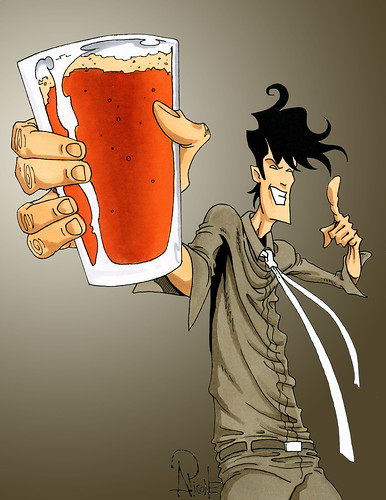
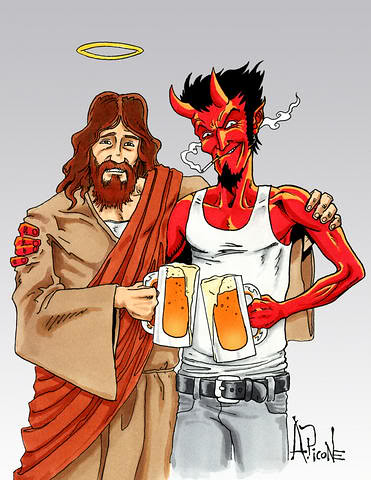
This week’s works of art are by Brooklyn illustrator Anthony Picone, whose art can be found on his blog Ant Stuff. This first one is called “Red Beer.”
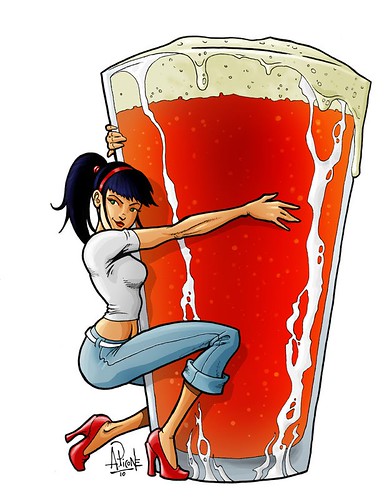
This second one was created for Houston Beer Week.
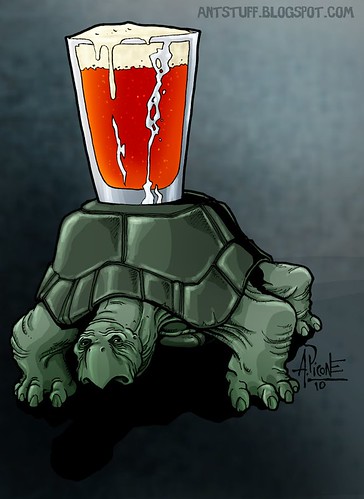
And I like the Beer Turtle, similar to the Iroquois creation myth where the world rode on the back of a giant turtle.
Forgivable Sin shows Jesus and Satan sharing a beer. See beer can solve any problem. Good and evil? Have a beer.
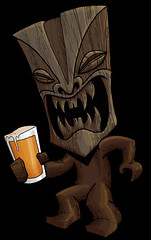
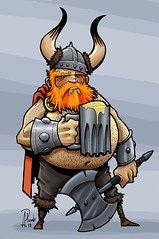
Here’s Tiki Beer and Viking with a Beer.
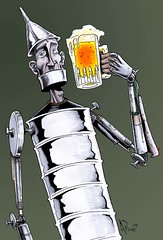
And Tin Man Beer along with Bird Beer.
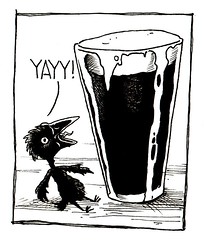
And Picone seems to have a thing for showing pint glasses affection.
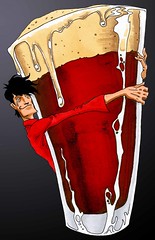
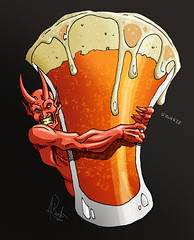
And finally, here’s some Hot Pints.

That’s honestly a small sample of his beer-themed work. He also draws a lot of zombies, monsters, and assorted characters, all of which can be seen at his Antstuff blog.

Trinity College, in Hartford, Connecticut, at the end of March released some preliminary results after three years of a five-year study entitled the Brain and Alcohol Research Project. In a press release entitled What Students’ Brains Have Told Us about the Effects of Binge Drinking, they revealed the following:
Young adults who binge drink tend to perform worse in class than normally would have been expected, but only in the first year of college. After that, drinking to excess produces no discernible difference in academic performance.
So the obvious takeaway from that is that during a student’s first year away from home and away from parental rule, young adults tend to go a little wild that first year but then settle down into academic life for the remaining three years of their four-year college experience. They may not stop drinking, but they figure out how to hit the books, too. It seems rather predictable when you think about, especially when there’s virtually no alcohol education prior to college and in some states even parents are forbidden from educating their own children about drinking.
But it also seems to fly in the face of the neo-prohibitionist hue and cry about underage drinking being as bad for student performance as believed. And undoubtedly the worst of it is because it’s underground as a result of the minimum age being 21 instead of a more reasonable 18.
Also known as BARCS (for Brain and Alcohol Research with College Students), the project is “a large-scale longitudinal study that includes more than 2,000 college students from diverse backgrounds, set out to definitively address previously unanswered questions such as: Can heavy drinking in college affect brain structure and grades? If so, is it related to the overall amount of alcohol consumed or more to consumption patterns, such as binging and blackouts? Why is it that many students drink heavily in college but only a minority goes on to have alcohol problems after college? Are all adolescents affected equally by alcohol in terms of possible effects on brain and risk for later alcohol abuse? Is there a way to identify the people who will be longer-term problem drinkers?”
Unfortunately, I believe they begin with a failed premise. The study defines binge drinking “as a pattern of drinking that raises a person’s blood alcohol content to 0.08 percent or above.” That means drinking enough to be considered drunk at the lowest BAC allowed in most jurisdictions is the same as binge drinking. It’s amazing how what it means to binge drink keeps getting lower and lower, presumably in an effort to make the perceived problem seem increasingly worse. But this greater incidence of binge drinking is due entirely to continually redefining its meaning. Equating binge drinking with merely being drunk (under the legal definition) removes any distinction between the two and renders it meaningless.

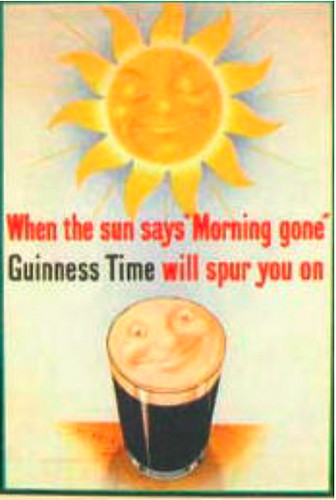
Our 64th Guinness ad shows the sun beating down on a glass of Guinness, and this delightful bit of text: “When the sun says ‘Morning gone’ Guinness Time will spur you on.” [Note: this artwork is from a coaster, which is why it’s so poor looking. If anyone has better artwork, please be so kind as to send it my way. Thanks.]

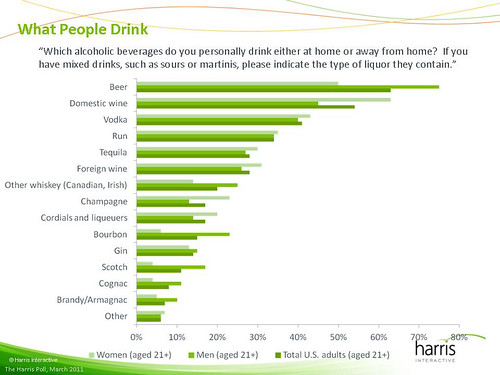
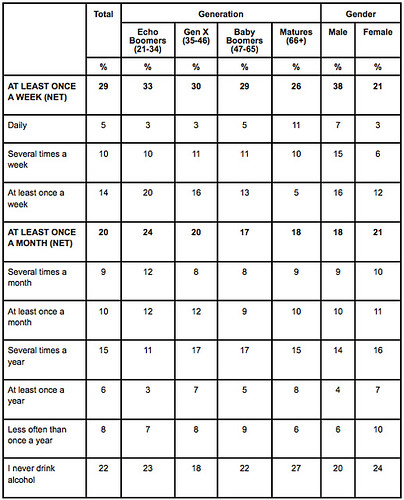
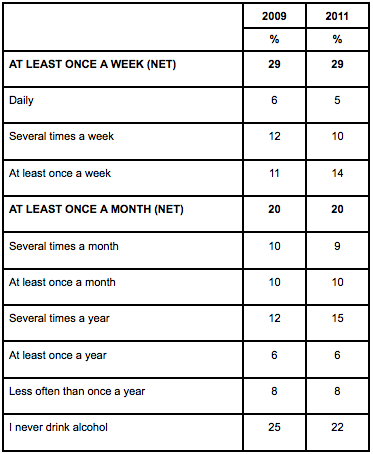
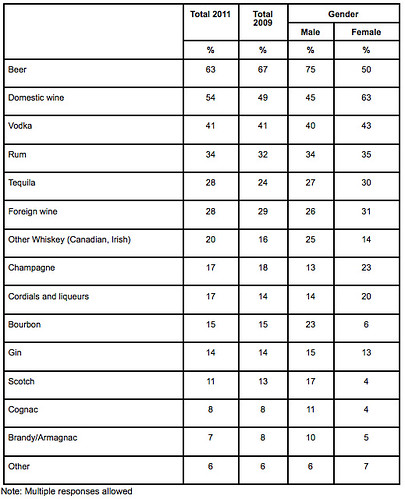
A Harris Poll conducted in March of this year concluded that Three in Ten Americans Drink Alcohol at Least Once a Week. The poll, conducted by Harris Interactive, surveyed 2,379 adults between March 7 and 14, 2011. Not surprisingly, beer continues to be the most popular alcoholic beverage, followed by American wine and vodka. And men still drink beer more than women “75% vs. 50%.”
Here are some other findings from the poll:
Question 1: “How often do you drink alcohol, including beer or wine?”
Question 2: “How often do you drink alcohol, including beer or wine?”
Question 3: “Which alcoholic beverages do you personally drink either at home or away from home? If you have mixed drinks, such as sours or martinis, please indicate the type of liquor they contain.”
Question 4: “Although you may drink several types of alcoholic beverages, which one type would you say you drink most often?”
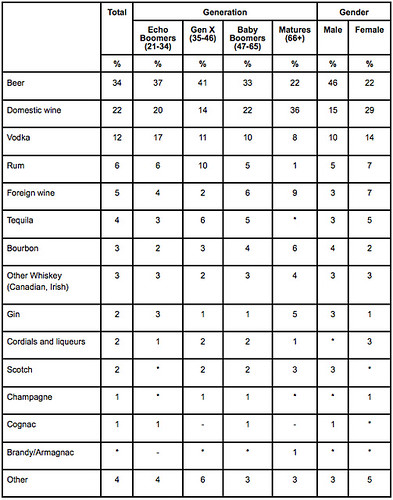
Naturally, I have a couple of quibbles:


Last Sunday, the annual Toronado Belgian Beer Lunch took place, with the food again being done by Sean Paxton, the Homebrew Chef. The Belgian lunch — or Blunch, as I’ve taken to calling it — began promptly at 11:30 a.m. and went until nearly 5:30 p.m. Now that’s slow food, but really with twelve courses the pacing was just right. I had the pleasure of being seated at a table with Toronado owner Dave Keene, the beer chef Bruce Paton, and my favorite ne’er do well, Dave Suurballe. Here’s a recap of the meal.
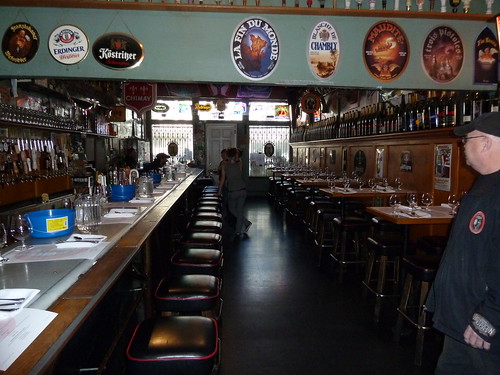
Before the Blunch began.
Pre-Lunch Reception:
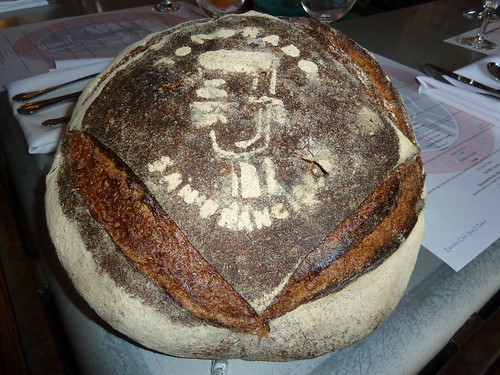
Handmade Toronado bread.
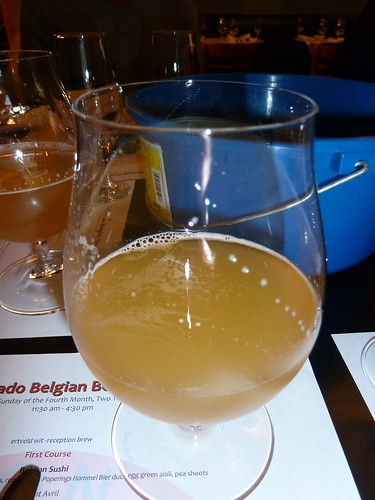
Beer #1: Van Steenberge Ertveld’s Wit
First Course
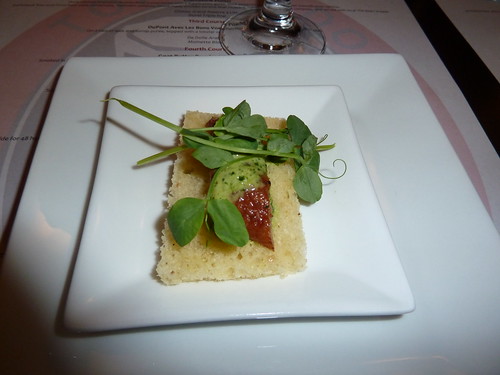
Belgian Sushi: Wit-flavored brioche infused with foie gras, roasted eel, Poperings Hommel Bier duck egg green aioli, pea shoots
Paired with DuPont Avril
Second Course
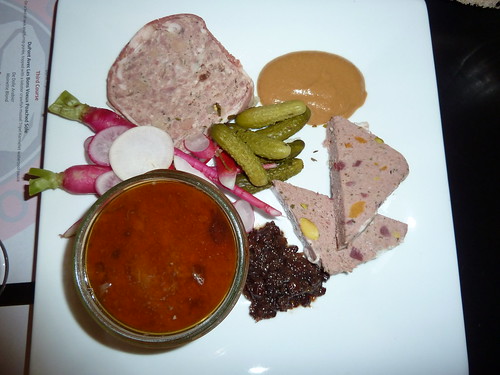
Charcuturie Platter: Duck rillettes braised in Russian River Consecration with a Supplication gelee, duck pistachio apricot infused with Sanctification terrine, pork/duck liver and Orval beer pâté, cornichons, heirloom radishes, house-made Goulden Carolus Noel mustard, currant & Consecration compote

Served with local The Bejkr breads
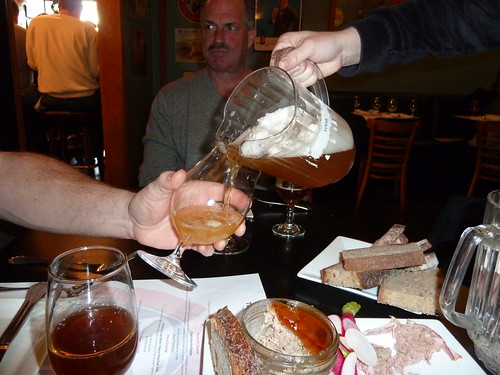
Paired with Chimay Grand Reserve 3 Liter and Duvel Triple Hop
Third Course
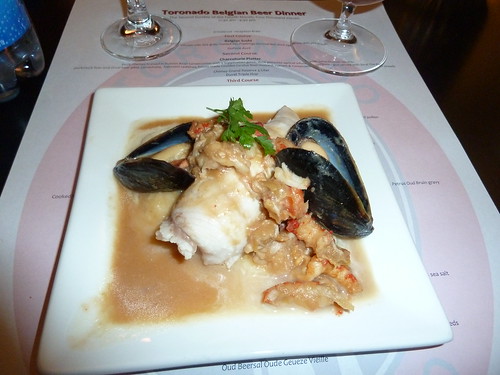
DuPont Avec Les Bons Voeux Poached Sole: On a bed of leek and turnip purée, topped with a lobster crawfish mussel Tripel Karmeliet waterzooi sauce
Paired with De Dolle Arabier and Moinette Blond
Fourth Course
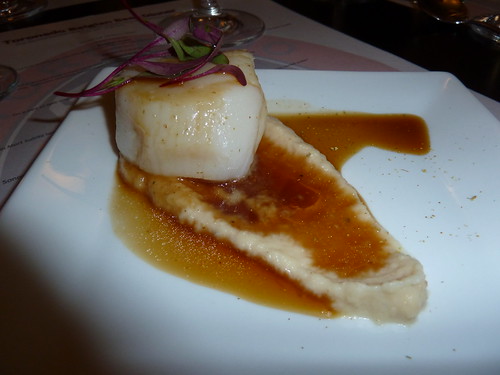
Goat Butter Poached Sea Scallop: Smoked in Mort Subite lambic barrel staves, De Ranke Guldenburg demi glaze, celery root purée infused with Affligem Noel, fennel pollen
Paired with Petrus Aged Pale
Fifth Course
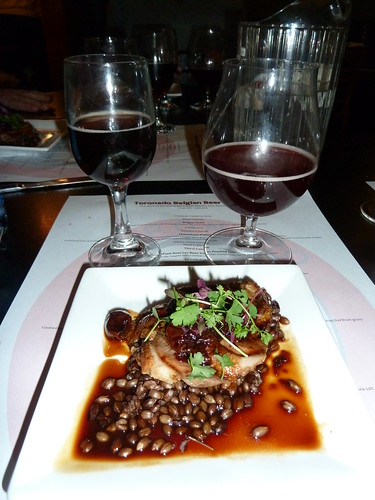
Seared Duck Breast with Sour Cherry Sauce: Sonoma County duck breasts cooked sous vide with shallots, thyme, with a dried sour cherries Hannsen Oude Kriek sauce on a bed of black barley simmer in Delirium Noel and TCHO cocoa nibs
Paired with Bocker Cuvee De Jacobins and Drie Fonteinen Oude Kriek
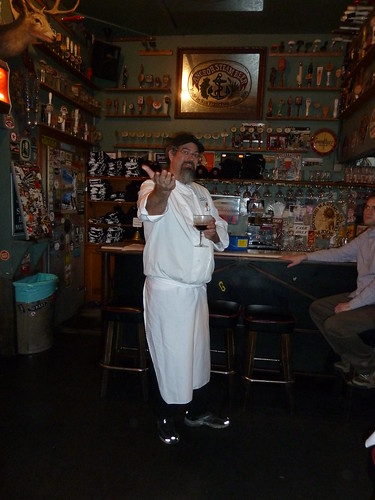
The Homebrew Chef, Sean Paxton.
Sixth Course
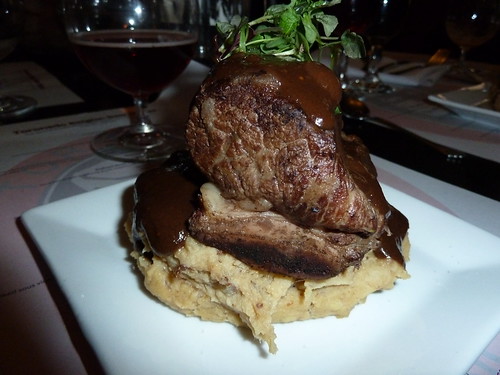
Medium Rare Short Ribs: Cooked sous vide for 48 hours in Rochefort 8, caramelized shallots and thyme, served on a bed of Flemish-style mashed potatoes, with a fig, date Petrus Oud Bruin gravy
Paired with Echt Kriekenbier and Rochefort 10
Seventh Course
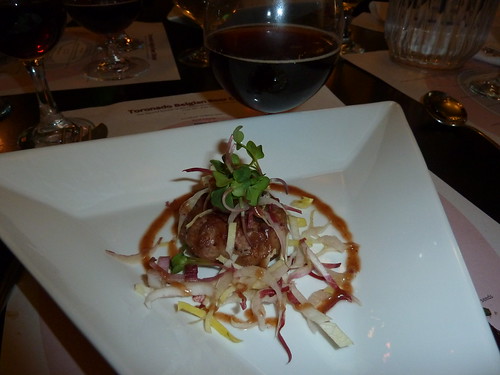
Crepenette: Westmalle Dubbel infused Spring Sonoma lamb, mixed with creamed leeks, wrapped in caul fat topped with a sirop de Liége (pears, date simmered in a Chimay Red ale syrup) and Belgian endive salad
Paired with Rodenbach Grand Cru 2008 keg
Eighth Course
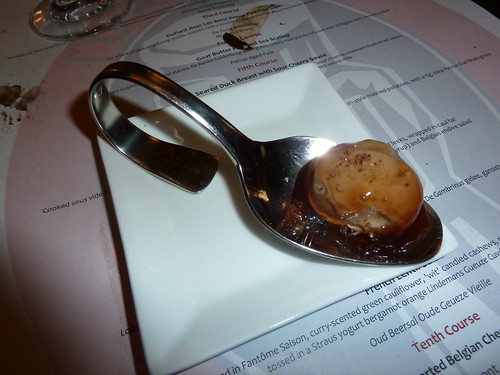
Foie Gras: Lobes of foie gras poached in Boon Kriek, made into truffles and coated in Cantillon Rosé De Gambrinus gelee, garnished with hibiscus sea salt
Paired with Malheur Brut Reserve 2006
Ninth Course
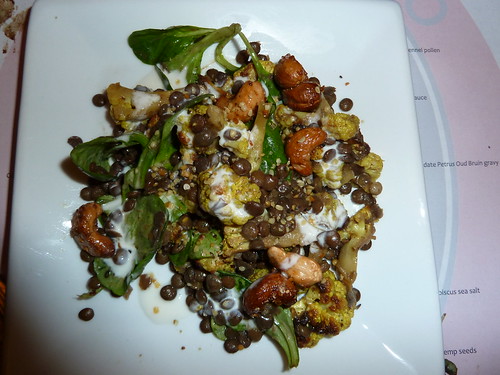
French Lentil Salad: Lentils simmered in Fantôme Saison, curry-scented green cauliflower, ‘wit’ candied cashews, mâche greens and toasted hemp seeds tossed in a Straus yogurt bergamot orange Lindemans Gueuze Cuvée René dressing
Paired with Oud Beersal Oude Geueze Vieille
Tenth Course
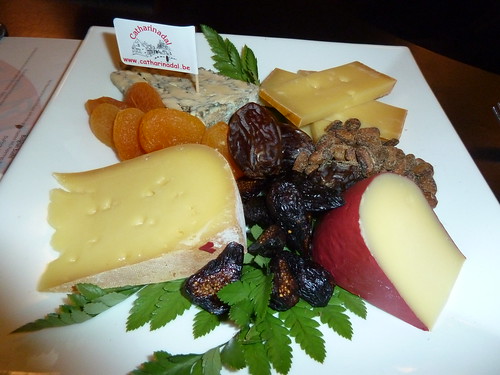
Assorted Belgian Cheeses: Grevenbroecker, Wavreumont, “St. Maure,” Charmoix, Meikaas, and Kriek Washed Fromage served with pomegranate Supplication honey, the Bejkr Biologlque bread, hazelnut fig crackers, dried fruit, honey blood orange peel candied pistachios
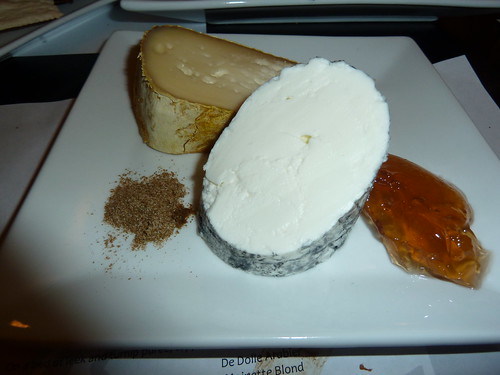
Cheese Plate #2
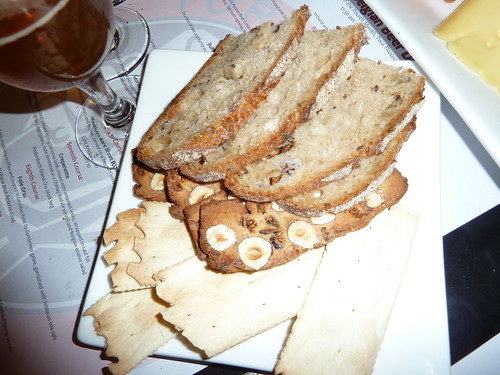
Paired with Liefmans Cuvee Brut and Orval, along with the bread and crackers.
Eleventh Course
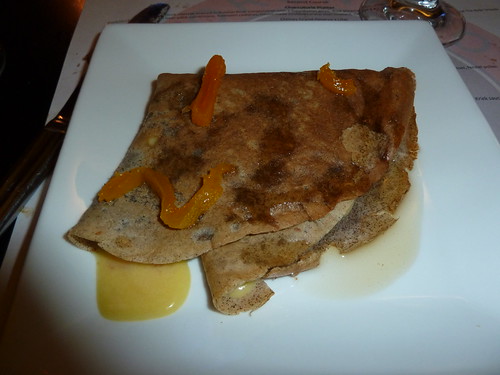
Crêpe: Boon Oude Geuze Mariage Parfait beer curd, Hanssens Oudbeitje rhubarb jam, Westmalle Tripel chamomile syrup wrapped in a Sara Buckwheat Ale crepe
Paired with De Struise T’sjeeses
Twelfth Course
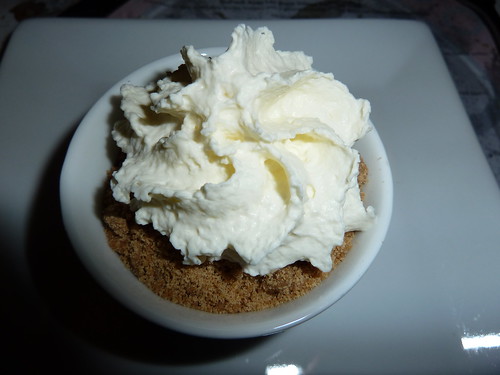
Chocolate Pot de Crème Deconstructed Pie: Speculoos cookie crust, Belgian dark chocolate infused custard, Chantilly cream
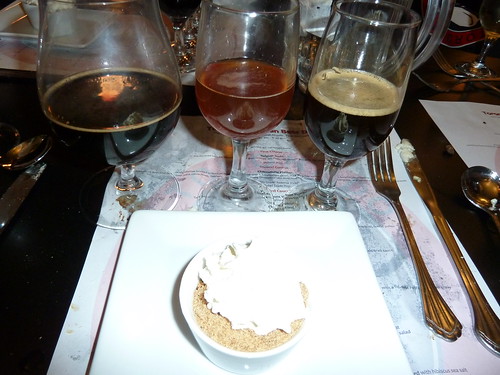
Paired with De Struise Pannepot 2007, Scaldis Noel 1998 Magnums and De Struise Black Albert 2009, beers 18 through 20.
Okay, well that didn’t suck. Another spectacular meal. Thanks Sean and Dave.
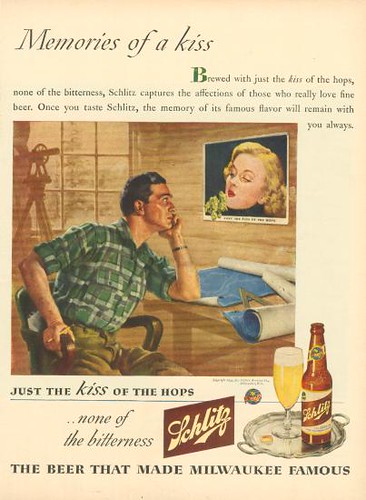
Friday’s ad is for Schlitz, playing on one of their earlier ads. An architect or draftsman stares longingly at the older ad on his wall, instead of working on the blueprints on the desk in front of him. The original ad was their iconic slogan “Just the kiss of hops” so for this ad it’s “Memories of a kiss.”

A gentle reminder that there are exactly three weeks until the next Session a.k.a. The Great Online Beer & Cheese-Off. Now would be a perfect time to pick up three cheeses for the tasting, try them, and start thinking about what beers might work best with them. Here are the cheeses to be on the lookout for:

Maytag Blue or another blue cheese.
Widmer Cellars one-year old aged cheddar or another one-year aged cheddar cheese.
Humboldt Fog from Cypress Grove Chevre or another goat cheese.
It’s easier to participate then my long-winded explanation. Just eat cheese, drink beer and write about it. On Friday, May 6.