Brookston Beer Bulletin

Jay R. Brooks on Beer

  • Home
  • About
  • Editorial
  • Birthdays
  • Art & Beer

Socialize

  • Dribbble
  • Email
  • Facebook
  • Flickr
  • GitHub
  • Instagram
  • LinkedIn
  • Pinterest
  • RSS
  • Twitter
  • YouTube

Powered by Genesis

Albion Don In the Temple of Beer

February 7, 2009 By Jay Brooks

new-albion-ale
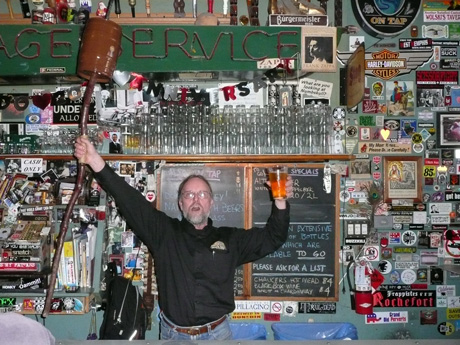
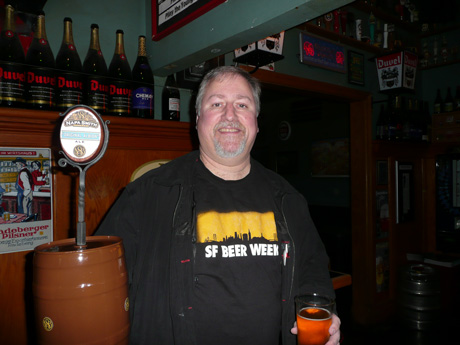
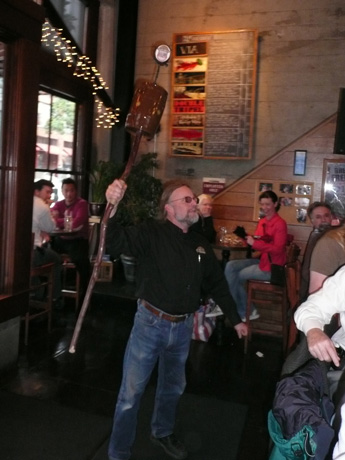
Yesterday the first five events of SF Beer Week were all “Albion Don” Barkley and the recreation of the original beer that started the modern craft brew movement. New Albion’s Pale Ale, dubbed Napa Smith’s Original Albion Ale was tapped every hour, on the hour, for five hours at a different location in San Francisco. Beginning at the Temple of Beer, the Toronado, Don arrived, beery scepter in hand to christen the day (and the week’s) activities.

albion-don-01
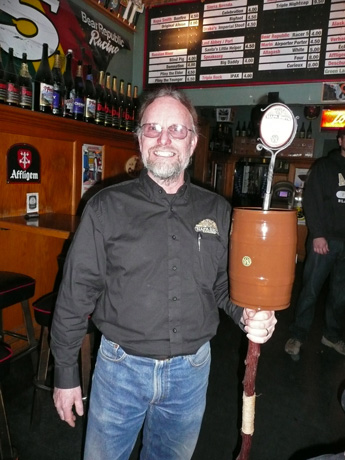
Don Barley, with the scepter of St. Gambrinus in hand.

albion-don-02
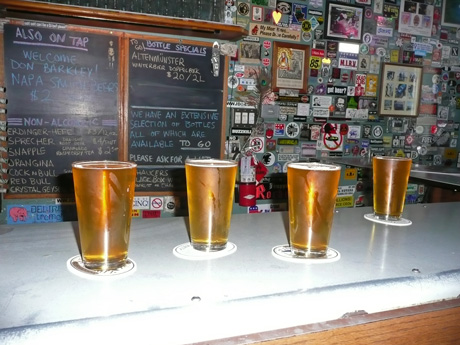
The first pints poured of Napa Smith’s Original Albion Ale.

albion-don-03
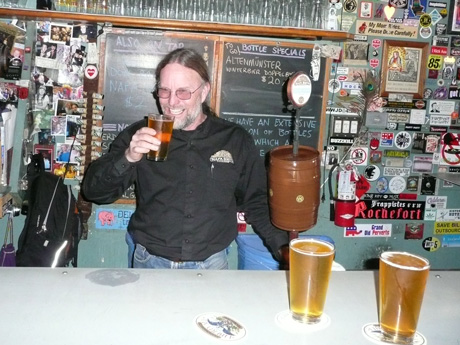
Don’s first sip.

albion-don-04
By the power of St. Gambrinus, he declares that it is good.

albion-don-05
Less impressive than it looks, I got to hold the magical scepter while Don availed himself of the facilities.

albion-don-06
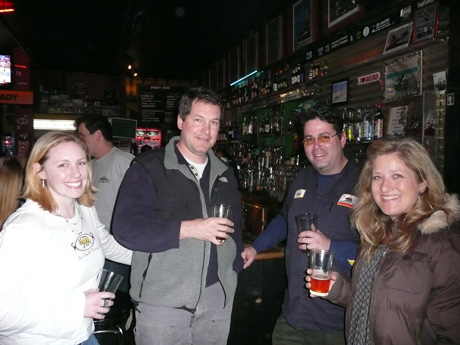
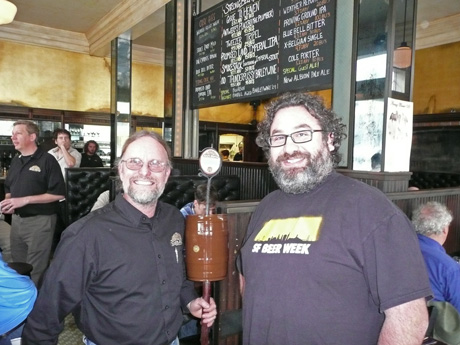
Next stop on the tour was Magnolia. Here Don poses with Dave McLean, owner of Magnolia and fellow SF Beer Week organizer extraordinaire.

albion-don-07
And again, the scepter declares that the beer is good.

albion-don-08
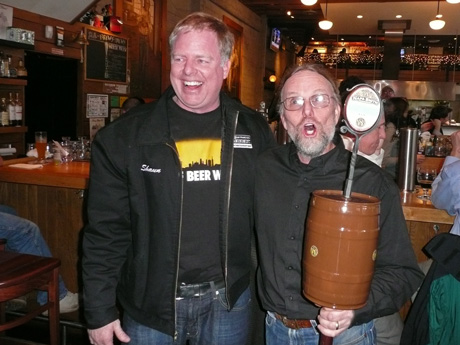
I missed the next two tappings at Monk’s Kettle and City Beer Store due to having to do some prep work for SF Beer Week, but caught up with them at 21t Amendment, where Shaun O’Sullivan was on hand to greet Don.

albion-don-09
And again, it was good.

Filed Under: Beers, Events, SF Beer Week Tagged With: California, San Francisco

Sacramento Closes Oasis, But Still Brewing

January 5, 2009 By Jay Brooks

sac-brew
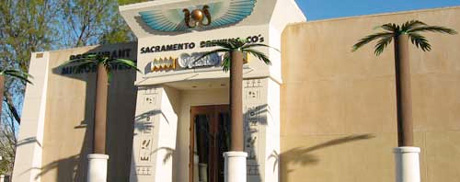
I learned today that the Oasis location of Sacramento Brewing on Madison Avenue in Citrus Heights has closed its doors for good. The original location at Town and Country Village is alive and well and will continue as usual. Recent rumors that Sacramento Brewing was in danger of closing are simply not true. After the remaining beer in the tanks at Oasis is finished, all production — including bottling — will take place at Town & Country.

I’m told business at the Oasis location was always hand to mouth, even from the very beginning, but with the economic times we currently face dipped down below profitable levels. At Town and Country, on the other hand, business remains good and the new owner is optimistic and confident that will continue.

Head brewer Peter Hoey tells me that he will concentrate on having at least a dozen Sacramento beers on tap at any given time and will begin introducing guest taps, possibly as many as 24 in an effort to make the brewpub a Sacramento destination for not only his beers, but better beers of all stripes.

sacbrew-oasis
Some some good news, some bad. I’m certainly pleased to learn that the brewery is not closing. I think Peter is a talented, under-appreciated brewer so it will interesting to see what he comes up with this year in the way of specialty beers, which he promises won’t be dull.

Filed Under: Breweries, News Tagged With: California, Northern California, Sacramento

KVIE On Tap

November 28, 2008 By Jay Brooks

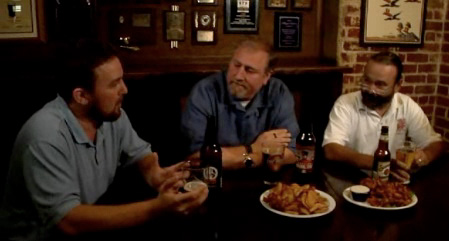
I keep forgetting to share this, but as it’s a slow news day, I figured today would be a good time. The PBS station in Sacramento, California, KVIE, created a show they called “On Tap” all about beer, and specifically beer in Sacramento. It was hosted by local sports announcer and television host Gary Gelfand. He interviewed Fritz Maytag, Charlie Bamforth (Professor at U.C. Davis), Ken Grossman (Founder of Sierra Nevada) and Don Barkley (founder of Mendocino Brewing and currently brewmaster at Napa Smith Brewing), along with presiding over a tasting of Sacramento beers with Rick Sellers (Draft magazine and Pacific Brew News), J.J. Jackson (owner of the Original Homebrew Outlet) and myself. The show aired in August (I think) and you can order the show on DVD online. You can also watch the full tasting that we did online, only a portion of which was used in the show that aired. Click on “Bonus Video” and then “Extended Beer Reviews” at the KVIE Viewfinder.

ontap-1
Rick Sellers, me and J.J. Jackson tasting beer at the Fox & Goose Public House in Sacramento.

on-tap
This is the logo they created for the show.

ontap-2
I’m sure I was making some point here. That or practicing my goofy hand gestures.

Filed Under: Beers, Breweries Tagged With: California, Northern California, Sacramento, Television, Video

Traditional Anchor Christmas Ale Day

November 24, 2008 By Jay Brooks

Every year since 1975 the brewers at Anchor Brewery have brewed a distinctive and unique Christmas Ale, which is now available from early November to mid-January.

From Anchor’s website:

The Ale’s recipe is different every year—as is the tree on the label—but the intent with which we offer it remains the same: joy and celebration of the newness of life. Since ancient times, trees have symbolized the winter solstice when the earth, with its seasons, appears born anew.

Until recently, Anchor’s Christmas Ale was not released until the Monday before Thanksgiving each year. A few years ago they bowed to pressure from their distributors, who wanted to have it earlier to compete against all of the other holiday beers that are released much earlier. So while I can’t argue it’s a bad thing to have this wonderful beer both earlier and for a longer period of time each year, I do actually miss it coming later on a very specific date. There was something I really liked about having to wait for it — admittedly vague and unspecific, but the feeling was there all the same. And there was something I admired about their stubbornly refusing to release it until they were damn well ready. I think it added something intangible to the beer’s mystique, making it more special somehow.

I realize I sound like a sentimental fool, but beer (and many other things) used to be ruled by the seasons and their availability was something that created anticipation and deep satisfactions, too. To me fruit is a great example. Wait, hear me out. There was a time when you couldn’t get almost every fruit year round, but now thanks to agreements with growers in the Southern Hemisphere, we can get most of them all year long. But the very fact that they’re around all the time makes them less desirable. How much better did a strawberry taste when you couldn’t eat one all winter and they suddenly appeared each spring?

Of course, I don’t really think Anchor’s Christmas Ale will lose much — or any — of its specialness by being released a couple weeks sooner each year. I know I still wait eagerly to try the new one each year. But I really think there is something to building up demand and the perceived value that artificial scarcity brings. And there are beers that have suffered for going from a seasonal to a year-round beer. Mendocino’s Eye of the Hawk comes to mind. Back in the early 1980s they only brewed it three times a year (for the 4th of July, their annual anniversary and Oktoberfest). They released the strong ale in 22 oz. bottles in limited quantities and it sold out quickly like clockwork every time it was released. That went on for years until around 1999, when they made it available all the time and in unlimited quantities. Sales fell and although it sold steadily, we sold more in three bursts than when it was always there. Let’s also not forget that seasonals are now the number one craft category at mainstream outlets like grocery and liquor stores. It’s clear people like picking up something different. I don’t think we’ll see popular everyday beers going away, but it should be remembered that limited and seasonal releases can have their own cache and sell better in direct proportion to the difficulty in obtaining them.

Today I’m celebrating “Anchor Christmas Ale Day” and picking up some more today, I’ll drink some tonight, and also save some for my Thanksgiving Day meal on Thursday. This holiday will continue to be the Monday before Thanksgiving, to honor the idea that some things are worth waiting for.

But back to Anchor’s “Our Special Ale.”

Each year our Christmas Ale gets a unique label and a unique recipe for the Ale itself. Although our recipes must remain a secret, many enthusiasts save a few bottles from year to year—stored in a cool dark place—to taste later and compare with other vintages. Properly refrigerated, the beer remains intriguing and drinkable for years, with different nuances slowly emerging as the flavor mellows slightly.

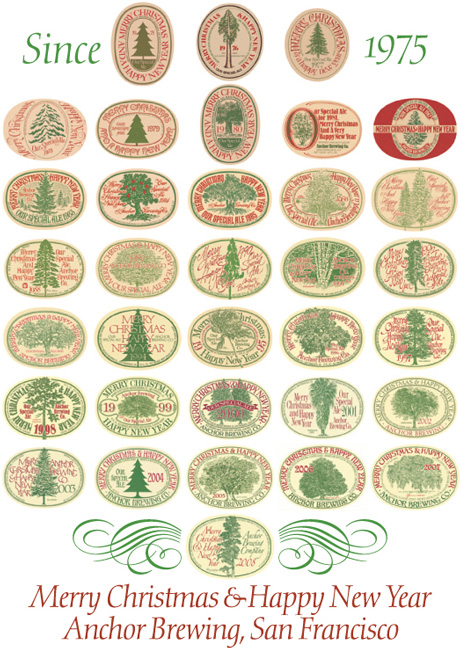
Over the years, there have been 34 different labels and each year Anchor prints a beautiful poster with all of the past labels plus the current years’ label.

Anchor-Xmas-poster08

Filed Under: Art & Beer, Beers, Editorial, Reviews Tagged With: California, Northern California, San Francisco

Liquidated Liquid Lauded

September 4, 2008 By Jay Brooks

farmhouse-bc
I try not to pick on my fellow beer writers too much, especially as I’m acutely aware of my own imperfections and ability to make mistakes. I’m human, too, just like everyone else. But I make an exception for Todd Haefer, who writes the syndicated column “The Beer Man” for Gannett News Service. He took over for the original — and now Real Beer Man — Jim Lundstrom, when he left his position in 2005. You can read Jim’s account in a comment from a previous post I did about one of Haefer’s articles. I’ve written twice about Haefer spreading information I considered, um … unhelpful … back in the fall of 2006. One was about declaring barrel-aged beer dead and the other trashing Lagunitas’ labels.

Since then, I’ve pretty much ignored him. Whenever I see his byline come up in the wires, I just don’t look at it, figuring it’s not really worth my time. Maybe that’s unfair, but a Bulletin reader sent me his latest missive (thanks Doug) and I see I haven’t been missing much. It’s titled Farewell to Farmhouse Kolsch and sings the praises of a Kolsch brewed at least nine months ago, and probably even longer than that. Farmhouse Brewing was the brainchild of my friend Jeff Moses. He created the brand when he took over as GM of Coast Range Brewing in Gilroy, California several years ago. The Coast Range brand inexplicably didn’t sell well and so he figured a new brand name wouldn’t carry the same baggage. Coast Range’s brewer, Peter Licht, was quite talented and came up with some tasty beers under the Farmhouse label. Farmhouse beers did reasonably well, but it wasn’t enough to stave off the inevitable and Coast Range filed a Chapter 11 Reorganization bankruptcy in December of 2007, shuttering their doors at the same time. Having looked at the filing (I used to be in the bankruptcy business, believe it or not) it did not look good for their eventual successful reorganization owing primarily to some outstanding tax burdens accumulated over the years. Something like only one out of every ten Chapter 11 filings results in a successful reorganization. Most are converted to liquidation bankruptcies, with assets sold off to pay creditors.

Given their dire outlook, I stopped paying attention and right now don’t know where their case is at this point. It’s probably not over yet. These things tend to take a while. But in the meantime, whatever beer had been bottled before (or possibly just after) the filing is, according to the Beer Man, now being sold in Wisconsin, and he’s heard it’s also in Minnesota and New York, too. Undoubtedly, the Trustee got whatever he could for the beer and sold it at fire sale prices, probably cents on the dollar, just to get rid of it and get at least something for creditors.

Haefer speculates about their curious marketing of a Kolsch as a farmhouse ale — dude, there is no marketing for this beer, the company no longer exists. And when there was it was a brand name, a label, they never intended that anyone think all the beers were trying to be authentic farmhouse beers. All of the labels featured a crude folk-style painting of a barn from the area where the style of beer was originally brewed. Nobody was pretending that Kolsch or Porter or IPA was a farmhouse beer in terms of its style.

farmhouse-kolsch

Haefer goes on to give us his tasting notes on the beer, finding no fault with it whatsoever, and expressing his sadness in knowing that “it will no longer be made.” He finishes the article with some helpful hints to guide his readers on how they might find this elusive, all but extinct beer.

Since the brewery is no longer producing, the availability of Farmhouse Kolsch depends on whether local distributors took advantage of the liquidation sale. The brewery’s other beers that may pop up include a porter, saison, pale ale, imperial pale ale and a pilsner. It’s sad to have a beer like this and know it will no longer be made.

Many beers are available only regionally. Check the brewer’s Web site, which often contains information on product availability by mail.

Haefer knows they’re in bankruptcy and no longer brewing. What makes him think someone is updating the website with who’s carrying the liquidated beer outside of their home market? And couldn’t he have checked first? That way he would have discovered for himself that there’s almost no information about their availability on the website.

I guess I’m baffled by why any writer would choose to champion a beer that almost no one reading his work could find and even if they could, would be well past its prime, having been out-of-code for at least five months. Coast Range, like most craft breweries, did not pasteurize their beers, giving them a shelf life of roughly 3-4 months. That it’s so good to the Beer Man’s taste is either a testament to the craftsmanship and longevity of the beer itself, beating the odds and presumably having been handled spectacularly well every step of its long journey from brewery to warehouse to cross-country discount store, or to something else entirely — which decorum prevents me from saying. But I think you can figure it out. Beer man indeed.

Filed Under: Beers, Breweries, Editorial Tagged With: California, Writing

SF Beer Week Coming In February 2009

September 1, 2008 By Jay Brooks

sfbw
When Tom Dalldorf and I came up with the idea for Beerapalooza six years ago, our original vision was a week-long series of events celebrating all the wonderful beer here in the Bay Area, California. Unfortunately, there was just two of us, and we could never quite find the time to pull it together in a way that matched our imagination of what it should have been. Beerapalooza became static, with essentially five annual events—which were all great fun—but that was it. It started off with the Bistro’s Double IPA Festival and finished up with the annual Celebrator Anniversary Party. In between there was the cheese tasting at Rogue’s San Francisco Public House, the Beer Chef’s Beer & Chocolate Dinner and the legendary Toronado Barleywine Festival.

Then earlier this year, Philly Beer Week blew our socks off. What Tom Peters and Don Russell were able to pull off their first year was nothing short of amazing. We were envious and a little guilty that we hadn’t managed to put the same effort into to a similarly grand event here in the Bay Area. We returned from Philadelphia re-energized and committed to pulling it together.

So five of us involved in one capacity or another in the beer world formed an ad hoc committee to organize and promote the successor to Beerapalooza, which we’ve dubbed “SF Beer Week,” which will be held over ten days next year, February 6-15, 2009.

Philly Beer Week characterized their town as being “America’s Best Beer Drinking City.” Since we’re friends with the Philadelphia beer community — hell, I’m originally from Pennsylvania, having grown up just a hour west of Philly — we thought we’d have a little fun with an East Coast/West Coast smackdown and so we’re calling the Bay Area “America’s Original Craft-Beer Drinking City.” Not only are we having a bit of fun with the faux rivalry, but we think we have a pretty good claim to that title. With both Anchor Brewing and New Albion in the Bay Area, not to mention Sierra Nevada and Mendocino Brewing (started with New Albion’s eqiupment), and the fact that three of the first five brewpubs were located in the Bay Area, we feel confident of our claim to that title.

The plan is to showcase the legacy and heritage of beer in the Bay, with a goal of coordinating 100-150 events. The week will be anchored by the Bistro Double IPA Festival, the Toronado Barleywine Festival and will end with a new full-blown Bay Area Beer Festival. In between there will be beer dinners, cheese and beer pairing events, other gourmet food events savoring our world-class cuisine, meet the brewer evenings, homebrewing demonstrations, music, films and even a museum exhibition exploring the history of Bay Area brewing, from Monterey to Sacramento and beyond.

A new website went live over the weekend, in conjunction with handing out postcards announcing SF Beer Week at the Slow Food Nation convention. There’s not much there yet, but you can sign up to receive a newsletter to follow along as we add information over the coming months leading up to the 10-day celebration. Instead of just a few people doing a lot of work on SF Beer Week, we’re enlisting the help of as much of the beer community that’s willing and interested in helping. In that way, our goal is to create an event that’s not just for beer enthusiasts, but by them as well. We also hope to get the support of the wider community in the form of recognition by the City or cities and possibly the state along with support from local tourism boards.

If you’re interested in volunteering or getting involved with SF Beer Week by hosting an event, please contact us via Email. Either way, watch the SF Beer Week website or here for news about the event’s progress. And most importantly, consider showing your support for Bay Area beer by attending as many of the events as your liver and wallet will allow. There should truly be something for everyone, whether you live in northern California or have chosen SF Beer Week as the perfect time to visit us.

sf-beer-week

Filed Under: Events, Just For Fun, Related Pleasures, SF Beer Week Tagged With: Announcements, Bay Area, California

Bistro IPA Festival Winners 2008

August 9, 2008 By Jay Brooks


Hop 15 was chosen best in show at the 11th annual IPA Festival earlier today at the Bistro in Hayward, California. The full list of winners is below.


  • 1st Place: Hop 15 (Pizza Port Solana Beach)
  • 2nd Place: Brew Free Or Die IPA (21st Amendment)
  • 3rd Place: Gold Digger IPA (Auburn Alehouse)

Filed Under: Beers, Events Tagged With: Awards, Bay Area, Beer Festivals, California, Northern California

Brewers Day Profile: Brian Hunt

July 18, 2008 By Jay Brooks

moonlight
Shortly after I launched the website for International Brewers Day, I got an appropriately curmudgeonly comment disdaining the idea from my friend Brian Hunt, who owns Moonlight Brewing. Here’s what he had to say.

Let’s all just make good beer and drink it. The Brewer’s Association will log acres of forests for special posters and mailings. I can see Hallmark jumping on this one big time, and before long you’ll have to wade through all the K-Mart “holiday” ads looking for that right something for the brewers in your life. I vote no on this.

While hardly shy, I think having worked in the moonlight for so many years has made Brian shy away from the limelight. That alone made him the perfect choice for my first IBD profile. He is, to my mind, one of the truly unsung heroes of brewing, quietly making some of the nation’s best beers.

And happily I’m not the only one. In an article entitled Czech Mate, published in Forbes, the author reveals that of all the beers rated on Beer Advocate, Moonlight’s Reality Czech is the only golden lager on their list of the “Top Beers on Planet Earth.” Unfazed, Hunt explains.

“We have almost no concept in this country that we can have a beer that is light but also flavorful and vibrant,” explains Brian Hunt, Moonlight Brewing’s owner (and sole employee). “Making a great lager like that requires more time, more skill and more expense than making an ale.”

moonlight-ibd2

Brian Hunt was, of course, born in a log cabin near Sacramento, and walked ten miles to school, uphill — both ways — through blizzards in winter and punishing heat in summer. Alright, everything in that last sentence, except Sacramento, I made up. But Brian’s past just cries out to be remade as mythic fable.

ibd-vertical-red-grunge

Brian started college at U.C. San Diego as a biochemistry major, but soon realized that most of his fellow students were pre-med, a path he decidedly was not interested in pursuing. So he transferred to U.C. Davis to study fermentation sciences with an eye toward becoming a winemaker. But fate stepped in when he was randomly assigned Michael Lewis as his advisor. Needing income, he found himself working in Lewis’ laboratory and found it was easy to be persuaded to concentrate on beer instead of wine. He found his fellow brewing students much closer to his own temperament, more down to earth and fun. “Beer just seemed more enjoyable.” Hunt remarked.

After graduating with a degree in Fermentation Sciences in 1980, Hunt relocated to the heart of early brewing — Milwaukee, Wisconsin — to take a job at the Schlitz Brewery. He loved the history of the place. Everywhere you looked it was there. Hunt spent about eighteen months working for Schlitz. There were no computers in the place. Every step they took was done manually, so you learned the reason why you did certain things, and you could extrapolate those to subsequent steps, too. As a result, he learned a lot in that year and a half, crediting that experience with setting the tone for the rest of his career.

He moved back to California in 1981, brewing at the now long gone Berkeley Brewing Co., making ales and lagers on a 40-bbl system. After that venture went belly-up, he consulted on several brewing projects throughout the Bay Area, before ending up at Acme Brewing in Santa Rosa, California in 1985. He was there two years, but the brewery never had much of a chance owing to financial issues that the owners had not anticipated. The majestic 100-bbl brewhouse finally made its first batch of beer on March 2, 1987, but it was too late. Hunt says of his time there that it was a great MBA project and he learned most of what he needed (whether he wanted to or not) about the business side of the brewing industry.

When the Santa Rosa brewery finally shuttered its doors, Brian spent some time working for the other team at Grgich Hills Winery before a brief stint formulating two beers (whose recipes have since changed) and helping layout the brewery itself at the early Anderson Valley Brewing Co. in Boonville.

In 1988, Brian finally opened his own place in Napa with a descendant of the Hamms brewing family. He had a 1/3-share of Willett’s Brewing Co. (now Downtown Joe’s) from sweat equity and $1,100 of his own money. But by 1992, a get-rich-quick lawsuit brought by one of the brewpub’s employees forced Willett’s into bankruptcy. Brian Hunt saw the writing on the wall, and when someone phoned him to offer 100 Hoff-Stevens kegs, he bought them for himself and began … well, moonlighting.

moonlight-ibd3

The original Moonlight brewery was built in a barn behind the house he was renting. He built the entire system himself using equipment cobbled together from a variety of sources. Brian bought old kettles from a winery that couldn’t boil water, and so had to be adapted. Quite a number of items from Sierra-Nevada’s yard sale (when they opened their own larger brewery in Chico) found their way into Moonlight’s brewery barn, including fermenters and a keg washer. The whole enterprise was financed with credit cards and a $20,000 personal loan. The initial brewhouse included a 7-bbl system.

The original name was going to be Old Barn Brewery, but it never sounded quite right. New Moon Brewing was also an early contender of the hundreds of names that were brainstormed. But once the name Moonlight was floated, there was no turning back. It just worked on so many levels and it seemed to mean different thing to different people, a quality Hunt relished.

For the first two-and-a-half years, beginning in 1992, Brian literally slept 5-1/2 nights out of every seven. He was working two jobs, one at the newly opened Downtown Joe’s (where the bankrupt Willett’s brewpub had been) and at his own place in the barn. This continued until he could afford to concentrate just on Moonlight Brewing. But just a few years into the new venture, another monkey wrench was thrown Hunt’s way. His landlord decided he wanted the house Hunt and his family lived in for his own son and told Brian they had to go. Luckily, they let him keep the brewery in the barn until it could be moved. In 1999, Hunt and his family moved to their present location. It would take another four years until all he permits were in place and the new brewery was built. The new system was 21-bbl and was the original Hart Brewing system, which Brian bought from the Thomas Kemper brewery on Bainbridge Island in Washington. The present set-up has pieces from at least fifty different breweries, either ones that went out of business or upgraded.

stained-hops

Neither the original brewery now the new one has a computer of any kind in it, and that’s by design. It’s because of one of Hunt’s favorite quotes, this one by Albert Einstein. “Imagination is more important than knowledge.” Hunt sees one of the most important aspects of brewing as creativity and thinks of himself more as a tinkerer or toymaker of sorts. And, as he puts it, “you can’t see what’s happening if you’re just pushing buttons.” He believes that many young brewers don’t understand how to make “delicious” because of what he terms “a failure of imagination.” This is because, he says, “many are not taught how to think for themselves.

moonlight-ibd1

The first three beers Moonlight brewed are all still being made: Lunatic Lager, Death & Taxes, and Twist of Fate. Lunatic Lager’s original name, though, was Moonlight Pale Lager, so named because Hunt thought it would translate better to consumers already aware of the newly popular pale ales. The fourth beer Hunt made was Bombay by Boat IPA, also in 1992, and it was one of the first IPAs made in America. At that time, nobody really made one and certainly those few who did, did not call it an IPA.

moonlight-ibd4

Hunt believes that being small also allows him a flexibility that bigger breweries can only dream about. He can follow market trends and turn on a dime. Because he not only brews the beer, but also delivers it (he’s a one man operation, most of the time) he’s not removed from his customer but mingles and converses with them almost every day of the week.

His original plan was to hope that he could make a living in Sonoma selling whatever he brewed. Though his net is spread slightly wider than he originally thought, it’s not by much, and he’s remained true to initial vision. “I don’t find success by selling a lot, I find it by selling to people who respect it or appreciate it.” So long as that’s the case, we won’t be seeing Moonlight beer in grocery stores nationwide or even bottle locally. Brian’s just not looking for that kind of success. He’s content doing what he wants in his own way, an iconoclast to the end. As you’d expect, Hunt also doesn’t think much of competitions either. “Fame is empty.” He says. “Good beer should not be.” So while that may be a loss for the people who can’t find Moonlight beer in their neighborhood, it does make the Bay Area just that much more of special place for beer and provides yet another reason for beer fans around the world to make the pilgrimage to taste California beer.

moonlight-ibd5

Or put another way — as his pint glasses used to read — “good beer is as good beer does.”

Filed Under: Breweries, Just For Fun, News, Related Pleasures Tagged With: California, Interview, Northern California

Belgian Blunch at the Toronado

April 8, 2008 By Jay Brooks


On Sunday, beginning at 11:30 a.m., I sat down with 80 or so beer lovers at the Toronado in San Francisco for a Belgian beer lunch, a blunch? The Toronado has been putting on this mostly word-of-mouth event, which sells out every time, for a number of years, but this was the first year the food was done by Sean Paxton, the Homebrew Chef. The blunch lasted almost six hours through a total of eleven separate courses and at least sixteen Belgian beers (plus a few more American ones). We all agreed that Sean Paxton is a mad man, a culinary alchemist. Read the description of the blunch in the photo gallery and see if you don’t agree.

The blunch was hosted by Toronado owner Dave Keene and the food was done by Sean Paxton.

Vinnie and Natalie Cilurzo, from Russian River Brewing, among the Belgian beer and cheese plate.


For many more photos from the Toronado Belgian Blunch, visit the photo gallery.

Filed Under: Events, Food & Beer Tagged With: California, Northern California, Photo Gallery, San Francisco

Appeals Court Reverses Washington Costco Decision

January 29, 2008 By Jay Brooks

According to a breaking news press release I received from the National Beer Wholesalers Association (NBWA), the Ninth Circuit Court of Appeals has reached a verdict in the lower court’s earlier decision in Costco v. Hoen (Washington State Liquor Control Board), reversing a majority of it, which, according to the NBWA, “thereby affirm[s] the right of the states to regulate alcohol under the 21st Amendment – a system that works to protect the citizens of each state. While NBWA is still reviewing the totality of the Court’s opinion, it appears that state regulation has been validated.”

Disappointingly, the Seattle Post-Intelligencer’s report on this begins with the following loaded sentence. “A federal appeals court Tuesday dealt Costco Wholesale Corp. a setback on whether the giant warehouse club operator could lower prices of beer and wine for its customers.” I realize that was in the business section, but so much for impartiality. Swallowing Costco’s propaganda entirely, to say they sued the state so they could lower prices to consumers is at best not telling the whole story and at worst and out and out fabrication.

Of the nine laws and regulations Costco claimed restricted competitive practices, U.S. District Court Judge Marsha Pechman agreed and ruled over a year ago in their favor. Today’s appeals ruling reversed eight of those, with the exception of the post-and-hold requirement. It appears likely that it may now be appealed to the Supreme Court. According to the PI, “The 9th Circuit Court of Appeals said the state Liquor Control Board could prohibit discounts, ban central warehousing of beer and wine by retailers, require wholesale distributors to charge uniform prices to all retailers and require a 10 percent markup. The state had said if Costco won it could put into question the systems other states use to control alcohol consumption and safeguard the collection of taxes. At least 30 other states or jurisdictions had filed briefs in support of Washington.”

Reuters, on the other hand, more even-handedly stated that Costco “lost a bid on Tuesday to overturn Washington state liquor rules that control pricing and discounts.”

The Seattle Times and the Wall Street Journal have also now weighed in with stories of their own.

From the Wall Street Journal:

Costco’s 2006 triumph attracted a lot of attention because it suggested that major changes might be in store for the nation’s complex system of regulating alcohol sales. Changes in Washington state could have a ripple effect, because most states have similar laws.

Costco is challenging a regulatory architecture that dates to the repeal of Prohibition and was designed partly to discourage overconsumption of alcohol. Makers of alcoholic beverages sell to a distributor, which marks up the price and trucks it to a bar, restaurant or store, which then sells it to a consumer.

Costco is deciding whether to appeal the ruling. “We are pleased that the central part of the anticompetitive restraints provisions was struck down,” said David Burman, a Seattle-based lawyer handling the case for Costco, referring to the “post and hold” provisions. “It will be good for Costco members and other consumers.”

Seventeen other states have post-and-hold laws, Mr. Burman said. He added that he thinks Washington lawmakers “will likely” consider overturning other provisions.

Washington alcohol regulators may appeal the part of the ruling favoring Costco. “The state got a pretty good deal. It has to decide whether it can live with a regulatory scheme that sort of has one component plucked out and thrown away,” said Richard Blau, a lawyer who specializes in alcohol law with GrayRobinson, a Florida law firm. Regulators could leave it up to state lawmakers to address that aspect of the court’s decision.

The other reason that this so-called “regulatory architecture” was partly created, in addition to discouraging overconsumption, is to level the playing field among different sizes of businesses so that advantages were not given to larger businesses by virtue of their superior bargaining position and resources to make larger buys. That was the real reason Costco went after these laws, not because they were concerned that their customers might be paying too much for the beer and wine they sold. You’d have to be pretty blind to reality to swallow that one as their motivation, yet in mainstream media story after story that continues to be the reason stated.


Filed Under: Beers Tagged With: Bay Area, Business, California, National, Washington

« Previous Page
Next Page »

Find Something

Northern California Breweries

Please consider purchasing my latest book, California Breweries North, available from Amazon, or ask for it at your local bookstore.

Recent Comments

  • Bob Paolino on Beer Birthday: Grant Johnston
  • Gambrinus on Historic Beer Birthday: A.J. Houghton
  • Ernie Dewing on Historic Beer Birthday: Charles William Bergner 
  • Steve 'Pudgy' De Rose on Historic Beer Birthday: Jacob Schmidt
  • Jay Brooks on Beer Birthday: Bill Owens

Recent Posts

  • Beer In Ads #5225: Fabled Ambrosia Of The Ancients April 17, 2026
  • Historic Beer Birthday: William O. Poth April 17, 2026
  • Beer In Ads #5224: Harvard Bock Beer April 16, 2026
  • Historic Beer Birthday: William H. Biner April 16, 2026
  • Historic Beer Birthday: Alan Eames April 16, 2026

BBB Archives

Feedback

Head Quarter
This site is hosted and maintained by H25Q.dev. Any questions or comments for the webmaster can be directed here.