Brookston Beer Bulletin

Jay R. Brooks on Beer

  • Home
  • About
  • Editorial
  • Birthdays
  • Art & Beer

Socialize

  • Dribbble
  • Email
  • Facebook
  • Flickr
  • GitHub
  • Instagram
  • LinkedIn
  • Pinterest
  • RSS
  • Twitter
  • YouTube

Powered by Genesis

Killing Ugly Radio One Beer At A Time

September 28, 2007 By Jay Brooks

Last year I wrote that Tony Magee, the iconoclastic owner/brewer of Lagunitas Brewing has been a big Frank Zappa fan most of his life. That’s still true and he’s kept his promise to keep releasing Frank Zappa beers as the anniversaries of each album comes to pass. First it was Freak Out and now Lagunitas has released Kill Ugly Radio, which was apparently the name Zappa wanted to call his second album. The record company said no, and instead it was known as Absolutely Free. The new beer was also made with the permission of Zappa’s widow, Gail Zappa (who runs the Zappa Family Trust). Like the last one, the label uses artwork from the album.

When the Celebrator panel tried it for the New Releases section of the latest issue, here’s what we thought of the beer:

Like a cacophony of Zappa’s music, there’s a lot going on in this beer. In some ways it’s a bit like a saison on steroids with the peppery, zesty spices you’d expect, but with a very big hop presence. Perhaps a little unbalanced, but then so was Zappa. Again, like Zappa, it’s big and eccentric with a lot of tangents of flavors, in the end a fitting tribute. Highly Recommended for fans, merely Recommended for people who don’t get Zappa.


Click on the label for a larger view.
 

Filed Under: Beers Tagged With: Bay Area, California

Colorado Unseats California As No. 1 Beer Producing State

September 28, 2007 By Jay Brooks

The Beer Institute has released its 2007 Brewers Almanac with all sorts of statistics, but the one that’s getting all the attention is that California has been unseated as the number one beer state in terms of production, a position its held for several years. Colorado takes the top spot this year, besting California by just over 500,000 barrels, or roughly the equivalent of a brewery two-thirds the size of Sierra Nevada Brewing.

To Colorado, I raise my glass and toast their success. There are some fine breweries there and they deserve their moment in the sun. But just wait until next year. Let’s go breweries of California, get brewing. You’re not going to take this lying down, are you? Some kidding aside, it’s great news for everybody. A little healthy competition never hurt anybody. And with contests like this, everybody wins.

From the press release:

In 2006, the state of Colorado officially became the largest beer producing state in the country, according to newly released data from the Beer Institute. The Colorado brewing industry produced over 23.3 million barrels or 724.5 million gallons of beer. This makes the state tops in production.

“Colorado is tremendously important to the beer industry and produces a number of high quality brews enjoyed by adults around the country,” said Jeff Becker, president of the Beer Institute. “With a strong beer culture and a rich brewing history, it’s no surprise the state has become number one.”

“As a state widely recognized around the country for our natural beauty, rich history, and extensive cultural attractions, we’re pleased to now also be known as the beer brewing capitol of the United States,” added Colorado Governor Bill Ritter. “Colorado breweries are also increasingly using and producing renewable energy, which is good for the industry, good for the environment, and good for developing more home-grown sources of energy.”

Colorado is also home to other major industry trade groups such as the Brewers Association, based in Boulder, representing America’s small brewers since 1942. The state also plays host to the annual “Great American Beer Festival” in Denver.

“In addition to housing many long established large brewers, Colorado is also leading the way among small, independent craft brewers,” said Charlie Papazian, founder and president of the Brewers Association. “We invite beer lovers from every state to visit us and sample firsthand some of the many fine varieties of craft beer produced here.”


Here the Top 10 beer producing states:

  1. Colorado
  2. California
  3. Texas
  4. Ohio
  5. Virginia
  6. Missouri (est.)
  7. Georgia (est.)
  8. Florida
  9. Wisconsin
  10. New York

 
Surprisingly, Oregon and Washington ranked 15th and 16th, respectively. After I take a look at the full almanac, I’ll see what other interesting facts emerge. Until then, I’m drinking a Great Divide Titan IPA tonight. Or perhaps an Odell 5 Barrel Pale Ale or even a Dale’s Pale Ale. Damn, I just have too many friends in Colorado making great beer. Congratulations one and all!
 

Filed Under: Uncategorized Tagged With: Business, California, Colorado, National, Press Release, Statistics

Catholic Irony vs. Miller

September 28, 2007 By Jay Brooks

miller-art
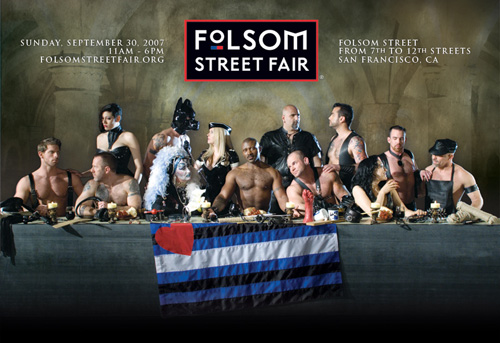
There’s a festival in San Francisco every year, the Folsom Street Fair, that celebrates sexual diversity, fetishes and leather lifestyles. The event has a rich history of fighting conventional wisdom and poverty, as well. It’s a registered non-profit organization and also has all the things that typical street fairs have: music, food, beer and sponsors. One of the four main event sponsors this year, known as “presenting sponsors,” is Miller Brewing Co. Which is all well and good, or at least it was until the fair organizers unveiled this year’s poster for the event.

folsomstfair

It’s an obvious parody of Leonardo Da Vinci’s painting The Last Supper, which along with his Mona Lisa, Edward Hopper’s Nighthawks, Grant Wood’s American Gothic and Edvard Munch’s The Scream, is undoubtedly one of the most parodied works of art in the world. Do a Google Image’s search for “last supper parody” and no less than 6,360 images pop up. The poster is meant to show diversity in many forms; racial, gender, sexual preference and lifestyle. If you’re deeply religious it’s possible that you won’t like the image but that’s the price you pay for living in a free society. Everybody wants tolerance in the first person, such as “tolerate my beliefs” but it’s gets harder for those same people in the third person, as in “tolerating his beliefs.” Enter the Catholic League, which bills itself as a “Catholic civil rights organization” and states its purpose is to “defend the right of Catholics – lay and clergy alike – to participate in American public life without defamation or discrimination.” Their mission also includes working “to safeguard both the religious freedom rights and the free speech rights of Catholics whenever and wherever they are threatened.” All laudable goals, except that it appears the free speech rights of non-catholics count for naught. Since Tuesday the Catholic League has put out five press releases “calling on more than 200 Catholic, Protestant, Jewish, Muslim, Buddhist and Hindu organizations to join with [them] in a nationwide boycott of Miller beer.”

Yesterday, SABMiller released the following statement:

Statement Regarding Folsom Street Fair

While Miller has supported the Folsom Street Fair for several years, we take exception to the poster the organizing committee developed this year. We understand some individuals may find the imagery offensive and we have asked the organizers to remove our logo from the poster effective immediately.

Not good enough, sayeth the Catholic League, calling Miller’s press release a “lame statement of regret.” Then they kicked things into high gear. “We feel confident that once our religious allies kick in, and once the public sees the photos of an event Miller is proudly supporting, the Milwaukee brewery will come to its senses and pull its sponsorship altogether. If it doesn’t, the only winners will be Anheuser-Busch and Coors.” See, even Catholics aren’t aware of the craft beer movement and believe there are only three breweries in the U.S. And certainly imports were overlooked, too. Some kidding aside, this is certainly a quagmire for Miller, and this has been receiving a lot of media attention, as stories involving sex usually do in our society. There’s nothing like titillation to increase reader- and viewer-ship.

Locally, at least, not everybody agrees as one gay member of the clergy had this to say via the Bay Area Reporter.

“I disagree with them I don’t think that [Folsom Street Events] is mocking God,” said Chris Glaser, interim senior pastor at Metropolitan Community Church – San Francisco. “I think that they are just having fun with a painting of Leonardo da Vinci and having fun with the whole notion of ‘San Francisco values’ and I think it’s pretty tastefully and cleverly done.”

Glaser added, “I think that oftentimes religious people miss out on things because they don’t have a sense of humor. That’s why being a queer spiritual person we can laugh at ourselves and laugh at other people.”

Even Speaker of the House Nancy Pelosi, herself a Catholic, issed the following through her press secretary, Drew Hammill. “As a Catholic, the speaker is confident that Christianity has not been harmed.” Exactly. And while the people Fox News interviewed called it a “mockery of religion,” “blasphemy” and suggested that it’s “bad for society,” I can’t see the Catholic League’s point.

First of all, they don’t own the image of Da Vinci’s Last Supper and it’s already been parodied countless times. The event itself has been painted by numerous artists over the centuries. Honestly, I don’t see how the “religious freedom rights and the free speech rights of Catholics” have been infringed upon or how catholics have been in any way defamed. The Last Supper even as an idea is not the exclusive province of Catholicism. If they had left it alone, it would have been a minor event in a local community.

And why pick on Miller? There are dozens of other sponsors, too, including SF Environment, an environmental group, and the San Francisco Bay Guardian, a local weekly newspaper. I almost hate to wonder, might this also be a little bit because it’s beer? Many neo-prohibitionist groups are also religiously based. But really, what did Miller do wrong? They sponsored a local event that’s perfectly legal, has the support of the local community and government. They’ve been sponsoring it for years. Then suddenly the event does something that the Catholic League doesn’t like. They’re offended. So what? Miller tries to soothe the situation, obviously seeing it for the powderkeg it is and asks to have their logo taken off the offending poster, but bravely continues to sponsor the event. Good for them. Why shouldn’t they? How is that in any way the “corporate arrogance” the Catholic League accuses them of? What’s arrogant about that? If you want to talk arrogance, then we need to look at the Catholic League. Being arrogant is defined as “making claims or pretensions to superior importance or rights,” which is exactly what they’re doing by asserting that their “right” to not have their religion criticized or challenged — if indeed that’s really what’s being done, which I seriously doubt — is above the free speech rights of the criticism or challenge. I doubt many in the Catholic League have read Richard Dawkin’s The God Delusion, but one of the book’s soundest arguments is that religion has become the only idea, concept, belief, whatever that can’t be criticized. That we’re taught we must respect one another’s beliefs and not question them. Why? Why is every single other idea in the world able be talked about critically but not religion? It just doesn’t make sense to me. Obviously, the Catholic League believes that or they wouldn’t be misreading this so badly. It seems obvious to me that the Folsom Street Fair poster isn’t attacking or criticizing religion and certainly isn’t targeting the Catholic religion. It’s obviously parody, which is protected speech under the First Amendment of our Constitution. Even the Supreme Court has said so, thanks to an unlikely person, Larry Flynt, publisher of Hustler, whose story is chronicled in the film The People vs. Larry Flynt.

But again, why pick on Miller? They didn’t make the poster. They didn’t print the poster. They didn’t approve the poster. All they did was sponsor the event. The Catholic League is the bully in this passionate play, and they’re the ones that deserve to be crucified, not Miller. It’s one thing to disagree with another point of view or not like what you perceive as criticism of your own, but it’s quite another to attack it and try to harm their business over that disagreement. That’s what bullies do. But there’s one more bit of irony in all this that needs saying. Obviously, many catholics and other religious conservatives have a great deal of difficulty dealing with non-traditional sexual lifestyles, some of which are center stage in the Folsom Street Fair. But the Catholic Church is no stranger to non-traditional sexual practices among its own clergy and has systematically been suppressing its own sexual misconduct literally ruining the lives of hundreds, maybe thousands, of children in the process. Check out the film Deliver Us From Evil for just the tip of iceberg. That’s really offensive, worthy of people being offended, not like this fake controversy and complaints of being wounded simply by an image they don’t like.

Frankly, I thought I’d never utter these words, but “It’s Miller Time.”

Filed Under: Editorial, Politics & Law Tagged With: Business, California, Law, National, Prohibitionists, San Francisco

NorCal Beer Dinner Menu Finalized

September 26, 2007 By Jay Brooks

Over the last year I’ve gotten to know the “Homebref Chef,” Sean Paxton, and he was kind enough to invite me to his 10th annual beer dinner at the Northern California Homebrewer Festival which will take place October 5. The festival itself is the 5th and 6th and takes place at the Lake Francis Resort in Dobbins, California. Sean recently finalized the menu, and even though it is my sad duty to reveal that the dinner is already sold-out, I though I’d share what sounds like a pretty spectacular dinner. The theme for the dinner is “Sour Ales Inspired by Belgium.”


The Menu:

First Course

Belgian Endive Salad: Slightly Bitter Leaves of Endive Mixed with Pomegranate Seeds, Red Beets, Watercress, Chives and Chervil Tossed in a Watermelon Funk Vinaigrette

Beer
: 21st Amendment Watermelon Funk: A collaboration beer involving Shaun O’Sullivan’s Watermelon Wheat and Fresh Watermelon added to Vinnie Cilurzo Barrel and Spiked with Brettanomyces and Aged 2 Years in Santa Rosa

Second Course

Steamed Mussels in Beer: Prince Edward Island Mussels, Shallots, Thyme Steamed in Homebrewed Wit

Pumpkin in Green Herb Sauce: Steamed Fall Squash in Homebrewed Wit, Topped with a Spinach, Sorrel, Mint and Parsley Sauce

Pomme Frites: Twice Fried Kennebec Potatoes, Belgian Style Served with a Duvel Shiso Aioli and Fou’ Foune Aioli

Beer: The Brewing Network’s Dr. Scott Homebrewed Wit

Third Course

Les Carbonnade Flamandes: A Flemish Stew Cooked with Beef, Lamb, Dark Candi Syrup Cured Bacon, Leeks, Shallots, Thyme and Belgian Strong Dark

Flemish Style Root Vegetable Stew: Parsnips, Yukon Gold Potatoes and Carrots Braised in Belgian Strong Dark and Herbs, Served with a Smoked Garlic Aioli

Beer: 21st Amendment The Beer Hunter: Jamil Zainasheff Award Winning Belgian Strong Dark made at 21st Amendment for the GABF Pro-Am 2007

Fourth Course

Waterzooi: A Classic Ghent Milk Stew made with Cod, Leeks, Fennel, Onions, Shallots, Saison, Milk and Herbs

Tofu Waterzooi

Beer: Sacramento Brewing Saison: Peter Hoey’s Sour Mashed Farmhouse Style Saison

Fifth Course

Duck Legs Cooked in a Brett Blonde: Cinnamon Scented Parsnips Stewed in Sanctification

Beer Braised Veal Cheeks: Leeks, Carrots, Celery Root, Fresh Thyme Cooked in Chardonnay Barrel Aged Temptation Sour Ale

Bier Risotto: Pearl Barley cooked “Risotto Style” in a Roasted Heirloom Tomato Temptation Broth With Lobster Mushroms and Roasted Thyme Shallots

Brussels Sprouts: Blanched Sprouts cooked in Brown Butter and Nutmeg

Cauliflower Gratin: A Twist on a Classic, Cauliflower Blanched in Ale and Topped with a Gruyere Cheese Sauce

Beers:

Russian River Temptation: A Blonde Ale Fermented with Brettanomyces, Aged in French Oak Chardonnay Barrels

Russian River Sanctification: a 100% Brettanomyces Fermented Blonde Ale

Sixth Course

Dark Chocolate Framboise Truffles: Where Dark Chocolate meets Brenden’s Whisky Barrel, filled with Porter, spiked with Brettanomyces, Aged for 7 Months, then blended with “The Golden Hallucination” and “Brown Bear”

Vanilla Bean Tripel Infused Pot de Creme: Starting with Todd Ashmans Sage Honey and Thai Palm Sugar spiced Tripel and infusing Vanilla Beans into Cream, slowly cooked in a water bath to make an ultra creamy decedent dessert

Beers:

Thirsty Bear Menage a Framboise

Fifty Fifty Brewing Co. Trifecta Belgian Style Tripel

 
10.5

Northern California Hombrewer Festival Beer Dinner

Lake Francis Resort, 13919 Lake Frances Road, Dobbins, California
[ website ]
 

Filed Under: Food & Beer Tagged With: Announcements, California, Homebrewing, Northern California

Hunt’s Hop Tea

September 24, 2007 By Jay Brooks

teapot
A few weeks ago while helping Moonlight with their hop harvest, owner/brewer Brian Hunt broke out something I’d never seen before: hop tea. Now I’ve seen regular hop tea before, I’ve even bought some at the health food store and tried it, but this was something totally different. Brian told me the idea grew out of an experiment he was doing to see how hops reacted at different temperatures, which he presented at “Hop School” a few years ago. He discovered in the process that he could make a delicious hop tea and that it varied widely depending on the temperature of the water. Here’s how it works:

  1. Put approximately two-dozen fresh hop cones in a 16 oz. mason jar.
  2. Heat water to __X__ temperature.
  3. Fill jar with heated water and seal cap.
  4. Let the water come down to ambient room temperature.
  5. Refrigerate.
  6. Drink.

There appears to be four main factors that change depending on the temperature of the water. These are:

  1. Color
  2. Float
  3. Bitterness
  4. Tannins

hop-tea-1

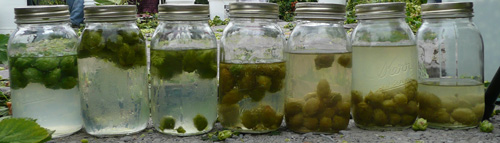
Intrigued by all of this and quite curious, Brian brought out seven examples of his hop tea made with water of different temperatures: 60°, 120°, 130°, 140°, 160°, 180° and 185°. They’re shown above from lower to higher temperature, left to right.

As you can see, the lower the temperature, the more green the hops are and the water remains less cloudy. At the higher temperatures, the hops are stripped of their green, becoming brown, and the water also becomes more brown. Also, as the temperature increases, the hops lose their buoyancy and begin to sink in the water. Although you can’t see it in the photo, the hotter the water, the more hop bitterness and at the upper range, tannins begin to emerge. Here’s what I found:

  • 60°: Fresh, herbal aromas with some hop flavors, but it’s light.
  • 120°: Bigger aromas, less green more vegetal flavors.
  • 130°: Also big aromas emerging, flavors beginning to become stronger, too, but still refreshingly light.
  • 140°: More pickled, vinegary aroma, no longer subtle with biting hop character and strong flavors.
  • 160°: Very big hop aromas with strong hop flavors, too, with a touch of sweetness. Tannins are becoming evident but are still restrained.
  • 180°: Big hop and vinegary aromas, with flavors becoming too astringent and tannins becoming overpowering.
  • 185°: Vinegary aromas, way too bitter and tannins still overpowering.

hop-tea-2
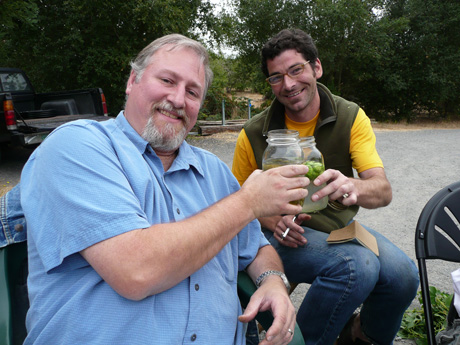
Trying each of the tea samples with Tim Clifford, who writes for Northwest Brewing News.

hop-tea-3

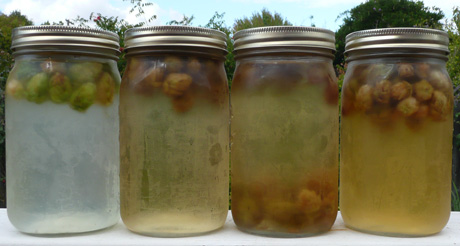
Brian was kind enough to let me take a small bag of fresh hops with me so I could recreate his experiment at home. I had enough for four samples and made tea at 100°, 140° and 160°. Using two dozen hop cones made the jars look light so I used three-dozen in the last jar, also using 160° water. I tasted them with my wife, hoping to get a civilian opinion, too. Here’s what we found:

  • 100°: Hops still green and floating. The nose was very vegetal and reminded my wife of the water leftover in the pot after you’ve steamed vegetables like broccoli or Brussels sprouts. The mouthfeel is somewhat gritty with light, refreshing flavors and only a little bitterness, which dissipates quickly.
  • 140°: Hops turned brown, but still floating. Light hop aromas with some smokey, roasted aromas and even a hint of caramel. Fresh hop flavors with a clean finish. My wife, however, made that puckering bitter face signaling she found it repugnant.
  • 160°: Hops turned brown, but most has sunk to the bottom of the jar. Strong hop aromas and few negatives, at least from my point of view. My wife was still making that face, cursing me for dragging her into this. Hop bitterness had become more pronounced and tannins were now evident, with a lingering finish.
  • 160° Plus: This sample had 50% more hops. The hops had also turned brown but, curiously, they were still floating. The nose was vegetal with string hop aromas. With a gritty mouthfeel, the flavors were even more bitter covering the tannins just slightly, but they were still apparent, and the finish lingered bitterly.

It seems like either 140° or 160° is the right temperature. Lower than that and you don’t get enough hop character (I’m sure that’s why the hops remain green) but above that the tannins become too pronounced. It appears you have to already like big hop flavor or you’ll hate hop tea. I found it pretty enjoyable and even refreshing though it’s still probably best in small amounts. You do seem to catch a little buzz off of it, which doesn’t hurt. I’m sure the amount of hops is important and more research may be needed on that front. Brian tells me that hop pellets can also be used though I doubt the jar of tea looks as attractive using them. They have the advantage of being available year-round, of course. If you use pellets, you need only about a half-ounce for each pint jar.

If you try to make Hunt’s Hop Tea on your own, please let me know your results. And please do raise a toast to Brian Hunt’s ingenuity.

Filed Under: Food & Beer, Just For Fun Tagged With: Bay Area, California, Hops

Bière de Manger

September 22, 2007 By Jay Brooks

Most people don’t think of France as a place for great beer, but there are several very fine, world-class small — tiny really — breweries in Northeastern France, not coincidently near the border of Belgium. Back in the mid-1800s this region of the world was home to 2,000 breweries. By the advent of the first World War it was half that, but during the German occupation their equipment was dismantled and sent back to the Fatherland. Between the two wars after after it, things stayed pretty much the same and today only around 25 breweries remain in the region.

So last night’s dinner themed “The Beers of France” may not have been as big a draw as some of the Beer Chef’s other beer dinners, but that a shame because the people who stayed away out of ignorance or prejudice missed a wonderful dinner and some fabulous beers.

Our salad course: composed salad of wild mushrooms, summer vegetables, duck ham and watercress.

All of the beers were courtesy of Shelton Brothers, a beer importer who brings in some of the finest beers from all over the world to the U.S. Here’s the Beer Chef, Bruce Paton, with Dan Shelton.

 
Since I believe these beers do deserve to better known, here’s some more information about the French beers that were part of the beer dinner. Seek them out and try them for yourself.


St. Droun French Abbey Ale

From the Brasseurs Duyck, founded in 1922, whose brand Jenlain is probably better known, St. Druon was re-named (the original name was Sebourg) in 2000 “as a tribute to Saint Druon and the little church in Sebourg, the next village to Jenlain. Druon, a homeless but pious orphan, wandered the roads until he settled in the village, and is still honoured and revered by pilgrims each year.” It’s been run by the same family for four generations.

From Shelton Brothers website:

Jenlain is the second largest independent brewery in France, and by far the largest one making bière de garde – France’s only original, traditional beer style. Jenlain is credited with reviving the style, and encouraging countless smaller bière de garde breweries in Northern France.

It’s a 6.0% abv Bière de Garde that uses a distinctive yeast that different from Duyuck’s other beers. it’s a very clean, refreshing beer and worked well with the diverse hors d’oeuvres.

The other beer we had with our appetizers was one of only two beer at the dinner that I’d had before, the Thiriez Extra. It’s a surprisingly hoppy beer, though not in a west coast sort of way. In France, the beer is known as “Les Frères de la Bière,” which means “The Friends of Beer.” It’s a collaboration of sorts between brewers in England, France, and Belgium. The beer uses an relatively unknown English hop called “Brambling Cross.” It’s really something of a session beer at 4.5% abv.

The second beer from Thiriez was their Blonde, which is a little spicier than the Extra in the way of a saison, and a little stronger, too, at 6.0%. It was paired with our first course, sea scallops in fennel nage.

From Shelton Brothers website:

Daniel Thiriez’s rustic little brick-and-beam brewery graces the village of Esquelbecq, plunk in the middle of the rolling farm country of French Flanders. With a brewing degree from a Belgian university, and decidedly ‘Belgian-oriented,’ Monsieur Thiriez makes ales with an earthy, slightly wild character that recalls the early days of farmhouse brewing, before there was a border between France and Belgium.

Thiriez Extra and Blonde

La Choulette Le Sans Cullottes and Ambree

The “no pants” beer, which is what “sans cullottes” refers to was the other beer of the evening I’d had before, and it’s a great Bière de Garde style beer. It’s 7.0% abv and quite effervescent, like a good champagne. This wonderful beer was paired with a composed salad of wild mushrooms, summer vegetables, duck ham and watercress.

From Shelton Brothers website:

La Choulette is a charming farmhouse brewery whose beers are classics of this French style. The brewery dates back to 1885. Alain and Martine Dhaussy bought it in the 1970’s and revived traditional brewing there. This, the brewery’s masterpiece, proudly pays homage to Les Sans Culottes – the “trouserless” craftsmen who could not afford uniforms but unflinchingly did the handiwork of the French Revolution. A number of brewers were included in their ranks.

The other beer from La Choulette was their Ambree, a slightly stronger Bière de Garde at 8.0% with a deeper amber color. I found it quite sweet, which nicely cut through the heavy meat course, loin of rabbit with bone marrow ravioli and onion apple gratin.

The last beer, Garvroche, is from St. Sylvstre, who is better known for their 3 Monts. The Gavroche is a bottle-conditioned amber ale, and at 8.5% was the strongest beer of the evening. The name comes from one of the characters in Victor Hugo’s Les Miserables, the generous and rebellious Paris urchin. It was divine with our dessert of poached pear with flan of fromage explorateur.

From Shelton Brothers website:

Serge Ricour is one of those guys – probably a genius, but it takes one to know one, and we’re not really sure we can meet that standard – who just produces fantastic beer, but doesn’t seem to know it himself. The Brasserie Ricour, or Brasserie St-Sylvestre (you use either one and everyone in town knows what you’re talking about) makes, arguably, the best beer of France: 3 Monts. We Shelton Brothers would probably argue with that, since we’ve found so many nice beers in France and brought them to the U.S. for your inspection, but you can’t really argue with the proposition that 3 Monts is, at least, one of the very best beers of France.

St. Sylvestre Gavroche


Filed Under: Events, Food & Beer Tagged With: California, Europe, Photo Gallery, San Francisco

Craft Beer vs. Fine Wine Dining Challenge in San Diego

September 20, 2007 By Jay Brooks

Stone brewing is doing a beer vs. wine dinner next week that sounds like it should be great fun, not to mention informative and delicious. Here’s the press release for the dinner:

Stone Brewing CEO Greg Koch is a tireless exponent of the virtues of great beer, and is nothing if not confident of his company’s handiwork. Yet he concedes that the image of beer still has room for elevation in the culinary world. “The understanding of the extraordinary culinary aspects available in the world of beer is lagging,” says Koch. He maintains that beer offers more range and depth of flavor than what is found in any other beverage. And he aims to prove it. “I will never argue that you can’t carefully pair a great wine with certain select dishes with very good results,” says Koch. “However, I have no hesitation in arguing that, more often than not, great beer is a superior mate for great food.”

It does appear that the culinary world is waking up to the reality that great beer compliments great food. In the June 2007 issue of TIME a full-page article began with the headline “Instead of uncorking a vintage red, Michelin-starred chefs are tapping into a long list of artisanal beers.” The article continued to state that “Now some of the country’s best restaurants are offering craft beers – produced by small, independent brewers – on the menu and often suggesting food pairings.” Recently, National Public Radio’s Weekend Edition program ran a story extolling the virtues of pairing craft beers with food; and NBC’s Today show aired a similarly themed segment featuring Stone’s very own inimitable Arrogant Bastard Ale with Food & Wine magazine’s Senior Wine Editor in which it was proclaimed “Beer is the new wine.”

Celebrated Bocuse d’Or Chef Gavin Kaysen—of the Rancho Bernardo Inn’s equally celebrated restaurant El Bizcocho—may have yet to be convinced. After all, it’s not “Food & Beer” magazine that Chef Kaysen currently graces the cover of, it’s Food & Wine (which to the magazine’s credit recently featured a surprisingly enlightened article on the artisan beers of California’s Napa Valley). Koch indeed realizes he is placing the odds squarely against himself by agreeing to hold the challenge dinner at the clearly wine-centric environs of El Bizcocho. “I want the challenge to be extremely fair, if not even stacked against me,” says Koch.

Guests at the “Beer v. Wine” dinner will sample both a craft beer and fine wine selection specifically chosen for each course. Koch will introduce each beer, and Certified Wine Educator and Sommelier, Barry Wiss will introduce each wine. Wiss is Vice President of Trade Relations at Trinchero Winery in Napa Valley. Once guests taste both the beer and the wine, they will have a chance to fill out a small card with their preferences as to which beverage pairs best with the dish. Results will be tabulated and announced at the end of the dinner. Allowing that there are more gustatory possibilities than could possibly be represented by one meal, one of the contest’s stipulations is that the loser of this round has the right to challenge the opponent to another dinner at a venue of their choosing.

While Koch might be very confident when it comes to beer’s prowess in pairing with food, Wiss is somewhat more dubious. “There is no doubt that some foods are complemented by the tastes and flavors of beer, but those foods tend to be less complex, with the possible exception of spicy Latin and Asian cuisine,” explains Wiss. “For centuries wine has been the preferred accompaniment to the world’s finest dishes, and there is little doubt that it will remain that way.”

Who is correct? You can help determine by attending the Beer vs. Wine Dinner. Reservations can be made by contacting El Bizcocho at the Rancho Bernardo Inn.

Located at 17550 Bernardo Oaks Dr. in San Diego, CA, the Rancho Bernardo Inn, recently completed a $25 million enhancement and expansion project. The hotel is a member of Preferred Hotels and Resorts Worldwide and is the distinguished holder of many honors, including Mobil Four Star (18 years), and AAA Four Diamond (31 consecutive years) ratings. Rancho Bernardo Inn is owned by JC Resorts, whose other holdings include Surf & Sand Resort, Temecula Creek Inn, and JC Golf. For reservations and additional information, please call 800.770.7329 or visit www.ranchobernardoinn.com.


9.27

Craft Beer vs. Fine Wine Dining Challenge at El Bizcocho

Rancho Bernardo Inn, 17550 Bernardo Oaks Drive, San Diego, California
250.383.2332 [ website ]
 

Filed Under: Food & Beer Tagged With: Announcements, California, Press Release, San Diego

25 Years of California Brewpubs

September 15, 2007 By Jay Brooks

maps-ca
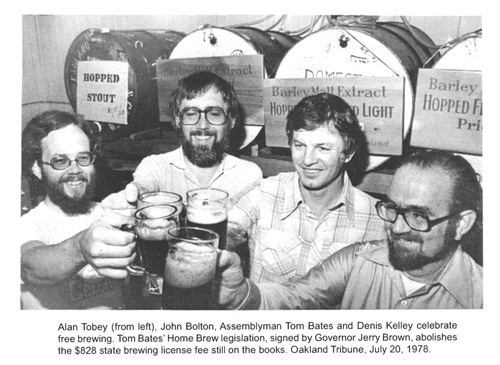
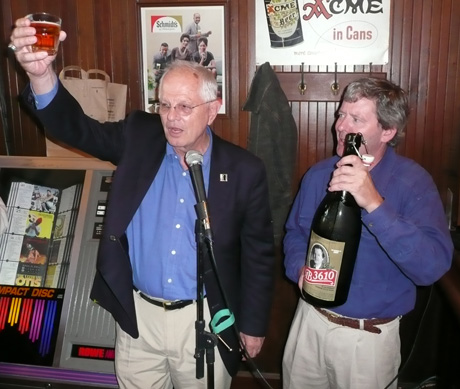
Thursday, September 13, marked the 25th of anniversary of the signing of the California bill — AB 3610 — which removed the “tied house” restriction then present in California prohibiting any person or company from brewing beer and selling it directly to the public. The new bill allowed beer to be sold where it was brewed, as long as the brewer also operated a restaurant at the same location. It was only the second brewpub law passed in the country at that time. The bill was written by then-state legislator Tom Bates, who is now the mayor of Berkeley.

California was home to three of the first five brewpubs in America. The second brewpub to open America (and the first in California) was the Mendocino Brewery in Hopland, California, which opened in August 1983. Mendocino Brewing has moved to a new facility in Ukiah and the Hopland location is now a bar, but the company is still going strong. The third brewpub in the U.S. was Buffalo Bill’s in Hayward, California, which opened in September 1984 and still a brewpub. And the fifth was Triple Rock Brewery in Berkeley, California, which opened in March 1986. It’s also the only one still owned by the same people who started it.

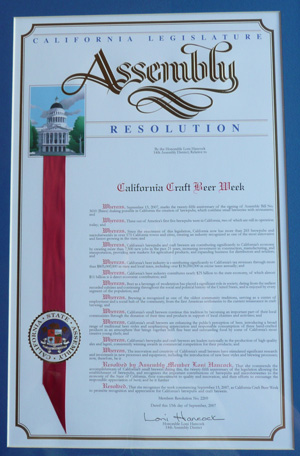
Triple played host Thursday to a ceremonial signing of the bill by Tom Bates, who authored the original legislation. They also presented a proclamation — which I helped write — signed by state legislator for District 14, Loni Hancock.

ccbw07-1
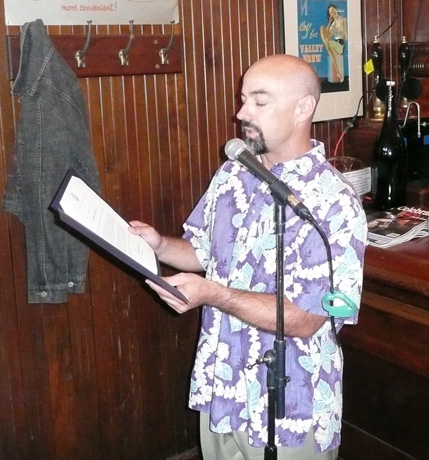
CSBA lobbyist Chris Walker reads a letter congratulating California small brewers from Governor Arnold Schwarzenegger.

ccbw07-2
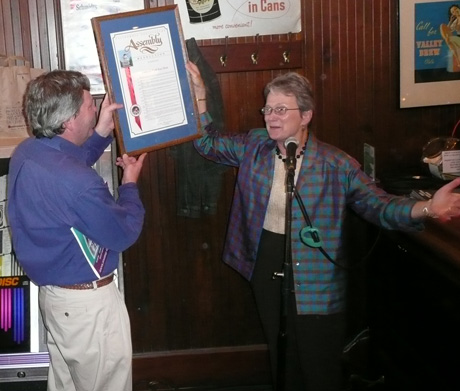
Representative Loni Walker presents the state proclamation to Triple Rock owner — and CSBA president — John Martin.

ccbw-proclamation
A close-up of the proclamation, which originally sough to declare the week beginning September 13 as California Craft Beer Week. Next year, with more lead time, we hope to make that an officially recognized holiday week for California.

ccbw07-3
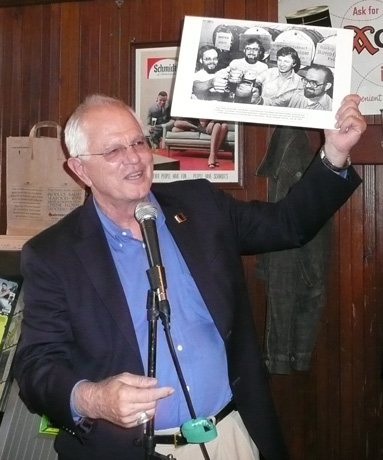
The brewpub bill’s author, Berkeley mayor Tom Bates, holds up a photo that ran in the Oakland Tribune 25-years before, of him celebrating the signing of Assembly Bill 3610.

brewpub-toast-1982
 

ccbw07-4
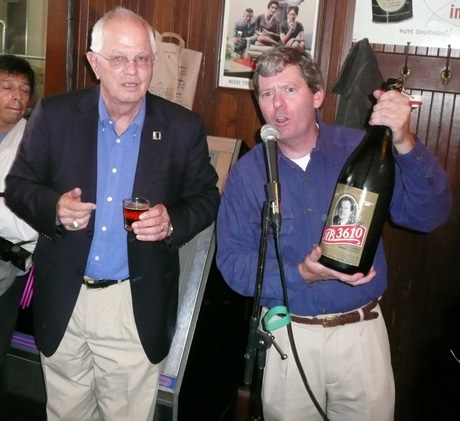
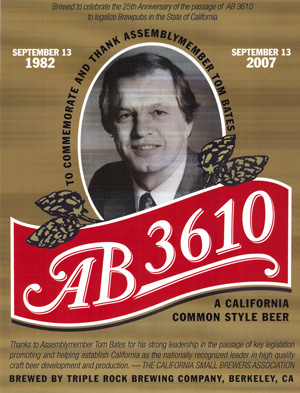
Then John Martin presented Mayor Bates with a specially made beer by Triple Rock brewer Christian Kazakoff. Wanting to make a truly California beer, Kazakoff brewed a California Common, better known as a steam beer. They called the beer AB 3610, in honor of the bill.

triplerock-ab3610
The commemorative beer’s label art.

ccbw07-6
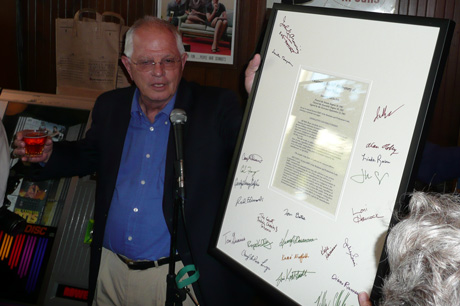
Then mayor Tom Bates presented a framed copy of the original AB 3610, inviting everyone present to sign the mat.

ccbw07-7
Everyone there also got a small glass of the commemorative beer and Mayor Bates led a toast to California’s beer industry.

Filed Under: Events Tagged With: Bay Area, California, History, Other Events, Photo Gallery

Jeremiah Was a Beerfest

September 12, 2007 By Jay Brooks

Sunday was the second day of the 4th annual Brews on the Bay, sponsored by the San Francisco Brewers Guild. Each year it’s been held on the SS Jeremiah O’Brien, a World War II era Liberty Ship docked at Pier 45 at Fisherman’s Wharf.

The S.S. Jeremiah O’Brien, with Alcatraz in the background.

21st Amendment owner/brewer Shaun O’Sullivan with Marty, one of the Jeremiah O’Brien volunteers.


For more photos from this year’s Brews on the Bay, visit the photo gallery.
 

Filed Under: Events Tagged With: California, Festivals, Photo Gallery, San Francisco

Picking Hops at the Moonlight

September 12, 2007 By Jay Brooks

Sunday was picking day at Moonlight Brewery in Windsor, California. Having recently returned from Hop School in Yakima, Washington, I was eager to see once more the old-fashioned, slow way of picking hops. Brian Hunt invited me to help him and several friends and neighbors to help with this year’s harvest. I’ve helped out before, but this year was particularly fun because I had just witnessed the industrial hop processing in America’s Hopbasket, Yakima, Washington, and was interested to see the contrast between the two methods. I took over 500 photos of hops while in Yakima and hope to have those up shortly so you can see the entire process from ground to glass.
 

Moonlight Brewery owner Brian Hunt with a vine of hops freshly cut from his hopyard.

For more photos from this year’s hop harvest at Moonlight Brewery, visit the photo gallery.
 

Filed Under: Breweries Tagged With: Bay Area, California, Hops, Northern California, Photo Gallery

« Previous Page
Next Page »

Find Something

Northern California Breweries

Please consider purchasing my latest book, California Breweries North, available from Amazon, or ask for it at your local bookstore.

Recent Comments

  • Bob Paolino on Beer Birthday: Grant Johnston
  • Gambrinus on Historic Beer Birthday: A.J. Houghton
  • Ernie Dewing on Historic Beer Birthday: Charles William Bergner 
  • Steve 'Pudgy' De Rose on Historic Beer Birthday: Jacob Schmidt
  • Jay Brooks on Beer Birthday: Bill Owens

Recent Posts

  • Beer In Ads #5173: First Sign Of Spring March 19, 2026
  • Beer Saints: St. Joseph March 19, 2026
  • Historic Beer Birthday: Benedict Haberle March 19, 2026
  • Historic Beer Birthday: Edward Fitzgerald March 19, 2026
  • Historic Beer Birthday: Ray Deter March 19, 2026

BBB Archives

Feedback

Head Quarter
This site is hosted and maintained by H25Q.dev. Any questions or comments for the webmaster can be directed here.