Brookston Beer Bulletin

Jay R. Brooks on Beer

  • Home
  • About
  • Editorial
  • Birthdays
  • Art & Beer

Socialize

  • Dribbble
  • Email
  • Facebook
  • Flickr
  • GitHub
  • Instagram
  • LinkedIn
  • Pinterest
  • RSS
  • Twitter
  • YouTube

Powered by Genesis

Beer In Ads #5074: Salvator

September 8, 2025 By Jay Brooks

Last year I decided to concentrate on Bock ads. Bock, of course, may have originated in Germany, in the town of Einbeck. Because many 19th century American breweries were founded by German immigrants, they offered a bock at certain times of the year, be it Spring, Easter, Lent, Christmas, or what have you. In a sense they were some of the first seasonal beers. “The style was later adopted in Bavaria by Munich brewers in the 17th century. Due to their Bavarian accent, citizens of Munich pronounced ‘Einbeck’ as ‘ein Bock’ (a billy goat), and thus the beer became known as ‘Bock.’ A goat often appears on bottle labels.” And presumably because they were special releases, many breweries went all out promoting them with beautiful artwork on posters and other advertising.

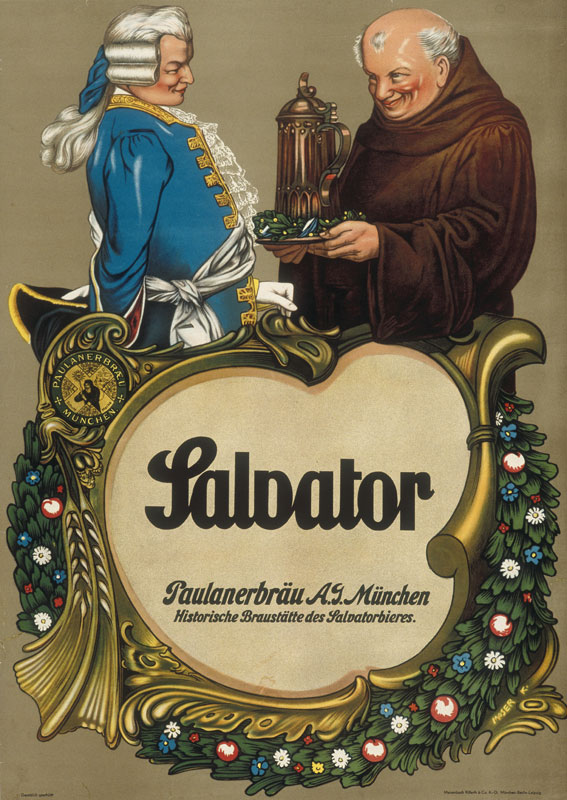
Monday’s poster is for Paulaner’s Salvator Doppelbock, and was published in 1909. This one was made for the Paulanerbrau, or the Paulaner Brewery, of Munich, Germany. The brewery was founded in 1634, and is still in business today. This one is for their Salvator, showing a nobleman and a monk. The monk is holding what is presumably the bock beer, but I’m not sure how to read the expression on their faces. It was created by German artist Moser Heinrich.
Filed Under: Art & Beer, Beers, Breweries, Just For Fun Tagged With: Advertising, Bock, Germany, History

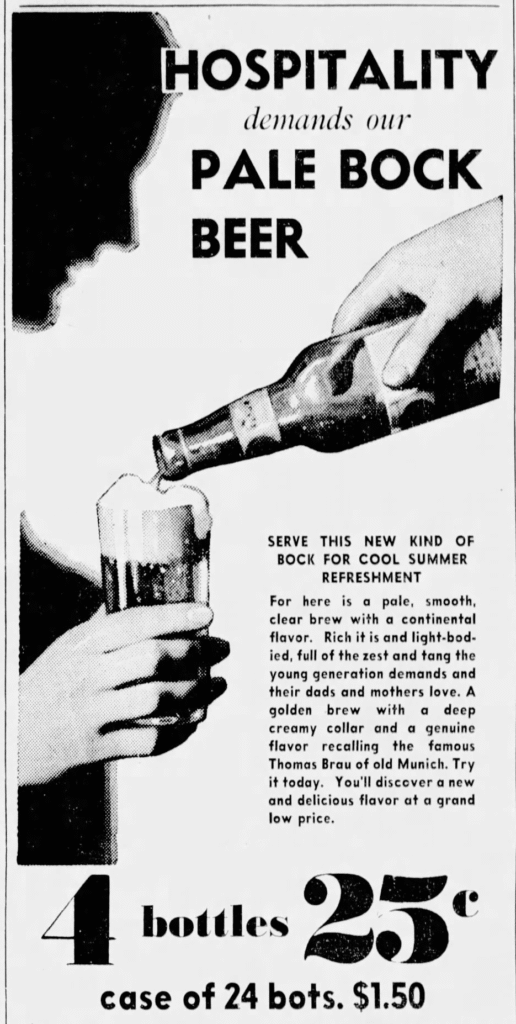
Beer In Ads #5060: Hospitality Demands Our Pale Bock Beer

August 22, 2025 By Jay Brooks

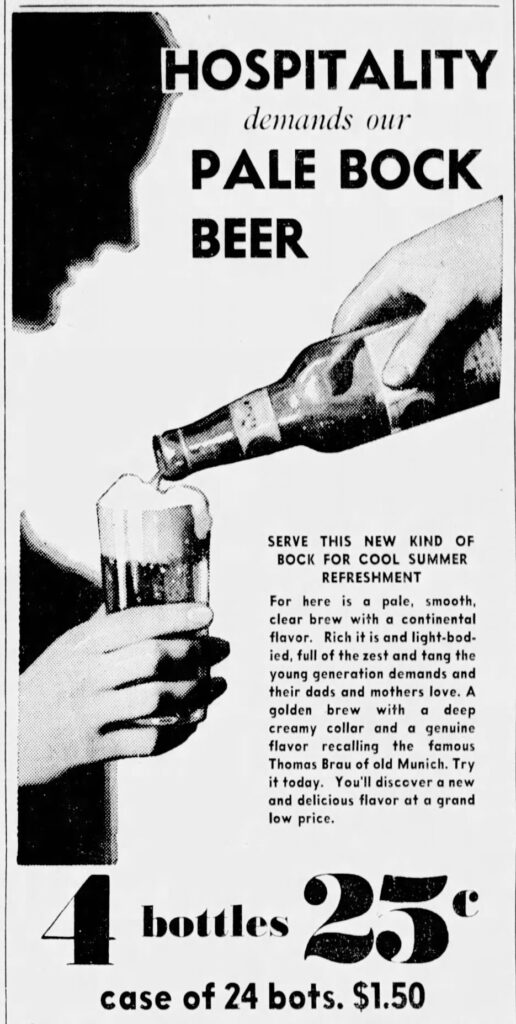
Last year I decided to concentrate on Bock ads. Bock, of course, may have originated in Germany, in the town of Einbeck. Because many 19th century American breweries were founded by German immigrants, they offered a bock at certain times of the year, be it Spring, Easter, Lent, Christmas, or what have you. In a sense they were some of the first seasonal beers. “The style was later adopted in Bavaria by Munich brewers in the 17th century. Due to their Bavarian accent, citizens of Munich pronounced ‘Einbeck’ as ‘ein Bock’ (a billy goat), and thus the beer became known as ‘Bock.’ A goat often appears on bottle labels.” And presumably because they were special releases, many breweries went all out promoting them with beautiful artwork on posters and other advertising.

Friday’s ad is for Thomas Brau Bock Beer, which was published on August 22, 1935. This one was for the Gebrüder Thomas Bierbrauerei of Munich, Germany, which was originally founded in the Middle Ages, but merged with Paulaner in 1928. To be fair, it’s really a small part of a full-page ad for a market chain called “George W. Loft Markets,” in upstate New York, with locations in New Rochelle, White Plains, and the Bronx. This ad ran in The Standard-Star, of New Rochelle, New York, and the exact same ad also ran in the Daily Reporter of White Plains.

Filed Under: Art & Beer, Beers, Breweries, Just For Fun Tagged With: Advertising, Bock, Germany, History, New York

Beer In Ads #5039: Bockbierfest

July 30, 2025 By Jay Brooks

Last year I decided to concentrate on Bock ads. Bock, of course, may have originated in Germany, in the town of Einbeck. Because many 19th century American breweries were founded by German immigrants, they offered a bock at certain times of the year, be it Spring, Easter, Lent, Christmas, or what have you. In a sense they were some of the first seasonal beers. “The style was later adopted in Bavaria by Munich brewers in the 17th century. Due to their Bavarian accent, citizens of Munich pronounced ‘Einbeck’ as ‘ein Bock’ (a billy goat), and thus the beer became known as ‘Bock.’ A goat often appears on bottle labels.” And presumably because they were special releases, many breweries went all out promoting them with beautiful artwork on posters and other advertising.

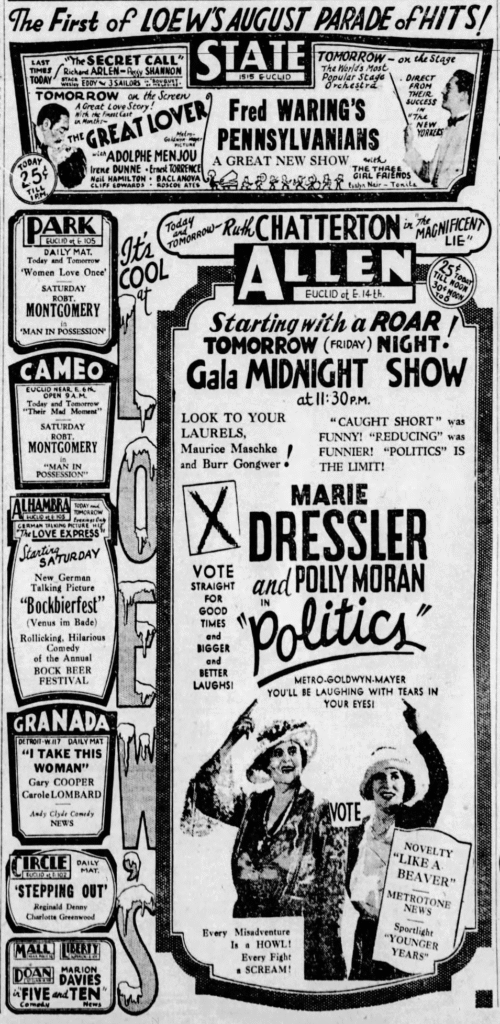
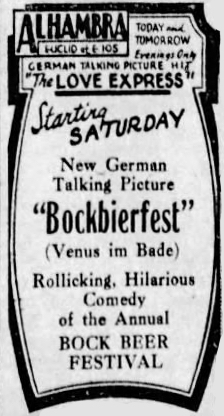
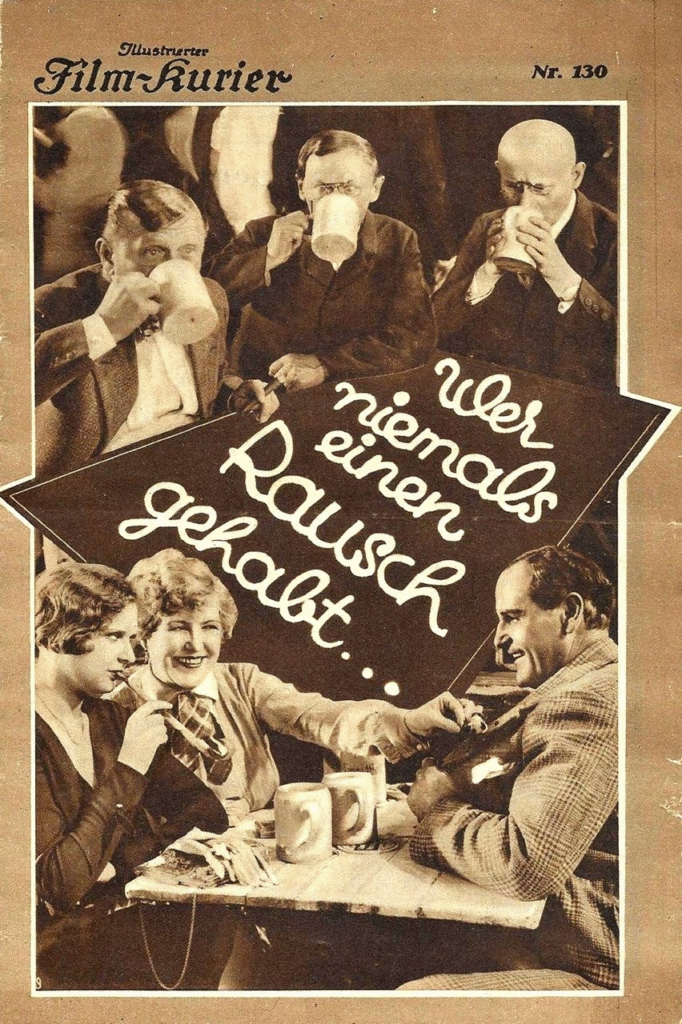
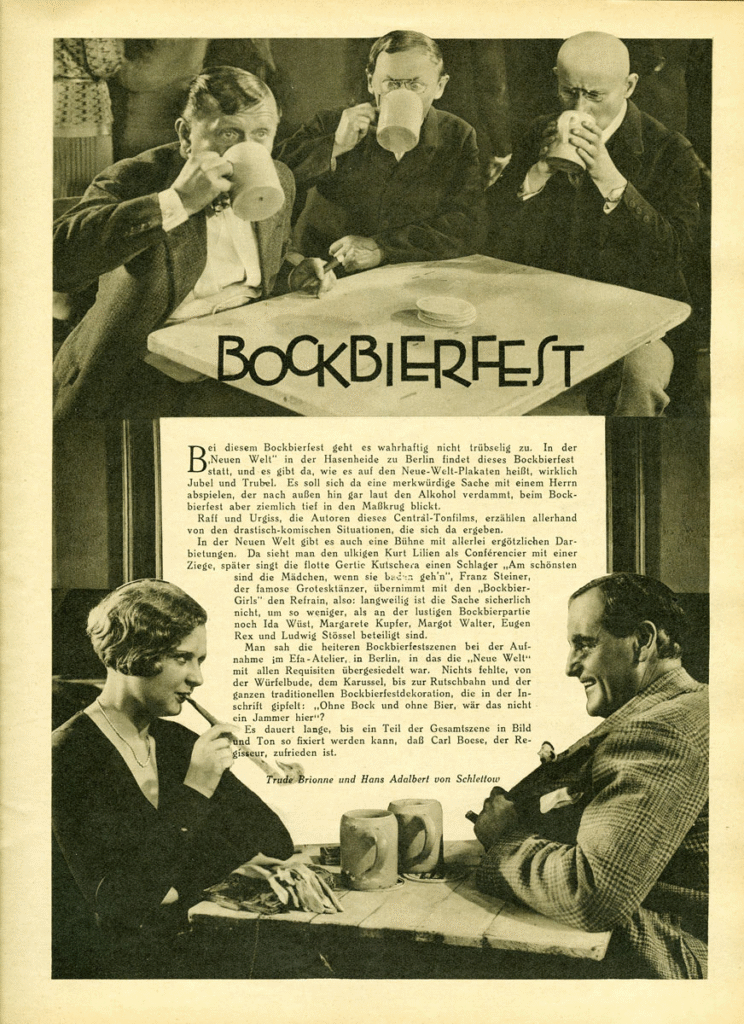
Wednesday’s ad is not for an actual beer, but instead is something Bock related. As we move increasingly past the typical bock beer season, the number of unique ads are becoming harder to find, and today only this odd little gem stood out. This ad is for films being shown in Cleveland, Ohio, and presumably the various theaters have a single owner since the one ad has listings for eight different theaters in different locations. The ad was published on July 30, 1931 in The Plain Dealer, of Cleveland, Ohio. The one that stood out was the Alhambra Theatre, which was located at 10403 Euclid Ave. This ad ran on a Thursday and was promoting a new film imported from Germany entitled “Bockbierfest,” released the previous year in Europe. Bockbierfest was about to debut in three days, on Saturday. The ad refers to the novie as a “Rollicking, Hilarious Comedy of the annual Bock Beer Festival.”

Here’s a close up of the listing from the Alhambra:

Bockbierfest was not a film I’d ever heard of before, so I did a little googling to see what I could find. Several websites give the following synopsis:

Underwear manufacturer Livius Heintze is a vehement anti-alcoholic and thus is very much against the marriage of his daughter Hedwig to the brewery owner Raumert. Heintze’s second, illegitimate daughter Emmi also wants to give her father a heart attack by marrying the hops merchant Seidl.

From what I can gather it was only shown in German and the only copy I could find for sale online had no subtitles or dubbing available. It starred Carl Boese, Ludwig Stössel, Margarete Kupfer and Margot Landa, none of whom I was familar with.

The website SIMKL also gives some information about the film:

Bock Beer Fest (1930) – A German Comedy Classic

Released in 1930, Bock Beer Fest is a German comedy film directed by Carl Boese. This early talkie is a light-hearted, entertaining movie that showcases the director’s skill in blending humor and wit.

The film follows the story of a group of friends who try to outdo each other in a series of comedic misadventures. With its witty dialogue and physical comedy, Bock Beer Fest is a hilarious portrayal of friendships and the chaos that ensues when they get together.

What makes this film stand out is its historical significance. As one of the earliest German talkies, Bock Beer Fest showcases the early days of sound in cinema. The film’s direction and cinematography are noteworthy, highlighting Boese’s expertise in capturing the essence of the era.

Interesting Facts:

  • Bock Beer Fest was one of the first German films to use synchronized sound, making it a milestone in the country’s cinematic history.
  • The film’s title, “Bockbierfest,” refers to a traditional German beer festival, which is a central theme throughout the movie.

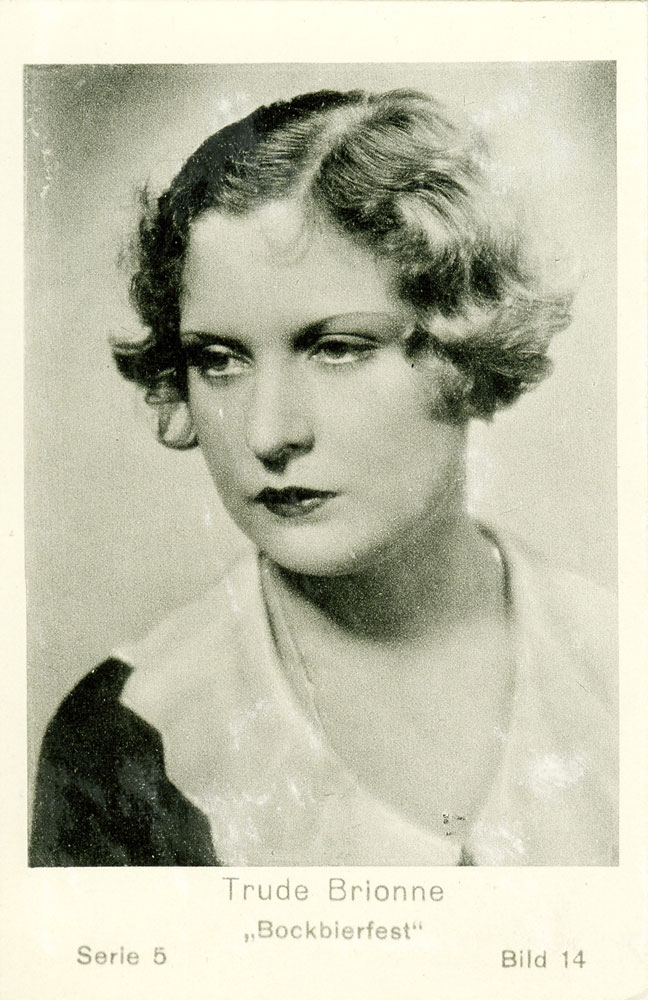
Trude Brionne played “Emmi – ihre Tochter”
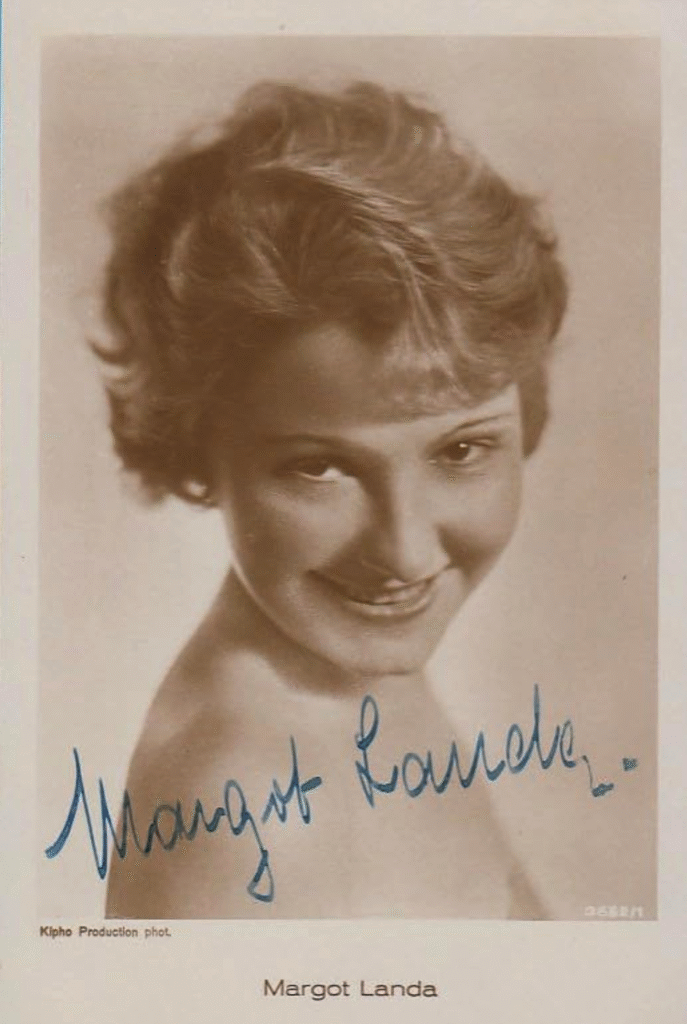
And Margot Landa starred as “Hedwig – beider Tochter”

You can also watch it in German, in two parts, on YouTube. Here are links for Part 1 and Part 2.

Filed Under: Art & Beer, Beers, Just For Fun, Related Pleasures Tagged With: Advertising, Bock, Film, Germany, History, Movies, Ohio

Beer In Ads #5025: Löwenbräu Pale Bock Beer

July 15, 2025 By Jay Brooks

Last year I decided to concentrate on Bock ads. Bock, of course, may have originated in Germany, in the town of Einbeck. Because many 19th century American breweries were founded by German immigrants, they offered a bock at certain times of the year, be it Spring, Easter, Lent, Christmas, or what have you. In a sense they were some of the first seasonal beers. “The style was later adopted in Bavaria by Munich brewers in the 17th century. Due to their Bavarian accent, citizens of Munich pronounced ‘Einbeck’ as ‘ein Bock’ (a billy goat), and thus the beer became known as ‘Bock.’ A goat often appears on bottle labels.” And presumably because they were special releases, many breweries went all out promoting them with beautiful artwork on posters and other advertising.

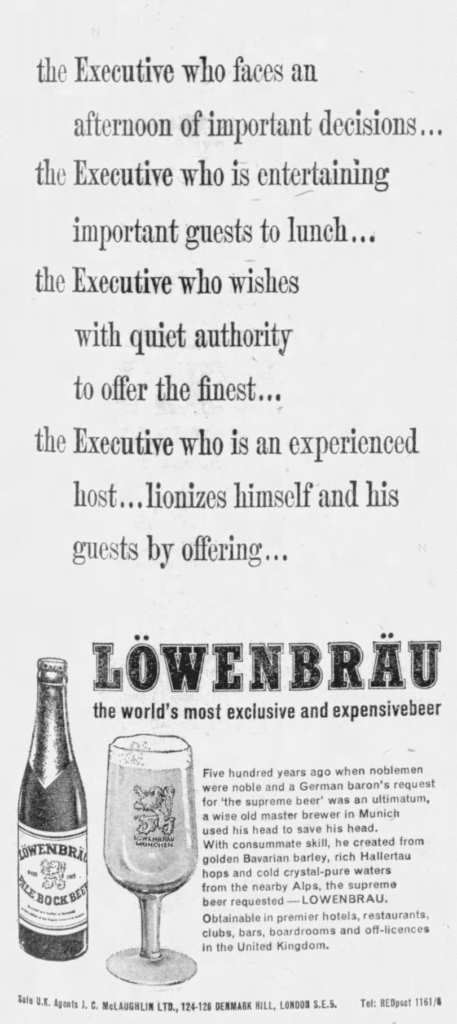
Tuesday’s ad is for Löwenbräu Pale Bock Beer, which was published on July 15, 1964. This one was for the Löwenbräu Brewery of Munich, Germany, which was originally founded in 1383. This ad ran in The Evening Standard, of London, England. The text is pretty hilarious, and that final tagline: “Löwenbräu the world’s most exclusive and expensive beer.”

Filed Under: Art & Beer, Beers, Breweries, Just For Fun Tagged With: Advertising, Bock, Germany, Great Britain, History

Beer In Ads #5019: Trinkt Bock Beer

July 8, 2025 By Jay Brooks

Last year I decided to concentrate on Bock ads. Bock, of course, may have originated in Germany, in the town of Einbeck. Because many 19th century American breweries were founded by German immigrants, they offered a bock at certain times of the year, be it Spring, Easter, Lent, Christmas, or what have you. In a sense they were some of the first seasonal beers. “The style was later adopted in Bavaria by Munich brewers in the 17th century. Due to their Bavarian accent, citizens of Munich pronounced ‘Einbeck’ as ‘ein Bock’ (a billy goat), and thus the beer became known as ‘Bock.’ A goat often appears on bottle labels.” And presumably because they were special releases, many breweries went all out promoting them with beautiful artwork on posters and other advertising.

Tuesday’s poster is for Bock Beer, and was published around 1940. This one was for the Wirte Genossenschaftsbrauerei of Luckenwalde, Germany, which was originally founded in 1906.

Filed Under: Art & Beer, Beers, Breweries, Just For Fun Tagged With: Advertising, Bock, Germany, History

Beer In Ads #4903: Heute Bockbier

March 8, 2025 By Jay Brooks

Last year I decided to concentrate on Bock ads. Bock, of course, originated in Germany, in the town of Einbeck. Because many 19th century American breweries were founded by German immigrants, they offered a bock at certain times of the year, be it Spring, Easter, Lent, Christmas, or what have you. In a sense they were some of the first seasonal beers. “The style was later adopted in Bavaria by Munich brewers in the 17th century. Due to their Bavarian accent, citizens of Munich pronounced ‘Einbeck’ as ‘ein Bock’ (a billy goat), and thus the beer became known as ‘Bock.’ A goat often appears on bottle labels.” And presumably because they were special releases, many breweries went all out promoting them with beautiful artwork on posters and other advertising.

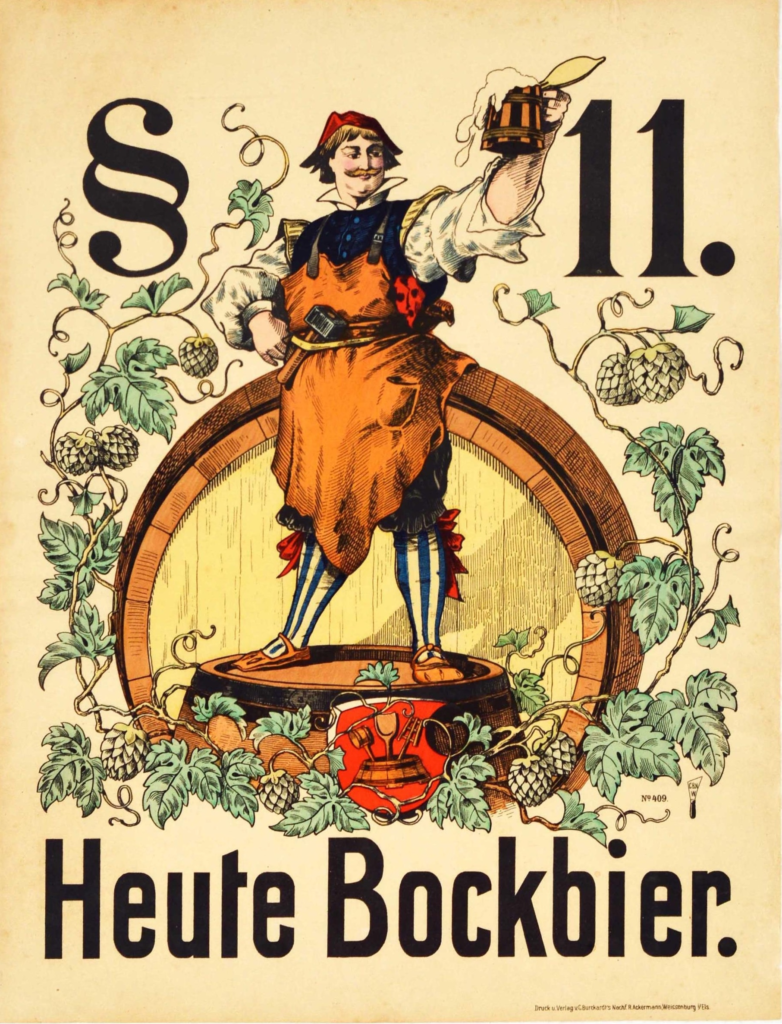
Saturday’s ad for Bock Beer depicts a brewer standing on the top of a wooden barrel with an even larger one behind him. He’s holding up a mug of beer triumphantly, surrounded by hops., with the text “§ 11,” whatever that means. The “§” symbol, as I’ve used it, stands for “section” and is typically used in the law and legislation, so I’m not sure what the context is in this case. The lithograph was created in 1880.  The lithographer appears to be “Druck u.Verlag v.C.Burckardt’s Nachf. R.Ackermann,” located in Weissenburg, Germany.

Filed Under: Art & Beer, Beers, Just For Fun Tagged With: Advertising, Bock, Germany, History

Beer In Ads #4895: Pschorr-Braü Mai Bock

February 28, 2025 By Jay Brooks

Last year I decided to concentrate on Bock ads. Bock, of course, originated in Germany, in the town of Einbeck. Because many 19th century American breweries were founded by German immigrants, they offered a bock at certain times of the year, be it Spring, Easter, Lent, Christmas, or what have you. In a sense they were some of the first seasonal beers. “The style was later adopted in Bavaria by Munich brewers in the 17th century. Due to their Bavarian accent, citizens of Munich pronounced ‘Einbeck’ as ‘ein Bock’ (a billy goat), and thus the beer became known as ‘Bock.’ A goat often appears on bottle labels.” And presumably because they were special releases, many breweries went all out promoting them with beautiful artwork on posters and other advertising.

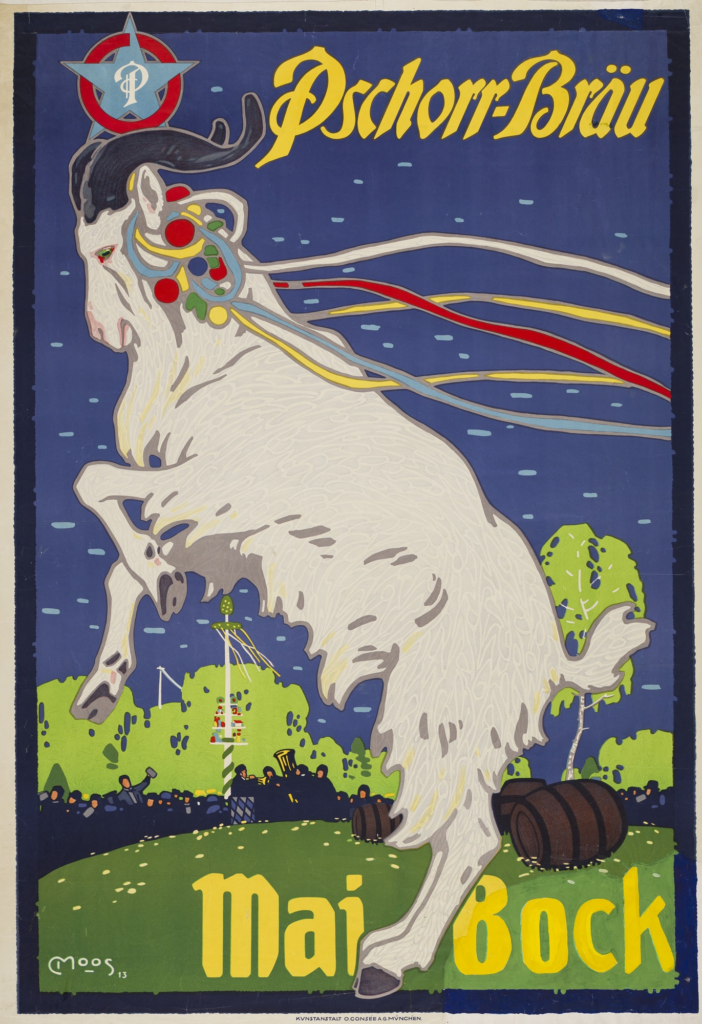
Friday’s ad is is for Pschorr-Braü Mai Bock, and is from 1913. At that time, it was the Pschorr-Bräu, but after a merger in 1972 with the Hacker Brewery it became known as the Hacker-Pschorr Brewery. This poster was created by Carl Moos, a well-known German-Swiss graphic artist, who was best known for his travel and skiing posters.

Filed Under: Art & Beer, Beers, Breweries, Just For Fun Tagged With: Advertising, Bock, Germany, History, Switzerland

Beer In Ads #4819: Schloßbräu Bock

December 11, 2024 By Jay Brooks

This year I decided to concentrate on Bock ads. Bock, of course, originated in Germany, in the town of Einbeck. Because many 19th century American breweries were founded by German immigrants, they offered a bock at certain times of the year, be it Spring, Easter, Lent, Christmas, or what have you. In a sense they were some of the first seasonal beers. “The style was later adopted in Bavaria by Munich brewers in the 17th century. Due to their Bavarian accent, citizens of Munich pronounced ‘Einbeck’ as ‘ein Bock’ (a billy goat), and thus the beer became known as ‘Bock.’ A goat often appears on bottle labels.” And presumably because they were special releases, many breweries went all out promoting them with beautiful artwork on posters and other advertising.

Wednesday’s ad is for Schloßbräu Bock, created for the Schloss-Brauerei AU, i. d. Hallertau which is located in Germany, about hour north of Munich. I believe the poster may be current, because they’re still using the same image of the goat on all of their labels, although it could also be an older piece they decided to resurrect, but it’s hard to tell. The poster was done by Herm. Sunday & Co., of Munich, Germany, and they appear to have been active in 1940s, so it’s possible that’s when this poster was done, too. The artist appears to have been O.V. Kress, and at least one source dates it to 1900.

Filed Under: Art & Beer, Beers, Breweries, Just For Fun Tagged With: Advertising, Bock, Germany, History, Munich

Beer In Ads #4814: Schlossbräu Bock

December 6, 2024 By Jay Brooks

This year I decided to concentrate on Bock ads. Bock, of course, originated in Germany, in the town of Einbeck. Because many 19th century American breweries were founded by German immigrants, they offered a bock at certain times of the year, be it Spring, Easter, Lent, Christmas, or what have you. In a sense they were some of the first seasonal beers. “The style was later adopted in Bavaria by Munich brewers in the 17th century. Due to their Bavarian accent, citizens of Munich pronounced ‘Einbeck’ as ‘ein Bock’ (a billy goat), and thus the beer became known as ‘Bock.’ A goat often appears on bottle labels.” And presumably because they were special releases, many breweries went all out promoting them with beautiful artwork on posters and other advertising.

Friday’s ad is for Schlossbräu Bock, for the Brauerei Fürstlich Drehna, which is located in Luckau, in the state of Brandenburg. I’m not sure when it was created, but my best guess is mid- to late-20th century. It’s certainly not modern, but it feels like it must be later than 1950.

Filed Under: Art & Beer, Beers, Breweries, Just For Fun Tagged With: Advertising, Bock, Germany, History

Historic Beer Birthday: Johannes Karl Fix

February 24, 2023 By Jay Brooks

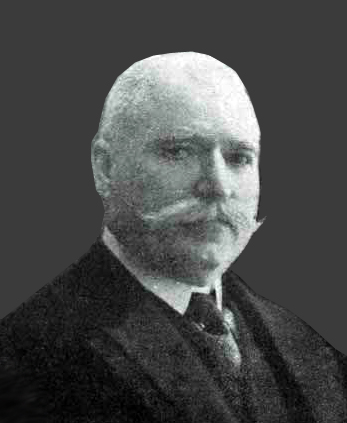
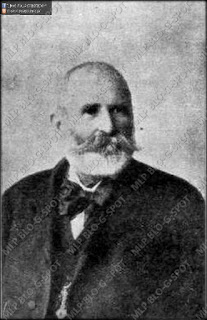
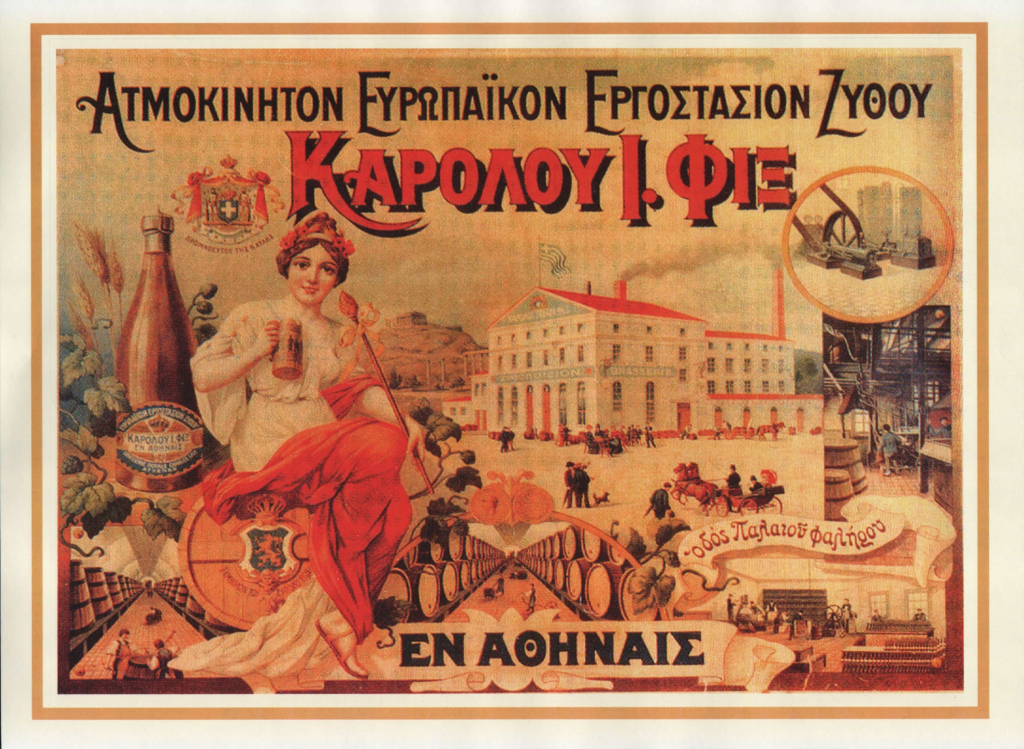
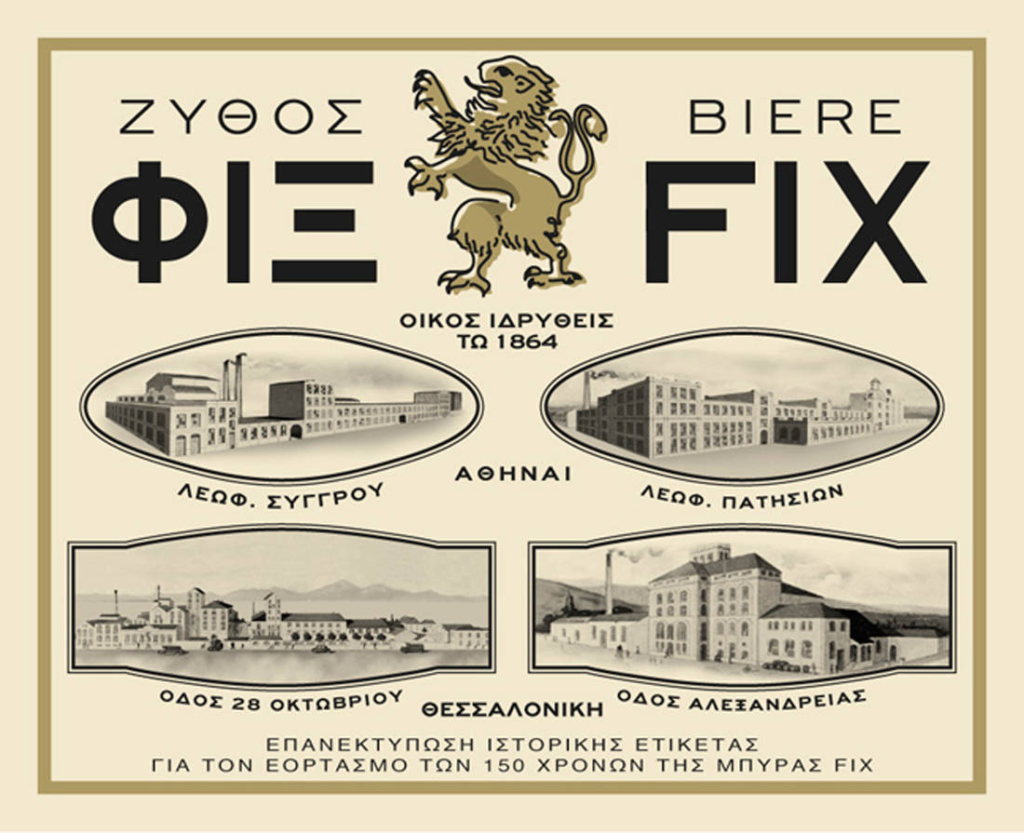
Today is the birthday of Johannes Karl Fix (February 24, 1832-1895). Johannes Karl Fix, which was probably Fuchs (for “Fox”) in his native Germany, was born in Freistadt, which at that time was part of Bavaria (but today is part of Austria). He founded the Fix Brewery in 1864 in Athens and was the first major brewery in Greece. “About 30 years earlier, his father had started brewing beer in Greece. As purveyor to the court of the Greek king, the company was able to maintain a monopoly position in the Greek market for about 100 years. After the bankruptcy of the company in 1983 and several failed attempts to revive it, Fix beer has been brewed again in its own brewery since 2009. The reason for this is the relatively high popularity of beer in Mediterranean countries.”

Here’s a history of the brewery, from Wikipedia:

The brewery founder’s father, Johann Adam Fix, a miner from Edelbach in Spessart, had followed the call of King Otto to Greece and had – like other Bavarians – settled in Iraklion near Athens.[2] He was responsible in the management of the mines in Kymi, Euboea. Earlier, he had left his son Johann Georg behind with his mother. When Johann Georg traveled to his father at the age of twenty, he was to be picked up in Piraeus; but his father was murdered on the way by robbers. After the event, Johann Georg Fix was rescued in Iraklion, he stayed there and started to import barrels of beer from Bavaria. Later, he decided to produce beer himself and launched a small enterprise selling his home-made beer in Kolonaki (today a expensive and celebrated shopping area in the heart of Athens), which was a good place for socialising for the Athenian Bavarian community. Joseph von Ow, who was in the service of the Athenian royal court in 1837–39, wrote in his memoirs:

“The Bavarian compatriots have company among themselves. – A brewery has been in operation in Athens for two years and is being used heavily. Professor G. Everus from Oldenburg rightly notes how excellent it must be for a Bavarian soul to have his patriotic drink here – on the border of the Orient! A society – To the Green Tree – (with garden, bowling alley, stone beer steins, singing and loud conversations) reminds of the far bank of the Isar! “

Around 1840, the beer is said to have prevailed throughout Greece. Johann Ludwig’s son Karl Johann Fix (Karolos Ioannou Fix) in 1864 founded the Fix brewery in Athens,[6] coinciding with the appointment of the next king of Greece, George I, from beer-loving Denmark. The new royal court encouraged Charles’s efforts, and Fix Company soon became the official purveyor to the Greek Royal Court, and has been the only major in the country till the middle of the 20th century. It was located at the foot of Lycabettus also in Kolonaki and competed with small breweries such as Gulielmos (Wilhelm) and imported beer from Trieste and Vienna (Schwechat). The German brewers (including Fix) are said to have barely met the demand for beer and “became wealthy in a short time.” Beer was therefore more expensive than wine. Around 1905, 89,000 hectoliters were produced in eleven breweries.

This is an account of the history of Greek brewing beginning with Fix’s brewery, from Food & Dining.

Modern brewing in Greece dates to the period just after Greece became independent of the Ottoman Empire in 1832 following a decade-long war of liberation. The new Mediterranean nation acquiesced to the persuasiveness of Europe’s empires, which paraphrased Frank Zappa by insisting that all real countries need a king in addition to beer and a football team.

So it was that a member of the Bavarian royal family set up court in Athens, soon to be followed by brewers and sausage makers. After all, all kings were not Bavarian, but all Bavarians (including their kings) needed beer and brats. Some things never change.

A Bavarian miner named Fix was among the early arrivals in Athens, intent on serving royalty by making money. He began dabbling in brewing, but it was his son Johann Karl Fix who founded the eponymous brewery in Athens in 1864.

By this point the Greek Royal Court had become Danish on grounds of Bavarian kingly ineptitude, but as we know Danes are beery to the core, and Fix the younger, being a well-read capitalist, began his pursuit of the new monarch’s favor. This quest resulted in the Fix brand becoming “official” purveyor to the royals, and subsequently a quasi-monopoly in Greek brewing for decades to come.

By the time of my 1985 visit to Greece, Fix was acknowledged as the must-drink Greek beer by all those who had preceded me on the backpacker’s circuit. But as I soon discovered, Fix no longer existed, having passed from the scene two years earlier following a multitude of setbacks.

The reasons for the decline of Fix in Greece were quite similar to those afflicting post-Prohibition family breweries in America. For one, bigger breweries (in Greece’s case, European multinationals) wanted a piece of the action and expended their resources to achieve it by hook or crook.

Also, the Fix family’s younger generations proved far less adept at brewery management than their elders had been. The Fix brewery also came to be seen as aligned with the right-wing military junta that ruled Greece from 1967 through 1974, and when the junta fell, paybacks were hell.

And this account is from The First Cemetery of Athens:

Tragically, Georg [Johannes Karl’s father] was shot and killed by robbers in 1862 while awaiting the arrival of his son Johannes from Bavaria. His grave can be found in Iraklio’s Roman Catholic cemetery. In spite of that terrible event, Johannes decided to remain in Greece. Informed sources have him working at the palace briefly, gaining the concession for the importation of ice from Mount Parnitha to Athens and/or apprenticing at the brewery of Melcher and then taking it over around 1864 when Mr. Melcher died.  However much of that beginning is solid fact, it is true that he had begun his own small brewery and moved it from Paleo Iraklio to Kolonaki in the late 1860s.  His business grew, partly because of hard work and partly because his beer had a reputation for consistent quality.

Filed Under: Beers, Just For Fun Tagged With: Bavaria, Germany, Greece

« Previous Page
Next Page »

Find Something

Northern California Breweries

Please consider purchasing my latest book, California Breweries North, available from Amazon, or ask for it at your local bookstore.

Recent Comments

  • Bob Paolino on Beer Birthday: Grant Johnston
  • Gambrinus on Historic Beer Birthday: A.J. Houghton
  • Ernie Dewing on Historic Beer Birthday: Charles William Bergner 
  • Steve 'Pudgy' De Rose on Historic Beer Birthday: Jacob Schmidt
  • Jay Brooks on Beer Birthday: Bill Owens

Recent Posts

  • Beer In Ads #5363: Bock Orbec September 29, 2026
  • Historic Beer Birthday: Frank H. Stahl September 29, 2026
  • Beer In Ads #5362: Heineken’s Bokbier September 28, 2026
  • Historic Beer Birthday: Frederick Schaefer September 28, 2026
  • Historic Beer Birthday: Alexander Rodenbach September 28, 2026

BBB Archives

Feedback

Head Quarter
This site is hosted and maintained by H25Q.dev. Any questions or comments for the webmaster can be directed here.