Brookston Beer Bulletin

Jay R. Brooks on Beer

  • Home
  • About
  • Editorial
  • Birthdays
  • Art & Beer

Socialize

  • Dribbble
  • Email
  • Facebook
  • Flickr
  • GitHub
  • Instagram
  • LinkedIn
  • Pinterest
  • RSS
  • Twitter
  • YouTube

Powered by Genesis

Historic Beer Birthday: Henry H. Rueter

December 9, 2025 By Jay Brooks

rueter
Today is the birthday of Henry Hermann Rueter (December 9, 1832-November 27, 1899). He was born in Westphalia, Germany, but moved to Boston, Massachusetts. In 1867, along with Irishman John R. Alley, founded the Highland Spring Brewery. By 1885, they had moved to Heath & 165 Terrace Streets, but was known after that as Rueter & Co., Inc., although their trade name continued to be the Highland Spring Brewery. After prohibition ended, they were known as the The Croft Brewing Co., but in 1952 were bought by the Narragansett Brewing Co., who closed them for good the following year.

Henry-H-Rueter

Here is a biography from the Boston Landmarks Commission when the property where the brewery was located applied for historic status, researched by Angelica Coleman and Marcia Butman:

Henry Rueter was born in 1832 I the province of Westphalia, Germany. He immigrated to the US in 1851 and after a short stay in New York came to Boston and worked for the Roxbury brewer G. F Burkhardt. With John D. Alley he established Highland Springs Brewery. After Alley withdrew to form his own company, the firm reorganized as Rueter and Co. After Rueter’s death (1899) his sons retained control of the company.

Another source discusses the family background. “The family was founded in this country by the late Henry H. Rueter, who came to Boston in 1831, at 18, from Gutersloh, Westphalia, his birthplace. He was of honorable ancestry, uniting the blood of the Rueters and the Von Eickens.”

Henry-Rueter

From “The Men of Boston and New England, The Boston American,” 1913

Henry H. Rueter founded the Highland Spring Brewery in 1869, and in three years had made it the largest brewery in the United States and today it still maintains its place as the greatest ale brewery of America.

The present head of the family is Henry A. Rueter, born in Boston, educated in Germany, and now in his fifty-fourth year. He is president of Rueter & Company; and of its affiliated lager beer interest the A J. Houghton Companv; and is a director in the National Rockland Bank, the American Trust Co., the Roxbury Institution for Savings, and the Mass. Bonding and Ins. Co. He was one of the incorporators ot the Mass. Automobile Club, and has served it in various capacities. The Country Club and the Algonquin Club count him among their members as does the Boston Chamber of Commerce. Mrs. Rueter was Miss Bertha Glover, only daughter of the late William H. Glover of Rockland, Me. They have two children,-William G. Rueter, now in his final year at Harvard, and Miss Martha Von Eicken Rueter.

A graduate of Harvard, and later a student at Boston Univ. Law School and Bonn University, Germany, Conrad J. Rueter is a recognized authority on the technical and practical application of the liquor law. He has served his city for upwards of seventeen years as trustee of the Boston City Hospital having been reappointed in 1913 for another five vear term. He belongs to the Boston Art Club, the Puritan Club, and the Harvard Club; and is a member of the Liederkrantz Club of New York. In his fiftieth year, his pleasure in outdoor sport is evidenced bv his membership in the Mass. Automobile Club, the Brae Burn Country Club and the Wollaston Golf Club Mrs. Conrad J. Rueter was Miss Ramseyer. There is one son.-John Conrad Rueter.
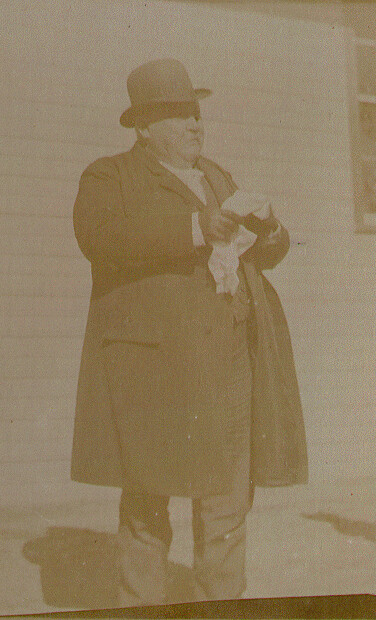
At the head of the sales staff is Frederick T. Rueter. and the brewing department itself is in direct charge of Ernest L Rueter. youngest of the four brothers, as general manager and master-brewer. Both names appear on the rolls of the Boston Athletic Assn. Ernest L. Rueter is also a member of the Country Club. Frederick T. Rueter is unmarried. Mrs. Ernest L. Rueter was Miss Myra Chevalier, and there is one daughter-Miss Jeanette.

Highland_Spring_Brewery_ale_&_porter._Rueter_&_Alley,_Boston

And here’s another short history of the brewery from the Wikipedia page about the Highland Spring Brewery Bottling and Storage Buildings:

The Highland Spring Brewery was founded in 1867 by a pair of immigrants, one Irish and the other German. The enterprise was a significant success, producing lagers, ales, and porters, and eventually gaining a nationwide reputation. In part for legal reasons, the two buildings built by the company (one for production, the other for storage and bottling) were connected by a tunnel and piping. The brewer ceased operations when Prohibition began in 1920. One of the company’s brewmasters opened the Croft Brewery in the 1892 building in 1933 after Prohibition ended, the storage building having been sold to the Ditson Company and significantly altered for its use. Croft was acquired by Narragansett Brewing Company in the 1952, and operated on the premises for just one year before closing the plant and moving production to their Rhode Island Brewery until 1981 when it too closed.

The Highland Spring Brewery around 1920.

Filed Under: Birthdays, Just For Fun Tagged With: Boston, History, Massachusetts

Beer In Ads #5136: Do Not Disturb: SB Bock Beer Is “Tucked In” For A Long, Leisurely Ageing!

December 8, 2025 By Jay Brooks

Last year I decided to concentrate on Bock ads for awhile. Bock, of course, may have originated in Germany, in the town of Einbeck. Because many 19th century American breweries were founded by German immigrants, they offered a bock at certain times of the year, be it Spring, Easter, Lent, Christmas, or what have you. In a sense they were some of the first seasonal beers. “The style was later adopted in Bavaria by Munich brewers in the 17th century. Due to their Bavarian accent, citizens of Munich pronounced ‘Einbeck’ as ‘ein Bock’ (a billy goat), and thus the beer became known as ‘Bock.’ A goat often appears on bottle labels.” And presumably because they were special releases, many breweries went all out promoting them with beautiful artwork on posters and other advertising.

Sunday’s ad is for Pickwick Bock Beer, which was published on December 7, 1953. The brewery was the Southern Brewing Co. of Tampa, Florida, which was originally founded in 1934, but closed in 1963. This ad ran in The Tampa Tribune, from Tampa, Florida.

Filed Under: Art & Beer, Beers, Breweries, Just For Fun Tagged With: Advertising, Bock, Florida, History

Historic Beer Birthday: Charles N. Hamm

December 8, 2025 By Jay Brooks

wisconsin
Today is the birthday of Charles N. Hamm (December 8, 1886-October 16, 1918). This is one of the brewer’s birthdays I know the absolute least about. What little I know came from a snippet from a genealogical page about the family that bought the Hamm’s family brewery in 1932, although the Jung’s had apparently been leasing it for many years before that, possibly as early as 1918. Charles N. Hamm and his family, as far as I can tell, owned and possibly founded (although it seems more likely they bought in to) the Silver Lake Brewery, which was founded in Random Lake, Wisconsin in 1866. Charles’ father, Carl Hamm, was born in 1853, in Baden-Württemberg, Germany so it seems unlikely he started a brewery in Wisconsin when he was thirteen, plus records indicate he came to the U.S., initially New York, in 1872, and didn’t settle in Wisconsin until at least 1883, which is where his son Charles was born.

But at some point the Hamm family did acquire it, renaming it the Charles Hamm Brewery in 1910. In 1917, The Brewers Journal listed Charles N. Hamm as the “president, general manager, and brewmaster.” Hamm apparently enlisted in the Army and was sent to Europe to fight in World War I, leaving William Jung as brewmaster. Unfortunately, Hamm caught pneumonia while overseas and died in 1918.

In 1920, Jung leased the brewery from the Hamm family, and called it the Jung Beverage Co. during prohibition, but bought it outright in 1932. From then on it was known as the Jung Brewing Co. and 1952, when Jung sold out to Herman Sitzberger, who kept it going under the same name until 1958, when it closed for good.

Random-Lake-8-Medium
Random Lake, Wis. today, with a population as of the 2010 census of 1,594.

Filed Under: Birthdays, Breweries, Just For Fun Tagged With: History, Wisconsin

Historic Beer Birthday: John Weyand

December 8, 2025 By Jay Brooks

weyand
Today is the birthday of John A. Weyand (December 8, 1859-1907). He was the son of Christian Weyand, who founded what would become the Christian Weyand Brewing Co., which remained in business until closed by prohibition in 1920.

john-weyand
This biography of Weyland os from “Our County and its people: A descriptive work on Erie County, edited byTruman C. White, from 1898:

Weyand, John A., vice president and general manager of the Christian Weyand Brewing Company, and one of Buffalo’s most respected citizens, was born in that city, December 8, 1859. He early evinced a desire to acquire an education and after passing through the public schools and Canisius College he entered the Bryant & Stratton Business College, from which he was graduated before attaining his majority. He immediately entered his father’s brewery, remaining in that business until 1890, when it was made a stock company and he was made vice president and general manager. Aside from his extensive business affairs, Mr. Weyand takes an active interest in church affairs, being a member of St. Louis Catholic church, is a trustee of St. John’s Protectory, member of the Buffalo Orpheus, Sangerbund and Liedertafel. He has always taken an active interest in all public enterprises and was a park commissioner under Mayor Bishop.

Christian-Weyand-prize-banner-ad

This short history of the brewery, including mentions of John and his father, is from the “1897 Brewers Convention Buffalo NY,” published by the Buffalo Brewers Association:

Christian Weyand Brewing Company.

In 1866, Christian Weyand established the business now conducted by The Christian Weyand Brewing Company. Mr. Weyand is a native of France, having been born in the province of Lorraine a little more than seventy years ago. There he spent his youth and received his education; but in his twenty-first year he left Lorraine for the wider opportunities of the New World, landing in New York just fifty years ago. He soon found his way to Buffalo, but it was nearly twenty years before he began the business with which his name is now so intimately connected in the minds of all Buffalonians. During these years he worked as a shoemaker — at first as an employee, and later in a shop of his own.

Mr. Weyand, with a partner, began the brewing business in a small way, with little capital and a poorly equipped plant; but the purest and best of barley malt was used from the start, and improved machinery was introduced as fast as the necessary capital could be secured. In 1873. Mr. Weyand assumed entire charge of the business, and applied himself vigorously to the task of building up a model brewery. His efforts met with entire success, and in a few years his establishment became one of the first in its line in Buffalo — a city that boasts of many fine breweries. In 1890, he organized the business into a stock company, called The Christian Weyand Brewing Company, of which he is president, his son, John A. Weyand, vice-president and manager, and another son, Charles M. Weyand, secretary and treasurer. Since then the business has materially increased, and in 1896-97 it became necessary to make extensive additions to the plant. The new buildings on the corner of Main and Goodell streets, built of buff terra cotta elaborately ornamented in Renaissance style, are exceedingly handsome; and it is now one of the best-equipped breweries in the country.

buffalo-main-and-goddell
This is purported to be a photograph of the house at the “Southeast Corner Main and Goodell Streets” from the 1912 “Picture Book Of Earlier Buffalo.” But as Michael F. Rizzo and Ethan Cox, authors of “Buffalo Beer” point out, “the structures in the background and to the left of the subject must have been the Christian Weyand brewery. Indeed, the least occluded building to the left was, I think, their office address on Goodell.”

Christian-Weyand-tray

Filed Under: Birthdays, Breweries, Just For Fun Tagged With: History, New York

Beer In Ads #5135: Only The Lilacs Wait For Spring … When Bock Beer Is Here In December!

December 7, 2025 By Jay Brooks

Last year I decided to concentrate on Bock ads for awhile. Bock, of course, may have originated in Germany, in the town of Einbeck. Because many 19th century American breweries were founded by German immigrants, they offered a bock at certain times of the year, be it Spring, Easter, Lent, Christmas, or what have you. In a sense they were some of the first seasonal beers. “The style was later adopted in Bavaria by Munich brewers in the 17th century. Due to their Bavarian accent, citizens of Munich pronounced ‘Einbeck’ as ‘ein Bock’ (a billy goat), and thus the beer became known as ‘Bock.’ A goat often appears on bottle labels.” And presumably because they were special releases, many breweries went all out promoting them with beautiful artwork on posters and other advertising.

Sunday’s ad is for Pickwick Bock Beer, which was published on December 7, 1953. The brewery was the Haffenreffer Brewery of Boston, Massachusetts, which was originally founded in 1870. It was located in the Jamaica Plain area of Boston, and today the site of the brewery is where the Boston Beer Co. operates one of its breweries.  This ad ran in The Republican, from Springfield, Massachusetts.

Filed Under: Art & Beer, Beers, Breweries, Just For Fun Tagged With: Advertising, Bock, History, Massachusetts

Historic Beer Birthday: Christian William Feigenspan

December 7, 2025 By Jay Brooks

feigenspan
Today is the birthday of Christian William Feigenspan (December 7, 1876-February 7, 1939). His father, Christian Benjamin Feigenspan, was born in Thuringia, Germany but moved his family to New Jersey and founded the C. Feigenspan Brewing Company of Newark in 1875, though at least one source says 1868. When his father died in 1899, Christian William took over management of the brewery, which remained in business through prohibition, but was bought by Ballantine in 1943. He was also “president of Feigenspan Brewing Company, president of Federal Trust Company, and president of the United States Brewers’ Association.”

CW-Feigenspan

Here’s a short biography from Find-a-Grave:

Businessman. He took over Newark, New Jersey’s Feigenspan Brewery Company, founded by his father in 1868, when his father died in 1899. He then transformed the company into one of the best known breweries up until and after prohibition. Today it’s labels are the among the most sought after by collectors.

Feigenspan-bock-1900

Here’s another biography from “Legendary Locals of Rumson,” written by Roberta H. Van Anda:

Christian-William-Feigenspan-bio

feigenspan-brew

Feigenspan-PON-BeerAle-Coasters-Over-4-Inches-Christian-Feigenspan-Brewing

PON-BeerAles-Coasters-Over-4-Inches-Christian-Feigenspan-Brewing-Co
And here’s his obituary from his local newspaper:

feigenspan-obit

Christian-Feigenspan-Breweries-Tip-Trays-3-6-inches-Christian-Feigenspan-Inc--Pre-Prohibition

feigenspan-brewery
Feigenspan1909AdNYSun2
Feigenspan-PON-Beer--Labels-Christian-Feigenspan-Brewing-Co

Filed Under: Birthdays, Breweries, Just For Fun Tagged With: History, New Jersey

Historic Beer Birthday: Theodor Schwann

December 7, 2025 By Jay Brooks

yeast-cell
Today is the birthday of Theodor Schwann (December 7, 1810–January 11, 1882). He “was a German physiologist. His many contributions to biology include the development of cell theory, the discovery of Schwann cells in the peripheral nervous system, the discovery and study of pepsin, the discovery of the organic nature of yeast, and the invention of the term metabolism.”

Theodor_Schwann_Litho

So Schwann appears to have made several important contributions to science, but his most important one, for my purposes, is that his discovery of the organic nature of yeast influenced Pasteur.

Schwann was the first of Johannes Peter Müller’s pupils to break with vitalism and work towards a physico-chemical explanation of life. Schwann also examined the question of spontaneous generation, which led to its eventual disconfirmation. In the early 1840s, Schwann went beyond others who had noted simply the multiplication of yeast during alcoholic fermentation, as Schwann assigned the yeast the role of primary causal factor, and then went further and claimed it was alive. Embattled controversy ensued as eminent chemists alleged that Schwann was undoing scientific progress by reverting to vitalism.

After publishing anonymous mockery in a journal of their own editorship, they published a purely physicochemical if also hypothetical explanation of the interaction resulting in fermentation. As both the rival perspectives were hypothetical, and there was not even an empirical definition of ‘life’ to hold as a reference frame, the controversy—as well as interest itself—fell into obscurity unresolved. Pasteur began fermentation researches in 1857 by approximately just repeating and confirming Schwann’s, yet Pasteur accepted that yeast were alive, thus dissolving the controversy over their living status, and then Pasteur took fermentation researches further.

In retrospect, the germ theory of Pasteur, as well as its antiseptic applications by Lister, can be traced to Schwann’s influence.

Theodor_Schwann_Oval

In his biography on Famous Scientists, under the section entitled “Microbes, Yeast and Fermentation” it discusses his influence on Pasteur’s work on yeast in fermentation:

Schwann identified the role that microorganisms played in alcohol fermentation and putrefaction. He carried out a variety of fermentation experiments and by 1836 had gathered enough evidence to convince himself that the conversion of sugar to alcohol during fermentation was a biological process that required the action of a living substance (yeast) rather than a chemical process of sugar oxidation.

Unfortunately, Schwann’s explanation of fermentation was ridiculed by other scientists. Acceptance only came with Louis Pasteur’s work over a decade later. Pasteur later wrote in a letter to Schwann:

“For twenty years past I have been travelling along some of the paths opened up by you.”


LOUIS PASTEUR
Letter to Schwann, 1878

Rising_bubbles_from_yeast_fermentation

In a deeper dive about the history of yeast on Think Write Publish, entitled “For the Love of Yeast: A little cell at the cutting edge of big science,” by Molly Bain and Niki Vermeulen, in Chapter 2, they discuss Schwann, Pasteur and others unlocking the secrets of yeast’s role in fermentation:

People had been using yeast—spooning off its loamy, foamy scum from one bread bowl or wine vat and inserting it in another—for thousands of years before they understood what this seething substance was or what, exactly, it was doing. Hieroglyphs from ancient Egypt already suggested yeast as an essential sidekick for the baker and brewer, but they didn’t delineate its magic—that people had identified and isolated yeast to make bread rise and grape juice spirited was magic enough. As the great anatomist and evolutionary theory advocate Thomas Henry Huxley declared in an 1871 lecture, “It is highly creditable to the ingenuity of our ancestors that the peculiar property of fermented liquids, in virtue of which they ‘make glad the heart of man,’ seems to have been known in the remotest periods of which we have any record.”

All the different linguistic iterations of yeast—gäscht, gischt, gest, gist, yst, barm, beorm, bären, hefe—refer to the same descriptive action and event: to raise, to rise, to bear up with, as Huxley put it, “‘yeasty’ waves and ‘gusty’ breezes.” This predictable, if chaotic and muddy, pulpy process—fermentation—was also known to purify the original grain down to its liquid essence—its “spirit”—which, as Huxley described it, “possesses a very wonderful influence on the nervous system; so that in small doses it exhilarates, while in larger it stupefies.”

Though beer and wine were staples of everyday living for thousands and thousands of years, wine- and beer-making were tough trades—precisely because what the gift of yeast was, exactly, was not clear. Until about 150 years ago, mass spoilage of both commercial and homemade alcoholic consumables was incredibly common. Imagine your livelihood or daily gratification dependent on your own handcrafted concoctions. Now, imagine stumbling down to your cellar on a damp night to fetch a nip or a barrel for yourself, your neighbors, or the local tavern. Instead you’re assaulted by a putrid smell wafting from half of your wooden drums. You ladle into one of your casks and discover an intensely sour or sulfurous brew. In the meantime, some drink has sloshed onto your floor, and the broth’s so rancid, it’s slick with its own nasty turn. What caused this quick slippage into spoilage? This question enticed many an early scientist to the lab bench—in part because funding was at the ready.

In a 2003 article on yeast research in the journal Microbiology, James A. Barnett explains that because fermentation was so important to daily life and whole economies, scientific investigations of yeast began in the seventeenth century and were formalized in the eighteenth century, by chemists—not “natural historians” (as early biologists were called)—who were originally interested in the fermentation process as a series of chemical reactions.

In late eighteenth-century Florence, Giovanni Valentino Fabbroni was part of the first wave of yeast research. Fabbroni—a true Renaissance man who dabbled in politics and electro-chemistry, wrote tomes on farming practices, and helped Italy adapt the metric system—determined that in order for fermentation to begin, yeast must be present. But he also concluded his work by doing something remarkable: Fabbroni categorized yeast as a “vegeto-animal”—something akin to a living organism—responsible for the fermentation process.

Two years later, in 1789 and in France, Antoine Lavoisier focused on fermentation in winemaking, again regarding it as a chemical process. As Barnett explains, “he seem[ed] to be the first person to describe a chemical reaction by means of an equation, writing ‘grape must = carbonic acid + alcohol.’” Lavoisier, who was born into the aristocracy, became a lawyer while pursuing everything from botany to meteorology on the side. At twenty-six, he was elected to the Academy of Sciences, bought part of a law firm specializing in tax collection for the state, and, while working on his own theory of combustion, eventually came to be considered France’s “father of modern chemistry.” The French government, then the world’s top supplier of wine (today, it ranks second, after Italy), needed Lavoisier’s discoveries—and badly, too: France had to stem the literal and figurative spoiling of its top-grossing industry. But as the revolution took hold, Lavoisier’s fame and wealth implicated him as a soldier of the regime. Arrested for his role as a tax collector, Lavoisier was tried and convicted as a traitor and decapitated in 1794. The Italian mathematician and astronomer Joseph-Louis Lagrange publicly mourned: “It took them only an instant to cut off his head, and one hundred years might not suffice to reproduce its like.”

Indeed, Lagrange was onto something: the new government’s leaders were very quickly in want of scientific help for the wine and spirits industries. In 1803, the Institut de France offered up a medal of pure gold for any scientist who could specify the key agent in the fermenting process. Another thirty years passed before the scientific community had much of a clue—and its discovery tore the community apart.

By the 1830s, with the help of new microscope magnification, Friedrich Kützing and Theodor Schwann, both Germans, and Charles Cagniard-Latour, a Frenchman, independently concluded that yeast was responsible for fermenting grains. And much more than that: these yeasts, the scientists nervously hemmed, um, they seemed to be alive.

Cagniard-Latour focused on the shapes of both beer and wine yeasts, describing their cellular bulbous contours as less like chemical substances and more resembling organisms in the vegetable kingdom. Schwann pushed the categorization even further: upon persistent and continued microscopic investigations, he declared that yeast looks like, acts like, and clearly is a member of the fungi family—“without doubt a plant.” He also argued that a yeast’s cell was essentially its body—meaning that each yeast cell was a complete organism, somewhat independent of the other yeast organisms. Kützing, a pharmacist’s assistant with limited formal training, published extensive illustrations of yeast and speculated that different types of yeast fermented differently; his speculation was confirmed three decades later. From their individual lab perches, each of the three scientists concluded the same thing: yeast is not only alive, but it also eats the sugars of grains or grapes, and this digestion, which creates acid and alcohol in the process, is, in effect, fermentation.

This abrupt reframing of fermentation as a feat of biology caused a stir. Some chemist giants in the field, like Justus von Liebig, found it flat out ridiculous. A preeminent chemistry teacher and theorist, von Liebig proclaimed that if yeast was alive, the growth and integrity of all science was at grave risk: “When we examine strictly the arguments by which this vitalist theory of fermentation is supported and defended, we feel ourselves carried back to the infancy of science.” Von Liebig went so far as to co-publish anonymously (with another famous and similarly offended chemist, Friedrich Wöhler) a satirical journal paper in which yeasts were depicted as little animals feasting on sugar and pissing and shitting carbonic acid and alcohol.

Though he himself did little experimental research on yeast and fermentation, von Liebig insisted that the yeasts were just the result of a chemical process. Chemical reactions could perhaps produce yeast, he allowed, but the yeasts themselves could never be alive, nor active, nor the agents of change.
Von Liebig stuck to this story even after Louis Pasteur, another famous chemist, took up yeast study and eventually became the world’s first famous microbiologist because of it.

These long-term investigations into and disciplinary disputes about the nature of yeast reordered the scientific landscape: the borders between chemistry and biology shifted, giving way to a new field: microbiology—the study of the smallest forms of life.

Dr_Theodor_Schwann

Filed Under: Birthdays, Just For Fun, Related Pleasures Tagged With: History, Science, Yeast

Beer In Ads #5134: Look, Yes It’s Here, Gem Bock Beer

December 6, 2025 By Jay Brooks

Last year I decided to concentrate on Bock ads for awhile. Bock, of course, may have originated in Germany, in the town of Einbeck. Because many 19th century American breweries were founded by German immigrants, they offered a bock at certain times of the year, be it Spring, Easter, Lent, Christmas, or what have you. In a sense they were some of the first seasonal beers. “The style was later adopted in Bavaria by Munich brewers in the 17th century. Due to their Bavarian accent, citizens of Munich pronounced ‘Einbeck’ as ‘ein Bock’ (a billy goat), and thus the beer became known as ‘Bock.’ A goat often appears on bottle labels.” And presumably because they were special releases, many breweries went all out promoting them with beautiful artwork on posters and other advertising.

Saturday’s ad is for Gem Bock Beer, which was published on December 6, 1950. This ad was for the Walter Bros. Brewing Co. of Menasha, Wisconsin, which was originally founded as the Island City Brewery in 1860. It became known as Walter Bros. in 1933 after prohibition, although the brothers had been involved in the brewery since 1888. This ad ran in The Post Crescent, from Appleton, Wisconsin.

Filed Under: Art & Beer, Beers, Breweries, Just For Fun Tagged With: Advertising, Bock, History, Wisconsin

Historic Beer Birthday: Henry Liebmann

December 6, 2025 By Jay Brooks

S-Liebmann
Today is the birthday of Henry Liebmann (December 6, 1836-March 27, 1915). He was born Heinrich Liebmann in Schmiedelfeld, Baden-Wuerttemberg, Germany. His father owned the Castle Schmiedelfeld, but when Henry was four, the family moved to Ludwigsburg and operated the Zum Stern Inn there, which also included a brewery. For political reasons, some of the family moved to America around 1850 to build a home, and the rest followed in 1854. Initially he ran the old Maasche Brewery, but later built a new brewery in Bushwick. Originally, it was called the Samuel Liebmann Brewery, but when his sons joined the brewery, it was called the S. Liebmann’s Sons Brewery. When Henry’s father died in 1872, Henry and his brothers took over the family brewery, and Henry became brewmaster. After prohibition ended, the brothers’ six sons re-opened the brewery as the simpler Liebmann Breweries, but in 1964 they changed the name again to Rheingold Breweries, after their most popular beer. The brewery closed in 1976.

henry_liebmann_original

Here’s his obituary from the Brewers Journal, in July of 1915:

henry-liebmann-obit-usba

Liebmanna_Lager_Beer

This is from “The Originators of Rheingold Beer: From Ludwigsburg to Brooklyn – A Dynasty of German-Jewish Brewers,” by Rolf Hofmann, originally published in Aufbau, June 21, 2001:

New Yorkers over the age of fifty will remember the brand name Rheingold Beer and the company’s brilliant publicity stunt in which a bevy of attractive young women competed annually for the privilege of being elected that year’s Miss Rheingold and appearing in ads on billboards and in the subways throughout the New York area.

The beer’s evocative name with its allusion to Germany’s great river, was the culmination of a German-Jewish family enterprise that had its beginnings in 1840 in the town of Ludwigsburg, north of Stuttgart, in what was then the Kingdom of Württemberg. One Samuel Liebmann, a member of a prominent Jewish family in the region, settled there and bought the inn and brewery “Zum Stern.” A liberal and staunch supporter of Republican ideals, Liebmann encouraged other like-minded citizens, including some soldiers from the garrison, to meet in his hospitable surroundings. The ideas fomented there contributed to the local revolution of 1848. It brought the opprobrium of the King down upon Liebmann’s enterprise, and “Zum Stern” was declared off limits to the soldiers. Soon thereafter, in 1850, Samuel Liebmann emigrated to the U.S.

The family settled in Brooklyn and Samuel, together with his three sons, Joseph, Henry, and Charles, opened a brewery once again at the corner of Forest and Bremen Streets. With the responsibilities divided among the family – Henry became the brewing expert, Charles. the engineer and architect, Joseph, finance manager – the company was already flourishing by the time of Samuel’s death in 1872. Success also led to a concern for the company’s Brooklyn surroundings, and the Liebmanns became involved in local welfare – focusing on housing and drainage systems.

Each of the three brothers had two sons, and when the older Liebmanns retired in 1903, the six members of the third generation took over. Other members of the family also contributed to the gradual expansion of the company. In 1895 Sadie Liebmann (Joseph’s daughter), married Samuel Simon Steiner, a trader in high quality hop, an essential ingredient for good beer. Steiner’s father had begun merchandising hop in Laupheim in 1845 and still today, S.S. Steiner, with its headquarters in New York, is one of the leading hop merchants. Under these fortuitous family circumstances, beer production grew constantly. In the early years, the brewery had produced 1000 barrels per year, by 1914 its output stood at 700,000 barrels.

hofmann-rheingold1
Henry Liebmann (center with white beard) and family.

Unfortunately, political developments in the U.S. between 1914 and 1933 were extremely disadvantageous for the Liebmann brewery. The resentment against Germany and anything German during World War I led to an informal boycott of German beers. Following close upon the lean wartime years, was the implementation of Prohibition in 1920 forbidding the manufacturing and trading of alcohol. The Liebmann enterprise managed to survive by producing lemonade and a product they called “Near Beer.”

With the reinstatement of legal alcohol production under President Roosevelt in 1933, opportunities for the brewery opened up, abetted by the anti-Semitic policies of Hitler’s Germany. The pressures on Jewish businessmen there, brought Dr. Hermann Schülein, general manager of the world-renowned LšwenbrŠu brewery, to America. Schulein’s father, Joseph, had acquired two of Munich’s leading breweries at the end of the nineteenth century–Union and Münchner Kindl–and his son had managed the 1920 merger with Löwenbrau. Arriving in New York with this experience behind him, Hermann Schülein became one of the top managers of the Liebmann brewery and was instrumental in its spectacular growth after World War II.

Working with Philip Liebmann (great-grandson of Samuel), Schülein developed a dry lager beer with a European character to be marketed under the brand name “Rheingold.” According to company legend, the name was created in 1883 at a brewery dinner following a performance at the Metropolitan Opera. When the conductor took up his glass, he was so taken with the shade of the beer, that he declared it to be the color of “Rheingold.” For New Yorkers, however, the name Rheingold did not bring to mind the Nibelungen fables, but the pretty young ladies who participated in Schülein’s most brilliant marketing strategy – the selection of each year’s Miss Rheingold by the beer-drinking public of greater New York

At the height of the campaign’s success in the 1950’s and 60’s, the Liebmann Brewery had an output of beer ten times that of Löwenbrau at the same time in Munich.

For thirty years, Rheingold Beer reigned supreme in the New York area, but by 1976, as a local brewery, it could no longer compete with nationwide companies such as Anheuser & Busch, Miller, and Schlitz, and its doors were closed. Only recently, using the same brewmaster, Rheingold is once again being sold in the tri-state area.

S-Liebmanns-Brewing-poster

Here’s an “Origin of Liebmann Brewery” posted by a relative on Ancestry.com:

On May 12 1833 (Sulzbach-Laufen Archive) Samuel and his older brother Heinrich bought a castle/inn Schmiedelfeld, Sulzbach-Laufen, Schwaebisch Hall District that dated from 1739. They renovated the place and created a prosperous farm/estate and in 1837 began a brewery in the cellar. In 1840, he moved to Ludwigsburg, near Stuttgart and purchased the gasthaus [guest house or inn] “Zum Stern” on Seestrasse 9 (later Zum Rebstock) which included a brewery. (source: Translation extract from Dr. Joacim Hahn’s book, History of the Jewish Community of Ludwigsburg)

After supporting a movement to oust King William I of Wurttemberg, and sensing the wavering tolerance of Jewish businessmen, Samuel sent his eldest son Joseph to the US in 1854 to scout out a location to establish a brewery.

Samuel retired in 1868 and turned the family business over to his sons Joseph, Charles, and Henry under the name S. Liebmann’s Sons Brewery.

liebmanns-rheingold

S-Liebmanns-Sons-Cards-Trade-Cards-S-Liebmanns-Sons-Brewing-Company_17585-1

Filed Under: Birthdays, Breweries, Just For Fun Tagged With: Germany, History, New York

Beer Saints: St. Nicholas, Patron Saint of Brewers

December 6, 2025 By Jay Brooks

santa-claus
While St. Nicholas is best known — in America, at least — for wearing red and white and giving presents to Children each December 25, he’s actually the patron saint for a number of professions, places and afflictions. His feast day is not actually Christmas Day, but almost three weeks earlier on December 6. That’s the reason why the holiday beer Samichlaus is brewed each year on this day. The person we associate with Christmas, Santa Claus, was based on Saint Nicholas, who was originally known (and still is in some places) as Bishop Nicholas of Myra.

Nicholas is the patron saint of brewers, among many others. He’s also the patron saint against imprisonment, against robberies, against robbers. And Nick’s the patron for apothecaries, bakers, barrel makers, boatmen, boot blacks, boys, brewers, brides, captives, children, coopers, dock workers, druggists, fishermen, Greek Catholic Church in America, Greek Catholic Union, grooms, judges, lawsuits lost unjustly, longshoremen, maidens, mariners, merchants, penitent murderers, newlyweds, old maids, parish clerks, paupers, pawnbrokers, perfumeries, perfumers, pharmacists, pilgrims, poor people, prisoners, sailors, scholars, schoolchildren, shoe shiners, spinsters, students, penitent thieves, travellers, University of Paris, unmarried girls, and watermen. Places he’s the patron for are Apulia, Italy; Avolasca, Italy; Bardolino, Italy; Bari, Italy; Cammarata, Sicily, Italy; Cardinale, Italy; Cas Concos, Spain; Creazzo, Italy; Duronia, Italy; Fossalto, Italy; Gagliato, Italy; Greece; La Thuile, Italy; Lecco, Italy; Limerick, Ireland; Liptovský Mikulás, Slovakia; Lorraine; Mazzano Romano, Italy; Mentana, Italy; Miklavž na Dravskem polju, Slovenia; Naples, Italy; Portsmouth, England; Russia; Sassari, Italy; Sicily; Is-Siggiewi, and Malta.

He also has many names around the world, such as Baba Chaghaloo, Father Christmas, Joulupukki, Kanakaloka, Kris Kringle, Pere Noel, Papa Noël, Santa Claus, and Weihnachtsmann (“Christmas Man” or “Nikolaus”), to name just a few.

merry-xmas-santa-beer

Here’s what Wikipedia has to say:

Saint Nicholas (March 15, 270 – December 6, 346) is the common name for Nicholas of Myra, a saint and Bishop of Myra (in Lycia, part of modern-day Turkey). Because of the many miracles attributed to his intercession, he is also known as Nicholas the Wonderworker. He had a reputation for secret gift-giving, such as putting coins in the shoes of those who left them out for him, and is now commonly identified with Santa Claus. His reputation evolved among the faithful, as was the custom in his time. In 1087, his relics were furtively translated to Bari, in southern Italy; for this reason, he is also known as Nicholas of Bari.

The historical Saint Nicholas is remembered and revered among Catholic and Orthodox Christians. He is also honoured by various Anglican and Lutheran churches. Saint Nicholas is the patron saint of sailors, merchants, archers, and children, and students in Greece, Belgium, Romania, Bulgaria, Georgia, Russia, the Republic of Macedonia, Slovakia, Serbia and Montenegro. He is also the patron saint of Barranquilla, Bari, Amsterdam, Beit Jala, and Liverpool. In 1809, the New-York Historical Society convened and retroactively named Sancte Claus the patron saint of Nieuw Amsterdam, the Dutch name for New York City. He was also a patron of the Varangian Guard of the Byzantine emperors, who protected his relics in Bari. So beloved is Saint Nicholas by Russians, one commonly heard saying is that “if God dies, at least we’ll still have St. Nicholas.”

santa-mug

The American image of Santa Claus in red and white has more to do with marketing than anything else. I wrote about this in The Santa Hypocrisy a couple of years ago when the Shelton Brothers were in hot water from several states who tried to tell them Santa Claus on a beer label threatened the American way of life and especially the impressionable young kiddies who would all be led down the path to underage drinking and alcoholism because Santa was depicted on a beer label. It was an utterly ridiculous position and they ultimately backed down, but it’s indicative of our puritan hang-ups as a culture and our general paternalism where we believe everyone needs to be protected. And in retrospect I can now see how the “institutionalized demonization of alcohol” creates the conditions for such decisions. Remember the message? “Alcohol is evil. No one can be trusted with it.” When that’s the underlying assumption, you create rules for what can and can’t be displayed on a label that are way beyond reason; standards no other products have to follow because they’re not seen as inherently evil.

But before the 20th century and in other parts of the world, Santa Claus was and still is depicted in many different ways and in various colors. Father Christmas, for example, is often seen wearing a green robe, as in the British Isles he’s more associated with nature and the old Celtic religions. The yule log, Christmas tree, wreaths, mistletoe and many other features we take for granted during the holidays do not have direct Christian origins, but were appropriated from pagan religions in order to make the transition to Christianity easier for the masses to make. Personally, I love a green Santa Claus because it reminds me of hops, and a Santa that stands for hops is one I can get behind.

Few American beer labels show Santa precisely because of our peculiar brand of paternalism and the label laws spawned by our institutionalized demonization of alcohol. Santa’s Private Reserve, from Rogue in Oregon, is one of the few I can think of year after year. Most, not surprisingly, come from abroad, where people take a more reasonable approach to both the holidays and alcohol. There’s the famous Santa’s Butt from Ridgeway Brewing in England, but also Pickled Santa from the Hop Back Brewery and Austria’s Samichlaus is translated as “Santa Claus.”

Why does it seem like we’re the only uptight nation on Earth when it comes to this silly issue. In Hong Kong, a giant Santa Claus is shown with a mug of beer, and no one seems to be that concerned. Try putting something like that up here, and all hell would break loose. We’re the only country complaining that there’s a “War on Christmas,” as stupid a notion as ever there was one, especially in a nation where those who celebrate Christmas constitute the vast majority.

The point is if the church can have a patron saint of brewing, why do religious people object to St. Nicholas being on beer labels? Wouldn’t it make perfect sense for brewers to want to place their patron saint on their beer?

Throughout Europe, Monks not only kept alive the method of brewing beer but improved techniques for making it. A Benedictine nun in Germany, Hildegard von Bingen, is most likely responsible for the introduction of hops in beer. Religion and brewing are intertwined throughout history and, in every place except the United States, that continues to be the case. Why? What about our particular religiosity makes us incapable of seeing that and reconciling it? Why is it seemingly acceptable for Santa Claus to be used to sell everything under the sun … except alcohol. Santa sells cigarettes, soda pop, fast food and pretty much everything else with capitalistic glee yet alcohol is the corrupting influence? That’s going too far somehow? Please.

That Santa Claus only appeals to children is usually the rallying cry of the buffoons who complain about this sort of thing, but a survey of pop culture will reveal that St. Nick is used in all manner of adult contexts. Kris Kringle, like the spirit of Christmas itself, belongs to all of us, not just children. There’s no doubt that I love seeing Christmas through the fresh eyes of my children, their innocence and wonder adds a new dimension to my enjoyment of the season. But I loved the holidays as much before I was a father and after I was an adult, too.

That St. Nicholas appeals to wide array of people should be obvious from the huge number of groups and places that consider him their patron. When so many look to him for comfort in such a varied number of ways, how can anyone say what he is or what he isn’t, where he’s appropriate or where he’s not? They can’t of course, despite neo-prohibitionists and our government’s attempts to the contrary. As the patron saint of brewers, Santa Claus is, and ought to be, perfectly at home on a bottle of beer.

There’s also a wealth of information about the real Santa Claus at the Saint Nicholas Center online.

1911-Christmas-Postcard-Santa-Claus-Beer-Mug

Filed Under: Editorial, Just For Fun, Politics & Law Tagged With: Christmas, History, Holidays, Religion & Beer

« Previous Page
Next Page »

Find Something

Northern California Breweries

Please consider purchasing my latest book, California Breweries North, available from Amazon, or ask for it at your local bookstore.

Recent Comments

  • Bob Paolino on Beer Birthday: Grant Johnston
  • Gambrinus on Historic Beer Birthday: A.J. Houghton
  • Ernie Dewing on Historic Beer Birthday: Charles William Bergner 
  • Steve 'Pudgy' De Rose on Historic Beer Birthday: Jacob Schmidt
  • Jay Brooks on Beer Birthday: Bill Owens

Recent Posts

  • Beer In Ads #5136: American Bock Beer Is Being Served Today! February 28, 2026
  • Historic Beer Birthday: James Younger February 28, 2026
  • Historic Beer Birthday: Joseph Metcalfe February 28, 2026
  • Beer In Ads #5135: What Record’s Bock Beer Is February 27, 2026
  • Historic Beer Birthday: Albert Braun February 27, 2026

BBB Archives

Feedback

Head Quarter
This site is hosted and maintained by H25Q.dev. Any questions or comments for the webmaster can be directed here.