Brookston Beer Bulletin

Jay R. Brooks on Beer

  • Home
  • About
  • Editorial
  • Birthdays
  • Art & Beer

Socialize

  • Dribbble
  • Email
  • Facebook
  • Flickr
  • GitHub
  • Instagram
  • LinkedIn
  • Pinterest
  • RSS
  • Twitter
  • YouTube

Powered by Genesis

Historic Beer Birthday: Leo Ebert

June 28, 2025 By Jay Brooks

Eberts
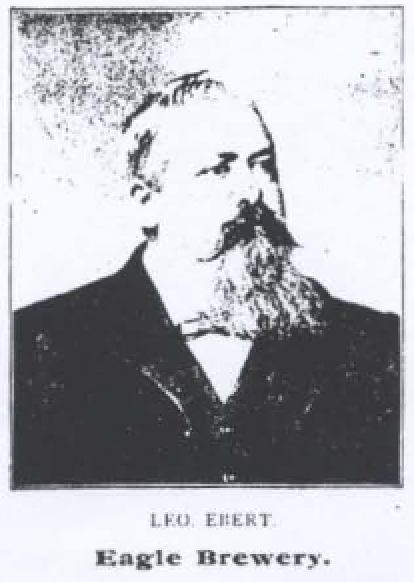
Today is the birthday of Leo Ebert (June 28, 1837-February 22, 1908). Ebert was born in Bavaria into a family of brewers, and emigrated to the U.S. and opened the Leo Ebert Brewing Co. in 1863, which also traded under the name the Eagle Brewery, at least until prohibition, when it closed for good.
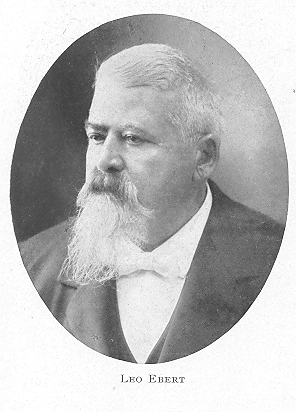
OhioProgSons1905P470Ebert
Here’s a biography from Ohio Breweriana;

Leo Ebert, of Ironton, Ohio, founder and still president of the company of that name, was born in Klingenbergon-the-Main, Bavaria, June 28, 1837. The descendant of a family of brewers, he learned his trade at his father’s establishment, and began his career as a journeyman brewer in September, 1854. He worked at his trade in different places in Bavaria, Baden and Hanover, returning home in 1857, to accept a position as brewmaster in the plant of Jos. Amreihn, at Lohr, Bavaria. He remained there until May, 1859, and then left for the United States, arriving in New York July 16, of that year. He secured employment at Gillig’s brewery, remaining there until May, 1860, and then left for Cincinnati, Ohio. Unable to find work in a brewery, he labored in a brickyard at $1 per day. In the fall of 1860 he went to work at Joseph Schaller’s brewery, Cincinnati, being advanced in a short time to the position of cellarman. The foremanship of F. Beck’s brewery, in that city, being offered him, he accepted it and managed the plant until the Christmas of 1861, at which time a brewery at Ironton, Ohio, was offered for rent. Of this opportunity Mr. Ebert took advantage, and with the assistance promised and freely given by the big-hearted and generous Michael Goepper (the well-remembered father of Herman and Edward Goepper) he rented the little common-beer brewery at Ironton and started with a capital of $20; malt and hops, on credit, of Mr. Goepper.

Ironton being on the border of Kentucky and near the State of Virginia, became a very lively place during the war, and the brewery prospered. Beer was brewed Sunday and every day and sold when often not over three days old. The brewery not being well located, however, was abandoned and Mr. Ebert erected a new plant at the present site, in 1863, and began to brew lager beer. From time to time he enlarged his plant according to the wants of the trade in Ironton. He never meddled with the shipping trade, and to-day is glad that he did not, doing a nice business at home and fully enjoying the fruits of an active life.

Mr. Ebert has taken an active part in all questions pertaining to the welfare and protection of the brewing trade of the country. He joined the United States Brewers Association at the convention held in Cincinnati, Ohio, in 1863, and has been acquainted with all the old veterans of the trade. He was elected the first president of the Ohio State Brewers Association, serving from 1883 to 1887, and again after the reorganization in 1894. There has not been a legislature in session for the past thirty years in Ohio which has not found Mr. Ebert on hand whenever the trade was endangered or some relief wanted from obnoxious laws. In view of this record the United States Brewers Association did him the honor of electing him its president at the Milwaukee convention of 1895.

Mr. Ebert can say that he has been an active force in the development of the brewing industry of this country, from the so-called small or common beer for quick consumption, to the present export beers which are shipped all over the world. He remembers the time when the output of all the breweries in the United States did not equal the present output of some of our cities. He made beer in this country when there was no tax on it, while the 1900 tax on beer was three and one-half times the amount the United States paid Spain for the Philippine islands.

Mr. Ebert was married in Germany, in 1858, to Mathilde Uihlein, of Trennfurt, Bavaria. His family consists of six children five daughters, and one son (Otto) who is now manager of the brewery and is highly respected by the trade and community.

Mr. Ebert has always taken an active part in the development of the city of Ironton and has served in the capacity of president of the city council, member of the school board and board of health, his activities in this direction covering a period of seventeen years.
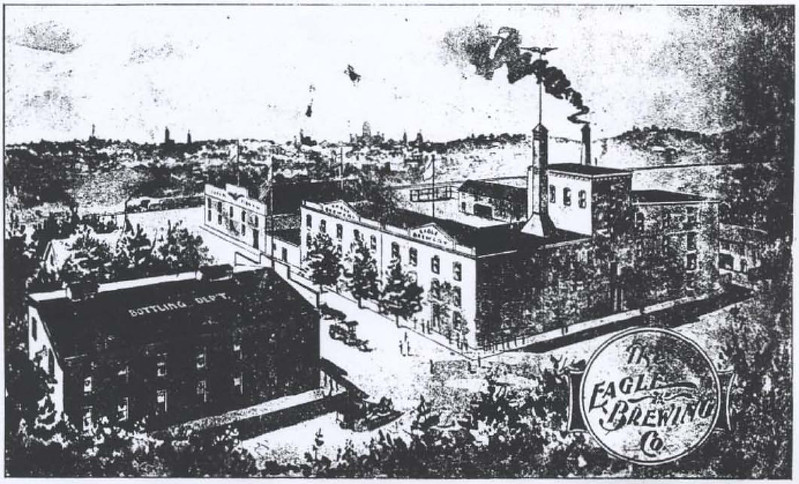
eagle-brewery-postcard

Here’s Ebert’s obituary from “A Standing History of the Hanging Rock Iron Region of Ohio” by Eugene B. Willard, Daniel W. Williams, George O. Newman and Charles B. Taylor, published in 1916

The late Leo Ebert, who died at his home in the City of Ironton, Lawrence County, on the 22d of February, 1908, was a man of strong and upright character and marked business ability, his influence having long been potent in connection with civic and material progress in Ironton and his prominence and enterprise in the business activities involved in the operation of the extensive and modern brewery that perpetuates his name having made him one of the leading business men of this section of the Buckeye State, even as he was a loyal and progressive citizen who held inviolable place in popular confidence and esteem.

Leo Ebert was born at Kingenberg, Kingdom of Bavaria, Germany, near the City of Frankfort, and the date of his nativity was June 28, 1837, so that he was nearly seventy-one years of age at the time of his death. He was a son of Theodore and Barbara (Krutzman) Ebert, and the family name has been identified with the representative brewing enterprise of Bavaria for many generations, Theodore Ebert, father of the subject of this memoir, having fully upheld the prestige of the patronymic in this field of industry, and both he and his wife having remained in Bavaria until their death. Leo Ebert, the eldest in a family of four children, attended the excellent schools of his home town until he had attained to the age of twelve years, when he was placed by his father in the latter’s brewery, to be initiated into the mysteries of the business. For several years he was acquiring scientific and practical experience in the brewing business,—at Mannheim, Bremen and other places,—and he finally returned to the parental home and stood his chances in the conscription for the army. He was successful, however, in drawing a high number and thus was relieved of the military service.

At the age of twenty-one years Mr. Ebert wedded Miss Mathilda Urhlein, and in 1859, shortly after this important event, he immigrated with his young wife to the United States. Landing in the port of New York City, he there worked at his trade of brewer for nine months, and at the expiration of this period he came to Ohio and established his residence in the City of Cincinnati. Not being able to find immediate employment at his trade, he was compelled to work one summer in a brick yard, and finally he obtained a position as laborer in a Cincinnati brewery, his ability and fine technical knowledge leading to his promotion from his humble capacity to that of foreman within the ensuing two months. After serving for foreman of the brewery for sixteen months Mr. Ebert came to Ironton, Lawrence County, in 1861. Here he established a brewery on a modest scale, and from that time forward his success became cumulative and substantial. He continued as the executive head of the Ebert Brewing Company until his death and was one of the thoroughly loyal and liberal citizens of the Lawrence County metropolis, to the development and upbuilding of which he contributed in generous measure. He became financially interested in various other local enterprises and was known and honored as one of the prominent and influential citizens of this section of the state.

In politics Mr. Ebert originally was aligned with the republican party, but in 1872 he followed his sincere convictions and transferred his allegiance to the democratic party, with which he continued to In actively allied during the residue of his long and useful life. He was influential in the councils of his party and, as a convincing and effective public speaker, he “took the stump” in numerous campaigns. For more than seventeen years Mr. Ebert held official preferment in Ironton, where he served as a member of the city council, the board of education and the board of health. The fine intellectual ken and practical ability of Mr. Ebert marked him as eligible for office of distinguished order, and twice he received the democratic nomination for representative of his district in the United States Congress. While he was unable to overcome the large and normal republican majorities in the district, he brought out the full vote of his party and greatly reduced the natural majority of his opponents.

In the most significant and worthy interpretation of the expression, Mr. Ebert was essentially a self-made man, and he had the sagacity and judgment to make the best of the opportunities afforded in the land of his adoption, with the result that he won large and substantial success, the while he so ordered his course as to merit and receive the high esteem of all who knew him. He was a man of commanding presence, brilliant intellect and broad human tolerance and sympathy. His kindliness and generosity were unfailing, but he never permitted his benevolences to come into publicity if this could be avoided, having been one of those who “do good by stealth and blush to find it fame.” Genial and companionable, Mr. Ebert was not only an interesting conversationalist but also had remarkable gifts as an orator. For eight years Mr. Ebert served as president of the Ohio Brewers’ Association, and for two years was president of the national organization of brewers. He was affiliated with the Independent Order of Odd Fellows, the Benevolent and Protective Order of Elks, and the Knights of Pythias. The death of Mr. Ebert caused deep and sincere sorrow in his home city, and both business and social circles manifested their sense of irreparable loss. The noble character of Mr. Ebert found its most perfect exemplification in the relations of his ideal home life, and his widow and children find their greatest measure of consolation and compensation in the memory of his devotion and abiding love and tenderness,—the gentleness of a strong and loyal nature.

Of the six children of Leo and Mathilda (Urhlein) Ebert the eldest is Fannie, who is now the wife of Henry Geiger, identified with the brewing business in Ironton, and they have seven children,—Mathilda, Leo, Henry. Frederick, Charles, Otto, and Bertha. Gretchen, the second daughter, first wedded Michael Rauch, who is survived by two children, Otto and Walter. After the death of her first husband Mr. Rauch became the wife of August Ebert, a brewer by vocation, and they now reside in the City of St. Louis, Missouri, no children having been born of this union. Tillie is the wife of Charles Jones, engaged in the undertaking business in Ironton; Otto N., the only son, is more specifically mentioned on other pages of this publication. Emma is the wife of Frederick Wagner, a representative farmer near Pedro, Lawrence County, and they have eight children,—Leona, Frederick, Walter, Henrietta, Harold, Ironton, Roy, and Franklin. Bertha is the wife of Dr. William C. Miller, engaged in the practice of dentistry in Ironton, and they have one son, William C, Jr.
leo-ebert-eagle

Eberts-XXPale

Filed Under: Birthdays, Just For Fun Tagged With: Germany, History, Ohio

Historic Beer Birthday: Peter Straub

June 28, 2025 By Jay Brooks

straub
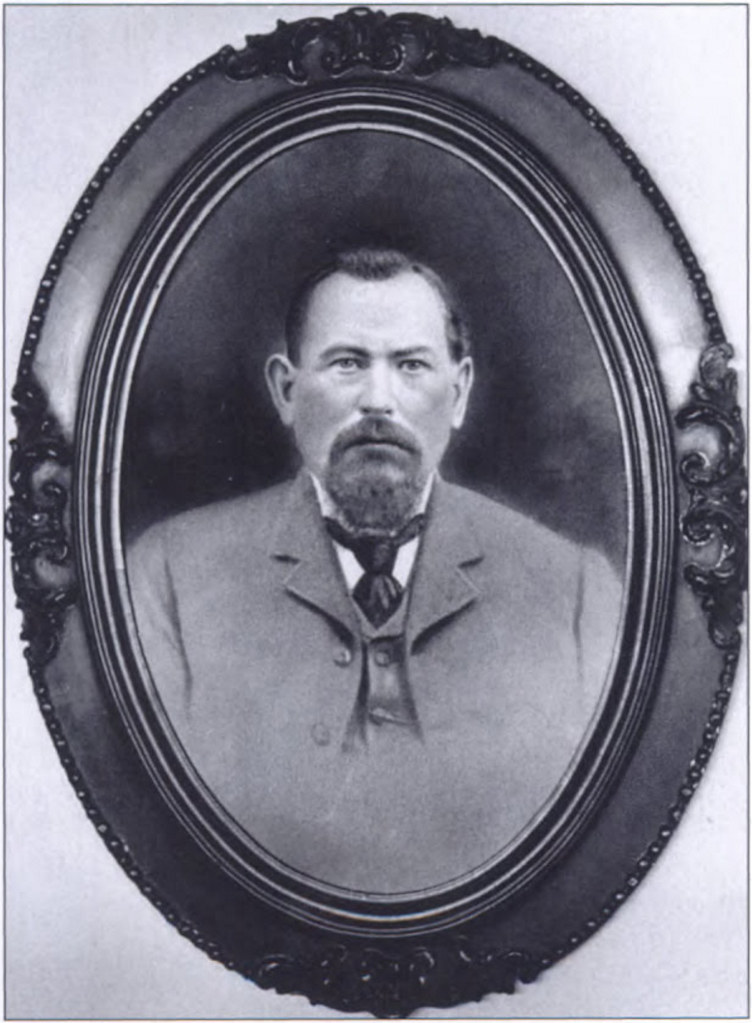
Today is the birthday of Peter P. Straub (June 28, 1850-December 17, 1913). He was born in Felldorf Starzach, Baden-Württemberg, Germany, and founded the Straub Brewery in St. Mary’s, Pennsylvania in 1872. The brewery is still owned and operated today by the Straub family.

peter-p-straub

Here’s his biography from his Wikipedia page:

Born to Anton Straub and his wife, Anna Maria Eger. The Straub family had been brewing a local beer for generations. As expected Peter learned a trade important to the brewing art. He became a Cooper, a craftsman who makes wooden barrels. Peter aspired to be a brewer and at the age of 19 in 1869 immigrated to the United States for a better and more prosperous life. Upon his arrival in the United States he found employment at the Eberhardt and Ober Brewing Company in Pennsylvania. Peter admired his employers’ pledge to forfeit $1,000 if any adulteration was found in their beer, and as he honed his brewing skills to a sharp edge, he adhered faithfully to this promise. Eventually he tired of city life and moved north to Brookville, where he perfected his brewing process while working in the Christ and Algeir Brewery.

Peter later moved to Benzinger (St. Marys), where he met and married Sabina Sorg of Benzinger. The couple settled in Benzinger and had ten children: Francis X., Joseph A., Anthony A., Anna M., Jacob M., Peter M. (who died at two years of age), Peter P., Gerald B., Mary C., and Alphons J.

Peter’s employment in Benzinger was with the Joseph Windfelder Brewery and he worked there until he purchased the Benzinger Spring Brewery (founded by Captain Charles C. Volk in 1855) from his father-in-law, Francis Xavier Sorg. It was then that Straub Beer and the Straub Brewery was born.

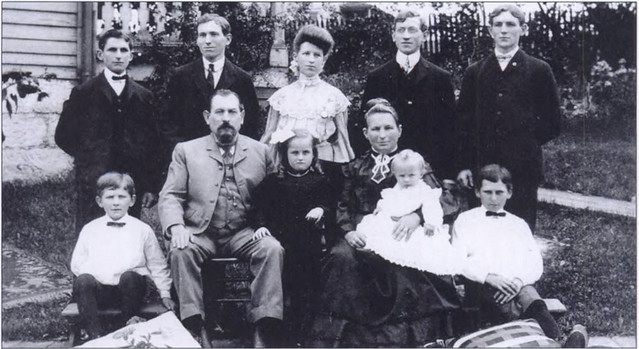
straub-family-1904
The Straub Family in 1904.

This early account of Straub’s life is from the brewery website:

Peter Straub was born on June 28, 1850 in Felldorf, Wuerttemburg, Germany, to Anton and Anna M. Eger Straub.

As a teenager, Peter was educated and worked as a cooper, which is a craftsman skilled in making and repairing wooden barrels and casks. He also became well versed in the allied trade of Brewing.

Peter honed his trade in Germany, France and Switzerland. At age 19 (in 1869), Peter Straub traveled to the United States and settled in Allegheny City, Pennsylvania, working at the Eberhardt and Ober Brewing Company. He next moved to Brookville and worked at the Christ and Allegeier Brewery. He again moved to Allegheny City and then to McKeesport and Centerville (later renamed Kersey). In 1872, Peter settled in St. Marys.

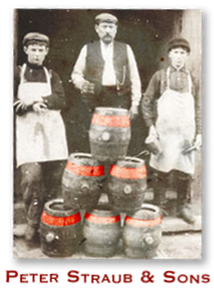
peter-straub-and-sons

In St. Marys, Peter first worked at the Windfelder Brewery, which later became the Luhr Brewery, on Center Street. In the early 1870s, Peter was hired by Francis Sorg as brewmaster and manager for his brewery. The standard Straub Brewery founding date of 1872 reflects when Peter first moved to St. Marys and began brewing. He did not own the brewery until 1878.

Peter Straub began courting Francis Sorg’s eldest daughter, Sabina, marrying her on November 23, 1875. A few years later, Peter and Sabina, along with their eldest son Francis (one year old at the time) traveled back to Germany and then on to France, where they attended the Exposition Universelle in Paris. Peter and Sabina had 10 children: Gerard Benedict (Gerry), Peter (Sr.), Mary Crescentia (Marian, later Mrs. Daniel Curran), Alfonse James (Ponce), Peter Paul (Pete), Jacob Melchior (Fr. Gilbert), Joseph Anthony (Joe), Anna Angela (later Mrs. Frederick Luhr), Francis Xavier (Frank), Anthony Albert (Tony) and Peter Mathaeus (died at age two).

Straub Beer HistoryEarly on, Peter introduced his sons to the world of brewing. Straub used wooden kegs for his beer. He always placed a red band around his barrels to ensure that people would know they were drinking his beer and so that he would get them back. As a lasting trademark tribute to Peter, the brewery continues to place a bright red band around each of its barrels. Red has become a trademark color for the brewery.

Following Peter’s death on December 17, 1913, his sons assumed control of the brewery, renaming it the Peter Straub Sons Brewery. During this time, the brewery produced Straub Beer as well as other beer, such as the pilsner-style Straub Fine Beer and Straub Bock Beer. In 1920, the Straub Brothers Brewery purchased one half of the St. Marys Beverage Company, also called the St. Marys Brewery, where St. Marys Beer was produced. During Prohibition, which lasted from January 29, 1920, until December 5, 1933, the brewery produced nonalcoholic near-beer. On July 19, 1940 they purchased the remaining common stock and outstanding bonds of the St. Marys Beverage Company.

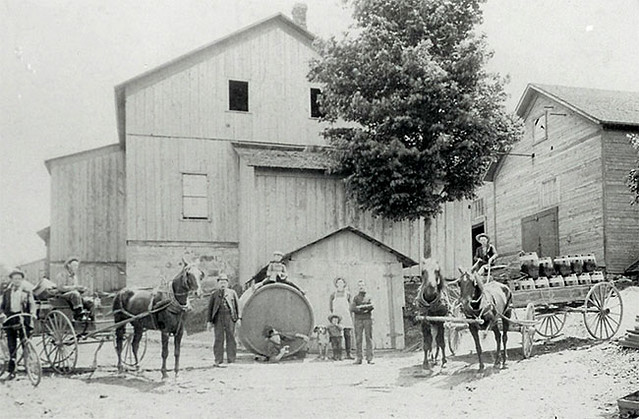
straub-brewery-1895-closeup

The Benzinger Spring Brewery in 1895.

And this account is by Erin L. Gavlock, from 2009, at the Pennsylvania Center for the Book at Penn State:

High in the Allegheny Mountains of Elk County, a tradition has been brewing for nearly a hundred and forty years. Straub (pronounced Strawb, not Strowb) Beer, the local brewery on Sorg Street in St. Marys, has not tampered with its recipe since Peter Straub crafted the lager’s signature taste in 1872. This sixth generation brewery is dedicated to preserving the original German formula and sticking in its original location, a difficult task for an old-time establishment in the modern era. For the descendents of Peter Straub, keeping the Straub custom is what makes the company a “brewery, not a beer factory.”

The tradition of Straub Beer began in the small village of Felldorf, Germany where Peter Straub was born into an lager-making family on June 28, 1850. He grew up in Germany learning the brewing business and eventually becoming a cooper, a maker of the wooden barrels used to hold beer. Like many other artisans of the time, Straub was unhappy with life as a cooper and dreamed of greater success. He wanted to participate in the family trade, to become a brewer of his own beer. Unable to rise above his economic status in Germany, Peter Straub took his vision and immigrated to the United States at the age of 19, arriving in Allegheny City, Pennsylvania in 1869.

In Allegheny City (now Pittsburgh’s north side), Straub went to work for Eberhardt and Ober, (the current Penn Brewery). At Eberhardt and Ober, Peter Straub became a student of his employer, John N. Straub (no relation) and quickly took to John’s administrative principles. The company promised to serve completely pure beer, untainted by additives such as salt or sugar, to its customers and backed that promise with a $1,000 refund to any contaminated sale. This code of law conduct rang true to Peter Straub and it became a principle he swore to brew by.

While perfecting his brewing technique in the city, Straub grew homesick for his quaint, German village. He decided to escape the loud, crowded streets of Allegheny City and retreated to the quietude of Elk County. He settled in St. Marys, marrying Sabina Sorg and working for various local breweries until Sabina’s father, Francis Xavier Sorg, sold his Benzinger Spring Brewery to him in 1872. Peter Straub finally got his long-awaited start as a brewer. Straub owned and operated the Benzinger Spring Brewery until he died in 1912 and left the company to his son, Anthony. Anthony Straub changed the name of the brewery to “Peter Straub Sons’ Brewery,” the only alteration he would make to his father’s business. From there, Peter Straub’s beer would become a Pennsylvania legend.

The Bavarian Man, a long-time image of the Straub Brewery that recalls its German roots.
Fast-forward over a hundred years from Straub’s humble beginnings to today and one will find the Straub Brewing pledge remains unchanged. The company still serves only unadulterated beer to its customers, proclaiming to be “The Natural Choice.” “Our all grain beer is brewed from Pennsylvania Mountain Spring water and we don’t add any sugar, salt, or preservatives to our recipes,” brew master Tom Straub told St. Marys’ Daily Press. “You can say our beer is a fresher, healthier choice than many of the selections in the marketplace.” Although time and technology have forced a transformation in brewing techniques and standards, the taste, ingredients, and the location of Straub have remained constant. Still located in St. Marys, the brewery depends upon the same mountain water from the Laurel Run Reservoir to blend with all-natural ingredients of cornflakes (used to produce fermentable sugars), barley and hops. “Our brewing process is virtually unchanged since our great, great, grandfather, Peter Straub, perfected it in 1872,” Straub’s promises. The reason behind sticking to the fresh taste of the original recipe is simple: people like it. Through the century, Straub has grown a dedicated patronage in western Pennsylvania with its traditional flavor. “Our style of brewing has pretty much stayed the same over the years, but what is interesting is that our popularity has grown and the reputation of our hand-crafted beer has increased,” Straub CEO Bill Brock said. “It is nice to know that we are becoming increasingly popular not for something we’ve changed, but rather for something we’ve always done well.”

The choice to protect and maintain the brewing customs has kept Straub a small, family owned brewery. “We’ve always thought small. We’re more about quality than quantity,” Dan Straub, former CEO, told Fredericksburg, Virginia’s Free-Lance Star. Until June 2009, Straub Beer was only distributed in glass bottles throughout Pennsylvania and Ohio. Now Straub is being brewed and distributed in aluminum cans in Rochester, New York at the High Falls Brewery. The recipe and method have not changed in the new setting and are under the careful watch of brew master Tom Straub. Despite the recent company growth, Straub still only produces about 45,000 barrels of beer per year. “We are unique; we are much larger than a micro brewery yet far, far smaller than some of the leading national brands,” said Bill Brock. In the middle ground, the brewery has managed to survive beer tycoons, economic depression, and cultural trends—a tough maneuver for a company exporting from Pennsylvania’s least populated region. “I believe the brewery has survived because of the fact that it is family owned; it is steeped in tradition and we have an absolute passion for making beer and our products,” said Brock. “From my perspective, the company and our traditions are a huge legacy and there is a clear obligation to continue these traditions.” Keeping to the family legacy has allowed Straub to persevere through the years to become the second oldest brewery in Pennsylvania after Yuengling.

Staying small and faithful to the company’s founding principles has enabled Straub to keep traditions that other larger breweries have been forced to abandon. The returnable bottle, an eco-friendly service that allows customers to send glass bottles back to the brewery for recycling, is still offered at Straub. “We stayed with the returnable bottles first of all, and I think this is really important, because we have a really strong customer base and they like the returnables,” Bill Brock said during a 2009 radio broadcast. “Over the years we maintained it while other breweries slowly fazed them out.” For Straub, a successful regional brewery, shipping bottles back to the factory is feasible, where it would create more pollution for national brands to do the same. In the future, Straub hopes to go greener and offer more returnables to customers. “We’d love for it to grow,” Brock said. “We think it is the right thing to do and if we can blend the right thing to do with making our customers happy that’s almost a perfect world.”

Another Peter Straub tradition kept to make customers happy is the Eternal Tap, an oasis for Elk County beer drinkers. The Eternal Tap, established long before any of the brewery’s current chief operators were born, is a “thank you” gesture for patrons, daily providing two mugs of complimentary, fresh cold beer to anyone of legal drinking age. “The roots of it go as far back as the brewery itself and I am sure that my great, great, grandfather, his workers and their friends would spend time at the end of the week enjoying a few pints of freshly brewed beer,” Brock said. According to Bloomington, Illinois’ Pantagraph, the Eternal Tap sprang up shortly after Peter Straub received the Benzinger Spring Brewery from his father-in-law as a way to draw beer enthusiasts to the taste of Straub. Since the marketing gimmick started in 1872, the Eternal Tap has not been turned off, giving free beer to customers in good times and bad.

Although Straub has been in operation for more than a century since its founder’s death, if Peter Straub were able to return to his brewery today, he might feel as if he still ran it. The original recipe, the customer appreciation, and the environmental concerns he founded his business upon are still principal brewing laws at Straub today. For the descendents of Peter Straub, keeping the tradition was second nature. “For me, being President/CEO, my job is to be faithful to the traditions and it is really not that difficult,” Brock said. “I have one of the best jobs in the world and I have been given the opportunity to continue an important tradition and legacy.”

Filed Under: Birthdays, Just For Fun Tagged With: Germany, History, Pennsylvania

Historic Beer Birthday: Charles von Buddenbrock

June 27, 2025 By Jay Brooks

ph-schneider
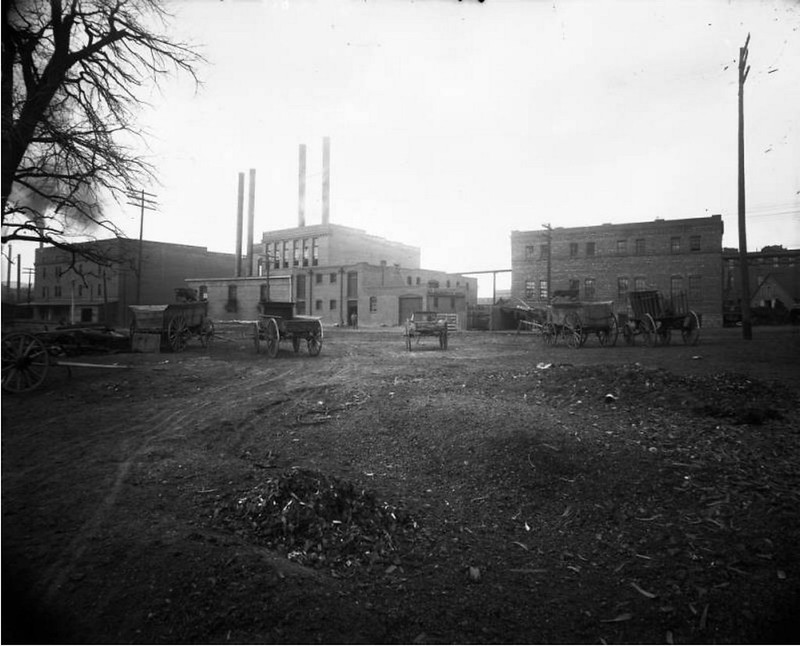
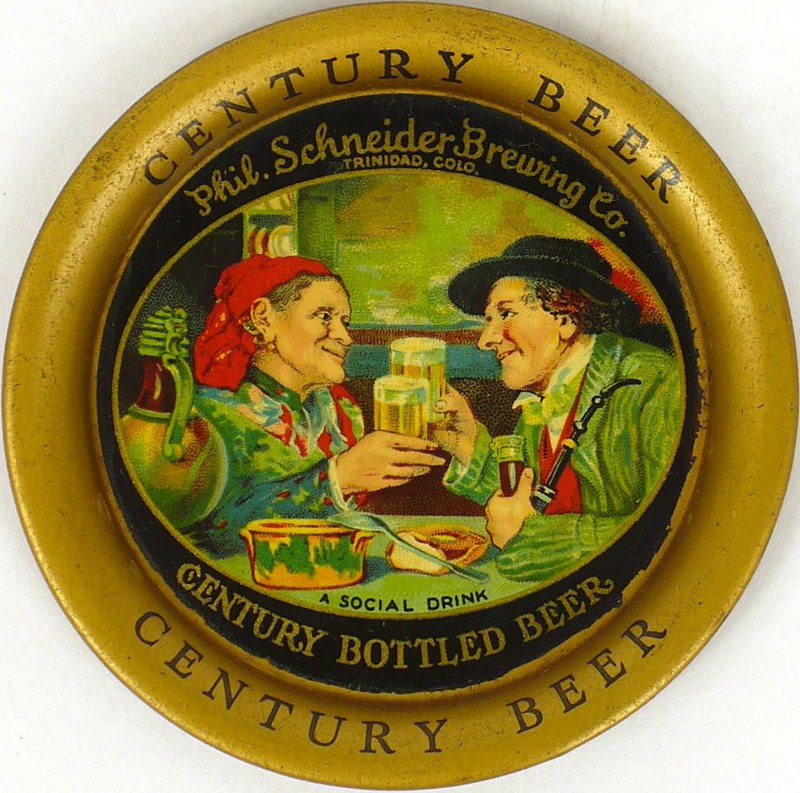
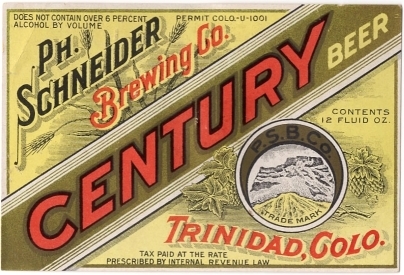
Today is the birthday of Charles Arthur von Buddenbrock (June 27, 1878-1948). He was born in Marianwewrder, Germany and served in the Germany army during World War I. He was taken prisoner and brought to an interment camp in Colorado. After his release when the war ended, he decided to stay in Colorado and worked for the Schneider Brewery in Trinidad, Colorado for over 35 years. In 1920 he was listed as the Chief Engineer, but that would have been only shortly after he started working there. I’m not sure about the math, since he died in 1948 and the war ended in 1918. Also known as the Ph. Schneider Brewing Co., it survived prohibition by obtaining a license to brew non-alcoholic beverages, and later received brewery permit COL-U-1001 in 1933, the first in the state to get back to making beer. After prohibition ended, it went through a few owners, and name changes, before closing for good in 1957 as the Bohemian Brewery of Colorado.

schneider-brewery-co-1

Century-Beer-Tip-Trays-3-6-inches-Ph-Schneider-Brewing-Co--Pre-Prohibition

Century-Beer-Labels-Ph-Schneider-Brewing-Co--Post-Prohibition

Filed Under: Birthdays, Just For Fun Tagged With: Colorado, Germany, History

Historic Beer Birthday: James Anderton

June 26, 2025 By Jay Brooks

anderton
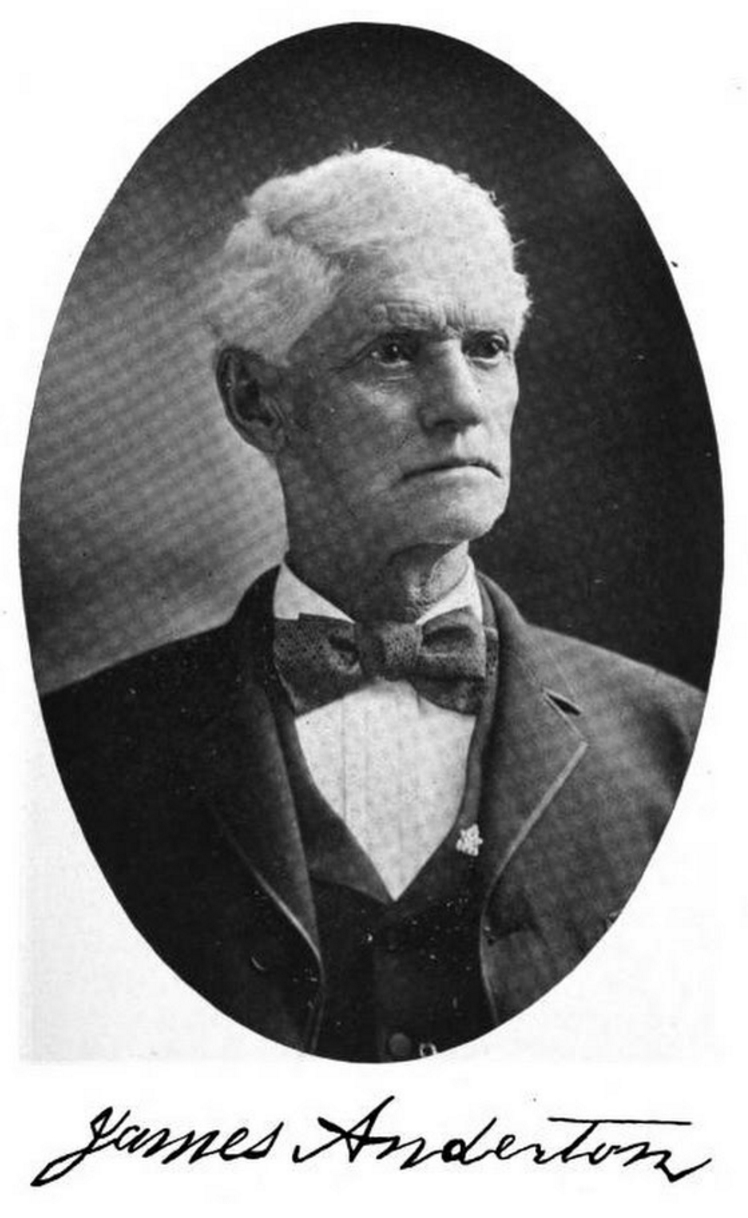
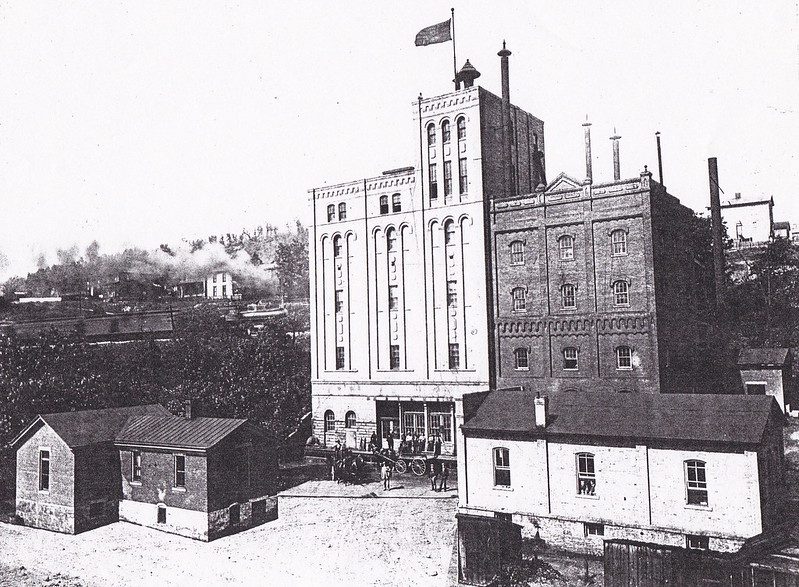
Today is the birthday of James Anderton (June 26, 1830-December 28, 1905). Anderton was born in Lancashire, England (some accounts say Streetbridge, Royston, while others say Haslingden), but came to America with his parents when he was 26 and made his way to Beaver Falls, Pennsylvania. He worked as a miner for several years, before shifting to the hotel business. In 1869, he started the Spring Water Brewery. After modest success, he built a larger brewery, renaming it the Anderton Brewery, which continued in business until closed by prohibition.

james-anderton

Here’s a summary of James and his Anderton Brewery from Lawrence County Memoirs:

James Anderton (1830-1905), born in England, came to the United States in 1856 and eventually made his way to Beaver Falls. Along with his brother Jonathan Anderton he founded the Spring Water Brewery Company in 1869. The company, located next to the railroad station at 24th Street (and Ninth Avenue), was reorganized and modernized in about 1891 as the Anderton Brewery Company. James Anderton’s son William H. Anderton later took over management of the firm and it was merged in 1905 to become part of the Pittsburgh-based Independent Brewery Company (1905-1933). The local facility was closed in 1920 (like many other breweries) with the enactment of nationwide prohibition.

anderton-brewery-2

While I could find only a couple of photographs of the brewery, and only one of Anderton himself, there are a number of biographies detailing his life. For example, here’s another one from “Biographical Sketches of Leading Citizens of Beaver County, Pennsylvania,” published in 1899.

James Anderton, the father of William Henry, was born in Streetbridge, Royston, Lancastershire, England, June 26, 1830. He worked for eighteen years in the mines in his native place, beginning at the early age of eight years. In his youth he had no educational advantages whatever, his only mental training being a night school organized by himself and his fellow miners, known as the “Youth’s Seminary.” There the boys taught each other, being too poor to afford an experienced teacher. The school organized by these lads has grown into a famous institution of learning, and is now known as the Literary Institute of Oldham, England.

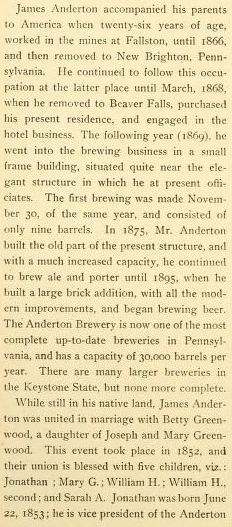
James Anderton accompanied his parents to America when twenty-six years of age, worked in the mines at Fallston, until 1866, and then removed to New Brighton, Pennsylvania. He continued to follow this occupation at the latter place until March, 1868, when he removed to Beaver Falls, purchased his present residence, and engaged in the hotel business. The following year (1869), he went into the brewing business in a small frame building, situated quite near the elegant structure in which he at present officiates. The first brewing was made November 30, of the same year, and consisted of only nine barrels. In 1875, Mr. Anderton built the old part of the present structure, and with a much increased capacity, he continued to brew ale and porter until 1895, when he built a large brick addition, with all the modern improvements, and began brewing beer. The Anderton Brewery is now one of the most complete up-to-date breweries in Pennsylvania, and has a capacity of 30,000 barrels per year. There are many larger breweries in the Keystone State, but none more complete.
While, still in his native land, James Anderton was united in marriage with Betty Green-wood, a daughter of Joseph and Mary Greenwood. This event took place in 1852, and their union is blessed with five children, viz.: Jonathan; Mary G.; William H.; William H., second ; and Sarah A. Jonathan was born June 2, 1853; he is vice president of the Anderton Brewing Company. He wedded Margaret Hart, a daughter of Hilton and Ann Hart, and their home is made happy by the presence of four sons: James, Hilton, Jonathan, Jr., and William H. Mary G. was born February 1, 1858. She became the wife of C. W. Rohrkaste, who is now superintendent of the Anderton Brewery. They have three children: James A.; Mary A.; and Florence E. William H., the third child, died at the tender age of five years, and the same name was given to the next child. William H., the fourth child, is the subject of this brief sketch. Sarah A., the fifth child, was born October 14, 1869, and died in early childhood, aged three years.

James Anderton is a fine illustration of a self-made man, which in a great measure is due to his progressiveness, reliability and integrity. He ranks among the most esteemed citizens of Beaver Falls, and takes an active interest in fraternal organizations, being a member of Lone Rock Lodge, K. of P.; Valley Echo Lodge, I. O. O. F.; Mechanics Lodge, A. O. U. W.; and Beaver Valley Lodge, F. & A. M., of which he has been treasurer for the past nineteen years. He was one of the organizers and original stockholders of the Union Drawn Steel Co., and is one of the stockholders of the People’s Water Co., of Beaver Falls. In his religious convictions, the elder Mr. Anderton is an Episcopalian, of which denomination he and his family are members. Politically, he is a stanch Democrat, but could never be persuaded to seek or accept public office.

anderton-brewery-1899
The Anderton Brewing Co. was located in Beaver Falls, between 23rd and 24th streets near the railroad tracks. The local owners would sell their company in 1905, but the brewery remained in Beaver Falls producing beer until 1922.

Here’s another biography from the “Book of Biographies.”

anderton-bio-1
anderton-bio-2

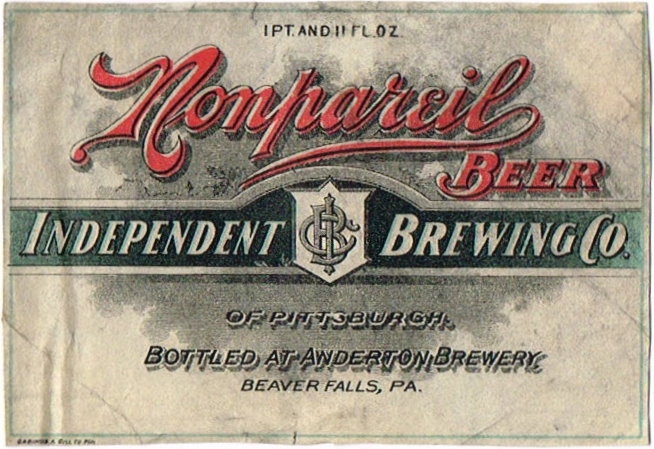
Nonpareil-Beer-Labels-Independent-Brewing-Co-of-Pittsburgh-Anderton-Brewery

The year Anderton died, the brewery merged into the Pittsburgh entity known as Independent Brewing Co., a conglomerate of breweries formed by the merger of fifteen Pittsburgh and the surrounding area breweries in 1905. But James’ son William continued in a management role with the brewery until it was closed by prohibition.

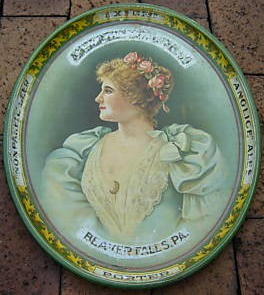
anderton-tray-190s

Filed Under: Birthdays, Breweries, Just For Fun Tagged With: England, History, Pennsylvania

Beer In Ads #5009: You Like Valley Forge Bock Beer

June 25, 2025 By Jay Brooks

Last year I decided to concentrate on Bock ads. Bock, of course, may have originated in Germany, in the town of Einbeck. Because many 19th century American breweries were founded by German immigrants, they offered a bock at certain times of the year, be it Spring, Easter, Lent, Christmas, or what have you. In a sense they were some of the first seasonal beers. “The style was later adopted in Bavaria by Munich brewers in the 17th century. Due to their Bavarian accent, citizens of Munich pronounced ‘Einbeck’ as ‘ein Bock’ (a billy goat), and thus the beer became known as ‘Bock.’ A goat often appears on bottle labels.” And presumably because they were special releases, many breweries went all out promoting them with beautiful artwork on posters and other advertising.

Wedneday’s ad is for Valley Forge Bock Beer, sort of. I guess it was at the end of Bock season so they used the success of their bock beer to suggest switching to Valley Ford Light Beer for the summer. The ad was published on June 25, 1954. This one was for the Adam Scheidt Brewing Co., which was located in Norristown, Pennsylvania and was originally founded in 1866. This ad ran in The Jersey Journal, of Hudson County, New Jersey.

Filed Under: Art & Beer, Beers, Breweries, Just For Fun Tagged With: Advertising, Bock, History, New Jersey

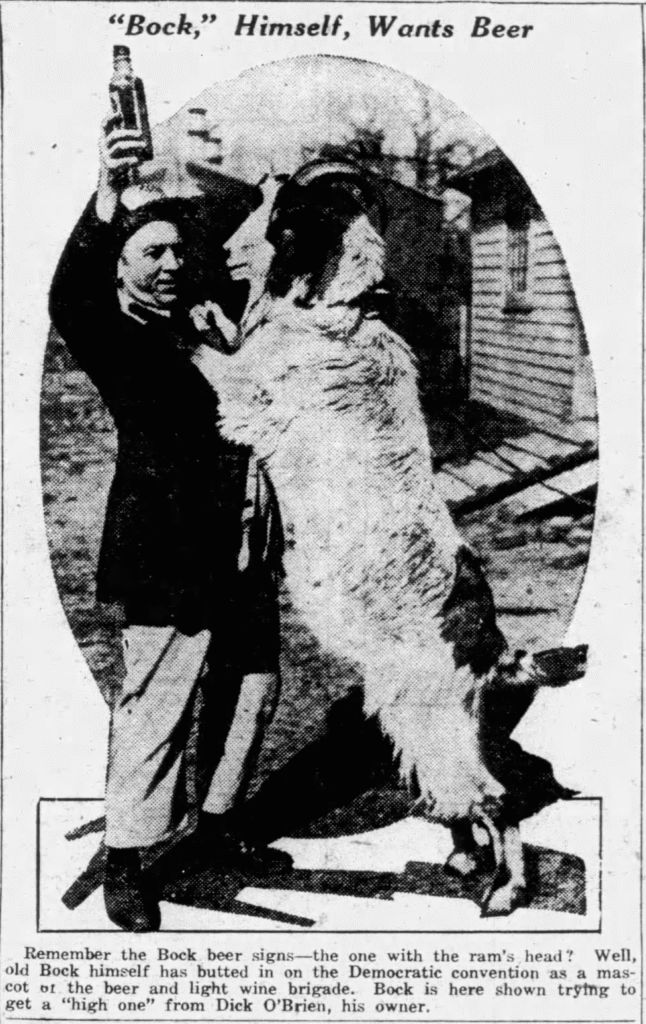
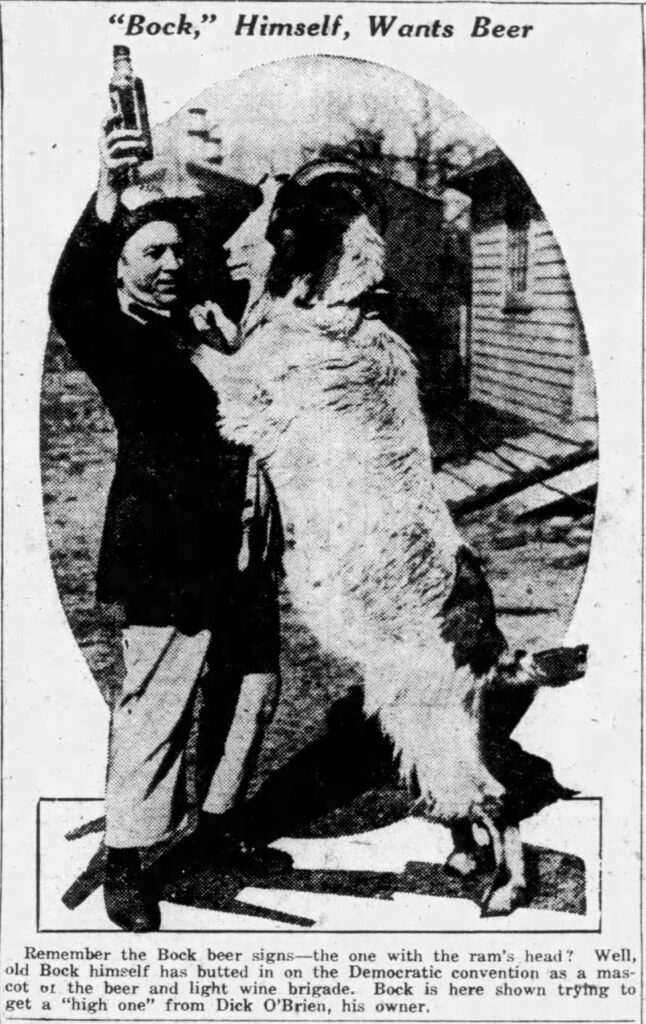
Beer In Ads #5008: “Bock,” Himself, Wants A Beer

June 24, 2025 By Jay Brooks

Last year I decided to concentrate on Bock ads. Bock, of course, may have originated in Germany, in the town of Einbeck. Because many 19th century American breweries were founded by German immigrants, they offered a bock at certain times of the year, be it Spring, Easter, Lent, Christmas, or what have you. In a sense they were some of the first seasonal beers. “The style was later adopted in Bavaria by Munich brewers in the 17th century. Due to their Bavarian accent, citizens of Munich pronounced ‘Einbeck’ as ‘ein Bock’ (a billy goat), and thus the beer became known as ‘Bock.’ A goat often appears on bottle labels.” And presumably because they were special releases, many breweries went all out promoting them with beautiful artwork on posters and other advertising.

Tuesday’s ad is for not technically for a specific Bock Beer. Instead it’s an captioned photo that was published on and around June 24, 1924 as part of the coverage of the Democratic National Convention, which was held that year in Washington, D.C. When I searched today for Bock ads, this photo repeated endlessly in too many newspaper across the country to count. In all my searching this year, this one hands down was published in the most newspapers. This specific one ran in The Washington Daily News, of D.C. Who knew the Democrats once used a goat as their mascot? Not me, that’s for sure.

Filed Under: Art & Beer, Beers, Just For Fun, Politics & Law Tagged With: Advertising, Bock, D, D.C., History, Politics

Historic Beer Birthday: Peter Ganser

June 24, 2025 By Jay Brooks

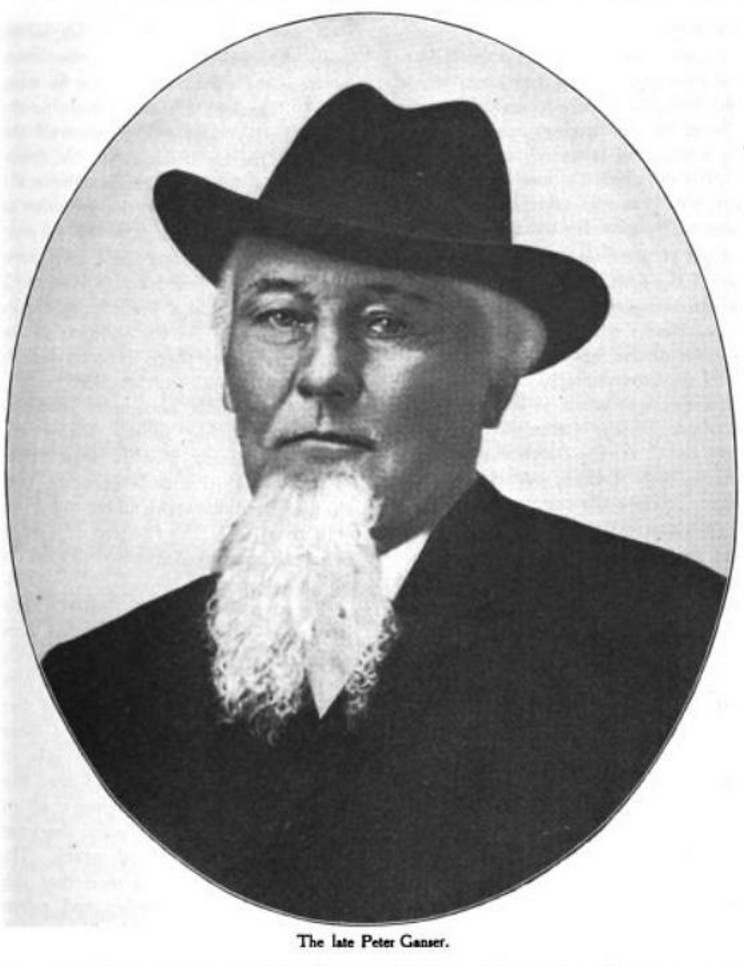
peter-ganser
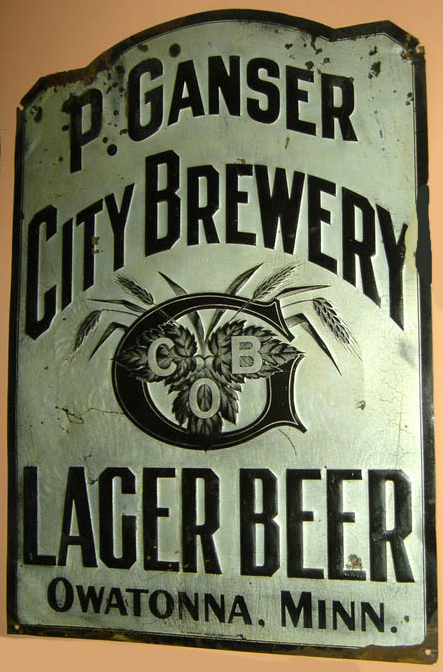
Today is the birthday of Peter Ganser (June 24, 1836-August 5, 1915). He was born in Germany, but settled in Steele County, Minnesota, buying the Knobloch & Mannheim brewery and founding the Peter Ganser brewery in Owatonna, along with his brother Adam. It was generally known as the Peter Ganser, City Brewery, off and on from 1865, before it finally closed a few years into prohibition.

peter-ganser

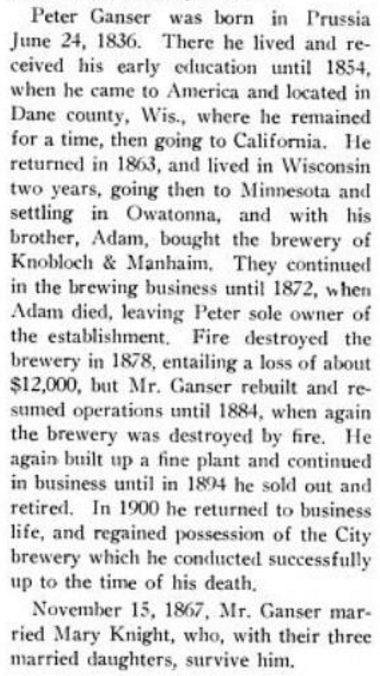
Here’s his obituary, from the American Brewers Review:

ganser-obit

ganser-and-daughters
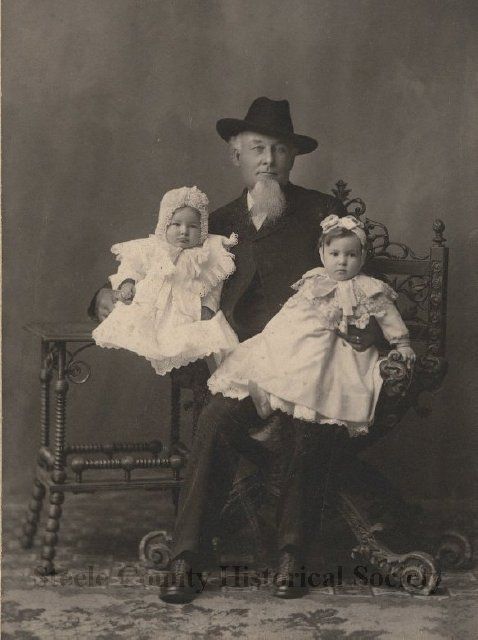
Local brewer Peter Ganser sits on an ornate chair, holding two of his daughters. On the left is Adeline, who later became Mrs. William Zamboni; on the right is his daughter, Catherine, who later married Harry Brown (from the Steele County Historical Society).

And here’s another account from the “History of Rice & Steele Counties, Minnesota, Illustrated, Vol. II,” and published in 1910:

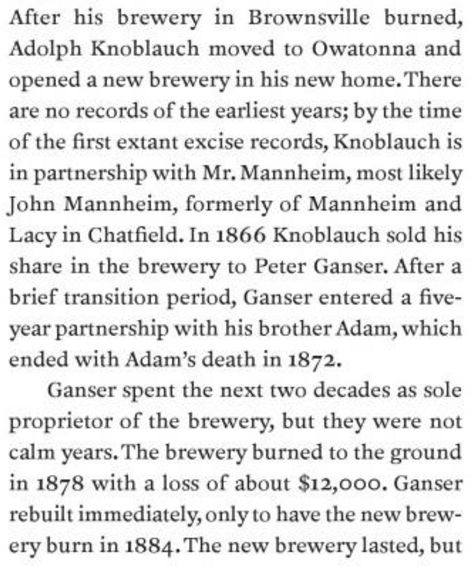
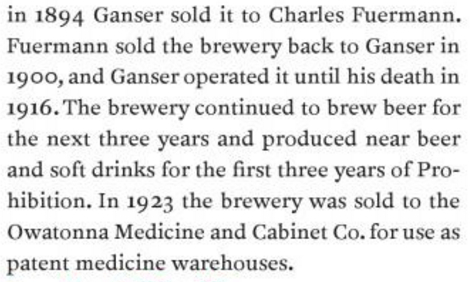
Peter Ganser, proprietor of the Owatonna City Brewery, is one of those substantial citizens, who, in building the foundations for their own fortunes, find the time to take an interest in all worthy causes that tend toward the development of the community. He combines liberality with shrewd common sense and business ability and from his first settlement here he has had an unbounded faith in Owatonna’s future. Mr. Ganser was born in Prussia, Germany, June 24, 1836. He received his early education in the public schools and remained in his native country until 1854, when he came to America and located in Dane county, Wisconsin, where he lived for a time and then went to California. In 1863 he returned to Wisconsin and there remained until 1865 when he came to Owatonna and, together with his brother, Adam, purchased the city brewery, which they continued together until 1872, at which time the brother died. The subject of this sketch then became the sole owner and proprietor. In 1878 the brewery was destroyed by fire, entailing a loss of about $12,000. Undaunted by this loss, Mr. Ganser rebuilt, but in 1884 again suffered a similar disaster. The present building, to which additions and improvements have been made from time to time, was erected in 1884. In 1879, Mr. Ganser, in company with Jacob Glaeser, erected the building then known as the Germania Hall. Mr. Glaeser has carried on a large and increasing business from year to year. In 1894 he sold out his business for six years lived a retired life. In 1900 he again came into possession of the brewery, which he has since conducted. Mr. Ganser was married in 1867 to Mary Knight, who was born in Indiana. The fruit of this union was three children, viz: Margaret, now the wife of William Fleckenstein of the Fleckenstein Brewery at Faribault; Adeline, now Mrs. W. C. Zamboni; Kate, now Mrs. H. D. Brown, of Owatonna. Mr. Ganser is a Democrat in political faith. He takes an active interest in public affairs, and served as a mayor of Owatonna one term, and alderman of the fourth ward for two years. Mr. Ganser is a self-made man, enterprising in business, and has won his position by persevering efforts. He lives in a very find residence at 508 South Oak street.

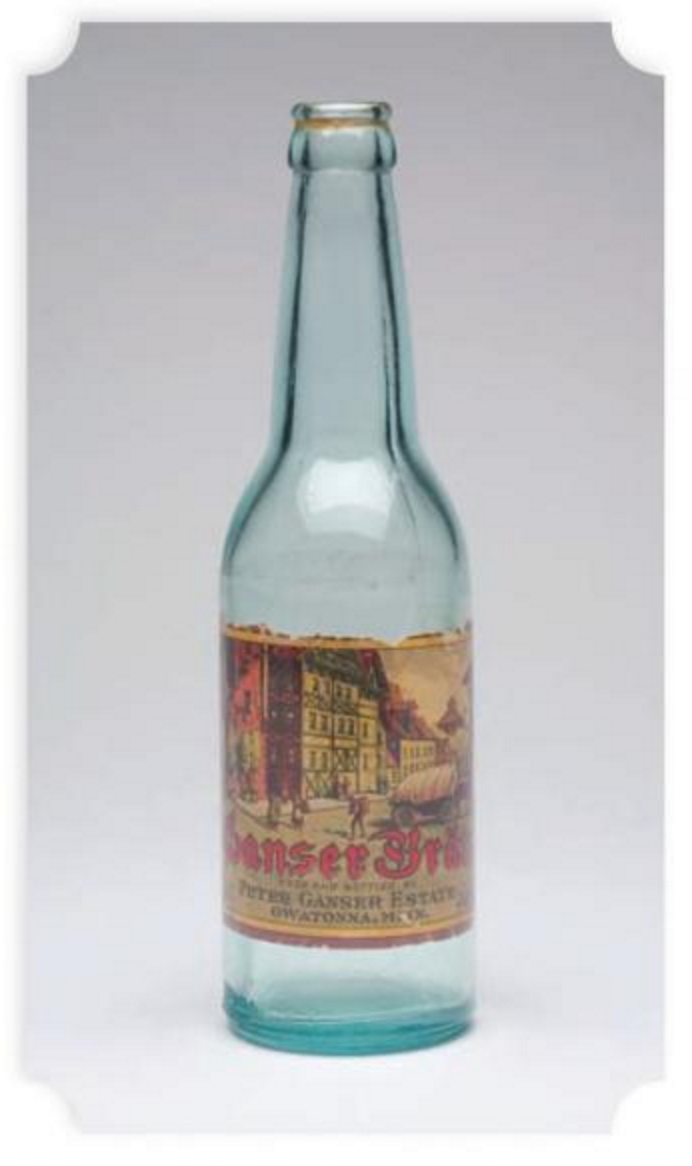
ganser-brau-near-beerGanser Brau Near Beer.

And this is from Land of Amber Waters: The History of Brewing in Minnesota:

ganser-history-1
ganser-history-2

ganser-city-sign

Filed Under: Birthdays, Just For Fun Tagged With: Germany, History, Minnesota

Historic Beer Birthday: Magdalena Jung Sohn

June 24, 2025 By Jay Brooks

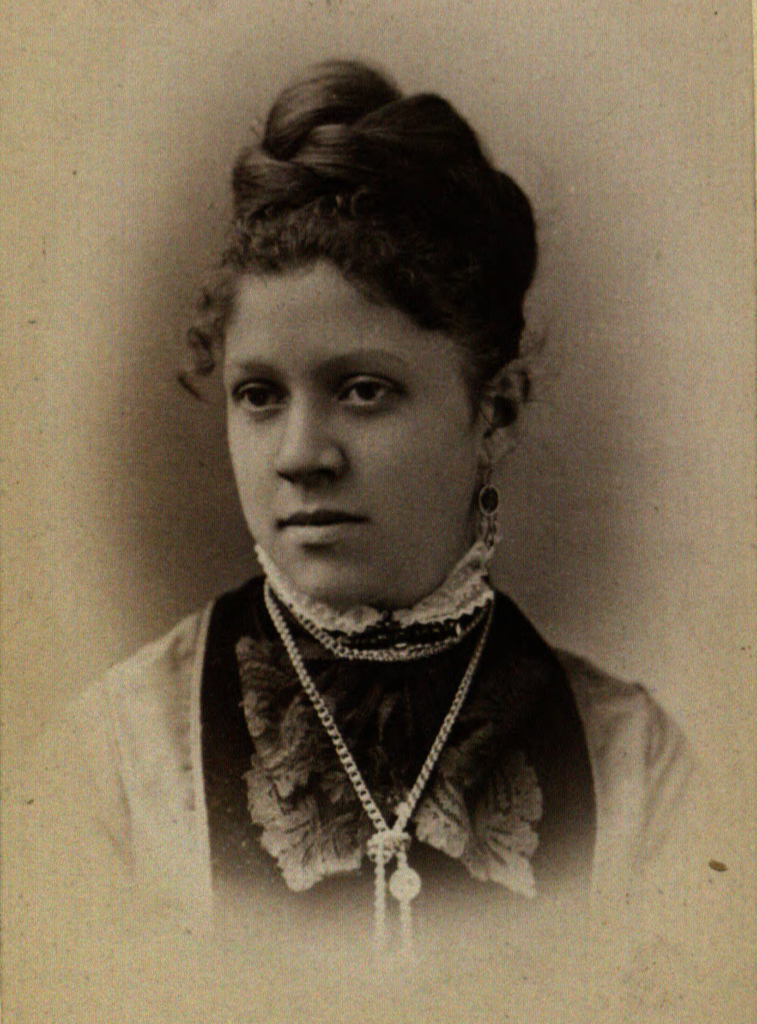
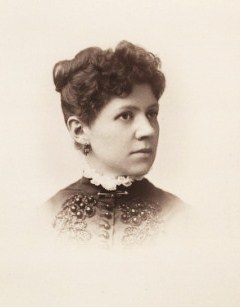
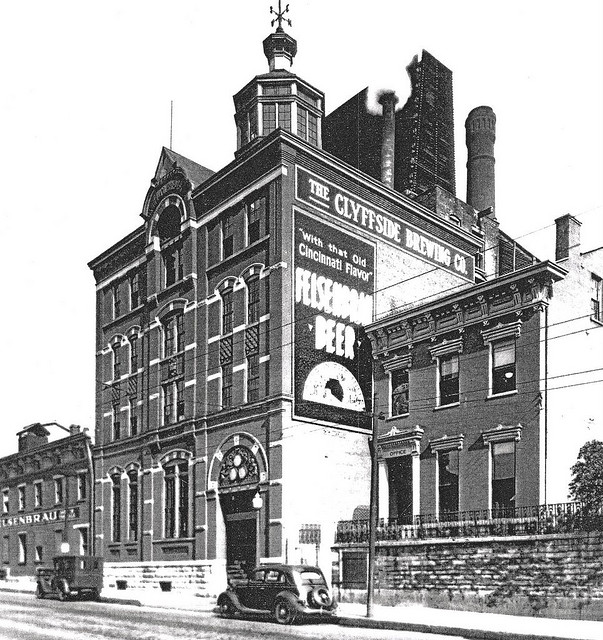
Today is the birthday of Magdalena “Lena” Jung Sohn (June 24, 1857-July 25, 1940). She was born in Cincinnati, Ohio, the sister of Daniel Jung, who founded the Jung Brewery in Cincinnati. She later married brewery owner William Sebastian Sohn. He was the son of Johann Georg Sohn, who co-founded the Hamilton Brewery, which was later known as the J. G. Sohn & Company Brewery. It was also known as the Clyffside Brewing Co., and used the trade name Feldsbrau. After his death in 1902, she took over the brewery and ran it until 1907, which became known as the William G. Sohn Brewing Co. and later the Mohawk Brewing Co. After prohibition, it reopened as the Clyffside Brewing. After World War 2, it was renamed the Red Top Brewing before closing for good in 1958.

She was considered one of the beer barons of Cincinnati and left a legacy

Lena Jung Sohn was one of the most influential figures in the beer industry in the late 1800s and early 1900s, and she wasn’t afraid to show it as president and owner of William S. Sohn Brewing Co. and later as owner and co-director of Mohawk Brewery.

Here’s a biography of her by Sean E. Andres for Queens of Queen City.

Magdalena, or “Lena,” Jung was born on 24 June 1857 to Magdalena Oeh and blacksmith Philipp Jung. Little Lena’s maternal aunt was Barbara Oeh Moerlein, second wife of Christian Moerlein. Nine of the Moerlein children were Lena’s full first cousins. Her paternal uncle Daniel owned the Jung Brewery. Her sister Katherine married Jacob Born, and her first cousin Magdalena Moerlein married Conrad Born, both Borns of the Born brewing family in Columbus. It seems that Lena was destined for the brewing business.

In 1876, Cincinnati’s most established brewer and mentor to the other brewers John George Sohn died, leaving John Kauffman to be the senior-most brewer in Cincinnati, having been in it for 31 years. Just a week after J.G.’s death, a bullet shot through the Sohns’ parlor window, narrowly missing his widowed wife Barbara and dropping beside her. Was it a person in favor of temperance? A wronged worker? A rival? A jealous family member who wants all her money? Suspiciously, it was just after the reading of the will. Sohn left his estates and house to Barbara, money to his daughters Ida, Carolina, and Mathilda, and the brewery to his sons, J.G., Jr. and William Sebastian.

William Sebastian Sohn and Magdalena “Lena” Jung married in 1877 at a time when the brewing industry was being attacked by the temperance movement, supported by the Gazette, feeding anger and fear against the brewers, amidst rumors that they used poison instead of malt and hops and that the cost per barrel would rise. Lena, already heavily exposed to the brewing industry, would come to learn the industry first-hand through her husband while also keeping house and raising four children – Walter, Alma, Elsie, and Edna.

Aside from Barbara’s near-death experience, during this time, a number of terrible events occurred at the brewery, including an engineer’s gruesome death in the fly wheel and the repeated burning of the Orpheus building. However, the Jungs and Sohns were also among the few worldwide to invest in new washing-machine technology in the late 1880s. They were always looking to innovate their business practice.

William bought out his brother’s interest and took over the business in 1900. J. G., transferring the Sohn & Co property to William S. Sohn Brewing Company in 1900 with William and Lena being co-owners. Lena’s family by blood and marriage was running the Cincinnati brewing industry at this point.

William died on 26 February 1902, leaving the brewery to Lena, and she was voted in as president. Lena was actively using her name as President of the William S. Sohn Brewing Company, after Marianne Kauffman hid hers under initials and women before her staying out of being mentioned at all. Lena didn’t mind the spotlight and enjoyed the labors of the beer baronesses before her. She did her best to take care of her employees and show them they were like their own family. If an employee or their family died, she ensured that the entire brewery pitched in for donations of some sort as well as her family.

In addition to making a happier, more caring place to work, Lena continued the tradition of making the brewery state-of-the art. In 1904, the brewery began constructing a new bottle shop, “modern in every detail and the machinery and equipment of the latest and most improved on the market.” Lena also began selling off what didn’t make the company money. That meant selling off some of the enterprises they owned—like a saloon, grocery, and boarding house. What she couldn’t sell, she rented out instead, becoming an effective landlord. This allowed her to earn income, even after stepping down as president of the brewery in 1907 with George H. Osterfield replacing her. Her son Walter remained as secretary and treasurer. Lena remained as the owner of the brewery and its properties, even during its transfer to new presidents and new names.

Alma, Elsa, and Edna lived with their mother at Marion Ave and Winding Way and later 212 Ludlow Avenue, but they enjoyed trips to Atlantic City. After all, they were women of a more unsavory reputation, being in the brewing industry, so it was a fitting city for vacations. At home, Lena also invested in new (and most definitely loud) technology, installed by Pogue’s. She was an early adopter of Williams Oil-o-Matic Heater, developed by the company because of the oil shortage during WWI. The heater burned used automobile engine oil.

Lena’s oldest daughter Alma married a longtime friend on 29 January 1912, distiller Robert C. Heinzman, who patented many inventions to innovate the distilling industry throughout his life, perfect for a family that was always looking for innovations. Robert moved in with the family and continued living with them, even after Alma’s death from a pulmonary embolism on 29 October 1918, a little over a month after her infant died.

The family deeply grieved over the loss of Alma, and Prohibition brought about even more change the following year. The family had to adjust to life during Prohibition, but they only had to change how they appeared. The Mohawk Brewing Company continued to make near-beer and full beer under Walter’s supervision, until 3 August 1925 when the brewery was raided by federal agents. This forced Walter to step down from an active role in the brewery, and the brewery continued on as an ice house and malt beverage makers.

When Prohibition ended, the owners of Mohawk Brewery didn’t want to re-open. Lena was old, and Robert was retired. Shareholders voted to dissolve the Mohawk Brewery, and co-directors Lena, Robert, and Norbert J. Sprengard dissolved the brewery on 1 June 1936, and sold it to the owners of what would become Clyffside Brewing. This was the end of Lena’s business ventures. Lena, after some vacationing to Atlantic City with her daughters, died at her home on 24 July 1940, at the age of 83. Walter lived until 1962. Edna and Elsa lived in Cincinnati and Atlantic City until their respective deaths in 1979 and 1981.

When the beer baronesses married inside the alcohol industry, they could continue with their children. But when the women in the alcohol industry didn’t marry, there was no one in the family to continue the brewing business. As a brewing woman, you had a limited selection, being an improper lady. That meant you had to marry someone who didn’t care about social status, marry another man in the brewing industry, or not marry at all. Many of the women chose or were forced into that last option. Because Lena’s lineage did not continue with her children, neither did her direct family’s stronghold on the brewing industry, severely exacerbated by Prohibition. The men may have made the industry, but it was the women who kept it going.

Here’s another short biography from Tavern Trove

Magdalena (Lena) Jung Sohn, one of the “Beer Barons of Cincinnati” was born in Cincinnati, Ohio. As the niece of Daniel Jung of the Jung Brewery Lena Jung was already Cincinnati brewery royalty. In 1877 she married Johann Georg ‘J.G.’ Sohn, who was a member of another Cincinnati brewing dynasty. When her husband died in 1902 Magdalena took over the expansive operation and renamed it the Mohawk Brewing Company and ran it successfully until Prohibition shut it down in 1920. Magdalena (Jung) Sohn died on July 24, 1940. She was 83 years of age.

Filed Under: Birthdays, Just For Fun Tagged With: History, Ohio

Historic Beer Birthday: Christian Schmidt

June 24, 2025 By Jay Brooks

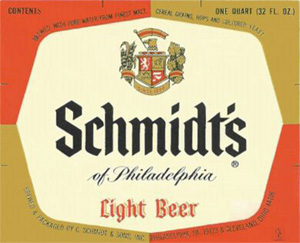
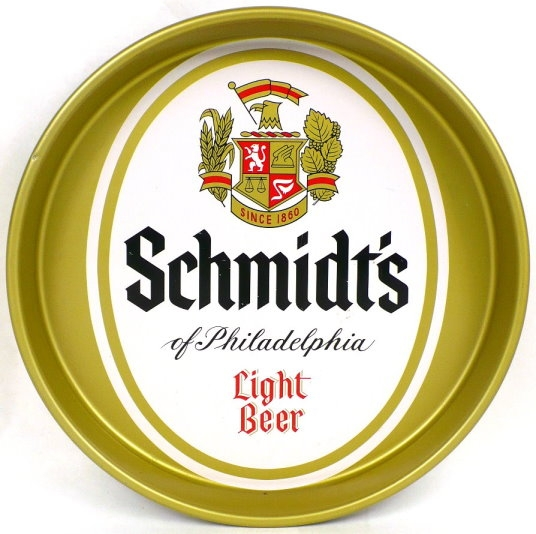
schmidts-beer
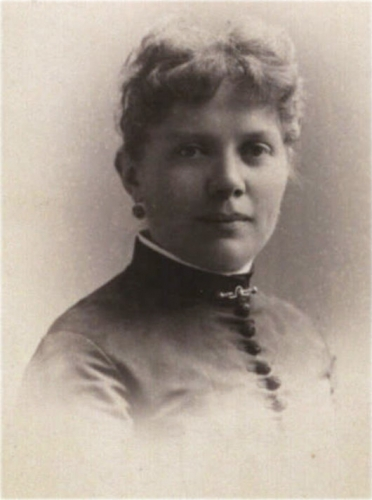
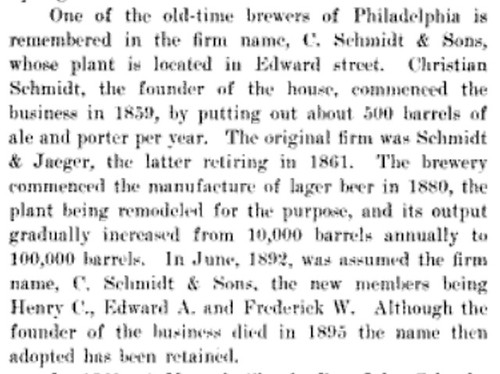
Today is the birthday of Christian Schmidt (June 24, 1833-September 6, 1894). Schmidt was born in Magstadt, Wurtemberg, Germany but moved to Philadelphia as a young man. In 1859, he became a partner with the Robert Coutrennay Brewery but bought him out the following year, renaming the brewery the Christian Schmidt Brewing Company until his sons joined the brewery in 1892, when it became known as C. Schmidt & Sons.

Here’s a biography of both Schmidt and his brewery from Workshop of the World — Philadelphia:

Christian Schmidt, an immigrant from Wurtemberg, Germany, purchased the Robert Courtenay brewery which primarily produced ale at this site in 1860. The acquisition of other breweries, such as Peter Schemm, in addition to the production of lager beer, boosted output to 100,000 barrels by 1892. A marked expansion of the physical plant kept pace with the brewery’s growth.

The last quarter of the nineteenth century was Philadelphia’s shining era for large and small breweries. Bergner and Engel (120,000 barrels), and William Massey and Company (75,000 barrels), were the third largest and eleventh largest breweries respectively in the U. S. in 1877. By 1895, Bergner and Engel with 250,000-300,000 barrels had fallen to 15th place; the largest local brewery. Other major companies were Engels and Wolf, Betz and Bergdoll. Christian Schmidt was succeeded by his son Edward who headed the company from 1895 until 1944. There were 421 employees at Schmidt’s in 1943. It had survived and thrived through new technologies—refrigeration, and political impediments, even Prohibition, which decimated other breweries both locally and nationally. Only 26 breweries operated in Pennsylvania in 1960. Philadelphia lost brands such as Esslinger, Poth, Gretz and Class and Nachod.

Schmidt family ownership ceased in 1976 with the sale of the brewery to William H. Pflaumer. By the late 1970s Schmidt’s was the tenth-largest American brewery. It operated a plant in Cleveland, Ohio which facilitated mid-west regional sales. Valley Forge Brewing Company was acquired in the 1960s, Duquesne Brewing Company (Pittsburgh) in 1972, and label and brewing rights to Reading and Bergheim were purchased in 1976, Rheingold in 1977, Erie Brewing Company, with its Koehler brands in 1978. In 1981, Ortlieb, the only other Philadelphia brewery, was purchased by Pflaumer. Schmidt’s, unable to cope with the marketing muscle of the giant national brewers even though it employed 1,400 and produced three million barrels of beer as recently as 1984, sold its brands to G. Heileman Brewing Company of La Crosse, Wisconsin, in April 1987. Production of the Schmidt’s labels slumped to about $1.6 million barrels in 1986, less than one percent of the total U. S. Market. The demise of Schmidt’s marked the end of the large brewery in Philadelphia.

In Rich Wagner’s Philadelphia Beer: A Heady History of Brewing in the Cradle of Liberty, he has this to say about Christian Schmidt:

c-schmidt-bio

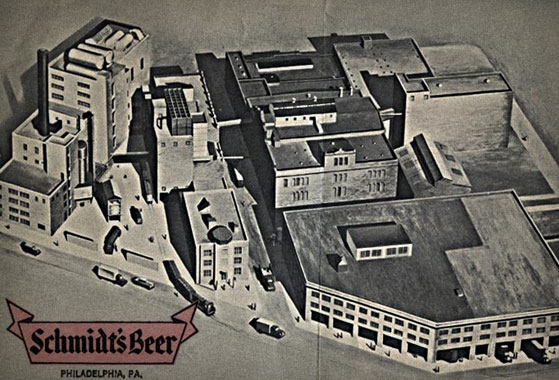
schmidts-1930s
The Schmidt’s brewery in the 1930s.

And in One Hundred Years of Brewing, published in 1903, this was the entry for C. Schmidt & Sons.

Filed Under: Birthdays, Just For Fun Tagged With: Germany, History, Pennsylvania, Philadelphia

Beer In Ads #5007: Lucky Lager Bock Beer vs. Karate

June 23, 2025 By Jay Brooks

Last year I decided to concentrate on Bock ads. Bock, of course, may have originated in Germany, in the town of Einbeck. Because many 19th century American breweries were founded by German immigrants, they offered a bock at certain times of the year, be it Spring, Easter, Lent, Christmas, or what have you. In a sense they were some of the first seasonal beers. “The style was later adopted in Bavaria by Munich brewers in the 17th century. Due to their Bavarian accent, citizens of Munich pronounced ‘Einbeck’ as ‘ein Bock’ (a billy goat), and thus the beer became known as ‘Bock.’ A goat often appears on bottle labels.” And presumably because they were special releases, many breweries went all out promoting them with beautiful artwork on posters and other advertising.

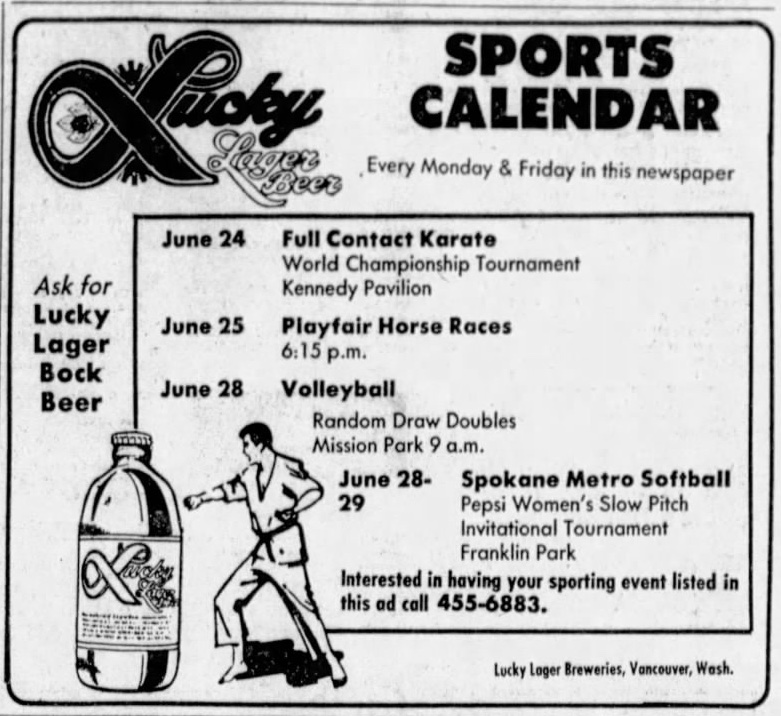
Monday’s ad is for Lucky Lager Bock Beer. The ad was published on June 23, 1980. This one was for the Lucky Lager Breweries, which was located in Vancouver, Washington, among other places, and was originally launched in 1934. This ad ran in The Spokane Chronicle, of Spokane, Washington. This ad is isn’t all bock. In fact, bock seems more of an afterthought with the text “Ask for Lucky Lager Bock Beer” on the left edge of the ad. It’s really more of a “Sports Calendar” sponsored by Lucky Lager. But I do love the karate fight going on at the bottom between a bottle of Lucky Lager and a man employing “full contact karate.”

Filed Under: Art & Beer, Beers, Breweries, Just For Fun Tagged With: Advertising, Bock, History, Washington

« Previous Page
Next Page »

Find Something

Northern California Breweries

Please consider purchasing my latest book, California Breweries North, available from Amazon, or ask for it at your local bookstore.

Recent Comments

  • Bob Paolino on Beer Birthday: Grant Johnston
  • Gambrinus on Historic Beer Birthday: A.J. Houghton
  • Ernie Dewing on Historic Beer Birthday: Charles William Bergner 
  • Steve 'Pudgy' De Rose on Historic Beer Birthday: Jacob Schmidt
  • Jay Brooks on Beer Birthday: Bill Owens

Recent Posts

  • Beer In Ads #5137: Bock Is Back… Look For It March 1st February 28, 2026
  • Historic Beer Birthday: John Holme Ballantine February 28, 2026
  • American Craft Beer Hall of Fame: 2nd Year Inductees February 28, 2026
  • Beer Birthday: Jeff Bell February 28, 2026
  • Beer In Ads #5136: American Bock Beer Is Being Served Today! February 28, 2026

BBB Archives

Feedback

Head Quarter
This site is hosted and maintained by H25Q.dev. Any questions or comments for the webmaster can be directed here.