Brookston Beer Bulletin

Jay R. Brooks on Beer

  • Home
  • About
  • Editorial
  • Birthdays
  • Art & Beer

Socialize

  • Dribbble
  • Email
  • Facebook
  • Flickr
  • GitHub
  • Instagram
  • LinkedIn
  • Pinterest
  • RSS
  • Twitter
  • YouTube

Powered by Genesis

Historic Beer Birthday: Edward W. Voigt

April 5, 2025 By Jay Brooks

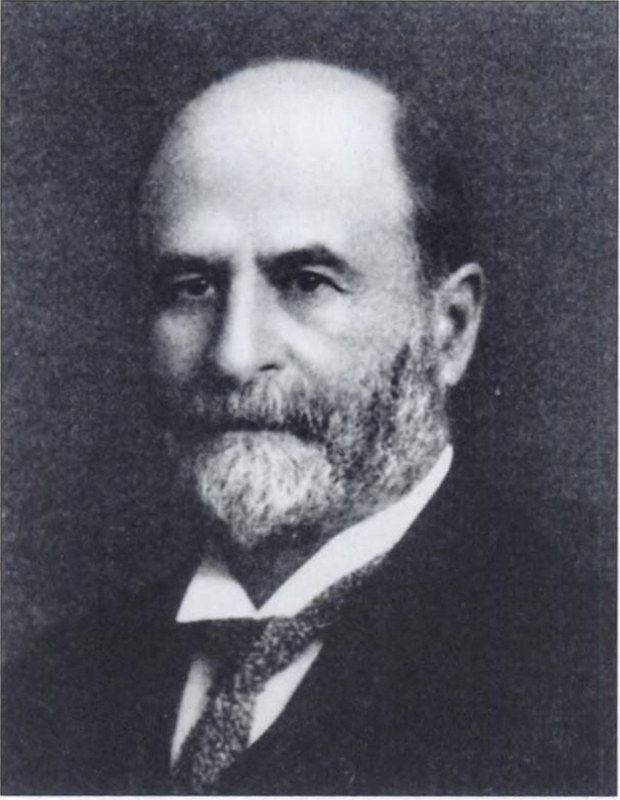
voight
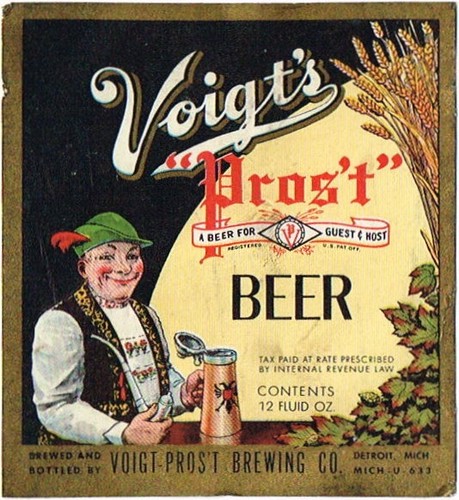
Today is the birthday of Edward W. Voigt (April 5, 1844-May 14, 1920). His father was a brewer who founded a brewery, and also trained his son, and sent him to brewing school. He worke din other breweries and in completely different businesses, but eventually worked with his father and ran the family brewery, the Voigt Brewery, in Detroit, Michigan.
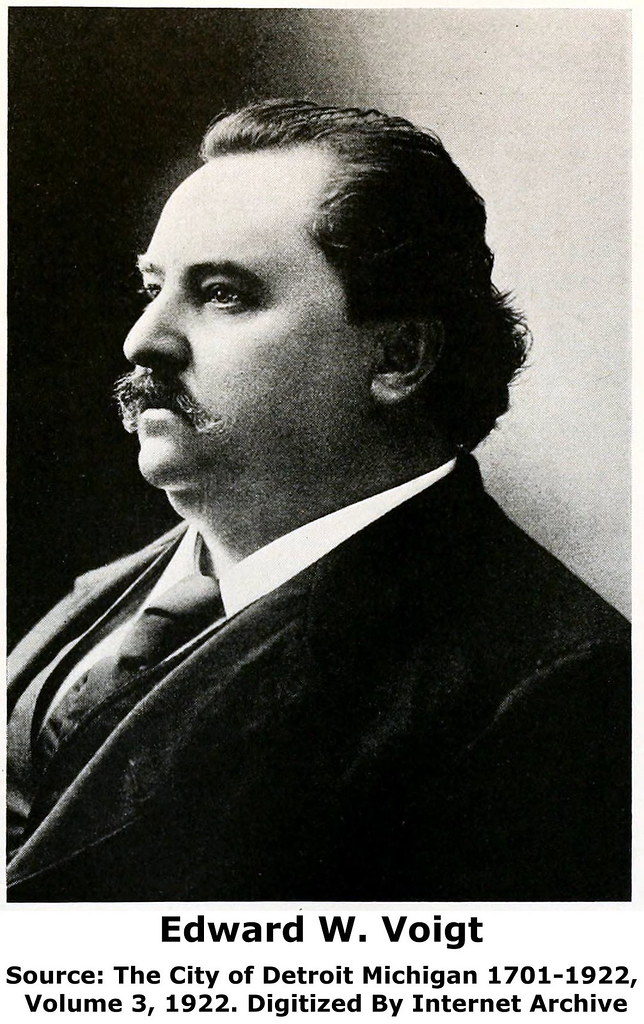
voigt_large

Here’s a thorough biography by Burton (though I confess I don’t know who Burton might be):

EDWARD W. VOIGT was an outstanding figure in connection with the development of Detroit, where for more than fifty-five years he was identified with the city’s business interests. Mr. Voigt was born in Daebeln, Saxony, Germany, April 5, 1844, a son of Carl William and Pauline (Beck) Voigt, the latter of whom died in Germany. The father married again in that country and with his wife and only son, Edward W., sailed from Hamburg for Liverpool, England, the latter part of May, 1854. At the latter port they embarked on the ship Malabar and reached New York on the 1st of August. An epidemic of cholera was then raging in New York and, moreover, the father was not in robust health as a result of conditions which he had experienced during the ocean voyage. It seemed better that they leave New York at once, which they did, and went to College Paint, Long Island. When the father had sufficiently recovered to travel they went west, stopping in Toledo, Chicago and Milwaukee, but remained in those cities only a short time, after which they journeyed an to Madison, Wisconsin. In the latter city Carl William Voigt established a small ale brewery, which was converted into a lager beer brewery in 1857, and this business he conducted until 1863, when he removed to Milwaukee, where he soon afterward purchased the schooner Columbian that plied the lakes between Chicago and Buffalo in the grain trade. In 1864 Carl William Voigt removed to Detroit, retaining his vessel interest until December, 1865, when he disposed of same. It was really his intention at this time to return to Germany, but rumors of the possibility of war between that country and France caused him to defer the trip. In 1866 he established a brewery in Detroit and continued to conduct this until 1871, when he leased the plant to his son, Edward W., and returned to Germany, where he engaged in the milling business until his death in that country in 1889. Edward W. Voigt was about ten years of age when his parents brought him to America. His first schooling was received in his native land and after coming to this country he attended the public schools of Madison, Wisconsin, also a business college and for one term was a student at the University of Wisconsin. He had from boyhood worked in his father’s brewery at different periods and early in life had acquired a practical knowledge of the business. In those days it was impossible to brew lager beer during the summer months owing to the lack of familiarity with the theory of refrigeration, so that during those periods of inactivity Edward W. Voigt was able to attend classes. When the weather became cooler, so that the manufacture of beer could be resumed, he again took his place as a brewer in his father’s plant.

After his father disposed of the brewery at Madison in the fall of 1863, Edward W. Voigt concluded he would go to California and try his fortune in that new country. He went by the Isthmus of Panama but on reaching San Francisco found that work as a brewer was difficult to secure. He could not afford to remain idle indefinitely, so shipped before the mast on the barkentine Monitor, plying between San Francisco and north Pacific coast cities. Wages were law and the work not the most desirable. In writing home to his Vol. II-3 parents he had mentioned the character of his employment and his father replied that if Edward W. Voigt wanted to be a sailor he should come back home, as the father had bought the schooner Columbian. Edward W. Voigt returned east, again by the Isthmus route, and took the position of second mate on his father’s schooner. This was during the latter part of 1864. During the winter of 1864-65 Edward W. Voigt studied navigation in Boston, thus equipping himself to command his father’s schooner, and during the season of 1865 he was captain of the vessel, which was sold in December, 1865.

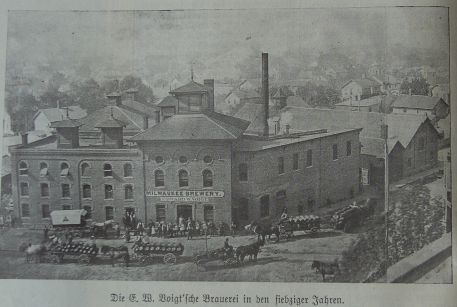
The following year Edward W. Voigt entered the employ of his father in the brewery which the latter had established in Detroit and continued in that capacity until 1871. At this time his father decided to return to Germany, so that the brewery equipment was disposed of to the son, who rented the plant for a term of four years, later renewing the lease for five more years. This was a downright business transaction and the fact that the father and only child were the principals made no difference whatever in the terms of the deal. The son had practically no capital at all and the father was secured by chattel mortgage on the stock and equipment. This was Edward W. Voigt’s beginning in business for himself and at a time when competition was keen, as there were no less than thirty plants in the ale and lager beer line in Detroit, but he was young, energetic and a hustler. Under his management the business began to grow from the very start and before long he was on the rapid road to success, so that in 1882 he purchased outright the entire interest of his father. The high class product that he turned out soon became one of the most popular in the city and the capacity of his brewery grew from three thousand barrels annually to more than forty-three thousand barrels, which was then a larger production than that of any brewery in the state. Mr. Voigt continued the business as sole owner and under his personal management until 1889, when he sold out to an English syndicate, retaining, however, a substantial interest in the new organization. In 1895 he bought back the business and organized the Voigt Brewery Company, of which he became president, and remained as such until the business was closed out on May 1, 1918, as a result of prohibition. Subsequently the plant passed into the hands of the Voigt Beverage Company, which now owns the plant.

voigt-brewery

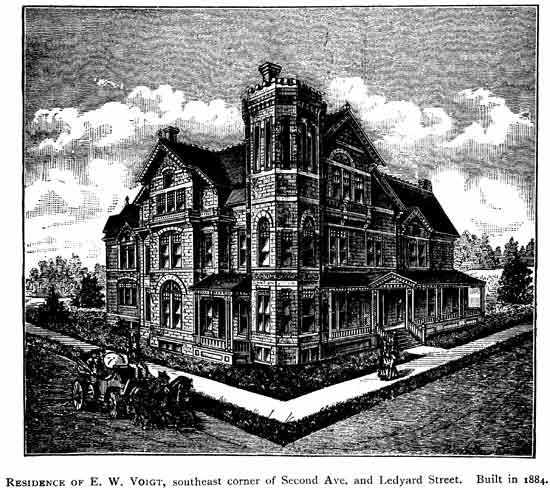
While Mr. Voigt was a most successful brewery operator and one of the most prominent men in that industry in Detroit, his activities in other lines were big and valuable factors in the city’s growth. As his business became profitable and his means began to accumulate, he invested in numerous projects that not only brought personal gain but great public benefit as well. He was one of the founders of the Edison Illuminating Company of Detroit in 1886, in which undertaking he was associated with James Scripps, George Peck, Simon J. Murphy and several others. This company had a capital of one hundred and fifty thousand dollars and for fifteen years Mr. Voigt was its vice president. It proved a profitable project from its inception and led to Mr. Voigt’s further connection with various public utilities. He helped in establishing branches of the Edison Illuminating Company at Grand Rapids, Jackson, Sault Ste. Marie and Petoskey, Michigan. Mr. Voigt was formerly the owner of a tract of about one hundred and fifty acres of land on Woodward avenue four miles from the city’s center that he operated as a farm for a number of years. Then as the city began to expand he developed the property into the Voigt Park subdivision, which was laid out in the ’90s. In connection with that project he donated the present Voigt Park to the city. He laid out Boston and Chicago boulevards, as well as Atkinson, Edison, Longfellow and Calvert avenues and Glynn Court, comprising some of the best residential property in the city. Years ago Mr. Voigt purchased what was then known as Moores Bay, a tract of land of about fourteen acres at the foot of Twenty-fourth street, which was covered by six feet of water. This was filled in to the harbor line after nearly forty years of effort and was transformed into a valuable property. In 1919 the same was condemned by the city for dockage purposes. He was an extensive owner of central property and his city realty included his residence on Second boulevard and Cass Park, which was completed in 1886 and was his home until his death. This fine old mansion was built in the days when every detail of material and construction was most carefully considered and everywhere gives evidence of the thorough manner in which such work was done. Mr. Voigt was also one of the founders of the Port Huron Sulphite & Paper Company, which was organized in 1888 and of which he was the president until his death. In 1898-1900 he built the North Western Electric Railway out Grand River road to Northville, Orchard Lake and Pontiac, which is a great feeder now to Detroit and is controlled by the Detroit United Railway. He was likewise the president of the bridge company that built the large bridge between Grosse Ile and Wyandotte in 1912. This bridge connected his large tract of valuable land with the mainland. He was also the president of the Miles Theatre Company. He readily recognized and utilized business opportunities and as the years passed by developed his interests to extensive proportions.

Voigts-Prost-Beer-Labels-Voigt-Prost-Brewing

In April, 1871, Mr. Voigt was married to Miss Bertha Dramburg, of Detroit, and they became the parents of four children: Augusta L. and Pauline M., both living at home; Anna Elsa, who is now Mrs. Otto Reinvaldt, of Detroit, and has three daughters; and one son, William F., who married Miss Caroline Halloran, of Detroit, by whom he has a son, Edward W. (II), and two daughters. William F. Voigt, who is the second of the family, and Otto Reinvaldt, his son in-law, were far a number of years associated with the father in business, largely looking after the Voigt interests. Mrs. Bertha (Dramburg) Voigt died in 1890 and for his second wife Mr. Voigt married in 1892 Miss Marion Randall, of Detroit, who passed away in December, 1911. There were no children by this marriage.

Years ago Henry Ford was in the employ of Mr. Voigt for a period of nine years as chief engineer of the Edison Illuminating Company. After prohibition went into effect the Voigt Brewery Company ceased to operate, but the outside interests of Mr. Voigt were extensive and important and made full claim upon his time and energy. In early manhood Mr. Voigt was a democrat, but the party’s stand upon the subject of free trade made him change his allegiance to the republican party, of which he became a warm supporter. He belonged to the Harmonie Society, to the Elks lodge and to the New Grosse Ile Golf Club. Mr. Voigt was one of the original founders of the Detroit Museum of Art. His success came from his own efforts and for many years he was included among Detroit’s strong, substantial business men. He was an unusually well preserved man for one of his years and took a keen interest in everything that pertained to the civic welfare and advancement of Detroit. His contributions to the development of the city were of a most substantial character, making him one of the foremost business men of Michigan’s metropolis. His death occurred May 14, 1920.
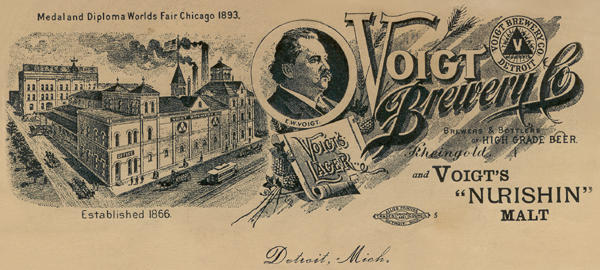
voigt-letterhead-color

Telling the Stories of Detroit Parks also tells Voigt’s story:

As a landowner, he turned his 150 acre farm off Woodward into Voigt Park Subdivision in the 1890’s. We can thank him for Boston Boulevard, Chicago Boulevard as well as several of the surrounding streets west of Woodward.

Raised in Germany, he traveled to America with his folks Carl William and Pauline in 1854 on the trans-Atlantic ship, the Malabar. The trio crisscrossed the Midwest settling in Madison, Wisconsin where his father started the Capitol Steam Brewery. Edward began his education and attended the University of Wisconsin. He achieved the status of Brew Master at age 17. In 1864, the family brewery was sold to Carl Hausmann, a local WI ale competitor. William Voigt moved to Detroit to start a new brewery; his son Edward went on an adventure to California. The Detroit Voigt Brewery was built on Grand River at High Street [today this is around Grand River and I-75 area). Eventually, its 150 ft. chimney would grace the Detroit skyline.

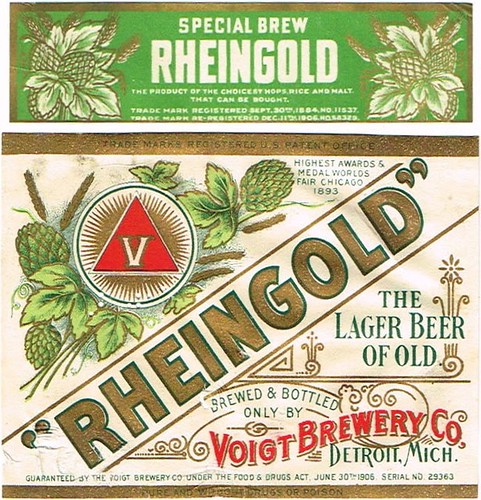
Edward did an apprenticeship as a sailor and became captain of his father’s schooner – the Columbian; a short-lived adventure running the Great Lakes. Father and son would reunite in Detroit in 1871. Nothing was handed to Edward. He rented the Detroit brewery from his father who moved back to Europe. His energy and work ethic resulted in the ability to purchase the entire brewery operation from Carl in 1882. In 1893, his Rheingold beer earned 4 medals in the Chicago World’s Fair.

Rheingold-Beer-Labels-Voigt-Brewery-Co--Aka-of-Voigt-Prost-Brewing

In 1889, British investors took great interest in purchasing or leasing American brewing facilities. Brewers such as the Stroh family and Anheuser Busch were vocally opposed to this practice. Edward Voigt negotiated the lease of his brewery for the period of 1890-1897. At the end of the contract, he received his business back but without a clean title. He enacted foreclosure proceedings to clear the title and stood in front of the old Detroit city hall to rebid on his business at auction. His creative business practices increased his fortune. He amassed extensive land holdings and was a principal founder of the Edison Illuminating Company which employed Henry Ford.

Around 1902, Voigt donated a rectangular parcel of land at 2nd and 3rd Avenues, Longfellow and Edison Avenues to the city on the condition it would be converted to a park and named for him.

Edward Voigt died at home on May 14, 1920 of a stroke. In 1922, the Voigt estate sold the brewery to a demolition firm who pulled down the chimney with a chain and a truck. The tumbling brick marked the end of Voigt reign in Detroit and the beginning of prohibition.
voigt-house

He was also very involved in the Grosse Ile Toll Bridge. There’s quite a bit more at Find a Grave, not for him, but for his first wife, Bertha Dramburg Voigt, who believe it or not was the family maid.

Filed Under: Birthdays, Breweries, Just For Fun Tagged With: Germany, History, Michigan

Historic Beer Birthday: George F. Gund

April 5, 2025 By Jay Brooks

gunds
Today is the birthday of George F. Gund (April 5, 1855-March 11, 1916). He was the son of John Gund, the founder of John Gund Brewing, of La Crosse, Wisconsin, and the brother of Henry Gund and John Gund Jr., who founded Lexington Brewing, in Lexington, Kentucky. George Frederick Gund founded Gund Brewing Co., of Cleveland, Ohio.

george-f-gund-portrait

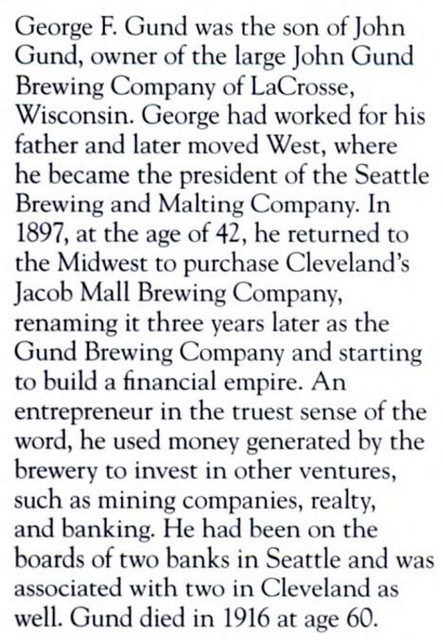
And here’s a short biography of George F. Gund:

gund-bio-BiC

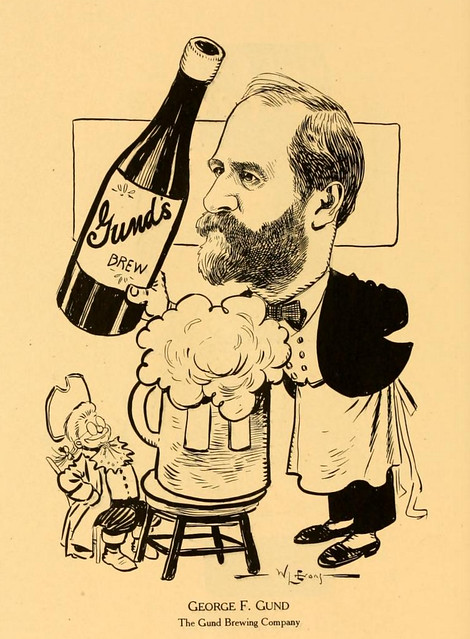
This caricature of Gund is from the “Clevelanders “As We See ‘Em,” published in 1904.

george-gund-cartoon

Here’s a history of the brewery from the Encyclopedia of Cleveland History.

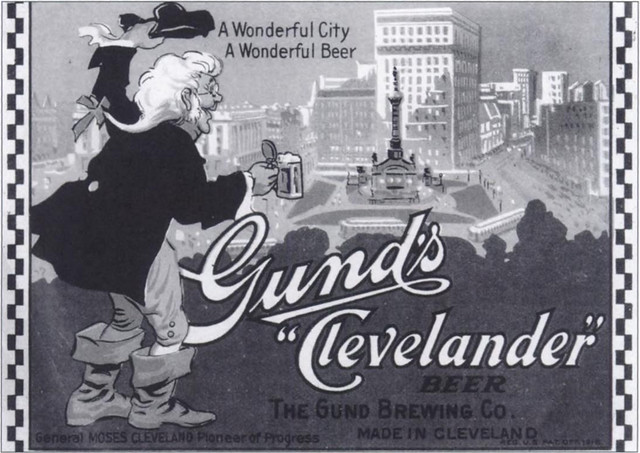
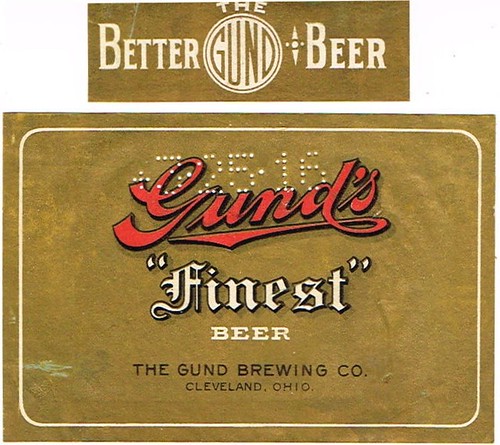
The GUND BREWING CO. was a small independent brewery located at 1476 Davenport St. on the city’s near east side. It was known as the Jacob Mall Brewing Co. when Geo. F. Gund (1855-1916) purchased it in 1897. Born in La Crosse, WI, Gund served as president of the Seattle Brewing & Malting Co. in Seattle, WA, from 1895-97 before moving to Cleveland and buying the Mall brewery, where he served as president and treasurer. On 1 Jan. 1900 the firm name was changed to the Gund Brewing Co. Geo. Gund also served as a trustee of the U.S. Brewers’ Assn. and as secretary of the Cleveland Brewers’ Board of Trade. In 1899 he testified before State Attorney General Frank S. Monnett against the combination created by the Cleveland-Sandusky Brewing Corp., charging that the combination loaned money without interest to saloon keepers who would take its product, and leased buildings and then turned out the customers of independent breweries. Prior to Prohibition, Gund Brewing brewed Gund’s “Finest” and Gund’s “Clevelander,” which it promoted with the slogan “A Wonderful City—A Wonderful Beer.” During Prohibition, the Gund interests turned toward previously established real estate and coffee businesses. The Gund Realty Co. (inc. 1922) and the Kaffee Hag Corp. (inc. 1914) were headed respectively by Anna M. Gund, Gund’s widow, and his son Geo. Gund both were based at the brewery address. After Prohibition, the brewery was operated by the Sunrise Brewing Co. (1933-39), then by the Tip Top Brewing Co. It closed in 1944.

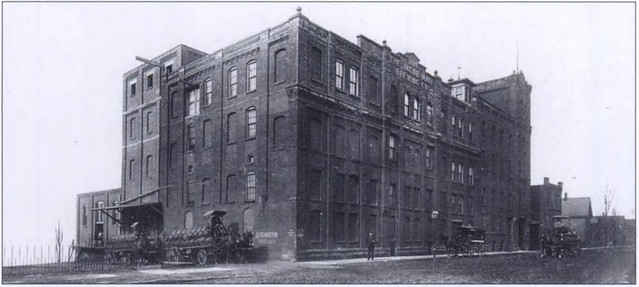
gund-brewery-ohio
The Jacob Mall Brewing Co. when George Gund bought it in 1897.

george-f-gund

gunds-clevelander

Gunds--quot-Finest-quot--Beer-Labels-Gund-Brewing-Co

Filed Under: Birthdays, Breweries, Just For Fun Tagged With: History, Ohio, Wisconsin

Historic Beer Birthday: Hew Ainslie

April 5, 2025 By Jay Brooks

scotland
Today is the birthday of Hew Ainslie (April 5, 1792–March 11, 1878) He is best remembered as a Scottish poet, although he came to America in 1822, settling first in upstate New York, before later moving west to Indiana. According to IndianaBeer.com, he co-founded Bottomley and Ainslie, the first brewery in New Albany, Indiana (which is near Louisville), at least from 1840-1841:

Hew Ainslie, an immigrant from Scotland and a well-known poet, joined the New Harmony community in 1825. When New Harmony folded went to Cincinnati where he opened a brewery. Later he opened a brewery in Louisville that was destroyed in the flood of 1832. He worked after that at the Nuttall brewery in Louisville.

Coming back across the Ohio River, he opened the Bottomley and Ainslie brewery in New Albany in 1840 which was destroyed by fire shortly thereafter. He was listed in the city directory as a maltster in 1841 and then dropped out of brewing. By 1842 he was working in a foundry.

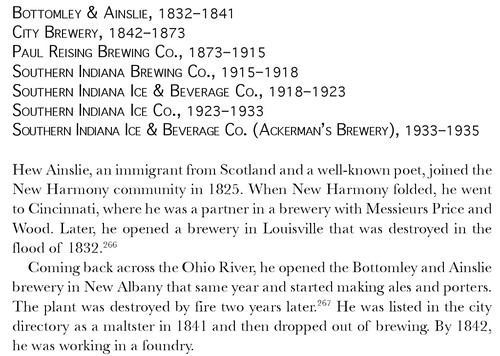
The brewery continued without him, under various names, until prohbition, and eve re-opened after repeal, though only lasted another two years, closing for good in 1935. Here’s the chronology and some more history from the book “Hoosier Beer: Tapping Into Indiana Brewing History,” by Bob Ostrander and Derrick Morris.

Ainslie-hoosier-beer
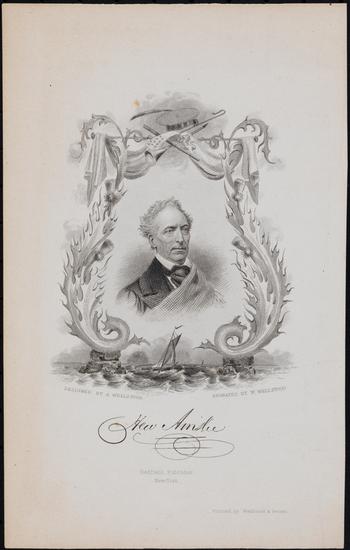
Hew-Ainslie-frontspiece
There’s not a lot I could find, and the fullest account of Ainslie’s life was written by Conrad Selle for the FOSSILS newsletter, his local homebrew club, and happily was posted in 2005 on the Potable Curmudgeon’s blog.

Many early brewers worked their trade as a sideline or temporary trade before moving on to other occupations. Hew Ainslie is unique for having been principally a poet.

He was born at Bargany in Ayrshire, Scotland on April 5, 1792. Hew was the only son of George Ainslie, an employee on the estate of Sir Hew Dalrymple Hamilton. He was educated in the parish school at Ballantrae, and later at the academy at Ayr. In 1809 his family moved to Roslin, about six miles from Edinburgh. He married his cousin Janet Ainslie in 1812, whose brother Jock had married Hew’s sister Eleanora.

Ainslie studied law in Glasgow, and worked as a clerk in the Register House in Edinburgh. In 1820 he revisited Ayrshire on foot with James Wellstood and John Gibson and in the next two years wrote A Pilgrimage to the Land of Burns, which was published in London in 1822. The book was an account of their travels and visits with some of Robert Burns’s contemporaries, with songs and ballads by Ainslie that were much in the style of Burns, and illustrations by Wellstood.

In July, 1822, Ainslie sailed from Liverpool to New York with his friend Wellstood. Mrs. Ainslie and their three children joined him in the following year. Ainslie and Wellstood purchased Pilgrim’s Repose, a farm at Hoosac Falls in Rensselaer County, New York. Ainslie and his family lived there for almost three years before joining Robert Owen’s utopian socialist cooperative community at New Harmony, Indiana in 1825.

When Owen’s community failed about a year later they moved first to Cincinnati, where Ainslie became a partner with Price and (Thomas) Wood in a brewery, then to Louisville. In Louisville, a town of 7,000, Ainslie opened a brewery in 1829 at 7th Street between Water and Main. Records show that B. Foster, Enoch Wenzell and Robert McKenzie worked there.

In February, 1832 there was a major flood of the Ohio River, with the river’s waters rising to 46 feet above the low water level. A contemporary account of the “calamity” reads:

This was an unparalleled flood in the Ohio. It commenced on the 10th of February and continued until the 21st of that month, having risen to (an) extraordinary height … above low-water mark. The destruction of property by this flood was immense. Nearly all the frame buildings near the river were either floated off or turned over and destroyed. An almost total cessation in business was the necessary consequence; even farmers from the neighborhood were unable to get to the markets, the flood having so affected the smaller streams as to render them impassable. The description of the sufferings by this flood is appalling …

Ainslie’s brewery was swept away with most of the neighborhood, but in the following years he remained in the beer business, working at the Nuttall brewery on the west side of 6th Street between Water and Main.

In 1840 he opened the first brewery in New Albany, the partnership of Bottomley & Ainslie. Soon that business was destroyed by fire. In the 1841 Louisville City Directory, Hew Ainslie is listed as a maltster; it was his last listing in the brewing trade. Discouraged by fire and flood, he gave up the brewing business altogether. Thereafter, his working life became somewhat intertwined with that of his children, particularly George and James Wellstood Ainslie.

Hew and Janet Ainslie had ten children, seven of them surviving to adulthood. George Ainslie, the eldest Ainslie son, had been apprenticed to Lachan McDougall around 1830 to learn the iron foundry and moulding trade, and he had acquired a solid business and technical education. He became a foreman at John Curry’s foundry and married Mary Thirlwell, daughter of Charles Thirlwell, who was a brewer at the Nuttall Brewery (Hew Ainslie’s one-time employer).

Thirlwell eventually acquired Nuttall and operated it until 1856. In 1842, George Ainslie became a partner in Gowan and McGhee’s Boone Foundry. By 1845 Hew Ainslie — still a poet throughout — was employed as a finisher there as well as working as a contractor and in the building trades.

George and James Ainslie became highly successful in the foundry and machine business, enabling their father to devote more time to writing in later life. In 1853, Hew Ainslie made a long visit to New Jersey to visit members of the family of James Wellstood, undoubtedly providing the poet with a nostalgic link to the Scotland of his youth.

In 1855 a collection of Ainslie’s verse, Scottish Songs, Ballads and Poetry, was published in New York. One latter-day commentator called Ainslie’s songs of the sea “the best that Scotland has produced,” and perhaps this assessment was borne out by the reception accorded Ainslie in Scottish literary circles in 1863, when he returned to Scotland for a final visit.

Janet Ainslie died in 1863 prior to Hew’s last Scottish journey. In 1868 the elderly poet/brewer went to live with his son George in a new home on Chestnut Street (between 9th and 10th) in Louisville, where he spent the last decade of his life and was a familiar sight as he passed time tending the garden there. Ainslie died on March 6, 1878, and was eulogized in the Courier-Journal as “a poet of considerable merit to the people of his native land.” Hew and Janet Ainslie are buried in Cave Hill Cemetery.

In addition to the many accomplishments noted previously, Ainslie is remembered for his height — at 6 feet, 4 inches, he referred to himself in his works as “The Lang Linker” — and for never losing his Scottish accent during almost six decades in America.

There is no specific information to be found as to the products of the breweries with which Hew Ainslie was involved in Louisville and New Albany, but we can surmise from the available evidence that they were typical small breweries of the time, with four or five employees, making ale, porter and stout. As a man who appreciated truth and beauty, it is likely that Hew Ainslie made good malt, and being conscientious with it, good beer as well.

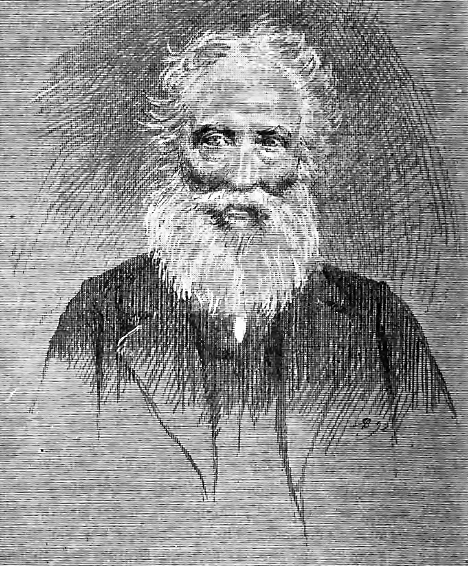
Hew-Ainslie-pastel

And this is a biography from a collection of poetry, The Scottish Minstrel, published in 1856.

HEW AINSLIE.

Hew Ainslie was born on the 5th April 1792, at Bargeny Mains, in the parish of Dailly, and county of Ayr. Receiving the rudiments of education from a private teacher in his father’s house, he entered the parish school of Ballantrae in his tenth year, and afterwards became a pupil in the academy of Ayr. A period of bad health induced him to forego the regular prosecution of learning, and, having quitted the academy, he accepted employment as an assistant landscape gardener on the estate of Sir Hew Dalrymple Hamilton. At the age of sixteen he entered the writing chambers of a legal gentleman in Glasgow, but the confinement of the office proving uncongenial, he took a hasty departure, throwing himself on the protection of some relatives at Roslin, near Edinburgh. His father’s family soon after removed to Roslin, and through the kindly interest of Mr Thomas Thomson, Deputy-Clerk Register, he procured a clerkship in the General Register House, Edinburgh. For some months he acted as amanuensis to Professor Dugald Stewart, in transcribing his last work for the press.

Having entered into the married state, and finding the salary of his office in the Register House unequal to the comfortable maintenance of his family, he resolved to emigrate to the United States, in the hope of bettering his circumstances. Arriving at New York in July 1822, he made purchase of a farm in that State, and there resided the three following years. He next made a trial of the[Pg 61] Social System of Robert Owen, at New Harmony, but abandoned the project at the close of a year. In 1827 he entered into partnership with Messrs Price & Wood, brewers, in Cincinnati, and set up a branch of the establishment at Louisville. Removing to New Albany, Indiana, he there built a large brewery for a joint-stock company, and in 1832 erected in that place similar premises on his own account. The former was ruined by the great Ohio flood of 1832, and the latter perished by fire in 1834. He has since followed the occupation of superintending the erection of mills and factories; and has latterly fixed his abode in Jersey, a suburb of New York.

Early imbued with the love of song, Mr Ainslie composed verses when a youth on the mountains of Carrick. A visit to his native country in 1820 revived the ardour of his muse; and shortly before his departure to America, he published the whole of his rhyming effusions in a duodecimo volume, with the title, “Pilgrimage to the Land of Burns.” A second volume from his pen, entitled, “Scottish Songs, Ballads, and Poems,” was in 1855 published at New York.

Here, for example is one Ainslie’s poems,

The Daft Days

The midnight hour is clinking, lads,
An’ the douce an’ the decent are winking, lads;
Sae I tell ye again,
Be’t weel or ill ta’en,
It’s time ye were quatting your drinking, lads.
Gae ben, ‘an mind your gauntry, Kate,

Gi’es mair o’ your beer, an’ less bantry, Kate,
For we vow, whaur we sit,
That afore we shall flit,
We’se be better acquaint wi’ your pantry, Kate.
The “daft days” are but beginning, Kate,

An we’re sworn. Would you hae us a sinning, Kate?
By our faith an’ our houp,
We will stick by the stoup
As lang as the barrel keeps rinning, Kate.

Thro’ hay, an’ thro’ hairst, sair we toil it, Kate,
Thro’ Simmer, an’ Winter, we moil it, Kate;
Sae ye ken, whan the wheel
Is beginning to squeal,
It’s time for to grease an’ to oil it, Kate.

Sae draw us anither drappy, Kate,
An’ gie us a cake to our cappy, Kate;
For, by spiggot an’ pin!
It’s waur than a sin
To flit when we’re sitting sae happy, Kate.

And here’s an excerpt from another, suggesting meetings in Ainslie’s day were as pointless as today. This is from “Let’s Drink To Our Next Meeting:”

Let’s drink to our next meeting, lads,
Nor think on what’s atwixt;
They’re fools wha spoil the present hour
By thinking on the next.

Filed Under: Birthdays, Breweries, Just For Fun Tagged With: History, Indiana, Scotland

Historic Beer Birthday: Robert Leo Hulseman

April 5, 2025 By Jay Brooks

solo-cup
Today is the birthday of Robert Leo Hulseman (April 5, 1932-December 21, 2016). You may not know his name, but you’ve almost certainly used the product he pioneered in the 1970s, especially if you’ve ever been to a party. Hulseman was born in Chicago and began working at the company his father started in 1936, The Solo Cup Company, when he was only eighteen, eventually becoming CEO in 1980. But the reason he deserves to be remembered came in the 1970s when he came up with the now-ubiquitous red solo cup, the cup of choice for countless keg parties, backyard barbecues and almost any other large-scale gathering you can name.

In the early 1970s, Hulseman hired famed Hollywood designer Sandy Dvore to redesign their plastic cups. Dvore had worked on such projects as the title sequence for the Partridge Family, Knot’s Landing, and the Young and the Restless, as well as doing trade ads for the back cover of Variety for many years. He apparently redesigned their logo on the spot, and it was immediately accepted and implemented (and is still in use today). He also suggested that they add some color to the cups themselves, and the initial cup colors were the exact same ones he used in the Partridge Family titles: blue, yellow, and, of course, the iconic red. While other colors have been available, it’s the red that really took off. The company has run numerous consumer surveys over the years, and red always emerges as the favorite by a wide margin. So you may see additional colors from time to time, but the red is likely never going away.

One other innovation that Hulseman created, that you probably use several times a week, is the “Solo Traveler coffee cup lid.” So drink a toast to Robert Leo Hulseman with whatever your favorite beverage happens to be, just make sure you drink it out of a red solo cup.

Filed Under: Beers, Birthdays, Just For Fun, Related Pleasures Tagged With: Glassware, History, Packaging

Beer In Ads #4930: It’s Here! Tivoli Bock Beer

April 4, 2025 By Jay Brooks

Last year I decided to concentrate on Bock ads. Bock, of course, originated in Germany, in the town of Einbeck. Because many 19th century American breweries were founded by German immigrants, they offered a bock at certain times of the year, be it Spring, Easter, Lent, Christmas, or what have you. In a sense they were some of the first seasonal beers. “The style was later adopted in Bavaria by Munich brewers in the 17th century. Due to their Bavarian accent, citizens of Munich pronounced ‘Einbeck’ as ‘ein Bock’ (a billy goat), and thus the beer became known as ‘Bock.’ A goat often appears on bottle labels.” And presumably because they were special releases, many breweries went all out promoting them with beautiful artwork on posters and other advertising.

Friday’s ad is for Tivoli Bock Beer and was published April 4, 1942. The brewery was the Tivoli-Union Brewing Co. of Denver, Colorado, which was originally founded in 1864. This ad ran in the Albuquerque Tribune of Albuquerque, New Mexico, with the tagline: “It’s Here! Tivoli Bock Beer.”

Filed Under: Art & Beer, Beers, Breweries, Just For Fun Tagged With: Advertising, Bock, Colorado, History

Historic Beer Birthday: Henry Thrale

April 4, 2025 By Jay Brooks

anchor-southwark
Nobody’s sure exactly when the birthday of Henry Thrale is, not even the year is certain. He may have been born in 1724 or it may have been 1720. He did, however, die on April 4, 1781. He was the son of brewer Ralph Thrale (1698–1758), who bought the Anchor Brewery in Southwark, London, England in 1729. Henry Thrale became the owner when his father died. By “the early nineteenth century it was the largest brewery in the world. From 1781 [after Henry Thrale died] it was operated by Barclay Perkins & Co, who merged with Courage in 1955. The brewery was demolished in 1981.”

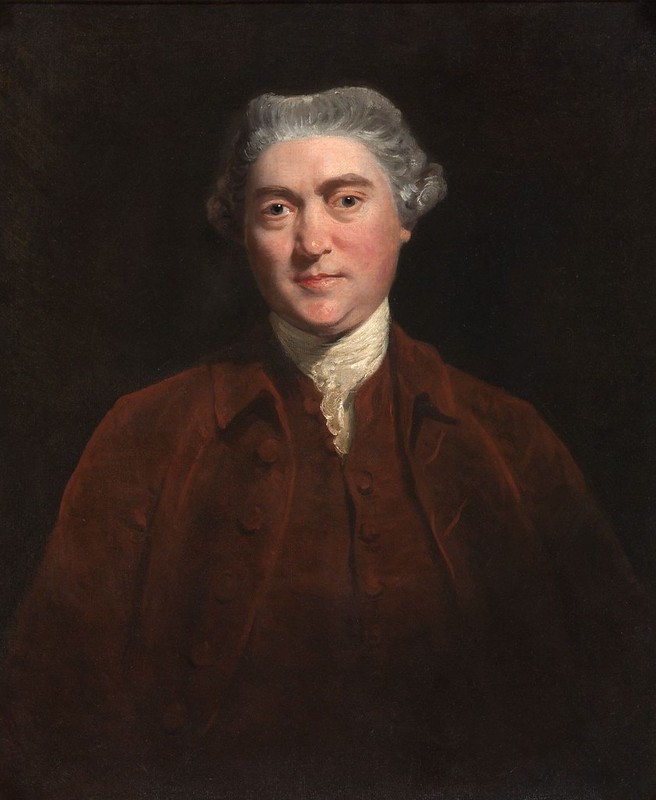
Henry_Thrale
This is his basic biography from his Wikipedia page:

Henry Thrale was a British politician who sat in the House of Commons from 1765 to 1780. He was a close friend of Samuel Johnson. Like his father, he was the proprietor of the large London brewery, H. Thrale & Co.

Born at the Alehouse in Harrow Corner, Southwark, he was the son of the rich brewer Ralph Thrale (1698–1758) and Mary Thrale. He married Hester Lynch Salusbury on 11 October 1763; they had 12 children, and she outlived him. He was MP for Southwark 23 December 1765 – September 1780, an Alderman, and Sheriff of the City of London: a respected, religious man who was a good hunter and sportsman with a taste for gambling.

thrale_brewery_circa_1785
Thrale’s Anchor Brewery around 1785.

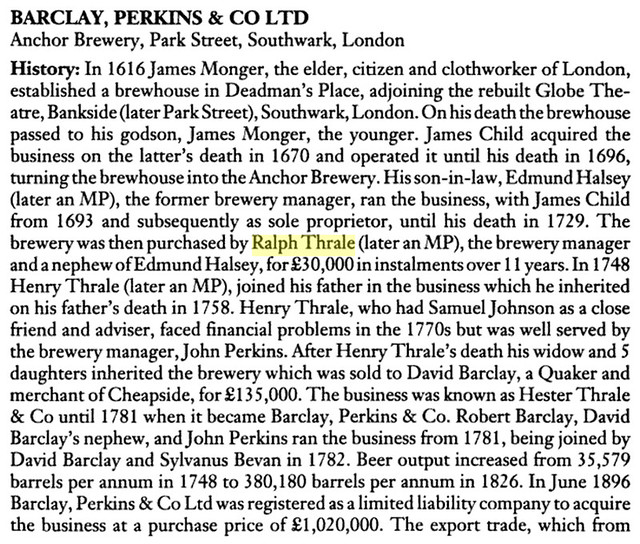
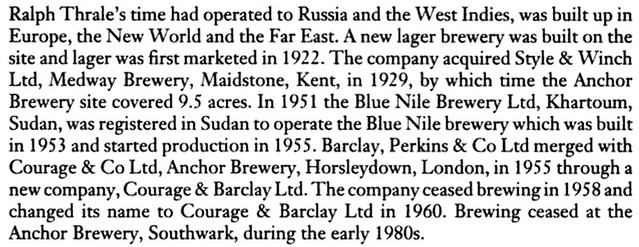
This is the entry for Barclay, Perkins & Co. Ltd, which at one time had been Thrale’s Anchor Brewery, from “The Brewing Industry: A Guide to Historical Records,” edited by Lesley Richmond, Alison Turton, published in 1990:

barclay-perkins-history-1
barclay-perkins-history-2

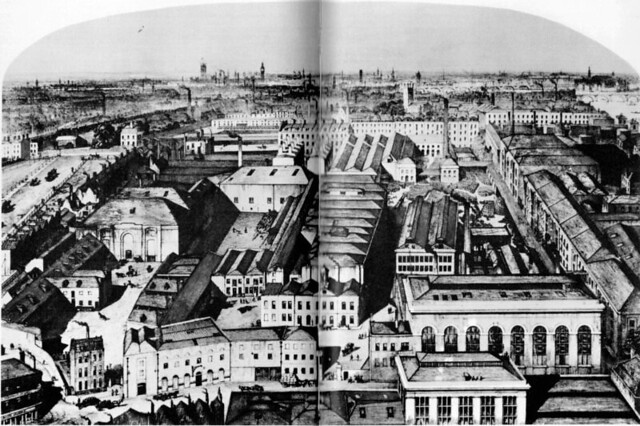
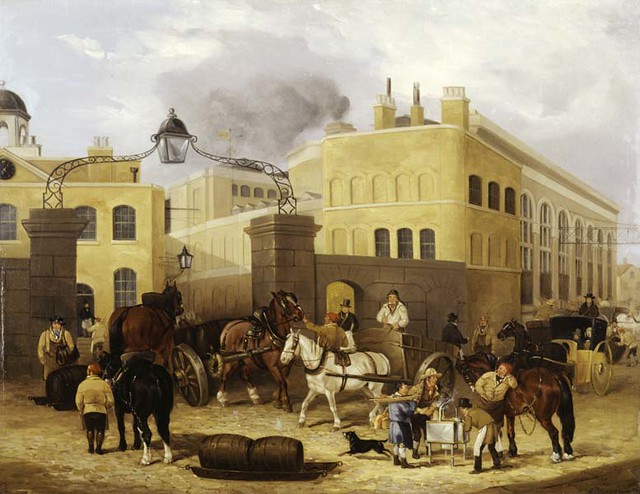
anchor-brewery-c1820-john-thomas-smith-1766-1833
The Anchor Brewery around 1820.

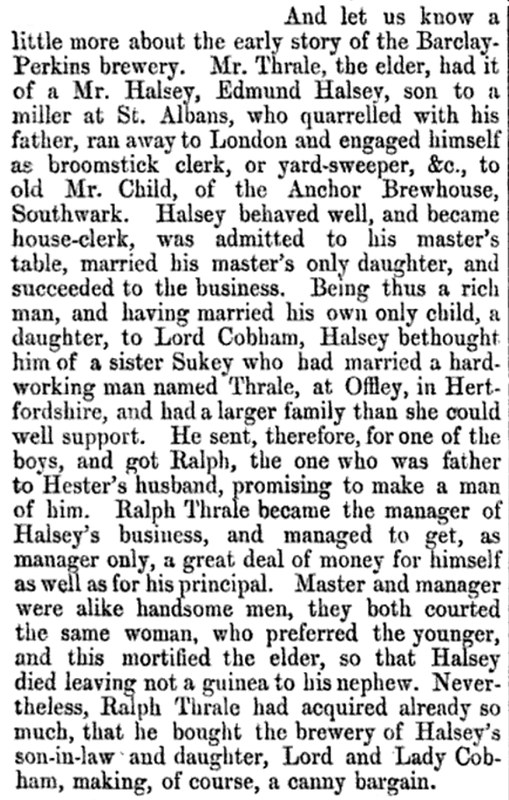
And finally, the famous English writer Charles Dickens, during the period when he was writing many of his major works, “he was also the publisher, editor, and a major contributor to the journals Household Words (1850–1859) and All the Year Round (1858–1870). In “Volume V, from March 30, 1861 to September 21, 1861,” in a piece entitled “Queen of the Blue Stockings,” from April 20, 1861, Ralph Thrale is mentioned in a history of the Barclay Perkins brewery to give context to his tale:

Dickens-Thrale

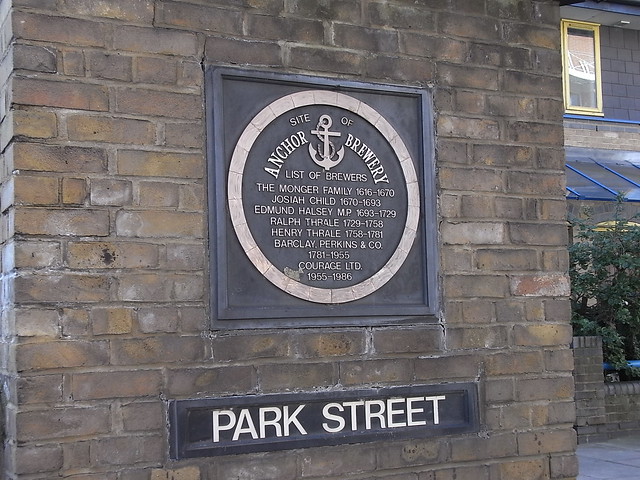
LondonSE1BarclayPerkinsAnchorPlaque2_SP_Mar10
A marker where Thrale’s brewery once stood in central London.

Filed Under: Birthdays, Breweries, Just For Fun Tagged With: England, Great Britain, History

Beer In Ads #4929: Globe Bock Beer

April 3, 2025 By Jay Brooks

Last year I decided to concentrate on Bock ads. Bock, of course, originated in Germany, in the town of Einbeck. Because many 19th century American breweries were founded by German immigrants, they offered a bock at certain times of the year, be it Spring, Easter, Lent, Christmas, or what have you. In a sense they were some of the first seasonal beers. “The style was later adopted in Bavaria by Munich brewers in the 17th century. Due to their Bavarian accent, citizens of Munich pronounced ‘Einbeck’ as ‘ein Bock’ (a billy goat), and thus the beer became known as ‘Bock.’ A goat often appears on bottle labels.” And presumably because they were special releases, many breweries went all out promoting them with beautiful artwork on posters and other advertising.

Thursday’s ad is for Globe Bock Beer and was published April 3, 1935. The brewery was the Globe Brewing Co. of San Francisco, California, I think, which was originally founded in 1907 as Acme Brewing, though became Globe Brewing after 1920. This ad ran in the Daily Astorian of Astoria, Oregon, with the tagline: “Globe Bock Beer is now available!”

Filed Under: Art & Beer, Beers, Breweries, Just For Fun Tagged With: Advertising, Bock, History, Oregon

Historic Beer Birthday: Frederick Hinckel Jr.

April 3, 2025 By Jay Brooks

hinckel
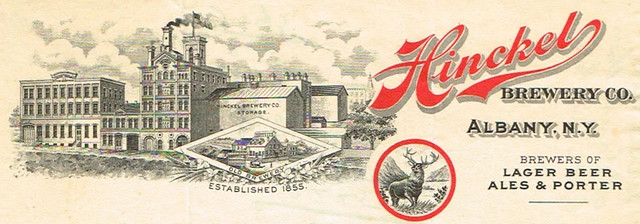
Today is the birthday of Frederick Hinckel Jr. (April 3, 1859-February 25, 1917). He was the son of Frederick Hinckel Sr., who co-founded the Hinckel Brewery of Albany, New York. His father, Hinckel Sr., along with Johann Andreas Schinnerer, founded the F. Hinckel & A. Schinnerer brewery in 1852, which was also known as the Cataract Brewery. “Its premises occupied half a city block, bounded by Swan Street, Myrtle and Park Avenues. By 1864 Hinckel was the sole owner of the business.” When his father passed away in 1881, Frederick Jr., along with his brother Charles, took over the brewery. It closed in 1920 when prohibition went into effect, and did reopen after repeal. Unfortunately, I was unable to find any portraits of Frederick Jr.

hinckel-brewery-letterhead

Here’s his obituary from “The Brewer’s Journal” for November 1916-October 1917:

frederick-hinckel-obit

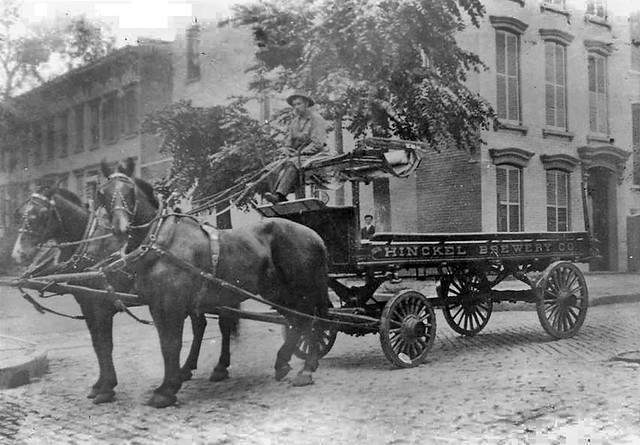
hinckel-brewery-wagon
A Hinckel Brewery beer wagon.

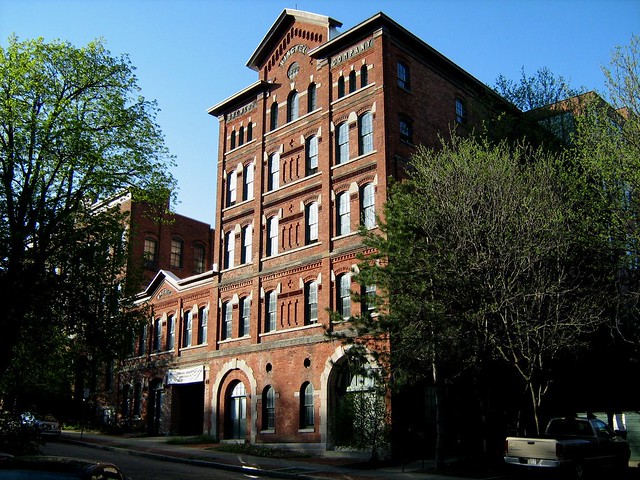
Henkel-Brewery-1880-malthouse
Although the brewery closed in 1920 because of prohibition, and never reopened afterwards, the build was preserved and today is an apartment complex.

Export-Beer-Bottles-Paper-Label-Hinckel-Brewery-Co-Cataract-Brewery

Filed Under: Birthdays, Just For Fun Tagged With: History, New York

Beer In Ads #4928: Camden Bock Beer

April 2, 2025 By Jay Brooks

Last year I decided to concentrate on Bock ads. Bock, of course, originated in Germany, in the town of Einbeck. Because many 19th century American breweries were founded by German immigrants, they offered a bock at certain times of the year, be it Spring, Easter, Lent, Christmas, or what have you. In a sense they were some of the first seasonal beers. “The style was later adopted in Bavaria by Munich brewers in the 17th century. Due to their Bavarian accent, citizens of Munich pronounced ‘Einbeck’ as ‘ein Bock’ (a billy goat), and thus the beer became known as ‘Bock.’ A goat often appears on bottle labels.” And presumably because they were special releases, many breweries went all out promoting them with beautiful artwork on posters and other advertising.

Wednesday’s ad is for Camden Bock Beer and was published April 2, 1937. The brewery was the Camden County Beverage Co. of Camden, New Jersey, which was originally founded in 1904. This ad ran in the Press of Atlantic City of Atlantic City, New Jersey, with the tagline” “Camden Bock Beer Has Eclipsed All Others.”

Filed Under: Art & Beer, Beers, Breweries, Just For Fun Tagged With: Advertising, Bock, History, New Jersey

Historic Beer Birthday: John Frederick Oertel Jr.

April 2, 2025 By Jay Brooks

Today is not the birthday of John Frederick Oertel Jr. since no one’s quite sure exactly when he was born, but we do not that he died today. (1899-April 2, 1961). He was born in Louisville, Kentucky, and was, of course, the son of John Frederick Ortel, who founded the Oertel Brewing Co. there in 1892. After his father passed away in 1929, he became the president of the brewery and ran it until he passed away today in 1961.

This is his obituary, from the Louisville Courier-Journal on April 3, 1961:

John F. Oertel, Jr., president of Oertel Brewing Company, died about 9:30 last night after collapsing at his home, 4922 Brownsboro Road. He was 61. Oertel, a leading Catholic layman here, apparently died of a stroke, his family physician said. Although he had been under medical treatment for the past year, his death was unexpected, the doctor said.
Oertel, a Louisville native, had headed the brewing company for about 30 years. He took over the presidency after the death of his father,. who founded the company here in 1892.
SOLD IN SIX STATES
Under the son’s leadership, the company embarked on expansion programs after the repeal of Prohibition and the end of World War II. Its product is now sold in about six states. The company, Kentucky’s oldest continuously operating brewery, stayed open during the prohibition era by limiting its output to soft drinks and “near beer,” a nonintoxicating beverage.
HONORED BY POPE
Oertel was made a Knight of St. Gregory by the late Pope Pius XII in 1955 for his services to the Catholic Church. He was a co-chairman of the church’s education fund drive here in 1953. Oertel was a member of St. Joseph Church. He was a member of the boards of Bellarmine College, Boys’ Haven, and the Stock Yards Bank. Oertel was a graduate of St. Joseph School and St. Xavier High School here. Survivors include his wife, the former Marie Hirt, and a sister, Miss Mary Louise Oertel.

Here’s the same obituary, but the hard copy from the newspaper:

Filed Under: Birthdays, Breweries, Just For Fun Tagged With: History, Kentucky

« Previous Page
Next Page »

Find Something

Northern California Breweries

Please consider purchasing my latest book, California Breweries North, available from Amazon, or ask for it at your local bookstore.

Recent Comments

  • Bob Paolino on Beer Birthday: Grant Johnston
  • Gambrinus on Historic Beer Birthday: A.J. Houghton
  • Ernie Dewing on Historic Beer Birthday: Charles William Bergner 
  • Steve 'Pudgy' De Rose on Historic Beer Birthday: Jacob Schmidt
  • Jay Brooks on Beer Birthday: Bill Owens

Recent Posts

  • Beer In Ads #5138: The Event Of The Year: Jax Bock Beer March 2, 2026
  • Historic Beer Birthday: Anthony Durkin March 1, 2026
  • Historic Beer Birthday: Adam Sander March 1, 2026
  • Beer In Ads #5138: Flower City Bock Beer March 1, 2026
  • Historic Beer Birthday: Regina Wauters March 1, 2026

BBB Archives

Feedback

Head Quarter
This site is hosted and maintained by H25Q.dev. Any questions or comments for the webmaster can be directed here.