Brookston Beer Bulletin

Jay R. Brooks on Beer

  • Home
  • About
  • Editorial
  • Birthdays
  • Art & Beer

Socialize

  • Dribbble
  • Email
  • Facebook
  • Flickr
  • GitHub
  • Instagram
  • LinkedIn
  • Pinterest
  • RSS
  • Twitter
  • YouTube

Powered by Genesis

Patent No. 1177117A: Method Of Preparing Beer

March 28, 2016 By Jay Brooks

patent-logo
Today in 1916, US Patent 1177117 A was issued, an invention of Oscar M. Lamsens, for his “Method of Preparing Beer.” There’s no Abstract, although in the description it includes this summary:

In beers which are brewed in the ordinary w manner, there is a’tendency to cloud or become turbid when they are chilled; specifically after pasteurization. Such beer or beer that has been bottled for sometime and is consequently in such condition otherwise as to become clouded when chilled, is found on examination to contain coagulated albuminoids. In other words the albuminoids that are ordinarily carried in the beer in such condition as to be invisible, become coagulated when the beer is reduced in temperature. and so impair the brilliancy and clearness of the liquor.

This invention relates to the preparation of beers and ales, and more particularly beers for bottling, whereby the product possesses great stability and does not tend to become clouded or turbid. even when chilled to a considerably lower than normal temperature, the liquor in fact being what lazily be termed chill proof beer or the According to the method herein described, advantage is taken of the fact that the yeast which is present in greater or less quantities in the beer before it has been thoroughly settled, carries or contains proteolytic enzymes but in such manner because of the organization or structure of the yeast cells that the class of albuminoids in beer which 40 tend to become coagulated; under reduction of temperature, do not get into contact with the enzymes and are not affected thereby;
Schlitz-brewhouse

Filed Under: Beers, Breweries, Just For Fun, Politics & Law, Related Pleasures Tagged With: Brewing Equipment, History, Law, Patent, Science of Brewing

Patent No. 4112: A New Or Improved Method Of Drying And Preparation Of Malt

March 28, 2016 By Jay Brooks

uk-patent-office
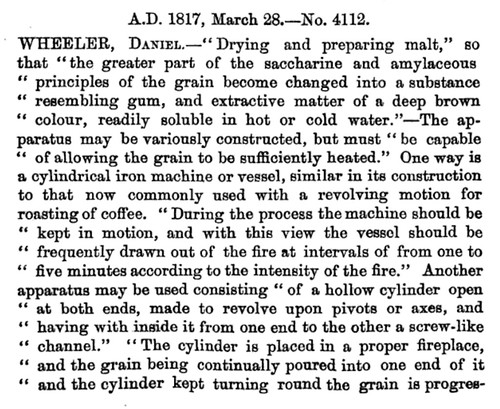
Today in 1817, British Patent 4112 was issued, an invention of Daniel Wheeler, for his “A New or Improved Method of Drying and Preparation of Malt.” According to one account, “Black patent malt changed the game in beer history, as it allowed darker beers to be brewed without the use of adjuncts that would adulterate said brew. By 1828, Guinness had replaced their entire stock of brown malt with black patent malt, and their own stout porter started eliciting competition from other notable breweries such as Beamish, Crawford, and Murphy’s.”

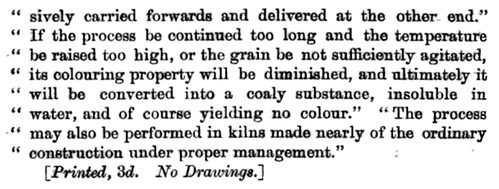
Here’s a short description of his patent, from an 1881 book, “Abridgments of Specifications Relating to Brewing, Wine-Making, and Distilling Alcoholic Liquids.”

Wheeler-4112-malt-roaster-1
Wheeler-4112-malt-roaster-2

Here’s more of the background to Wheeler’s patent, from Ron Pattinson, in a post entitled Patent malt in the early 19th century:

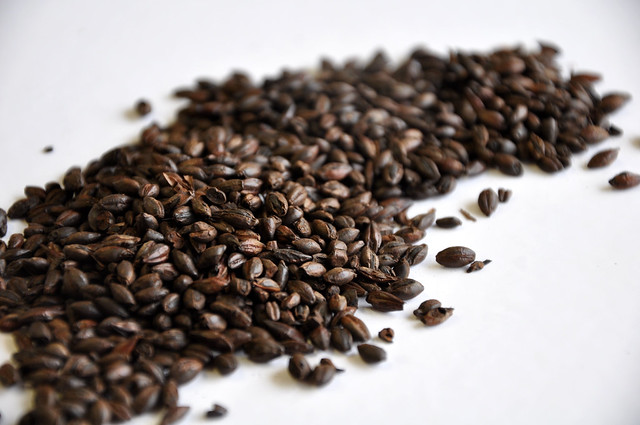
When all forms of colouring were made illegal in 1816, Porter brewers had a big problem. How could they brew a beer of the right colour when using mostly pale malt? The answer was provided by Daniel Wheeler, who, by roasting malt in a way similar to coffee beans, created a malt capable of colouring a large quantity of wort. Pale malt was roasted at 360 to 400º F in metal cylinders, which revolved over a furnace. (Source: “The Theory and Practice of Brewing” by W.L. Tizard, London, 1846, page 90.) Wheeler acquired a patent for the process, hence the name patent malt. It was also known as black malt, porter malt or roast malt.

Briess-Black-Malt

And here’s another account of his patent, and its effect on the history of brewing.

In 1817, Daniel Wheeler obtained British Patent No. 4112 for a “New or Improved Method of Drying and Preparation of Malt.” His invention of the Drum Malt Roaster allowed maltsters to roast malt to the point where a small amount of malt could darken a large amount of beer without imparting an overly burnt or tarry taste to the entire brew. Before Wheeler’s invention, brown ales were made exclusively from brown malt, but the advances in kilning technology gave way to the use of pale malts, which became a cheaper and more reliable alternative. Therefore, the color and flavor profiles of brown ales were subsequently determined more by modern style dark malts, crystal malts and caramelized sugars.

And one more, partially from H.S. Corran’s A History of Brewing:

The malt bill is a combination of new and old but truly british malts (minus the 6-row). Black Patent Malt leading the way to the creation and evolution of porters by helping differentiate it from brown ales. From H.S. Corran’s A History of Brewing (1975), “On March 28, 1817, he obtained British Patent No. 4112 for “A New or Improved Method of Drying and Preparation of Malt. The adoption of malt made according to Wheeler’s patent, and called ‘patent malt,’ marked the beginning of the history of porter and stout as we know it today, and put an end to the period during which the term ‘porter’ was probably applied to any brown beer to distinguish it from pale ale. The new process was effective, economical, produced a palatable product and freed brewers from charges of adulteration. It was quickly taken up throughout the British brewing industry. Whitbread’s Brewery recorded stocks of Patent Malt in 1817, as did Barclay’s in 1820, and Truman’s showed stocks of ‘Black Malt’ in 1826.”

Filed Under: Beers, Just For Fun, Politics & Law, Related Pleasures Tagged With: Brewing Equipment, Great Britain, History, Law, Malt, Patent, UK

Patent No. 2739455A: Apparatus For Chilling And Dispensing Beer Glasses

March 27, 2016 By Jay Brooks

patent-logo
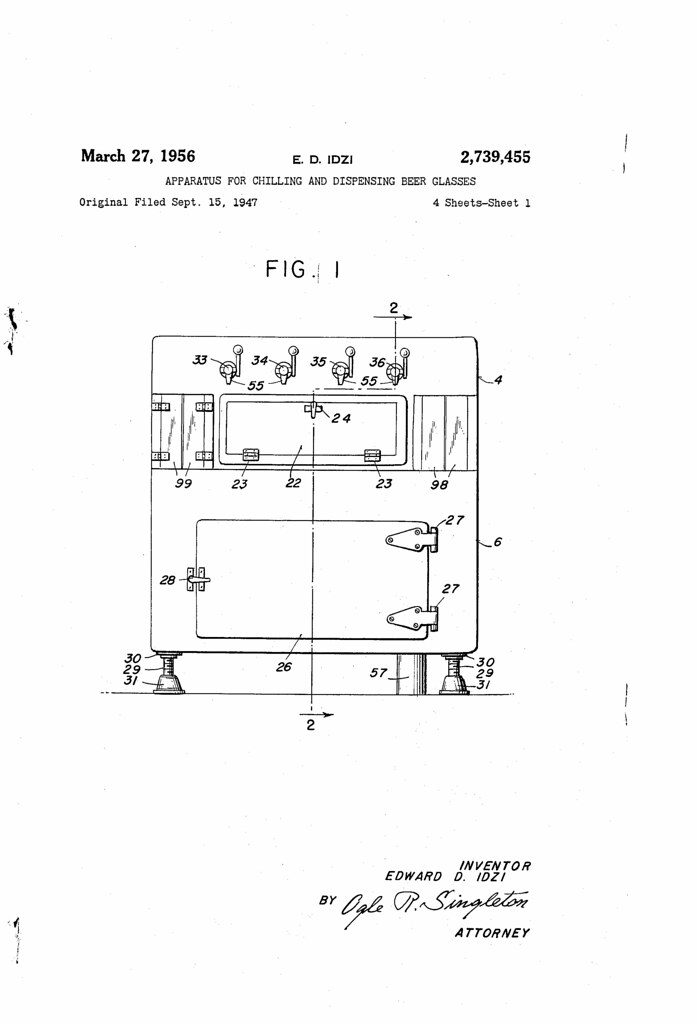
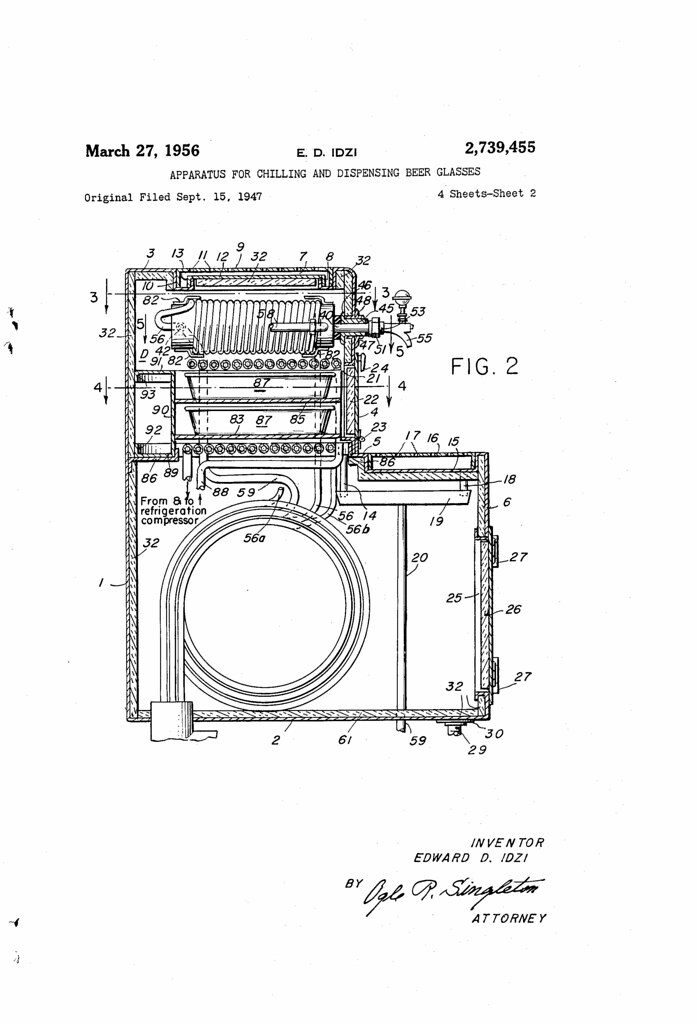
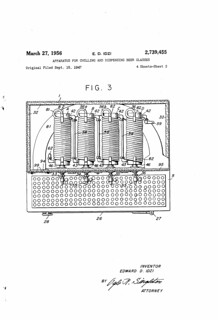
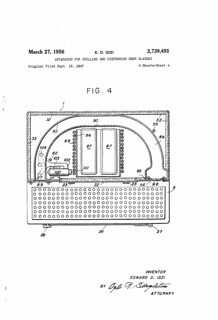
Today in 1956, US Patent 2739455 A was issued, an invention of E. D. Idzi, for his “Apparatus For Chilling and Dispensing Beer Glasses.” There’s no Abstract, although in the description it includes this summary:

The invention described and claimed in this divisional application consists in a new and useful improvement in apparatus for chilling and dispensing beer glasses. The particularly novel and useful features of my improved device are a freeze box and a beer glass trackway associated with the freeze box and having a blower for chilling the glasses passed there along.

US2739455-0
US2739455-1

US2739455-2 US2739455-3

Filed Under: Beers, Just For Fun, Politics & Law, Related Pleasures Tagged With: Brewing Equipment, Glassware, History, Law, Patent

Patent No. 517400A: Pitching Casks

March 27, 2016 By Jay Brooks

patent-logo
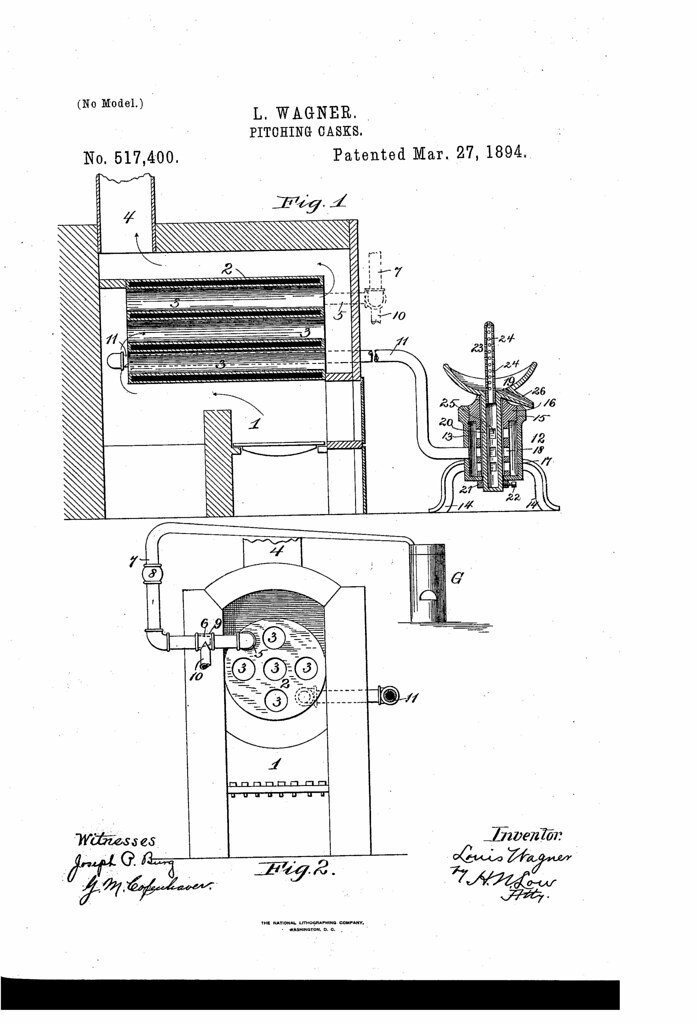
Today in 1894, US Patent 517400 A was issued, an invention of Louis Wagner, for his “Pitching Casks.” There’s no Abstract, although in the description it includes this summary:

It is the object of my present invention to provide for heating the interior of casks, such as those used for the storage and transportation of beer, for the purpose either of applying new pitch to the same or for the purpose of melting and removing the old and impure pitch to allow of the reapplication of a fresh coating. By my improvements I provide for heating the casks interiorly in a rapid, thorough and economical manner, and at the same time enable the heat so applied to be accurately tempered in order that the heat and fuel may not be wasted or the interior of the cask or the pitch, injured. For this purpose I combine with a suitable heating chamber analogous in construction to a steam boiler and having an air inlet, a steam injecting apparatus adapted to force into the heating chamber such amount of air as will together with the steam when highly superheated produce the volume of vapor necessary for heating the cask. The steam jet forms the motive power for passing the vapor to be heated through the heating chamber and for applying it interiorly to the cask, and at the same time serves by the regulation of its amount to accurately determine the temperature of the vapor at the point where it performs its heating function. I further provide a stand of improved character to receive the Cask or keg while it is being operated upon.

US517400-0

Filed Under: Beers, Just For Fun, Politics & Law, Related Pleasures Tagged With: Barrels, Cask, History, Law, Patent

Patent No. 27615A: Corkscrew

March 27, 2016 By Jay Brooks

patent-logo
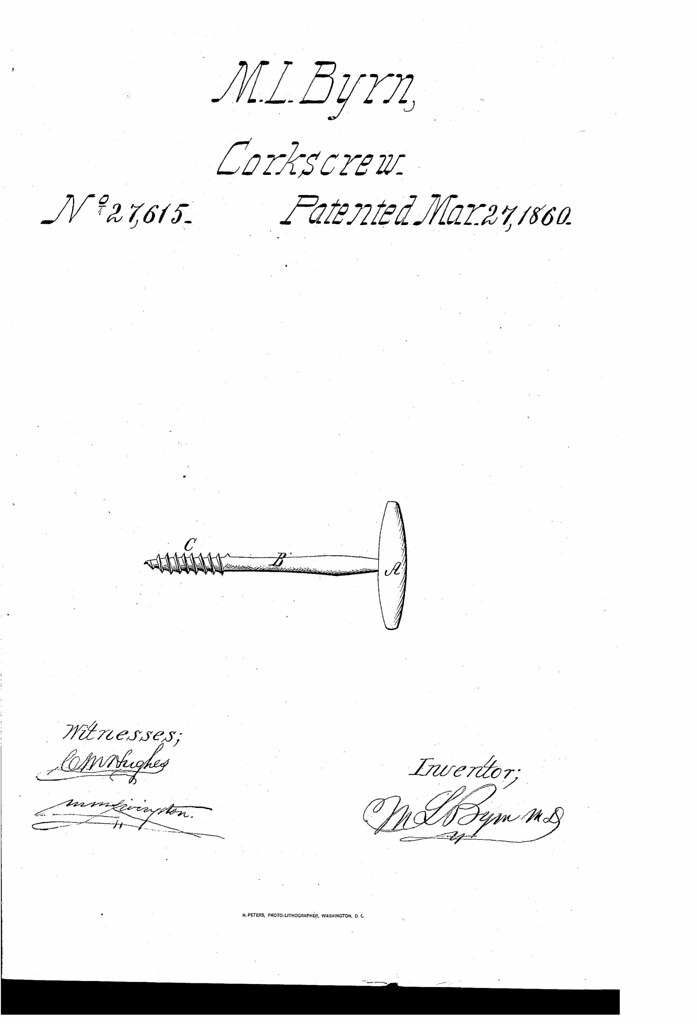
Today in 1860, US Patent 27615 A was issued, an invention of M.L. Byrn, for his “Corkscrew.” There’s no Abstract, although in the description it includes this summary:

The object of this invention is to manufacture cork screws possessing greater strength and durability and which may be made andL sold at a less cost than those of the present construction.

My invention consists in combining’ with the gimlet screw a T handle and forming the handle and screw in one or in two pieces as will be hereinafter described and represented.

The greatest advantage obtained by my invention, in the combination with an ordinary gimlet-screw of a handle making it serve thereby as a cork-screw, is strength and cheapness, over those made with a spiral twist of steel wire gradually tapering from the handle to the point. Such cork screws can be made to enter a cork with sufficient ease, but they are very liable to break of in drawing the cork from the bottle in consequence of the smallness and brittleness of the wire forming the spiral stem, and too in the hurry of opening bottles the screw is not always driven straight into the cork and the small point is very likely broken off by coming in Contact with the neck of the bottle, besides such screws are used for breaking the wire which is used on many bottles for keeping the cork from being driven out by the force of gas in the bottle, such screws are not strong enough. for this purpose and are frequently broken by the carelessness of servants in using them for other purposes than drawing corks from bottles.

US27615-0

Filed Under: Beers, Just For Fun, Politics & Law, Related Pleasures Tagged With: History, Law, Packaging, Patent

Patent No. 1995814A: Steam Boiler

March 26, 2016 By Jay Brooks

patent-logo
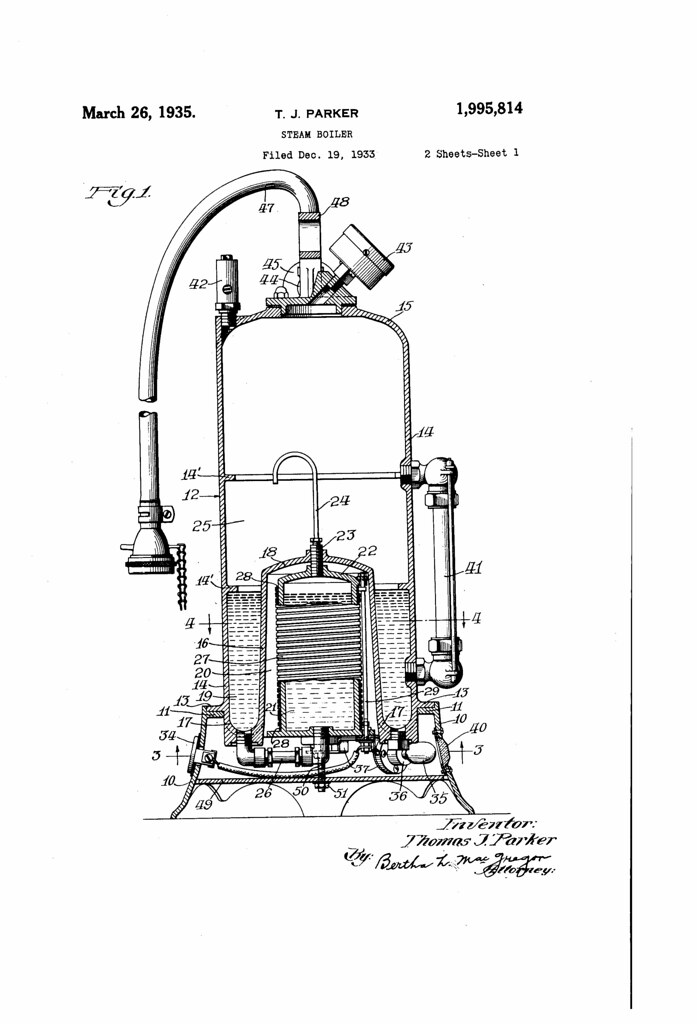
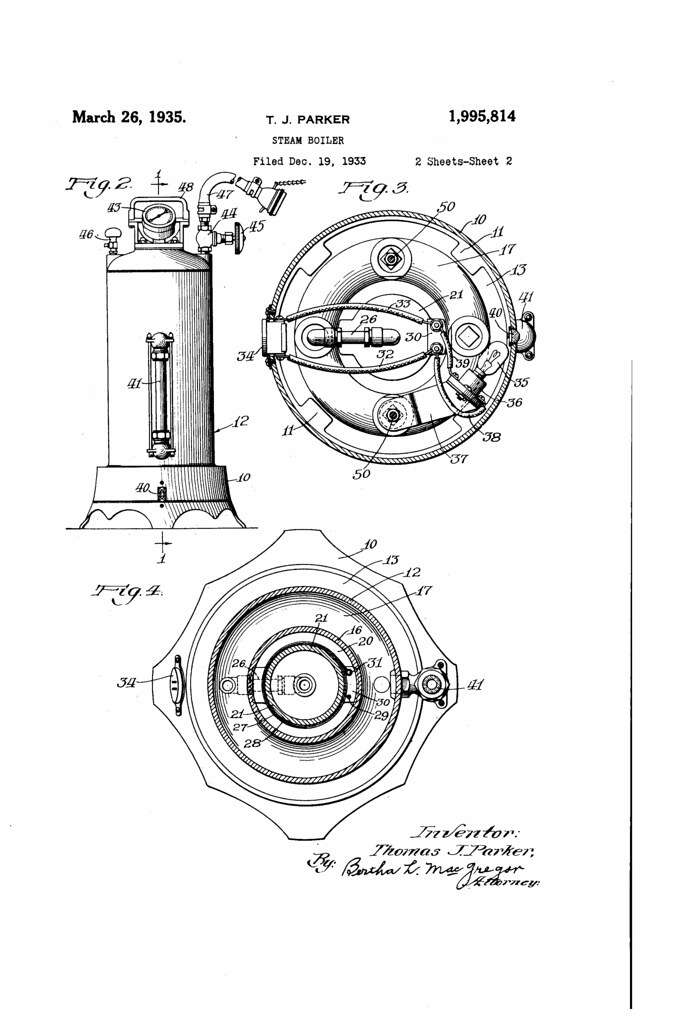
Today in 1935, US Patent 1995814 A was issued, an invention of Thomas J. Parker, for his “Steam Boiler.” There’s no Abstract, although in the description it includes this summary:

This invention relates to boilers and more particularly to electrically heated boilers for generating steam. The boiler herein shown and described is a miniature boiler particularly adapted for generating steam for cleansing and sterilizing fluid conduits, such as beer coils, but obviously the invention may be applied to various uses requiring steam under pressure.

One of the objects of the invention is to provide a boiler in which steam of desired pressure may be quickly and efficiently generated. Another object is to provide for heating the water in the boiler to generate steam by means of a novel and very efficient electric heating element mounted in direct heat contact on and surrounding a generating cylinder which is part of the circulatory system of the boiler.

US1995814-0
US1995814-1

Filed Under: Beers, Breweries, Just For Fun, Politics & Law, Related Pleasures Tagged With: Brewing Equipment, History, Law, Patent, Science of Brewing

Patent No. 4507325A: Process Of Brewing With An Adjunct Of Highly Fermentable Sugar

March 26, 2016 By Jay Brooks

patent-logo
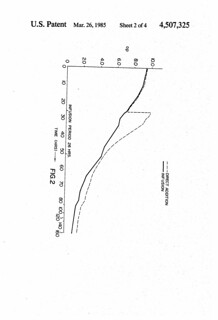
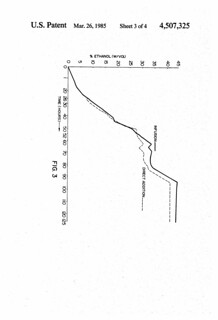
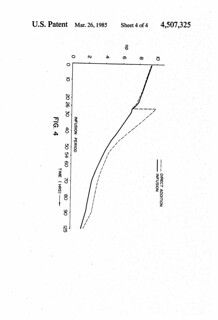
Today in 1985, US Patent 4507325 A was issued, an invention of Kenneth H. Geiger, assigned to Labatt Brewing Company Limited, for his “Process of Brewing with an Adjunct of Highly Fermentable Sugar.” Here’s the Abstract:

The present invention provides an improved brewing process which utilizes an adjunct comprising a highly fermentable sugar. In the process, brewers’ yeast is allowed to act upon a, preferably all-malt, wort until said yeast is partially developed, following which, the adjunct is introduced into the partially fermented wort in a manner which will not have adverse effects on the yeast and the brewing process carried to completion. The adjunct is introduced over a period of time such that the Plato value of the fermenting wort substantially does not increase and osmotic shock is avoided. The process is especially advantageous when used to produce the so-called light beers.

US4507325-1 US4507325-2

US4507325-3 US4507325-4

Filed Under: Beers, Just For Fun, Politics & Law, Related Pleasures Tagged With: History, Law, Patent, Science of Brewing

Patent No. 882862A: Beer Cooling And Purifying Apparatus

March 24, 2016 By Jay Brooks

patent-logo
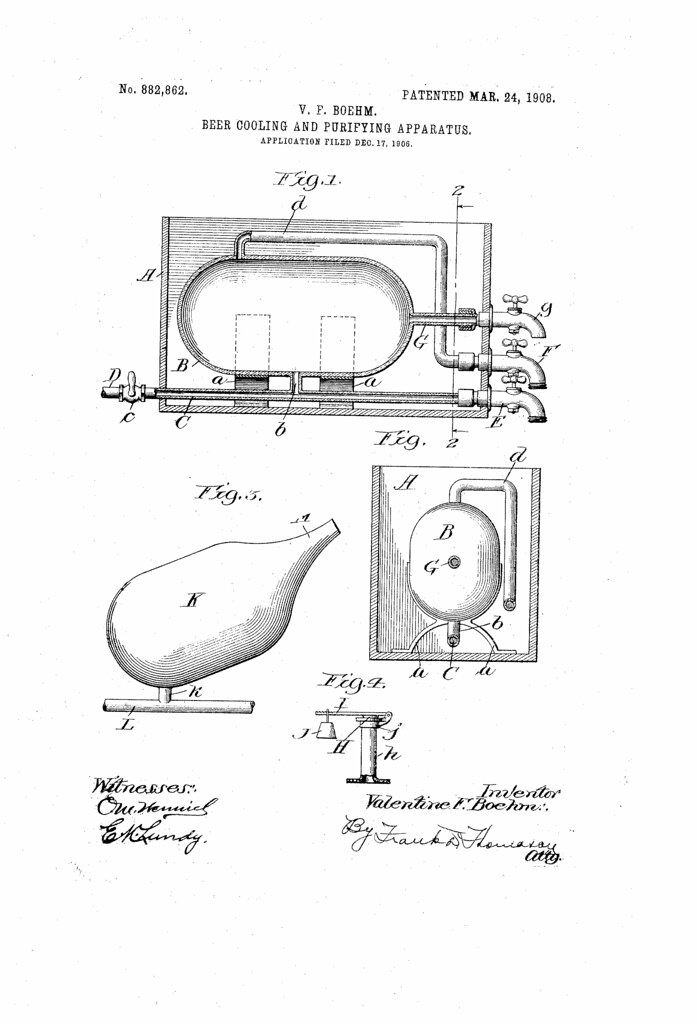
Today in 1908, US Patent 882862 A was issued, an invention of Valentine F. Boehm, for his “Beer Cooling and Purifying Apparatus.” There’s no Abstract, and in the description it probably includes a summary, but the OCR did a pretty bad job and it’s all but unreadable. Don’t say I didn’t warn you.
US882862-0

Filed Under: Beers, Just For Fun, Politics & Law, Related Pleasures Tagged With: History, Kegs, Law, Patent

Patent No. 493896A: Keg Rack

March 21, 2016 By Jay Brooks

patent-logo
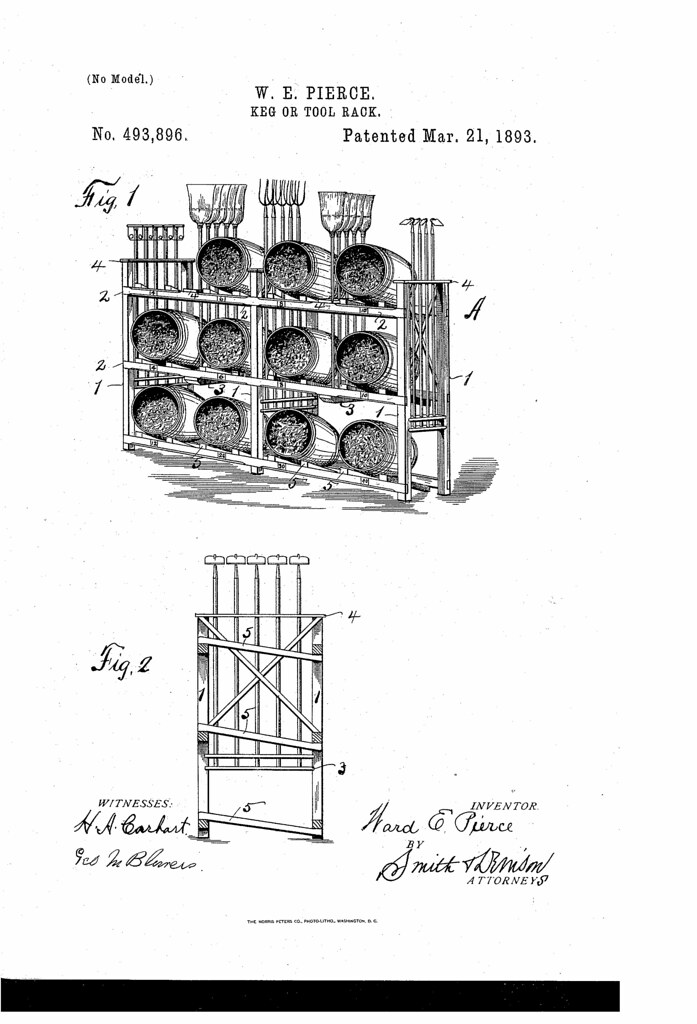
Today in 1893, US Patent 493896 A was issued, an invention of Ward E. Pierce, for his “Keg or Tool Rack.” There’s no Abstract, although in the description it includes this summary:

My invention relates to keg or tool racks and particularly to that class which is adapted to be stored and shipped in knock-down shape, to be readily set up in stores and vending places, and which afford easy and convenient means for holding nail kegs, agricultural implements.

My object is to produce such a rack which may be readily assembled at the place where it is desired to be used, and adapted to hold kegs in a very convenient position so that the goods may be readily displayed therefrom; and also easy and convenient means for holding hoes, forks, brooms, &c.,taking up a minimum amount of space.

US493896-0

Filed Under: Beers, Just For Fun, Politics & Law, Related Pleasures Tagged With: Brewing Equipment, History, Kegs, Law, Patent

Patent No. 46973A: Improved Process For Obtaining A Condensed Extract Of Hops

March 21, 2016 By Jay Brooks

patent-logo
Today in 1865, US Patent 46973 A was issued, an invention of Samuel R. Percy and Walter S. Wells, for his “Improved Process for Obtaining a Condensed Extract of Hops.” There’s no Abstract, although in the description it includes this summary:

Our invention consists in the preparation of a condensed extract of hops, which possesses all the valuable properties of the hops, which is computed to lose about thirty-three and one-third per cent of their strength the first year, and afterward to decline more rapidly. All these and other objections are entirely obviated by our invention.

A quantity of hops is placed in an air-tight vessel, and the air is then exhausted therefrom in any of the methods ordinarily used for that purpose. Warm or cold water is then introduced, which should be kept heated by the admission of steam, and the hops allowed to steep for two or three hours. The degree of heat is not essential. We prefer that it should approach nearly to the boiling-point of water in vacuo. A small quantity of alkali or alkaline salts should be added to the water, the amount, when so used, not to exceed one pound of alkali or its equivalent of alkaline salts to I every one hundred pounds of hops. When the hops, by these means, are sufficiently digested, a vacuum is formed in a chamber communicating with the vessel in which the hops have been steeped, so that when the cooks communicating between this vessel and this receiver are opened the water and condensed steam containing the virtues of the hops pass through into the receiver, a vacuum being maintained therein sufficient to draw all the liquid from the hops. Water and steam are again and again admitted into the steeping vessel, as before described, until the hops are entirely exhausted of their properties. The fluid thus holding said properties in suspension is strained through a suitable strainer adjusted within the connecting pipe while in transition from the steeping-vessel to the receiver. When a sufficient quantity of this fluid extract of the hops, effected as above stated, is accumulated in the receiver, a vacuum evaporating-pan is ready for its reception by covering or coating its inner surface with any oily or fatty substance cerine, paraffine, &c., to prevent the extract from adhering to the pan and burning. Avaouum is then formed in this pan and the fluid extract is drawn through a pipe or tube connecting with the receiver, as fast as needed, into this vacuum, evaporating, or condensing pan. At such time, during the process of evaporating and condensing such fluid, as the operator may deem proper, a quantity of molasses, saccharine matters, or the extracted liquor of grain, whether malted or not, is to be drawn into the vacuum condenser and mixed with the fluid therein contained, amounting in quantity to about three gallons of molasses orits equivalent proportion of saccharine matter or extracted liquor of grain to every one hundred pounds of hops employed,though these proportions are by no means arbitrary. The whole is then evaporated or condensed to the consistence of very thick molasses, after which it may be taken out and put into vessels for use or transportation.

Untitled

Filed Under: Beers, Politics & Law, Related Pleasures Tagged With: History, Hops, Law, Patent

« Previous Page
Next Page »

Find Something

Northern California Breweries

Please consider purchasing my latest book, California Breweries North, available from Amazon, or ask for it at your local bookstore.

Recent Comments

  • Ernie Dewing on Historic Beer Birthday: Charles William Bergner 
  • Steve 'Pudgy' De Rose on Historic Beer Birthday: Jacob Schmidt
  • Jay Brooks on Beer Birthday: Bill Owens
  • Steve 'Pudgy' De Rose on Beer Birthday: Charles Finkel
  • Steve 'Pudgy' De Rose on Beer Birthday: Bill Owens

Recent Posts

  • Beer In Ads #5185: It’s Bock Time January 28, 2026
  • Historic Cider Birthday: H.P. Bulmer January 28, 2026
  • Beer Birthday: Shane McNamara January 28, 2026
  • Historic Beer Birthday: John Goetz January 28, 2026
  • Beer Birthday: Jean-Marie Rock January 28, 2026

BBB Archives

Feedback

Head Quarter
This site is hosted and maintained by H25Q.dev. Any questions or comments for the webmaster can be directed here.