Brookston Beer Bulletin

Jay R. Brooks on Beer

  • Home
  • About
  • Editorial
  • Birthdays
  • Art & Beer

Socialize

  • Dribbble
  • Email
  • Facebook
  • Flickr
  • GitHub
  • Instagram
  • LinkedIn
  • Pinterest
  • RSS
  • Twitter
  • YouTube

Powered by Genesis

Patent No. WO2006046879A2: Method Of Making Colorless And Artificially Colored Clear Beer

May 4, 2016 By Jay Brooks

patent-logo
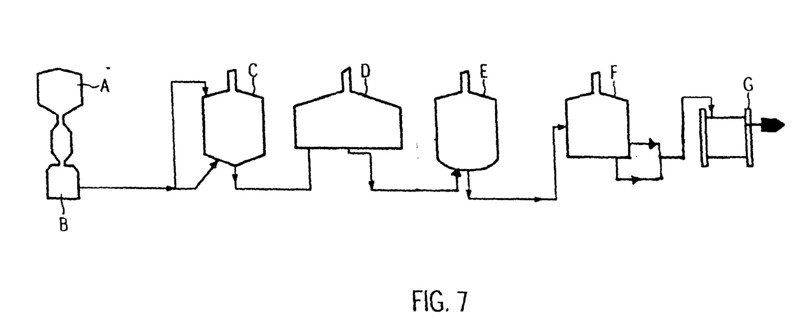
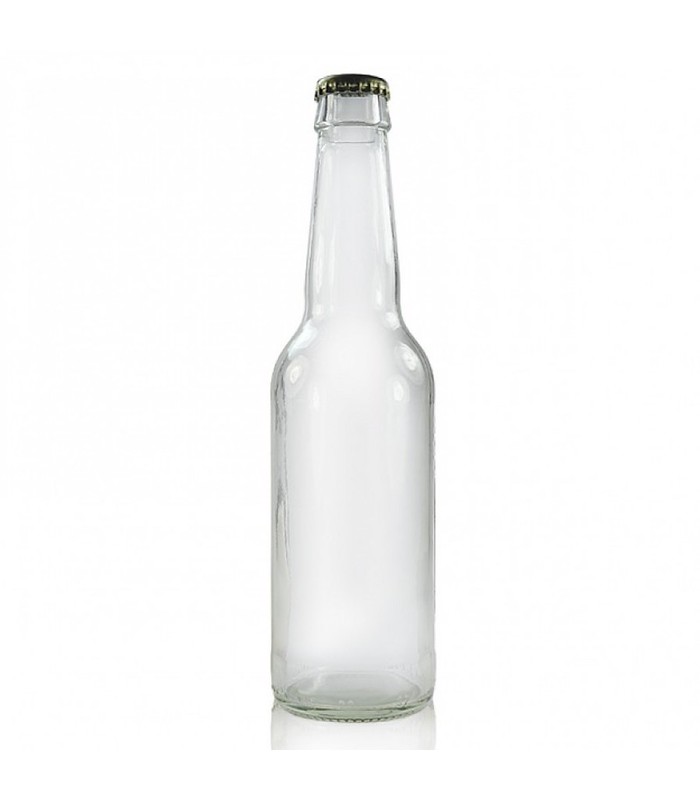
Today in 2006, US Patent WO 2006046879 A2 was issued, an invention of Alberto D. Rivera, Emiliano S. Macapugay, Jade Y. De Carlos, assigned to the San Miguel Corporation, for their “Method of Making Colorless and Artificially Colored Clear Beer.” Here’s the Abstract:

This invention is directed to a method of preparing a colorless and artificially colored, clear beer through adsorption process by contacting the wort with activated carbon during wort boiling. This method produces a colorless, clear beer with originally processed inherent taste and aroma utilizing existing brewery process and equipment. Artificially colored, clear beer such as primary- colored beer, which can be conveniently produced using the colorless, clear product is also disclosed.
clear-beer-bottle

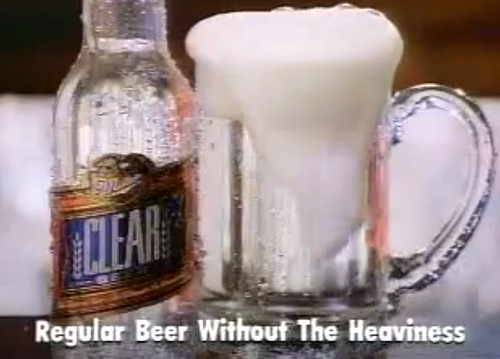
Of course, Miller Brewing tried their hand at something similar with their Miller Clear beer, which they tested in 1993. And of course, there was Coors Brewing’s Zima, released a little before that, although they referred to it as a “malt beverage” rather than a beer.
miller-clear-ad

Filed Under: Beers, Just For Fun, Politics & Law, Related Pleasures Tagged With: History, Law, Patent, Science of Brewing

Patent No. WO1996012669A1: Method And Apparatus For Enhancing A Beverage Head

May 2, 2016 By Jay Brooks

patent-logo
Today in 1996, US Patent WO 1996012669 A1 was issued, an invention of Alexander Richard Dunn and John Cooke, assigned to Scottish & Newcastle Plc, for their “Method and Apparatus For Enhancing a Beverage Head.” Here’s the Abstract:

A gas jetting apparatus is used to jet a fine jet of gas through an orifice at a nozzle (18) into a beverage, for example beer, to promote formation of a creamy head. This apparatus may be incorporated into a beverage dispenser, for example a beer tap which dispenses draught beer.

And includes the following description:

“Method and Apparatus for Enhancing a Beverage Head”

This invention relates to a method and apparatus for enhancing a beverage head, particularly, but not exclusively, a head on a draught beer dispensed from a tap.

Sparklers are sometimes used to agitate a flow of beer as it is dispensed from a beer tap; this can promote frothing of the beer and contribute to formation of a head on the dispensed beer. It is also known to provide a single use secondary chamber within a sealed, pressurised beer can from which gas and/or beverage is jetted into beer within the can when the can is opened.

According to a first aspect of the present invention there is provided a method of promoting formation of a beverage head, comprising jetting a fine jet of gas derived from a gas source through at least one orifice and into a dispensed beverage.

The method may form or assist in the formation of a head.

The beverage may be dispensed from a tap; it may be a draught beverage.

The gas may be jetted into the beverage once the beverage has been dispensed. Alternatively or additionally, the gas may be jetted into the beverage whilst the beverage is being dispensed, it may be jetted into a stream of beverage.

Filed Under: Beers, Breweries, Just For Fun, Politics & Law, Related Pleasures Tagged With: History, Law, Patent, Science of Brewing

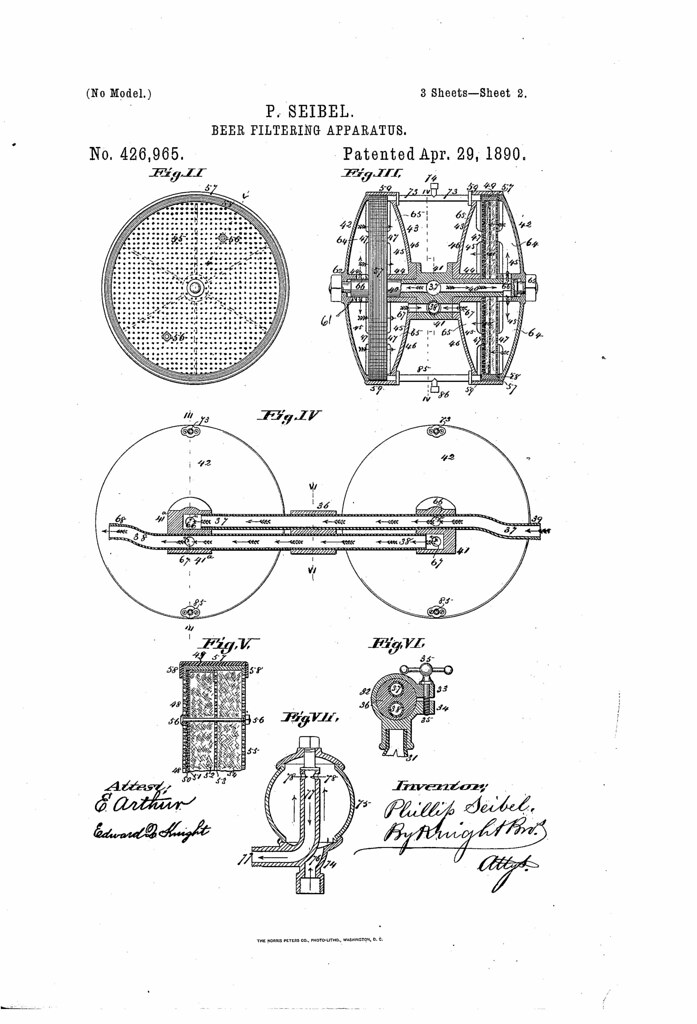
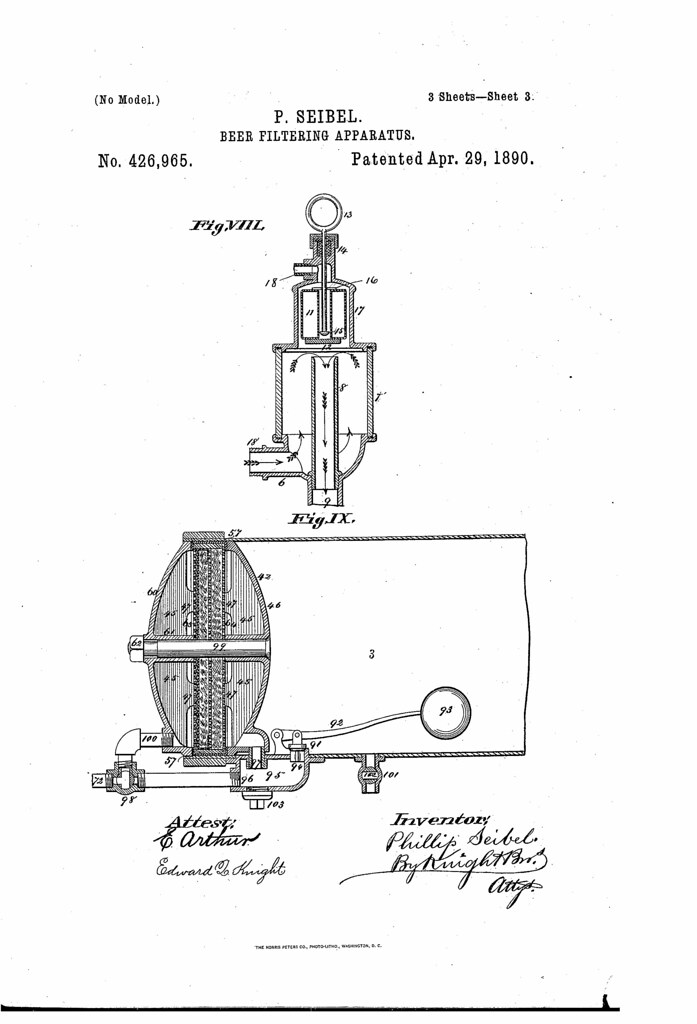
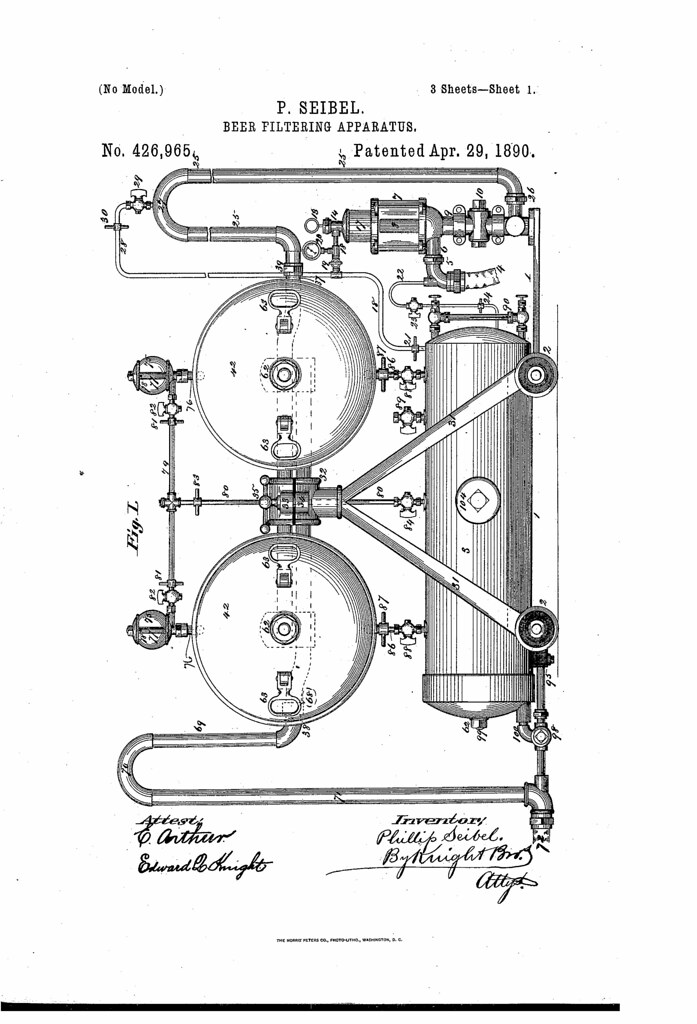
Patent No. 426965A: Beer-Filtering Apparatus

April 29, 2016 By Jay Brooks

patent-logo
Today in 1890, US Patent 426965 A was issued, an invention of Phillip Seibel, for his “Beer-Filtering Apparatus.” There’s no Abstract, although in the description it includes this summary:

This filtering apparatus is intended especially for beer or other liquids liable to foam, and has means for the removal of the foam into a settling-chamber, from which the liquid is withdrawn as it subsides. The apparatus is composed of two or more similar filters connected with the same system of circulating pipes.

US426965-0
US426965-1
US426965-2

Filed Under: Beers, Breweries, Just For Fun, Politics & Law, Related Pleasures Tagged With: Brewing Equipment, History, Law, Patent, Science of Brewing

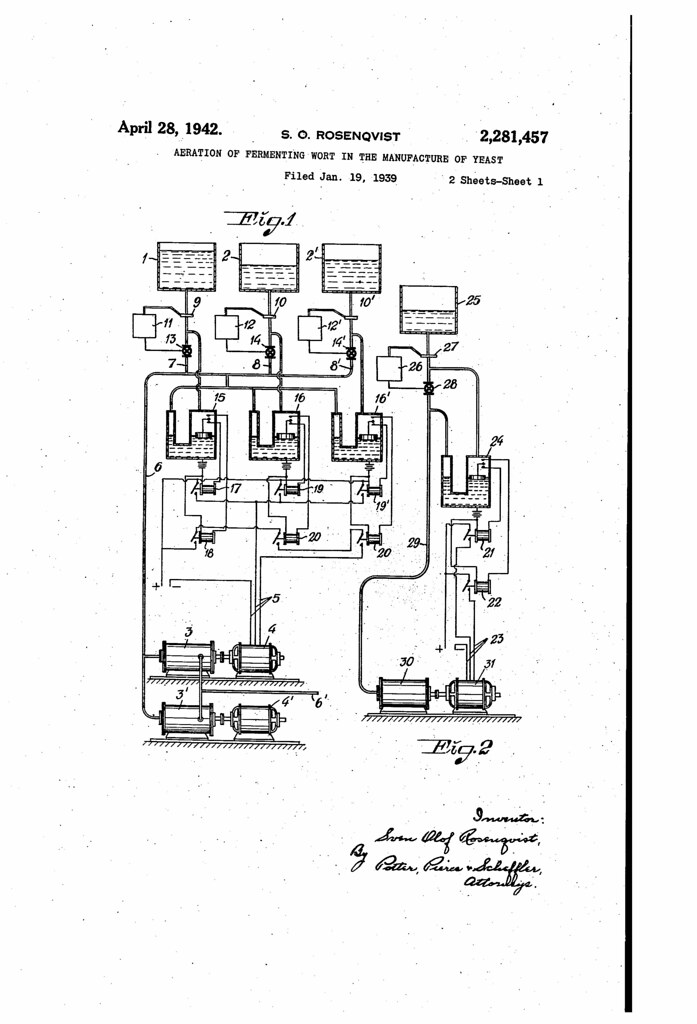
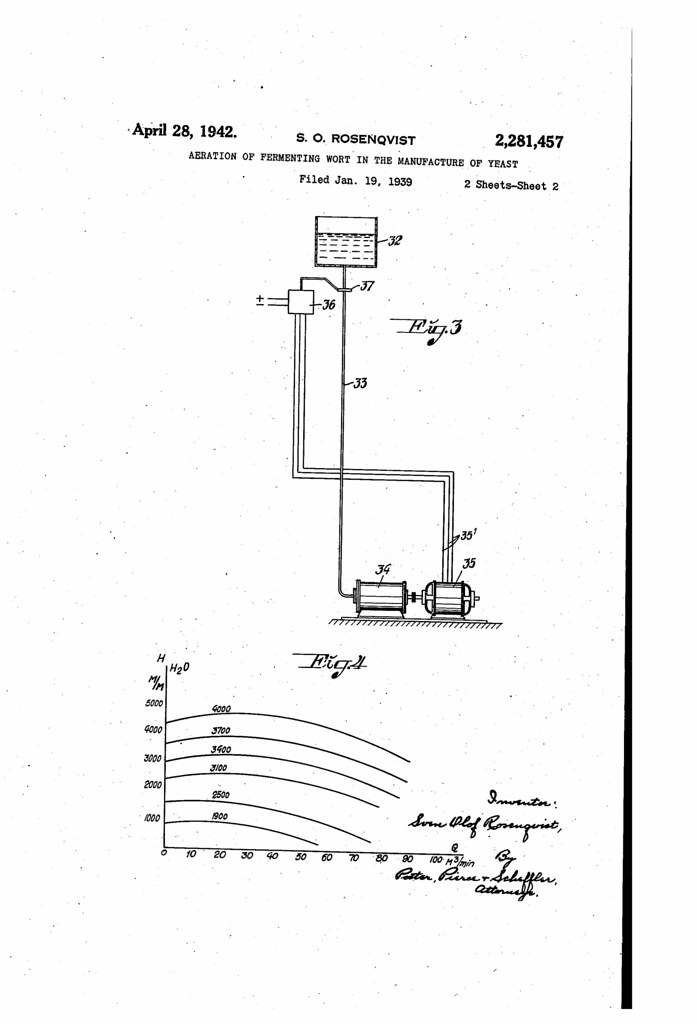
Patent No. 2281457A: Aeration Of Fermenting Wort In The Manufacture Of Yeast

April 28, 2016 By Jay Brooks

patent-logo
Today in 1942, US Patent 2281457 A was issued, an invention of Sven Olof Rosenqvist, for his “Aeration of Fermenting Wort in the Manufacture of Yeast.” There’s no Abstract, although in the description it includes this summary:

In the manufacture of pressed yeast it is known to blow air into the worts to increase the yeast yields; As a rule the fermentations are now performed with the use of the running-in method, the level of the wort in the vat being considerably lower at the commencement than at the termination of the fermentation. As a rule, it is desired during the start and at the termination of the process to supply less air to the wort than during the main portion of the fermentation. During the main portion of the fermentation it may also be of interest sometimes to be able to supply air quantities of different magnitudes.

Generally, one or more compressors of the same or of different types would operate on a ‘common pressure conduit branched off to the various vats’. By employing large compressor units, the air of which would be distributed to a plurality of vats, a rather low installation cost would be obtained for the compressor system. At the same time, however, the disadvantage would be incurred that the pressure on the air piping always would have to be maintained at a value corresponding to the highest back pressure prevailing in any vat.

Air taken out from the pipe system for a vat with a lower back pressure thus would have to be reduced by a valve from the higher to the lower pressure, which obviously would involve losses of energy.

With large compressor units, the losses in idle running would also be considerable at a low load.

Any control of the air quantity for the various fermentation vats could only take place manually with the arrangements described and with loss of energy. A control of the air quantity to a fermentation vat from the common conduit would entail disturbances in the air supply to the remaining vats and in order to limit such disturbances the pressure above atmospheric in the main conduit would have to be maintained at. an unnecessary high value. The arrangements as hitherto used consequently could not, owing to the fact that the control would be less accurate or too expensive, ensure the proper air supply to each of the fermentation processes proceeding in the various fermentation vats at an energy cost as low as possible. By reason of the fact that the supply of the quantities of air undertaken at the fermentations could not be properly adapted with respect to the process otherwise carried out in connection with these fermentations, the lowest cost for the aeration work, the best yield of the raw materials and the best quality of the finished product consequently could not be obtained.

The present invention refers to an arrangement for the supply of air to fermenting wort in the manufacture of pressed yeast, in the use ‘of which the above described disadvantages are avoided.

The arrangement according to the invention is principally distinguished by a compressor apparatus adapted to be controlled with respect to the delivery of air, the pressure conduit of which apparatus is connected to the plant of fermentation vats, and by an arrangement with a continuously driven member adapted to control the intensity of aeration in accordance with a previously determined aeration scheme, and which may actuate the air delivery of the compressor apparatus by influencing the compressor apparatus itself, its suction or pressure conduit or its driving machinery, or two or more of these arrangements, and which is so arranged as to adjust the compressor apparatus automatically and in accordance with an aeration scheme determined beforehand, to deliver air in a quantity and at a pressure required by the scheme at any moment. Preferably, a measuring device is provided to indicate the amount of air passing on its way to the fermentation vat, said measuring device being adapted to give impulses to the controlling doling device. According to an embodiment of the invention, the controlling doling device is adapted directly or indirectly to actuate a device, in ,order, in the case of double acting compressors, to convey a portion of the air to that part of the compressor which operates at a pressure below atmospheric. According to a further embodiment, a measuring device for the air in the inlet or outlet of the compressor “is arranged to transmit impulses for the control of the number of revolutions of the driving engine of the compressor.

Also. a measuring device for the air may be arranged to effect throttling in the inlet or outlet of the compressor so as to control the quantity of air in this way. If a compressor be used. a turbo-compressor adapted to be controlled with respect to the number of revolutions thereof is preferably made use of.

US2281457-0
US2281457-1

Filed Under: Beers, Breweries, Just For Fun, Politics & Law, Related Pleasures Tagged With: Brewing Equipment, History, Law, Patent, Science of Brewing, Yeast

Patent No. 726427A: Beer Filter

April 28, 2016 By Jay Brooks

patent-logo
Today in 1903, US Patent 726427 A was issued, an invention of William Haussermann, for his “Beer Filter.” There’s no Abstract, although in the description it includes this summary:

This invention relates to improvements in filters, and particularly beer-filters.

The object of the invention is to provide a beer-filter which is simple of construction, comparatively inexpensive of production, efficient in operation, and adapted to be readily and conveniently cleansed of the retained impurities.

US726427-0

Filed Under: Beers, Breweries, Just For Fun, Politics & Law, Related Pleasures Tagged With: Brewing Equipment, History, Law, Patent, Science of Brewing

Patent No. 2440276A: Brewing Method Using Albedo In Wort

April 27, 2016 By Jay Brooks

patent-logo
Today in 1948, US Patent 2440276 A was issued, an invention of Abraham Arnold Klein, for his “Brewing Method Using Albedo In Wort.” There’s no Abstract, although in the description it includes this summary:

According to the present invention albedo from fruit of the genus Citrus, particularly from grapefruit or citron, is used instead of, or in addition to, hops in the manufactured beer. I have found that the lupulin of hops has in many cases undesirable effects on the human organism. Furthermore hops deteriorate easily. Albedo from citrus fruit can be used instead of hops and the bitter flavour imparted by it to the wort is of a mild and agreeable character.

So this is essentially using grapefruit or other citrus almost 70 years before Ballast Point Grapefruit Sculpin. But not the whole fruit, or even the rind, the albedo is the white, fleshy inner later in between the thinner, top rind layer and the inside fruit. That spongy material is, according to this patent, used in place of or with hops in the brewing process. I wonder if anybody used this method to produce commercial beer?
Orange_cross_section_description
grapefruit

Filed Under: Beers, Breweries, Just For Fun, Politics & Law, Related Pleasures Tagged With: History, Hops, Law, Patent, Science of Brewing

Patent No. 698184A: Method Of Refining, Aging, Mellowing, And Purifying Alcoholic Liquors

April 22, 2016 By Jay Brooks

patent-logo
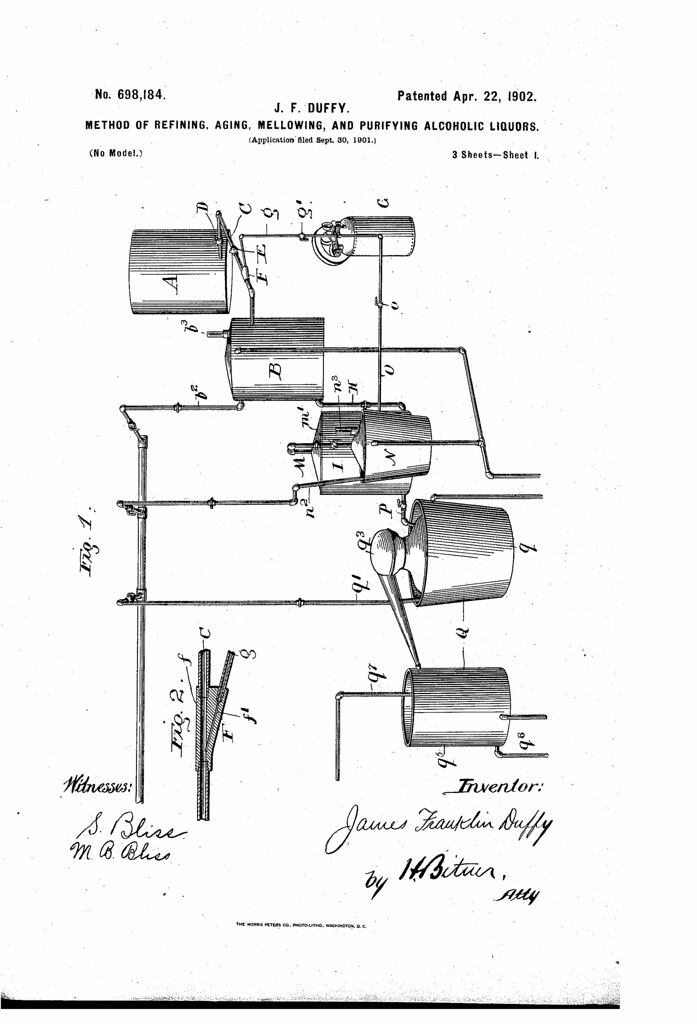
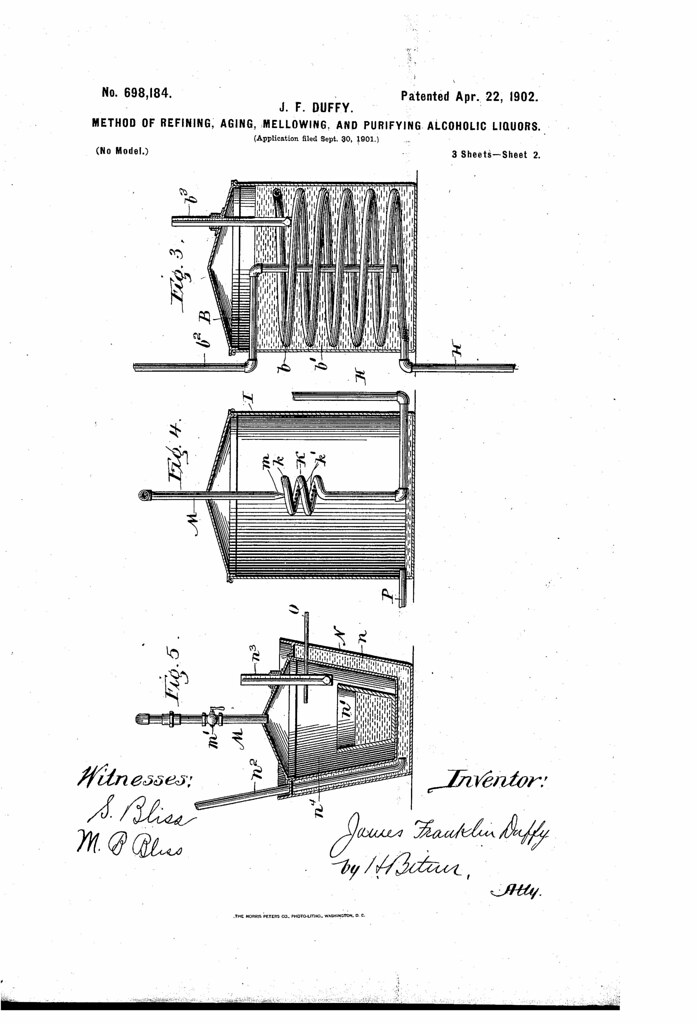
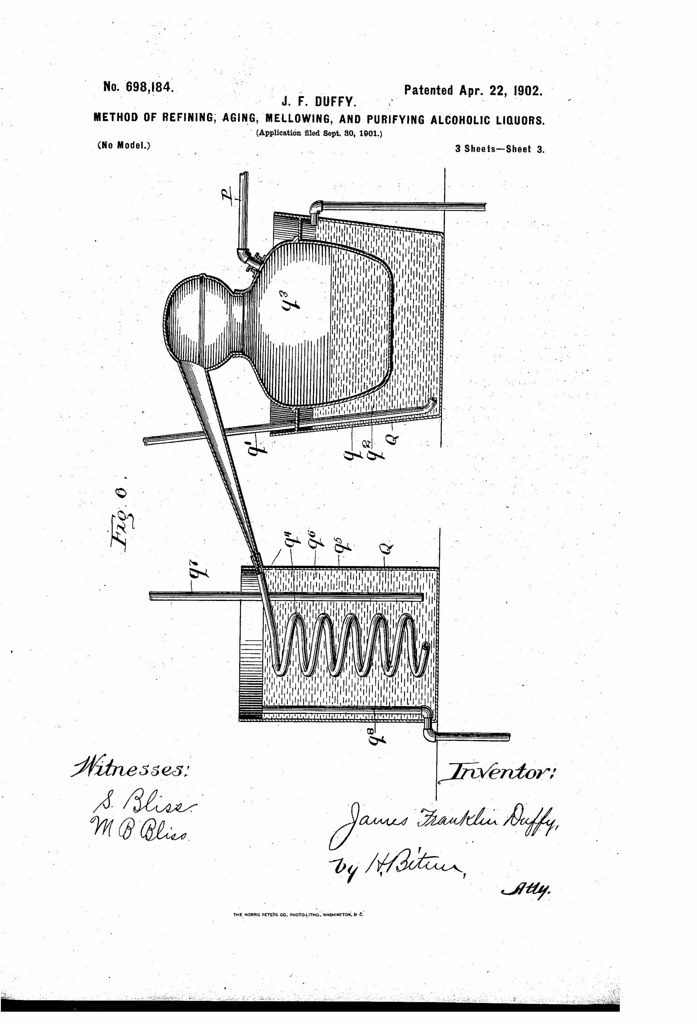
Today in 1902, US Patent 698184 A was issued, an invention of James Franklin Duffy, for his “Method of Refining, Aging, Mellowing, and Purifying Alcoholic Liquors.” Although it’s not strictly speaking, a beer patent, it is somewhat related, and it was too interesting not to include. There’s no Abstract, although in the description it includes this summary:

My invention relates to a certain improved method or process for the treatment of liquors in the same particulars as is usually accomplished through a considerable period by the ordinary aging process.

Under the term liquor as used herein I include all alcoholic or spirituous fluids, either distilled or fermented; and it is the purpose of the invention to purify said liquors,to eliminate all injurious qualities therefrom, and to supply the ripe, pure, and mellow qualities which time alone has done heretofore.

The invention consists in the treatment of the liquor by means of the various steps of the process, all of which will appear from the description and be clearly pointed out in the claims.

US698184-0
US698184-1
US698184-2

Filed Under: Just For Fun, Politics & Law, Related Pleasures Tagged With: Brewing Equipment, History, Law, Patent, Science of Brewing, Spirits

Patent No. 581206A: Apparatus For Aerating Liquids

April 20, 2016 By Jay Brooks

patent-logo
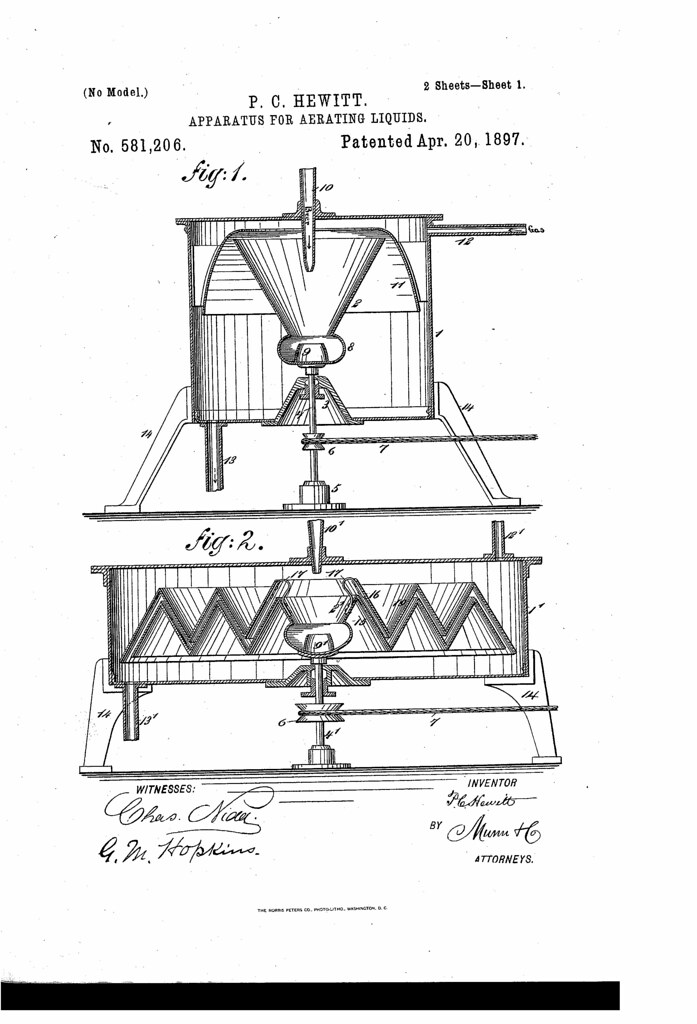
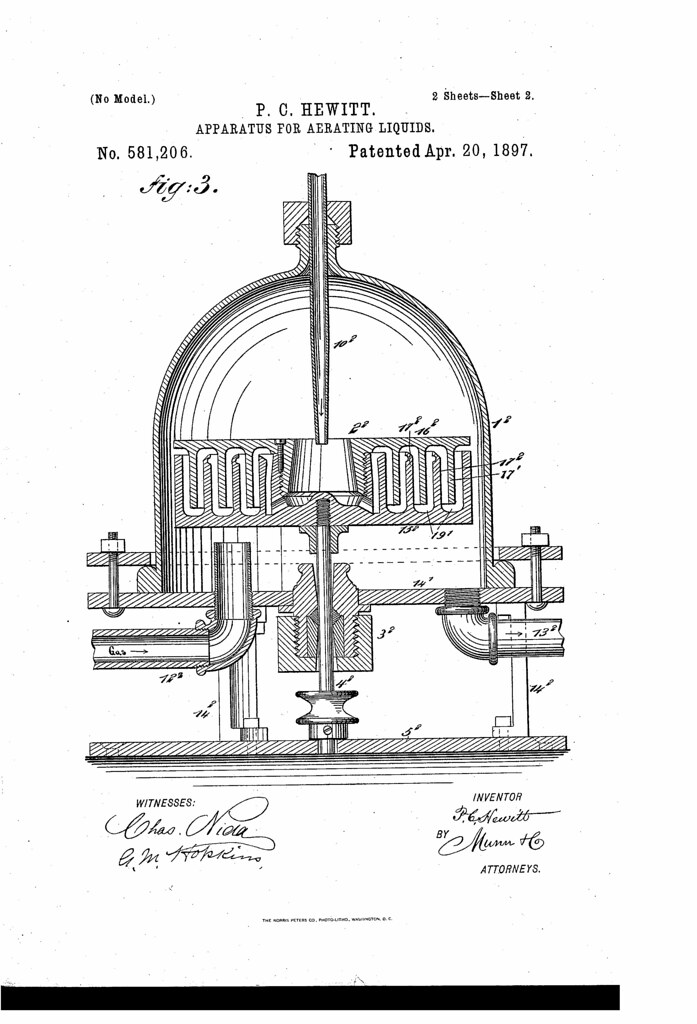
Today in 1897, US Patent 581206 A was issued, an invention of Peter Cooper Hewitt, for his “Apparatus for Aerating Liquids.” There’s no Abstract, although in the description it includes this summary:

My invention is applicable to aerating waters, beer, and other liquids.

In the manufacture of beer by some methods the carbonic acid in the beer is extracted and it becomes necessary to replace the gas thus taken out.

The object of my invention is to thoroughly aerate the beer while it is in the form of a highly-attenuated film.

My invention consists in a centrifugal machine of peculiar construction adapted to reduce the liquid to the form of an extremely thin film, the centrifugal machine being operated in a closed vessel suitable for the required pressure.

US581206-0
US581206-1

Filed Under: Beers, Breweries, Just For Fun, Politics & Law, Related Pleasures Tagged With: Advertising, Brewing Equipment, History, Science of Brewing

Patent No. 20120093992A1: Apparatus And Method For Stripping Wort

April 19, 2016 By Jay Brooks

patent-logo
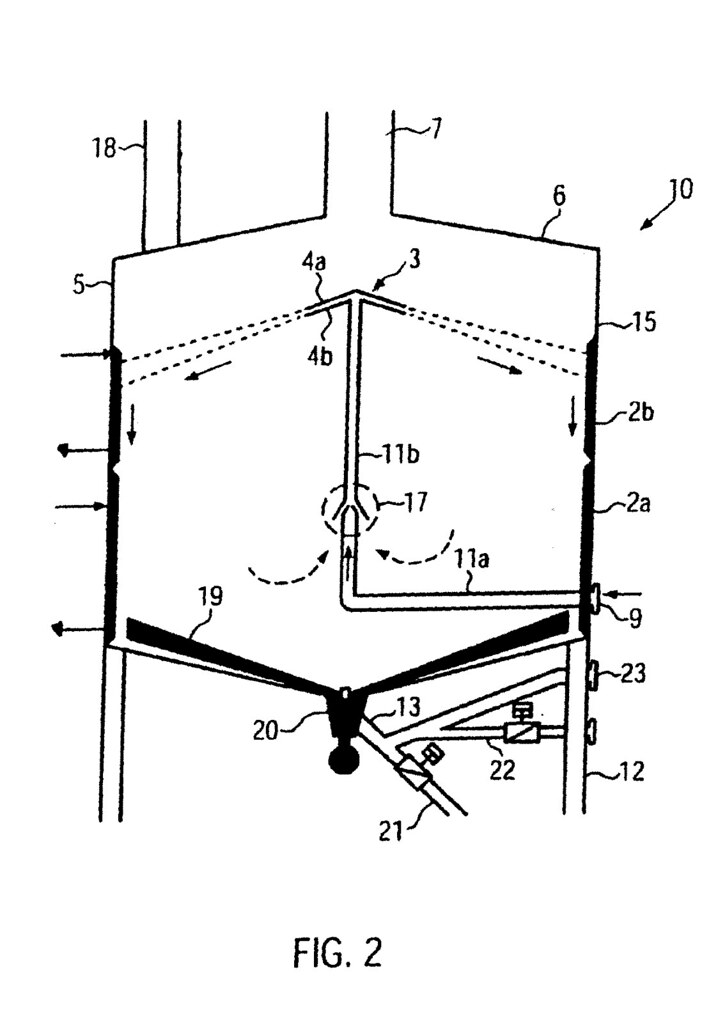
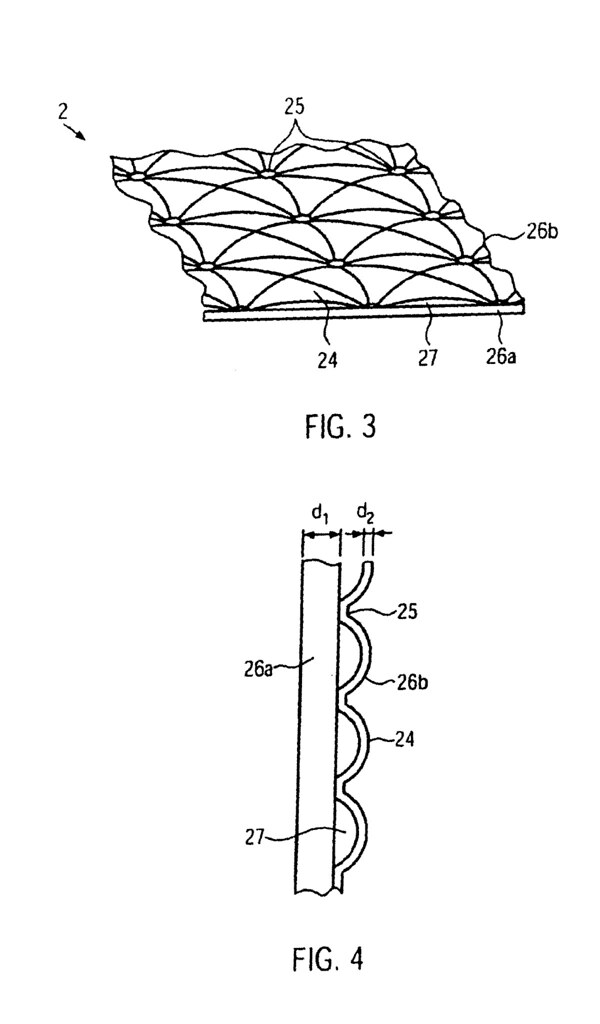
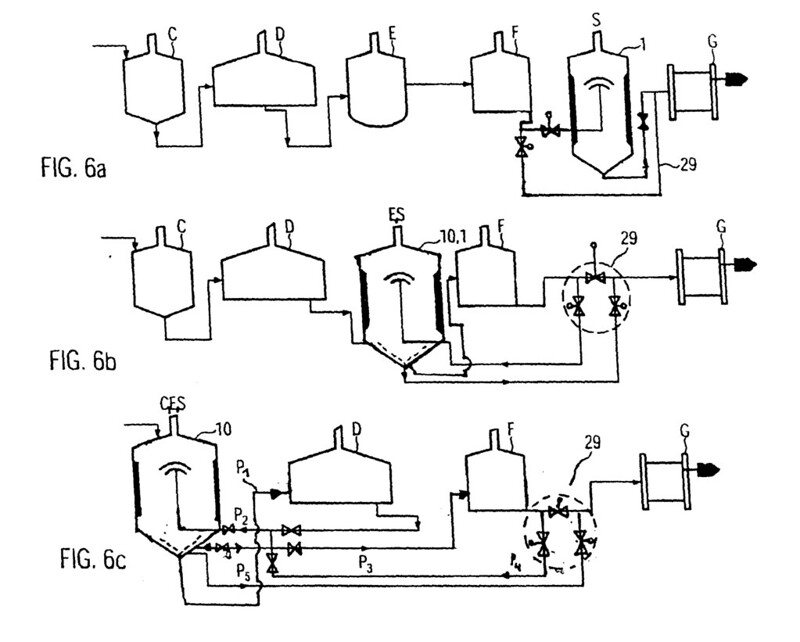
Today in 2012, US Patent 20120093992 A1 was issued, an invention of Peter Gattermeyer and Christian Dorr, assigned to Krones Ag, for their “Apparatus and Method For Stripping Wort.” Here’s the Abstract:

An apparatus and a method for stripping wort, with the apparatus including a receptacle that has a wort inlet and a wort outlet, and a heater on the side wall of the receptacle as well as a distributor device which applies the wort to the heating surface of the heater, such that the wort runs down the heating surface as a film.

US20120093992A1-20120419-D00001
US20120093992A1-20120419-D00002

US20120093992A1-20120419-D00003

US20120093992A1-20120419-D00005
US20120093992A1-20120419-D00006

Filed Under: Beers, Breweries, Just For Fun, Politics & Law, Related Pleasures Tagged With: History, Law, Patent, Science of Brewing, Wort

Patent No. 2155134A: Fermentation Process

April 18, 2016 By Jay Brooks

patent-logo
Today in 1939, US Patent 2155134 A was issued, an invention of Walter Karsch, for his “Fermentation Process.” There’s no Abstract, although in the description it includes this summary:

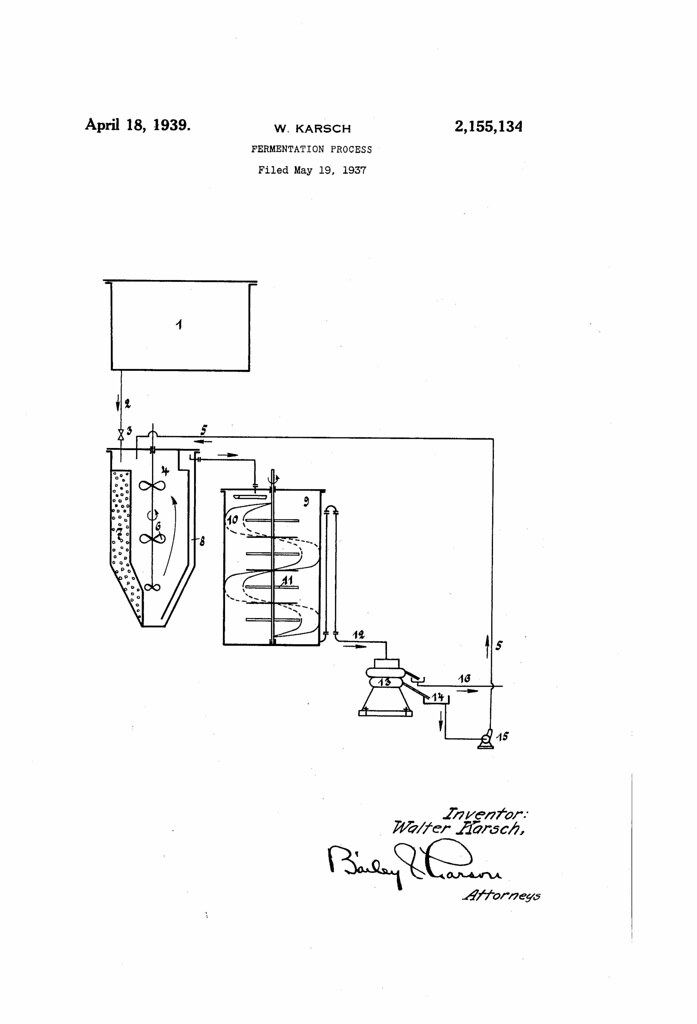
This invention relates to a fermentation process for the production of alcohol from liquids containing carbohydrates.

The invention provides that the total quantity of yeast shallrbe led positively and continuously in a circuit through a fermentation system consisting of a mixing device and a separating device in this wise that the total quantity of .yeast is moved unidirectionally from the mixing device to the separating device and back to the mixing 5 device. Preferably, after a predetermined controllable time, each yeast particle passes through the separating device and thus comes in contact, with fresh particles of sugar. The yeast is thus for a short time only free from the material to be fermented. The fermented liquor, after a predetermined controllable time, and after once traversing the fermentation system, leaves the said system beyond the separating device. It has been found that yeast can operate continuously in this process because it is removed as rapidly as possible from the conversion products formed. The loss of yeast cells observed with discontinuous fermentation practically does not occur in the present process. The mixing oi the yeast and of the liquor to be fermented is as intimate as possible, so that the conversion of the sugar to alcohol and to carbonic acid is effected with the greatest rapidity. At the exchange surface–the yeast membranes-by the intimate admixture the conversion products formed are withdrawn and new sugar molecules added.

By the flow through the fermentation system in the direction from the mixing device to the separating device it is further ensured that each yeast particle is separated positively after a predetermined time from the conversion products and is mixed with fresh sugar particles. No yeast particles can move in the fermentation system otherwise than in the desired direction, or settle, which is of great importance for the attainment of a maximum output of alcohol. Likewise the fermented liquor is led positively to the separating device, so that the result is obtained that the nocuous conversion products formed are separated as soon as possible from the yeast.

In the preferred embodiment the liquor is subjected to an after-fermentation in the interval between the mixing of the yeast with the liquor to be fermented and the separation of the yeast from the fermented liquor.

US2155134-0

Filed Under: Beers, Breweries, Just For Fun, Politics & Law, Related Pleasures Tagged With: History, Law, Patent, Science of Brewing

« Previous Page
Next Page »

Find Something

Northern California Breweries

Please consider purchasing my latest book, California Breweries North, available from Amazon, or ask for it at your local bookstore.

Recent Comments

  • Ernie Dewing on Historic Beer Birthday: Charles William Bergner 
  • Steve 'Pudgy' De Rose on Historic Beer Birthday: Jacob Schmidt
  • Jay Brooks on Beer Birthday: Bill Owens
  • Steve 'Pudgy' De Rose on Beer Birthday: Charles Finkel
  • Steve 'Pudgy' De Rose on Beer Birthday: Bill Owens

Recent Posts

  • Beer In Ads #5185: It’s Bock Time January 28, 2026
  • Historic Cider Birthday: H.P. Bulmer January 28, 2026
  • Beer Birthday: Shane McNamara January 28, 2026
  • Historic Beer Birthday: John Goetz January 28, 2026
  • Beer Birthday: Jean-Marie Rock January 28, 2026

BBB Archives

Feedback

Head Quarter
This site is hosted and maintained by H25Q.dev. Any questions or comments for the webmaster can be directed here.