Brookston Beer Bulletin

Jay R. Brooks on Beer

  • Home
  • About
  • Editorial
  • Birthdays
  • Art & Beer

Socialize

  • Dribbble
  • Email
  • Facebook
  • Flickr
  • GitHub
  • Instagram
  • LinkedIn
  • Pinterest
  • RSS
  • Twitter
  • YouTube

Powered by Genesis

Beer Birthday: Steve Wagner

April 5, 2026 By Jay Brooks 2 Comments

stone
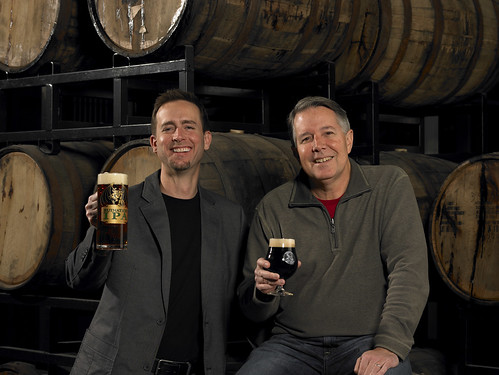
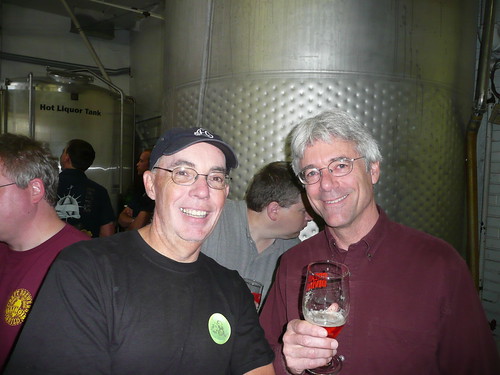
Today is Steve Wagner’s 68th birthday. Steve is a co-founder of Stone Brewing and the former president of the California Craft Brewers Association. In the late 1980s, Steve was a member of the band “The Balancing Act,” who put out several albums on I.R.S. Records, then he just presided over one of the most successful microbreweries in the U.S. for quite af ew years, but after being acquired, he has retired and hopefully just enjoying his himself. Join me in wishing Steve a very happy birthday.

Mitch Steele, Stone Brewing’s brewmaster, with Steve, at CBC when it was in Austin, Texas.
The Stone crew: Arlan Arnsten, Steve and Greg Koch at CBC in San Diego 2008.
gk-sw-cheers
With Stone Brewing co-founder Greg Koch in a publicity shot (by John Schulz Photography).
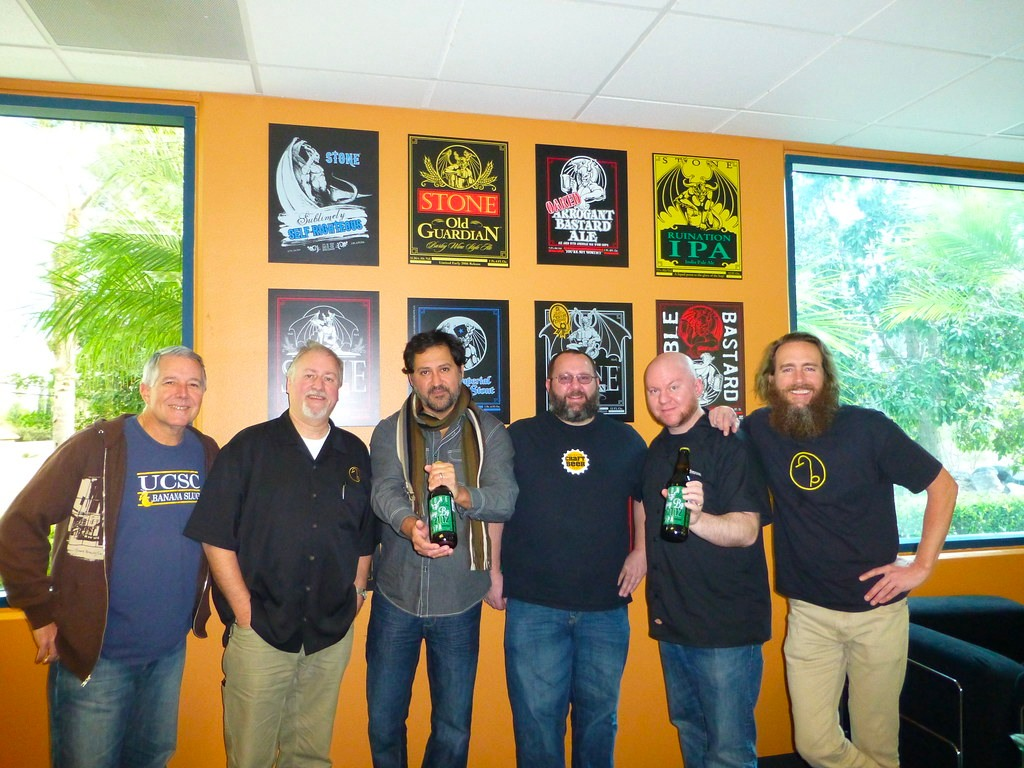
The day after we tried all of Stone’s Vertical Epic’s in San Diego; with Steve, me, Joe Tucker, Jason and Todd Alstrom and Greg Koch.
stone-first-12oz
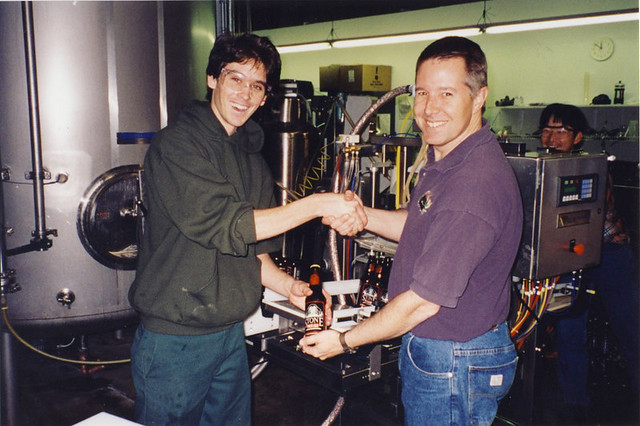
Lee Chase with Steve on April 14, 1999 celebrating their first bottling run on their then new Maheen bottler. [Note: photos purloined from Stone Brewing’s website.]

Filed Under: Birthdays, Just For Fun Tagged With: California, San Diego, Southern California

Beer In Ads #5206: For The Feast Of Easter

April 5, 2026 By Jay Brooks Leave a Comment

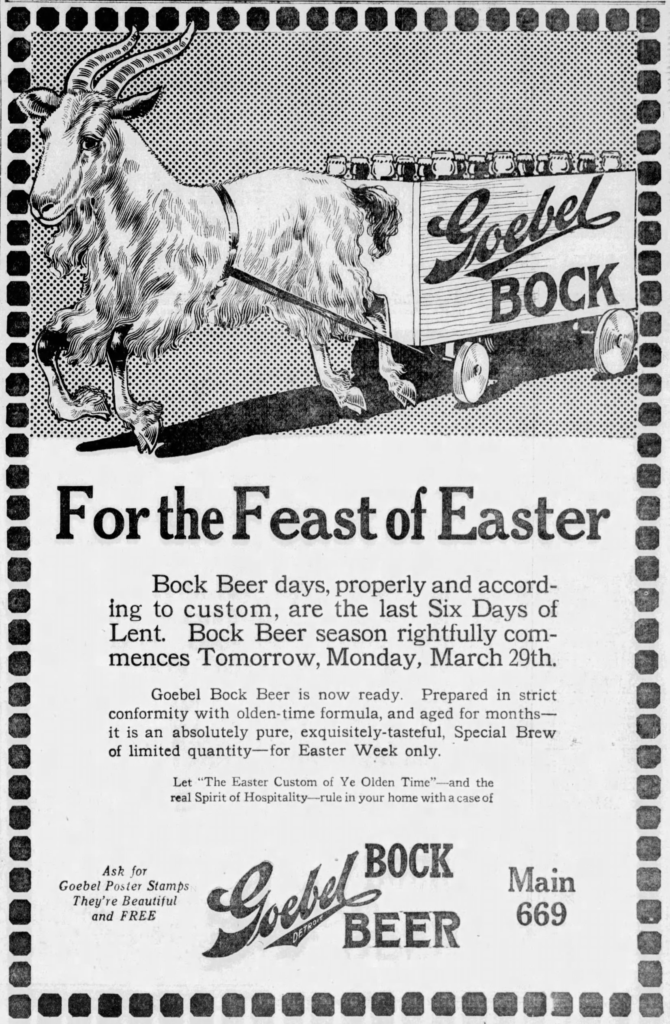
Two years ago I decided to concentrate on Bock ads for awhile. Bock, of course, may have originated in Germany, in the town of Einbeck. Because many 19th century American breweries were founded by German immigrants, they offered a bock at certain times of the year, be it Spring, Easter, Lent, Christmas, or what have you. In a sense they were some of the first seasonal beers. “The style was later adopted in Bavaria by Munich brewers in the 17th century. Due to their Bavarian accent, citizens of Munich pronounced ‘Einbeck’ as ‘ein Bock’ (a billy goat), and thus the beer became known as ‘Bock.’ A goat often appears on bottle labels.” And presumably because they were special releases, many breweries went all out promoting them with beautiful artwork on posters and other advertising. With Spring approaching, there are so many great examples that I’m going to post two a day for a few months.

Sunday’s first ad is for Goebel Bock Beer, which was published in March of 1915. This one was for Goebel Brewing Co. of Detroit, Michigan, which was originally founded in 1873. This ad ran in the Detroit Free Press, also of Detroit, Michigan.

Filed Under: Art & Beer, Beers, Breweries, Just For Fun Tagged With: Advertising, Bock, History, Michigan

Historic Beer Birthday: Hew Ainslie

April 5, 2026 By Jay Brooks 4 Comments

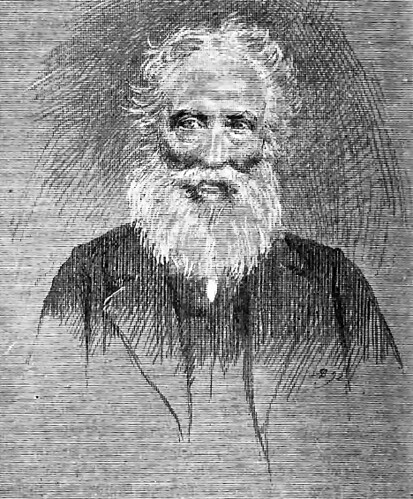
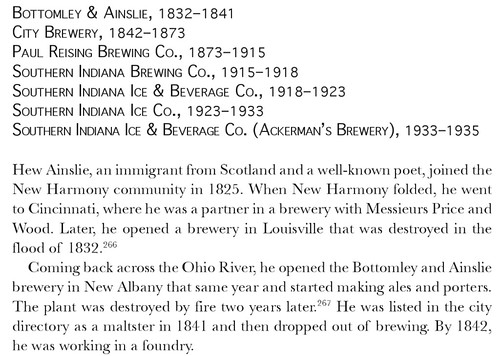
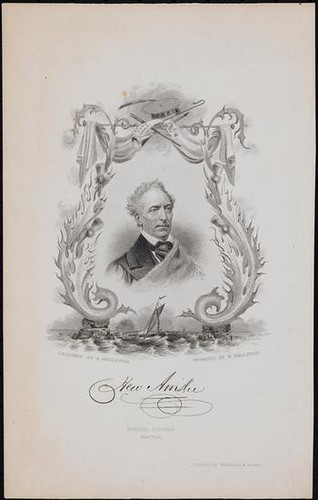
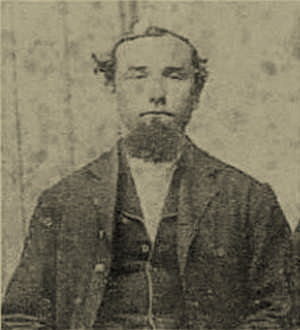
Today is the birthday of Hew Ainslie (April 5, 1792–March 11, 1878) He is best remembered as a Scottish poet, although he came to America in 1822, settling first in upstate New York, before later moving west to Indiana. According to IndianaBeer.com, he co-founded Bottomley and Ainslie, the first brewery in New Albany, Indiana (which is near Louisville), at least from 1840-1841:

Hew Ainslie, an immigrant from Scotland and a well-known poet, joined the New Harmony community in 1825. When New Harmony folded went to Cincinnati where he opened a brewery. Later he opened a brewery in Louisville that was destroyed in the flood of 1832. He worked after that at the Nuttall brewery in Louisville.

Coming back across the Ohio River, he opened the Bottomley and Ainslie brewery in New Albany in 1840 which was destroyed by fire shortly thereafter. He was listed in the city directory as a maltster in 1841 and then dropped out of brewing. By 1842 he was working in a foundry.

The brewery continued without him, under various names, until prohbition, and eve re-opened after repeal, though only lasted another two years, closing for good in 1935. Here’s the chronology and some more history from the book “Hoosier Beer: Tapping Into Indiana Brewing History,” by Bob Ostrander and Derrick Morris.

There’s not a lot I could find, and the fullest account of Ainslie’s life was written by Conrad Selle for the FOSSILS newsletter, his local homebrew club, and happily was posted in 2005 on the Potable Curmudgeon’s blog.

Many early brewers worked their trade as a sideline or temporary trade before moving on to other occupations. Hew Ainslie is unique for having been principally a poet.

He was born at Bargany in Ayrshire, Scotland on April 5, 1792. Hew was the only son of George Ainslie, an employee on the estate of Sir Hew Dalrymple Hamilton. He was educated in the parish school at Ballantrae, and later at the academy at Ayr. In 1809 his family moved to Roslin, about six miles from Edinburgh. He married his cousin Janet Ainslie in 1812, whose brother Jock had married Hew’s sister Eleanora.

Ainslie studied law in Glasgow, and worked as a clerk in the Register House in Edinburgh. In 1820 he revisited Ayrshire on foot with James Wellstood and John Gibson and in the next two years wrote A Pilgrimage to the Land of Burns, which was published in London in 1822. The book was an account of their travels and visits with some of Robert Burns’s contemporaries, with songs and ballads by Ainslie that were much in the style of Burns, and illustrations by Wellstood.

In July, 1822, Ainslie sailed from Liverpool to New York with his friend Wellstood. Mrs. Ainslie and their three children joined him in the following year. Ainslie and Wellstood purchased Pilgrim’s Repose, a farm at Hoosac Falls in Rensselaer County, New York. Ainslie and his family lived there for almost three years before joining Robert Owen’s utopian socialist cooperative community at New Harmony, Indiana in 1825.

When Owen’s community failed about a year later they moved first to Cincinnati, where Ainslie became a partner with Price and (Thomas) Wood in a brewery, then to Louisville. In Louisville, a town of 7,000, Ainslie opened a brewery in 1829 at 7th Street between Water and Main. Records show that B. Foster, Enoch Wenzell and Robert McKenzie worked there.

In February, 1832 there was a major flood of the Ohio River, with the river’s waters rising to 46 feet above the low water level. A contemporary account of the “calamity” reads:

This was an unparalleled flood in the Ohio. It commenced on the 10th of February and continued until the 21st of that month, having risen to (an) extraordinary height … above low-water mark. The destruction of property by this flood was immense. Nearly all the frame buildings near the river were either floated off or turned over and destroyed. An almost total cessation in business was the necessary consequence; even farmers from the neighborhood were unable to get to the markets, the flood having so affected the smaller streams as to render them impassable. The description of the sufferings by this flood is appalling …

Ainslie’s brewery was swept away with most of the neighborhood, but in the following years he remained in the beer business, working at the Nuttall brewery on the west side of 6th Street between Water and Main.

In 1840 he opened the first brewery in New Albany, the partnership of Bottomley & Ainslie. Soon that business was destroyed by fire. In the 1841 Louisville City Directory, Hew Ainslie is listed as a maltster; it was his last listing in the brewing trade. Discouraged by fire and flood, he gave up the brewing business altogether. Thereafter, his working life became somewhat intertwined with that of his children, particularly George and James Wellstood Ainslie.

Hew and Janet Ainslie had ten children, seven of them surviving to adulthood. George Ainslie, the eldest Ainslie son, had been apprenticed to Lachan McDougall around 1830 to learn the iron foundry and moulding trade, and he had acquired a solid business and technical education. He became a foreman at John Curry’s foundry and married Mary Thirlwell, daughter of Charles Thirlwell, who was a brewer at the Nuttall Brewery (Hew Ainslie’s one-time employer).

Thirlwell eventually acquired Nuttall and operated it until 1856. In 1842, George Ainslie became a partner in Gowan and McGhee’s Boone Foundry. By 1845 Hew Ainslie — still a poet throughout — was employed as a finisher there as well as working as a contractor and in the building trades.

George and James Ainslie became highly successful in the foundry and machine business, enabling their father to devote more time to writing in later life. In 1853, Hew Ainslie made a long visit to New Jersey to visit members of the family of James Wellstood, undoubtedly providing the poet with a nostalgic link to the Scotland of his youth.

In 1855 a collection of Ainslie’s verse, Scottish Songs, Ballads and Poetry, was published in New York. One latter-day commentator called Ainslie’s songs of the sea “the best that Scotland has produced,” and perhaps this assessment was borne out by the reception accorded Ainslie in Scottish literary circles in 1863, when he returned to Scotland for a final visit.

Janet Ainslie died in 1863 prior to Hew’s last Scottish journey. In 1868 the elderly poet/brewer went to live with his son George in a new home on Chestnut Street (between 9th and 10th) in Louisville, where he spent the last decade of his life and was a familiar sight as he passed time tending the garden there. Ainslie died on March 6, 1878, and was eulogized in the Courier-Journal as “a poet of considerable merit to the people of his native land.” Hew and Janet Ainslie are buried in Cave Hill Cemetery.

In addition to the many accomplishments noted previously, Ainslie is remembered for his height — at 6 feet, 4 inches, he referred to himself in his works as “The Lang Linker” — and for never losing his Scottish accent during almost six decades in America.

There is no specific information to be found as to the products of the breweries with which Hew Ainslie was involved in Louisville and New Albany, but we can surmise from the available evidence that they were typical small breweries of the time, with four or five employees, making ale, porter and stout. As a man who appreciated truth and beauty, it is likely that Hew Ainslie made good malt, and being conscientious with it, good beer as well.

And this is a biography from a collection of poetry, The Scottish Minstrel, published in 1856.

HEW AINSLIE

Hew Ainslie was born on the 5th April 1792, at Bargeny Mains, in the parish of Dailly, and county of Ayr. Receiving the rudiments of education from a private teacher in his father’s house, he entered the parish school of Ballantrae in his tenth year, and afterwards became a pupil in the academy of Ayr. A period of bad health induced him to forego the regular prosecution of learning, and, having quitted the academy, he accepted employment as an assistant landscape gardener on the estate of Sir Hew Dalrymple Hamilton. At the age of sixteen he entered the writing chambers of a legal gentleman in Glasgow, but the confinement of the office proving uncongenial, he took a hasty departure, throwing himself on the protection of some relatives at Roslin, near Edinburgh. His father’s family soon after removed to Roslin, and through the kindly interest of Mr Thomas Thomson, Deputy-Clerk Register, he procured a clerkship in the General Register House, Edinburgh. For some months he acted as amanuensis to Professor Dugald Stewart, in transcribing his last work for the press.

Having entered into the married state, and finding the salary of his office in the Register House unequal to the comfortable maintenance of his family, he resolved to emigrate to the United States, in the hope of bettering his circumstances. Arriving at New York in July 1822, he made purchase of a farm in that State, and there resided the three following years. He next made a trial of the[Pg 61] Social System of Robert Owen, at New Harmony, but abandoned the project at the close of a year. In 1827 he entered into partnership with Messrs Price & Wood, brewers, in Cincinnati, and set up a branch of the establishment at Louisville. Removing to New Albany, Indiana, he there built a large brewery for a joint-stock company, and in 1832 erected in that place similar premises on his own account. The former was ruined by the great Ohio flood of 1832, and the latter perished by fire in 1834. He has since followed the occupation of superintending the erection of mills and factories; and has latterly fixed his abode in Jersey, a suburb of New York.

Early imbued with the love of song, Mr Ainslie composed verses when a youth on the mountains of Carrick. A visit to his native country in 1820 revived the ardour of his muse; and shortly before his departure to America, he published the whole of his rhyming effusions in a duodecimo volume, with the title, “Pilgrimage to the Land of Burns.” A second volume from his pen, entitled, “Scottish Songs, Ballads, and Poems,” was in 1855 published at New York.

Here, for example is one Ainslie’s poems,

The Daft Days

The midnight hour is clinking, lads,
An’ the douce an’ the decent are winking, lads;
Sae I tell ye again,
Be’t weel or ill ta’en,
It’s time ye were quatting your drinking, lads.
Gae ben, ‘an mind your gauntry, Kate,

Gi’es mair o’ your beer, an’ less bantry, Kate,
For we vow, whaur we sit,
That afore we shall flit,
We’se be better acquaint wi’ your pantry, Kate.
The “daft days” are but beginning, Kate,

An we’re sworn. Would you hae us a sinning, Kate?
By our faith an’ our houp,
We will stick by the stoup
As lang as the barrel keeps rinning, Kate.

Thro’ hay, an’ thro’ hairst, sair we toil it, Kate,
Thro’ Simmer, an’ Winter, we moil it, Kate;
Sae ye ken, whan the wheel
Is beginning to squeal,
It’s time for to grease an’ to oil it, Kate.

Sae draw us anither drappy, Kate,
An’ gie us a cake to our cappy, Kate;
For, by spiggot an’ pin!
It’s waur than a sin
To flit when we’re sitting sae happy, Kate.

And here’s an excerpt from another, suggesting meetings in Ainslie’s day were as pointless as today. This is from “Let’s Drink To Our Next Meeting:”

Let’s drink to our next meeting, lads,
Nor think on what’s atwixt;
They’re fools wha spoil the present hour
By thinking on the next.

Filed Under: Birthdays, Breweries, Just For Fun Tagged With: History, Indiana, Scotland

Historic Beer Birthday: Robert Leo Hulseman

April 5, 2026 By Jay Brooks Leave a Comment

Today is the birthday of Robert Leo Hulseman (April 5, 1932-December 21, 2016). You may not know his name, but you’ve almost certainly used the product he pioneered in the 1970s, especially if you’ve ever been to a party. Hulseman was born in Chicago and began working at the company his father started in 1936, The Solo Cup Company, when he was only eighteen, eventually becoming CEO in 1980. But the reason he deserves to be remembered came in the 1970s when he came up with the now-ubiquitous red solo cup, the cup of choice for countless keg parties, backyard barbecues and almost any other large-scale gathering you can name.

In the early 1970s, Hulseman hired famed Hollywood designer Sandy Dvore to redesign their plastic cups. Dvore had worked on such projects as the title sequence for the Partridge Family, Knot’s Landing, and the Young and the Restless, as well as doing trade ads for the back cover of Variety for many years. He apparently redesigned their logo on the spot, and it was immediately accepted and implemented (and is still in use today). He also suggested that they add some color to the cups themselves, and the initial cup colors were the exact same ones he used in the Partridge Family titles: blue, yellow, and, of course, the iconic red. While other colors have been available, it’s the red that really took off. The company has run numerous consumer surveys over the years, and red always emerges as the favorite by a wide margin. So you may see additional colors from time to time, but the red is likely never going away.

One other innovation that Hulseman created, that you probably use several times a week, is the “Solo Traveler coffee cup lid.” So drink a toast to Robert Leo Hulseman with whatever your favorite beverage happens to be, just make sure you drink it out of a red solo cup.

Filed Under: Beers, Birthdays, Just For Fun, Related Pleasures Tagged With: Glassware, History, Packaging

Beer Birthday: Tom McCormick

April 5, 2026 By Jay Brooks 4 Comments

Today is the 69th birthday of Tom McCormick, former Executive Director of the California Craft Brewers Association (CCBA), who just retired a couple of years ago, though is still doing some work with them. Tom’s also owned and ran a distributorship and the Pro Brewer website, worked with Wolaver’s for a time, but found his true calling promoting and defending small brewers in California. Tom is the most unflappable person I’ve ever met, and hands down one of my favorite people in the industry. Join me in wishing Tom a very happy birthday.

Me at Tom at the California Beer Summit earlier this year.
Tom and me a few years ago at the Celebration of Craft Festival at Trumer.
Tom McCormick, Nancy Johnson & Dave Buehler @ Wynkoop
Tom, with Nancy Johnson and Dave Buehler at Wynkoop for GABF a couple of years ago.
Stan Hieronymus & Tom McCormick @ Great Divide
With Stan Hieronymus Great Divide’s annual media reception a number of years ago.
Tom with Amy Dalton, from All About Beer magazine at the World Beer Cup dinner in San Diego.
tom-mccormick-and-me
Tom and me at the 2012 Mammoth Festival of Beers & Bluesapalooza.

Filed Under: Birthdays, Politics & Law Tagged With: California, CCBA

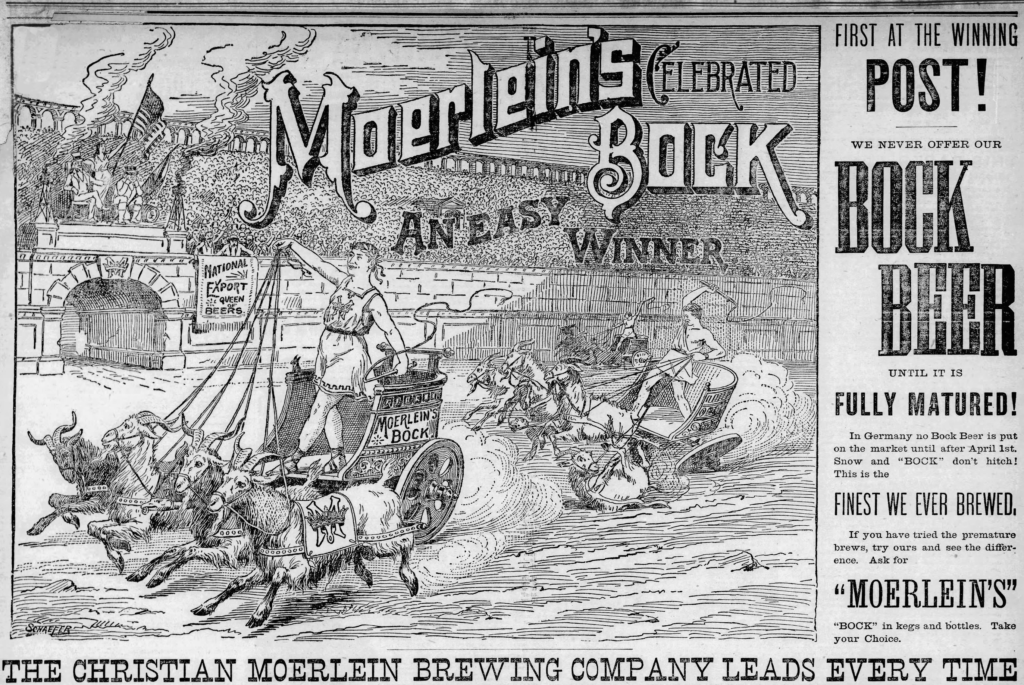
Beer In Ads #5205: Moerlein’s Celebrated Bock Beer, An Easy Winner

April 5, 2026 By Jay Brooks Leave a Comment

Two years ago I decided to concentrate on Bock ads for awhile. Bock, of course, may have originated in Germany, in the town of Einbeck. Because many 19th century American breweries were founded by German immigrants, they offered a bock at certain times of the year, be it Spring, Easter, Lent, Christmas, or what have you. In a sense they were some of the first seasonal beers. “The style was later adopted in Bavaria by Munich brewers in the 17th century. Due to their Bavarian accent, citizens of Munich pronounced ‘Einbeck’ as ‘ein Bock’ (a billy goat), and thus the beer became known as ‘Bock.’ A goat often appears on bottle labels.” And presumably because they were special releases, many breweries went all out promoting them with beautiful artwork on posters and other advertising. With Spring approaching, there are so many great examples that I’m going to post two a day for a few months.

Saturday’s second ad is for Moerlein’s Bock Beer, which was published on April 4, 1891. This one was for Christian Moerlein Brewing Co. of Cincinnati, Ohio, which was originally founded in 1853. This ad ran in the Cincinnati Enquirer, also of Cincinnati, Ohio.

Filed Under: Art & Beer, Beers, Breweries, Just For Fun Tagged With: Advertising, Bock, History, Ohio

Historic Beer Birthday: Fritz Funke

April 4, 2026 By Jay Brooks Leave a Comment

Today is the birthday of Fritz Funke (April 4, 1821-April 23, 1994). He was the son of a mason and went into construction, and owned to companies and was very successful. Along with Johann Wilhelm Schürenberg, entrepreneur Ewald Hilger, businessman Gustav Hicking, and banker Ludwig von Born, he founded what would become the Stern-Brauerei in the city of Essen. Originally called Actien-Bierbrauerei when it was founded in 1872, and Funke’s construction company built the brewery.

The brewery closed in 1989. Today, the beer is brewed in the Jacob Stauder private brewery in Altenessen and continues to be sold under the old Stern brand name.

The Stern brewery in 1979.

Filed Under: Birthdays, Just For Fun Tagged With: Germany

Historic Beer Birthday: Herman Zibold

April 4, 2026 By Jay Brooks Leave a Comment

kansas

Today is the birthday of Herman Zibold (April 4, 1836-July 20, 1891). He was born in Riegel, Baden, in what today is Germany. When he was 23, in 1859, he emigrated to the U.S., and fought in the Civil War for four years. Afterward, he worked for breweries in St. Louis and St. Joseph, both in Missouri. He Eventually settled in Atchison, Kansas and with a business partner who was also originally from Baden, Joseph Haegelin, bought what was originally a brewery started by Hugo Knecht and Albert Weinman in 1860. Zibold bought it from the third owners in 1871, and renamed it the Zibold & Haegelin Brewery. Zibold operated the brewery for the next twenty years, and after he died, Haegelin continued the business but also died two years later, in 1893. Their two widows kept it going, but it closed for good in 1902.

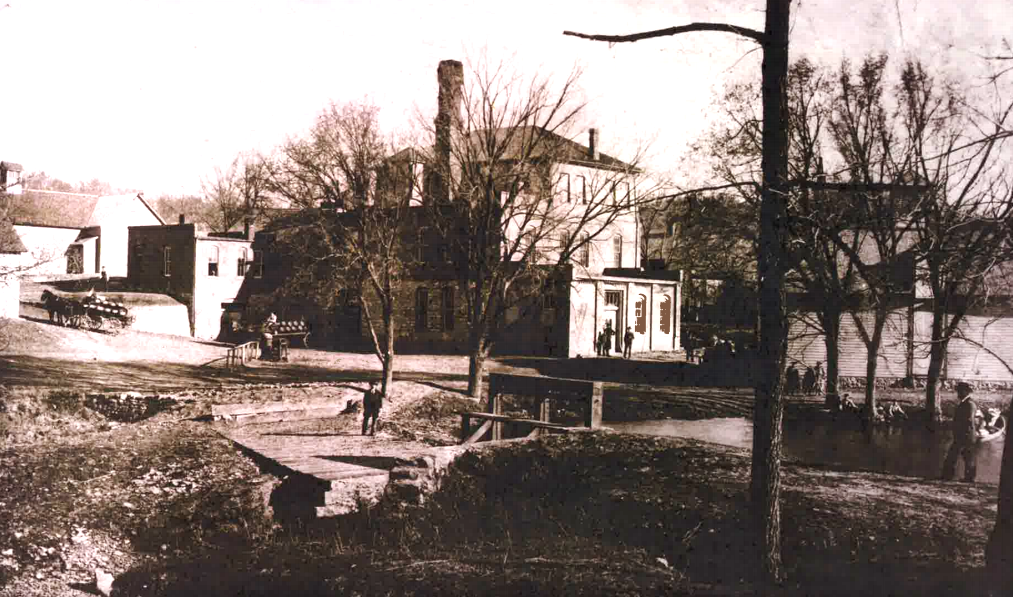
The brewery around 1884.

This biography is from Tavern Trove, the breweriana website.

Corporal Herman Ziebold was born in Granion, Freiburg, Baden-Württemberg, Germany.  After his primary education in Germany he apprenticed as a brewer.  He emigrated to the United States in 1854 and after working at breweries in the Indiana town of Lawrenceburg, Chicago he settled finally St. Louis.

Upon the outbreak of the Civil War Ziebold was 24, and he enlisted to fight for the Union.  He served almost the entirety of the war.  After Lee’s surrender at Appomattox he lived again in St. Louis, where met Miss Rosa Franz.  They were married in August of 1867.  The Ziebolds then moved to St. Joseph, Missouri where Herman got a job in the Nunning Brewery.  There he met his Josef Hagelin, a man who not only would soon be his brother-in-law, but also his business partner.  In 1871 both families moved to the Great Plains where they purchased the brewery owned by hotelier John Stamm in Atchison, Kansas.

For 20 years Herman Ziebold and Josef Haegelin were partners in the brewery in Atchison.  Ziebold & Hagelin’s Southwest Lager & Beer Brewery became nationally famous as the brewery that stubbornly refused to go out of business despite the best efforts of God and the Government.  The firm became defendants in an important Prohibition-related lawsuit that made its way all the way to the Supreme Court.  The firm ultimately won their case as the court affirmed that municipalities had the right to enact laws that forbid the sale of alcohol, under the guise of public health, but could not forbid its manufacture for sale elsewhere.  The Southwest’s extensive distribution network on the other side of the Missouri state line sustained it, for the time being.

Herman Ziebold died on the 20th of July, 1891 at the age of 56 years.  Hagelin died on the 25th of January, 1893.  The brewery, thereafter run by the widows of the original partners, continued into the next century, and finally closed, after three decades of defiance, in 1902.

Employees in front of the brewery in 1901.

And this account is from the Free Library:

The Zibold-Haegelin Brewery, which was located on Price Boulevard in this northeast Kansas town, was allowed to flourish while others across the state were shuttered after Kansas outlawed liquor in 1880.

In fact the brewery became famous throughout the state and the nation for its persistence in fighting against abstinence laws well before Prohibition became part of the U.S. Constitution in 1920.

“The biggest thing about (the Zibold-Haegelin brewery) is during Kansas Prohibition they just kind of ignored it,” said Chris Taylor, executive director of the Atchison County Historical Society.

According to the book “The History of the Haegelin-Zibold Family” by the Rev. William Haegelin, the brewery began after his great-grandfather, Joseph Haegelin, and Herman Zibold brought the A. Stem Brewery here in 1871.

Both men were German immigrants trained in the brewery trade in their native Baden, Germany.

The men, who would eventually become close friends as well as brothers-in-law when Mr. Haegelin married Mr. Zibold’s sister Emma, promptly tore down the old brewery and erected a more modem one on the same grounds.

The business proved very successful, despite the various laws that were beginning to be passed against the sale of liquor in Kansas during the mid- to late 1800s.

But in 1880, after the Kansas Legislature submitted a vote to the people, Kansas became a “dry” state. It became against the law to manufacture or sell intoxicating beverages in the state.

Despite the law, the Zibold-Haegelin Brewery still continued to operate. In fact, in 1887 it was reported that the brewery was producing more than 3,000 barrels of beer a year.

That the brewery was allowed to flourish while the rest of the state went dry was due in part to the fact that then-Kansas Gov. John Alexander Martin lived in Atchison at the time and had become close friends with the brewers.

Governor Martin found innovative ways to help his friends stay in business, One argument he made was that since the brewery was on the northeast corner of Kansas, it was actually a Missouri border town and therefore legal. But other times when he actually did order the sheriff to “arrest” his friends for breaking the law.

“What I heard about it was that the sheriff showed up ever so often to make the arrests of one of the owners and take him to jail where they basically played cards for the afternoon while the other one ran the business,” Taylor said. “They did this just to make sure the Prohibition part of the community was satisfied that they were doing something.”

After Herman Zibold died in 1891 and Joseph Haegelin in 1893, their widows continued to run the business and later their sons took over. It continued to operate until 1902 when it was finally forced to close down.

Emma Haegelin purchased the Zibold interest and along with her son August turned the brewery into “The Crystal Ice Co.”

The Haegelins two other sans, Karl and Joseph Jr., remained in the brewery profession. Karl went to work for the Goetz Brewery in St. Joseph, while Joseph Jr. went to work for Anheuser-Busch in St. Louis.

August Haegelin eventually bought his mother’s interest in the business and continued to operate the ice company until he sold the old brewery buildings to the Kansas Power and Light Co. in 1927.

zibold-haegelin-brewery

Filed Under: Birthdays, Breweries, Just For Fun Tagged With: Germany, Kansas

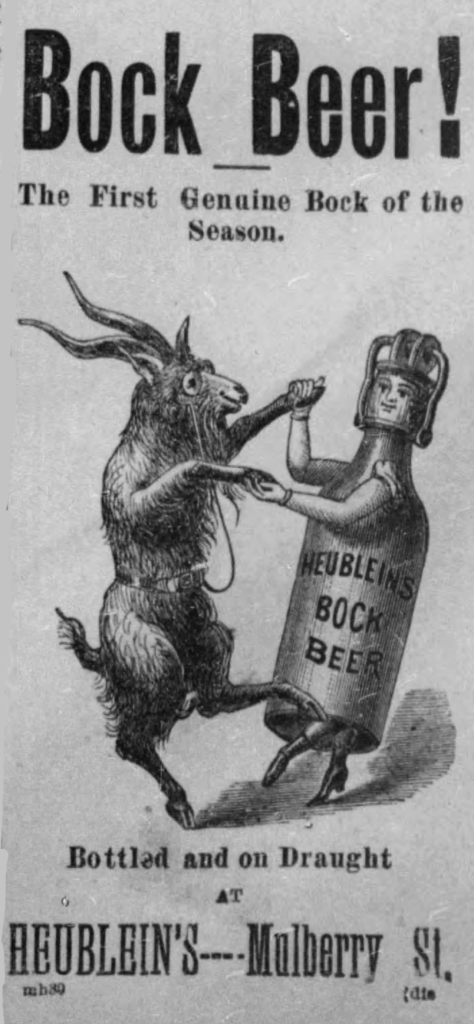
Beer In Ads #5204: Bock Beer! The First Genuine Bock Of The Season

April 4, 2026 By Jay Brooks Leave a Comment

Two years ago I decided to concentrate on Bock ads for awhile. Bock, of course, may have originated in Germany, in the town of Einbeck. Because many 19th century American breweries were founded by German immigrants, they offered a bock at certain times of the year, be it Spring, Easter, Lent, Christmas, or what have you. In a sense they were some of the first seasonal beers. “The style was later adopted in Bavaria by Munich brewers in the 17th century. Due to their Bavarian accent, citizens of Munich pronounced ‘Einbeck’ as ‘ein Bock’ (a billy goat), and thus the beer became known as ‘Bock.’ A goat often appears on bottle labels.” And presumably because they were special releases, many breweries went all out promoting them with beautiful artwork on posters and other advertising. With Spring approaching, there are so many great examples that I’m going to post two a day for a few months.

Saturday’s first ad is for Heublein’s Bock Beer, which was published on April 4, 1878. This ad was for the Heublien Company of Hartford, Connecticut, which was originally founded by Andrew Heublien in 1862 as a restaurant. They were one of the first companies to sell RTDs (Ready-to-Drink cocktails) in 1875 and soon after, in 1906, acquired the rights to sell, and later manufacture, A-1 Steak Sauce. WHile I couldn’t find anything specific about them brewing beer in the 19th century, they must have had someone brew it for them. This ad ran in the Hartford Courant, also of Hartford, Connecticut.

Filed Under: Art & Beer, Beers, Breweries, Just For Fun, Related Pleasures Tagged With: Advertising, Bock, Connecticut, History

Historic Beer Birthday: Marcus Rapp

April 4, 2026 By Jay Brooks Leave a Comment

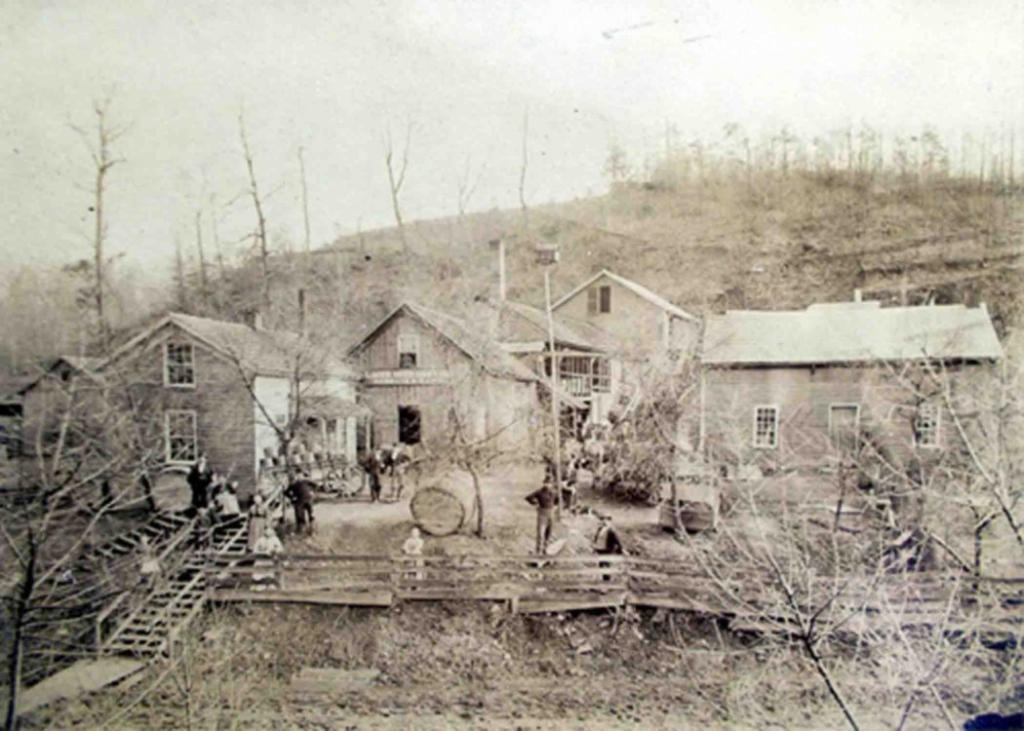
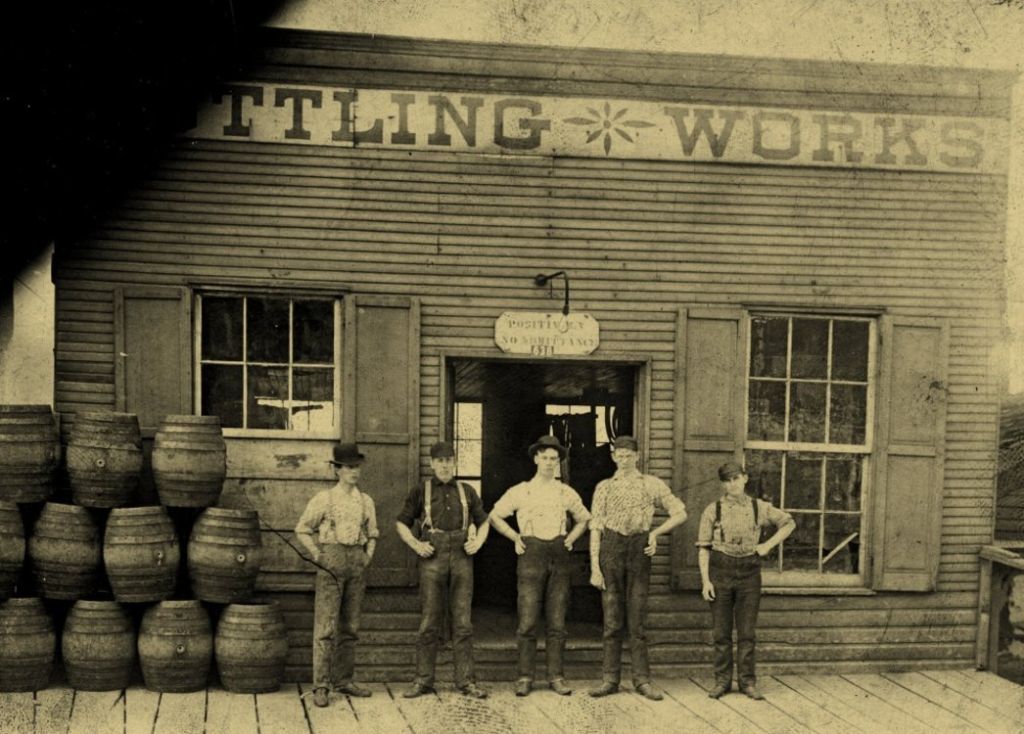
Today is the birthday of Marcus Rapp (April 4, 1834-September 24, 1904). He was born in Gerlingen, Württemberg, Germany, but emigrated to the U.S. and settled in West Virginia. In 1859, with a partner, Louis Hebrank, he founded the Rapp & Hebrank Lager Beer Brewery, which later became known as the Parkersburg Brewing Co. But it only last until prohibition, closing in 1914.

Here’s a short history from the Huntington (West Virginia) Museum of Beer & Brewing:

The first Parkersburg Brewery was founded by Marcus Rapp in 1859. During the time the company was known as the Rapp & Hebrank Brewery, the original plant was built near present day Route 68 and Marrtown Road near Marrtown. The new brewery was built in 1896 because the Rapp-Hebrank brewery could not meet the demand for beer in Parkersburg.

After the move, the company became known as The Parkersburg Brewing Company and was a thriving business until Statewide Prohibition. The plant was located at Seventh Street where Daley Transfer is now located. The American Brewing Company was on Depot Street in Parkersburg, near the present-day laundry building of St. Mary’s Hospital.

The brewery only operated during 1934 – 1938. It was most likely an attempt by the original owners of the Parkersburg Brewery to re-enter the beer business after Prohibition. The original Parkersburg Brewery buildings were sold years later.

The brewery around 1880.
The Bottling Works around 1905.

Filed Under: Birthdays, Breweries, Just For Fun Tagged With: Germany, History, West Virginia

Next Page »

Find Something

Northern California Breweries

Please consider purchasing my latest book, California Breweries North, available from Amazon, or ask for it at your local bookstore.

Recent Comments

  • Bob Paolino on Beer Birthday: Grant Johnston
  • Gambrinus on Historic Beer Birthday: A.J. Houghton
  • Ernie Dewing on Historic Beer Birthday: Charles William Bergner 
  • Steve 'Pudgy' De Rose on Historic Beer Birthday: Jacob Schmidt
  • Jay Brooks on Beer Birthday: Bill Owens

Recent Posts

  • Beer Birthday: Steve Wagner April 5, 2026
  • Beer In Ads #5206: For The Feast Of Easter April 5, 2026
  • Historic Beer Birthday: Hew Ainslie April 5, 2026
  • Historic Beer Birthday: Robert Leo Hulseman April 5, 2026
  • Beer Birthday: Tom McCormick April 5, 2026

BBB Archives

Feedback

Head Quarter
This site is hosted and maintained by H25Q.dev. Any questions or comments for the webmaster can be directed here.