Brookston Beer Bulletin

Jay R. Brooks on Beer

  • Home
  • About
  • Editorial
  • Birthdays
  • Art & Beer

Socialize

  • Dribbble
  • Email
  • Facebook
  • Flickr
  • GitHub
  • Instagram
  • LinkedIn
  • Pinterest
  • RSS
  • Twitter
  • YouTube

Powered by Genesis

Beer In Ads #5151: Old Reading Bock Beer

December 25, 2025 By Jay Brooks

Last year I decided to concentrate on Bock ads for awhile. Bock, of course, may have originated in Germany, in the town of Einbeck. Because many 19th century American breweries were founded by German immigrants, they offered a bock at certain times of the year, be it Spring, Easter, Lent, Christmas, or what have you. In a sense they were some of the first seasonal beers. “The style was later adopted in Bavaria by Munich brewers in the 17th century. Due to their Bavarian accent, citizens of Munich pronounced ‘Einbeck’ as ‘ein Bock’ (a billy goat), and thus the beer became known as ‘Bock.’ A goat often appears on bottle labels.” And presumably because they were special releases, many breweries went all out promoting them with beautiful artwork on posters and other advertising.
Thursday’s holiday ad is for Old Reading Bock Beer, which was published on December 25, 1934. This ad was for the Reading Brewing Co. of Reading, Pennsylvania, which was originally founded in 1866, and closed when I was in high school. This ad ran in The Reading Times, which was my hometown newspaper growing up, also from Reading, Pennsylvania.

Filed Under: Art & Beer, Beers, Breweries, Just For Fun Tagged With: Advertising, Bock, History, Pennsylvania

Historic Beer Birthday: Adam Eulberg

December 25, 2025 By Jay Brooks

Today is the birthday of Adam Eulberg (December 25, 1855-August 12, 1897). He was born on Christmas Day in Wisconsin, and was the son of Caspar Eulberg, who owned the Casper Eulberg & Sons Brewery in Galena, Illinois. Originally called Math. Meller Brewery when in opened in 1874, it appears Eulberg acquired it in 1885, changing the name to his own, at least until closed by prohibition in 1920. It tried to open after repeal, under the name Galena Brewing Co., but closed for good in 1936.

Here’s his short obituary from the Daily Portage, October 1897:

Caspar Eulberg & Sons Brewing around 1900.

This short history is from Northern Public Radio’s “This Week in Illinois History.“

On October 11, 1886, the Galena Daily Gazette reported that Casper Eulberg and his two sons had launched the Galena Brewery. Eulberg had purchased the long-operating brewery a year earlier, running it as C. Eulberg & Sons, but after only six months the entire operation burned to the ground. Eulberg rebuilt bigger and better, with modern machinery and a larger capacity. He changed the name to Galena Brewery. Within a few years, his flagship beer, Red Stripe, became one of the most popular beers in northern Illinois, southern Wisconsin and Iowa.

Red Stripe’s reign continued until Prohibition shut down the brewery in 1920. When Prohibition ended in 1933, the Galena Brewery reopened under new ownership and relaunched Red Stripe, based on the Eulberg family’s formula. In 1935, it trademarked the Red Stripe label but went out of business one year later.

Filed Under: Birthdays, Breweries, Just For Fun Tagged With: History, Illinois

Historic Beer Birthday: Stephan Moninger

December 25, 2025 By Jay Brooks

moninger
Today is the birthday of Stephan Moninger (December 25, 1827-1875). He was born in Württemberg, Germany, and on December 16, 1856, was granted a license to brew commercially and founded the Brauerei Moninger in Karlsruhe, Germany. It was the same brewery he had previously worked at as brewmaster, then known as the Brauerei Ludwig Kaufmann. When his boss died in 1852, he married his widow, Marie Kaufmann, and Moniger assumed control of the brewery then but had to wait until two years later to be inspected and permitted to join the local brewers’ and coopers’ guilds, even though he’d become a citizen of Baden and had acquired the “master’s rights.”

Stephan-Moninger
Here’s the Google translation from the German Stadtwiki Karlsruhe:

As Stephan Moninger from Upper Unterschneidheim at Ellwangen in 1854 to Karlsruhe came, wanted the local brewers guild not accept his master’s certificate. No wonder he had bought himself in Stuttgart. When then 27 breweries and 25,000 residents, there was a great competition. Moninger then worked initially as managing director of Ludwig Kaufmann brewery in Waldhornstraße 23 died as a merchant, married Moninger 1856 his widow Marie born Hermann . However, before that same year the brewery under the name brewery S. Moninger could lead, he had to take a new master inspection before Bierbrauer- and coopers’ guild.

After Moninger 1866 in the former brewery of his brother Josef Hack in the Long Road 142 (later Emperor Street ) moved, the company began to flourish soon. 1875 , the company was by his widow Marie and from 1881 by the sons Karl and Stefan Moninger continued as a general partnership.

From Josef Hack Moninger also had a beer cellar in summer bar (at the Kriegsstraße acquired). On the local terrain in the Kriegsstraße 128-130 (. Later No. 210-216) established the brothers Moninger – after 1884 a brewery fire the malt kiln in the Kaiserstraße had destroyed – after a new brewery.

With the commissioning of the new brewery investments in 1888 , the change occurred to one of the first industrial companies in this hitherto craft-oriented industry. At the same time, the conversion into a corporation under the name carried Brewery Company vorm. S. Moninger AG (since 1938 only Brauerei Moninger AG). 1898 a beer output of 100,000 hectoliters was reached. Thus she could in the subsequent period as now largest brewery establish bathing. 1905 was a bottling plant in operation.

The First World War the supernatant Moninger AG better than most other Karlsruher breweries . Through the buying of brewery Kammerer ( 1920 ), the Eglau brewery ( 1921 ) and the Union Brewery ( 1922 ) she held the top position among the Karlsruher Breweries (beer production in 1928 : 200,000 hl.). From 1923 , the production of soft drinks and mineral was added.

Brauerei-Moninger-2
The Moninger brewery in 1906.
And here’s another translation of their history, this one from Karlsruhe Culture & Tourism:

In December 1856 originating from Württemberg took Stefan Moninger the brewery of the late Ludwig Kaufmann in Waldhornstraße 23, in which he worked as a brewmaster since. 1854 After Kaufmann’s death in June of the year, he had acquired Baden citizenship and the master’s rights, and married the widow Marie Kaufmann. Since Waldhornstraße the flourishing brewery Stefan Moninger offered little space, acquired Moninger 1866 for sale Brauerei his brother Josef Hack in Long Street (today Kaiserstraße ) 142 to the four acres of farmland including a beer cellar in summer line included. When Moninger passed away in 1875, his wife first handed over the management of the brewery to her oldest son, Ludwig Kaufmann junior. 1881 then took over the two elder sons from his second marriage, Charles Moninger (Kaufmann) and Stefan Moninger (brewer), the company for sale of her mother and made her a general partnership (OHG). In 1887, the youngest son Theodor Moninger joined the company as a third party, which developed into a major industrial company in the 1880s.

From 1886-1888 originated in the Kriegsstraße 128-130 (today Kriegsstraße 210-216), the site of the former summer line, according to plans by Hermann Walder modern brewery plant, which has been continuously expanded to 1900’s. On June 12, 1889, the family business was transformed into the company Bremerige Gesellschaftsgesellschaft S. Moninger. With a beer output of more than 100,000 hectoliters in the business year 1897/98 the enterprise rose to the largest Karlsruher brewery. 1898 the brothers from the town acquired a 12,800 square meter area at Westbahnhof as a storage and distribution center for growing freight traffic on rails. 1901 she opened in the Imperial Road 144, next to the former brewery, the also designed by Walder main places to Moninger . From 1906-1908 was on the brewery premises in Kriegstrasse modern Flaschenabfüllerei and on the adjacent corner plot war and border road (today Moningerstraße ) built a fountain.

The outbreak of the First World War led to a production Depression. 1920 took over the brewery, the brewery Karl Kammerer in Kriegstrasse 113 and the brewery Eglau Aktiengesellschaft (AG) in Durlach and 1922, the Union Brewery Aktiengesellschaft AG in Sophienstraße 101. In 1923 she expanded the production by making lemonade and mineral water. After ups and downs in the 1920s and 1930s led World War II in turn to a drop in production of in 1938 operating under the name and brewery Moninger AG company. The two houses in the Imperial Road were in airstrikes hit the brewery plant in Kriegstrasse spared.

Moninger3
Today the brewery is part of a merger, and is known as the Hatz-Moninger Brauhaus.

On May 1, 2010, the merger of Moninger AG brewery was with the court brewery Hatz AG from my Betriebspacht- and purchase agreement Rastatt sealed, which was there for the 1863rd Since then the brewery has been transferred to Hatz-Moninger Brauhaus GmbH. The Hatzfeld brewhouse was dismantled and installed the Brew vessels in a new brewhouse. This cost 3.4 million euros and was built within eight months at the Zentralgesitz Grünwinkel.

Brauerei-Moninger-1935
Brauerei Moninger circa 1935.

Moninger-Bier-poster-2

Moninger-festbier

Filed Under: Birthdays, Breweries, Just For Fun Tagged With: Germany, History

Beer In Ads #5150: Santa’s Gem Bock Beer

December 24, 2025 By Jay Brooks

Last year I decided to concentrate on Bock ads for awhile. Bock, of course, may have originated in Germany, in the town of Einbeck. Because many 19th century American breweries were founded by German immigrants, they offered a bock at certain times of the year, be it Spring, Easter, Lent, Christmas, or what have you. In a sense they were some of the first seasonal beers. “The style was later adopted in Bavaria by Munich brewers in the 17th century. Due to their Bavarian accent, citizens of Munich pronounced ‘Einbeck’ as ‘ein Bock’ (a billy goat), and thus the beer became known as ‘Bock.’ A goat often appears on bottle labels.” And presumably because they were special releases, many breweries went all out promoting them with beautiful artwork on posters and other advertising.

Wednesday’s ad is for Gem Bock Beer, which was published on December 24, 1950. This ad was for the Walter Bros. Brewing Co. of Menasha, Wisconsin, which was originally founded as the Island City Brewery in 1860. It became known as Walter Bros. in 1933 after prohibition, although the brothers had been involved in the brewery since 1888. This ad ran in The Green Bay Press Gazette, from Green Bay, Wisconsin.

Filed Under: Art & Beer, Beers, Breweries, Just For Fun Tagged With: Advertising, Bock, History, Wisconsin

Historic Beer Birthday: Howard Hughes

December 24, 2025 By Jay Brooks

grand-prize
Today is the birthday of Howard Hughes (December 24, 1905–April 5, 1976). He was, of course, “an American entrepreneur, known during his lifetime as one of the most financially successful individuals in the world. He first made a name for himself as a film producer, and then became an influential figure in the aviation industry. Later in life, he became known for his eccentric behavior and reclusive lifestyle, oddities that were caused in part by a worsening obsessive–compulsive disorder (OCD) and chronic pain from a plane crash.”

Hughes

As a maverick film tycoon, Hughes gained prominence in Hollywood beginning in the late 1920s, when he made big-budget and often controversial films like The Racket (1928), Hell’s Angels (1930), Scarface (1932), and The Outlaw (1943).

Hughes formed the Hughes Aircraft Company in 1932, hiring numerous engineers and designers. He spent the rest of the 1930s setting multiple world air speed records and building the Hughes H-1 Racer and H-4 Hercules (the “Spruce Goose”). He acquired and expanded Trans World Airlines and later acquired Air West, renaming it Hughes Airwest. Hughes was included in Flying Magazine’s list of the 51 Heroes of Aviation, ranked at No. 25. Today, his legacy is maintained through the Howard Hughes Medical Institute.

HUGHES-Howard-with-Hughes-H-1-NR258Y
While not even mentioned in most accounts of his many accomplishments, Hughes also founded the Gulf Brewing Co. on his property used for the Hughes Toll Co. in Houston, Texas, just after prohibition ended. He hired one of the area’s most famous brewers, Belgian-born Frank Brogniez to create their beers, and his Grand Prize ended up becoming the best-selling beer in the state. Here’s some more about the Gulf Brewing Co. that Howard Hughes founded, from the Houston Past:

Howard Hughes’ connection with the Houston-based Hughes Tool Company is fairly well-known. It is less well-known that Hughes started a brewery in Houston, on the grounds of the Hughes Tool Company, called Gulf Brewing Company. Hughes opened the brewery at the end of Prohibition, and its profits helped the tool company survive the Depression.

Grand-Prize-Beer--Labels-Gulf-Brewing-Company
Gulf Brewing Company produced Grand Prize beer, which for a time was the best-selling beer in Texas. It has been reported that a beer called Grand Prize beer was also produced prior to Prohibition, by the Houston Ice and Brewing Company. While that may be accurate, any confusion is likely connected to the fact that Hughes’ Grand Prize brewery was operated by the man who served as brewmaster at Houston Ice and Brewing before Prohibition. In 1913, while he was brewmaster at the Houston Ice and Brewing Company, Belgian-Houstonian Frantz Brogniez was awarded Grand Prize at the last International Conference of Breweries for his Southern Select beer – beating out 4,096 competing brewers. Brogniez left Houston during Prohibition, but Hughes convinced him to return to serve as brewmaster for the Gulf Brewing Company. Brogniez’ son operated the brewery after his father’s death.

grandprize2
grandprize10
grandprize1
Grand-Prize-Light-Dry-Beer-Labels-Gulf-Brewing-Company

Filed Under: Birthdays, Breweries, Just For Fun Tagged With: History, Texas

Twas The Beer Before Christmas: A Brewery Visit From St. Nicholas

December 24, 2025 By Jay Brooks

santa-sleigh-2
While not widely known, St. Nicholas, among his many patronages includes brewers. He is a patron saint of brewers. The way we think of St. Nick in America begins with the publication of Twas the Night Before Christmas: A Visit From St, Nicholas by Clement C. Moore in 1823. So with my tongue firmly set in my cheek, I decided to rewrite Moore’s masterpiece, moving his visit from the home to the brewery. Hoppy Christmas. Enjoy. For more detail on how this came about, and about the original poem, see below.

Twas the Beer Before Christmas:
A Brewery Visit From St. Nicholas

‘Twas the beer before Christmas, when down in the brewery
Not a bottle was stirring, not a mouse dared to scurry;
The hoses were hung by the kettle with care
In hopes that St. Nicholas soon would drink there;

The bottles, like children, nestled snug in their beds,
While visions of candi sugar fermented their heads;
The brewers, in hoodies, gave just the impression,
They’d all settled down for a long winter’s session,

When outside by the tanks there arose such a clatter,
I sprang from the kettle to see what was the matter.
Away to the rollup I flew like a flash,
Tore open the lock, the door flew up with a crash.

The moon on the breast of the newly-paved tarmack
Gave the lustre of stout looking velvety black,
When, what to my sobering eyes should appear,
But a miniature delivery wagon, and eight kegs of beer,

With a little old brewmaster, so lively and quick,
I knew in a moment it must be St. Nick.
More rapid than fermenting his brewers they came,
And he whistled, and shouted, and called them by name:

Now, Busch! Now, Rheingold!, now, Pabst and Carling!
On, Schlitz! on, Schmidt! on, Miller and Yuengling!
To the top of the jockey box! To the top of the cask!
Now drink away! drink away! drink away the whole flask!”

As dry hopping that before the wild bittering fly,
When they meet with an obstacle, toast a drink to the sky;
So up to the brewery-top the brewers they flew,
With the wagon full of Beers, and St. Nicholas too.

And then, glasses tinkling, I heard on the roof
The toasting and drinking of each little goof.
As I drew in my head, and was turning around,
Out the fermenter St. Nicholas came with a bound.

He was dressed all in red, from his toes to his top,
And his coveralls were soiled with spent grain and hop;
A carton of Beers he had flung on his back,
And his rubber boots squeaked as he opened his pack.

His besotted eyes—how they twinkled! his dimples how merry!
His cheeks were all rosy, like New Glarus cherry!
His droll little mouth was beseeching our pardon,
And the beard of his chin was as white as Hoegaarden;

The end of a zwickel he held tight in one hand,
While the other held Watermelon Wheat that was canned;
He had a beer belly, that bent two stumpy legs,
That shook when he laughed, like a half-emptied keg.

He was chubby and plump, a right jolly old brewer,
And I drank when I saw him, for what could be truer;
A wink of his eye as he poured generous heads,
Soon gave me to know he would join us instead;

He spoke not a word, but went straight to his work,
And emptied the bottles; then sat with a smirk,
And raising his glass, he gave the first toast,
Then each brewer, in turn, drank to his own riposte;

Then he sprang to his wagon, to his brewers gave a whistle,
And away they all flew like a hop torpedo missile.
But I heard his last toast, ere he drove out of here,
“Hoppy Christmas to all, and to all drink good beer.”

santa-watermelon

More About the Original Poem & How This Version Came To Be

In late 2009 — a Saturday night — I read Porter and Alice, my two kids, Twas the Night Before Christmas: A Visit From St, Nicholas by Clement C. Moore. Whenever I read something I know to my children (which happens a lot, kids love repetition) the writer in me edits as I go. I change words as if it was my work, I flatter myself I’m improving it or correcting mistakes. A scatterbrained scheme was hatched as I again read them what’s probably the most famous Christmas poem.

First published in 1823, according to Wikipedia, “it is largely responsible for the conception of Santa Claus from the mid-nineteenth century to today, including his physical appearance, the night of his visit, his mode of transportation, the number and names of his reindeer, and the tradition that he brings toys to children. Prior to the poem, American ideas about St. Nicholas and other Christmastide visitors varied considerably. The poem has influenced ideas about St. Nicholas and Santa Claus beyond the United States to the rest of the Anglosphere and the world.”

As I’ve written about before, St. Nick is also a Patron Saint of Brewers. So with my tongue firmly set in my cheek, I decided to rewrite Moore’s masterpiece, moving his visit from the home to the brewery.

As it happens, there are a lot of different versions of the poem, with incremental changes having been made over the years. I used, for no particular reason, an edition from Trans-Pacific Radio. Enjoy. Hoppy Christmas. You can also compare the two versions side by side, which also includes the brewers names I’ve used in previous years. The plan is to change those each year.

Feel free to share my version of the poem, with credit if you please, plus a link back here is always appreciated.

UPDATE: Georgia’s Sweetwater Brewing also did their own beer-themed version called Sweetwater’s Night Before Christmas. There’s also another beer-themed one I shared last year, Twas the Brewer’s Night Before Christmas. For many more parodies, check out the Canonical List of ‘Twas the Night Before Christmas Variations, which contains 849 different variations on the poem.

Filed Under: Beers, Breweries, Just For Fun Tagged With: Christmas, Holidays, Poetry

Beer Birthday: Aron Deorsey

December 24, 2025 By Jay Brooks

hop-oast
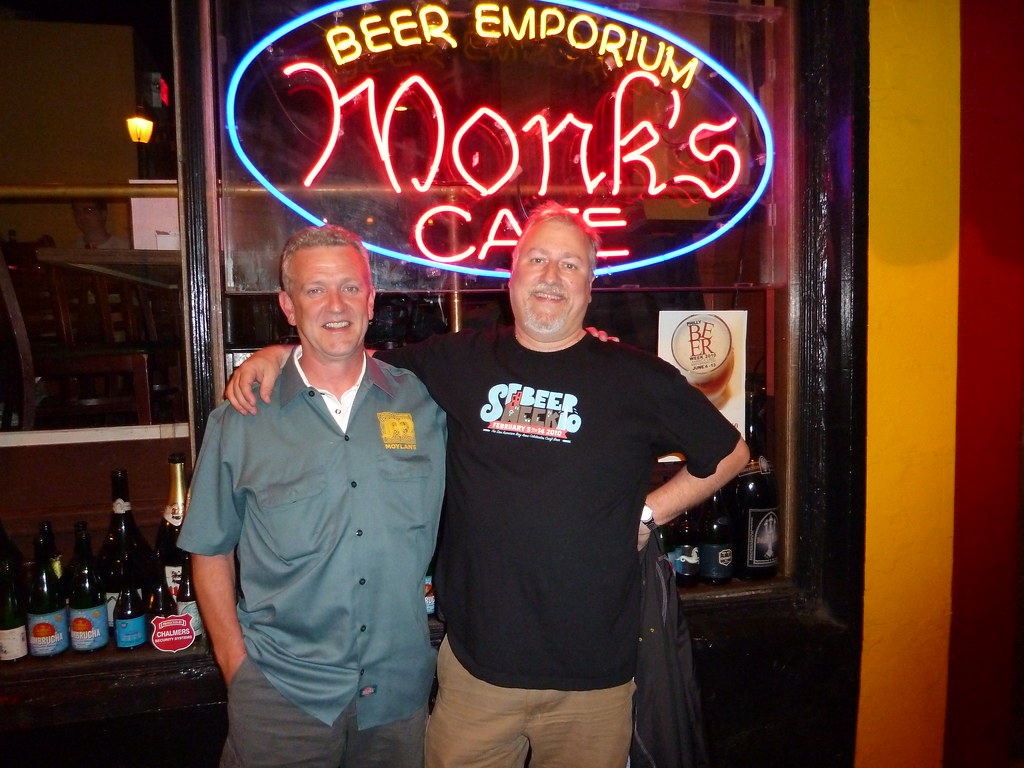
Today is the birthday of Aron Deorsey, who for a lot of years was the brewmaster at the Beach Chalet Brewery & Restaurant in San Francisco, along with the Park Chalet and the Lake Chalet in Oakland. I got to know Aron much better a few years back when we roomed together attending Sierra Nevada’s Beer Camp for SF Beer Week. He had been making great beer at the beachside brewpub for a number of years, and is great fun to hang out with, but earlier last year he’s opened his own place, a brewpub in San Francisco called the Hop Oast Pub & Brewery. Join me in wishing Aron a very happy birthday.

Me and Aron at his Hop Oast Brewery.

P1020222
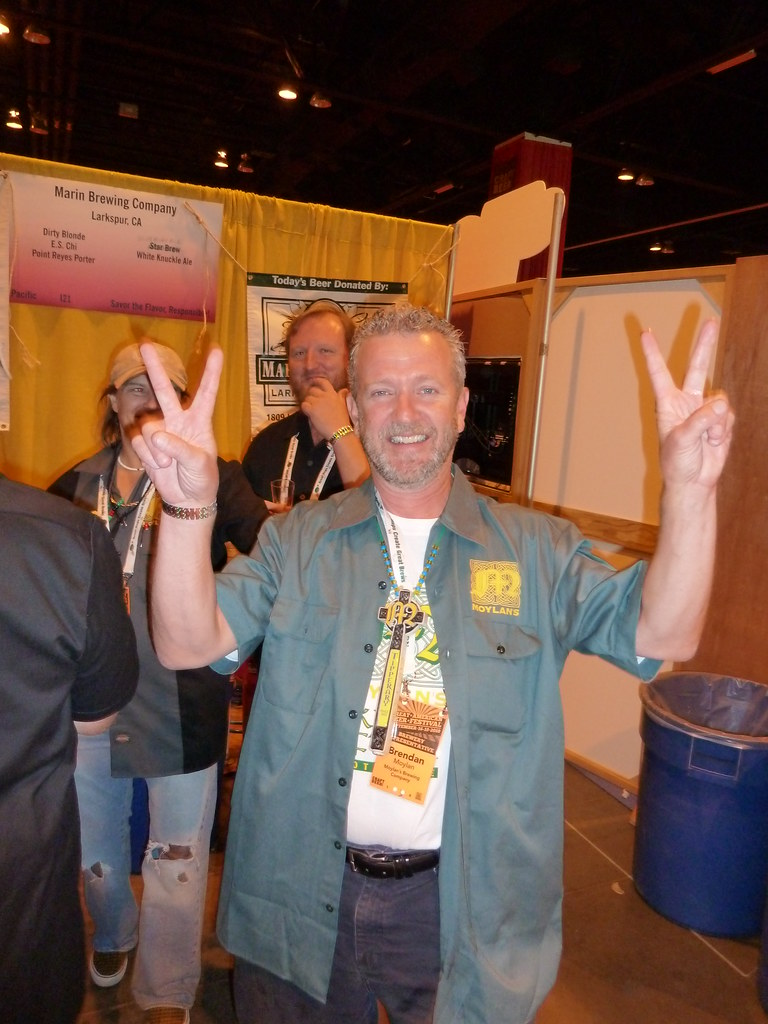
Brendan Dobbel, from Thirsty Bear, Rich Higgins, from Social Kitchen, Aron and Zambo, from 21st Amendment at Sierra Nevada’s Beer Camp a few years ago.

Aron Derosey, from Beach Chalet, and his friend Maggie
Aron and his friend Maggie at the Anchor Christmas Party in 2009.

Clockwise from Left: Rich Higgins, John Tucci, Brenden Dobbel & Aron Deorsey with the 4 bottles of dessert
At a Sierra Nevada beer dinner at the Chico brewery in 2010. Clockwise from Left: Rich Higgins, John Tucci, Brenden Dobbel & Aron with the 4 bottles of dessert.

P1010050
Aron (in the center) at the Thirsty Bear Oktoberfest in 2002.

Filed Under: Birthdays, Just For Fun Tagged With: Bay Area, California, San Francisco

Historic Beer Birthday: Henry Rahr

December 24, 2025 By Jay Brooks

rahrs
Today is the birthday of Henry Rahr (December 24, 1834-April 14, 1891). He was born in Wesel, Germany, but came the U.S. in 1853, when he was 19. He worked in his uncle’s brewery in Manitowoc, and then opened his own brewery near Green Bay with a partner, August Hochgreve, which they called the Bellvue Brewery. They later had a falling out, and in 1866 Rahr left to start his own brewery in Green Bay, which was initially called the East Rivery Brewery. When he died in 1891, his sons continued the business, but renamed it the Henry Rahr Sons Co. Brewery, later shortening it to Rahr Brewing Co. It survived prohibition, and was known as the Rahr Green Bay Brewing Co. until closing for good in 1966.

History of Brown County, Wisconsin: Past and Present

henry-rahr-bio-1
henry-rahr-bio-2
rahr-memohead
henry-rahr-bio-3
henry-rahr-bio-4
Note: This biography gives his birth date as December 25, but a photo of his tombstone clearly shows it as December 24.
Rahrs-Beer-Coasters-Rahr-Green-Bay-Brewing-Co

Rahrs_Brewery_Green_Bay_1895

This short history of the brewery is from The Neville Public Museum:

One hundred fifty years ago, Henry Rahr established a brew house on the corner of Main Street and N. Irwin Avenue in Green Bay known as the East River Brewery. It would become the largest and most well-known historic brewery in Green Bay. Following the death of Henry Rahr in 1891 the business was passed to his sons Henry Jr. and Frederick and became Henry Rahr & Sons Co. Prior to Prohibition (pre 1920) Rahr’s was producing 60,000 barrels of beer per year. After Prohibition was repealed in 1933, the brewery was back in business and began pumping out “Standard,” “Special,” “Belgian” and “Old Imperial Pale Beer.” In 1966 the company was sold to Oshkosh Brewing Co. Exactly 100 years after opening, Rahr’s Brewery was shut down. The brewery buildings were demolished, leaving no trace behind except for Rahr’s merchandise, barrels, and bottles.

Rahr-packers-1965

And this brewery history is from “Breweries of Wisconsin,” by Jerold W. Apps and Jerry Apps:

rahr-sons-brew

rahr-all-star-brew-1936

Filed Under: Birthdays, Breweries, Just For Fun Tagged With: History, Wisconsin

Beer In Ads #5149: Merry Christmas From The Brewers Of Gem Bock Beer

December 23, 2025 By Jay Brooks

Last year I decided to concentrate on Bock ads for awhile. Bock, of course, may have originated in Germany, in the town of Einbeck. Because many 19th century American breweries were founded by German immigrants, they offered a bock at certain times of the year, be it Spring, Easter, Lent, Christmas, or what have you. In a sense they were some of the first seasonal beers. “The style was later adopted in Bavaria by Munich brewers in the 17th century. Due to their Bavarian accent, citizens of Munich pronounced ‘Einbeck’ as ‘ein Bock’ (a billy goat), and thus the beer became known as ‘Bock.’ A goat often appears on bottle labels.” And presumably because they were special releases, many breweries went all out promoting them with beautiful artwork on posters and other advertising.

Tuesday’s ad is for Gem Bock Beer, which was published on December 23, 1950. This ad was for the Walter Bros. Brewing Co. of Menasha, Wisconsin, which was originally founded as the Island City Brewery in 1860. It became known as Walter Bros. in 1933 after prohibition, although the brothers had been involved in the brewery since 1888. This ad ran in The Post Crescent, from Appleton, Wisconsin.

Filed Under: Art & Beer, Beers, Breweries, Just For Fun Tagged With: Advertising, Bock, History, Wisconsin

Historic Beer Birthday: Philipp Jung

December 23, 2025 By Jay Brooks

milwaukee
Today is the birthday of Philipp Jung (December 23, 1845–July 10, 1911). He was born “in Dorn-Assenheim, Hesse-Darmstadt, which today is a part of Reichelsheim in Wetteraukreis, Hesse, Germany,” but came to the U.S. when he was 25, in 1870. He came first to New York City, then Cincinnati before settling in Milwaukee, Wisconsin. “Jung married Anna D. Best, daughter of the brewer Jacob Best, and they had six children.”

philipp-jung-photo
Here’s a history of his career, from his Wikipedia page:

After his arrival in the United States, Jung was employed by Rogge and Feigenhaln Brewing Company in New York. He also worked as the maltster for the Foss, Schneider and Bremer Brewing Company in Cincinnati. After moving to Milwaukee in 1873, Jung became second foreman for the Phillip Best Brewing Company, then first foreman, and finally superintendent of the company’s south side plant. In 1879, he left Best to form a partnership with Ernst Borchert, founding the Jung & Borchert Brewing Company. In 1888 this became the Falk, Jung & Borchert Brewing Company in one of the earliest mergers involving Milwaukee breweries. The company became a rival to the Philip Best Brewery, which was operated by Frederick Pabst and later became the Pabst Brewing Company. Jung was considered “an important factor both as a manufacturer of large quantities and also as one who gave a distinctive quality to the goods sent out from his plant.”

In 1896, Jung purchased the Obermann Brewing Company at Fifth and Cherry Streets in Milwaukee, where he established The Jung Brewing Company. This firm grew and outlived its founder, finally closing because of Prohibition.

Falk-Jung-and-Borchert-Brewing-1870s
The Falk, Jung & Borchert Brewing Company.

This biography is from 100 Years of Brewing, published in 1903.

philipp-jung-100yrs
MJS Jung employees - compressed.jpg
I think this is the Jung Brewing Co. employees, but it’s hard to tell. There were actually at least four Jung’s who brewed commercially in the U.S. One in Ohio, one in Texas, and two in Wisconsin. But seated in front, second from our left looks like Philipp’s mustache, so think this is the right one.

Jung_Beer_ad

Filed Under: Birthdays, Just For Fun Tagged With: Germany, History, Milwaukee, Wisconsin

« Previous Page
Next Page »

Find Something

Northern California Breweries

Please consider purchasing my latest book, California Breweries North, available from Amazon, or ask for it at your local bookstore.

Recent Comments

  • Ernie Dewing on Historic Beer Birthday: Charles William Bergner 
  • Steve 'Pudgy' De Rose on Historic Beer Birthday: Jacob Schmidt
  • Jay Brooks on Beer Birthday: Bill Owens
  • Steve 'Pudgy' De Rose on Beer Birthday: Charles Finkel
  • Steve 'Pudgy' De Rose on Beer Birthday: Bill Owens

Recent Posts

  • Beer In Ads #5196: Happy Days Are Here Again February 8, 2026
  • Historic Beer Birthday: Andrew MacElhone February 8, 2026
  • Historic Beer Birthday: A.J. Houghton February 8, 2026
  • Historic Beer Birthday: Charles Tascher February 8, 2026
  • Historic Beer Birthday: Lüder Rutenberg February 8, 2026

BBB Archives

Feedback

Head Quarter
This site is hosted and maintained by H25Q.dev. Any questions or comments for the webmaster can be directed here.