Today is the birthday of Ludwig Narziß (or Narziss), who was also known as the “Beer Pope” (September 30, 1925-November 29, 2022). He was born in Munich, and was “one of the world’s most renowned brewing scientists and educators of the 20th century. For almost thirty years, “was a leading authority in his field at the Weihenstephan Center of Life and Food Science in Freising, outside Munich. Often called the Harvard of beer, the school, part of the Technical University of Munich, is closely tied to the Bavarian state-owned brewery with which it shares its name. Following an apprenticeship at the Tucher Brewery in Nuremberg, Narziss arrived at Weihenstephan as a student in 1948. There, he received degrees in brewing science and engineering and later completed a doctorate, writing a thesis on the influence of different yeast strains on beer quality. In 1958, he became the brewmaster at Munich’s Löwenbräu Brewery. But Weihenstephan didn’t let Narziss stray for long. Only 6 years later he joined the faculty at Weihenstephan, taking over the chair of Brewing Technology I. While instructing students in the science of beer making and conducting research on methods in Weihenstephan’s test brewery, Professor Narziss at times also served as the school’s dean, once from 1968 to 1970 and again in 1990. He also made time available to be a council member of the European Brewery Convention, as well as the organization’s president from 1979 to 1983. Narziss has authored and co-authored literally hundreds of papers as well as three seminal text books, Abriss der Bierbrauerei (An Outline of Beer Brewing) in 1972, Die Technologie der Malzbereitung (Technology of Malt Preparation) in 1976, and Die Technologie der Würzebereitung (Technology of Wort Preparation) in 1985. These books have gone through many revisions and editions and are still used as standard student textbooks today. Professor Narziss retired from Weihenstephan in 1992. He still lives in Freising and serves as Professor Emeritus at his venerable alma mater.”
This was his obituary, from Brauwelt, written by Lydia Junkersfeld:
Prof. Ludwig Narziß was born in Munich on September 30, 1925 and grew up in Nuremberg. As a young adult he personally experienced the Second World War. His father was an authorized signatory at the Lederer Brewery and had planned a commercial apprenticeship at the Tucher Brewery for his son, who had returned home from captivity. Of his own accord, Ludwig Narziß soon switched to an apprenticeship as a brewer, which appealed to him more – the right decision, as it turned out. Despite the difficult conditions in the brewery after the war, he successfully completed his apprenticeship after two years in October 1947 and in 1948 switched to the Faculty of Brewing in Weihenstephan to study, where a long career began.
From 1951 he initially worked for two years as a research assistant and management consultant in the field service of the research institute for brewing at the Bavarian State Trade Institute in Nuremberg, where he also met his wife Dorle. In 1953, Prof. Weinfurtner recruited him to the State Brewery Testing and Research Institute (today the Weihenstephan Research Centre for Brewing and Food Quality) in Weihenstephan and offered him the opportunity to study for a doctorate (topic: “The influence of the yeast variety on beer quality“) which he completed in 1956.
After completing his doctorate, Prof. Narziß first went back into business: he worked at the Löwenbrauerei in Munich as first brewmaster and authorized signatory until 1964, before he returned to Weihenstephan. Between 1964 and 1992 he held the Chair for Technology at Brewery 1 of the Technical University of Munich in Weihenstephan, where he trained and shaped generations of students. Many ground-breaking innovations in brewery technology and technology occurred during this time, which Prof. Narziß initiated and managed. There was hardly an area in the brewery that could not be further developed through research from his chair: raw material issues, developments in malting, in the brewhouse, in fermentation and storage or in filtration. It was a basic need of Prof. Narziß to solve practical problems through scientific research; whilst often about optimizing production, it was of course also about improving the quality of the product. One of the most important research topics from his time was the avoidance of spoilage from oxygen in beer.
Hundreds of graduate students and over 50 doctoral students have worked on various topics under his expert guidance. He was a “doctor father” to them, with whom some of the former doctoral students have remained in close contact to this day. What distinguished Prof. Ludwig Narziß was his closeness to people. Despite the great international recognition, he maintained his humble and lovable manner towards everyone. He challenged his employees – he was strict in this matter – but he also promoted them to the best of his ability.
Hundreds of Publications
Many books, including classics of brewery technology, and hundreds of publications and lectures have emerged from his scientific work. All of this has made him a world-renowned brewing scientist whose expertise was valued by authorities, associations and breweries around the world. Prof. Narziß has not only significantly shaped the faculty for brewing in Weihenstephan, but also the reputation of German brewing science in general at home and abroad. It was always important to him to ensure dialogue between the brewing industry and brewing science, between research and brewing practice. It is only logical that a research prize, the Ludwig Narziß Award for Brewing Science from BrewingScience, bears his name.
Charlie Bamfort, Graham Stewart and Ludwig.
International Recognition
Prof. Ludwig Narziß joined the Institute of Brewing in 1965, after being nominated by the late Norman Curtis. He was elected President of the EBC Council in 1981, with the 19th EBC Congress being held in 1983 on the South Bank in London where, in collaboration with his EBC/IOB colleagues, he played a major role in the organisation of this event and 1600 delegates attended it. During the course of this Congress he had the opportunity to co-author a poster presentation (they were still very much in their infancy at that time) entitled “Composition of Worts and Beers of High Temperature Wort Boiling Systems“.
Prof. Narziß also participated in one of the Institute‘s London Section Cambridge meetings, also with Norman Curtis who was the London Section‘s Chairman at the time. In addition, he was a participant in the Master Brewer Association of the Americas Ontario District One-Day Conferences that were held in Toronto each January and he also was a participant in a number of the Association‘s National Conferences.
Prof. Narziß was awarded the IBD’s Horace Brown Medal in 1990 and the accompanying lecture, 125 Years Research At Weihenstephan, was delivered at the Royal Society in London and published in the Journal of the Institute of Brewing in 1992.
Many Awards and Honours
Commitment to voluntary work at home and abroad was also a matter of course for him, for example his 1979 election as President of the European Brewery Convention (EBC) in Brussels. To this day he is the only honorary president of the EBC. Prof. Narziß was the bearer of the Cross of Merit of the Order of Merit of the Federal Republic of Germany as well as receiving many other honours and awards.
In 1992, Prof. Narziß handed over the management of the chair to Prof. Werner Back, but retained his research spirit, which kept him very active to the end. At the age of over 90, he was still traveling the world to attend brewing industry events and give lectures.
In spring 2021 he moved from Freising and Weihenstephan, the centre of his life for many years, to his family, who live near Reutlingen. Even if things got a little quieter around him, he still worked on his books every day, kept himself up to date with telephone calls.
The contribution given by Prof. Ludwig Narziß to the brewing industry internationally has been unique and we have lost a truly remarkable icon!
Prof. Ludwig Narziß was a true “Weihenstephaner“: he passed his degree here after his brewery apprenticeship and also completed his doctorate in 1956. After his time as brewmaster at Löwenbräu, he was appointed to the Chair of Brewery Technology I and took over management of the teaching and research brewery. Until 1992, Prof. Narziß was the man at the helm, researching the further development of brewing – teaching the craft of brewing to thousands and thousands of students. Even today, many young people benefit from his works, which are held as standard works in brewing and beverage technology.
His professional expertise was more than appreciated by the Bavarian State Brewery Weihenstephan. Not only was great value placed here on his opinion on new beers – he was also a very welcome conversation partner at the table in the Bräustüberl. In every exchange, Prof. Narziß provided a different perspective, a further idea, a new approach: the fire for brewing was still burning in him until the very last moment. A characteristic that everyone appreciates to this day and that proved infectious to all his students.
Alongside all his professional expertise, it must never go unmentioned that with Prof. Narziß we lost a fine person. Never at a loss for a joke, always a smile on his lips – and above all he always had an open ear for every generation. Regardless of whether you were a young student or an experienced brewer: no question was left unanswered, Prof. Narziß always made time for you. He usually finished his meals in the Bräustüberl with a sip from his favorite beer, the Pils – and in the next days, people will be raising a toast to his memory and legacy everywhere in the brewing world.
Prof. Dr. Josef Schrädler, Director of the Bavarian State Brewery Weihenstephan explained on Wednesday: ”For me, Prof. Narziß was always an important dialog partner and advisor in strategic questions.“ But not only that: “I looked forward to every beer tasting with him – he was just an extremely likeable person.“
And Tobias Zollo, Technical Director and First Brewmaster can only confirm this: “Prof. Narziß treated everyone with respect, he was a true brewer.“ For Zollo and the brewmaster team, the many discussions they had with him on the last product developments about three years ago were especially valuable. Passing on knowledge – that was Prof. Narziß‘ mission in life. And he fulfilled this mission brilliantly.
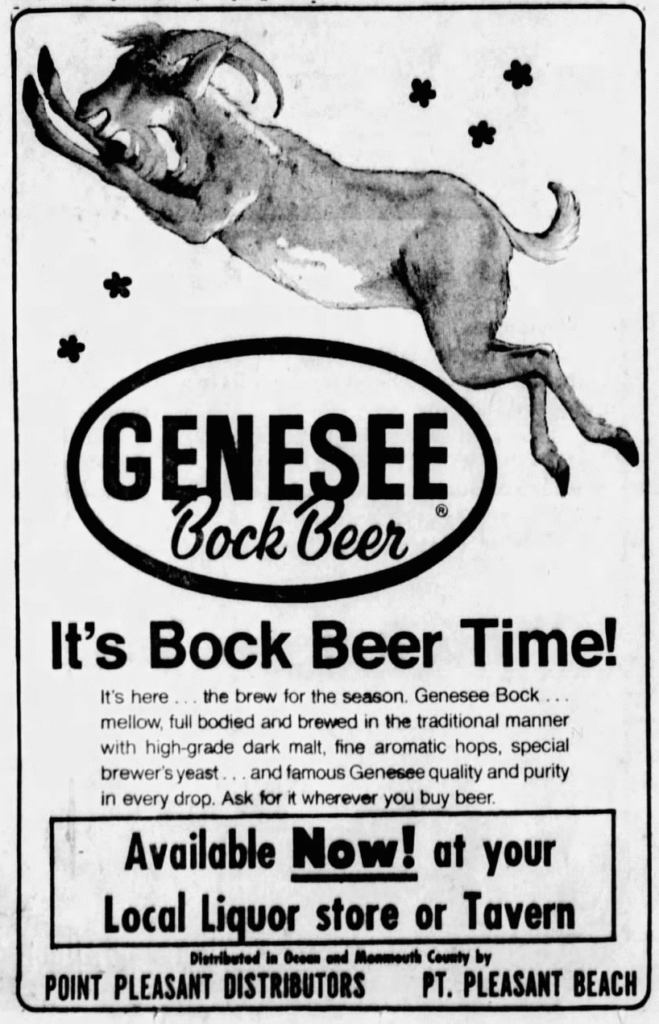
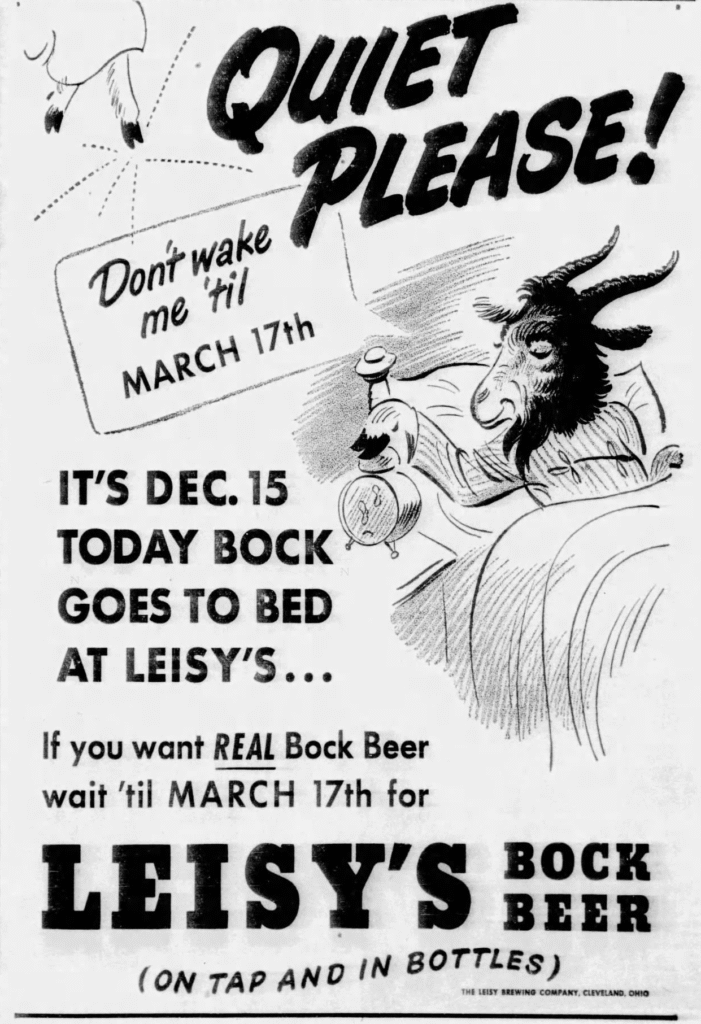
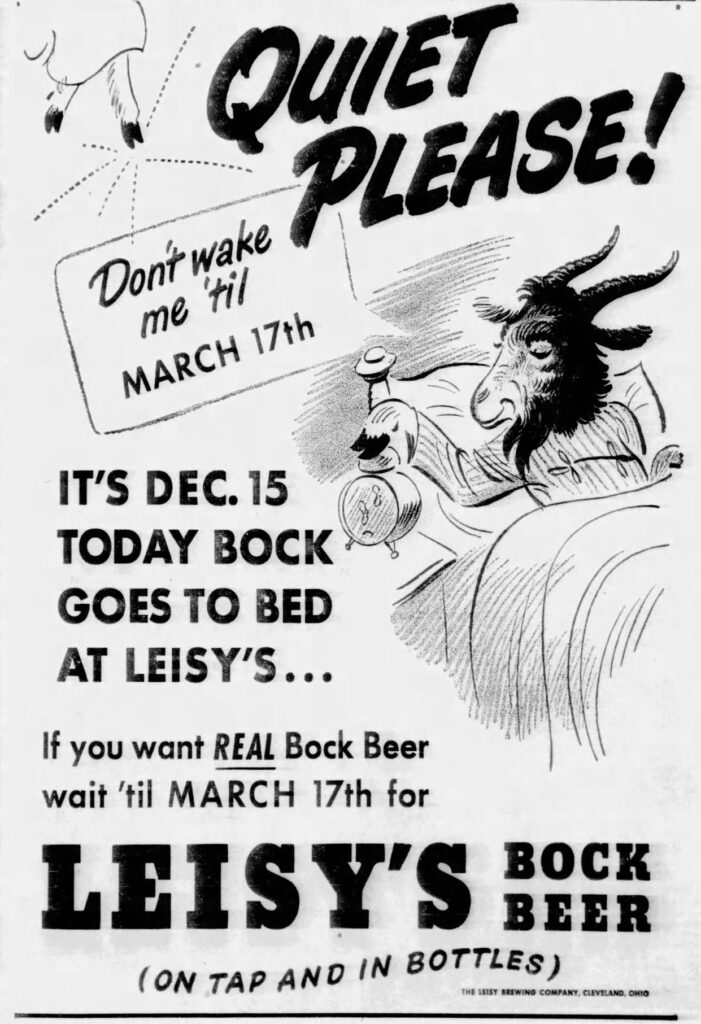
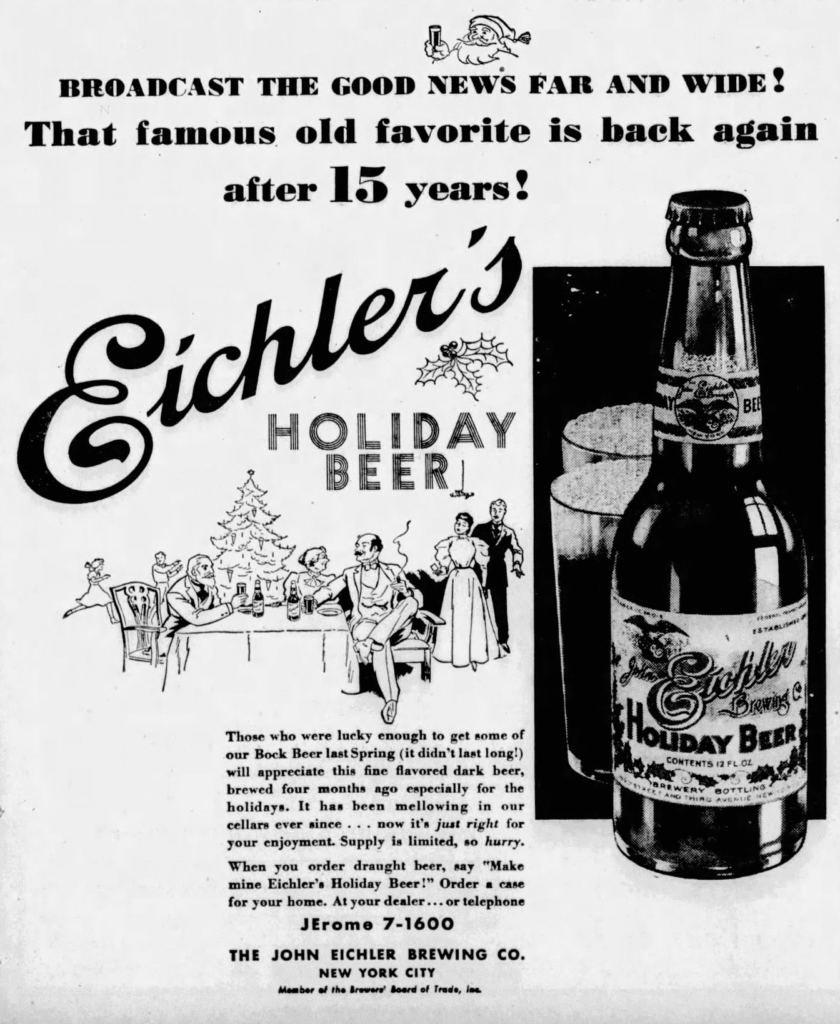
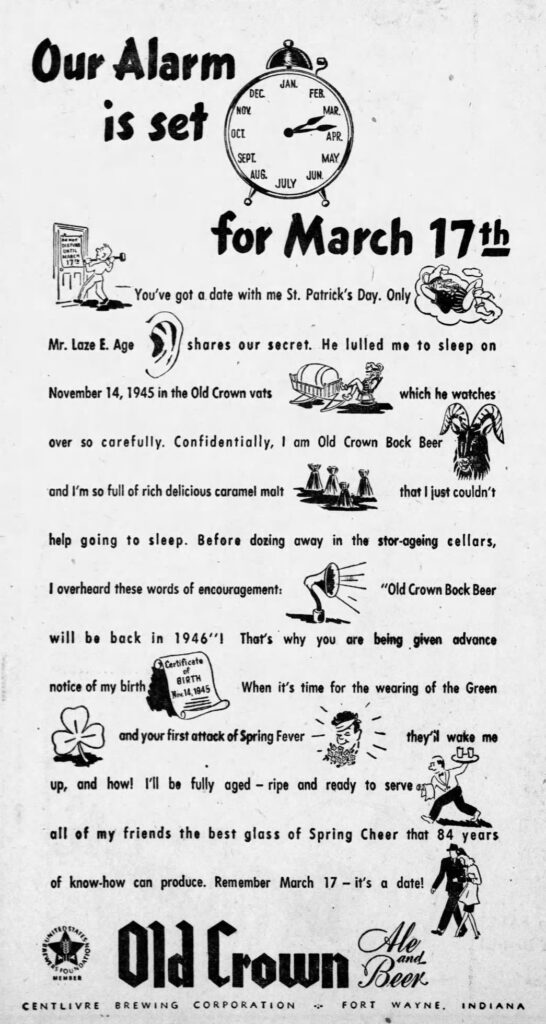
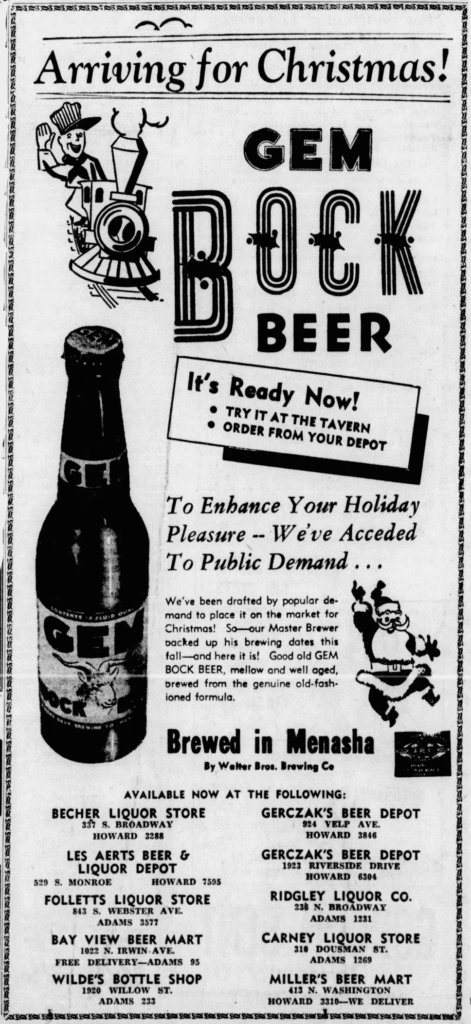
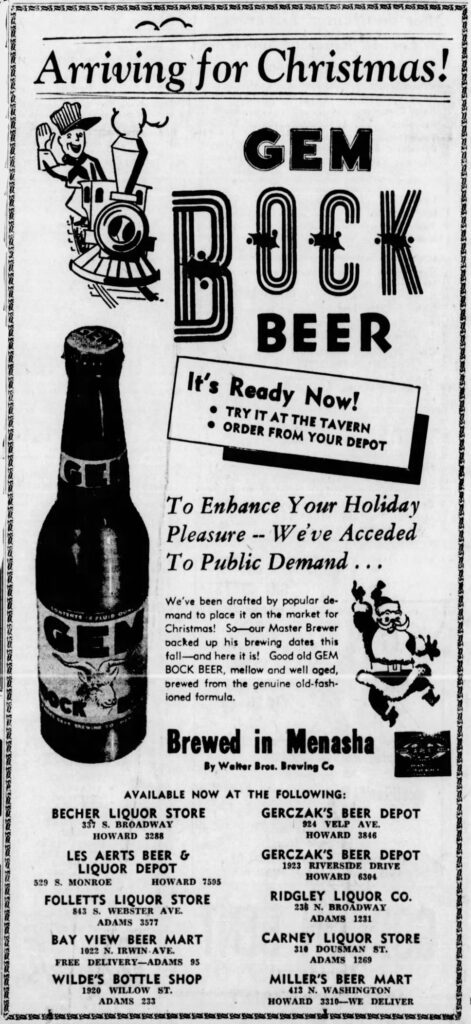
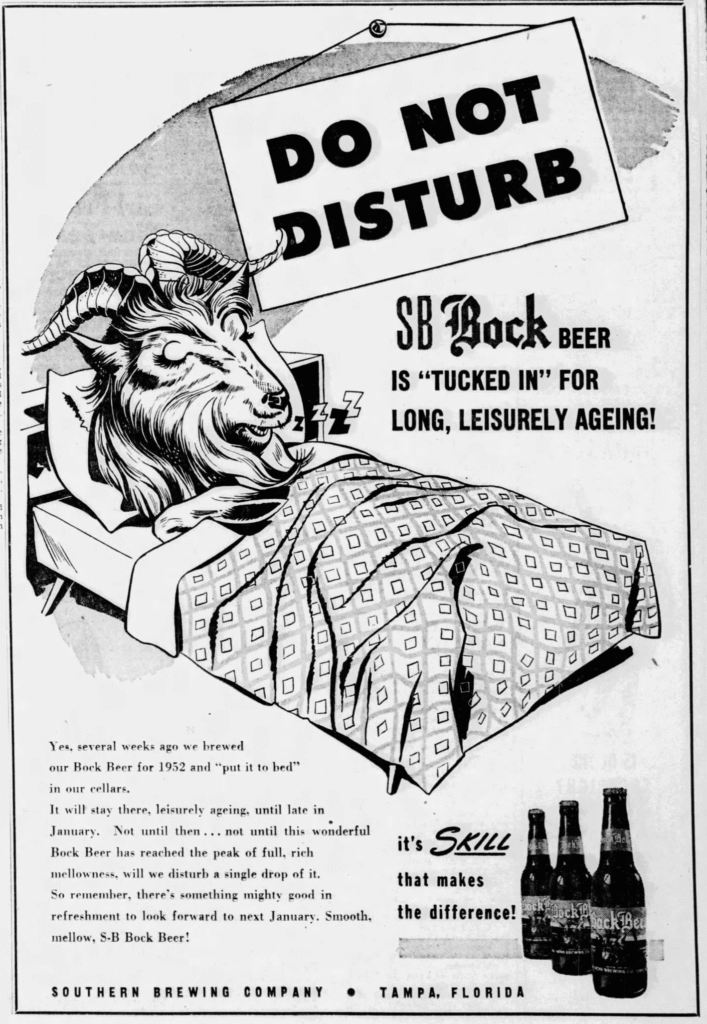
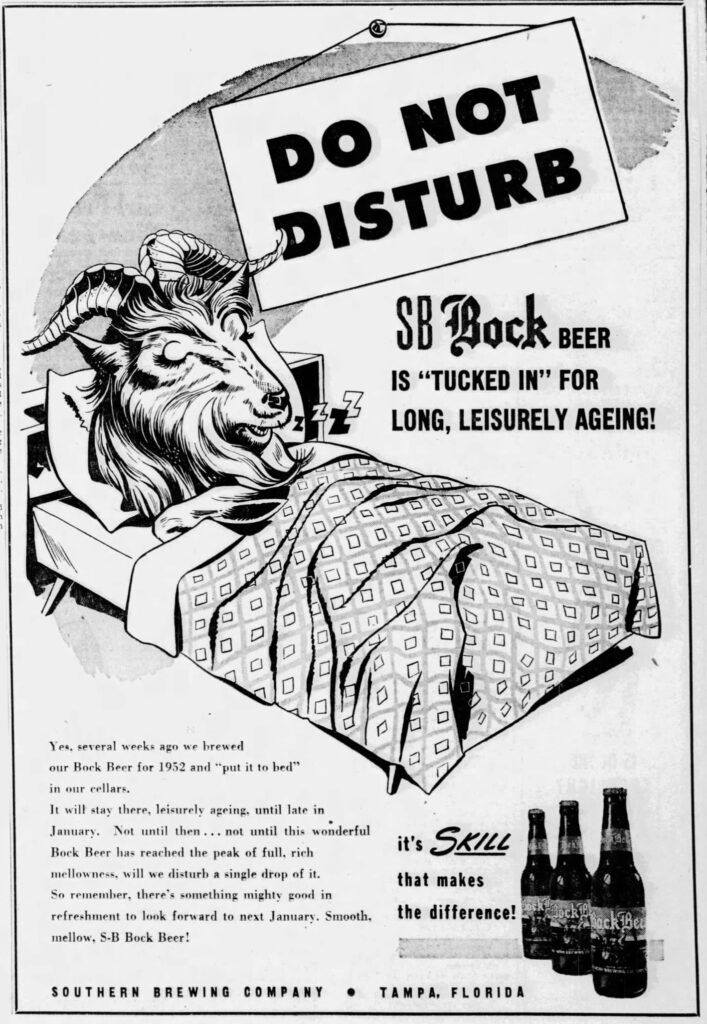
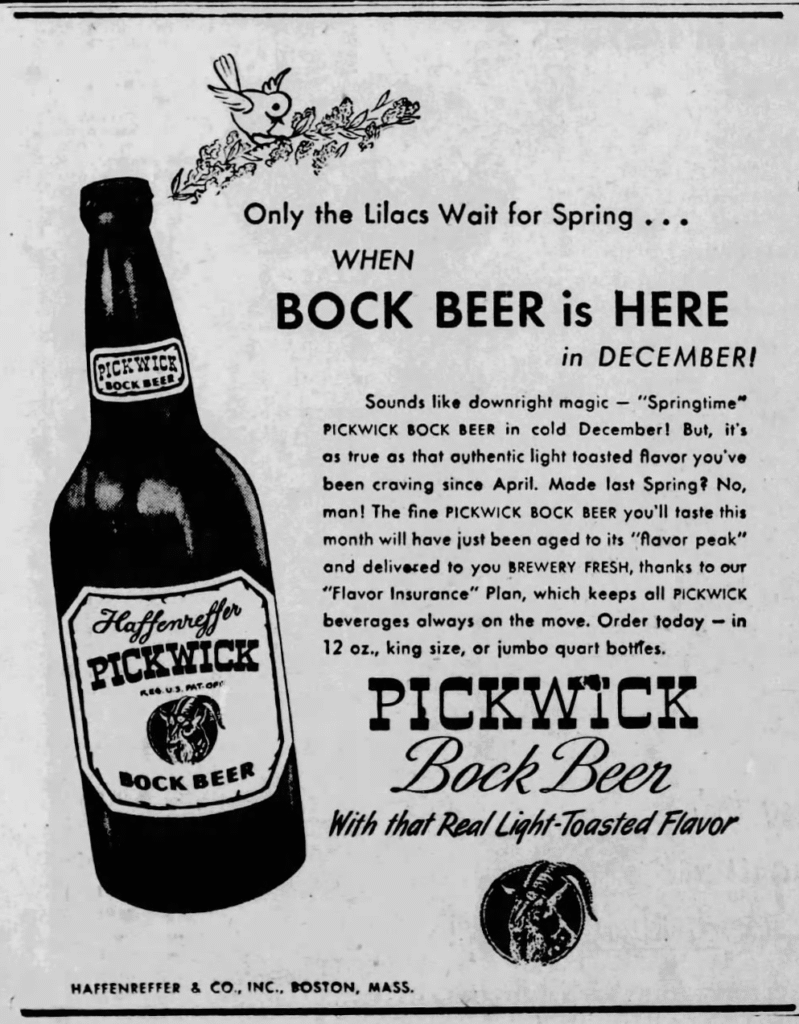
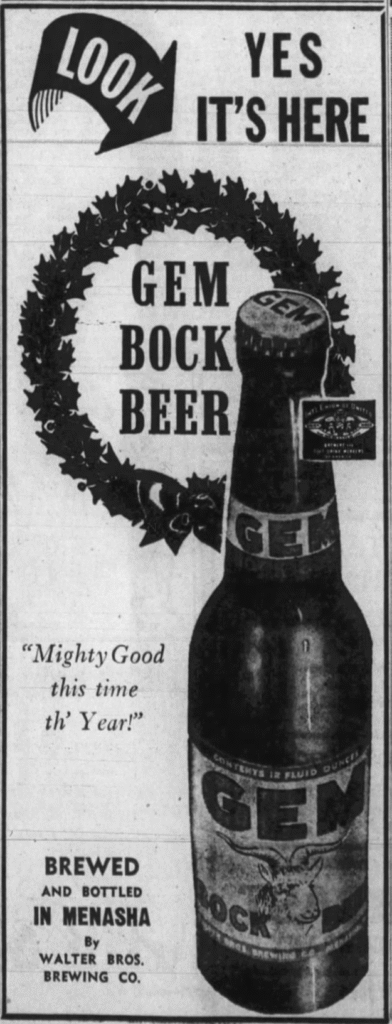
Last year I decided to concentrate on Bock ads. Bock, of course, may have originated in Germany, in the town of Einbeck. Because many 19th century American breweries were founded by German immigrants, they offered a bock at certain times of the year, be it Spring, Easter, Lent, Christmas, or what have you. In a sense they were some of the first seasonal beers. “The style was later adopted in Bavaria by Munich brewers in the 17th century. Due to their Bavarian accent, citizens of Munich pronounced ‘Einbeck’ as ‘ein Bock’ (a billy goat), and thus the beer became known as ‘Bock.’ A goat often appears on bottle labels.” And presumably because they were special releases, many breweries went all out promoting them with beautiful artwork on posters and other advertising.
Monday’s ad is for Buffalo Bock Beer, which was published on September 29, 1915. This one was for the Buffalo Brewing Co. of Sacramento, California, which was originally founded in 1890. This ad ran in The Plumas Independent, which served Plumas County, California, located in the northeast part of the state, in the Sierra Nevada mountains. I love how they claim you can “Get ‘It’ Anywhere.”
Last year I decided to concentrate on Bock ads. Bock, of course, may have originated in Germany, in the town of Einbeck. Because many 19th century American breweries were founded by German immigrants, they offered a bock at certain times of the year, be it Spring, Easter, Lent, Christmas, or what have you. In a sense they were some of the first seasonal beers. “The style was later adopted in Bavaria by Munich brewers in the 17th century. Due to their Bavarian accent, citizens of Munich pronounced ‘Einbeck’ as ‘ein Bock’ (a billy goat), and thus the beer became known as ‘Bock.’ A goat often appears on bottle labels.” And presumably because they were special releases, many breweries went all out promoting them with beautiful artwork on posters and other advertising.
Sunday’s work is another one for Salvator Doppelbock, which was created in 1861. This one was for the Paulaner Brewery (Paulaner Brauerei München) of Munich, Germany, which was originally founded in 1634. It’s an original drawing is called “Die Salvator-Saison in München” (or “Salvator Season in Munich”) at the Munich City Museum, although they don’t know who the artist was who created this highly detailed drawing.
Last year I decided to concentrate on Bock ads. Bock, of course, may have originated in Germany, in the town of Einbeck. Because many 19th century American breweries were founded by German immigrants, they offered a bock at certain times of the year, be it Spring, Easter, Lent, Christmas, or what have you. In a sense they were some of the first seasonal beers. “The style was later adopted in Bavaria by Munich brewers in the 17th century. Due to their Bavarian accent, citizens of Munich pronounced ‘Einbeck’ as ‘ein Bock’ (a billy goat), and thus the beer became known as ‘Bock.’ A goat often appears on bottle labels.” And presumably because they were special releases, many breweries went all out promoting them with beautiful artwork on posters and other advertising.
Saturday’s ad is for bottles of Hornung’s White Bock Beer, which was published on September 27, 1935. This one was for the Jacob Hornung Brewing Co. of Philadelphia, Pennsylvania, which was originally founded in 1885. This ad ran in The Trenton Evening Times, from Trenton, New Jersey.
Last year I decided to concentrate on Bock ads. Bock, of course, may have originated in Germany, in the town of Einbeck. Because many 19th century American breweries were founded by German immigrants, they offered a bock at certain times of the year, be it Spring, Easter, Lent, Christmas, or what have you. In a sense they were some of the first seasonal beers. “The style was later adopted in Bavaria by Munich brewers in the 17th century. Due to their Bavarian accent, citizens of Munich pronounced ‘Einbeck’ as ‘ein Bock’ (a billy goat), and thus the beer became known as ‘Bock.’ A goat often appears on bottle labels.” And presumably because they were special releases, many breweries went all out promoting them with beautiful artwork on posters and other advertising.
Friday’s lithograph is for Salvator Doppelbock, which was published in April of 1840. This one was for the Paulaner Brewery (Paulaner Brauerei München) of Munich, Germany, which was originally founded in 1634. The poster is called “Verschiedene Szenen beim Salvatorbier” (or “Various scenes at the Salvator beer”) at the Munich City Museum, although they don’t know who the artist was who created it. But here’s a translation of their description:
Salvator, a Doppelbock beer, dates back to the 17th-century Munich Paulaner monks, who sought a culinary way to bridge the austere Lent period. Under the motto ‘Liquids don’t break the fast,’ they brewed a particularly strong and high-calorie beer that soon enjoyed widespread popularity even outside the monastery walls. After secularization in 1806, the Paulaner brewery, and with it the recipe for the fortifying Doppelbock, passed to master brewer Franz Xaver Zacherl, who named the beer ‘Salvator’ (Latin for ‘redeemer’). Zacherl’s continuation of the traditional annual tapping of the strong beer, laid the foundation for the festivities during the strong beer season known as the ‘Fifth Season.'”
Today is the birthday of Jonathan Goldsmith (September 26, 1938- ), who “is an American actor. He began his career on the New York stage, then started a career in film and television. He appeared in several TV shows from the 1960s to the 1990s.” And if that were all, he wouldn’t be here, but he’s probably best known now “for appearing in television commercials for Dos Equis beer, from 2006 to 2016, as the character ‘The Most Interesting Man in the World.'” I confess that I’ve never been a fan of the Dos Equis ad campaign and wrote a post against it back when it began because I hated the “stay thirsty, my friends” tagline. I probably got more angry comments over the years about my negative reaction than any other post I wrote. And while I’ve never come around on that aspect of the campaign, I do have to admit it’s been very successful. It’s certainly not the first time I’ve been in the minority opinion on something. I briefly met Goldsmith at a comedy event in Napa a few years ago, and he was certainly an interesting person. Despite my protestations, his character has certainly become iconic in the decade Dos Equis ran with it.
Goldsmith was born on September 26, 1938, in New York. His mother was a model and his father was a gym teacher. His parents were Jewish. Goldsmith graduated from Boston University in 1958, after which he pursued an acting career.
Jonathan has made over 350 television appearances in his career. Among them was the role of Marvin Palmer in the 1964 Perry Mason episode, “The Case of the Blonde Bonanza.” To advance his acting career, Goldsmith moved to California from New York in 1966.[6] Like many aspiring actors, he found it difficult to gain enough acting work to survive and wound up working various jobs, including driving a garbage truck and working in construction, to help make ends meet.
During his early years in film, Goldsmith performed as “Jonathan Lippe”, having taken the name of his stepfather at the age of six. He subsequently changed his professional name back to his birth name, later recalling, “It always made me feel bad for my father, who never caused me any grief about it…. As my career grew and my son was born, I changed my name back to my real name, Goldsmith, so my father could enjoy his son’s success and have a grandson to carry his name as well.”
Goldsmith first established himself as an actor in Western films, with 25 such appearances. In the 1976 film The Shootist, Goldsmith played a villain who was shot between the eyes by hero John Wayne, who fired blood capsules from a special pellet gun at point blank range into Goldsmith’s face for seven painful takes.
Goldsmith also made guest appearances on 45 television series, including Gunsmoke; Adam-12; Knight Rider; CHiPs; Eight Is Enough; The Rockford Files; Hawaii Five-O; Barnaby Jones; MacGyver; Murder, She Wrote; Charlie’s Angels; Petrocelli; Manimal; The Fall Guy; Dynasty; T.J. Hooker; Hardcastle and McCormick; Magnum, P.I.; Knots Landing; and The A-Team, as well as a few made-for-TV movies. His longest run in a television series was on Dallas, in which he appeared 17 times.
In the 1980s Goldsmith started network marketing businesses (waterless car wash products) Dri Wash & Guard, and also SPRINT which was successful enough to allow him to “retire” from the Hollywood scene; he purchased an estate in the Sierra. He taught theater at Adelphi University in Garden City, New York from 1999-2004. He moved onto a large sailboat moored in Marina del Rey. As of 2011 he and his wife Barbara (who was his agent when he obtained the Dos Equis role) are moving to a house in the area of Manchester, Vermont.
Starting in 2016 Goldsmith writes for True.Ink, a web site that “celebrates The Noble Pursuit, a mix of adventure, expertise, and kindness.”
Beginning in April 2007 and continuing through 2015, Goldsmith had been featured in a high-profile television ad campaign, promoting Dos Equis beer. The campaign, which transformed Goldsmith into “the most interesting man in the world”, has been credited for helping to fuel a 15.4 percent sales increase for the brand in the United States in 2009 and also made him into a very popular meme.
Goldsmith landed the Dos Equis gig by auditioning for the role. Auditioners were given the ending line “…and that’s how I arm wrestled Fidel Castro” and asked to improvise. Goldsmith began his audition by removing one sock and then improvised for 30 minutes before reaching the concluding line. The character was inspired by his deceased sailing partner and friend Fernando Lamas.
On March 9, 2016, Dos Equis announced that it would replace Goldsmith in the role as the “Most Interesting Man in the World”, saying that the brand hoped to “reboot (the character) in a way that’s relevant for today’s drinker so the brand doesn’t get stale.” In September 2016, French actor Augustin Legrand (who also speaks English and Spanish) became the new “Most Interesting Man in the World”.
In June, 2017, he returned to television advertising; he switched to tequila, and does ads for Astral Tequila.
The Most Interesting Man in the World is an advertising campaign for the Dos Equis brand of beer. The ads feature “the world’s most interesting man,” a bearded, debonair gentleman, with voiceovers that are intended to be both humorous and outrageous. The advertisements first began appearing in the United States in 2006 and have since then become a popular Internet meme.
The advertisements first began appearing in the United States in 2006, with The Most Interesting Man in the World portrayed by American actor Jonathan Goldsmith, and Frontline narrator Will Lyman providing voiceovers. They were produced by the marketing firm Euro RSCG (now Havas Worldwide) for Cuauhtémoc Moctezuma Brewery.
Goldsmith landed the Dos Equis gig by auditioning for the role. Auditioners were given the ending line “…and that’s how I arm wrestled Fidel Castro” and asked to improvise. Goldsmith began his audition by removing one sock and then improvised for 30 minutes before reaching the concluding line. The character was inspired by his deceased sailing partner and friend Fernando Lamas.
In March 2016, Dos Equis announced Goldsmith’s retirement from the role, with a commercial sending him on a one-way journey to Mars amid much acclaim, and the narration: “His only regret is not knowing what regret feels like”. In September, they introduced French actor Augustin Legrand as Goldsmith’s replacement
The Goldsmith advertisements feature an older bearded, debonair gentleman. They also feature a montage (mostly in black and white) of daring exploits involving “the most interesting man” when he was younger, in which the character is played by actor Claudio Marangone.
The precise settings are never revealed, but he performs feats such as freeing an angry bear from a painful-looking bear trap, shooting a pool trick shot before an audience (by shooting the cue ball out of the mouth of a man lying on the pool table), catching a marlin while cavorting in a Hemingway-esque scene with a beautiful young woman, winning an arm-wrestling match in a South American setting, surfing a killer wave, and bench pressing two young women, each seated in a chair, in a casino setting. The voiceovers themselves are intended to be both humorous and outrageous, and include humorous undertones such as his giving his own father “the talk”, experiencing an awkward moment just to know how it felt, and finding the Fountain of Youth but not drinking from it, “because he wasn’t thirsty”. Other feats are more centered on his physical abilities and personality. These include his small talk changing foreign policies, parallel-parking a train, and slamming a revolving door.
At the end of the advertisement, the most interesting man, usually shown sitting in a night club or other social setting surrounded by several beautiful young women, says, “I don’t always drink beer. But when I do, I prefer Dos Equis.” Each commercial ends with him stating the signature sign-off: “Stay thirsty, my friends.”
There are secondary advertisements that are similar to the final part of the original advertisements. They feature the man sitting in a social setting, surrounded by beautiful young women, conveying a short opinion to the viewer on certain subjects, such as bar nuts, the two-party system, self-defense, trophy wives, and “bromance”. He then finishes the advertisement by holding a Dos Equis beer and saying, “Stay thirsty, my friends.”
The agency’s rationale for the brand strategy was defined as: “He is a man rich in stories and experiences, much the way the audience hopes to be in the future. Rather than an embodiment of the brand, The Most Interesting Man is a voluntary brand spokesperson: he and Dos Equis share a point of view on life that it should be lived interestingly.” According to the company, U.S. sales increased each year between 2006–2010 and tripled in Canada in 2008, although exact figures were not provided. Sales of Dos Equis are said to have increased by 22% at a time when sale of other imported beer fell 4% in the U.S.
Goldsmith said in an interview that he realized how successful the campaign had been when a man came up to him in a restaurant, telling Goldsmith that the man had asked his young son what he wanted to be when he grew up, and the son replied: “I want to be The Most Interesting Man In The World.”
Here’s a fun video from Business Insider about “How Jonathan Goldsmith Became ‘The Most Interesting Man In The World:'”
The ad campaign was successful enough that it also created a popular meme generator to make your own:
Last year I decided to concentrate on Bock ads. Bock, of course, may have originated in Germany, in the town of Einbeck. Because many 19th century American breweries were founded by German immigrants, they offered a bock at certain times of the year, be it Spring, Easter, Lent, Christmas, or what have you. In a sense they were some of the first seasonal beers. “The style was later adopted in Bavaria by Munich brewers in the 17th century. Due to their Bavarian accent, citizens of Munich pronounced ‘Einbeck’ as ‘ein Bock’ (a billy goat), and thus the beer became known as ‘Bock.’ A goat often appears on bottle labels.” And presumably because they were special releases, many breweries went all out promoting them with beautiful artwork on posters and other advertising.
Thursday’s ad is for Rainier Bock Beer, which was published on September 25, 1933. This one was for the Rainier Brewing Co. of Seattle, Washington, which was originally founded in 1878, though it was mostly advertising Long John’s Tavern, which located in downtown Nevada City, California. The tagline was “It’s Like Old Times Again Down at Long John’s.” This ad ran in The Nevada County Nugget, from Nevada City, California.
Last year I decided to concentrate on Bock ads. Bock, of course, may have originated in Germany, in the town of Einbeck. Because many 19th century American breweries were founded by German immigrants, they offered a bock at certain times of the year, be it Spring, Easter, Lent, Christmas, or what have you. In a sense they were some of the first seasonal beers. “The style was later adopted in Bavaria by Munich brewers in the 17th century. Due to their Bavarian accent, citizens of Munich pronounced ‘Einbeck’ as ‘ein Bock’ (a billy goat), and thus the beer became known as ‘Bock.’ A goat often appears on bottle labels.” And presumably because they were special releases, many breweries went all out promoting them with beautiful artwork on posters and other advertising.
Wednesday’s ad is for an unknown Bock Beer, which was published on September 24, 1965. This one was not for a specific brand of bock beer, it was instead for a liquor store called Ehrhart’s Party Store. I cut out the middle of the ad, which consisted of some other ads for root beer along with information about the store and its hours. Surprisingly, sixty years after this ad ran, the store is still a going concern in Bucyrus, Ohio. This ad ran in The Bucyrus Telegraph-Forum, which serves Bucyrus, Crawford County and Ohio.
Last year I decided to concentrate on Bock ads. Bock, of course, may have originated in Germany, in the town of Einbeck. Because many 19th century American breweries were founded by German immigrants, they offered a bock at certain times of the year, be it Spring, Easter, Lent, Christmas, or what have you. In a sense they were some of the first seasonal beers. “The style was later adopted in Bavaria by Munich brewers in the 17th century. Due to their Bavarian accent, citizens of Munich pronounced ‘Einbeck’ as ‘ein Bock’ (a billy goat), and thus the beer became known as ‘Bock.’ A goat often appears on bottle labels.” And presumably because they were special releases, many breweries went all out promoting them with beautiful artwork on posters and other advertising.
Tuesday’s ad is for Miller Bock Beer, which was published on September 23, 1903. This one was for the Miller Brewing Co. of Milwaukee, Wisconsin, which was originally founded in 1855. This ad ran in The Honolulu Star Bulletin, of Honolulu, Hawaii because the ad was really for the liquor department of the Hoffschlaeger Co., which also made whiskey. Miller apparently only made a bock from 1888-1920. I do love the remark about it being the “most nutritious in the market.” Plus, “Doctors recommend it to their patients with the greatest confidence,”
Today is the birthday of Lord Chesterfield, whose full name was Philip Stanhope, 4th Earl of Chesterfield (September 22, 1694-March 24, 1773). He “was a British statesman, and a man of letters, and wit. He was born in London to Philip Stanhope, 3rd Earl of Chesterfield, and Lady Elizabeth Savile, and known as Lord Stanhope until the death of his father, in 1726. Educated at Trinity Hall, Cambridge, he subsequently embarked on the Grand Tour of the Continent, to complete his education as a nobleman, by exposure to the cultural legacies of Classical antiquity and the Renaissance, and to become acquainted with his aristocratic counterparts and the polite society of Continental Europe.
In the course of his post-graduate tour of Europe, the death of Queen Anne (r. 1702–1714) and the accession of King George I (r. 1714–1727) opened a political career for Stanhope, and he returned to England. In the British political spectrum he was a Whig and entered government service, as a courtier to the King, through the mentorship of his relative, James Stanhope, 1st Earl Stanhope, the King’s favourite minister, who procured his appointment as Lord of the Bedchamber to the Prince of Wales.
Today he’s arguably best known for two things. The first is the numerous letters written to his illegitimate son Phillip Stanhope. They consisted of 400 private correspondences written over thirty years, first published a year after Lord Chesterfield’s death as “Letters to His Son on the Art of Becoming a Man of the World and a Gentleman.” From that correspondence, many quotations have become well-known, such as “Whatever is worth doing at all is worth doing well,” “Never seem more learned than the people you are with. Wear your learning like a pocket watch and keep it hidden. Do not pull it out to count the hours, but give the time when you are asked,” “Take care of the minutes and the hours will take care of themselves,” and “Know the true value of time; snatch, seize, and enjoy every moment of it. No idleness, no delay, no procrastination; never put off till tomorrow what you can do today.” Then there’s “Young men are apt to think themselves wise enough, as drunken men are apt to think themselves sober enough” and “Choose your pleasures for yourself, and do not let them be imposed upon you. Follow nature and not fashion: weigh the present enjoyment of your pleasures against the necessary consequences of them, and then let your own common sense determine your choice.”
Here’s the description from the Oxford edition of Chesterfield’s collected letters:
Not originally intended for publication, the celebrated and controversial correspondences between Lord Chesterfield and his son Philip, dating from 1737, were praised in their day as a complete manual of education, and despised by Samuel Johnson for teaching “the morals of a whore and the manners of a dancing-master.” Reflecting the political craft of a leading statesman and the urbane wit of a man who associated with Pope, Addison, and Swift, Lord Chesterfield’s Letters reveal the author’s political cynicism, his views on good breeding, and instruction to his son in etiquette and the worldly arts. The only annotated selection of this breadth available in paperback, these entertaining letters illuminate the fascinating aspects of eighteenth-century life and manners.
The second thing he’s known for today is Yuengling Brewery’s Lord Chesterfield Ale, which the brewery first brewed in 1829, the year they were founded as the Eagle Brewery.