Friday’s ad is for the Australian brand, Cairns. The ad looks to me eye to be from the 1960s or 70s. The “take home Draught” and “Brewery Bottled” seem almost quaint now but were probably a new angle at that time.
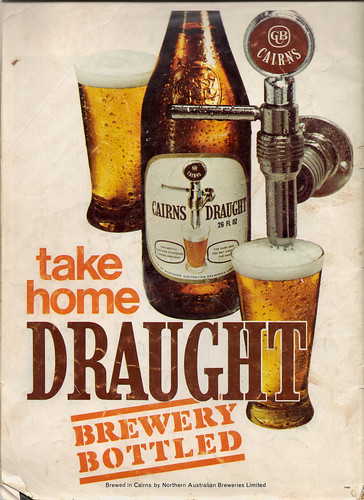

Friday’s ad is for the Australian brand, Cairns. The ad looks to me eye to be from the 1960s or 70s. The “take home Draught” and “Brewery Bottled” seem almost quaint now but were probably a new angle at that time.

Hospitality Management Schools sent me this interesting, and helpful, interactive guide to tipping. I confess that while I’m pretty comfortable tipping at restaurants and bars, I’ve never been quite sure how much to tip my barber or the pizza delivery guy.
The embed code for the tip guide doesn’t seem to be working (I keep getting an error code about hot having authorized access despite the graphic having a button giving you he embed code) so here’s a link directly to the guide: Tipping, How To Respond To Hospitality.
Under the notes for tipping waiters, they suggest that even bad service deserves at least a 10% tip. I’m not sure about that one. I understand that sometimes poor service may be out of the hands of the waitstaff, but I can’t abide rewarding certain behaviors. If a waiter is open and tells me there’s a problem with the kitchen, or someone’s out sick and he or she has more territory to cover, I’m happy to take that into account and be understanding. If they’re pleasant in the face of problems and act like decent human beings (the golden rule) then I’ll agree with HMS’s advice. But if they’re simply inattentive, rude, surly or obnoxious, then I don’t see how giving them 10% is fair to anybody.
The last time I was at GBBF, the pub where I was staying was in the old meat packing area of London — Smithfield Market — and Stephen Beaumont (who I was traveling with) and I were excited to get a table at Fergus Henderson’s restaurant (author of “The Whole Beast”). It was very expensive but we thought it was worth checking out. And the food was incredible, but the experience was all but ruined by one of the worst service experiences I’ve ever had. Our waiter could not have been more condescending. He practically dripped sarcasm when Stephen starting exploring beer pairings with him, as if he didn’t even want to deign discussing beer with meat. How gauche. And so I can’t agree that such a person deserves even a modest tip when their actions not only don’t enhance a meal, but actively effect it negatively, such that the experience is made worse directly by their job performance. Service that bad is, mercifully, somewhat rare, but it has happened to me more than a few times. Under most circumstances, I’d agree that service that’s just mediocre or passable does deserve at least 10%. After all, I understand they’re just trying to make a living, and also everybody has a bad day. But truly bad service does not, at least in my opinion. What do you think?
Anyway, enough of my ranting, here’s their introduction to this guide from the school’s blog:
A huge part of the hospitality and service industry is gratuity. Gratuity and how much to tip service workers has always been a highly debated topic as it should be. Many service workers make the majority of their income on tips alone. Becoming a manager at a hotel or a spa, it will be very important to understand how workers get paid and how to structure tipping at your institution to keep your employees happy as well as keeping the company running smoothly.
And with tipping varying so widely from country to country and state to state even, it is hard to have a consistent system of tipping. With all the debate that surrounds gratuity, it seems that most people still don’t know what the correct amount to tip is. Is it 15% or is it 20%? $1 or $2? From airport to take out, this interactive guide will help people determine how much to give to in the service industry and hospitality field.
And interesting, they had this little tidbit under the History of Tipping:
When the custom of tipping made its way to the United States, many people weren’t too happy about it. In the late 1890s, a movement began against tipping as Americans believed tipping allowed service workers to be dependent on the higher class. An anti-tipping bill ultimately failed due to protests from both employers and service workers.
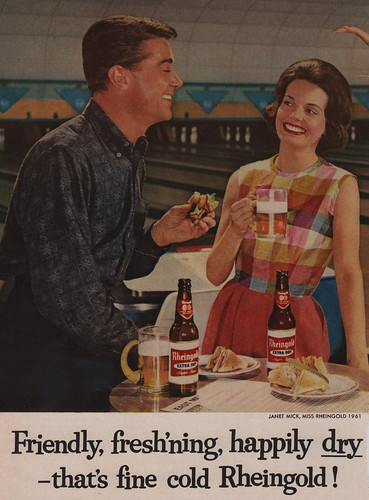
Thursday’s ad is for Rheingold, from 1961. The ad features Miss Rheingold for 1961, Janet Mick, at a bowling alley. Maybe it’s just me, but it sure looks like this date is not going well. The smile on her face looks so forced to me, like she’s pretending to have a good time. Or maybe he’s just an incredible douchebag. I just love the propensity for brewers in the fifties and early sixties to refer to their beer as being “friendly” and other similar adjectives. In this one, Rheingold is characterized as being “Friendly, fresh’ning, happily dry.” Nice.

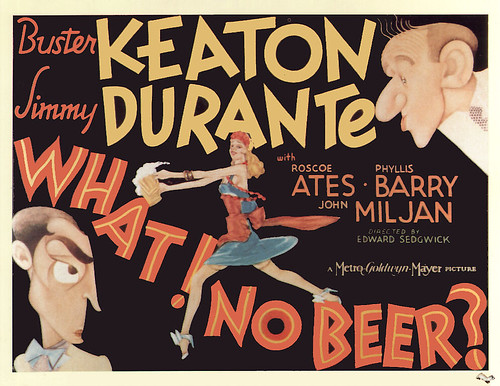
I have my Tivo set to look for the keyword “beer” and recently it taped the 1933 comedy film What — No Beer?, which I hadn’t watched until now. The plot of the film is essentially about two people who think they can get rich by being the first to sell beer just as prohibition is ending, if they can just figure out how to make it. There’s a funny scene where the two stars — Buster Keaton and Jimmy Durante — discuss how it’s brewed.
Elmer J. Butts (Buster Keaton): “How do you make beer?”
Jimmy Potts (Jimmy Durante): “Oh, I got the formula. An old German wash woman gave it to me. Take 5 gallons of water, 1 cup of malt extract, 3 spoonfuls of hop, 1 small cup of yeast. Mix in one large crock.”
Sounds pretty easy. I wonder why everybody doesn’t do it. It’s a goofy, if only occasionally funny, movie but worth it just to see the brewing scenes.
Here’s the plot summary from the iMDb:
Although he has never met her, Elmer Butts loves Hortense secretly and from afar. He dreams of making a million dollars so he can buy her a Rolls automobile and marry her. With prohibition apparently on the verge of ending, Elmer’s friend Jimmy Potts gets an idea to make them both rich by opening a brewery just before the legalization of alcoholic beverages. Their timing is off, and the police raid them, but their inept brewing has created a beer with no alcohol, so they are let off. But it has also resulted in a cheaply made beer, and bootlegger Spike Moran realizes that he can vastly increase his profits by partnering with Elmer and Jimmy. But none of them reckons with the competitor, another bootlegger, gangster Butch Lorado. Butch has a girlfriend … Elmer’s dream girl, Hortense.
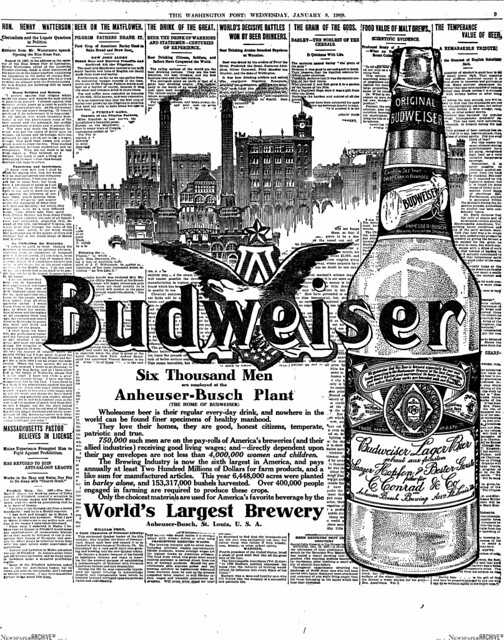
Wednesday’s ad is also for Budweiser, from 1908. In the first two decades of the last century — the run up to prohibition — there was a lot going on in the beer world. It was period of vast consolidation. Increasingly, breweries finally started worrying that prohibition could really become a reality and began doing pro-beer ads. This one is partly hit-you-over-the-head obvious, and also somewhat subtle. Obviously, the main thrust of the ad copy is that Anheuser-Busch in 1908 employed 6,000 at just one “plant.” That sure sounds like a lot for a single brewery. They go on to say there are 750,000 people employed by all of America’s breweries and not less than 4 million “women and children” who are “directly dependent upon their pay envelopes,” with an additional 400,000 employed on farms that produce the crops necessary to make beer. Perhaps more importantly, all of those employees who work in the beer industry “love their homes,” plus “they are good, honest citizens, temperate, patriotic and true.”
On the more subtle side, the ad is designed to look like it’s burting out of a regular page in the newspaper, in this case the Washington Post. BUt look closer at the headlines. Here are a few of them: “Beer on the Mayflower,” “The Drink of the Great,” “World’s Decisive Battles Won By Beer Drinkers,” “The Grain of the Gods,” “Food Value of Malt Brews,” and “The Temperance Value of Beer.” Great stuff.
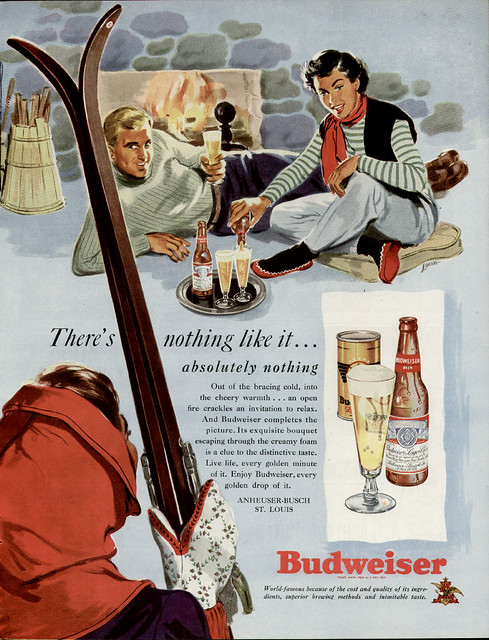
Tuesday’s ad is for Budweiser, from 1949. This one is part of their long-running “there’s nothing like it …” series. But the story that the illustration tells is a bit ambiguous. A couple is relaxing by the fire, their eyes fixed on another woman, just coming in from the ski slopes. But look closely. There are exactly three, not two, full glasses of beer. She was expected. Is this a seduction scene? Or is it merely my overactive imagination? Personally, I think the answer is all in the eyes. What do you read into their expressions?
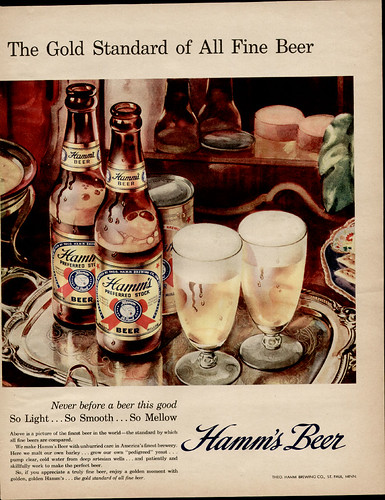
Monday’s ad is for Hamm’s, from 1950. The Hamm’s bottles in the ad don’t look like any I’ve seen before, and I have to wonder if PBR was unhappy that Hamm’s used a red ribbon on the label. I love the tagline. “So Light … So Smooth … So Mellow.”

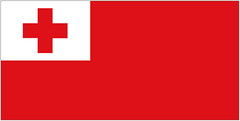
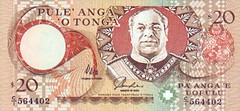
Today in 1970, Tonga gained their Independence from the United Kingdom.
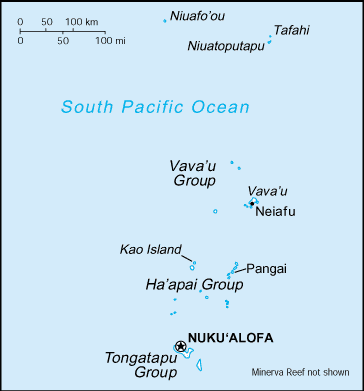
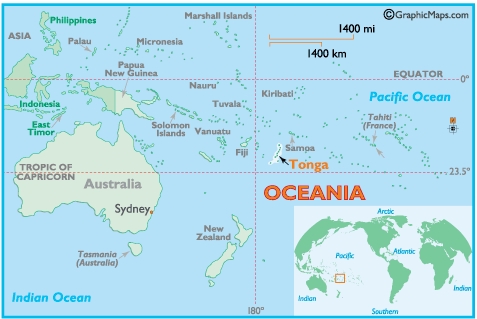
Tonga
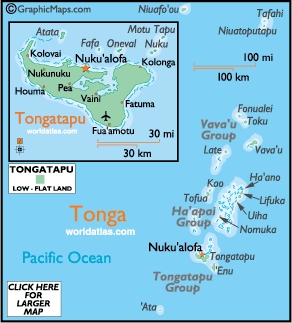
Tonga Breweries
Tonga Brewery Guides
Other Guides
Guild: None Known
National Regulatory Agency: None
Beverage Alcohol Labeling Requirements: Not Known
Drunk Driving Laws: 250 micrograms/litre

Alcohol Consumption By Type:
Alcohol Consumption Per Capita (in litres):
WHO Alcohol Data:
Patterns of Drinking Score: N/A
Prohibition: None

Here’s an interesting old video from 1933. It’s from the British Pathe Archives, from the “Secrets of Nature” series entitled Brewster’s Magic. It was a British Instructional Film, photographed by F. Percy Smith, with Editing and Commentary by Mary Field and “Musical setting” by W. Hodgson.
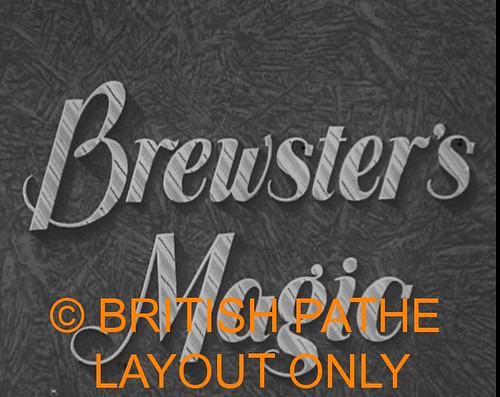
The 8-minute black and white film shows time lapse photography of hops and barley growing plus microscopic images, as well. Here’s how they describe the film:
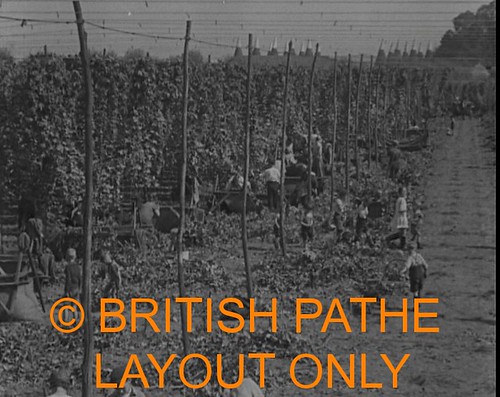
Hand pump being pulled in a pub. Hop root. The eyes are pointed out with a pencil. Time lapse photography of a hop shoot growing. C/U of the claws on the stem of the plant. Plant grows. The claws help the hop plant to twist its way around a smooth surface. Hop flowers growing on a male hop plant. Female hop plant produces flowers. We see them grow through time lapse. Comment on the voiceover about flowers being disappointed spinsters as they will not be fertilised. The flowers continue to grow. C/U of the sticky substance that grows on the petals. Lupelin (sp?) highly magnified. This is the substance that gives flavour and aroma to beer.
Hop garden. Barley ripening in the fields. C/U of barley submerged in water. Time lapse of the barley absorbing water. Barley puts out shoots in time lapse. The maltster turns them upside down to stop them from growing too quickly. Water supply is cut off and the barley withers. Graphic representation of the barley shoot. Animation. Maltster kills the barley grain when it has produced digestive fluid but not had time to use it. Grains are mashed up in hot water to make malt. Men roll barrels along in courtyard of brewery. C/U of yeast cells under a microscope beside a human hair. Moving yeast cells. Cells separate. Fermentation. Diagram of a molecule of sugar. Animated letters. Solution under the microscope. Bubbles are formed.
A pint of beer is pulled in a pub. Shot of man in flat cap drinking beer from a pewter tankard.

It’s a cool time capsule and definitely worth checking out.
My only quibble is that despite it being almost 80 years old, Pathe still asserts copyright on it. Which is fine, in and of itself, even if I generally disagree with how long copyrights now tend to run. But for some reason, they think it’s reasonable to charge you a whopping £50 ($77) to buy the 8-minute video, and that’s just for a download of it — no DVD or case or artwork, though they graciously will allow you to burn it to your own DVD. How thoughtful. Anyway, as a result, it can’t be embedded and viewed here. Fortunately, you can at least watch it at the Pathe website. Enjoy.
Also, there appear to be a wealth additional historic videos on both beer and hops that look like you could lose an entire day exploring.
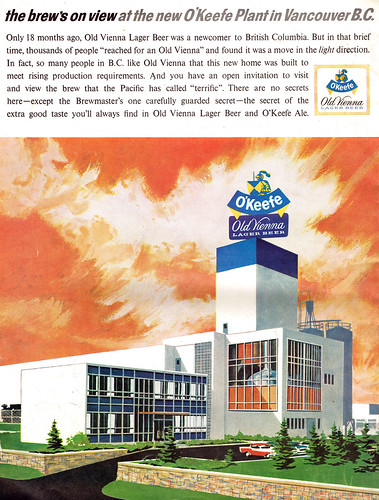
Friday’s ad is for British Columbia’s O’Keefe’s Brewery, from 1960, when they apparently opened their new “plant.” I know it shouldn’t, but I’m always suspect of any company that refers to its brewery as a “plant.” To me, it suggests a lack of passion for the beer itself, instead placing more emphasis on the business aspects of the endeavor. I do, however, love the shiny illustration of the new brewery and the sign for their Old Vienna Lager Beer.