Brookston Beer Bulletin

Jay R. Brooks on Beer

  • Home
  • About
  • Editorial
  • Birthdays
  • Art & Beer

Socialize

  • Dribbble
  • Email
  • Facebook
  • Flickr
  • GitHub
  • Instagram
  • LinkedIn
  • Pinterest
  • RSS
  • Twitter
  • YouTube

Powered by Genesis

The Automatic Personal Brewery

April 10, 2011 By Jay Brooks

williamswarn
When did homebrewing become so hard that people still want to do it but are looking for ways around the actual work of the brewing? First there was Brewbot: An Automated Homebrewing Machine, by an Australian designer, and now comes WilliamsWarn: The Personal Brewery, this time from New Zealand. Is it perhaps the folks down under who are getting lazy? (And thanks to brewer Andrew Mason for the hat tip.)

So brewmaster Ian Williams and food technologist (not sure what that is) Anders Warn worked for two years to develop the WilliamsWarn Personal Brewery, which looks as much like a fancy coffee machine as anything else.
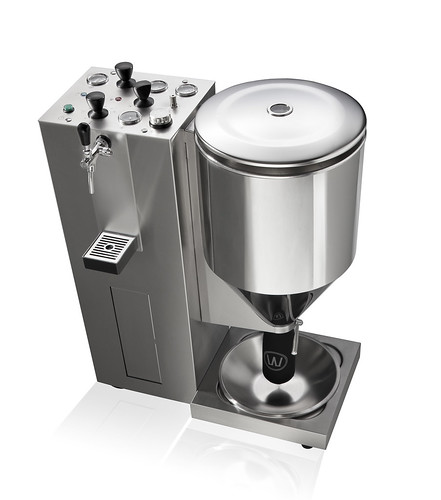
Williams_Warn_white
Here’s their “story” from the website:

The WilliamsWarn Personal Brewery is the miracle that beer drinkers have been praying for. After 5000 years of brewing, the technology finally exists to allow you to brew the perfect beer. Your Personal Brewery is a breakthrough created by our brewmasters through a combination of their deep love of beer and their extensive knowledge of brewing.

In 2004, whilst Ian was working out of Denmark as an international brewing consultant and professional beer taster, he was challenged by his Uncle (a frustrated homebrewer) to invent the worlds first personal brewery. After 2 years part-time research he returned to New Zealand in 2006 and started fulltime research and development with help from his friend, Anders Warn. Finally in 2011, after several rounds of serious investment, after 100 brews and blind tastings and after many industrial prototypes, the first units and the ingredients to be used in them are ready for sale.

So after 5 years of intense development, the result is cold, perfectly carbonated, clear, commercial quality beer made in 7 days, like a modern brewery. All 78 official beer styles can be made as well as the option to develop your own.

I have to say I’m skeptical, especially watching them pour the malt syrup into the contraption. And it’s not exactly cheap, either, at $5,666 NZD (which is roughly $4,436 in American dollars). It seems like it would take quite a few 23 litre batches (about 6 gallons) before it would pay for itself. And the ingredients to make one batch is $49-52 NZD ($50 = $39 USD). So after purchasing the machine, it costs $39 per batch, getting you roughly 6 gallons of beer, or the equivalent of 2 2/3 cases of 12 oz. bottles or roughly 10 six-packs with a few bottles extra). Not including the price of the machine, the cost would be about $4 per six-pack, saving you maybe $2 for a macro brew and $4-5 per craft beer sixer. Let’s call it $4 savings per six-pack ($40 per batch) and it would take you 110 batches before you broke even.
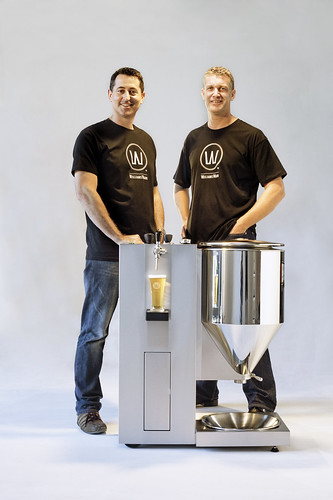
Ian_Anders_Machine1
Ian Williams and Anders Warn with their Personal Brewery.

Watch the video to get a better idea of what it’s all about and how it works. What do you think? Am I crazy, or are these contraptions a bad idea that subvert the very idea of what it means to be a homebrewer? Throughout the press materials for the Personal Brewery, they talk about how it was just too hard to homebrew and the founder’s uncle wanted a simpler way to keep making beer at home. But I can’t help but wonder. Maybe his uncle should have given up and just bought beer from professionals. Does making beer using a machine that does all the work still constitute homebrewing? Certainly many of the bigger brewery’s systems are automated at various stages in the process. But I tend to think of homebrewing as a learning experience, where you learn to be a better brewer by doing, by putting in the time and the hard work. These homebrewing systems seem designed for a lazy person who wants to call themselves a “homebrewer” but without putting in any of the effort. An automatic personal brewery seems less like a hobby and more like having yet another kitchen gadget just to impress your friends. Though it’s hard not to be impressed with the engineering of it, and it is a beautiful looking machine. What do you think?

Filed Under: Beers, Breweries, Editorial, Just For Fun, Related Pleasures Tagged With: Homebrewing, New Zealand, Video

The Mail Order Quagmire

April 8, 2011 By Jay Brooks

mail-order-beer
There was in an interesting op-ed piece in the New York Times a few days ago. A wine blogger, David White (founder of the Terroirist), tackled the thorny issue of shipping wine (and beer and liquor) from state to state in a piece entitled Wholesale Robbery in Liquor Sales.

He begins with this obvious logic:

IMAGINE if Texas lawmakers, in a bid to protect mom-and-pop bookstores, barred Amazon.com from shipping into the state. Or if Massachusetts legislators, worried about Boston’s shoe boutiques, prohibited residents from ordering from Zappos.com.

Such moves would infuriate consumers. They might also breach the Constitution’s commerce clause, which limits states from erecting trade barriers against one another. But wine consumers, producers and retailers face such restrictions daily.

While he’s focusing on wine, the same is true for beer, too. When it comes to alcohol, the general rules of commerce tend to get thrown out the window because — gasp — it’s alcohol, and people can’t be trusted with the stuff. Therefore separate laws have to be set up to protect us from … well, I’m not sure from what. You can order all manner of dangerous things through the mail and have them sent right to your door, from guns and ammo, knives, crow bars along with all the stuff you need to make good size bomb. But try to get bombed and forget it. That’s where the line has been drawn.

It’s been over 75 years since Prohibition ended and few of the laws enacted to ease alcohol back into society have been updated much in that time. The way of the world, I’d argue, is quite a bit different than it was in 1933. The way people do business, both as companies and consumers, has changed dramatically but the laws governing alcohol have remained largely static, in large part because there’s always a hue and cry any time someone suggests relaxing or changing them. White points to wholesalers as having the greatest incentive to keep the status quo, and he’s certainly partly correct, but it’s also the anti-alcohol types and the overarching belief by many that because a few people can’t handle themselves with alcohol, that the rest of us have to suffer under these anachronistic laws that never envisioned the internet or considered that most adults might actually take personal responsibility for their actions.

At any rate, White makes some great points and his article is definitely worth a read.

Filed Under: Editorial, Politics & Law, Related Pleasures Tagged With: Blogging, Wine

Session #50: How Do They Make Me Buy The Beer?

April 1, 2011 By Jay Brooks

buy-please
Our 50th Session is hosted by Alan McLeod from A Good Beer Blog, and is the second of our third hosting by the three original Session hosts on our fourth anniversary of Beer Blogging Friday. The topic he’s chosen is How Do They Make Me Buy Their Beer?, by which Alan means:

What makes you buy someone’s beer? Elemental. Multi-faceted. Maybe even interesting.

  • Buying beer. I mean takeaway. From the shelf to you glass. What rules are dumb? Who gives the best service? What does good service mean to you? Please avoid “my favorite bar references” however wonderful. I am not talking about taverns as the third space. Unless you really really need to and contextualize it into the moment of transaction at the bar. If you can crystallize that moment of “yes” when the bartender is, in fact, tender go for it.
  • What doesn’t work? What fad or ad turned you off what had previously been turned on about some beer’s appeal? When does a beer jump the shark? When does a beer store fail or soar? When does a brewery lose your pennies or earn your dimes?
  • Go micro rather than macro. You may want to explore when you got tired of “extreme” or “lite” or “Belgian-style” but think about it in terms of your relationship with one brewery rather than some sort of internet wave of slag … like that ever happens.
  • What is the most you paid for a great beer? More importantly – because this is not about being negative – what is the least? I don’t mean a gift. What compels you you to say this is the quality price ratio (“QPR”) that works best for you? When does a beer scream “you would have paid 27% more for me but you didn’t need to!”?

session_logo_all_text_200

As an old curmudgeon who’s been alive and drinking before there was a craft beer industry — at least in practice, if not entirely legally — my earliest memories of the beer available where I lived were the more or less local regional brands. I grew up in medium-sized east coast industrial town — Reading, Pennsylvania — and our local brewery closed my junior year of high school — 1976. Before that, I vividly recall accompanying my stepfather to the beer distributor to pick up beer and soda. He didn’t always choose Reading Premium, but he did gravitate toward the more local and regional brands (in this case, mostly from Philadelphia, eastern Pennsylvania and New York).

The funny thing about that is nobody talked about “buying local” as a concept and the word “locavore” was decades from being coined. But that’s what people did. They patronized local businesses. We bought almost all of our produce from the local farmer’s market, along with some of our meat and other food. It was open every Friday in an indoor setting where each person rented a stall that was the same from week to week, and they were more or less permanent with cash registers, refrigerated cases, etc. But they were the local farmers, butchers, food purveyors, etc. We knew them all by name. They were a part of the community. About every six months or so, my parents bought a side of beef from a butcher, had it cut into numerous packages — ground beef, steak, etc. — and stored it in a deep freezer in our basement. All the meat came from the same cow, it wasn’t from an assembly line meat-packing plant. For bread, we went to the local baker. Milk was delivered to our doorstep twice a week. Charles Chips even made potato chip deliveries, though I preferred Good’s Chips in the Blue Can, which we bought every week at the farmer’s market. Good’s were made by a Mennonite family on their farm in nearby Reinholds. I visited the chip farm once. It was a simple operation, but it worked. The chips themselves were even simpler. The label read: potatoes, fried in lard, salt added. They were the best chips … ever.

And beer was just the same. I remember when I was little, my Mom liked Sunshine beer, another label from the Reading Brewing Co. Then there were the Philly brands: Schmidt’s, Ortlieb’s, etc. Everyone drank Ballantine when visiting my aunt and uncle in New Jersey. There were other regional Pennsylvania and New York brands: Yuengling, Genesee Cream Ale, Schaefer and Fyfe & Drum Extra Lyte Beer (their slogan: less filling … more refreshing). I seem to recall a lot of Carling Black Label in our house, too. I think it was on sale a lot, though I don’t remember where it was brewed back then. The point is I don’t even remember seeing a national brand until I was well into my teens. I first started being aware of Budweiser in junior high, Lite Beer from Miller when they started advertising nationally in the mid-1970s or so, and Coors once I started driving in high school. It became “cool” to get a Coors iron-on t-shirt down the shore at Ocean City or Wildwood, our preferred weekend getaway towns.

header_title

But the greed and consumerism that seemed to mark the 80s also sounded the death knell for local, and even healthy, food in general. High-fructose corn syrup began it meteoric rise around 1975 but really hit its stride in the 1980s. Giant grocery store chains dominated and the locally owned ones disappeared, paving the way for the big national food processors to likewise dominate stores shelves (they were the only ones who could afford the slotting fees that should be illegal, but curiously are not when it comes to food).

Pennsylvania grocery stores couldn’t sell beer (and still can’t) so I don’t have firsthand knowledge of what happened to grocery sets during that time, but I can only assume what happened with food, also happened with beer. At that time, I started moving around for work — Virginia, New York, back to Pennsylvania, North Carolina and then, finally, California in 1985. By the time I arrived in California — thirsty for good beer, sparked by my time in NYC — there was the chain of Liquor Barns that carried a wide selection of both imported beer and the new micros, but grocery stores were still almost exclusively national and international brands, with just a few exceptions. Bars, too, carried a very small number of beers, and very few, if any micros. It slowly got better, but even in 1991, when I visited over 550 bars in four months to write The Bars of Silicon Valley: A Beer Drinker’s Guide to Silicon Valley, very few carried anything beyond the Big 3 and a few imports (usually Heineken, Corona, or if the bar was Irish or British-themed: Guinness).

So what does all this nostalgia have to do with Alan’s topic? How does any of that make me buy a particular beer, or choose one over another? As the Peter Allen song claims, “Everything Old Is New Again,” and so it is with buying locally. What once was taken for granted as not so much buying locally, but simply “buying,” people are again purchasing locally made or grown goods, the only difference is this time it’s on purpose. It’s a decision, based on a growing understanding that doing so is beneficial on several fronts. It’s good for the planet because the closer the food is to the consumer, the shorter distance is as to travel, meaning it uses less fossil fuels, and as a bonus it’s usually fresher, too. It’s also good for the local economy because it creates local jobs, but more importantly the money stays in circulation locally, too. It isn’t shipped back to a corporate headquarters somewhere else, which is just one of the reasons Wal-Mart is so bad for local economies.

The dirty little secret in brewing is that many of the ingredients for making beer come from far afield, and there isn’t much that can be done about that. Barley and hops don’t grow everywhere, and certain types that are necessary for certain kinds of beers can’t be obtained from local sources in many, many places. More and more breweries, both large and small, are trying to make “estate” beers or beers made using only relatively local ingredients. Sierra Nevada is making an estate beer using their own locally grown barley and hops, and the San Francisco brewpub, Thirsty Bear, recently made a beer using all organic ingredients from northern California farmers. But that’s hard to do, especially in certain locations where the agriculture just isn’t available. I applaud such efforts, but it simply isn’t feasible for everybody. Hops is starting to be grown in more locations than the Pacific Northwest, but most efforts will not be able to replace the Willamette or the Yakima Valleys, only supplement the supply, not to mention hop varieties from abroad — England, Germany, the Czech Republic, New Zealand, etc.

So the brewing industry, for the most part, will have to continue to hang its hat on local production, not that that’s necessarily a bad thing, just the reality of how beer is made. But with over 1700 breweries in the U.S. — and 618 in planning — finding locally brewed beer is getting easier and easier. In a sense, we’re returning to a time when it was local and regional breweries that held sway. In the late 19th century, America peaked at just over 4,000 breweries. It was a time when beer didn’t travel or age very well and so every locale needed a brewery. Even many small and mid-sized towns had multiple breweries. Then it was out of necessity, but today an increasing number of people are choosing smaller, local beers over the national brands. It’s happening very slowly — too slowly for my personal tastes — but it is moving in the right direction. The big brands, both foreign and domestic, are flat or down in some cases, while the smaller breweries are for the most part up, and up a lot in many cases. And that’s played out over ten plus years, a sufficiently long enough period of time that I think we can safely call it a trend.

I continue to believe that distribution will be the single most important aspect of continuing that growth and finding, finally, a tipping point, where better local beer becomes the norm. And that’s one worrying counter-trend. The number of distributors continues to shrink, and that will be bad, I think, if a work around can’t be found, especially in states where self-distribution is not legal, where franchise laws are particularly strong, and where it’s difficult for alternative new distribution models to emerge.

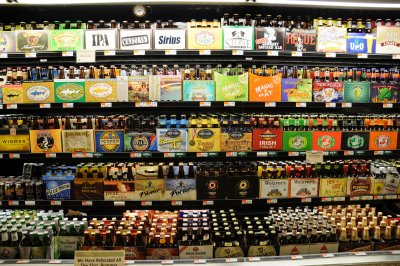
beer-shelf-3

So what causes me to make a particular purchase decision? How Do They Make Me Buy The Beer? Well, firstly, I’m not a typical consumer. If you write a beer blog, chances are you’re not either, even if you believe otherwise. Because you and I will will try almost any new beer. That’s just who we are. Typical consumers, I’d argue, don’t. The only evidence I need for that is the fact most breweries have a flagship beer that accounts for 60%, 70% or even 80% of their total production. Somebody is buying all that beer, if it’s not you and me. Although, the fact that seasonal beer is the fastest growing category in grocery stores does suggest that many people are buying something different along with the flagship beer, too.

But secondly, if I’m not buying beer to sample for work, if I’m just picking up beer to watch a game with friends, or for a party or just to have a good time, I’ll buy something brewed locally. Usually, I know all the beers on a typical grocery or liquor store’s shelves — occupational hazard — so once I get past the novelty of something new, factoring in the weather and/or what I’m eating, the decision comes down to location, location, location.

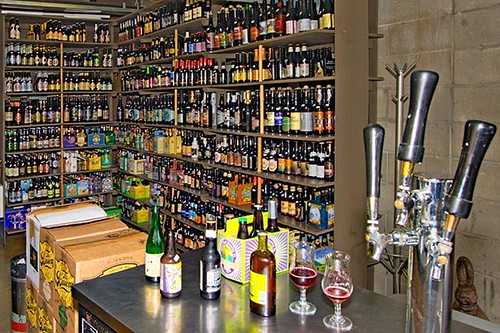
beer-shelf-5

Filed Under: Beers, Breweries, Editorial, The Session Tagged With: Business, Marketing

Top 10 Alcohol Drinking Cities

March 28, 2011 By Jay Brooks

all-america-city
I’m not sure where the source data comes from, but the latest issue of Playboy — in the Raw Data section — had an interesting Top 10 list of what they referred to as the “Tipsiest Towns in the U.S.” The list is “based on the average number of alcoholic drinks consumed per person.”

  1. Milwaukee, WI
  2. Fargo, ND
  3. San Francisco, CA
  4. Austin, TX
  5. Reno, NV
  6. Burlington, VT
  7. Omaha, NE
  8. Boston, MA
  9. Anchorage, AK
  10. San Diego, CA

Filed Under: Beers, Editorial, News, Top 10 Tagged With: Lists, Statistics

The Birthplace Of Craft Brewing: Colorado?

March 17, 2011 By Jay Brooks

colorado
I should say at the outset that I love Colorado. I go there at least once a year, have many beer friends and colleagues there. There are many, many great breweries there and their beer culture should be celebrated. Of that, I believe there can be no doubt. And in fact, a new documentary film is seeking to do just that, a laudable enterprise. The title is Beer Culture: the Movie, and the idea behind it is the following. “Beer Culture is a documentary film about the growing rich American Culture in Craft Beer by telling the inspirational stories of unwavering motivation by some of Colorado’s top Brewers.” It’s release date is Summer 2011. Frankly, I can’t wait, it looks great. Free Mind Productions should be proud of what they’ve done so far. They’ve also just released a new trailer with tons of great teasers, and lots of great people being interviewed, including Colorado governor John Hickenlooper, Eric Wallace, Marty Jones and Charlie Papazian.

But then at just past the one minute mark, one of the interviewees — I’m not sure who it is — says the following. “Pretty much everybody thinks of Colorado as the birthplace of craft brewing.” Really? Um, did I miss a meeting? That just sticks in my craw. Hyperbole is one thing, but that’s simply a false statement that is just not true. I know the producers didn’t say it, but they’re sure seizing it on it to promote their film. It’s not one of those subjective facts that people can interpret different ways, like who brewed the first Black IPA. We know Fritz Maytag bought the ailing Anchor Brewery in 1965 and turned into what it is today. We know Jack McAuliffe incorporated New Albion Brewery in Sonoma, California in October of 1976 and built the first modern microbrewery from scratch. Colorado’s first microbrewery was the Boulder Beer Company, which was founded in September of 1979. Those are the facts, plain and simple.

Maybe I’m being oversensitive, but I don’t think so. Last week, John Kerry was quoted in a press release about the new BEER Act that’s been introduced in the Senate that the “craft beer revolution started right here in Massachusetts.” Now this. I believe that Colorado has much to celebrate with its beer culture, but it doesn’t really need to take liberties with the truth to do that. It doesn’t need to throw California’s contributions under the bus to raise up its own. I don’t really feel like I should have to protect California’s place in the history of craft brewing. It seems like it should be fairly secure and unassailable, but here we are. I hope enough people will see fit to point this out to the producers of Beer Culture and they’ll remove it from the movie. They don’t need to keep something so blatantly untrue in there and for me, at least, it just mars the film’s credibility. The story of Colorado’s craft beer scene is a great and worthy subject for a movie, but it can only be improved by sticking to the facts … and the beer.

Filed Under: Beers, Breweries, Editorial Tagged With: Bay Area, California, Colorado, Video

Socialcohol Media Influencers

March 9, 2011 By Jay Brooks

social-media
Here’s some more interesting statistical data on alcohol bloggers — beer, wine and liquor — from a software company in Silicon Valley by the name of eCairn, or eCairn Conversation. Watch this short video to get a feel for what the company is selling, essentially tools to help companies reach their core customers and “influencers.”

This is especially interesting given the recent monthly Wikio rankings, as these represent yet another metric to rate a beer blog’s influence. At eCairn’s blog, they’ve been analyzing different aspects of social media, presumably to give potential customers real world examples of how they might use their software. For example, they looked at an Analysis of 4 Networks of Community of Influencers that included mommy, beauty, fashion, deco, food, daddy, celebrity, baking, craft and fitness blogs. Then a few days ago they examined beer, wine and liquor blogs which they referred to as “Socialcohol Media,” which is a great looking term, if only I could figure out how it should be pronounced (go ahead, try to say it). Here’s their introduction:

Tagging along with previous analysis of social media Tribes and Influencers, we looked this time at the socialcohol ecosystem 😉 .

Even if the wine & alcohol industry is highly restricted and social media has its set of challenges, matters like beer, wine and liquor generate quite a bit of conversations from the virtual streets.

Here, we pulled 200 influencers from our existing communities of English speaking influencers (~1500 for wine, ~1000 for beers and ~500 for liquor) to create our own cocktail of the tops.

From those 4,000 blogs, they whittled them down to 200 and then ranked those. In the Top 20, half unsurprisingly are wine blogs. But what’s more surprising is that five were beer blogs and five were liquor blogs, and all five of the beer blogs were in the top ten, along with two liquor blogs. That means that in the top ten alcohol blogs, the majority are beer blogs. That’s huge, because up until now, as far as I knew, wine blogs were kicking our butt. Certainly there are far more of them, and still are, but what this suggests is that beer online is gaining in popularity. During last fall’s Beer Blogger’s Conference, the number of beer blogs was reckoned to be about 500, and another source I saw said about 700, the difference being the former was independent beer blogs and the latter included company beer blogs, too. So either we’ve added another 300 beer blogs in the intervening months or they arrived at their number using more generous definitions. Either way, 1,000 sure sounds more impressive.

While I don’t see any information specifically about what formula they used to arrive at their rankings, shockingly I’m No. 1, even above Eric Asimov in the New York Times and the Wine Spectator. Honestly, as flattered as I am by that, it doesn’t feel right. Their traffic alone must be exponentially higher than mine, though perhaps traffic isn’t that important to the way they figure things out. Still, the best news would seem to be that beer blogs more generally are catching up to wine in terms of popularity online. That alone is worth cheering.

Top 20 Alcohol Blogs

  1. Brookston Beer Bulletin (Beer)
  2. Good Grape: A Wine Blog Manifesto (Wine)
  3. Alcademics.com (Liquor)
  4. Eric Asimov’s The Pour: NY Times (Wine)
  5. Seen Through a Glass (Beer)
  6. Pencil and Spoon (Beer)
  7. The Beer Nut (Beer)
  8. Catavino (Wine)
  9. Art of Drink (Liquor)
  10. Drink With The Wench (Beer)
  11. Wine Spectator (Wine)
  12. Mutineer Magazine (Wine*) [Listed as a wine blog, but Mutineer also covers beer and spirits.]
  13. Trader Tiki’s Exotic Syrups, Bitters and Spirits (Liquor)
  14. RumDood (Liquor)
  15. AlaWine (Wine)
  16. Good Wine Under $20 (Wine)
  17. Wannabe Wino Wine Blog (Wine)
  18. The Pegu Blog (Liquor)
  19. Through The Walla Walla Grape Vine™ (Wine)
  20. Palate Press (Wine)

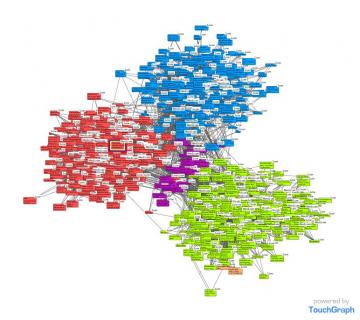
They also note that Beer, Wine and Liquor blogging communities are fairly separate but that Whisky blogs tend to act as a bridge between them all.
winebeerliquor

The density of the American beer blogs has “higher density in the mid-west/colorado compared to wine and liquor.”
beer-geo

Filed Under: Beers, Editorial, Just For Fun, Related Pleasures Tagged With: Blogging, Social Media, Statistics, Websites

Amish Beer For Rumspringa

March 9, 2011 By Jay Brooks

amish-fightin
I love contradictions, especially when they have to do with the Amish. I grew up right around the Pennsylvania Amish, and in fact on my mother’s side, I am partly Amish, so to speak. From my grandfather’s generation and before, my family was Mennonite and operated a farm, having come to America from Bern, Switzerland in 1745 as Anabaptists. The Amish and the Mennonites both share an Anabaptist heritage. The Amish are the more well-known of the two, and eschew many modern conveniences such as electricity and cars. Mennonites on the other hand, at least the ones I observed growing up, drove cars but painted all the chrome black so as to avoid anything flashy or showy. Whenever you visit Amish tourist areas, the ones operating the gift shops and tourist attractions who look Amish, are more likely to be Mennonites.

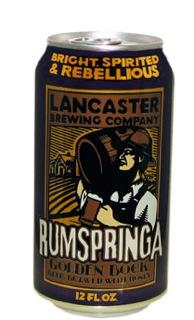
As a result of that childhood, I love all things Amish and we even have a large hex sign on our house in California, if for no better reason than to confuse people — plus, I just think they’re cool. When I play fantasy sports, I often use as a team name: the “Fightin’ Amish,” again because I love the contradiction. The Amish are conscientious objectors and don’t fight, and even have an exemption for military service. Likewise, there’s a great band I like called The Electric Amish that nicely plays on the contradictions between the Amish and modern life. I bring this up because Lancaster Brewing, in the heart of Pennsylvania’s Amish country, has announced their latest seasonal beer, in a can, to be called Rumspringa Golden Bock.
lancaster-rumspringa
Rumspringa is essentially adolescence, from around age 16 until 18, when an Amish teen has to decide to be baptized and join the church or be “shunned” (ostracized by their community for the rest of the lives — no pressure there). Not surprisingly, most join the church. During the Rumspringa, teens have more freedom then before or after, and though it varies by sect, it’s often thought of as the time when they can “sow their wild oats,” find a spouse, get a little crazy. While I’ve seen documentaries where drinking and other taboos do take place, for most it’s simply a time to decide what to do with their lives, at least as I understand it. The Amish, of course, don’t drink alcohol so I love the apparent contradiction of naming a beer for this time in the Amish life cycle. Plus it’s just a good name for a spring beer. And I’m doubly glad they’re canning it so I may even have a shot at trying some.

Filed Under: Beers, Breweries, Editorial, Just For Fun Tagged With: Cans, new release, Pennsylvania, Religion & Beer

More Absurdity From The Lunatic Fringe

March 7, 2011 By Jay Brooks

nut
In another missive from the increasingly well-named Professor David Nutt, today in the UK Guardian he announed that There is no such thing as a safe level of alcohol consumption and then proceeded to claim that the reasons he believes that “the idea that drinking small amounts of alcohol will do you no harm is a myth” are fourfold:

  1. Alcohol is a toxin that kills cells.
  2. Although most people do not become addicted to alcohol on their first drink, a small proportion do.
  3. The supposed cardiovascular benefits of a low level of alcohol intake in some middle-aged men cannot be taken as proof that alcohol is beneficial.
  4. For all other diseases associated with alcohol there is no evidence of any benefit of low alcohol intake.

He elaborates slightly more on each of these, though not much more, and then follows up those grand sweeping pronouncements with the following:

“Hopefully these observations will help bring some honesty to the debate about alcohol.”

That’s one of those comically-spit-out-your-drink sort of statements, because what he just said was nowhere near honest. It would almost be funny except that mainstream media in Great Britain keep giving him a bully pulpit to proselytize from and people seem genuinely uncritical of what he has to say, which is even more baffling. Some of the comments to the Guardian article from supporters are downright scary, as they seem to believe he has science and evidence to support his wackadoodle claims. He doesn’t. Last year, when he proclaimed, to equal fanfare, that beer is more dangerous than heroin, his scientific evidence consisted of gathering together a group of like-minded individuals (that is people already predisposed against alcohol), many of whom were members of the made-up organization he started after the UK government sacked him — The Independent Scientific Committee on Drugs — and they sat together in a room one weekend and assigned arbitrary numbers for the amount of harm to society for various drugs based on their life experience, no actual data necessary. That’s what passes for science, and that they got the previously respected Lancet to publish it is downright bewildering.

Just a few thoughts about what’s wrong with every one of his four “proofs,” off the top of my head. At least I’m admitting I’m not researching these.

1. Sure, 100% rubbing alcohol will kill you. It’s 200 proof. Most chemical substances, compounds, etc. will kill you in sufficient doses. Most of the medicines we use to treat diseases will kill you if the dose is too high. That’s why they have warning labels and are doled out by doctors and pharmacists with specific instructions of how many, and when to start and stop taking them. For alcohol, we have the TTB and various state agencies to perform that role. Even things that are good for us become bad for us in higher doses — red meat, salt, vitamins, bacon (well, maybe not bacon). If we got rid of everything in the world with the potential to kill us, we’d be left with pretty much nothing.

2. Since Nutt claims we can’t predict who will become addicted to alcohol with the very first taste, then he suggests “any exposure to alcohol runs the risk of producing addiction in some users.” And that differs from everything else how? Assuming his anecdotal “evidence” that such immediate addiction is even possible — which seems unlikely at best — it’s hardly a basis for public policy. Not everybody reacted well to penicillin when it was introduced; should we have left all those people with diseases who could be cured by penicillin die just because less than 1% had an adverse reaction to it? This is just a post hoc fallacy of the worst kind.

3. Saying that the cardiovascular benefits are not proof ignores the many, many, many other studies that show positive health benefits for a myriad range of health concerns. The big enchilada, of course, is the numerous studies that show that total mortality is improved by the moderate consumption of alcohol; that is you’ll most likely live longer if you drink moderately than if you either don’t drink at all or drink too much. And a recent study seems to suggest that given a choice, drinking too much instead of abstaining will still lead to a better result. The FDA in its most recent dietary guidelines acknowledges this fact, yet Nutt completely ignores it and every other study that doesn’t fit his world view. Singling out one study to bash — his straw man — is about as dishonest a way to “bring some honesty to the debate” as I can imagine.

4. He concludes by just dismissing the vast body of medical and health studies that do in fact conclude there are health benefits to the moderate consumption of alcohol. He does this apparently by simply pretending they don’t exist, saying “there is no evidence of any benefit of low alcohol intake.” But just saying there are no benefits in the face of a mountain of contrary evidence is not, as his supporters seem to believe, scientific proof of any kind. It’s just the opposite, in fact.

I’m all for an honest debate about the positives and negatives surrounding alcohol, but if this is what passes for “honesty,” I think I’ll have to wait a little longer for that conversation.

Filed Under: Beers, Editorial, News, Politics & Law Tagged With: Prohibitionists, UK

Wisconsin Historian Compares Current State Politics To Prohibition

March 6, 2011 By Jay Brooks

wisconsin
Here’s an interesting op-ed piece by Wisconsin historian John Gurda entitled Smashing ‘Demon Government’ in which he examines the many parallels between the current political climate in his state and the temperance movement that led to Prohibition. Thanks to Wisconsin Bulletin reader Jason H. for sending me the link. Subtitled “Walker’s small-government zeal resembles that of the prohibitionists,” here’s a few choice excerpts below:

MJS prohibition

In its moral fervor, its contempt for compromise, its demographic base and even its strategies, today’s new right is the philosophical first cousin of prohibitionism.

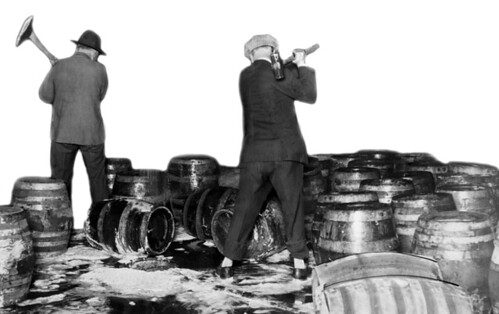
Consider a few of the parallels. The prohibitionists went after “Demon Rum,” while the tea party attacks Demon Government. The Anti-Saloon League preached that barrooms were destroying America’s moral fiber, while the new right declares that onerous taxation and excessive regulation are doing precisely the same thing. Carrie Nation smashed whiskey barrels, while today’s conservatives want to smash the welfare state. Addiction to spending, they might argue, is ultimately as destructive as addiction to alcohol.

Like the temperance movement of the last century, the tea party draws heavy support from Protestant evangelicals such as Walker himself, and their political playbook is a throwback as well. The prohibitionists were media-savvy opportunists, taking advantage of every opening to advance their cause.

When the United States entered World War I, they wasted no time demonizing beer as “Kaiser brew” and even accused Milwaukee’s producers of spreading “German propaganda.” When food shortages loomed during the conflict, the dry lobby convinced Congress to divert America’s grain supply from breweries and distilleries to less objectionable industries. The result was “wartime prohibition,” a supposedly temporary measure that went into effect in 1919 and soon gave way to the 18th Amendment. The national drought would last for 14 years.

It’s worth noting that America wasn’t alone in using the conflict of World War I to push anti-alcohol agendas. Like-minded measures in several countries led to similar alcohol prohibitions, many of which lasted far longer than ours, such as Australia, Canada, Finland, Hungry, Iceland, New Zealand, Norway and Russia. In each of those nations, temperance groups took advantage of wartime circumstances to push their plans on the rest of the populace in their respective places.

In much the same way that prohibitionists turned World War I to their advantage, the current crop of conservatives is making political hay from another temporary phenomenon: the global economic recession. The need for fiscal austerity has rarely been more obvious, but it’s being used as a pretext for advancing the new right’s legislative agenda.

We’re seeing that happen in most, if not every state, with anti-alcohol groups turning our nation’s economic adversity into an opportunity to raise taxes on beer, already the most heavily taxed consumer good (along with tobacco). The Marin Institute has even created propaganda showing the “worst” ten states, with “worst” meaning the states with the lowest taxes on beer, completely out of context and with no understanding whatsoever of why each individual’s states excise taxes are set where they are. Shortly after Governor Walker created Wisconsin’s deficit by giving tax cuts to the wealthy, Michele Simon of the Marin Institute tweeted that beer should make up the difference. “Dear Gov. Walker: Wisconsin has not raised its beer tax since 1969. At .06/gallon, among lowest in nation. Just one of many ideas.” If that’s not what Gurda was talking about, I don’t know what is. That’s using a grave political situation to further an unrelated agenda.

Walker began with a demand that public employees pay more for their pensions and health insurance – a necessary step to which they have agreed – and then proposed to strip them of their collective bargaining rights. That’s an epic non sequitur that makes sense only when you invoke tea party logic: If taxes are bad, then the people we pay with tax dollars must be brought to heel, even if it means freezing a new teacher at first-year wages until retirement.

But the new right’s agenda goes far beyond public employee unions. With solid majorities in the state Legislature, Walker first declared a budget emergency and then cut taxes by $140 million, which is equivalent to taking blood from a patient with severe anemia. In last week’s budget message, he pronounced the patient so sick that amputations are necessary. Walker’s juggernaut of tax cuts and service cuts, combined with his no-bid privatization plans, trends in one direction and one direction only: dismantling government one line item at a time, regardless of the consequences.

It is here, finally, that prohibitionism and tea party conservatism find common ground: Both are ideologies. They represent fixed, blinkered views of the world that focus on single issues and dismiss all other positions as either incomplete or simply wrong-headed. Get rid of alcohol, the prohibitionists promised, and the U.S. would become a nation of the righteous and a beacon of prosperity to the world. Just cut government to a minimum, the new right contends, and you will usher in a brave new era of freedom and opportunity.

And that’s how I see all of the neo-prohibitionist and anti-alcohol groups, as “ideologies.” All of the anti-alcohol groups that I’m aware of do everything in their power to punish alcohol companies because of their perceived sins and because they want to tell you and me how to live our lives. They do so without thinking through the consequences and overall use an “ends justify the means approach,” especially in the way they frame and distort their propaganda. Simply put, I believe that they think they know better than everybody else, there’s a certain smugness in their position; in its unwavering certainty, their righteousness that borders on religious fervor.

They’re convinced that there’s no free will, people are incapable of ignoring advertising, or knowing their limits when drinking. And while there are a few tragic figures who may fit that description, they’re the tiny minority that such groups are fixated on to make their case. The vast majority who drink alcohol do so responsibly and in moderation. Most people take personal responsibility for their actions, as they should. But personal responsibility rarely, if ever, figures into alcohol abuse if you listen only to anti-alcohol rhetoric and propaganda. It’s always the fault of the alcohol itself, and usually beer because it plays better to the people with money who fund such organizations (they drink wine after all). An op-ed piece in the UK Telegraph by Brendan O’Neil recently shed a light on the class issue in anti-alcohol efforts. If they’re not going after the children, then they’re preying on the weak-minded with the most effective advertising the world has ever wrought. Earlier this year, the hue and cry was because there were 3.5 minutes of beer commercial during the nearly four hours of the Super Bowl and — gasp — the little kiddies might see it.

But anti-alcohol rhetoric single-mindedly focuses on only the negative. I’ve never heard any of them say one word that was positive about any alcohol company. Even when Anheuser-Busch packaged cans of water and sent then to earthquake-ravaged Haiti, one anti-alcohol group criticized them for the deed, because they put their logo on the cans and sent out a press release (oh, the horror). Let no good deed go unpunished, indeed. That alone should convince us they’re idealogues.

I suspect they might say the same of me, but I understand and acknowledge that there are some people who should not drink. That such people can and do cause problems for themselves and often the people around them. I don’t write about it very much because I don’t have to; there’s plenty of lopsided anti-alcohol rhetoric already. I’m just trying to balance the conversation, though more often than not I feel like the lone voice in the wilderness.

But back to Wisconsin. My wife is a political news junkie, and she informs me that a careful reading of the facts reveals that Scott Walker’s entire political career has been in service to a single ideology: union busting. He apparently promised that was not his agenda throughout his campaign for governor, and the media swallowed that wholesale with few examining or reporting the discrepancy between what he said while campaigning and his entire career leading up to that point. In that, there’s yet another parallel between the new prohibitionists and the new political conservatives. Most mainstream news media also take the side of the well-funded anti-alcohol groups and parrot their propaganda without questioning it or providing any meaningful views from the other side of this debate.

As to Gurda’s comparisons, I think he’s right about anti-alcohol groups’ unwillingness to compromise and being self-righteous with “blinkered views of the world that focus on single issues and dismiss all other positions as either incomplete or simply wrong-headed.” That’s certainly been my experience. So as if there wasn’t enough reasons to support the protesters in Wisconsin, if this political test case is successful, not only will we see more unions busted in other states, but I suspect anti-alcohol groups are also closely watching this to see how they might use the same bullying tactics in furtherance of their own agenda. And that may be the scariest prospect of all. As usual, I’m with the Green Bay Packers on this one.

Filed Under: Beers, Editorial, News, Politics & Law Tagged With: History, Law, Prohibitionists, Wisconsin

Session #49: A Regular Beer

March 4, 2011 By Jay Brooks

food-placesetting-blue
Our 49th Session is hosted by Stan Hieronymus from Appellation Beer, bringing things full circle back to the very beginning of the Sessions, when Stan first proposed them four years ago. Stan was also the very first host and as we begin the fifth year on monthly Sessions, he again assumes the mantle, taking on the topic A “Regular” Beer. What is a “regular” beer, you may be wondering? Take it away, Stan:

In March of 2007 I couldn’t have guessed the topic March 4, 2011 might be “regular beer.” How vague is that? But when in December I was motivated to post my defense of “regular beer” the course was set.

Please write about a regular beer (time to lose the quotation marks). You get to define what that means, but a few possibilities:

  • It might be your “go to” beer, brewed commercially or at home. The one you drink regularly.
  • I could be a beer your enjoy on a regular special occasion. When in San Francisco I always like to start with draft Anchor Liberty Ale. But it might be your poker night beer.
  • It doesn’t have to be a “session beer,” but it can be.
  • It probably shouldn’t have an SPE of more than $25 (that’s a very soft number; prices may vary by region and on premise further confuses the matter). Ask yourself, is it what somebody in a Miller High Life TV commercial in the 1970s could afford? Because affordability matters. I’m all for paying a fair price (which can mean higher than we’d like) to assure quality and even more for special beers, but I’m not ready to part with the notion that beer should be an everyman’s drink.
  • Brewery size, ownership, nationality do not matter. Brew length doesn’t matter. Ingredients don’t matter. It feels a little strange typing that last sentence, since the Mission Statement here says ingredients matter. But I hope you get the point. I prefer beer that costs a little more because its ingredients cost more, because there’s more labor involved. You don’t have to. Beer should be inclusive.

session_logo_all_text_200

To me, the idea, concept, notion, whatever of “a regular beer” is most closely aligned with the European idea of “table wines” and the mostly Belgian “table beer,” or at least that’s what I’d like to see here. The closest thing in the States to table beer is, sadly, probably macro lagers, who’ve essentially hijacked the low-calorie beer for everyday drinking. And it’s the absurd low-calorie light beers that are the most popular of those. It’s not that they’re not well made — they are — but they have so little flavor and what flavors they do have I find personally unpleasant for the most part. But they’re the beers that a grand majority of the populace drinks for everyday occasions, whether on the table or other ordinary circumstances. And their popularity I have to think is partly the reason why we don’t think of more full-flavored, but light-bodied, beers as “table beers.”

The closest analogue in craft beer is probably the “flagship” beer, the best-selling beer that each microbrewery sells. Flagship beers tend to outsell every other beer that the brewery makes exponentially. For most, the flagship accounts for week over half of total sales. In a sense that makes them regular beers. And while that’s no doubt desirable for any business, for craft breweries it can also be a problem because it can make the brewery appear stale since so much of craft beer sales is centered on the “new.” But without those flagship sales, most couldn’t afford to make the specialties, seasonals and one-offs that make their reputations. Both are equally important, and in fact striking that balance is perhaps the most important strategy a brewery needs to work out to maintain success.

A few years ago I was walking the hall at the Great American Beer Festival, trying to get somewhere in a hurry, when I got caught behind a group of young men and couldn’t get around them. So as I patiently waited for an opening, I started listening to their conversation. We were passing the Sierra Nevada booth when one of the young men elbowed his friend, and pointing to the Sierra Nevada stand, said “my Dad really likes that beer.” “Oh, that’s going to be a problem,” I though to myself and indeed it was. I’ve since had conversations with people from the brewery who’ve acknowledged that the perception of Sierra Nevada Pale Ale as “your Dad’s beer” was a problem. That’s at least part of the reason that Sierra Nevada has launched so many new projects, collaborations, new series, the anniversary beers, beer camp, etc. And it’s worked. They’ve struck a nice balance between the near ubiquitous pale ale and some pretty exciting new stuff.

beercantable

But back to the table. Throughout many countries in Europe, wine is not the snobfest it often is over here. Ordinary table wine sits in every home for every meal. But it’s not the low quality box wines we think of, but very flavorful, though slightly lower in strength, wine. It tastes great, but is also ideal for drinking every day, no special occasion necessary. Table beer used to be very common in Belgium, too, until recently when it’s been replaced on the table by bottled water or — ugh — soda pop. In fact, until the 1970s, table beer was served in school to children, but now has also been replaced by soda. Although there is a movement to get rid of soda and replace it once more with low-alcohol table beer, with advocates arguing that beer is more healthy than soda, something I’ve said for years. I’d like to see that tried here, but oh the hue and cry would be swift and noisy to be sure.

But the reality is table beer would be more healthy for kids than all the chemical-laden soda pop, and those are still sold in many schools, despite their role in juvenile obesity and other health problems for kids. The fact that in this country, alcohol is the bogeyman but soda companies are not only allowed but celebrated strikes me as hypocrisy run amuck. Serving table beer at home wold also educate children about alcohol and quite possibly would lead to less abuse and binge drinking as young adults and/or in college.

Here’s how Table Beer was described in the World Beer Cup guidelines for 2010.

50. Other Belgian-Style Ale
A. Subcategory: Belgian-Style Table Beer
These ales and lagers are very low in alcohol and traditionally enjoyed with meals by both adults and children. Pale to very dark brown in color. Additions of caramel coloring are sometimes employed to adjust color. They are light bodied with relatively low carbonation with limited aftertaste. The mouth feel is light to moderate, though higher than one might anticipate, usually because of unfermented sugars/malt sugars. Malted barley, wheat and rye may be used as well as unmalted wheat, rye, oats and corn. A mild malt character could be evident. Aroma/flavor hops are most commonly used to employ a flavor balance that is only low in bitterness. Traditional versions do not use artificial sweeteners nor are they excessively sweet. More modern versions of this beer incorporate sweeteners such as sugar and saccharine added post fermentation to sweeten the palate and add to a perception of smoothness. Spices (such as orange and lemon peel, as well as coriander) may be added in barely perceptible amounts, but this is not common. Diacetyl should not be perceived.Original Gravity (ºPlato): 1.008-1.038 (2-9.5 ºPlato) ● Apparent Extract/Final Gravity (ºPlato): 1.004-1.034 (1-8.5 ºPlato) ● Alcohol by Weight (Volume): 0.4-2.8% (0.5-3.5%) ● Bitterness (IBU): 5-15 ● Color SRM (EBC): 5-50 (10-100 EBC)

The abv actually puts table beer below where most people define even session beers, making it closer to small beer. And in that sense, it barely even exists in America. There’s non-alcoholic beer — an abomination in my mind — at 0.05% or less and then there’s a very few beers that are between 3.5% and 5% but virtually nothing in between. That’s a niche waiting to be filled, as far as I’m concerned. C’mon people, let’s get this party started. Bring back “Table Beer.”

Filed Under: Beers, Editorial, Just For Fun, The Session Tagged With: Session Beers

« Previous Page
Next Page »

Find Something

Northern California Breweries

Please consider purchasing my latest book, California Breweries North, available from Amazon, or ask for it at your local bookstore.

Recent Comments

  • Bob Paolino on Beer Birthday: Grant Johnston
  • Gambrinus on Historic Beer Birthday: A.J. Houghton
  • Ernie Dewing on Historic Beer Birthday: Charles William Bergner 
  • Steve 'Pudgy' De Rose on Historic Beer Birthday: Jacob Schmidt
  • Jay Brooks on Beer Birthday: Bill Owens

Recent Posts

  • Beer In Ads #5164: Spring’s Almost Here … And Everyone Feels Like A Millions Bocks March 14, 2026
  • Historic Beer Birthday: Anthony J. McGowan March 14, 2026
  • Beer In Ads #5163: It’s Here Genuine New Jersey Bock Beer March 14, 2026
  • Beer In Ads #5162: Bock Beer Time Is Here gain March 13-18 March 13, 2026
  • Beer Birthday: Joe Tucker March 13, 2026

BBB Archives

Feedback

Head Quarter
This site is hosted and maintained by H25Q.dev. Any questions or comments for the webmaster can be directed here.