Brookston Beer Bulletin

Jay R. Brooks on Beer

  • Home
  • About
  • Editorial
  • Birthdays
  • Art & Beer

Socialize

  • Dribbble
  • Email
  • Facebook
  • Flickr
  • GitHub
  • Instagram
  • LinkedIn
  • Pinterest
  • RSS
  • Twitter
  • YouTube

Powered by Genesis

Patent No. EP0138341B1: Beer And Other Beverages And Their Manufacture

October 26, 2015 By Jay Brooks

patent-logo
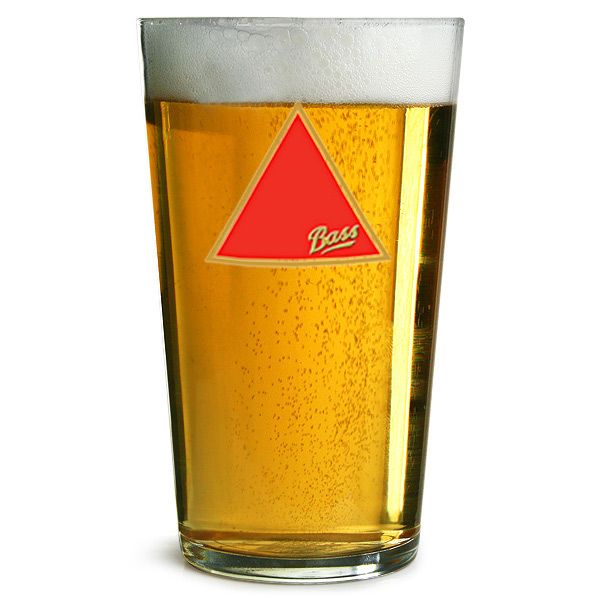
Today in 1988, US Patent EP 0138341 B1 was issued, an invention of Charles William Bamforth and Roy Cope, assigned to the Bass Public Limited Company, for their “Beer and Other Beverages and Their Manufacture.” There’s no Abstract, although in the description it includes this summary:

This invention relates to beer and other beverages and to their manufacture. In particular the invention is concerned with the incorporation into a beverage of an additive enabling the beverage to have a head formed on it or to improve the quality of the head that can be formed on it.

The invention is primarily applicable to beer, and the term beer is used herein to designate generally any of a variety of alcoholic beverages made by the fermentation of hopped malt wort; it thus includes within its scope ales, lagers and stouts. Beer itself is normally dispensed with a head, but there are also other beer-like beverages that are, like beer, bright and without haze and that are normally dispensed with a head to which the invention is also particularly applicable, these including beverages which include little or no alcohol but otherwise resemble beer quite closely.

bass-bottle-and-glass

Their claims for the patent are also listed as follows:

1. A method of modifying or improving beer or other beverage, the beverage being bright and without haze, which method comprises the step of incorporating in the beverage concerned an additive enabling the beverage to have a head formed on it or to improve the quality of the head that can be formed on it, the additive comprising protein fragments made by the partial hydrolysis of protein material, and the method being characterised in that the protein material comprises egg albumen and is added in an effective amount to improve or cause head formation without inducing haze formation.

2. A method according to claim 1 characterised in that the additive is formed as an aqueous solution.

3. A method according to claim 2 characterised in that the additive also contains a minor addition of ethyl alcohol.

4. A method according to any one of the preceding claims characterised in that the additive comprises fragments of protein material separated from any remaining unsevered protein material.

5. A method according to any one of the preceding claims characterised in that the beverage is made by a process including a fermentation stage and in which the additive is added at a stage later than the fermentation stage.

6. A method according to claim 5 characterised in that the beverage is beer.
bass-pint-glass

Filed Under: Beers, Breweries, Just For Fun, Politics & Law, Related Pleasures Tagged With: Bass, History, Law, Patent, Science of Brewing, UK

Patent No. 592295A: Bung And Faucet

October 26, 2015 By Jay Brooks

patent-logo
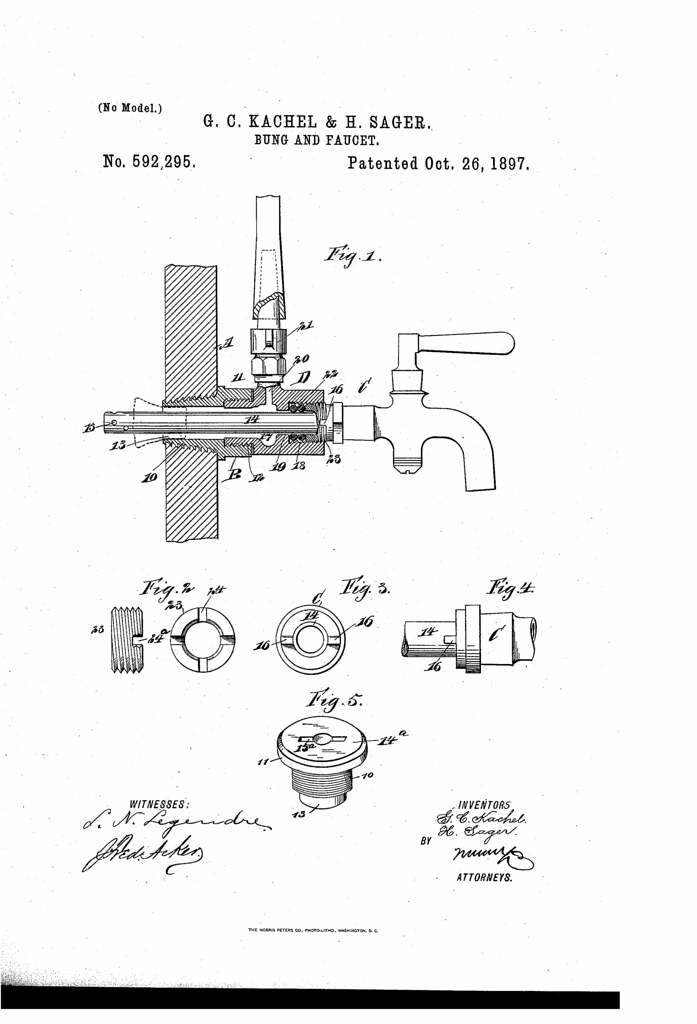
Today in 1897, US Patent 592295 A was issued, an invention of George C. Kaohel and Henry Sager, for their “Bung and Faucet.” There’s no Abstract, although in the description it includes this summary:

This invention relates to new and useful Improvement in Bungs and Faucets, of which the following is a full, clear, and exact description.

without destroying the keg or cask, as frequently occurs under the old process, the faucet employed being particularly adapted for this purpose.

A further object of the invention is to provide a bushing and barrel to receive the faucet so constructed that the kegs or casks will be practically as clean when returned to the brewery as when taken therefrom, since all the liquid may be drained from the receptacle.

The invention consists in the novel construction and combination of the several parts, as will be hereinafter fully set forth, and pointed out in the claims.

Untitled

Filed Under: Beers, Just For Fun, Politics & Law, Related Pleasures Tagged With: History, Kegs, Law, Patent

Patent No. 4055202A: In-Case Bottle Filling Apparatus

October 25, 2015 By Jay Brooks

patent-logo
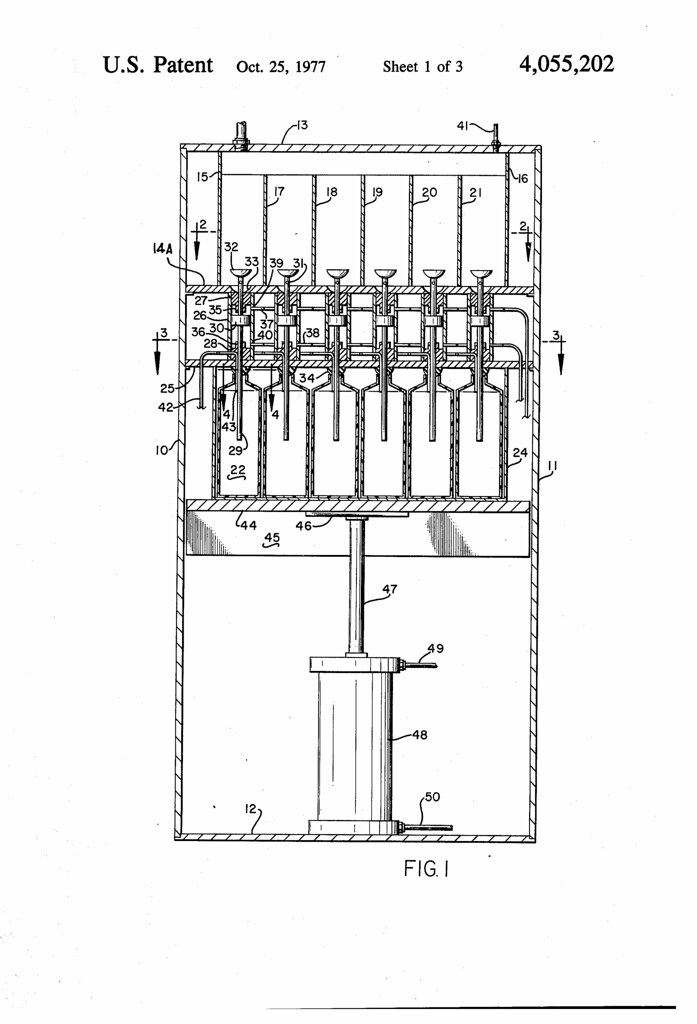
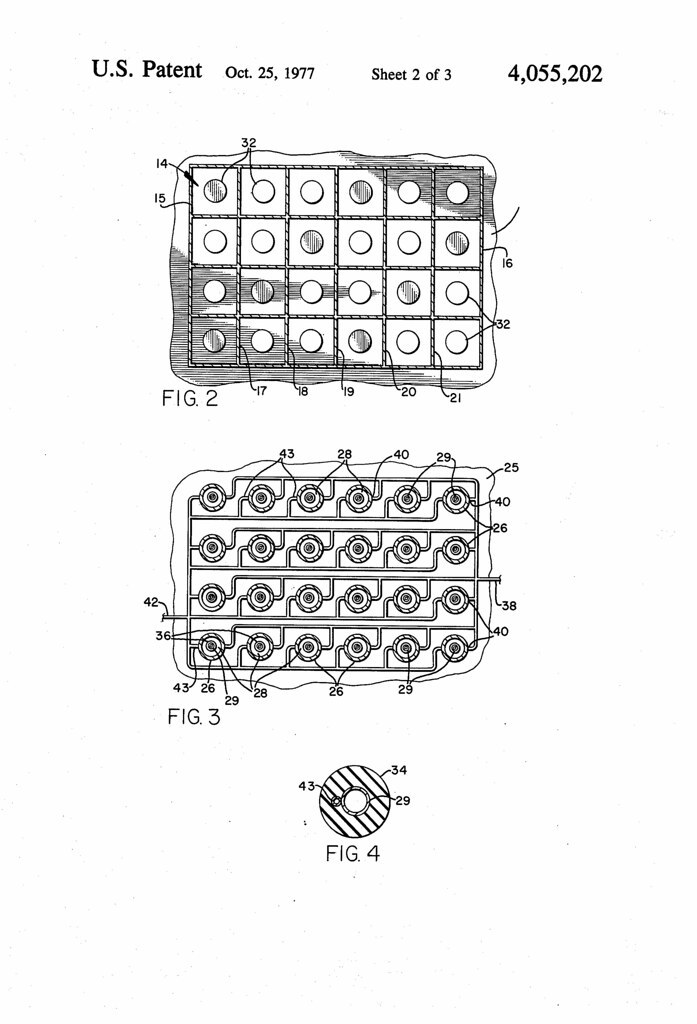
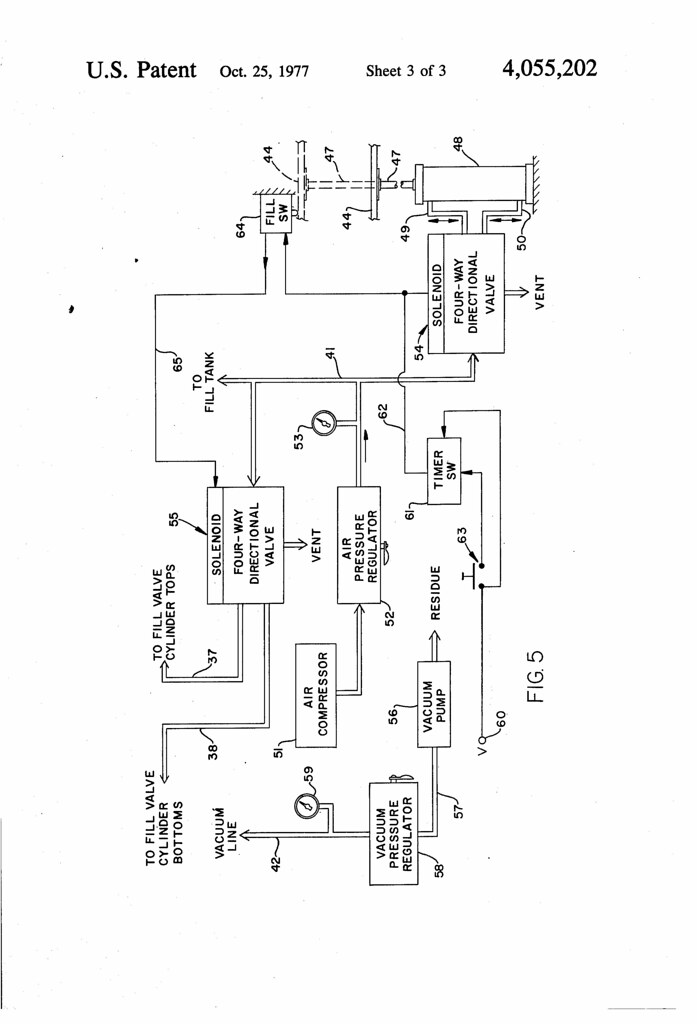
Today in 1977, US Patent 4055202 A was issued, an invention of James Albert Greene, for his “In-Case Bottle Filling Apparatus.” Here’s the Abstract:

A bottle filling device which raises in-case bottles to be filled to engagement with a fill valve assembly which controls fluid communication between a fill tube inserted into each bottle and a pressurized fill tank. Cup members, which engage the bottle openings in fill position, communicate with a vacuum line, such that the combination of pressurized fill source and air-evacuated bottles realizes extremely fast filling. The fill tubes are the shafts of respective double acting fluid pressure operated cylinders of simple construction which position a port in the fill tube upper wall extremes within the fill tank confines or within pressure sealing cylinder end bushings to define respective open and closed fill-valve conditions.

Untitled
Untitled
Untitled

Filed Under: Beers, Breweries, Just For Fun, Politics & Law, Related Pleasures Tagged With: Bottles, Brewing Equipment, History, Law, Patent, Science of Brewing

I Know What I Love

October 25, 2015 By Jay Brooks

camra-blk
Although I was blissfully ignorant of CAMRA in its earliest days — drinking American beer in Pennsylvania while in junior high and high school — my understanding is that it was not always as popular as it later became. And it certainly wasn’t universally beloved by many breweries, since they were moving toward keg beer which was much cheaper to produce and away from cask-conditioned beer, or real ale. It took a small dedicated group to convince brewers, and many ambivalent consumers, that real ale was worth preserving so British beer didn’t end up tasting like America of the 1970s. But there were critics of CAMRA almost from the get go, as recently detailed in a post by Boak & Bailey entitled A Brief History of CAMRA Bashing.

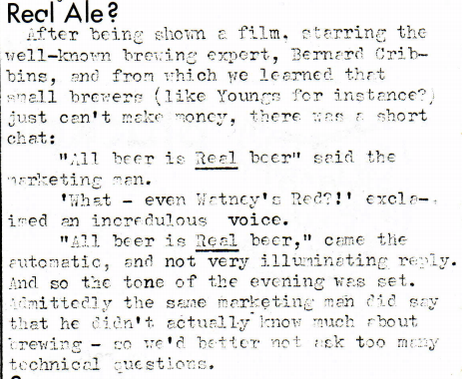
I didn’t follow all of Boak & Bailey’s thread on Twitter this morning, apart from finding part of a script from what they believed was a “c.1978 anti-‘real ale’ propaganda film starring Bernard Cribbins.” They were fishing to see if anybody might have more information about the movie.

real-ale-script

It turned out the film was from 1973, and a follower (thanks Cliff) found the actual film online, courtesy of the East Anglican Film Archive . The film is titled “I Know What I Love,” which is curiously very close to the title of a song from the Genesis album Selling England By the Pound, also released in 1973. That was “I Know What I Like,” but still, it was my first thought since I was a big fan of the band back then.

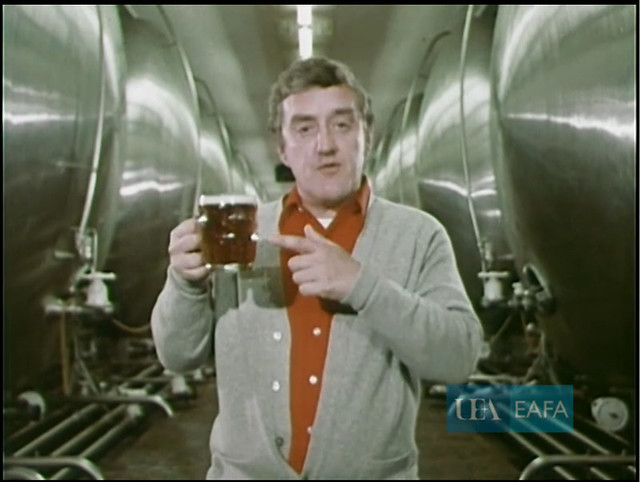
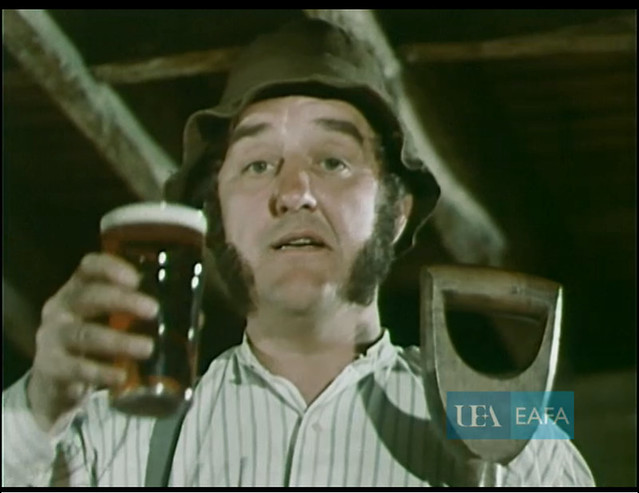
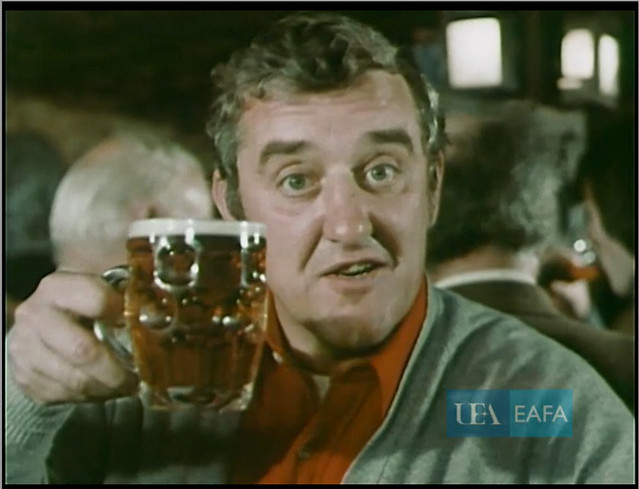
It’s a fairly goofy film, but also very interesting the way beer and brewing is presented. Bernard Cribbins, a reasonably well-known British character actor plays all of the major parts, explaining how beer is made. If you watch a lot of British TV or films, you’ve probably seen him. He’s made appearances in “The Avengers,” “Fawlty Towers,” “Doctor Who” and “Coronation Street,” and was in the films “The Railway Children,” “Don’t Raise the Bridge, Lower the River,” the 1967 Bond film “Casino Royale” and Alfred Hitchcock’s “Frenzy.”

cribbins-1973-6

Here’s the description from the film’s webpage at the EAFA:

Presented by The Brewers’ Society and featuring Bernard Cribbins in multiple roles, the documentary explains the process of brewing beer, from the pasture to the pint.

After ordering a pint at his local and taking a sip, the actor Bernard Cribbins sets out to explain the brewing process, with a little help from some of his ‘relatives’ in the industry, all played by Cribbins himself. One ‘cousin’ explains the malting process, where barley is germinated and malted, whilst another talks about hops, which contribute to the flavour of beer. His ‘uncle’, who works in a traditional brewery, explains the process, from the spurging of barley in mush tuns to the addition of hops, followed by yeast to aid fermentation, before the beer is conditioned and siphoned into casks.

Brewing on an industrial scale is also explained by Cribbins, with the help of one ‘relative’ who grows large amounts of barley, and a ‘distant relative’ who works as a technician at a large brewer. The film concludes with a glimpse at pub life, with a variety of environments catering for a range of tastes, but linked together by one thing: beer. With the process explained, Cribbins heads back to the bar for another pint, which is pulled by the governor, his ‘father’.

cribbins-1973-3

It was created by the Rank Short Films Group and sponsored by the Brewers’ Society. The director was James Allen from a script by Michael Barnes and the only actor credited is Bernard Cribbins. It doesn’t strike me as particularly anti-real ale, but maybe there’s some nuance I’m missing. They certainly try to allay fears that stainless steel, and modern brewing methods didn’t change the beer they produced. The humor seems a little forced, and not particularly witty, more mildly amusing than funny.

Unfortunately, the archive doesn’t allow their films to be embedded but you can go to their website and watch it online, which I highly recommend. It runs around seventeen minutes, and is certainly an interesting look at brewing at a particular time in recent history.

cribbins-1973-2

Filed Under: Beers, Breweries, Just For Fun, Politics & Law, Related Pleasures Tagged With: CAMRA, England, Great Britain, History, UK, Video

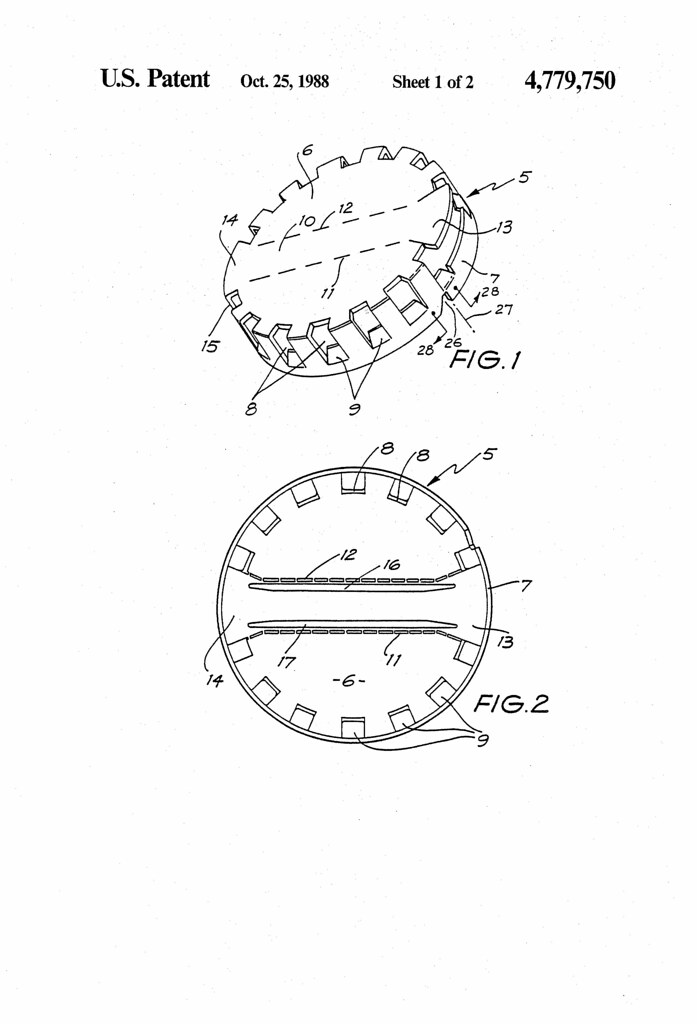
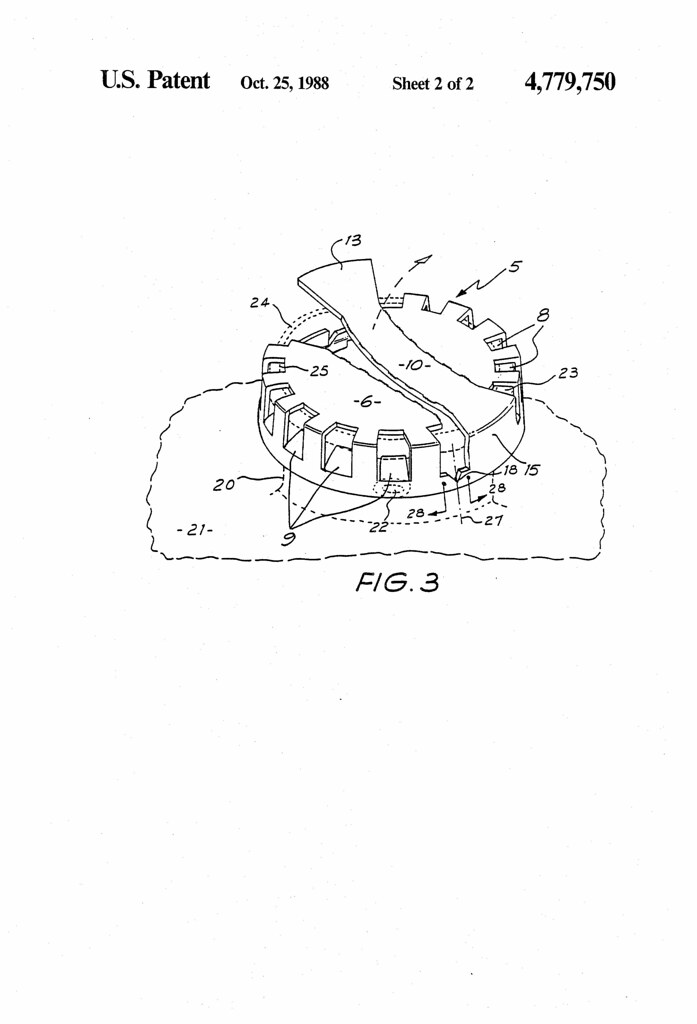
Patent No. 4779750A: Beer Keg Cap

October 25, 2015 By Jay Brooks

patent-logo
Today in 1988, US Patent 4779750 A was issued, an invention of Kenneth J. Armstrong, for his “Beer Keg Cap.” Here’s the Abstract:

A removable thermoplastic cap for a beer keg bushing comprising a flat disc with integral peripheral skirt which includes inturned upwardly directed gripping lugs preventing removal of the cap when once fitted to a beer keg bushing, vertical slots spaced around the skirt and extending partway across the disc to provide venting for the interior of the bushing, and a pull tab provided on one side of the disc and connected by weakened lines to the opposite side thereof to facilitate peeling off of the cap by tearing apart the skirt.

Untitled
Untitled

Filed Under: Beers, Just For Fun, Politics & Law, Related Pleasures Tagged With: History, Kegs, Law, Patent

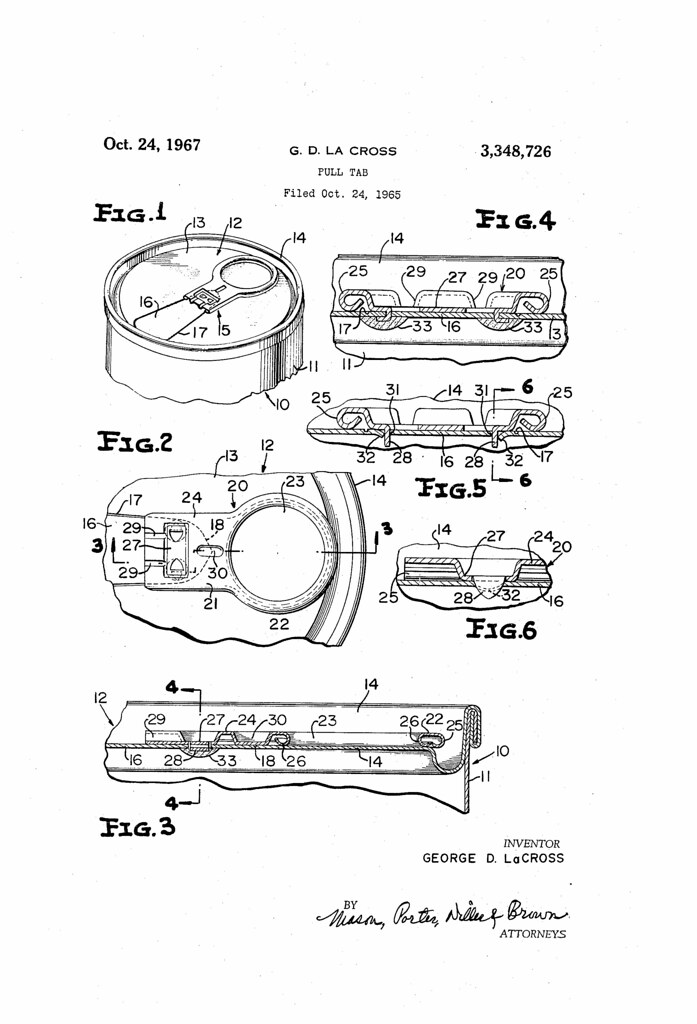
Patent No. 3348726A: Pull Tab

October 24, 2015 By Jay Brooks

patent-logo
Today in 1967, US Patent 3348726 A was issued, an invention of George D. La Cross, assigned to the Continental Can Co., for his “Pull Tab.” There’s no Abstract, although in the description it includes this summary:

This invention relates in general to new and useful improvements in easy opening containers, and more particularly to a novel pull tab construction.

In accordance with this invention, it is proposed to provide a metal pull tab which is secured to the tear strip by means of nibs which pierce the tear strip and which are sealed relative thereto.

Another object of this invention is to provide a novel pull tab which is -formed of sheet metal, but which is so constructed wherein it has the necessary beam strength while at the same time may be readily secured to a tear strip in sealed relation thereto.

Another object of this invention is to provide a novel pull tab and tear strip assembly wherein both the tear strip and the pull tab are formed of metal and the pull tab is provided with a pair of nibs which pierce the tear strip and bend there beneath, the openings required in the tear strip for the passage of the nibs being sealed by completely encasing each nib in a covering of sealing compound.

Another object of this invention is to provide a novel tear strip pull tab assembly wherein the pull tab is formed of sheet metal and has a pair of depending nibs, and the tear strip has narrow slits for receiving the nibs, the metal of the tear strip adjacent each slit being slightly deformed to facilitate the passage of a nib therethrough, and the metal being returned to its normal position during the folding over of the nib beneath the tear strip with the metal, when it returns to its original position, tightly clamping and forming interlock with the nib.

Untitled

Filed Under: Beers, Just For Fun, Politics & Law, Related Pleasures Tagged With: Cans, History, Law, Patent

Patent No. 196297A: Improvement In Beer-Cooling Apparatus

October 23, 2015 By Jay Brooks

patent-logo
Today in 1877, US Patent 196297 A was issued, an invention of Charles P. Hovey, for his “Improvement In Beer-Cooling Apparatus.” There’s no Abstract, although in the description it includes this summary:

It is to obviate these difficulties, and to produce a cooler which may be readily transported from place to place for use, and which may be placed under an ordinary counter, that my invention is designed.
To this end I construct a chest, A, of wood or other suitable material, and line its interior partially or entirely with galvanized sheet-iron, zinc, or other suitable material, after the manner of constructing an ordinary ice-chest. The chest is provided with one or more removable sides, H, and a removable, cover or top, B, through which access may be had to the interior of the chest. At or near one end of the chest, inside of the same, is located an air pump, G, of any suitable construction, it being secured to one of the walls of the chest by means of screws or other suitable means.

The cask which contains the beer is placed inside of the chest, in such position as to leave an open space all around it between it and the walls of the chest. In the upper end of the cask a cylindrical tubular plug or drive, m, is inserted, and through this plug passes a tube, the lower end of which passes down to, or nearly to, the bottom of the cask, while its upper end terminates in a faucet, F, of any suitable construction. A packed joint is formed at the upper end of the plug or drive m, where the tube 0 passes through it, but below this point an annular space is left between the tube and the interior of the plug or drive m. A tubular projection, I, is formed on one side of the plug or drive, communicating with the annular space just mentioned, so that connecting’ the pump G and the tubular projection, by means of a short tube or pipe, air will be caused to pass into, the area when the pump is operated, and maybe held there by turning the small cock. shown near the tubular projection. It will be observed that all the parts of this apparatus are placed Within the chest, except B and D, as shown, at a point directly in line with the tube or pipe 0, a semicircular nc tch being made in reach section to it around the same.

In order to close the lid or cover when the pump is not being used, and at the same time I to render the pump readily accessible, a portion of the 1id, G, is out and hinged to: the main portion B, as shown, the portion is being directly over the pump. If preferred, however, the handle of the-pump may extend up through the top or cover in the same manner as the tuber or the pump maybe attached to r the outside of the chest, with its supply-pipe opening into the same. The pump, caslg and tubes being all placed within the ice-chest, it is apparent that the air which is forced into the cask must be cold and pure, and the pipes being short, the air and beer will pass through them Without becoming in any Way affected thereby.

The apparatus thus constructed occupies but a small amount of space, and can be placed under an ordinary counter, or it may be made ornamental in appearance and I placed in sight; can be taken from place to place for picnics and exeursiolis, and is cheap to manufacture.

Untitled

Filed Under: Beers, Just For Fun, Politics & Law, Related Pleasures Tagged With: History, Kegs, Law, Patent

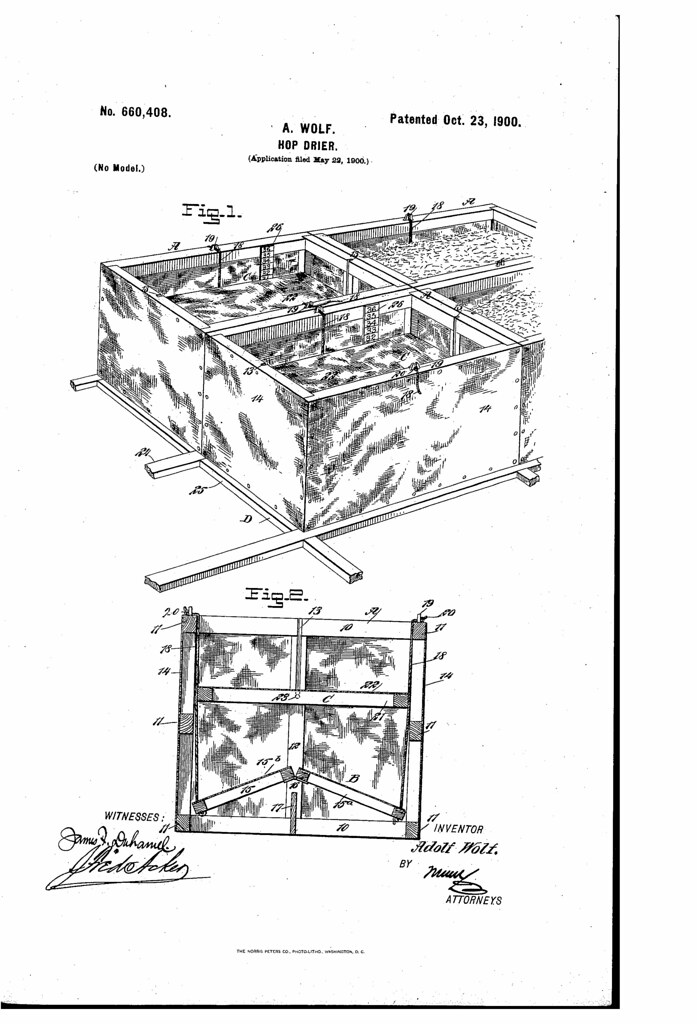
Patent No. 660408A: Hop-Drier

October 23, 2015 By Jay Brooks

patent-logo
Today in 1900, US Patent 660408 A was issued, an invention of Adolf Wolf, for his “Hop-Drier.” There’s no Abstract, although in the description it includes this summary, although it’s a bit odd and not terribly straightforward as I believe there may have been some problems with the OCD on this one:

One purpose of the invention is to provide are obtainable under the present treatment of hops.

Another purpose of the invention is to provide a means of drying the hops which will economize in time, fuel, labor, and expense and to construct the driers that the lupulin will be preserved and the hops may be dumped quickly and conveniently without damage.

Untitled

Filed Under: Beers, Just For Fun, Politics & Law, Related Pleasures Tagged With: Brewing Equipment, History, Hops, Law, Patent

Patent No. 0873396B1: Brewing Products And Their Methods For Production (Clear Beer)

October 22, 2015 By Jay Brooks

patent-logo
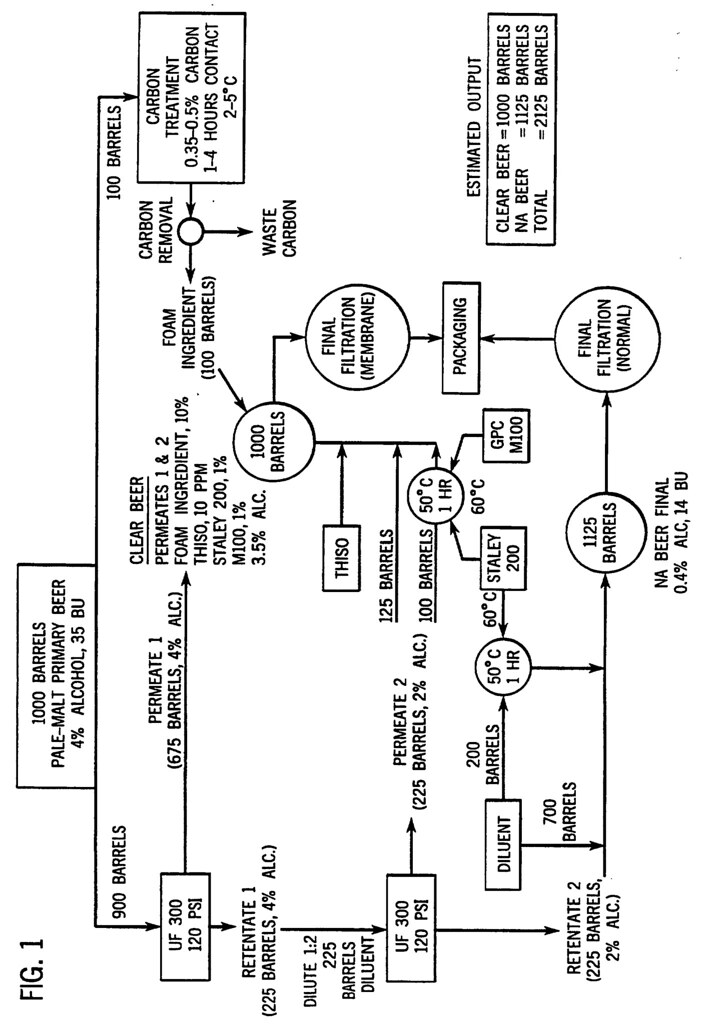
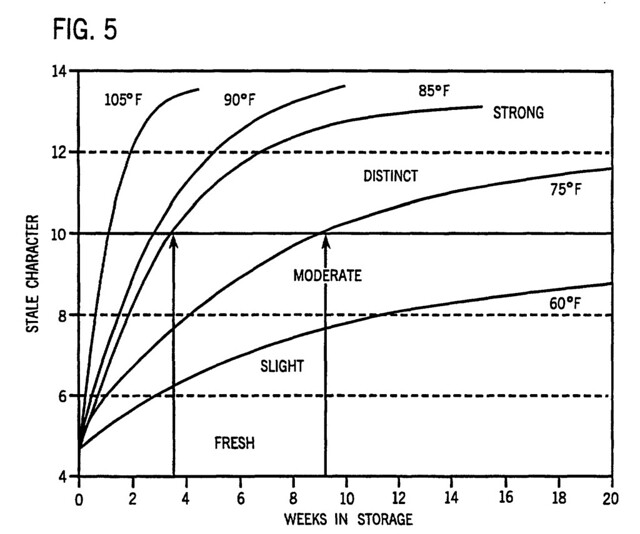
Today in 2003, US Patent 0873396 B1 was issued, an invention of Vinod K. Chaudhary, Robert J. Mizerak, Sydney R. Rader, David S. Ryder, William G. Schulze, and Matthew L. Tripp, assigned to Miller Brewing Company, for their “Brewing Products And Their Methods For Production.” Here’s the Abstract:

A method is disclosed of preparing a colorless, clear beer by a method including ultrafiltration and the addition of dextrins, bittering agents and a foam enhancer. Methods of preparing improved nonalcoholic malt beverages and making natural beer foaming components also are disclosed.

Untitled
Untitled

Filed Under: Beers, Breweries, Just For Fun, Politics & Law, Related Pleasures Tagged With: History, Law, Patent, Science of Brewing

Patent No. 3843172A: Keg Tapping Device Having Improved Sealing Means

October 22, 2015 By Jay Brooks

patent-logo
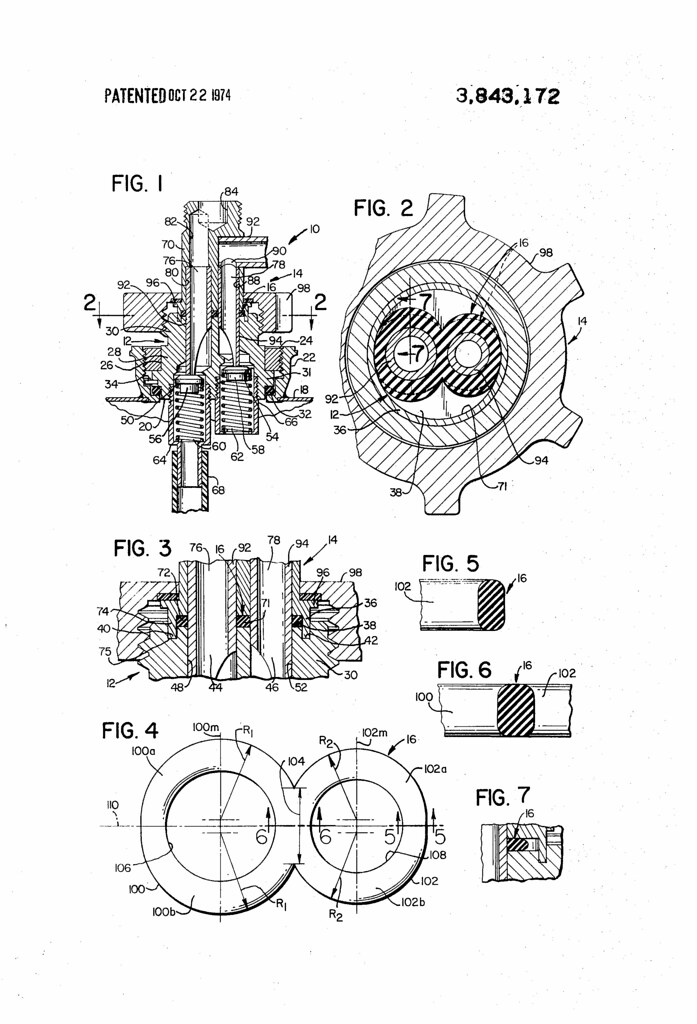
Today in 1974, US Patent 3843172 A was issued, an invention of Frederick F. Stevens, assigned to Hoff Stevens, for his “Keg Tapping Device Having Improved Sealing Means.” Here’s the Abstract:

A tapping device for beer kegs or the like includes a keg unit permanently or semi-permanently mounted on a keg and having a pair of passageways therethrough for receiving a pair of tubular probes associated with a tavern unit which is connected to the keg unit at a tavern or restaurant where beer is dispensed. The device includes a unitary elastomeric seal member carried by the tavern unit and surrounding the probes thereon. The seal member provides a gas and liquid tight seal between the tavern and the keg units when the two units are assembled in connected relation. Means is provided to limit compressive force applied to the seal member by connection of the units so that it retains its sealing integrity even after prolonged usage involving repeated connection ,and disconnection.

Untitled

Filed Under: Beers, Just For Fun, Politics & Law, Related Pleasures Tagged With: History, Kegs, Law, Patent

« Previous Page
Next Page »

Find Something

Northern California Breweries

Please consider purchasing my latest book, California Breweries North, available from Amazon, or ask for it at your local bookstore.

Recent Comments

  • Bob Paolino on Beer Birthday: Grant Johnston
  • Gambrinus on Historic Beer Birthday: A.J. Houghton
  • Ernie Dewing on Historic Beer Birthday: Charles William Bergner 
  • Steve 'Pudgy' De Rose on Historic Beer Birthday: Jacob Schmidt
  • Jay Brooks on Beer Birthday: Bill Owens

Recent Posts

  • Beer In Ads #5190: Heurich Bock Beer Satisfies A Long Thirst! March 28, 2026
  • Historic Beer Birthday: August Anheuser Busch, Jr. a.k.a. Gussie Busch March 28, 2026
  • Historic Beer Birthday: Frederick Pabst March 28, 2026
  • Beer In Ads #5189: —Here’s To Spring! March 27, 2026
  • Historic Beer Birthday: Ebenezer Beadleston  March 27, 2026

BBB Archives

Feedback

Head Quarter
This site is hosted and maintained by H25Q.dev. Any questions or comments for the webmaster can be directed here.