Brookston Beer Bulletin

Jay R. Brooks on Beer

  • Home
  • About
  • Editorial
  • Birthdays
  • Art & Beer

Socialize

  • Dribbble
  • Email
  • Facebook
  • Flickr
  • GitHub
  • Instagram
  • LinkedIn
  • Pinterest
  • RSS
  • Twitter
  • YouTube

Powered by Genesis

Patent No. 3054676A: Process For Producing A Cereal Adjunct For Use In Brewing

September 18, 2015 By Jay Brooks

patent-logo
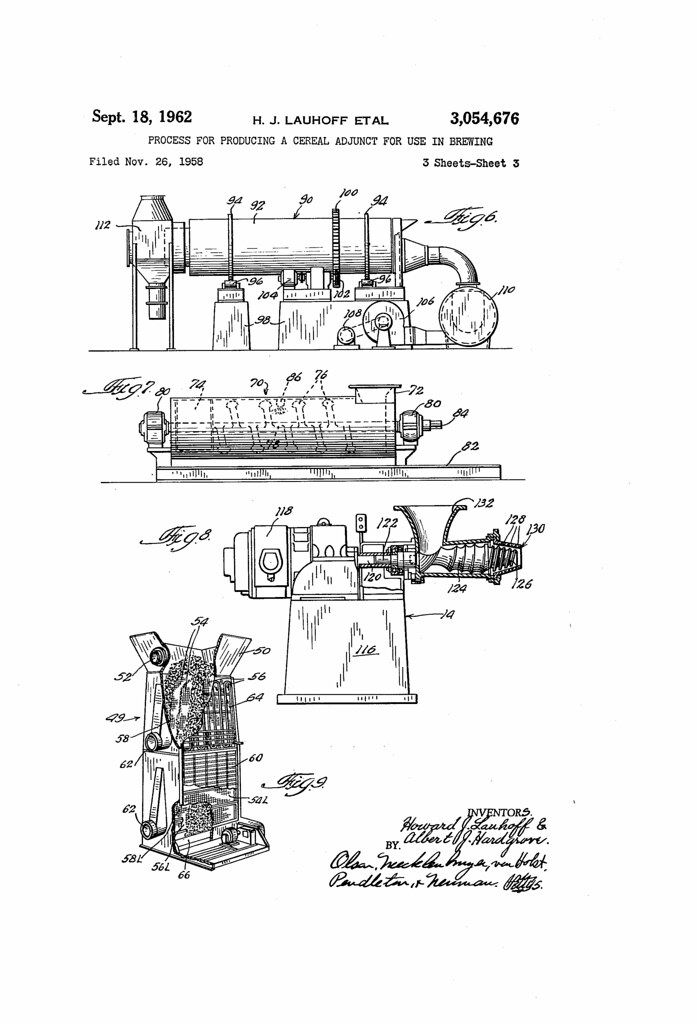
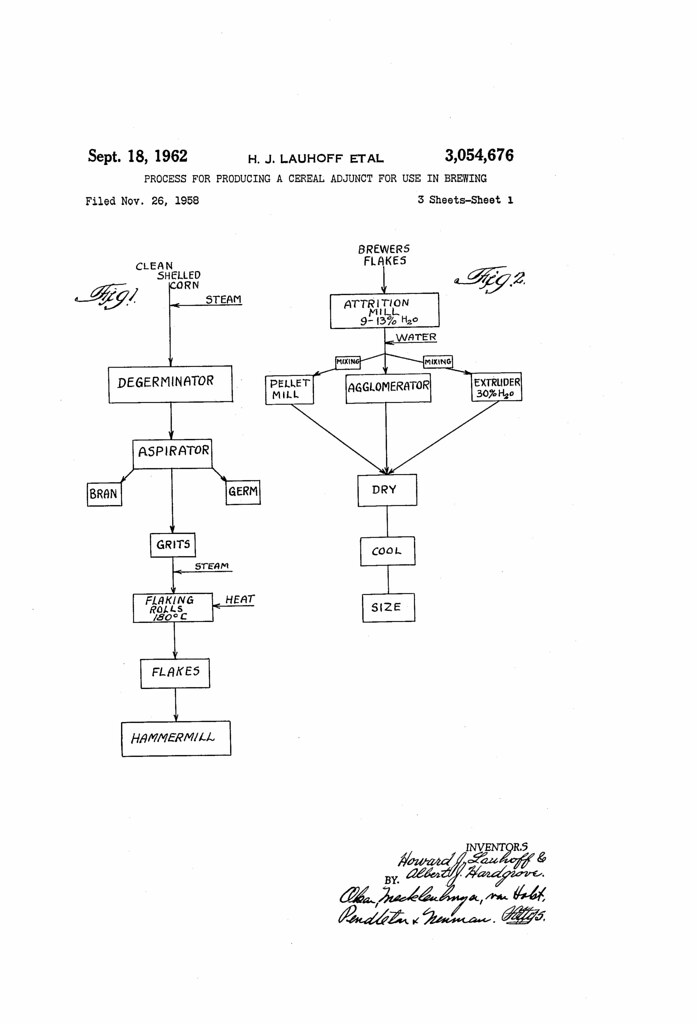
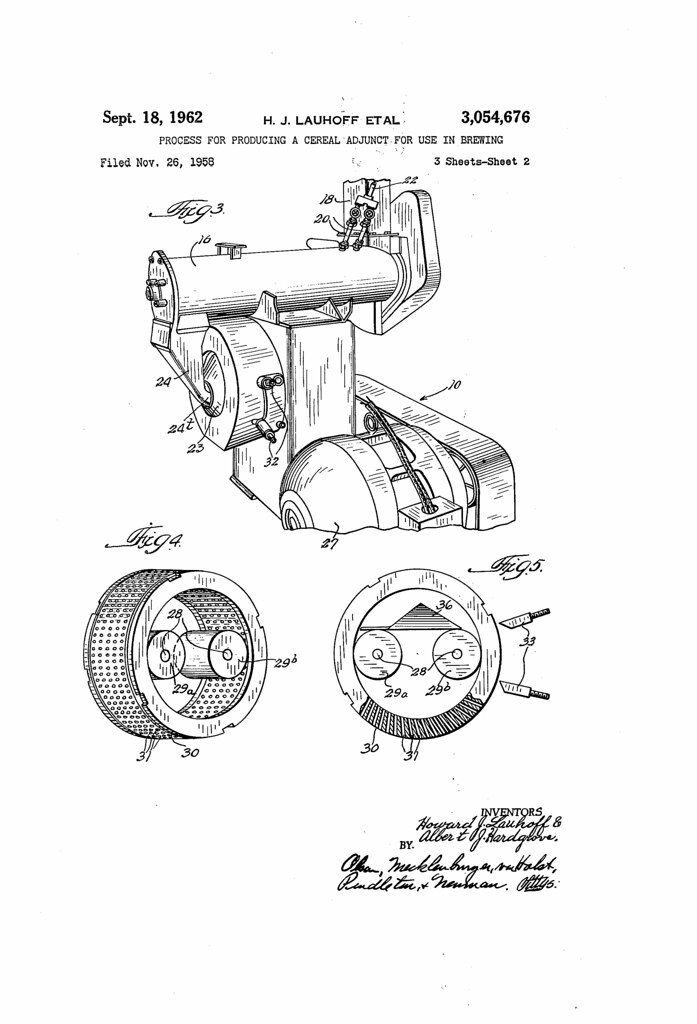
Today in 1962, US Patent 3054676 A was issued, an invention of Albert J. Hardgrove and Howard J. Lauhoff, assigned to the Lauhoff Grain Company, for their “Process For Producing A Cereal Adjunct For Use In Brewing.” There’s no Abstract, although in the description it includes this summary:

It is an object of this invention therefore to provide an improved cereal adjunct which can be efficiently handled and employed directly in the mashing step without pre-treatment. It is also an object of this invention to provide a method for producing such adjunct.

It is a further object of this invention to provide an improved cereal adjunct which will produce a higher product yield in the normal brewing operation.

It is another object of this invention to provide a cereal adjunct which can be efficiently utilized in any modern automatic brewery apparatus designed to handle materials necessary in the brewing process.

It is another object of this invention to provide an improved pre-gelatinized cereal adjunct for breweries which has less bulk than other similar type adjuncts, thereby reducing shipping costs, and requiring less storage space.
Untitled
Untitled
Untitled

Filed Under: Beers, Breweries, Just For Fun, Politics & Law, Related Pleasures Tagged With: History, Law, Patent, Science of Brewing

Patent No. D178808S: Bottle

September 18, 2015 By Jay Brooks

patent-logo
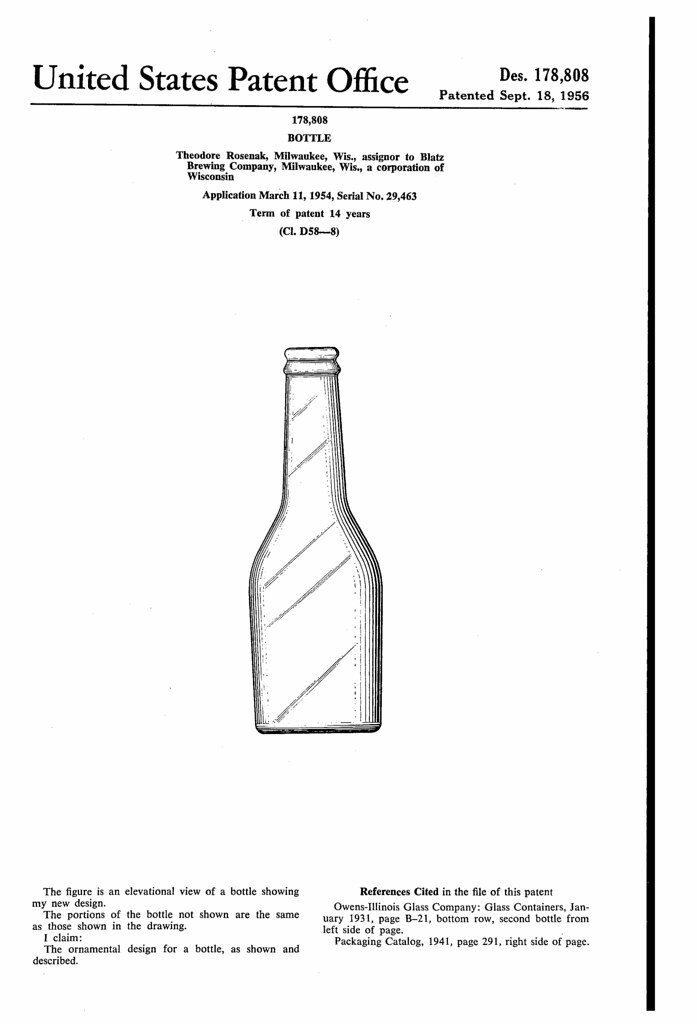
Today in 1956, US Patent D178808 S was issued, an invention of Theodore Rosenak, assigned to the Blatz Brewing Company, for his “Bottle.” There’s no Abstract, although in the description it includes this, and only this:

The ornamental design for a bottle, as shown.

Untitled

Filed Under: Beers, Breweries, Just For Fun, Politics & Law, Related Pleasures Tagged With: Bottles, History, Law, Patent

Patent No. PP18039P3: Hop Plant Named ‘Summit’

September 18, 2015 By Jay Brooks

patent-logo
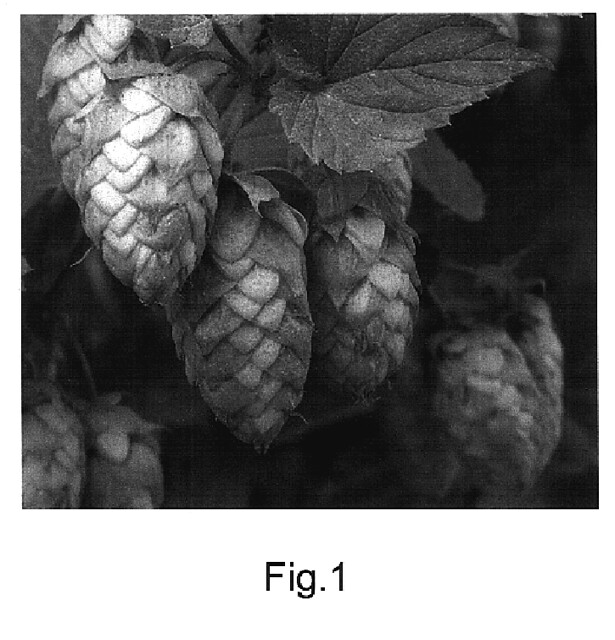
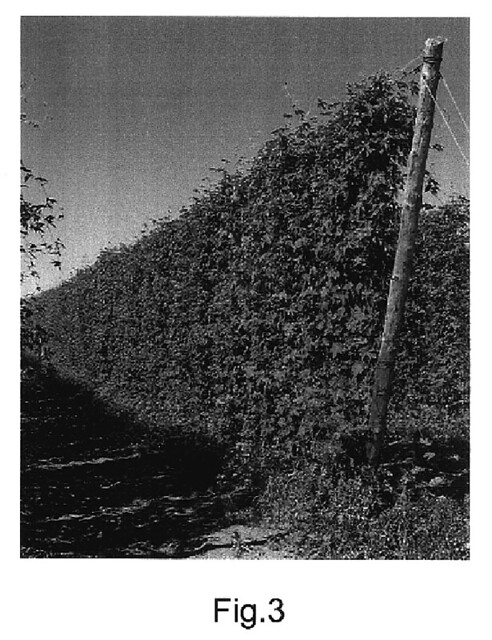
Today in 2007, US Patent PP18039 P3 was issued, an invention of Roger Jesket, assigned to the American Dwarf Hop Assoc., for his “Hop plant named ‘Summit.’” Here’s the Abstract:

A new variety of hop is described and which is characterized principally as to novelty by being semi-dwarf in stature; and which further produces cones having a high percentage of alpha-acids, high alpha/beta ratio and excellent storage stability of alpha-acids.

Summit has become such a popular hop variety that it’s hard to fathom that it’s only been around since 2007, although it was actually first released in 2003. HopUnion describes it as exhibiting “distinct spice, earthy, onion, garlic and citrus (pink grapefruit, orange and tangerine) tones.” A few beers using Summit include Widmer’s Drifter Pale Ale, Stoudt’s Black Eye PA, Fifty Fifty’s Rockslide IPA, Oskar Blues’ Gubna, Green Flash’s Palate Wrecker, and many others.

Untitled
Untitled
Untitled

Filed Under: Beers, Just For Fun, Politics & Law, Related Pleasures Tagged With: History, Hops, Law, Patent

Patent No. 5555992A: Double Hinged Opening For Container End Members

September 17, 2015 By Jay Brooks

patent-logo
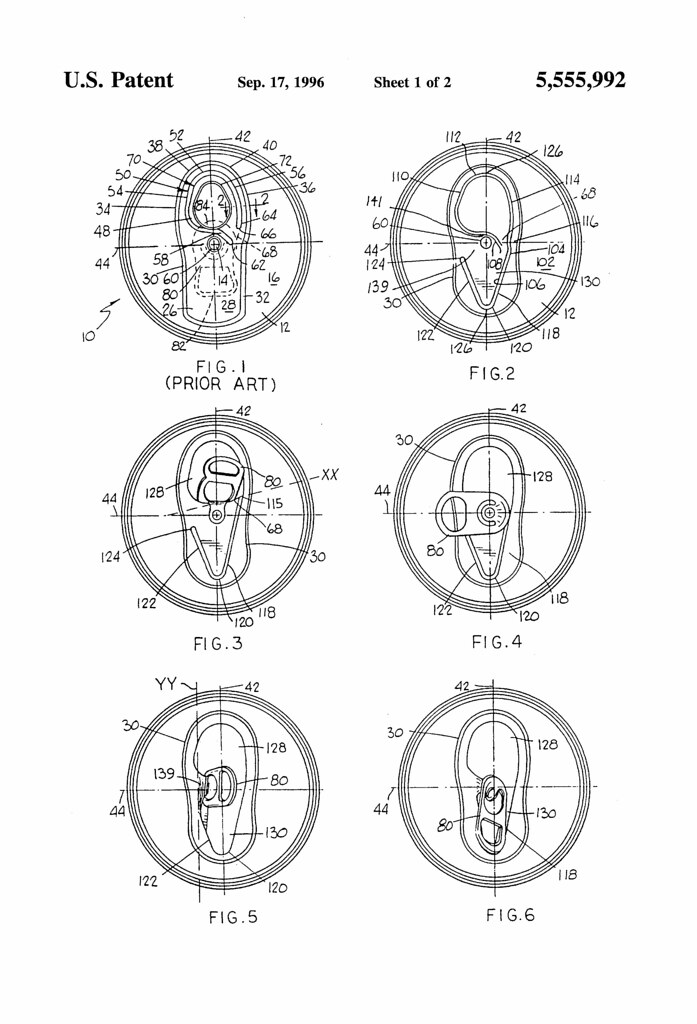
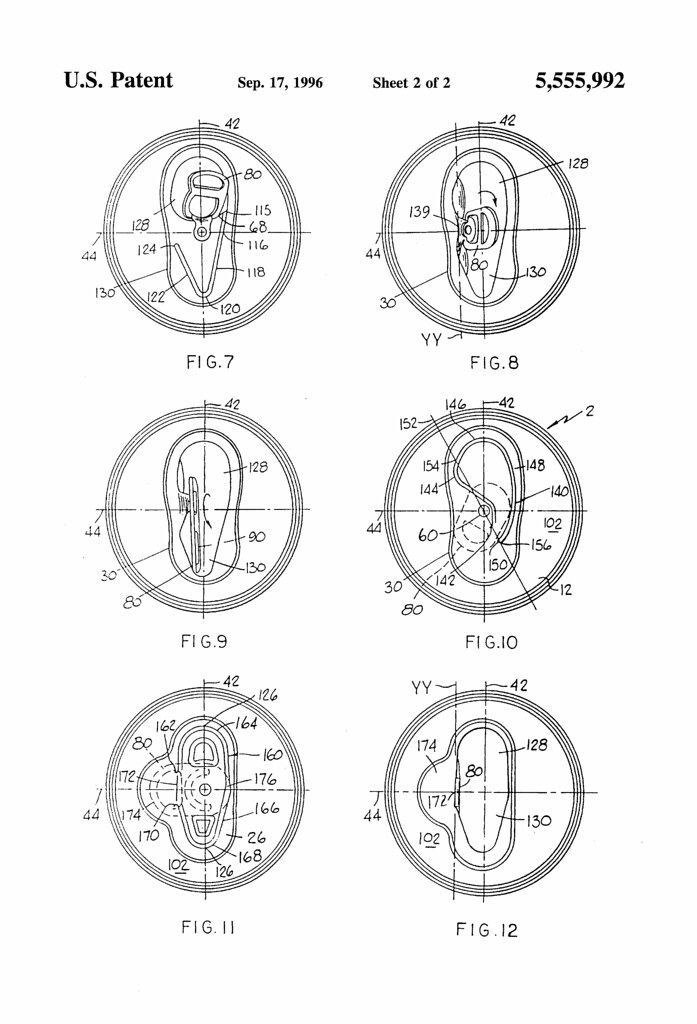
Today in 1996, US Patent 5555992 A was issued, an invention of William A. Sedgeley, assigned to the Coors Brewing Company, for their “Double Hinged Opening for Container End Members.” Here’s the Abstract:

A container end member has a peripheral wall and integral central end wall portion with a stay-on-tab mounted on the central end wall portion for pivotal and rotational movement and a score line groove defined by two spaced apart terminal ends formed in the central end wall portion for defining a severable panel portion that is large enough so that when severed will provide an elongated opening that vents the container to permit pouring of the beverage in the container at faster pour rates than now available.

Untitled
Untitled

Filed Under: Beers, Just For Fun, Politics & Law, Related Pleasures Tagged With: Cans, History, Law, Packaging, Patent

What The New Landscape Of Beer Might Look Like

September 17, 2015 By Jay Brooks

beer-garden
You’d have to be living under a rock to not have seen the news that ABI was planning a takeover bid to acquire SABMiller, which might work unless SABMiller might be able to buy Heineken, thus making itself too big for ABI to get in a hostile takeover. These rumors have long been circulating so nobody who’s been paying attention to the beer industry was too surprised at these announcements.

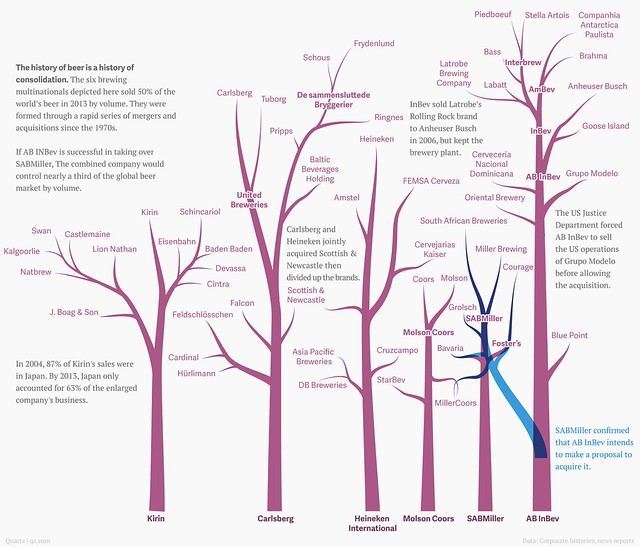
But so far I haven’t seen too much discussion about what the beer world might look like if any of these come to pass. The online news site Quartz filled that gap by producing a chart showing that This is what the family tree of beer companies will look like if AB InBev acquires SABMiller.

beermergers-2015
Click here to see the chart full size.

Filed Under: Breweries, Just For Fun, Politics & Law, Related Pleasures Tagged With: Big Brewers, Business, Infographics, International

Patent No. 2014492A: Beer Faucet And Tap

September 17, 2015 By Jay Brooks

patent-logo
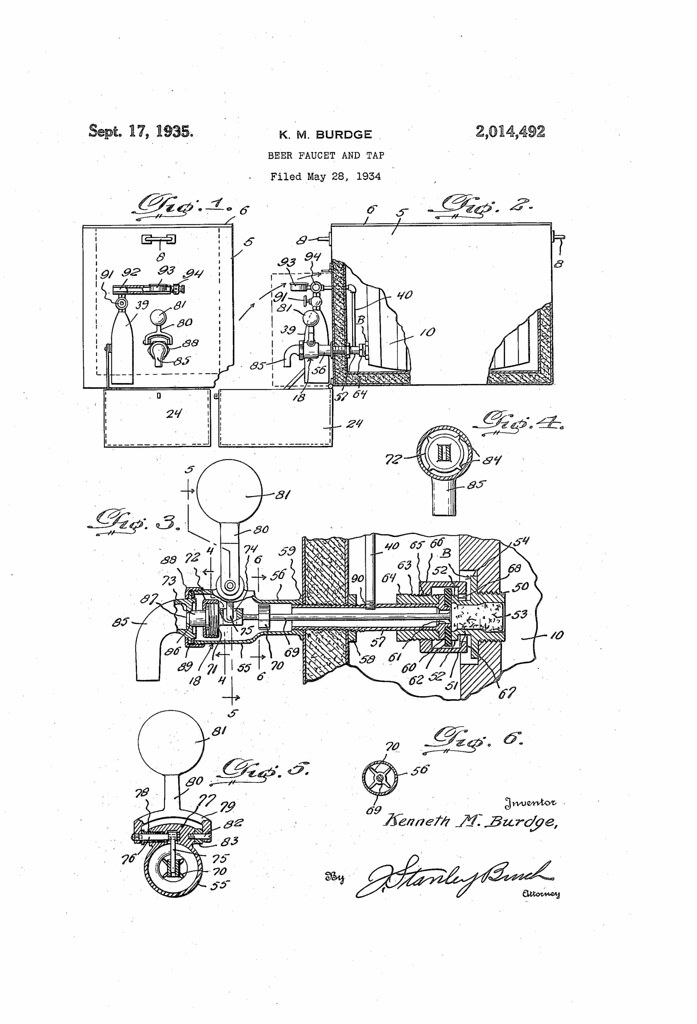
Today in 1935, US Patent 2014492 A was issued, an invention of Kenneth Miles Burdge, for his “Beer Faucet and Tap.” There’s no Abstract, although in the description it includes this summary:

This invention relates to a beer faucet and tap, and has more particular reference to an improved beer faucet having means for coupling it to the tap bushing ordinarily secured to the head of a beer barrel or keg, and provided with a reciprocating valve operable to drive the cork out of the tap bushing of the barrel or keg when the faucet is initially coupled thereto.

An object of the present invention is to provide a beer faucet and tap of the above kind which is simple and durable in construction, efficient in operation, and otherwise well adapted to meet with all of the requirements for a successful commercial use.

A further object of the invention is to provide a beer faucet and tap of the above kind Whose parts may be economically manufactured and initially assembled in a ready manner, and which parts may be readily disassembled for renewal or repair.

Untitled

Filed Under: Beers, Just For Fun, Politics & Law, Related Pleasures Tagged With: History, Kegs, Law, Patent

Patent No. 3467132A: Beer Keg Fitting With Limit Stops

September 16, 2015 By Jay Brooks

patent-logo
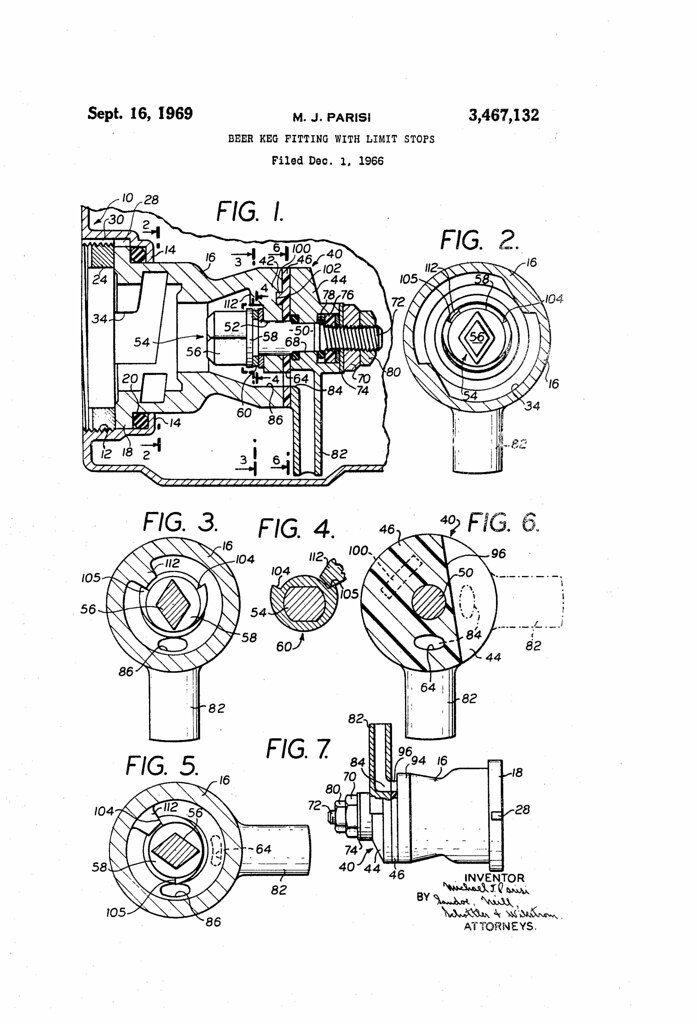
Today in 1969, US Patent 3467132 A was issued, an invention of Michael J. Parisi, for his “Beer Keg Fitting with Limit Stops.” There’s no Abstract, although in the description it includes this summary:

A beer keg valve having a body portion which inserts into an opening in the keg and a valve at the inner end of the body limited to 90 rotation by abutments on the valve stem which strike against complementary abutments integral with the inside surface of the valve body.

Untitled

Filed Under: Beers, Just For Fun, Politics & Law, Related Pleasures Tagged With: History, Kegs, Law, Patent

Patent No. 3905522A: Keg Tapping Device

September 16, 2015 By Jay Brooks

patent-logo
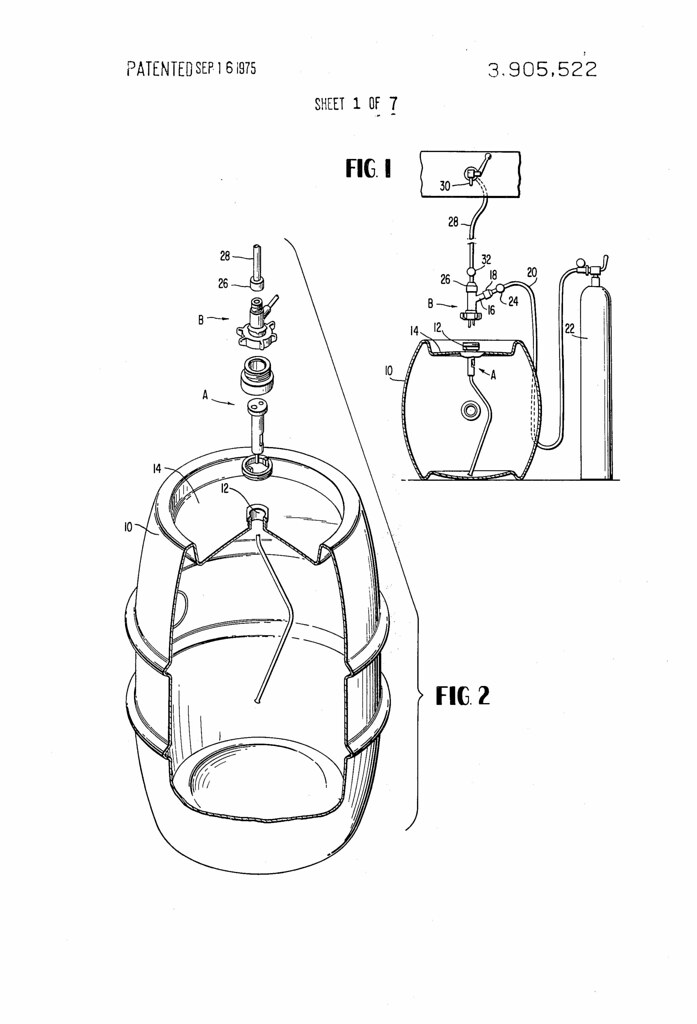
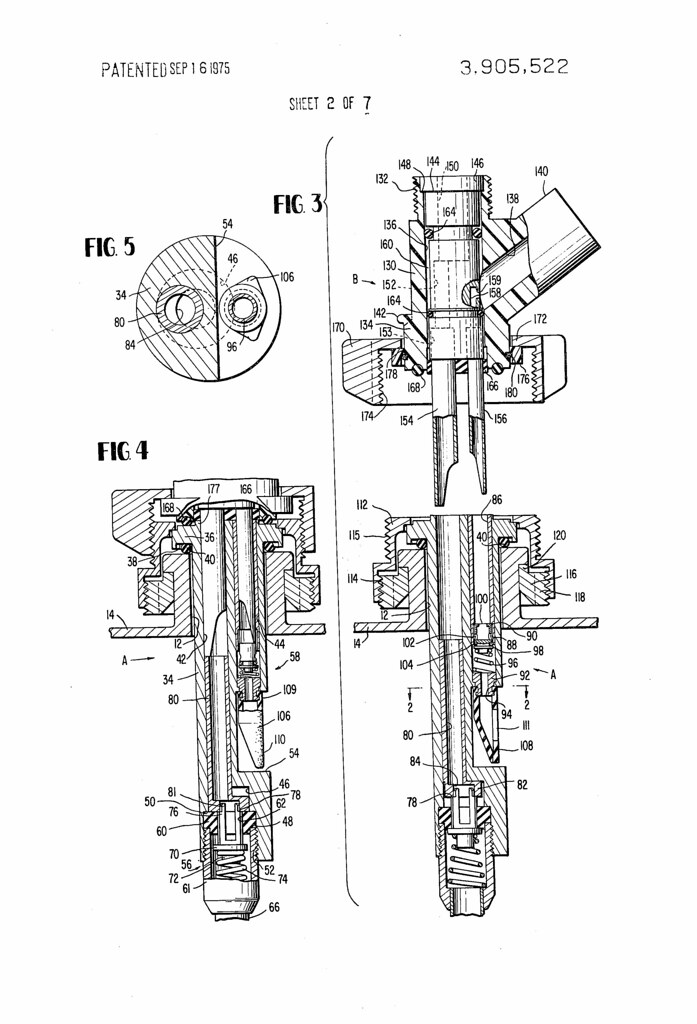
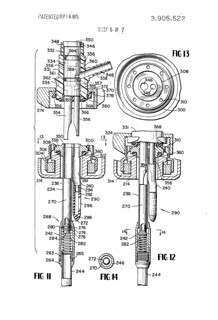
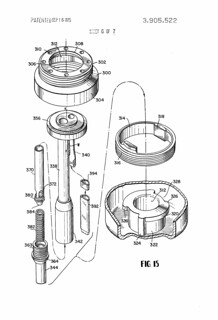
Today in 1975, US Patent 3905522 A was issued, an invention of Mack S. Johnston, assigned to Draft Systems, for his “Keg Tapping Device.” Here’s the Abstract:

In one form hereof, there is disclosed a keg adapter having a siphon body formed of bar stock receivable through the opening of a keg from without the keg. The siphon body has liquid and gas passages extending longitudinally of the keg adapter terminating at their upper ends in a pair of bores disposed eccentrically of the central axis of the keg adapter. In another form, there is disclosed a keg adapter having a siphon body formed primarily of tubular stock with tubular members receivable through the opening of a keg from without the keg. The tubular members per se comprise liquid and gas passages terminating at their upper ends in a pair of openings disposed eccentrically of the central axis of the keg adapter and opening through a flange member formed of bar stock. A coupler unit, having a pair of depending probes, is engageable with either form of the keg adapter with the probes being receivable in the bore holes or tubes as applicable to form a continuation of the liquid and gas passages. A sleeve is provided in the liquid passage of both adapters for opening a normally closed liquid valve therein. A gas valve is axially spaced from the liquid valve and in both forms includes a gas check valve comprising a flexible envelope having a slit and which envelope lies in communication with the gas passage. In the one form, the gas valve also includes a spring-biased valve plate mounting an O-ring sealing about the walls of the gas passage. The tips of the probes on the coupler unit in the one form depress the associated valve members to open the valves and permit ingress of gas through the coupler unit and keg adapter into the keg and egress of liquid from the keg through the keg adapter and coupler unit. In the other form, the tip of the liquid probe on the coupler depresses the sleeve to open the liquid valve whereby air flows through the coupler into the keg past the check valve of the adapter and beer flows outwardly from the keg through the adapter and coupler.

Untitled
Untitled

Untitled Untitled

Untitled
Untitled Untitled

Filed Under: Beers, Just For Fun, Politics & Law, Related Pleasures Tagged With: History, Kegs, Law, Patent

Patent No. 305227A: Beer-Chip

September 16, 2015 By Jay Brooks

patent-logo
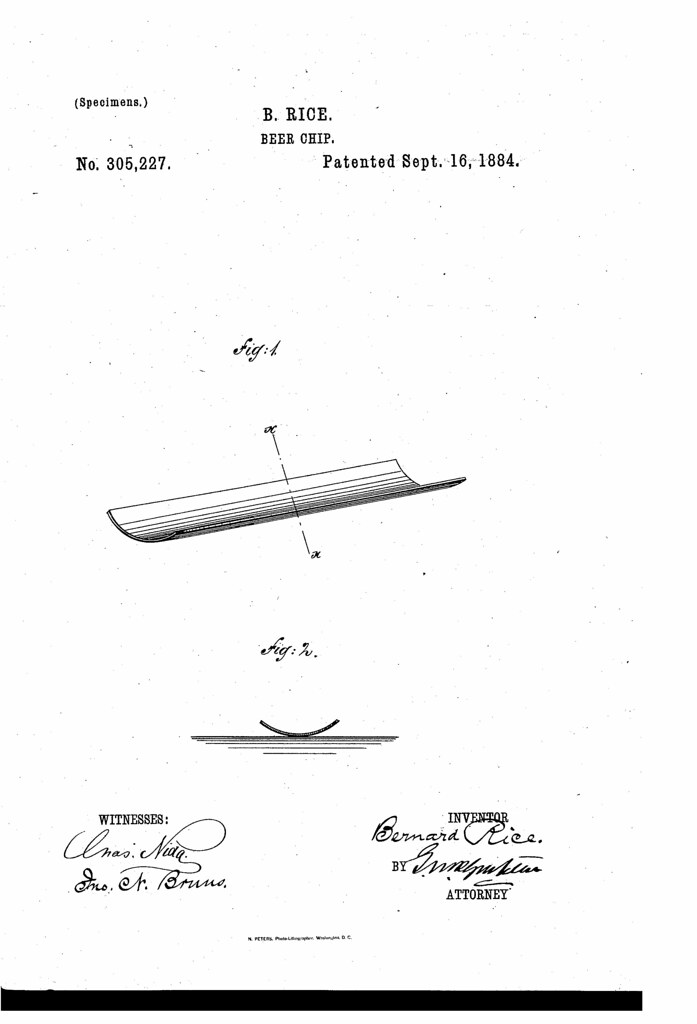
Today in 1884, US Patent 305227 A was issued, an invention of Bernard Rice, for his “Beer-Chip.” There’s no Abstract, although in the description it includes this summary:

This invention has for its object to produce a beer-chip which is free from resinous and other similar matters; and to this end it consists in making the chip from a sheet or strip of veneer cut from a log, beam, or plank previously steamed, as herein more fully described.

Untitled

Filed Under: Beers, Breweries, Just For Fun, Politics & Law, Related Pleasures Tagged With: History, Law, Patent, Science of Brewing

Blaming Overeating On Drinking

September 15, 2015 By Jay Brooks

beer-belly-can
You know what makes you fat? It’s not food. It’s drinking alcohol. Wait, what? Yup, according to a study financed by the NIH, conducted by the Indiana Alcohol Research Center, and published earlier this year in the journal Obesity, researchers claim that what they’ve dubbed “the apéritif phenomenon” may be causing our obesity epidemic. Except that they’re not.

The self-described “internationally recognized news website” Inquisitr, under the category “Celebrity Health,” published an article entitled “Alcohol Sensitizes Brain’s Response To Food Aromas, Say Scientists — Is Liquor Responsible For Rising Obesity?” Naturally, Alcohol Justice gleefully tweeted the bad news as “new evidence points to alcohol’s role in U.S. obesity epidemic.” Except that, as I mentioned, the evidence does nothing of the kind.

The study that the article is based on is entitled The apéritif effect: Alcohol’s effects on the brain’s response to food aromas in women. Here’s the abstract:

Objective
Consuming alcohol prior to a meal (an apéritif) increases food consumption. This greater food consumption may result from increased activity in brain regions that mediate reward and regulate feeding behavior. Using functional magnetic resonance imaging, we evaluated the blood oxygenation level dependent (BOLD) response to the food aromas of either roast beef or Italian meat sauce following pharmacokinetically controlled intravenous infusion of alcohol.

Methods
BOLD activation to food aromas in non-obese women (n = 35) was evaluated once during intravenous infusion of 6% v/v EtOH, clamped at a steady-state breath alcohol concentration of 50 mg%, and once during infusion of saline using matching pump rates. Ad libitum intake of roast beef with noodles or Italian meat sauce with pasta following imaging was recorded.

Results
BOLD activation to food relative to non-food odors in the hypothalamic area was increased during alcohol pre-load when compared to saline. Food consumption was significantly greater, and levels of ghrelin were reduced, following alcohol.

Conclusions
An alcohol pre-load increased food consumption and potentiated differences between food and non-food BOLD responses in the region of the hypothalamus. The hypothalamus may mediate the interplay of alcohol and responses to food cues, thus playing a role in the apéritif phenomenon.

The Indiana Alcohol Research Center “focuses on the elucidation of the biomedical and psychosocial factors that contribute to alcohol abuse and alcoholism,” which suggests to me they’re another group like the NIAAA, or National Institute on Alcohol Abuse and Alcoholism (whose grant created the IARC), is exclusively interested in exploring the negative aspects of alcohol. And just like the NIAAA, it’s right there in their charter.

Curiously, yesterday the full text of the article was also online, but today it’s restricted. They start with the premise that “consuming alcohol prior to a meal (their “apéritif phenomenon”) increases food consumption,” but of course that’s the point of an apéritif, or at least to enhance and make the experience of the food and/or the food and the drink better.

But as they conclude, this “pre-loading” of alcohol is what makes us want to eat more, which they believe that their study shows. When I briefly looked at the entire article, their longer discussion of the findings, as is quite common, suggested caution in drawing too many conclusions and suggesting further study was warranted. As the shorter conclusion states, these “food cues” play “a role in the apéritif phenomenon,” which is not exactly the same as saying “drinking is responsible for American obesity.”

But that didn’t stop author Alap Naik Desai from making such speculation, fueling the prohibitionist response that of course “Liquor [is] Responsible For [the] Rising Obesity” in the United States.

A research conducted by Indiana University indicated that exposure to alcohol enhanced the brain’s sensitivity and heightened its response to food aromas. In simpler words, food seemed much more appealing and appetizing, which, of course, led to extra consumption. Connecting the dots, one could also summarize that alcohol consumption was responsible for increased intake of food and hence a hidden cause of obesity.

I’m not sure which dots he’s referring to, since that’s a fairly absurd statement that isn’t contained in the study itself. But beyond that, the study involved just 35 female test subjects, no men at all. And it seems hard to extrapolate anything meaningful that could be applicable to the human population from so few people. Also, they claim that people “responded enthusiastically to food aromas after the body had been exposed to alcohol,” but not from drinking it, simply from having smelled it. Despite the lack of causation, or a robust sample size or even anything resembling reality, the lead author of the study, William Eiler, apparently told Desai that “this poses a major risk to those trying to keep their weight down.” Seriously, “a major risk” because 35 women seemed more hungry after sniffing alcohol? Desai continues. “With America weighing down under an obesity epidemic and two out of every three American adults consuming alcohol, there is an immediate need to find more connecting factors between the brain, food, and alcohol, advise the scientists.”

Except that this idea is easily demolished by one simple fact. Even in countries where alcohol consumption per capita exceeds the United States, which according to the World health Organization is 36 countries, the obesity rates do not follow the same pattern, which you’d expect if alcohol “pose[d] a major risk to those trying to keep their weight down.” According to WHO, Belarus, Andorra, Lithuania, Czech Republic, Grenada, Austria, Ireland, France, Saint Lucia, Estonia, Luxembourg, Germany, Russia, Slovakia, Portugal, Hungary, Croatia, Poland, Belgium, Denmark, Australia, the Bahamas, Slovenia, United Kingdom, Bulgaria, Switzerland, Spain, Latvia, Finland, New Zealand, the Netherlands, Gabon, Romania, Nigeria, Saint Kitts and Nevis and Cyprus all consume more alcohol per capita than the U.S., based on data for fifteen years, from 1990-2010.

And as for the most obese countries, we’re number one according to several sources, including Business Insider, the Telegraph and NationMaster. Although there are some sources that claim in 2013, Mexico took the title from us, yet it, too, is conspicuously absent from the list of countries that drink more than we do, meaning they drink less but are more obese.

Of those 36 countries that the WHO data makes clear drink more per capita than we do, only half of them appear on the OECD list of the top obese nations, from their 2012 Obesity Update report. If alcohol was causing people to eat more, than it seems clear people who drink more should likewise be eating more, too, and we’d see a direct correlation between both sets of numbers.

The three sources other than the WHO list also include on their lists of the most obese nations; Brazil, China, Colombia, Egypt, Iceland, India, Indonesia, Jamaica, Malaysia, Mauritania, Nauru, Nigeria, Pakistan, Qatar, Saudi Arabia, Spain, Sweden, Tonga, Turkey, UAE, and Zimbabwe, of which only two — Nigeria and Spain — drink more than we do. Again, if any of this were true, it seems obvious that there would be an easily recognizable correlation between both alcohol consumption and the obesity rates, but there isn’t, strongly suggesting there isn’t one at all.

I suspect the researchers know this, but the journalist who took the study and twisted it to fit a narrative probably did not. He finishes with this conclusion. “With America weighing down under an obesity epidemic and two out of every three American adults consuming alcohol, there is an immediate need to find more connecting factors between the brain, food, and alcohol, advise the scientists.” But is that what they’re advising? Because the evidence doesn’t quite measure up to that scary headline. If this were true, wouldn’t doctors be prescribing alcohol for their patients who need to eat more. I’d also say his article seems irresponsible, since it promotes an idea that it doesn’t actually support, and misrepresents the facts to get more people clicking on the link. It’s so bad that only a prohibitionist would fall for it, because facts don’t matter in propaganda, only making alcohol look bad.

Filed Under: Editorial, Politics & Law, Related Pleasures Tagged With: Health & Beer, Prohibitionists, Science, Statistics

« Previous Page
Next Page »

Find Something

Northern California Breweries

Please consider purchasing my latest book, California Breweries North, available from Amazon, or ask for it at your local bookstore.

Recent Comments

  • Bob Paolino on Beer Birthday: Grant Johnston
  • Gambrinus on Historic Beer Birthday: A.J. Houghton
  • Ernie Dewing on Historic Beer Birthday: Charles William Bergner 
  • Steve 'Pudgy' De Rose on Historic Beer Birthday: Jacob Schmidt
  • Jay Brooks on Beer Birthday: Bill Owens

Recent Posts

  • Historic Beer Birthday: Michael Piel March 29, 2026
  • Beer In Ads #5191: “Gesundheit” Here Today! The Drink Of Springtime! Jax Bock Beer March 28, 2026
  • Historic Beer Birthday: Jaromír Vejvoda March 28, 2026
  • Beer In Ads #5190: Heurich Bock Beer Satisfies A Long Thirst! March 28, 2026
  • Historic Beer Birthday: August Anheuser Busch, Jr. a.k.a. Gussie Busch March 28, 2026

BBB Archives

Feedback

Head Quarter
This site is hosted and maintained by H25Q.dev. Any questions or comments for the webmaster can be directed here.