Brookston Beer Bulletin

Jay R. Brooks on Beer

  • Home
  • About
  • Editorial
  • Birthdays
  • Art & Beer

Socialize

  • Dribbble
  • Email
  • Facebook
  • Flickr
  • GitHub
  • Instagram
  • LinkedIn
  • Pinterest
  • RSS
  • Twitter
  • YouTube

Powered by Genesis

Historic Beer Birthday: David & Louis Kuntz

June 4, 2025 By Jay Brooks

kuntz
Today is the birthdays of both David Kuntz (June 4, 1819-July 11, 1892) and Louis Kuntz (June 4, 1852-October 8, 1891). David Kuntz was born in Wiesbaden, Hessen, Germany, but moved to Waterloo City in Ontario, Canada, opening the Spring Brewery in 1844, though it was later renamed the Louis Kuntz Park Brewery. His son, Ludwig “Louis” Kuntz was born in Waterloo, Ontario, and work with his father at the family brewery, though passed away a year before his father, and the business passed to David’s grandson, and Louis’ son, David C. Kuntz. Shortly after David C’ Kuntz’s passing, in 1930, Canadian Breweries Limited, which had originally been “named Brewing Corporation of Ontario,” was created “by merging The Brading Breweries Limited, an Ottawa company Taylor had inherited from his grandfather, Capital Brewing of Ottawa, and Kuntz Brewery of Waterloo, Ontario.” In 1977 Carling Brewery was purchased by Labatt Breweries of London, but the Waterloo plant was closed by 1993 and all the buildings on the site had been demolished.

David Kuntz was a pioneer brewer who helped establish Waterloo as a centre for quality beer making by undertaking every aspect of the business himself. It is written that Kuntz, a cooper as well as a brewer from Germany, made the barrels himself, brewed the beer, and actually made the bricks for the brewery he eventually built. In the 1830s, Kuntz brewed his beer in an old wooden washtub during the day and made his way around the county at night, selling it from a wheelbarrow. He hid his cash from the beer sales in an empty keg to avoid being robbed. By the early 1840s, Kuntz had enough capital to purchase a brewery hotel from Christopher Huether. The building still stands at the corner of King and Princess Streets and is now known as the Huether Hotel and Lion Brewery.

The 1861 census shows that Kuntz, aged 41, used 3,000 bushels of barley and 1,000 bushels of hops that year at a value of $1,700. He produced 12,000 gallons of beer, valued at $2,400. The pioneer, who had emigrated from Wiesbaden, Germany, now had two male employees who were each paid a monthly salary of $36. He also had one female employee who was paid $11.50 a month. The enumerator, who recorded the census information, commented that Kuntz made “the best beer in the country as far as the judgment of the Enumerator extends. The Brewery, Cellars, and House are of first quality.”

On a personal note, the census shows he was married to Magdelina, twenty-eight, who was also from Germany. At that time, they had four children – Ludwig, Henry, Catherine and Charles between the ages of two and eight. The couple went on to have thirteen children.

The Kuntz family lived in a two-story brick house and had two “pleasure carriages,” along with four horses, twelve cows and twelve pigs. The value of the animals was $560. His new brewery prospered and was called Spring Brewery because it used water from a spring on the property. In the early 1870s, his son Louis took over, renaming it L. Kuntz’s Park Brewery. Louis Kuntz, who was married to Theresa Bauer, died at a young age in the early 1890s, forcing his brothers-in-law Frank and Aloyes Bauer, to take over operations. At the time of his death, his own three sons were still children. In 1910, Louis Kuntz’s sons were old enough to take over the brewery and David Jr. became president, incorporating the business and calling it Kuntz Brewery Ltd. His brothers William and Herbert were also involved in the business. David Kuntz Sr. had
died in 1897.

kuntz-park-brewery-workers-1894


Employees of the Kuntz brewery in 1894. I suspect one of the mustacheo’d gentlemen may be Louis, but I’m not sure which one.

By the time of the First World War, the Kuntz Brewery was selling 90,000 barrels of beer every year and, in Ontario, was second in popularity only to Toronto’s O’Keefe brew. The Kuntz family also owned hotels including the Alexandra House in Waterloo, and the Opera House in Hamilton. After years of prohibition, the Kuntz family was dealt a fatal blow when the federal government won a tax suit valued at $200,000. By October, Toronto’s beer magnate E.P. Taylor took control of the million dollar plant for the price of simply paying the suit. In 1936, Carling Breweries Ltd. of London, Ontario joined Kuntz, calling the business Carling-Kuntz Brewery Ltd. With the outbreak of the Second World War, the name Kuntz was dropped for sounding “too German” along with the well-loved brews Culmbacher, Bohemian and Olde German Lager. In the mid-1970s it became Carling O’Keefe and a few years later the business was sold to Labatt Breweries of London.

The Labatt brewery in Waterloo was demolished in 1993, but the Kuntz beer that started out in an old washtub, will be remembered by some as “the beer that made Waterloo famous.”

Kuntz-Brewery-postcard-lg

This is from “Brewed in Canada: The Untold Story of Canada’s 350-year-old Brewing Industry,” by Allen Winn Sneath:

kuntz-brewed-in-canada

kuntz-brewery-illustration

And this account, written in 2016, is by Rych Mills for the Waterloo Region Record:

No one alive can remember the taste of “Old German Lager” from Kuntz Spring Brewery (I don’t mean the 1988 re-brew by Labatt). Nonetheless, Kuntz fascination continues and its ephemera are fervently sought by brewerianists — collectors of brewery items.

In the 1830s, while still a teenager, David Kuntz came with older brother Jacob from the German Duchy of Nassau. After a few years working as coopers in Doon, they moved north to slightly larger Waterloo, which boasted maybe 200 inhabitants.

A much-quoted anecdote says David made the bricks that helped build his first brewery; made the barrels that contained the beer; and made the wheelbarrow that helped him deliver the beer.

David and Jacob’s initial brewing began around mid-century on Princess Street at the rear of Wilhelm Rebscher’s original Waterloo brewery (now the Huether Hotel site). They next built a small malting building near Erb and Queen (later renamed Regina) behind Bowman’s Hotel. Then, in the early 1860s, the brothers began constructing a full brewery at King and William streets. A fine flowing spring lured them to that corner and by 1865 the new brewery was in full production using hops and barley the brothers grew themselves. They named it Kuntz Spring Brewery. Jacob Kuntz soon expanded the Kuntz brewing empire; he moved to Carlsruhe, opened Lion Brewery and thus helped to begin Bruce County’s brewing industry.

David Kuntz seems the type of entrepreneur who is never fulfilled. In 1870, aged 50, he turned the business over to son Louis who renamed it L. Kuntz Park Brewery, using the decorative green space in front of the brewery as the company’s trademark. In the meantime, David briefly moved to Hamilton to set up son Henry’s Dominion Brewery.

Returning to Waterloo, David kept busy. He served on council during 1876 when the village became a town and erected a modern hotel, the Alexandra House, kitty-corner from the brewery.

Louis Kuntz died, aged 39, following an appendectomy in 1891. His children were still young so brother-in-law Frank Bauer, also a brewer, took over. Then David Kuntz died in 1892. Bauer’s own 1895 passing began an almost unbelievable sequence of deaths in the brewery’s management. However, business success continued and in 1910 David Kuntz Jr., Louis’ son, took over. He also died young, 38, in 1915 so his two brothers, Herbert and William stepped in.

The First World War, Prohibition and a huge 1929 lawsuit loss resulted in the Kuntz name starting to fade from the brewing business.

E.P. Taylor bought the struggling firm in 1929, wrapping it into his brewing empire. During the Depression, the name changed from Kuntz Breweries to Kuntz-Carling to Carling-Kuntz and finally, during the Second World War, to just Carling. The brewing site at King and William later operated under the O’Keefe and Labatt banners.

What remains of the Kuntz legacy?

For nostalgists, highly collectible Kuntz beer trays, bottles, bottle caps, labels, advertising, Kuntz 1920s soft drink bottles, etc. Two Waterloo houses built by David are historically designated: the 1880 Kuntz-Eckert House at 156 King St. S. and the 1885 Kuntz-Labatt House at 167. In southeast Waterloo, Kuntz sounds echo daily through the neighbourhood — one of the 1902 bells at St. Louis Roman Catholic Church is a bequest from David’s will and is named Magdalena for his wife.

A myth surrounding the Kuntz early years claims streets such as Caroline, William, Mary and John were named after David’s children. A nice idea but those names appear on a map published in 1855 before all but two of the Kuntz children were born. In addition, David and Magdalena did not have children named William, Mary or John.

However, from the couple’s dozen-plus children, a large clan of Kuntz family members still lives in Waterloo Region. The Kuntz name in business carries on with Kuntz Electroplating (KEI) started in 1948 by Oscar Kuntz, son of David Jr. and great-grandson of David.

kuntz-old-german-lager

kuntz-olde-tavern-ale

Filed Under: Birthdays, Breweries, Just For Fun Tagged With: Canada, Germany, History, Ontario

Beer In Ads #4987: Wooden Shoe Bock Beer

June 3, 2025 By Jay Brooks

Last year I decided to concentrate on Bock ads. Bock, of course, may have originated in Germany, in the town of Einbeck. Because many 19th century American breweries were founded by German immigrants, they offered a bock at certain times of the year, be it Spring, Easter, Lent, Christmas, or what have you. In a sense they were some of the first seasonal beers. “The style was later adopted in Bavaria by Munich brewers in the 17th century. Due to their Bavarian accent, citizens of Munich pronounced ‘Einbeck’ as ‘ein Bock’ (a billy goat), and thus the beer became known as ‘Bock.’ A goat often appears on bottle labels.” And presumably because they were special releases, many breweries went all out promoting them with beautiful artwork on posters and other advertising.

Tuesday’s ad is for Wooden Shoe Bock Beer. The ad was published on June 3, 1953. This one was for the Wooden Shoe Brewing Co. of Minster, Ohio, which was originally founded in 1869 by Franz Lange, though it became known by the Wood Shoe name after 1939 until it closed in 1954. This ad ran in the Chillicothe Gazette, of Chillocothe, Ohio.
Filed Under: Beers

Historic Beer Birthday: Emil G. Sick

June 3, 2025 By Jay Brooks

emil-sick
Today is the birthday of Emil George Sick (June 3, 1894-November 10, 1964). Sick was the “son of Canadian brewer Fritz Sick, who built Sick’s Lethbridge Brewery.”

“He was a brewing worker and industrialist in Canada and later the US. He is well known for his involvement as owner of baseball teams and stadiums in Seattle and Vancouver, British Columbia from the 1930s until 1960.

He was chairman of the board of Sick’s Rainier Brewing Company and president of Sicks’ Brewery Enterprises, Inc., both of Seattle, and a director of three other firms, Molson’s Brewery, Ltd., and Sicks’ Breweries, Ltd., both of Canada, and the Peoples National Bank of Washington. He also was a director of the Seattle World’s Fair.”

Here’s a short biography from Find a Grave:

Sportsman. Northwest baseball pioneer. Former owner of the Pacific Coast League’s Seattle Rainiers. He constructed Sick’s Seattle Stadium which opened in June 1938 and served as home to the Seattle Rainiers, Seattle Angels and the 1969 major league Seattle Pilots. He rose to prominence in the brewing industry along with his father Fritz, operating breweries in Vancouver, Edmonton, Regina, Great Falls, Spokane and the Rainier Brewery in Seattle. Active in civic affairs, he served as president of both the Seattle Historical Society and Seattle Chamber of Commerce. He was also instrumental in the founding of the King County Blood Bank and as chairman of the Washington State March of Dimes.

“In 1934 the Sicks made their most important transaction. It would transform Emil Sick into one of Seattle’s most significant citizens and impact the game of baseball in the state for decades. They acquired exclusive rights to sell the Rainier brand in Washington and Alaska from the Rainier Brewing Company of San Francisco.”

And this is his obituary from the Great Falls Tribune on November 11, 1964:

And here’s another obituary, this one from the Leader Post on November 12, 1964:

And here’s one more obit. This one’s from the News Tribune:

Filed Under: Birthdays, Just For Fun Tagged With: Canada, History, Seattle, Washington

Beer Birthday: Don Tse

June 3, 2025 By Jay Brooks

Today may or may not — and probably isn’t — the 55th birthday of Don Tse, who has been ducking my inquiries into such birthdate for some time now. But he recently revealed it was this week, and that he was younger than me (which is a safe bet for most people at this point) and in his “mid-fifties.” Don is a Canadian beer writer who writes for Forbes, Good Beer Hunting and All About Beer, among others. With his nickname, “The Don of Beer,” which is also his website, you can find out much more about Don, including his love of puns. As to when his actual birthday might be, if he won’t tell me, then I’ll just have to make it up. Join me in wishing Don a very happy maybe birthday.

Me at Don at this year’s Firestone Walker Invitational Beer Festival.
Don, Emily Sauter, and me at
Me and Don at GABF in 2024.
Don (back left) and a group of us in Toronto after judging the inaugural Canada Beer Cup.
Also out on the town in Toronto in 2022.

Filed Under: Birthdays, Just For Fun Tagged With: Beer Writers Guild, Canada

Beer In Ads #4986: Cascade Bock Beer

June 2, 2025 By Jay Brooks

Last year I decided to concentrate on Bock ads. Bock, of course, may have originated in Germany, in the town of Einbeck. Because many 19th century American breweries were founded by German immigrants, they offered a bock at certain times of the year, be it Spring, Easter, Lent, Christmas, or what have you. In a sense they were some of the first seasonal beers. “The style was later adopted in Bavaria by Munich brewers in the 17th century. Due to their Bavarian accent, citizens of Munich pronounced ‘Einbeck’ as ‘ein Bock’ (a billy goat), and thus the beer became known as ‘Bock.’ A goat often appears on bottle labels.” And presumably because they were special releases, many breweries went all out promoting them with beautiful artwork on posters and other advertising.

Monday’s ad is for Cascade Bock Beer. The ad was published on June 2, 1918. This one was for Vancouver Breweries Ltd., of Vancouver, British Columbia, which was originally founded in 1902 by a merger. This ad ran in The Vancouver Sun, of Vancouver, British Columbia, Canada.

Filed Under: Art & Beer, Beers, Breweries, Just For Fun Tagged With: Advertising, Bock, British Columbia, Canada, History, Vancouver

Historic Beer Birthday: Thomas Hardy

June 2, 2025 By Jay Brooks

thomas-hardy
Today is the birthday of English novelist and poet Thomas Hardy (June 2, 1840-January 11, 1928). Hardy is best known for his novels Far from the Madding Crowd (1874), The Mayor of Casterbridge (1886), Tess of the d’Urbervilles (1891), and Jude the Obscure (1895).

Thomashardy_restored

So what does he have to do with beer. Well besides mentioning it in his work, it’s because there’s a Thomas Hardy Ale that was originally created in 1968 by the Eldridge Pope Brewery to commemorate the 40th anniversary of Thomas Hardy’s death, which happened to coincide with the renovation of a pub in Dorchester named for one of Hardy’s novels, the “Trumpet Major,” first published in 1880.

There’s a great quote in the book, which describes a beer, and that was what they used as inspiration to create the beer that bears Hardy’s name. A portion of the quote was on the original 1968 label, but here’s a fuller version of it.

“It was of the most beautiful colour that the eye of an artist in beer could desire; full in body, yet brisk as a volcano; piquant, yet without a twang; luminous as an autumn sunset; free from streakiness of taste; but, finally, rather heady. The masses worshipped it, the minor gentry loved it more than wine, and by the most illustrious county families it was not despised. Anybody brought up for being drunk and disorderly in the streets of its natal borough, had only to prove that he was a stranger to the place and its liquor to be honourably dismissed by the magistrates, as one overtaken in a fault that no man could guard against who entered the town unawares.”

Eldridge Pope created “an ale matured in oak casks, very strong, capable of improving better taste with age.” After the first vintage in 1968, beginning in 1974 the second was brewed and a vintage-dated version was made each subsequent year until 1999.

thomas-hardy-ales

Another brewery, the O’Hanlon Brewery, picked up brewing Thomas Hardy Ale in 2003, and produced annual versions until 2008. Unfortunately, they went bankrupt in 2011, and reopened later as the Hanlon Brewery.

When they began reproducing it again in 2003, a new website for Thomas Hardy Ale was created, and they tell the story of the ale:

First produced in 1968, Thomas Hardy’s Ale is barley wine produced just once yearly, with annual vintages in limited quantities. It quickly became an icon among beer and took on legendary status due to its sudden disappearance. Now, the legend is back…

1968 bottle of Thomas Hardy’s Ale“At the moment, all rights are in the hands of the American importer George Saxon, who – we hope – won’t take long putting Thomas Hardy’s back on the market”, as stated by Adrian Tierney-Jones to conclude his comment on Thomas Hardy’s Ale in the book “1001 Beers You Must Taste Before You Die”. In the words of one of the most famous Anglo-Saxon beer writers, we can clearly perceive a bit of melancholy for the disappearance of Thomas Hardy’s Ale from the global market.

Why such melancholy? Each day, worldwide, tens or even hundreds of thousands of bottles of various beers are produced, yet Thomas Hardy’s was unique. A real, proper icon of beer drinking, almost a cult object.
The beer was created way back in 1968 with one clear intention: to commemorate the fortieth anniversary of the dead of the brilliant writer Thomas Hardy, author of “Tess of the D’Urbervilles” and other important novels. In an equally famous tale, “The Trumpet Major”, Hardy spoke of a strong Dorchester beer, defining it “the most beautiful colour an artist could possibly desire, as bright as an autumn sunset”…

The Eldridge Pope brewery decided to try and create that beer Hardy mentioned in his writing. It had to be a special beer, with a high alcohol content, a consistent and sensuous body and long lasting and resilient aroma, or rather, capable of lasting over time (25 years, according to the brewery). Beer created for big occasions and therefore only produced once a year, left at length to mature in wood and lastly, brought to light in numbered bottles, with the year of production, the batch and the quantity produced clearly visible.

Thomas Hardy’s Ale quickly became hugely famous. The quality of the product combined with its exclusivity was an explosive mix. The individual years soon became the object of vertical tastings, like those held for important Langhe or Bordeaux wines and prices went sky high. However, producing Thomas Hardy’s was very expensive and making it meant sacrificing time and means for beer intentionally produced in limited quantities. In 1999 Eldridge Pope ceased production and, for the first time, Thomas Hardy’s appeared to have been confined to memory or auctions. Its disappearance, however, further reinforced its fame and lovers of this stylish leader of barley wines called for its return. And Thomas Hardy’s was back.

This time, starting in 2003, the O’Hanlon brewery created it. The same recipe, same immense work and the same exclusivity. Another six, prestigious years followed for a beer by now renowned around the world. Yet, for a second time, this excellent beer disappeared. And this time…

Forever? No, the good news is that Thomas Hardy’s Ale is to be revived in all its greatness, while maintaining all its extraordinary and unique peculiarities: vintage production is on English soil with limited quantities produced, its slight hints of dark fruit, turf and roast malt and its flavour that at times recalls a fine port or quality brandy.

It was one of the earliest modern beers to be vintage dated, at least it’s one of the earliest I’m aware of. The earliest year I’ve tasted in 1977, and I was lucky enough once to do a vertical tasting of several vintages of the barley wine. I still have a few bottles from the early 1990s, including a 1990 bottle, in my cellar. I’m waiting for the perfect time to share them.

As for the future, it’s apparently coming back yet again, this time by an Italian brewery. Patrick Dawson wrote about it in April for Craft Beer & Brewing magazine, with an article entitled The Rebirth of Thomas Hardy Ale.

Filed Under: Beers, Birthdays, Just For Fun Tagged With: Barley Wine, History, Literature

Beer Birthday: Menno Olivier

June 2, 2025 By Jay Brooks

brouwerij-de-molen

Today is the birthday of Menno Olivier, founder and brewmaster of Brouwerij De Molen. The brewery was founded in 2004 in Bodegraven, the Netherlands. While I don’t think we’ve met yet, I have enjoyed many, many of his beers, and we are Facebook friends, at least. Join me in wishing Menno a very Happy birthday.

Menno-Olivier
Smiling Menno.
Menno-Olivier-and-John-Brus
Menno with John Brus.

Menno-Olivier-clogs
Showing off some new shoes.

NOTE: All photos purloined from Facebook.

Filed Under: Birthdays, Just For Fun Tagged With: The Netherlands

Beer Birthday: Tyler Smith

June 2, 2025 By Jay Brooks

Today is the 41th birthday of Tyler Smith, who is the owner and brewmaster of Cooperage Brewing Co. in Santa Rosa, California. He’s originally from Southern California but moved to Sonoma County over ten years ago, where he continued homebrewing and working beer bars and retail before opening Cooperage in 2015. I’ve been to the brewery taproom several times, and always enjoyed Tyler’s beers. Join me in wishing Tyler a very happy birthday.

Me and Tyler right before he opened their second location in downtown Santa Rosa.
Tyler in front of the Cooperage barrels, from their website.

Filed Under: Birthdays, Just For Fun Tagged With: California, Sonoma County

Beer Birthday: Bob Townsend

June 2, 2025 By Jay Brooks

ajc
Today is also the birthday of Atlanta Journal-Constitution beer columnist Bob Townsend. Although he wouldn’t tell me how old he is when I met him in Boston several years ago, I suspect it’s because he’s even older than me. Regardless, we hit it off immediately; kindred souls, to be sure, and have since traveled together on numerous press junkets. Join me in wishing Bob a very happy birthday.

Bob at me at Mitch Steele’s New Realm Brewing, where we met for lunch last year during a trip there.
longshot09-2
Judging the finals of the Longshot homebrew competition in 2009, with Tony Forder on the left, Bob in the middle and me at the far end.
longshot09-4
After judging the finals for the Longshot Homebrew Competition in Boston. From left: Jason Alstrom (from Beer Advocate), Tony Forder (from Ale Street News), Bob, Jim Koch (founder of the Boston Beer Co.), yours truly, Julie Johnson (from All About Beer magazine), and Todd Alstrom (also from Beer Advocate).
DSC_8348
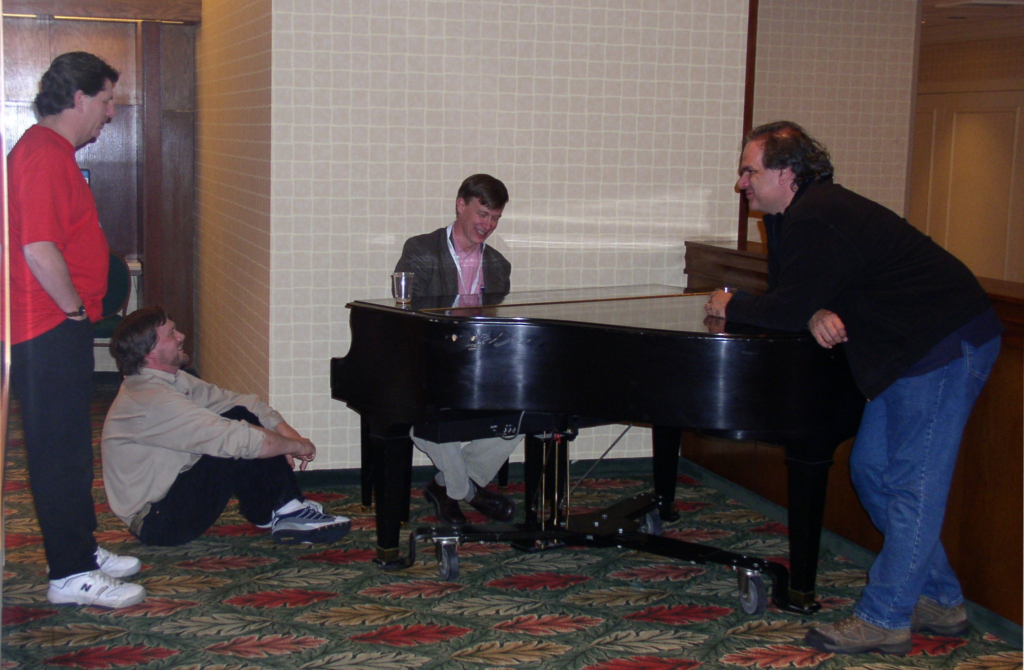
Derek Buono (from Beer: The Magazine) and Bob during a press junket in Belgium a few years ago.
DSC_7939i
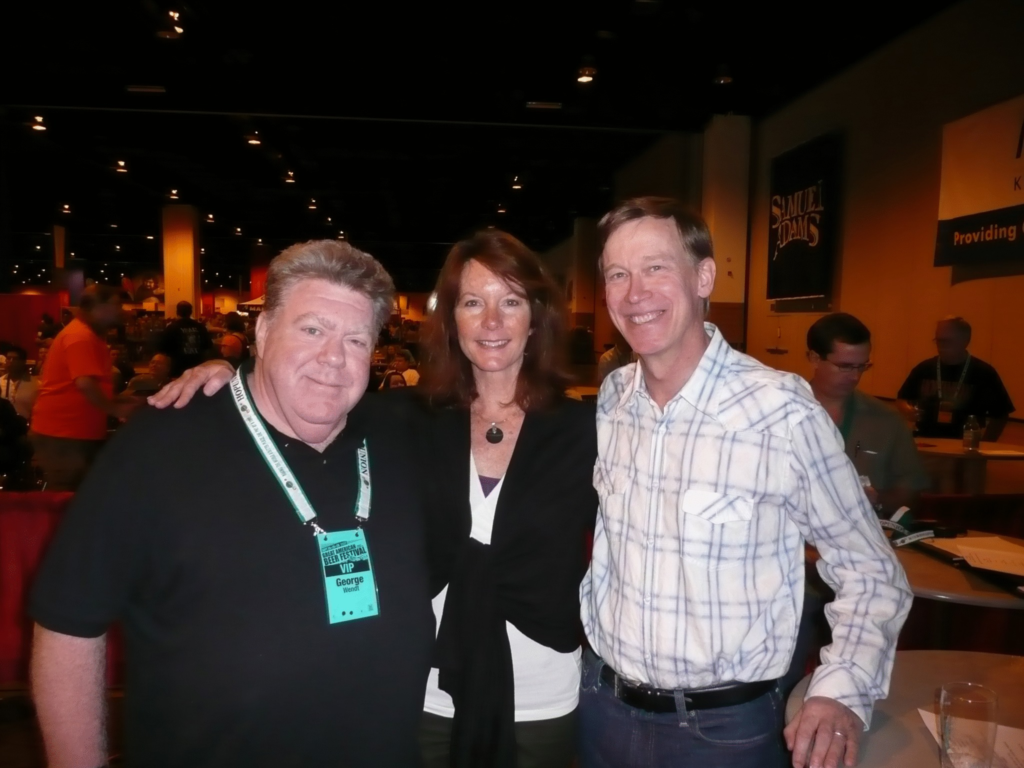
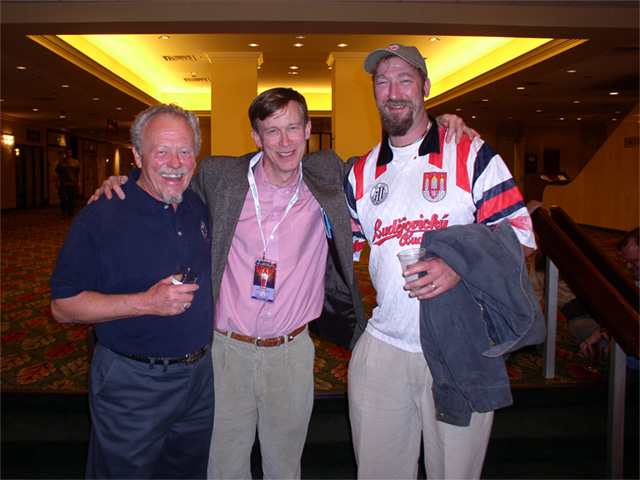
At Bosteels during the same Belgian trip. Bob is in the back mid-way on the right.

Filed Under: Birthdays Tagged With: Atlanta, Georgia, Southern States

Beer Birthday: Melissa Myers

June 2, 2025 By Jay Brooks

good-hop
Today is my good friend Melissa Myers’ birthday. Though now several years ago, her most recent brewing gig was at Drake’s Brewing in San Leandro, California. She’s also brewed at Pyramid, Ross Brewing and Magnolia, among others, and most recently she owned and operated her own beer bar in Oakland, The Good Hop, but she’s since sold it and is looking for the next adventure, while working a a bartender part-time. Join me in wishing Melissa a very happy birthday.

mel-and-me
At the Good Hop a few years back.
boontfest06-08
Arne Johnson, of Marin Brewing, and Melissa at the Boonville Beer Festival several years ago.
anchorx05-3
Former roommates Jen Garris and Melissa at the Anchor Christmas Party a few years back.
fr-thurs-1
Melissa and former Drake’s brewer Rodger Davis at GABF several years ago.
mm-jb
Melissa and me at GABF once upon a time.
myers-keene
Melissa with her adopted Daddy, “Big Daddy” Dave Keene.
melmye-1
Melissa in high school, believe it or not. At a Super Bowl party she threw, Melissa made the mistake of showing me this photo while I had my camera in my hand. I snapped a quick picture of it in the photo album, which is why is looks out of proportion and a little fuzzy. I had to seriously crop it and straighten it out and generally fix it up. But I think the effort was worth it, don’t you?


Filed Under: Birthdays Tagged With: Bay Area, California, Oakland

« Previous Page
Next Page »

Find Something

Northern California Breweries

Please consider purchasing my latest book, California Breweries North, available from Amazon, or ask for it at your local bookstore.

Recent Comments

  • Bob Paolino on Beer Birthday: Grant Johnston
  • Gambrinus on Historic Beer Birthday: A.J. Houghton
  • Ernie Dewing on Historic Beer Birthday: Charles William Bergner 
  • Steve 'Pudgy' De Rose on Historic Beer Birthday: Jacob Schmidt
  • Jay Brooks on Beer Birthday: Bill Owens

Recent Posts

  • Historic Beer Birthday: John J. Schlawig February 27, 2026
  • Beer In Ads #5134: Lord Bushkill On Bushkill Bock February 27, 2026
  • Historic Beer Birthday: William Henry Beadleston February 27, 2026
  • Beer In Ads #5133: Going… Going… SB Bock February 26, 2026
  • Beer Birthday: Art Larrance February 26, 2026

BBB Archives

Feedback

Head Quarter
This site is hosted and maintained by H25Q.dev. Any questions or comments for the webmaster can be directed here.