Brookston Beer Bulletin

Jay R. Brooks on Beer

  • Home
  • About
  • Editorial
  • Birthdays
  • Art & Beer

Socialize

  • Dribbble
  • Email
  • Facebook
  • Flickr
  • GitHub
  • Instagram
  • LinkedIn
  • Pinterest
  • RSS
  • Twitter
  • YouTube

Powered by Genesis

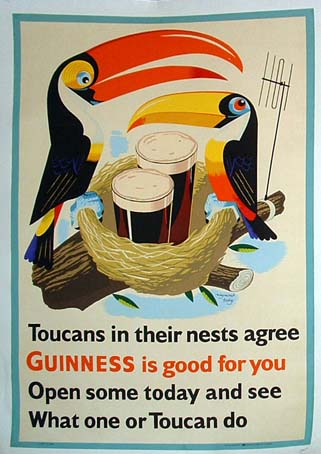
Guinness Ad #23: Toucans In Their Nest

June 19, 2010 By Jay Brooks

guinness-toucan
Our 23rd Guinness poster by John Gilroy features the toucans in their nest, but instead of eggs there are two pints of Guinness and the “Guinness is good for you” slogan followed by a bad pun: Open some today and see What one or Toucan do.” Plus it looks like a father and son pair, and Father’s Day is tomorrow.
guinness-toucans-2

Filed Under: Art & Beer, Beers Tagged With: Advertising, Guinness, History

Betsey’s Belgians

June 19, 2010 By Jay Brooks

belgium
In my newspaper column two weeks ago, entitled Betsey’s Belgians, I highlighted Waterloo Beverages and the new beers they’re bringing in from Belgium. The beers are being brought in by a friend of mine, Betsey Hensley, who used to work at the Toronado. Since these beers are so good and I think deserve a chance to catch on with customers, I wanted to highlight each one of them a bit more and let you know where they can be found, at least so far.

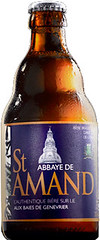
st-amand

Abbaye de St Amand

Brewery: Brunehaut Brewery
Beer: Belgian Strong Pale Ale
A.B.V. 7%
Package: 330 ml bottle-conditioned
Organic: no
Notes: the Abbaye de Sint Amand, a bottle-conditioned strong blonde ale spiced with Juniper berries. The Juniper is subtle and gives just a hint of the berry’s distinctive flavors and has a great dry finish.

arend-tripel-sm

Arend Tripel

Brewery: Brouwerij De Ryck
Beer: Belgian Tripel
A.B.V. 8%
Package: 330 ml bottle-conditioned
Organic: no
Notes: The Arend Tripel from the Brouwerij de Ryck, is a favorite of local brewer Brian Hunt, who owns Moonlight Brewing in Santa Rosa. Hunt tells me, in fact, that he asked Hensley to bring in the beer, as he waxes poetically about the brewery. De Ryck “is a third-generation family brewery, and makes some of the finest beers in the world, with a brilliancy and passion you don’t often see.” After a visit to the brewery, he’d become friends with Anne De Ryck, one of Belgium’s few women brewers. “I don’t think a man can make that beer. Her beers have a grace that I haven’t found in others. We can’t make it, but we can appreciate it.” And it is a beautiful beer, soft and subtle, with some delicate flavors. It may simply be the best tripel you’ve never heard of.

Bersalis

Bersalis

Brewery: Oud Beersel; brewed at Brouwerij Huyghe
Beer: Belgian Tripel
A.B.V. 9.5%
Package: 330 ml bottle
Organic: no
Notes: The brewery’s only non-lambic beer, Bersalis, a tripel they created to help finance the operations of the museum brewery where they make their lambics. It uses wheat, as well as malt, to soften it and includes some spices to give it great citrus and spicy notes. It has a nice dry finish, and you’d never guess it’s 9.5% a.b.v.

gageleer

Gageleer

Brewery: De Proef [website currently offline]
Beer: Belgian Pale Ale
A.B.V. 7.5%
Package: 330 ml bottle-conditioned
Organic: yes
Notes: Gagaleer is a blonde brewed with sweet gale (a.k.a. bog myrtle) a traditional spice used in gruits that pre-date the use of hops in beer, though it’s used primarily here as a spice. The beer also uses local barley and Belgian hops. The beer is honey sweet and the finish is candy sweet, balanced by the bitterness of the sweet gale and hops.

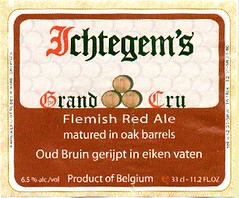
Ichtegems-grand-cru

Ichtegems Grand Cru

Brewery: Brouwerij Strubbe
Beer: Flanders Red Ale
A.B.V. 6.5%
Package: 330 ml bottle
Organic: no
Notes: The Ichtegems Grand Cru, from the De Strubbe Brewery, is a Flemish red ale aged in oak barrels. It has a malty nose and flavors, with just a touch of sourness, a creamy mouthfeel and a sweet finish.

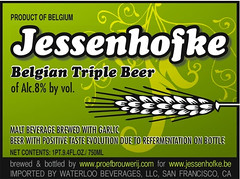
jessenhofke

Jessenhofke

Brewery: De Proef [website currently offline]
Beer: Belgian Strong Pale Ale
A.B.V. 8%
Package: 750 ml bottle-conditioned, cork & cage
Organic: yes
Notes: This beer is brewed with unrefined cane sugar giving it a ruddy complexion along with organic hops — Challenger, Goldings & Fuggles — from Poperinge, organic malt and there’s also organic garlic used in the brewing process. The garlic provides mostly body and mouthfeel, though it is evident in the aroma.

leireken-bio

Leireken Wild Berries

Brewery: Brouwerij Strubbe
Beer: Fruit Lambic
A.B.V. 8%
Package: 750 ml bottle-conditioned, cork & cage
Organic: yes
Notes: Leireken Wild Berries is a bottle-conditioned fruit beer made with the juice of pomegranates, cherries and strawberries, along with the pulp from blueberries, raspberries and the red elderberry, all organic and unfiltered. Surprisingly, the beer is more tart than sweet, and is refreshingly light and zesty. According to their website it’s “is based on Leireken White Spelt, an organic beer brewed from spelt. Spelt is a hardy ancient type of wheat that grows well in nutritionally poor soil. Its slow maturation process allows the plant to absorb a maximum of minerals from the soil. The 12th century medieval abbess Hildegard von Bingen, later Saint Hildegard, endorsed spelt, calling it “the healing grain.” (She’s actually quoted as saying, “It is rich and nourishing and milder than other grains. It produces a strong body and healthy blood to those who eat it and it makes the spirit of man light and cheerful”).”

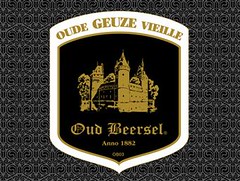
beersel-old-geuze

Oude Geuze Vieille

Brewery: Oud Beersel
Beer: Gueuze
A.B.V. 6%
Package: 750 ml bottle
Organic: no
Notes: The Oud Beersel brewery is a working museum just like Cantillon in Brussels. According to their website, “Oud Beersel Oude Geuze is one of nature’s miracles. Oude Geuze is a blend of lambic from different years. One year old lambic is still readily fermentable. Two year old and three year old lambic main contribution is to the taste. Blending the lambic produces a sparkling beer that is made in accordance with time-honored traditions. Oud Beersel Oude Geuze notable hop and fruit character is much appreciated.”

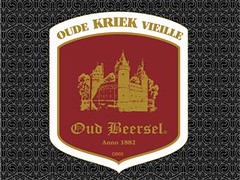
beersel-old-kriek

Oude Kriek Vieille

Brewery: Oud Beersel
Beer: Fruit Lambic
A.B.V. 6.5%
Package: 750 ml bottle
Organic: no
Notes: Oud Beersel’s website describes Oude Kriek as “an artisanal product, made from real cherries and Oud Beersel Lambic from old barrels. Once the cherries have been added to the Lambic, they are slowly absorbed into the Lambic, which develops a fruity character and a red colour.
Oud Beersel Oude Kriek is unique of its type in that it contains around 400 grams of cherries per litre of Oude Kriek. Oud Beersel Oude Kriek has no added sugar and contains no artificial flavourings or preservatives.” It’s only bottled once a year, and what’s available now was bottled last fall.

The beers are just rolling out to retailers and restaurants around the Bay Area. So far, you can find some or all of them at the following locations:

  • Beer Revolution
  • Bi Rite Market
  • Church Key
  • City Beer Store
  • Eastside West (Restaurant on Fillmore)
  • Healthy Spirits
  • Heaven’s Dog Restaurant
  • Jardiniare Restaurant
  • The Jug Shop
  • Lunardi’s Supermarkets
  • Monk’s Kettle
  • New Star-El
  • Noeteca Restaurant
  • Pi Bar
  • Shotwell
  • The Slanted Door Restaurant (Ferry Building)
  • Swirl
  • Toronado
  • The Village Market (Ferry Building)
  • Whole Foods (Haight Fillmore)

Filed Under: Beers, Breweries, Reviews Tagged With: Bay Area, Belgium, San Francisco

Beer In Ads #133: Ballantine’s Where Hospitality Is A Fine Art

June 18, 2010 By Jay Brooks

ad-billboard
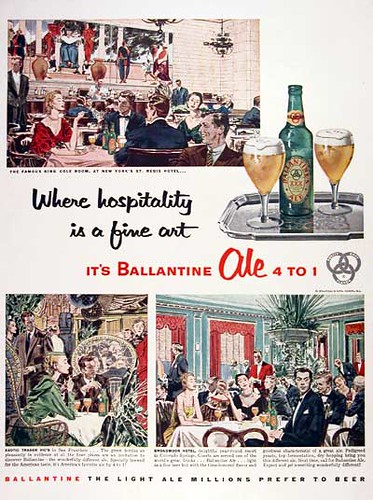
Friday’s ad is for Ballantine Ale, from 1954, with the slogan “Where hospitality is a fine art, It’s Ballantine Ale 4 to 1.” I love that they’re trying to position it as classy compared to lagers. Even the tagline at the bottom is priceless. “The light ale millions prefer to beer.” Lager is for the hoi polloi, ale is for connoisseurs. Nice.

54ballantineale1

Filed Under: Art & Beer, Beers Tagged With: Advertising, Ballantine, History

Philly Beer Week Wrap-Up

June 18, 2010 By Jay Brooks

philly-beer
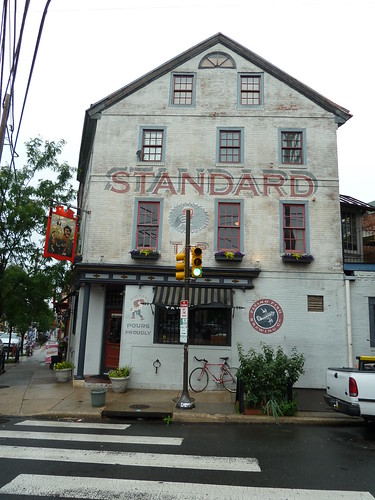
As ever playing catch-up, here is my wrap-up from the two additional days I spent in Philadelphia for Philly Beer Week. Monday I covered with Hammer Time, and after a quiet Tuesday attended the Lambic Beer Dinner at Monk’s Cafe. Wednesday morning I let my art freak flag fly and took the train to the suburbs for a quick visit to the Barnes Foundation, which I wanted to visit before it’s moved to its new location against the wishes (and the will) of Albert Barnes. When I got back, I headed straight to Standard Tap, in the hopes of getting my own Bear Ninja Cowboy t-shirt — success! — more tater tots and a shopping excursion to the Foodery across the street where I happily ran into two folks from Founders Brewing, Michael Bell and Dave Engbers, doing a tasting there.

P1000295
Outside Standard Tap.

Then it was off to Nodding Head, where owner Curt Decker had invited me to his Sam, Tomme & Old Beer event, which featured some amazing nibbles (the Keen’s Farmhouse Cheddar was sooo good and so was the pork tenderloin with fig reduction) and ten rare beer from Dogfish Head, Lost Abbey and, of course, Nodding Head.

Nodding Head co-owner Curt Decker
Curt Decker, with Sam Calagione and Tomme Arthur at the Nodding Head bar.

I wasn’t able to stay for the entire event, because I had a 7:00 event I’d committed to, but it was very tempting to stay longer. Some of the beers served which I was lucky enough to try included Dogfish Head’s Immort Ale 2006 and Black & Blue 2008. Then there was Lost Abbey’s Red Barn 2009, Dogfish Head Olde School Barleywine 2006 and Lost Abbey Judgment Day 2007. And I finished off the event with a Dogfish Head 120 Minute IPA from 2008.

Jack Curtin, Sam Calagione, Ed Friedland and Curt's assistant brewer
Jack Curtin, Sam Calagione, Ed Friedland and Curt’s assistant brewer, Gordon Grubb.

After that, I headed out for my next event, but had to make a quick detour at Fergie’s Pub to say hello to Carol Stoudt from Stoudts Brewing.

Carol Stoudt & me
Carol and me at Fergie’s Pub.

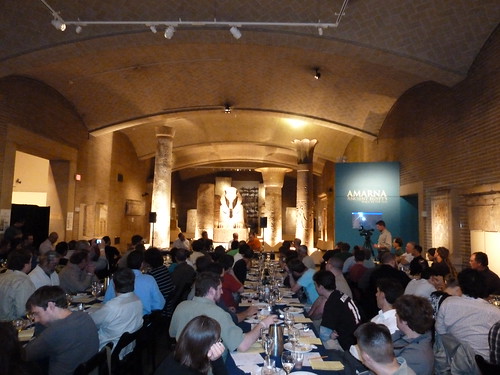
Then I grabbed a cab to the University of Pennsylvania’s Museum of Archeology & Anthropology for the main event of my evening: The Great Lambic Summit.

The Great Lambic Summit
The Great Lambic Summit featuring Armand Debelder (3 Fonteinen) Frank Boon (Brouwerij Boon), and Jean Van Roy (Brasserie Cantillon), along with Dan Shelton (Shelton Brothers).

After that, I cabbed back to the after party at Monk’s Cafe, where many out-of-town brewers had congregated.

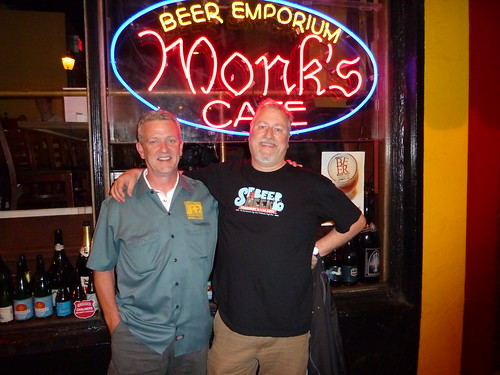
Brendan Moylan and me in front of Monk's Cafe
Brendan Moylan wandered up while a group of us were talking outside Monk’s.

Before turning in for the night, I stopped by McGilllin’s Olde Ale House, where a pub crawl between local brewers was supposed to end. Unfortunately, I got there a little to late so I had a quick nightcap and stumbled back to my hotel.

McGillin's Olde Ale House
Late night outside McGilllin’s Olde Ale House, Philadelphia’s oldest bar.

The next day I slept in, then went for a walk to do some sightseeing and pick up gifts for the kids, ending up, as planned, at a cheesesteak place on Market Street — Sonny’s — for my fourth cheesesteak in four days. (You just can’t get a decent authentic one in San Francisco so I tend to go overboard when I’m back East.)

Eventually I ended up at the Kite and Key for the debut of a collaboration beer between Dogfish Head, Stone and Victory; Saison de BUFF. The BUFF part is an acronym for “Brewers United for Freedom of Flavor.” It’s a great saison, spicier than most, but still quite refreshing. It’s made with — try not to break into song — parsley, sage, rosemary & thyme.

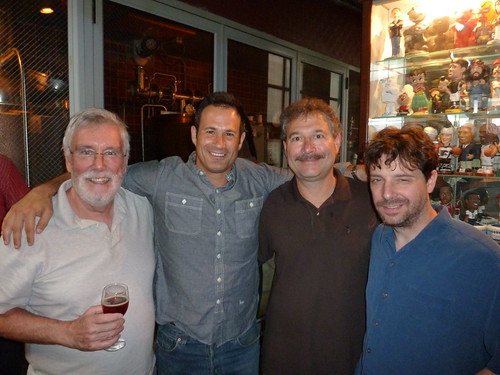
Kite & Key co-owner Jim Kirk and me with Sam Calagione, Bill Covaleski & Greg Koch
Kite and Key co-owner Jim Kirk and me with Sam Calagione, Bill Covaleski and Greg Koch.

After that, I caught a ride with the three brewers to the World Cafe Live, but I’ll finish that story in another post.

Below is a slideshow of my last two days at Philly Beer Week. This Flickr gallery is best viewed in full screen. To view it that way, after clicking on the arrow in the center to start the slideshow, click on the button on the bottom right with the four arrows pointing outward on it, to see the photos in glorious full screen. Once in full screen slideshow mode, click on “Show Info” to identify each photo.

Filed Under: Beers, Events, Just For Fun Tagged With: Beer Weeks, Pennsylvania, Philadelphia, Travel

Tiger, Tiger, Burning Bottles

June 18, 2010 By Jay Brooks

tiger-new
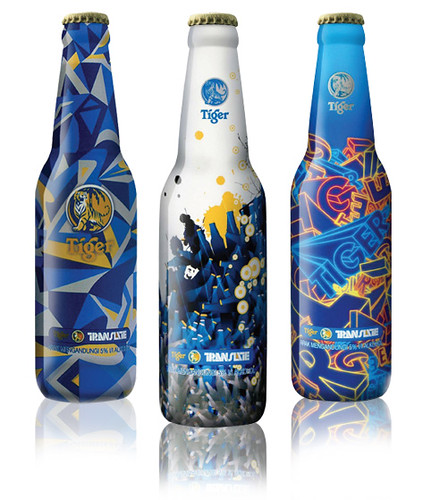
Alright, not exactly fearful symmetry, but Asia Pacific Breweries, who owns the Tiger Beer brand, is sprucing up its bottles. They’ve hired two artists, Korean-American Rostarr (Romon Yang) and Singapore-based Tomas Goh, to create limited edition bottle designs. They each did one design apiece and collaborated on the third.

tiger_bottles

About the designs, known individually as Graphysics, Rise and Energy from the press release:

Internationally acclaimed Korean-American Rostarr´s design Graphysics is based on his signature cutting-edge graphics that fuses digital design and free painting. His design is a marriage of Graphics and Physics, creating a dynamic visual iconography.

Singapore-based Tomaz Goh´s design, Rise, on the other hand, reflects his thoughts on the state of the environment today. With the opinion that our world is fast deteriorating, the versatile Goh chose to use his design to urge mankind to “rise” against the threats of global deterioration of our environment and increase our recycling efforts.

The Energy design is inspired by the collective efforts of Asian artists such as Rostarr and Tomaz that are making an impact in the design world today.

Graphysics, Rise and Energy are exclusively designed to represent the spirit and philosophy of Tiger Beer — a brand with bold character and identity!

While I know it’s all about the beer inside, I still do enjoy the art of packaging and labels. And people do shop the labels and are swayed to make a purchase based on the packaging, so like it or not, it is an important component in a beer’s success.

Filed Under: Art & Beer, Beers, Breweries Tagged With: Bottles, Packaging

Beer In Ads #132: Schlitz So Refreshing

June 17, 2010 By Jay Brooks

ad-billboard
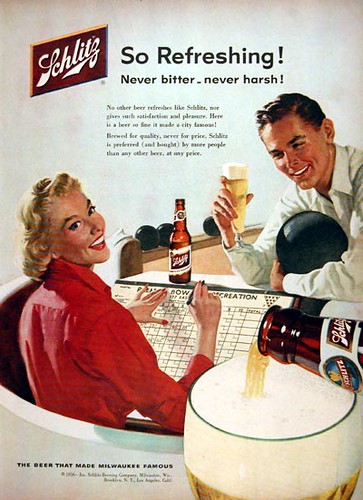
Thursday’s ad is for Schlitz, from 1956, when bowling was at the height of its popularity. Look how the dude is cradling his ball, I’ve never ever seen anyone hold their bowling ball like that. “So refreshing!”

56schlitzbeerbowling

Filed Under: Art & Beer, Beers Tagged With: Advertising, History, Schlitz

California State Fair Beer Competition Winners

June 17, 2010 By Jay Brooks

cal-state-fair
On Monday, the results of this year’s California State Fair competition for “Commercial Craft Beer” were released. As usual, the winners are listed confusingly by county, with no overall list. Why they do this is beyond me. Also, the commercial competition is judged using the 23 BJCP categories, plus three for mead and two for hard cider. I have nothing against the BJCP guidelines, though they were developed primarily for homebrewing and often don’t fit commercial standards as well. The only standard that commercial beers need to satisfy is that of their customers, who could often care less what style a beer is as long as they like it.

At any rate, the top honors went to:

  • Best of Show: Sudwerk Marzen
  • Best of Show 1st Honorable Mention: Triple Rock IPAX
  • Best of Show 2nd Honorable Mention: Lightning Brewery Elemental Pilsner
  • Best of Show 3rd Honorable Mention: Fox Barrel Mulled Cider
  • Best of Show 4th Honorable Mention: Sudwerk Dunkelweizen

And the “1st Gold” Awards in each category were as follows:

  • 1A,B. Lite American Lager & Standard American Lager: Michelob Ultra
  • 1C. Premium American Lager: Michelob
  • 1D,E. Helles & Export: San Pedro Longshoreman Lager
  • 2A. German Pilsner: Lightning Brewery Elemental Pilsner
  • 2B,C. Bohemian & Classic American Pilsner: Sierra Nevada Summerfest
  • 4. Dark Lager: Sudwerk Marzen
  • 5A. Maibock/Helles Bock: San Pedro Welke Bock
  • 5C,D. Doppelbock & Eisbock: Lodi Eisbock
  • 6A,C: Cream Ale & Kolsch: River City Kolsch
  • 6B. Blonde Ale: Eel River California Blonde
  • 6D. American Wheat or Rye: Santa Cruz Ale Works Hefeweizen
  • 7. Amber Hybrid Beer: Jack’s Gridiron Amber
  • 8A,B. Bitter Ordinary/Special/Best: Faultline Pale Ale
  • 8C. Extra Special/Strong Bitter (English Pale Ale): Anderson Valley Boont Extra Special Beer
  • 9A,B,C. Scottish Ale: Devil’s Canyon Full Boar Scotch Ale
  • 9D. Irish Red Ale: Taps Irish Red
  • 10A. American Pale Ale: Auburn Alehouse American River Pale Ale
  • 10B. American Amber Ale: Mad River Jamaica Red Ale
  • 10C. American Brown Ale: Omaha Jack’s Up Town Rancho Brown
  • 11. English Brown Ale: Tied House Ironwood Dark
  • 12A. Brown Porter: Mammoth Lakes Double Nut Brown
  • 12B,C. Robust & Baltic Porter: Uncommon Brewers Baltic Porter
  • 13A,D,E. Dry, American & Foreign Stouts: Mad River Steelhead Extra Stout
  • 13B,C. Sweet & Oatmeal Stout: Etna Brewing Grubstake Oatmeal Stout
  • 13F. Russian Imperial Stout: Fifty-Fifty Brewing Totality Imperial Stout
  • 14A. Engllish IPA: Eel River Organic IPA
  • 14B. American IPA: Triple Rock IPAX
  • 14C. Imperial IPA: Moylan’s Hopsickle Imperial XXX IPA
  • 15A. Weizen: Sierra Nevada Kellerwiess
  • 15B,C. Dunkleweizen & Weizenbock: Sudwerk Dunkelweizen
  • 16A,C. Witbier & Saison: The Brewhouse Baseball Saison
  • 16B,D,E. Belgian Pale Ale, Biere de Garde & Belgian Specialty Ale: River City Cap City Pale Ale
  • 17. Sour Ale: Valley Brew “Bill Brand-Bic”
  • 18A. Belgian Blonde Ale: Uncommon Brewers Siamese Twin Ale
  • 18B. Belgian Dubbel: Anderson Valley Brother David’s Double Abbey Style Ale
  • 18C. Belgian Tripel: Main Street Bishops Tipple Trippel
  • 19A. Old Ale: Lightning Brewery Old Tempest Ale
  • 19B. English Barleywine: Schooner’s Old Diablo Barleywine
  • 19C. American Barleywine: The Brewhouse Big Johnson Barley Wine
  • 20. Fruit Beer: Lost Coast Tangerine Wheat
  • 21. Spice, Herb Vegetable & Winter Beers: Marin Hoppy Holidaze
  • 22C. Wood-Aged Beer: Mayfield Iconoclast Nocturna
  • 23. Specialty Beer: Drake’s Impinoir Stout
  • 27. Apple Cider: Crispin Cider Crispin Light
  • 28. Specialty Cider: Fox Barrel Mulled Cider

cal-state-fair-2010

Filed Under: Beers, Breweries, Events, News Tagged With: Awards, California

Beer In Ads #131: IBI’s Full Case Test

June 16, 2010 By Jay Brooks

ad-billboard
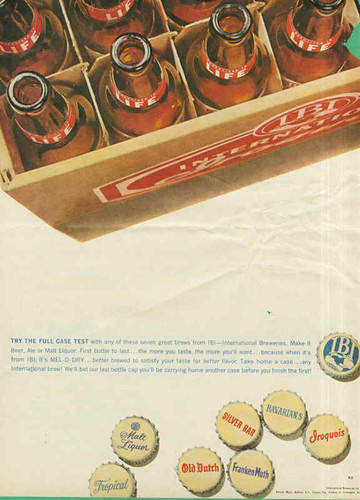
Wednesday’s ad is for IBI, or International Breweries Incorporation, a group of breweries that merged or were bought out in the Midwest beginning around 1955. The ad is from 1960, and shows the crowns, or bottle caps, for a number of their brands. I really like the ad visually, with the case of empty bottles suspended at the top of the ad and the crowns at the bottom. For the time, there’s an awful lot of white space in the middle, something that was fairly rare in 1950s advertising.

IBI-1960

While there’s not much information on the web about IBI, I did find this very old beer can collecting website, that doesn’t appear to be currently maintained, that had the following information:

In 1955 a group of businessmen from Detroit bought out Iroquois Beverage Corporation to help form the International Breweries Incorporation, with combining plants in Frankenmuth, Findaly, Tampa and Covington. International continued the Iroquois “arrowhead” label from the Iroquois Beverage Corp., however, they did change the Frankenmuth label from the Black Label to the oval label that came in beer, ale, and bock, from the Buffalo, NY plant.

IBI quickly created their own look, some collectors call these the “TV Screen” cans, the IBI cans came in Iroquois, Frankenmuth, Silver Bar in matching red beer and green ale cans, the IBI Frankenmuth Bock, and the IBI Old Dutch Beer. While the Buffalo plant was the only IBI brewer to produce all the cans, Iroquois remained solely in Buffalo. All the cans came as flattops, the IBI Iroquois beer has been found as a zip top. The Buffalo plant, also used 2 can companies, Continental Can Co., and Kegline, this produced a color variation with the red Beers.

The IBI logo eventually was removed, as some of the other plants closed or were sold, and a similar looking “TV Screen” can was produced. Buffalo kept filling Frankenmuth in Beer and Ale and shipping to the Midwest and the southeast in flattop cans. There are 2 different designs with the Frankenmuths, a single label with a yellowish background, and a 2 label white background can, however, not sure which came first. And similar to the single label Frankenmuth came an Iroquois Beer, but in a white background. Those were the final flattop cans from IBI of Buffalo. The Ponce DeLeon Silver Bar beer and ales that are identical labels were only canned in Tampa The odd thing is that they had matching beer and ales for Frankenmuth, but only the beer for Iroquois on the post IBI label.

Now there is a post IBI Iroquois Ale, but this is the identical label to the IBI’s, the Indian head replaces the IBI logo.This can has only been found in a zip top, no flats as indicated by the BCU and came out around 62 or 63, and is a very tough can to find. IBI of Buffalo only would last a few more years and canned their Iroquois Indian Head beer and Tomahawk Ale in zip tops.

Along the way International of Buffalo bought some existing labels that many collectors might not be aware of. In 1958 or 59, International canned the Blackhawk Beer for only a year or so before being sold to a Cumberland plant. They also picked up the Stolz label from Tampa, and a few tough variations came from Buffalo. In 1962 the Buffalo plant bought a few labels from Cleveland-Sandusky Brewers, and bear the International of Buffalo d/b/a. Canned in Buffalo were Old Timers and Crystal Rock. G & B was also purchased, and collectors have bottle labels from Buffalo, but haven’t seen a can yet.

Locally, in 1959, International bought out the Phoenix Brewery of Buffalo. Phoenix had just put their beer in cans a year earlier, and a very short run of Phoenix Beer bearing the Phoenix Brewing mandatory was run, this is a tougher variation than the Phoenix from International of Buffalo. The Phoenix Brewery eventually became the Ale plant for International. International eventually went bankrupt in 1966 and a Terry Fox from New Jersey bought the plant and renamed it Iroquois Brewing Company. They continued to produce the Indian Head Beer and replacing the Tomahawk Ale was the Iroquois Draft Ale. Bavarians Select had a short stay and was canned in Buffalo. In 1969, Fox sold the plant to a group from Buffalo, and the name changed to Iroquois Brewery. They discontinued the Draft Ale, and the famous white Draft Beer was canned during this time. With the invasion of Cheaper Canadien Beers, and the growth of the big boys, Iroquois could no not keep up, and on May 5, 1971, Iroquois the once proud brewer of Buffalo shut its doors.

Another website, Kentucky Beer Cans, also shows a few of the IBI cans.

Filed Under: Art & Beer, Beers, Breweries Tagged With: Advertising, History, Midwest

BrewDog In San Francisco

June 16, 2010 By Jay Brooks

brew-dog
Last night Monk’s Kettle in San Francisco hosted a little meet and greet with co-founder James Watt of BrewDog in Scotland. Having just enjoyed a cheesesteak together at Jim’s Steaks with James (and Greg Koch and Bill Covaleski) in Philadelphia the week before, I felt duty-bound to find out how he enjoyed the state sandwich of Pennsylvania.

P1000381
Dana Blum, from Anchor Brewing, James Watt, from BrewDog, and me at Monk’s Kettle.

I was handed a 5 a.m. Saint when I walked in joined the conversation already in progress. Apparently, cheesesteaks don’t compare favorably to haggis, but I think it’s all about what you grew up with, so I take no offense. We talked World Cup, Philly and beer, of course. John Dannerbeck and Dana Blum, both from Anchor Brewing, added golf to the discussion, and it turns out James is a big fan. I then moved on to the Hardcore IPA, brewed with American hops like Simcoe. At 9.2% a.b.v. and the Simcoe, it’s more like an American version, which is what they were going for.

James Pours Sink the Bismarck
James pouring samples of Sink the Bismarck.

I was going to leave early, but James opened bottles of both Sink the Bismarck and Tactical Nuclear Penguin so I stuck around, not wanting to miss another opportunity to try them both. This version of Bismarck had far more peaty aromas than the last one I had — a plus, I think — and the Penguin had a thinner mouthfeel and more spirity flavors, with less roasted malt character.

Filed Under: Beers, Breweries, Events Tagged With: Europe, Scotland

Update On Steve Altimari

June 16, 2010 By Jay Brooks

mountain
I spoke to Steve Altimari, former brewer with Valley Brewing in Stockton, who’s vacationing in his home town near Ithaca, New York, with his family. Naturally, I asked about what went down at the brewery and why he was out of a job. Having known Steve for a number of years, I was well aware that the family-owned company had its share of drama and that they hardly knew what a talented brewer they had in Steve. Here’s what he was able to tell me.

About a month ago, he heard from the owner, Kelly Jacobs, that she wanted to sell the brewery and gave Steve a price if he was interested. So Steve went to work, found partners and investors in short order and made an offer based on his earlier conversation with Jacobs. No dice. The price was now inexplicably higher. They tried again with higher offers, but each time the owners kept raising the price. Then they fired John, their only salesman. Last Thursday, they tried one last offer, which met with the same frustrating negative response. On Friday, the day before Steve was scheduled to take a family vacation, he asked for explanation. He was told they “decided on another offer, and they don’t need you. Thanks, but get out.” In less than two hours he was locked out of the brewery that he helped build for the past fourteen years.

I never expected that the owners were warm and fuzzy people, but that takes ingratitude to a whole new level. None of the family members know the slightest thing about brewing and if not for the Herculean efforts of Steve, no one would have ever heard of their brewery. I realize it’s unfair to place any of the blame on the new owners — whoever they may be — but it’s going to be difficult for anybody to come in and fill his shoes.

On the plus side, the partners and investors are sticking with Steve and the plans now have shifted to acquiring or building a brewery somewhere in the Bay Area. Apparently, the financing is already in place, so we may not be without beer brewed by Steve Altimari for long.

Steve will be hard at it when he returns from vacation next week, and the first order of business is coming up with a new brewery name. I suggested something that’s the opposite of a valley, like a mountain peak, which is why the icon above is of Mt. Everest. Then perhaps Altimari Brewery could work; it means “high water.” Let’s wish him the best of luck. What brewery name suggestions do you have for Steve’s new venture?

Peace Or 2 Medals: Steve Altimari, from Valley Brewing
A very happy Steve at the Falling Rock Taphouse in Denver, after winning two medals at the 2009 Great American Beer Festival.

Filed Under: Breweries, Editorial, News Tagged With: California, Northern California

« Previous Page
Next Page »

Find Something

Northern California Breweries

Please consider purchasing my latest book, California Breweries North, available from Amazon, or ask for it at your local bookstore.

Recent Comments

  • Bob Paolino on Beer Birthday: Grant Johnston
  • Gambrinus on Historic Beer Birthday: A.J. Houghton
  • Ernie Dewing on Historic Beer Birthday: Charles William Bergner 
  • Steve 'Pudgy' De Rose on Historic Beer Birthday: Jacob Schmidt
  • Jay Brooks on Beer Birthday: Bill Owens

Recent Posts

  • Beer In Ads #5217: The King Of All Beers April 11, 2026
  • Historic Beer Birthday: Gambrinus April 11, 2026
  • Beer In Ads #5216: The Finest Bock, As Usual April 11, 2026
  • Historic Beer Birthday: Anton Heeb April 11, 2026
  • Beer In Ads #5215: Another Load Of “Milwaukee’s Choicest” April 10, 2026

BBB Archives

Feedback

Head Quarter
This site is hosted and maintained by H25Q.dev. Any questions or comments for the webmaster can be directed here.