Brookston Beer Bulletin

Jay R. Brooks on Beer

  • Home
  • About
  • Editorial
  • Birthdays
  • Art & Beer

Socialize

  • Dribbble
  • Email
  • Facebook
  • Flickr
  • GitHub
  • Instagram
  • LinkedIn
  • Pinterest
  • RSS
  • Twitter
  • YouTube

Powered by Genesis

Fan Can Critics Show True Colors

August 26, 2009 By Jay Brooks

bud-fan-can
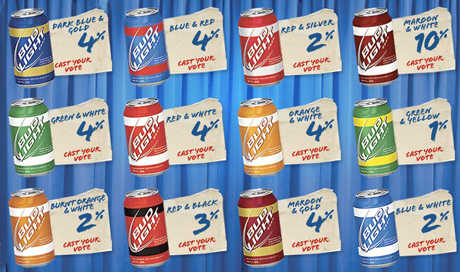
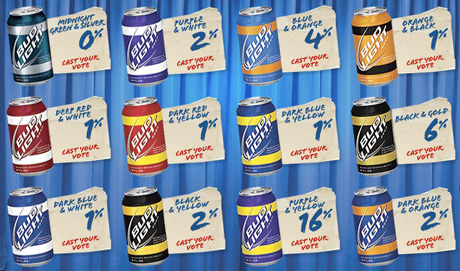
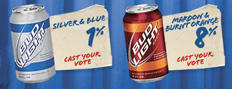
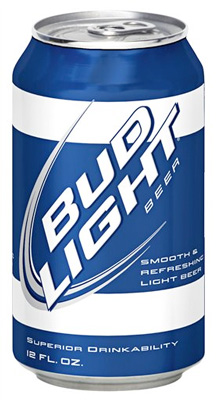
Just when I thought it was impossible for neo-prohibitionists to be any more idiotic, along comes the fan can controversy to prove me wrong once again. If you missed this one, I’ll recap. Anheuser-Busch created twenty-six different versions of its Bud Light can, each with the school colors of popular universities and colleges. There’s no school names, logos or mascots, just the colors. Here are some examples (you can see them all at Tailgate Approved, a Bud Light website).
fan-cans-1

Seems like good marketing to me. Commemorative beer cans are almost as old as beer cans themselves and are one of the most popular collectible items of breweriana. It’s not like these “institutions of higher learning” haven’t been prostituting themselves for decades, licensing literally everything to students, alumni and fans. Many care more for their sports programs then the actual edumacation they’re supposed to be providing students. But, as usual, otherwise reasonable people show their true colors as complete boobs who lose their sense of proportion and logic. Just add alcohol. It would almost be fun to watch if it wasn’t so terribly sad, pathetic and damaging to the enlightened, evolved and reasonable society I wish more people would be striving to create.

The hue and cry this time comes from “concerned people” afraid that a two-color beer can will encourage and promote underage drinking. According to Slashfood:

The cans are being marketed to match the colors of towns with college football teams, a move that has some school administrators up in arms, according to the Wall Street Journal. For example, purple-and-gold cans are being sold near the campus of Louisiana State University in Baton Rouge, La.

The University of Michigan has threatened to sue to make certain “maize and blue” cans are not sold anywhere in the Great Lakes state. At least 25 schools have asked Anheuser-Busch to stop selling the cans near their campuses, the paper said. The company said it would comply with any formal request by a university.

The Wall Street Journal reported that “[m]any college administrators contend that the promotions near college campuses will contribute to underage and binge drinking and give the impression that the colleges are endorsing the brew.” Huh? How exactly does that work? The laws concerning underage drinking aren’t altered in any way by changing the color of the cans, are they? It’s still against the law, isn’t it? This is what drives me insane about these “controversies.” They have no root in logic or common sense. People just fly off the handle without even thinking. I’m sure there are at least a few colleges whose colors are red and white. Is the demand for Coca-Cola greater there because people can be seen drinking a soda with their school colors on it?

The Journal article continues. “Samuel L. Stanley, president of New York’s Stony Brook University and a medical doctor, also objected. In a letter to Anheuser-Busch, he called the campaign ‘categorically unacceptable.'” He then goes on to list some statistics about alcohol-related deaths, which are entirely irrelevant to this issue. Changing the color on a can of beer does not automatically change the nature of the minimum drinking age or how many beers a person might consume in a sitting. Perhaps he’s tacitly admitting that he can’t stop underage drinking on his campus and thinks that this will make it even harder for him to enforce the current laws. Perhaps he should consider supporting lowering the drinking age as suggested by former college dean John McCardell and his Choose Responsibility organization and sign on to the Amethyst Initiative. That might make some headway in reducing drinking problems on his campus, because just banning certain color cans isn’t going to have any effect whatsoever.
fan-cans-2

My favorite so far is the ridiculous University of Michigan response, who “threatened legal action for alleged trademark infringement, demanding that Anheuser-Busch not sell the ‘maize and blue’ cans in the ‘entire state.'” Sadder still though is the fact that colors can actually be trademarked. Think UPS brown. That’s trademarked, though of course it’s the specific hue, not any brown. And last year, in a federal court case in Louisiana, Board of Supervisors of the Louisiana State Univ. et al. v. Smack Apparel Co., et al., C.A. No.: 04-1593, E.D. La., the judge ruled that Louisiana State University, Ohio State University, Oklahoma University, and the University of Southern California did indeed enjoy legal protections for their color schemes.

According to the IP Blawg,

In considering whether the unregistered color schemes were entitled to protection under Section 43(a) of the Lanham Act, the court looked for the requisite secondary meeting needed for a color to be protected, and found that it was present. The four universities had used their color combinations for more than 100 years, marketing hundreds of items with these color schemes, and garnering millions of dollars of retail sales from merchandise bearing these color schemes. The court then found that likelihood of confusion was established under the Fifth Circuit’s precedent where the marks had been in use for decades and were “extremely strong,” the color schemes were virtually identical, and Smack’s shirts were sold in retail outlets alongside plaintiffs’ shirts, and promoted in the same advertising media

The IP Blawg ends by wondering allowed whether or not the court made the right decision. I’d have to say this is almost as ridiculous as patenting seeds. I think what’s really at stake, both here and in the current issue, is that schools aren’t getting any licensing money. By simply using colors that are close to those of the respective schools, they don’t have to pay any licensing fees to the schools, and that’s probably what’s really pissed them off. Because most colleges aren’t exactly shy about hawking all sorts of crap with the school colors, logo and mascot on them. Walking through any university bookstore should convince anyone of that. The higher moral ground they’re flinging around about this is more about not sharing a piece of the pie, I’d wager.
fan-cans-3

Perhaps this might be a good time to have a debate on just how ridiculous is blind loyalty that’s reinforced throughout our lives. We wonder why people are so quick to go to war when our entire society is divided up into a million divisions that pretend to compete against one another. It starts with the street you live on, then your neighborhood, your school, your sports team, your college, your company and finally your country. You’re expected to show “support” for all of them, and usually in an unquestioning way that’s deeply damaging to reason or logic. It makes it much easier for things to never change and makes maintaining a status quo that’s unfair to a majority much easier. Did you ever notice that critical thinking is not taught in school? That’s not an accident. Critical thinking would lead to kids asking all sorts of uncomfortable questions and — gasp — thinking for themselves.

People obviously believe that when shown a can of beer in a person’s school colors, they’ll be unable to do anything but buy them and drink them. This idea of blind loyalty will all but force them to in order to be supportive. Frankly, I can’t even remember what my college’s school colors were. But even if I could, it’s such an obviously specious argument, that I’m amazed anyone could be taking it seriously.
bud-fan-can

But they know that a company as large as Anheuser-Busch InBev can’t risk appearing to do anything that might be even seen as possibly, maybe encouraging people to buy their products, especially those who are not allowed to buy them. So what exactly are companies supposed to do? Apparently, they all have to come up with packaging and marketing that appeals only to adults and specifically does not appeal to anyone under 21. Exactly what would that look like? Beats the hell out of me. I know cartoons are usually one of things that bother these chuckleheads, as if only kids enjoy them. I’m 50, for fuck’s sake, and I still love cartoons as much as I did when I was a non-person who could only die for his country but not drink in it.

My point is it’s impossible to separate kids from society and create two worlds, one with kids and one without. Yet that’s exactly the only thing that would seem to satisfy the people who make these nonsensical complaints. If they really think all it takes to increase underage drinking and binge drinking is change the colors of beer cans, we have more severe problems than underage drinking. I can’t help but think that placing as much emphasis on entertainment and sports, especially college sports, as we do has to be at least part of the reason that so many are so thick as to swallow such arguments. And worse so, for the pinheads that come up with them. These are people who work in universities and so, one presumes, have a college degree. Never was it more obvious that graduating from college can’t make anyone smarter, only more educated. I’ve cited these before, but here is where we’re at, according to the Jenkins Group:

  • 1/3 of high school graduates never read another book for the rest of their lives.
  • 42 percent of college graduates never read another book after college.
  • 80 percent of U.S. families did not buy or read a book last year.
  • 70 percent of U.S. adults have not been in a bookstore in the last five years.

Personally, I’m more worried about that (and not just because I’m a writer) than what color the beer cans are. I know I’ve mentioned this book before, (sigh — sorry about repeating myself) but Morris Berman’s brilliant The Twilight of American Culture suggests that we’re currently heading into another dark ages and that under such circumstances, few people even realize it. I’d offer that worrying about what color the beer cans are and believing that some harm will come to society as a result is yet another sign that Berman is correct. Surely there are more pressing problem’s we’re facing.

Filed Under: Breweries, Editorial, News, Politics & Law Tagged With: Prohibitionists

Beer In Art #40: Emily Zasada’s Beer Paintings

August 23, 2009 By Jay Brooks

art-beer
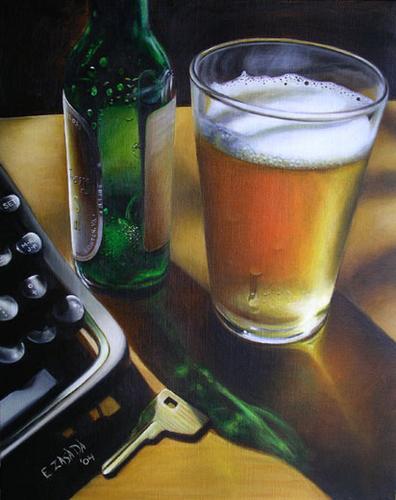
This Sunday’s work of art is by a contemporary artist from Virginia who often paints wine, in fact so much so that her domain name is winepaintin.gs. Her name is Emily Zasada, and she’s also done a couple of paintings of beer, too. The painting below is a still life called Beer, Typewriter and Key

Zasada_Emily-Beer_Typewriter

From her biography at her website:

Why realism?

I’m not sure. I’m not a patient person, so even I don’t always understand why I’ve chosen to focus on this type of art. But the details of objects fill our lives; they’re background players and constant companions, even though they’re largely unnoticed. Consider the faint curve of the keys of the computer keyboard under your fingers, for example, or the pale translucent light that lightly brushes the rim of your coffee cup. All of these tiny things give our life texture and beauty, if we stop just for a moment to examine them and pause in the middle of an enormously rushed day.

So I guess that transferring these details into a painted image pays homage to these details, carved out by light and scattered throughout our daily lives. Light is so important in my paintings that possibly it isn’t really realism that I’m after, but a glowing version in which the light that brushes over an object and carves shadows around and through it is itself an artist, changing the hues and shapes of objects as the hours pass in a day.

I’m self taught, and have been painting for nearly 5 years. An article about my work was featured in the spring 2005 edition of the Virginia Wine Gazette, and one of my paintings was also chosen for the cover art. One of my paintings was also featured on the cover of the Long Island Wine Gazette and another painting was featured as the cover of the program for the 2006 Virginia Wine Festival.

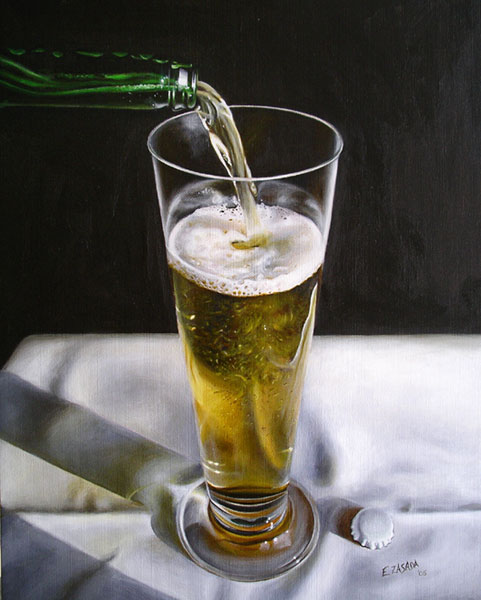
Despite her wine focus, I discovered at least one more beer painting she did, this one entitled Afternoon Pour.

Zasada_Emily-Beer_Pilsner

You can see more Zasada’s artwork at a gallery at Art Wanted and, of course, at her main website.

Filed Under: Art & Beer Tagged With: Virginia

I Am A Homebrewer Answers The Call

August 21, 2009 By Jay Brooks

aha
I’m not sure who’s actually responsible for this, but it’s a great answer from the homebrewing community to Greg Koch’s video I Am A Craft Brewer.

Filed Under: Beers, Just For Fun Tagged With: Homebrewing, Video

A Marketeer’s Take On Bud Light

August 19, 2009 By Jay Brooks

bud-light
Thanks to Anat Baron from Beer Wars, who tweeted this. Laura Ries, one half of the father-daughter Ries & Ries marketing consultants, who together wrote The 22 Immutable Laws of Branding and four other books.

She wrote a piece on her far-too-cleverly named Ries’ Pieces blog about the Bud Light brand. It’s interesting to read the take of someone who knows marketing but not the beer industry’s peculiarities.

Filed Under: Beers, Editorial Tagged With: Advertising, Anheuser-Busch InBev, Light Beer, Marketing

FDA Finally Rules On Gluten-Free

August 18, 2009 By Jay Brooks

gluten-free
I first became interested in gluten-free beer, and gluten-free generally, when my son was diagnosed as autistic. The autism spectrum is very wide and as my wife and I learned all we could about it, we discovered that many kids with ASD have what’s called a “leaky gut” which causes abdominal and/or intestinal problems. It is often treated by modifying their diet and restricting glutens, among other things, like caseins. As it happened, Porter never developed that symptom so it was never something we had to deal with, but it stuck with me.

So when Celiac Disease (CD) started becoming more common, and with it gluten-free diets, I was immediately intrigued by the idea of gluten-free beer. I attended a seminar at a Craft Brewers Conference four years ago on gluten-free beer and was surprised to find it standing-room only. Obviously, I was on to something and wrote an article for New Brewer magazine in 2006. In the course of researching the story, I discovered that Anheuser-Busch was developing a gluten-free beer, to be named Redbridge. I obtained a bottle from a test batch from UC Davis professor Michael Lewis, who I also discovered had recently developed CD himself. At that point, only three or four gluten-free beers were being packaged, though many other breweries were experimenting with draft versions.

But here’s the other weird thing I discovered, which was that these beers were not allowed to say “gluten-free” on the label. In Europe they’d adopted a standard as early as 2000, but the U.S. didn’t have one. Here’s what I wrote at the time:

What makes a product gluten-free is not without controversy, however. Generally, of course, it means products without glutens. But as with N/A beers, some trace amounts may be acceptable. The EU, in the Codex Alimentarius, adopted standards in 2000 that “gluten-free” could have either 20 ppm or 200 ppm, depending on the method of manufacture and the raw ingredients selected. The U.S. has not yet established a standard. In July of 2004, Congress passed the Federal Allergic Labeling and Consumer Protection Act, which required the FDA to write a definition of “gluten-free” for labeling. To date, they have not yet done so.

This means that currently beers cannot have “gluten-free” on the label. The TTB is presently waiting for the FDA’s definition, which they are currently working on with celiac organizations and other interested parties. Brewers currently work around this using marketing materials and through distributors and retailers, since they may put “gluten-free” on shelf talkers and the like.

So apparently we had to wait through the Bush years — five years — for the FDA to decide, which as of Monday, what they decided finally went into effect. According to the USA Today’s account:

Brewers of gluten-free beers have until Jan. 1, 2012, to begin adding nutrition labels to their products, including a declaration of major food allergens, which includes wheat. That’s the information people with celiac disease have been waiting for.

Up until now, they couldn’t be certain that a beer that claimed to be gluten-free really was. Under FDA regulations, there’s a standard for it.

Gluten-free beer makes up less than 0.1% of the beer market, says Paul Gatza of the Brewers Association in Boulder, Colo. The biggest players in the gluten-free beer market are Anheuser-Busch’s Red Bridge, Klisch’s Lakefront in Milwaukee, Wisconsin and Bard’s Tail from Norwalk, Conn., he says.

Celiacs have been buying these gluten-free beers for years, says Elaine Monarch, executive director of the Celiac Disease Foundation in Studio City, Calif. But accurate labels will be nice and the new FDA regulations may make it easier for European gluten-free beverages to enter the market, she says.

The standard they adopted is the 20 ppm one, the more rigid of the two used in Europe.

Filed Under: Beers, News Tagged With: Gluten-Free

Another Good Tip

August 18, 2009 By Jay Brooks

pint
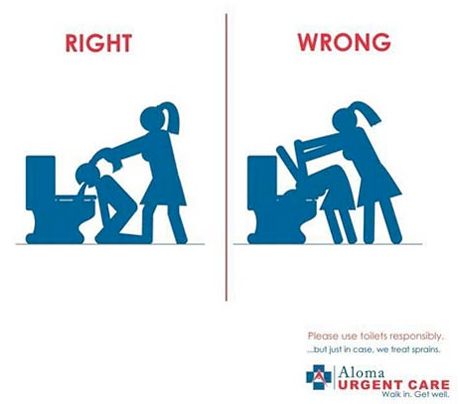
Last week, I posted a useful tip from the UK on how to make sure someone who’s passed out doesn’t choke. I just stumbled upon yet another good drinking tip, this one from a Winter Park, Florida medical facility, Aloma Urgent Care. In an effort to advertise their services, they’ve created graphics showing the right and wrong way to assist a friend in need, who may need to quickly get rid of too much recently ingested food and/or drink. A true friend knows the right way.

aloma-advice

Filed Under: Just For Fun Tagged With: Humor

Today Show Again Asks Wine Experts To Explain Beer

August 18, 2009 By Jay Brooks

today-show
For the second time in less than a year, the lazy producers at the Today Show had a segment about beer hosted by someone from Food & Wine magazine. This time it was Gail Simmons, who’s perhaps better known as a judge on the Bravo television show Top Chef. I’ve looked over her biography and I can’t for the life of me find any mention of beer whatsoever.

The advice she gives isn’t terrible, though it’s pretty basic to the point where she couldn’t really go too far off the rails. Most of the beers are fairly pedestrian, but they most likely have to be available for a national audience. It was nice at least to see Lagunitas IPA and Victory Prima Pils highlighted. Although I can’t for the life me understand why they put the IPA in a pilsner glass!?!

I know most people’s take on this is that we should be glad beer is getting any positive attention — and I am — but I’m also enough of a curmudgeon to want it to be on our terms. I know I keep hammering this point, but it just doesn’t seem that unreasonable to want wine experts to talk about wine, food experts to talk about food and plumbing experts to talk about plumbing. For almost any expertise you could name, that’s the way it’s done and most people would agree that makes sense. But when it comes to beer, mass media seems to believe almost anyone can be an instant expert on beer for no better reason than a familiarity with another alcoholic beverage or food more generally. And that’s likely because of their own ignorance, believing that beer is only the commodity it’s portrayed as by the big beer company’s advertising and marketing. That, plus being too lazy to take the time to learn anything different. But for fuck’s sake, there are plenty of beer magazines around these days. Surely they must have run across one of them. Perhaps they’ve heard of Google? A quick search would reveal hundreds, if not thousands, of people who know more about beer and food pairing than Gail Simmons.

Evidence of their ignorance comes out loud and clear when segment host Lester Holt tells Simmons the following. “Thanks for legitimizing beer. I’m one of those beer drinkers that feels funny ordering a beer in a nice restaurant instead of wine sometimes.” First of all, and no offense to Simmons, but she’s done nothing, absolutely nothing, to “legitimize” beer. That work has been done by thousands of dedicated craft brewers, beer writers and aficionados over thirty years of hard, patient work. Her magazine is now addressing craft beer because of the groundwork laid by all those people; she’s reacting to the market, not leading it. That Holt offhandedly gives her “credit” for so many other people’s hard work is deeply offensive and just plain pisses me off.

Secondly, why on Earth would anyone “feel funny” ordering what they want with a meal? How sad that anyone would feel they “must” order wine with any meal in a restaurant. When he made that statement, you could almost hear the collective marketing world patting themselves on the back. When you convince people that wine is the only thing to order in a fine restaurant to the point where they “feel funny” doing anything different, that’s a great victory for advertising. But when any industry persuades society to believe what they want them to wholesale and unquestioning, that can be deeply damaging to the world as a whole. Life becomes skewed, and I would argue that’s our world today. A century of advertising has made us “feel” certain things about brands, specific companies and their products. You have to marvel at the success of it all when you see millions of people voluntarily wear clothing with corporate logos on them, essentially paying for the privilege of advertising for them. That no one thinks twice about it boggles the mind.

With wine, this manifests itself in the way newspapers and other media have “wine sections” or “wine and food sections” that cover all beverages. Even the Today Show’s website has a Food & Wine section. Can somebody explain to my why it can’t be Food & Drink or Food & Beverage? Why is it always exclusive and not inclusive? Of course, like Food & Wine magazine, they all do occasionally include articles about beer, spirits and even coffee, so why not call it by a name that reflects that? Perhaps they’d cover beer more often if wine wasn’t in the title? I’d at least feel better if the Today Show’s “expert” came from, if not a beer magazine, at least a Food & Drinks magazine. That might go a long way to “legitimize beer” and their coverage of it.

Filed Under: Beers, Editorial Tagged With: The Today Show, TV, Video

Batman On Drinking Circa 1966

August 17, 2009 By Jay Brooks

batman
Sunday afternoon I turned on the television determined to find something new that I could watch with the kids. Left to their own devices my kids would watch the same cartoons over and over and over again. Even good ones (we had been watching The Tick and the old Fleischer Superman series) grow old very quickly on endlessly repeated viewings. As luck would have it, we caught the very beginning of the 1966 film Batman, based on the popular Batman television series starring Adam West and Burt Ward. It ran for three seasons from 1966-68 and, needless to say, I was a fan. I was seven the year it began, the same age as my son Porter is now, and it quickly became my favorite TV show.

So I thought this would be perfect for the kids to watch with me, and in truth it was. Porter was particularly thrilled with the ham-fisted acting, the ludicrous plot and the oh-so cheesy special effects. It was fun watching it again through his eyes. But as I’d not seen it in quite some time, it was an interesting time capsule of the Sixties. The way they watered-down Batman as a do-gooder not only authorized by the City of Gotham, but embraced by both the establishment and the citizens seemed almost quaint given the dark vigilante themes explored in later versions of the Batman legend. The characters could not have been more square, establishment and unintentionally funny. In the midst of Vietnam, social unrest and political upheaval, television was escapist fare in way I don’t think it’s managed since that time. But despite adopting the bright, garish technicolors of the younger generation, everything about the show was correct and proper, reflecting not the growing baby boomer sentiments, but the established morals and mores of the generation before that, my parents generation, who were born before World War II. In fact, the way they portrayed young people on the show as hippies, beatniks and other unsavory stereotypes was downright hostile and seems almost laughable were it not such an unsubtle attack on them.

As a first-grader in 1966, I noticed none of this, of course, but undoubtedly this was the reason my parents let me watch the show at all, since it was devoid of any message they didn’t approve of and in fact probably more matched their own moral compass. But all of that is my long-winded set up to a scene in the film which surprised the hell out of me yesterday, though upon reflection it really shouldn’t have.

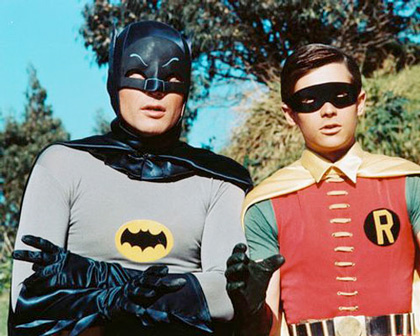
batman-and-robin

Batman and Robin were down at the docks, the place where nefarious types always congregate, and Batman had climbed in a window in some shady building that housed a bar only to discover a bomb. And not just any bomb, but one of those round, black cartoon bombs with a fuse sticking out of the top that burns nearly forever. For several minutes Batman runs around holding the bomb out in front of him looking for a safe place to dispose of it, only to be thwarted at every turn. It’s hilarious, really; every place he runs he finds a baby stroller, a group of nuns, boy scouts, or something along those lines. I can only imagine the brainstorming session that yielded that scene. Eventually, he finds a safe place, and throws the bomb into the water. Robin catches up with him and they discuss what just happened and Batman’s unwillingness to let innocent people die. And in that exchange, Batman sums up what I imagine was the prevailing way that people at that time regarded people who drink too much.

Robin: You risked your life to save that riff-raff at the bar?

Batman: They may be drinkers, Robin, but they’re also human beings … and may be salvaged. I had to do it.

The way he says “human beings,” he practically chokes on the words, like he’s hard pressed to actually believe they could be human, but still knows he should believe it because it makes him a better person. But it’s not even their humanity that saves them, but instead the fact that they may have the potential to change their wicked ways, to “be salvaged.” That Robin seemed surprised that the “riff-raff” bar folk might be worth saving, I think, says quite a lot. Holy propaganda, Batman!

Wow, to be someone who patronized a bar circa 1966 was to be the lowest of the low, only barely redeemable, a belief many neo-prohibitionists still appear to believe. At least most rational people no longer adhere to such nonsense. Happily, bars have changed, people have changed, and the beer they serve in them has, too. In fact, even Batman has changed. I’d bet even he’d drink a nice craft beer when he’s in his alter-ego guise as Billionaire Bruce Wayne. Thank goodness the Sixties are over.

Filed Under: Editorial, Just For Fun Tagged With: drinking attitudes

Mid-Year Brewery Numbers Released

August 17, 2009 By Jay Brooks

ba
The Brewers Association in Boulder, Colo. just released some statistics about the mid-years sales of craft beer and the number of breweries in America. From the press release:

Dollar growth from craft brewers during the first half of 2009 increased 9%, down from 11% growth during the same period in 2008. Volume of craft brewed beer sold grew 5% for the first six months in 2009, compared to 6.5% growth in the first half of 2008. Barrels sold by craft brewers for the first half of the year is an estimated 4.2 million, compared to 4 million barrels sold in the first half of 2008.

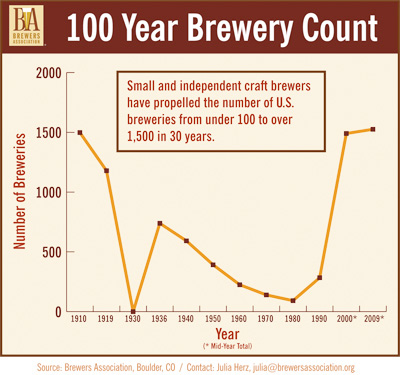
The other big news in the release is that the number of breweries operating in America now stands at 1,525, the highest number in a century.

U.S. Breweries
as of July 31, 2009
  962 Brewpubs
  456 Microbreweries
    64 Regional Craft Breweries
1,482 Total US Craft Breweries
    20 Large Breweries
    23 Other Breweries            
1,525 Total US Breweries

As the press release stresses, that’s due almost entirely to the growth of craft beer:

The U.S. now boasts 1,525 breweries, the highest number in 100 years when consolidation and the run up to Prohibition reduced the number of breweries to 1,498 in 1910. “The U.S. has more breweries than any other nation and produces a greater diversity of beer styles than anywhere else, thanks to craft brewer innovation,” Gatza added.

100-yr-count

Some other interesting tidbits:

  • Growth of the craft brewing industry in the first half of 2009 was 5% by volume and 9% by dollars.
  • Craft brewers sold an estimated 4.2 million barrels of beer in the first half of 2009, up from 4 million barrels in the first half of 2008.
  • Overall US beer sales are down 1.3% in the first 6 months of 2009.
  • Imported beer sales are down 9.5% in the first 6 months.
  • Growth of the craft brewing industry in 2008 was 5.9% by volume and 10.1% by dollars.
  • The craft brewing industry produced nearly 8.6 million barrels of craft beer in the US in 2008.
  • The craft brewing sales share as of December ’08 was 4% by volume and 6.3% by dollars.
  • Total US craft brewing industry annual dollar volume is $6.3 billion.

Filed Under: Breweries, News Tagged With: Statistics

Fishnet Cans

August 17, 2009 By Jay Brooks

beer-gal-2
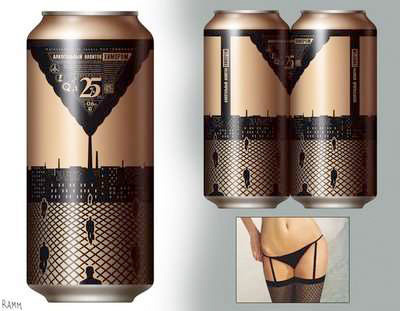
First there was Nude Beer (in its many incarnations), then Wanker, Skinny Blonde Ale and now comes the latest beer to play to the basest instincts of the male beer drinker: lingerie canned beer with fishnet stockings.

lingerie-beer

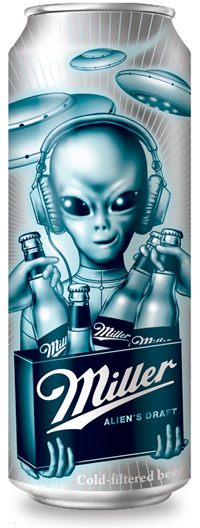
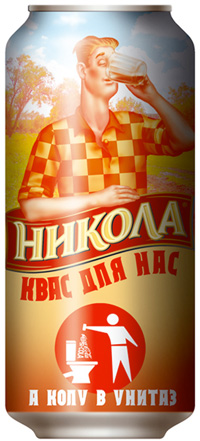
At least that was my original thought. The Fishnet Cans have been blogged and re-blogged all over that series of tubes known as the internet. But, as it turns out, they are just one of a pretty big series of can designs by Russian artist/illustrator Ramm ND. It’s not necessarily his or her fault that so many chose to highlight the one prurient themed can and ignored the more poignant works. Human nature is what it is. Take a closer look at the Fishnet Cans and you’ll begin to see new details that defy it being simply to titillate. Then take a look at his entire oeuvre of cans. Some are beer and some are soda, but they’re all more interesting than I would have guessed from just seeing the one in fishnets.

ramm-miller

In fact, going through Ramm’s entire portfolio is eye-opening. And I think he’s making some larger points. These aren’t just can designs, they’re works of art using cans as the medium.

ramm-hhkoaa

Ramm also has another portfolio on Coroflot.

Filed Under: Art & Beer, Beers, Editorial Tagged With: Cans, Packaging, Women

« Previous Page
Next Page »

Find Something

Northern California Breweries

Please consider purchasing my latest book, California Breweries North, available from Amazon, or ask for it at your local bookstore.

Recent Comments

  • Bob Paolino on Beer Birthday: Grant Johnston
  • Gambrinus on Historic Beer Birthday: A.J. Houghton
  • Ernie Dewing on Historic Beer Birthday: Charles William Bergner 
  • Steve 'Pudgy' De Rose on Historic Beer Birthday: Jacob Schmidt
  • Jay Brooks on Beer Birthday: Bill Owens

Recent Posts

  • Beer In Ads #5215: Another Load Of “Milwaukee’s Choicest” April 10, 2026
  • Beer Birthday: Alexandre Bazzo April 10, 2026
  • Beer In Ads #5214: Poth’s Bock Beer April 10, 2026
  • Historic Beer Birthday: Rudolf Brand April 10, 2026
  • Beer In Ads #5213: Bock Beer Cascade Quality April 9, 2026

BBB Archives

Feedback

Head Quarter
This site is hosted and maintained by H25Q.dev. Any questions or comments for the webmaster can be directed here.