Brookston Beer Bulletin

Jay R. Brooks on Beer

  • Home
  • About
  • Editorial
  • Birthdays
  • Art & Beer

Socialize

  • Dribbble
  • Email
  • Facebook
  • Flickr
  • GitHub
  • Instagram
  • LinkedIn
  • Pinterest
  • RSS
  • Twitter
  • YouTube

Powered by Genesis

Oregon Leads Small Brewers Caucus

June 23, 2007 By Jay Brooks

maps-or
Last month, 34 members of the House of Representatives formed the Small Brewers Caucus to monitor and effect issues of interest to craft brewers. The week after the Craft Brewers Conference, on May 15, the caucus held its first meeting just prior to a reception on Capitol Hill celebrating “American Craft Beer Week” hosted by the Brewers Association.

From the original press release:
hse-sm-brew-caucus

The House Small Brewers Caucus, co-chaired by U.S. Representatives Peter DeFazio (D-Oregon) and Greg Walden (R-Oregon), is currently composed of 34 Members of Congress who share an interest in the issues of importance to America’s small brewers. Brewers Association Board of Directors who were in Washington that day to participate in the American Craft Beer Week celebration, listened as Congressman Walden stated that the primary mission of the Caucus is to provide an interactive opportunity to learn about the dynamics of running a small business as a brewery, the brewing process itself and the quality and value of the beer and brewing activities. Several other Congressmen also in attendance spoke briefly to the group, among them Congressman DeFazio who is himself a homebrewer and a primary sponsor and leader in the successful effort to pass House Resolution 753 of 2006 commending American craft brewers and recognizing the first American Craft Beer Week.

“The fact that Members of Congress recognize the unique place small brewers and craft beer have in our society, is extremely gratifying and important,” said Brewers Association President Charlie Papazian also in attendance at the meeting. “There is a very real danger that the voice of the small members of the brewing community may not be heard over that of its larger brethren, so a group of legislators bound by a common interest in the history, tradition and excitement that are hallmarks of today’s small brewers, should help ensure our issues get fair consideration.”

The story is starting to get some attention in places where craft beer is closely tied to the local economy. For example, in Portland, Oregon, the Oregonian recently ran a story about the new caucus, focusing on the fact that both co-chairs are Representatives from Oregon. (Thanks Jim, for sending me the link.) Frankly, that makes sense given Oregon’s beer scene. With three other Oregonian members of the caucus from the Beaver State, that’s a total of five of the 34 members (or almost 15%). Most of the other members also appear to be from states with vibrant craft beer cultures. For example, California is the only other state with five members, including — I’m proud to be able to say — the Representative from my own District, Lynn Woolsey. She represents both Sonoma and Marin counties. New York and Pennsylvania have four members each, and there are three from Colorado, and two from Michigan. The eleven remaining members are each from a single state. Curiously, there’s no one from either Washington or Wisconsin. That seems surprising, since both states have quite a few breweries. It also appears to be a largely bipartisan group, with 20 Democrats and 14 Republicans.

It’s certainly nice to see our elected officials paying to least some attention to craft beer and the concerns of those who brew it.

The 34 members of the Small Brewers Caucus:

Rep. Peter DeFazio, co-chair (D-Ore.)
Rep. Greg Walden, co-chair (R-Ore.)

Rep. Harry E. Mitchell (D-Ariz.)
Rep. Vic Snyder (D-Ark.)
Rep. Brian Bilbray (R-Calif.)
Rep. Wally Herger (R-Calif.)
Rep. Darrell Issa (R-Calif.)
Rep. Mike Thompson (D-Calif.)
Rep. Lynn Woolsey (D-Calif.)
Rep. Marilyn Musgrave (R-Colo.)
Rep. Ed Perlmutter (D-Colo.)
Rep. Mark Udall (D-Colo.)
Rep. Dave Loebsack (D-Iowa)
Rep. Dennis Moore (D-Kan.)
Rep. Tom Allen (D-Maine)
Rep. Stephen F. Lynch (D-Mass.)
Rep. Thaddeus McCotter (R-Mich.)
Rep. Fred Upton (R-Mich.)
Rep. Russ Carnahan (D-Mo.)
Rep. Denny Rehberg (R-Mont.)
Rep. Mike Arcuri (D-N.Y.)
Rep. Kirsten Gillibrand (D-N.Y.)
Rep. Randy Kuhl (R-N.Y.)
Rep. Nydia Velazquez (D-N.Y.)
Rep. Tom Cole (R-Okla.)
Rep. Earl Blumenauer (D-Ore.)
Rep. Darlene Hooley (D-Ore.)
Rep. David Wu (D-Ore.)
Rep. Charles Dent (R-Penn.)
Rep. Phil English (R-Penn.)
Rep. Jim Gerlach (R-Penn.)
Rep. Patrick Murphy (D-Penn.)
Rep. Lloyd Doggett (D-Texas)
Rep. Virgil Goode (R-Va.)
 

If your representative isn’t on this list, consider writing him a letter and asking him or her to join the caucus and support small businesses such as craft breweries in their district.

sm-brew-caucus-fish
Representative Peter DeFazio, Gary Fish, owner of Deschutes Brewery, and Representative Greg Walden — all from Oregon — enjoying craft beer at the Capitol Hill reception May 15.

Filed Under: News, Politics & Law Tagged With: Business, National, Oregon

Hoppy Cooks Read “Grilling with Beer”

June 22, 2007 By Jay Brooks

The Capital Times in Madison, Wisconsin has a nice write-up of Lucy Saunders‘ book “Grilling with Beer,” including a couple of recipes from the book. This is my favorite paragraph from the article. Foodies take heed.

Saunders rarely refers to beer generically. Her ingredient lists may call for Asian lager on one page, then apple ale, rauchbier (which has a smoky flavor) or a porter. Her cooking advice is for people who recognize the difference, and the beauty, of matching the right beer to an entree, salad or side dish.

And in Philly, Joe Sixpack is also waxing eloquently about Lucy’s book, in his latest column, entitled “Beer, briquettes, barbecue: bee-yoo-ti-ful.”

Without argument, outdoor grilling and beer is the greatest union ever devised by man, and I’m including bacon and eggs, fast cars and loose women and Butch Cassidy and the Sundance Kid.

Fire and fermentation: It’s the heroic achievement that separates us from monkeys. It’s part of our DNA, this primeval passion for flames and altered reality.

Also, it tastes good.

Well said, Mr. Russell. He sat down with Saunders when she was in town last month for a beer dinner at Monk’s Cafe and Belgian Emporium and they discussed the relationship between food and beer.

The barley malts in beer, Saunders told me over beers on a visit to the city recently, add to the flavor of grilled food, often caramelizing on its surface. Wash down a bite, and the citrusy hops will cut through the fat. Take another gulp, and the carbonation completes the refreshment.

“There are so many different flavors in beer, it’s not very hard to find styles that add to the flavor of food,” she said.

How true, I’m continually amazed at how many people still believe wine pairs better with most food and how entrenched that false notion is in our culture. It’s the perception, of course, that wine is sophisticated and beer is not, but happily that’s slowly — very slowly — beginning to change thanks to the hard work of people like Lucy Saunders and her new book, Grilling with Beer.”

In the interest of full disclosure, Lucy is a friend and colleague, and I contributed a chapter to this book, but either way it doesn’t diminish the fact that you should buy several copies right now, one for yourself and a few more as gifts. With grilling season officially upon us, you need this book right now, but Christmas is only six months away. Do you want to be at the mall Christmas Eve looking for that last minute gift? Or would you rather take care of it now, and save yourself the time to enjoy a few more Christmas beers come December? See, it pays to shop early.


Filed Under: Food & Beer Tagged With: Beer Books, Midwest

Wunder of Wunders

June 22, 2007 By Jay Brooks

It’s always cause for celebration when a new brewery opens, doubly so when it represents the resurrection of a long-dead brand. Wunder Brewing last brewed in San Francisco in 1909. So it’s been almost a century since it closed. There was another Wunder brewery in Oakland just after Prohibition ended, around 1934, but it lasted less than a year. So it is with great promise that this historic brand tries to make a go of it once more in San Francisco’s inner sunset district. The only downside to this story is that Eldo’s — and more importantly their brewer Joe — are now gone from the local brewing community. So I wish new owner Carl Durham well, and hope his new venture will be …, well, wunder-ful. According to the brewery’s website, they should be open the first week of July.


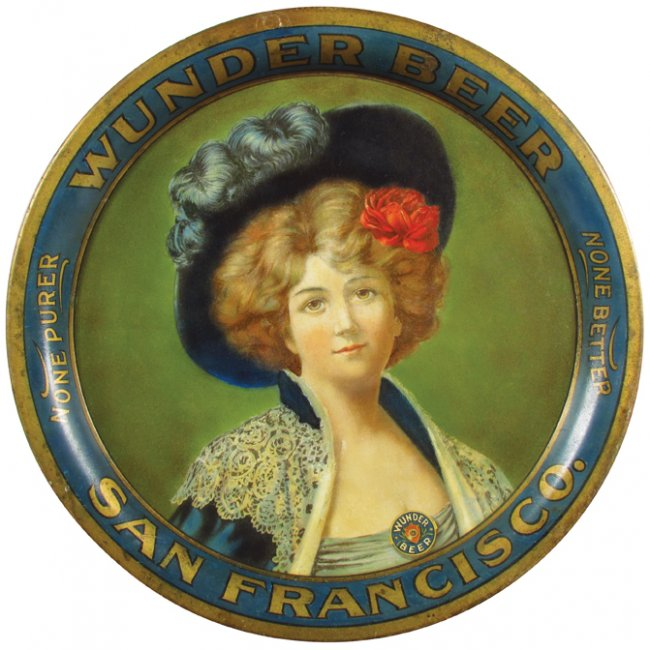
I love the tagline they used on this tray, “None Purer, None Better.”

The original Wunder Brewing was first known as Philip Frauenholz & Co. when it opened in 1852. Over the years it went through five more name changes, usually involving some form of Bavaria Brewing, before becoming Wunder Brewing in 1898. That was after John C. Wunder purchased the brewery, having arrived in California a few years before, either in 1895 or on March 15, 1896, depending on the source. The first thing Wunder did upon arriving was found the San Diego (California) Brewing Co. in San Francisco. He later bought out the Bavarian Brewery, organizing his two breweries under the Wunder name.

The brewery was originally a steam beer plant but it’s unclear if it remained so through its many incarnations, not to mention locations, which include Vallejo and Green, Vallejo and Montgomery, and Greenwich and Scott Streets. The brewery on Greenwich was still standing until 1990, when damage from the 1989 Loma Prieta earthquake caused it to be torn down. Sometime in the 1920s or 30s it had been turned into a residence and was made to look like a Spanish-style stucco home.

As for the new brewery, they started their first batch at 11:50 a.m. on Saturday, June 9. It was a pale ale, and they expect to also offer a brown beer, which is described on the website as like a Viennese lager, among others. That makes some sense, since Vienna Lager’s color is usually described as reddish brown or copper, with a pretty narrow SRM range (10-12). But there’s certainly no reason why a commercial beer can’t make something close to that style that’s slightly darker. I like Vienna lagers, they’re a little sweeter and toastier than pilsners, but are also clean and crisp like their more popular cousin. I’m looking forward to trying Durham’s interpretation.

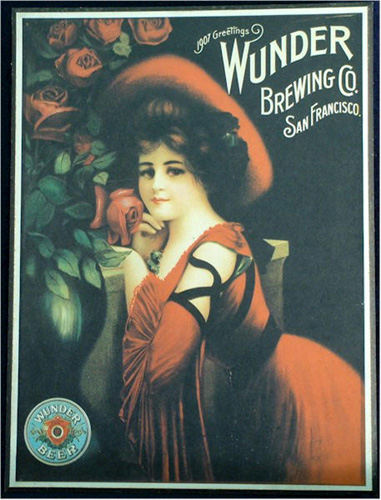
I’ve been staring at this poster below for many years now, as there’s one hanging in the Celebrator Beers News‘ offices, so it seems more like a familiar friend than an antique. It’s interesting to note that it’s exactly 100 years old.

Filed Under: Breweries, News Tagged With: Announcements, California, History, San Francisco

Real Hop-sicles

June 21, 2007 By Jay Brooks

A friend and colleague sent me this story from his local area around Washington, D.C. (thanks Gregg). Rustico Restaurant & Bar, a great beer restaurant in Alexandria, Virginia, began serving “beer-sicles” last week. They make frozen beer pops shaped like the Popsicles you remember for $4 or a larger cone size for $6. They’re made from 99% beer using all-natural ingredients, executive chef Frank Morales claims, and he created the new pops with the help of the restaurant’s Beer Director, Greg Engert. Don’t you just love the idea that a restaurant has a beer director?

Executive Chef Frank Morales with his new beer-sicles.
photo © Associated Press

So far, four flavors have been offered. Fudgesicle (made with Bell’s Kalamazoo Stout), Raspbeer-y (made with the very sweet St. Louis Framboise), Plum (made with Chapeau Mirabelle) and Banana (made with Chapeau Banana). Since their debut last week, they’re a big hit with customers, and men especially, Morales noted. Apparently they worked on the right combination of ingredients for weeks before being satisfied, so I guess that 1% ingredient is quite an important one. So what otherwise seems like a simple idea — freeze beer in a Popsicle mold — may actually hinge on a particular secret ingredient. Of course, I’m open to experimentation.

Unfortunately, according to the AP story, the Virginia Department of Alcoholic Beverage Control believes that “the beer-sicles might violate state regulations” which state that “the law requires beer to be served in its original container, or served immediately to a customer once it is poured from its original container.” Apparently the Virginia ABC is investigating, but their initial reaction appears to be that it violates state alcohol law.

This is apparently because the purpose of that law is so the ABC can keep tabs on where the alcohol goes along it’s journey from manufaturer to consumer. According to Philip Disharoon, the special agent in charge of the Alexandria division, he’s worried that he “would have no way of knowing where the beer product came from.” The idea that they may have to stop making these just because the Virginia ABC can’t track the path of the beer from bottle to mold to freezer to customer, all in a single location, strikes me as bureaucratic nonsense. I imagine that may have been more of a concern during bootlegging days, but I have a hard time believing it’s much of an issue any longer.

Virginia’s alcohol laws do include an exemption for beer used for “culinary purposes” (3VAC5-70-40), which would appear to make it legal for Rustico to continue selling beersicles. Since it appears that they’re already using beer in many of the dishes served at the restaurant, perhaps they’re already covered. The regulation does give the ABC broad authority to “refuse to issue or [t] suspend or revoke such a permit for any reason” which seems rather unfair, to say the least. But that’s the nature of many alcohol laws, in which fairness is rarely a priority. Also, alcohol used for cooking must be kept completely separate from beer that’s for sale to patrons, which also seems quite ridiculous.

But the more you examine each state’s own arcane alcohol regulations, you realize that over time they’ve become bloated bureaucratic gibberish that few people can understand, even among the state employees charged with interpreting them. I know firsthand that in some states ABC employees will give different interpretations to the same regulation, leaving brewery and restaurant/bar owners completely baffled as to what the law actually says or how to comply with it. And even relying on one state employee’s interpretation can land you in hot water if another’s interpretation is different. That certainly seems fair, doesn’t it? At the very least, you’d think they could either get their stories straight or at least respect their colleagues interpretation that someone relied on in good faith. But sadly that’s not the way government works, especially when it comes to the hot button issue of alcohol.

But the idea of beer-flavored Popsicles seems a natural. Perhaps the folks that own the trademark on the name Popsicle, which is Unilever (although in 1993 they changed their name to the more appetizing Good Humor-Breyers® Ice Cream Company) could make beer-flavored Popsicles for adults that we can all buy at the grocery store. Can you just imagine the hue and cry from neo-prohibitionists when beer pops show up in the frozen food section? It would almost be worth it just to see them come unglued. Plus, I just love the idea of a green, 100 ibu, real honest-to-goodness Hopsickle.

UPDATE 7.22: Two new news sources also include video of the beersicles so you can see what they look like and see a bit more about how they’re made. The first is from WLBZ in Bangor, Maine and the second is from CBS 3 in Philadelphia, Pennsylvania.

UPDATE 7.22 – #2: Courtesy of Reason magazine, Senior Editor Radley Balko went to Rustico this afternoon hoping to try a beer-flavored Popsicle but was told “they’re no longer serving them. At least until the state alcohol control tyrants give them the okay.” Apparently they’re trying to figure out how to cook the beer and/or add more ingredients so it will fall under “culinary purposes” as I detailed above. Sounds to me like the Virginia ABC has lost touch with reality. If freezing beer in a mold, with a stick, and serving it as a dessert doesn’t qualify as a culinary use, then I have to conclude it’s not about the law anymore, but about control. That’s the word everybody forgets in “ABC,” but it stands for “Alcoholic Beverage Control.” State agencies take that part of their job perhaps most seriously of all in their zeal to do their job. These agencies really should work with alcohol manufacturers and retailers because for the most part all they want to do is comply with the law. But many times, because of the nature of bureaucracy, an adversarial relationship is created over time and the agencies spend more of their resources on enforcement and punishment, forgetting that they’re charged with keeping alcohol in society in a safe manner, not controlling it to the point of killing it.


Filed Under: Editorial, Food & Beer, Just For Fun Tagged With: Eastern States, Law, Strange But True

Hell in a Rice Basket

June 21, 2007 By Jay Brooks

Great Divide Brewing has been making some terrific beers for years and years, and with the recent addition of brewer Brit Antrim, I only expect them to get even better. They’ve just released a pair of new seasonal beers, Hades and Samurai that are in a slightly different direction for the brewery.

From the press release:

Hades is a Belgian-style strong golden ale (7.3% ABV) brewed with a proprietary Belgian yeast strain originally from Belgium’s Moortgat brewery. The yeast gives the beer a distinctive spicy flavor and aroma. A noticeable hop level and a medium malt character make the beer an assertive, yet extremely well-balanced and crisp ale.

Great Divide founder Brian Dunn decided that a Belgian-style strong golden would be the brewery’s next beer and set the general parameters, while Brit Antrim, brewery operations manager, developed the recipe for the beer.

“I wanted a Belgian-style beer with lots of character and flavor,” Dunn says, “but with slightly lower alcohol for drinkability reasons. You can drink a couple glasses of Hades and not end up with a helluva buzz.”

Dunn says the beer pairs up well with steamed mussels, crusty breads and virtually any artisan-style cheese. He says the beer’s spicy charm makes it a fine summer time refresher.

Hades is only the second Belgian-style beer brewed by Great Divide. The company made a Belgian-style wit back in 1999. Hades is available in all Great Divide markets in 22-ounce bottles, and on draft in limited supply.

Brewed with rice and barley malts, Samurai is an easy drinking and unique version of unfiltered ale. The addition of rice gives Samurai (5.2% ABV) a crisp, refreshing and clean taste that pairs well with fish, Asian food, and lighter styles of cheeses.

Dunn points out that Samurai is not an Asian-style beer despite its name and rice component. “Asian beers are typically tightly filtered lagers brewed with rice and barley,” Dunn says. “Samurai is very different, it’s fermented with an ale yeast and it’s unfiltered. The ale yeast gives Samurai a slightly fruity flavor and aroma.”

“I felt,” Dunn says, “that we needed an accessible, super-quaffable beer for the summer, but one that wasn’t brewed with wheat. The rice makes Samurai crisp and clean, and gives it a unique twist for a craft-brewed summer beer.”

Now available in six packs and on draft, Samurai has been a draft-only beer in the Denver market for the past 2 years. Growing interest and demand for the beer in the Denver area prompted Great Divide to release the beer as a bottled summer seasonal.

Dunn is proud to acknowledge that his company’s two new beers may come as a surprise to Great Divide fans. “We’ve become known for Yeti-sized, hoppy, assertive beers,” Dunn says. “But these beers allow us to flex a different set of our brewing muscles, and mix things up a bit for our fans.”

I’ll be in Denver at the end of the month, so hopefully I’ll get a chance to give both of these a try while I’m there.


Filed Under: Uncategorized Tagged With: Colorado, Press Release, Seasonal Release

Do Labels Matter?

June 20, 2007 By Jay Brooks

Alan from A Good Beer Blog sent me a link to this interesting article from today’s Globe and Mail entitled “Why you drink what you do (apart from the obvious reason).” The story details a research effort at Brock University in Ontario, Canada, to look into the real reasons people pick up particular wines instead of other ones.

The effort is described in the article as:

Part psychology lab, part focus-group boardroom and part stage set, the facility, which was launched last week with a $69,000 federal grant, will enable researchers to create a variety of ambiences, including a barrel-cellar tasting room, candle-lit restaurant and liquor store.

The plan is to scientifically look at a variety of factors that may influence a purchase decision and to what extent they do influence. In addition to the label itself, they’re also planning on looking at lighting, background music, other people, and the influence of so-called expert or snob opinions.

I know from my time in retail that people really do shop the ratings. I’ve watched people walk wine aisles with a Wine Spectator in hand looking for specific wines that received a rating high enough for them to buy. I’ve even heard such people insult live human beings trying to suggest trying a different wine that they liked, but which perhaps wasn’t rated in that issue or didn’t get a rating high enough. I certainly don’t think ratings are unimportant or irrelevant, but I do think that they can be relied upon much too heavily.

If you find a critic whose tastes appear to align with your own, then it’s probably a safe bet that what that person recommends will also find favor with your own palate. But even then not always. It’s a pretty rare thing generally speaking, because no two people taste things in exactly the same way. We all have slightly different combinations of sensitivities and tolerances for certain smells and tastes. If you work at it, you can learn your own and adjust for them. For example, I’m particularly sensitive to a type of oxidation that manifests itself as cattiness or simply catty. To me it stands out like cat piss — which is what I call it — and it often overwhelms a beer for me, making it hard for me to concentrate on the beer’s more positive attributes. Normally it can be detected only in levels of 55 parts per trillion, but I suspect that my own sensitivity runs higher. People I taste with regularly can even predict what I’ll say about such beers, so I constantly have to remember to play that down, if possible, because I know I’m more sensitive to that particular aroma than others often are.

But more often you’re simply drawn to certain tastes without really even knowing why. So unless and until you can identify your own peculiar preferences, it’s best to try as many different things as you can in effort to discover what you really like for yourself. The ratings can be a helpful start, but by no means should you ignore first hand suggestions or your own intuition. And to lock yourself in to only buying wine that receives a certain rating is to miss a lot of very exciting and tasty discoveries.

The article’s author, Beppi Crosariol, goes even farther when she suggests that in her experience, “people who talk loudest and dominate conversations are also far more likely to be collectors of overpriced wine.” When she wonders aloud whether or not “we really need PhDs in lab coats to remind us the wine world is teeming with arrogant, self-appointed dictators and irrational buying behaviour,” she ultimately concludes that we do. “If you can show me another consumer product more irrationally priced than wine, I will eat my hat and wash it down with a magnum of lukewarm Hochtaler,” she continues. “Quality and price are so often in such blatant conflict in the wine world, you would do better to choose a bottle with a blindfold on than willfully empty your wallet on something you’d never tasted.” Well said. So she believes that perhaps if scientific study can reveal such prejudices as meaningless, it might “help consumers feel more comfortable about dismissing the pretentious blather of experts,” and “it would be one giant leap forward for fun, pleasure and fairer pricing.” Hard to disagree with that, I’d say.

Unfortunately, the professor conducting these experiments, Hildegarde Heymann, has her own prejudices to overcome, and she doesn’t even appear to even notice them when she says.

“[T]he subject of wine, more than that of any other consumer product, is loaded with emotional and psychological baggage. The average woman may pay scant attention to the skirt and blouse she pulls on in the morning, she says, yet ‘people will agonize over a $10 bottle of wine. They tend to take it extraordinarily personally. There is such a need by the consumer to make the right wine choice.’

Now I don’t want to speak for all women here, but most of the ones I know will in fact agonize over what “skirt and blouse she pulls on in the morning” far more than their choice of wine. I hope I’m not revealing too much when I say that my own wife often tries on several outfits before being satisfied with what’s she wearing for the day. So has almost every woman I’ve ever dated or known well-enough to know their wardrobe choices. Now that could just be me, but I tend to doubt that I’m unique in my experience that women tend to take their appearance and what they wear “extraordinarily personally.” For that matter, so do many men. So I’m already beginning to question her firm grasp on reality, and therefore my hopes for her study, when she drops the bomb.

And, Prof. Heymann adds, that is regrettable. ‘People pick up a beer without thinking about it. They should be able to pick up wine the same way.’

Okay…. Where to begin? First, that she believes that wine is the only consumer product “loaded with emotional and psychological baggage” or is loaded with the most seems almost delusional. Has she not been watching the evolution of advertising over the past century? Every single consumer good is tied to an emotional need, that’s what advertising does. Does she think people buy expensive, inefficient cars unemotionally with cool detachment? What does she think brand loyalty is, for chrissakes, if not an emotional response? An entire industry exists for the sole purpose of selling us emotions.

But, of course, that’s small potatoes compared to that second-last sentence. Let’s look at that one more time. “People pick up a beer without thinking about it.” Well, I guess Anheuser-Busch can dismantle their gargantuan advertising and marketing budgets and concentrate on making a better tasting beer. Is the good professor smoking crack? People pick up their beer of choice because of years of relentless marketing and advertising designed to get them to do just that. Hellooooo! That she honestly doesn’t appear to think people consciously — or even unconsciously — choose what beer they buy is positively baffling.

And that takes me to the title of this screed, do labels matter? Of course they do, but not just for wine. You don’t need a PhD to know that virtually every product takes the label they put on it very, very seriously. Having designed from the bottom up, several private label beers — at least one of which is still around — gave me a window into this process. We came up with names, graphics and stories and went through more versions than I care to recall. Suffice it to say it was a long and tortuous process. So I view labels much differently now than I once did. For example, almost all labels change, even the ones you don’t think do. Most large companies are constantly tweaking and updating their labels and packaging in order to stay competitive and stand out on the shelf. If you don’t do that, people will lose interest and no longer have a reason to pick up their products. If you look at a major label — Budweiser or Heineken is good for this — from year to year, you’ll see that minor changes occur all the time. Because they’re well-established brands, they don’t overhaul them in one go, but if you look at them in ten year increments, you’ll see that they have actually changed quite a bit over time. For less well-established brands, it’s usually a good idea to redo your packaging from top to bottom every two to three years so — okay, I hate this buzzword, too — that it remains “fresh.” It is well-known that there are many people who buy both beer and wine based on the label. It’s hardly a secret, it’s why companies put so much effort into their design. So finding out what it is about labels that makes one more palatable than another is certainly of interest, but it’s the other, less well-known factors that I think most people in the business will be interested to learn.

But in the end, I’m still not sure what to make of her last statement, that people “should be able to pick up wine the same way.” By “same way,” she means, of course, “without thinking about it.” Now why on Earth is that how people should buy anything, much less wine? I don’t know about you, or the rest of Canada, but I actually want to think about which beer, wine or whatever that I buy. I find I don’t usually make good choices if they’re mindless. I find that thinking about what I want often leads to my getting exactly that — what I want. Why shouldn’t the choices I make about what to drink, what to eat or even what to wear be personal? If not personal, what would they then be? Wouldn’t impersonal choices lead to drinking, eating and wearing exactly the same thing? That’s certainly not the world I want to live in.

I certainly like the idea of looking into the reasons people choose what they do. It’s a fascinating topic, to me. But I’m befuddled by the concluding idea that the goal of the research is to remove the thinking from choosing. Having personal choices and emotional ones at that, is one of the things that makes us human. If they were all the same, we’d all be the same. Think Globally, Drink Locally, but whatever you do, keep thinking. Vive la Différences.


Filed Under: Editorial Tagged With: Business

Krusovice Komes to Amerika

June 19, 2007 By Jay Brooks

Monday night I attended a presentation at the Toronado for the San Francisco launch of Krusovice, a beer from the Czech Republic. An old friend of mine, Dave Deuser, is the local rep. for the beer, which is (or was, but more on that in a minute) part of the Binding Group, a German company that owns several breweries, including DAB, Radeberger, Clausthaler, and Tucher. He had Krusovice’s head brewer and a translator who works for the brewery in tow.

Binding USA is bringing two of Krušovice’s beers into the U.S. market, the Imperial and the Cerne. The Imperial, which they call a Czech Premium Lager, is very clean with soft, round flavors. I was quite impressed with it. It used all Saaz hops and was right up there with the best tasting lagers I’ve had. The Cerné is a dark lager made with pale and specialty malts. At only 3.8% abv, it was very easy drinking. It had delicious sweet malt flavors.

The presentation was very thorough and included a thick, spiral bound book that the brewer went over page by page, calling out “turn page now” in his best Germanic command voice. The Royal Brewery of Krušovice has a rich history, having been founded around 1517. In 1581, the brewery was purchased by Emperor Rudolf II, whose visage still appears on the labels. When he moved his capital from Vienna to Prague, he moved it to the nearby town of Krušovice and it became a “Royal Brewery,” a distinction it continues to claim to this very day.

In 1945, after World War II it became the property of the state, in this case Czechoslovakia, until it was privatized in 1991 and then was purchased by the Binding Group in 1994. Binding completely modernized the brewery facilities and began exporting the beer in 1997. As of 2005, Krušovice was the 5th largest brewery in the Czech Republic.

All their beers use a double decoction method, which is fairly common in Germany and for lagers. Many craft brewers use infusion mashing since it requires less equipment and is generally quicker, and while there is a debate about which method is better, it seems moot as long as the end result is both what you were trying to achieve and tastes good.

Krušovice is currently sold throughout most of Europe, Australia and now North America (or at least in the U.S. and Canada). 63% of Krušovice is sold in kegs, 32% in bottles and 5% in cans. It’s apparently wildly popular in Russia, which accounts for more than half of all exports.

And that brings us to the weird part of the evening. Halfway through their tour of the States, they got the word that Krušovice had been sold to Heineken, who was looking to make greater inroads into the Russian beer market. So it was a testament to everybody’s professionalism that presentation went as well as it did. My friend Dave didn’t now what his role would be now regarding Krušovice, but it’s likely Heineken will bring in their own people and the Binding folks won’t be involved any longer. As for the brewer, I’m sure he must have felt at least a twinge of uncertainty for his own fate, but everybody continued to champion the brand as if nothing had changed. I’m not sure I could have done as well under those circumstances.

It was a fun and informative evening, with two very tasty beers to make it all the more enjoyable.

Krusovice’s head brewer (at left) and his translator.

Filed Under: Beers, News Tagged With: Europe, History, International, National, Tasting

Do You Want Some Pizza With Your Pizza Beer?

June 18, 2007 By Jay Brooks

I’m not sure whether to laugh or cry. Pizza and beer, of course, are one of the most beautiful pairings and one of the most natural, rivaling such other hit duos as peanut butter and jelly or warm apple pie and vanilla ice cream. But it may have been taken too far, as homebrewer Tom Seefurth has combined the two into one beer, which he calls Mamma Mia Pizza Beer and claims is the “world’s first culinary beer.”

Since Walter Payton’s Aurora Roundhouse has been brewing and selling Tom’s Pizza Beer, the local and national media has been covering the novelty beer in print, television and radio. Sunday’s Daily Herald, a local paper covering Kane County, Illinois where the Seefurths live, has probably the most comprehensive account.

It sounds like an herb and spice beer leaning heavily on Italian seasonings. Adjunct ingredients include tomatoes, oregano, garlic and basil. The Herald article describes it as “tast[ing] of oregano, onions and tomatoes” and they offer that it should be paired with pizza or pasta, though that seems a bit too obvious. I’d be more interested in trying it with some strong Italian cheeses. There have been plenty of herb and spice beers I’ve tasted over the years, using both common and more unusual ingredients. To my way of thinking, they’re a mixed bag. Sometimes they work and sometimes not and it’s not always clear why that is. Some I’ve enjoyed and others not so much. So while my first reaction is somewhat apprehensive, I’ll reserve judgment until I can actually try some, if that’s even possible. I love beer. I love pizza. If it’s all about the beer then who knows, maybe it will be great.


Tom Seefurth in his home brewery.
 

Filed Under: Food & Beer, Just For Fun Tagged With: Homebrewing, Midwest, Strange But True

Georgia Action Alert

June 17, 2007 By Jay Brooks

I almost missed posting this before it’s too late. According to the new grassroots organization, Support Your Local Brewery, there’s legislation in Georgia that will be bad for small brewers and their ability to offer samples of their beer at their brewery during tours. The vote is on Tuesday, June 19 so if you’re in Georgia contact your Congressperson as soon as possible, and no later than the end of the business day on Monday.

Here’s the press release from SYLB:

Georgia’s beer consumers and brewers are facing a threat that could adversely impact the business operations of in-state breweries and consequently your access to Georgia’s craft-brewed beer.

The Georgia Department of Revenue is proposing to adopt a new rule that would severely restrict beer tasting for attendees of brewery tours (please refer to the Synopsis for the actual rule language). The Department will consider adoption of this rule on Tuesday, June 19 – now is the time to make your voice heard in opposition to this rule.

Please read the following information which includes a message from Terrapin Beer Co.’s John Cochran who has been working with Georgia’s small production breweries to oppose this measure. You will find all the information you need for contacting the Commissioner of the Department of Revenue.

John has also included a suggested message to send, and Support Your Local Brewery suggests you visit the Beer Serves America web site for detailed information on the economic contribution of Georgia’s beer community to state coffers. Please consider including some of this information in your message to underscore the valuable economic contribution being made, which in no way should be jeopardized.

Thanks for your support in protecting Georgia’s brewers and beer consumers.

If you want to read the a synopsis of the bill itself, you can view it at the SYLB website.

From John Cochran of Terrapin Beer Co.:

All Georgia breweries need your help. We recently received notice that the Georgia Department of Revenue has decided to change the rules that apply to tours at breweries in Georgia. The new proposal calls for a limit of a 2oz pour of each beer style on the tour with a maximum limit of only 16oz. The 16oz pour is only possible if we have eight different styles of beer to offer on the tour. If a brewery only has four beers available to taste, then only 8oz can be poured at the tour.

It is the belief of the Georgia breweries, and our wholesalers, that the proposed rule change would effectively kill the tours. Since the breweries have spent significant sums of money on tasting rooms for the purposes of conducting tours this investment would be lost. In addition it would cause the layoff of employees who now operate as tour guides and could cause serious harm to the bottom line of all breweries. The tours are our main marketing tool and by losing the ability to continue tours as they are currently structured, we would lose customers, lose sales, and find it much more difficult to continue in business.

If you have enjoyed tours at Sweetwater and Atlanta Brewing in the past and you would like to continue to enjoy tours at those locations and at Terrapin Beer Company (tours starting this fall if these proposed changes do not take effect) then please take the time to help fight for our rights.

Atlanta Brewing, Sweetwater and Terrapin have worked together to craft a response to the proposed rule changes. If you agree with us that the proposed rule change is egregious and will harm the brewery tours and thereby harm our businesses, please take the time to send the attached response to the Department of Revenue, as indicated below.

E-mail your comments to regcomments@dor.ga.gov and be sure to include a reference to “NOTICE NUMBER AT-2007-1” on any correspondence you send.

The SYLB also helpfully has a template of a short letter you can use to send, which I reprinted below:

To: Commissioner Graham

Re: Notice Number AT-2007-1
560-2-2-.61

The Georgia Department of Revenue has proposed a significant change in the states’ long standing policy on service limitations for brewery tours. The proposed new rule will adversely affect my decision as a customer of the breweries, to attend the tours. By doing so it will also put at risk the brewer’s investment in facilities designed to attract and accommodate tour attendees such as myself and will severely limit the marketing and sales of the brewery’s products. I oppose adoption of the proposed rule change and respectfully urge the department to withdraw proposed rule 3a.

Sincerely,
YOUR NAME AND ADDRESS HERE

If you can help out, please send in your comments as soon as possible. The craft beer community thanks you for your help.
 

Filed Under: Uncategorized Tagged With: Business, Law, Press Release, Southern States, Tasting

Auburn Alehouse Set to Open Thursday

June 17, 2007 By Jay Brooks

Brian Ford, the former brewer at Beermanns Beerwerks near Sacramento has been trying to get his new brewpub open for some time now. Finally, his new Auburn Alehouse Brewery & Restaurant will be opening this Thursday, June 21 in Old Town Auburn, California, which is also just outside Sacramento. I saw Brian and tried a pair of his beers at the Raley Field Brewfest May 12. Brian even invited me up this weekend to try things out but with Father’s Day it just didn’t work out.

Photograph by Ben Furtado of the Auburn Journal
 

Yesterday’s Auburn Journal, the local paper, ran a nice introductory story on the brewpub.

Although I confess to a chuckle over this amusing understatement:

All beer is brewed using traditional ingredients like malted barley, hops, fresh water and yeast, as well as some specialty ingredients like wheat, maize, spices and regional fruits.

As opposed to …? When I first read that, it made me think the reporter was informing the reader as to what beer is made with, but to be fair, she copied this statement from the Auburn Alehouse’s website, but changed the first few words from “All beers will be brewed using …” to “All beer is brewed using …., which changes the meaning considerably.”

But that gentle gaffe aside, it was great to see Brian’s new venture get some local attention. Their website lists nine regular beers and will also be supplemented “seasonal or monthly special brew,” along with what they’re calling “Pub Brewed Special,” which sounds like very small batches.

Also the food to be served at the restaurant sounds pretty damn good. The chef is Luis Gomez, who is also a co-owner. He’s apparently been cooking for almost thirty years centering on “Mediterranean and Southwestern flare.”

The restaurant will also feature more than a dozen appetizers, including crab cakes, alehouse wedge fries and pub pickle chips, roughly 30 entrees including steak, fish and pizzas, soups, salads and desserts.

And the cheeseloaf sound pretty tasty, too. It’s described as a “[b]aked to order sourdough round loaf, stuffed with Gruyere, Parmesan, Swiss, garlic butter, and chives, served with balsamic and olive oil.” He’ll also be using as many local ingredients as possible. I’m looking very forward to the time when I can try Brian’s beer and eat some of the food at Auburn Alehouse.


Filed Under: Food & Beer, News Tagged With: Announcements, California, Northern California

« Previous Page
Next Page »

Find Something

Northern California Breweries

Please consider purchasing my latest book, California Breweries North, available from Amazon, or ask for it at your local bookstore.

Recent Comments

  • Bob Paolino on Beer Birthday: Grant Johnston
  • Gambrinus on Historic Beer Birthday: A.J. Houghton
  • Ernie Dewing on Historic Beer Birthday: Charles William Bergner 
  • Steve 'Pudgy' De Rose on Historic Beer Birthday: Jacob Schmidt
  • Jay Brooks on Beer Birthday: Bill Owens

Recent Posts

  • Beer In Ads #5228: All Together For Newark April 21, 2026
  • Beer Birthday: Steve Parkes April 21, 2026
  • Beer In Ads #5227: It’s Here! Bock Beer By Bosch April 20, 2026
  • Beer Birthday: Drew Beechum April 20, 2026
  • Beer Birthday: Des De Moor April 20, 2026

BBB Archives

Feedback

Head Quarter
This site is hosted and maintained by H25Q.dev. Any questions or comments for the webmaster can be directed here.