Brookston Beer Bulletin

Jay R. Brooks on Beer

  • Home
  • About
  • Editorial
  • Birthdays
  • Art & Beer

Socialize

  • Dribbble
  • Email
  • Facebook
  • Flickr
  • GitHub
  • Instagram
  • LinkedIn
  • Pinterest
  • RSS
  • Twitter
  • YouTube

Powered by Genesis

Historic Beer Birthday: Robert F. Ballantine

January 3, 2026 By Jay Brooks Leave a Comment

ballantine
Today is the birthday of Robert Francis Ballantine (January 3, 1836-December 9 or 10, 1905). He was born in New Jersey, and was the son of Peter Ballantine, who founded the Patterson & Ballantine Brewing Company in 1840 in Newark, New Jersey. Peter Ballantine had three sons, and they joined him in the business in 1857, which is when the name was changed to the P. Ballantine and Sons Brewing Company. In 1883, when his father died, Robert became president of the brewery, outliving both his brothers and continuing to run the family business until his own death in 1905.
robt-ballantine-portrait
This short biography of Robert Ballantine is from “New Jersey History,” published in 1909:

robt-ballantine-NJ-History-1909

ballantine-stamps

And this lengthier obituary is from the Brewers Journal:

robt-ballantine-obit-1
robt-ballantine-obit-2
robt-ballantine-obit-3
robt-ballantine-obit-4

Ballantines-Lager-Beer-Labels-Ballantine
And here’s a history of the Ballantine brewery from “A History of American Manufactures from 1608 to 1860,” by John Leander Bishop, Edwin Troxell Freedley, Edward Young, published in 1868:

ballantine-brewery-bio-1
ballantine-brewery-bio-2
ballantine-brewery-bio-3

letterheadglassbeeraleCutOut

Ballantine-xmas-1964-blanks

Filed Under: Birthdays, Breweries, Just For Fun Tagged With: Ballantine, History, New Jersey

Beer In Ads #5159: Something Too Good To Keep To Ourselves

January 2, 2026 By Jay Brooks Leave a Comment

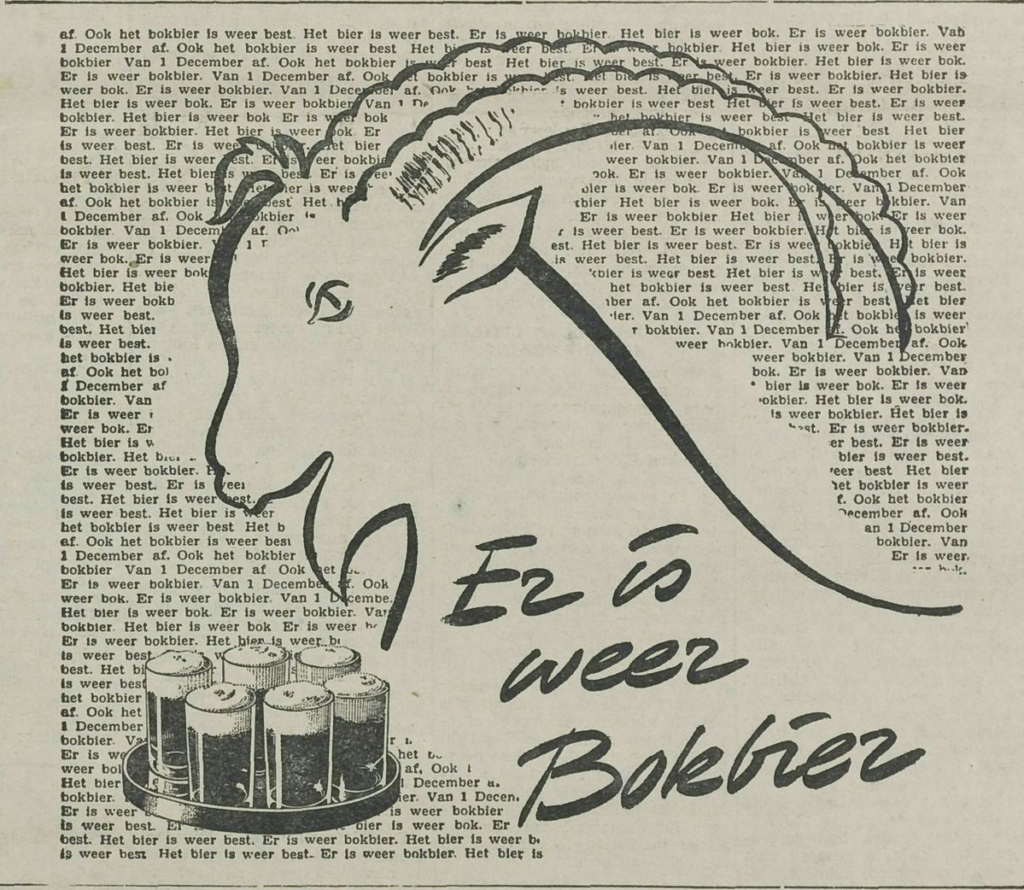
Last year I decided to concentrate on Bock ads for awhile. Bock, of course, may have originated in Germany, in the town of Einbeck. Because many 19th century American breweries were founded by German immigrants, they offered a bock at certain times of the year, be it Spring, Easter, Lent, Christmas, or what have you. In a sense they were some of the first seasonal beers. “The style was later adopted in Bavaria by Munich brewers in the 17th century. Due to their Bavarian accent, citizens of Munich pronounced ‘Einbeck’ as ‘ein Bock’ (a billy goat), and thus the beer became known as ‘Bock.’ A goat often appears on bottle labels.” And presumably because they were special releases, many breweries went all out promoting them with beautiful artwork on posters and other advertising.

Friday’s holiday ad is for Gunther’s Bock Beer, which was published on January 2, 1941. This ad was for the Gunther Brewing Co. of Baltimore, Maryland, which was originally founded in 1900 by George Gunther. This ad ran in The Evening Star, of Washington, D.C.

Filed Under: Beers

Historic Beer Birthday: Peter Schoenhofen

January 2, 2026 By Jay Brooks Leave a Comment

Schoenhofen-brewery
Today is the birthday of Peter Schoenhofen (January 2, 1827-January 2, 1893). He owned a brewery in Chicago that was called the Peter Schoenhofen Brewing Co.

Peter-Schoenhofen

Portrait from “100 Years of Brewing,” originally published in 1901.

schoenhofenportrait

And here’s another portrait that included this text: “German-born Peter Schoenhofer (1827-1893) came penniless to America in 1851 and took jobs in various breweries around Chicago. Eventually he and a partner, Matheus Gottfried, opened a brewery. Schoenhofen bought out Gottfried in 1867 and the company became the Peter Schoenhofen Brewing Company. Ads bragged that the beer’s clean taste came from the artesian spring located under the brewery. Their Edelweiss brand was the best known.”

Edelweiss-Light-Beer-Labels-Schoenhofen-Company
Here’s an entry about Schoenhofen from the Encyclopedia of Chicago:

Peter Schoenhofen, a Prussian immigrant, was in Chicago working in the brewing trade by the 1850s. In 1861, he started a partnership with Matheus Gottfried; they were soon operating a brewery at Canalport Avenue and 18th Street where, during the early 1860s, they made about 600 barrels of lager beer a year. In 1867, Schoenhofen bought out his partner, and the company became the Peter Schoenhofen Brewing Co. By 1868, annual output had increased to about 10,000 barrels. During the 1890s, when the business was owned by the City Contract Co. of London, England, annual output reached 180,000 barrels. Around 1900, the Schoenhofen family regained control of the company, which employed about 500 people at its brewery on West 12th Street by 1910. During this time, the company was also known as the National Brewing Co. The company’s “Edelweiss” brand of beer was a big seller. Operations shut down during Prohibition, but by 1933, after the national ban on alcohol production was lifted, the company was back in business as the Schoenhofen-Edelweiss Co. After being purchased by the Atlas Brewing Co. in the late 1940s, Schoenhofen became part of Dewery’s Ltd. of South Bend, Indiana, in 1951, and thereafter assumed the Dewery’s name. By the beginning of the 1970s, there was nothing left of its Chicago operations, although Dewery’s reintroduced the famous Edelweiss brand in 1972 after nearly a decade-long hiatus.

Schoenhofen-bldg-1

Forgotten Chicago has a nice photo gallery about the Schoenhofen Brewery and what remains of it today, saying that what is left “of the Schoenhofen Brewery are still the most impressive pre-Prohibition era brewery structures in Chicago. Buildings were first erected at 18th and Canalport in 1862 when the brewery relocated here from 12th and Jefferson. The last buildings were built in 1912, and the brewery remained in business until 1924, a casualty of prohibition.”

Schoenhofen-bldg-2

The area where the brewery operated are today known as the Schoenhofen Brewery Historic District.

Edelweiss1

I love their ad copy: “A case of good judgment,” which they used extensively. And this beer was a “secret brew,” whatever that means.

Filed Under: Birthdays, Just For Fun Tagged With: Birthdays, Chicago, Germany, History

Historic Beer Birthday: James W. Kenney

January 2, 2026 By Jay Brooks Leave a Comment

american-boston
Today is the birthday of James W. Kenney (January 2, 1845-?). He was born in Ireland, but followed his older brother to Boston when he was eighteen, in 1863. He was involved in starting and running several different breweries in Boston over the span of his life, starting with the Armory Brewery in 1877. Then he opened the Park Brewery, the Union Brewing Co. and finally was involved in the American Brewing Co., plus he bought the Rockland Brewery at one point. It also seems like he was involved in the Kenney & Ballou Brewery, but I wasn’t able to confirm that one. Suffice it to say, he was a busy, industrious person, involved in a lot of Boston breweries.

James-W-Kenney
Kenney-100yrs-1
Kenney-100yrs-2

The_philosopher

Here’s a short biography from “Important Men of 1913”

Kenney, James W., born near Derry, Ireland, Jan. 2, 1845, and educated in the national schools of his native land. Came to Boston, 1863, and was placed in charge of a large grocery conducted by his brother. Became master brewer in a large brewery. In 1877 started Amory Brewery; 1881 Park Brewery; 1893 organized Union Brewing Co. Was mainly instrumental in organizing the American Brewing Co.; member of directors’ board two years. Large owner and operator in real estate, with interests in railroads, gas companies, banks, newspapers, etc. President, director and vice-president of Federal Trust Co.; director Mass. Bonding and Insurance Co. and Fauntleroy Hall Association of Roxbury; member of American Irish Historical Society and of numerous social and benevolent organizations. Married, April 24, 1876, Ellen Frances Rorke, of Roxbury. Residence: 234 Seaver St., Roxbury, Mass.

Bohemian-Beer-Labels-American-Brewing-Co-of-Boston

Norman Miller’s “Boston Beer: A History of Brewing in the Hub,” has a few paragraphs on several of Kenney’s businesses.

Kenney-BosBeer-1
Kenney-BosBeer-2
Kenney-BosBeer-3
Kenney-BosBeer-4

Here’s a rundown of his breweries:

Armory Brewing Co., 71 Amory Street: 1877-1902

This was his first brewery, but it was only known by that name until 1880, and I think he may have then sold it to a Mr. Robinson, who called it the Robinson Brewing Co., although some accounts indicate it was called the Rockland Brewery, which was his nickname. Their flagship was Elmo Ale, named for Robinson’s son, and not for the beloved Sesame Street Muppet. Other sources seem to suggest it was then bought back by Kenney at some point.

Park Brewery, 94 Terrace Street: 1881-1918

park

Four years later he opened the Park Brewery, which apparently produced only Irish Ales.

American Brewing Co., 249-249A Heath Street: 1891-1918

This was a larger brewery than his other ventures, and he was merely one of the investors in the business, and was on the Board of Directors, though he did hired all Jamaica Plain brewmasters. Apparently it survived the dry years by operating a “laundry” (wink, wink). After repeal, the Haffenreffer family bought it and used it briefly as a second brewery, before closing for good in 1934.

abc

The Jamaica Plain Gazette described their neighborhood American Brewing Co.:

The most “handsome” of all the remaining Boston breweries, the American Brewing Company was active from 1891 to 1918, and then again from 1933-34. Owned by James W. Kenney, who also owned the nearby Park and Union breweries, the Queen Anne style building stands out architecturally with beautiful granite arches and a distinctive rounded corner, topped by a turret.
Historically, one of the most unique features of this brewery was the “customer” room in the basement. Customers were entertained here in a room with walls, ceiling and floor painted with German drinking slogans, flowers and other reminders of the source of the Lager recipes.

The Jamaica Plain Historical Society has even more information on it in their piece about Boston’s Lost Breweries:

The brewmasters were Gottlieb, Gustav and Gottlieb F. Rothfuss, all of Jamaica Plain.

This is undoubtedly the most handsome of all the remaining breweries in Boston and once can see at a glance the pride the owners had in the place, the process and the product. The architect was Frederick Footman of Cambridge. It was built in three phases, with the oldest part on the left, the second one with the American Brewing Company name came next and then the third wing with the beautiful granite arches and terra cotta heads which was the office complex emblazoned with the initials ABC. The granite was probably either Chelmsford or the slightly grayer Quincy.
Still visible in the main, or brewing, building is the large overhead access shaft where the malted barley and water were lifted to the top floor with hoists and pumps. The barley was stored in cedar-lined rooms in the top two stories of the main building to prevent insect infestation. The brewing process was started there as the grain was cooked. The cooked mash then flowed to the floor below where the grain was removed as waste and hops and other ingredients were added to the residual brew, along with the yeast that triggered the fermentation that produced the alcohol. The final product was then stored in temperature-controlled areas at the lowest level. Also still visible in the lower level is the capped wellhead that had delivered countless thousands of gallons of pure Mission Hill spring water to the process.

A wonderful touch of the spirit of the times is the “customer” room in the basement. Customers were entertained here in a room with walls, ceiling and floor painted with German drinking slogans, flowers and other reminders of the source of the Lager recipes. The offices had beautiful arched, semi-circular windows with stained glass. The tower is rounded and has a clock fixed at seven and five, the workers’ starting and quitting times. It also has granite carriage blocks to protect carriage wheels from breaking if too tight a turn were attempted when entering or exiting.

During Prohibition it was used as a laundry. After 1934, Mr. Haffenreffer used it for a time as a second brewery. Most recently it was used by a fine arts crating and shipping company, the Fine Arts Express Co. It is presently being converted to housing units.

american-brewing-co
The American Brewing Co.

Union Brewery, 103 Terrace Street: 1893-1911

union

Next was the Union Brewery, this time to brew German Lager beer exclusively. Here’s a brief description of the Union Brewery from the Jamaica Plain Historical Society, detailing it in Boston’s Lost Breweries:

The Stony Brook culvert sits very close to the surface of Terrace Street, the home of two very productive breweries. The Union Brewery, active from 1893 to 1911, was located at 103 Terrace Street. It produced only German Lager beer. It had a large six story, arched, main building and two smaller buildings housing a stable and a powerhouse. The two smaller buildings and the mural-decorated smokestack, which now also does duty as a cell phone tower remain. The former stable is now Mississippi’s Restaurant.

While for those breweries, it’s certain they were owned by James Kenney, I’m less sure about a couple of others. From either 1878-1880 or 1898-1903 (sources differ) there was a Kenney & Ballou Brewery. It’s seems at least like that James Kenney may have been the Kenney in the name, although it could have been his older brother Neil Kenney, who James worked for when he first arrive in America. That seems even more plausible when you look another brewery founded in 1874, the Shawmont Brewery. In 1877, it became known as the Neil Kenney Brewery, but in 1884 it changed names again, this time to the James W. Kenney Brewery. It apparently closed in 1888, but it appears pretty clear that he and his brother worked together on one, if not both of these breweries. Unfortunately, except for listings in Breweriana databases, I couldn’t find any information whatsoever about either brewery, and they’re not mentioned in any accounts I found of Kenney, either.

Filed Under: Birthdays, Breweries, Just For Fun Tagged With: Boston, History, Ireland, Massachusetts

Beer Birthday: Fal Allen

January 2, 2026 By Jay Brooks 13 Comments


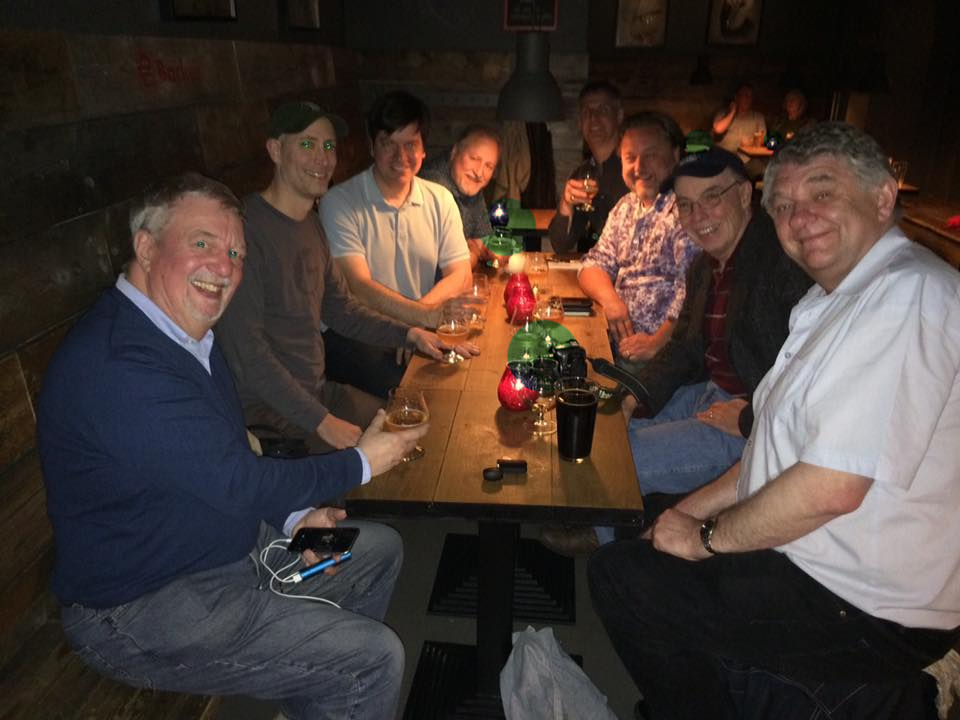
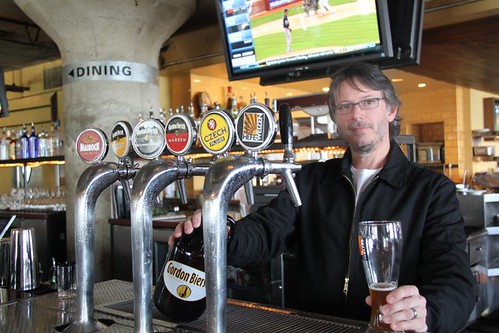
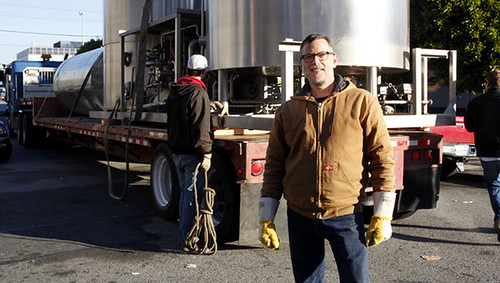
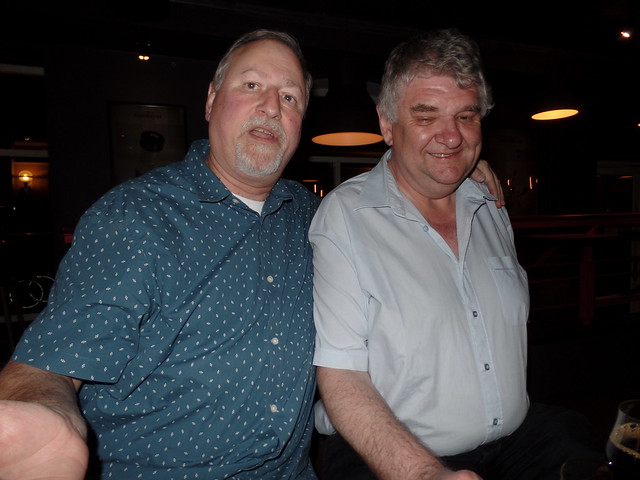
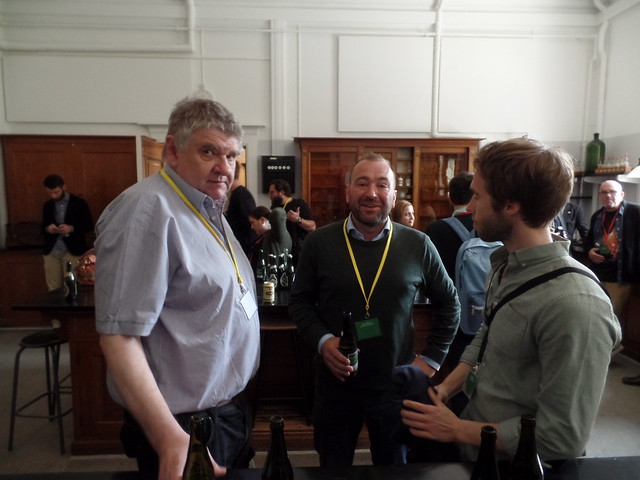
Today might be the birthday of Fal Allen. I say might, because he keeps telling me that he’s not exactly sure when his birthday is — apparently the result of having hippie parents — and he had kept changing it on his Facebook page, though now he’s removed it entirely. Fal returned to his goats and to Anderson Valley Brewing several years ago, having lived in Singapore for four years, where he built and ran a craft brewery for Archipelago Brewery, a division of Asia Pacific Breweries. He blogged about his exploits there on his Brewing in Singapore blog, but since returning stateside, he’s been blogging at The Goat Rodeo, and we were certainly happy to have him back stateside. But more recently, he’s moved back to his native Hawai’i and is brewing on Kauai at Napali Brewing Co. Join me today, tomorrow or perhaps the next day in wishing the ageless Fal a very happy birthday.

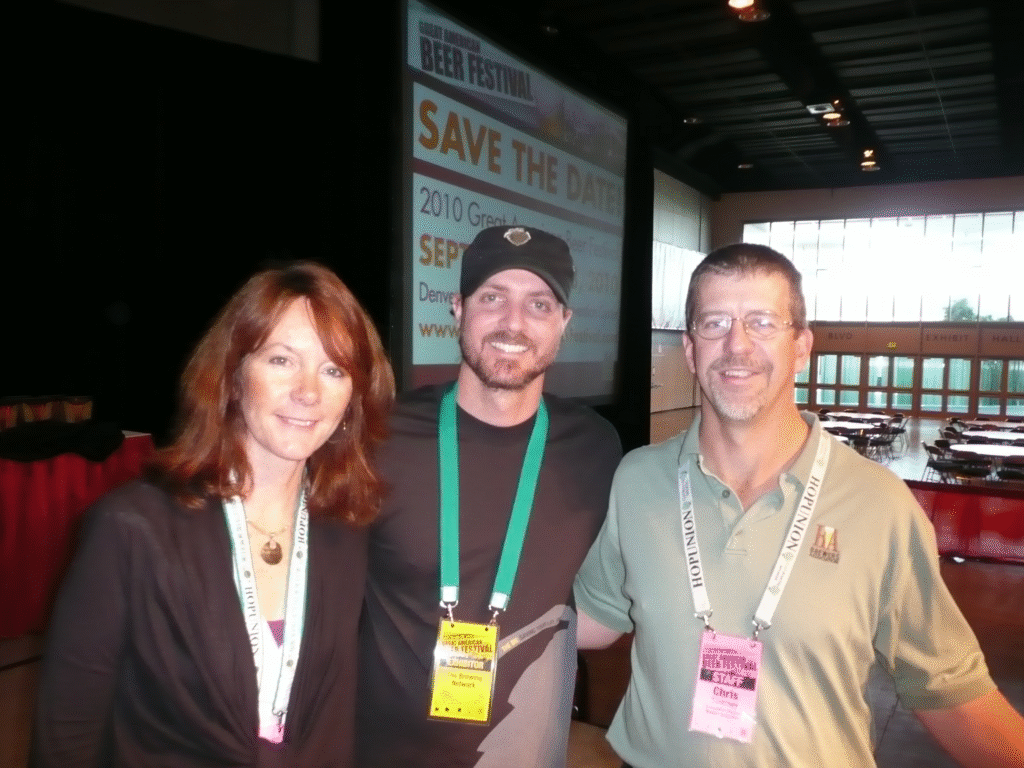
Fal and me in Chico a couple of years ago.
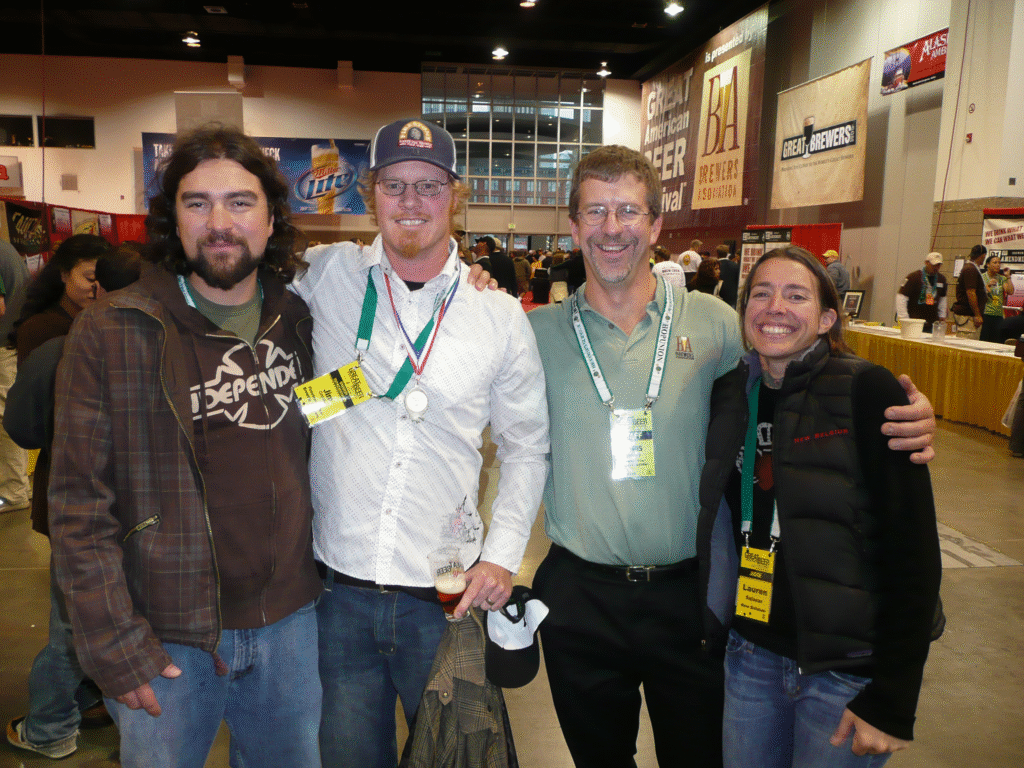
At the Oregon Brewers Festival in 2006.
Fal showing oiff a new Anderson Valley beer, Kan Kicky Wheat, in 2015.
Also at OBF, with Daniel Bradford, then of All About Beer Magazine, and Dave Buehler from Elysian Brewing in Seattle.
With a bevy of brewers touring Stone Brewing during CBC in 2008, that’s Fal at the far right.
fal-al-5
While still GM at Anderson Valley, launching Brother David at the Toronado in San Francisco. Clockwise from left: Fal, Mark Cabrera, David Gatlin, me and Dave Keene, the beer’s namesake and Toronado owner.
Fal-1
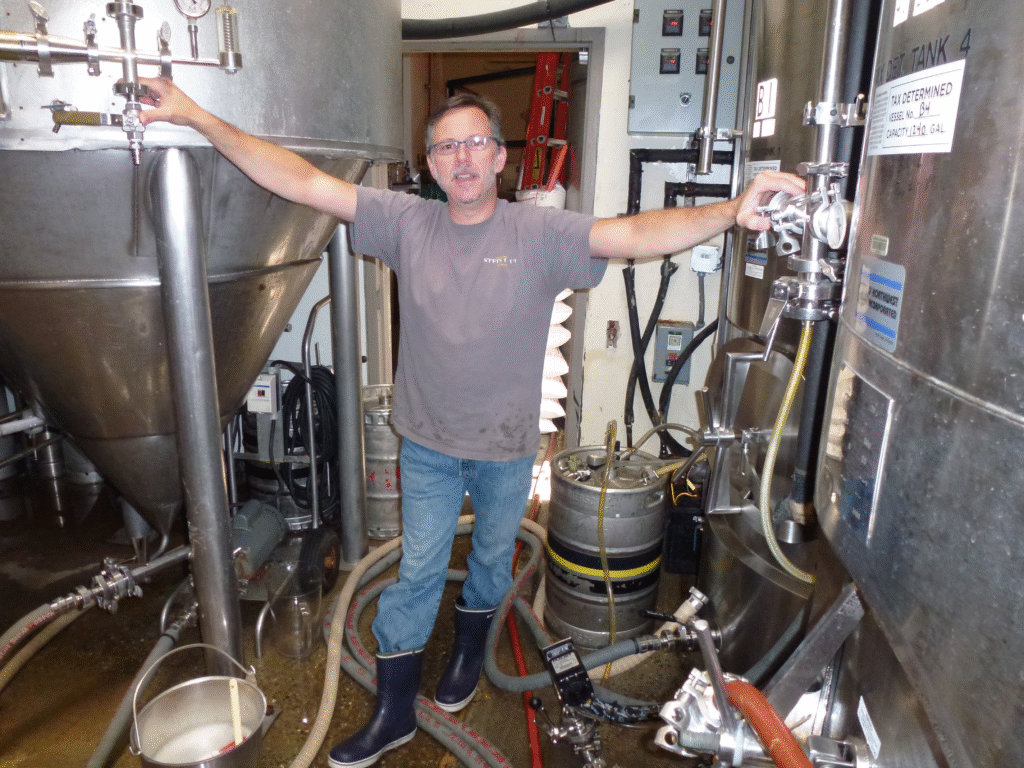
Fal during a recent hop harvest. No wonder that batch of Anderson Valley tasted so “fal-ish.”

Filed Under: Birthdays, Just For Fun Tagged With: Asia, Bay Area, Northern California

Beer In Ads #5158: It’s A Grand Cold Weather Beer

January 1, 2026 By Jay Brooks Leave a Comment

Last year I decided to concentrate on Bock ads for awhile. Bock, of course, may have originated in Germany, in the town of Einbeck. Because many 19th century American breweries were founded by German immigrants, they offered a bock at certain times of the year, be it Spring, Easter, Lent, Christmas, or what have you. In a sense they were some of the first seasonal beers. “The style was later adopted in Bavaria by Munich brewers in the 17th century. Due to their Bavarian accent, citizens of Munich pronounced ‘Einbeck’ as ‘ein Bock’ (a billy goat), and thus the beer became known as ‘Bock.’ A goat often appears on bottle labels.” And presumably because they were special releases, many breweries went all out promoting them with beautiful artwork on posters and other advertising.

Thursday’s holiday ad is for National Bohemian Bock Beer, which was published on January 1, 1942. This ad was for the National Brewing Co. of Baltimore, Maryland, which was originally founded in 1885. This ad ran in The Montgomery County Sentinel, in Maryland. I love the somewhat inscrutable tagline at the bottom: “The most expensive popular priced bottle of bock beer your dealer can buy.”

Filed Under: Art & Beer, Beers, Breweries, Just For Fun Tagged With: Advertising, Bock, History, Maryland

Historic Beer Birthday: Michael Joseph Owens

January 1, 2026 By Jay Brooks Leave a Comment

owens-illinois
Today is the birthday of Michael Joseph Owens (January 1, 1859–December 27, 1923). He “was an inventor of machines that could automate the production of glass bottles.”

Michael-J-Owens-close

If you’ve ever opened a beer bottle, you’ve probably held something he had a hand in developing, because he made beer bottles cheap and affordable for breweries, and his company has continued to improve upon his designs. Based on his patents, in 1903 he founded the Owens Bottle Company, which in 1929 merged with the Illinois Glass Company in 1929 to become Owens-Illinois, Inc. Today, O-I is an international company with 80 plants in 23 countries, joint ventures in China, Italy, Malaysia, Mexico, the United States and Vietnam, with 27,000 employees worldwide and 2,100-plus worldwide patents.
MJOwens3-a
Michael J. Owens in front of one of his bottling machines from a film shot in 1910.

Here’s a short biography of Owens:

Michael Joseph Owens was an inventor of machines that could automate the production of glass bottles.

Michael J. Owens was born on January 1, 1859, in Mason County, West Virginia. As a teenager, he went to work for a glass manufacturer in Newark, Ohio.

During the late 1800s, Toledo, Ohio was the site of large supplies of natural gas and high silica-content sandstone — two items necessary for glass manufacturing. Numerous companies either formed in or relocated to Toledo, including the New England Glass Company, which relocated to Toledo in 1888. This same year, the company’s owner, Edward Drummond Libbey, hired Owens.

Within a short time, Owens had become a plant manager for Libbey in Findlay, Ohio. At this point in time, glass manufacturers in the United States had to blow glass to produce the bottles. This was a slow and tedious process. Owens sought to invent a machine that could manufacture glass bottles, rather than having to rely on skilled laborers, greatly speeding up the manufacturing process. On August 2, 1904, Owens patented a machine that could automatically manufacture glass bottles. This machine could produce four bottles per second. Owens’s invention revolutionized the glass industry. His machine also caused tremendous growth in the soft drink and beer industries, as these firms now had a less expensive way of packaging their products.

In 1903, after Owens had invented his bottle machine but before he had patented the invention, Owens formed the Owens Bottle Machine Company in Toledo. Libbey helped finance Owens’s company. This firm initially manufactured Owens’s bottle machine. By 1919, the firm had begun to manufacture bottles, and the company changed its name to the Owens Bottle Company. The company grew quickly, acquiring the Illinois Glass Company in 1929. The Owens Bottle Company became known as the Owens-Illinois Glass Company this same year. In 1965, the company changed its name one final time. It became and remains known as Owens-Illinois, Inc.
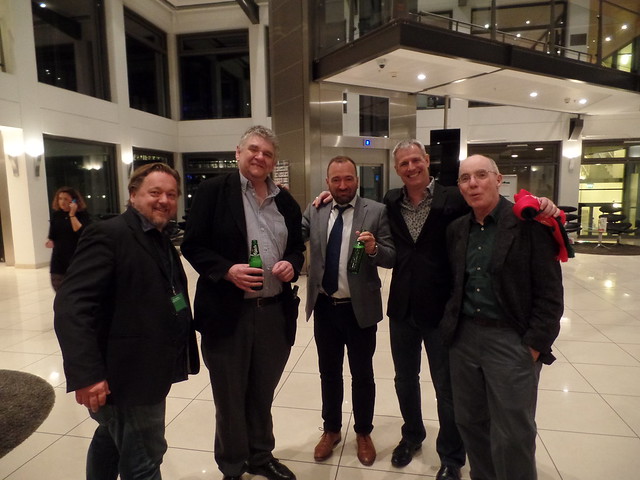
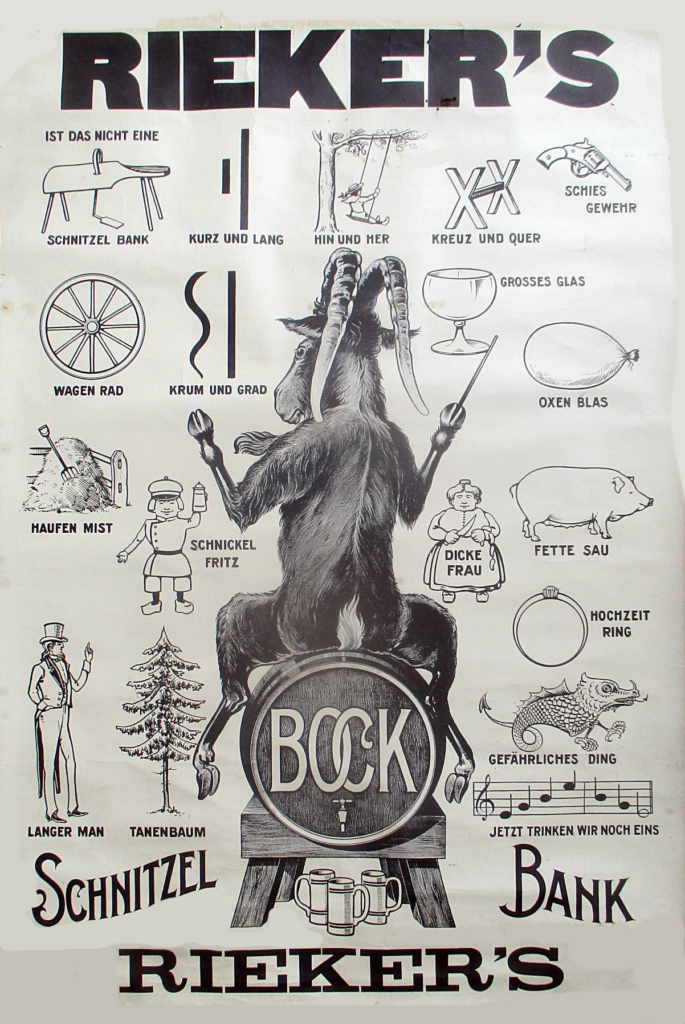
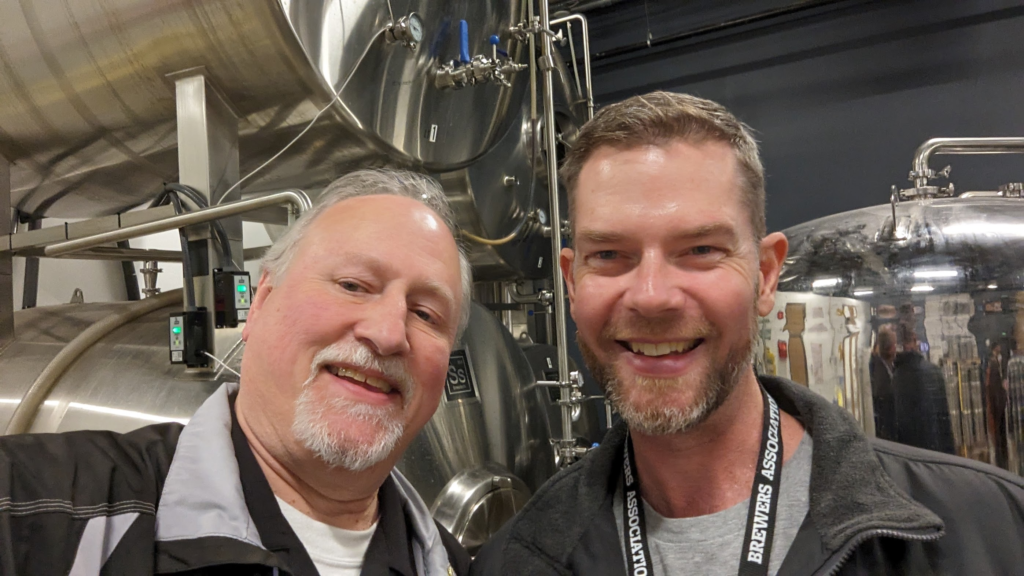

Owens retired in 1919. He did not live to see his company grow into such an important manufacturer of glass. He died on December 27, 1923, in Toledo, Ohio. Over the course of his life, Owens secured forty-five patents.

Michael Owens / sally

Here’s his biography from his Wikipedia page:

He was born in Mason County, West Virginia on January 1, 1859. He left school at the age of 10 to start a glassware apprenticeship at J. H. Hobbs, Brockunier and Company in Wheeling, West Virginia.

In 1888 he moved to Toledo, Ohio and worked for the Toledo Glass Factory owned by Edward Drummond Libbey. He was later promoted to foreman and then to supervisor. He formed the Owens Bottle Machine Company in 1903. His machines could produce glass bottles at a rate of 240 per minute, and reduce labor costs by 80%.

Owens and Libbey entered into a partnership and the company was renamed the Owens Bottle Company in 1919. In 1929 the company merged with the Illinois Glass Company to become the Owens-Illinois Glass Company.

Michael-J-Owens

To read more about Owens’ contributions, check out Michael Owens’ Glass Bottles Changed The World, by Scott S. Smith, Owens the Innovator at the University of Toledo, Today in Science, and the West Virginia Encyclopedia has a history of the Owens-Illinois Glass Company.

michael-owens-glass-bottle-machine-no-6

Filed Under: Birthdays, Just For Fun, Related Pleasures Tagged With: Bottles, History, Packaging, Patent, Science of Brewing

Beer Birthday: Alan Newman

January 1, 2026 By Jay Brooks Leave a Comment

Today is the 80th birthday of Alan Newman. In addition to co-founding Gardener’s Supply Co. and Seventh Generation, for our purposes he’s best known for co-founding Magic Hat Brewing, an early microbrewery located in Burlington, Vermont. Newman opened the brewery in 1994, along with his partner Bob Johnson, the company’s original brewmaster. In 2005, they bought Pyramid Breweries, but today both, and others, are owned by Florida Ice & Farm Company (FIFCO), a food and beverages company located in Costa Rica. Newman later worked with Alchemy & Science, Boston Beer Company’s incubator business. I’ve only met Alan a few times, but he definitely had a great impact on the early craft beer days, especially on the East Coast. And he’s the only early beer pioneer I know of who frequently wore a cape. Join me in wishing Alan a very happy birthday.

Alan on the bottling line.
Alan’s Facebook profile photo.
The Magic Hat employees, c. 2000.
Alan’s autobiography “High on Business.”

Filed Under: Birthdays, Breweries, Just For Fun Tagged With: History, Vermont

Historic Beer Birthday: Gustave Amos

January 1, 2026 By Jay Brooks Leave a Comment

Today may be the birthday of Gustave Amos (1840-1910), but the exact month and day is unknown. He was a Protestant Lutheran originally from Wasselonne, in northeastern France. He founded the Brasserie Amos in 1868, which was located in Metz, which is part of the Moselle, which is in the Lorraine area of Eastern France. His father, Jean Amos, owned and operated a candle factory, then a soap factory, but it was his Uncle Edouard, who was a local brewer, that introduced Gustave to brewing when he was very young. The Amos brewery kept growing and doing very well, but in 1910, Gustave was killed in accident when he was struck by a cab right outside the front door of the brewery. His son, Gustave Amos, Jr. continued to run the brewery and it stayed in the family until his great-grandson, Gérard Frantz, sold the brewery in 1988 to the German group Karlsberg (called Karlsbräu outside Germany to avoid confusion with Carlsberg) in Homborg. They closed the brewery in 1993.

This brief biograpy of Gustave is from L’Histoire sous un autre Angle, translated by Google:

Gustave Amos, the founder of the brewery, comes from a large family in Wasselonne. Born in 1840, he is the grandson of Frédéric Georges Amos who settled in Wasselonne during the revolutionary period, around 1795. Coming from a patrician family of reformed Württemberg which dates back to the beginning of the 16th century, Frédéric Georges will become the ancestor of a line of industrialists, officers, engineers and doctors. Nowadays, two streets in Wasselonne recall this illustrious family. If two streets in Wasselonne honor the Amos family, Canada has preferred to give the name of this family to one of its towns.

This account of the brewery’s early history comes from Le Blog des Bibliothèques Médiathèques de Metz in a post entitled “Last Sips of Amos:”

Contrary to what the collective imagination retains, the beer industry made its appearance in the Metz region before the annexation of the department by Germany. Indeed, the Amos brewery opened its doors in 1868! It was founded by Gustave Amos, a young brewer from Wasselonne (Bas-Rhin), in line with the family business. An excellent master brewer and remarkable businessman, Gustave Amos quickly succeeded in raising his brewery to the forefront of Moselle beer producers, even though the city of Metz had more than fifteen active breweries. First located in the city center, the company moved to the Sablon district shortly after the War of 1870.

Brewery employees before World War 1.

During the entire period of the Annexation, Gustave Amos made a point of surpassing the Germanic breweries which had established themselves in the Metz region. At that time, the Amos brewery became the meeting place for the Metz bourgeoisie of French origin in Metz. An anecdote reported by the Bière et brasseries de Moselle website tells us thatin 1895, a 72-year-old former notable from Metz, exiled to Pont-à-Mousson, cycled daily to Metz to join the regulars’ table, between 5 and 7 p.m. Thus, the “native” inhabitants of Lorraine could freely taste a local beer with the nose and beard of the Occupant! Faced with the success encountered, Gustave Amos transformed his company into a Société Anonyme in 1908, allowing his children to succeed him and the family business to remain independent. Great good for him, because barely two years later, he died hit by a cab in front of his brewery. Gustave-fils therefore took over the management of the Amos company. Although competition from German breweries was fierce, on the eve of the First World War, Amos was the third largest Moselle brewery, with an annual production of 70,000 hectoliters. This strong activity can in part be explained by the presence of a large garrison stationed in the city; in addition, the German immigrant population consumed a lot of beer … and this despite the controversy reported inLa Gazette lorraine , the official French-speaking press of the occupier, according to which brasseries of French origin served beer in glasses of smaller capacity than German mugs!

Another view of the brewery from the other side.

Moselle beer and breweries picks up the story:

Gustave moved to Metz in 1868. He rented for three years, then bought from Jean-Baptiste Reinert, the brewery located at the corner of the rue Hollandre- Piquemal and d’Heltz, opposite the Belle-Isle hospital. The places quickly became too small and, in 1874, the brewery moved to Sablon.

The larger Amos brewery in Sablon.
Although the one in Metz was no slouch.

Filed Under: Birthdays, Breweries, Just For Fun Tagged With: France

Historic Beer Birthday: Francesco Peroni

January 1, 2026 By Jay Brooks Leave a Comment

Today is the birthday of Francesco Peroni (January 1, 1818-September 2, 1893) [Note: some sources say 1894]. He was born in the Province of Novara and his family made pasta. In 1846, he founded the Peroni Brewery in Vigevano. Production was moved and expanded to Rome in 1864, and was later managed by Francesco’s son, Giovanni, beginning in 1867.

According to the Peroni Brewery Wikipedia page:

The Peroni company was established under the founding family name in the town of Vigevano, Italy, in 1846. Due to booming business, a second brewery was built in Rome. The company was moved to Rome by Giovanni Peroni in 1864, six years prior to Rome becoming the Italian capital in 1870. Throughout the late 19th and early 20th centuries, the company became one of the most prominent brewing companies in the newly unified Italian nation.

It is probably best known worldwide for its pale lager, Nastro Azzurro, which was the 13th best-selling beer in the United Kingdom in 2010.

By 2016, Peroni was owned by Miller Brands U.K. of SABMiller. As part of the agreements made with regulators before Anheuser-Busch InBev was allowed to acquire SABMiller, the company sold Peroni to Asahi Breweries on 13 October 2016.

This is somewhat of a fluff piece about the Peroni Brewery from Louisiana’s Rouses Market blog:

Like so many of the great food and beverage institutions of Italy, the story of Peroni begins in the nineteenth century. That’s when Francesco Peroni, an entrepreneur in the country’s north, opened a brewery in the city of Vigevano.

To drink beer is to drink the Earth itself, and location was everything to Francesco’s operation. It was practically designed by God for beermaking: the Alps provide glacial ice and water, and the arable land between the Adda and Brembo rivers offers fertile fields for growing crops. Thus Birra Peroni, as he called his company, offered perhaps the finest beer in Italy—pale and medium and well suited for food and conversation. Right away, the country just could not get enough of the stuff.

In 1864, two decades after opening its first brewery, Peroni had to open a second site in the city of Rome (itself no slouch in agriculture). It was the only way to keep glasses full in thirsty Italy. Seventy years later—a blink of the eye in the time scales of Italian companies—Peroni was the biggest brewer in the country. Today, it’s one of the biggest in the world.

It is no accident that practically every civilization in history has, at some point, independently invented beer. In fact, some scholars assert that, beyond its obvious appeal, beer is the reason civilizations exist in the first place. The hypothesis—though, of course, they didn’t know any of this at the time—goes like this: grain is not really very tasty—and especially the grain consumed by prehistoric humans. (It’s not like they had Tony’s to spice things up.) And some parts of the grain—like the bran your least favorite cereal is made from—are especially hard to digest, while others are easy to make use of but difficult to get to. Grain was and is a vital source of nutrition, and for a civilization to thrive they would need to grow it in abundance and consume it eagerly.

Enter beer. Its repeated discovery was likely an accident, perhaps the result of rainwater soaking into stored grain and fermenting over time. (The fermentation was very likely accidental and certainly a mystery.) This yielded a rich, dark liquid, which, at some point, a bold and possibly desperate human being decided to drink. Whatever the reason, no matter the circumstance, it kept happening. People realized pretty quickly—time and again—that beer was amazing, and they wanted more. Humankind had just found its new favorite thing.

While one might imagine early civilizations as an endless begrudging toil in the fields to harvest horrible-tasting grains and perhaps boring, butterless bread, it improves dramatically when you add beer. You’ve suddenly got industrious tribes cultivating every square inch of land imaginable, because more grain means more beer, and more beer means fewer nights sitting around the campfire thinking about how cold it is, or how hungry you are, or how bad everyone smells, or what the wolves are up to in the shadows. Instead, you’re tipsy and telling everyone about that saber-toothed cat you took down with your bare hands, and, inexplicably, dancing much better than you used to.

Ten thousand years of human industry, a steady improvement in beermaking, and one family’s devotion to quality bring us to Peroni. More than a beer, the name is a symbol of Italian glamor and practically a lifestyle for its drinkers. Peroni’s two most famous beers, by far, are its original beer, named after the company, and Nastro Azzurro, a pale lager. The latter is made with a corn exclusive to the company—Nostrano dell’Isola maize—which imbues the beer with its color, clarity and characteristic citrus, spice, and bitter balance. The beer is brewed with Saaz-Saaz and Hallertau Magnum hops, responsible for Nastro Azzurro’s ephemeral touch on the palate. Taken together, with two-row spring barley in the mix, you get a premium beer notable for its especially crisp finish. If human civilization has done nothing else, it has given us Peroni—Italy bottled and delivered the world over.

The Peroni Brewery in 1846.

Filed Under: Birthdays, Breweries, Just For Fun Tagged With: History, Italy

« Previous Page
Next Page »

Find Something

Northern California Breweries

Please consider purchasing my latest book, California Breweries North, available from Amazon, or ask for it at your local bookstore.

Recent Comments

  • Ernie Dewing on Historic Beer Birthday: Charles William Bergner 
  • Steve 'Pudgy' De Rose on Historic Beer Birthday: Jacob Schmidt
  • Jay Brooks on Beer Birthday: Bill Owens
  • Steve 'Pudgy' De Rose on Beer Birthday: Charles Finkel
  • Steve 'Pudgy' De Rose on Beer Birthday: Bill Owens

Recent Posts

  • Historic Beer Birthday: John G. Schemm January 7, 2026
  • Historic Beer Birthday: John Kress January 7, 2026
  • Beer In Ads #5163: Fresh As A Babbling Brook, Congress Bock Beer January 6, 2026
  • Historic Beer Birthday: Henry C. Berghoff January 6, 2026
  • Historic Beer Birthday: Caspar Ruff January 6, 2026

BBB Archives

Feedback

Head Quarter
This site is hosted and maintained by H25Q.dev. Any questions or comments for the webmaster can be directed here.