Brookston Beer Bulletin

Jay R. Brooks on Beer

  • Home
  • About
  • Editorial
  • Birthdays
  • Art & Beer

Socialize

  • Dribbble
  • Email
  • Facebook
  • Flickr
  • GitHub
  • Instagram
  • LinkedIn
  • Pinterest
  • RSS
  • Twitter
  • YouTube

Powered by Genesis

Patent No. 3773222A: Beer Yeast Dosing Installation

November 20, 2016 By Jay Brooks

patent-logo
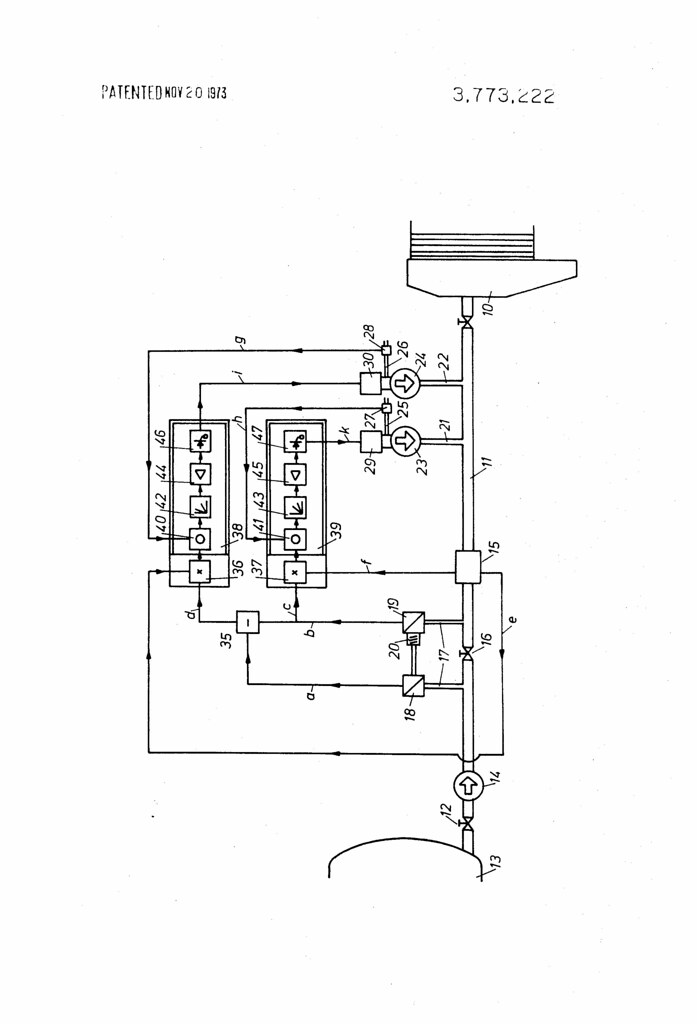
Today in 1973, US Patent 3773222 A was issued, an invention of Erich Fiebinger, assigned to Draft Systems, Inc., for his beer yeast “Dosing Installation.” Here’s the Abstract:

A dosing system for continuously dosing and dispensing the respective quantities of auxiliary filtering substances to be added in connection with a settling filtration to a cloudy liquid, especially beer, for the cooling and yeast sediments, according to which for dispensing an auxiliary filtering substance for the cooling sediments as well as an auxiliary filtering for the yeast sediment there is provided one dosing device each equipped with a flow meter while both devices which are directly connected to the cloudy liquid conveying conduit are preceded by a flow meter and a device for measuring the total cloudiness of the liquid and by a measuring device provided with a heating zone for measuring the yeast sediment in the cloudy liquid conveying conduit. The dosing installation includes a control device for controlling the dosing devices in conformity with the cloudiness measured by the respective devices.
US3773222-1

Filed Under: Beers, Breweries, Just For Fun, Politics & Law, Related Pleasures Tagged With: Brewing Equipment, History, Law, Patent, Science of Brewing, Yeast

Patent No. 2575658A: Beer Faucet

November 20, 2016 By Jay Brooks

patent-logo
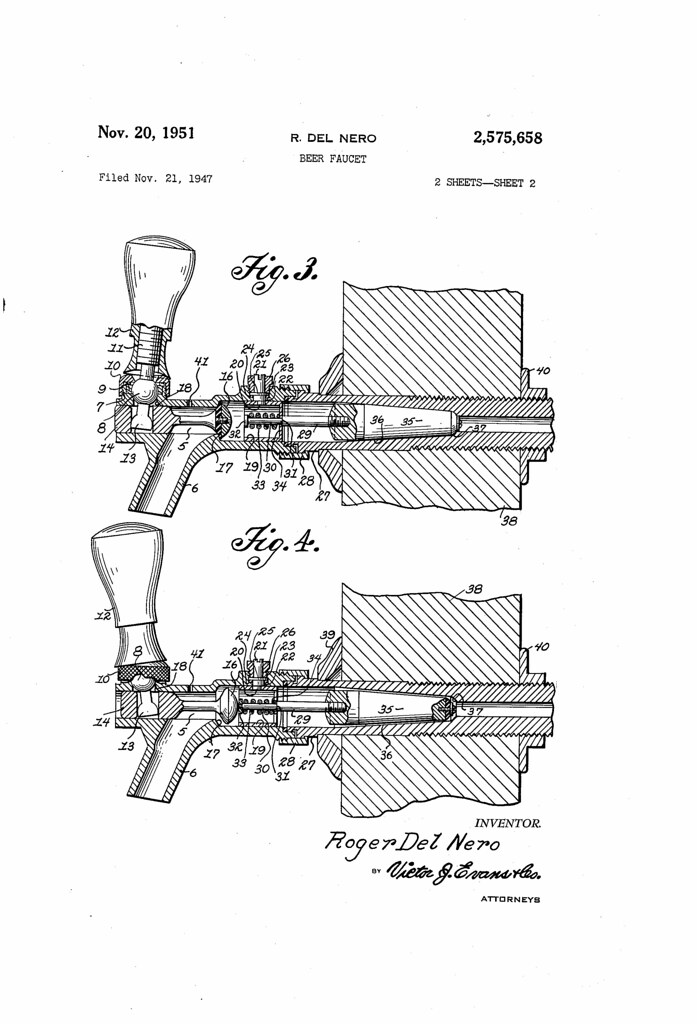
Today in 1951, US Patent 2575658 A was issued, an invention of Roger Del Nero, for his “Beer Faucet.” There’s no Abstract, although in the description it includes these claims:

Beer has always presented problems in dispensing. It contains carbon dioxide gas, which in a sealed keg is held in solution. Upon tapping of the keg, however, it is necessary to apply pressure from an external source to keep the gas dissolved within the keg, this pressure ranging, for example, from 25 to 35 pounds. It would be desirable to retain the gas in solution until the beer is dispensed from the faucet. It is here, however, that many problems arise, and these will be mentioned briefly.

For example, the faucet is of course exposed to room temperature, and yet should be chilled if a good glass of beer is to be drawn, since the relative warmth of the faucet may cause excessive foaming of the beer by release of the gas. Keeping a faucet at a single low temperature is practically impossible, because it might be inactive for a time, during a slack period of sales, and become relatively warm.

At other times, continuous drawing will keep it chilled. All this can happen during the use of a single keg. After a period of inactivity, good bartenders spit the faucet before drawing the next glass, that is, they clear the faucet of beer trapped therein that may be stale, and of escaped gases rising to the faucet through the supply lines and coils. The loss of good beer through the drain, before the faucet is again dispensing beer properly, has been considerable.

Other factors affect the drawing of beer, too, as for instance, agitation of the beer within the keg when tapping, the melting of ice in the coil box, and change of temperature in a mechanically cooled system.

From the above, it is seen that merely putting a keg under a pressure previously determined as best will not in itself result in each and every glass drawn having no more than a proper amount of foam, even though the particular bartender may be fully expert in his work. This has been the problem, and to meet it, the art has concerned itself with devising a faucet that can be adjusted by the bartender to meet varying conditions experienced from glass to glass. All such faucets as have been commercially practicable have been of a two-valve type, having a main valve operated by the usual knob lever, and a second valve separately adjustable for the purpose of restricting the passageway through the faucet in varying degree.

So far as I am aware, however, the faucets heretofore devised, and aimed at conquering the drawing. This is when it is most important to do so, because he does not note any change in the characteristics of the beer until he actually begins drawing. If he has to stop drawing, make an adjustment of the flow control valve, test the new position, and perhaps stop and make still another adjustment, valuable time is lost. 01′, if he attempts an adjustment without stopping, he must relinquish the knob lever. Usually, by the time he reaches the adjustment lever, the glass is overflowing.

Additionally, the provision of faucets of this type has brought forth an undesirable condition, in that many of them contain so many parts that they not only can get out of order easily, but what is more important, perhaps, the volume of parts, and the comparatively large size of the faucet, affects adversely proper chilling thereof, and tends to bring forth one of the very conditions intended to be overcome.

I have had in mind, then, the provision of a faucet that can be small and will have less parts than other faucets intended to accomplish the same purpose; that will permit an adjusted setting of the flow control valve, to be made on installation, taking into consideration such factors as beer temperature desired, length and size of supply lines and coils, and the pressure applied to the keg; that will additionally permit the bartender to make further adjustment of said valve during actual drawing, to meet varying abnormal and unexpected conditions not expected at the time the drawing of the glass began, such further adjustment to be made immediately and without loss of control of the knob lever; and that will permit spitting of the faucet without loss of good beer.

To this end, the presently preferred form of my invention embodies, mainly, a faucet having a main valve operated by the conventional knob lever; a flow control valve; an adjusting sleeve that effects an adjusted, normal setting of the flow control valve, usually made at installation, this means being capable of being locked; and a stem that extends from the flow control valve and is engageable by the main valve, whereby the bartender can make a further adjustment of the flow control valve during drawing by operation of the knob lever.

US2575658-0
US2575658-1

Filed Under: Beers, Just For Fun, Politics & Law, Related Pleasures Tagged With: History, Kegs, Law, Patent

Beer In Ads #2099: This Calls For … Saturday Night

November 19, 2016 By Jay Brooks


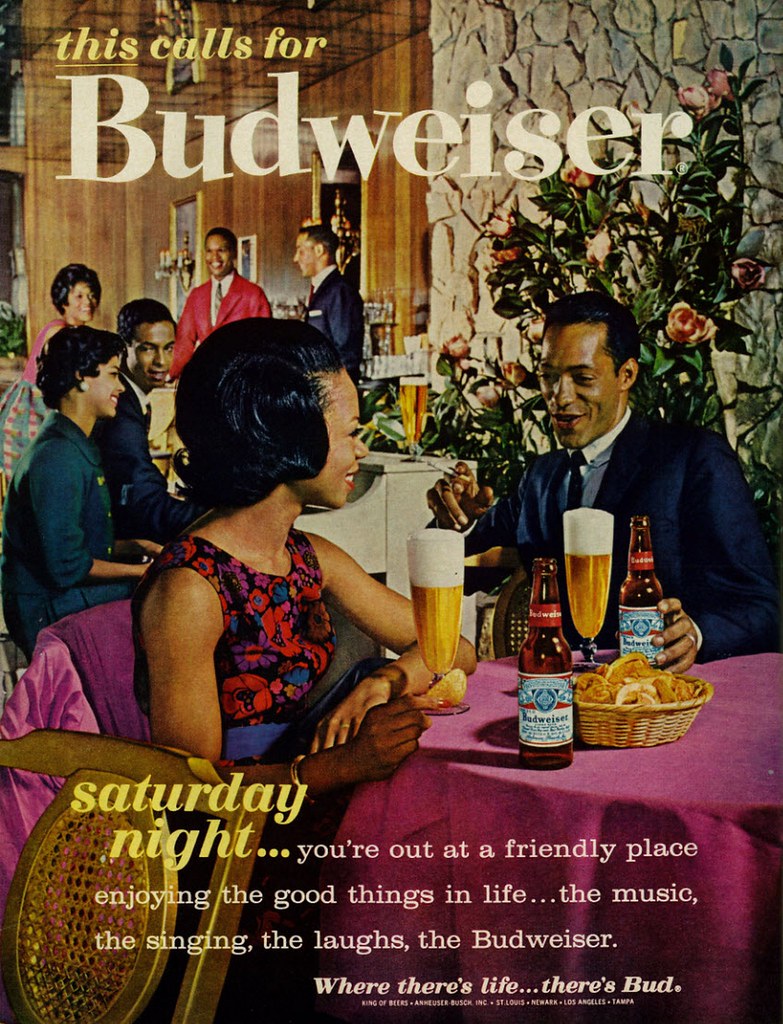
Saturday’s ad is for Budweiser, from 1963. In this ad, part of series entitled “This calls for …,” in this case “Saturday Night.” Date night, Saturday night, at a club, a cigarette, bowl of potato chips and two ginormous beer glasses. And, again, it’s a “friendly place.”

1963-this-calls-for-Budweiser-saturday-night

Filed Under: Art & Beer, Beers Tagged With: Advertising, Budweiser, History

Patent No. 3848631A: Beer Keg Protective Device

November 19, 2016 By Jay Brooks

patent-logo
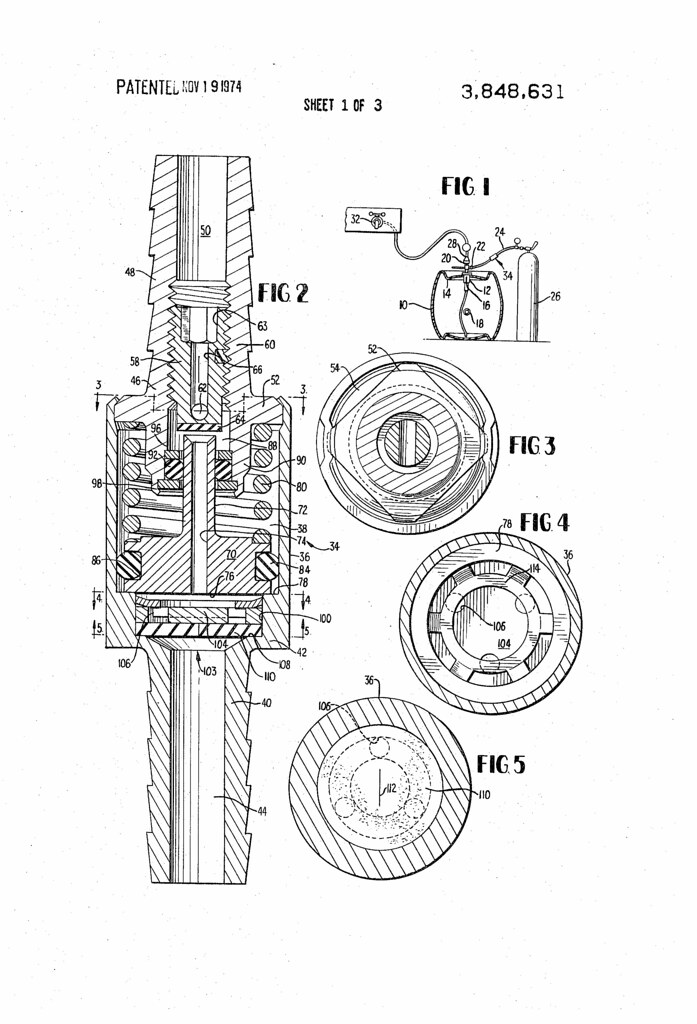
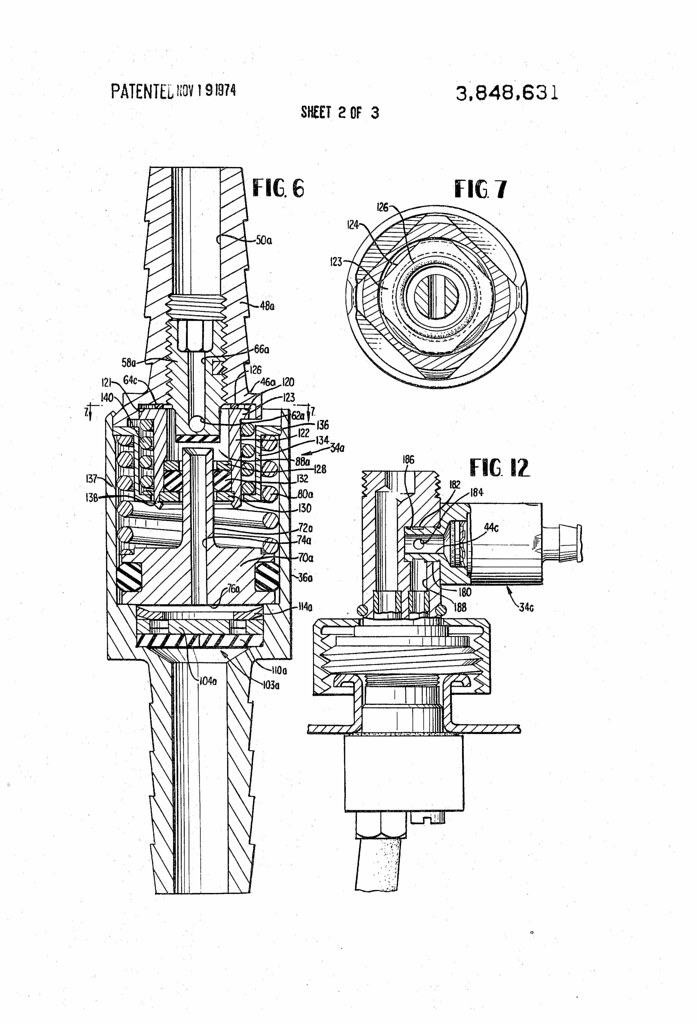
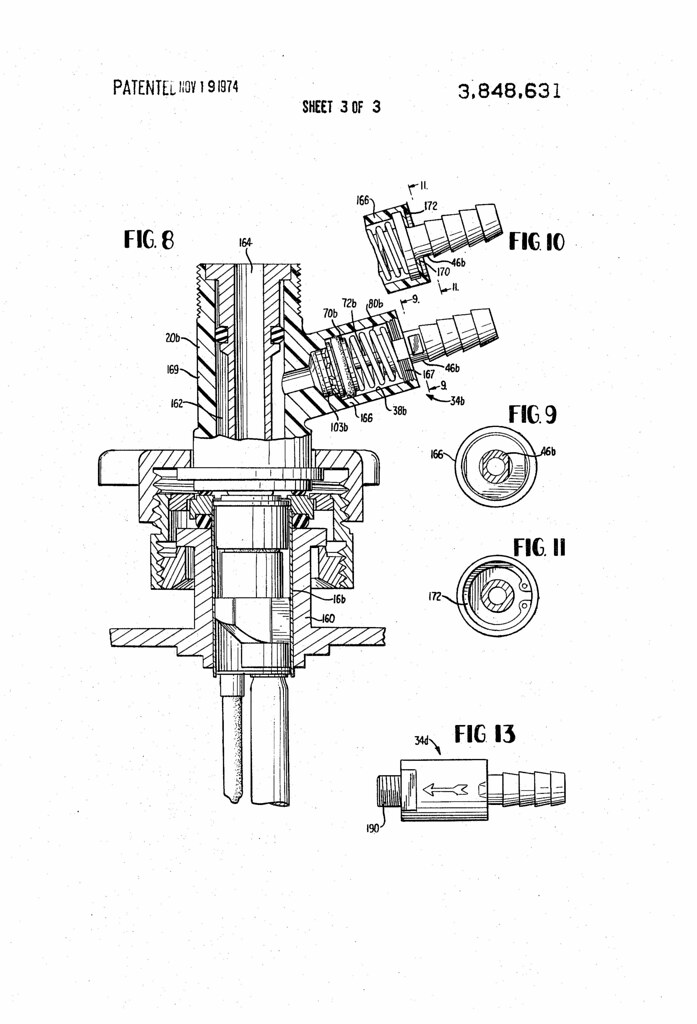
Today in 1974, US Patent 3848631 A was issued, an invention of Merton R. Fallon, assigned to Draft Systems, Inc., for his “Beer Keg Protective Device.” Here’s the Abstract:

The safety device is disposable in the gas line connecting between a gas source under pressure and a tapping device installed in a keg. The safety device includes a valve housing carrying a spring biased axially movable piston including a stem and an axially adjustable element on the upstream side of the stem, the element and piston having axial passages. On the downstream side of the piston, a slit valve is provided. In use, gas flowing into the valve through the passages in the element and piston flows into the keg through the slit valve. Upon an increase in gas line pressure above a predetermined pressure, the gas acts on the piston to displace it in an upstream direction against the bias of the spring to seal the stem against the element and preclude further ingress of gas into the keg. When keg pressure is relived as by drawing beer from the keg, the spring returns the piston to open the gas passage through the valve at the predetermined pressure. The gas check valve precludes backflow of liquid and gas through the gas passage.

US3848631-1
US3848631-2
US3848631-3

Filed Under: Beers, Just For Fun, Politics & Law, Related Pleasures Tagged With: History, Kegs, Law, Patent

Anchor Christmas Ale 1980

November 19, 2016 By Jay Brooks

xmas-christmas-ale
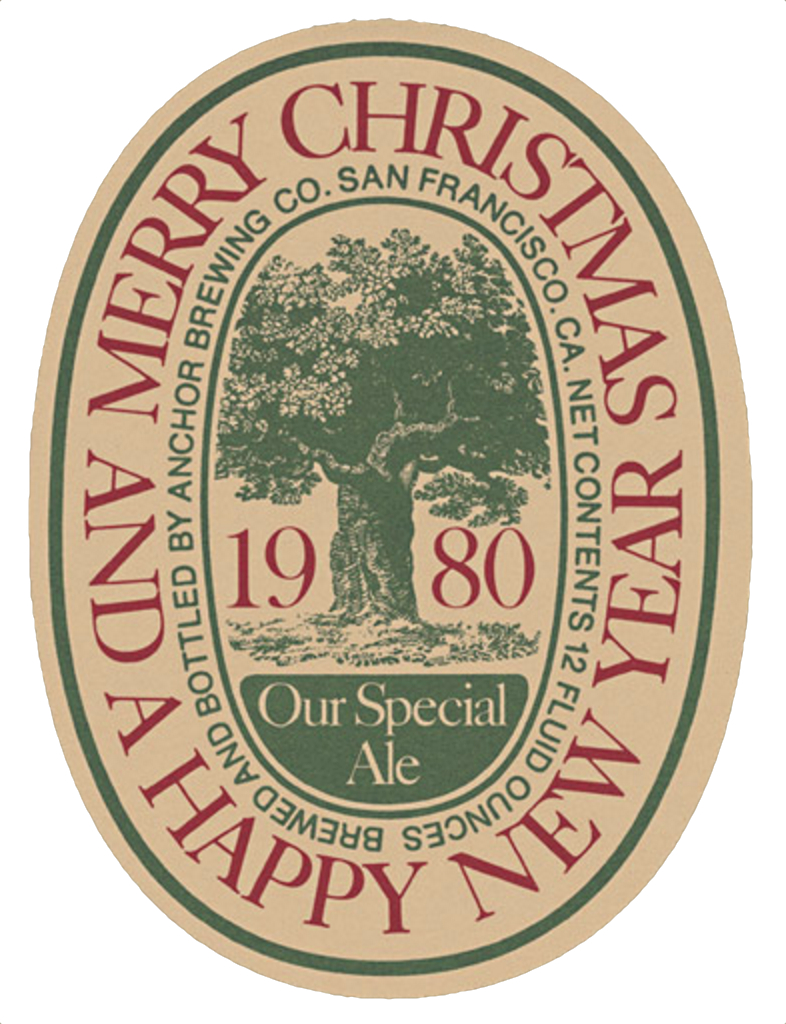
It’s day six of my seasonal sprint to Christmas featuring all 42 labels from Anchor’s Christmas Ale — a.k.a. Our Special Ale — all different beers (well, mostly different) and all different labels, each one designed by local artist Jim Stitt, up to and including this year’s label.

1980 was the sixth year that Anchor made their Christmas Ale, and it was similar to the five previous year’s beers, another variation based on Liberty Ale, still a hoppy pale ale, with no spices added. This sixth label was an “Oak Tree,” or “Genus: Quercus.”

Anchor-Xmas-1980

Filed Under: Art & Beer, Beers, Just For Fun Tagged With: Anchor Brewery, Beer Labels, Christmas, History, Holidays

Patent No. EP1100865B1: Process And Apparatus For Obtaining Lupulin Products From Hops

November 19, 2016 By Jay Brooks

patent-logo
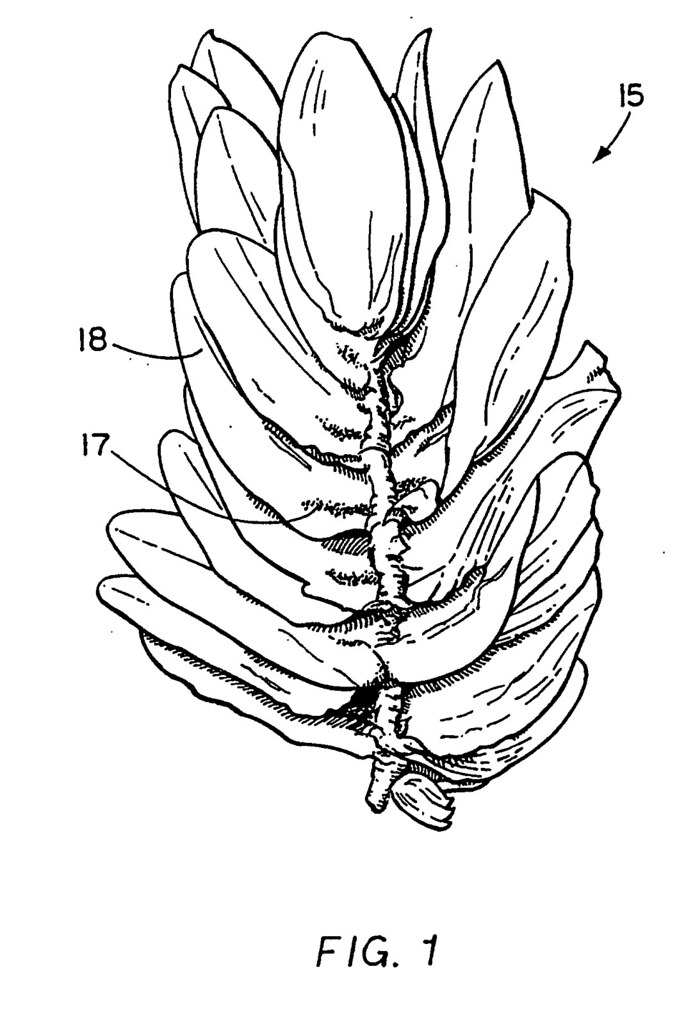
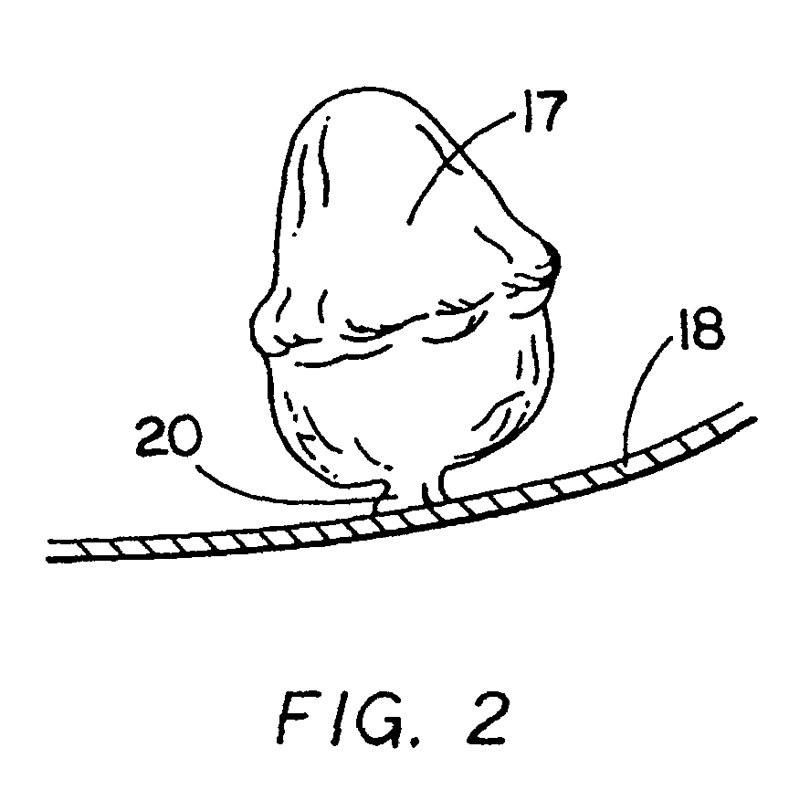
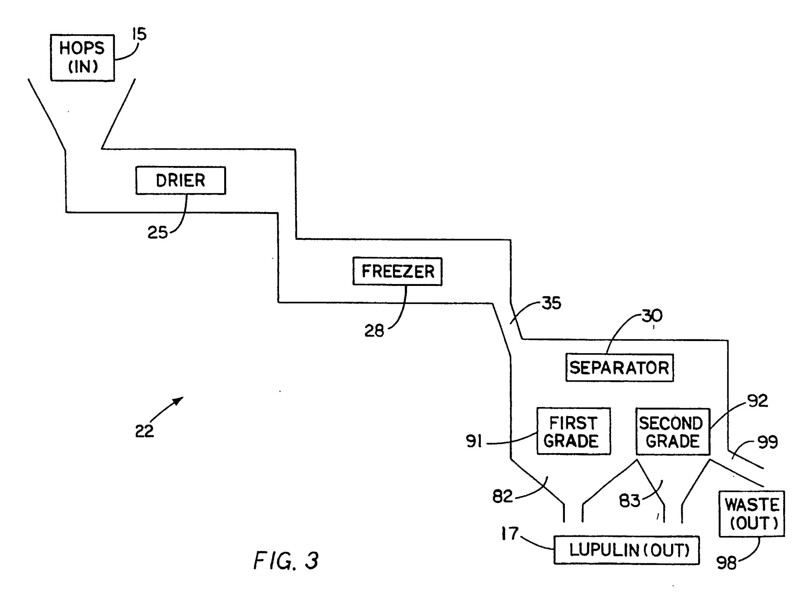
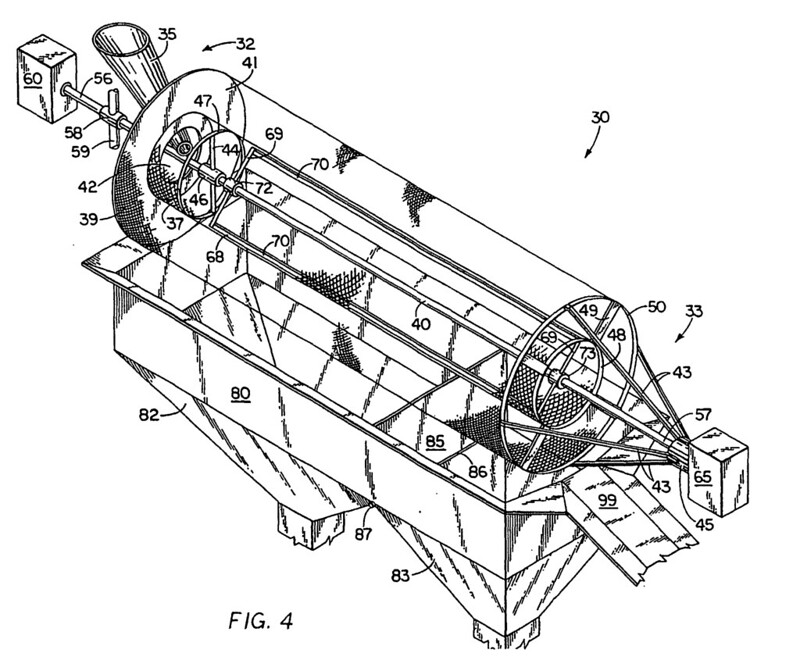
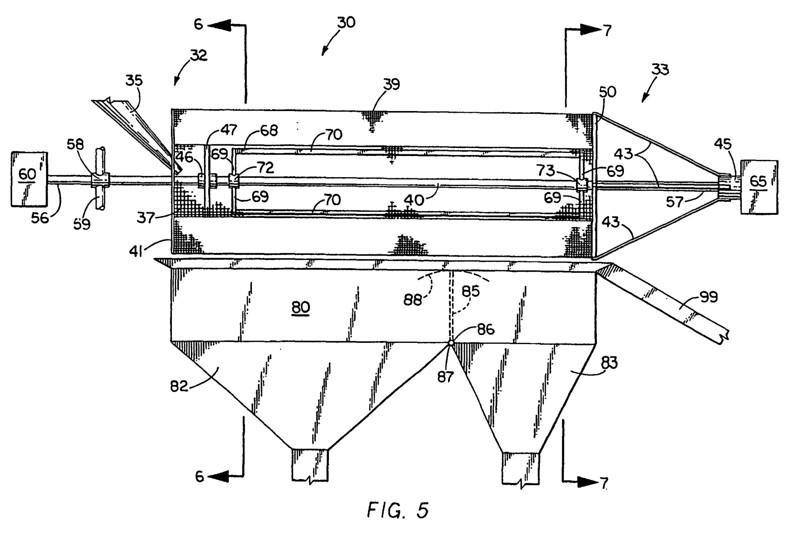
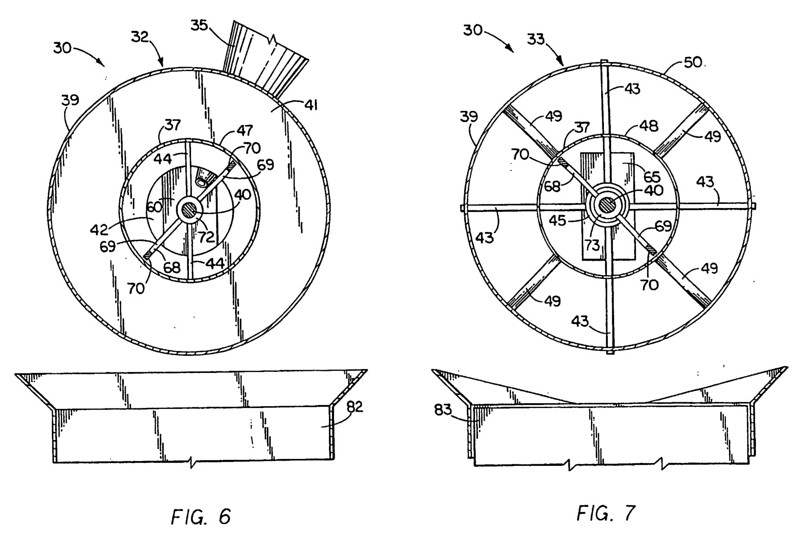
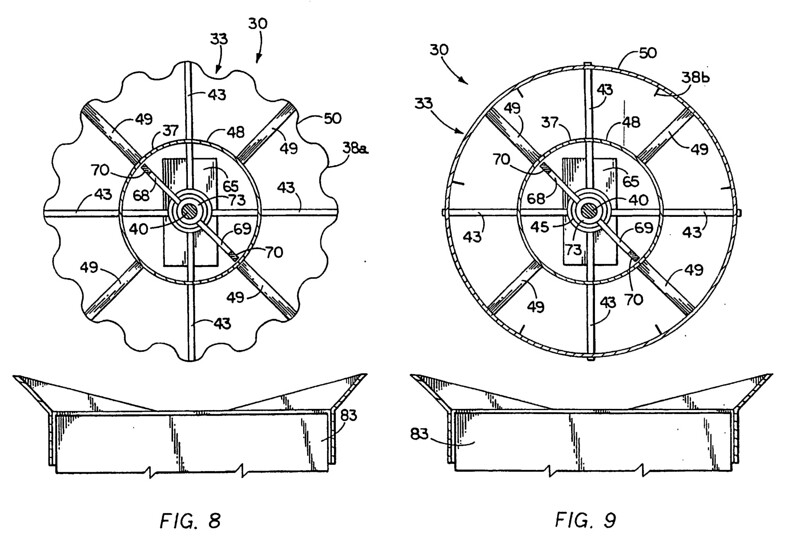
Today in 2003, US Patent EP 1100865 B1 was issued, an invention of Francis Lloyd Rigby, for his “Process and Apparatus for Obtaining Lupulin Products from Hops.” Here’s the Abstract:

A process and apparatus for the physical separation of lupulin from hops is provided. The process releases the lupulin glands by drying, freezing, and shaking, under specific and controlled conditions. For separating the lupulin from the hop cones a separator is provided that includes a substantially cylindrical and concentrically mounted coarse screen and fine screen. A raw hops product is received into the coarse screen that allows the coarse lupulin fraction to pass through while the coarse waste in retained within. The fine screen has a larger diameter than the enclosed coarse screen. A coarse lupulin fraction is received into the fine screen allowing the lupulin product to pass through the fine screen while the fine waste is retained within the fine screen to be discharged out the end of the fine screen. An agitator is mounted to a shaft within the separator and is utilized to beat the raw hop product. The separation process provides high yield of lupulin without sacrificing purity of product as compared to other physical separation processes. Additionally, the yield and purity of the process of the present invention compares closely to the yield and purity achieved by conventional chemical extraction methods. A superior natural hop material is thereby produced as compared to extracts, pelletized hops or baled raw hops. Lupulin can be substituted for hop extracts produced by conventional methods providing a substantial price advantage.

1100865-1
1100865-2
1100865-3
1100865-4
1100865-5
1100865-6
1100865=7

Filed Under: Beers, Just For Fun, Politics & Law, Related Pleasures Tagged With: Brewing Equipment, History, Hops, Law, Patent

Patent No. 550232A: Apparatus For Cooling And Drawing Beverages

November 19, 2016 By Jay Brooks

patent-logo
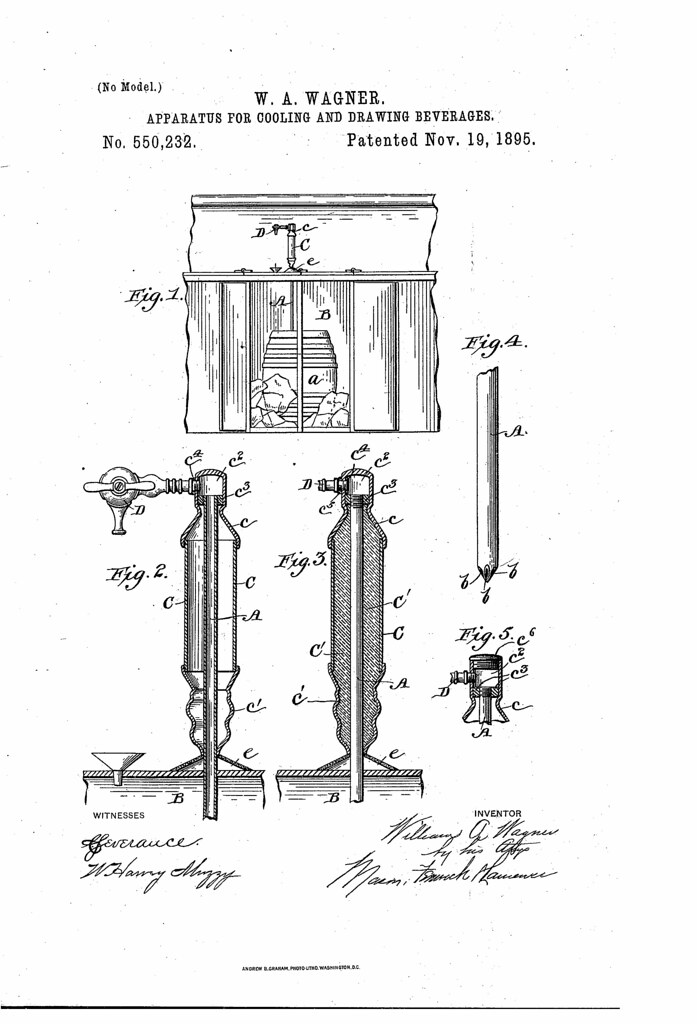
Today in 1895, US Patent 550232 A was issued, an invention of William A. Wagner, for his “Apparatus for Cooling and Drawing Beverages.” There’s no Abstract, although in the description it includes these claims:

The invention consists in the combination with a suitable cooling-chamber, a supply-pipe passing through the same and projecting from it, a sealed air-tight jacket forming a non-heat-conducting chamber about said projecting portion for protecting it from the external heat, and a faucet connected to the end of said projecting pipe.

It also consists in the combination with a suitable cooling chamber, a supply-pipe pass ing through the same and projecting from it, a sealed air-tight jacket forming a chamber about said projecting portion, a non-heat-conducting filling for said chamber for protecting said projecting end from the external heat, and a faucet connected to the end of said projecting pipe.

US550232-0

Filed Under: Beers, Just For Fun, Politics & Law, Related Pleasures Tagged With: History, Kegs, Law, Patent

Beer In Ads #2098: This Calls For … The Tavern

November 18, 2016 By Jay Brooks


Friday’s ad is for Budweiser, from 1962. In this ad, part of series entitled “This calls for …,” in this case “The Tavern.” Two men in suits sit at a fancy bar, reading the newspaper, eating popcorn and having a few beers. As the ad confirms, it’s a “friendly spot.”

Bud-1962-this-calls-for-tavern

Filed Under: Art & Beer, Beers Tagged With: Advertising, Budweiser, History

Mickey Mouse In Arabia

November 18, 2016 By Jay Brooks

mickey-mouse
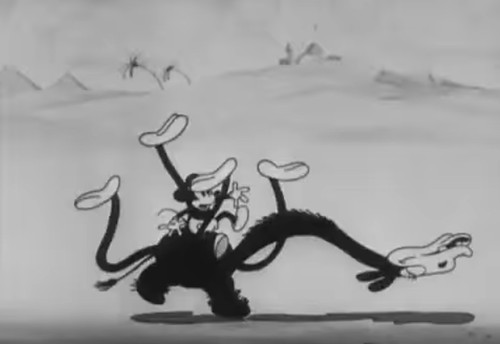
Today is the day when Steamboat Willie debuted in 1928, the first Mickey Mouse cartoon, the one that made the Disney company the entertainment powerhouse that it is today. But even though Steamboat Willie is the famous one, it actually wasn’t the first Mickey Mouse cartoon created. Plane Crazy was actually the first one made, and The Gallopin’ Gaucho was the second, but both were shelved to work on Steamboat Willie, and specifically to add a synchronized soundtrack, which is what helped make Mickey Mouse so famous. A couple of years ago, I posted Mickey Mouse Drinking A Beer, about when Mickey is seen drinking a beer in “The Gallopin’ Gaucho.”

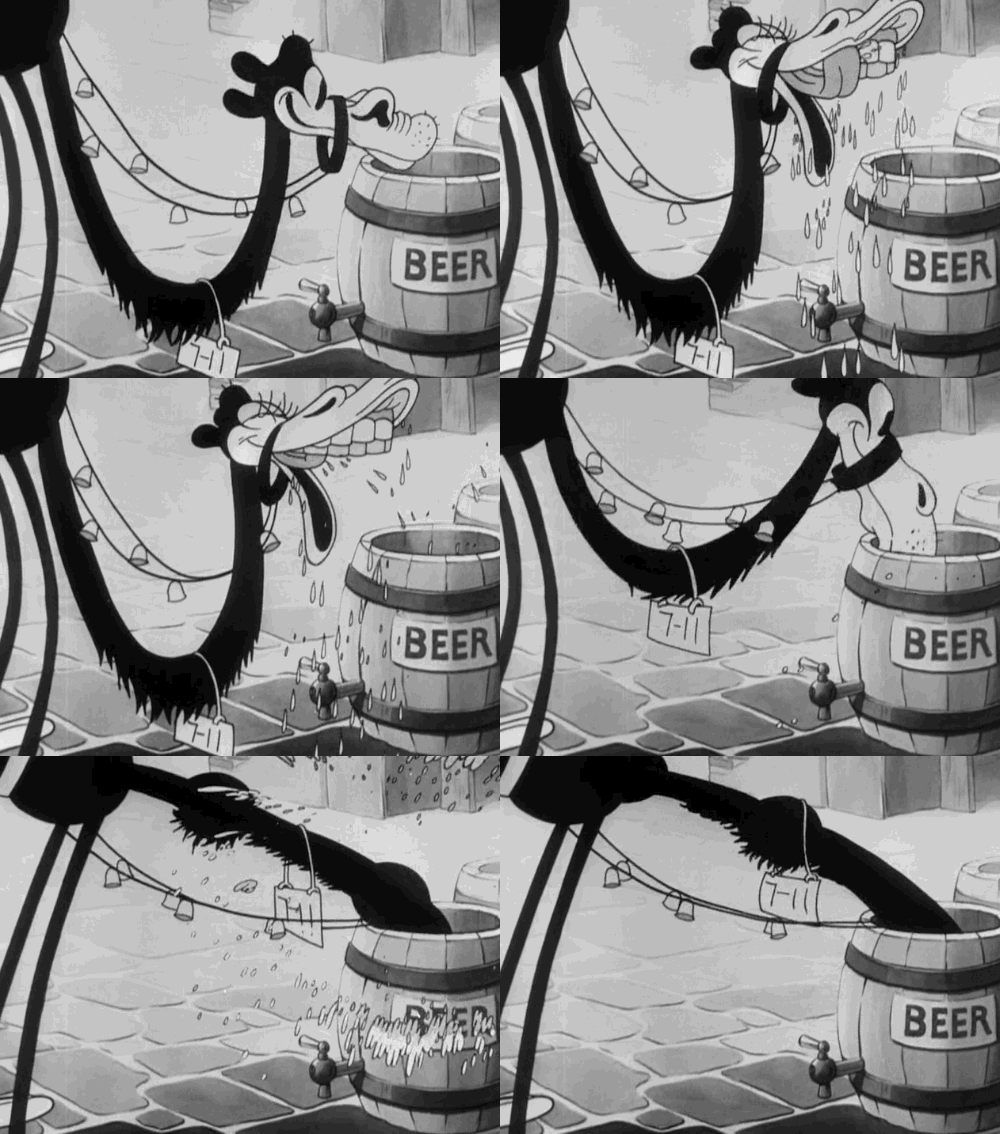
So for Mickey Mouse’s birthday this year, I thought I’d show a different cartoon, this one a little later, from 1932. It’s maybe the 46th Mickey Mouse cartoon, called “Mickey in Arabia.” There are plenty of racial stereotypes in the cartoon, sadly typical for 1932. And while Mickey doesn’t actually drink in this one, the camel that he and Minnie ride does drink some from a barrel.

mickey-in-arabia-1932

After Minnie is abducted by a sultan and rides off on his camel, Mickey runs back to his camel, who’s apparently been drinking beer the entire time and is obviously inebriated.

mickey-arabia-1

So first he has to chase the drunk camel.

mickey-arabia-2

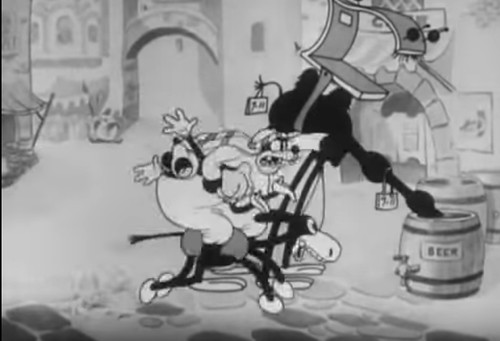
Finally, catching the camel, now he has to chase after the sultan, who’s taken Minnie.

mickey-arabia-3

And riding a drunk camel is no picnic.

mickey-arabia-4

The drunk camel even passes out at one point but continues on running upside down on its humps!

mickey-arabia-5

Below is the whole cartoon, the relevant beer barrel drinking takes place just after 1:30 into the 7-minute video.

Filed Under: Beers, Just For Fun, Related Pleasures Tagged With: Cartoons, History, Humor

Patent No. 440916A: Bottle Filling Machine

November 18, 2016 By Jay Brooks

patent-logo
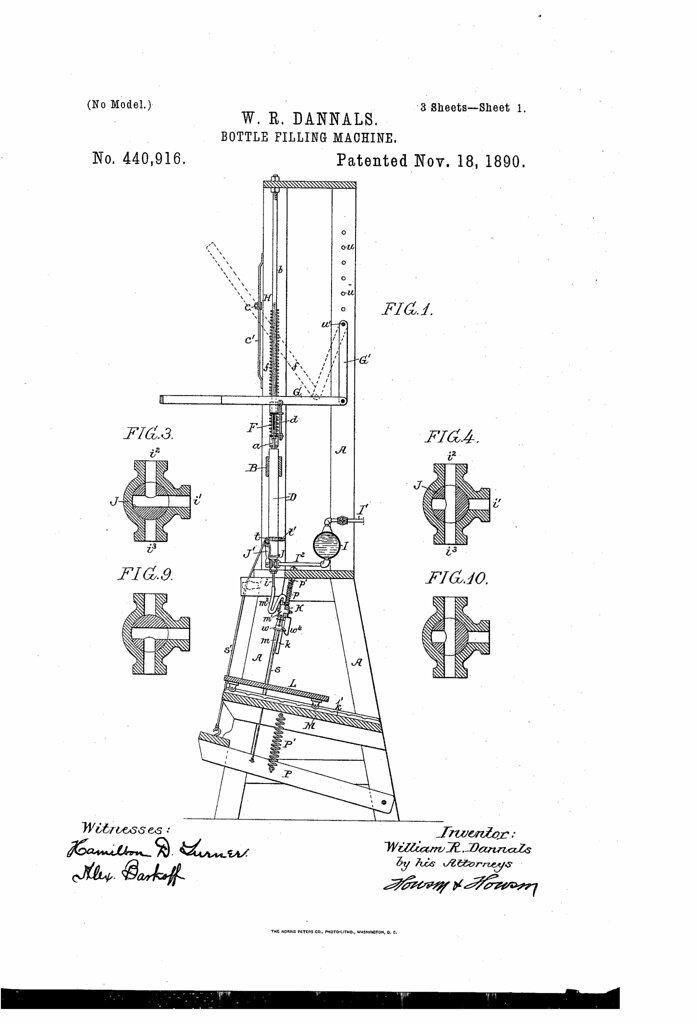
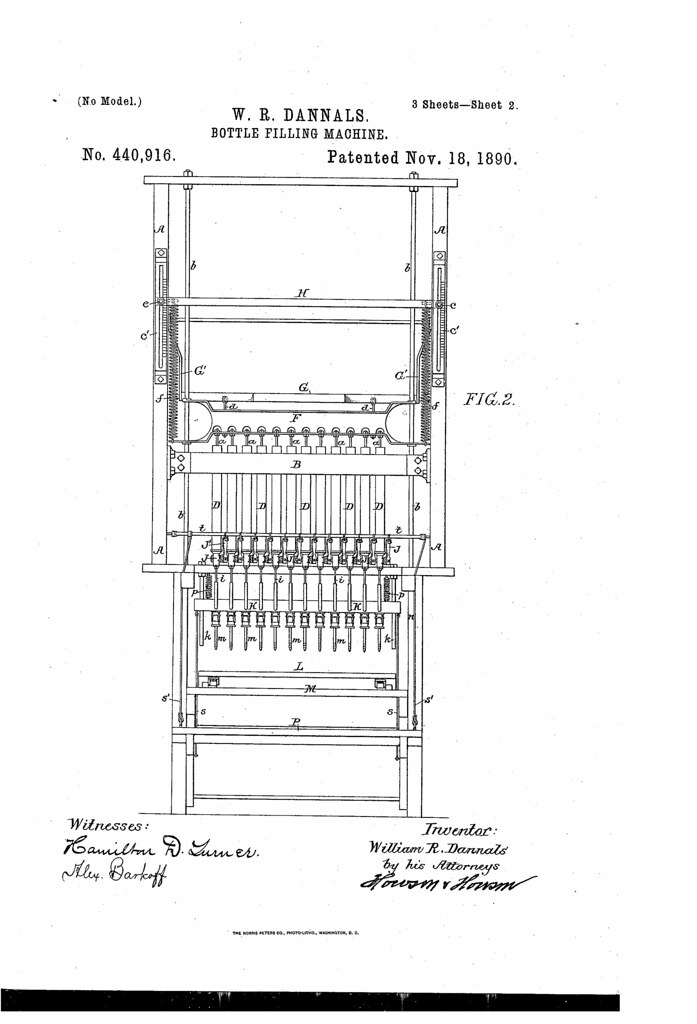
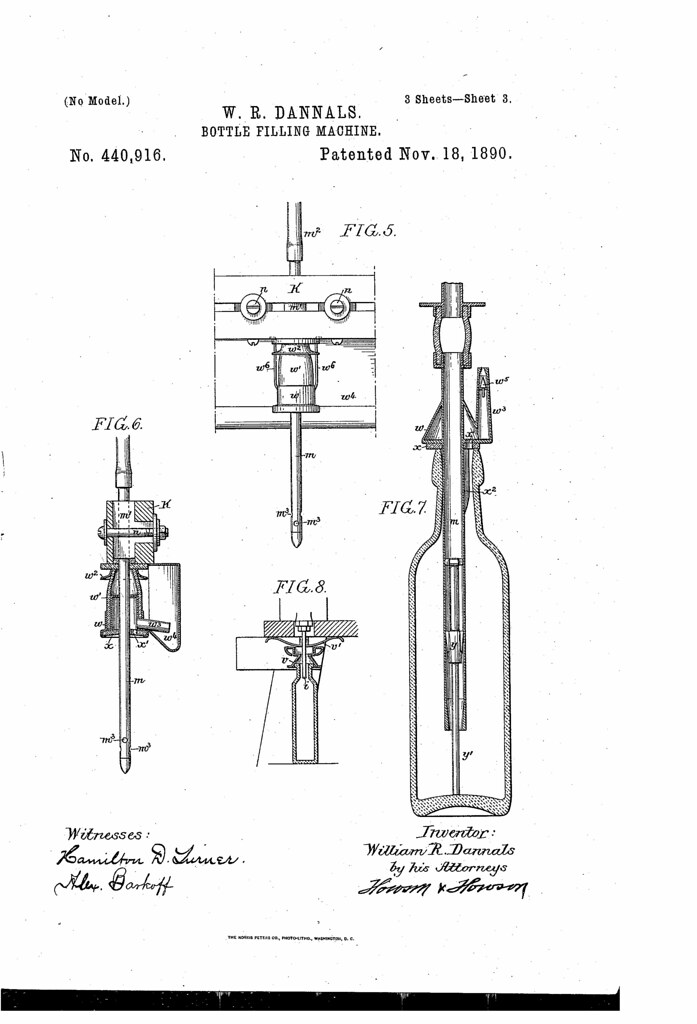
Today in 1890, US Patent 440916 A was issued, an invention of William R. Dannals, for his “Bottle Filling Machine.” There’s no Abstract, although in the description it includes these claims:

My invention relates to that class of bottle filling machines in which a series of bottles are filled at one time, my invention comprising certain details in construction of the machine, as fully described and claimed hereinafter, with a view of simplifying said construction and insuring a rapid and accurate filling of the bottles.

US440916-0
US440916-1
US440916-2

Filed Under: Beers, Breweries, Just For Fun, Politics & Law, Related Pleasures Tagged With: Bottles, Brewing Equipment, History, Law, Patent

« Previous Page
Next Page »

Find Something

Northern California Breweries

Please consider purchasing my latest book, California Breweries North, available from Amazon, or ask for it at your local bookstore.

Recent Comments

  • Bob Paolino on Beer Birthday: Grant Johnston
  • Gambrinus on Historic Beer Birthday: A.J. Houghton
  • Ernie Dewing on Historic Beer Birthday: Charles William Bergner 
  • Steve 'Pudgy' De Rose on Historic Beer Birthday: Jacob Schmidt
  • Jay Brooks on Beer Birthday: Bill Owens

Recent Posts

  • Beer In Ads #5257: Dessower Schlossbrauerei Bockbier June 2, 2026
  • Historic Beer Birthday: Thomas Hardy June 2, 2026
  • Beer Birthday: Menno Olivier June 2, 2026
  • Beer Birthday: Tyler Smith June 2, 2026
  • Beer Birthday: Bob Townsend June 2, 2026

BBB Archives

Feedback

Head Quarter
This site is hosted and maintained by H25Q.dev. Any questions or comments for the webmaster can be directed here.