Brookston Beer Bulletin

Jay R. Brooks on Beer

  • Home
  • About
  • Editorial
  • Birthdays
  • Art & Beer

Socialize

  • Dribbble
  • Email
  • Facebook
  • Flickr
  • GitHub
  • Instagram
  • LinkedIn
  • Pinterest
  • RSS
  • Twitter
  • YouTube

Powered by Genesis

Alcohol Advertising And Reality

January 25, 2016 By Jay Brooks

underage-drinking
Recently the prohibitionist group MADD published a blog post entitled Alcohol Advertisements And Our Kids that’s rife with propaganda, inaccuracies and unfounded statements. Surprised? No, not really. It’s about as self-serving as you’d expect.

It begins by touting proposed “new alcohol advertising guidelines, based on findings by researchers at Johns Hopkins Bloomberg School of Public Health.” Of course one of the “study’s” authors, David Jernigan, is the Director of the notoriously anti-alcohol Center on Alcohol Marketing and Youth (CAMY), funded by the Centers for Disease Control and Prevention Behavior and Society at the Johns Hopkins Bloomberg School of Public Health. Jerigan was also the author of this travesty: Bud Blamed In Absurd E.R. Visit Study. So this is a perfect example of the tactics of modern prohibitionist propaganda. One group does a dodgy “study” and another — in this case MADD — takes it and passes it along as unbiased scientific proof of their agenda. This tactic is leading to a crisis of confidence in journals, which I wrote about previously in The Credibility Crisis Of Science Journals.
beer-on-tv

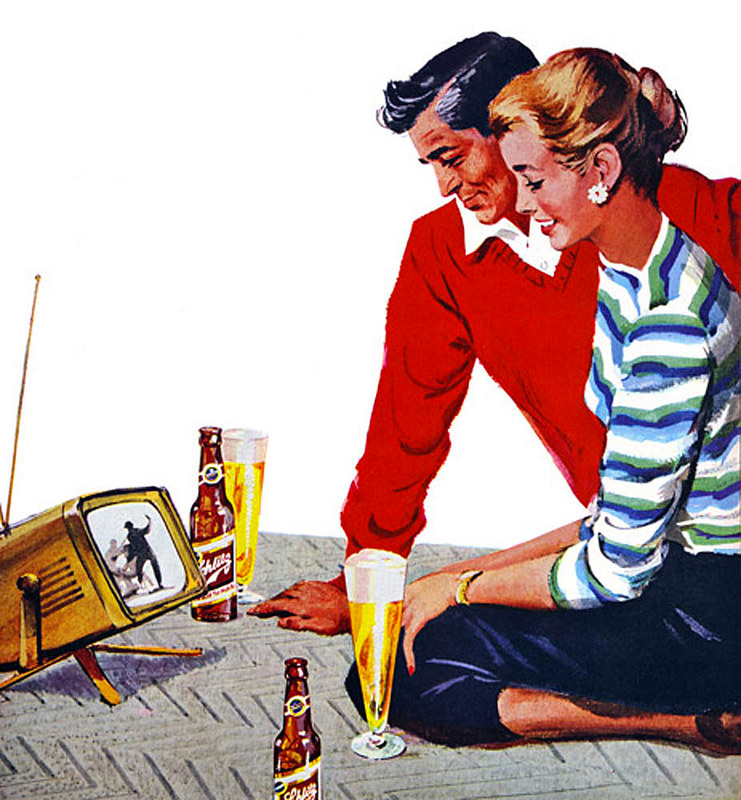
This so-called report, which is actually called The Potential Impact of a “No-Buy” List on Youth Exposure to Alcohol Advertising on Cable Television. MADD and the propagandist’s claim that they “could dramatically reduce the number of alcohol ads viewed by children – if advertisers follow them,” which is another way of stamping their feet and saying do it our way. This “study” found that “[y]outh were exposed to 15.1 billion noncompliant advertising impressions from 2005 to 2012, mostly on cable television.” But so what? What does that even mean? Fifteen billion is a big number, so it sounds scary. But that’s a total number over eight years, or 2,922 days. Which is about 5.2 million ads each day. Still sounds like a lot. But there are almost 1,800 commercial television stations in the U.S. alone, as of 2014. That’s roughly 2,871 ads per station per day.

But how does that number compare to reality? Over a twenty-four hour period, using an average of 15 minutes of advertising per hour (it varies, though cable tends to be higher than broadcast television) that would be 360 minutes of ads (or 6 hours). Assuming an average of 30 seconds per ad, that would be 720 ads per day, per station. So for all 1800 stations that would be 1.3 million ads per day. TOTAL! Yet this “study” is claiming almost 2,900 “noncompliant advertising impressions” — meaning alcohol ads they don’t like — per station per day and 5.2 million each day. There’s some pretty fuzzy math.

Even if my averages, which seem reasonable from the data I found — from generally reputable online sources — were off by a lot (and I rounded up in the so-called study’s favor in every instance) their numbers seem impossible. And don’t forget my numbers, which are orders of magnitude less than their numbers are for ALL advertising while for the study’s numbers — which they’re claiming are not even all alcohol ads — but all alcohol ads that they consider don’t comply with current advertising guidelines for alcohol. And that those “noncompliant” beer and alcohol ads consist of roughly four times the total of all television advertising. Hmm. So that seems reasonable. Here’s how they claim to come about their numbers.

Data source
Television advertising data for the years 2005–2012 were licensed from Nielsen (The Nielsen Company, New York, NY) for all alcoholic beverage types in Nielsen’s alcohol category (beer, distilled spirits, alcopops or sweetened alcoholic beverages that taste like soda pop and contain malt-based alcohol, and wine). The details of our methods for processing and analyzing Nielsen data have been reported previously (Center on Alcohol Marketing and Youth, 2010). Briefly, occurrence and audience data were downloaded from Nielsen Monitor-Plus; coded to classify advertisements as product, “responsibility,” or other types of advertisements; standardized regarding brand names and alcohol types according to Impact Databank, a leading alcohol industry marketing research firm; and organized into a Microsoft SQL*SERVER database (Microsoft Corporation, Redmond, WA). This study used data on 2,461,999 alcohol product advertisements on network, cable, and local television from 2005 through 2012, with a particular focus on 1,452,661 (59% of the total) cable television advertisements.

But they also claim that “one in eight alcohol commercials were seen by children. No, make that absorbed by children. Not to mention these occurrences were already not in compliance with the alcohol industry’s previous self-regulatory advertising guidelines.” But let’s break that down. Even if their fantastic numbers were true, how exactly can they claim that the kids actually saw the ads. Kids don’t watch every channel, all the time (nobody does) so unless I’m missing something they seem to be saying all the ads shown are actually seen by these kids, which of course is utter nonsense. But they don’t say just that, they go even farther, saying these kids “absorbed” them. That makes these the most impressive children in the history of mankind, paying such close attention to these commercials, riveted to their televisions, soaking it all up.

Of course, that’s just, at best, opportunities for a kid to see an ad. No child is seeing anywhere near as many ads as their numbers suggest. The window of times when kids watch is probably not twenty-four hours, and they don’t appear to have even taken that into account. No cable company or satellite provider includes all 1800 American commercial stations, more like 500 or so, further greatly reducing the opportunity for so many ads to be actually seen, let alone absorbed.

But we’re not done yet. They defined “underage audience” as “ages 2–20 years as a percentage of the total.” But how many two years old have a clue about what they’re seeing on television apart from purple dinosaurs and Mickey’s Playhouse? At what age do kids even pay attention to ads not for toys or (maybe) fast food? It’s certainly not two, which further erodes the numbers they’re relying on and reporting. No matter where you turn, it doesn’t add up.

Also, in the data source they state that they “used data on 2,461,999 alcohol product advertisements on network, cable, and local television from 2005 through 2012,” adding that they had “a particular focus on 1,452,661 (59% of the total) cable television advertisements.” So why then do they seem surprised and feel the need to point out that their “study” found that the ads kids saw were “mostly on cable television?” If they had “a particular focus” on cable, that would be expected, wouldn’t it?

But MADD’s not done with the spin. They also claim that all of these noncompliant ads (or maybe all the ads) “painted a picture of alcohol as fun and frivolous that children couldn’t help but take in, sending a dangerous and deadly message to our kids. Have no doubt, these ads played a role in shaping attitudes toward drinking and contributed to the number of underage drinkers and underage drunk drivers.”

Horseshit. First of all, beer most definitely can be “fun and frivolous.” Do you really think people would keep drinking if they’re weren’t having a good time? People are not automatically addicted with the first sip of alcohol that touches their lips, despite some prohibitionists actually seeming to believe just that. Undoubtedly, a small minority of people will develop some problem with their own control, no matter the cause. But here’s the thing. Automobile ads show new cars as fun and frivolous, too. But kids aren’t ignoring the fact that they can’t drive until they’re sixteen and going for joyrides or stealing cars as soon as their parents aren’t looking. There’s no epidemic of roving middle school gangs of car thieves taken in by how much fun it looks to drive a car, as shown in the countless television ads for all the shiny new cars. Context matters. The so-called study also ignores parents watching these ads with their parents, who in many cases are probably providing context. My kids are constantly bombarded with beer, and yet there is no confusion in our household that they’re not allowed to drink until they turn 21. We reinforce that, and they understand it.

But looking again at the so-called study as a whole, it’s clear that it’s less a scientific paper and more proselytizing propaganda, with over two-thirds of the text devoted to analysis, discussion and, primarily, their recommendations, meaning their excuse to tell the alcohol industry how they think they should advertise. This is the tactic that prohibitionists used to starting attacking alcohol companies the very minute that prohibition was repealed in 1933. They didn’t go away, they licked their wounds, and then changed their approach. And one of their main objectives was to restrict advertising in order to attack alcohol sales using advertising codes and other laws, usually citing their concern for “the children” to conceal their true purpose. Because we’ve all been watching alcohol advertising since we were kids, too, since almost no one alive today was born (only about 1.5% of today’s population) before prohibition ended. And a majority of us grew into responsible adults, and in fact actual consumption of alcohol has been dropping for decades, meaning at least the advertising hasn’t been turning us all into alcoholic monsters. There are, of course, many other factors, but just in terms of their general argument it makes little sense. And frankly, before prohibition there was no television advertising whatsoever, for the obvious reason there was no commercial television, and yet per capita alcohol consumption before and after prohibition is roughly the same, although it has declined to below pre-prohibition levels ever since 1980. So with or without advertising, overall per capita consumption has been roughly constant.

But as you may have noticed, MADD used the headline “Alcohol Advertisements And Our Kids,” invoking the “it’s for the children” strategy. This is such a textbook case of propaganda it’s quite amazing how much of it is twisted and misleading. After all of that, MADD concludes by selling their own program, the “Power of Parents®, which humorously enough they’ve even trademarked. They want to “help” parents by telling them what propaganda to brainwash their children with, even offering a “parent handbook.” It’s free, if you consider signing up for an endless stream of e-mails filled with more propaganda and pleas for donations exacting no cost to you. Just say know.
the-ultimate-pairing-tv-and-beer

Filed Under: Editorial, Politics & Law Tagged With: Advertising, Prohibitionists

Patent No. 3231154A: Siphon Device For Beer Kegs

January 25, 2016 By Jay Brooks

patent-logo
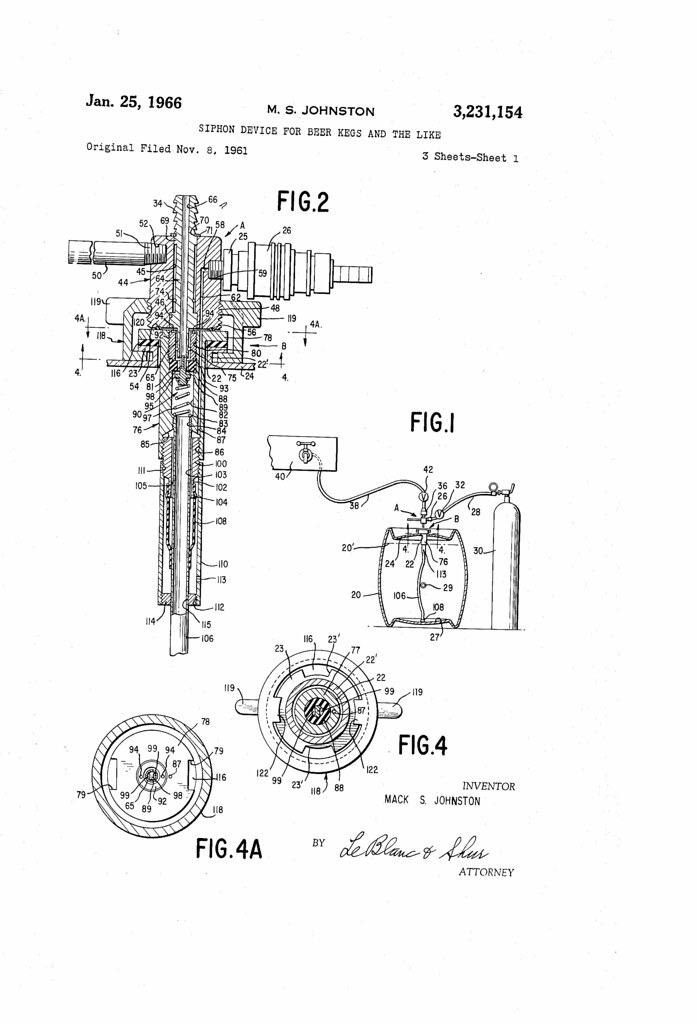
Today in 1966, US Patent 3231154 A was issued, an invention of Mack S. Johnston, for his “Siphon Device For Beer Kegs and the Like.” There’s no Abstract, although in the description it includes this summary:

The present invention relates to a new improved gas pressure siphon device for drawing fluid such as beer from containers such as beer kegs or barrels, using a gas to drive” the fluid from the container. More especially, the present invention relates to a new improved siphon device comprising a portion which remains in the keg at all times, whereby the keg is constantly sealed, and another portion which is permanently connected to a dispenser (as in a restaurant) and can be readily connected to’ the keg portion by a bar tender so that the dispensing siphon is automatically in operating condition.

US3231154-0
US3231154-1
US3231154-2

Filed Under: Beers, Just For Fun, Politics & Law, Related Pleasures Tagged With: History, Kegs, Law, Patent

Beer In Ads #1800: My Pet Goat Bockbier

January 24, 2016 By Jay Brooks


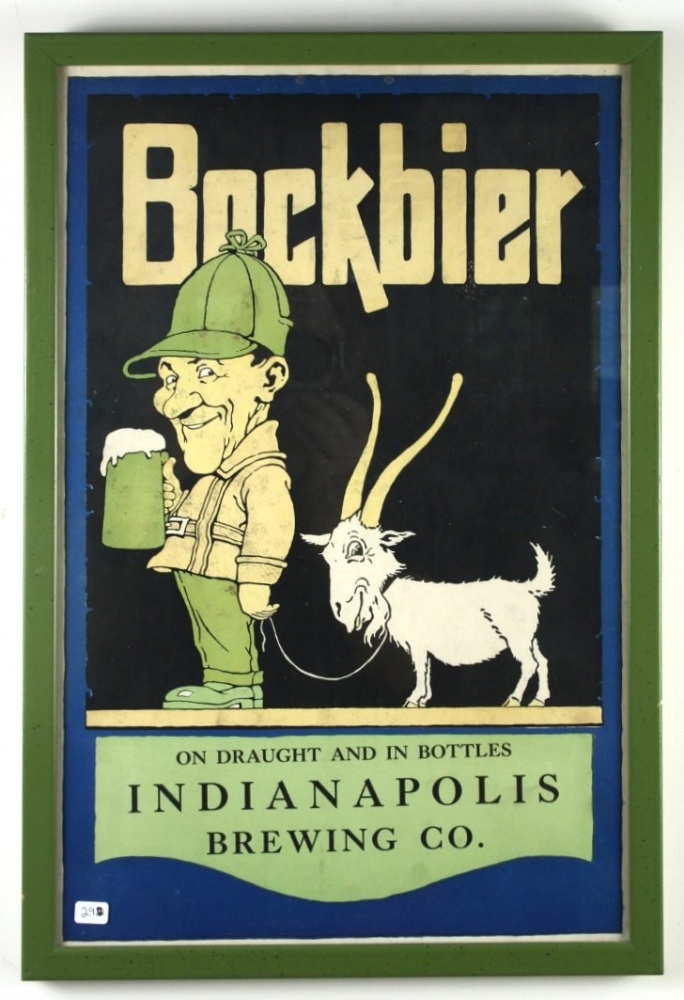
Sunday’s ad is for Bock Beer, from sometime before prohibition. It’s for the Bockbier from the Indianapolis Brewing Co. It appears more modern to me, especially because of the font, but who knows. It’s a funny little cartoon, but I do love the expression on both the hunter and the goat. They always say that pet owners resemble their animals

Bockbier-Signs-Pre-Pro-Indianapolis-Brewing-Co-P-Lieber-Brewery

Filed Under: Art & Beer, Beers Tagged With: Advertising, History

A Beer Can Timeline

January 24, 2016 By Jay Brooks

beer-can-beer
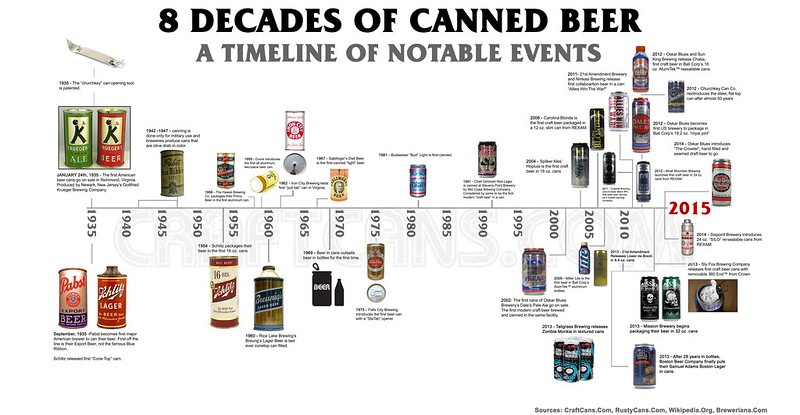
Today is Beer Can Appreciation Day, because on this day in 1935, the first cans of beer were sold. Cans of “Krueger Cream Ale” were sold by the Kruger Brewing Company in Richmond, Virginia, with other breweries following suit the very same year. Here’s some fun resources about the history of the beer can. First, there’s a History of the Can (that’s all cans) while Rusty Cans has a more beer-centric timeline. Keglined has An Illustrated History of the American Beer Can and Timeline has another history that goes back to ancient times. And CraftCans has this infographic timeline showing “8 Decades of Canned Beer.”

cantimeline15big
Click here to see the timeline full size.

Filed Under: Beers, Just For Fun Tagged With: Cans, History, Packaging

Patent No. 5384135A: Process For The Manufacture Of An Alcohol-Free Beer Having The Organoleptic Properties Of A Lager Type Pale Beer

January 24, 2016 By Jay Brooks

patent-logo
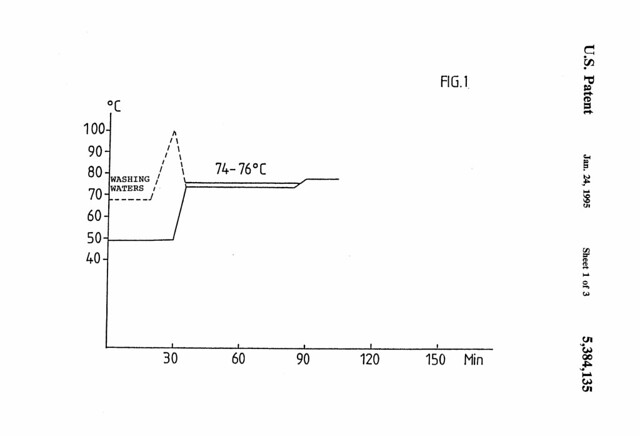
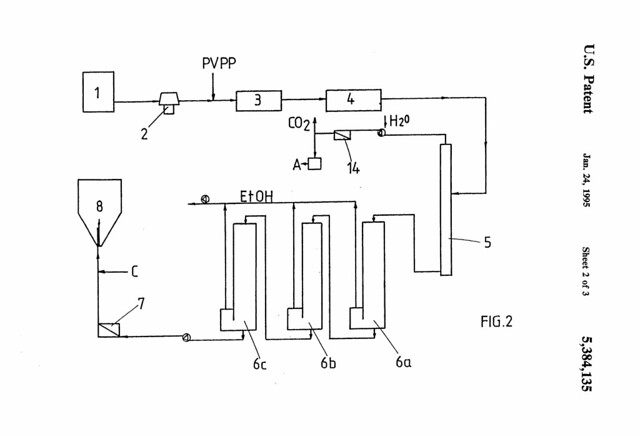
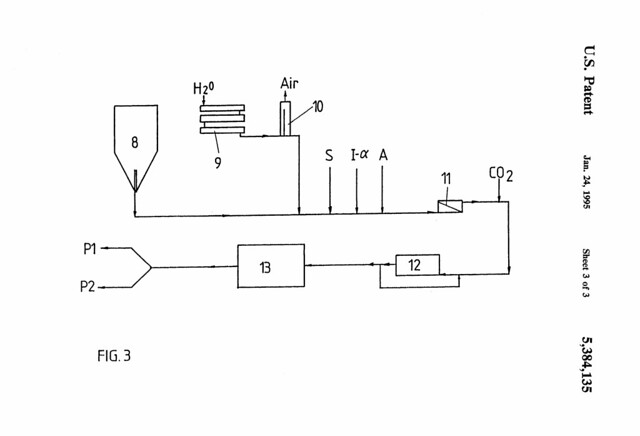
Today in 1995, US Patent 5384135 A was issued, an invention of Henri J. J. Caluwaerts, assigned to Brasserie Du Cardinal Fribourg S.A., for his “Process for the Manufacture of an Alcohol-Free Beer Having the Organoleptic Properties of a Lager Type Pale Beer.” Here’s the Abstract:

A process for the manufacture of an alcohol-free pale beer (AFB) whose organoleptic properties are those of a lager beer, comprising the manufacture of a lager type alcoholic pale beer from pale malts containing 20 to 30% of brown malts, mashed to obtain a wort whose attenuation is of the order of 50% and the dealcoholization of the alcoholic pale beer, by evaporation, under high vacuum, of at least about 50% of the volume of this beer. The concentrate obtained by evaporation may be rediluted with water, flavored and sweetened until a concentration of 4° Brix is obtained in order to produce the AFB. The concentrate may also be subjected to a second vacuum evaporation at a temperature of less than 60° C. until a concentrate assaying between 45° and 65° Brix is obtained which is storable for several months before the redilution into an AFB.

US5384135-1
US5384135-2
US5384135-3

Filed Under: Beers, Breweries, Just For Fun, Politics & Law, Related Pleasures Tagged With: History, Law, Non-Alcoholic, Patent, Science of Brewing

Patent No. 4070133A: Pump Compressor Unit For Use With Pumping Draft Beer

January 24, 2016 By Jay Brooks

patent-logo
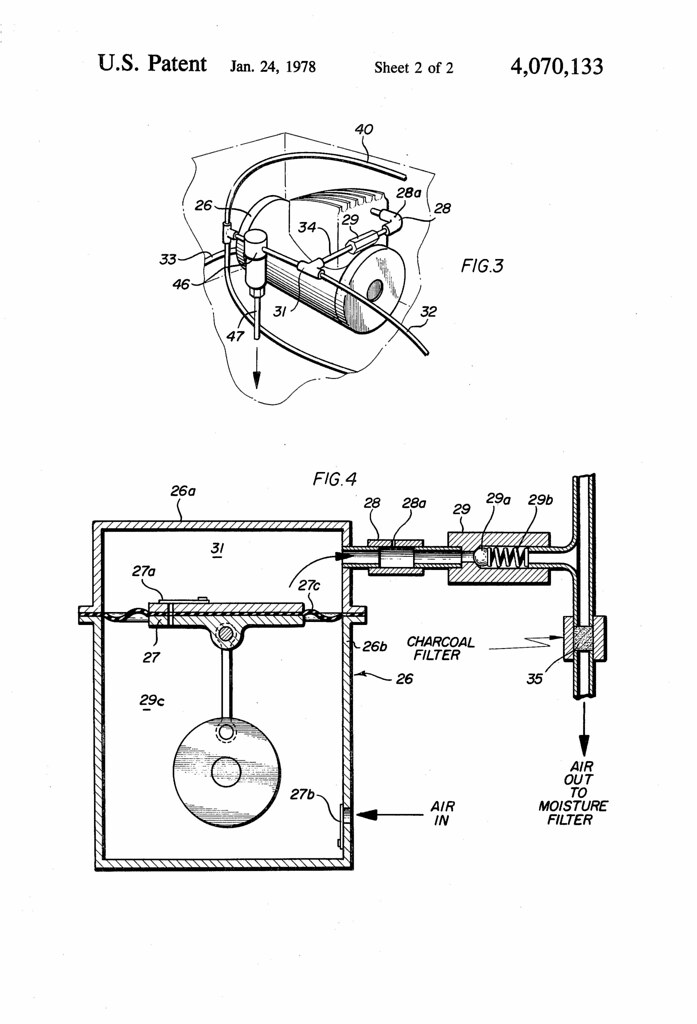
Today in 1978, US Patent 4070133 A was issued, an invention of Homer McCormick, for his “Pump Compressor Unit for Use with Pumping Draft Beer.” Here’s the Abstract:

An air supply unit provides high pressure moisture-free air in the dispensing of beverages. Components are housed in a portable cabinet and include a compressor and an automatic air pressure switch to switch on the compressor and begin air flow when system pressure falls below a pre-set level. A check valve is located in the high pressure line adjacent the compressor to maintain line pressure when the compressor is off. A small air bleed opening is located between the check valve and the compressor to allow compressed air to move through the air line yet bleed residual pressurized air to prevent stalling of the compressor which could occur if high pressure air was present in the compressor when it is restarted. The high pressure air discharge line includes a dump-check valve to permit high pressure air to be manually bled from the system before the air lines are disconnected and to prevent back flow of fluid into the air supply unit.

US4070133-1
US4070133-2

Filed Under: Beers, Just For Fun, Politics & Law, Related Pleasures Tagged With: Brewing Equipment, History, Kegs, Law, Patent

Beer In Ads #1799: The Bock Goddess

January 23, 2016 By Jay Brooks


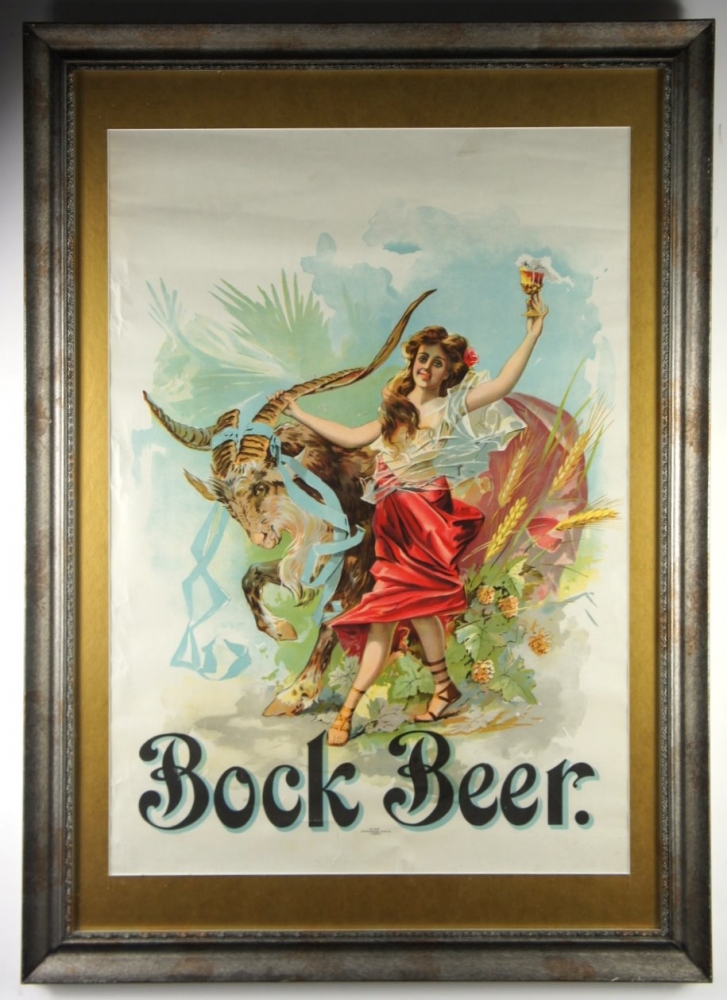
Saturday’s ad is for Bock Beer, again from who knows when. A goddess (just a guess, but look at how she’s dressed!) is walking her friend, the bock goat, through idyllic landscape of blue clouds and hazy green smudges, holding her beer to the heavens. The foreground may be a field of barley and/or hops and the goat is festooned in blue ribbons. Maybe it’s a parade?

Bock-Beer-Sample-140-Signs-Pre-Pro-Northwestern-Lithography-Co

Filed Under: Art & Beer, Beers Tagged With: Advertising, History

Patent No. 1015585A: Keg Rinser

January 23, 2016 By Jay Brooks

patent-logo
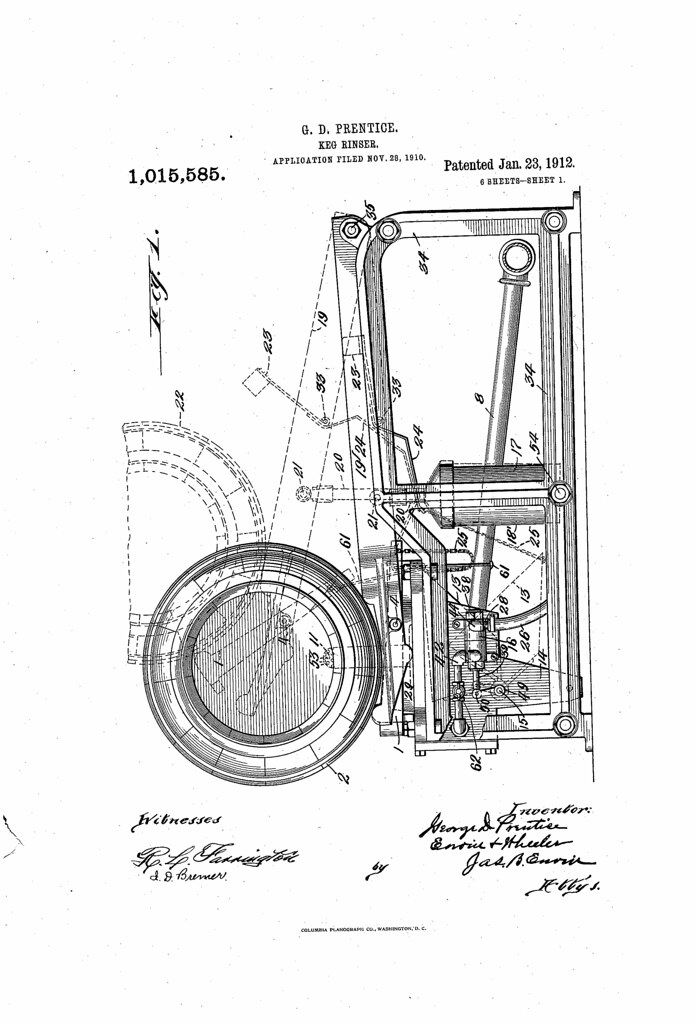
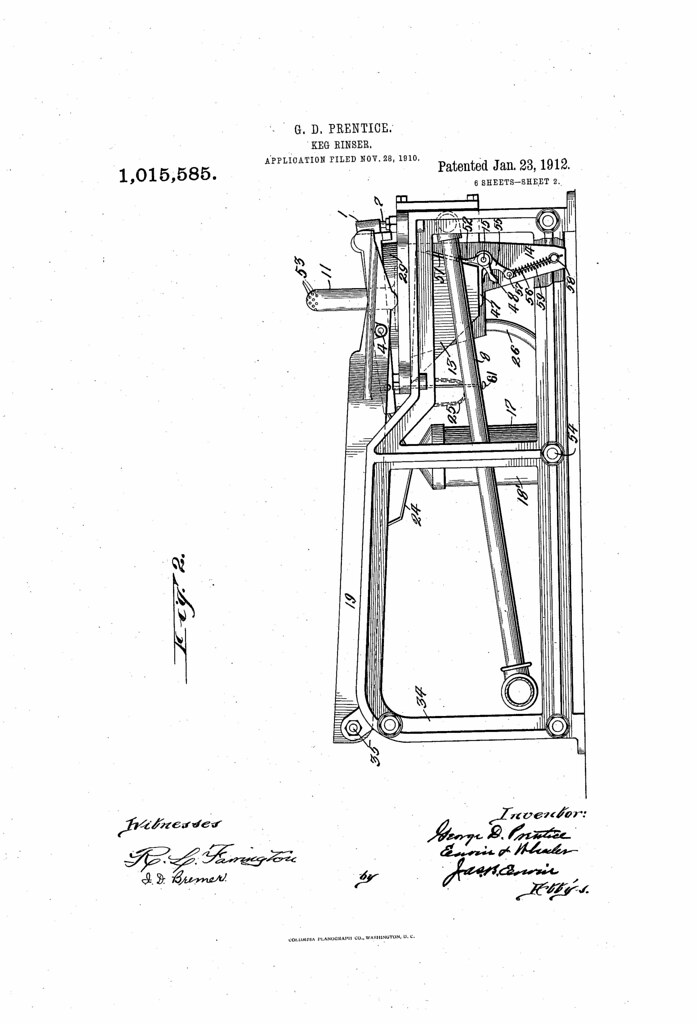
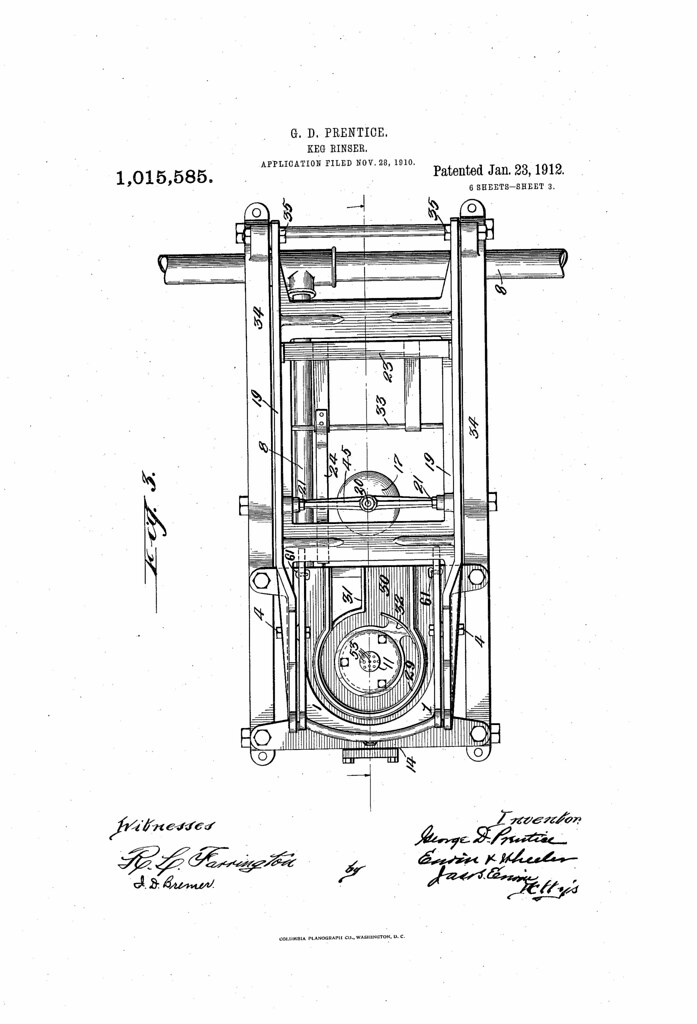
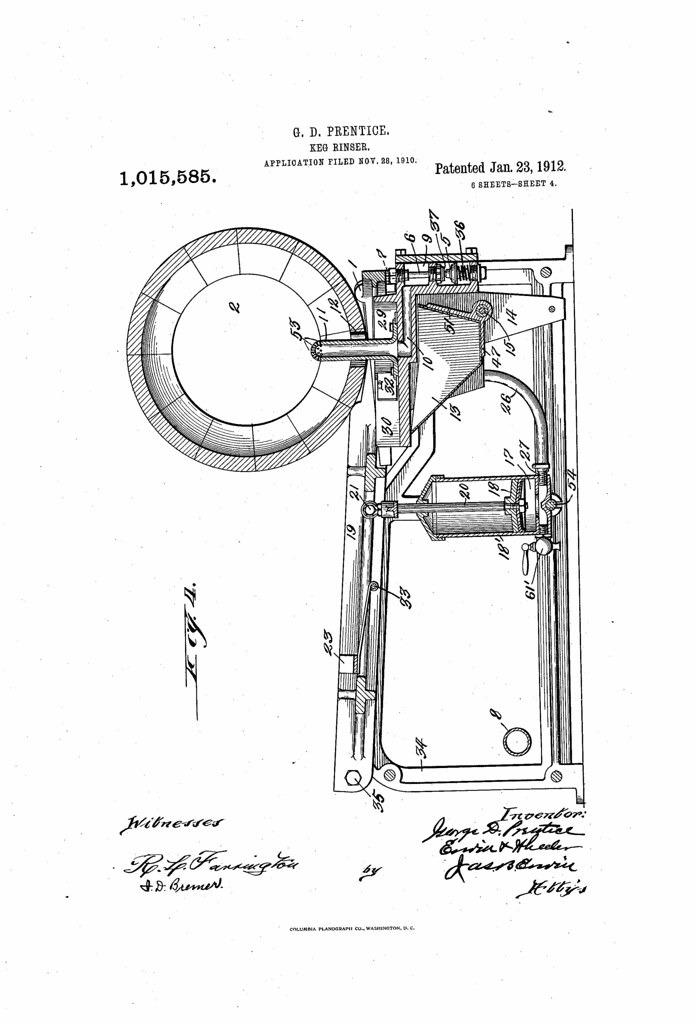
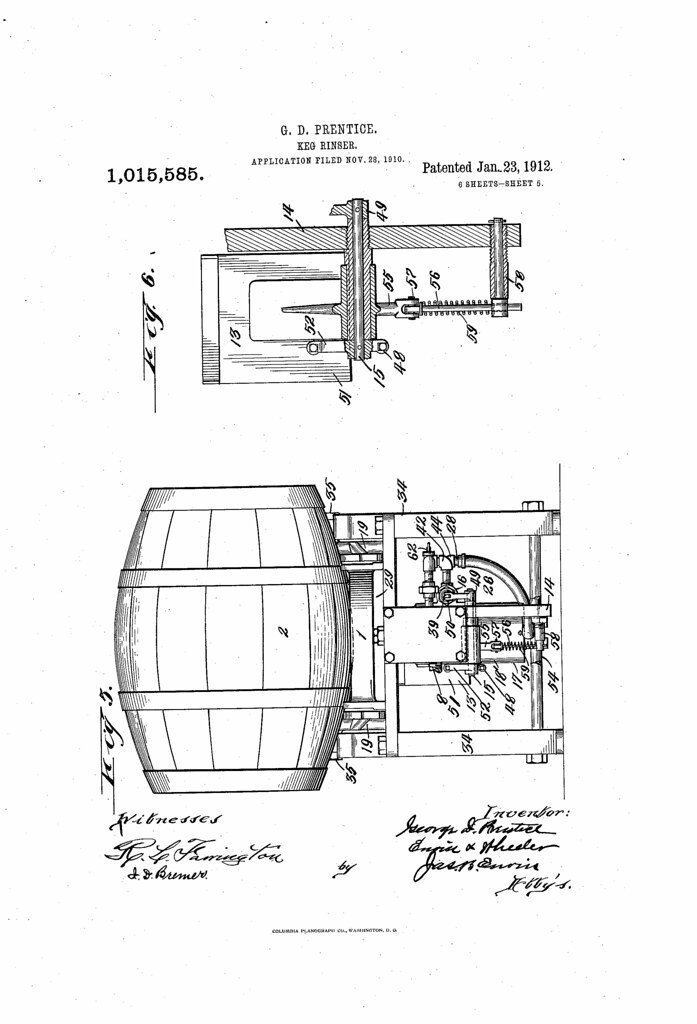
Today in 1912, US Patent 1015585 A was issued, an invention of George D. Prentice, for his “Keg Rinser.” There’s no Abstract, although in the description it includes this summary:

My invention relates to improvements in machines for rinsing kegs, and it pertains to that class which are adapted to be used with water under pressure.

The object of my invent-ion is to provide a machine by which a water controlling valve is automatically opened by the gravity of the keg to be rinsed, and the water supply is used for the two fold purpose of rinsing the kegs and removing them from the machine, whereby the operator has simply to place a”keg upon the machine when a water controlling valve will be automatically opened and the keg will be rinsed and automatically removed, whereby the manual labor of cleansing kegs is reduced to the minimum.

US1015585-0
US1015585-1
US1015585-2
US1015585-3
US1015585-4

Filed Under: Beers, Breweries, Just For Fun, Politics & Law, Related Pleasures Tagged With: Brewing Equipment, History, Kegs, Law, Patent

Patent No. 810745A: Method Of Pasteurizing Beer

January 23, 2016 By Jay Brooks

patent-logo
Today in 1906, US Patent 810745 A was issued, an invention of Hugo Gronwald, for his “Method of Pasteurizing Beer.” There’s no Abstract, although in the description it includes this summary:

I have invented a new and Improved Method of Pasteurizing Beer in Barrels, of which the following is a full, clear, and exact description.

The hitherto-known method of pasteurizing beer in the barrels in which it is to be transported had the disadvantage that when the barrels were provided with a separate expansion-chamber the natural carbonic acid contained in the beer was`partly lost and the germs or barm at times contained in this chamber could not be killed, so that the beer frequently overflowing into this chamber was not entirely free from germs, while when the necessary space for expansion was provided by not filling the barrel complete y it had to be filled up with beer from another source. These disadvantages are removed according to my improved method by dividing the quantity of beer required for completely filling the barrel between two connected vessels-namely, a lower detachable vessel, hereinafter called receiver, equal in capacity to the required space for expansion and a barrel communicating with and arranged above this vessel in such a manner that the receiver is completely filled, while in .the barrel an empty expansion-space is left equal to the capacity of’ the receiver. The beer is then pasteurized in the barrel and receiver and cooled in the usual way, after which the carbonic acid disengaged during the pasteurizing and which as risen into the. expansion-space in the barrel can be returned Without loss to the beer-‘for instance, by shaking the barrel. T he pasteurizing apparatus being then turned upside down, the beer runs into the barrel from the receiver, while the excess of carbonic acid mounts into the receiver, so that by this simple exchange of the contents of the vessels a filling up of the beer-barrel from another source is rendered unnecessary and loss of carbonic acid is avoided.

Various apparatus or plant may be used for carrying out my said method, provided the barrel and receiver are connected into a combined apparatus.

US810745-0

Filed Under: Beers, Breweries, Just For Fun, Politics & Law, Related Pleasures Tagged With: Brewing Equipment, History, Law, Patent, Science of Brewing

Beer In Ads 1798: Olympia Bock Beer

January 22, 2016 By Jay Brooks


Friday’s ad is for Olympia Bock Beer, from the Pilsen Brewing Co. of Chicago, Illinois. I think it’s from around 1910, though certainly before prohibition. The serving women depicted in the middle of the barrel includes some random oddness. On the tray she’s holding there’s two logo glasses, though they appear to be fairly small or short, that are garnished with something green. It would be weird for it to be hops, and the one on the right also looks a little like a leaping frog, though that makes no sense either. And given her pale complexion, she could be mistaken for a zombie.

Olympia-Bock-Beer-Signs-Pre-Pro-Pilsen-Brewing-Company_79964-1

Filed Under: Art & Beer, Beers Tagged With: Advertising, History

« Previous Page
Next Page »

Find Something

Northern California Breweries

Please consider purchasing my latest book, California Breweries North, available from Amazon, or ask for it at your local bookstore.

Recent Comments

  • Bob Paolino on Beer Birthday: Grant Johnston
  • Gambrinus on Historic Beer Birthday: A.J. Houghton
  • Ernie Dewing on Historic Beer Birthday: Charles William Bergner 
  • Steve 'Pudgy' De Rose on Historic Beer Birthday: Jacob Schmidt
  • Jay Brooks on Beer Birthday: Bill Owens

Recent Posts

  • Beer In Ads #5246: Bohn’s Bock Beer On Draught Today May 9, 2026
  • Beer Birthday: Chris Cramer May 9, 2026
  • Beer In Ads #5245: Wiedemann’s Brewing Bock Beer May 8, 2026
  • Beer Birthday: Dave Alexander May 8, 2026
  • Historic Beer Birthday: Emil Christian Hansen May 8, 2026

BBB Archives

Feedback

Head Quarter
This site is hosted and maintained by H25Q.dev. Any questions or comments for the webmaster can be directed here.