Brookston Beer Bulletin

Jay R. Brooks on Beer

  • Home
  • About
  • Editorial
  • Birthdays
  • Art & Beer

Socialize

  • Dribbble
  • Email
  • Facebook
  • Flickr
  • GitHub
  • Instagram
  • LinkedIn
  • Pinterest
  • RSS
  • Twitter
  • YouTube

Powered by Genesis

Craft Beer Product Segmentation 2015: A Tale Of Two Charts

November 20, 2015 By Jay Brooks

bubble-chart
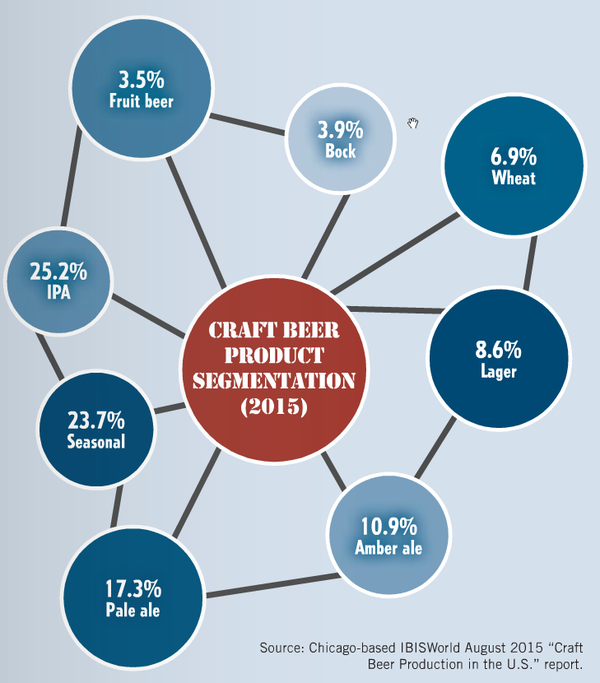
It was the best of charts, it was the worst of charts. So begins every great story. This made me laugh like the Dickens this morning, as fellow beer writer Bryan Roth tweeted a chart showing “Craft Production in the U.S.” apparently as of August 2015.
craft-beer-product-segmentation-2015-A

The data comes from IBISWorld, a company that identifies themselves as “one of the world’s leading publishers of business intelligence, specializing in Industry research and Procurement research.” Their website shows that they have offices in Los Angeles, New York, Melbourne, London and Beijing, although the chart claims they’re “Chicago-based.” The report is entitled “Craft Beer Production in the US: Market Research Report,” and was published in August of this year. If you want to buy yourself a copy, it costs between $925 and $1,595, depending on which purchase option you choose.

Hopefully, the chart was not created by IBISWorld, because besides mis-identifying where the company is located, as Roth points out, “the graphic designer who created alternating sized circles not dependent on their % share is bad at their job.” It’s a terrible chart, on so many levels. First, why use “stencil” as the font for the title in the red center circle? Why are the outer circles different shades of blue, for no apparent rhyme or reason. There’s no discernible pattern to that decision. Bock is the lightest color, at 3.9%, followed by Amber Ale at 10.9%, so you might be tempted to think the color is dependent on market share, lighter for lower and darker for higher percentages. But no, fruit beer is the lowest, at 3.5%, and is medium blue, while Lager, at only 8.6%, is the darkest blue on the chart.

Why are the black lines not emanating from the center of the middle? Instead, it looks like one of the webs from the 1980s video game “Tempest.” They all meet in an outer ring, too, except for Bock and Wheat Beer, which are curiously left hanging. But most egregious, the size of the circles are not even close to being proportional to the percentages expressed in them. The sizes appear to be nothing more than random, just like the color choices. So at first glance, it makes no sense and is, at best, confusing. At worst, it looks like it was designed by a five-year old, and frankly that may be overly insulting to toddlers.

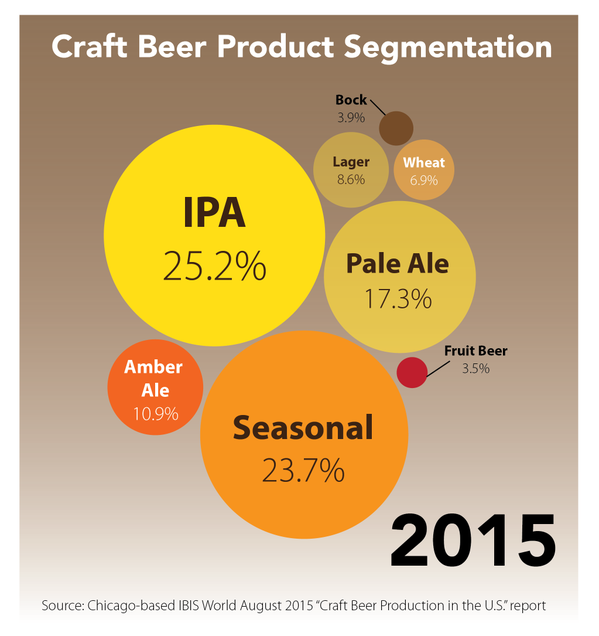
Carla Jean Lauter, better known by her nom nom de plume, The Beer Babe, was similarly bothered by the chart, but decided to do something about it. She “fixed” it, making the bubbles proportional to their market share so the chart is easier to read and better represents the reality it’s trying to convey. She also chose the colors of the bubbles to be representative of the beer color of each style, even choosing pumpkin color for seasonal. As Lauter tweeted when she posted her version of the chart, “I feel better now.” Weirdly, so do I. It’s so much better.
craft-beer-product-segmentation-2015-B

Filed Under: Beers, Editorial, Just For Fun, News, Related Pleasures Tagged With: Beer Styles, Business, Statistics

Beer In Ads #1734: Brand

November 19, 2015 By Jay Brooks


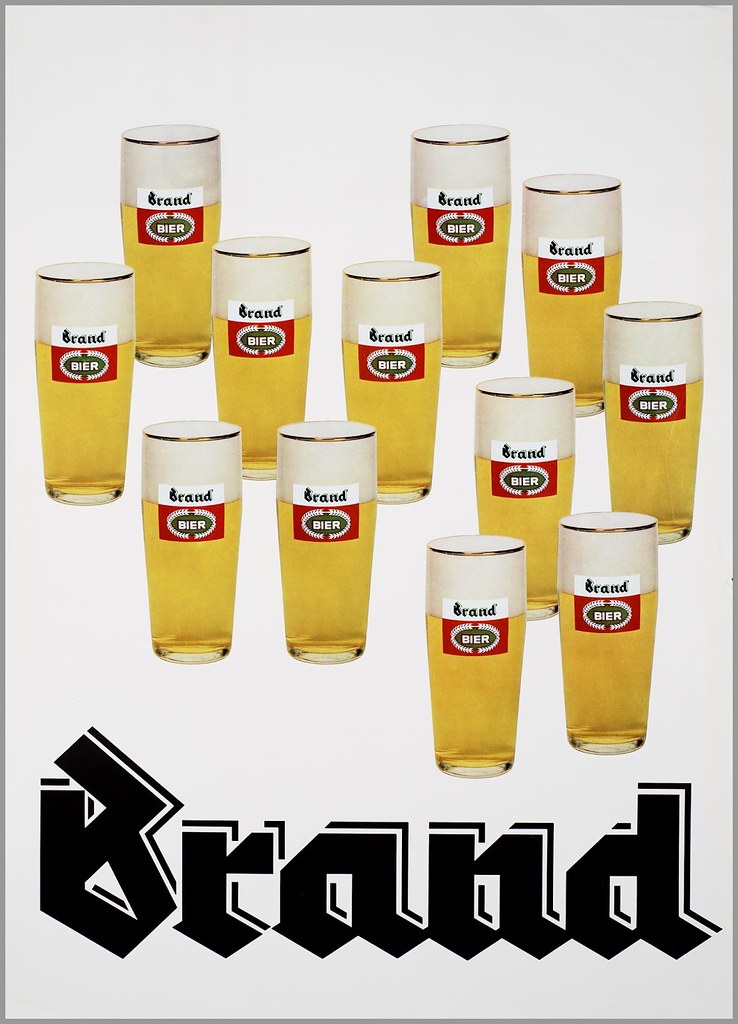
Thursday’s ad is for Brand Bier, which was established in 1430. If you’re going to pick a brand name for your beer, Brand seems like a pretty good way to go. Brand Bier is still a going concern, and is the oldest brewer in the Netherlands. As for this ad, I’m not sure when it is from, though given how generic it is, it could really be from any time. I’m also not sure if the dozen full beer glasses are meant to spell out anything or otherwise represent some shape.

brand

Filed Under: Art & Beer, Beers Tagged With: Advertising, History, The Netherlands

Patent No. 8584665B2: Brewery Plant And Method

November 19, 2015 By Jay Brooks

patent-logo
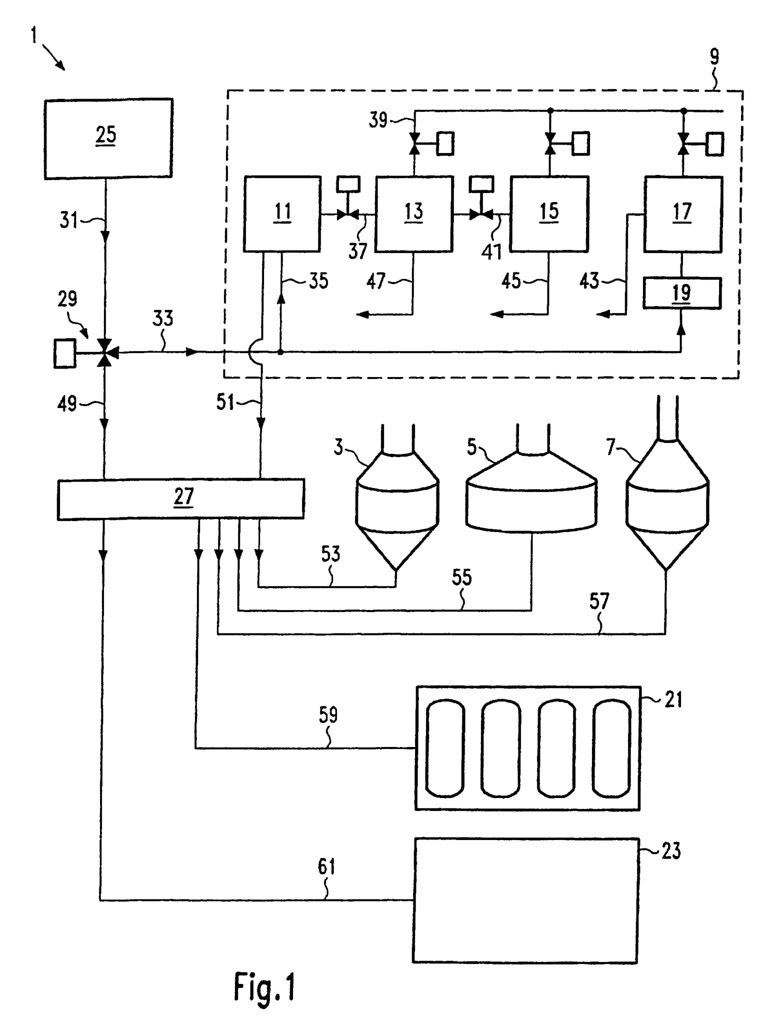
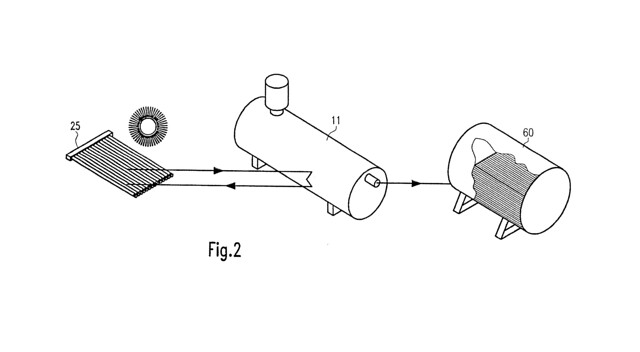
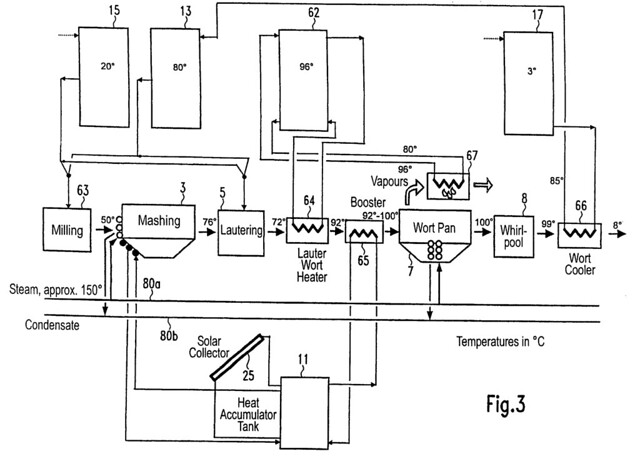
Today in 2013, US Patent 8584665 B2 was issued, an invention of Kurt Stippler and Klaus-Karl Wasmuht, assigned to Krones Ag, for his “Brewery Plant and Method.” Here’s the Abstract:

A brewery plant with at least one mash container, a lauter tun, a wort pan and a water housing, wherein at least part of the thermal energy requirement of the brewery is covered with solar collectors, and the solar collectors directly or indirectly heat a fluid. Also, a brewing method where the thermal energy requirement for at least of a part of the brewing process stages is at least partially covered with a fluid heated directly or indirectly by solar collectors.

Untitled
Untitled
Untitled
Untitled
Untitled
Untitled
Untitled

Filed Under: Beers, Breweries, Just For Fun, Related Pleasures Tagged With: Brewing Equipment, History, Law, Patent, Science of Brewing

Home For The Holidays Session

November 19, 2015 By Jay Brooks

session-the
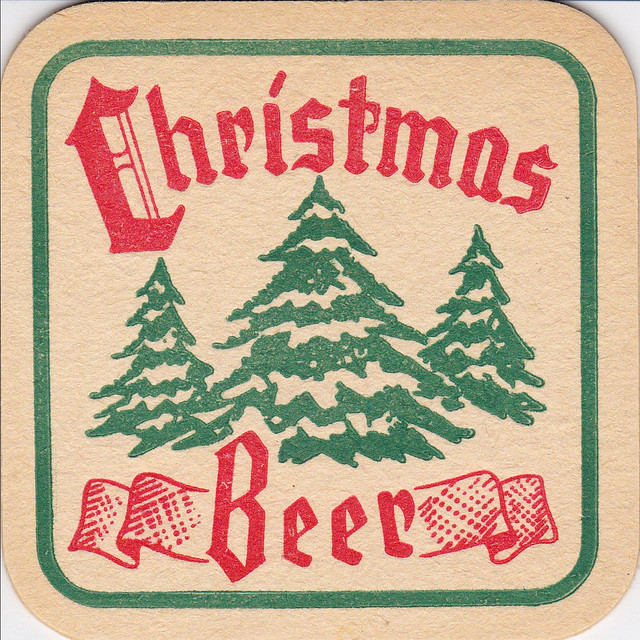
For our 106th Session next month our host will be yours truly, who writes this here Brookston Beer Bulletin. For my topic, I’ve chosen Holiday Beers, by which I mean this.

For seasonal beers, the Solstice/Christmas/Hanukkah/Kwanza/Mithra time of the year is my mostest favorite. This past weekend, we had our fifteenth annual holiday beer tasting for the Celebrator Beer News, and sampled 42 of this year’s Christmas beers. Here’s how I’ve described them in the introduction of the tasting notes for the holiday edition each year:

Holiday beers are by design no one style, but are a chance for individual breweries to let their talent and imagination run wild. At the holidays, when people stop their busy lives and share some precious time with family and friends, the beer they choose should be equally as special as the time they’re sharing. So a holiday beer should be made to impress, to wow its audience, to stand out. That’s the only criteria that should be met by one of these beers. Will it impress? Different breweries, thankfully, do this in many, many different ways. Some use unusual spices or fruits, some use special malts or hops, some use other uncommon ingredients like spruce or rye, and some make a style that itself is unusual. So there’s nothing to tie these beers together apart from their celebration of the season. That makes it both a delight and a challenge to judge. Ultimately, perhaps more than any other tasting, these beers are simply a matter of what you like and our judging is a matter of what we like. So try them and discover for yourself the many flavors of this holiday season.

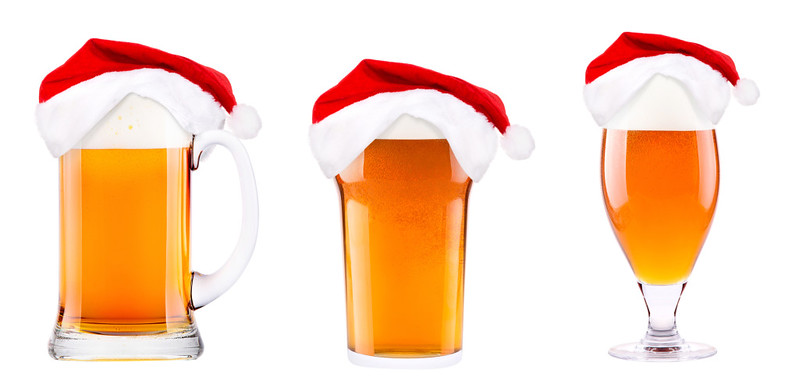
Beer and hat of Santa Claus

As I said, I really enjoy the variety of holiday and winter seasonals, and they often seem especially well-suited to colder weather. I don’t really care what they’re Celebrating, be it:
Christmas
Miller-xmas-beer-1

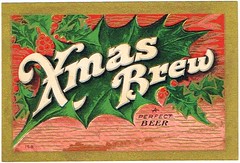
Xmas
Xmas-Brew

Chanukah
CHAN2015_TAP

Winter Solstice
AVBC-winter-solstice

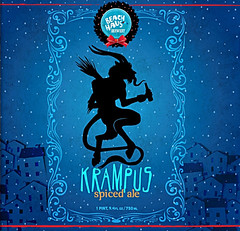
Krampus
krampus

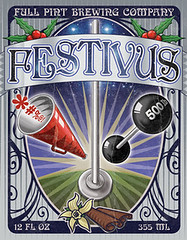
Festivus
full-pint-festivus

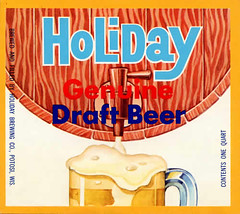
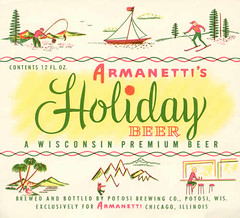
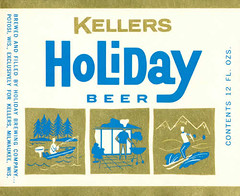
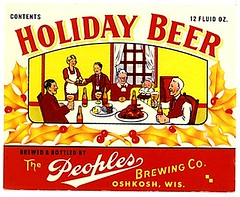
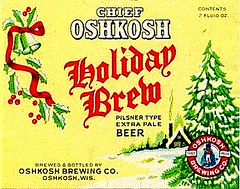
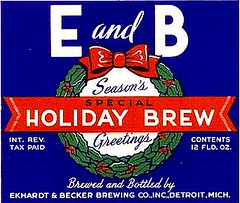
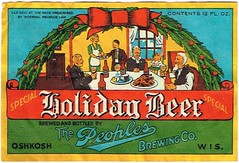
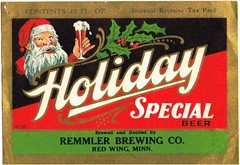
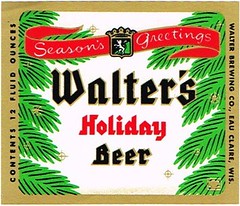
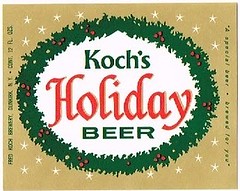
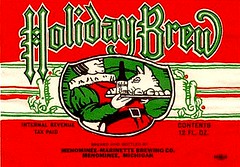
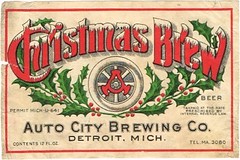
And despite the fact that the rightwing nutjobs insist there’s a war on Christmas because people use “holidays” to be inclusive instead of “Merry Christmas,” a lot of seasonal beer labels from the first half of the 20th century used “holiday” rather than Christmas. And what do you know, civilization didn’t end. And that’s usually the time that conservatives point to as being what we need to return to, when America was a more innocent place, pre-1960s. But they drank holiday beers, what do you know? And as far as I can tell, nobody freaked the fuck out like they do today. After the brouhaha with Starbucks cups, it actually made me want to go to Starbucks — a place I don’t normally frequent — just because of how ridiculous it all was.


Potsoi-holiday-brewing Armanetti-holiday-beer
Kellers-holiday-beer Peoples-holiday-beer
Chief-Oshkosh-holiday-brew-tree E-and-B-holiday-brew-label-2
Special-Holiday-Beer-Labels-The-Peoples-Brewing Holiday-Special-Beer-Labels-Remmler-Brewing
Walters-Holiday-Beer-Labels-Walter-Brewing Kochs-Holiday-Beer--Labels-Fred-Koch-Brewery
holiday-brew-label Christmas-Brew-Beer-Labels-Auto-City-Brewing

So for this Session, write about whatever makes you happy, so long as it involves holiday beers.

  • Discuss your favorite holiday beer.
  • Review one or more holiday beers.
  • Do you like the idea of seasonal beers, or loathe them?
  • What’s your idea of the perfect holiday beer?
  • Do have a holiday tradition with beer?
  • Are holiday beers released too early, or when should they be released?
  • Do you like holiday beer festivals?

Those are just a few suggestions, celebrate the holiday beers in your own way. Happy Holidays!

So start your holiday celebration early. It’s never too soon. To participate in the December Session, on or around Friday, December 4, write your post, then leave a comment below or shoot me an e-mail or copy me (@Brookston) in your Twitter feed with your link.

christmas-beer-coaster

Filed Under: Beers, Just For Fun, The Session Tagged With: Announcements, Holidays

Patent No. 2813638A: Palletizer

November 19, 2015 By Jay Brooks

patent-logo
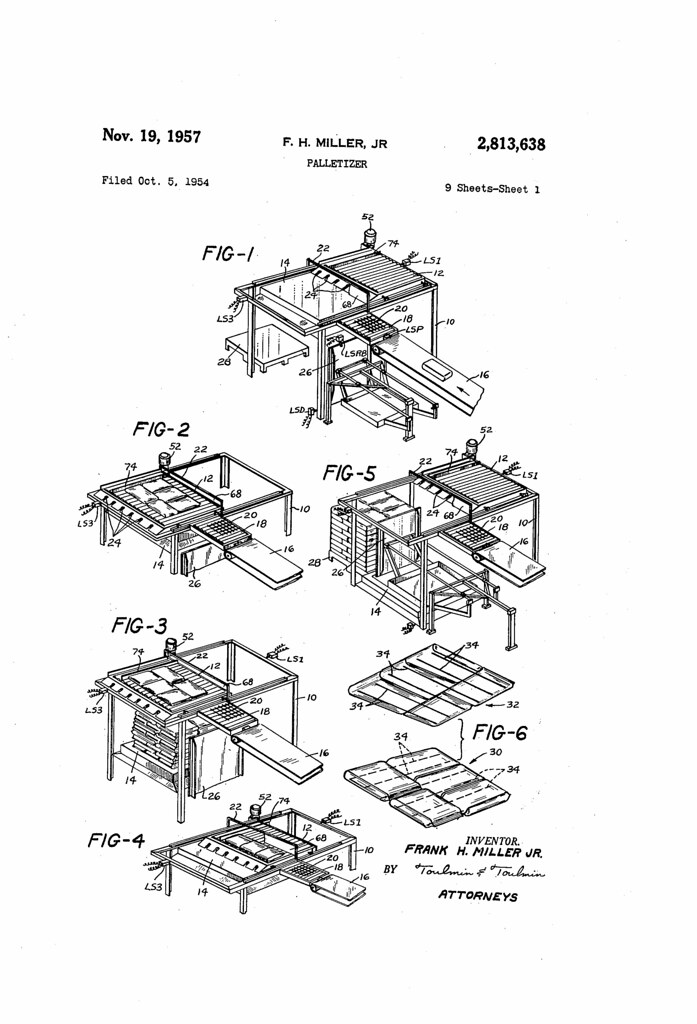
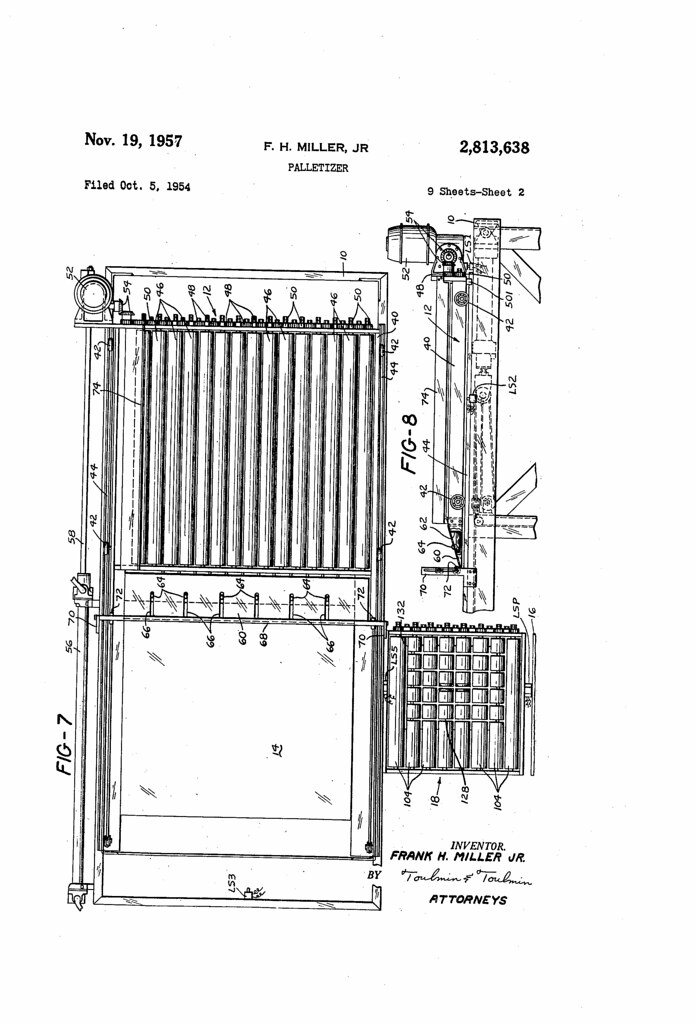
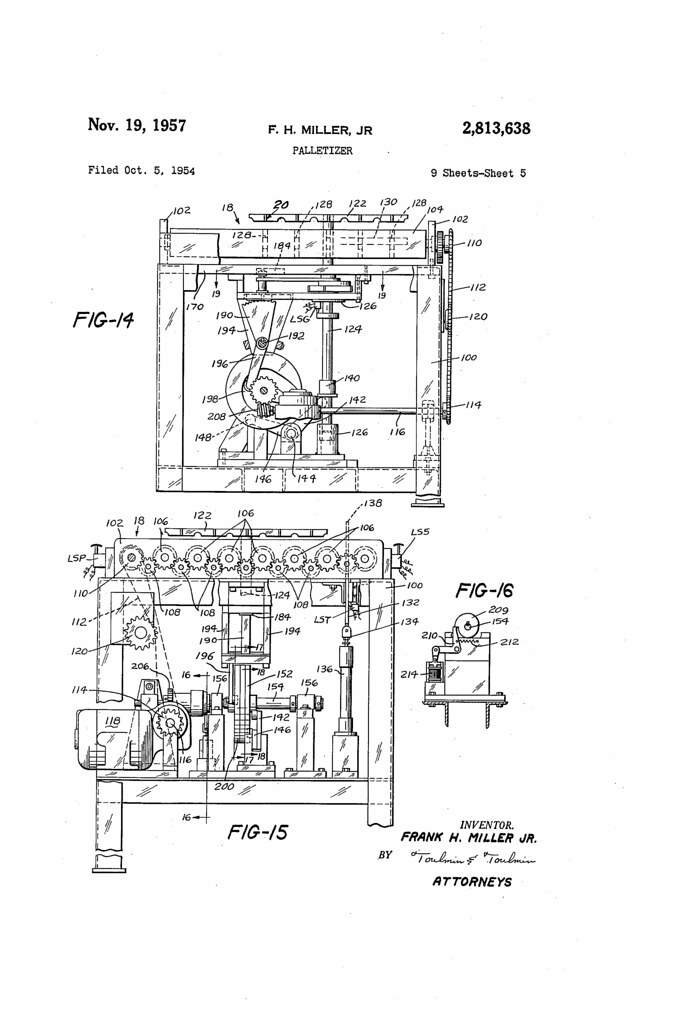
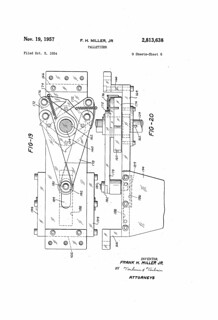
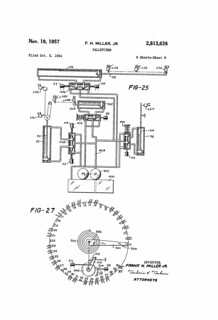
Today in 1957, US Patent 2813638 A was issued, an invention of Frank H. Miller Jr., assigned to Miller Engineering Corp., for his “Palletizer.” There’s no Abstract, although in the description it includes this summary:

This invention relates to a palletizing device and to the method of operation thereof, and in particular to a palletizing device which is completely automatic in operation.

Untitled
Untitled

Untitled Untitled

Untitled
Untitled Untitled

Untitled

Filed Under: Beers, Breweries, Just For Fun, Politics & Law, Related Pleasures Tagged With: Brewing Equipment, History, Law, Packaging, Patent

The Big Brewers: Global Spread

November 19, 2015 By Jay Brooks

earth-flag
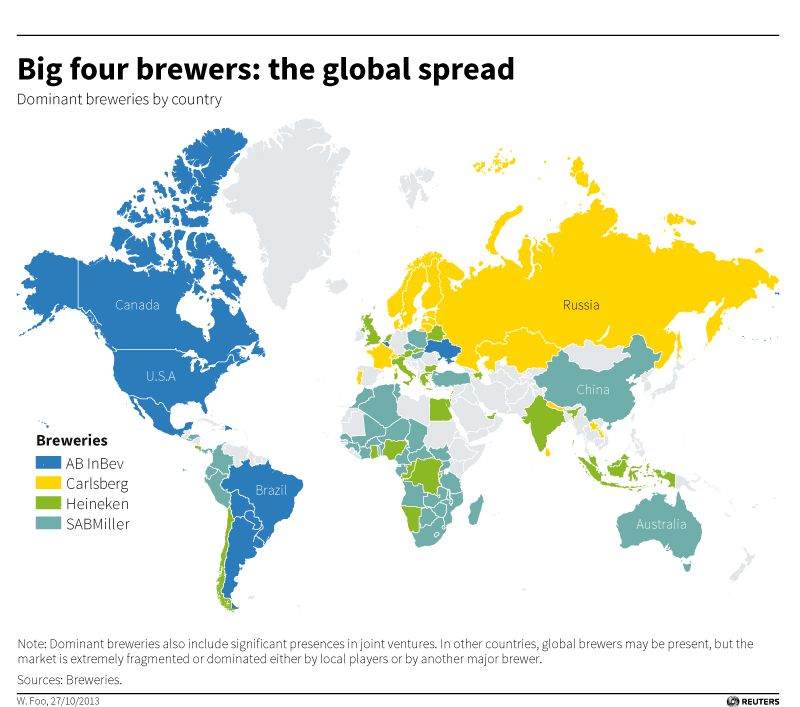
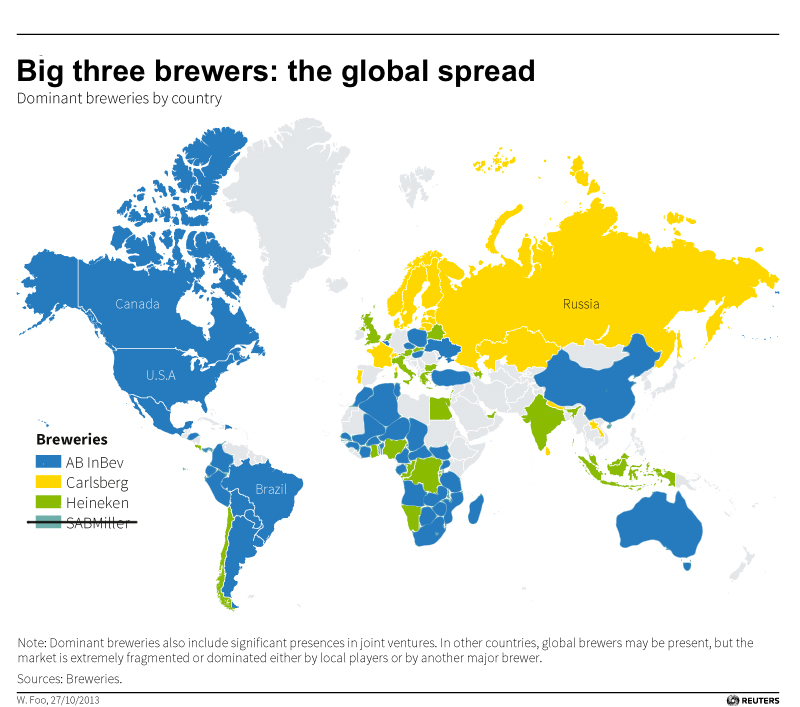
Looking for something else this morning, I found this map created by Reuters from 2013, showing the dominant beer company for each country, effectively showing “the global reach” of each of the four biggest companies at that time. This was created the last time rumors were circulating about an ABI takeover of SABMiller, in October of 2013.

big-4-global-spread

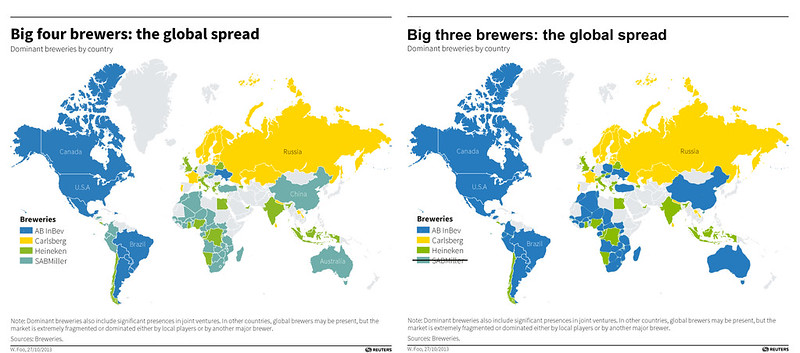
So I took the map and quickly replaced the teal of SABMiller with ABI blue to show what the global reach might look like post-buyout.

big-3-global-spread-post-sale

And here’s a side-by-side comparison. There will be a lot more blue.

big3-vs-big4

Filed Under: Beers, Breweries, Just For Fun, Related Pleasures Tagged With: Business, Europe, Infographics

Patent No. 133152A: Improvement In Apparatus For Curing Hops

November 19, 2015 By Jay Brooks

patent-logo
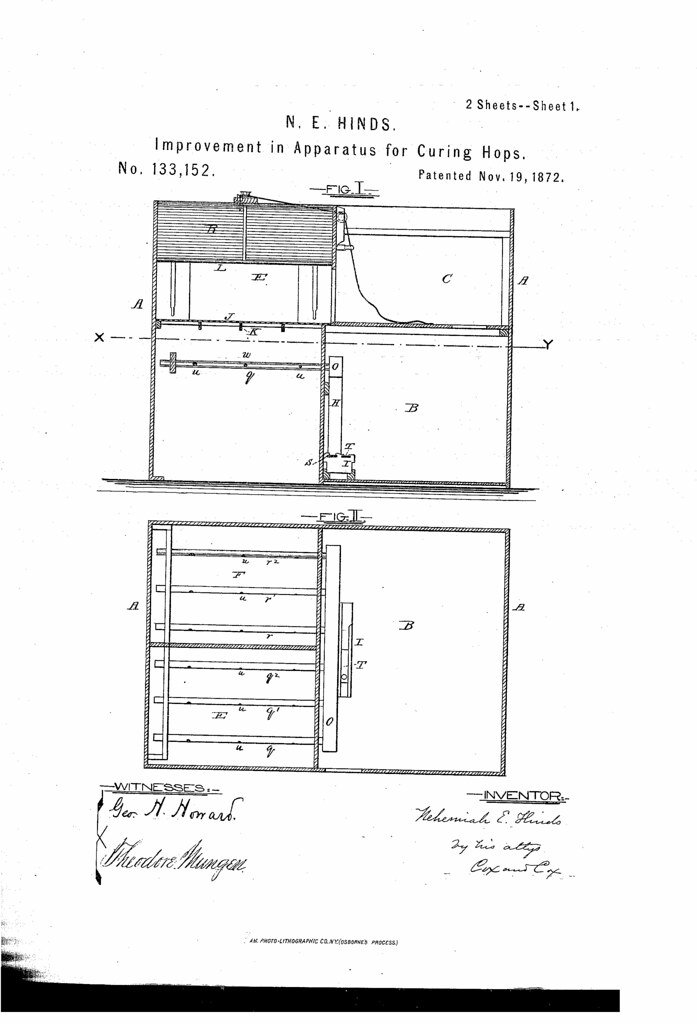
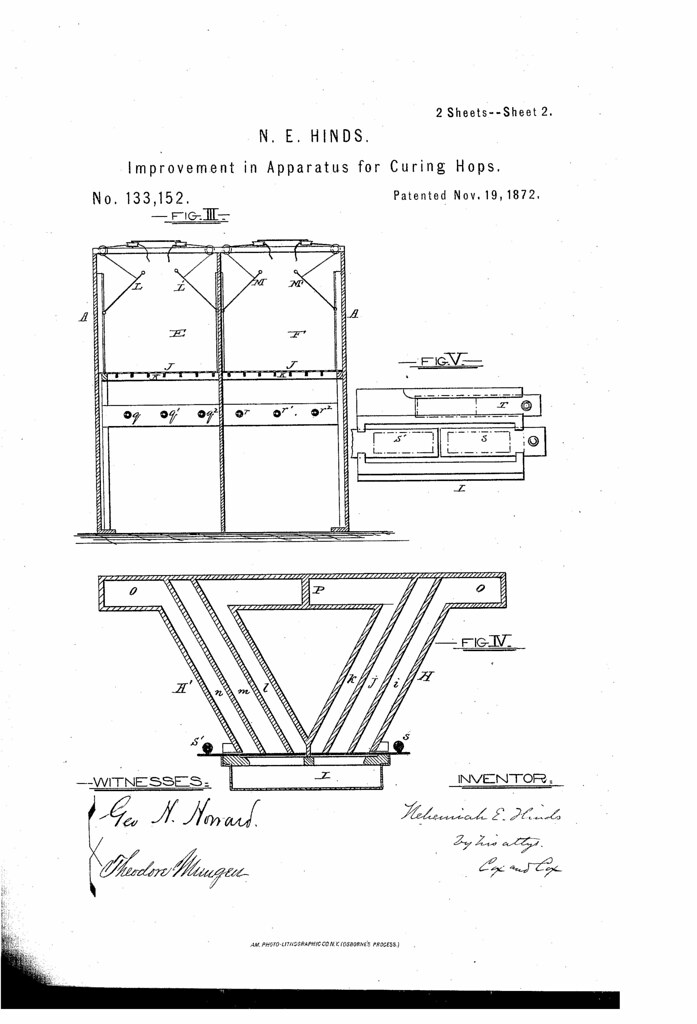
Today in 1872, US Patent 133152 A was issued, an invention of Nehemiah E. Hinds, for his “Improvement in Apparatus for Curing Hops.” There’s no Abstract, although in the description it includes this summary:

This invention relates to an Improvement in kilns for curing hops; and consists, first, of a series of tubes connected with a steam generator outside of the kiln, arranged within the kiln in such a manner as to discharge the steam beneath the hops and permit it to pass up through the hops, thereby thoroughly saturating them, the object of this part of the invention being to keep the hops thoroughly dampened while undergoing the bleaching process; secondly, of a pair of frames, covered with canvas, arranged within the kiln in such a manner as to be swung down upon and I completely cover the hops, the object of this part of the invention being to partially confine the steam, but more especially the fumes of the brimstone, within the kiln, and only permit them to escape slowly through the canvas—the united objects of the two parts of the invention being to produce a kiln that will cure hops in a manner far superior to the kilns heretofore in use.

Untitled
Untitled

Filed Under: Beers, Just For Fun, Politics & Law, Related Pleasures Tagged With: Brewing Equipment, History, Hops, Law, Patent

Beer In Ads #1733: Heineken’s Bierbrouwerij Maatschappij

November 18, 2015 By Jay Brooks


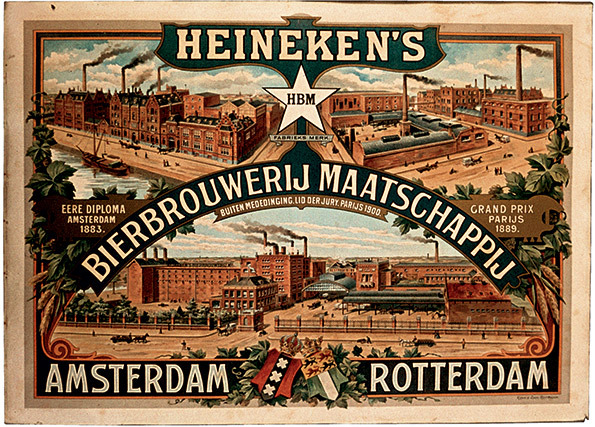
Wednesday’s ad is for Heineken’s Bierbrouwerij Maatschappij, which was established in 1873. A few years before, 1864, Gerard Adriaan Heineken bought the Haystack Brewery, later changing its name to HBM, which essentially means Heineken’s brewery or beer company. I suspect this ad is from the late 1800s, as it resembles ones from that time period.

HI_HEIN_010327_001

Filed Under: Art & Beer, Beers Tagged With: Advertising, Heineken, History

Patent No. 713975A: Bung And Tapping Device For Beer-Barrels

November 18, 2015 By Jay Brooks

patent-logo
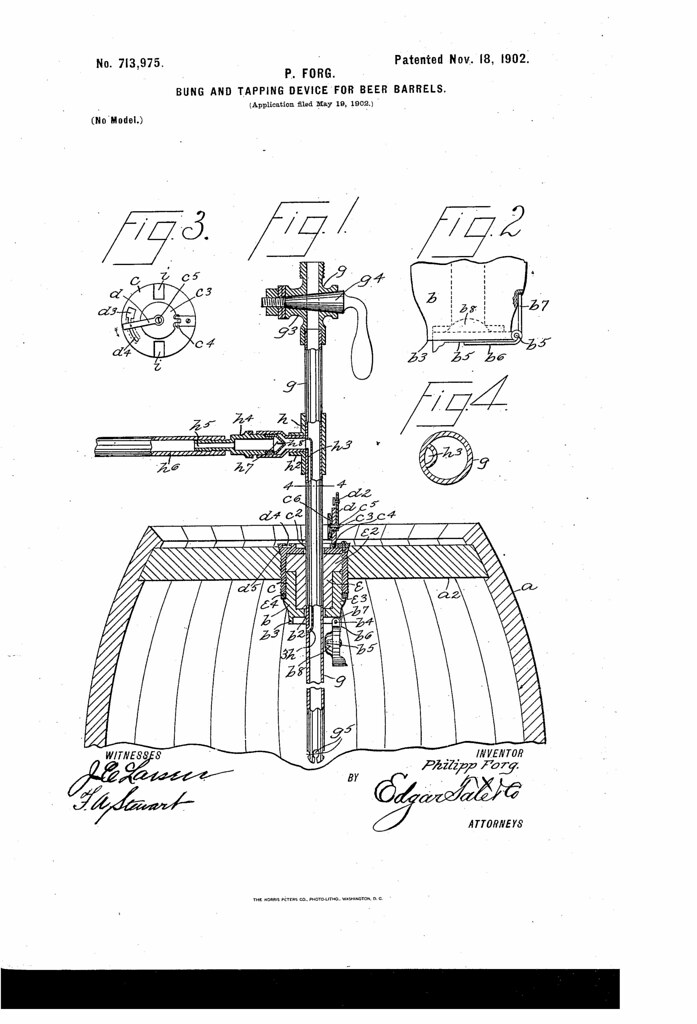
Today in 1902, US Patent 713975 A was issued, an invention of Philipp Forg, for his “Bung and Tapping Device for Beer-Barrels.” There’s no Abstract, although in the description it includes this summary:

The object of this invention is to provide an improved bung for beer-barrels and also an improved beer-barrel tapping device which is adapted to be used in connection therewith; and with these and other objects in view the invention consists in a beer-bung for beer-barrels and a tapping device for beer-barrels constructed as hereinafter described and claimed.

Untitled

Filed Under: Beers, Just For Fun, Politics & Law, Related Pleasures Tagged With: Barrels, History, Kegs, Law, Patent

Daguerreotypes Of Beer

November 18, 2015 By Jay Brooks

daguerreotype-2
Today is the birthday of Louis Daguerre, the inventor of the daguerreotype process of photography, one of the earliest successful methods of creating photographs. He was French, an artist as well as a photographer, and “became known as one of the fathers of photography. Though he is most famous for his contributions to photography, he was also an accomplished painter and a developer of the diorama theatre.” When I took some photography classes in college, my great aunt gave me some daguerreotypes taken by my great-grandfather along with some glass plates that I was able to develop in a dark room. There were even a few showing the construction of the clock tower at Kutztown University (his alma mater and near where I grew up in Pennsylvania), which was finished in 1910. Sadly, none of my family daguerreotypes involve beer, since they were for the most part teetotaling mennonites for a majority of the time they worked the farm after arriving here in 1745 from Berne, Switzerland, fleeing religious persecution. I, on the other hand, am such a disappointment (not really, the farm was sold before I was born and they even drove cars and had the occasional beer by the time I was born).

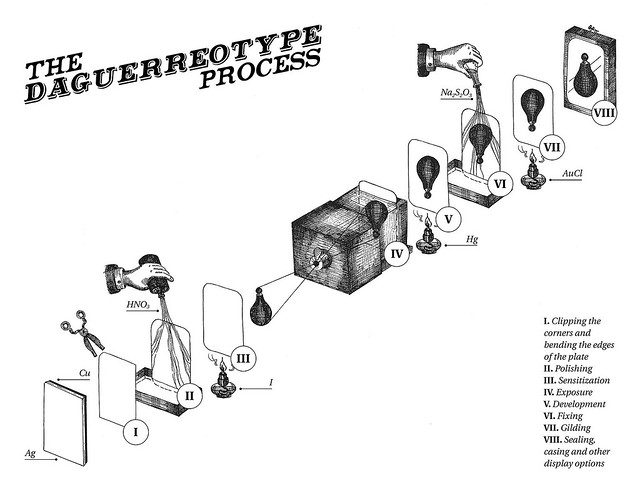
But first, what is a daguerreotype?
Daguerreotype_process

Here’s the basics from the Wikipedia entry:

The daguerreotype process, or daguerreotypy, was the first publicly announced photographic process, and for nearly twenty years, it was the one most commonly used. It was invented by Louis-Jaques-Mandé Daguerre and introduced worldwide in 1839. By 1860, new processes which were less expensive and produced more easily viewed images had almost completely replaced it. During the past few decades, there has been a small-scale revival of daguerreotypy among photographers interested in making artistic use of early photographic processes.

To make a daguerreotype, the daguerreotypist polished a sheet of silver-plated copper to a mirror finish; treated it with fumes that made its surface light-sensitive; exposed it in a camera for as long as was judged to be necessary, which could be as little as a few seconds for brightly sunlit subjects or much longer with less intense lighting; made the resulting latent image on it visible by fuming it with mercury vapor; removed its sensitivity to light by liquid chemical treatment; rinsed and dried it; then sealed the easily marred result behind glass in a protective enclosure.

Viewing a daguerreotype is unlike looking at any other type of photograph. The image does not sit on the surface of the metal, but appears to be floating in space, and the illusion of reality, especially with examples that are sharp and well exposed is unique to the process.

The image is on a mirror-like silver surface, normally kept under glass, and will appear either positive or negative, depending on the angle at which it is viewed, how it is lit and whether a light or dark background is being reflected in the metal. The darkest areas of the image are simply bare silver; lighter areas have a microscopically fine light-scattering texture. The surface is very delicate, and even the lightest wiping can permanently scuff it. Some tarnish around the edges is normal, and any treatment to remove it should be done only by a specialized restorer.

Several types of antique photographs, most often ambrotypes and tintypes, but sometimes even old prints on paper, are very commonly misidentified as daguerreotypes, especially if they are in the small, ornamented cases in which daguerreotypes made in the US and UK were usually housed. The name “daguerreotype” correctly refers only to one very specific image type and medium, the product of a process that was in wide use only from the early 1840s to the late 1850s.

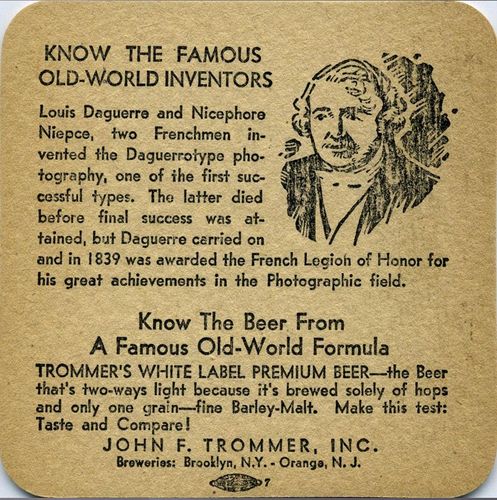
daguerrotype-coaster

So while I don’t have any daguerreotypes of my own that involve beer, there are a few of them out there, and I’ve selected some of the best ones I came across. A lot of early photographs, as mentioned above, are mis-identified as daguerreotypes when in fact they might be another early photographic process. So the ones I found are identified as daguerreotypes, but of course it’s hard, if not impossible, to be sure. At any rate, this is just for fun, so if you have evidence that one is not strictly speaking, a daguerreotype, let me know, and if you know of one I missed, send me a link to it or as as an attachment.

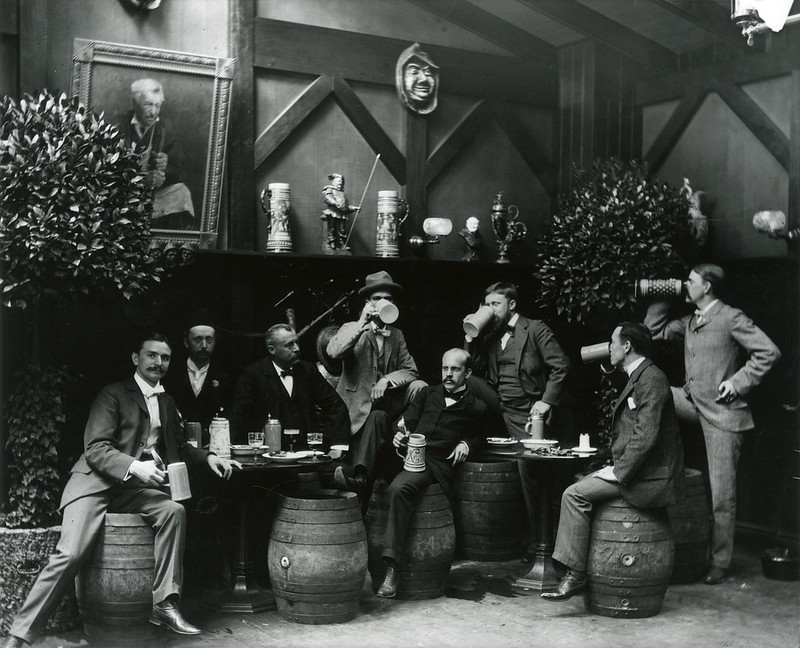
NYC-hist-society-1906-1905
Munchen Hoffbrau Interior, c. 1896-1905, by Robert L. Bracklow (New York Historical Society).

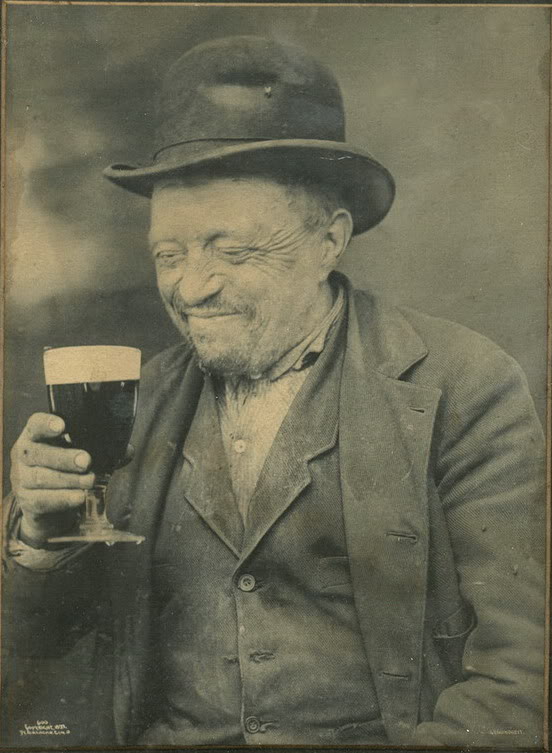
man-with-beer-1899
Man with Beer, 1899.

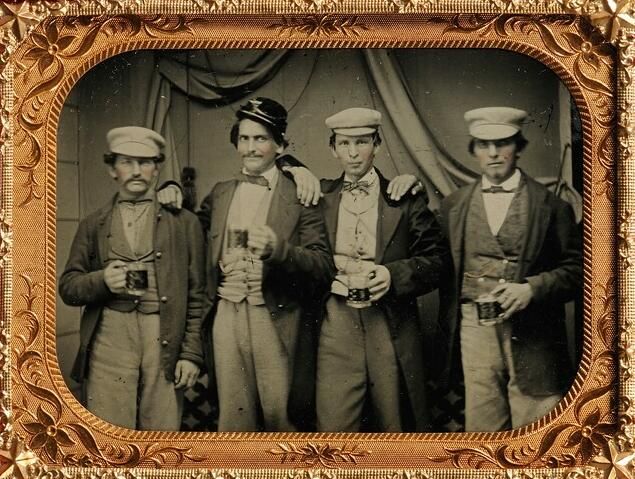
4-men-with-beers-1850s
Four men posing with mugs of beer, c. late 1850s.

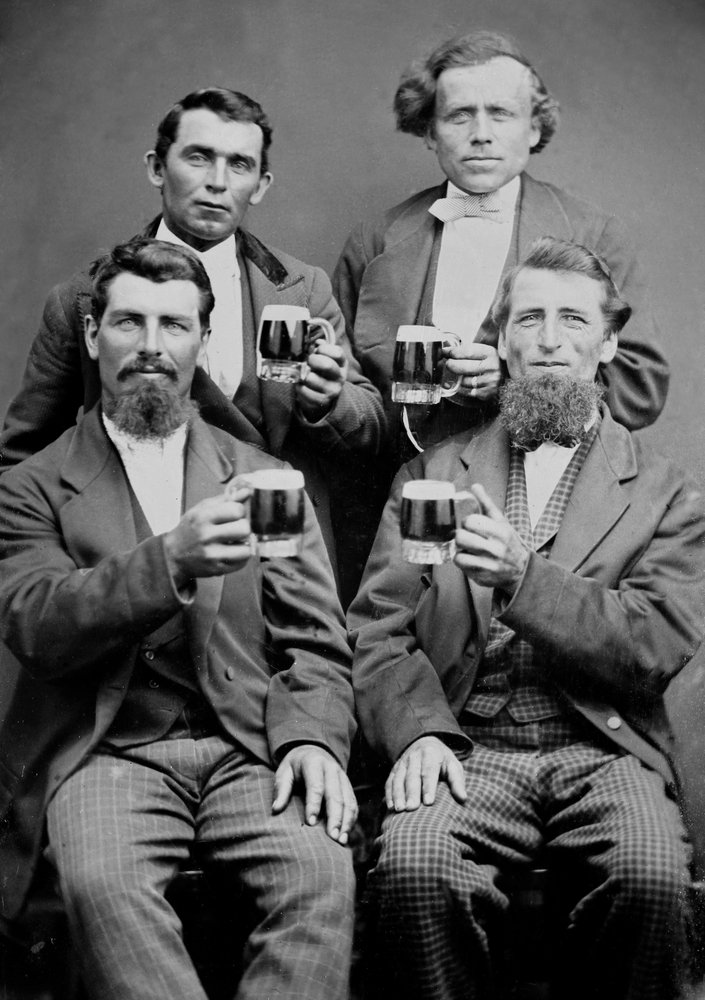
4-guys-and-their-mugs-of-beer-1880
Four [More] Guys and Their Mugs of Beer, c. 1880.

st-louis-beer-garden-1860
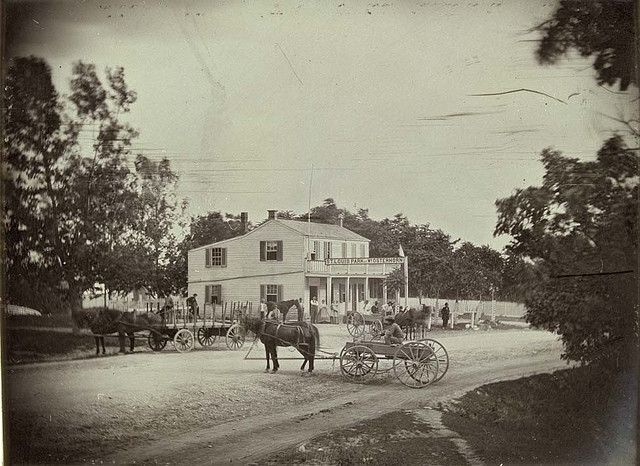
St. Louis Park Beer Garden, South Broadway, c. 1860. Daguerreotype by Thomas M. Easterly.

frances
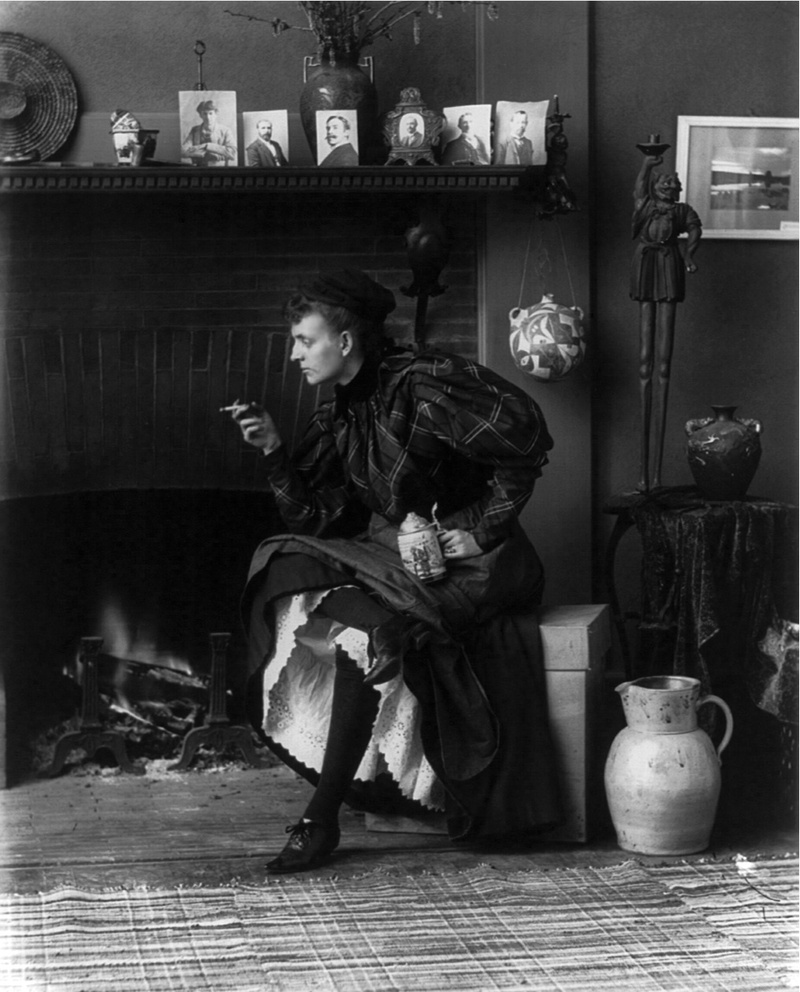
Self-portrait of Frances Benjamin Johnston, from 1896. “Fannie” was one of the earliest American female photographers and photojournalists.

paper-moon-1910s

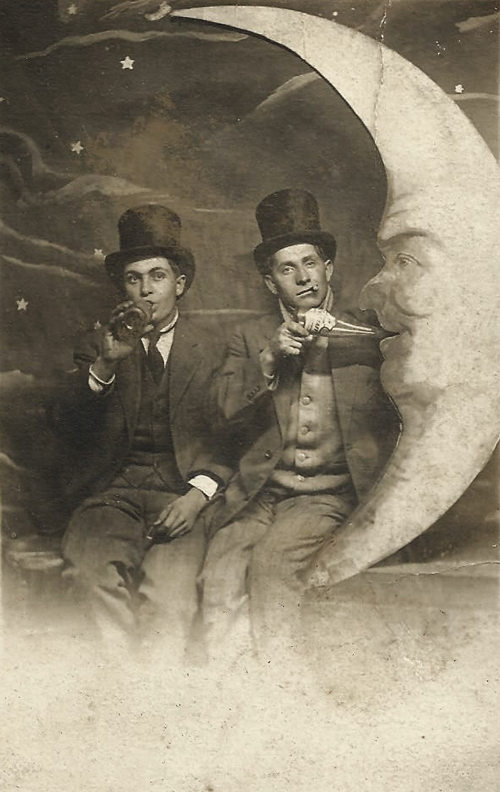
Paper Moon, c. 1910. Paper moon backgrounds appear to be a popular backdrop from photographs at events.

paper-moon-2

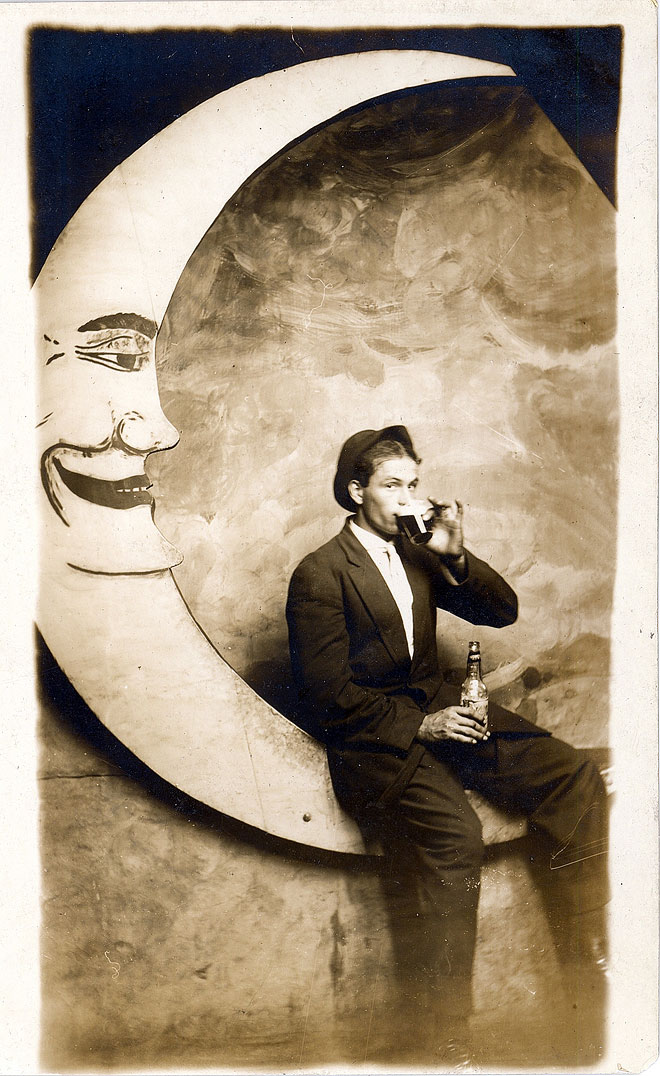
Another paper moon, date unknown.

Molson-1858
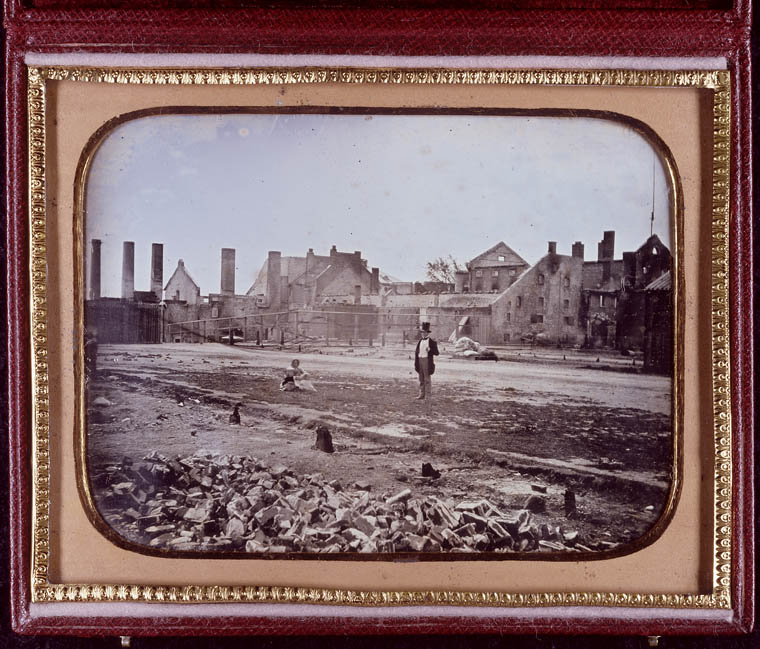
Thomas Coffin Doane, taken at the Molson family brewery after the fire, in Montreal, Quebec, Canada, 1858.

union-house-bar-pre-1858
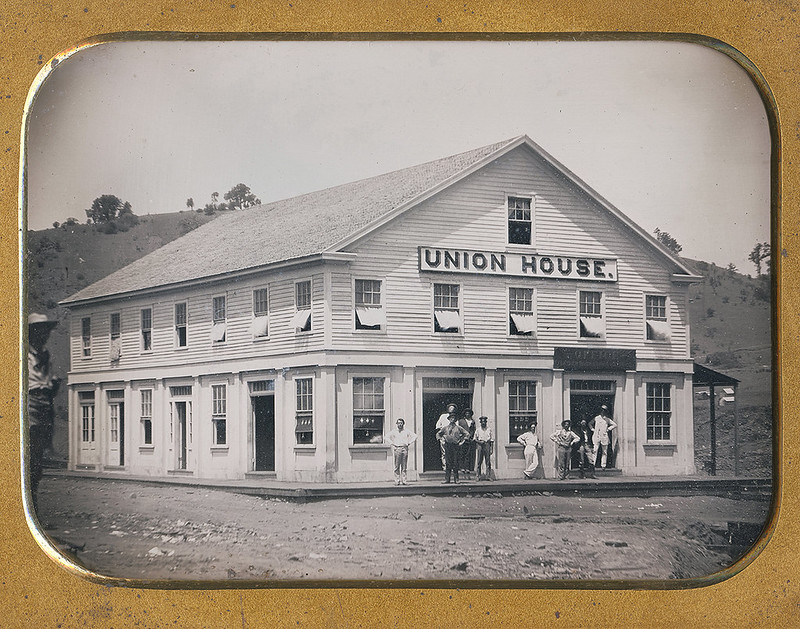
Union House Bar, Bidwell, California. “A fire destroyed the first Union House (also known as Fitzgerald House) August 2, 1854 along with most of the town. Upon careful study of the dark sign on the right, these are the words: “OFFICE FEATHER RIVER & OPHIR WATER CO”. This company was incorporated Feb. 6 1855. Apparently the second Union House was constructed during the winter and spring of 1855. I believe this daguerreotype was taken in the summer of 1855 after the Union House had been resurrected.”

Filed Under: Beers, Just For Fun, Related Pleasures Tagged With: History, Photography

« Previous Page
Next Page »

Find Something

Northern California Breweries

Please consider purchasing my latest book, California Breweries North, available from Amazon, or ask for it at your local bookstore.

Recent Comments

  • Bob Paolino on Beer Birthday: Grant Johnston
  • Gambrinus on Historic Beer Birthday: A.J. Houghton
  • Ernie Dewing on Historic Beer Birthday: Charles William Bergner 
  • Steve 'Pudgy' De Rose on Historic Beer Birthday: Jacob Schmidt
  • Jay Brooks on Beer Birthday: Bill Owens

Recent Posts

  • Beer In Ads #5239: The National Drink May 2, 2026
  • Beer Birthday: Anders Kissmeyer May 2, 2026
  • Beer Birthday: Bruce Paton May 2, 2026
  • Beer Birthday: Brian Hunt May 2, 2026
  • Beer In Ads #5238: The First Of May Is Bock Beer Day May 1, 2026

BBB Archives

Feedback

Head Quarter
This site is hosted and maintained by H25Q.dev. Any questions or comments for the webmaster can be directed here.