Brookston Beer Bulletin

Jay R. Brooks on Beer

  • Home
  • About
  • Editorial
  • Birthdays
  • Art & Beer

Socialize

  • Dribbble
  • Email
  • Facebook
  • Flickr
  • GitHub
  • Instagram
  • LinkedIn
  • Pinterest
  • RSS
  • Twitter
  • YouTube

Powered by Genesis

Historic Beer Birthday: Bill Siebel

March 26, 2026 By Jay Brooks Leave a Comment

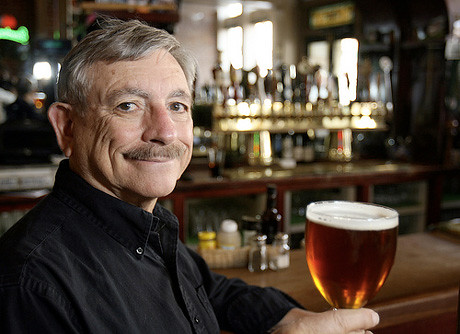
Today is the birthday of Bill Siebel (March 26, 1946-November 8, 2015). Bill was the grand-grandson of John Ewald Siebel, who founded what would become the Siebel Institue of Technology. In the early 1970s, Bill became president of the brewing school his family founded, and held that post until his retirement in 2000. I had the pleasure of meeting Bill a couple of times judging at the Great American Beer Festival, when we sat at a few of the same judging tables. Talking in between flights, he had a great sense of humor and seemed like such a nice person. I was only sorry I had’t met him sooner. Join me in raising a toast to Bill tonight.
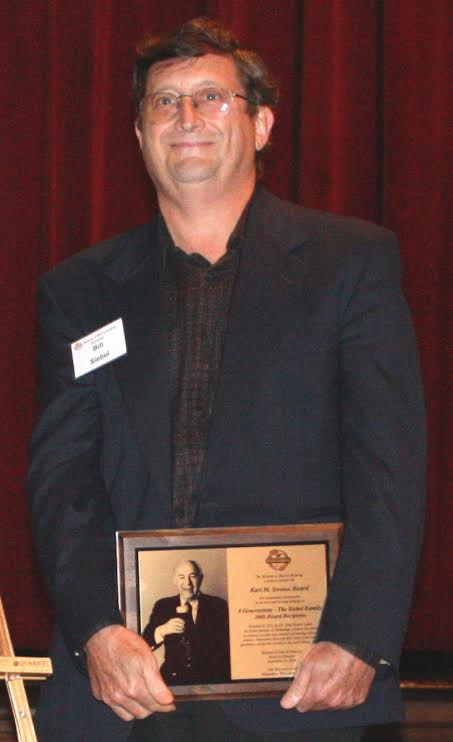
This is Bill’s obituary from the Chicago Tribune:

Bill Siebel was the fourth generation of his family to head a Chicago beer-brewing school that has produced tens of thousands of alums with surnames such as Busch, Coors, Pabst, Stroh and Floyd — as in 3 Floyds Brewing Co.

It wouldn’t be exaggerating to call him a member of the “First Family” of beer education in the U.S., said Charlie Papazian, president and founder of Denver’s Great American Beer Festival, the nation’s largest.

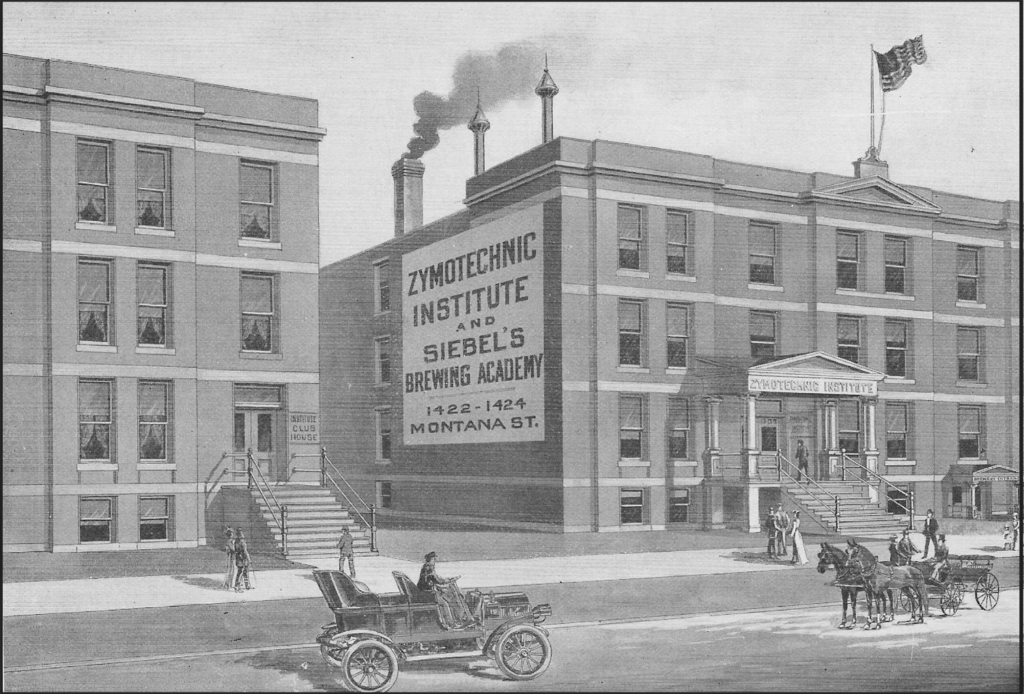
Bill Siebel was chairman and CEO of the Siebel Institute of Technology, established in Chicago in 1872 by his great-grandfather, Dusseldorf-born immigrant John Ewald Siebel. It bills itself as the oldest brewing school in the Americas. “There is one, based in Germany, established before us,” said Keith Lemcke, vice president of the institute, 900 N. Branch St.

“It’s been a continuous run,” Lemcke said, “except for this inconvenient time we call ‘Prohibition.’ ” During Prohibition, it kept going as a school of baking — which, like brewing, uses yeast.

Siebel Institute students, Lemcke said, have included August Busch III of Anheuser-Busch; John Mallett of Bell’s Brewery in Kalamazoo; the father and grandfather of Samuel Adams brewer Jim Koch; and Greg Hall, a brewmaster at Goose Island Beer Company and son of Goose Island founder John Hall.

“The contributions that the Siebel Institute has made to brewing — and to training craft brewers — in its long history, are far too numerous to count,” said Koch of Samuel Adams. “I’m a sixth-generation brewer, and my father graduated from Siebel in 1948 and my grandfather in 1908. . . . The industry has lost a great one.”

Mr. Siebel, who had esophageal cancer, died on Nov. 8 at Northwestern Memorial Hospital. He was 69.
The family school is “the longest-living institution that has served as an educational institution for brewers in the United States,” Papazian said. “They’ve gone through a lot of transitions, from the small breweries going out of business in the ’50s, ’60s and ’70s, to embracing the small craft brewers that were emerging in the ’70s and ’80s, welcoming them, and offering them educational opportunities. Bill was involved with that transition.”

“Many of our employees are graduates of Siebel Institute, and the impact the school has made on the beer community is impressive,” said Ken Stout, general manager of Goose Island Beer Company. “A great industry leader has been lost, and we’ll miss him dearly.”

Bill Siebel and his brother, Ron, grew up near Devon and Caldwell in Edgebrook, and at the Southwest edge of the Evanston Golf Club in Skokie, where one of the tees was behind their home. A highlight of their youth was spending summers with their mother, Mary, at Paradise Ranch near Colorado Springs, while their father, Raymond, commuted back and forth from the Siebel Institute in Chicago. The Siebel boys became accomplished horseback riders.

They attended grade school at the old Bishop Quarter Military Academy in Oak Park. Bill Siebel graduated from Florida’s Admiral Farragut Academy and the University of Miami. He served in the Navy, rising to lieutenant, before returning to Chicago — and the family beer school — in 1971, said his wife, Barbara Wright Siebel.

Both brothers attended the Siebel Institute, where a variety of classes, diplomas and certificates focus on yeast, malt, fermentation, biological science, quality control, engineering and packaging. “One of my classmates in 1967 was August Pabst, and August Busch III was a few years before,” Ron Siebel said.

For decades, the school and laboratory were located at 4055 W. Peterson, where the Siebels had a brewing library and a second-floor bierstube with heirloom steins.

After their father and uncle sold the business, “Bill and I were successful in getting it back,” Ron Siebel said. “We got it back in the family hands, and it stayed there until [Bill] retired and wanted to liquidate his holdings in the institute.” Today, the school is owned by Lallemand, a Canadian yeast company.

Ron Siebel focused on selling products such as stabilizers, which preserve clarity in beer. “Bill was ‘Mr. Inside.’ He was very good with numbers,” his brother said. Because of him, “The business was always on a steady course.”

Bill Siebel retired in 2000, Lemcke said.

He restored himself and reveled in nature, hiking, and watching birds and animals. For their honeymoon, Bill and Barbara Siebel canoed nine days on the U.S.-Canadian Boundary Waters. And for 20 years, they canoed in Ely, Minnesota, where he enjoyed spotting bear and moose. He also loved reading Dostoevsky and Tolstoy.

And this is another obituary from website Beer Monopoly:

William (Bill) Siebel, philanthropist and former President of the Siebel Institute, died 8 November 2015, aged 69

In the classroom of the Siebel Institute in Chicago, there is a long wall featuring the graduating class photographs of students dating back to the year 1900. The year 1973 marked the first appearance of a young, moustachioed Bill Siebel in the faculty section of the Diploma Course photographs, and his image would appear in every class photo for the next 26 years.

Unless you knew Bill, visitors to Siebel could be forgiven for wondering who this prankster was, who, year after year, managed to blag his way into one of the world’s oldest brewing schools to have his photo taken with the brewing school’s graduates?

Certainly, Bill would have chuckled at the suggestion of him being a repeat gatecrasher at the school, which has borne his family’s name since the 19th century. He would have even taken delight in being awarded the nickname Zelig – the title character of a Woody Allen “mockumentary” from 1983 about a human chameleon that sneaked past guards at major events to rub shoulders with the high and mighty – because he would have known of the film or more probably would have even seen it.

Bill had a great sense of humour. When he attended the Munich trade fair Drinktec as an exhibitor for the first time in 1993, he came armed with only a poster, expecting to be given a tabletop for his brochures. To his surprise he had in fact rented a large booth. Bill being Bill made the best of this and immediately organised two dozen large trees in pots which he placed alongside the walls. If passers-by remarked that the Siebel Institute had obviously branched out into horticulture, Bill laughed his infectious and his eyes would sparkle behind his glasses as he repeated the story about his mishap over and over again.

Despite his self-effacing modesty, Bill represented the best of North American “beer royalty”. Being a fourth generation Siebel to run the business, whose passion for beer was undeniable – he was most inconsolable when he had to cancel being a judge at this year’s Great American Beer Festival in Denver due to his failing health – Bill felt equally strongly about his obligations as a citizen. He diligently and conscientiously gave his expertise to many good causes and probably even more in terms of financial support. However, you had to know him really well to discover this side of him.

Bill was a Chicago man: born and bred in the Windy City, which he loved but hated for its extreme weather. This may have been one reason why he chose to study in far-away Florida. He graduated from Florida’s Admiral Farragut Academy and the University of Miami. He served in the Navy, rising to lieutenant, before returning to Chicago — and the family beer business — in 1971.

The Siebel Institute of Technology was established in Chicago in 1872 by Bill’s great-grandfather, the German-born immigrant John Ewald Siebel. Unlike Bill, JE Siebel must have been a real sourpuss, judging from the dour-looking gentleman, whose bust Bill and his wife Barbara kept in their yard. On my last visit to Chicago this spring, we presented JE to the Siebel Institute – they already had the other of the two busts that JE had made – because Bill knew no one in his family would want such a stern character face them in the morning.

Bill did not bear his family’s heritage lightly. He would joke about how the Siebel Institute made it through this “inconvenient time” Americans call Prohibition. Officially, the Siebel Institute kept going as a school of baking – which, like brewing, uses yeast – and Bill would laughingly speculate that his ancestors probably were involved in all kinds of shenanigans. After all, Prohibition in Chicago gave rise to plenty of colourful gangsters whose empires were made with alcohol. In fact, reality was far bleaker than Bill liked to narrate it. When JE Siebel died in late 1919, Prohibition had already been ratified, which meant that the Siebel Institute could no longer teach brewing in America and several Siebel family members were left destitute, says Keith Lemcke, Vice-President of the Siebel Institute.

As we know, the Siebel Institute survived. But when Bill joined the Institute, his father and uncle had already sold the business. Fortunately, Bill and his older brother Ron succeeded in getting it back. “We got it back in the family hands, and it stayed there until Bill retired and wanted to liquidate his holdings in the institute,” Ron said. Today, the school is owned by Lallemand, a Canadian yeast company.

Both Bill and Ron attended the Institute to be taught all about yeast, malt, fermentation, biological science, quality control, engineering and packaging. “One of my classmates in 1967 was August Pabst, and August Busch III was a few years before,” Ron said. Over its long history, the Siebel Institute has produced tens of thousands of alumni with such illustrious surnames like Busch, Coors, Pabst and Stroh. But John Mallett of Bell’s Brewery in Kalamazoo; the father and grandfather of Samuel Adams brewer Jim Koch; and Greg Hall, a brewmaster at Goose Island Beer Company, were also among them.

For decades, the school and laboratory were located at 4055 W. Peterson, where the Siebels had a brewing library and a second-floor Bierstube in mock-Germanic style. For parties they liked to serve brat and sauerkraut.

While Ron would focus on selling auxiliary products, Bill was Mr Inside. “He was very good with numbers,” his brother remembers. Because of Bill, the business was always on a steady course. This does not mean that things were easy. For decades, the U.S. beer industry has been in a state of transition. In the 1950s, 1960s and 1970s a lot of the smaller brewers went out of business followed by the remaining mid-tier brewers in the 1990s. Fortunately for the Siebel Institute and thanks to Bill’s tireless travelling and networking, international students and craft brewers began to fill seats as of the 1990s. Bill wholeheartedly welcomed them, offering them educational opportunities.

Until his retirement in 2000, Bill taught at the Siebel Institute and took on various roles, from registrar, to President, Chairman and CEO.


billsiebel

Filed Under: Birthdays, Just For Fun Tagged With: Chicago, Education, History, Illinois

Historic Beer Birthday: Conrad Windisch

March 26, 2026 By Jay Brooks 5 Comments

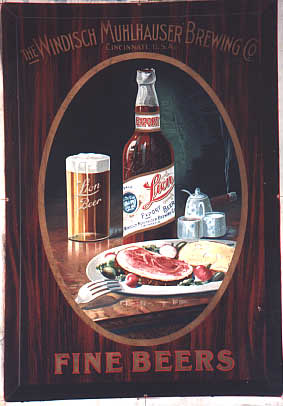
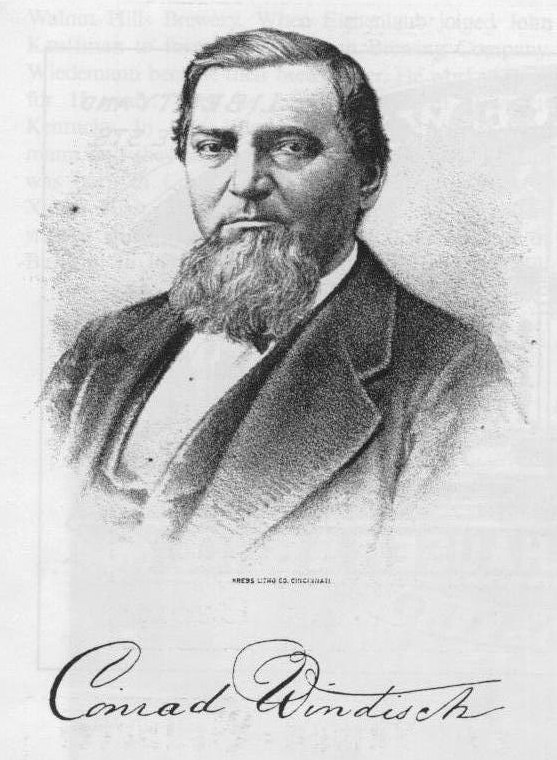
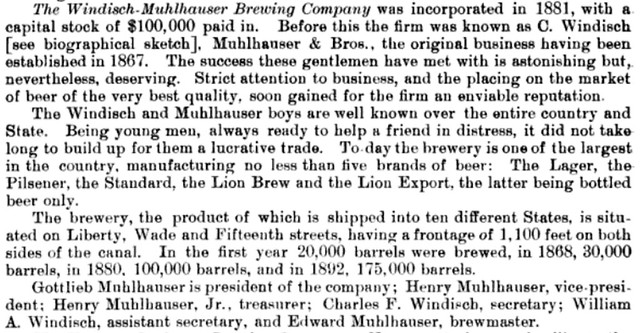
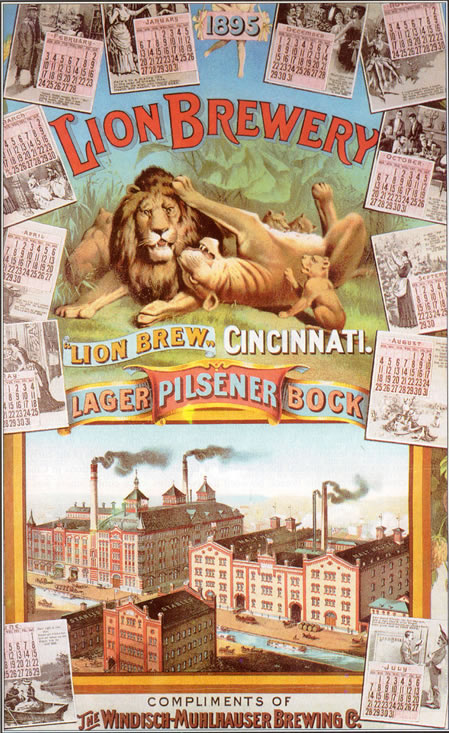
Today is the birthday of Conrad Windisch (March 26, 1825-July 2, 1887) who was a co-founder, along with Gottlieb Muhlhauser of the Windisch-Muhlhauser Brewing Co. of Cincinnati, Ohio, which was known as the “Lion Brewery.” He was originally a partner in the more famous Christian Moerlein Brewery, but in 1866 was bought out by Moerlein. During the same period, he also owned and ran the C. Windisch & Co. Brewery, located in the Covington, Kentucky, but it closed after just one year, in 1862. After leaving the Christian Moerlein Brewery, he partnered with Muhlhauser on the Lion Brewery, which remained open until prohibition.
Here’s a short biography from Find-a-Grave:

Brewer. A native of Germany, he was born in the village of Eggloffstein in Bavaria. At the age of 13, after an education in the common schools, he began to work full time for his father, Ulrich Windisch, at the family’s brewery and farm. During the German Revolution of 1848, he left his homeland and emigrated to America. Windisch first settled in Pittsburgh, Pennsylvania and worked for a brewer for a brief period of time before moving west to work at breweries in Belleville, Illinois, and St. Louis, Missouri. He eventually came to Cincinnati in 1850 and found similar work. Windisch worked for Koehler at the Buckeye Street Brewery for three years until he became a partner with Christian Moerlein in 1853. He also started his own brewery in 1862 and sold his interest to Moerlein in 1866 to devote his time to his own interests. With his brother-in-law, Gottlieb Muhlhauser, as well as Muhlhauser’s brother, Henry, the Muhlhauser-Windisch & Company was established. It was more commonly known as the Lion Brewery because of two stone carved lions atop each of the two gables at the entrance. The business soon became one of Cincinnati’s foremost brewers. They were among the first to introduce ice machines and was the city’s second largest during the 1880’s. In 1854, Windisch married Sophia Wilhelmina Kobmann, who was also from his native village and lived on an estate in present day Fairfield in Butler County, Ohio. He died at his residence in 1887 when he was 62 years old. The brewery continued with his son, William A. Windisch and later with another son, Charles Windisch and remained in operation until 1920 when Prohibition caused the doors to close.

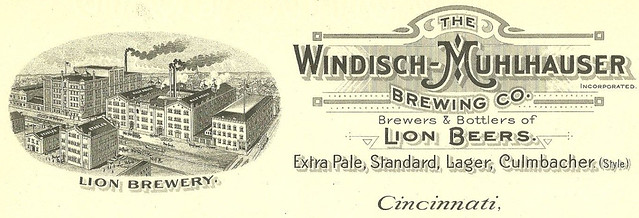
conrad-windisch-brewery-letterhead

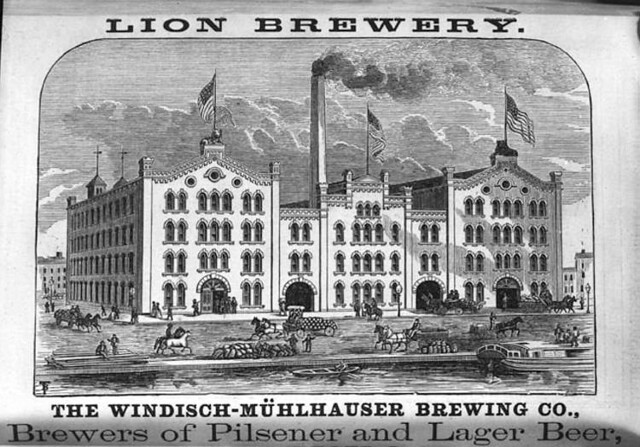
Their brewery became known as the “Lion Brewery” because of the two lions that rested atop the brewery’s gables and many of their beer names used a lion in the name and on the labels.

Lion-Brewery1

The History of Cincinnati and Hamilton County, Ohio has a short history of the Windisch-Muhlhauser Brewing Company:

Lion-brewery-history

Paired Creation also has a history of the brewery.

Filed Under: Birthdays, Breweries, Just For Fun Tagged With: History, Kentucky, Ohio

Beer Birthday: Rudi Ghequire

March 26, 2026 By Jay Brooks Leave a Comment

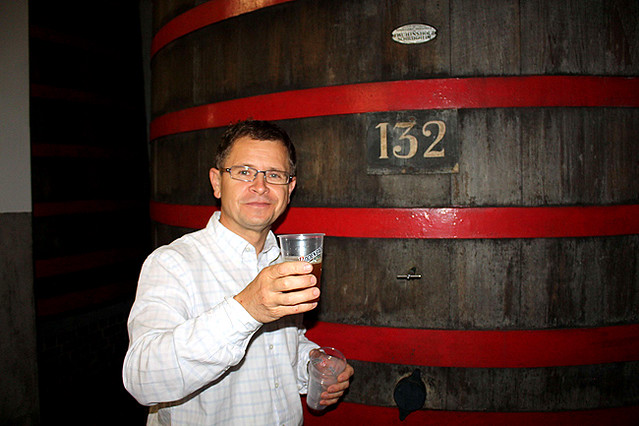
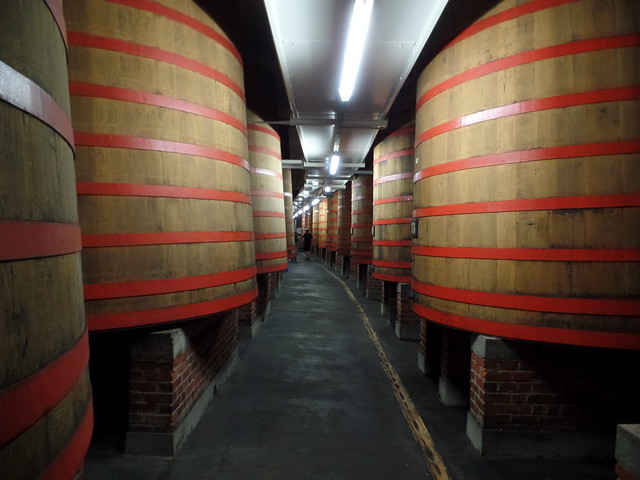
Today is the 67th birthday of Rudi Ghequire. Rudi’s been the general manager and brewmaster of Belgium’s Brouwerij Rodenbach, in Roeselare, West-Vlaanderen, since 1982. He’s been the face of Rodenbach as long as I can remember, even since Palm bought the brewery in 1998, Rudi’s been the face of the company. I’ve run into him at a few events over the year, and he gave us a tour during the Brussels Beer Challenge a couple of years ago. Join me in wishing Rudi a very happy birthday.

Giving our tour.
rodenbach_barrel
Rudi at the Foeders.
Untitled
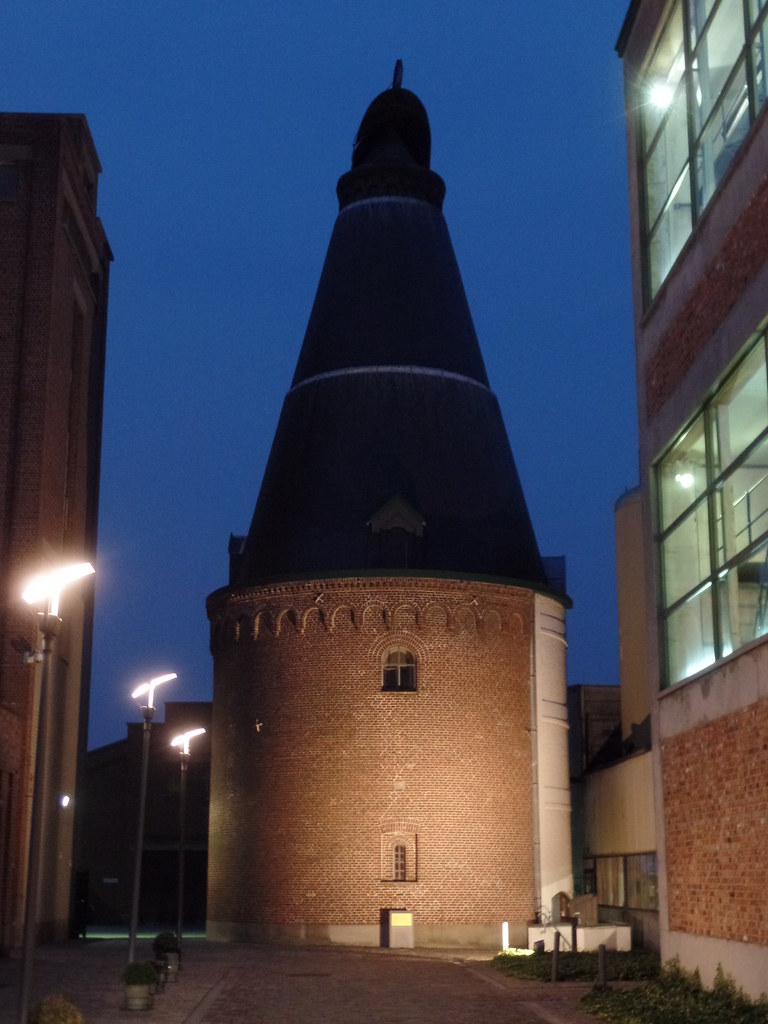
Outside the brewery.
Untitled
The Foeders at Rodenbach.

Filed Under: Birthdays, Just For Fun Tagged With: Belgium

Beer In Ads #5186: Today’s The Day!

March 26, 2026 By Jay Brooks Leave a Comment

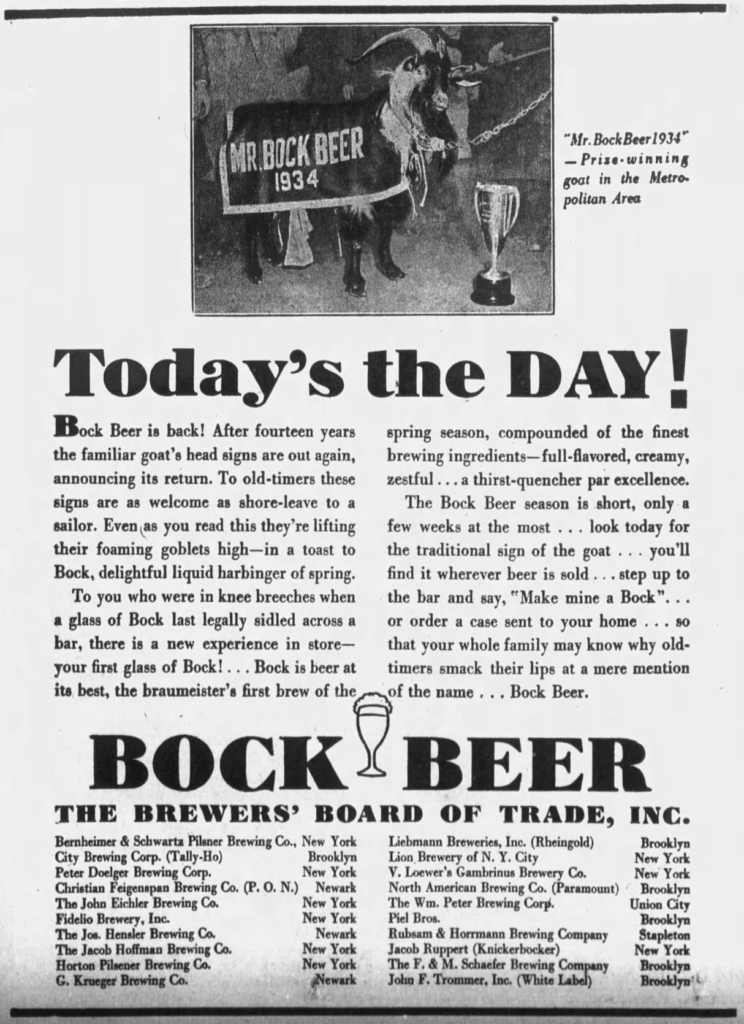
Two years ago I decided to concentrate on Bock ads for awhile. Bock, of course, may have originated in Germany, in the town of Einbeck. Because many 19th century American breweries were founded by German immigrants, they offered a bock at certain times of the year, be it Spring, Easter, Lent, Christmas, or what have you. In a sense they were some of the first seasonal beers. “The style was later adopted in Bavaria by Munich brewers in the 17th century. Due to their Bavarian accent, citizens of Munich pronounced ‘Einbeck’ as ‘ein Bock’ (a billy goat), and thus the beer became known as ‘Bock.’ A goat often appears on bottle labels.” And presumably because they were special releases, many breweries went all out promoting them with beautiful artwork on posters and other advertising. With Spring approaching, there are so many great examples that I’m going to post two a day for a few months.

Thursday’s first ad is for Bock Beer at least twenty breweries located in Brooklyn, Union City, Stapleton, Newark, and New York itself (by which I assume they mean Manhattan but it’s not clear) which was published on March 26, 1934. This ad was for the Brewers Board of Trade, Inc. of New York, which appears to have been a local trade organization active from the 1930s through perhaps as late as 1960. They were celebrating the fact that this was the first Bock release in fourteen years, and the first one after prohibition was repealed. This ad ran in The Brooklyn Eagle, of Brooklyn, New York.

Filed Under: Art & Beer, Beers, Breweries, Just For Fun Tagged With: Advertising, Bock, Brooklyn, History, New York

Historic Beer Birthday: Bill Brand

March 26, 2026 By Jay Brooks 9 Comments

Today would have been Bill Brand’s 88th birthday, if not for the tragic events of February 8, 2009. Bill, of course, was hit by a Muni Train that evening and passed away twelve days later, on February 20. He was a bastion of support for the local beer community for decades, and one of its most visible media faces. He did a staggering amount of good to help brewers throughout the Bay Area, and wrote about the beer he loved so much with an unmatched passion and zeal. His Bottoms Up blog was read by millions, the newest form of his What’s On Tap newsletter that stretched back into the early 1990s. It was my great honor to take over his column and try to continue his legacy of support for craft brewers in the Bay Area and beyond. Drink a toast to the memory and legacy of William “Bill” Brand today. Happy birthday Bill, you are most certainly missed.

At the Falling Rock during GABF week in 2004. Clockwise from left, Bill, Lisa Morrison, me, Tom Dalldorf, Stephen Beaumont and my cousin Mike, who lived in Denver at the time.
Bill at the Bistro Double IPA Festival in 2008 with Kenny Gross and Judy Ashworth.
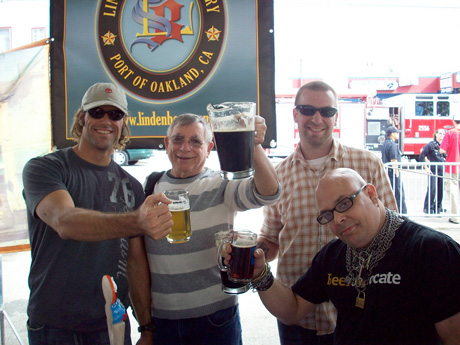
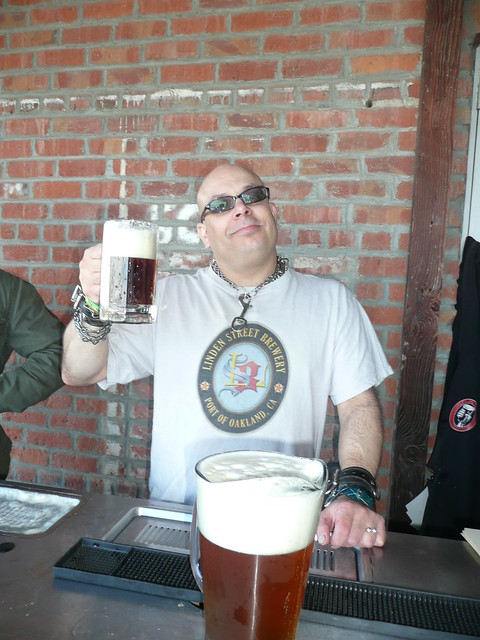
Bill toasting with a pitcher of Oakland’s new Linden Street Brewery, with Fraggle at the far right, whose birthday would also have been today. Photo by RRifkin.
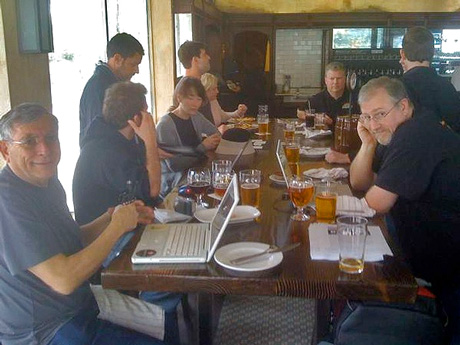
Dueling laptops; Bill and me at Magnolia on February 6 for the tapping of Napa Smith Original Albion Ale by Don Barkley. Photo courtesy of Shaun O’Sullivan.
Bill taking notes at the Monk’s Blood Dinner at 21st Amendment, February 8, 2009. Photo by Jesse Friedman of Beer & Nosh.
bill-brand
Drink a toast to Bill today, it’s how he would have wanted to be remembered.

Filed Under: Birthdays Tagged With: Bay Area, California, Northern California, Writing

Historic Beer Bornday: Fraggle

March 26, 2026 By Jay Brooks 3 Comments

beer-revolution
Today would have been the 60th birthday of Mark Martone, better known to the beer world as “Fraggle.” Fraggle always called them borndays, so I’ll continue that tradition for him. Unfortunately, he suffered a stroke almost nine years ago in late June and passed away a few days later, on July 5, 2014. Fraggle, along with Rebecca Boyles, founded the terrific Beer Revolution in Oakland, near Jack London Square on 3rd Street. I first met Fraggle when I featured him and Rebecca in an article I did for Beer Advocate magazine on beer geeks several years ago. It’s been great to see them turn their passion into their livelihood, and go from civilian to pro over the last few years. Join me in wishing Fraggle a very happy bornday, and raise a toast to his memory today or tonight or all day long. He would have wanted it that way.

Fraggle and Jen Muehlbauer at the Celebrator 25th anniversary party in 2013.
Friedman-2
Jesse Friedman, Fraggle and Ron Silberstein at the Anchor Holiday Party in 2012.
fraggle-steve-me
With Steve Donohue and me at the SF Beer Week opening gala in 2014.
P1180815
Pouring beer for Linden Street at the Winter Brews Festival in 2010.
Rebecca and Fraggle at Santa Rosa’s Beerfest in 2007.

Filed Under: Birthdays Tagged With: Bay Area, California, Oakland

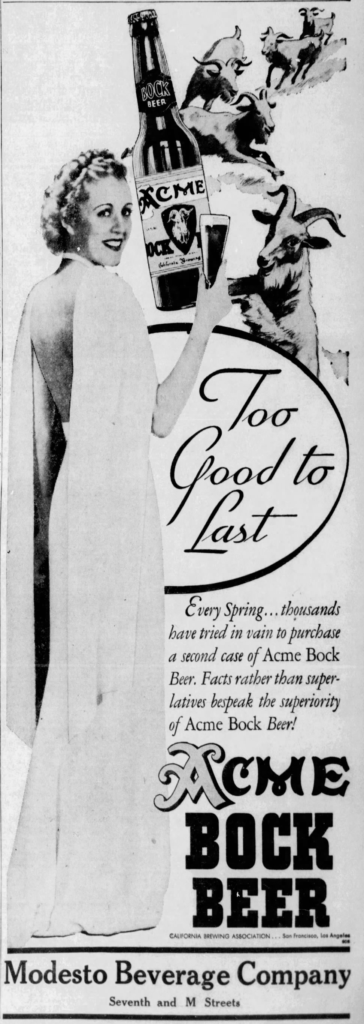
Beer In Ads #5185: Too Good To Last

March 25, 2026 By Jay Brooks Leave a Comment

Two years ago I decided to concentrate on Bock ads for awhile. Bock, of course, may have originated in Germany, in the town of Einbeck. Because many 19th century American breweries were founded by German immigrants, they offered a bock at certain times of the year, be it Spring, Easter, Lent, Christmas, or what have you. In a sense they were some of the first seasonal beers. “The style was later adopted in Bavaria by Munich brewers in the 17th century. Due to their Bavarian accent, citizens of Munich pronounced ‘Einbeck’ as ‘ein Bock’ (a billy goat), and thus the beer became known as ‘Bock.’ A goat often appears on bottle labels.” And presumably because they were special releases, many breweries went all out promoting them with beautiful artwork on posters and other advertising. With Spring approaching, there are so many great examples that I’m going to post two a day for a few months.

Wednesday’s second ad is for Acme Bock Beer, which was published on March 25, 1936. This ad was for the Acme Brewing Co. of San Francisco, California, which was originally founded in 1907, though they also opened a location in the Los Angeles area. Today the brand is owned by North Coast Brewing. This ad ran in The Modesto Bee, of Modesto, California.

Filed Under: Art & Beer, Beers, Breweries, Just For Fun Tagged With: Advertising, Bock, California, History

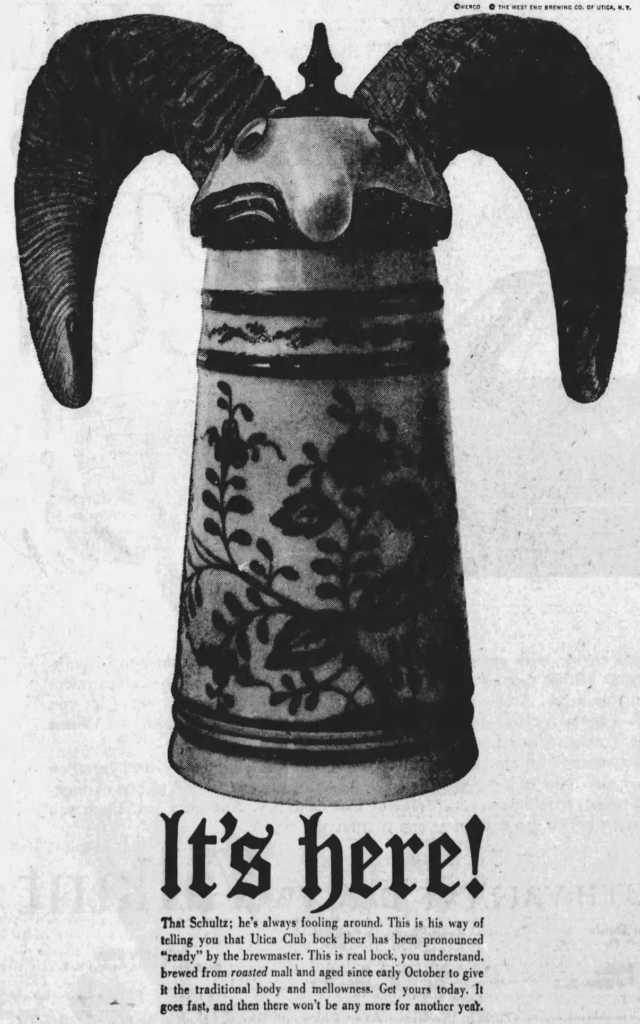
Beer In Ads #5184: It’s Here!

March 25, 2026 By Jay Brooks Leave a Comment

Two years ago I decided to concentrate on Bock ads for awhile. Bock, of course, may have originated in Germany, in the town of Einbeck. Because many 19th century American breweries were founded by German immigrants, they offered a bock at certain times of the year, be it Spring, Easter, Lent, Christmas, or what have you. In a sense they were some of the first seasonal beers. “The style was later adopted in Bavaria by Munich brewers in the 17th century. Due to their Bavarian accent, citizens of Munich pronounced ‘Einbeck’ as ‘ein Bock’ (a billy goat), and thus the beer became known as ‘Bock.’ A goat often appears on bottle labels.” And presumably because they were special releases, many breweries went all out promoting them with beautiful artwork on posters and other advertising. With Spring approaching, there are so many great examples that I’m going to post two a day for a few months.

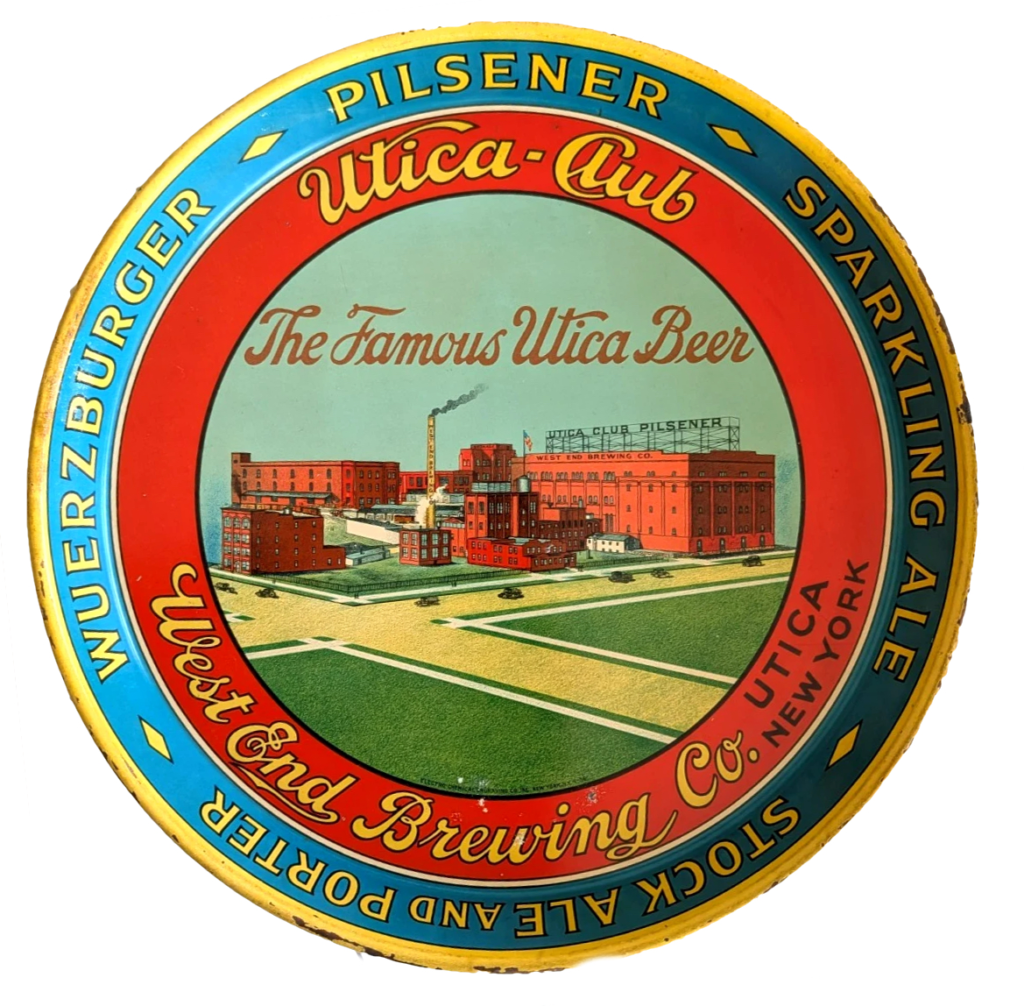
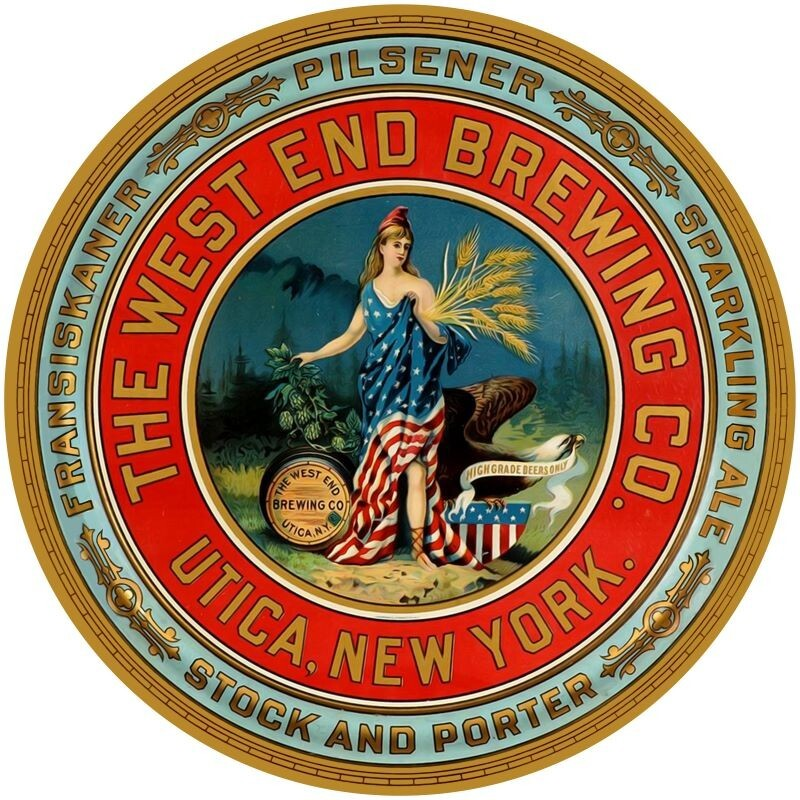
Wednesday’s first ad is for Utica Club Bock Beer, which was published on March 25, 1960. This one was for the West End Brewing Co., of Utica, New York, which today is known as the FX Matt Brewery or Saranac Brewing, but was originally founded in 1888 by F.X. Matt. This ad ran in The Post-Standard, of Syracuse, New York.

Filed Under: Art & Beer, Beers, Breweries, Just For Fun Tagged With: Advertising, Bock, History, New York

Historic Beer Birthday: FX Matt

March 25, 2026 By Jay Brooks Leave a Comment

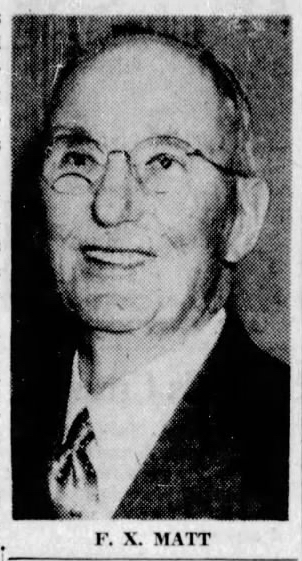
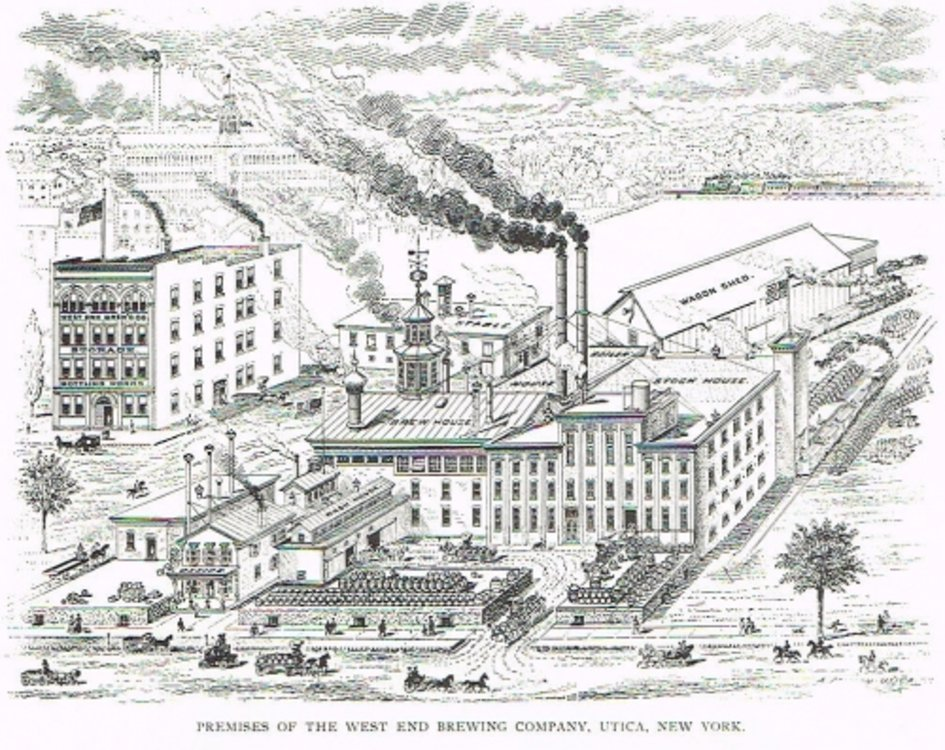
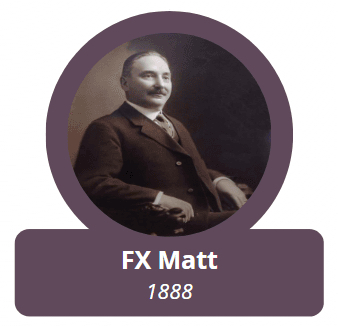
Today is the birthday of Francis Xavier ‘FX’ Matt (March 25, 1859-June 27, 1958). He was born in Igelschlatt, Landkreis Waldshut, Baden-Württemberg, Germany. When he was 19, in 1878, his parents, Theodore and Johanna Matt, emigrated to the U.S., settling in Utica, New York. Before moving to America, Matt learned brewing at the Badische Staatsbrauerei Rothaus in Baden-Württemberg. Once in the Utica, he worked at the Charles Bierbauer Brewery, which was founded in 1853, as both a lead salesman and brewmaster for several years, before reorganizing the business as The West End Brewing Co. in 1888. It remained under that name until 1981, when it was renamed FX Matt Brewing though continued to trade under the West End Brewing name. After prohibition, the brand name “Utica Club” was developed and after 1980, the Saranac brand was launched.

Here’s some early history, from Grokipedia:

Founding and Early Operations

Francis Xavier Matt, a German immigrant born in 1859, honed his brewing expertise at the Duke of Baden Brewery in Germany’s Black Forest region before arriving in the United States in 1878 at the age of 19. He initially worked as a salesman at the Charles Bierbauer Brewery in Utica, New York, where his skills quickly elevated him to brewmaster and lead salesman.

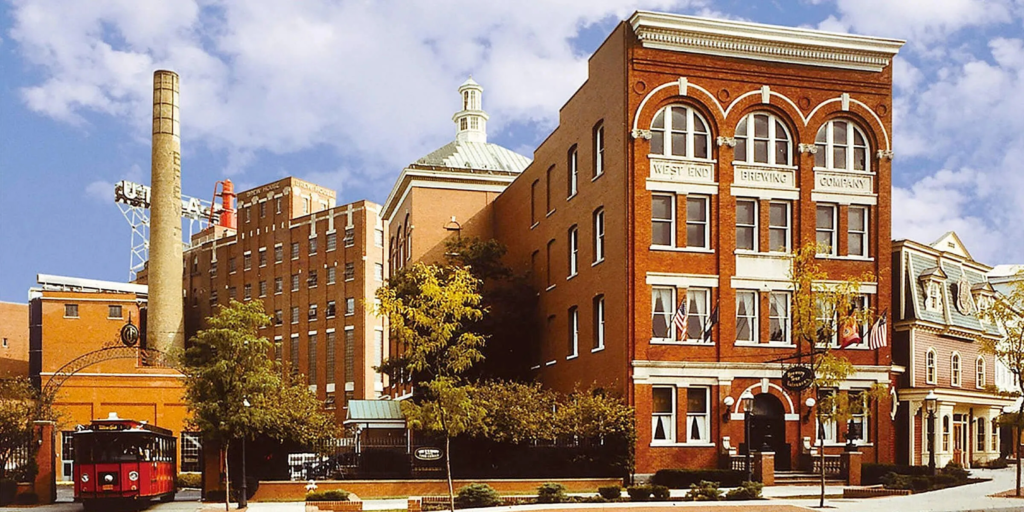
In 1888, Matt purchased and reorganized the struggling Charles Bierbauer Brewery, transforming it into the West End Brewing Company and establishing it as a family-owned operation in Utica’s growing brewery district. The new entity focused primarily on producing high-quality lager beers, reflecting Matt’s European training and the era’s demand for crisp, bottom-fermented styles popular among German-American communities. Distribution remained local, serving taverns and markets in the Mohawk Valley and surrounding areas of upstate New York to build a loyal customer base.

The brewery’s initial facility was located at 830 Varick Street in Utica, a site that had hosted brewing operations since the mid-19th century. In its first year, the West End Brewing Company produced 4,000 barrels of beer with a staff of just 12 employees, demonstrating efficient small-scale operations rooted in Matt’s hands-on management. By the early 20th century, prior to 1920, the operation had expanded significantly, employing up to 400 workers and solidifying its position as one of Utica’s 12 active breweries amid the city’s industrial boom.

Here’s more from Grokipedia:

Prohibition Era Survival

When the 18th Amendment ushered in Prohibition from 1920 to 1933, the West End Brewing Company, under the leadership of the Matt family, faced severe economic pressures as the U.S. brewing industry collapsed, with many Utica-area competitors shuttering their operations entirely. To endure, the brewery pivoted to non-alcoholic production, manufacturing soft drinks and malt tonics under the newly introduced Utica Club label, which became a lifeline for the business. This shift allowed the company to sustain its facilities and a core workforce amid widespread industry layoffs and closures, preserving the infrastructure necessary for future beer production.

The Utica Club non-alcoholic lineup during Prohibition included carbonated soft drinks such as root beer, ginger beer, and cream sodas, alongside non-alcoholic near-beer and malt tonics—products that cleverly skirted legal restrictions while meeting consumer demand for familiar flavors. These items not only generated revenue during the dry era but also built brand recognition that would later transfer to beer upon repeal. By advising customers against fermenting the malt tonics at home, the brewery navigated regulatory scrutiny while maintaining ethical operations.

Prohibition’s end on December 5, 1933, via the 21st Amendment, marked a swift recovery for the brewery, which became the first in New York—and the nation—to secure a federal license to resume beer production just one day later. At 12:05 a.m. on December 6, Utica Club Pilsner was poured as the inaugural legal beer post-repeal, following a celebratory parade from the brewery to the Hotel Utica. This rapid licensing, attributed to the company’s preparedness and preserved facilities, enabled an immediate resumption of brewing under the Matt family banner, solidifying its regional prominence despite lingering economic hardships from the Great Depression.

And this is from Matt’s final years with the brewery.

Post-War Growth

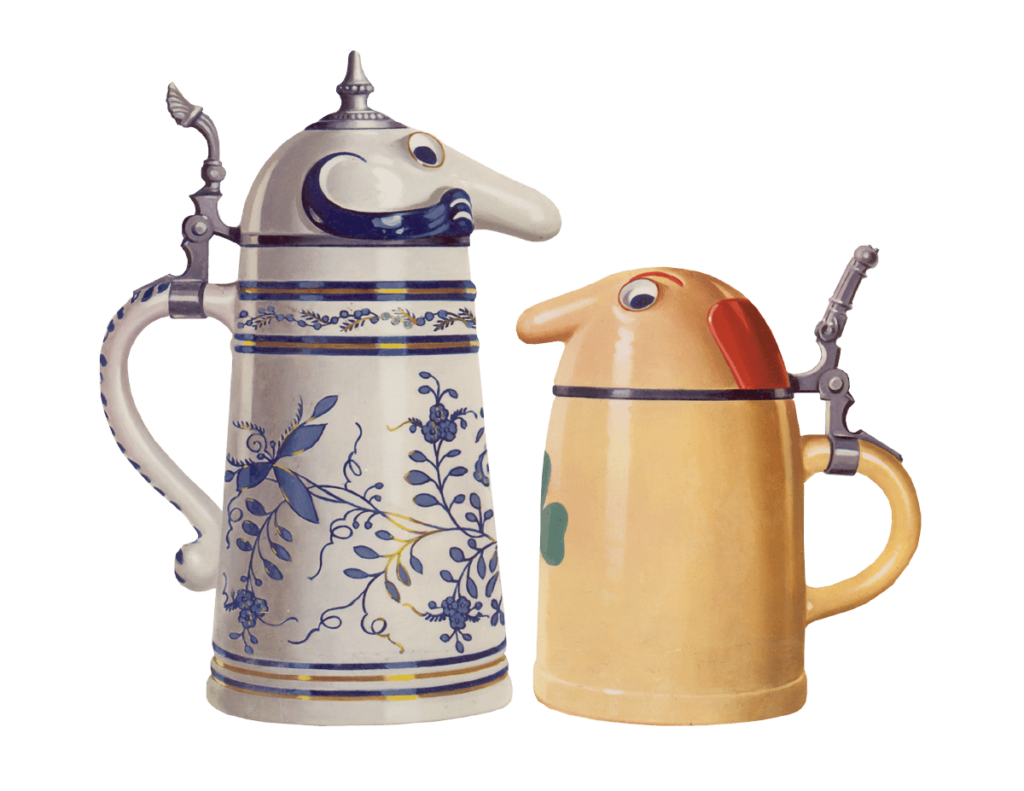
Following World War II, the F.X. Matt Brewing Company saw renewed growth under the leadership of second-generation owner Walter J. Matt, who assumed control in 1951 and focused on modernizing marketing efforts to capitalize on postwar demand for beer. By 1958, the introduction of the iconic Schultz & Dooley advertising campaign, featuring animated beer steins voiced by comedian Jonathan Winters, dramatically increased sales by more than 50%, reflecting broader industry expansion as consumer preferences shifted toward packaged beers. This period also marked the brewery’s adaptation to bottling innovations in the 1950s, enabling wider distribution of flagship brands like Utica Club beyond draft sales in local taverns.

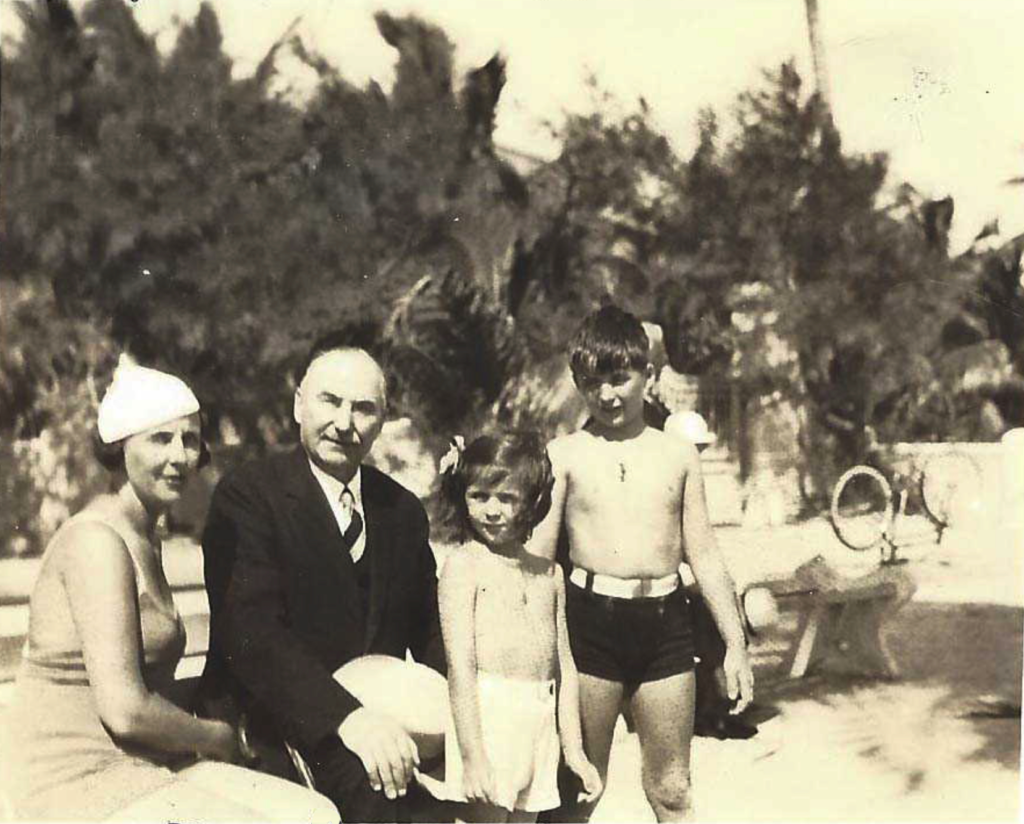
Matt with family in Miami Beach, Florida in 1934.

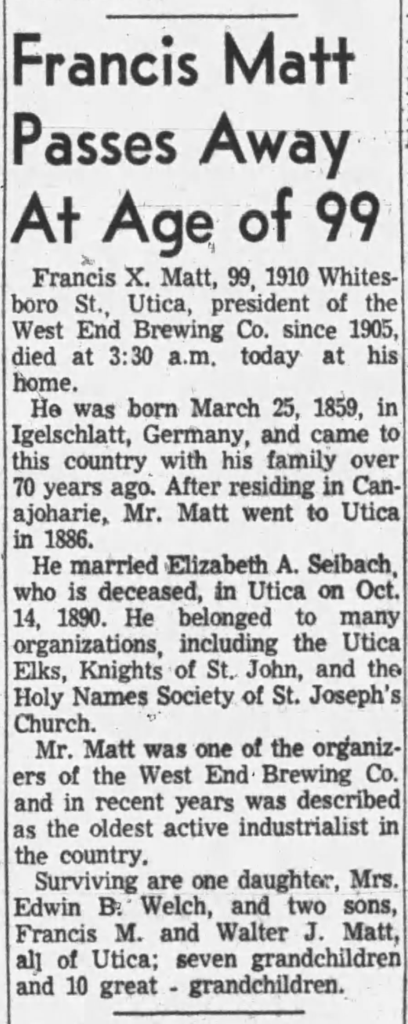
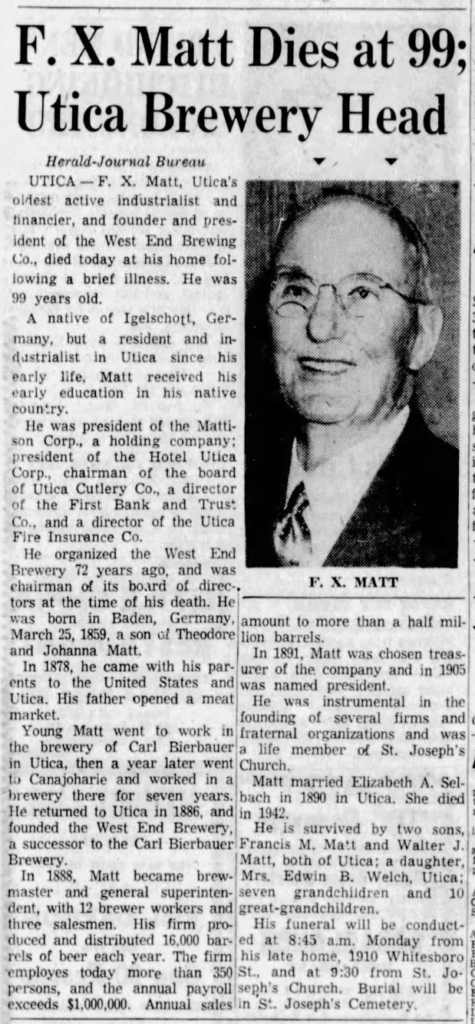
Here’s an obituary of Matt from the Daily Sentinel of Rome, New York:

And this obituary is from the Syracuse Herald Journal:

Filed Under: Beers

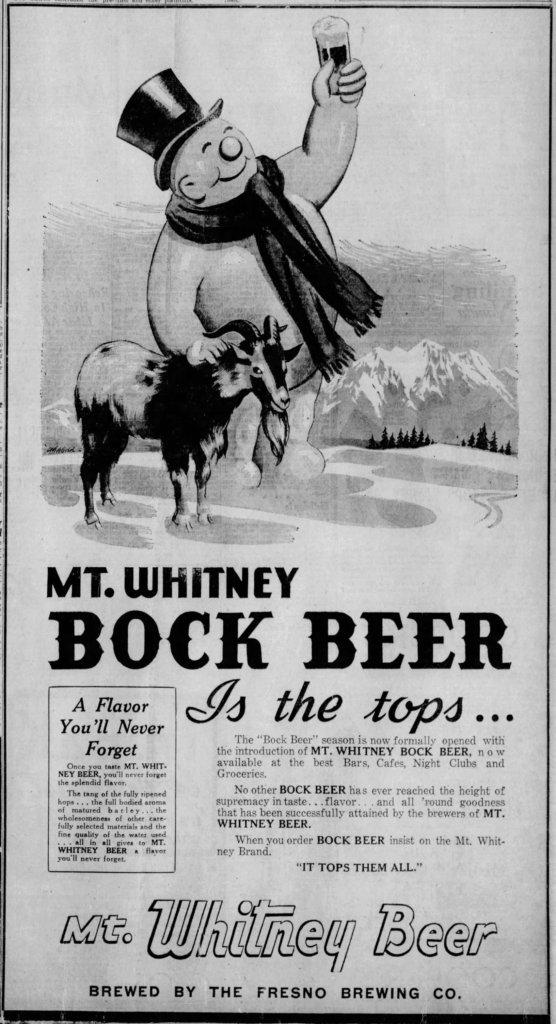
Beer In Ads #5183: Mt. Whitney Bock Beer Is The Tops …

March 24, 2026 By Jay Brooks Leave a Comment

Two years ago I decided to concentrate on Bock ads for awhile. Bock, of course, may have originated in Germany, in the town of Einbeck. Because many 19th century American breweries were founded by German immigrants, they offered a bock at certain times of the year, be it Spring, Easter, Lent, Christmas, or what have you. In a sense they were some of the first seasonal beers. “The style was later adopted in Bavaria by Munich brewers in the 17th century. Due to their Bavarian accent, citizens of Munich pronounced ‘Einbeck’ as ‘ein Bock’ (a billy goat), and thus the beer became known as ‘Bock.’ A goat often appears on bottle labels.” And presumably because they were special releases, many breweries went all out promoting them with beautiful artwork on posters and other advertising. With Spring approaching, there are so many great examples that I’m going to post two a day for a few months.

Tuesday’s second ad is for Mt. Whitney Bock Beer, which was published on March 24, 1936. This one is for the Fresno Brewing Co., of Fresno, California, which was originally founded in 1900 by Ernst Eiler and his son. This ad ran in The Fresno Bee, also of Fresno, California.

Filed Under: Art & Beer, Beers, Breweries, Just For Fun Tagged With: Advertising, Bock, California, History, Northern California

« Previous Page
Next Page »

Find Something

Northern California Breweries

Please consider purchasing my latest book, California Breweries North, available from Amazon, or ask for it at your local bookstore.

Recent Comments

  • Bob Paolino on Beer Birthday: Grant Johnston
  • Gambrinus on Historic Beer Birthday: A.J. Houghton
  • Ernie Dewing on Historic Beer Birthday: Charles William Bergner 
  • Steve 'Pudgy' De Rose on Historic Beer Birthday: Jacob Schmidt
  • Jay Brooks on Beer Birthday: Bill Owens

Recent Posts

  • Beer In Ads #5205: Moerlein’s Celebrated Bock Beer, An Easy Winner April 5, 2026
  • Historic Beer Birthday: Fritz Funke April 4, 2026
  • Historic Beer Birthday: Herman Zibold April 4, 2026
  • Beer In Ads #5204: Bock Beer! The First Genuine Bock Of The Season April 4, 2026
  • Historic Beer Birthday: Marcus Rapp April 4, 2026

BBB Archives

Feedback

Head Quarter
This site is hosted and maintained by H25Q.dev. Any questions or comments for the webmaster can be directed here.