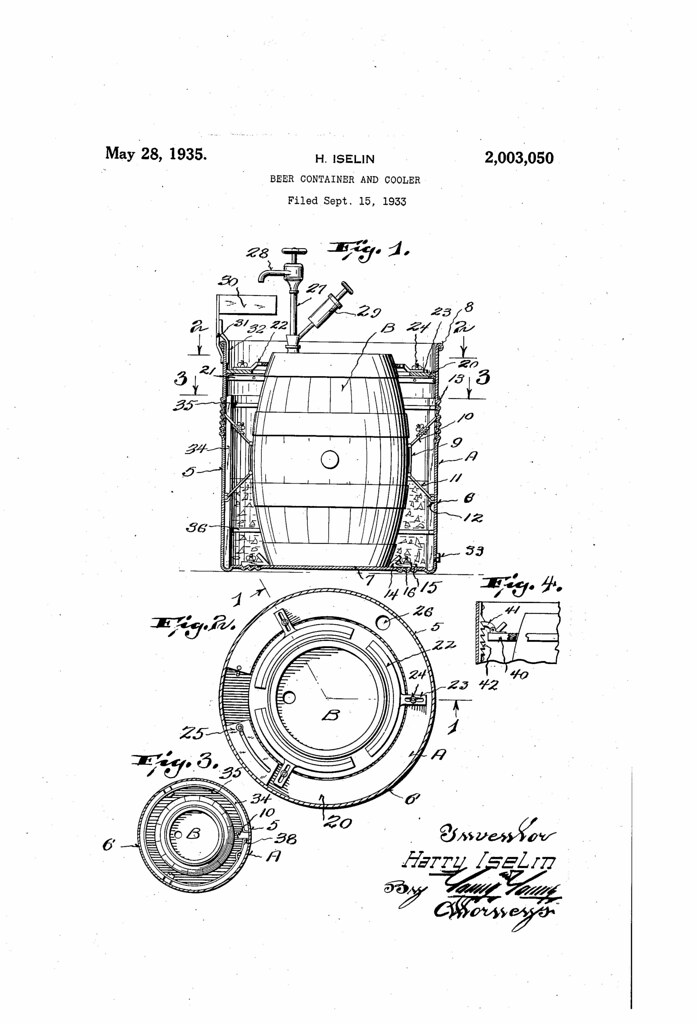
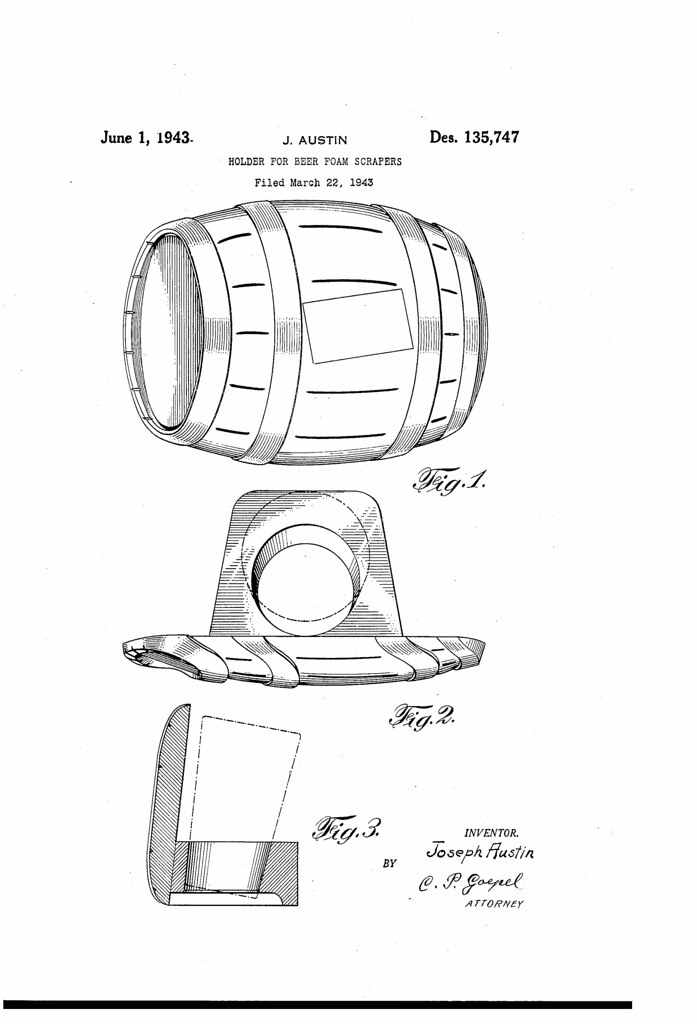
Today in 1943, US Patent D135747 S was issued, an invention of Joseph Austin, assigned to the F. & M. Schaefer Brewing Company, for his “Design for a Holder for Beer Foam Scrapers.” There’s no Abstract, though it’s described incredibly simply in the application, stating only that it’s an “ornamental design for a holder for beer foam scrapers, substantially as shown and described.” Which is funny, because that’s about the only description there is.
Beer In Ads #1572: Man Size Pleasure Of Bronco Riding

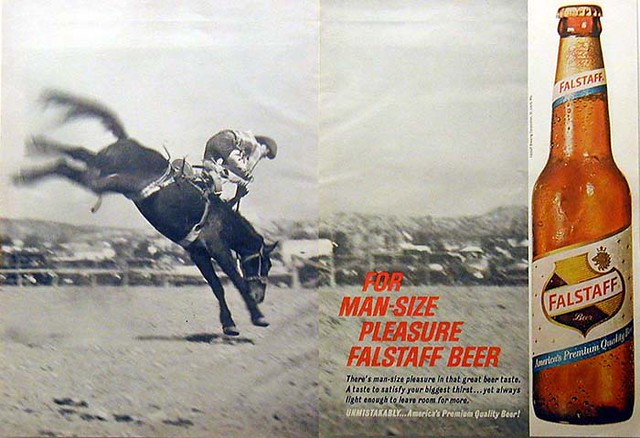
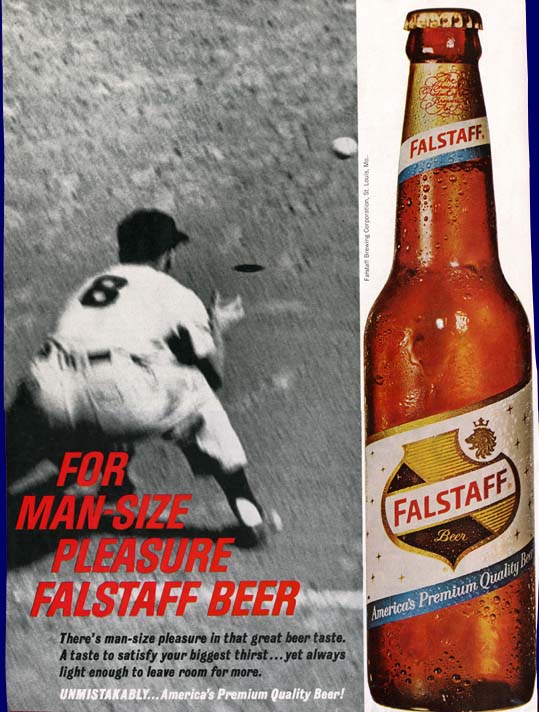
Sunday’s ad is still another one for Falstaff, also from the late 1950s. This is the third Falstaff ad I’ve come across equating manliness with beer, and in particular sports. While the last ones were for golf and baseball, while this one celebrates the horsemanship of bronco riding as its “Man Size Pleasure.” Yesterday’s ad was also apparently a doubletruck ad, that is a two-page ad, but I only have half of it, but a reader who collects Falstaff breweriana tells me the other half “has a runner sliding into base.”
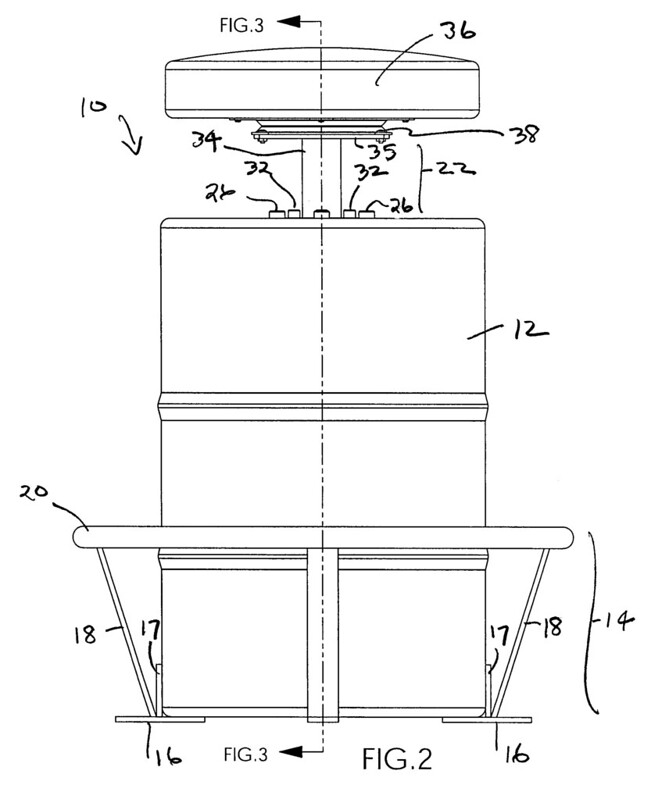
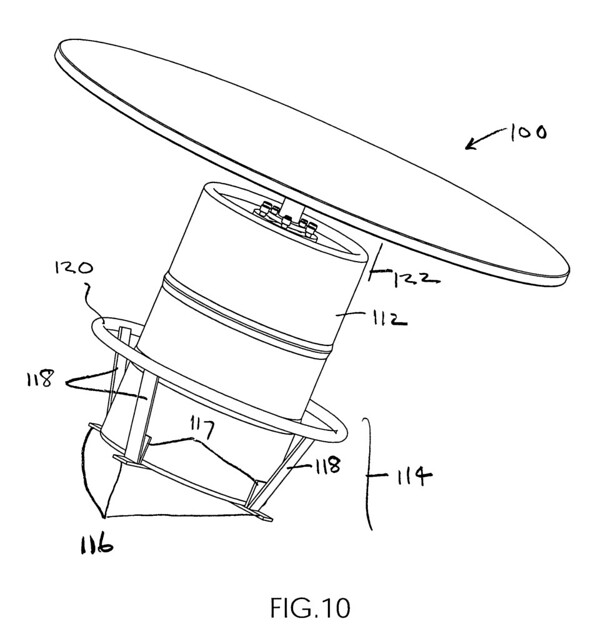
Patent No. 7950544B2: Support And Stand For Furniture From Kegs
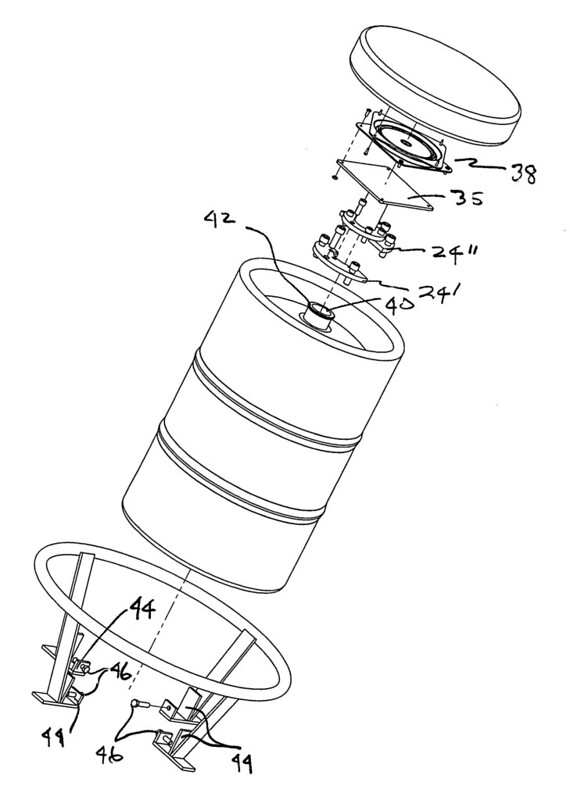
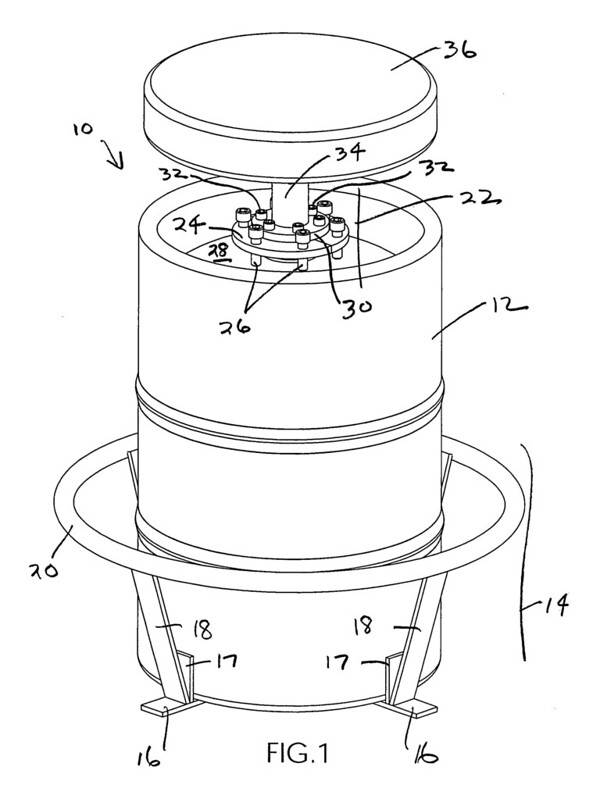
Today in 2011, US Patent 7950544 B2 was issued, an invention of Chase M. Blossom, for his “Support and Stand for Furniture From Kegs.” Here’s the Abstract:
The present invention is a top stand platform for furniture manufactured from beer kegs. The top stand platform has a first load distribution ring which circumvents the outlet opening at the center top of the keg at a level below the top flange of the outlet opening. Near its periphery, the first ring has a set of first threaded bolts extending downwardly onto the top surface of the keg. Also, the top stand platform comprises a second stand base ring, with a set of second threaded bolts which secure the second stand base ring to the top of the first load distribution ring. This way, the two first and second rings are clamped together and secured tightly to the flange of the outlet opening at the top of the keg. Secured to the top of the second stand base ring is an upwardly-extending base.
Patent No. 2938643A: Closure
Today in 1960, US Patent 2938643 A was issued, an invention of Milton L. Geiser and George L. Herr, assigned to Armstrong Cork Co., for his “Closure.” There’s no Abstract, though it’s described this way in the application. “This invention relates to a bung, and more particularly to an elastomeric bung to replace the cork bung for insertion in the bung bushing of a barrel.” Which is fairly vague, so here’s quite a bit more explanation:
In order for a bung to function properly for this purpose, it is necessary that it be designed so that it can be driven easily into the bung bushing with existing driving equipment, will be held securely in position in the bung bushing to prevent the pressure developed in the keg from blowing the bung out of its sealing position, and also can be driven on through the bung bushing into the keg when the tap pump is inserted to remove the beer from the keg. Due to the fact that it must be driven into the keg and also due to the fact that the interior of the bung is in engagement with the contents of the keg, it is essential that the bong be produced from materials which will not have a toxic or other deleterious effect on the contents of the keg.
Several attempts have been made to produce bungs from plastic material such as polyethylene, and the general trend has been toward a bung which forms a seal by providing a continuous ledge around the bottom edge of the bung which is exerted against the shoulder or bottom surface of the bung bushing. In order to insure this seal, it is necessary to have a rather heavily reinforced bottom edge on the skirt of the bung which is usually deformed during the insertion of the bung into the keg, which deformation impairs the sealing characteristics of the bung. When this reinforcing ring is compressed during insertion, there is no space provided into which the compressed material can be distributed. Because of this material distribution, the bottom skirt either develops a fold or the reinforced ring assumes an oval shape in the opening in the bung bushing. In the case of the fold, the material forming the bung is usually ruptured, resulting in an improper seal; and in the case of the assumed oval, the bung is cocked in the bushing to such an extent that the top edge of the opening in the bushing gouges sections from the side of the hung. in either instance the sealing qualities of the bung are greatly impaired.
Other plastic bungs have been developed having a scrim of ribs around the skirt of the bung, giving line contact between the bung and the bushing at several points in the bushing. This line contact has not been satisfactory due to the fact that bushings through reuse become scored on their inner or sealing surface. With these score marks, it is not easy to seal the contents of the barrel with a polyethylene bung having several line contact points throughout the depth of the bung. In structures having a plurality of sealing rings around the skirt of the bung, these rings are of necessity of such nature that they serve as reinforcing rings and prevent the expansion of the bung to permit the wall of the bung to be urged against the bushing by the internal pressure on the bung. Here again, with a plurality of reinforcing rings surrounding the bung, there is no opportunity for the material in the rings to be redistributed; therefore, the ring tries to assume an oval shape and in so doing cocks the hung in the opening in the bushing, causing areas near the top of the bushing to be gouged.
Keeping in mind the limitations of the existing bung’s, the hollow, cup-shaped bung of this invention was ‘developed to be easily inserted without deformation ‘of “the bottom of the cylindrical skirt and without cocking of the bung in the opening of the bung bushing, leaving a relatively large area of the skirt of the bung for sealing engagement with the internal surface of the bushing, and at the same time provide suitably reinforced rings for sealing score marks in the bung bushing.

Beer In Ads #1571: Man Size Pleasure Of Baseball
Saturday’s ad is yet another one for Falstaff, also from 1959. This is the second ad I’ve found equating manliness with beer, and in particular sports. While the last one was for golf, this ad touts baseball as its “Man Size Pleasure.” It’s got a “A taste to satisfy your biggest thirst … yet always light enough to leave room for more.”
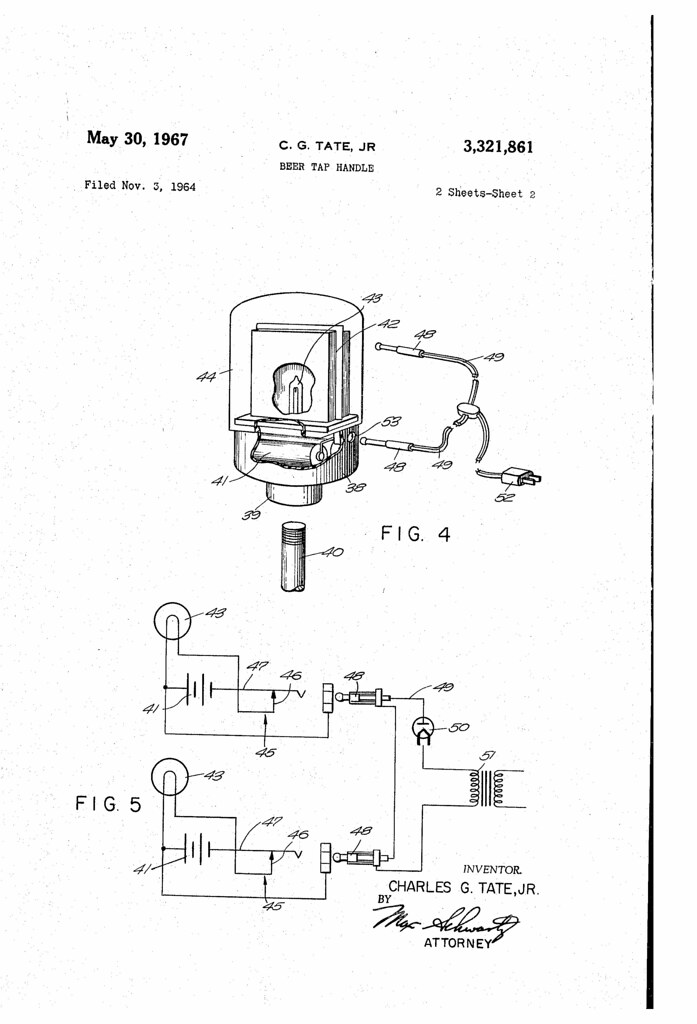
Patent No. 3321861A: Beer Tap Handle
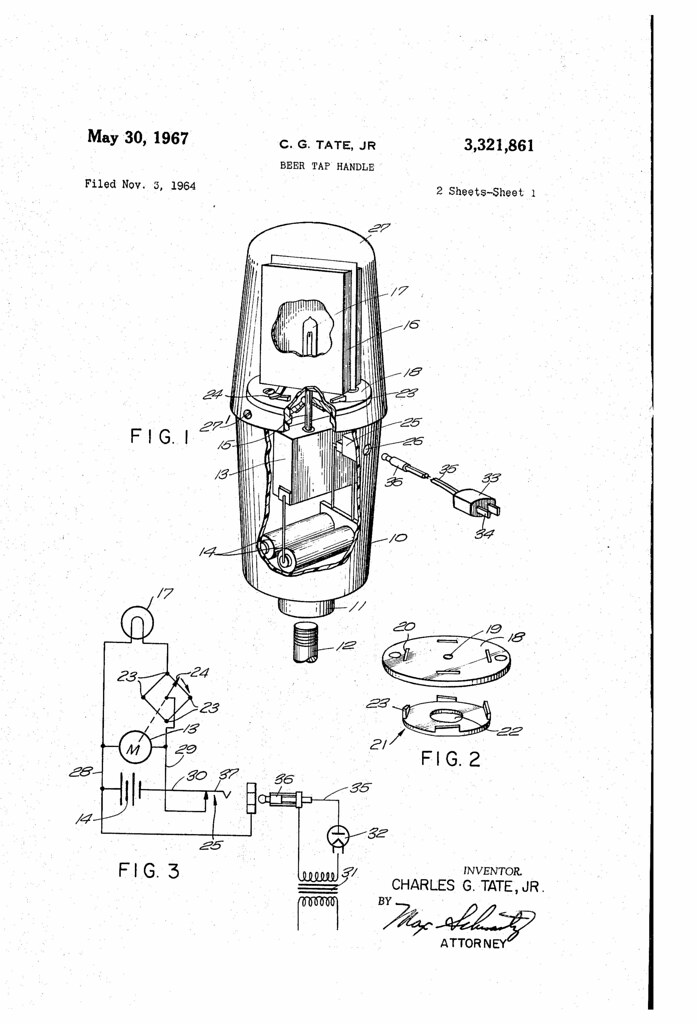
Today in 1967, US Patent 3321861 A was issued, an invention of Charles G. Tate Jr., for his “Beer Tap Handle.” There’s no Abstract, though it’s described this way in the application:
Because of competition most beer companies provide bars with fancy tap handles carrying the name of the particular brew. These handles are changed frequently to attract attention and are made in all materials in numerous shapes and sizes. Attempts have been made to provide such handles with electrically operated devices such as lights and other moving parts. However, most communities are provided with safety regulations which prohibit the use of electric lines to beer tap handles be cause of the danger involved, the bartender normally having wet hands and handling a wet product. Battery power has also been suggested for such purpose but these are expensive because the batteries must be frequently replaced. Furthermore, a busy bartender will often forget to turn the switch and turn on the device when he comes in in the morning. The present invention is designed to provide an electrically powered beer tap handle utilizing rechargeable batteries. The device of the present invention operates with a novel switching arrangement so that the batteries are being charged only overnight when the de vice is not in use. Also, removal of the charging device turns on the beer tap handle.
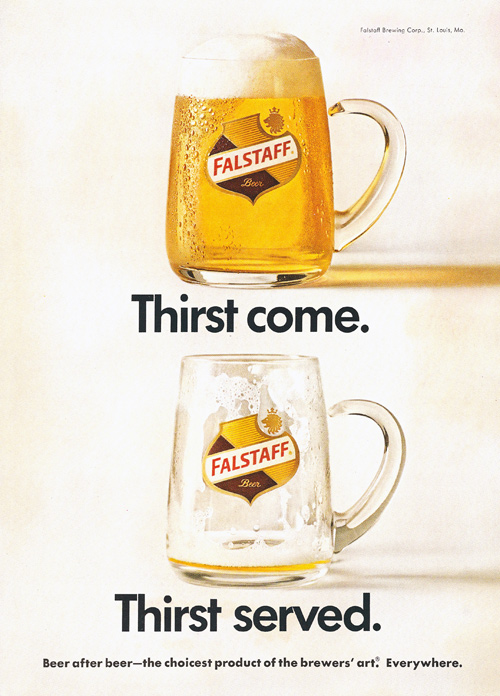
Beer In Ads #1570: Thirst Come. Thirst Served.
Friday’s ad is for Falstaff, from 1967. This is such a simple ad, but I actually really like it. Just a full glass and then an empty one; I came, I thirsted. I wonder what that is in Latin? Veni Bibi? And I just love the tagline at the bottom. “Beer after beer — the choicest product of the brewer’s art.”
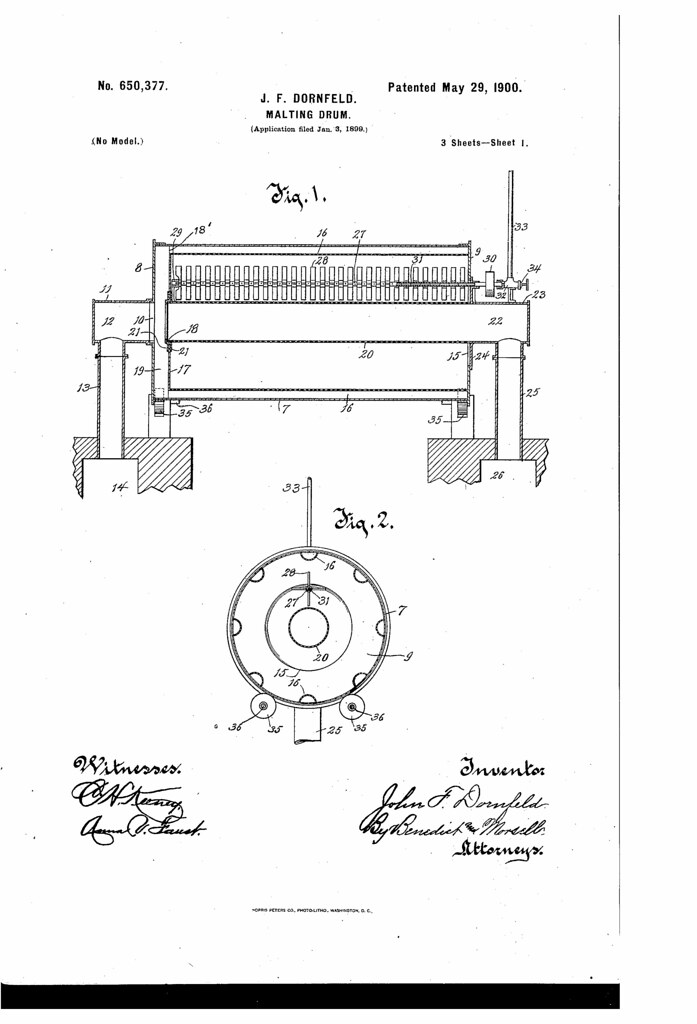
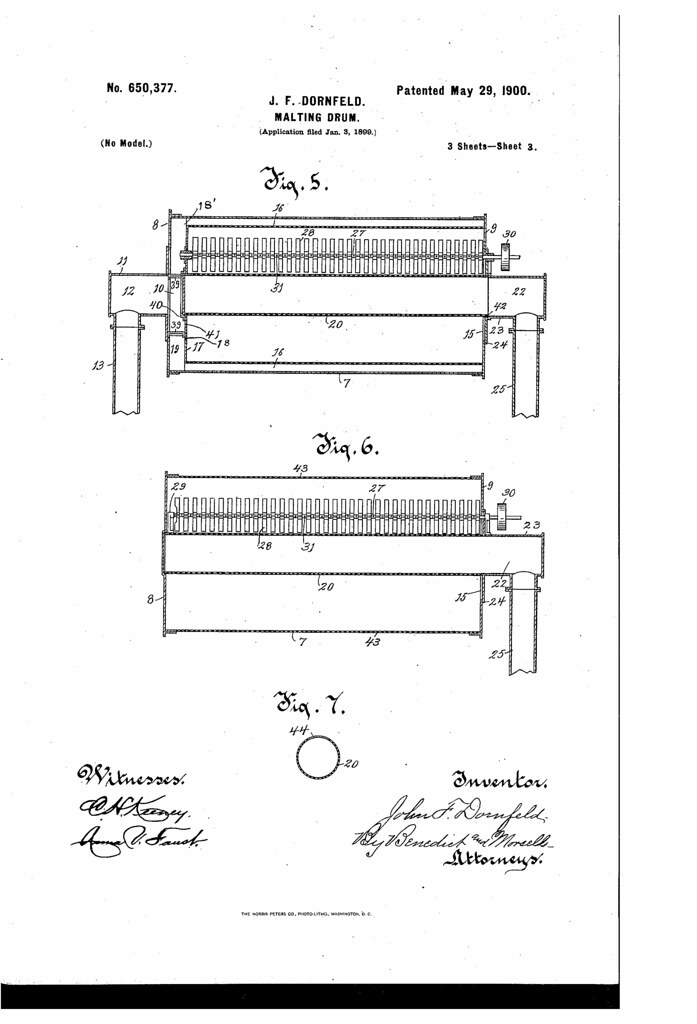
Patent No. 650377A: Malting-Drum
Today in 1900, US Patent 650377 A was issued, an invention of John F. Dornfeld, for his “Malting-Drum.” There’s no Abstract, though it’s described this way in the application:
The primary object of the invention is to provide, in a malting-drum, an improved construction for positively stirring the steeped barley contained in the drum, whereby the contents of the drum are properly stirred and mixed at all times.
A further object is to provide an improved means for introducing water into the malt whenever necessary in an even and regular quantity and in such manner that the water is thoroughly mixed with the malt.
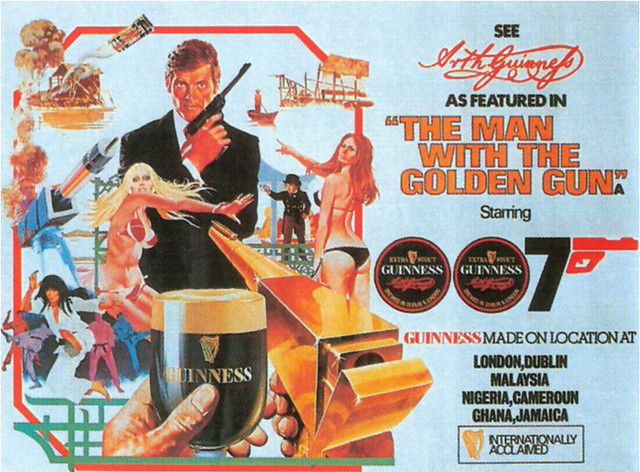
Beer In Ads #1569: James Bond, The Man With The Golden Guinness
Thursday’s ad is for Guinness, from 1974, when the James Bond film Man With the Golden Gun was released, which was Roger Moore’s second film portraying the British spy. Today is the birthday of Bond’s creator, author Ian Fleming, and is also known as “James Bond Day.” The Guinness ad is essentially a modified version of the film’s poster, with a man holding a glass of beer in the foreground and round logos replacing the zeroes in 007. And yes, I know Guinness isn’t golden, but the alliteration was too funny not to use. Although apropos of nothing in particular, Guinness announced recently that they will be launching Guinness Golden Ale and last year made a Blonde American Lager.
Patent No. 3091366A: Beer Dispenser
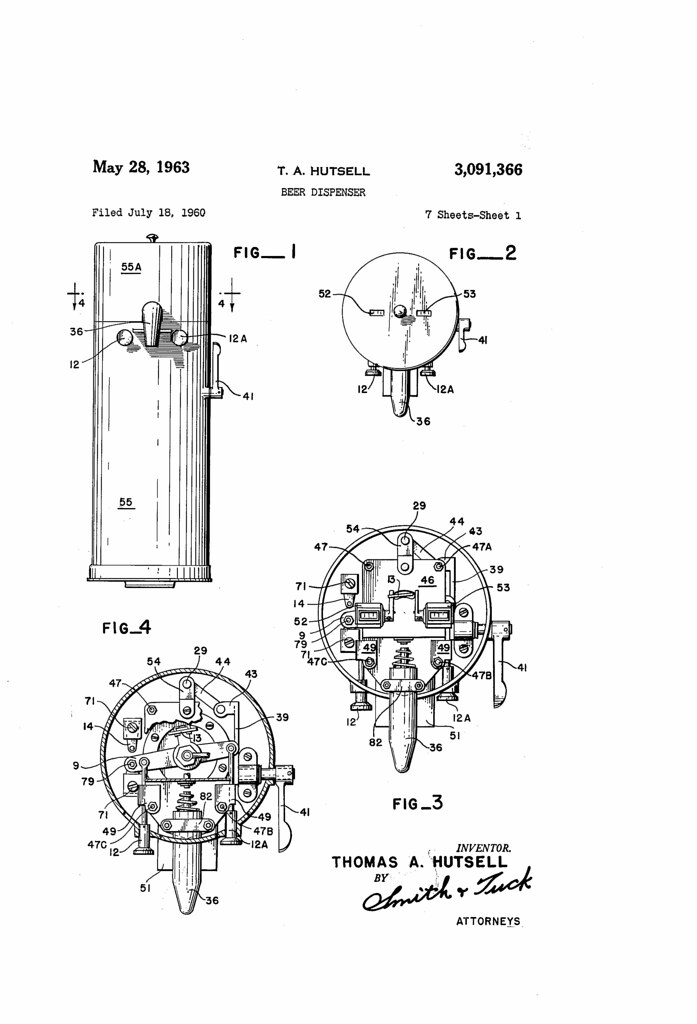
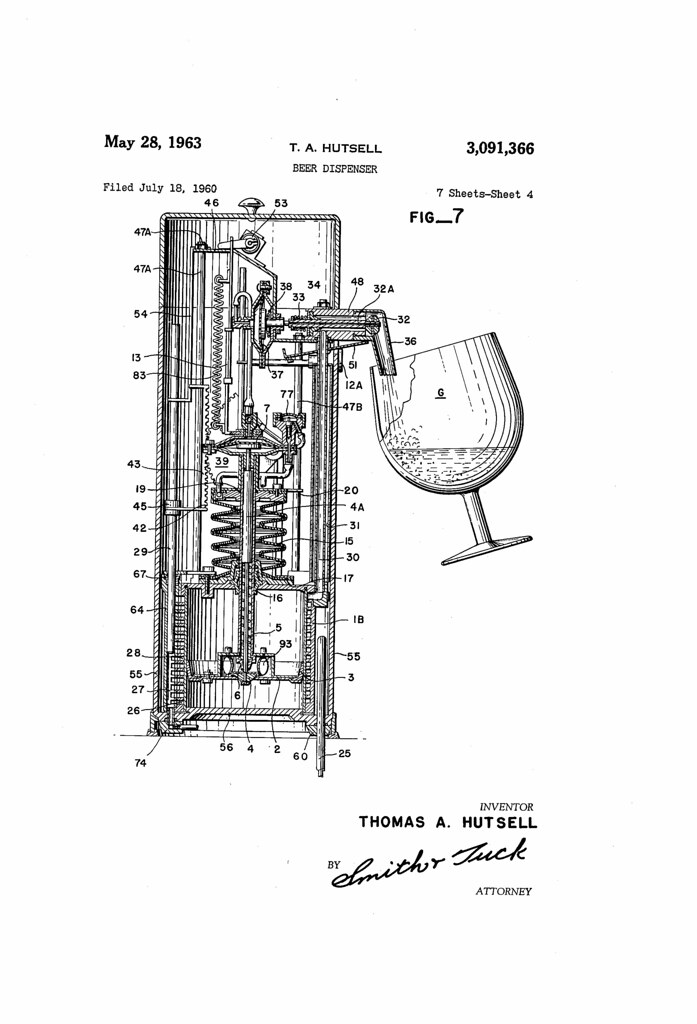
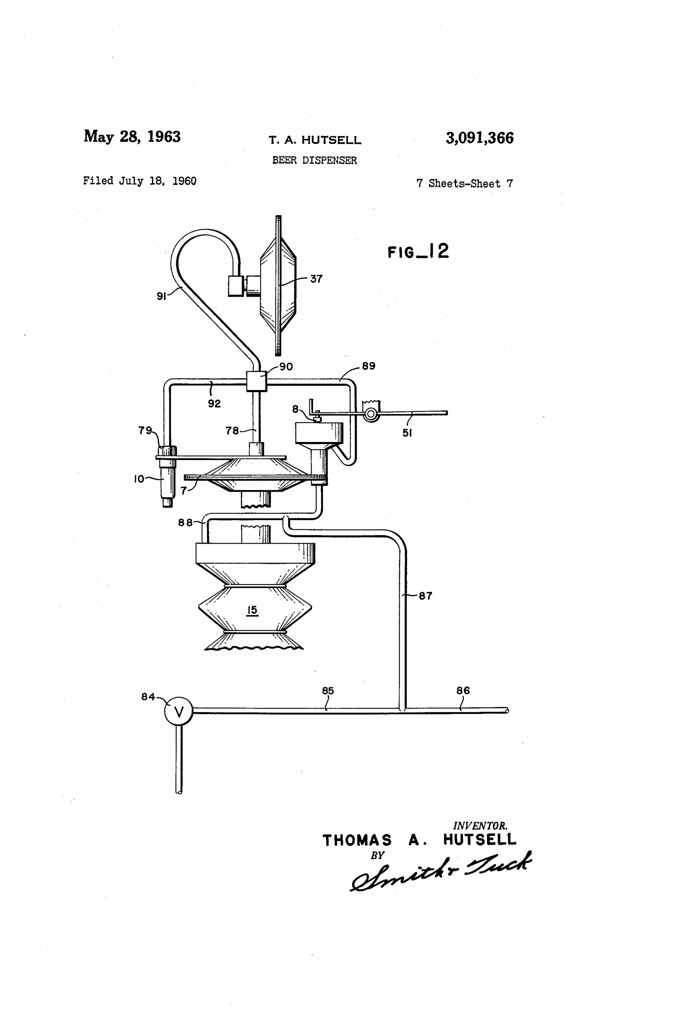
Today in 1963, US Patent 3091366 A was issued, an invention of Thomas A. Hutsell, for his “Beer Dispenser.” There’s no Abstract, though it’s described this way in the application:
This present device relates to the general art of devices intended for the measuring and dispensing of effervescent beverages. More particularly this invention relates to a beer dispensing device for dispensing draught beer. Means are provided in this present device to automatically dispense a measured amount of beer and the device is further capable for adjustment so that the desired amount of head of foam can be supplied as a part of the measured amount even though the beer in the dispensing keg may have physical properties quite different from that of the beer in the keg to which the device was previously connected.