Brookston Beer Bulletin

Jay R. Brooks on Beer

  • Home
  • About
  • Editorial
  • Birthdays
  • Art & Beer

Socialize

  • Dribbble
  • Email
  • Facebook
  • Flickr
  • GitHub
  • Instagram
  • LinkedIn
  • Pinterest
  • RSS
  • Twitter
  • YouTube

Powered by Genesis

Beer In Ads #1512: Goodness Knows

April 1, 2015 By Jay Brooks


Wednesday’s ad is another one for Budweiser, this one from 1961. It’s another ad from their “Where there’s life” series, this one is called “Goodness Knows.” At least three people are having a barbecue, or at a minimum are grilling a steak. One man is in the background sipping his beer, while a second masculine hand is holding a steak with tongs. The woman, wearing a huge and possibly mischievous smile reaches for the only other glass of beer we can see. Is she stealing the other man’s beer, or simply reaching for her own? Her expression appears to suggest the former.

budweiser-where-there-is-life-there-is-bud-theres-company-goodness-knows-1961

Filed Under: Art & Beer, Beers Tagged With: Advertising, Budweiser, History

Patent No. 3436319A: Thin Layer Steam Distillation Of Hop Oil Extract

April 1, 2015 By Jay Brooks

patent-logo
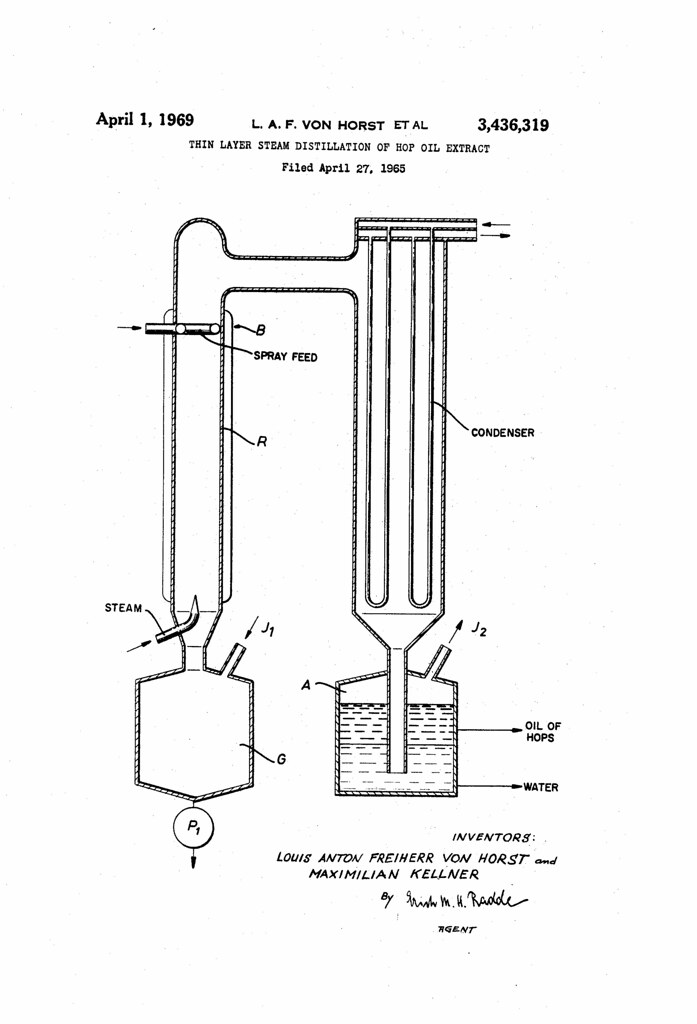
Today in 1969, US Patent 3436319 A was issued, an invention of Louis Anton Freiherr Von Horst and Maximilian Kellner, for their “Thin Layer Steam Distillation of Hop Oil Extract.” There’s no Abstract, but it’s described as relating “to a process of producing essential oil of hop preparations, and more particularly to a continuous process of producing such oil of hop, and to products obtained thereby,” with something approximating an abstract:

Improved process of recovering oil of hop from a solvent extract of hops by steam distillation in a novel manner, namely by passing the hop extract downwardly in a thin layer along an externally heated surface counter currently to the upwardly flowing steam in an oxygen-free atmosphere. This process has the advantage of completely recovering the oil of hop from the steam distillate and simultaneously producing a residual hop extract containing other components of said extract in substantially unaltered form. If the temperature of the starting solvent extract of hops is between about 80 C. and about 135 C., partial isomerization of the humulones to the isohumulones which are important brewing additives, takes place.

US3436319-0

Filed Under: Beers, Just For Fun, Politics & Law, Related Pleasures Tagged With: History, Hops, Law, Patent

USDA Dietary Guidelines Under Fire Again From Prohibitionists

April 1, 2015 By Jay Brooks

usda
Every five years, the U.S. Department of Agriculture, or USDA, in conjunction with the Department of Health and Human Services, or HHS, updates its quinquennial Dietary Guidelines. They’re described as providing “authoritative advice for Americans ages 2 and older about consuming fewer calories, making informed food choices, and being physically active to attain and maintain a healthy weight, reduce risk of chronic disease, and promote overall health.” Since the last guidelines were published in 2010, it’s time for the new ones, and they’ve been proposed and are are now open for comments before being finalized.

In the 2010 Guidelines, a change was made to the structure of the recommended amounts of alcohol people should consume, if they’re going to enjoy drinking alcohol and are, of course, of legal age. At the time, the government took the radical view, to prohibitionists, that:

The consumption of alcohol can have beneficial or harmful effects, depending on the amount consumed, age, and other characteristics of the person consuming the alcohol. Alcohol consumption may have beneficial effects when consumed in moderation. Strong evidence from observational studies has shown that moderate alcohol consumption is associated with a lower risk of cardiovascular disease. Moderate alcohol consumption also is associated with reduced risk of all-cause mortality among middle-aged and older adults and may help to keep cognitive function intact with age. However, it is not recommended that anyone begin drinking or drink more frequently on the basis of potential health benefits because moderate alcohol intake also is associated with increased risk of breast cancer, violence, drowning, and injuries from falls and motor vehicle crashes.

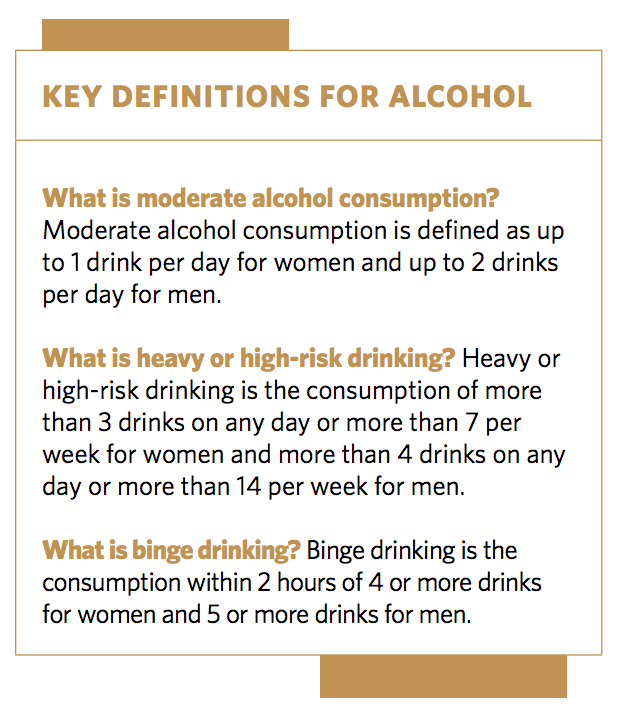
I may not agree with some of the characterizations in the last sentence, but it does serve to demonstrate how conservative the guidelines are, and that they’re not cavalierly telling people to start drinking. Plus, unlike some anti-alcohol groups, I’m not trying to willfully mislead people about what they say. They also have a handy chart of key definitions.

key-definitions-alcohol-2010

So what that second definition means is that if you’re a woman, you can enjoy 3 alcoholic drinks a day (or less), so long as you don’t have more than 7 during the same week, and you’ll be considered to not be a heavy drinker or engaging in high-risk drinking. A man, however, may enjoy 4 alcoholic drinks a day (or less), so long as he doesn’t have more than 14 during the same week, and he’ll likewise be considered to not be a heavy drinker or engaging in high-risk drinking. That, in effect, relaxed the “1 drink per day for women and up to 2 drinks per day for men” axiom that had been in place for a long while. When those changes made the rounds five years ago, the prohibitionists threw a temper tantrum and accused the government of all manner of bias and corruption, which is almost funny given how conservative they really are.

The new Dietary Guidelines for Americans, for 2015, are now going through the comment period, and once again the prohibitionists are apoplectic. Alcohol Justice, for example, whines that the government “proposes a risky and harmful shift in its definition of moderate drinking, and promotes drinking as a healthy dietary behavior. It suggests that a two-to-threefold increase in daily consumption limits is safe, and that questionable claims of health benefits outweigh known, substantiated risks of alcohol consumption. The Report represents a significant departure from previous Dietary Guidelines, and does so without sufficient scientific basis to justify such a shift.”

So how honest is that statement? Let’s take a look. First, what is the “risky and harmful shift in its definition of moderate drinking” from 2010 to 2015? The “new” language is on Page 105 of 107, constituting the proposed guidelines for 2015.

2015 Language:

Moderate alcohol consumption — Average daily consumption of up to one drink per day for women and up to two drinks per day for men, with no more than three drinks in any single day for women and no more than four drinks in any single day for men.

And here’s the old language below. Notice the difference? No? That’s because there really isn’t any. There are a few of the words that are different, numbers replaced by the word written out, some different punctuation, but that’s about it. The meaning is entirely the same.

2010 Language:

Moderate alcohol consumption is defined as up to 1 drink per day for women and up to 2 drinks per day for men. Heavy or high-risk drinking is the consumption of more than 3 drinks on any day or more than 7 per week for women and more than 4 drinks on any day or more than 14 per week for men.

There is no shift. If anything, this version of the guidelines merely confirms changes made to the 2010 Guidelines. “Regarding alcohol, the Committee confirmed several conclusions of the 2010 DGAC, including that moderate alcohol intake can be a component of a healthy dietary pattern, and that if alcohol is consumed, it should be consumed in moderation and only by adults. However, it is not recommended that anyone begin drinking or drink more frequently on the basis of potential health benefits.”

AJ says the “Dietary Guidelines should recommend ways to reduce and prevent alcohol-related harm, not increase it,” but of course that’s not at all what they say. That’s just more whining because they don’t like what the USDA is proposing. They didn’t like it five years ago, and they don’t like it now. They go on to claim that with “current and growing evidence regarding risk of disease and harm from drinking even low levels of alcohol, the Dietary Guidelines should include recommendations for Americans to drink less alcohol – not more.” Of course, that’s another misleading statement. They can, and often do, cite single studies that say what they want, but as detailed in Studies Show Studies Don’t Show Much, most are not worth the paper they’re printed on, but they keep hammering on them because it makes for effective propaganda, especially in the school of “if you repeat a lie often enough ….”

AJ further believes that the proposed guidelines say “that a two-to-threefold increase in daily consumption limits is safe.” But this mythical increase is just that, a fantasy. The 2010 guidelines said the same thing. There’s no proposed increase, just a confirmation of the last version. And guess what happened with the 2010 change? Nothing, that’s what. The country did not fall to ruin from people suddenly drinking too much because they believe the guidelines told people they should, or could.

Then they accuse the guidelines are based on “questionable claims of health benefits [which] outweigh known, substantiated risks of alcohol consumption. The Report represents a significant departure from previous Dietary Guidelines, and does so without sufficient scientific basis to justify such a shift.” What utter bullshit. Do you know what constitutes a “questionable claims of health benefits?” Anything that AJ doesn’t agree with. And how they define “known, substantiated risks of alcohol consumption?” That’s easy, it’s one they like that agrees with their skewed world view. As shown, this is absolutely NOT “a significant departure from previous Dietary Guidelines,” but is virtually identical to the 2010 version. And their statement that there is not “sufficient scientific basis to justify such a shift” is laughable because they’ll never except any scientific evidence that disagrees with or contradicts their dogma. Here’s how the USDA explains how they arrived at the alcohol guidelines.

As alcohol is a unique aspect of the diet, the DGAC considered evidence from several sources to inform recommendations. As noted above, moderate alcohol intake among adults was identified as a component of a healthy dietary pattern associated with some health outcomes, which reaffirms conclusions related to moderate alcohol consumption by the 2010 DGAC.

No matter how you slice it, there is nothing new regarding the alcohol guidelines in the proposed dietary guidelines for 2015. But to hear Alcohol Justice tell it, this is “a radical change,” despite being almost exactly the same as five years ago. This is their action plan for the faithful sheep that follow them, [with my rebuttal in brackets]:

THE PROPOSED CHANGE:

Without providing any explanation or evidence for a radical change [they do explain the reasons, citing that there’s evidence supporting their decision], the Dietary Guidelines Advisory Committee proposes to increase limits used to define “moderate” drinking. [No, they don’t. All they do is confirm the changes made five years ago.]

The current (2010) U.S. Dietary Guidelines define moderate drinking as up to 1 drink per day for women and up to 2 drinks per day for men (daily limits) [that’s not all they say, they also cite the weekly allowances]. In contrast, the proposed change would base these 1/2 limits on average rather than daily consumption and suggests it is safe for women to drink up to 3 drinks in a day and men up to 4 drinks in a day so long as the averages are not exceeded [exactly as they did in 2010]. This effectively triples (the daily limit for women and doubles (the daily limit for men). [Not this time, it doesn’t.]

Furthermore, the report implies that drinking is recommended as part of a healthy lifestyle: “the U.S. population should be encouraged to consume dietary patterns that are rich in vegetables …; moderate in low and non fat dairy and alcohol (adults).” [Oh, no! The horror. Frankly, what’s more surprising is that, given their findings that total mortality is improved with the moderate consumption of alcohol, they’re so conservative in their suggestions. But it makes sense in the context of anti-alcohol groups that throw tantrums any time their world view is challenged. But their statement that “the report implies that drinking is recommended as part of a healthy lifestyle” is complete and utter nonsense, and could even be called grandstanding because the language of the proposed 2015 guidelines also includes this: “However, it is not recommended that anyone begin drinking or drink more frequently on the basis of potential health benefits.” So it’s pretty crystal clear that the USDA is not recommending people start drinking “as part of a healthy lifestyle.” AJ just made that up.]

THE PROBLEM:

Since most adult drinkers in the U.S. don’t drink every day, the proposed change effectively encourages consumption right up to binge drinking levels, thus increasing health risk. [That identifies the problem with the definition of binge drinking, as I’ve written about numerous times. That’s the problem here, not encouraging people to drink moderately. After all, if they did, they might live longer. We wouldn’t want people to know that, would we?]

Binge drinking (4 or more drinks per occasion for women; 5 or more drinks per occasion for men) causes more than half of all alcohol related deaths each year in the U.S., and impairment and increased risk begin below those levels. The proposed changes are, therefore, dangerous for public health. [Again, that’s a problem with the definition of bingeing, which used to be more vague, making it hard to quantify. So it’s been narrowed over the years, and made easier to quantify, bringing more and more people into the specter of binge drinkers, artificially inflating statistics about its dangers.]

There are no randomized studies showing any health benefits from any level of alcohol consumption as well as no evidence that moderate drinking promotes a healthy lifestyle. [Poppycock. They’re hanging their hat here, one presumes, on “randomized” studies, but it’s unlikely even that’s true. The USDA itself in 2010, looked at meta-analysis of a wide range of studies, concluding just the opposite of AJ’s position. But AJ keeps ignoring that “evidence” because they don’t like it. It’s easier to just keep saying what they want to be true.]

It’s hard to know what to make of so dishonest a piece of propaganda as this is, raising unfounded fears, not to mention being littered with just out and out misinformation. It’s one thing to be in favor of promoting “evidence-based public health policies and organiz[ing] campaigns with diverse communities and youth against the alcohol industry’s harmful practices” but quite another to watch how that plays out in reality. “Evidence-based” seems to really mean anything they agree with and “the alcohol industry’s harmful practices” includes literally every single thing we do. I wish that was hyperbole, but I’ve never seen any action taken by an alcohol company that AJ didn’t find fault with, from donating cans of water to Haiti after the devastating earthquake there to their “‘charge-for-harm’ approach, which is based on the assumption that anyone who drinks deserves to be punished.” And another similar group stated at a 2013 conference that “they simply didn’t care about the public health impacts of taxes. They were in the game solely to get some of the tax revenue steered toward their organization.”

This is getting seriously out of hand. as anti-alcohol groups get bolder and more obviously prohibitionist, their divisiveness makes any meaningful discussion increasingly impossible. And unlike these prohibitionists, most people I know in the beer world, and the real world for that matter, recognize that while moderate drinking of alcohol is a good thing for a majority of adults, it’s not for everybody. Some people can’t handle it, and they often ruin it for the rest of us. Because those are the people that anti-alcohol folks always use to represent everyone who drinks, ignoring that they’re minority and that most of us can have a few drinks and not plunge the world into turmoil. But as long as they keep painting us as all the same, they’ll never be able to admit anything but an absolutist view of drinking, no matter how ridiculous that is, and no matter how ridiculous it makes them seem. When you start accusing the conservative USDA of ignoring science and encouraging people to start drinking, you’ve definitely jumped the shark.

Filed Under: Beers, Editorial, News, Politics & Law Tagged With: Anti-Alcohol, Government, Health & Beer, Prohibitionists, Science, Statistics, United States

Patent No. 3875303A: Preparation Of Beer

April 1, 2015 By Jay Brooks

patent-logo
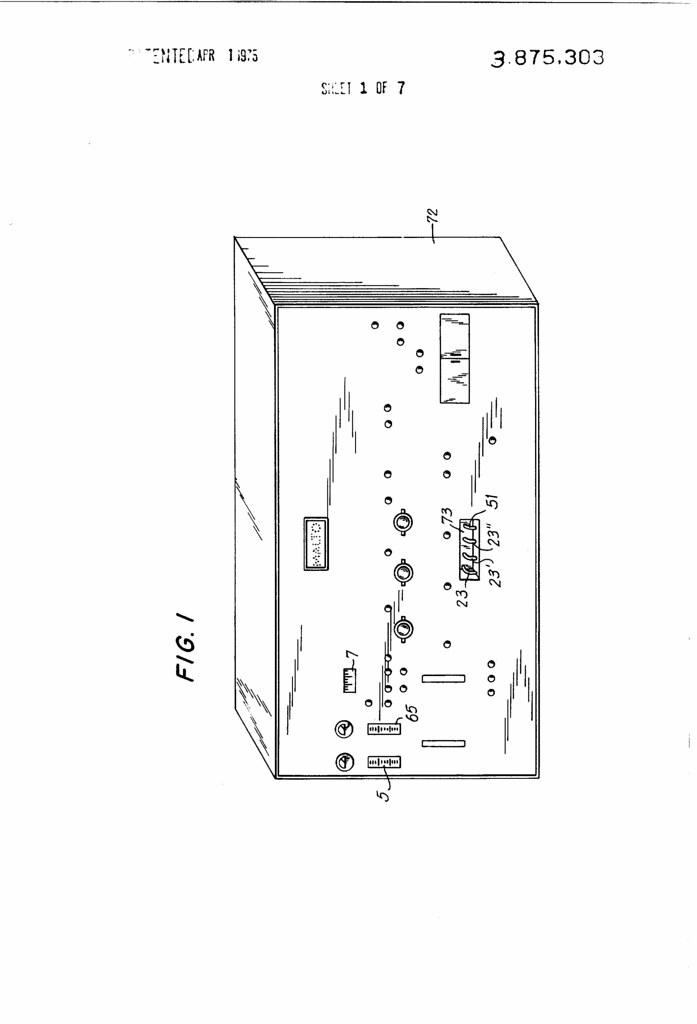
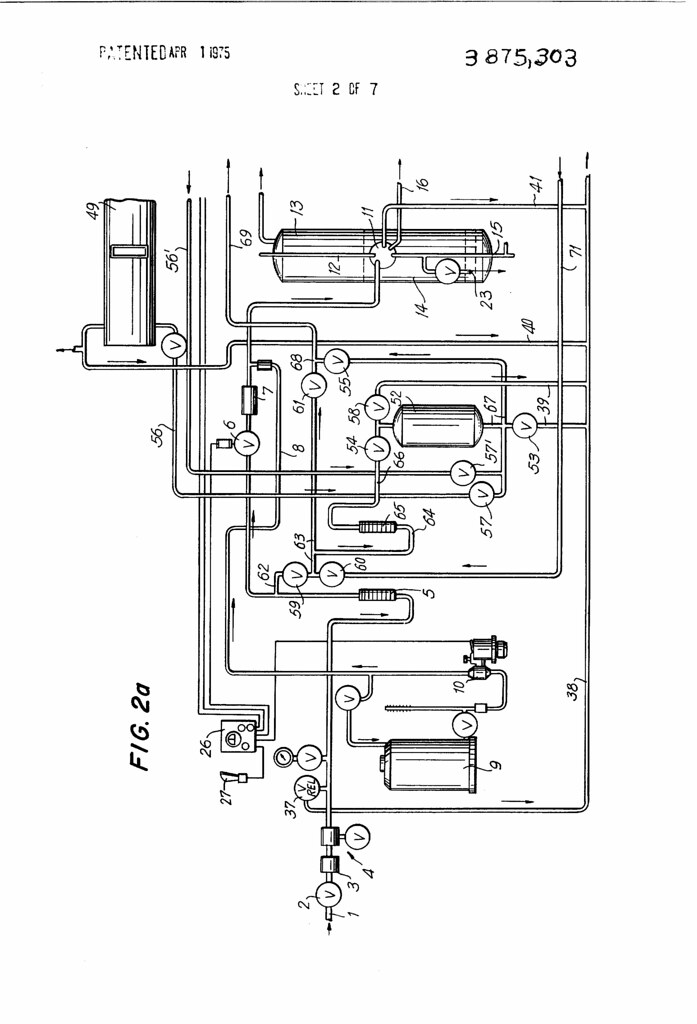
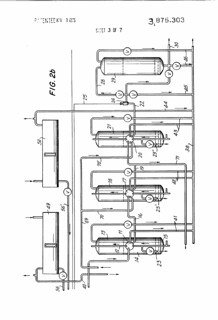
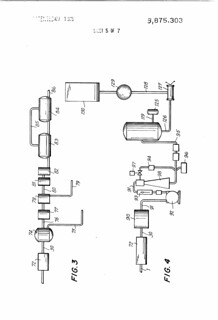
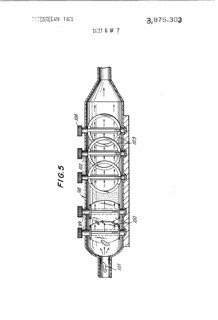
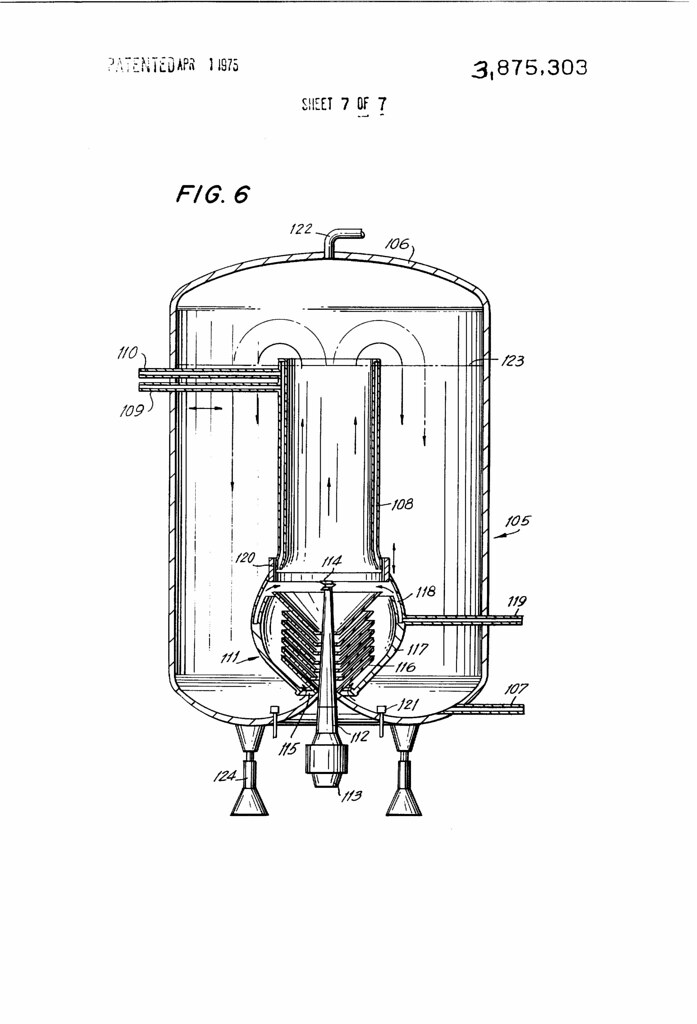
Today in 1975, US Patent 3875303 A was issued, an invention of Josef Hieber, assigned to Interbrew Betriebs Und Beteilg, for his “Preparation Of Beer.” Here’s the Abstract:

Beer is produced from a wort concentrate by a process involving sterilizing and desalting water, providing the sterilized and desalted water with a controlled salt content, dissolving a wort concentrate having at least 80% dry substance content in the water and fermenting with yeast to produce beer. The wort concentrate is dissolved in the water with a jet mixer and fermentation is carried out in a vessel containing a cooling chamber located above a centrifuge drum having therein plates for separating yeast and an impeller for circulating wort.

US3875303-1
US3875303-2

US3875303-3 US3875303-4

US3875303-5 US3875303-6

US3875303-7

Filed Under: Beers, Breweries, Just For Fun, Politics & Law, Related Pleasures Tagged With: Brewing Equipment, History, Law, Patent, Science of Brewing

Beer In Ads #1511: Three’s Company

March 31, 2015 By Jay Brooks


Tuesday’s ad is still another one for Budweiser, this one also from the 1960. It’s another ad from their “Where there’s life” series, this one is called “The Story.” A shiny couple on the beach at night, roasting weenies over a fire, while the woman in a one-piece bathing suit and a cape pours a beer as they both grin unnaturally like Cheshire cats. It must have been a very good day.

budweiser-where-there-is-life-there-is-bud-theres-company-1960

Filed Under: Art & Beer, Beers Tagged With: Advertising, Budweiser, History

Patent No. 4653388A: Small Scale Production Brewing

March 31, 2015 By Jay Brooks

patent-logo
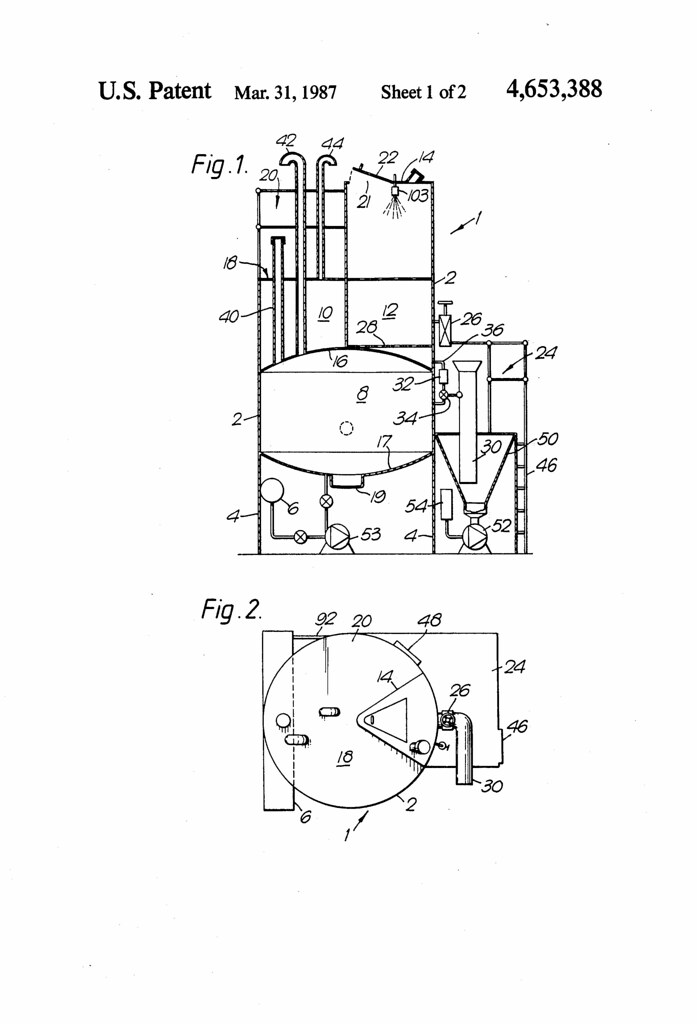
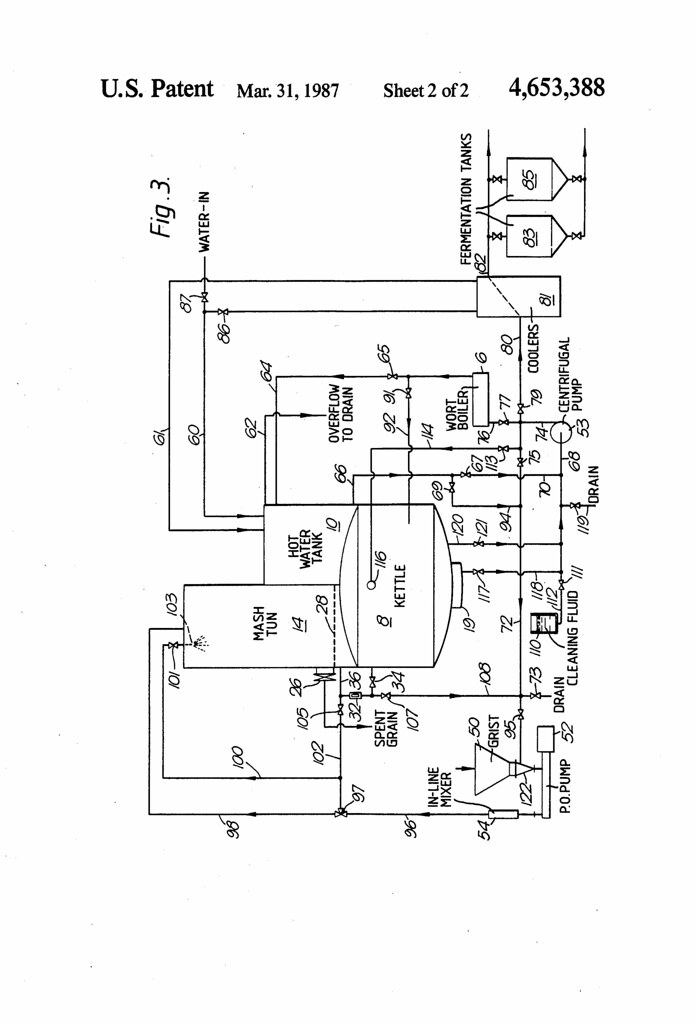
Today in 1987, US Patent 4653388 A was issued, an invention of Noel R. Wilkinson, for his “Brewing” process, though specifically more of a “small scale production plant.” Here’s the Abstract:

An improved brewing unit in which energy is saved by providing a mash tun, hot water tank and kettle in a single unit, by partially enclosing the mash tun with the tank and if necessary pre-heating the water supply to the tank by using the heat from wort coolers provided between the unit and fermentation tank; further improvements are provided by constructing the kettle as a combined kettle and whirlpool in a single chamber having a circular wall and a tangential inlet to the wall, a pump and wort boiler being in circuit with the kettle so that wort is continuously circulated through the boiler and tangential inlet to the kettle while the worts are boiled. The combined kettle and whirlpool saves space and enables the process of brewing to be shortened with resultant savings in both energy and brewing time.

US4653388-1
US4653388-2

Filed Under: Breweries, Just For Fun, Politics & Law, Related Pleasures Tagged With: Brewing Equipment, History, Law, Patent, Science of Brewing

The Top 50 Annotated 2014

March 31, 2015 By Jay Brooks

ba
This is my eighth annual annotated list of the Top 50, skipping last year because the BA provided that information then, so here again you can see who moved up and down, who was new to the list and who dropped off. So here is this year’s list again annotated with how they changed compared to last year.

  1. Anheuser-Busch InBev; #1 nine years, no surprise
  2. MillerCoors; ditto for #2
  3. Pabst Brewing; ditto for #3
  4. D. G. Yuengling and Son; Same as last year
  5. Boston Beer Co.; Same as last year
  6. North American Breweries; 5th year on the list, same position as last year
  7. Sierra Nevada Brewing; Same as last year
  8. New Belgium Brewing; Same as last year
  9. Craft Brewers Alliance; Same as last year
  10. Gambrinus Company; Same as last year
  11. Lagunitas Brewing; Same as last year
  12. Bell’s Brewery; Up 1 from #13 last year
  13. Deschutes Brewery; Down 1 from #12 last year
  14. Stone Brewing; Up 3 from #17 last year
  15. Sleeman Brewing; Not in Top 50 last year
  16. Minhas Craft Brewery; Down 1 from #15 last year
  17. Brooklyn Brewery; Down 1 from #26 last year
  18. Duvel Moortgat USA (Boulevard Brewing/Ommegang); Down 4 from #14 last year
  19. Dogfish Head Craft Brewery; Up 1 from #20 last year
  20. Matt Brewing; Down 2 from #18 last year
  21. Harpoon Brewery; Down 2 from #19 last year
  22. Firestone Walker Brewing; Up 1 from #23 last year
  23. Founders Brewing; Jumped Up 12 from #35 last year
  24. SweetWater Brewing; Up 2 from #26 last year
  25. New Glarus Brewing; Same as last year
  26. Alaskan Brewing; Down 2 from #24 last year
  27. Abita Brewing; Down 5 from #22 last year
  28. Anchor Brewing; Up 1 from #29 last year
  29. Great Lakes Brewing; Down 2 from #27 last year
  30. Oskar Blues Brewing; Up 3 from #33
  31. Shipyard Brewing; Down 10 from #21 last year
  32. Stevens Point Brewery; Up 13 from #45 last year
  33. August Schell Brewing; Down 5 from #33 last year
  34. Summit Brewing; Down 2 from #32 last year
  35. Victory Brewing; Down 2 from #37 last year
  36. Long Trail Brewing; Down 5 from #31 last year
  37. Ballast Point Brewing & Spirits; Up 1 from #38 last year
  38. Rogue Ales Brewery; Down 2 from #36 last year
  39. Full Sail Brewing; Down 5 from #34 last year
  40. Odell Brewing; Up 4 from #44 last year
  41. Southern Tier Brewing; Down 1 from #40 last year
  42. Ninkasi Brewing; Down 3 from #39 last year
  43. World Brew/Winery Exchange; Down 13 from #30 last year
  44. Flying Dog Brewery; Down 1 from #43 last year
  45. Pittsburgh Brewing (fka Iron City); Down 2 from #47 last year
  46. Uinta Brewing; Not in Top 50 last year
  47. Bear Republic Brewing; Down 1 from #46 last year
  48. Left Hand Brewing; Up 2 from #50 last year
  49. 21st Amendment Brewery; Not in Top 50 last year, though they were on the list in 2012
  50. Allagash Brewing; Not in Top 50 last year

Not too much movement this year, except for a few small shufflings. Only four new breweries made the list; Sleeman Brewing, Uinta Brewing, 21st Amendment Brewery and Allagash Brewing.

Off the list was Blue Point Brewing, Cold Spring Brewing, CraftWorks Breweries & Restaurants (Gordon Biersch/Rock Bottom), Karl Strauss Breweries, Lost Coast Brewery, and Mendocino Brewing.

If you want to see the previous annotated lists for comparison, here is 2013, 2012, 2011, 2010, 2009, 2008, 2007 and 2006.

Filed Under: Beers, Breweries, Editorial, News Tagged With: Big Brewers, Brewers Association, Business, Statistics, United States

Patent No. 4653290A: Beer Keg Ice Sleeve And Method Of Making Same

March 31, 2015 By Jay Brooks

patent-logo
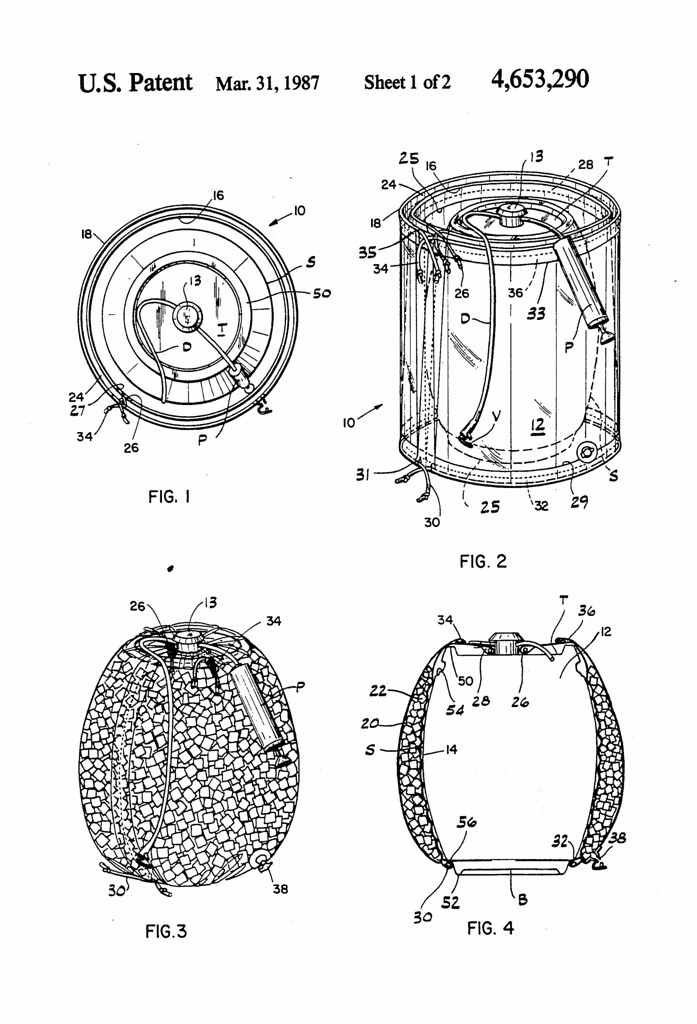
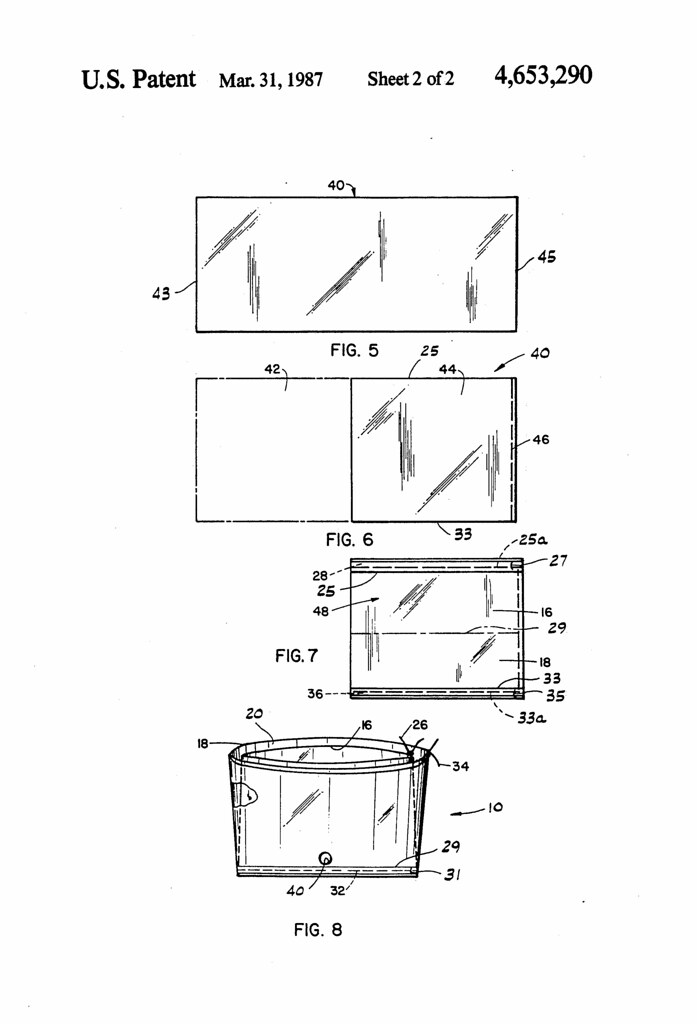
Today in 1987, US Patent 4653290 A was issued, an invention of Shelley R. Byrne, for his “Beer Keg Ice Sleeve and Method of Making Same.” Here’s the Abstract:

An ice sleeve cooler for beer kegs or other beverages comprising a slip-over ice sleeve open at the bottom and open at the top and having inner and outer sleeve members with an ice pocket therebetween. The bottom of the sleeve members are joined in sealed relation and have a draw-string for attachment around the lower side wall of the keg, and both inner and outer sleeve members have top draw-strings for individually attaching these members to the keg. The method of fabricating the ice sleeve cooler from a one-piece sheet of plastic stock involves the steps of folding and sealing the sheet to form the double sleeve members with an integral bottom edge.

US4653290-1
US4653290-2

Filed Under: Beers, Just For Fun, Politics & Law, Related Pleasures Tagged With: History, Kegs, Law, Patent

Top 50 Craft Breweries For 2014

March 31, 2015 By Jay Brooks

ba
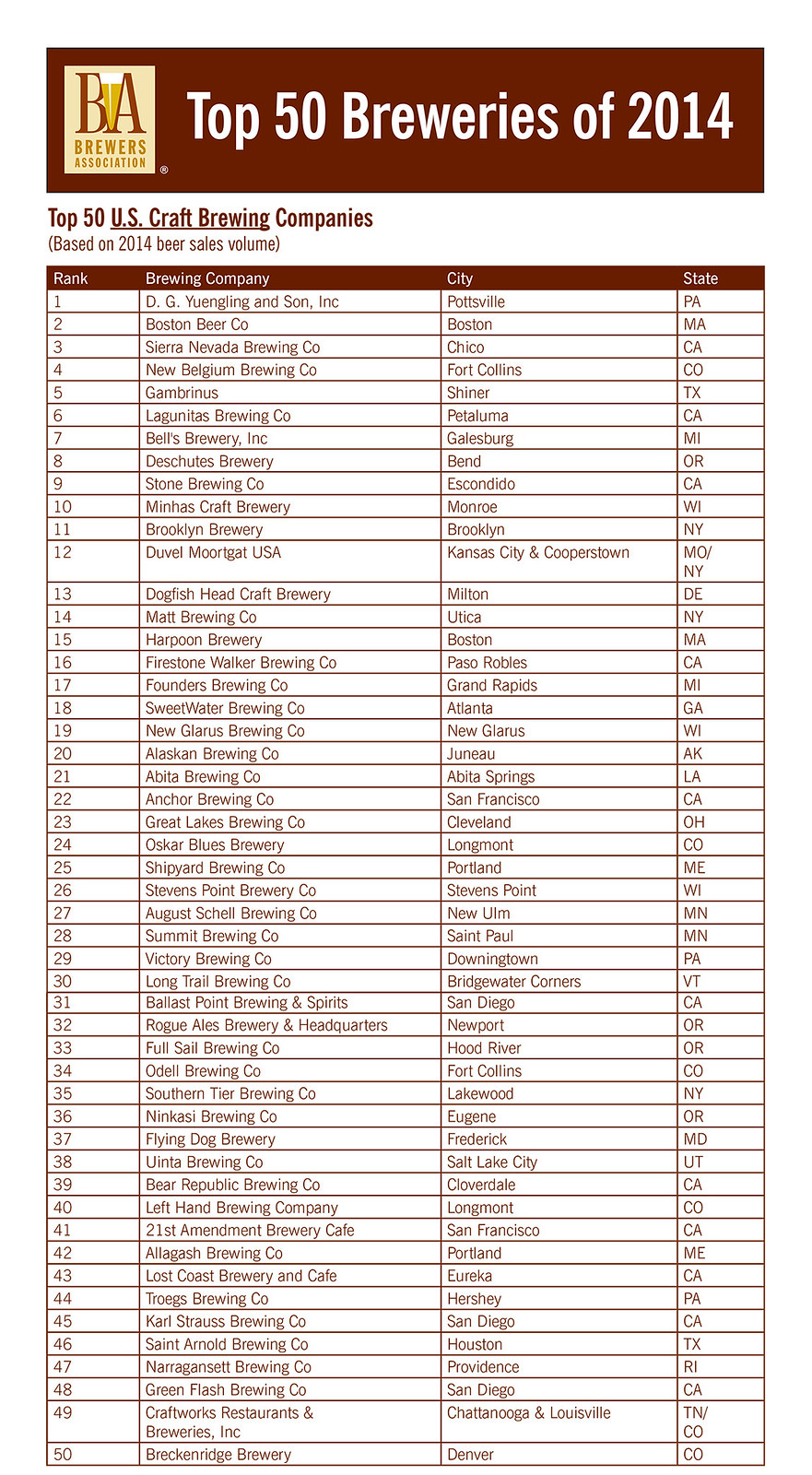
The Brewers Association just announced the top 50 craft breweries in the U.S. based on sales, by volume, for 2014, which is listed below here. For the seventh year, they’ve also released a list of the top 50 breweries, which includes all breweries. Here is this year’s craft brewery list:
2015_Top_50-craft

Seven breweries are new to this year’s Top 50 Craft Breweries list; Yuengling (due to a change in the definition), Breckenridge, Craftworks Restaurants & Breweries, Green Flash, Minhas Craft Brewery, Narragansett and Troeg’s. Here is this year’s press release. For the past seven years, I’ve also posted an annotated list, showing the changes in each brewery’s rank from year to year. Last year, the BA thoughtfully has already done that, saving me a lot of time and math, but they haven’t done it again this year, so I’ll have that again later today.

Filed Under: Breweries, Just For Fun, News Tagged With: Brewers Association, Business, Statistics, United States

Patent No. 724100A: Wort-Separator

March 31, 2015 By Jay Brooks

patent-logo
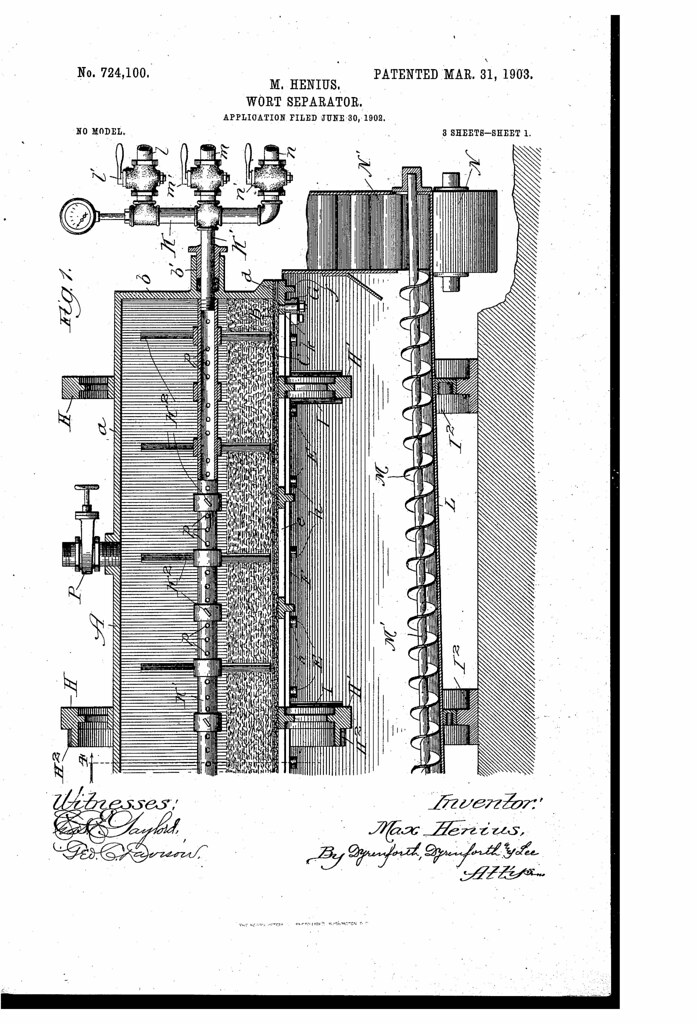
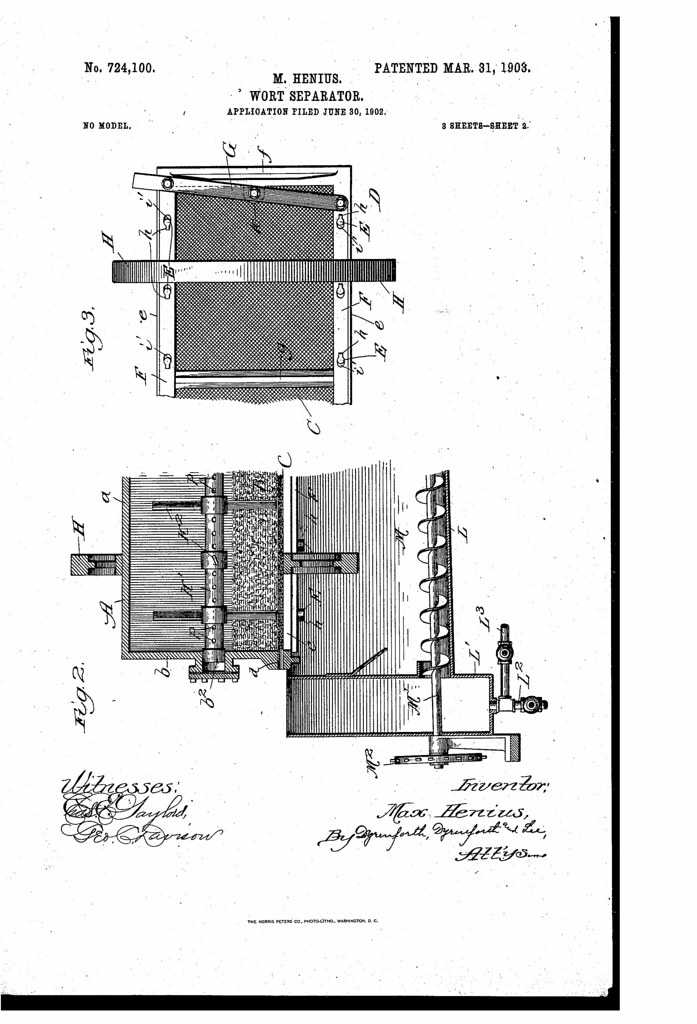
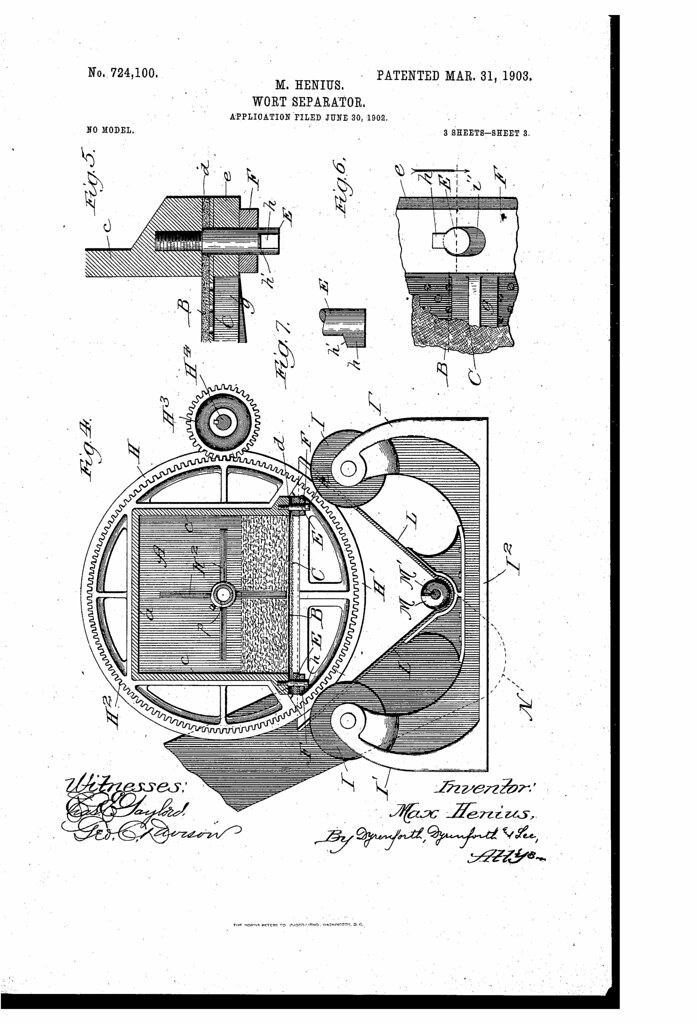
Today in 1903, US Patent 724100 A was issued, an invention of Max Henius, for his “Wort-Separator.” There’s no Abstract, but in the description claims that the “object is to provide a wort-separator of novel as well as comparatively simple and inexpensive construction, whereby the filtration of wort, both from grains and hops, may be effected more thoroughly and with greater economy both of time and labor than by any other filtering means hitherto employed and of which I am aware.”
US724100-0
US724100-1
US724100-2

Filed Under: Breweries, Just For Fun, Politics & Law, Related Pleasures Tagged With: Brewing Equipment, History, Law, Patent, Science of Brewing

« Previous Page
Next Page »

Find Something

Northern California Breweries

Please consider purchasing my latest book, California Breweries North, available from Amazon, or ask for it at your local bookstore.

Recent Comments

  • Bob Paolino on Beer Birthday: Grant Johnston
  • Gambrinus on Historic Beer Birthday: A.J. Houghton
  • Ernie Dewing on Historic Beer Birthday: Charles William Bergner 
  • Steve 'Pudgy' De Rose on Historic Beer Birthday: Jacob Schmidt
  • Jay Brooks on Beer Birthday: Bill Owens

Recent Posts

  • Historic Beer Birthday: William H. Gerst April 1, 2026
  • Historic Beer Birthday: Carl W. Conrad April 1, 2026
  • Beer In Ads #5198: Heim’s Bock Beer! Ready To-Day April 1, 2026
  • Historic Beer Birthday: August Koch April 1, 2026
  • Historic Beer Birthday: Thomas Fowell Buxton April 1, 2026

BBB Archives

Feedback

Head Quarter
This site is hosted and maintained by H25Q.dev. Any questions or comments for the webmaster can be directed here.