Brookston Beer Bulletin

Jay R. Brooks on Beer

  • Home
  • About
  • Editorial
  • Birthdays
  • Art & Beer

Socialize

  • Dribbble
  • Email
  • Facebook
  • Flickr
  • GitHub
  • Instagram
  • LinkedIn
  • Pinterest
  • RSS
  • Twitter
  • YouTube

Powered by Genesis

Patent No. 3364033A: Method Of Preparing Hop Extracts

January 16, 2015 By Jay Brooks

patent-logo
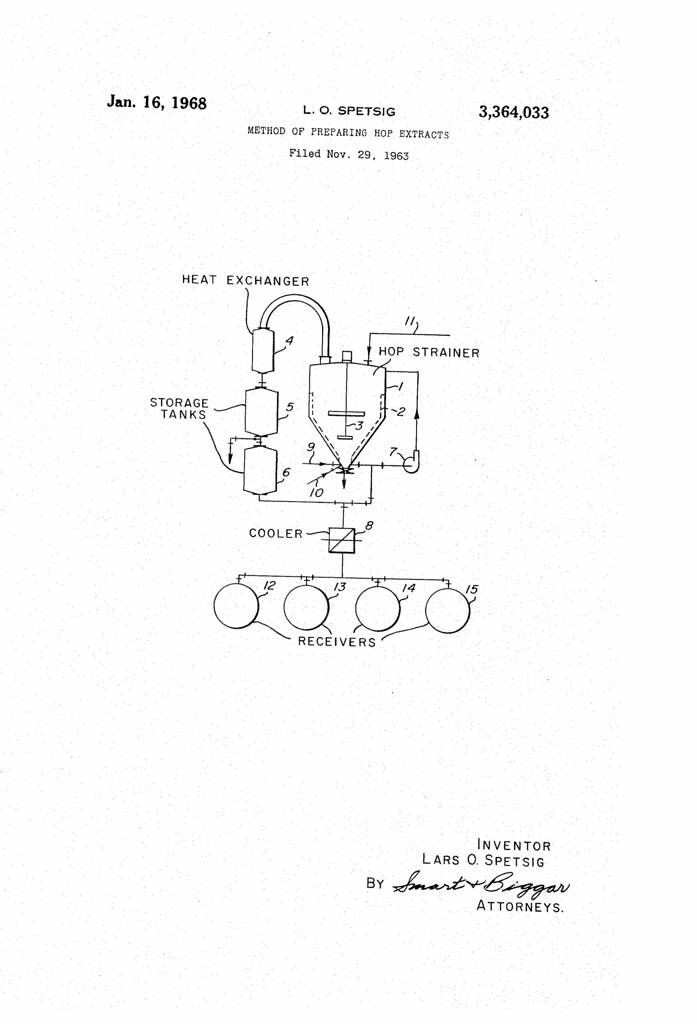
Today in 1968, US Patent 3364033 A was issued, an invention of Lars O. Spetsig, assigned to Sweden’s Stockholms Bryggerier Ab, for his “Method of Preparing Hop Extracts.” There’s no Abstract, but here’s his introduction in the description. “This invention relates to a new and improved method of preparing hop extracts for flavoring beer and other fermented malt beverages, in which a more complete utilisation of the hop constituents is achieved.” And further along there’s this:

It has now been discovered that better utilisation of the valuable substances is achieved if the hops are extracted in the following manner. The hops are first treated with Warm water to obtain a tannin extract. This is followed by leaching out the readily soluble bitter substances (among them hulupones) and isomerizing the relatively insoluble humulones to readily soluble isohumulones: by boiling the hops in an aqueous solution of neutral pH to yield a first bitter extract. Rapid boiling at this stage is preferred to counteract oxidation. The vapour boiling off is condensed to form an aromatic extract. Since the most valuable aromatic substances are the last to be distilled off, however, fractionation may be employed to collect two or more separate fractions. Finally, the partially spent hops are oxidised by customary means, e.g. see Swedish Patent No. 150,997, to form a second bitter extract.
US3364033-0

Filed Under: Breweries, Just For Fun, Politics & Law, Related Pleasures Tagged With: Hops, Patent, Sweden

Beer In Ads #1436: King Of The Grill

January 15, 2015 By Jay Brooks


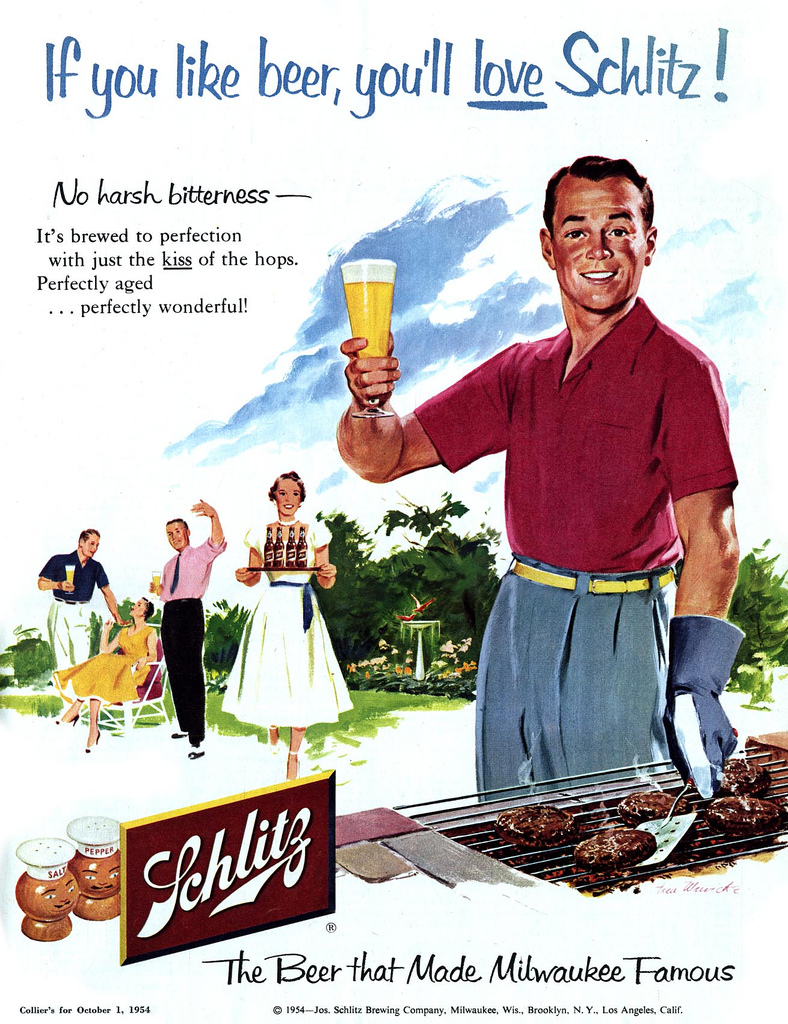
Thursday’s ad is yet another one for Schlitz, from 1954. You see the main figure from the ad — the King of the grill — appropriated and used in other posters, but this is where it originally appeared. The illustration was by another well-known artist of the day, Tran Mawicke. Don’t you miss dressing up for backyard barbecues? Oh, wait, that never happened, at least not in my lifetime. Also, take a closer look at the salt and pepper shakers hiding behind the Schlitz logo — those are awesome.

schlitz-1954-Tran_ Mawicke

Filed Under: Art & Beer, Beers Tagged With: Advertising, History, Schlitz

Beer In Ads #1435: A Romantic Lunch

January 14, 2015 By Jay Brooks


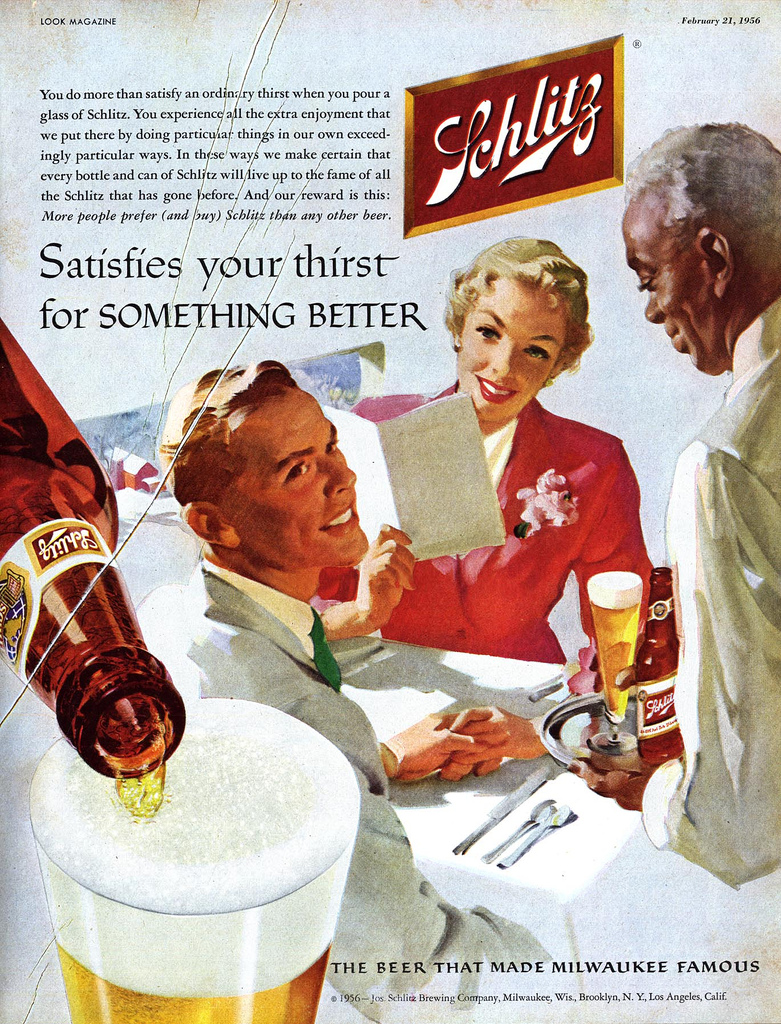
Wednesday’s ad is another one for Schlitz, from 1956. The beautiful illustration is by Haddon Sundblom, who’s most famous for his depiction of Santa Claus for Coca-Cola, which pretty much set the standard for how we think of him today, in red and white, not coincidentally Coke’s colors, too. In this ad, a young couple looks like they’re having a romantic lunch date, holding hands as the order. But while the young woman is staring longingly at her date, he’s eying the beer that;s just arrived at the table. There’s only one beer on the tray, so presumably it’s for him. I predict this relationship will fail, if she won’t join him for a beer.

schlitz-1956-sundblum

Filed Under: Art & Beer, Beers Tagged With: Advertising, History, Schlitz

Patent No. 3422448A: Tapping Device For Beer Kegs And The Like

January 14, 2015 By Jay Brooks

patent-logo
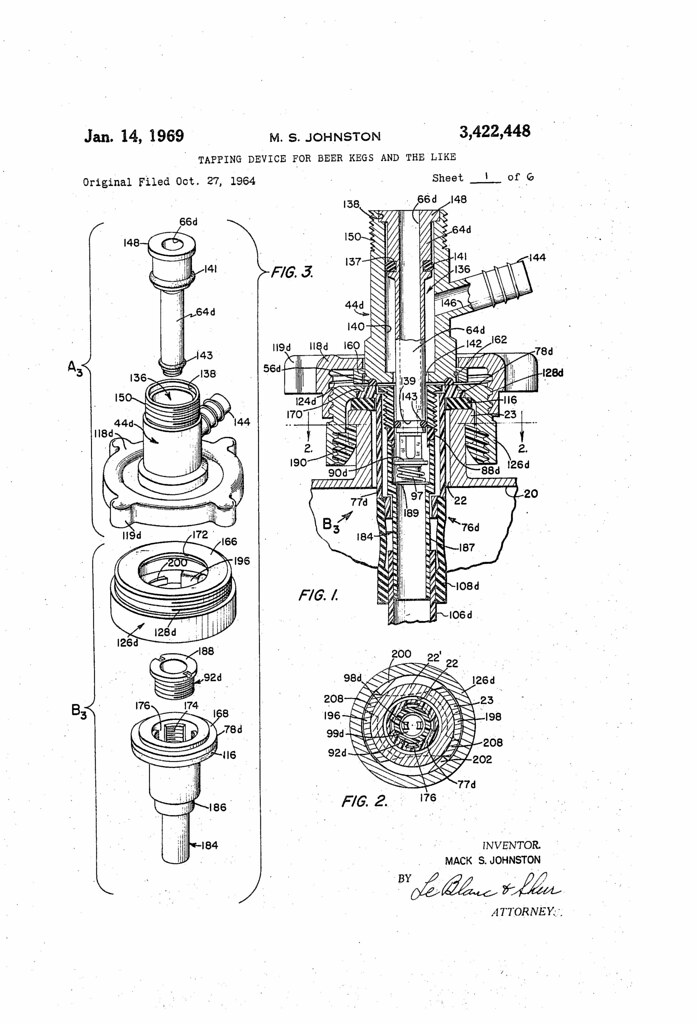
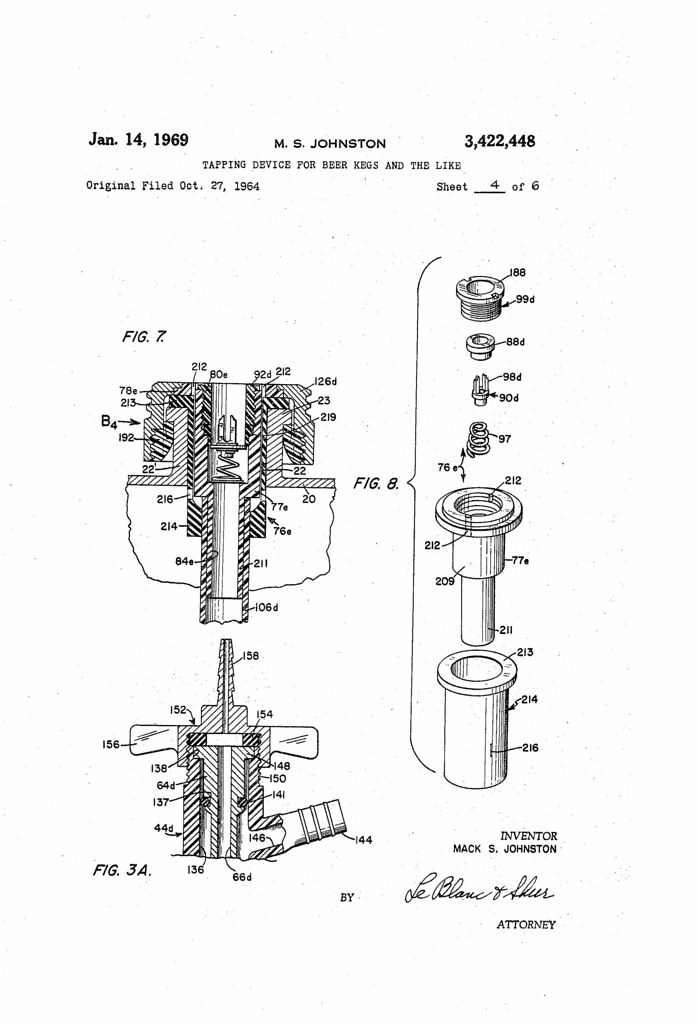
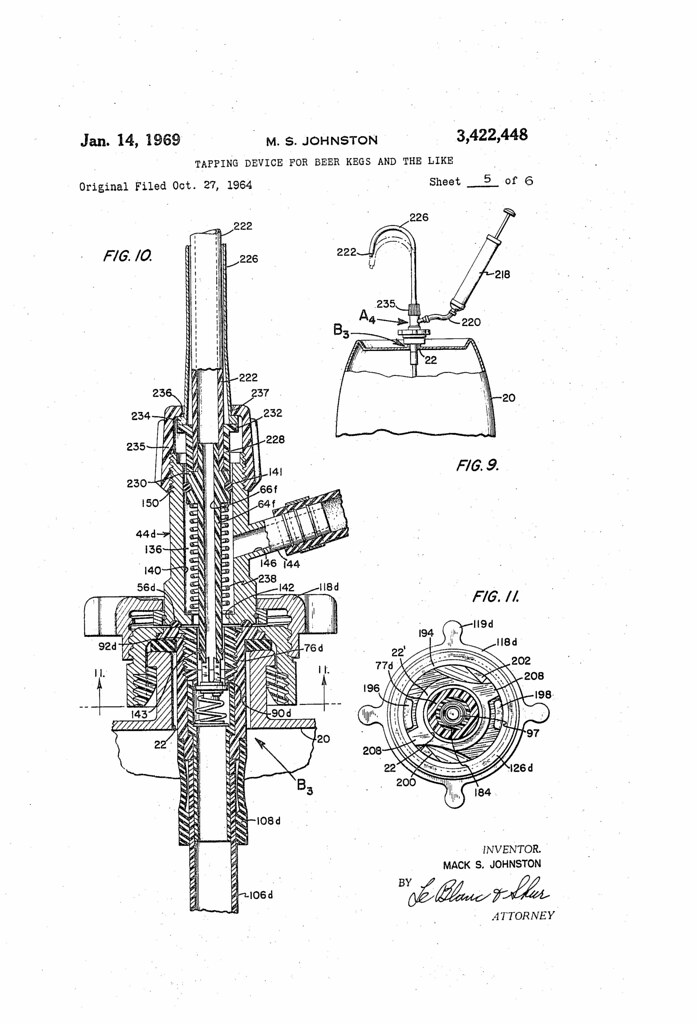
Today in 1969, US Patent 3422448 A was issued, an invention of Mack S. Johnston, for his “Tapping Device for Beer Kegs and the Like.” There’s no Abstract, but here’s his introduction in the description:

The present invention relates to a new improved tapping device for drawing fluid such as beer from containers such as beer kegs or barrels, using a gas to drive the fluid from the container. In particular, the invention relates to a new improved tapping device usable with conventional beer kegs and comprising a sub-unit, called a keg adapter, which constantly seals the keg, and a subunit, called a coupler, which is attached to the beer dispensing apparatus in a restaurant or tavern and is readily connected to the keg adapter so that the tapping device is automatically in operating condition.

US3422448-0
US3422448-1
US3422448-2
US3422448-3
US3422448-4

Filed Under: Beers, Breweries, Just For Fun, Politics & Law, Related Pleasures Tagged With: Kegs, Patent

Beer In Ads #1434: ‘Round The Clock And ‘Round The Calendar

January 13, 2015 By Jay Brooks


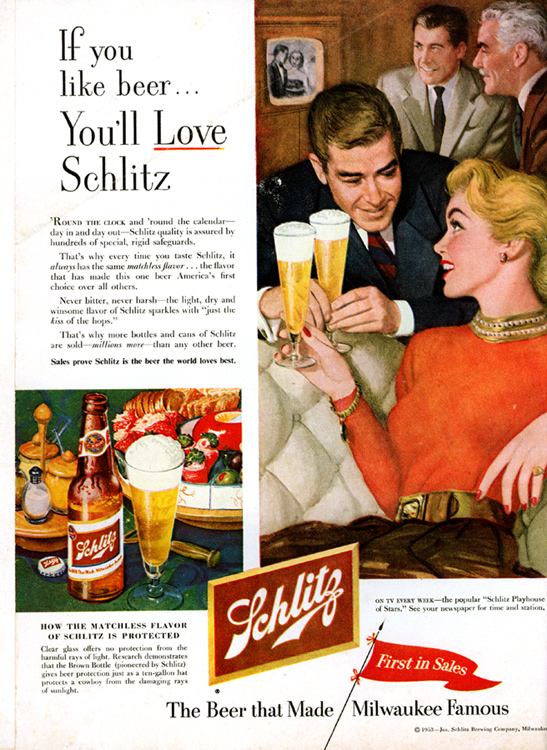
Tuesday’s ad is for Schlitz, from 1953. “‘Round the clock and ’round the calendar — day in and day out — Schlitz quality is assured by hundreds of special, rigid safeguards.” I understand how brewing works, so what exactly might be these “hundreds of special, rigid safeguards?” As a later series of Schlitz ads wondered, “I was curious.” And I especially love this description of the beer. “The light, dry and winsome flavor of Schlitz sparkles.” I don’t drink nearly enough winsome beers anymore.

Schlitz-1953-sporting

Filed Under: Art & Beer, Beers Tagged With: Advertising, History, Schlitz

Patent No. 718253A: Concentrated Hopped Wort And Process Of Producing Same

January 13, 2015 By Jay Brooks

patent-logo
Today in 1903, US Patent 718253 A was issued, an invention of Herbert Amos Hobson of London, England, assigned to the Concentrated Beer Company Ltd., for his “Concentrated Hopped Wort and Process of Producing Same.” There’s no Abstract, or any drawings filed with the application, but here’s the introductory overview:

This invention relates to the production of a hopped wort from which beer, either alcoholic or non-alcoholic, maybe produced by the mere addition of yeast and water or of water alone, as the case may be.

In the ordinary brewing process the malt is first mashed and the hops are then added to and boiled in the wort or extract of malt, with the result that the bitter of the hop is unfavorably affected, objectionable resinous matters are extracted, and the volatile aroma of the hops is to a great extent lost, and these undesirable results are partly due to the length of time for which the boiling is continued and partly to the high boiling-point of the liquor in which the hops are boiled. It is the object of this invention to avoid these defects and to produce a hopped wort, preferably in a concentrated state, possessing the keeping qualities necessary for export purposes and adapted for the production, in the locality or country of consumption, of beer possessing the characteristic qualities of beer brewed in the ordinary manner.

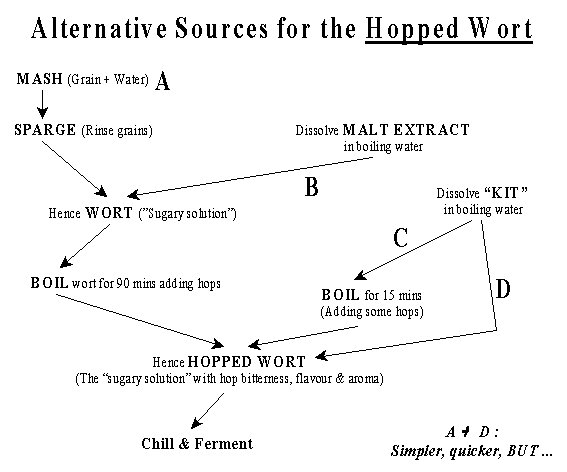
While there weren’t any images in the filing, this is a flowchart of Alternative Sources of Hopped Wort from a homebrewing website in South Africa.

sources_for_hopped_wort

Filed Under: Beers, Just For Fun, Politics & Law, Related Pleasures Tagged With: Patent, Science of Brewing, Wort

The Rise Of Cancer

January 13, 2015 By Jay Brooks

ribbons
This has very little to do with beer, but it is related. In covering beer and health over the years, and especially the attacks by prohibitionists, I’ve read more studies, scientific journals and policy papers than you can shake a stick at. What causes different kinds of cancers is something that I’ve ended up following far more than I ever expected to focus on in any way. My mother died of breast cancer, and apparently it runs in my family, on my mother’s side, so perhaps I was predisposed to pay closer attention to cancer.

One thing I’ve noticed about all of the studies purporting to show what causes cancer, or what increases the risk of getting it, or similar conclusions, is that they’re rarely cut and dry. You hardly ever find that all studies agree or come to the same conclusion about anything. That’s one of the reasons that they have to be read so carefully, because their results are very much effected by the methodology, assumptions made, how whatever they examined or studied was collected, the biases and prejudices that were contained in either the questions asked or on the part of the people conducting it, and on and on. In short, the variables are nearly endless and frequently, if not always, have a lot to do with the results themselves. Even who funded a study can influence its results. Statistics and the studies that create them can be used to say just about anything and are used by organizations on every side of every issue to promote their view, both good and bad. This is detailed quite well in the classic book How to Lie with Statistics, but even more forcefully in the later expose Trust Us We’re Experts: How Industry Manipulates Science and Gambles with Your Future.

You can read one hundred studies about a particular kind of cancer and find that they all conclude something different, and sometimes have even contradictory findings. It’s rare that they all agree because the way they’re conducted is so different, and the parameters, geography and demographics are different, too. Similar ones may start to more closely agree over time, and patterns may emerge, and that’s where the real progress happens. Meta-studies examine multiple studies to see how, and if, patterns can be gleaned.

Drinking beer obviously affects our health, and has both positive and negative risks and consequences depending on how one drinks, how often and how much. Meta-studies have shown that people who drink moderately tend to live longer than both total abstainers and people who drink too much, but surprisingly even those who abuse alcohol will probably live longer than teetotalers. But that’s overall. For different types of cancer, drinking may either increase or decrease the risk of various kinds, making figuring out what to do a tricky, difficult and ultimately personal decision.

Something that’s always bothered me as I’ve been reading the findings of so many studies over the years is that they’re confusing, contradictory and often make little sense. It should make sense, shouldn’t it? But it doesn’t. Two people can live in exactly the same way, eating and drinking the same things and one will live to be 100 and the other drops dead at 50. Why? Even with something as obvious as smoking, who gets lung cancer and at what age will vary widely. I’ve always felt like there must be something more to who’s susceptible to cancer than what we’ve thought.

The new issue of Time Magazine (the January 19, 2015 issue) has an article that may shed some light on this dilemma. In Most Cancers Aren’t Your Fault, a new study seems to suggest that “Random DNA changes are usually to blame,” as opposed to the usual causes, or possibly in combination with those typical risks. Here’s the big finding in nutshell.

Now, in an eye-opening study published in Science, researchers report that the majority of cancer types are the result of pure chance, the product of random genetic mutations that occur when stem cells–which keep the body chugging along, replacing older cells as they die off–make mistakes copying the cells’ DNA.

That seems huge, a sea change in our understanding of how cancer works. “About 65% of cancers are the result of these DNA mistakes made by stem cells.” While that seems crazy, it might make better sense in explaining why some people get certain cancers and why others do not. For all our dogmatic insistence about what’s healthy and what’s not, it may turn out that luck is the single biggest factor. In the Abstract of the study, as reported in Science, Variation in cancer risk among tissues can be explained by the number of stem cell divisions

Some tissue types give rise to human cancers millions of times more often than other tissue types. Although this has been recognized for more than a century, it has never been explained. Here, we show that the lifetime risk of cancers of many different types is strongly correlated (0.81) with the total number of divisions of the normal self-renewing cells maintaining that tissue’s homeostasis. These results suggest that only a third of the variation in cancer risk among tissues is attributable to environmental factors or inherited predispositions. The majority is due to “bad luck,” that is, random mutations arising during DNA replication in normal, noncancerous stem cells. This is important not only for understanding the disease but also for designing strategies to limit the mortality it causes.

The Editor’s Summary makes it even clearer:

Why do some tissues give rise to cancer in humans a million times more frequently than others? Tomasetti and Vogelstein conclude that these differences can be explained by the number of stem cell divisions. By plotting the lifetime incidence of various cancers against the estimated number of normal stem cell divisions in the corresponding tissues over a lifetime, they found a strong correlation extending over five orders of magnitude. This suggests that random errors occurring during DNA replication in normal stem cells are a major contributing factor in cancer development. Remarkably, this “bad luck” component explains a far greater number of cancers than do hereditary and environmental factors.

As far as I can see, this goes a along way in explaining the seeming anomalies of why some smokers live to be 100 and others never make it past 50. The study, at least what limited amount of it I have access to, doesn’t go into which types are which, that is which types of cancers can be “attributable to environmental factors” or hereditary and which involve random chance.

But if fully two-thirds of all cancers are primarily subject to this roll of the dice, that seems to undermine a lot of walk-a-thons, colored ribbon awareness campaigns and careful abstaining as all for naught. Better to roll the dice and live your life to the fullest, enjoying all the pleasures you can.

Unsurprisingly, that’s not what the study’s authors are recommending. They’re quick to say that the “element of chance does not, however, mean you should stop wearing sunscreen or take up smoking.” One of the authors, Cristian Tomasetti points out that “while we may not be able to prevent all tumors, we can focus on early detection and taking advantage of lifesaving treatments like chemotherapy and radiation, among other things,” adding that “[w]e need to do everything we did before, but we want to do it even more than before.” I’m not entirely sure what he means by that, because it seems to contradict their own findings, but perhaps he’s just being cautious, or doesn’t want to take the blame if people go wild.

Medical studies like this one, and all scientific studies really, are supposed to be objective and free of bias, and indeed most are sold that way. Most people hear that a study found this or that and assume it was an impartial finding. But it’s been my experience that that’s rarely, if ever, the case. Bias seems to creep into every nook and cranny of science and medicine, just as it does in every other aspect of human existence. I want to believe that most scientists try to avoid such prejudices, but how many succeed is an open question in my mind. It’s not so much evil as being human. Isn’t the story of humanity simply the struggle between rationality and self-interest?

But speaking of evil, every time a new study (often funded by them) finds that drinking alcohol will turn you into a zombie, prohibitionists use it to push their agenda, and ignore every other study that says just the opposite, that moderate consumption will cure zombies, no need for decapitation. Their propaganda machine goes into full swing, insisting that one sip of beer and you’ll be undead. But this study (especially if follow-up studies confirm the findings), seems to support what I’ve frequently pointed out, that life is far more complicated than do this and that happens. Few things are all bad or all good. As cancer is apparently poised to become the number one cause of death in America (displacing heart disease at the top spot), it’s worth noting that we’ve come a long way since I lost my mother in 1982. If she was diagnosed today with breast cancer, the chances are much greater that she’d still be alive. But predicting whether or not she’d get cancer in the first place was more likely the result of bad luck than anything else. That’s what I’ve always believed and that won’t change no matter how many ribbons I wear. I often feel like the universe is laughing at us, so we might as well have a drink, or as the great Charles Bukowski once advised.

“We are here to drink beer. We are here to kill war. We are here to laugh at the odds and live our lives so well that Death will tremble to take us.”

Roll the dice. Pass the bottle. Repeat.

different-color-cancer-ribbons
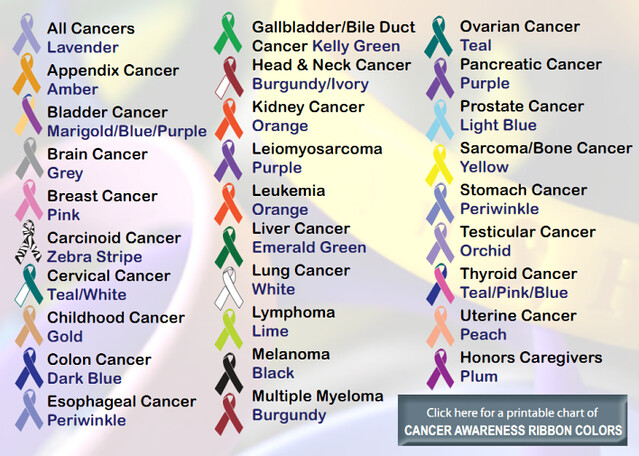
If you’re curious about all of the colored awareness ribbons, and what they mean, or what disease or condition they represent, here is the most comprehensive list I’ve ever seen. Scroll down about halfway through the post for the list.

Filed Under: Editorial, News Tagged With: Health & Beer, Statistics

Patent No. 1328079A: Process Of Mashing

January 13, 2015 By Jay Brooks

patent-logo
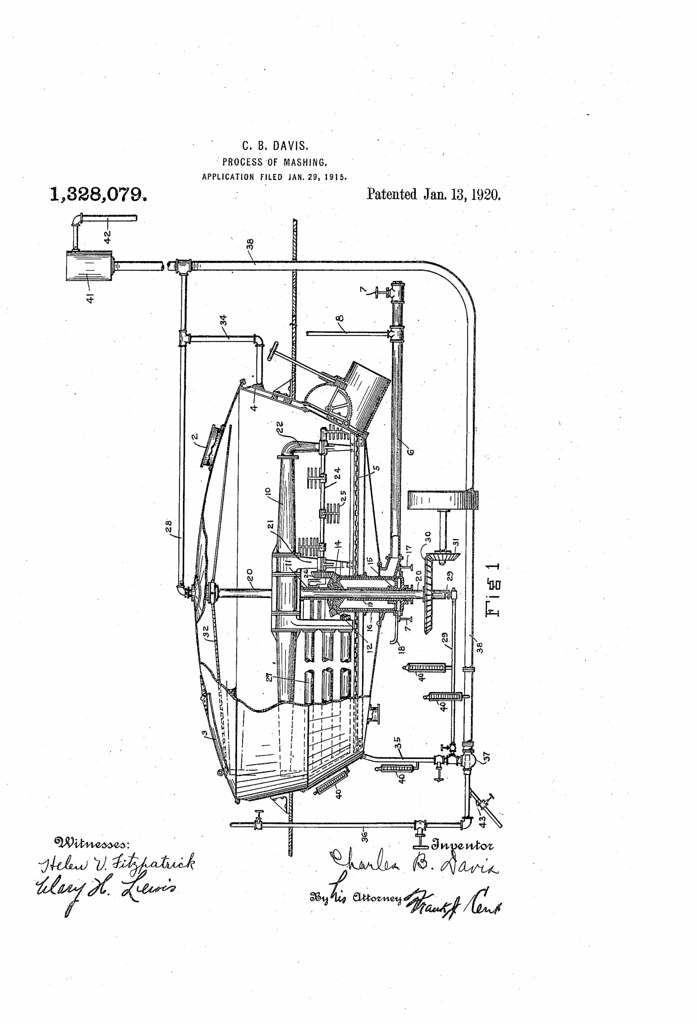
Today in 1920, US Patent 1328079 A was issued, an invention of Charles B. Davis, for his “Process of Mashing.” There’s no Abstract, and there’s not much of an introduction or overview, he just dives right into a detailed explanation of his invention. It’s curious that the patent office approved it three days before Prohibition took effect in 1920, although he first applied for the patent in 1915. Davis probably didn’t make too many sales over the subsequent thirteen years.
US1328079-0

Filed Under: Beers, Breweries, Just For Fun, Politics & Law, Related Pleasures Tagged With: Brewing Equipment, Patent, Science of Brewing

Beer In Ads #1433: The Mellow-Dry Beer

January 12, 2015 By Jay Brooks


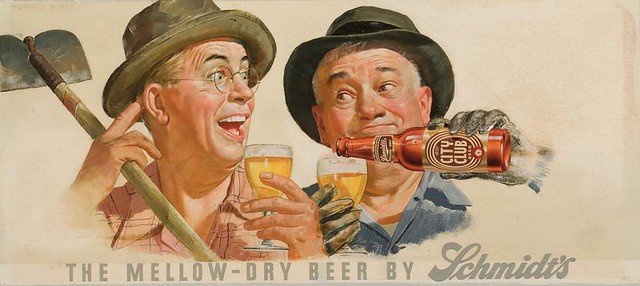
Monday’s ad is for City Club Beer, a brand made by Schmidt’s, from 1951. It’s a beautiful illustration, by Howard Scott, a prominent American illustrator from the 1930s on. I’m not quite sure what “mellow-dry” is, but it sure seems to put a smile on these two men. I think they’ve been out working in the garden, so probably any cold beer would taste pretty good, mellow-dry or not.

schmidts-1930s-Howard_Scott

Filed Under: Art & Beer, Beers Tagged With: Advertising, History

Patent No. D69235S: Design For A Bottle Opener

January 12, 2015 By Jay Brooks

patent-logo
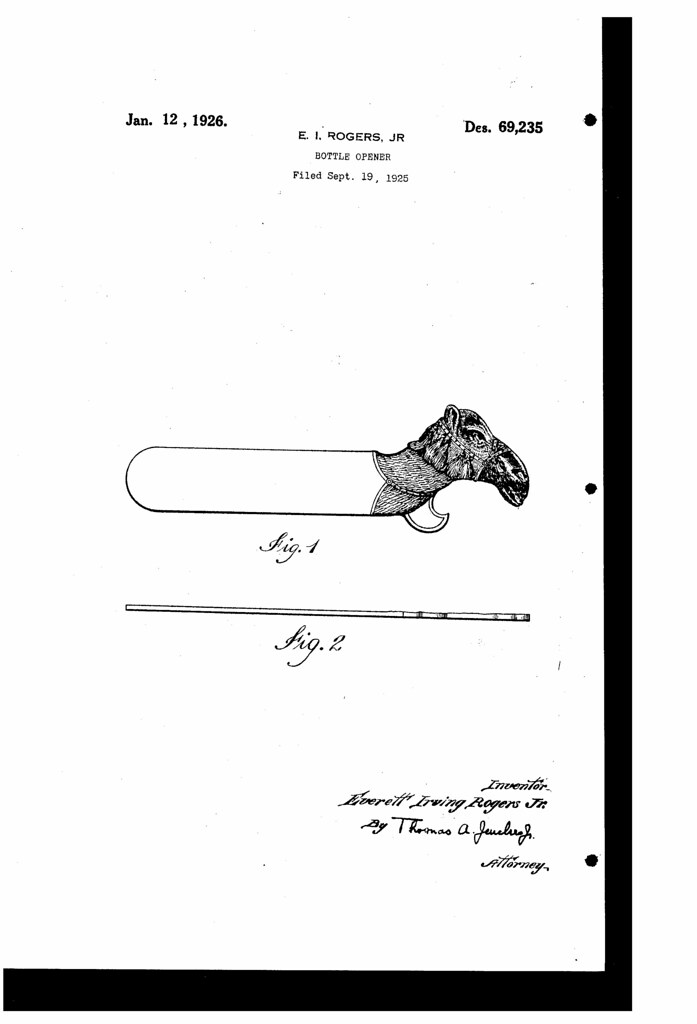
Today in 1926, US Patent D69235 S was issued, an invention of Everett Irving Rogers Jr., for his “Design for a Bottle Opener.” There’s no Abstract, and in fact there’s very little text in the application at all, save for that he “invented a certain new, original, and ornamental design for a bottle opener, of which [is] substantially as shown. It’s an odd looking opener. Was there really a burning demand for bottle openers shaped like the head of a camel?

USD69235-0

Filed Under: Just For Fun, Politics & Law, Related Pleasures Tagged With: Beer Accesories, Patent

« Previous Page
Next Page »

Find Something

Northern California Breweries

Please consider purchasing my latest book, California Breweries North, available from Amazon, or ask for it at your local bookstore.

Recent Comments

  • Bob Paolino on Beer Birthday: Grant Johnston
  • Gambrinus on Historic Beer Birthday: A.J. Houghton
  • Ernie Dewing on Historic Beer Birthday: Charles William Bergner 
  • Steve 'Pudgy' De Rose on Historic Beer Birthday: Jacob Schmidt
  • Jay Brooks on Beer Birthday: Bill Owens

Recent Posts

  • Beer In Ads #5257: Dessower Schlossbrauerei Bockbier June 2, 2026
  • Historic Beer Birthday: Thomas Hardy June 2, 2026
  • Beer Birthday: Menno Olivier June 2, 2026
  • Beer Birthday: Tyler Smith June 2, 2026
  • Beer Birthday: Bob Townsend June 2, 2026

BBB Archives

Feedback

Head Quarter
This site is hosted and maintained by H25Q.dev. Any questions or comments for the webmaster can be directed here.