Monday’s ad is for Hamm’s, from 1950. The Hamm’s bottles in the ad don’t look like any I’ve seen before, and I have to wonder if PBR was unhappy that Hamm’s used a red ribbon on the label. I love the tagline. “So Light … So Smooth … So Mellow.”
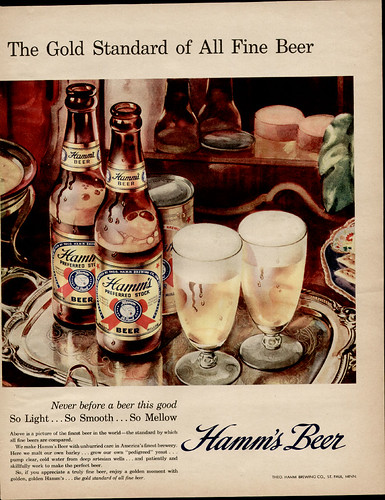

Monday’s ad is for Hamm’s, from 1950. The Hamm’s bottles in the ad don’t look like any I’ve seen before, and I have to wonder if PBR was unhappy that Hamm’s used a red ribbon on the label. I love the tagline. “So Light … So Smooth … So Mellow.”

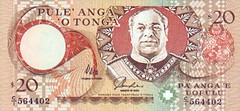
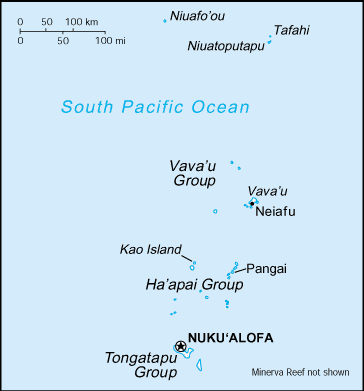
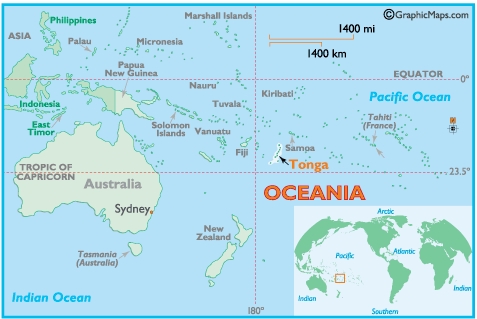
Today in 1970, Tonga gained their Independence from the United Kingdom.
Tonga
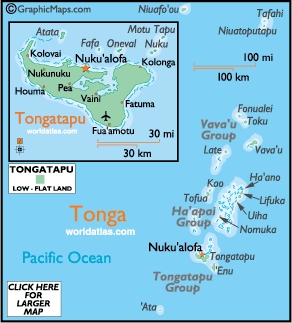
Tonga Breweries
Tonga Brewery Guides
Other Guides
Guild: None Known
National Regulatory Agency: None
Beverage Alcohol Labeling Requirements: Not Known
Drunk Driving Laws: 250 micrograms/litre


Alcohol Consumption By Type:
Alcohol Consumption Per Capita (in litres):
WHO Alcohol Data:
Patterns of Drinking Score: N/A
Prohibition: None

I’m not quite sure what to think about this development, but I can’t imagine how it could be a good thing. On Friday, the New York Times had an interesting list of 32 Innovations That Will Change Your Tomorrow. There are some truly amazing items on the list, which if they come to fruition, would indeed change our everyday lives. But one seems just odd, at least to me. Number 20 envisions “A World Without Hangovers,” with the development of “synthetic alcohol,” by none other than British neo-prohibitionist windbag, professor doctor David Nutt. Here’s how the Times describes it:
Researchers at Imperial College London are closing in on a formula for a new kind of booze — synthetic alcohol, it’s called — that would forever eliminate the next morning’s headache (not to mention other problems associated with drinking). The team, led by David Nutt, a psychiatrist and former British drug czar, has identified six compounds similar to benzodiazepines — a broad class of psychoactive drugs — that won’t get you rip-roaring drunk but will definitely provide a buzz. According to Nutt, the alcohol substitute would be a flavorless additive that you could put in a nonalcoholic drink. And when you want to sober up, all you’d have to do is pop a pill.
Now doesn’t that sound appetizing? An N/A beer with a “flavorless additive” made from “psychoactive drugs.” How on Earth did the Times decide that this one even deserved to be on such a list of innovations. Who would want this? Why would you take a natural product and turn it into a chemical substitute for it. Essentially, this is like taking something natural, like coffee, stripping the caffeine out of it and then adding a chemical compound back into it that simulates the original caffeine, but at lower levels. Wouldn’t it be easier to just advocate drinking less or choosing lower alcohol, session beers? Yes, yes it would, but then people would have to be responsible for their own actions. Nutt and the rest of his neo-prohibitionist crew would much prefer controlling peoples’ behavior. They seem to honestly believe that since some people can’t drink responsibly, then no one can. That’s always their rationalization for the outlandish propaganda they’ve spouted over the last few years, things like “beer is more dangerous than heroin” and “no level of alcohol is safe.”
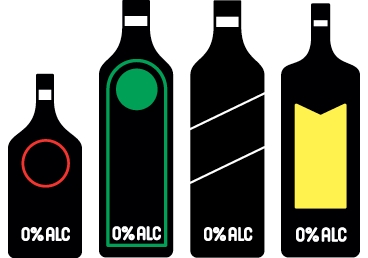
According to the graphic accompanying this item, synthetic alcohol is at least two to four years away, but I’m hoping enough people will recognize this for the abomination that it would be, and no one beyond the lunatic anti-alcohol fringe would be in favor of turning such natural drinks like beer, wine and whisky into chemical-laden soda pop for adults.

Here’s an interesting old video from 1933. It’s from the British Pathe Archives, from the “Secrets of Nature” series entitled Brewster’s Magic. It was a British Instructional Film, photographed by F. Percy Smith, with Editing and Commentary by Mary Field and “Musical setting” by W. Hodgson.

The 8-minute black and white film shows time lapse photography of hops and barley growing plus microscopic images, as well. Here’s how they describe the film:
Hand pump being pulled in a pub. Hop root. The eyes are pointed out with a pencil. Time lapse photography of a hop shoot growing. C/U of the claws on the stem of the plant. Plant grows. The claws help the hop plant to twist its way around a smooth surface. Hop flowers growing on a male hop plant. Female hop plant produces flowers. We see them grow through time lapse. Comment on the voiceover about flowers being disappointed spinsters as they will not be fertilised. The flowers continue to grow. C/U of the sticky substance that grows on the petals. Lupelin (sp?) highly magnified. This is the substance that gives flavour and aroma to beer.
Hop garden. Barley ripening in the fields. C/U of barley submerged in water. Time lapse of the barley absorbing water. Barley puts out shoots in time lapse. The maltster turns them upside down to stop them from growing too quickly. Water supply is cut off and the barley withers. Graphic representation of the barley shoot. Animation. Maltster kills the barley grain when it has produced digestive fluid but not had time to use it. Grains are mashed up in hot water to make malt. Men roll barrels along in courtyard of brewery. C/U of yeast cells under a microscope beside a human hair. Moving yeast cells. Cells separate. Fermentation. Diagram of a molecule of sugar. Animated letters. Solution under the microscope. Bubbles are formed.
A pint of beer is pulled in a pub. Shot of man in flat cap drinking beer from a pewter tankard.

It’s a cool time capsule and definitely worth checking out.
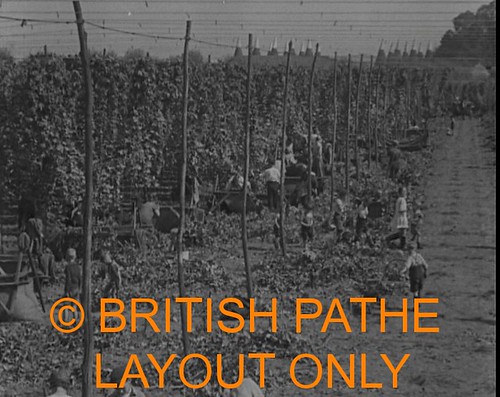
My only quibble is that despite it being almost 80 years old, Pathe still asserts copyright on it. Which is fine, in and of itself, even if I generally disagree with how long copyrights now tend to run. But for some reason, they think it’s reasonable to charge you a whopping £50 ($77) to buy the 8-minute video, and that’s just for a download of it — no DVD or case or artwork, though they graciously will allow you to burn it to your own DVD. How thoughtful. Anyway, as a result, it can’t be embedded and viewed here. Fortunately, you can at least watch it at the Pathe website. Enjoy.
Also, there appear to be a wealth additional historic videos on both beer and hops that look like you could lose an entire day exploring.
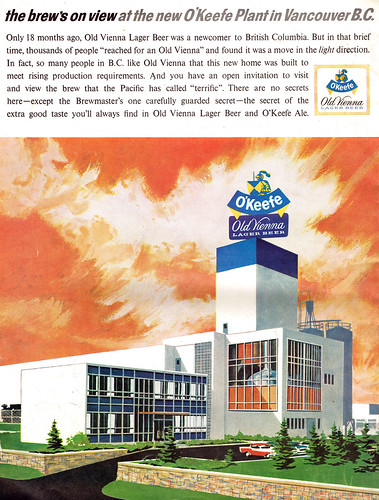
Friday’s ad is for British Columbia’s O’Keefe’s Brewery, from 1960, when they apparently opened their new “plant.” I know it shouldn’t, but I’m always suspect of any company that refers to its brewery as a “plant.” To me, it suggests a lack of passion for the beer itself, instead placing more emphasis on the business aspects of the endeavor. I do, however, love the shiny illustration of the new brewery and the sign for their Old Vienna Lager Beer.

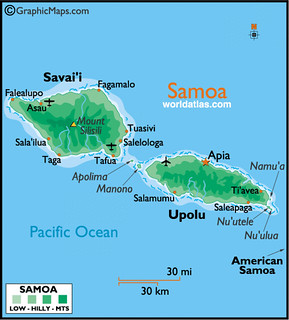
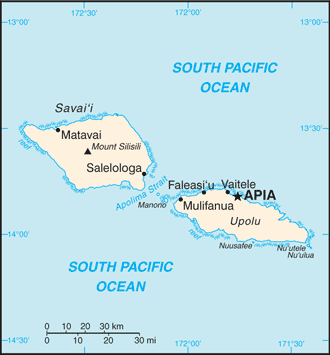
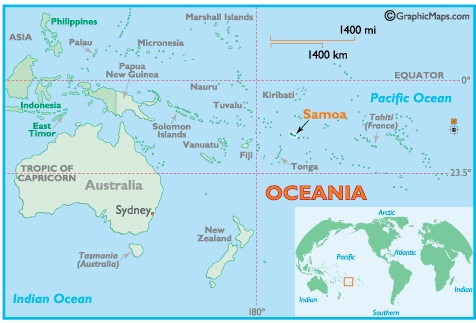
Today, each year, Samoa celebrates it independence from New Zealand, though it actually took place five months earlier on January 1, 1962.
Samoa
Samoa Breweries
Samoa Brewery Guides
Other Guides
Guild: None Known
National Regulatory Agency: None
Beverage Alcohol Labeling Requirements: Not Known
Drunk Driving Laws: BAC N/A


Alcohol Consumption By Type:
Alcohol Consumption Per Capita (in litres):
WHO Alcohol Data:
Patterns of Drinking Score: 3
Prohibition: None
Thursday’s ad is for Carling Black Label, from 1956, during their “Hey Mabel” period. Showing a golf motif with a face made of a hat, golf balls and tees, with the eyes glancing at the bottle of Black Label. Apparently that’s all you need, even if “the putts won’t drop.”


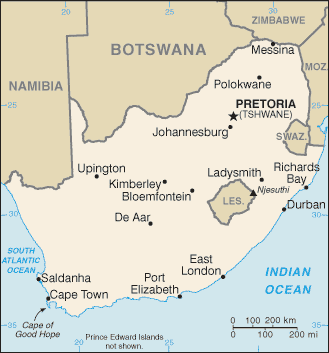
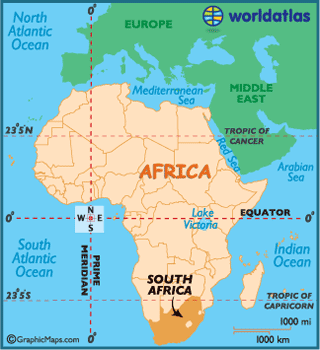
Today in 1910, the Union of South Africa was formed from four British colonies; and on the same day in 1961, South Africa declared themselves a republic.
South Africa
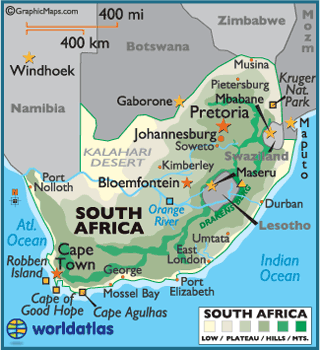
South Africa Breweries
South Africa Brewery Guides
Other Guides
Guild: None Known
National Regulatory Agency: None
Beverage Alcohol Labeling Requirements: Not Known
Drunk Driving Laws: BAC 0.05% and 0.02% for professional drivers (trucks over 3.5 tonnes, and vehicles carrying passengers for reward) National Road Traffic Act, 1996


Alcohol Consumption By Type:
Alcohol Consumption Per Capita (in litres):
WHO Alcohol Data:
Patterns of Drinking Score: 4
Prohibition: None
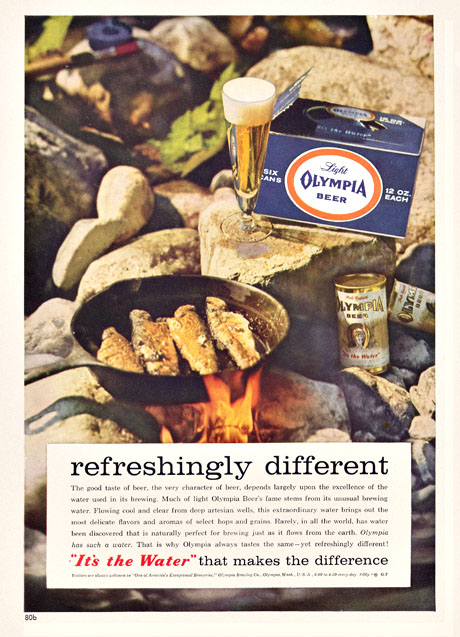
Wednesday’s ad is for Washington’s Olympia Beer, from 1959. Showing a fishing scene in the great outdoors, with fish rilling on the fire and a six-pack of Olympia cans ready to wash it all down.
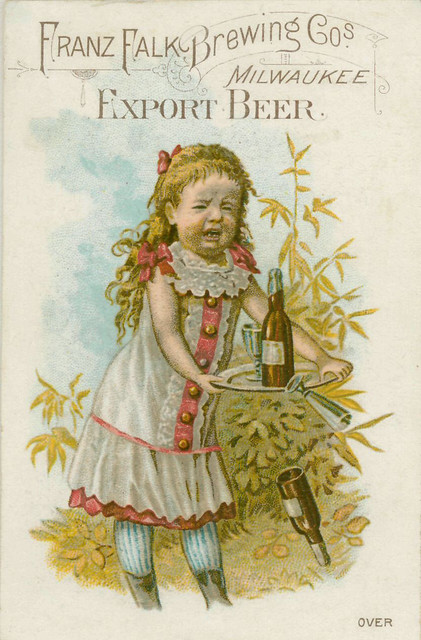
Tuesday’s ad is for Franz Falk Brewing Co., a Wisconsin brewery which was only around for a short time, from 1856 to 1892 — 36 years. I don’t know for sure, but it looks to me to be from the latter half of the 19th century. I’m not sure why anyone would entrust a couple of beer bottles and glasses on a tray to a young girl, but she certainly knows she’s not supposed to drop them. I can’t tell if she’s so upset because one of them is about to break or she knows she’s going to get a whoopin’ when her father finds out.