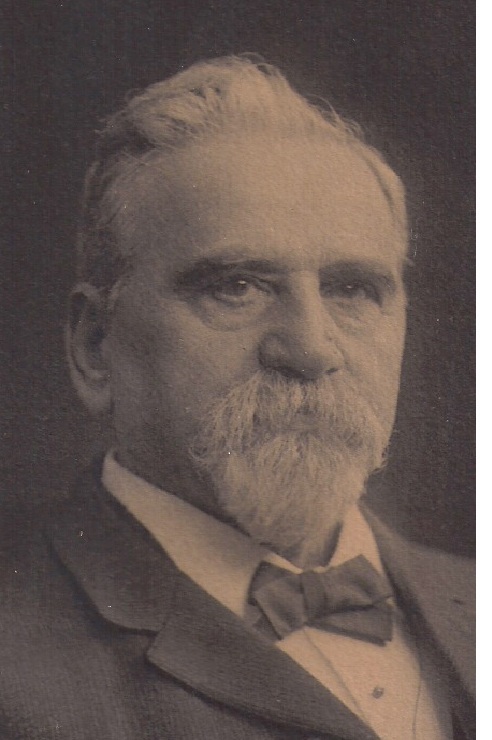
Today is the birthday of Johannes Karl Fix (February 24, 1832-1895). Johannes Karl Fix, which was probably Fuchs (for “Fox”) in his native Germany, was born in Freistadt, which at that time was part of Bavaria (but today is part of Austria). He founded the Fix Brewery in 1864 in Athens and was the first major brewery in Greece. “About 30 years earlier, his father had started brewing beer in Greece. As purveyor to the court of the Greek king, the company was able to maintain a monopoly position in the Greek market for about 100 years. After the bankruptcy of the company in 1983 and several failed attempts to revive it, Fix beer has been brewed again in its own brewery since 2009. The reason for this is the relatively high popularity of beer in Mediterranean countries.”
Here’s a history of the brewery, from Wikipedia:
The brewery founder’s father, Johann Adam Fix, a miner from Edelbach in Spessart, had followed the call of King Otto to Greece and had – like other Bavarians – settled in Iraklion near Athens.[2] He was responsible in the management of the mines in Kymi, Euboea. Earlier, he had left his son Johann Georg behind with his mother. When Johann Georg traveled to his father at the age of twenty, he was to be picked up in Piraeus; but his father was murdered on the way by robbers. After the event, Johann Georg Fix was rescued in Iraklion, he stayed there and started to import barrels of beer from Bavaria. Later, he decided to produce beer himself and launched a small enterprise selling his home-made beer in Kolonaki (today a expensive and celebrated shopping area in the heart of Athens), which was a good place for socialising for the Athenian Bavarian community. Joseph von Ow, who was in the service of the Athenian royal court in 1837–39, wrote in his memoirs:
“The Bavarian compatriots have company among themselves. – A brewery has been in operation in Athens for two years and is being used heavily. Professor G. Everus from Oldenburg rightly notes how excellent it must be for a Bavarian soul to have his patriotic drink here – on the border of the Orient! A society – To the Green Tree – (with garden, bowling alley, stone beer steins, singing and loud conversations) reminds of the far bank of the Isar! “
Around 1840, the beer is said to have prevailed throughout Greece. Johann Ludwig’s son Karl Johann Fix (Karolos Ioannou Fix) in 1864 founded the Fix brewery in Athens,[6] coinciding with the appointment of the next king of Greece, George I, from beer-loving Denmark. The new royal court encouraged Charles’s efforts, and Fix Company soon became the official purveyor to the Greek Royal Court, and has been the only major in the country till the middle of the 20th century. It was located at the foot of Lycabettus also in Kolonaki and competed with small breweries such as Gulielmos (Wilhelm) and imported beer from Trieste and Vienna (Schwechat). The German brewers (including Fix) are said to have barely met the demand for beer and “became wealthy in a short time.” Beer was therefore more expensive than wine. Around 1905, 89,000 hectoliters were produced in eleven breweries.
This is an account of the history of Greek brewing beginning with Fix’s brewery, from Food & Dining.
Modern brewing in Greece dates to the period just after Greece became independent of the Ottoman Empire in 1832 following a decade-long war of liberation. The new Mediterranean nation acquiesced to the persuasiveness of Europe’s empires, which paraphrased Frank Zappa by insisting that all real countries need a king in addition to beer and a football team.
So it was that a member of the Bavarian royal family set up court in Athens, soon to be followed by brewers and sausage makers. After all, all kings were not Bavarian, but all Bavarians (including their kings) needed beer and brats. Some things never change.
A Bavarian miner named Fix was among the early arrivals in Athens, intent on serving royalty by making money. He began dabbling in brewing, but it was his son Johann Karl Fix who founded the eponymous brewery in Athens in 1864.
By this point the Greek Royal Court had become Danish on grounds of Bavarian kingly ineptitude, but as we know Danes are beery to the core, and Fix the younger, being a well-read capitalist, began his pursuit of the new monarch’s favor. This quest resulted in the Fix brand becoming “official” purveyor to the royals, and subsequently a quasi-monopoly in Greek brewing for decades to come.
By the time of my 1985 visit to Greece, Fix was acknowledged as the must-drink Greek beer by all those who had preceded me on the backpacker’s circuit. But as I soon discovered, Fix no longer existed, having passed from the scene two years earlier following a multitude of setbacks.
The reasons for the decline of Fix in Greece were quite similar to those afflicting post-Prohibition family breweries in America. For one, bigger breweries (in Greece’s case, European multinationals) wanted a piece of the action and expended their resources to achieve it by hook or crook.
Also, the Fix family’s younger generations proved far less adept at brewery management than their elders had been. The Fix brewery also came to be seen as aligned with the right-wing military junta that ruled Greece from 1967 through 1974, and when the junta fell, paybacks were hell.
Tragically, Georg [Johannes Karl’s father] was shot and killed by robbers in 1862 while awaiting the arrival of his son Johannes from Bavaria. His grave can be found in Iraklio’s Roman Catholic cemetery. In spite of that terrible event, Johannes decided to remain in Greece. Informed sources have him working at the palace briefly, gaining the concession for the importation of ice from Mount Parnitha to Athens and/or apprenticing at the brewery of Melcher and then taking it over around 1864 when Mr. Melcher died. However much of that beginning is solid fact, it is true that he had begun his own small brewery and moved it from Paleo Iraklio to Kolonaki in the late 1860s. His business grew, partly because of hard work and partly because his beer had a reputation for consistent quality.
For a few years now, the City of Leipzig in Germany, has been celebrating today as International Happy Gose Day, or at least the Gosenschenke, or Gose-tavern, known as “Ohne Bedenken” (which translates as “Without Concern”), who started the holiday.
Here’s their history from the Gosenschenke website:
In 1899 the innkeeper family Cajeri relocated to Gohlis (which was a little village just outside Leipzig back then) and founded the Gose-tavern “Ohne Bedenken” / “Without Concern” together with the huge beer garden. In 1905 the construction of the house and the Biedermeier-like Gose-bar-parlour followed. The name “Without Concern” traces back to Cajeri’s waiter Karl Schmidt. He always answered the question of the guests whether this pigswill was drinkable or not “…without concern!”
And this is from the Leipzig Pub Guide online:
At the end of the 19th century, when Gose was at the peak of its popularity, there were dozens of Gosenschenke in Leipzig. Ohne Bedenken belongs to this period, being built in 1899 in the suburb of Gohlis at a time when Leipzig was expanding rapidly in size. It was for a decade the only pub in the world selling this legendary beer.
The building was damaged in wartime air-raids, but struggled along until as a pub until1958. After lying empty for a while, it became a Kulturzentrum for DDR soldiers in 1960. In 1968 a nearby polyclinic took it over for use by its X-ray department. When they left in the 1970’s, the historic pub again remained unused for many years.
An article, published in the local Leipziger Blätter newspaper in 1983, evoking memories of Gose and Ohne Bedenken caught the attention of Lothar Goldhahn. He visited the premises, saw their potential and decided Leipzig deserved to have at least one remnant of its Gose culture preserved. Somehow persuaded the DDR authorities to let him restore and re-open Ohne Bedenken in the mid -1980’s.
It seemed logical that a Gosenschänke should offer its customers a Gose. This caused him two big problems: what did Gose taste like and who could brew it for him? His first Gose, perfected after much research amongst older drinkers, was brewed in Berlin at the Schultheiss Berliner Weisse brewery.
Hanisch Gose signObtaining a supply of Gose has never been an easy matter. Between 1988 and 1991 he had to make do with Berliner Weisse. From 1991 to 1995 Goldhahn ran his own small brewery, but the limited demand for Gose made this economically unviable. The pub currently sells both of the Goses made in Leipzig (and the world, for that matter).
The interior has been restored to something akin to its original state and is stuffed full with Gose memorabilia in the form of old advertisements and bottles. The style is similar to that of traditional beerhalls throughout Germany in its comfortable, uncomplicated design. For those intimidated by the sourness of straight Gose, a selection of Gose cocktails are available.
The combination of a traditional, cosy atmosphere and friendly, enthusiastic staff, make it by far the best pub I’ve found in Leipzig or, for that matter, anywhere in the old DDR. The only drawback is its inconvenient location, in a northern suburb about a kilometre and a half away from the city centre. If you don’t fancy the walk, you can take a number 11 tram from the Hauptbahnhof.
For their 100th anniversary in 1999, they published a booklet entitled “Gose Häppchen: 100 Jahre Gosenschenke Ohne Bedenken,” which is less than 80 pages. Here are some of the illustrations from that book showing early imagery of gose.
Today is the birthday of Ludwig Thoma (January 21, 1867-August 26, 1921). If his name is not familiar to you, that’s not a surprise. He was a German author, publisher and editor, who gained popularity through his partially exaggerated description of everyday Bavarian life,” but he’s largely unknown outside of his native Germany.
One of his best-known works is Der Münchner im Himmel (or The Municher in Heaven), which in 1962 was made into a short animated cartoon directed by Walter Reiner for BR, the German equivalent of PBS. And it was based on Ludwig Thoma’s story of the same name.
Here’s a description of the story, translated by Google, so you can make sense of the cartoon since it’s in German:
Alois Hingerl, clerk no. 172 from Munich Central Station, goes to heaven. Peter reveals to him the heavenly house rules: “Rejoice and sing Hallelujah”. The “Angel Aloisius” is not particularly impressed by this, especially since he is supposed to get “heavenly manna” instead of the Munich beer. Angry, he sits down on a cloud to rejoice and sing hallelujah. It sounds like the hair of the heavenly ones stand on end. The good Lord has an understanding and instructs Aloisius to convey the divine inspirations to the Bavarian government. He also sends it to Munich with a corresponding letter. When the “Angel Aloisius” steps back on Munich soil, and when he finally – following an old custom – ends up in the Hofbräuhaus again, he forgets the divine mandate and the Bavarian State Government with a “Maß” and another Maß …
The short story is about Alois Hingerl, clerk number 172 at Munich Central Station . This one does a job with such a hurry that he from the blow falls taken to the ground and dies. Two angels drag him laboriously to heaven , where he is given his otherworldly name “Angel Aloisius” by Peter , a harp and a cloud on which, according to the “heavenly house rules”, he is to rejoice and sing Hosanna according to a fixed schedule . When he asked when he would finally get something to drink, Peter replied to Aloisius with the words: “You will get your manna.”
In view of the prospect of manna instead of the beer he loves, Aloisius suspects something bad, at the same time there will be fights with a heavenly red shandy angel, his hated competition on earth. Frustrated, he begins to rejoice on his cloud. When a “spiritualized angel” flying past answers his request for “am Schmaizla” (a pinch of snuff ) with an incomprehensible, lisped “Hosanna!”, His anger rises, whereupon Aloisius begins to rant and curse, which also changes in his way rejoicing is reflected. Through his scolding, cursing and loud rejoicing (“ Ha-ha-lä-lä-lu-u-uh – – Himmi Lord God – Erdäpfi – Saggerament – – lu – uuu – iah!“) God becomes aware of him. After a brief appraisal of the delinquent and consultation with Peter, he comes after the words “Aha! A Munich resident! ”To the conclusion that Aloisius is of no use for heaven. That is why he has a different task: He is supposed to convey divine advice to the Bavarian government (in the original from Thoma the Bavarian State Minister of the Interior for Church and School Affairs Anton von Wehner ); as a result, the Munich resident comes to Munich a few times a week and the dear soul has its peace.
Alois is very happy about this assignment, takes divine advice and flies away. As usual, he first goes to the Hofbräuhaus with his message , where he orders one beer after the other, then forgets his order and sits there to this day. Meanwhile, the Bavarian government (or the Bavarian Minister of Education) is still waiting for divine advice (or divine inspiration).
Below are some images of Aloisius from various sources. As far as I can tell, he remains a well-known literary figure throughout Germany.
Sunday’s ad is for the Munich Oktoberfest, for 2020, which is only taking place virtually this year, and ended today. From the late 1800s until the 1970s, poster art really came into its own, and in Europe a lot of really cool posters, many of them for breweries, were produced. This poster is for the Munich Oktoberfest, which began September 19 and ran through today, October 4. Last year I posted all of the posters from 1952-2019, so I thought I’d add the official poster for this year to the archive. This poster was created by German artist Peter Ulrich.
Saturday’s ad is for Bière Phénix, from the 1920s. From the late 1800s until the 1980s, poster art really came into its own, and in Europe a lot of really cool posters, many of them for breweries, were produced. I’ve been posting vintage European posters all last year and will continue to do so in 2020. This poster was created for Brasserie du Phénix, which was founded in 1886 in Marseille, which is located in the Bouches-du-Rhône area in the Provence-Alpes-Côte d’Azur region of southern France. A brewery had been on the same site since 1821, and a new one was rebuilt in 1872, and 14 years later it was bought by a new owner, who called it the Brasserie et Malterie du Phénix. They later changed their name to the Brasserie de la Valentine, and today it is owned by the Heineken Group. This poster was created by German artist Adolfo Hohenstein.
Beginning May 1, 1844, and lasting until May 5, the Beer Riots in Bavaria took place after King Ludwig I of Bavaria decreed a tax on beer. It was due to the rising cost of ingredients and raised the price of a beer by the equivalent of a penny.
Several thousand angry citizens stormed the breweries on the evening of May 1st. The authorities replied with repression, the decree of the Munich police director of May 4, 1844 states:
“The mines in the inns are not tolerated at all from 6 a.m. to 11 a.m. and in the afternoons only as long as no excesses are committed. In the event of excesses, the inns are cleared by the armed forces and the guests are exposed to the danger of being arrested. ”
The police director had not, however, counted on the local Army soldiers’ thirst for beer. These refused to act against the insurgents, and King Ludwig I had to reduce the beer price back to the old price. Order was only restored after the King decreed a 10% reduction in the price of beer. Ludwig I only remained King for 4 more years, when he abdicated following the Revolutions of 1848, and his son, Maximilian II, took his place.
Friedrich Engels, who is most famous for having developed Marxist theory along with Karl Marx, wrote a short article for The Northern Star newspaper a few weeks after the incident.
The Bavarian Beer is the most celebrated of all kinds of this drink brewed in Germany, and, of course, the Bavarians are much addicted to its consumption in rather large quantities. The government laid a new duty of about 100s. ad valorem on beer, and in consequence of this an outbreak occurred, which lasted for more than four days. The working men assembled in large masses, paraded through the streets, assailed the public houses, smashing the windows, breaking the furniture, and destroying everything in their reach, in order to take revenge for the enhanced price of their favourite drink. The military was called in, but a regiment of horse-guards, when commanded to mount on horseback, refused to do so. The police, being, as everywhere, obnoxious to the people, were severely beaten and ill-treated by the rioters, and every station formerly occupied by police-officers had to be occupied by soldiers, who, being upon good terms with the people, were considered less hostile and showed an evident reluctance to interfere. They only did interfere when the palace of the King was attacked, and then merely took up such a position as was sufficient to keep the rioters back. On the second evening (the 2nd of May) the King, in whose family a marriage had just been celebrated, and who for this reason had many illustrious visitors at his court, visited the theatre; but when, after the first act, a crowd assembled before the theatre and threatened to attack it, every one left the house to see what the matter was, and His Majesty, with his illustrious visitors, was obliged to follow them, or else he would have been left alone in his place. The French papers assert that the King on this occasion ordered the military stationed before the theatre to fire upon the people, and that the soldiers refused. The German papers do not mention this, as may be expected from their being published under censorship; but as the French papers are sometimes rather ill-informed about foreign matters, we cannot vouch for the truth of their assertion. From all this, however, it appears that the Poet King (Ludwig, King of Bavaria, is the author of three volumes of unreadable Poems, of a Traveller’s Guide to one of his public buildings &c. &c.) has been in a very awkward position during these outbreaks. In Munich, a town full of soldiers and police, the seat of a royal court, a riot lasts four days, notwithstanding all the array of the military, – and at last the rioters force their object. The King restored tranquillity by an ordinance, reducing the price of the quart of beer from ten kreutzers (3¼ denarius) to nine kreutzers (3d). If the people once know they can frighten the government out of their taxing system, they will soon learn that it will be as easy to frighten them as far as regards more serious matters.
Saturday’s ad is for Löwenbräu Maibock, from the 1950s. From the late 1800s until the 1980s, poster art really came into its own, and in Europe a lot of really cool posters, many of them for breweries, were produced. I’ve been posting vintage European posters all last year and will continue to do so in 2020. This poster was created for Löwenbräu Brewery, which was located in Munich, Germany. The brewery was founded as early as 1383, although today is owned by ABInBev. The artist who created this poster was German artist Julius Diez.
Wednesday’s ad is for Dortmunder Ritter Bier, from 1952. From the late 1800s until the 1980s, poster art really came into its own, and in Europe a lot of really cool posters, many of them for breweries, were produced. I’ve been posting vintage European posters all last year and will continue to do so in 2020. This poster was created for Dortmunder Ritter-Brauerei, which was located in Dortmund, which is in northwestern Germany, though more central. It was founded in 1889 and closed in 2005. This poster was created by German artist Helga Tiemann.
Tuesday’s ad is for a Wissembourg Beer Jester, or King, from 1880. From the late 1800s until the 1980s, poster art really came into its own, and in Europe a lot of really cool posters, many of them for breweries, were produced. I’ve been posting vintage European posters all last year, and will continue to do so in 2020. This poster was part of a series in which “[t]he joyful King celebrates the German way — with beer, of course!” One auction site describes the series as follows. “This poster was created by the C. Burckardt printing firm, and is part of a larger series of posters that were produced during the 1880s and 1890s. The company was based in the Alsatian town of Wissembourg, along the French border with Germany, and was also known for their cutout puppets, puzzles for children, educational charts, and religious depictions. These posters were created during a time that the Alsace region belonged to Germany, when the town was still called Weissenburg. All posters in this series have been printed via stone lithography, in multiple panels.” They claim he’s a king, but his grin says jester, to me.
Wednesday’s ad is for Meistertrunk, from 1930. From the late 1800s until the 1980s, poster art really came into its own, and in Europe a lot of really cool posters, many of them for breweries, were produced. I’ve been posting vintage European posters all last year, and will continue to do so in 2020. This poster was for Kronenbrauerei, or Kronen Privatbrauerei Dortmund, which is located in Dortmund, Germany. It “was one of the oldest breweries in Westphalia and has its headquarters at the Old Market in Dortmund. The company was able to look back on more than 550 years of brewing tradition and was family-owned from 1729 until 1996.” It was acquired by Dortmunder Actien Brauerei in 1996, and today is part of the Radeberger Group. The poster was created by German artist and architect Siegmund Suchodolski.