Brookston Beer Bulletin

Jay R. Brooks on Beer

  • Home
  • About
  • Editorial
  • Birthdays
  • Art & Beer

Socialize

  • Dribbble
  • Email
  • Facebook
  • Flickr
  • GitHub
  • Instagram
  • LinkedIn
  • Pinterest
  • RSS
  • Twitter
  • YouTube

Powered by Genesis

Historic Beer Birthday: Henry Hoerl

April 26, 2025 By Jay Brooks

blatz

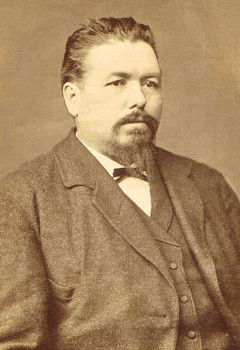
Today is the birthday of Henry Hoerl (April 26, 1854-November 14, 1917). He was born in Altdorf, in Bavaria, Germany, the son of a German brewery owner, where he learned the trade. When he was 24, he came to the U.S. and found employment with a number of breweries throughout New York. In 1892, he moved to Milwaukee, Wisconsin to become the Superintendent of the Val. Blatz Brewing Co. a position he held for the rest of his life.

Henry-Hoerl

Here is his obituary from the American Brewers’ Review:

Henry-Hoerl-obit-1
Henry-Hoerl-obit-2
Henry-Hoerl-obit-3
BlatzBrewery1886

This biography of Henry Hoerl is his entry from “Freemasonry in Wisconsin: Biographical Sketches of Men who Have Been Prominent in the Various Masonic Bodies in the State,” published in 1900.

Henry-Hoerl-bio-1
Henry-Hoerl-bio-2
Henry-Hoerl-oval

And this biography is from “Memoirs of Milwaukee County: from the earliest historical times down to the present, including a genealogical and biographical record of representative families in Milwaukee County,” published by the Madison, Wisconsin Western Historical Society in 1909.

Henry Hoerl, for many years a prominent figure in the brewing circles of Milwaukee, has achieved his prominence through untiring energetic effort. He is of German descent and was born at Altdorf, Bavaria, Germany, April 26, 1854, the son of George and Anna (Funck) Hoerl, natives of the famous old city of Nuremberg. Henry, the subject of this review, received his education in the elementary schools of his native city and then took a course in the high school. After finishing his studies he was employed in breweries in Germany for several years. He served with distinction in the German army as sergeant of artillery of a Munich regiment. Ambitious to rise in the world and recognizing the greater possibilities and advantages offered in this country to young men of energy and determination, he left his home in 1878, when twenty-four years of age, and set out for the new world, entering upon a career in the course of which he encountered many disappointments, to ultimately reap the reward of honest efforts in abundant prosperity. Soon after landing in New York he found employment in the breweries there and took the brewmaster’s course in the New York Brewing Academy, winning the first prize in 1886. This brought him into prominence among the brewing men of the city and he secured an excellent position. In 1892 he moved to Milwaukee to become superintendent of the Valentine Blatz Brewing Company and has made their beer famous. On June 4, 1878, Mr. Hoerl married Katherine, the daughter of Michael and Katherine (Neuner) Strobel, of Albany, N. Y. Four children have come to bless this union: Emil, who is the proprietor of the Germania brewery of Altoona, Pa. ; Jenny, John M., who resides in Milwaukee, and Annie, the wife of George Schott, who runs a cooperage works in Cincinnati, Ohio. Mr. and Mrs. Hoerl are communicants of the Lutheran church, to which their ancestors have belonged for many generations. Mr. Hoerl is affiliated with the Masonic Order, having taken the Bine Lodge, the Chapter, Knights Templar and Consistory degrees, and he is also a member of the Mystic Shrine. Hoerl is a popular member of the Deutscher Club, the Millioki Club, the Milwaukee Music Vercin and the “West Side Turn Verein.”
blatz-tray

And finally, I came upon this little oddity via eBay. It’s an invitation sent to Hoerl at the Val. Blatz Brewing Co. in Milwaukee, Wisconsin.

Henry-Hoerl-invitation

The invitation was to attend a brewmaster’s convention of the United Brewer’s Association of the City of New York and the Surrounding Area, September 26-28, 1897. It doesn’t look like he mailed it back, but he may have been thinking about it, as he marked it for 2 train tickets to be reserved to get there.

Henry-Hoerl-invitation-bk

Filed Under: Birthdays, Just For Fun Tagged With: Germany, History, New York, Wisconsin

Historic Beer Birthday: Henry Becker

April 19, 2025 By Jay Brooks

indiana

Today is the birthday of Henry Becker (April 19, 1851-April 20, 1906). He was born in Bavaria, and emigrated to the U.S. when he was 21, coming first to New Orleans, and two years later settling in Terre Haute, Indiana. At some point, he became involved with the Seventh Street Brewery, which had been founded in 1848 (although another source seems to dispute that believing they are unrelated and that Becker’s was founded independently in the 1870s, which actually makes some sense to me). Its name was changed to the Terre Haute Weiss Beer Brewery in 1898 (if related to Seventh Street), but after Becker’s death in 1906, his son took it over, renaming it the Henry J. Becker Brewery. Becker’s son then sold it two years later, in 1908. The buyer, Charles J. Graf, closed it for the good the same year.

Henry-Becker-obit-abr
Obituary of Becker from the American Brewers’ Review in 1906.

There’s very little information I could find on Becker or his brewery. It appears to have been very small, with capacity below 500 bbl, making it something of a proto-nano in its day. I could also not find any photos of Becker or the brewery and no breweriana whatsoever, aprt from the bottle below, which must be from between 1906-09. One unusual fact I did find is that they brewed a Berliner Weiss.

henry-becker-bottle

Filed Under: Birthdays, Breweries, Just For Fun Tagged With: Bavaria, Germany, Indiana

Beer In Ads #4903: Heute Bockbier

March 8, 2025 By Jay Brooks

Last year I decided to concentrate on Bock ads. Bock, of course, originated in Germany, in the town of Einbeck. Because many 19th century American breweries were founded by German immigrants, they offered a bock at certain times of the year, be it Spring, Easter, Lent, Christmas, or what have you. In a sense they were some of the first seasonal beers. “The style was later adopted in Bavaria by Munich brewers in the 17th century. Due to their Bavarian accent, citizens of Munich pronounced ‘Einbeck’ as ‘ein Bock’ (a billy goat), and thus the beer became known as ‘Bock.’ A goat often appears on bottle labels.” And presumably because they were special releases, many breweries went all out promoting them with beautiful artwork on posters and other advertising.

Saturday’s ad for Bock Beer depicts a brewer standing on the top of a wooden barrel with an even larger one behind him. He’s holding up a mug of beer triumphantly, surrounded by hops., with the text “§ 11,” whatever that means. The “§” symbol, as I’ve used it, stands for “section” and is typically used in the law and legislation, so I’m not sure what the context is in this case. The lithograph was created in 1880.  The lithographer appears to be “Druck u.Verlag v.C.Burckardt’s Nachf. R.Ackermann,” located in Weissenburg, Germany.

Filed Under: Art & Beer, Beers, Just For Fun Tagged With: Advertising, Bock, Germany, History

Beer In Ads #4895: Pschorr-Braü Mai Bock

February 28, 2025 By Jay Brooks

Last year I decided to concentrate on Bock ads. Bock, of course, originated in Germany, in the town of Einbeck. Because many 19th century American breweries were founded by German immigrants, they offered a bock at certain times of the year, be it Spring, Easter, Lent, Christmas, or what have you. In a sense they were some of the first seasonal beers. “The style was later adopted in Bavaria by Munich brewers in the 17th century. Due to their Bavarian accent, citizens of Munich pronounced ‘Einbeck’ as ‘ein Bock’ (a billy goat), and thus the beer became known as ‘Bock.’ A goat often appears on bottle labels.” And presumably because they were special releases, many breweries went all out promoting them with beautiful artwork on posters and other advertising.

Friday’s ad is is for Pschorr-Braü Mai Bock, and is from 1913. At that time, it was the Pschorr-Bräu, but after a merger in 1972 with the Hacker Brewery it became known as the Hacker-Pschorr Brewery. This poster was created by Carl Moos, a well-known German-Swiss graphic artist, who was best known for his travel and skiing posters.

Filed Under: Art & Beer, Beers, Breweries, Just For Fun Tagged With: Advertising, Bock, Germany, History, Switzerland

Beer In Ads #4819: Schloßbräu Bock

December 11, 2024 By Jay Brooks

This year I decided to concentrate on Bock ads. Bock, of course, originated in Germany, in the town of Einbeck. Because many 19th century American breweries were founded by German immigrants, they offered a bock at certain times of the year, be it Spring, Easter, Lent, Christmas, or what have you. In a sense they were some of the first seasonal beers. “The style was later adopted in Bavaria by Munich brewers in the 17th century. Due to their Bavarian accent, citizens of Munich pronounced ‘Einbeck’ as ‘ein Bock’ (a billy goat), and thus the beer became known as ‘Bock.’ A goat often appears on bottle labels.” And presumably because they were special releases, many breweries went all out promoting them with beautiful artwork on posters and other advertising.

Wednesday’s ad is for Schloßbräu Bock, created for the Schloss-Brauerei AU, i. d. Hallertau which is located in Germany, about hour north of Munich. I believe the poster may be current, because they’re still using the same image of the goat on all of their labels, although it could also be an older piece they decided to resurrect, but it’s hard to tell. The poster was done by Herm. Sunday & Co., of Munich, Germany, and they appear to have been active in 1940s, so it’s possible that’s when this poster was done, too. The artist appears to have been O.V. Kress, and at least one source dates it to 1900.

Filed Under: Art & Beer, Beers, Breweries, Just For Fun Tagged With: Advertising, Bock, Germany, History, Munich

Beer In Ads #4814: Schlossbräu Bock

December 6, 2024 By Jay Brooks

This year I decided to concentrate on Bock ads. Bock, of course, originated in Germany, in the town of Einbeck. Because many 19th century American breweries were founded by German immigrants, they offered a bock at certain times of the year, be it Spring, Easter, Lent, Christmas, or what have you. In a sense they were some of the first seasonal beers. “The style was later adopted in Bavaria by Munich brewers in the 17th century. Due to their Bavarian accent, citizens of Munich pronounced ‘Einbeck’ as ‘ein Bock’ (a billy goat), and thus the beer became known as ‘Bock.’ A goat often appears on bottle labels.” And presumably because they were special releases, many breweries went all out promoting them with beautiful artwork on posters and other advertising.

Friday’s ad is for Schlossbräu Bock, for the Brauerei Fürstlich Drehna, which is located in Luckau, in the state of Brandenburg. I’m not sure when it was created, but my best guess is mid- to late-20th century. It’s certainly not modern, but it feels like it must be later than 1950.

Filed Under: Art & Beer, Beers, Breweries, Just For Fun Tagged With: Advertising, Bock, Germany, History

Historic Beer Birthday: Johannes Karl Fix

February 24, 2023 By Jay Brooks

Today is the birthday of Johannes Karl Fix (February 24, 1832-1895). Johannes Karl Fix, which was probably Fuchs (for “Fox”) in his native Germany, was born in Freistadt, which at that time was part of Bavaria (but today is part of Austria). He founded the Fix Brewery in 1864 in Athens and was the first major brewery in Greece. “About 30 years earlier, his father had started brewing beer in Greece. As purveyor to the court of the Greek king, the company was able to maintain a monopoly position in the Greek market for about 100 years. After the bankruptcy of the company in 1983 and several failed attempts to revive it, Fix beer has been brewed again in its own brewery since 2009. The reason for this is the relatively high popularity of beer in Mediterranean countries.”

Here’s a history of the brewery, from Wikipedia:

The brewery founder’s father, Johann Adam Fix, a miner from Edelbach in Spessart, had followed the call of King Otto to Greece and had – like other Bavarians – settled in Iraklion near Athens.[2] He was responsible in the management of the mines in Kymi, Euboea. Earlier, he had left his son Johann Georg behind with his mother. When Johann Georg traveled to his father at the age of twenty, he was to be picked up in Piraeus; but his father was murdered on the way by robbers. After the event, Johann Georg Fix was rescued in Iraklion, he stayed there and started to import barrels of beer from Bavaria. Later, he decided to produce beer himself and launched a small enterprise selling his home-made beer in Kolonaki (today a expensive and celebrated shopping area in the heart of Athens), which was a good place for socialising for the Athenian Bavarian community. Joseph von Ow, who was in the service of the Athenian royal court in 1837–39, wrote in his memoirs:

“The Bavarian compatriots have company among themselves. – A brewery has been in operation in Athens for two years and is being used heavily. Professor G. Everus from Oldenburg rightly notes how excellent it must be for a Bavarian soul to have his patriotic drink here – on the border of the Orient! A society – To the Green Tree – (with garden, bowling alley, stone beer steins, singing and loud conversations) reminds of the far bank of the Isar! “

Around 1840, the beer is said to have prevailed throughout Greece. Johann Ludwig’s son Karl Johann Fix (Karolos Ioannou Fix) in 1864 founded the Fix brewery in Athens,[6] coinciding with the appointment of the next king of Greece, George I, from beer-loving Denmark. The new royal court encouraged Charles’s efforts, and Fix Company soon became the official purveyor to the Greek Royal Court, and has been the only major in the country till the middle of the 20th century. It was located at the foot of Lycabettus also in Kolonaki and competed with small breweries such as Gulielmos (Wilhelm) and imported beer from Trieste and Vienna (Schwechat). The German brewers (including Fix) are said to have barely met the demand for beer and “became wealthy in a short time.” Beer was therefore more expensive than wine. Around 1905, 89,000 hectoliters were produced in eleven breweries.

This is an account of the history of Greek brewing beginning with Fix’s brewery, from Food & Dining.

Modern brewing in Greece dates to the period just after Greece became independent of the Ottoman Empire in 1832 following a decade-long war of liberation. The new Mediterranean nation acquiesced to the persuasiveness of Europe’s empires, which paraphrased Frank Zappa by insisting that all real countries need a king in addition to beer and a football team.

So it was that a member of the Bavarian royal family set up court in Athens, soon to be followed by brewers and sausage makers. After all, all kings were not Bavarian, but all Bavarians (including their kings) needed beer and brats. Some things never change.

A Bavarian miner named Fix was among the early arrivals in Athens, intent on serving royalty by making money. He began dabbling in brewing, but it was his son Johann Karl Fix who founded the eponymous brewery in Athens in 1864.

By this point the Greek Royal Court had become Danish on grounds of Bavarian kingly ineptitude, but as we know Danes are beery to the core, and Fix the younger, being a well-read capitalist, began his pursuit of the new monarch’s favor. This quest resulted in the Fix brand becoming “official” purveyor to the royals, and subsequently a quasi-monopoly in Greek brewing for decades to come.

By the time of my 1985 visit to Greece, Fix was acknowledged as the must-drink Greek beer by all those who had preceded me on the backpacker’s circuit. But as I soon discovered, Fix no longer existed, having passed from the scene two years earlier following a multitude of setbacks.

The reasons for the decline of Fix in Greece were quite similar to those afflicting post-Prohibition family breweries in America. For one, bigger breweries (in Greece’s case, European multinationals) wanted a piece of the action and expended their resources to achieve it by hook or crook.

Also, the Fix family’s younger generations proved far less adept at brewery management than their elders had been. The Fix brewery also came to be seen as aligned with the right-wing military junta that ruled Greece from 1967 through 1974, and when the junta fell, paybacks were hell.

And this account is from The First Cemetery of Athens:

Tragically, Georg [Johannes Karl’s father] was shot and killed by robbers in 1862 while awaiting the arrival of his son Johannes from Bavaria. His grave can be found in Iraklio’s Roman Catholic cemetery. In spite of that terrible event, Johannes decided to remain in Greece. Informed sources have him working at the palace briefly, gaining the concession for the importation of ice from Mount Parnitha to Athens and/or apprenticing at the brewery of Melcher and then taking it over around 1864 when Mr. Melcher died.  However much of that beginning is solid fact, it is true that he had begun his own small brewery and moved it from Paleo Iraklio to Kolonaki in the late 1860s.  His business grew, partly because of hard work and partly because his beer had a reputation for consistent quality.

Filed Under: Beers, Just For Fun Tagged With: Bavaria, Germany, Greece

International Happy Gose Day

November 17, 2022 By Jay Brooks

gose
For a few years now, the City of Leipzig in Germany, has been celebrating today as International Happy Gose Day, or at least the Gosenschenke, or Gose-tavern, known as “Ohne Bedenken” (which translates as “Without Concern”), who started the holiday.

gosenschenke-ohne-bedenken-footer

Here’s their history from the Gosenschenke website:

In 1899 the innkeeper family Cajeri relocated to Gohlis (which was a little village just outside Leipzig back then) and founded the Gose-tavern “Ohne Bedenken” / “Without Concern” together with the huge beer garden. In 1905 the construction of the house and the Biedermeier-like Gose-bar-parlour followed. The name “Without Concern” traces back to Cajeri’s waiter Karl Schmidt. He always answered the question of the guests whether this pigswill was drinkable or not “…without concern!”

Ohne-Bedenken-Bldg-www-gosenschenke-de

And this is from the Leipzig Pub Guide online:

At the end of the 19th century, when Gose was at the peak of its popularity, there were dozens of Gosenschenke in Leipzig. Ohne Bedenken belongs to this period, being built in 1899 in the suburb of Gohlis at a time when Leipzig was expanding rapidly in size. It was for a decade the only pub in the world selling this legendary beer.

The building was damaged in wartime air-raids, but struggled along until as a pub until1958. After lying empty for a while, it became a Kulturzentrum for DDR soldiers in 1960. In 1968 a nearby polyclinic took it over for use by its X-ray department. When they left in the 1970’s, the historic pub again remained unused for many years.

gose-postcard-2

An article, published in the local Leipziger Blätter newspaper in 1983, evoking memories of Gose and Ohne Bedenken caught the attention of Lothar Goldhahn. He visited the premises, saw their potential and decided Leipzig deserved to have at least one remnant of its Gose culture preserved. Somehow persuaded the DDR authorities to let him restore and re-open Ohne Bedenken in the mid -1980’s.

It seemed logical that a Gosenschänke should offer its customers a Gose. This caused him two big problems: what did Gose taste like and who could brew it for him? His first Gose, perfected after much research amongst older drinkers, was brewed in Berlin at the Schultheiss Berliner Weisse brewery.

Hanisch Gose signObtaining a supply of Gose has never been an easy matter. Between 1988 and 1991 he had to make do with Berliner Weisse. From 1991 to 1995 Goldhahn ran his own small brewery, but the limited demand for Gose made this economically unviable. The pub currently sells both of the Goses made in Leipzig (and the world, for that matter).

gose-postcard-1

The interior has been restored to something akin to its original state and is stuffed full with Gose memorabilia in the form of old advertisements and bottles. The style is similar to that of traditional beerhalls throughout Germany in its comfortable, uncomplicated design. For those intimidated by the sourness of straight Gose, a selection of Gose cocktails are available.

The combination of a traditional, cosy atmosphere and friendly, enthusiastic staff, make it by far the best pub I’ve found in Leipzig or, for that matter, anywhere in the old DDR. The only drawback is its inconvenient location, in a northern suburb about a kilometre and a half away from the city centre. If you don’t fancy the walk, you can take a number 11 tram from the Hauptbahnhof.

gosenschenke-book

For their 100th anniversary in 1999, they published a booklet entitled “Gose Häppchen: 100 Jahre Gosenschenke Ohne Bedenken,” which is less than 80 pages. Here are some of the illustrations from that book showing early imagery of gose.

gruss-eutrtzsch-1900
A postcard from around 1900.

gosenschenke

gruss-alpen
Greetings from “Leipzig’s Alps.”

gruss-bottle-rocket

gose-students

gruss-leipziger

gruss-aus-grohils

gruss-aus-leipzig

Filed Under: Beers, Just For Fun, Related Pleasures Tagged With: Beer Styles, Germany, History

Historic Beer Birthday: Ludwig Thoma

January 21, 2021 By Jay Brooks

Today is the birthday of Ludwig Thoma (January 21, 1867-August 26, 1921). If his name is not familiar to you, that’s not a surprise. He was a German author, publisher and editor, who gained popularity through his partially exaggerated description of everyday Bavarian life,” but he’s largely unknown outside of his native Germany.

One of his best-known works is Der Münchner im Himmel (or The Municher in Heaven), which in 1962 was made into a short animated cartoon directed by Walter Reiner for BR, the German equivalent of PBS. And it was based on Ludwig Thoma’s story of the same name.

Here’s a description of the story, translated by Google, so you can make sense of the cartoon since it’s in German:

Alois Hingerl, clerk no. 172 from Munich Central Station, goes to heaven. Peter reveals to him the heavenly house rules: “Rejoice and sing Hallelujah”. The “Angel Aloisius” is not particularly impressed by this, especially since he is supposed to get “heavenly manna” instead of the Munich beer. Angry, he sits down on a cloud to rejoice and sing hallelujah. It sounds like the hair of the heavenly ones stand on end. The good Lord has an understanding and instructs Aloisius to convey the divine inspirations to the Bavarian government. He also sends it to Munich with a corresponding letter. When the “Angel Aloisius” steps back on Munich soil, and when he finally – following an old custom – ends up in the Hofbräuhaus again, he forgets the divine mandate and the Bavarian State Government with a “Maß” and another Maß …

This account of the original story is from the German Wikipedia page about Der Münchner im Himmel, translated by Google:

The short story is about Alois Hingerl, clerk number 172 at Munich Central Station . This one does a job with such a hurry that he from the blow falls taken to the ground and dies. Two angels drag him laboriously to heaven , where he is given his otherworldly name “Angel Aloisius” by Peter , a harp and a cloud on which, according to the “heavenly house rules”, he is to rejoice and sing Hosanna according to a fixed schedule . When he asked when he would finally get something to drink, Peter replied to Aloisius with the words: “You will get your manna.”

In view of the prospect of manna instead of the beer he loves, Aloisius suspects something bad, at the same time there will be fights with a heavenly red shandy angel, his hated competition on earth. Frustrated, he begins to rejoice on his cloud. When a “spiritualized angel” flying past answers his request for “am Schmaizla” (a pinch of snuff ) with an incomprehensible, lisped “Hosanna!”, His anger rises, whereupon Aloisius begins to rant and curse, which also changes in his way rejoicing is reflected. Through his scolding, cursing and loud rejoicing (“ Ha-ha-lä-lä-lu-u-uh – – Himmi Lord God – Erdäpfi – Saggerament – – lu – uuu – iah!“) God becomes aware of him. After a brief appraisal of the delinquent and consultation with Peter, he comes after the words “Aha! A Munich resident! ”To the conclusion that Aloisius is of no use for heaven. That is why he has a different task: He is supposed to convey divine advice to the Bavarian government (in the original from Thoma the Bavarian State Minister of the Interior for Church and School Affairs Anton von Wehner ); as a result, the Munich resident comes to Munich a few times a week and the dear soul has its peace.

Alois is very happy about this assignment, takes divine advice and flies away. As usual, he first goes to the Hofbräuhaus with his message , where he orders one beer after the other, then forgets his order and sits there to this day. Meanwhile, the Bavarian government (or the Bavarian Minister of Education) is still waiting for divine advice (or divine inspiration).

Below are some images of Aloisius from various sources. As far as I can tell, he remains a well-known literary figure throughout Germany.

Inside the Hofbrauhaus Oktoberfest tent.
I can’t tell if this is a photograph or painting.

Filed Under: Beers, Birthdays, Just For Fun, Related Pleasures Tagged With: Animation, Cartoons, Germany, History, Literature

Beer In Ads #3488: Oktoberfest 2020

October 4, 2020 By Jay Brooks

Sunday’s ad is for the Munich Oktoberfest, for 2020, which is only taking place virtually this year, and ended today. From the late 1800s until the 1970s, poster art really came into its own, and in Europe a lot of really cool posters, many of them for breweries, were produced. This poster is for the Munich Oktoberfest, which began September 19 and ran through today, October 4. Last year I posted all of the posters from 1952-2019, so I thought I’d add the official poster for this year to the archive. This poster was created by German artist Peter Ulrich.

Filed Under: Art & Beer, Beers Tagged With: Advertising, Germany, History, Oktoberfest

« Previous Page
Next Page »

Find Something

Northern California Breweries

Please consider purchasing my latest book, California Breweries North, available from Amazon, or ask for it at your local bookstore.

Recent Comments

  • Bob Paolino on Beer Birthday: Grant Johnston
  • Gambrinus on Historic Beer Birthday: A.J. Houghton
  • Ernie Dewing on Historic Beer Birthday: Charles William Bergner 
  • Steve 'Pudgy' De Rose on Historic Beer Birthday: Jacob Schmidt
  • Jay Brooks on Beer Birthday: Bill Owens

Recent Posts

  • Beer In Ads #5225: Fabled Ambrosia Of The Ancients April 17, 2026
  • Historic Beer Birthday: William O. Poth April 17, 2026
  • Beer In Ads #5224: Harvard Bock Beer April 16, 2026
  • Historic Beer Birthday: William H. Biner April 16, 2026
  • Historic Beer Birthday: Alan Eames April 16, 2026

BBB Archives

Feedback

Head Quarter
This site is hosted and maintained by H25Q.dev. Any questions or comments for the webmaster can be directed here.