Brookston Beer Bulletin

Jay R. Brooks on Beer

  • Home
  • About
  • Editorial
  • Birthdays
  • Art & Beer

Socialize

  • Dribbble
  • Email
  • Facebook
  • Flickr
  • GitHub
  • Instagram
  • LinkedIn
  • Pinterest
  • RSS
  • Twitter
  • YouTube

Powered by Genesis

Historic Beer Birthday: Bill Siebel

March 26, 2025 By Jay Brooks

siebel-banner
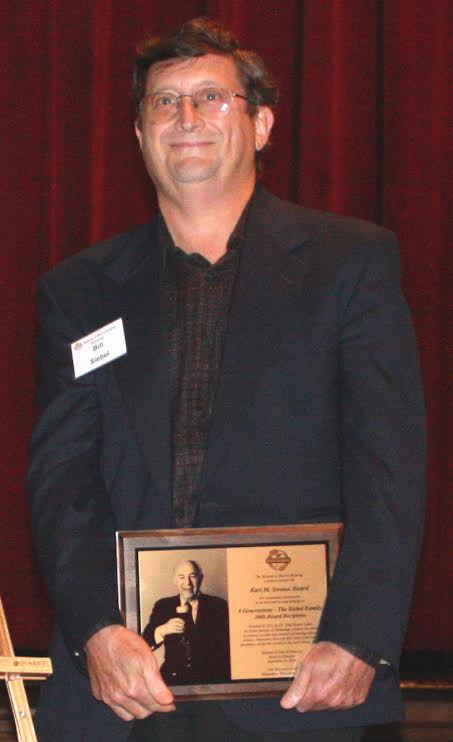
Today is the birthday of Bill Siebel (March 26, 1946-November 8, 2015). Bill was the grand-grandson of John Ewald Siebel, who founded what would become the Siebel Institue of Technology. In the early 1970s, Bill became president of the brewing school his family founded, and held that post until his retirement in 2000. I had the pleasure of meeting Bill a couple of times judging at the Great American Beer Festival, when we sat at a few of the same judging tables. Talking in between flights, he had a great sense of humor and seemed like such a nice person. I was only sorry I had’t met him sooner. Join me in raising a toast to Bill tonight.
bill-siebel

This is Bill’s obituary from the Chicago Tribune:

Bill Siebel was the fourth generation of his family to head a Chicago beer-brewing school that has produced tens of thousands of alums with surnames such as Busch, Coors, Pabst, Stroh and Floyd — as in 3 Floyds Brewing Co.

It wouldn’t be exaggerating to call him a member of the “First Family” of beer education in the U.S., said Charlie Papazian, president and founder of Denver’s Great American Beer Festival, the nation’s largest.

Bill Siebel was chairman and CEO of the Siebel Institute of Technology, established in Chicago in 1872 by his great-grandfather, Dusseldorf-born immigrant John Ewald Siebel. It bills itself as the oldest brewing school in the Americas. “There is one, based in Germany, established before us,” said Keith Lemcke, vice president of the institute, 900 N. Branch St.

“It’s been a continuous run,” Lemcke said, “except for this inconvenient time we call ‘Prohibition.’ ” During Prohibition, it kept going as a school of baking — which, like brewing, uses yeast.

Siebel Institute students, Lemcke said, have included August Busch III of Anheuser-Busch; John Mallett of Bell’s Brewery in Kalamazoo; the father and grandfather of Samuel Adams brewer Jim Koch; and Greg Hall, a brewmaster at Goose Island Beer Company and son of Goose Island founder John Hall.

“The contributions that the Siebel Institute has made to brewing — and to training craft brewers — in its long history, are far too numerous to count,” said Koch of Samuel Adams. “I’m a sixth-generation brewer, and my father graduated from Siebel in 1948 and my grandfather in 1908. . . . The industry has lost a great one.”

Mr. Siebel, who had esophageal cancer, died on Nov. 8 at Northwestern Memorial Hospital. He was 69.

The family school is “the longest-living institution that has served as an educational institution for brewers in the United States,” Papazian said. “They’ve gone through a lot of transitions, from the small breweries going out of business in the ’50s, ’60s and ’70s, to embracing the small craft brewers that were emerging in the ’70s and ’80s, welcoming them, and offering them educational opportunities. Bill was involved with that transition.”
“Many of our employees are graduates of Siebel Institute, and the impact the school has made on the beer community is impressive,” said Ken Stout, general manager of Goose Island Beer Company. “A great industry leader has been lost, and we’ll miss him dearly.”

Bill Siebel and his brother, Ron, grew up near Devon and Caldwell in Edgebrook, and at the Southwest edge of the Evanston Golf Club in Skokie, where one of the tees was behind their home. A highlight of their youth was spending summers with their mother, Mary, at Paradise Ranch near Colorado Springs, while their father, Raymond, commuted back and forth from the Siebel Institute in Chicago. The Siebel boys became accomplished horseback riders.

They attended grade school at the old Bishop Quarter Military Academy in Oak Park. Bill Siebel graduated from Florida’s Admiral Farragut Academy and the University of Miami. He served in the Navy, rising to lieutenant, before returning to Chicago — and the family beer school — in 1971, said his wife, Barbara Wright Siebel.

Both brothers attended the Siebel Institute, where a variety of classes, diplomas and certificates focus on yeast, malt, fermentation, biological science, quality control, engineering and packaging. “One of my classmates in 1967 was August Pabst, and August Busch III was a few years before,” Ron Siebel said.

For decades, the school and laboratory were located at 4055 W. Peterson, where the Siebels had a brewing library and a second-floor bierstube with heirloom steins.

After their father and uncle sold the business, “Bill and I were successful in getting it back,” Ron Siebel said. “We got it back in the family hands, and it stayed there until [Bill] retired and wanted to liquidate his holdings in the institute.” Today, the school is owned by Lallemand, a Canadian yeast company.

Ron Siebel focused on selling products such as stabilizers, which preserve clarity in beer. “Bill was ‘Mr. Inside.’ He was very good with numbers,” his brother said. Because of him, “The business was always on a steady course.”

Bill Siebel retired in 2000, Lemcke said.

He restored himself and reveled in nature, hiking, and watching birds and animals. For their honeymoon, Bill and Barbara Siebel canoed nine days on the U.S.-Canadian Boundary Waters. And for 20 years, they canoed in Ely, Minnesota, where he enjoyed spotting bear and moose. He also loved reading Dostoevsky and Tolstoy.

bill-siebel

And this is another obituary from website Beer Monopoly:

William (Bill) Siebel, philanthropist and former President of the Siebel Institute, died 8 November 2015, aged 69

In the classroom of the Siebel Institute in Chicago, there is a long wall featuring the graduating class photographs of students dating back to the year 1900. The year 1973 marked the first appearance of a young, moustachioed Bill Siebel in the faculty section of the Diploma Course photographs, and his image would appear in every class photo for the next 26 years.

Unless you knew Bill, visitors to Siebel could be forgiven for wondering who this prankster was, who, year after year, managed to blag his way into one of the world’s oldest brewing schools to have his photo taken with the brewing school’s graduates?

Certainly, Bill would have chuckled at the suggestion of him being a repeat gatecrasher at the school, which has borne his family’s name since the 19th century. He would have even taken delight in being awarded the nickname Zelig – the title character of a Woody Allen “mockumentary” from 1983 about a human chameleon that sneaked past guards at major events to rub shoulders with the high and mighty – because he would have known of the film or more probably would have even seen it.

Bill had a great sense of humour. When he attended the Munich trade fair Drinktec as an exhibitor for the first time in 1993, he came armed with only a poster, expecting to be given a tabletop for his brochures. To his surprise he had in fact rented a large booth. Bill being Bill made the best of this and immediately organised two dozen large trees in pots which he placed alongside the walls. If passers-by remarked that the Siebel Institute had obviously branched out into horticulture, Bill laughed his infectious and his eyes would sparkle behind his glasses as he repeated the story about his mishap over and over again.

Despite his self-effacing modesty, Bill represented the best of North American “beer royalty”. Being a fourth generation Siebel to run the business, whose passion for beer was undeniable – he was most inconsolable when he had to cancel being a judge at this year’s Great American Beer Festival in Denver due to his failing health – Bill felt equally strongly about his obligations as a citizen. He diligently and conscientiously gave his expertise to many good causes and probably even more in terms of financial support. However, you had to know him really well to discover this side of him.

Bill was a Chicago man: born and bred in the Windy City, which he loved but hated for its extreme weather. This may have been one reason why he chose to study in far-away Florida. He graduated from Florida’s Admiral Farragut Academy and the University of Miami. He served in the Navy, rising to lieutenant, before returning to Chicago — and the family beer business — in 1971.

The Siebel Institute of Technology was established in Chicago in 1872 by Bill’s great-grandfather, the German-born immigrant John Ewald Siebel. Unlike Bill, JE Siebel must have been a real sourpuss, judging from the dour-looking gentleman, whose bust Bill and his wife Barbara kept in their yard. On my last visit to Chicago this spring, we presented JE to the Siebel Institute – they already had the other of the two busts that JE had made – because Bill knew no one in his family would want such a stern character face them in the morning.

Bill did not bear his family’s heritage lightly. He would joke about how the Siebel Institute made it through this “inconvenient time” Americans call Prohibition. Officially, the Siebel Institute kept going as a school of baking – which, like brewing, uses yeast – and Bill would laughingly speculate that his ancestors probably were involved in all kinds of shenanigans. After all, Prohibition in Chicago gave rise to plenty of colourful gangsters whose empires were made with alcohol. In fact, reality was far bleaker than Bill liked to narrate it. When JE Siebel died in late 1919, Prohibition had already been ratified, which meant that the Siebel Institute could no longer teach brewing in America and several Siebel family members were left destitute, says Keith Lemcke, Vice-President of the Siebel Institute.

As we know, the Siebel Institute survived. But when Bill joined the Institute, his father and uncle had already sold the business. Fortunately, Bill and his older brother Ron succeeded in getting it back. “We got it back in the family hands, and it stayed there until Bill retired and wanted to liquidate his holdings in the institute,” Ron said. Today, the school is owned by Lallemand, a Canadian yeast company.

Both Bill and Ron attended the Institute to be taught all about yeast, malt, fermentation, biological science, quality control, engineering and packaging. “One of my classmates in 1967 was August Pabst, and August Busch III was a few years before,” Ron said. Over its long history, the Siebel Institute has produced tens of thousands of alumni with such illustrious surnames like Busch, Coors, Pabst and Stroh. But John Mallett of Bell’s Brewery in Kalamazoo; the father and grandfather of Samuel Adams brewer Jim Koch; and Greg Hall, a brewmaster at Goose Island Beer Company, were also among them.

For decades, the school and laboratory were located at 4055 W. Peterson, where the Siebels had a brewing library and a second-floor Bierstube in mock-Germanic style. For parties they liked to serve brat and sauerkraut.

While Ron would focus on selling auxiliary products, Bill was Mr Inside. “He was very good with numbers,” his brother remembers. Because of Bill, the business was always on a steady course. This does not mean that things were easy. For decades, the U.S. beer industry has been in a state of transition. In the 1950s, 1960s and 1970s a lot of the smaller brewers went out of business followed by the remaining mid-tier brewers in the 1990s. Fortunately for the Siebel Institute and thanks to Bill’s tireless travelling and networking, international students and craft brewers began to fill seats as of the 1990s. Bill wholeheartedly welcomed them, offering them educational opportunities.

Until his retirement in 2000, Bill taught at the Siebel Institute and took on various roles, from registrar, to President, Chairman and CEO.

billsiebel

Filed Under: Birthdays, Just For Fun Tagged With: Chicago, Education, History, Illinois

Beer In Ads #4920: Kamm’s Bock Is Back

March 25, 2025 By Jay Brooks

Last year I decided to concentrate on Bock ads. Bock, of course, originated in Germany, in the town of Einbeck. Because many 19th century American breweries were founded by German immigrants, they offered a bock at certain times of the year, be it Spring, Easter, Lent, Christmas, or what have you. In a sense they were some of the first seasonal beers. “The style was later adopted in Bavaria by Munich brewers in the 17th century. Due to their Bavarian accent, citizens of Munich pronounced ‘Einbeck’ as ‘ein Bock’ (a billy goat), and thus the beer became known as ‘Bock.’ A goat often appears on bottle labels.” And presumably because they were special releases, many breweries went all out promoting them with beautiful artwork on posters and other advertising.
Tuesday’s ad is for Kamm’s Bock Beer and was published March 25, 1937. The brewery was the Kamm & Schellinger Co. of Mishawaka, Indiana, which was originally founded around 1853 by John Wagner and then purcgased by Adolph Kamm and Clemens Dick in 1870, though it became the K&S Brewery in 1887 when Kamm bought out Dick and it was incorporated by Adolph Kamm and his brother-in-law Nicholas Schellinger and it remained in business like that until 1951, when it was closed by the Kamm family. This ad ran in the South Bend Tribune, of South Bend, Indiana, and includes the headline: “Kamm’s Bock is back —.”

Filed Under: Art & Beer, Beers, Breweries, Just For Fun Tagged With: Advertising, Bock, History, Indiana

Beer In Ads #4919: Here’s That Treat Again!

March 24, 2025 By Jay Brooks

Last year I decided to concentrate on Bock ads. Bock, of course, originated in Germany, in the town of Einbeck. Because many 19th century American breweries were founded by German immigrants, they offered a bock at certain times of the year, be it Spring, Easter, Lent, Christmas, or what have you. In a sense they were some of the first seasonal beers. “The style was later adopted in Bavaria by Munich brewers in the 17th century. Due to their Bavarian accent, citizens of Munich pronounced ‘Einbeck’ as ‘ein Bock’ (a billy goat), and thus the beer became known as ‘Bock.’ A goat often appears on bottle labels.” And presumably because they were special releases, many breweries went all out promoting them with beautiful artwork on posters and other advertising.

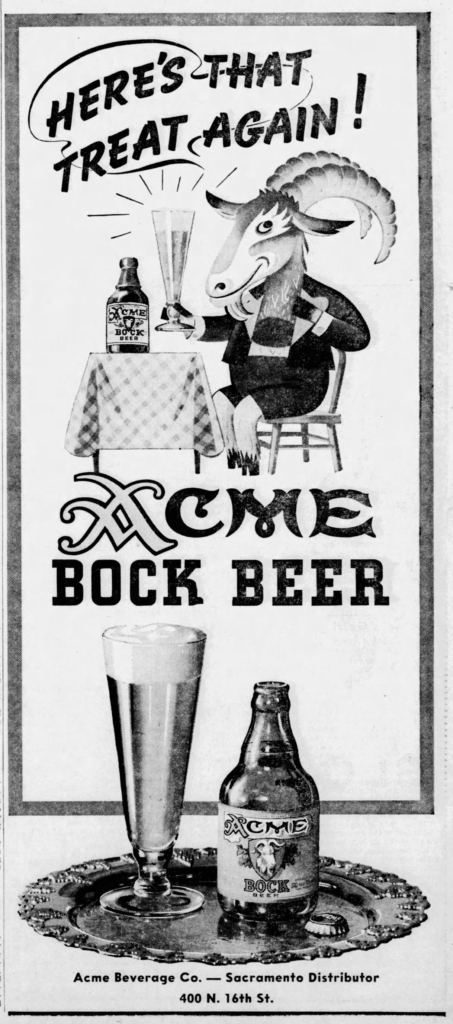
Monday’s ad is for Acme Bock Beer and was published March 24, 1939. The brewery was the Acme Brewing Co. of San Francisco, California, which was originally founded in 1907, though they also opened a location in the Los Angeles area. Today the brand is opened by North Coast Brewing. This ad ran in the Sacramento Union, of Sacramento, California, and includes the headline: “Here’s That Treat Again” and features a goat seated at a table enjoying a glass of Bock beer.

Filed Under: Art & Beer, Beers, Breweries, Just For Fun Tagged With: Advertising, Bock, California, History

Beer In Ads #4918: Brewed In Winter For Enjoyment In The Spring!

March 23, 2025 By Jay Brooks

Last year I decided to concentrate on Bock ads. Bock, of course, originated in Germany, in the town of Einbeck. Because many 19th century American breweries were founded by German immigrants, they offered a bock at certain times of the year, be it Spring, Easter, Lent, Christmas, or what have you. In a sense they were some of the first seasonal beers. “The style was later adopted in Bavaria by Munich brewers in the 17th century. Due to their Bavarian accent, citizens of Munich pronounced ‘Einbeck’ as ‘ein Bock’ (a billy goat), and thus the beer became known as ‘Bock.’ A goat often appears on bottle labels.” And presumably because they were special releases, many breweries went all out promoting them with beautiful artwork on posters and other advertising.

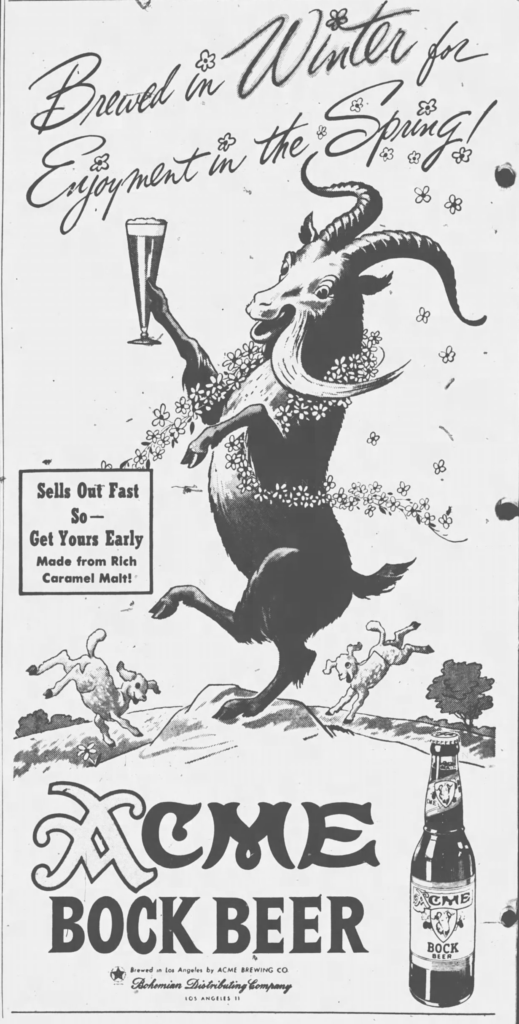
Sunday’s ad is for Acme Bock Beer and was published March 23, 1948. The brewery was the Acme Brewing Co. of San Francisco, California, which was originally founded in 1907, though they also opened a location in the Los Angeles area. Today the brand is opened by North Coast Brewing. This ad ran in the Daily News of Los Angeles, California, and includes the wonderful headline: “Brewed in Winter for Enjoyment in the Spring!” and features some dancing goats, one of which is wearing a wreath of flowers and has a glass of beer in his … ahem, paw.

Filed Under: Art & Beer, Beers, Breweries, Just For Fun Tagged With: Advertising, Bock, California, History

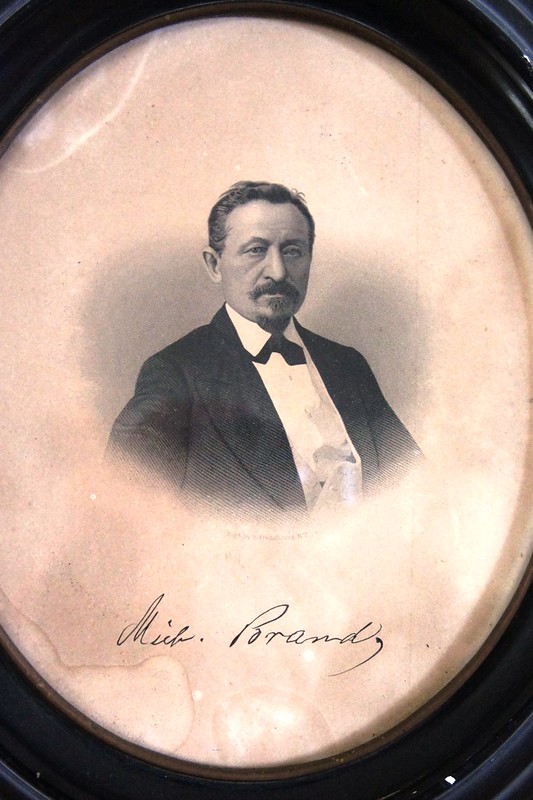
Historic Beer Birthday: Michael Brand

March 23, 2025 By Jay Brooks

michael-brand
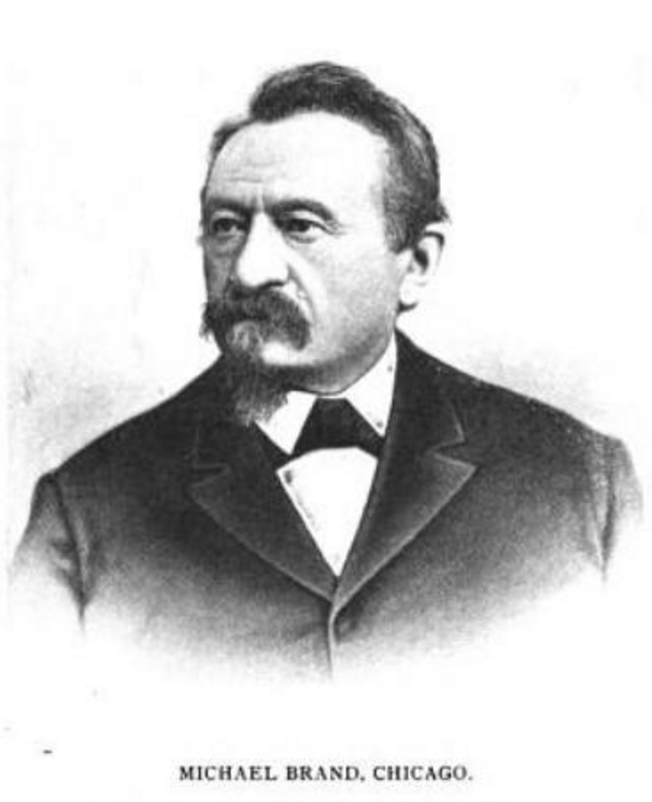
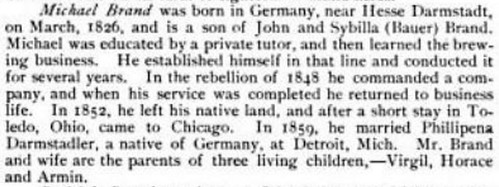
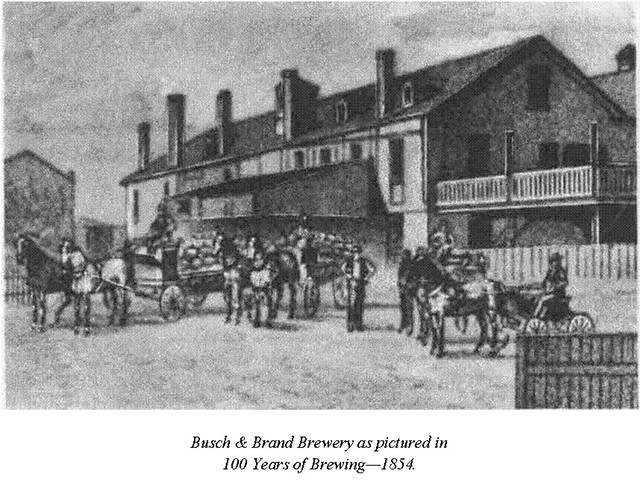
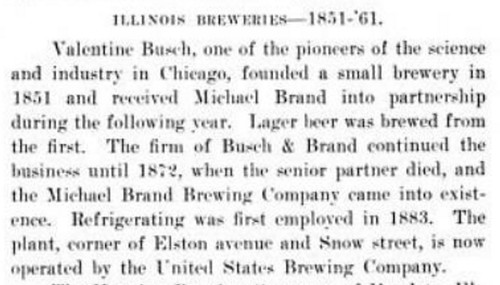
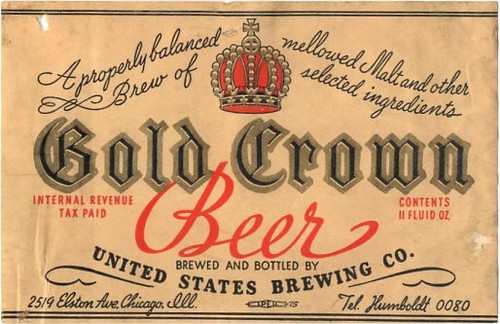
Today is the birthday of Michael Brand (March 23, 1826-October 26, 1897). Born in Gau-Odernheim, Rhineland-Palatinate, Germany, he was trained as a brewer and came to America and became a partner with Valentine Busch in 1852 and Busch and Brand Brewery continued until Busch passed away in 1872, when in became the Michael Brand Brewery in Chicago, Illinois, though many sources say that it was 1878 when the name change took place. In 1889, in became the United States Brewing Co., which it remained until in closed in 1955.

michael-brand-chicago

Here’s a short biography from the “History of Chicago.”

michael-brand-history-of-chicago

busch-and-brand

Here’s another short history of his brewery for “One Hundred Years of Brewing.”

brand-breweries-100yrs

Gold-Crown-Pilsener-Beer-Labels-United-States-Brewing-Co

michael-brand-portrait

Filed Under: Birthdays, Just For Fun Tagged With: Chicago, Germany, History, Illinois

Historic Beer Birthday: Maximilian Schaefer

March 23, 2025 By Jay Brooks

schaefer
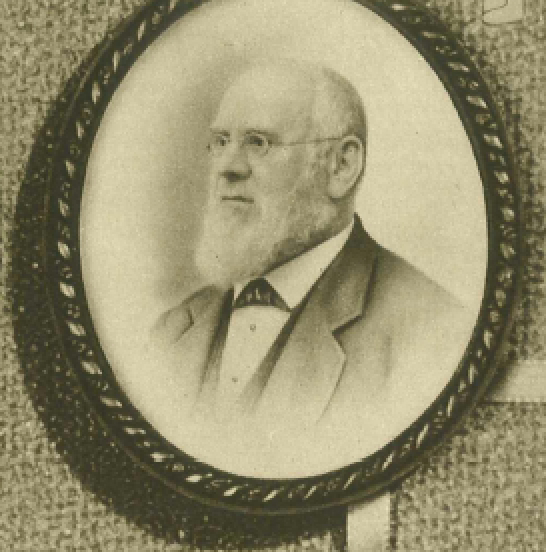
Today is the anniversary of the death of Maximilian Schaefer, whose exact birth date is not known (1819-March 23, 1904). He was born in Wetzlar, which is part of Hesse, in what today is Germany. He arrived in New York in 1839, a year after his brother Frederick came to America, and the two co-founded F&M Schaefer Brewing Co. in 1842. It was Max who brought with him a recipe for what would become their lager beer.

max-schaefer-medallion

This is his obituary from Find a Grave:

Beer Magnate. In 1839 he emigrated to the United States, carrying with him the recipe for lager, a popular brew in Germany that was then unknown in America. He joined his brother Frederick in the employ of a local brewer, and in 1842 the Schaefer brothers bought out the owner, establishing F & M Schaefer Brewing. Lager proved popular and the Schaefer company became one of the country’s largest beer producers, with Maximilian Schaefer remaining active in the company until failing health caused him to retire in the late 1890s. By the early 1900s, its customer base in the Northeastern United States made Schaefer the most popular beer in the country, a position it maintained until ceding it to Budweiser in the 1970s. The Schaefer brand continued to decline, and as of 1999 is owned by Pabst Brewing, a holding company that contracts for the brewing of formerly popular regional brands.

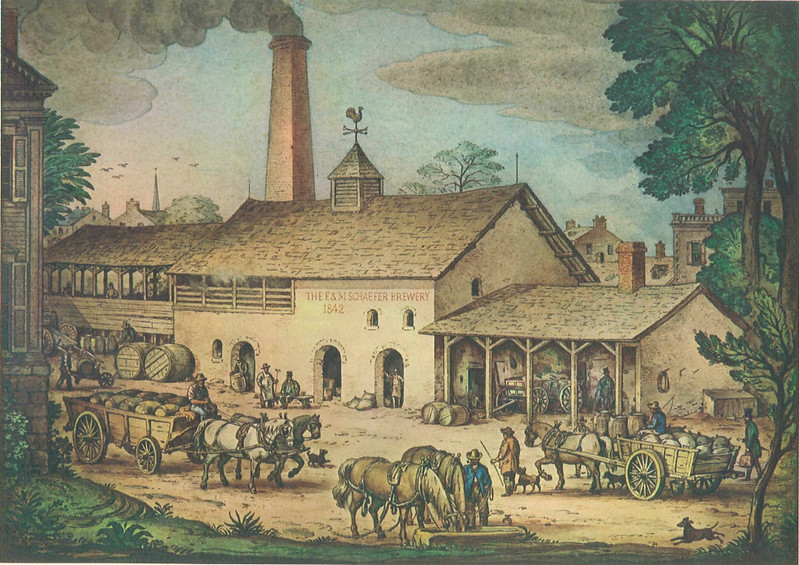
This is what the brewery looked like in 1842, when Maximilian and his brother opened the brewery.

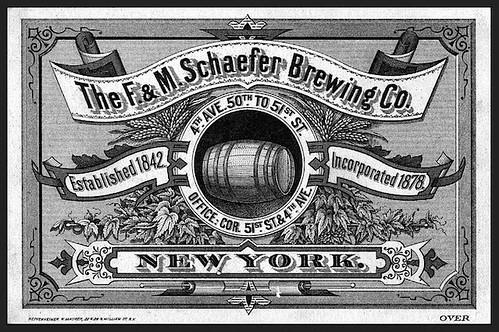
schaefer-brewery-1842

Below is part of a chapter on the history of F&M Schaefer Brewing Co., from Will Anderson’s hard-to-find Breweries in Brooklyn.

Longest operating brewery in New York City, last operating brewery in New York City [as of 1976], and America’s oldest lager beer brewing company — these honors, plus many others, all belong to The F. & M. Schaefer Brewing Co.

“F. & M.”, as most breweriana buffs know, stands for Frederick and Maximilian, the brothers who founded Schaefer. Frederick Schaefer, a native of Wetzlar, Prussia, Germany, emigrated to the U.S. in 1838. When he arrived in New York City on October 23rd he was 21 years old and had exactly $1.00 to his name. There is some doubt as to whether or not he had been a practicing brewer in Germany, but there is no doubt that he was soon a practicing brewer in his adopted city. Within two weeks of his landing, Frederick took a job with Sebastian Sommers, who operated a small brewhouse on Broadway, between 18th and 19th Streets. Frederick obviously enjoyed both his job and life in America, and the next year his younger brother, Maximilian, decided to make the arduous trip across the Atlantic also. He arrived in June of 1839 and brought with him a formula for lager, a type of beer popular in Germany but unheard of in the United States. The brothers dreamed, and planned, and saved – and in the late summer of 1842 they were able to buy the small brewery from Sommers. The official, and historic, starting date was September, 1842.

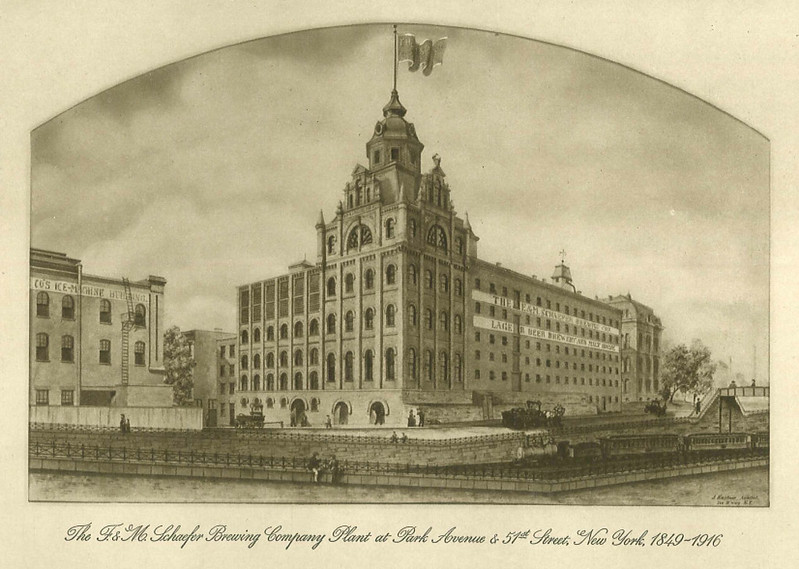
schaefer-brewery-1849
The new brewery they built in 1849.

Sommers’ former facility was a start, but that’s all it was, as it was much too small. New York beer drinkers immediately took a liking to “the different beer” the brothers brewed, and in 1845 Frederick and Maximilian developed a new plant several blocks away, on 7th Avenue, between 16th and 17th Streets (7th Avenue and 17th Street is today, of course, well known as the home of Barney’s, the giant men’s clothing store). This, too, proved to be just a temporary move; the plant was almost immediately inadequate to meet demands and the brothers wisely decided to build yet another new plant, and to locate it in an area where they could expand as needed. Their search took them to what were then the “wilds” of uptown Manhattan. In 1849 the brewery, lock, stock and many barrels, was moved to Fourth Ave. (now Park Avenue) and 51st Street. Here, just north of Grand Central Station, the Schaefers brewed for the next 67 years, ever-expanding their plant. The only problem was that the brothers were not the only ones to locate “uptown.” The area in the 40’s, 50’s and 60’s grew rapidly all during the last half of the 19th century, and especially after the opening of the original Grand Central Terminal in 1871. Frederick and Maximilian had wisely purchased numerous lots between 50th and 52nd Streets, and by the time they passed away (Frederick in 1897 and Maximilian in 1904) the brewery was, literally, sitting atop a small fortune. Maximilian’s son, Rudolph J. Schaefer, fully realized this when he assumed the Presidency of the brewery in 1912. In that same year Rudolph purchased the 50% of the company owned by his uncle Frederick’s heirs. He thus had complete control of the brewery, and one of the first matters he turned to was the suitable location for a new, and presumably everlasting, plant. In 1914, in anticipation of its move, Schaefer sold part of the Park Ave. site to St. Bartholomew’s Church. This sale, for a reputed $1,500,000, forced Rudolph to intensify his search for a new location. Finally, in June of 1915, it was announced that the brewery had decided on a large tract in Brooklyn, directly on the East River and bounded by Kent Avenue and South 9th and 10th Streets. Here, starting in 1915, Rudolph constructed the very best in pre-Prohibition breweries. The move across the river to their ultra-new and modern plant was made in 1916, just four years before the Volstead Act crimped the sails (and sales!) of all United States breweries, new or old alike.

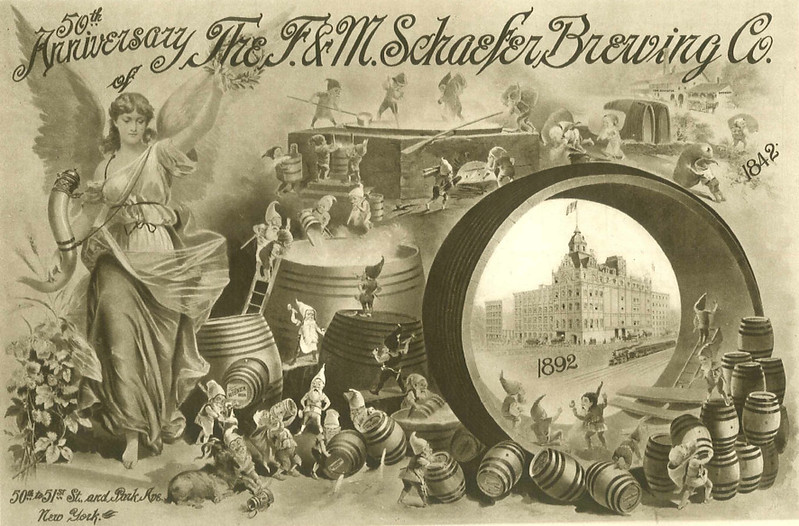
schaefer-brewery-1842-1892

rudolph-and-family

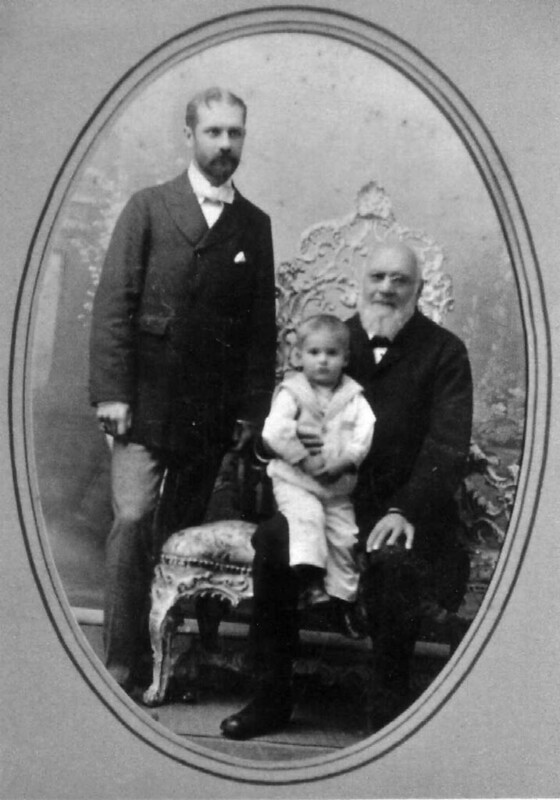
The Schaefers around 1895, with Maximilian Schaefer sitting down, his son Rudolph Schaefer standing behind him, Maximilian holding F.M. Emile Schaefer, his grandson and Rudolph’s son on his lap.

schaeferbrewing150

Schaefer-family
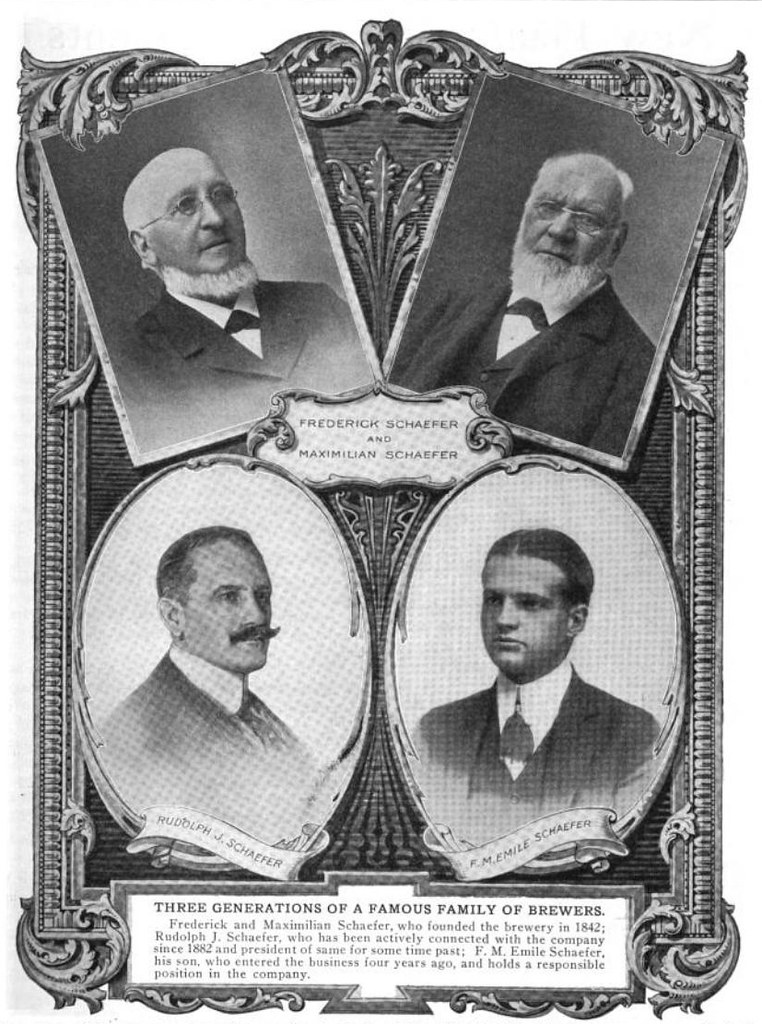
Three generations of Schaefers.

Filed Under: Birthdays, Just For Fun Tagged With: History, New York, Schaefer

Beer In Ads #4917: Now! It’s Bock Beer Season!

March 22, 2025 By Jay Brooks

Last year I decided to concentrate on Bock ads. Bock, of course, originated in Germany, in the town of Einbeck. Because many 19th century American breweries were founded by German immigrants, they offered a bock at certain times of the year, be it Spring, Easter, Lent, Christmas, or what have you. In a sense they were some of the first seasonal beers. “The style was later adopted in Bavaria by Munich brewers in the 17th century. Due to their Bavarian accent, citizens of Munich pronounced ‘Einbeck’ as ‘ein Bock’ (a billy goat), and thus the beer became known as ‘Bock.’ A goat often appears on bottle labels.” And presumably because they were special releases, many breweries went all out promoting them with beautiful artwork on posters and other advertising.

Saturday’s ad is for “Braumeister Bock Beer: The Only Genuine Milwaukee Bock Beer at the Regular Price,” which was originally published March 22, 1955 in the Saginaw News, which I believe was in Saginaw, Michigan, a medium-sized town in Eastern MIchigan located just below Saginaw Bay by Lake Huron. The brewery was the Independent Milwaukee Brewery of Milwaukee, Wisconsin, which was founded in 1901 by five partners: Henry N. Bills, William Gutknecht, Charles Evers, Emil Czarnecki, and William Jung. It’s flagship brand was Braumeister. The survived Prohibition and lasted until 1962, when the G. Heileman Brewing Co. of nearby Lacrosse bought the brewery and closed it down the following year. I love that their goat looks so smart. It must be the glasses and the mortarboard and tassel.

Filed Under: Art & Beer, Beers, Breweries, Just For Fun Tagged With: Advertising, Bock, History, Milwaukee, Wisconsin

Beer In Ads #4916: Defeat Of The Cold-Water-Men By The Bock

March 21, 2025 By Jay Brooks

Last year I decided to concentrate on Bock ads. Bock, of course, originated in Germany, in the town of Einbeck. Because many 19th century American breweries were founded by German immigrants, they offered a bock at certain times of the year, be it Spring, Easter, Lent, Christmas, or what have you. In a sense they were some of the first seasonal beers. “The style was later adopted in Bavaria by Munich brewers in the 17th century. Due to their Bavarian accent, citizens of Munich pronounced ‘Einbeck’ as ‘ein Bock’ (a billy goat), and thus the beer became known as ‘Bock.’ A goat often appears on bottle labels.” And presumably because they were special releases, many breweries went all out promoting them with beautiful artwork on posters and other advertising.

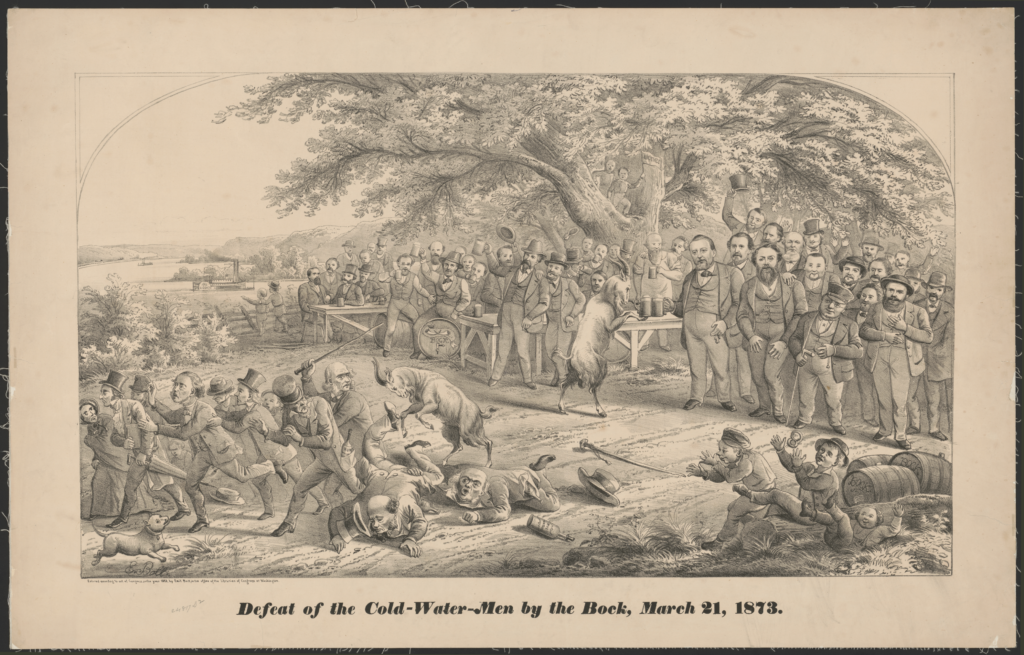
Friday’s ad is called “Defeat of the Cold-Water-Men by the Bock, March 21, 1873” and depicts an epic battle between men and goats, with apparently the goat winning. The artist who created the poster was Emil Bott, a German-born artist who emigrated to Pittsburgh, Pennsylvania.

Filed Under: Art & Beer, Beers, Just For Fun Tagged With: Advertising, Bock, History, Pennsylvania

Historic Beer Birthday: Sampson Salter

March 21, 2025 By Jay Brooks

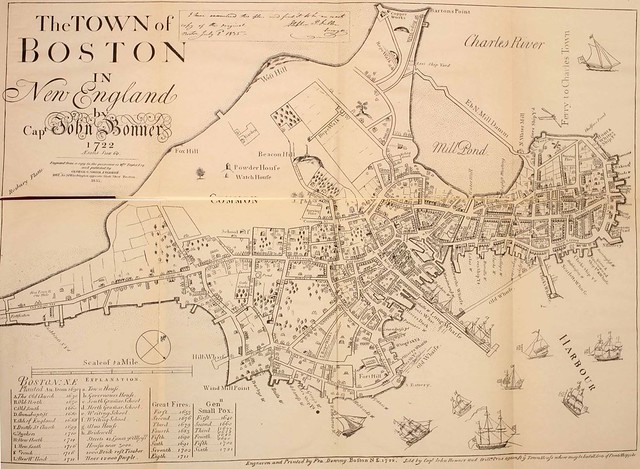
boston
Today is the birthday of Sampson Salter (March 21, 1692-April 6, 1778) who in the early 18th century operated one of the most popular breweries in Boston. Considering it was apparently so popular, there’s very little specific information about either Salter or his brewery. Most histories seem to only mention him in passing. For example, “Historic Taverns of Boston” by Gavin Nathan, says only this:

sampson-salter-tavern-book

Boston-1722
Boston in 1722.

Filed Under: Birthdays, Just For Fun Tagged With: History, Massachusetts, Pubs

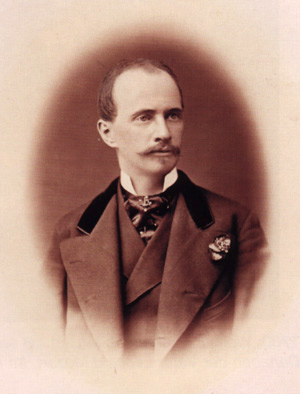
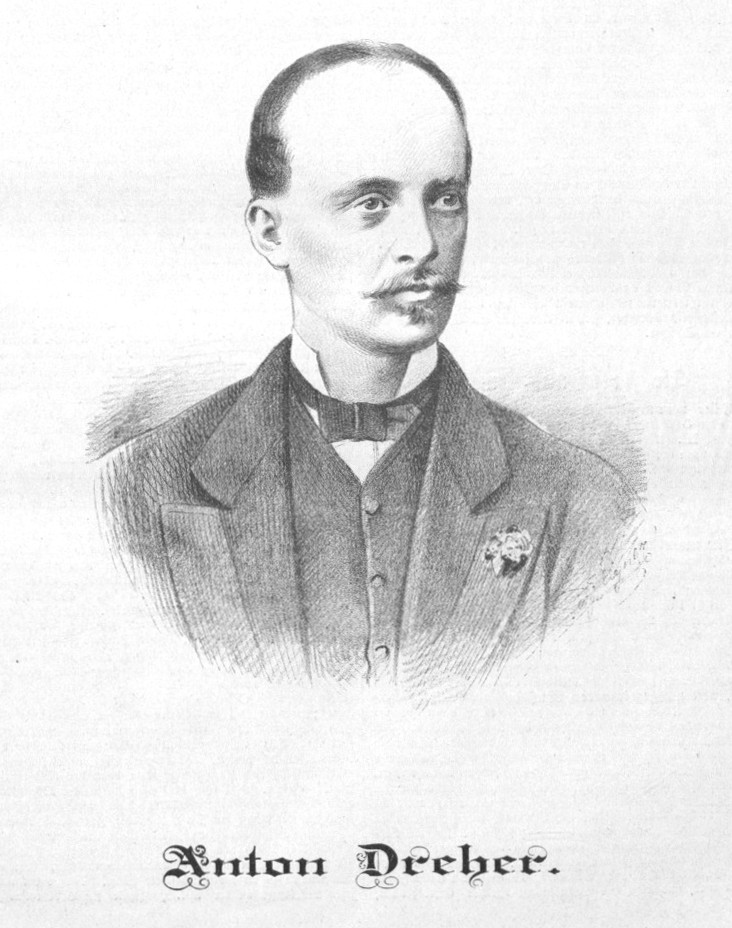
Historic Beer Birthday: Anton Dreher Jr.

March 21, 2025 By Jay Brooks

schwechater
Today is the birthday of Anton Dreher Jr. (March 21, 1849-August 7, 1888). He was the son of Anton Dreher, “an Austrian brewer of the Dreher family.” He exported their pale lager, invented by his father all over the world.

anton-dreher-ii

This is his biography, translated from his German Wikipedia page:

After the death of his father in 1863, the Viennese lawyer and later mayor of Vienna, Cajetan, was the guardian of the district of the young Anton Dreher, and also directed the building enterprises to his majority.

Dreher took over the brewery in 1870 and extended it considerably. He also began exporting the lager to overseas. This also bore him the title “Viennese Braukaiser”.

In the mild winter of 1872/1873, Anton Dreher had a cooling problem: he had to bring the ice necessary for cooling from the Styria and from Galicia to the railroad, which caused high costs. That is why he encouraged Carl von Linde to build his refrigeration machine. In 1877, the first prototype of a refrigeration machine was put into operation at the Dreher Brewery in Trieste . Anton Dreher was thus the first beer brewer to introduce the artificial cellar cooling system.

In 1897 Anton Dreher had increased beer production to 740,000 hectoliters, doubling the sales volume of his father. The further increase in production in the subsequent years led to Dreher’sche Brewery becoming one of the largest breweries in the world. In 1905, the brewery was converted into Anton Roter’s brewery.

Anton Dreher was from 1884 Member of the Lower Austrian provincial parliament and from 1902, by Emperor Franz Joseph I appointed, a member of the mansion of the Imperial Council and President of the Central Union of Industrialists of Austria ( CVIÖ ).

After 1900, the brewery Mautner ( St. Marx ) and the brewery of his father-in-law, Meichl ( Simmering ), were able to win the competition for the Schwechat brewery . In 1913, the brewery Schwechat merged with the St. Marx brewery and also with the brewery Simmering to the United breweries Schwechat, St. Marx, Simmering – Dreher, Mautner, Meichl AG . During the First World War the brewery was drastically restricted, but not shut down.

Anton_Dreher_junior_1888_Eigner

And this is another translation, this one from the Austrian Biographical Dictionary:

Son of Anton Dreher the Elder.

After the early death of his father, a directorate under the superintendent of the later mayor of Vienna, Cajetan Felder, took over the management of the company and enlarged it by acquiring three other breweries.
After attending the Akademisches Gymnasium in Vienna, Dreher visited the Technical College and, from the day of his grandiaturity (March 21, 1870), to his father’s company. On 12 August 1870 he married in Simmering Katharina Meichl (14. 11. 1850 – 17. 2. 1937), the daughter of the owner of the brewery Simmering, Theodor Meichl.

Dreher extended the paternal enterprise and in 1892 he already employed 1000 workers. He owned 60 of his own railway wagons and also exported overseas. In the year 1891/92 the productions in Schwechat amounted to 550,000, in Steinbruch (Hungary) 400,000, in Micholoup (Bohemia) 40,000, and in Trieste 56,000 hectoliters of beer. His brewery had become the world’s largest.

After his three sons entered the company, he was converted into “Anton Drehers Brauerei AG”, a family-owned company. In 1913 the merger with the brewery Mautner Markhof was carried out to the “United breweries Schwechat, St. Marx, Simmering – Dreher Mautner, Meichl AG”.

Since 1884 Landtagsabgeordneter was Dreher 1902-18 also member of the Herrenhauses.

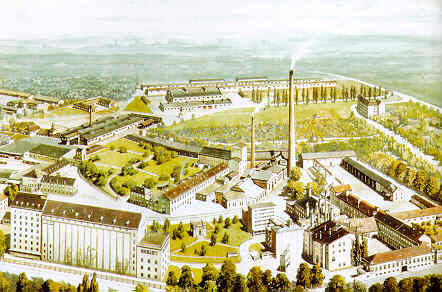
Dreher’s grandfather, Franz Anton Greher, bought the Brau-Klein-Schwechat brewery in 1796, and today it’s known as Brauerei Schwechat. According to the brewery website, “the brewery Schwechat became the largest of the European mainland and the “Klein Schwechaterlager” consignments went far beyond Austria’s borders. Among other things, Dreher purchased the Michelob brewery near Saaz in 1859, the Steinbruch brewery in Budapest in 1862, and the Trieste brewery in 1869.”

schwechat-brewery

Here the official story of the brewery picks up when Anton Dreher Jr. take over:

After 1863 Anton Dreher sen. Dies, takes over 1870 Anton Dreher jun. (Born 1849), after the completion of the academic high school in Vienna, the management of the Brauereikon Group.

In the “ice-free winter” of 1872, ice needed for cooling, about 100 million kilograms, had to be taken from Poland by rail. These experiences prompted Anton Dreher to deal with artificial cooling and ice-making. Professor Carl von Linde was commissioned to design a cooling machine, which Dreher set up in Brauhaus Trieste in 1877 and then in Schwechat. Dreher was thus the first brewer to introduce the artificial cellar cooling system. This breakthrough invention is still essential today.

On June 4, 1883, Emperor Franz Josef visited the brewery for the second time and gave Anton Dreher jun. The Knights Cross of the Order of Franz Joseph. In 1897 Dreher received the Commander’s Cross, later the Grand Cross of this Order, and in 1902 the Order of the Iron Crown II Class.

1897 produced the brewery Schwechat under Anton Dreher jun. The huge volume of 739,639 hectoliters of beer, which was more than double since the takeover of the brewery by his father. In the following years, the “rotary” breweries with a total production of approximately 1.25 million hectoliters developed into the world’s largest brewery, managed by an owner. In 1905 the brewery was renamed “Anton Drehers Breweries Aktiengesellschaft”.

Antondreherderjüngere

And this is the portion of the brewery’s Wikipedia page that discusses Anton Drehrer Jr.:

In 1837, his son, Anton Dreher, took over the company from his mother and inaugurated a new era in the brewery’s history. In 1839 he turned to Untergärung , which marked the beginning of the lager beer. The breakthrough was made by Dreher in 1841, when he realized that for his under-fermented beer, the “lager” or “Viennese type”, one thing was decisive: cooling. Dreher laid huge cellars and stored ice.

As a result, the brewery’s brewery expanded through the acquisition of existing breweries to the entire Austro-Hungarian monarchy . These included the brewery Michelob near Saaz, acquired in 1859, the brewery quarry (founded 1854) in Budapest, acquired in 1862, as well as the brewery of Trieste, acquired in 1869.

In 1848, Dreher introduced a steam machine to the Bierbrauen, he was supposed to be the first brewer in Austria. The steam engine is now exhibited at the Technical Museum in Vienna. The first cooling machine, which was also the second machine from Linde AG , was installed in the brewery in Trieste in 1877. After the death of Anton Dreher in 1863, his son Anton Dreher junior took over the company of the brewery Schwechat in 1870 and converted it in 1905 into the Anton Drehers brewery stock company . In the face of the beginning of the 20th century mutually growing competition with the brewery St. Marx of Adolf Ignaz Mautner of Markhof and the brewery Simmering of his father – in – law Meichl, the fusion of the three breweries to the United Breweries Schwechat, St. Marx, Simmering – Dreher, Mautner, Meichl AG took place in 1913 . Due to the high quality of the products, the company was awarded the title of a kuk chamber supplier.

Anton_Dreher_junior_(1900)
Dreher around 1900.

Klein-Schwechat

Klein-Schwechat-back

schwe-zwickel

Schwechater_Lager

Filed Under: Birthdays, Just For Fun Tagged With: Austria, History

« Previous Page
Next Page »

Find Something

Northern California Breweries

Please consider purchasing my latest book, California Breweries North, available from Amazon, or ask for it at your local bookstore.

Recent Comments

  • Bob Paolino on Beer Birthday: Grant Johnston
  • Gambrinus on Historic Beer Birthday: A.J. Houghton
  • Ernie Dewing on Historic Beer Birthday: Charles William Bergner 
  • Steve 'Pudgy' De Rose on Historic Beer Birthday: Jacob Schmidt
  • Jay Brooks on Beer Birthday: Bill Owens

Recent Posts

  • Beer In Ads #5138: The Event Of The Year: Jax Bock Beer March 2, 2026
  • Historic Beer Birthday: Anthony Durkin March 1, 2026
  • Historic Beer Birthday: Adam Sander March 1, 2026
  • Beer In Ads #5138: Flower City Bock Beer March 1, 2026
  • Historic Beer Birthday: Regina Wauters March 1, 2026

BBB Archives

Feedback

Head Quarter
This site is hosted and maintained by H25Q.dev. Any questions or comments for the webmaster can be directed here.