Brookston Beer Bulletin

Jay R. Brooks on Beer

  • Home
  • About
  • Editorial
  • Birthdays
  • Art & Beer

Socialize

  • Dribbble
  • Email
  • Facebook
  • Flickr
  • GitHub
  • Instagram
  • LinkedIn
  • Pinterest
  • RSS
  • Twitter
  • YouTube

Powered by Genesis

Beer In Ads #5037: Oster-Bock On A Barrel

July 28, 2025 By Jay Brooks

Last year I decided to concentrate on Bock ads. Bock, of course, may have originated in Germany, in the town of Einbeck. Because many 19th century American breweries were founded by German immigrants, they offered a bock at certain times of the year, be it Spring, Easter, Lent, Christmas, or what have you. In a sense they were some of the first seasonal beers. “The style was later adopted in Bavaria by Munich brewers in the 17th century. Due to their Bavarian accent, citizens of Munich pronounced ‘Einbeck’ as ‘ein Bock’ (a billy goat), and thus the beer became known as ‘Bock.’ A goat often appears on bottle labels.” And presumably because they were special releases, many breweries went all out promoting them with beautiful artwork on posters and other advertising.

Monday’s poster is for Falken Schaffhauser’s Oster-Bock, and was published in 1929. This one was made for the Bierbrauerei Falken Schaffhausen, or Falcon Brewery, of Schaffhausen, Switzerland. The brewery was founded in 1799, and is still in business today, and is “considered the only independent brewery in the Schaffhausen region,” and is Switzerland’s 5th largest brewery. This one is for their Schaffhauser Oster-Bock (Easter Bock) and shows a man balancing on a wooden beer barrel while holding a mug full of beer and a pipe in his mouth. It was created by Swiss artist Arnold Oechslin.
Filed Under: Art & Beer, Beers, Breweries, Just For Fun Tagged With: Advertising, Bock, History, Switzerland

Historic Beer Birthday: Sharon Vaughn

July 28, 2025 By Jay Brooks

Today is the birthday of Sharon Vaughn (July 28, 1938-December 2023). Her claim to beer fame was being named as Miss Rheingold for 1965, the last Miss Rheingold in the golden era. She was also chosen by the new owners of the brewery rather than through a public vote, which hadn’t been the case since the second year of the contest in 1941. Unfortunately, the new owners didn’t really know what to do with her and she appeared in no ads her year, but instead only made public appearances at events and had fluff pieces written about those appearances. As a result, there’s far less breweriana of her than almost any other Miss Rheingold, which is a shame. She didn’t even appear in print until March of 1965, unlike previous ones who typically were announced the previous September or October.

She was born in Missouri, but moved to Washington state when she was five, and graduated from the University of Washington as a music major. While in college, she became Miss Washington and represented the state at the Miss America Pageant, where she was second runner-up. After college, she moved to New York City and attended Julliard. She began getting small parts in Broadway musicals, but also sang in nightclubs and appeared in television commercials. In 1965, she took a year off to become Miss Rheingold. Afterwards, she was cast in Funny Girl, and also appeared in the film a few years later. While in L.A. for filming she met talent agent Byron Lapin, whom she married. She also did some television, appearing on Bewitched and Get Smart. The couple later moved to St. Louis when he took over his family’s business. She passed away in December of 2023.

In 1968, Vaughn played a villain known as “Wanda” in an episode of “Get Smart” called “The Groovy Guru.“
Headshot when she competed in the Miss America pageant as Miss Washington.
Getting her evening gown ready for the Miss America pageant.

Filed Under: Beers, Birthdays, Breweries, Just For Fun Tagged With: Advertising, History, New York, Rheingold

Beer In Ads #5036: Old Bohemian Bock Beer

July 27, 2025 By Jay Brooks

Last year I decided to concentrate on Bock ads. Bock, of course, may have originated in Germany, in the town of Einbeck. Because many 19th century American breweries were founded by German immigrants, they offered a bock at certain times of the year, be it Spring, Easter, Lent, Christmas, or what have you. In a sense they were some of the first seasonal beers. “The style was later adopted in Bavaria by Munich brewers in the 17th century. Due to their Bavarian accent, citizens of Munich pronounced ‘Einbeck’ as ‘ein Bock’ (a billy goat), and thus the beer became known as ‘Bock.’ A goat often appears on bottle labels.” And presumably because they were special releases, many breweries went all out promoting them with beautiful artwork on posters and other advertising.

Sunday’s ad is for Old Bohemian Bock Beer, which was published on July 27, 1962. To be fair, it’s primarily advertising their Light Beer, but also mention they have Cream Ale and Bock beer, too. It’s also an interesting advertising strategy, the anti-local but cheaper gambit. This one was for the Eastern Brewing Corp. of Hammonton, New Jersey, which was originally founded out of Prohibition in 1933. This ad ran in the Daily News, of New York, New York.

Filed Under: Art & Beer, Beers, Breweries, Just For Fun Tagged With: Advertising, Bock, History, New Jersey, New York

Historic Beer Birthday: Frederick J. Stegmaier

July 27, 2025 By Jay Brooks

stegmaier
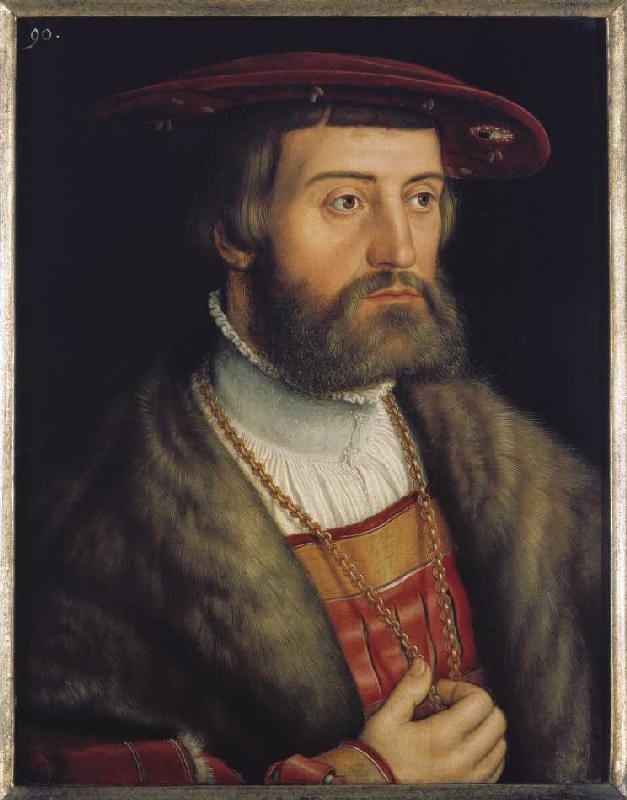
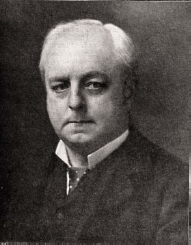
Today is the birthday of Frederick J. Stegmaier (July 27, 1861-April 23, 1915). He was the son of Charles Stegmaier, who founded the Baer & Stegmaier Brewery with his father-in-law in 1857. It eventually became known as the Stegmaier Brewing Co., and ran it with his sons, Christian, Fred and George. Fred became president when his father passed away in 1906.

frederick_stegmeier

Here’s his obituary, published on Find a Grave:

And here’s another obituary, from the Encyclopedia of Pennsylvania Biography Illustrated, Volume 7:

Frederick J., son of Charles and Kathleen (Baer) Stegmaier, was born in Wilkes-Barre, July 27, 1861, and died at his home on South Franklin street, Wilkes-Barre, Pennsylvania, April 22, 1915. He was educated in the public schools, St. Nicholas Parochial School, and Wyoming Seminary, being a graduate of the last named institution. He then became actively associated with his father in business, and at the death of Charles Stegmaier, the father, Frederick J. Stegmaier succeeded him as president of the Stegmaier Brewing Company. It was through the foresighted planning and energy of the sons of Charles Stegmaier that the business founded by the father was developed until it became one of the largest and best equipped plants of its kind in the country. In addition to his responsibilities as head of the company, Frederick J. Stegmaier had other large and important interests. He was for many years president of the South Side Bank, a position ill health caused him to relinquish. He was a director of the First National Bank, director of the Fenwick Lumber Company, director of the Stegmaier Realty Company, and largely interested with his brothers and Abram Nesbitt in the Wales Adding Machine Company. When the last company was threatened with absorption by rivals, these men fought for a number of years to retain the company as a separate plant manufacturing an independent machine, and finally succeeded. Mr. Stegmaier was interested in many other projects, but failing health during his latter years compelled him to withdraw from active participation in many. For four years he lived under the constant care of his physician and knew that his days were numbered, but he neither lost courage nor became despondent. He passed the last winter of his life in the south, but after his return spent nearly every day in his office, literally “dying in the harness.”

He was kind and considerate, very generous, charitable organizations having in him a liberal friend, and when his will was read it was found that Wilkes-Barre City Hospital, Mercy Hospital, United Charities, Nanticoke Hospital, Wilkes-Barre Home for Friendless Children, the Florence Crittenden Shelter and Day Nursery, and the Ladies’ Aid Society had been generously remembered, as had the Home of the Good Shepherd, St. Patrick’s Orphanage, and St. Patrick’s Foundling Home, of Scranton. During his life he served as a director of the City Hospital, knew its needs, and did his full share there as elsewhere in relieving suffering. He was a member of St. Nicholas Church (Roman Catholic) and was a member of the Benevolent and Protective Order of Elks, who after a solemn high mass of requiem in the church conducted final services at the Stegmaier mausoleum in Hollenback Cemetery. He was also a member of the Franklin Club and the Concordia Singing Society.

And here’s one more from American Brewers’ Review from 1915:

Stegmaier_Brewin_53a40cc7956bf

Filed Under: Birthdays, Breweries, Just For Fun Tagged With: History, Pennsylvania

Beer In Ads #5035: Brewed In The Winter For Spring Pleasure

July 26, 2025 By Jay Brooks

Last year I decided to concentrate on Bock ads. Bock, of course, may have originated in Germany, in the town of Einbeck. Because many 19th century American breweries were founded by German immigrants, they offered a bock at certain times of the year, be it Spring, Easter, Lent, Christmas, or what have you. In a sense they were some of the first seasonal beers. “The style was later adopted in Bavaria by Munich brewers in the 17th century. Due to their Bavarian accent, citizens of Munich pronounced ‘Einbeck’ as ‘ein Bock’ (a billy goat), and thus the beer became known as ‘Bock.’ A goat often appears on bottle labels.” And presumably because they were special releases, many breweries went all out promoting them with beautiful artwork on posters and other advertising.

Saturday’s ad is for Acme Bock Beer, which was published in 1949. The brewery was the Acme Brewing Co. of San Francisco, California, which was originally founded in 1907, though they also opened a location in the Los Angeles area. Today the brand is owned by North Coast Brewing. This ad ran in the Palo Verde Valley Times of Blythe, California.

Filed Under: Art & Beer, Beers, Breweries, Just For Fun Tagged With: Advertising, Bock, California, History

Beer In Ads #5034: Schaefer Bock Beer

July 25, 2025 By Jay Brooks

Last year I decided to concentrate on Bock ads. Bock, of course, may have originated in Germany, in the town of Einbeck. Because many 19th century American breweries were founded by German immigrants, they offered a bock at certain times of the year, be it Spring, Easter, Lent, Christmas, or what have you. In a sense they were some of the first seasonal beers. “The style was later adopted in Bavaria by Munich brewers in the 17th century. Due to their Bavarian accent, citizens of Munich pronounced ‘Einbeck’ as ‘ein Bock’ (a billy goat), and thus the beer became known as ‘Bock.’ A goat often appears on bottle labels.” And presumably because they were special releases, many breweries went all out promoting them with beautiful artwork on posters and other advertising.

Thursday’s ad is for Schaefer Bock Beer, which was published on July 25, 1979. This one was for the F. & M. Schaefer Brewing Co. of New York, New York, which was originally founded in 1842. This ad ran in Newsday’s Suffolk Edition, also of New York, New York.

Filed Under: Art & Beer, Beers, Breweries, Just For Fun Tagged With: Advertising, Bock, History, New York

Beer In Ads #5033: Weihnachts Bock

July 24, 2025 By Jay Brooks

Last year I decided to concentrate on Bock ads. Bock, of course, may have originated in Germany, in the town of Einbeck. Because many 19th century American breweries were founded by German immigrants, they offered a bock at certain times of the year, be it Spring, Easter, Lent, Christmas, or what have you. In a sense they were some of the first seasonal beers. “The style was later adopted in Bavaria by Munich brewers in the 17th century. Due to their Bavarian accent, citizens of Munich pronounced ‘Einbeck’ as ‘ein Bock’ (a billy goat), and thus the beer became known as ‘Bock.’ A goat often appears on bottle labels.” And presumably because they were special releases, many breweries went all out promoting them with beautiful artwork on posters and other advertising.

Thursday’s poster is for Falken Schaffhauser’s Weihnachts Bock Beer, and was published in 1928. This one was made for the Bierbrauerei Falken Schaffhausen, or Falcon Brewery, of Schaffhausen, Switzerland. The brewery was founded in 1799, and is still in business today, and is “considered the only independent brewery in the Schaffhausen region,” and is Switzerland’s 5th largest brewery. This one is for their Schaffhauser Weihnachts Bock (Winter Bock) and shows a pair of goats butting heads with a holday candle behind them. It was created by Swiss artist Arnold Oechslin.

Filed Under: Art & Beer, Beers, Breweries, Just For Fun Tagged With: Advertising, Bock, History, Switzerland

Historic Beer Birthday: Adolf Bremer

July 24, 2025 By Jay Brooks

schmidt-mn
Today is the birthday of Adolf Bremer (July 24, 1869-October 9, 1939). He was born in Minnesota and married the daughter of Jacob Schmidt, who had been a brewer with Hamm’s, and others. Gremer and Schmidt partner in buying the Christopher Stahlmann Cave Brewery, and in 1900 completely remodeled it turning into the iconic “Castle” brewery with the help of Chicago brewery architect Bernard Barthel. They also renamed it the Jacob Schmidt Brewing Co., and after Prohibition, it became the nation’s seventh largest brewery, and for a time Brewer was its president. The brewery continued until 1972, when the brand was bought by G. Heileman. The Castle brewery in St. Paul was abandoned and only recently was renovated into the Schmidt Artist Lofts. Today the Schmidt Brewery brands are owned by Pabst.

Here’s a very short biography from Find-a-Grave:

Businessman. Financier and president of Jacob Schmidt Brewing Company. The son-in-law of Jacob Schmidt and the father of Edward Bremer, who was a 1934 kidnap victim of the Barker-Karpis gang.

Adolf-and-Edward-Bremer
Adolf with his son, Edward Bremer.

Here’s the brewery history from the current brand website:

In 1884, Jacob Schmidt moved to St. Paul, Minnesota and purchased a half interest in the North Star Brewery located at Commercial St. & Hudson Rd. Jacob retired in 1899, turning over the operation to his daughter and son-in-law. The following year the brewery burned to the ground and a new location was immediately found. In 1901, the brewery was incorporated as the Jacob Schmidt Brewing Company and a new plant and malt house were erected next to the existing structures.

Jacob died in 1910, but the brewery continued to enjoy success until Prohibition struck. After a failed attempt at producing soft drinks, a non-alcoholic malt beverage was created and became extremely popular.

After considerable success following the repeal of Prohibition, the company continued to prosper under the Schmidt name until 1955. Most of the original buildings still stand today, looming proudly above the Mississippi River.

Schmidt beer is known as the “Official Beer of the American Sportsman”…a slogan that capitalizes on the exciting, rugged appeal of the Pacific Northwest. The quality and brewing tradition instilled by Jacob Schmidt, continues today.

And here’s the portion of Schmidt’s Wikipedia page that deals with the brewery’s namesake:

Jacob Schmidt started his brewing career in Minnesota as the Brewmaster for the Theodore Hamm’s Brewing Co. He left this position to become owner of the North Star Brewing Co. Under Schmidt’s new leadership the small brewery would see much success and in 1899 Schimdt transferred partial ownership of his new brewery to a new corporation headed by his son in law Adolph Bremer, and Adolph’s brother Otto. This corporation would later become Bremer Bank. With the new partnership the Jacob Schmidt Brewing Company was established. In 1900 the North Star Brewery would suffer a fire that would close it for good. With the new management team in place a new brewery was needed, the new firm purchased the Stahlmann Brewery form the St. Paul Brewing Co. and immediately started construction on a new Romanesque brewery incorporating parts of Stahlmann’s original brewery along with it including the further excavation of the lagering cellars used in the fermentation process to create Schmidt’s Lager Beer.

This account is excerpted from the Land of Amber Waters: The History of Brewing in Minnesota, by Doug Hoverson:

schmidt-brewery-1905-lg
The Schmidt “Castle” brewery in 1905.

Here’s a portion of a lengthier, more thorough account of the brewery’s history, from Substreet:

He came to the United States in 1865 at the age of 20 and worked in brewhouses as he moved westward. He worked in Rochester, Chicago, and Milwaukee, before coming to Minnesota, where he found a position at Schell’s brewery in New Ulm, before moving to Minneapolis’ Heinrich’s and then to Banholzer’s and Hamm’s of St. Paul.

At Theodore Hamm’s brewery, the biggest of its kind in the state, Schmidt became not just the chief brewer, but also a personal friend of the firm’s powerful owner and namesake.

Ultimately, Jacob Schmidt wanted his own brewery.

On the other end of Swede Hollow, in 1860, Edward Drewry and George Scotten founded what would become the North Star Brewery, then just called ‘Drewry & Scotten’. Though it featured a brewhouse large enough to compete with Stahlmann’s operation on the other side of St. Paul, and had adequate—though far from extensive—underground cellars to match, this brewery produced ale, not lager beer, and therefore did not compete with Stahlmann’s brand.

After changing hands several times, it was clear by the early 1880s that North Star required a talented master brewer. The owners of that humble brewery, William Constans (grocer and brewery supply dealer) and Reinhold Koch (brewer and Civil War veteran), hired Jacob Schmidt, and the former Hamm’s brewer rapidly expanded production below the bluff.

Together, Schmidt, Constans and Koch grew North Star Brewery to the point it competed directly with Hamm’s.

In a few years, the Dayton’s Bluff brewhouse became the second greatest producer of beer west of Chicago by some estimates, sending out 16,000 barrels annually as far as Illinois. In 1884, Constans and Koch decided to leave the business, thereby leaving Schmidt as sole owner. In 1899, Schmidt took down the ‘North Star Brewery’ sign and replaced it with ‘Jacob Schmidt Brewing Company’.

The next year, it all burned.

Today, all that remains of the brewery are its aging cellars, which are a part of the new Bruce Vento Nature Sanctuary in Lowertown off Commercial Street.

As he considered the cost of rebuilding, Schmidt received a proposal from St. Paul Brewing: they wanted to sell him their troubled brewery. The brewmaster accepted the offer and moved his operation into the former Cave Brewery, which had been only slightly modified since Stahlmann built it almost 50 years prior. Facilities were inadequate, but he would fix that.

Interestingly, Jacob Schmidt had all the bottles salvaged from the ruined brewery shipped to his new location. The glasses still bore the mark of the North Star brand, a large five-pointed star—a feature the brewer would ultimately opt to keep.

Stars cover the Schmidt brewery to this day, in signs and ironwork, hearkening to Jacob Schmidt’s time at, and the destruction of, North Star Brewery.

Observing the lowly state that Stahlmann’s brewery was in, Schmidt hired a rising Chicago architect, Bernard Barthel, to design a totally new complex to replace what was left of the Christopher Stahlmann Brewing Company, and St. Paul Brewing Company’s brash modifications to it.

It would be medieval on the outside, but totally modern and streamlined inside.

Soon, imposing red brick towers were rising on Fort Road, with obvious influences borrowed from feudal era castles, replacing the modest remains of Cave Brewery. Construction of Jacob Schmidt Brewing Co. was completed in 1904, followed in the next decade by its more significant outbuildings, notably ending in 1915 with the Bottling Department. Schmidt beer was some of the first to be bottled on-site in the state.

Schmidts--1000-Natural-Process-Beer-Labels-Jacob-Schmidt-Brewing-Co--Pre-Prohibition

The new brewery complex was designed to compete with the biggest brewers in the country, and it did.

When Jacob died in 1911, his brewery was an icon of the West Side and the employer of more than 200 people. More importantly, the beer continued to flow, unlike the bust that followed the Stahlmanns. Though the man himself was gone, the name Schmidt was becoming ever more prominent across the country.

cst 07217 aerial shot of Schmidt Brewery

Filed Under: Birthdays, Breweries, Just For Fun Tagged With: History, Minnesota

Beer In Ads #5032: Oster Bock

July 23, 2025 By Jay Brooks

Last year I decided to concentrate on Bock ads. Bock, of course, may have originated in Germany, in the town of Einbeck. Because many 19th century American breweries were founded by German immigrants, they offered a bock at certain times of the year, be it Spring, Easter, Lent, Christmas, or what have you. In a sense they were some of the first seasonal beers. “The style was later adopted in Bavaria by Munich brewers in the 17th century. Due to their Bavarian accent, citizens of Munich pronounced ‘Einbeck’ as ‘ein Bock’ (a billy goat), and thus the beer became known as ‘Bock.’ A goat often appears on bottle labels.” And presumably because they were special releases, many breweries went all out promoting them with beautiful artwork on posters and other advertising.

Wednesday’s poster is for Falken Schaffhauser’s Oster Bock Beer, and was published in 1928. This one was made for the Bierbrauerei Falken Schaffhausen, or Falcon Brewery, of Schaffhausen, Switzerland. The brewery was founded in 1799, and is still in business today, and is “considered the only independent brewery in the Schaffhausen region,” and is Switzerland’s 5th largest brewery. This one is for their Schaffhauser Bock and shows a stylized village being struck by lightning. It was created by Swiss artist Arnold Oechslin.

Filed Under: Art & Beer, Beers, Breweries, Just For Fun Tagged With: Advertising, Bock, History, Switzerland

Historic Beer Birthday: Michael Thomas Bass

July 23, 2025 By Jay Brooks

bass
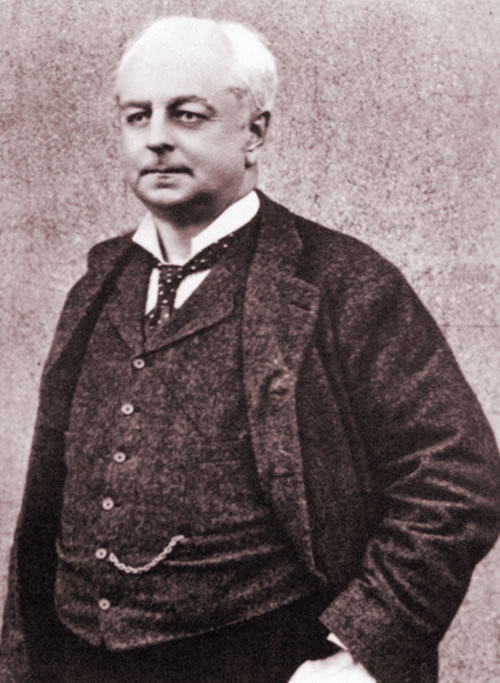
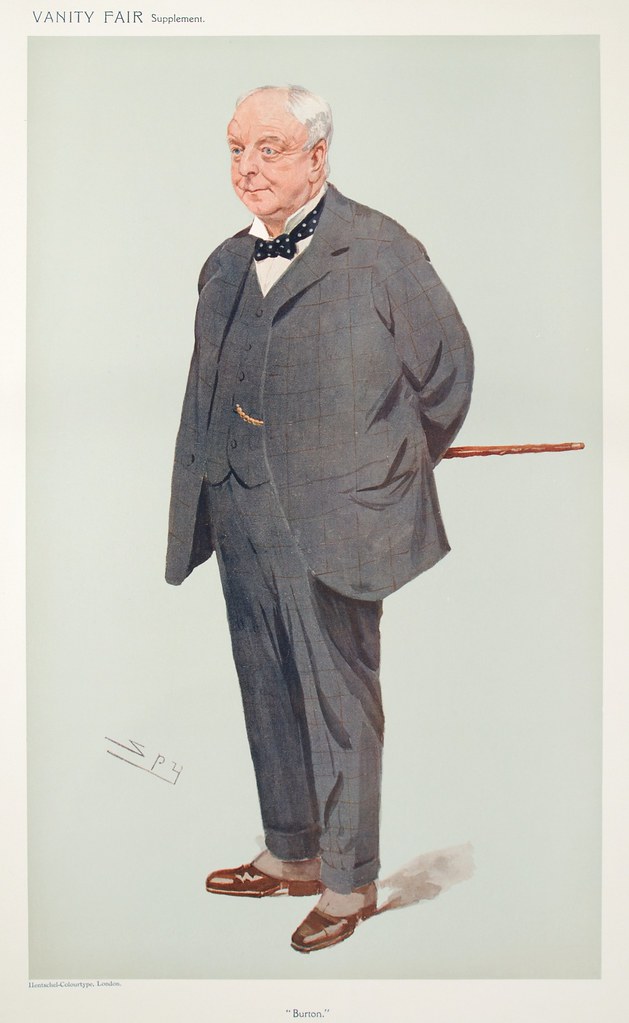
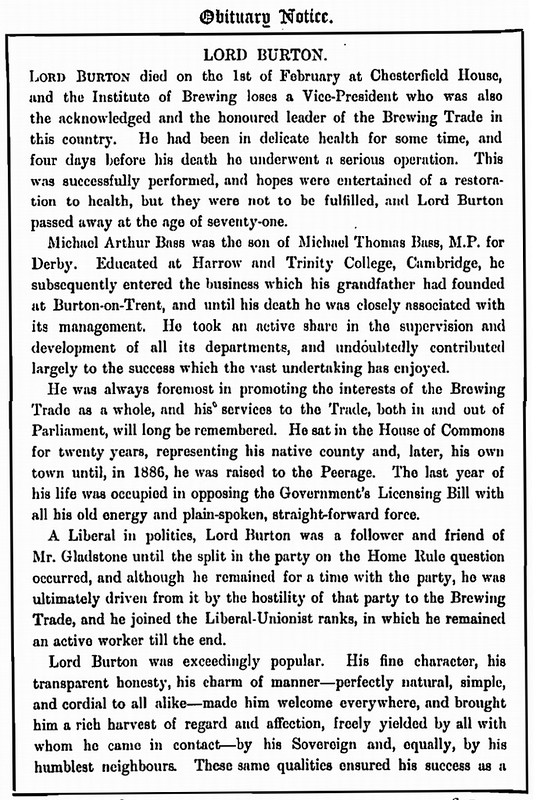
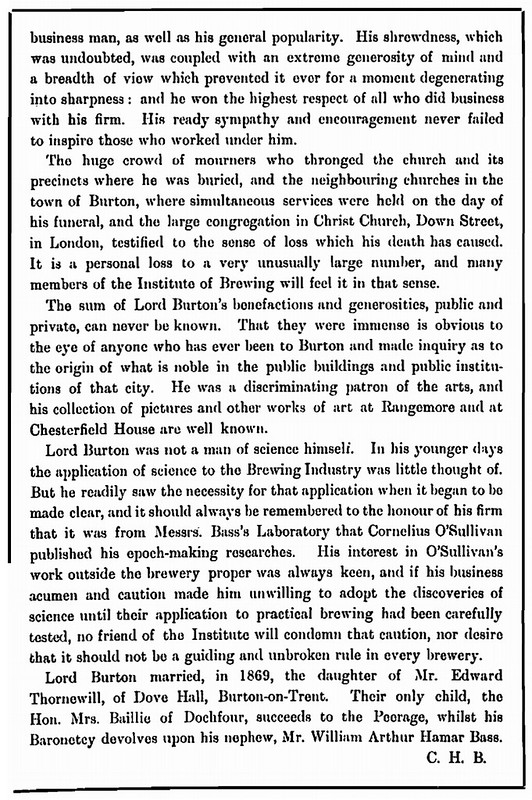
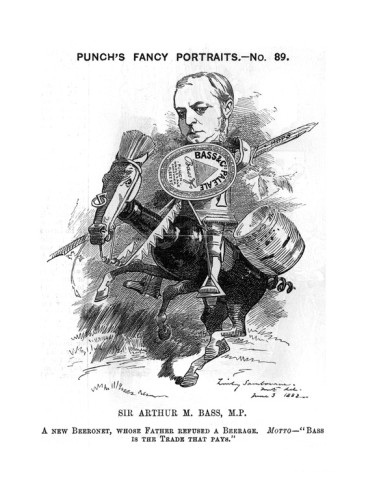
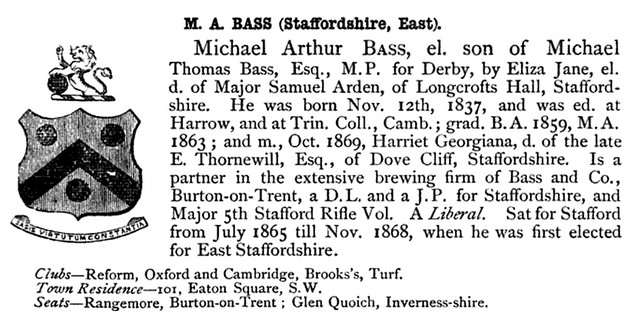
Today is the birthday of Michael Thomas Bass (July 23, 1760-March 9, 1827). He was the son of Bass brewery founder William Bass who ran the brewery from 1787, greatly increasing the brewery’s business and expanding into new markets, such as the Baltic States and Germany.

michael_thomas_bass_sr

Here’s the info on Bass Sr. from Wikipedia:

Bass was the son of William Bass, a carrier from Leicestershire, who founded the brewery in 1777. After his father’s death in 1787, Michael ran the brewery with his brother William until he took sole control in 1795. He continued to develop the Baltic trade with Russia and North Germany, exporting via the River Trent and Hull.

He extended the brewery’s operations, laying the foundations for its future success. He entered into partnership with John Ratcliff and in 1799 he built a second brewery at Burton. Following the Napoleonic blockade, Burton brewers needed another market, and Bass was one of the breweries to start brewing and exporting India Pale Ale (IPA).

Bass married Sarah Hoskins, the daughter of Abraham Hoskins of Burton and Newton Solney. Sarah’s brother, Abraham, built Bladon Castle, a folly which aroused bad feeling locally. Sarah’s great grandfather George Hayne was responsible for establishing the Trent Navigation as an active concern.

Bass died at the age of 66. His eldest son, Michael Thomas Bass continued to manage the brewery company and was MP for Derby for over 35 years. His third son Abraham Bass was an influential cricketer, known as the ‘father of midlands cricket’

MTBassI

And here’s a short biography from the Bass Family section on the Local History of Burton upon Trent website:

After his father’s death in 1787, Michael ran the brewery with his brother William until he took sole control in 1795. He continued to develop the Baltic trade with Russia and North Germany, exporting via the River Trent and Hull.

He extended the brewery’s operations, laying the foundations for its future success. He entered into partnership with John Ratcliff and in 1799 he built a second brewery at Burton. Following the Napoleonic blockade, Burton brewers needed another market, and Bass was one of the breweries to start brewing and exporting India Pale Ale.

Bass married Sarah Hoskins, the daughter of Abraham Hoskins of Burton and Newton Solney. Sarah’s brother, Abraham, built Bladon Castle, a folly which aroused bad feeling locally. Sarah’s great grandfather George Hayne was responsible for establishing the Trent Navigation as an active concern.

On Bass’s death in 1827, his eldest son, Michael Thomas Bass, Jr., born in 1799, succeeded to the brewery.

Bass_Beer

Filed Under: Birthdays, Just For Fun Tagged With: England, Great Britain, History

« Previous Page
Next Page »

Find Something

Northern California Breweries

Please consider purchasing my latest book, California Breweries North, available from Amazon, or ask for it at your local bookstore.

Recent Comments

  • Bob Paolino on Beer Birthday: Grant Johnston
  • Gambrinus on Historic Beer Birthday: A.J. Houghton
  • Ernie Dewing on Historic Beer Birthday: Charles William Bergner 
  • Steve 'Pudgy' De Rose on Historic Beer Birthday: Jacob Schmidt
  • Jay Brooks on Beer Birthday: Bill Owens

Recent Posts

  • Beer Birthday: Wagner Falci June 10, 2026
  • Beer In Ads #5264: Bock-Bier Brauerei Hülsmann Eickel June 9, 2026
  • Historic Beer Birthday: Prosper Cocquyt June 9, 2026
  • Beer Birthday: Todd Ashman June 9, 2026
  • Historic Beer Birthday: Edmund Resch June 9, 2026

BBB Archives

Feedback

Head Quarter
This site is hosted and maintained by H25Q.dev. Any questions or comments for the webmaster can be directed here.