Brookston Beer Bulletin

Jay R. Brooks on Beer

  • Home
  • About
  • Editorial
  • Birthdays
  • Art & Beer

Socialize

  • Dribbble
  • Email
  • Facebook
  • Flickr
  • GitHub
  • Instagram
  • LinkedIn
  • Pinterest
  • RSS
  • Twitter
  • YouTube

Powered by Genesis

Historic Beer Birthday: Michael Piel

March 29, 2026 By Jay Brooks

piels
Today is the birthday of Michael Piel (March 29, 1849-June 12, 1915) who along with his brothers Gottfried and Wilhelm Piel founded Piel Bros. Beer in New York, more commonly known as Piels Beer in 1883. Michael Piel was the brewer among his brothers, and the oldest, as well.

Michael Piel in 1890.

Here’s a short biography from Find a Grave:

Michel Piel was born on the 29th of March, 1849 in Dussendorf, Germany. He immigrated to the United States in 1883 with his wife Marie and son William. They settled first in Brooklyn, then moved to Manhattan. They had 11 children: William, Henry, Otto, Michael Jr, Louisa Gertrude, Rudolph, Agnes, Oswald, Roland and Albert was died at 2yrs and Maria who also died at 2 yrs. Michael with his brothers Gottfried and Wilhelm founded Piels Beer in 1883 and located the brewery in Brooklyn, New York at 315 Liberty Avenue in the East New York section of Brooklyn. On September 20, 1973, Piels Brothers closed down after 90 years in operation. Piels brand of beer was [licensed, not sold as many sources report] to Pabst Brewing Company, which continues to market the Piels on a limited basis in New York and the New England States.

piels-brewery-1965

And here’s a fuller biography from the Cyclopedia of American Biography:

PIEL, Michael, brewer, b. in Stoffeln, Düsseldorf am Rhein, Germany, 29 March, 1849; d. at Lake Parlin, Me., 12 June, 1915, son of Heinrich Hubert and Gertrud (Gispé) Piel. He was descended from an old Rhenish stock of farmers of singular attachment, whose members successively aimed to expand their patrimony of tillable lands. To the original and extensive Stoffeln Farm his father and uncles added the great Mörsenbroich-Düsseldorf tillages, which now border the residential section of the Lower Rhenish financial capitol. Michael was born in an environment of industry, thrift, and enterprise. His early youth was devoted to the farm at Mörsenbroich-Düsseldorf. At the age of eighteen, he began his military service in the Kaiser Alexander II Regiment of the Imperial Guards at Berlin. The Franco-Prussian War of 1870-71 broke out just as he had completed this duty. As he was not, therefore, subject to the call of the Fatherland, his family sought to hold him back. He promptly volunteered, however, and served throughout the war, participating with his regiment in several engagements, the battle of Gravelotte and the siege of Paris. The impressions on the country boy of his years of service at Berlin, which had already begun to modernize its industries, lingered and served constantly to stimulate his natural gifts of invention. While for several years after the war, true to the family tradition, he worked at Mörsenbroich with his elder brother, he continually sought expression for his native talents. The arduous discipline of farm-labor from sun-up to sun-down, — valuable preparation though it was for the early trials of his later life career — could not check his inventive spirit. Gradually, making the most of his opportunities on the farm, his successes won him away from the family calling. In the creation of new rose-cultures and, particularly, in the perfection of a new and highly productive breed of bees, for both of which, after but two years of experimentation, he was voted the government’s highest awards, he found the encouragement he needed for the growing determination to carve out his own future. It was, however, his invention of a centrifuge for the extraction of honey, awarded special governmental recognition and immediately adopted into general use, that decided him. As the protégé of a machine manufacturer, he visited the industrial centers of the progressive Rhineland and soon chose the ancient German industry of brewing as the one offering the best opportunity for his talent of applying machinery to natural processes. He found a fertile field. The new science of modern refrigeration had just come into practice, and the suggestions which it offered in his chosen field fascinated him. He began his novitiate in the old-style subterranean cellars at the breweries of Dortmund, Westphalia. In 1883, his apprenticeship ended, he welcomed the call of a younger brother, Gottfried, then already established as an export merchant in New York, to found with him in East New York, at its present site, a typically German brewery, to be conceived on modern and scientific principles. The brothers, as a partnership, secured title to a small old-style brewing plant, then in disuse, and found the problem to convert it to newer ideas a fight against tremendous odds. At the outset, Michael was its brewer, superintendent, and engineer, his accumulated experience fitting him admirably for the multiplicity of his duties. In the early days of the converted plant, Michael found that his hours were from four o’clock in the morning till ten at night. At last, in 1888, the ability of his brother as the financial head of the firm and the excellence of his own products assured success and the long struggle was won. The country which had offered him his opportunity for success he gladly and promptly adopted as his own, being admitted to citizenship in 1888. The enterprise prospered and the partnership became a corporation in 1898, with an established business of national reputation. The popular demand for the products of the plant, — then a novelty in the American brewing industry: a typical German beer, — necessitated enlarged facilities.

Michael Piel in 1900.

A new era began. The acquired plant was demolished and a new plant, offering Michael the long-sought opportunity for the application of his talents, was erected. Subterranean cellars made way for a building of cellars above surface, under modern refrigeration. The plant, completed, represented a new achievement in brewing construction; it continues to serve as a model of the German-type plant. New principles were easily adopted by him and many ideas of his own creation were applied. Continued success justified this enlargement of facilities, and twice more during his lifetime the plant was expanded in size and facilities. The brewery’s reputation spread abroad, and for years brought brewing academicians, experts, and scientists from Europe and South America to note his work. Many of his ideas were copied abroad. The plant enjoyed the distinction, as the result of Michael’s constant scientific advances in his field, of the continued exchange with European authorities of German brewing ideas, a unique achievement for an American manufacturer. He retired from active management as the technical head of the corporation in 1900, devoting his last years to the acquisition of German paintings of hunting scenes. He was an enthusiastic sportsman, and was particularly devoted to hunting, fishing, and yachting. In 1901 he acquired the Parlin Farm, situated in a basin of the Maine Boundary Mountains, on the Quebec-Portland Highway, on the line of Arnold’s Retreat. It is recognized as one of the most attractive residences of the State. He married 19 March, 1882, Maria Gertrud, daughter of Josef and Agnes (Holz) Herrmann, at Bochum, Westphalia. His widow and nine children survived him.

michael-piel-1900s

Filed Under: Birthdays, Just For Fun Tagged With: History, New York

Historic Beer Birthday: Ebenezer Beadleston 

March 27, 2026 By Jay Brooks

Today is the birthday of Ebenezer Beadleston (March 27, 1803-November 12, 1889). He was born in New York, and ran his father-in-law’s brewery, eventually taking it over with a partner and calling it the Beadleston and Woerz Brewery, although it traded under the name Empire Brewery. It remained in business until 1920, when Prohibition closed it for good.

The Beadleston and Woerz Brewery

Here’s a short biography from his Find-a-Grave page:

Ebenezer Beadleston was born in Queensbury, New York. In 1846 his father-in-law, Abraham Nash hired him to manage the Manhattan branch his thriving Troy New York brewery. The brewery was called Empire Brewery of New York City. Later Beadleston and partner Ernest G. W. Woerz, grew the brewery into one of the largest such concerns in the country. Ebenezer Beadleston died on the 12th of November, 1889. His brewery lived on for another 30 years, finally done in, in 1920, by National Prohibition.

Here’s his obituary from The Post Star, November 14, 1889, reprinted from The Sun the day before.

And here’s his obituary from the Baltimore Sun:

And this one is from The Evening World:

Filed Under: Birthdays, Breweries, Just For Fun Tagged With: New York

Beer In Ads #5186: Today’s The Day!

March 26, 2026 By Jay Brooks

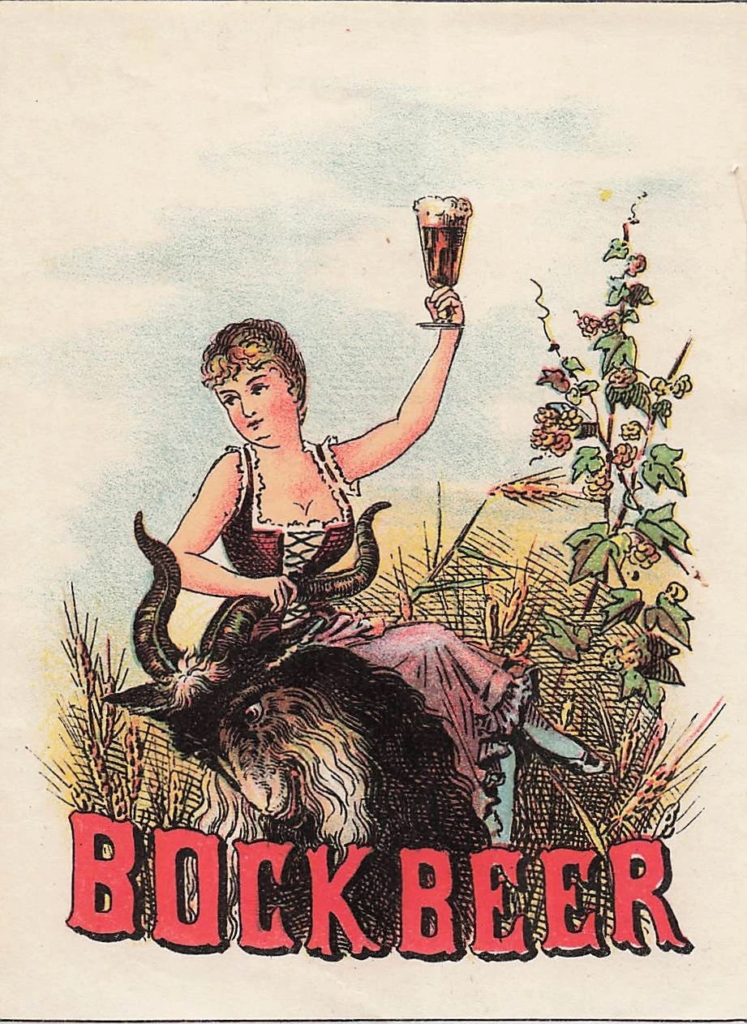
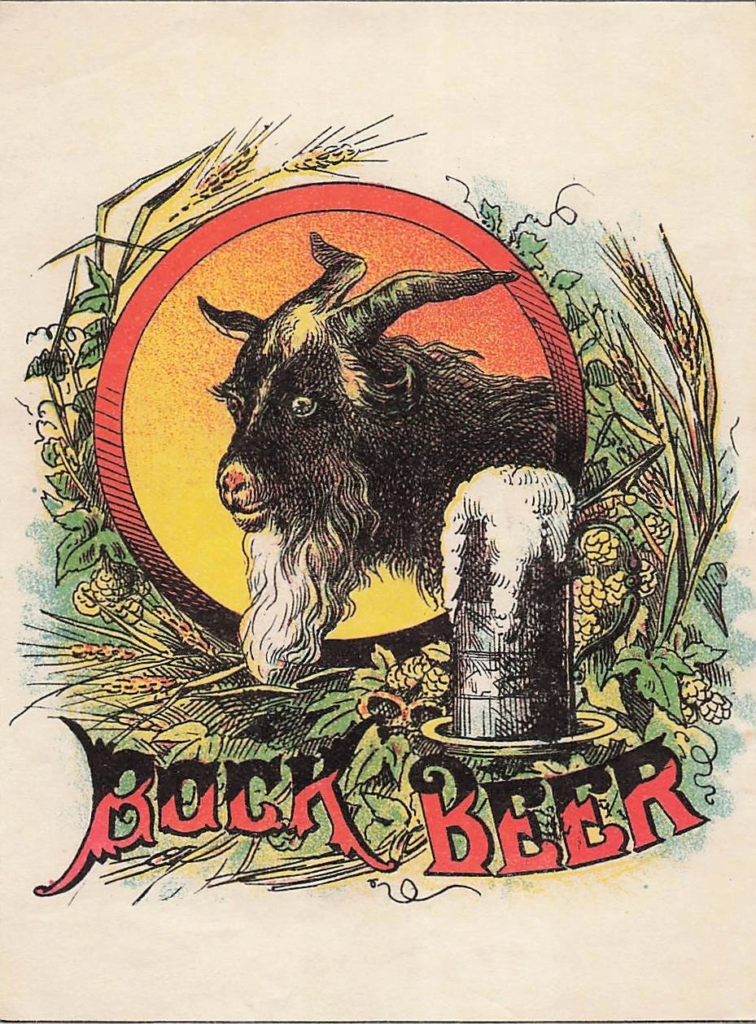
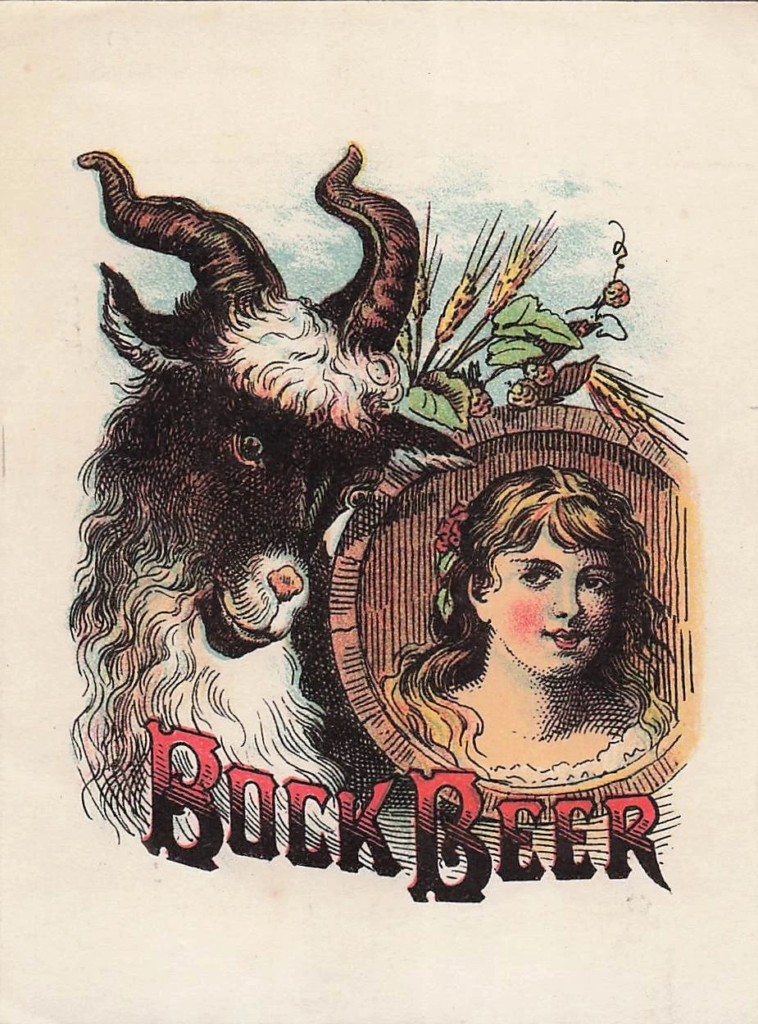
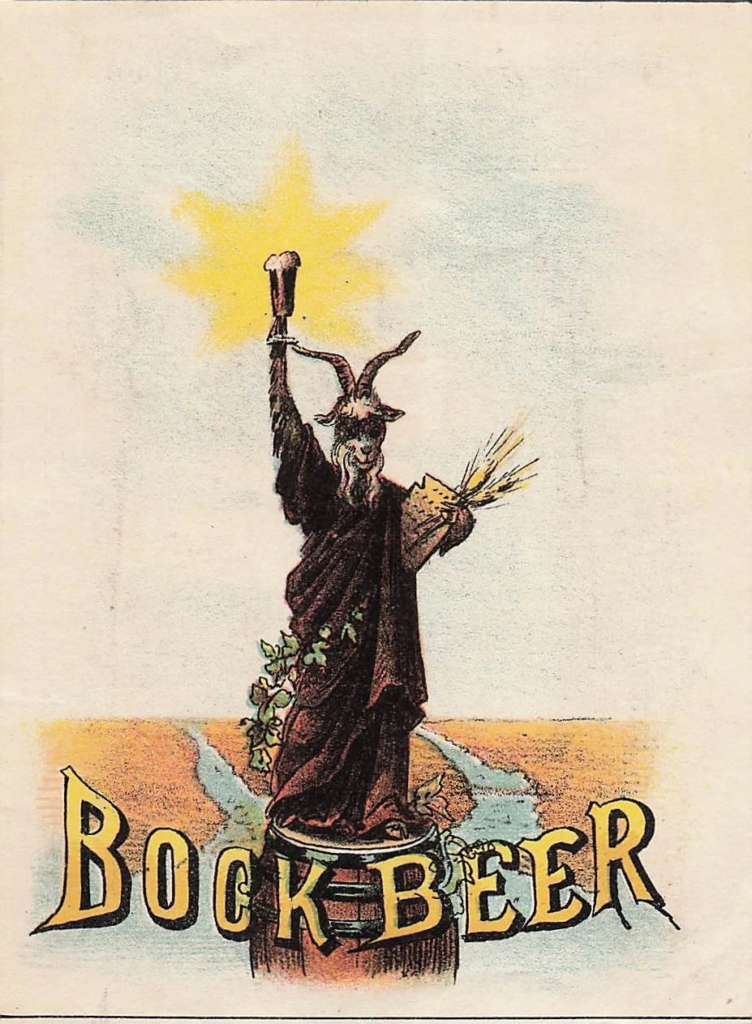
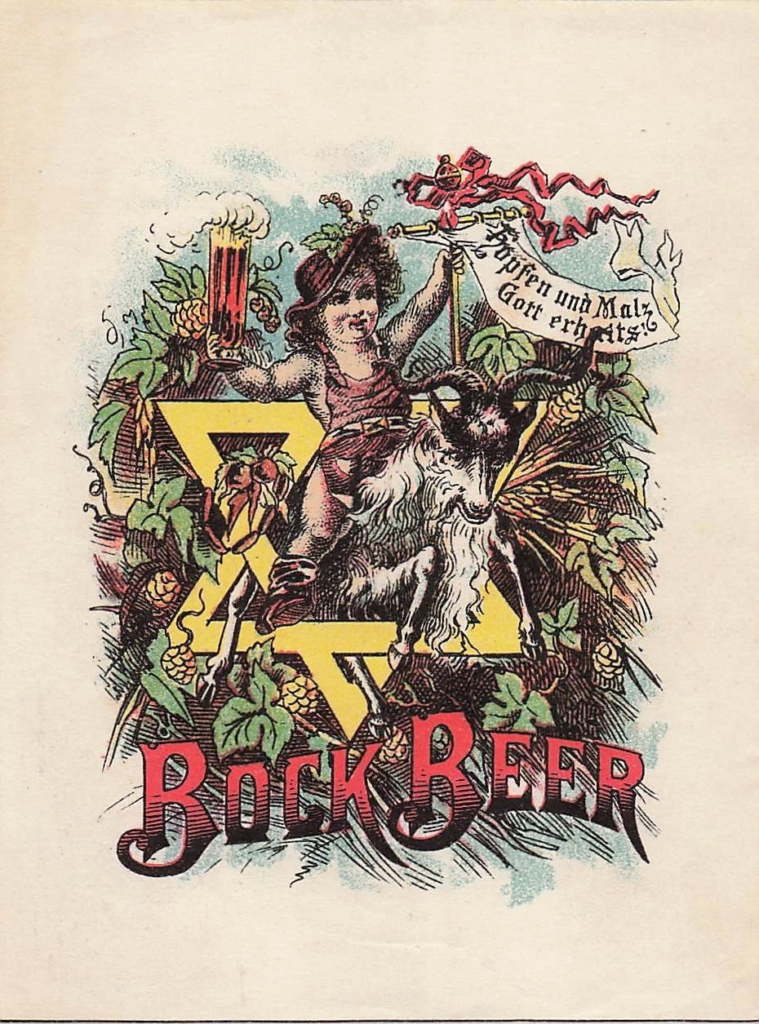
Two years ago I decided to concentrate on Bock ads for awhile. Bock, of course, may have originated in Germany, in the town of Einbeck. Because many 19th century American breweries were founded by German immigrants, they offered a bock at certain times of the year, be it Spring, Easter, Lent, Christmas, or what have you. In a sense they were some of the first seasonal beers. “The style was later adopted in Bavaria by Munich brewers in the 17th century. Due to their Bavarian accent, citizens of Munich pronounced ‘Einbeck’ as ‘ein Bock’ (a billy goat), and thus the beer became known as ‘Bock.’ A goat often appears on bottle labels.” And presumably because they were special releases, many breweries went all out promoting them with beautiful artwork on posters and other advertising. With Spring approaching, there are so many great examples that I’m going to post two a day for a few months.

Thursday’s first ad is for Bock Beer at least twenty breweries located in Brooklyn, Union City, Stapleton, Newark, and New York itself (by which I assume they mean Manhattan but it’s not clear) which was published on March 26, 1934. This ad was for the Brewers Board of Trade, Inc. of New York, which appears to have been a local trade organization active from the 1930s through perhaps as late as 1960. They were celebrating the fact that this was the first Bock release in fourteen years, and the first one after prohibition was repealed. This ad ran in The Brooklyn Eagle, of Brooklyn, New York.

Filed Under: Art & Beer, Beers, Breweries, Just For Fun Tagged With: Advertising, Bock, Brooklyn, History, New York

Beer In Ads #5184: It’s Here!

March 25, 2026 By Jay Brooks

Two years ago I decided to concentrate on Bock ads for awhile. Bock, of course, may have originated in Germany, in the town of Einbeck. Because many 19th century American breweries were founded by German immigrants, they offered a bock at certain times of the year, be it Spring, Easter, Lent, Christmas, or what have you. In a sense they were some of the first seasonal beers. “The style was later adopted in Bavaria by Munich brewers in the 17th century. Due to their Bavarian accent, citizens of Munich pronounced ‘Einbeck’ as ‘ein Bock’ (a billy goat), and thus the beer became known as ‘Bock.’ A goat often appears on bottle labels.” And presumably because they were special releases, many breweries went all out promoting them with beautiful artwork on posters and other advertising. With Spring approaching, there are so many great examples that I’m going to post two a day for a few months.

Wednesday’s first ad is for Utica Club Bock Beer, which was published on March 25, 1960. This one was for the West End Brewing Co., of Utica, New York, which today is known as the FX Matt Brewery or Saranac Brewing, but was originally founded in 1888 by F.X. Matt. This ad ran in The Post-Standard, of Syracuse, New York.

Filed Under: Art & Beer, Beers, Breweries, Just For Fun Tagged With: Advertising, Bock, History, New York

Historic Beer Birthday: Maximilian Schaefer

March 23, 2026 By Jay Brooks

Today is the anniversary of the death of Maximilian Schaefer, whose exact birth date is not known (1819-March 23, 1904). He was born in Wetzlar, which is part of Hesse, in what today is Germany. He arrived in New York in 1839, a year after his brother Frederick came to America, and the two co-founded F&M Schaefer Brewing Co. in 1842. It was Max who brought with him a recipe for what would become their lager beer.

This is his obituary from Find a Grave:

Beer Magnate. In 1839 he emigrated to the United States, carrying with him the recipe for lager, a popular brew in Germany that was then unknown in America. He joined his brother Frederick in the employ of a local brewer, and in 1842 the Schaefer brothers bought out the owner, establishing F & M Schaefer Brewing. Lager proved popular and the Schaefer company became one of the country’s largest beer producers, with Maximilian Schaefer remaining active in the company until failing health caused him to retire in the late 1890s. By the early 1900s, its customer base in the Northeastern United States made Schaefer the most popular beer in the country, a position it maintained until ceding it to Budweiser in the 1970s. The Schaefer brand continued to decline, and as of 1999 is owned by Pabst Brewing, a holding company that contracts for the brewing of formerly popular regional brands.

This is what the brewery looked like in 1842, when Maximilian and his brother opened the brewery.

schaefer-brewery-1842

Below is part of a chapter on the history of F&M Schaefer Brewing Co., from Will Anderson’s hard-to-find Breweries in Brooklyn.

Longest operating brewery in New York City, last operating brewery in New York City [as of 1976], and America’s oldest lager beer brewing company — these honors, plus many others, all belong to The F. & M. Schaefer Brewing Co.

“F. & M.”, as most breweriana buffs know, stands for Frederick and Maximilian, the brothers who founded Schaefer. Frederick Schaefer, a native of Wetzlar, Prussia, Germany, emigrated to the U.S. in 1838. When he arrived in New York City on October 23rd he was 21 years old and had exactly $1.00 to his name. There is some doubt as to whether or not he had been a practicing brewer in Germany, but there is no doubt that he was soon a practicing brewer in his adopted city. Within two weeks of his landing, Frederick took a job with Sebastian Sommers, who operated a small brewhouse on Broadway, between 18th and 19th Streets. Frederick obviously enjoyed both his job and life in America, and the next year his younger brother, Maximilian, decided to make the arduous trip across the Atlantic also. He arrived in June of 1839 and brought with him a formula for lager, a type of beer popular in Germany but unheard of in the United States. The brothers dreamed, and planned, and saved – and in the late summer of 1842 they were able to buy the small brewery from Sommers. The official, and historic, starting date was September, 1842.

schaefer-brewery-1849
The new brewery they built in 1849.

Sommers’ former facility was a start, but that’s all it was, as it was much too small. New York beer drinkers immediately took a liking to “the different beer” the brothers brewed, and in 1845 Frederick and Maximilian developed a new plant several blocks away, on 7th Avenue, between 16th and 17th Streets (7th Avenue and 17th Street is today, of course, well known as the home of Barney’s, the giant men’s clothing store). This, too, proved to be just a temporary move; the plant was almost immediately inadequate to meet demands and the brothers wisely decided to build yet another new plant, and to locate it in an area where they could expand as needed. Their search took them to what were then the “wilds” of uptown Manhattan. In 1849 the brewery, lock, stock and many barrels, was moved to Fourth Ave. (now Park Avenue) and 51st Street. Here, just north of Grand Central Station, the Schaefers brewed for the next 67 years, ever-expanding their plant. The only problem was that the brothers were not the only ones to locate “uptown.” The area in the 40’s, 50’s and 60’s grew rapidly all during the last half of the 19th century, and especially after the opening of the original Grand Central Terminal in 1871. Frederick and Maximilian had wisely purchased numerous lots between 50th and 52nd Streets, and by the time they passed away (Frederick in 1897 and Maximilian in 1904) the brewery was, literally, sitting atop a small fortune. Maximilian’s son, Rudolph J. Schaefer, fully realized this when he assumed the Presidency of the brewery in 1912. In that same year Rudolph purchased the 50% of the company owned by his uncle Frederick’s heirs. He thus had complete control of the brewery, and one of the first matters he turned to was the suitable location for a new, and presumably everlasting, plant. In 1914, in anticipation of its move, Schaefer sold part of the Park Ave. site to St. Bartholomew’s Church. This sale, for a reputed $1,500,000, forced Rudolph to intensify his search for a new location. Finally, in June of 1915, it was announced that the brewery had decided on a large tract in Brooklyn, directly on the East River and bounded by Kent Avenue and South 9th and 10th Streets. Here, starting in 1915, Rudolph constructed the very best in pre-Prohibition breweries. The move across the river to their ultra-new and modern plant was made in 1916, just four years before the Volstead Act crimped the sails (and sales!) of all United States breweries, new or old alike.

schaefer-brewery-1842-1892

The Schaefers around 1895, with Maximilian Schaefer sitting down, his son Rudolph Schaefer standing behind him, Maximilian holding F.M. Emile Schaefer, his grandson and Rudolph’s son on his lap.

Schaefer-family
Three generations of Schaefers.

Filed Under: Birthdays, Just For Fun Tagged With: History, New York, Schaefer

Historic Beer Birthday: Benedict Haberle

March 19, 2026 By Jay Brooks

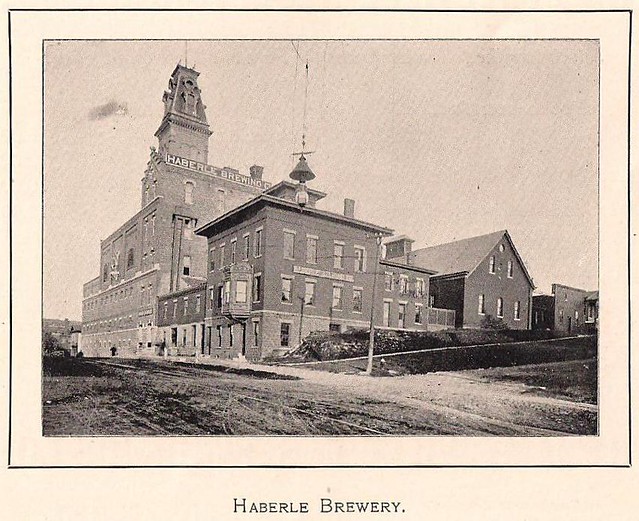
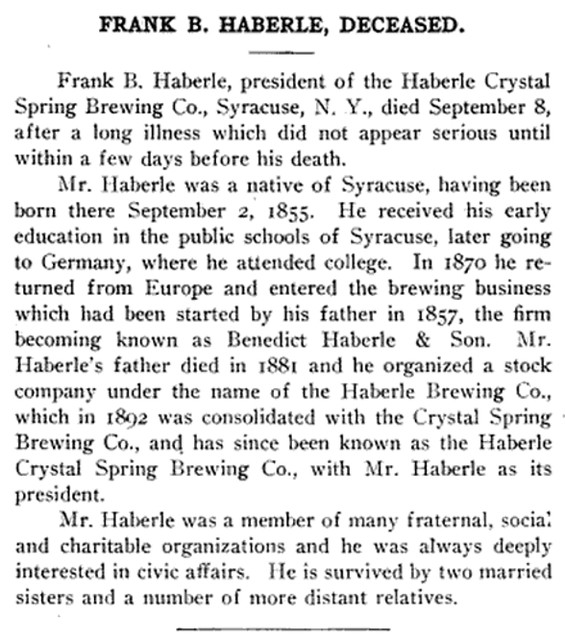
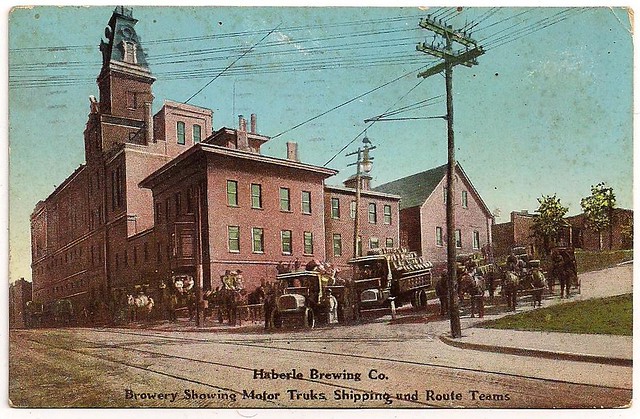
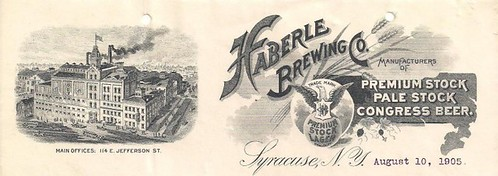
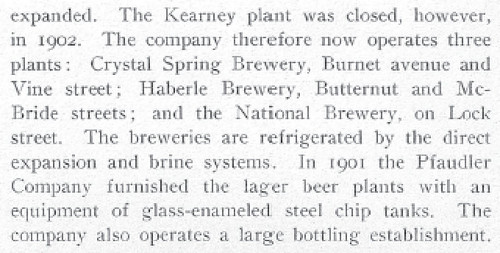
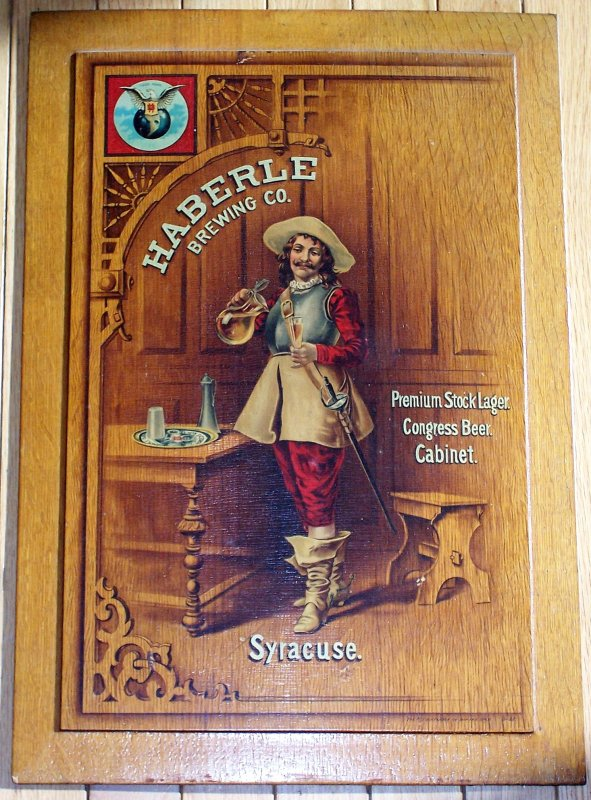
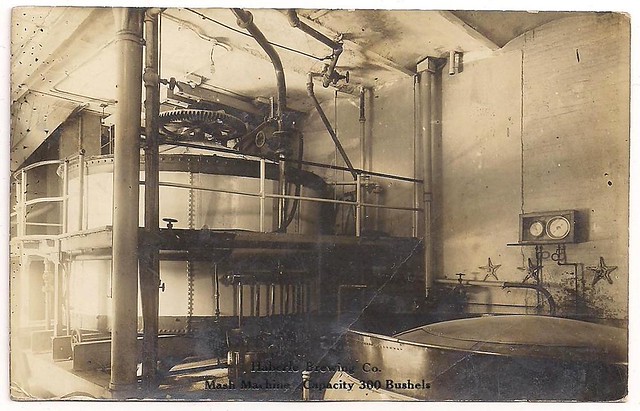
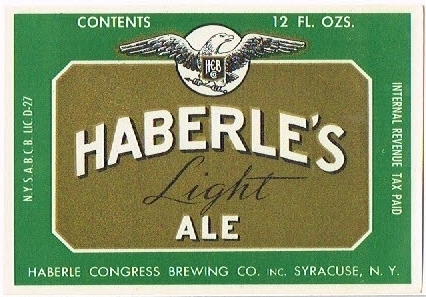
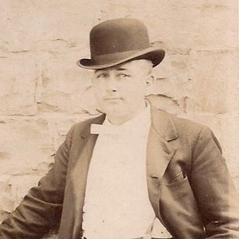
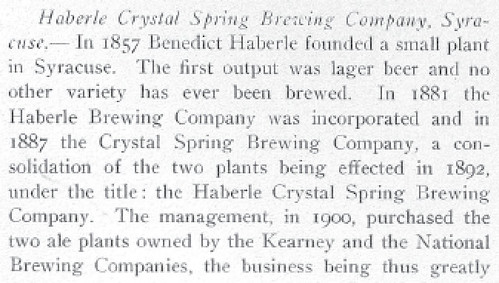
Today is the birthday of Benedict Haberle (March 19, 1824-September 22, 1881). He was born in Germany, and was a veteran of the 1848 Revolution who fled to the U.S., settling in Syracuse, New York, when he was 24, in 1848. He founded the Benedict Haberle Brewing Co. in 1857. When he died in 1881, it was incorporated as the Haberle Brewing Co. and his two sons continued the brewery. After merging with the Crystal Spring Brewing Co. in 1892, the name was again changed to the Haberle-Crystal Spring Brewing Co. (and also the Haberle Brewery) until 1920, when it was closed by prohibition. It reopened in 1933 as the Haberle Congress Brewing Co., and it remained in business until 1961, when it closed for good.
And this account is about the brewery, from 100 Years of Brewing:
haberle-100yrs-1
haberle-letterhead-1905-2
haberle-100yrs-2
haberle-brewhouse

Filed Under: Birthdays, Breweries, Just For Fun Tagged With: Germany, History, New York

Historic Beer Birthday: Ray Deter

March 19, 2026 By Jay Brooks

Today would have been the 69th birthday of Publican extraordinaire Ray Deter, who passed away tragically several years ago after he was struck by a car while riding his bicycle in New York City. Ray was the owner of the d.b.a. beer bars in New York City (Manhattan and Brooklyn) and also New Orleans. He is most definitely missed by those of us who knew him. Please join me in raising a toast today to the memory of Ray Deter. Happy Birthday Ray.

Ray in front of the New Orleans d.b.a. with Garrett Oliver in 2003.

Filed Under: Birthdays Tagged With: Louisiana, New York, Pubs

Historic Beer Birthday: William Ebling

March 18, 2026 By Jay Brooks

ebling
Today is the birthday of William Ebling (March 18, 1828-January 25, 1922). Along with his brother Phillip, he founded and owned the Ebling Brewing Co., which was known by several different names during its life from 1868 to 1950, including the Philip Ebling & Bro. Wm., Aurora Park Brewery, Ph. & Wm. Ebling Brewing Co. and Ebling Brewing Co., which was its name almost the entirety of the 20th century, both before and after prohibition.

ebling-brewery-postcard

There’s not much I could find specifically about William Ebling, and no photos or portraits. From what I can piece together, he was born in Hessen, Germany and emigrated to the U.S. in 1855, arriving December 19 of that year. Initially he worked as a vinegar merchant and married his wife, Phoebe, around 1863, but by 1868 was brewing lager beer with his brother.

eblings-keg-branding
Two Ebling brewery workers posing with a keg branding device, from an unknown date.

The brewery apparently aged some of their beer in Bronx caves, and for some of their beers, like Special Brew, whose label boasts that the beer was “aged in natural rock caves.” Which sounds crazy, but in 2009, road construction crews in the Melrose section of the Bronx found the old caves, which was detailed by Edible Geography in Bronx Beer Caves.

1938-New-York-city-61st-street-4-Ebling-Brewery
An Ebling beer truck on 61st Street in New York in 1938.

Ebling-Brewing-Co-1908-Calendar-Signs-Pre-Pro-Ebling-Brewing-Co--Pre-Prohibition-_83627-1
A 1908 calendar from the brewery.

Eblings-Extra-Beer--Labels-Ebling-Brewing
Eblings-Bock-Beer-Labels-Ebling-Brewing

Filed Under: Birthdays, Breweries, Just For Fun Tagged With: History, New York

Historic Beer Birthday: John Land

March 16, 2026 By Jay Brooks

Today is the birthday of John C. Land (March 16, 1853-January 15, 1943). He was born in Grand Island, New York, but somehow made his way to Wisconsin. There he apparently married Barbara Weber, the daughter of Stephen Weber, who owned the Weber Brewery in Waukesha, Wisconsin. On Thanksgiving Day in 1883, Stephen Weber gave his son William A. Weber and his son-in-law John Land ownership of the Weber Brewery. They renamed it the Weber & Land Brewery, and also traded under the name Bethseda Brewery. Land’s name was later removed it was more often known as the Weber Brewing Co., though the Bethseda named continued as well. It survived prohibition, and was known then as the Weber Waukesha Brewing Co. until closing for good in 1958.

How long Land was involved in the business is unknown, and I could not find a specific biographical information beyond the tidbits I uncovered, and of course no photographs of him either. Most of what I did find was mentioned in the context of the Weber family and the brewery.

This account of the Weber brewery is from “Breweries of Wisconsin,” by Jerold W. Apps;

This newspaper article from the Waukesha Freeman published on August 21, 1884 does mention Land:

Apparently in January of 1943, at age 89, Land had a bad fall and died soon after.

Filed Under: Birthdays, Just For Fun Tagged With: History, New York, Wisconsin

Beer Birthday: Steve Hindy

March 16, 2026 By Jay Brooks

Today is the 77th birthday of Steve Hindy, one of the co-founders of Brooklyn Brewery, and until recently the man responsible for running things day-to-day. Hindy was a journalist for many years before opening the brewery, reporting from numerous war-torn spots around the globe, and as a result has a different perspective on the world that makes him a fascinating person to share a beer with. If you haven’t already, check out his book Beer School, written with Brooklyn Brewery business partner Tom Potter, and also his more recent book The Craft Beer Revolution: How a Band of Microbrewers Is Transforming the World’s Favorite Drink. He also was very active with the Brewers Association and in his local community, too, making it easier for small brewers that follow him, although he retired not too long ago. Join me in wishing Steve a very happy birthday.

Steve in the brewery when I visited him a few summers ago.
Me and Steve during GABF in 2006.
Just before taking the stage during GABF 2007, from left, Glenn Payne (of Meantime Brewing), Charlie Papazian (of the Brewers Association), Mark Dorber (formerly of the White Horse on Parson’s Green but now at the Anchor Pub), Garrett Oliver, and Steve Hindy (both from Brooklyn Brewing), Dave Alexander (from the Brickskeller), and Tom Dalldorf (from the Celebrator Beer News).
Steve, Kim Jordan (New Belgium), Dave Keene (The Toronado in SF), Eddie Friedland (former owner of Philadelphia’s Friedland Distributing) and Vinnie Cilurzo (Russian River) in Austin, Texas for the 2007 Craft Brewers Conference.
Steve Hindy
This is from Steve’s acceptance speech after receiving the F.X. Matt Defense of the Industry Award from Brewers Association in 2010.

Filed Under: Birthdays, Just For Fun Tagged With: Brooklyn, New York

« Previous Page
Next Page »

Find Something

Northern California Breweries

Please consider purchasing my latest book, California Breweries North, available from Amazon, or ask for it at your local bookstore.

Recent Comments

  • Bob Paolino on Beer Birthday: Grant Johnston
  • Gambrinus on Historic Beer Birthday: A.J. Houghton
  • Ernie Dewing on Historic Beer Birthday: Charles William Bergner 
  • Steve 'Pudgy' De Rose on Historic Beer Birthday: Jacob Schmidt
  • Jay Brooks on Beer Birthday: Bill Owens

Recent Posts

  • Beer In Ads #5231: A Sign Of Spring April 26, 2026
  • Historic Beer Birthday: Henry Hoerl April 26, 2026
  • Historic Beer Birthday: John Toohey April 26, 2026
  • Beer In Ads #5230: The Original Old German Bock Beer, GOT IT? Get It! April 25, 2026
  • Historic Beer Birthday: Al Levy April 25, 2026

BBB Archives

Feedback

Head Quarter
This site is hosted and maintained by H25Q.dev. Any questions or comments for the webmaster can be directed here.