Brookston Beer Bulletin

Jay R. Brooks on Beer

  • Home
  • About
  • Editorial
  • Birthdays
  • Art & Beer

Socialize

  • Dribbble
  • Email
  • Facebook
  • Flickr
  • GitHub
  • Instagram
  • LinkedIn
  • Pinterest
  • RSS
  • Twitter
  • YouTube

Powered by Genesis

A Beer A Day Is Good For Your Heart

July 4, 2013 By Jay Brooks

heart
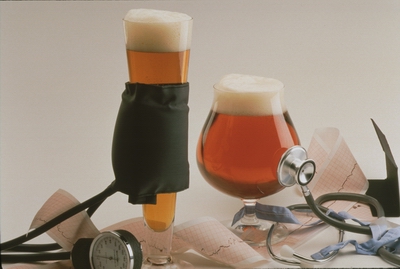
A new study out of Greece, conducted by the Harokopio University in Athens, appears to show that drinking a pint of beer a day may be beneficial to your heart. According to the abstract from the journal Nutrition:

In a randomized, single-blind, crossover study, 17 healthy, non-smoking, men (ages 28.5 ± 5.2 y with body mass index 24.4 ± 2.5 kg/m2) consumed on three separate occasions, at least 1 wk apart: 1. 400 mL of beer and 400 mL water, 2. 800 mL of dealcoholized beer (same amount of polyphenols as in the 400 mL of beer), and 3. 67 mL of vodka and 733 mL water (same amount of alcohol as in the 400 mL of beer).

Each time aortic stiffness (pulse wave velocity), pressure wave reflections (AΙx), aortic and brachial pressure (Sphygmocor device), and endothelial function (brachial flow mediated dilatation) were assessed at fast and 1 and 2 h postprandial.

Aortic stiffness was significantly and similarly reduced by all three interventions. However, endothelial function was significantly improved only after beer consumption (average 1.33%, 95% confidence interval [CI] 0.15–2.53). Although wave reflections were significantly reduced by all three interventions (average of beer: 9.1%, dealcoholized beer: 2.8%, vodka 8.5%, all CI within limits of significance), the reduction was higher after beer consumption compared with dealcoholized beer (P = 0.018). Pulse pressure amplification (i.e., brachial/aortic) was increased by all three test drinks.

From which, they drew the following conclusion. “Beer acutely improves parameters of arterial function and structure, in healthy non-smokers. This benefit seems to be mediated by the additive or synergistic effects of alcohol and antioxidants and merits further investigation.” So the results are preliminary and further studies need to be done. Still, it’s a step in the right direction if drinking beer in moderation can add one more benefit to the growing number of reasons why having a beer day isn’t just an enjoyable way to live, but may also be good for you, too. I’ll drink to that.
Beer-Doctor

Filed Under: Beers, Editorial, News Tagged With: Health & Beer, Science

Intelligent People Drink More Alcohol

June 13, 2013 By Jay Brooks

brain-2
I saw this yesterday in the Discovery Channel’s Curiosity.com. In answer to the question “do intelligent people drink more alcohol,” two separate answers reached the same surprising conclusion. When I say surprising, I mean it will come as a shock to the anti-alcohol wingnuts who continue to deny any positive attributes whatsoever to drinking alcohol. Because while the answer isn’t that new, or that unpredictable, especially if you’ve spent a lot of time around responsible drinkers — wets vs. drys — you probably already knew that the answer is simply yes.

Their first answer was from Ian O’Neill, Discovery News’ Space Producer, who wrote:

Surprisingly, a recent study using data from the National Child Development Study in the United Kingdom and the National Longitudinal Study of Adolescent Health in the United States indicates that intelligent people really do drink more alcohol.

By tracking the intelligence of children under the age of 16 and then revisiting them as adults, it turned out that kids who were considered “more bright” than others in their age group ended up drinking more alcohol later in life. Even after researchers canceled out marital status, parents’ education, earnings and childhood social class, smarter kids were drinking more alcohol as adults.

Why would intelligent people drink more alcohol? Some researchers suggest that as the production of alcohol is only a recent invention (within the last 10,000 years) and our ancestors had gotten their alcohol buzz from rotten fruit, the more intelligent humans would be more likely to drink modern alcoholic beverages. Although this is attractive evolutionary speculation, it’s more likely the real reasons are more complex.

The second answer was presented not by an individual, but as a group answer by Curiosity:

It’s a myth that alcohol kills individual brain cells, but drinking can cause long-term brain damage. That’s why researchers were surprised in 2010, when data from Britain and the United States revealed that more intelligent children, when grown and of legal age, tended to drink more alcohol than their less intelligent peers. The researchers were able to control for other factors that might affect a person’s propensity to drink, such as marital status and income, and the findings related to childhood intelligence held up. Researchers aren’t exactly sure why this link exists; one writer posited that drinking alcohol for pleasure is a relatively new thing, evolutionarily speaking. Intelligent people tend to try new things, so the writer argued that people who enjoy a glass of wine with dinner are actually performing a novel act when you take a long view of history.

One of the longitudinal study each answer is referring to was The National Longitudinal Study of Adolescent Health (Add Health) conducted here in the U.S., while the other was part of the UK’s massive National Child Development Study in the UK. I started writing about some of the conclusions drawn from the UK study several months ago, abandoning it when I got busy with other projects, but it’s still pretty interesting. Satoshi Kanazawa, an evolutionary psychologist who writes a blog for Psychology Today entitled the Scientific Fundamentalist, wrote More Intelligent People Are More Likely to Binge Drink and Get Drunk which covered much of the same ground. Although in it Kanazawa focuses on something I strongly disagree with. “Not only are more intelligent individuals more likely to consume more alcohol more frequently, they are more likely to engage in binge drinking and to get drunk.” That propensity to “binge drink,” I’d argue, has more to do with the narrowing definition of binge drinking than any actual increase in drinking. Binge drinking used to be a defined qualitatively but over the past few decades has become quantitative, meaning it’s become defined as a specific number of drinks in a set period of time, absent any context or mitigating factors (of which there could be many). And even that nonsensical number keeps shrinking and changing.

Kanazawa wonders aloud if that should be worrying. I have to say “no, Doc, it’s not.” Here’s why. Look at this chart below. It shows the correlation between intelligence and incidence of “binge drinking,” as defined using the modern absurdity of five drinks in a row.

binge-drinking-intelligence

But what this chart really says is that the most intelligent among us have just under five drinks one and a half times a year, roughly three times every two years. The horror! Or is it?

Even “controlling for age, sex, race, ethnicity, religion, marital status, parental status, education, earnings, political attitudes, religiosity, general satisfaction with life, taking medication for stress, experience of stress without taking medication, frequency of socialization with friends, number of sex partners in the last 12 months, childhood family income, mother’s education, and father’s education,” the smarter you are as a child, the more you’ll apparently drink as an adult. Isn’t it at least possible that the intelligent people are on to something? Maybe it’s not such a terrible thing after all.

Another psychologist who also writes for Psychology Today, Stanton Peele, wrote sort of a rebuttal to Kanazawa. In Are More Intelligent People More Likely to be Alcoholics?, he ponders.

So, we can ask, is getting drunk ‘once every other month or so good, bad, or neutral? Is it harmless — even beneficial? Is it a social convention? An exploration of the universe? Fun for people who are better off and can spare the time and who can protect themselves while having a night out drinking? Or is this behavior pathological, a precursor to alcoholism? Specifically, are more intelligent people more likely to be alcoholics?

To this, he posits three possibilities.

  • Although smarter people (as measured in childhood) get drunk more, they are less likely than dull people to become alcoholics. Does that mean that they are inured against alcoholism? The dominant theory here would be that being smart is a protective life asset.
  • They are just as likely to become alcoholics. Which would still be somewhat counterintuitive, since despite getting drunk far more often than dull people, they are no more likely to succumb to alcoholism.
  • Smart people are more likely to be alcoholics. This could follow from several theories of behavior: smart people tempt fate by drinking more, and thus they are more likely to become alcoholics. Or, smart people are inherently more likely to be alcoholics — perhaps being smart makes them more acutely aware of the world’s problems, or creates other damaging emotional states.

Which, he notes, is odd, since it would seem to suggest “childhood intelligence is a risk factor for alcoholism.” Are parents putting their children at risk by sending them to good schools, making them do their homework or encouraging them to read? Peele declares this to be something of a “quandary — something most people generally value leads to a behavior of which we disapprove.” And Kanazawa concludes that since “more intelligent children are more likely to grow up to engage in binge drinking and getting drunk,” then “occasional drunkenness is incompatible with regular moderate drinking.”

The fallacy with both these lines of thought, I believe, is that occasional drunkenness may not be the demon the medical community has come to believe. In their zeal to quantify everything, they’ve removed the problems in problem drinking and reduced it to a simple formula that clearly doesn’t work. By their standards, I’m an undisputed binge drinker, and yet I’d warrant I’m drunk less than many people. I can state clearly and unequivocally that I’m not an alcoholic, having grown up with and around countless actual problem drinkers. And without trying to sound too egotistical, I’m not an idiot, at least. I did reasonably well in school. Maybe that’s why I drink more now? Since most of the people I know also drink a fair amount, does that means beer drinkers tend to be smarter than non-drinkers? My anecdotal evidence says yes. But then I’m very biased. Don’t we all want to believe we have smart friends? Maybe, but I’m just happy if they like good beer. Of course, that may possibly be one and the same thing.

Filed Under: Beers, Editorial, Just For Fun, Politics & Law, Related Pleasures Tagged With: Archeology, History, Science, Statistics

The Ziblee Beverage Pleasure Enhancer

June 4, 2013 By Jay Brooks

salesman
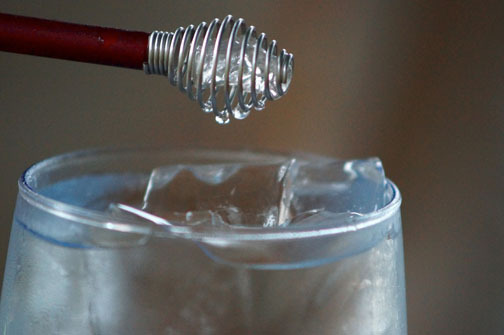
Maybe it’s my own skepticism, but this is setting off all of the Amway/Infomercial/Snake Oil Salesman alarm bells. On Indiegogo — similar to Kickstarter — someone has launched a project for the Ziblee Beverage Pleasure Enhancer, which they describe as follows. “Briefly stir your favorite adult beverage with the Ziblee and be amazed at the improvement in flavor and smoothness.” Uh, huh. Sure. Convince me.

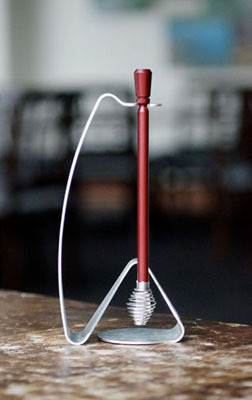
Here’s what it looks like. To me, it looks roughly like a honey dipper made out of a metal spring with an aluminum handle. But no, the spring is made from “the finest stainless steel [they] could find. Surgical grade stainless steel,” no less.

ziblee-1

But actually it’s the pitch, and the fact that there’s a special crystal inside the wand, that makes is sound like it’s coming from a snake oil salesman.

The Ziblee is an energetically-charged wand-like device that, when stirred gently for six or seven seconds in a glass of wine, spirits, coffee or juice, liberates all the flavor of the beverage and smooths the taste significantly. Just like award-winning vintners, connoisseurs and sommeliers who have used the Ziblee, you will be astounded at the difference it makes. It really does “make the cheap stuff taste like the good stuff…and the good stuff taste even better!”

Beer is conspicuously absent, but apparently every other alcohol on the planet, along with coffee and juice, will magically be improved by a few stirs. How does this “magic” work? Here’s their explanation.

The Ziblee is not an ‘aerator’ and it doesn’t have magnets. It’s a totally new technology that uses the subtle energy of frequencies. Those frequencies impact the beverage on a molecular level releasing its full flavor and smoothness. There is no chemical change in the beverage at all, nothing dissolves, nothing is added or taken away. It really is a quantum energy thing and there are only two ways to know that something wonderful has happened to your drink. The first is to look at the molecular structure of the drink under an electron microscope, which we’ve done — but honestly, it’s not that easy to do. The second is a far better option…taste it! Do a variety of taste tests. All in the name of scientific research of course! This is absolutely the most fun you can have using quantum physics!

It works through specially selected natural quartz crystal. Due to their balanced and set formation, certain crystals have the ability to tune into the vibrations of what is around them. People have known that since ancient times. Today what we’re able to do with the Ziblee is ‘tune’ the crystal with a proprietary combination of frequencies. When the super-charged Ziblee connects with your beverage it harmonizes the frequencies to gently reveal the remarkable story within every glass. It makes every sip, every drink, every conversation more pleasurable.

Dizzy yet? Toward the end of this new ageiness, they claim that it “works with all adult beverages, making them taste smooth, expensive,” but finally address beer. “With carbonated beverages like beer, soda and champagne the Ziblee tends to make them go flat, so don’t ruin your drink. We’re not sure why that happens, but it does. We dumped many a beer down the drain trying to figure it out.” It’s funny that they don’t know why it happens, suggesting to me that they don’t really know anything about their claim that it does work on non-carbonated drinks, except water.

So what do you think? Magic or hokum? I’m sure it’s not that simply swirling your drink makes it taste differently. That would be too easy, wouldn’t it? Who would fall for that?

ziblee-2

Filed Under: Beers, Editorial, Just For Fun, Related Pleasures Tagged With: gadgets, Humor, Science

How You Get Drunk

May 4, 2013 By Jay Brooks

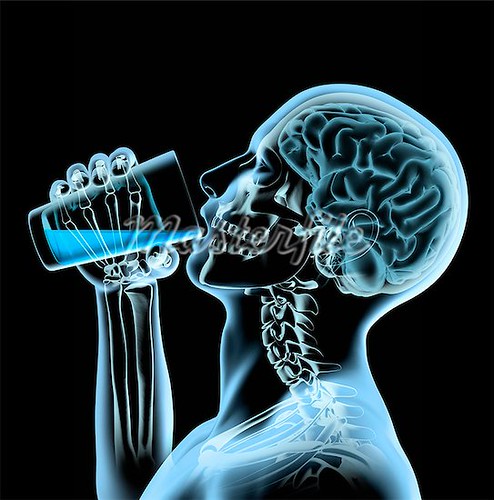
drunk
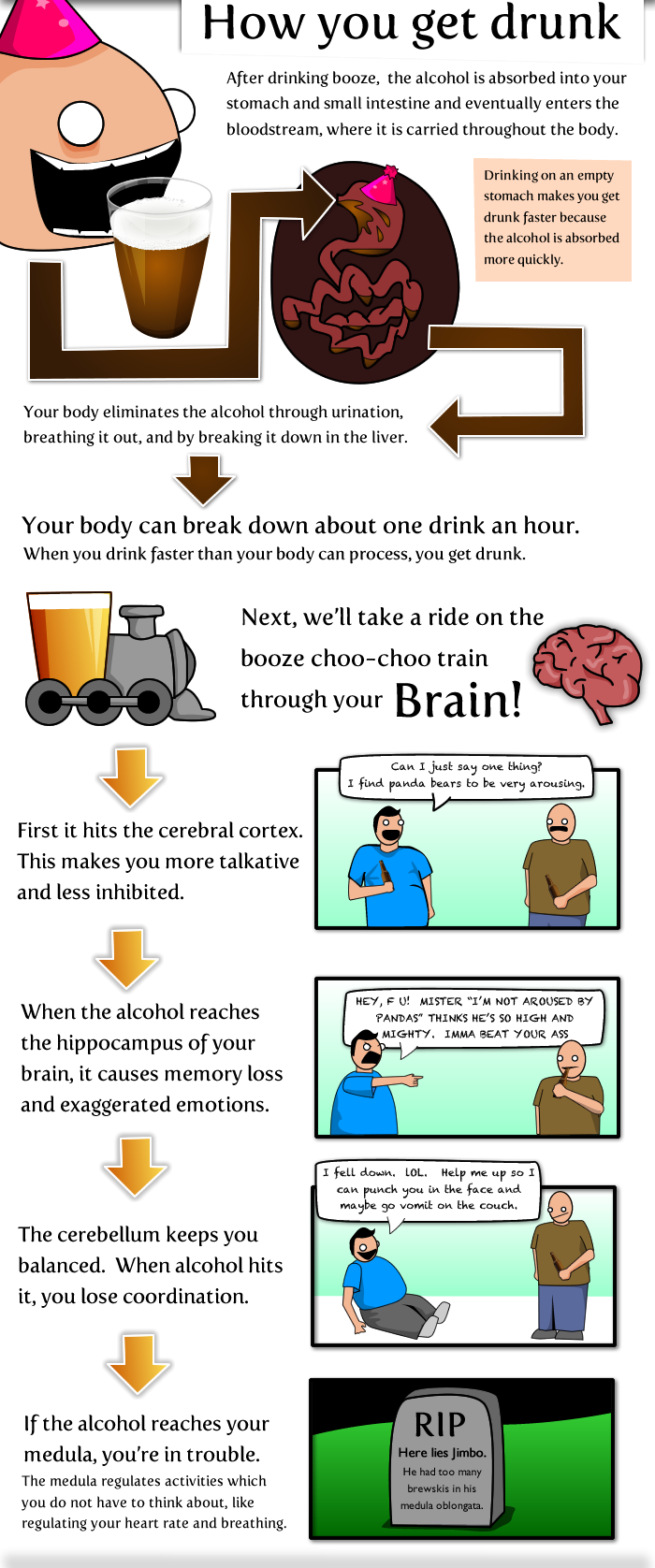
Today’s infographic shows the various steps of How You Get Drunk, and how it affects your body, including the “booze choo-choo train through your brain.”

how-you-get-drunk
Click here to see the poster full size.

Filed Under: Just For Fun, Related Pleasures Tagged With: Health & Beer, Humor, Infographics, Science

Beer Flavor Triggers Dopamine In The Brain

April 22, 2013 By Jay Brooks

brain-2
An interesting study recently conducted at the Indiana University School of Medicine shows a preliminary result that “[t]he taste of beer, without any effect from alcohol itself, can trigger dopamine release in the brain, which is associated with drinking and other drugs of abuse.”

The study itself, Beer Flavor Provokes Striatal Dopamine Release in Male Drinkers: Mediation by Family History of Alcoholism was published last week in the journal Neuropsychopharmacology. From the press release:

Using positron emission tomography (PET), the researchers tested 49 men with two scans, one in which they tasted beer, and the second in which they tasted Gatorade, looking for evidence of increased levels of dopamine, a brain neurotransmitter long associated with alcohol and other drugs of abuse. The scans showed significantly more dopamine activity following the taste of beer than the sports drink. Moreover, the effect was significantly greater among participants with a family history of alcoholism.

“We believe this is the first experiment in humans to show that the taste of an alcoholic drink alone, without any intoxicating effect from the alcohol, can elicit this dopamine activity in the brain’s reward centers,” said David A. Kareken, Ph.D., professor of neurology at the IU School of Medicine and the deputy director of the Indiana Alcohol Research Center.

The stronger effect in participants with close alcoholic relatives suggests that the release of dopamine in response to such alcohol-related cues may be an inherited risk factor for alcoholism, said Dr. Kareken.

Research for several decades has linked dopamine to the consumption of various drugs of abuse, although researchers have differing interpretations of the neurotransmitter’s role. Sensory cues that are closely associated with drug intoxication (ranging from tastes and smells to the sight of a tavern) have long been known to spark cravings and induce treatment relapse in recovering alcoholics. Many neuroscientists believe that dopamine plays a critical role in such cravings.

The study participants received a very small amount of their preferred beer — 15 milliliters — over a 15-minute time period, enabling them to taste the beer without resulting in any detectable blood alcohol level or intoxicating effect.

Using a PET scanning compound that targets dopamine receptors in the brain, the researchers were able to assess changes in dopamine levels occurring after the participants tasted the liquids.

In addition to the PET scan results, participants reported an increased beer craving after tasting beer, without similar responses after tasting the sports drink — even though many thought the Gatorade actually tasted better, said Brandon G. Oberlin, Ph.D., post-doctoral fellow and first author of the paper.

With the study only using a cohort of under fifty people, the results will probably not settle the question, and the UK Guardian’s science writer takes issue with it in Beer, dopamine and brain scans make an intoxicating mix. But it seems to be a good first step toward a better understanding of how dopamine is related to drinking and even alcoholism. The most interesting find is that it appears that dopamine is released by the brain even if there’s no alcohol present, just the taste of beer is all that the brain seems to need. If further studies bear out the findings, this could be significant.

852-06435128

Filed Under: Beers, News, Related Pleasures Tagged With: Health & Beer, Science

Are Hops Addictive?

March 23, 2013 By Jay Brooks

hops
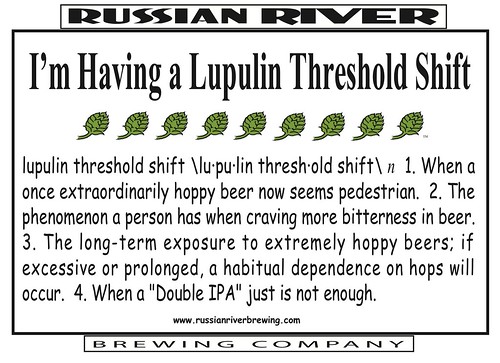
Are Hops Addictive? I sure hope so. PopSci’s BeerSci series tackles that very question in an interesting article: Are Hops Addictive? So what’s the answer? I’m not telling, but don’t worry. The answer is a click away.

Lupulin-Threshold-Shift

Filed Under: Beers, Just For Fun Tagged With: Hops, Science, Science of Brewing

Replacing Water With Beer?

March 23, 2013 By Jay Brooks

beer-sample vs. water
Monks famously fasted for the forty days of Lent by supplementing their lack of food with liquid bread; beer. But how long could you really go without food, and especially water? In this interesting article, io9 tackles the question Could you drink beer instead of water and still survive? If the world ends in a nuclear fireball, I want to know how useful my beer cellar’s going to be as part of my survival plan.

save-water-drink-beer

Filed Under: Beers, Just For Fun Tagged With: Health & Beer, Science

How Beer Gave Us Civilization

March 15, 2013 By Jay Brooks

ninkasi
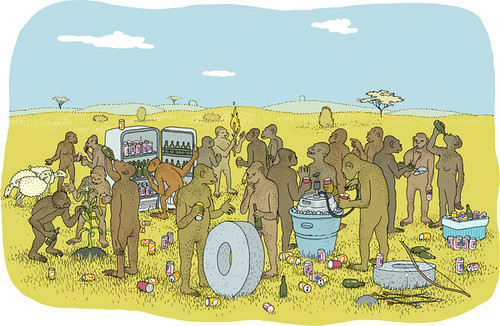
While I’m firmly in the “beer came before bread” camp in the anthropological debate about what sparked civilization, evidence has been mounting for that view since it was first proposed over a half-century ago. In a new opinion piece in the New York Times by Jeffrey P. Kahn, the CEO of WorkPsych Associates, entitled How Beer Gave Us Civilization, he lays out the case for why “we needed beer” and runs through an overview of early civilization’s introduction of alcohol and why it was so necessary to our development. He also brings into the debate a recent study from the Journal of Archaeological Method and Theory, What Was Brewing in the Natufian? An Archaeological Assessment of Brewing Technology in the Epipaleolithic, which adds new support for what I call the “beer first” theory.

He unfortunately ends with the long-discredited Benjamin Franklin beer quote, but apart from that gaffe, it’s a good read. Just stop short of the final two paragraphs, and it’s even better. He should have just finished with this sage observation. “Beer’s place in the development of civilization deserves at least a raising of the glass.” Hear, hear.

Nilson-first-kegger
Illustration by Anders Nilsson.

Filed Under: Beers, Editorial, Events, News, Politics & Law, Related Pleasures Tagged With: History, Mainstream Coverage, Science

The Chemistry Of Alcohol & Hangovers

March 14, 2013 By Jay Brooks

science
Just in time for St. Patrick’s Day this Sunday, the American Chemical Society released a video today as part of their Byte Size Science program all about The Chemistry of Alcohol and Hangovers.

AlcoholHangovers2013

For those celebrating St. Patrick’s Day with green beer, moderation is key. Alcohol has several negative effects on your body — many of which can amount to a miserable morning after. Find out the science behind those brutal hangovers and alcohol’s other effects on the body in our latest video, and maybe we can inspire some caution in your celebration this year.

Doubtful, but it’s certainly worth a try. The video below was created by the ACS Office of Public Affairs, explaining “the science behind these unpleasant after-effects that excessive drinking can have on the body.” DOn’t say you haven’t been warned.

Filed Under: Beers, Just For Fun Tagged With: Science, Video

Green Beer Bottle Physics

March 5, 2013 By Jay Brooks

physics
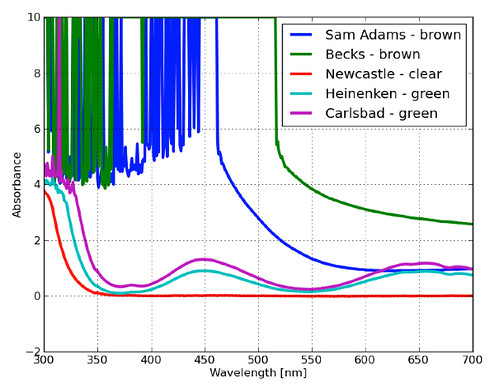
Wired’s Dot Physics blog has an interesting piece up today about Physics and Green Beer Bottles. Hat tip to the Homebrew Chef for the link. To make the point, the author used a UV-Visible Spectrometer to collect data for several different beer bottles, and below is a chart of the results, but check out the article to understand what it all means and why green and clear bottles are a bad idea, unless you have Miller’s Frankenstein tetrahops.

absorbance-wavelength

Filed Under: Beers, Just For Fun, Related Pleasures Tagged With: Bottles, Science

« Previous Page
Next Page »

Find Something

Northern California Breweries

Please consider purchasing my latest book, California Breweries North, available from Amazon, or ask for it at your local bookstore.

Recent Comments

  • Ernie Dewing on Historic Beer Birthday: Charles William Bergner 
  • Steve 'Pudgy' De Rose on Historic Beer Birthday: Jacob Schmidt
  • Jay Brooks on Beer Birthday: Bill Owens
  • Steve 'Pudgy' De Rose on Beer Birthday: Charles Finkel
  • Steve 'Pudgy' De Rose on Beer Birthday: Bill Owens

Recent Posts

  • Beer In Ads #5185: It’s Bock Time January 28, 2026
  • Beer Birthday: Shane McNamara January 28, 2026
  • Historic Beer Birthday: John Goetz January 28, 2026
  • Beer Birthday: Jean-Marie Rock January 28, 2026
  • Beer In Ads #5184: The “B”s Are Here, Bruton Bock Beer January 27, 2026

BBB Archives

Feedback

Head Quarter
This site is hosted and maintained by H25Q.dev. Any questions or comments for the webmaster can be directed here.