Brookston Beer Bulletin

Jay R. Brooks on Beer

  • Home
  • About
  • Editorial
  • Birthdays
  • Art & Beer

Socialize

  • Dribbble
  • Email
  • Facebook
  • Flickr
  • GitHub
  • Instagram
  • LinkedIn
  • Pinterest
  • RSS
  • Twitter
  • YouTube

Powered by Genesis

Beer In Ads #5146: Christmas Bock Beer

December 20, 2025 By Jay Brooks

Last year I decided to concentrate on Bock ads for awhile. Bock, of course, may have originated in Germany, in the town of Einbeck. Because many 19th century American breweries were founded by German immigrants, they offered a bock at certain times of the year, be it Spring, Easter, Lent, Christmas, or what have you. In a sense they were some of the first seasonal beers. “The style was later adopted in Bavaria by Munich brewers in the 17th century. Due to their Bavarian accent, citizens of Munich pronounced ‘Einbeck’ as ‘ein Bock’ (a billy goat), and thus the beer became known as ‘Bock.’ A goat often appears on bottle labels.” And presumably because they were special releases, many breweries went all out promoting them with beautiful artwork on posters and other advertising.

Saturday’s ad is for Frontenac Bock Beer, which was published on December 20, 1914. The brewery was the Frontenac Breweries Limited of Montreal, Canada, which was originally founded in 1911. This ad ran in The Montreal Star also of Montreal, Canada.

Filed Under: Art & Beer, Beers, Breweries, Just For Fun Tagged With: Advertising, Canada, History, Montreal, Quebec

Historic Beer Birthday: Joseph Liebmann

December 20, 2025 By Jay Brooks

S-Liebmann
Today is the birthday of Joseph Liebmann (December 20, 1832-March 26, 1913). He was born in Schmiedelfeld, Baden-Wuerttemberg, Germany. His father owned the Castle Schmiedelfeld, but when Joseph was seven, the family moved to Ludwigsburg and operated the Zum Stern Inn there, which also included a brewery. For political reasons, some of the family moved to America around 1850 to build a home, and the rest followed in 1854. Initially he ran the old Maasche Brewery, but later built a new brewery in Bushwick. Originally, it was called the Samuel Liebmann Brewery, but when his sons joined the brewery, it was called the S. Liebmann’s Sons Brewery. When Joseph’s father died in 1872, Joseph and his brothers took over the family brewery, and Henry became brewmaster, while Joseph “was chiefly responsible for financial matters,” though for a time was also president of the family brewery. After prohibition ended, the brothers’ six sons re-opened the brewery as the simpler Liebmann Breweries, but in 1964 they changed the name again to Rheingold Breweries, after their most popular beer. The brewery closed in 1976.

Here’s his obituary from the New York Times:

Joseph-Liebmann-nyt-obit
Liebmanna_Lager_Beer

This is from “The Originators of Rheingold Beer: From Ludwigsburg to Brooklyn – A Dynasty of German-Jewish Brewers,” by Rolf Hofmann, originally published in Aufbau, June 21, 2001:

New Yorkers over the age of fifty will remember the brand name Rheingold Beer and the company’s brilliant publicity stunt in which a bevy of attractive young women competed annually for the privilege of being elected that year’s Miss Rheingold and appearing in ads on billboards and in the subways throughout the New York area.

The beer’s evocative name with its allusion to Germany’s great river, was the culmination of a German-Jewish family enterprise that had its beginnings in 1840 in the town of Ludwigsburg, north of Stuttgart, in what was then the Kingdom of Württemberg. One Samuel Liebmann, a member of a prominent Jewish family in the region, settled there and bought the inn and brewery “Zum Stern.” A liberal and staunch supporter of Republican ideals, Liebmann encouraged other like-minded citizens, including some soldiers from the garrison, to meet in his hospitable surroundings. The ideas fomented there contributed to the local revolution of 1848. It brought the opprobrium of the King down upon Liebmann’s enterprise, and “Zum Stern” was declared off limits to the soldiers. Soon thereafter, in 1850, Samuel Liebmann emigrated to the U.S.

The family settled in Brooklyn and Samuel, together with his three sons, Joseph, Henry, and Charles, opened a brewery once again at the corner of Forest and Bremen Streets. With the responsibilities divided among the family – Henry became the brewing expert, Charles. the engineer and architect, Joseph, finance manager – the company was already flourishing by the time of Samuel’s death in 1872. Success also led to a concern for the company’s Brooklyn surroundings, and the Liebmanns became involved in local welfare – focusing on housing and drainage systems.

Each of the three brothers had two sons, and when the older Liebmanns retired in 1903, the six members of the third generation took over. Other members of the family also contributed to the gradual expansion of the company. In 1895 Sadie Liebmann (Joseph’s daughter), married Samuel Simon Steiner, a trader in high quality hop, an essential ingredient for good beer. Steiner’s father had begun merchandising hop in Laupheim in 1845 and still today, S.S. Steiner, with its headquarters in New York, is one of the leading hop merchants. Under these fortuitous family circumstances, beer production grew constantly. In the early years, the brewery had produced 1000 barrels per year, by 1914 its output stood at 700,000 barrels.

hofmann-rheingold1
The Liebmann family.
Unfortunately, political developments in the U.S. between 1914 and 1933 were extremely disadvantageous for the Liebmann brewery. The resentment against Germany and anything German during World War I led to an informal boycott of German beers. Following close upon the lean wartime years, was the implementation of Prohibition in 1920 forbidding the manufacturing and trading of alcohol. The Liebmann enterprise managed to survive by producing lemonade and a product they called “Near Beer.”

With the reinstatement of legal alcohol production under President Roosevelt in 1933, opportunities for the brewery opened up, abetted by the anti-Semitic policies of Hitler’s Germany. The pressures on Jewish businessmen there, brought Dr. Hermann Schülein, general manager of the world-renowned LšwenbrŠu brewery, to America. Schulein’s father, Joseph, had acquired two of Munich’s leading breweries at the end of the nineteenth century–Union and Münchner Kindl–and his son had managed the 1920 merger with Löwenbrau. Arriving in New York with this experience behind him, Hermann Schülein became one of the top managers of the Liebmann brewery and was instrumental in its spectacular growth after World War II.

Working with Philip Liebmann (great-grandson of Samuel), Schülein developed a dry lager beer with a European character to be marketed under the brand name “Rheingold.” According to company legend, the name was created in 1883 at a brewery dinner following a performance at the Metropolitan Opera. When the conductor took up his glass, he was so taken with the shade of the beer, that he declared it to be the color of “Rheingold.” For New Yorkers, however, the name Rheingold did not bring to mind the Nibelungen fables, but the pretty young ladies who participated in Schülein’s most brilliant marketing strategy – the selection of each year’s Miss Rheingold by the beer-drinking public of greater New York

At the height of the campaign’s success in the 1950’s and 60’s, the Liebmann Brewery had an output of beer ten times that of Löwenbrau at the same time in Munich.

For thirty years, Rheingold Beer reigned supreme in the New York area, but by 1976, as a local brewery, it could no longer compete with nationwide companies such as Anheuser & Busch, Miller, and Schlitz, and its doors were closed. Only recently, using the same brewmaster, Rheingold is once again being sold in the tri-state area.

S-Liebmanns-Brewing-poster
Here’s an “Origin of Liebmann Brewery” posted by a relative on Ancestry.com:

On May 12 1833 (Sulzbach-Laufen Archive) Samuel and his older brother Heinrich bought a castle/inn Schmiedelfeld, Sulzbach-Laufen, Schwaebisch Hall District that dated from 1739. They renovated the place and created a prosperous farm/estate and in 1837 began a brewery in the cellar. In 1840, he moved to Ludwigsburg, near Stuttgart and purchased the gasthaus [guest house or inn] “Zum Stern” on Seestrasse 9 (later Zum Rebstock) which included a brewery. (source: Translation extract from Dr. Joacim Hahn’s book, History of the Jewish Community of Ludwigsburg)

After supporting a movement to oust King William I of Wurttemberg, and sensing the wavering tolerance of Jewish businessmen, Samuel sent his eldest son Joseph to the US in 1854 to scout out a location to establish a brewery.

Samuel retired in 1868 and turned the family business over to his sons Joseph, Charles, and Henry under the name S. Liebmann’s Sons Brewery.

liebmanns-rheingold
S-Liebmanns-Sons-Cards-Trade-Cards-S-Liebmanns-Sons-Brewing-Company_17585-1

Filed Under: Birthdays, Breweries, Just For Fun Tagged With: Germany, History, New York

Historic Beer Birthday: Charles William Bergner 

December 20, 2025 By Jay Brooks

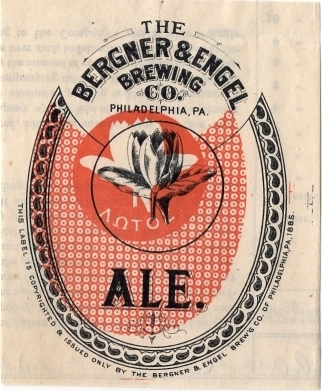
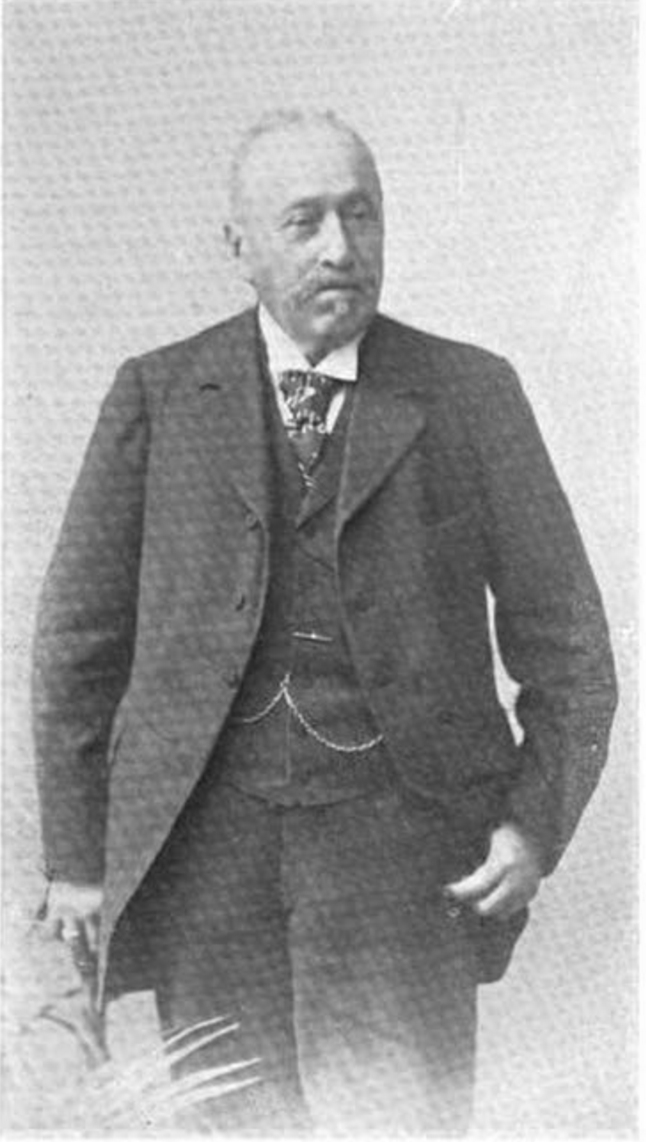
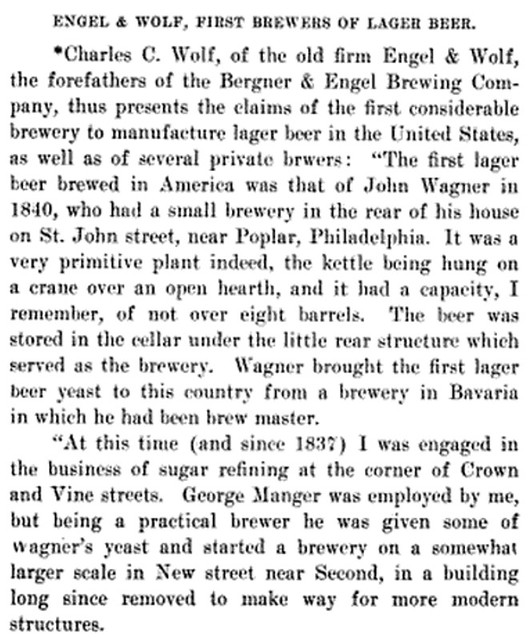
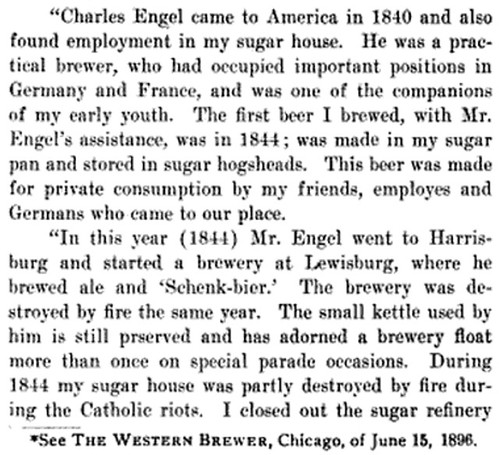
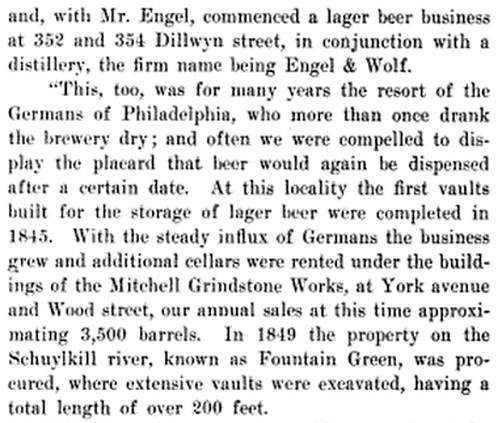
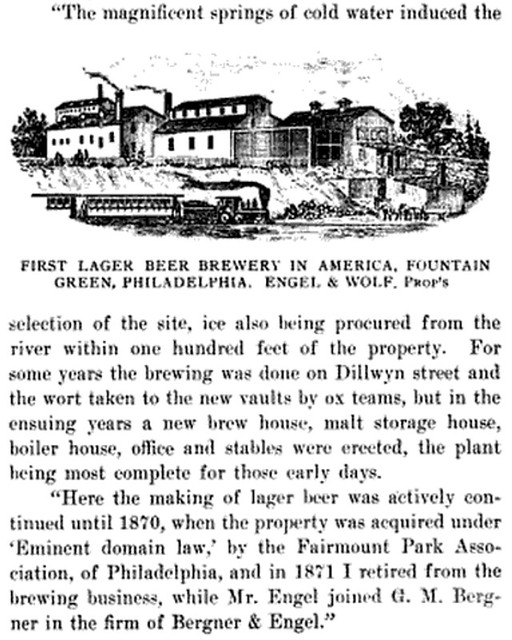
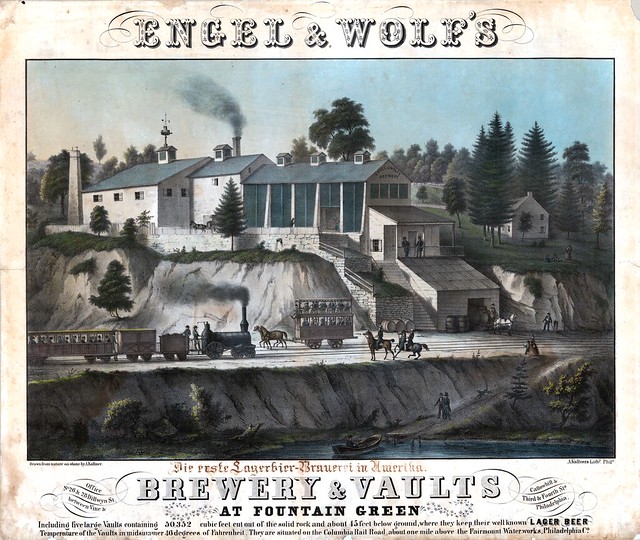
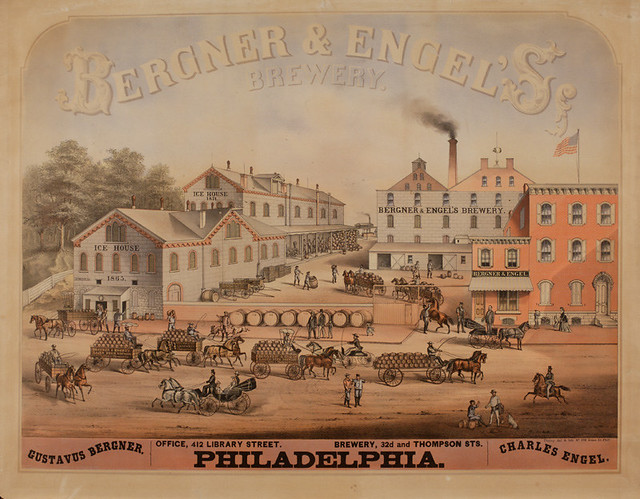
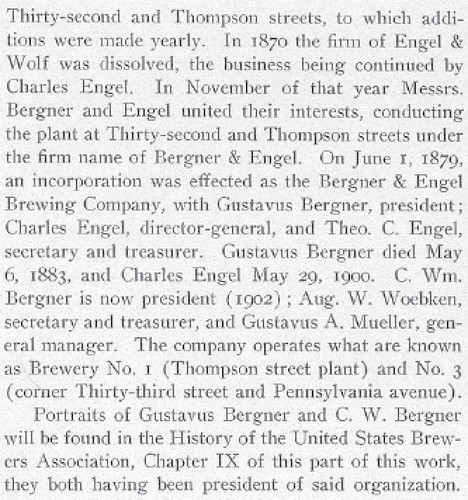
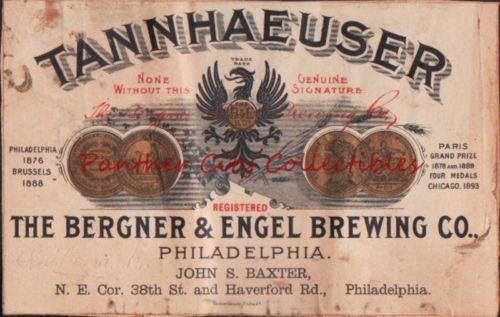
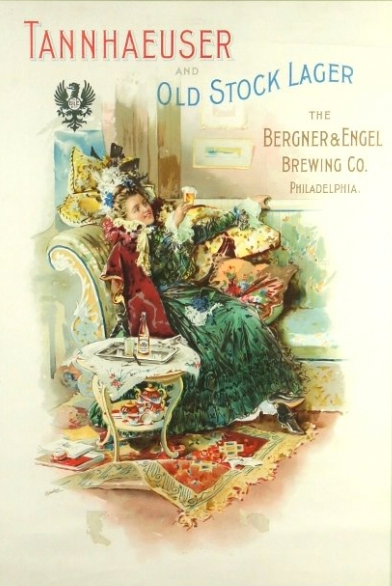
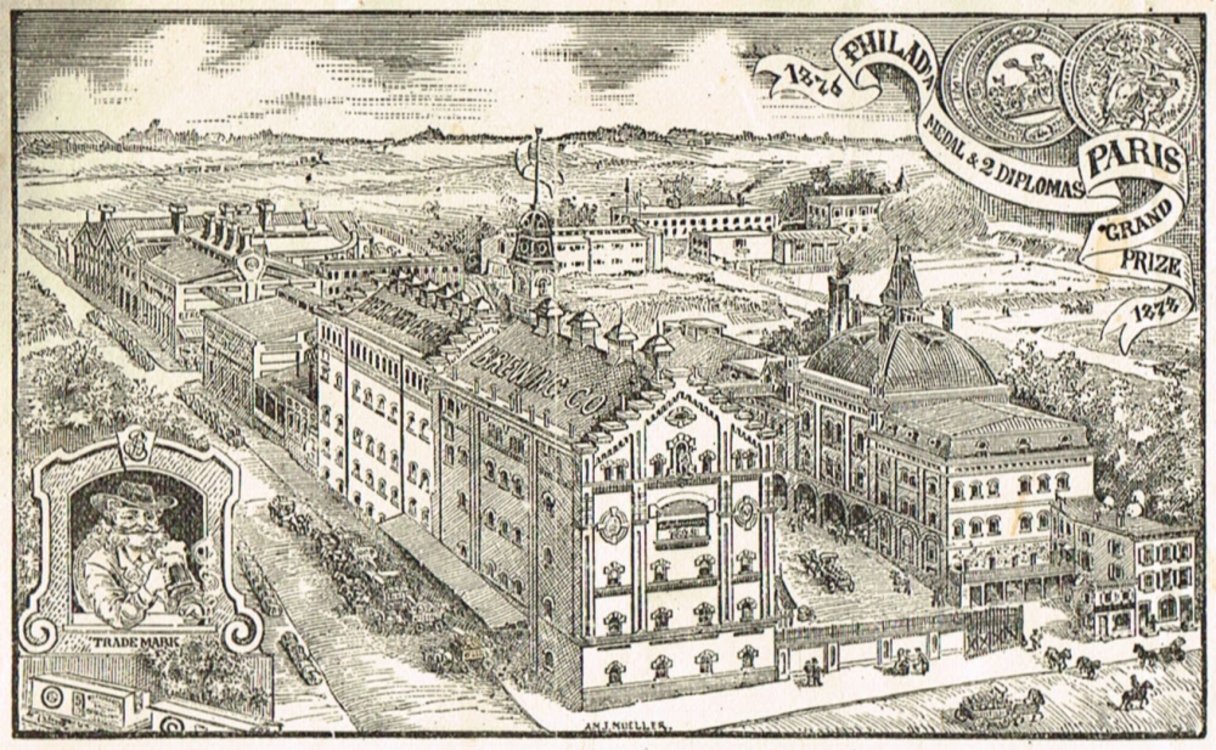
Today is the birthday of Charles William Bergner (December 20, 1854-May 4, 1903). He was the son of Gustavus Bergner, who bought into the brewery Engel & Wolf, and renamed it Bergner & Engel, and it later became the Bergner & Engel Company.” William Bergner, as was best known, was born in Philadelphia, but learned to be a brewer in Germany. “He was president of the United States Brewers’ association from 1897 to 1899, and for many years was president of the Philadelphia Lager Beer Brewers’ association.”

This is his obituary from Ambler Gazette, of May 7, 1903:

Businessman. He co-founded the Bergner and Engel Brewing Company, which was located in the Brewerytown Section of Philadelphia, and was at one point the 3rd largest brewer in the United States.

C.W. Bergner Is Dead. Well-Known Brewer Dies in Philadelphia. Death Results from Paralysis of the Heart–Sketch of His Active and Successful Life–Mastered the Brewing Business–His Many Interests.

Charles William Bergner, president of the Bergner & Engel brewing company, died Tuesday at 10 o’clock a.m. in Philadelphia. His death came suddenly, although he had been in ill health for nearly two years. He had a malady of the stomach, liver and kidneys which brought on an acute affection of the heart that proved fatal.

Last year Mr. Bergner went to the mountains of Scotland by order of his physician and his health was much improved in consequence. He came back feeling quite well and continued so for some months. He left his office a week ago with a sharp attack of indigestion, which developed into paralysis of the heart.

Mr. Bergner was born in Philadelphia, Dec. 20, 1854, and was the only son of Gustavus Bergner, who until his death in May 1883, was president of the Bergner & Engel Brewing company, which he had founded. The son received his early education at a private academy in Philadelphia and at the high school at Lawrenceville, N.J. He afterwards studied at Augsburg and Munich, in Germany, and spent three years in travel in Europe.

Returning to this country he mastered the brewing business in every detail, serving in every part of the great establishment of which his father was the head. This was in 1873. His progress in this practical education was rapid and he assumed duties of greater and greater importance after his father’s death, until in 1891 he was elected president of the company.

Mr. Bergner became interested in several financial and industrial institutions, but at his death he was connected with only two, the Standard Ice company and the bank of the Northern Liberties. Of the former he was president and of the latter a director. He had been a director of the Commercial National bank, the Delaware Insurance company, and the Teutonic Insurance company, and vice president of the Guarantors’ Indemnity Company of Pennsylvania.

He was president of the United States Brewers’ association from 1897 to 1899, and for many years was president of the Philadelphia Lager Beer Brewers’ association. He was consul for the kingdom of Belgium, and in 1888 was vice president of the United States commission to the Brussels exposition. The king of the Belgians conferred upon him the following year the order of Leopold.

He was president of the board of trustees of the Medico-Chirurgical hospital, but resigned that position in January, 1898. He was a life member of the Union League club, a member of the Art club, the Historical society, the Franklin institute and all the German societies of Philadelphia. He sold his house at 1627 Walnut street about a year ago and since then has resided altogether at his country place in Ambler, which was erected over a dozen years ago at great cost and is one of the most beautiful and complete in this region.

A widow, a son, Gustav, and a daughter, Catharine, who is the wife of Charles Bispham, survive him. Mrs. George A. Fletcher, his sister, resides at 216 North Thirty-fourth street, Philadelphia, in winter and at Radnor in summer. Mr. Bergner was very charitable in a quiet and unostentatious way. He did not speculate either in real estate or in stocks.

The funeral will be at noon this Thursday at the family residence, Ambler, and the interment will probably be in West Laurel Hill cemetery.

And this is his entry from The Cyclopædia of American Biography, published in 1918, James E. Homans, editor:

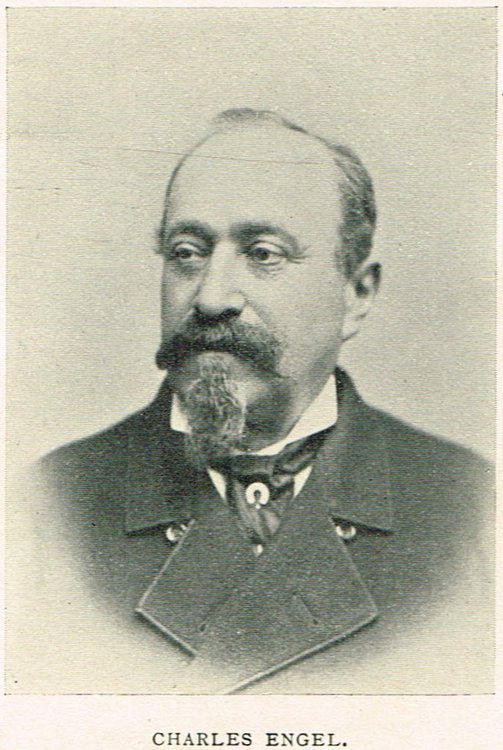
BERGNER, Charles William, president of the Bergner and Engel Brewing Company of Philadelphia, and Belgian consul, b. in Philadelphia, Pa., 20 Dec., 1854; d. at his country home, Ambler, Pa., 4 May, 1903, son of Gustavus William (1832-83) and Catharine Christine (Wehn) Bergner. The Bergners came into prominence in mediæval Europe as early as the First Crusade, and the subsequent history of the family can be traced through a line of distinguished ancestors, dating from that time. The first member of the family to come to America was Charles William Bergner, grandfather of the subject of this review. He was a woolen goods manufacturer, the owner of extensive dye factories, and the Burgomeister (mayor) of Crimmitzschau, Saxony, Germany, where he lived. In 1849 he visited America. While in Philadelphia he loaned a sum of money to a brewing establishment, and the firm becoming insolvent soon afterward, he found himself, as chief creditor, obliged to assume control of the business. Thrust by accident into a vocation about which he knew nothing and being in a strange country, this man, who possessed the loftiest ideals and who, by inheritance and training, was of the highest type, — could not adapt himself to the vastly changed conditions of his life, and soon succumbed under the strain and died. He had succeeded, however, in laying the foundation of the house of Bergner and Engel. Gustavus William Bergner, son of Charles William and Johanne Fredericka (Richter) Bergner, was ambitious for a mercantile career, and at the age of sixteen entered a chinaware firm in Philadelphia, and on account of his exceptional ability was soon afterward offered a partnership in the business. The death of his father, however, prevented his acceptance of this opportunity and made him the head of the brewing enterprise. Under his successful management it became one of the large establishments of its kind. His son, Charles William Bergner, and the second of the name to assume the management of the business, received his early education in the private schools of Philadelphia, and was prepared at Lawrenceville, N. J., to enter Princeton College, but completed his studies in Germany, after which he entered the celebrated brewing schools of Munich and Augsburg, in order to perfect his knowledge of the practical part of the industry. He returned to America in 1873. He, however, had little predilection for an industrial career and wished to adopt a profession, preferring that of the law. Soon after his father’s health failed and the son, prompted by motives of filial duty and affection, took his place in the firm of Bergner and Engel in a modest capacity. Naturally an able business man, he did not long remain in this subordinate position, but was soon promoted to a clerkship and later made head bookkeeper. On the death of his father, 6 May, 1883, and later that of Charles Engel and his son, Theodore, Charles William Bergner (2d) assumed the entire management of the business. In 1890, upon the formation of a stock company, he was elected president of the Bergner and Engel Brewing Company, an office which he filled with unvarying success until his death. Because of his unusual knowledge of every branch of the business, his untiring energy and active interest in all matters pertaining to the brewing industry, and the high-minded persistence with which he carried out the splendid moral standards and business traditions of his ancestors, Mr. Bergner came to be regarded as one of the foremost figures in his line of industry in the United States. For five successive years he was elected president of the Philadelphia Brewers’ Association, and in 1896 was made president of the United States Brewers’ Association, of which organization he had served as president of the board of trustees for many years. He was actively associated with various other industrial and commercial enterprises, and was a director of the National Bank of Northern Liberties and the Delaware Insurance Company. He was also interested in a number of charitable and educational institutions. In 1895 he was appointed Belgian consul in Philadelphia; and as a mark of appreciation for his services at the International Exposition, held in Brussels in 1896, King Leopold of Belgium bestowed upon him “The Order of Leopold.” He was a man of great culture and was passionately fond of music and all the fine arts. He was a bibliophile, and possessed a very fine library and also had a large and valuable collection of rare engravings and etchings. He was a member of the Grolier Society, the Fine Arts Club, the Historical Society, and the Union League Club of Philadelphia. Charles William Bergner was married to Ella Annear, daughter of John and Anne (Wotton) Annear, in Philadelphia, 9 March, 1874. Of this marriage there were four children: Gustavus William Bergner, who is now president of the Bergner and Engel Brewing Company; Catharine Christine, deceased, who married Charles K. Bispham; Anita Ella, and Otto William, both deceased.

Filed Under: Birthdays, Breweries, Just For Fun Tagged With: Pennsylvania, Philadelphia

Beer Birthday: Ron Silberstein

December 20, 2025 By Jay Brooks

thirsty-bear
Today is the 65th birthday of Ron Silberstein, the founder, and original brewer, of Thirsty Bear Brewing in San Francisco (before it closed during Covid), and also co-owner of Admiral Maltings. I’ve known Ron for a number of years but got to know him better working on SF Beer Week the first few years when we working hard to get it going. We also spent a weekend together at Sierra Nevada’s Beer Camp, which was an awesome experience for everybody who attended. Join me in wishing Ron a very happy birthday.

Ron and me at Brews by the Bay a few years back, the San Francisco Brewers Guild’s annual beer festival. (photo by Steve Shapiro)
Me with longtime Anchor brewmaster Mark Carpenter, Ron, and Jeremy Marshall (brewmaster at Lagunitas).
Ron Silberstein and Scott Jennings


Ron and Beer Camp head brewer Scott Jennings.

ron-silberstein-2
Ron and his twin sons. (photo purloined from Facebook)
Friedman-2
Jesse Friedman and Fraggle with Ron at the Anchor Holiday Party in 2012.
Ron from Admiral Maltings giving a talk about the Distinguishing Characteristics of California Craft Malt at the Beer Summit in 2018.

Filed Under: Birthdays, Just For Fun Tagged With: California, San Francisco

Beer In Ads #5145: Extra! Just Out! Peter Doelger Bock Beer

December 19, 2025 By Jay Brooks

Last year I decided to concentrate on Bock ads for awhile. Bock, of course, may have originated in Germany, in the town of Einbeck. Because many 19th century American breweries were founded by German immigrants, they offered a bock at certain times of the year, be it Spring, Easter, Lent, Christmas, or what have you. In a sense they were some of the first seasonal beers. “The style was later adopted in Bavaria by Munich brewers in the 17th century. Due to their Bavarian accent, citizens of Munich pronounced ‘Einbeck’ as ‘ein Bock’ (a billy goat), and thus the beer became known as ‘Bock.’ A goat often appears on bottle labels.” And presumably because they were special releases, many breweries went all out promoting them with beautiful artwork on posters and other advertising.

Friday’s ad is for Peter Doelger Bock Beer, which was published on December 19, 1911. The brewery was the Peter Doelger First Prize Brewery of New York, New York, which was originally founded in 1870. It was located in the Jamaica Plain area of Boston, and today the site of the brewery is where the Boston Beer Co. operates one of its breweries. This ad ran in The New York Times also of New York, New York.

Filed Under: Art & Beer, Beers, Breweries, Just For Fun Tagged With: Advertising, Bock, History, New York, New York Times

Historic Beer Birthday: Frederick Sehring

December 19, 2025 By Jay Brooks

fred-sehring
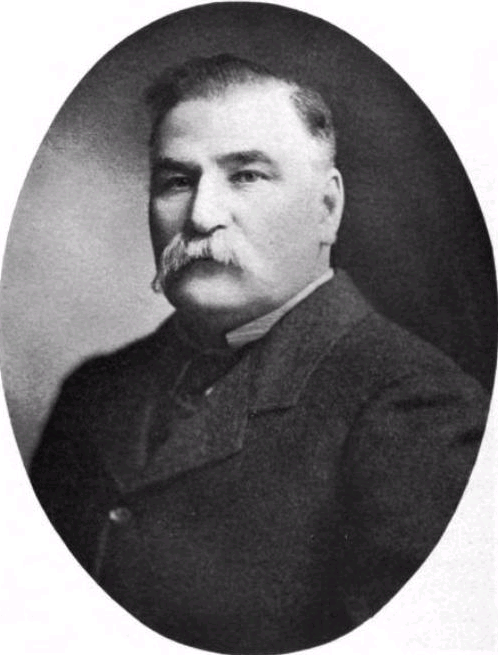
Today is the birthday of Frederick Sehring (December 19, 1834-July 2, 1892). He was born in Germany, but came to America with his parents when he was thirteen, in 1847, and settled in Joliet, Illinois. After careers in the service industry and politics, he bought the Columbia Brewery, and eventually incorporated it as the Fred Sehring Brewing Co.

Fred-Sehring-portrait
Here’s a short biography of Sehring from a breweriana website:

Frederick Sehring was born in 1834 in Hesse, Darmstadt Germany. He moved to the U.S. in 1847, and settled near Joliet. Following a career in the hotel business and county treasurer, he purchased an interest in the Columbia Brewery in 1867. In 1883, he became owner and changed its name to the Fred Sehring Brewing Company. Frederick passed away in 1892, and his son, Louis, who had been superintendent of the brewery, took over. The brewery closed never to reopen in 1919.

fred-sehring-brewery

Here’s an obituary of Sehring from the Genealogical and Biographical Record of Will County:

FRED SEHRING, deceased, late president of the Fred Sehring Brewing Company of Joliet, was born in Langen, Dukedom of Hesse-Darmstadt, Germany, December 19, 1834, and received the rudiments of his education in the excellent schools of his native land. When thirteen years of age, in 1847, he came to America with his parents, Weigand and Margaretha (Keim) Sehring. The Sehring family is one of prominence among the German-Americans of Will County. Its founders here were Weigand Sehring and his wife, who settled in Frankfort Township in 1847. Weigand was a soldier in the war of 1813 in Germany, which decided the fate of Europe. When he came to the United States he engaged in farming. In 1854 he and his family removed to Joliet and engaged in the hotel business, his son being interested with him in this enterprise. In spite of the fact that Fred Sehring had only eight months’ instruction in the schools of America, by diligent application he acquired a good English education and in early life laid the foundation of the broad knowledge that proved so helpful to him in later years. In 1860 he was appointed deputy clerk in the recorder’s office in Joliet, a position which he filled with such ability as to win recognition. In 1863 he was elected county treasurer. This office he filled with such fidelity and success that he was re-elected at the expiration of his term of two years, and served until 1867.

Upon retiring from office he purchased an interest in the brewing firm of Joseph Braun & Co., which founded what is to-day one of the finest plants in the northwest. The total capital at first was only $6,000 and during the 26 first year only three men were employed, but the total output reached one thousand barrels. Two years later it had increased to eighteen hundred barrels. Upon the death of Mr. Braun, in 1870, a change was made in the business, Mr. Sehring securing the active control, and changing the name to Columbia Brewery. The success already gained continued during the ensuing years. He put his whole soul into his business, with a determination that always wins success; yet, while determined, aggressive and pushing, he was upright and honorable in every transaction and recognized no line between meanness and dishonesty. He believed that the man who would purposely cheat his friend would cheat his God. His heart was kind, and full of warm responses to generous natures. The constant increase in the business led Mr. Sehring to make a change. In January, 1883, he incorporated the Fred Sehring Brewing Company, with himself as president, his son Henry, vice-president, his son-in-law, Henry F. Piepenbrink, secretary and treasurer, and his son Louis J., superintendent. The new corporation began with a capital of $50,000. He continued to act as president until his death.

Sehring-columbia-brewery

At the same time he was a director of the Will County National Bank. Fraternally he was a prominent Odd Fellow and frequently represented his lodge in the grand lodge. He was also a Knight Templar Mason, belonging to Joliet Commandery No. 4. Politically he believed in Democratic principles. In 1874 he was elected to the city council, where he served for eight years. During the same year he was the Democratic candidate for the state senate against A. O. Marshall, Republican, and C. Frazier, the Granger candidate. The returns showed Mr. Marshall elected by twelve majority. Mr. Sehring contested the election. The matter was taken into the legislature, where one hundred and forty illegal votes were proved to have been cast against him and which were placed to his credit, by the report of a majority of the committee on the contest; but the Republicans and Grangers combined against him, casting twenty-six votes for Marshall, while twenty-three were cast for him. He favored movements for the benefit of the people and the development of his home town, and proved himself a generous, public-spirited citizen. He died July 2, 1892, and is survived by his wife, who
resides at the old homestead, with her unmarried children, Susan E. and Louis J. Mrs. Fred Sehring was a daughter of Jacob and Barbara Bez, who came from Wurtemberg, Germany, to America in 1853 and settled in Joliet, where she was married to Mr. Sehring January 16, 1855. Besides her son and daughter who reside with her she has two daughters and two sons, viz.: Maggie, wife of Henry F. Piepenbrink; Henry, a member of the Sehring Brewing Company; Anna C., who is the wife of Dr. A. A. Poehner and resides in San Francisco, Cal.; and George F., who is teller in the Will County National Bank, and was married in 1896 to Miss Louisa Kramer, of this city.

A record of the life of Fred Sehring would not be complete without mention of his wife. Though her sphere was in the home, yet from that place she aided and encouraged her husband in his struggle for success. Thus she assisted in the upbuilding of the business that has made the name of Sehring prominent and influential. From her home she made many errands of mercy to the homes of the poor and needy, but her deeds of devotion and self-sacrifice were always quietly done, being of the kind of which it may be said that the left hand knoweth not the benefactions of the right. Even the weight of advancing years has not lessened her activities. No one has ever left her presence discouraged, and her charitable spirit is so broad that it knows no distinction of creed or nationality.

The death of Mr. Sehring did not prove fatal to the business he had built up. This was left in safe hands, with his sons and son-in-law. The eldest of the sons, Louis J., succeeded him as president, and is still the general manager of the business. He was born in Joliet April 12, 1858, and at an early age learned the rudiments of the brewing business in his father’s brewery. Afterward he served apprenticeships with Bernheimer & Schmidt, of New York City, and the Peter Schoenhofen Brewing Company, of Chicago. Returning to Joliet in October, 1877, he was at once appointed superintendent of the brewery, and has retained the position as manager up to the present time.

Joliets-Standard-Pale-Lager-Beer-Labels-Acme-Brewing-Company
Fred-Sehring-tray

Filed Under: Birthdays, Breweries, Just For Fun Tagged With: Germany, History, Illinois

Beer In Ads #5144: Here’s Pickwick’s Holiday Gift To Bock Beer Lovers

December 18, 2025 By Jay Brooks

Last year I decided to concentrate on Bock ads for awhile. Bock, of course, may have originated in Germany, in the town of Einbeck. Because many 19th century American breweries were founded by German immigrants, they offered a bock at certain times of the year, be it Spring, Easter, Lent, Christmas, or what have you. In a sense they were some of the first seasonal beers. “The style was later adopted in Bavaria by Munich brewers in the 17th century. Due to their Bavarian accent, citizens of Munich pronounced ‘Einbeck’ as ‘ein Bock’ (a billy goat), and thus the beer became known as ‘Bock.’ A goat often appears on bottle labels.” And presumably because they were special releases, many breweries went all out promoting them with beautiful artwork on posters and other advertising.

Thursday’s ad is for Pickwick Bock Beer, which was published on December 18, 1953. The brewery was the Haffenreffer Brewery of Boston, Massachusetts, which was originally founded in 1870. It was located in the Jamaica Plain area of Boston, and today the site of the brewery is where the Boston Beer Co. operates one of its breweries. This ad ran in The Morning Union of Springfield, Massachusetts.

Filed Under: Art & Beer, Beers, Breweries, Just For Fun Tagged With: Advertising, Bock, History, Massachusetts

Historic Beer Birthday: Peter Stroh

December 18, 2025 By Jay Brooks

strohs
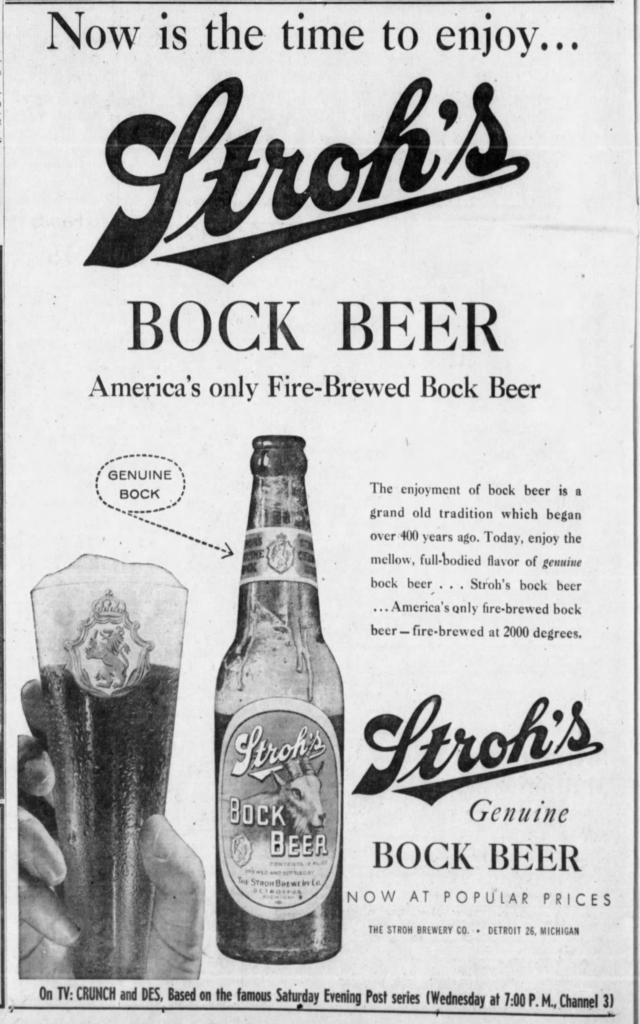
Today is the birthday of Peter Stroh (December 18, 1927-September 17, 2002). He was the great-grandson of Bernhard Stroh, who founded Stroh’s Brewing Co. in 1850. When he became president of Stroh’s in 1968, he was the sixth family member to run the business.

peter-stroh-good-luck

Here’s Stroh’s obituary from Find-a-Grave:

Peter Stroh, former chief executive of the Stroh Brewery Co., died of brain cancer on September 17th at his home in Grosse Pointe Farms, MI.

Mr. Stroh is remembered as a gracious elder statesman in the brewing industry. “Peter Stroh was truly a gentlemen’s gentleman,” said Mac Brighton, chairman and COO of Business Journals, Inc., publisher of Modern Brewery Age. “He was admired and respected by everyone in the brewing industry, friends and competitors alike.”

Stroh also made his mark as a tireless civic booster for the city of Detroit. “He never gave up on the city,” former Detroit mayor Dennis Archer told the Detroit Free Press after learning that Stroh had died. “He was a ‘laboring oar.'”

Stroh was the sixth family member to head the Stroh Brewery Co., which his great-grandfather, Bernhard Stroh, founded in 1850 on Detroit’s east side. Before coming to the United States, the Strohs had been brewers in Rhineland Palatinate since 1755.

Under Peter Stroh’s leadership in the 1980s, the company made a play to become a national brewer, but found itself outmatched by deep-pocketed competitors. Peter Stroh stepped down as chairman in 1997, and the Stroh Brewery Co. was out of the beer business by 1999.

Peter Stroh talked very little to the press, but friends said that the decline of the company’s position in the brewing industry was very painful to him.

Despite the Stroh Brewery Co.’s misfortunes, Stroh is remembered with respect in Detroit due to his remarkable civic commitment. Family members have reported that the 1967 Detroit riots forever changed his out- look on personal and corporate responsibility. Mr. Stroh had stood on the roof of the brewery and watched fires consume the city. “As a result of that sad experience, I began to wonder about the company’s and the family’s historic role in our community,” Stroh wrote in a family newsletter in 1997. “And quickly discovered that there really hadn’t been one for either.”

Stroh became active in the Urban League and the Detroit branch of the National Association for the Advancement of Colored People. He also worked with former Mayor Coleman Young on a variety of projects. “He and the mayor had a very strong, personal friendship,” said Bob Berg, Young’s longtime aide.

The Stroh clan used personal and corporate money to develop Stroh River Place, the renovation of the old Parke-Davis pharmaceutical complex at the foot of Jos. Campau.

The UAW-GM International Training Center is located on former Stroh land nearby. Stroh also was active with the Detroit Medical Center, the Detroit Symphony, the Detroit Zoo and the Detroit Institute of Arts? He served on the boards of more than half a dozen local organizations, including Detroit Renaissance, Detroit Economic GrowthCorp., and New Detroit Incorporated.

Stroh also helped finance projects in genetic engineering and molecular biology, including helping a British company produce recombinant human serum albumin from brewer’s yeast.

Son of Gari and Suzanne Stroh. He graduated from Princeton in 1951 with a degree in international affairs, and planned a career with the Central Intelligence Agency. But in 1952 a runaway truck in Washington, D.C., crushed him against a building and put an end to his nascent career in espionage. He was hospitalized for a year.

As a college student, Stroh had worked in the brewery as a janitor. After recovering from his accident, he spent time in the brewing and laboratory departments and quickly became skilled at the technical side of brewing.

He was elected to the Stroh board in 1955 and became director of operations in 1966. Named president of Stroh’s in 1968, Stroh teamed with his uncle, John Stroh, who was chairman and chief executive officer.

Stroh guided the family company from its regional roots to become a quasi-national brewery. Stroh’s shipped 3 million barrels in 1970 and 24 million in 1985.

Stroh bought F. & M Schaefer in 1980, and in 1982 purchased the Jos. Schlitz Brewing Co. At that time, Stroh was the number three brewer behind Anheuser-Busch and Miller.

But the acquisitions bred over-capacity, and Stroh chose to close its flagship brewery in downtown Detroit in 1985. “This was one of the most difficult decisions we ever made,” Stroh told the Detroit Free Press at the time.

The battle for market share against the top two brewers gradually drained the company’s coffers, although Stroh tried various imaginative strategies to survive. In 1989, Stroh and Coors came close to a deal in which the Golden, CO-based Coors would purchase Stroh. Unfortunately, the deal came unwound, and Stroh was forced to go it alone. In the mid-1990s, Stroh bought the troubled G. Heileman Brewing Co. The deal brought the company a handful of strong brands, but also more capacity than it could ever use.

Over the years, the Stroh brands were consistently rated tops among the major brands, but the brewery could never muster the marketing muscle to compete with A-B and Miller. In 1999, the company announced it would exit the brewing business, and it sold its breweries and brands to the Miller and Pabst Brewing Companies.

Outside his work in the beer business and the city of Detroit, Stroh made his mark as an outdoorsman and conservationist. He served as a member of the National Audubon Society board, did fund-raising for Ducks Unlimited, was a trustee for Conservation International, which specializes in Latin American issues, and sat on the board of actor Robert Redford’s Institute for Resource Management, which tries to settle environmental disputes without lawyers. He traveled the world, hunting birds and fishing.

“To have a sense of our outdoor past–our biological past–is as important as a sense of our historical and cultural past, and sometimes a lot more fun. I say that even as a former board member of the Detroit Institute of Arts and a current board member for the Guggenheim,” he once told the Detroit Free Press. “Wading through a cypress swamp is every bit as much fun as treading through the galleries.”
Stroh is survived by his wife, Nicole; two sons, Pierre and Frederic; one grandchild, and a brother, Eric.

strohs-family-1974
“Members of Detroit’s onetime leading beer family at the Stroh brewhaus, 1974: (from left) Chairman John Sr., President Peter, Eric, Gari Jr., John Jr.”

This is an “In Memoriam” from Crain’s Detroit Business:

Stroh shunned the limelight, but he took seriously his commitment to the family company and his community.

When Stroh became chairman and CEO of the brewery in 1968, it was still trying to recover market share lost in a 1958 strike, and it was clear national brands were squeezing out local ones.

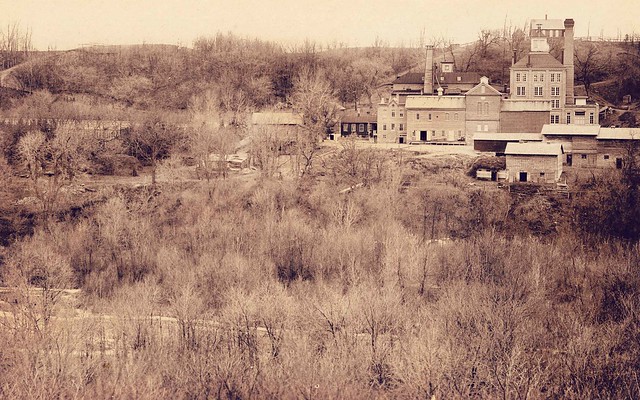
Stroh began introducing products and acquiring other brands until by 1982 it was the third-largest U.S. brewer. But with acquisitions came crippling debt. In 1985, Stroh closed the Detroit brewery on Gratiot Avenue near Eastern Market where the Brewery Park development now sits; it is the headquarters of Crain Communications Inc., parent of Crain’s Detroit Business. Stroh attempted unsuccessfully to sell the company to Coors in 1989. He stepped down in 1995, and in 1999 the Stroh brands were sold to Pabst and Miller.

Despite his unsuccessful efforts to save the company, Stroh and other family members have made lasting contributions to the city of Detroit.

He led a $150 million redevelopment that became Stroh River Place at the site of the former Parke-Davis pharmaceutical company. An ardent hunter, fly fisherman and conservationist, he long advocated for opening the Detroit riverfront to the public and also was a driving force behind the federal designation of the Detroit River as one of 14 American Heritage Rivers.
He died in 2002 at age 74 from brain cancer.

Strohs-brewery-postcard
A postcard of Stroh’s Brewery in Detroit.

And this is the portion of Wikipedia‘s page for Stroh’s that includes Peter’s employment with the family brewery:

Upon Julius Stroh’s death in 1939, his son Gari Stroh assumed the presidency. Gari’s brother John succeeded him in 1950 and became Stroh’s chairman in 1967. Gari’s son Peter, who had joined the company following his graduation from Princeton University in 1951, became president in 1968.

In 1964, the company made its first move toward expansion when it bought the Goebel Brewing Company, a rival across the street. The company had decided it could no longer compete as a local brewer and was about to move into the national scene. One reason was a costly statewide strike in 1958 that halted Michigan beer production and allowed national brands to gain a foothold. When Peter Stroh took over the company in 1968, it still had not regained the market share lost in the strike ten years earlier.

Stroh ended a 40-year relationship with a local advertising agency for a large national agency and began targeting the larger national market. Led by creative director Murray Page, Stroh’s came up with the slogan “The One Beer…”, and by 1971, Stroh Brewery had moved from 15th to 13th place nationally. In 1972, it entered the top 10 for the first time. A year later it hit eighth place. Peter Stroh’s willingness to depart from years of tradition enabled Stroh’s to survive, but the changes were hard to swallow for many Stroh’s employees. Stroh broke the company’s tradition of family management and recruited managers from companies such as Procter & Gamble and Pepsico. He also introduced a light beer, Stroh’s Light.

By 1978, Stroh’s served 17 states when it produced 6.4 million barrels of beer. By this time, the original Detroit facility was 128 years old and had a capacity of seven million barrels annually. As it became difficult to make efficient shipments to new markets in the East, the company recognized that it required a new brewery. The F. & M. Schaefer Brewing Company had fallen victim to the Miller beer wars and Stroh’s purchased all of Schaefer’s stock. In 1981, the combined breweries ranked seventh in beer sales. In addition, Stroh was able to take advantage of Schaefer’s distributors in the northeastern part of the country. The acquisition also brought Stroh three new brands: Schaefer and Piels beers, and Schaefer’s Cream Ale. The company now had a volume of over 40,000,000 barrels (6,400,000 m3) and 400 distributors in 28 states, Washington D.C., Puerto Rico, and other Caribbean islands.

Stroh’s head office used to be located at Grand Park Centre near Grand Circus Park and Woodward Avenue.
In 1982, Stroh bid for 67 percent of the Schlitz Brewing Company. By spring of that year, Stroh had purchased the entire company, making Stroh’s the third largest brewing enterprise in America: it owned seven brewing plants and reached the market value of $700 million in 1988 (according to Forbes). During the takeover, Schlitz fought a fierce battle in the courts trying to remain independent. Schlitz finally accepted the takeover when Stroh raised its offer from an initial $16 per share to $17, and the U.S. Justice Department approved the acquisition once Stroh agreed to sell either Schlitz’s Memphis or Winston-Salem breweries.

Forbes has an interesting article about the Stroh’s family business’ fall from grace, entitled How To Blow $9 Billion: The Fallen Stroh Family.

Strohs-brewery

Filed Under: Birthdays, Just For Fun Tagged With: History, Michigan

Historic Beer Birthday: George K. Schmidt

December 18, 2025 By Jay Brooks

kg-schmidt
Today is the birthday of George K. Schmidt (December 18, 1869-January 1, 1939). He was the son of Kasper George Schmidt, who founded the K.G. Schmidt Brewery. He and his father also founded a bank and he opened a branch brewery in Logansport, Indiana.

gk-schmidt

Here’s a short biography from Find-a-Grave:

President of Chicago’s Prudential State Savings Bank, Vice-President of Chicago’s Board of Local Improvements, member of Chicago’s Board of Assessors, City Controller of Chicago.

Ran for Mayor of Chicago as the Republican candidate in 1931 against encumbent Mayor “Big Bill” Thompson.

Owned the K G Brewery in Chicago, and the K G Brewery in Logansport, IN which operated until 1951.

County Assessor and City Council Member for Logansport, IN.

A noted outdoorsman whose now famous, pristine duck decoy hunting rig produced by Charles Perdew, the Mason Decoy Factory and Robert Elliston is highly sought after by collectors.

gk-schmidt-brewery-logansport
The brewery Schmidt built in Indiana.

First-Premium-Lager-Beer-Labels-KG-Schmidt-Brewing-Company
KG-Schmidts-Lager-Beer--Labels-KG-Schmidt-Brewing-Company

Filed Under: Birthdays, Breweries, Just For Fun Tagged With: History, Illinois, Indiana

Historic Beer Birthday: Peter Hood Ballantine

December 18, 2025 By Jay Brooks

ballantine

Today is the birthday of Peter Hood Ballantine (December 18, 1831-September 16, 1882). He was the son of Peter Ballantine, who founded the Patterson & Ballantine Brewing Company in 1840 in Newark, New Jersey, which is better known by its later name, the P. Ballantine and Sons Brewing Company. Peter Hood helped run the business with his father and brothers until his death in 1882.

Given that he was the eldest son, there’s surprisingly little information about him, and I couldn’t find an image of him, while there are plenty of his brothers, Robert and John. So I don’t know what his role was within the family brewery, although the fact that he died the year before his father did suggests he had a lesser role and never had the opportunity to do more on his own.

Ballantone-Postcard-1906

This is from “America’s Successful Men of Affairs: The United States at Large,” published in 1896, and although it’s primarily about Peter Hood’s father, he is mentioned in this account.

p-ballantine-bio
ballantine-lagerbrewery
Ballantines-Pale-Extra-Beer-Labels-Ballantine

Filed Under: Birthdays, Just For Fun Tagged With: History, New Jersey

« Previous Page
Next Page »

Find Something

Northern California Breweries

Please consider purchasing my latest book, California Breweries North, available from Amazon, or ask for it at your local bookstore.

Recent Comments

  • Ernie Dewing on Historic Beer Birthday: Charles William Bergner 
  • Steve 'Pudgy' De Rose on Historic Beer Birthday: Jacob Schmidt
  • Jay Brooks on Beer Birthday: Bill Owens
  • Steve 'Pudgy' De Rose on Beer Birthday: Charles Finkel
  • Steve 'Pudgy' De Rose on Beer Birthday: Bill Owens

Recent Posts

  • Historic Beer Birthday: Joe Allen February 9, 2026
  • Beer In Ads #5196: Happy Days Are Here Again February 8, 2026
  • Historic Beer Birthday: Andrew MacElhone February 8, 2026
  • Historic Beer Birthday: A.J. Houghton February 8, 2026
  • Historic Beer Birthday: Charles Tascher February 8, 2026

BBB Archives

Feedback

Head Quarter
This site is hosted and maintained by H25Q.dev. Any questions or comments for the webmaster can be directed here.