Brookston Beer Bulletin

Jay R. Brooks on Beer

  • Home
  • About
  • Editorial
  • Birthdays
  • Art & Beer

Socialize

  • Dribbble
  • Email
  • Facebook
  • Flickr
  • GitHub
  • Instagram
  • LinkedIn
  • Pinterest
  • RSS
  • Twitter
  • YouTube

Powered by Genesis

Beer In Ads #4892: Neuweiler’s Bock Beer

February 25, 2025 By Jay Brooks

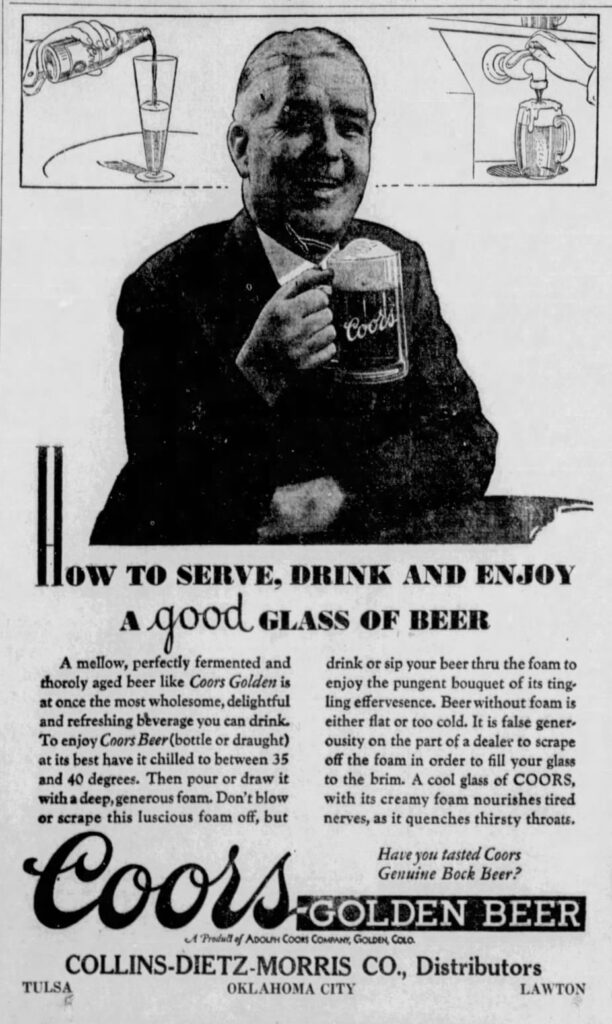
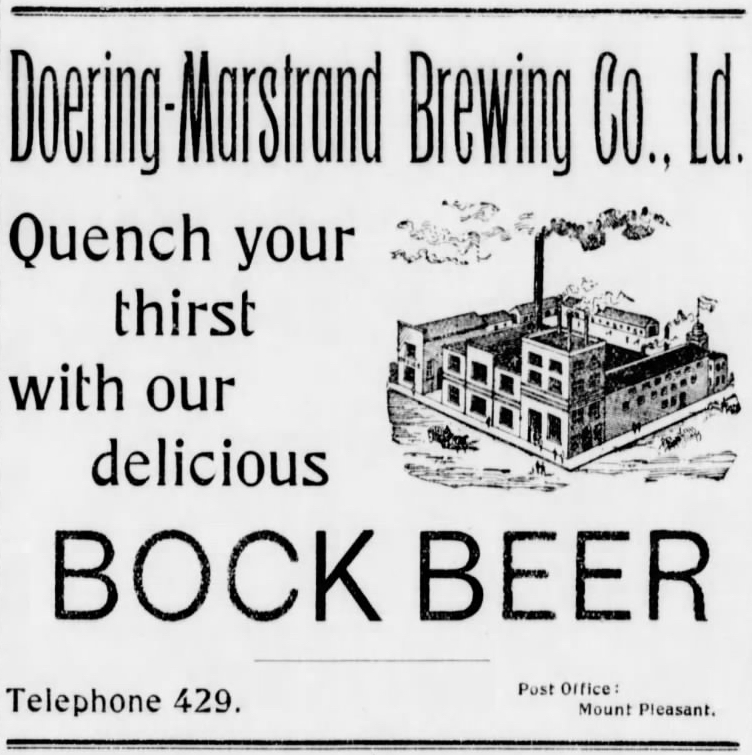
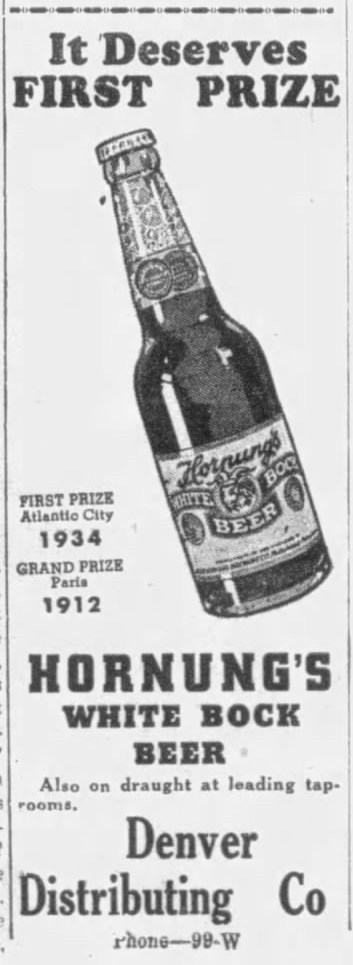
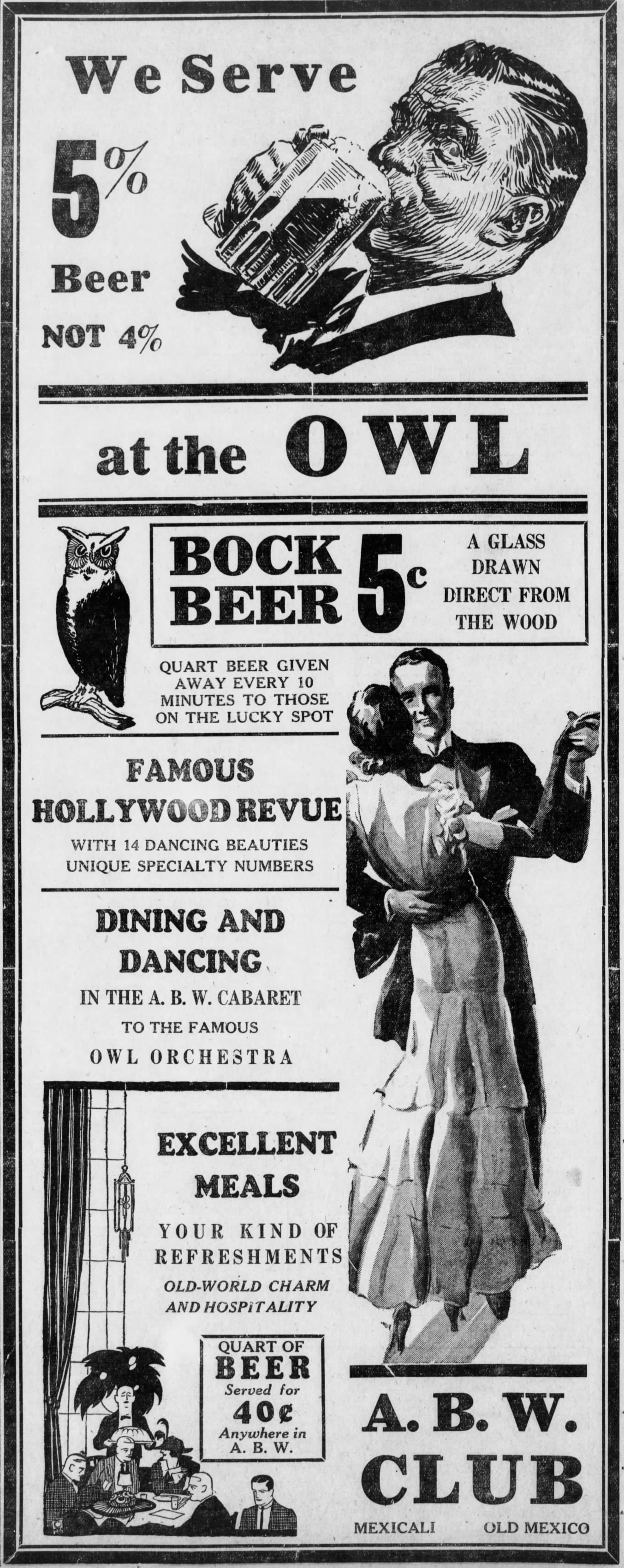
Last year I decided to concentrate on Bock ads. Bock, of course, originated in Germany, in the town of Einbeck. Because many 19th century American breweries were founded by German immigrants, they offered a bock at certain times of the year, be it Spring, Easter, Lent, Christmas, or what have you. In a sense they were some of the first seasonal beers. “The style was later adopted in Bavaria by Munich brewers in the 17th century. Due to their Bavarian accent, citizens of Munich pronounced ‘Einbeck’ as ‘ein Bock’ (a billy goat), and thus the beer became known as ‘Bock.’ A goat often appears on bottle labels.” And presumably because they were special releases, many breweries went all out promoting them with beautiful artwork on posters and other advertising.

Tuesday’s ad is for “Neuweiler’s Bock Beer,” and was created in 1939. Neuweiler Brewery was located in Allentown, Pennsylvania and was founded in 1900. It closed in 1968.

Filed Under: Art & Beer, Beers, Breweries, Just For Fun Tagged With: Advertising, Bock, History, Pennsylvania

Beer In Ads #4891: American Brewing Co. Bock Beer

February 24, 2025 By Jay Brooks

Last year I decided to concentrate on Bock ads. Bock, of course, originated in Germany, in the town of Einbeck. Because many 19th century American breweries were founded by German immigrants, they offered a bock at certain times of the year, be it Spring, Easter, Lent, Christmas, or what have you. In a sense they were some of the first seasonal beers. “The style was later adopted in Bavaria by Munich brewers in the 17th century. Due to their Bavarian accent, citizens of Munich pronounced ‘Einbeck’ as ‘ein Bock’ (a billy goat), and thus the beer became known as ‘Bock.’ A goat often appears on bottle labels.” And presumably because they were special releases, many breweries went all out promoting them with beautiful artwork on posters and other advertising.

Monday’s ad is for “American Brewing Co. Bock Beer,” and the chromolithograph was created in 1890. The American Brewing Company was located in St. Louis, Missouri, and was founded in 1857 as the Excelsior Brewery by Charles Hoelzle. In 1890, it was bought by Oscar Henry Jr. and Hugo Koehler.

Filed Under: Art & Beer, Beers, Breweries, Just For Fun Tagged With: Advertising, Bock, History, Missouri, St. Louis

Beer In Ads #4890: Daufer Bock

February 23, 2025 By Jay Brooks

Last year I decided to concentrate on Bock ads. Bock, of course, originated in Germany, in the town of Einbeck. Because many 19th century American breweries were founded by German immigrants, they offered a bock at certain times of the year, be it Spring, Easter, Lent, Christmas, or what have you. In a sense they were some of the first seasonal beers. “The style was later adopted in Bavaria by Munich brewers in the 17th century. Due to their Bavarian accent, citizens of Munich pronounced ‘Einbeck’ as ‘ein Bock’ (a billy goat), and thus the beer became known as ‘Bock.’ A goat often appears on bottle labels.” And presumably because they were special releases, many breweries went all out promoting them with beautiful artwork on posters and other advertising.

Sunday’s ad is for “Daufer & Co. Bock Beer,” and was created in 1934. Daufer & Co. was located in Allentown, Pennsylvania from 1860 until 1938, although it was known by a variety of names over that time period.

Filed Under: Art & Beer, Beers, Breweries, Just For Fun Tagged With: Advertising, Bock, History, Pennsylvania

Beer In Ads #4889: Boylston Bock In Color

February 22, 2025 By Jay Brooks

Last year I decided to concentrate on Bock ads. Bock, of course, originated in Germany, in the town of Einbeck. Because many 19th century American breweries were founded by German immigrants, they offered a bock at certain times of the year, be it Spring, Easter, Lent, Christmas, or what have you. In a sense they were some of the first seasonal beers. “The style was later adopted in Bavaria by Munich brewers in the 17th century. Due to their Bavarian accent, citizens of Munich pronounced ‘Einbeck’ as ‘ein Bock’ (a billy goat), and thus the beer became known as ‘Bock.’ A goat often appears on bottle labels.” And presumably because they were special releases, many breweries went all out promoting them with beautiful artwork on posters and other advertising.

Saturday’s ad for “Boylston Bock,” was created in the 1930s, and is a colorized reproduction of yesterday’s poster. which was originally from around 1890. The Boylston Brewery was located in Boston, Massachusetts. The originaly lithographer was Donaldson Litho. of Newport, Kentucky, but this reproduction was done by Erie Lithograph & Printing of Pennsylvania, who are best known for their circus posters. One of its most prominent artists was “John Seyschab [who] studied art in his native Nuremberg, Germany, before coming to Erie and Erie Lithograph in 1917.”

Filed Under: Art & Beer, Beers, Breweries, Just For Fun Tagged With: Advertising, Bock, Boston, History, Massachusetts

Beer In Ads #4888: Boylston Bock

February 21, 2025 By Jay Brooks

Last year I decided to concentrate on Bock ads. Bock, of course, originated in Germany, in the town of Einbeck. Because many 19th century American breweries were founded by German immigrants, they offered a bock at certain times of the year, be it Spring, Easter, Lent, Christmas, or what have you. In a sense they were some of the first seasonal beers. “The style was later adopted in Bavaria by Munich brewers in the 17th century. Due to their Bavarian accent, citizens of Munich pronounced ‘Einbeck’ as ‘ein Bock’ (a billy goat), and thus the beer became known as ‘Bock.’ A goat often appears on bottle labels.” And presumably because they were special releases, many breweries went all out promoting them with beautiful artwork on posters and other advertising.

Friday’s ad for “Boylston Bock,” was created sometime before 1918, and most likely around 1890, plus or minus, known as both the Boylston Brewery and Haffenreffer & Co., which were their trade names from their founding in 1870 until Prohibition. The brewery was located in Boston, Massachusetts. The lithographer was Donaldson Litho. of Newport, Kentucky.

Filed Under: Art & Beer, Beers, Breweries, Just For Fun Tagged With: Advertising, Bock, History, Massachusetts

Beer In Ads #4887: Feigenspan’s Bock Beer

February 20, 2025 By Jay Brooks

Last year I decided to concentrate on Bock ads. Bock, of course, originated in Germany, in the town of Einbeck. Because many 19th century American breweries were founded by German immigrants, they offered a bock at certain times of the year, be it Spring, Easter, Lent, Christmas, or what have you. In a sense they were some of the first seasonal beers. “The style was later adopted in Bavaria by Munich brewers in the 17th century. Due to their Bavarian accent, citizens of Munich pronounced ‘Einbeck’ as ‘ein Bock’ (a billy goat), and thus the beer became known as ‘Bock.’ A goat often appears on bottle labels.” And presumably because they were special releases, many breweries went all out promoting them with beautiful artwork on posters and other advertising.

Thursday’s ad for “Feigenspan’s Bock Beer,” was created around 1890 (sources vary between 1895 and 1917) for the Feigenspan Brewing Co. of Newark, New Jersey, owned by Christian William Feigenspan. The chromolithographer was Robert A. Welcke, who “was a photolithographer active in New York in the latter part of the 19th century and early 20th century.” Welcke was born in Wronke, Poland, which was then part of Prussia, but emigrated to New York City in 1869. He then went into the lithography business with his brother, Edward Welcke, who’d arrived a decade earlier. “After a split between the brothers during the economic depression of the late 1870s, Robert Welcke continued in business on his own. Welcke’s firm, Robert A. Welcke Offset Company, was based at 176 William Street.” His corpus ranges from real estate maps of New York and Connecticut to illustrations on Flemish Renaissance interiors to government maps and brochures to decorative sheet music covers. Following Welcke’s death, the firm was taken over by his daughter, Olga Welcke, who, alongside William Jugens, managed it until the outbreak of World War II (1939 – 1945).”

Filed Under: Art & Beer, Beers, Breweries, Just For Fun Tagged With: Advertising, Bock, History, New Jersey

Beer In Ads #4886: The Boss Lager

February 19, 2025 By Jay Brooks

Last year I decided to concentrate on Bock ads. Bock, of course, originated in Germany, in the town of Einbeck. Because many 19th century American breweries were founded by German immigrants, they offered a bock at certain times of the year, be it Spring, Easter, Lent, Christmas, or what have you. In a sense they were some of the first seasonal beers. “The style was later adopted in Bavaria by Munich brewers in the 17th century. Due to their Bavarian accent, citizens of Munich pronounced ‘Einbeck’ as ‘ein Bock’ (a billy goat), and thus the beer became known as ‘Bock.’ A goat often appears on bottle labels.” And presumably because they were special releases, many breweries went all out promoting them with beautiful artwork on posters and other advertising.

Wednesday’s ad for “Bock” was created for the Jacob Wirth, a restaurant at 60 Elliot Street in Boston, Massachusetts. While it’s titled “The Boss Lager,” there are several references and mentions of bock. The poster depicts a strongman astride a giant beer bottle, holding a wood cask on his shoulder, all while the bottle is affixed to a large goat. The restaurant is shown on the right, and in the street next to the goat, a man with muttonchops is pouring a beer for Uncle Sam. There’s also a crowd of people on the left, including several more goats, and at least one of them is shouting: “No use!! We can’t Bock it!!! Let’s get!” The lithograph was created in 1877, and was published by A. Trochsler & Co. Lithographers, who were located at 292 Washington Street in Boston.

Filed Under: Art & Beer, Beers, Just For Fun Tagged With: Advertising, Bock, Boston, History, Massachusetts

Beer In Ads #4885: Feldschlösschen Bock

February 18, 2025 By Jay Brooks

Last year I decided to concentrate on Bock ads. Bock, of course, originated in Germany, in the town of Einbeck. Because many 19th century American breweries were founded by German immigrants, they offered a bock at certain times of the year, be it Spring, Easter, Lent, Christmas, or what have you. In a sense they were some of the first seasonal beers. “The style was later adopted in Bavaria by Munich brewers in the 17th century. Due to their Bavarian accent, citizens of Munich pronounced ‘Einbeck’ as ‘ein Bock’ (a billy goat), and thus the beer became known as ‘Bock.’ A goat often appears on bottle labels.” And presumably because they were special releases, many breweries went all out promoting them with beautiful artwork on posters and other advertising.

Tuesday’s ad for “Bock” was created for Feldschlösschen Bock, though I’m not sure which brewery commissioned it. There is a Feldschlösschen in Dresden, Germany which apparently been brewing there since 1858. I only remember Radebgerger being (near) there when I visited Dresden in the early 2000s. Another source claims it’s for the “Feldschlösschen Bock brewery in Aarau, Switzerland,” but it seems unlikely there would have been two breweries so close to one another with the same name. The lithograph was created around 1910, and was published by A. Trüb & Cie, and they were located in Aarau, Switzerland. “A.Trüb & Cie started in 1859 in the Swiss town of Aarau as a printing shop. In 1880, the control of the business passed on to Jakob Müller who, in 1884, entered into an association with August Trüb. In 1890, the company operated 8 printing presses and employed 60 workers. Its owners wanted to expand the business and bought a smaller printer in Lausanne.” They are known today primarily for the luggage labels, but it order to compete in Europe hired Italian artists like L. Edel, Jakob Nohl, P.Tanner, E.Lutz, and K.Frey,, although which one, if any, created this poster is anybody’s guess.


Filed Under: Art & Beer, Beers, Breweries, Just For Fun Tagged With: Advertising, Bock, History, Switzerland

Beer In Ads #4884: Pfaff’s Bock

February 17, 2025 By Jay Brooks

Last year I decided to concentrate on Bock ads. Bock, of course, originated in Germany, in the town of Einbeck. Because many 19th century American breweries were founded by German immigrants, they offered a bock at certain times of the year, be it Spring, Easter, Lent, Christmas, or what have you. In a sense they were some of the first seasonal beers. “The style was later adopted in Bavaria by Munich brewers in the 17th century. Due to their Bavarian accent, citizens of Munich pronounced ‘Einbeck’ as ‘ein Bock’ (a billy goat), and thus the beer became known as ‘Bock.’ A goat often appears on bottle labels.” And presumably because they were special releases, many breweries went all out promoting them with beautiful artwork on posters and other advertising.

Monday’s ad for “Bock” was created for the H. & J. Pfaff Brewing Co., which was located in Boston Massachusetts. They were in business from 1857 until 1918. The lithograph was created in 1877, and was published by A. Trochsler & Co. Lithographers, also of Boston. The artist who created it was Charles Wellington Reed, who in addition to his work as an illustrator and artist, he was also at the Battle of Gettysburg, where he received the Medal of Honor for bravery.

Filed Under: Art & Beer, Beers, Breweries, Just For Fun Tagged With: Advertising, Bock, Boston, History, Massachusetts

Beer In Ads #4883: Bock Bier In Color

February 16, 2025 By Jay Brooks

Last year I decided to concentrate on Bock ads. Bock, of course, originated in Germany, in the town of Einbeck. Because many 19th century American breweries were founded by German immigrants, they offered a bock at certain times of the year, be it Spring, Easter, Lent, Christmas, or what have you. In a sense they were some of the first seasonal beers. “The style was later adopted in Bavaria by Munich brewers in the 17th century. Due to their Bavarian accent, citizens of Munich pronounced ‘Einbeck’ as ‘ein Bock’ (a billy goat), and thus the beer became known as ‘Bock.’ A goat often appears on bottle labels.” And presumably because they were special releases, many breweries went all out promoting them with beautiful artwork on posters and other advertising.

Sunday’s ad for “Bock” depicts what looks like a blind goat holding a large mug of beer while leaning over a wooden cask with “Bock Bier” carved into it. The hand-colored lithograph was created in 1880.  The lithographer was H. Schile & Co. of 18 Division St. in New York City. Henry Jerome Schile was born in Germany, and emigrated to the U.S. in 1851, settling in Manhattan, which is where he opened his own print company.

Filed Under: Art & Beer, Just For Fun Tagged With: Advertising, Bock, History, New York

« Previous Page
Next Page »

Find Something

Northern California Breweries

Please consider purchasing my latest book, California Breweries North, available from Amazon, or ask for it at your local bookstore.

Recent Comments

  • Ernie Dewing on Historic Beer Birthday: Charles William Bergner 
  • Steve 'Pudgy' De Rose on Historic Beer Birthday: Jacob Schmidt
  • Jay Brooks on Beer Birthday: Bill Owens
  • Steve 'Pudgy' De Rose on Beer Birthday: Charles Finkel
  • Steve 'Pudgy' De Rose on Beer Birthday: Bill Owens

Recent Posts

  • Beer In Ads #5182: Full ‘O Pep … And Rarin’ To Go! January 25, 2026
  • Historic Beer Birthday: Robert Burns January 25, 2026
  • Historic Beer Birthday: Christian Heuser January 25, 2026
  • Historic Beer Birthday: Jacob Knecht January 25, 2026
  • Beer In Ads #5181: Turn Winter Into Spring January 24, 2026

BBB Archives

Feedback

Head Quarter
This site is hosted and maintained by H25Q.dev. Any questions or comments for the webmaster can be directed here.