Brookston Beer Bulletin

Jay R. Brooks on Beer

  • Home
  • About
  • Editorial
  • Birthdays
  • Art & Beer

Socialize

  • Dribbble
  • Email
  • Facebook
  • Flickr
  • GitHub
  • Instagram
  • LinkedIn
  • Pinterest
  • RSS
  • Twitter
  • YouTube

Powered by Genesis

Beer In Ads #5163: Fresh As A Babbling Brook, Congress Bock Beer

January 6, 2026 By Jay Brooks

Two years ago I decided to concentrate on Bock ads for awhile. Bock, of course, may have originated in Germany, in the town of Einbeck. Because many 19th century American breweries were founded by German immigrants, they offered a bock at certain times of the year, be it Spring, Easter, Lent, Christmas, or what have you. In a sense they were some of the first seasonal beers. “The style was later adopted in Bavaria by Munich brewers in the 17th century. Due to their Bavarian accent, citizens of Munich pronounced ‘Einbeck’ as ‘ein Bock’ (a billy goat), and thus the beer became known as ‘Bock.’ A goat often appears on bottle labels.” And presumably because they were special releases, many breweries went all out promoting them with beautiful artwork on posters and other advertising.

Tuesday’s ad is for Congress Bock Beer, which was published on January 6, 1960. This ad was for the Haberle Congress Brewing Co. of Syracuse, New York, which was originally founded in either 1857 or 1865. This ad ran in The Syracuse Herald Journal, also of Syracuse, New York.

Filed Under: Art & Beer, Beers, Breweries, Just For Fun Tagged With: Advertising, Bock, History

Historic Beer Birthday: Caspar Ruff

January 6, 2026 By Jay Brooks

ruff
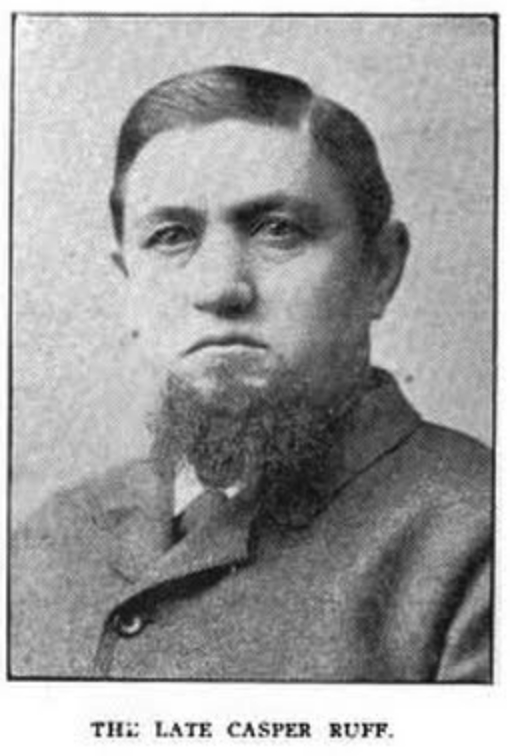
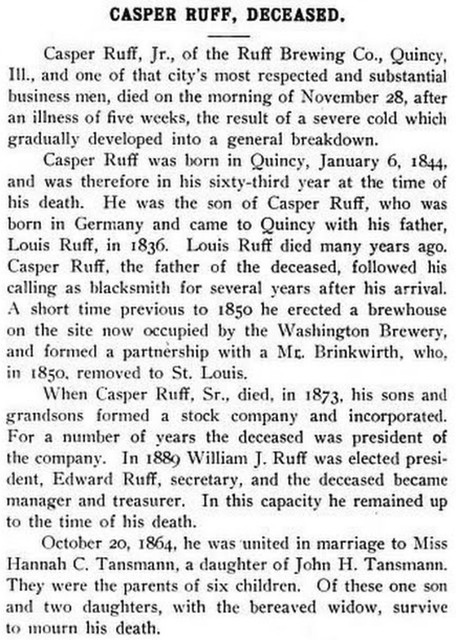
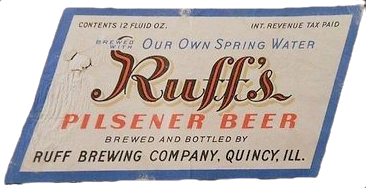
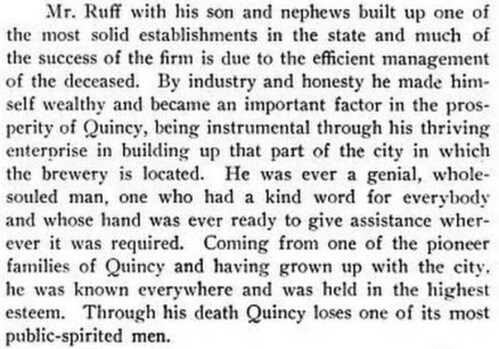
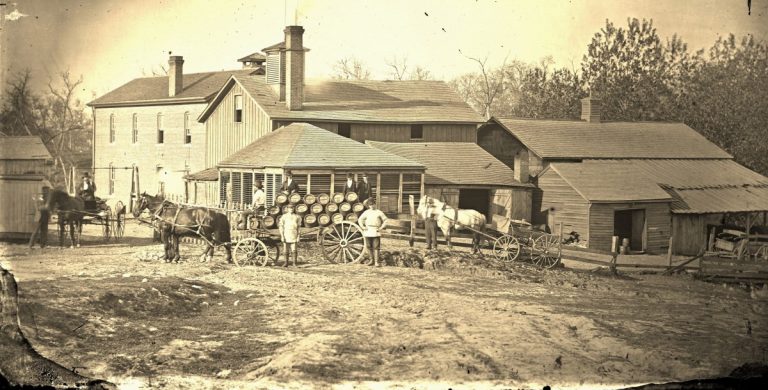
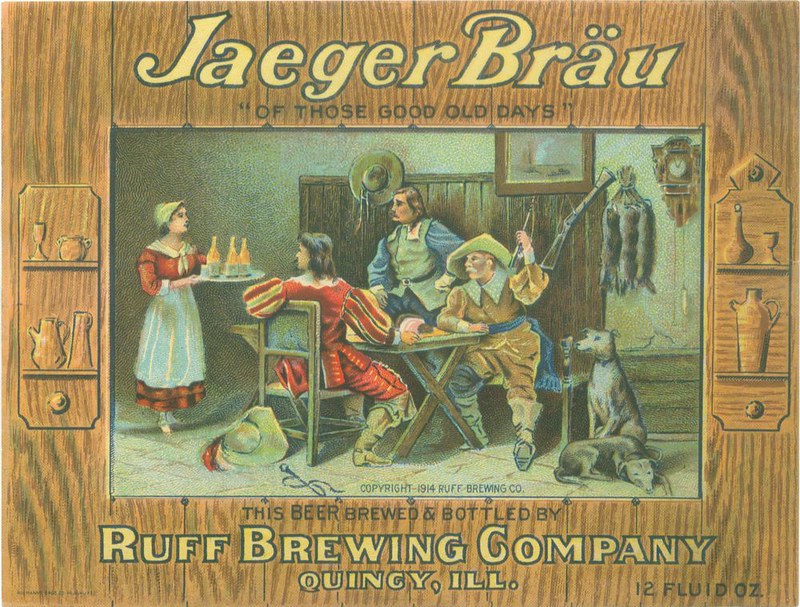
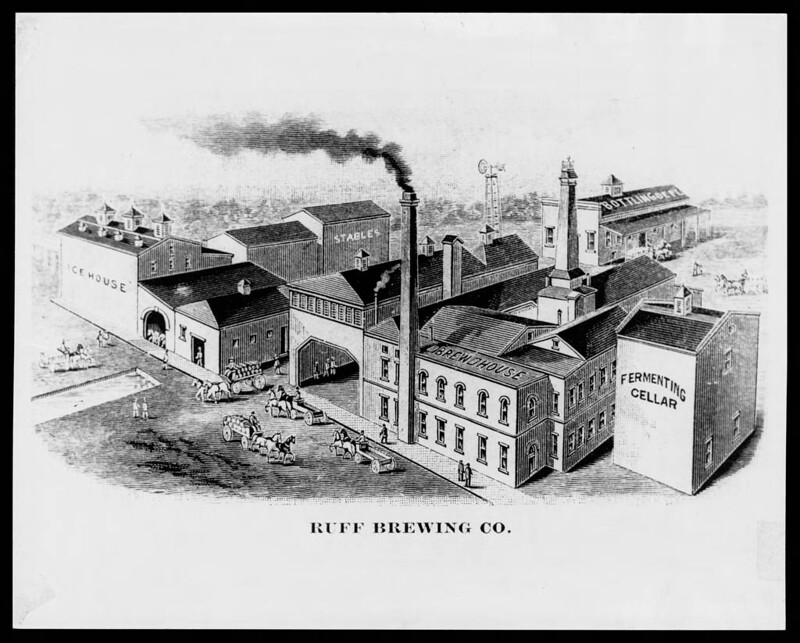
Today is the birthday of Caspar Ruff (January 6, 1844-November 28, 1905). He is actually Caspar Ruff Jr., his father also being Caspar Ruff, who was born in Germany and along with his father, Louis Ruff, came to the United States in 1836, settling in Quincy, Illinois, where Caspar Jr. was born. Both Louis and Caspar Sr. were blacksmiths, but Senior built a brewhouse founded the Ruff Brewery around 1842-45. When Sr. died in 1873, Caspar and his brothers continued the business with Caspar Jr. as president until 1889, when he retired from the business. The brewery survived prohibition and continued for ten years afterward as the Ruff-Riedel Brewing Co. and in 1943 changed back to the Ruff Brewing Co. before closing for good in 1948.

caspar-ruff
This is Ruff’s obituary from the American Brewers Journal:

caspar-ruff-obit-1
Ruff-pilsener
caspar-ruff-obit-2

RUFF-BREWERY

Dave Dulaney wrote a short history of the brewery for the Historical Society of Quincy & Adams County entitled Casper Ruff was the First to Brew Lager Beer in Quincy, primarily about Caspar Senior, but this paragraph discusses the later years and junior’s contributions to the brewery:

The Ruff Brewery prospered for many years after the introduction of lager beer. Casper retired by 1864 and his sons John and Casper Jr. took over the company. Casper Sr. died in 1873, and the management of the firm was continued by John and Casper Jr. until John’s death in 1880. Then John’s son William joined his uncle Casper in operation of the firm. The brewery became a corporation in 1882 and improvements increased the capacity to 10,000 barrels a year. Casper Jr. died in 1906 and William continued operation of the company into prohibition until his death in 1925. During prohibition they made near-beer and ice cream. When prohibition ended William’s son Edgar reopened the brewery until competition forced its closure in 1948.

Ruff-Jaegar-Brau

Ruff_Brewing_Co

Filed Under: Birthdays, Breweries, Just For Fun Tagged With: History, Illinois

Beer In Ads #5162: I’m Back Again! Duquesne Bock Beer

January 5, 2026 By Jay Brooks

Two years ago I decided to concentrate on Bock ads for awhile. Bock, of course, may have originated in Germany, in the town of Einbeck. Because many 19th century American breweries were founded by German immigrants, they offered a bock at certain times of the year, be it Spring, Easter, Lent, Christmas, or what have you. In a sense they were some of the first seasonal beers. “The style was later adopted in Bavaria by Munich brewers in the 17th century. Due to their Bavarian accent, citizens of Munich pronounced ‘Einbeck’ as ‘ein Bock’ (a billy goat), and thus the beer became known as ‘Bock.’ A goat often appears on bottle labels.” And presumably because they were special releases, many breweries went all out promoting them with beautiful artwork on posters and other advertising.
Monday’s ad is for Duquesne Bock Beer, which was published on January 5, 1950. This ad was for the Duquesne Brewing Co. of Pittsburgh, Pennsylvania, which was originally founded in 1899. This ad ran in The Pittsburgh Sun Telegraph, of Pittsburgh, Pennsylvania. I am curious how exactly it’s “The Real ‘One-Eyed’ Bock.”

Filed Under: Art & Beer, Beers, Breweries, Just For Fun Tagged With: Advertising, Bock, History, Pennsylvania

Historic Beer Birthday: John Roehm

January 5, 2026 By Jay Brooks

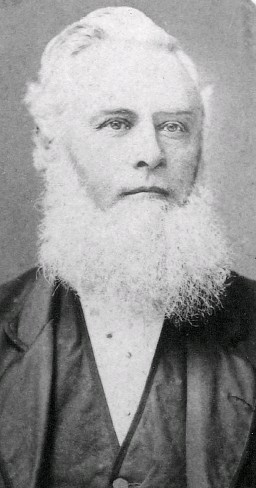
john-roehm
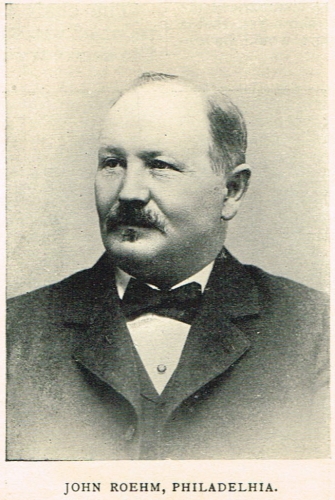
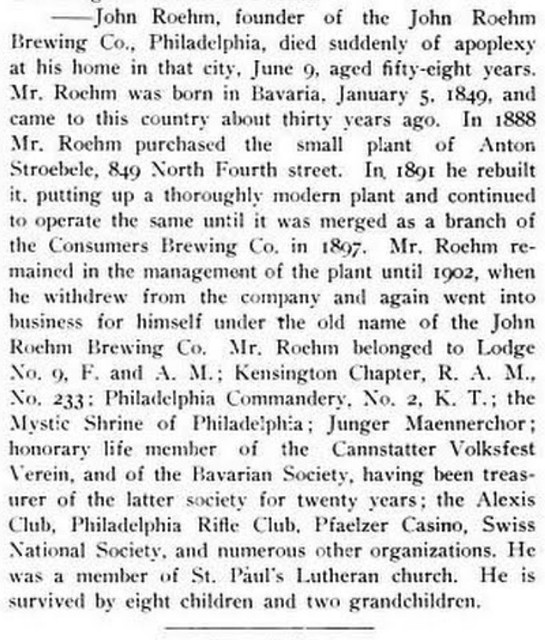
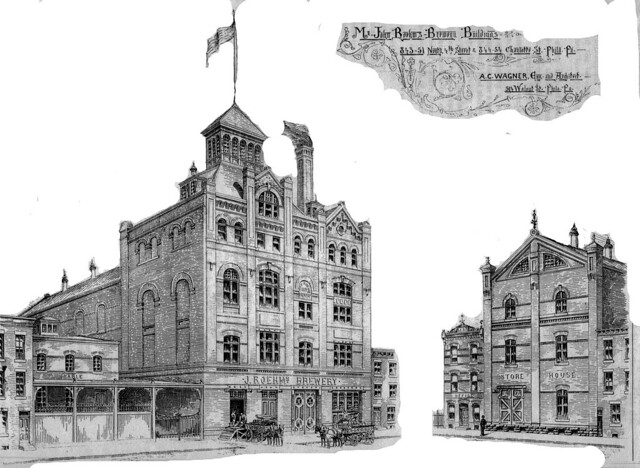
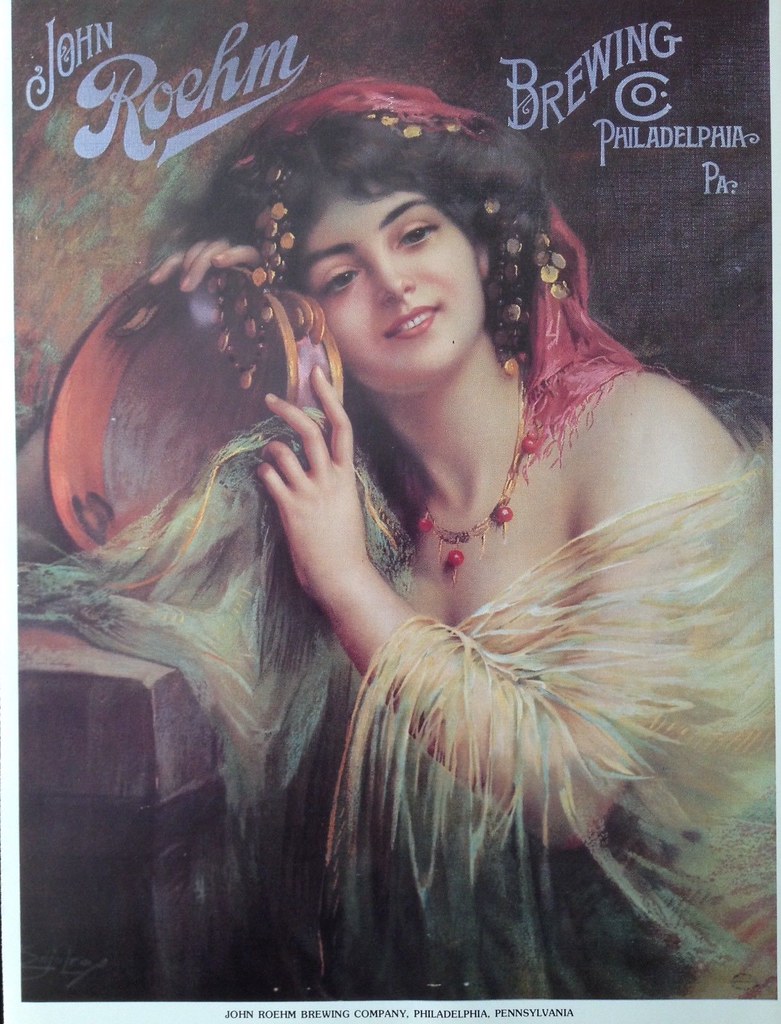
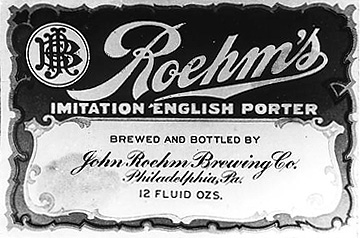
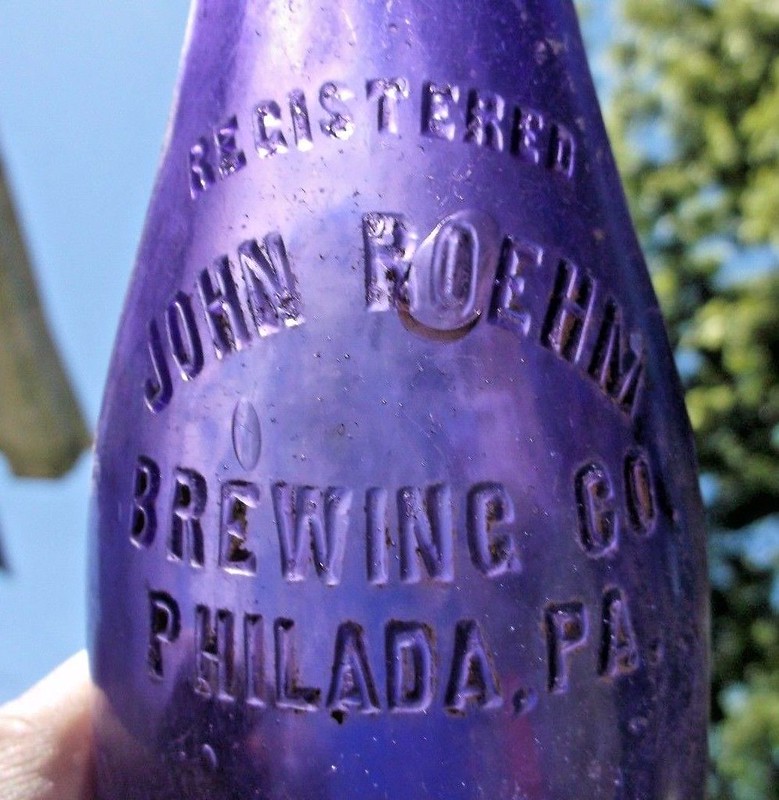
Today is the birthday of John Roehm (January 5, 1849-June 9, 1907). He was born in Bavaria, Germany, but moved to Philadelphia, Pennsylvania in 1888 and bought the brewery of Anton Stroebele (founded in 1870), renaming it the John Roehm Brewery, but also traded under the Consumers Brewing Co., at least until 1909. After Roehm’s death in 1907, his brewery appears to be sold to Henry Hess and went through several name (and probably ownership) changes until lastly it was known as the Otto Erlanger Brewing Co. from 1837 to 1951, when it closed for good. Unfortunately, I haven’t been able to find out much info about Roehm or the brewery.

This is Roehm’s obituary from the Brewers Journal:

John-Roehm-obit
john-roehm-brewery
john-roehm-poster-2

roehmporter
Nice-Purple-Blob-Beer-John-Roehm-Brewing-Co-_57 (1)

Filed Under: Birthdays, Breweries, Just For Fun Tagged With: Germany, History, Pennsylvania, Philadelphia

Historic Beer Birthday: Thomas Aitken

January 5, 2026 By Jay Brooks

Today is the birthday of Thomas Aitken (January 5, 1821-January 5, 1884). He was born in Scotland, but emigrated to Australia in 1842, when he was 19. “In 1851 he founded the Corio Brewery in Geelong, and later started the Union Brewery in Melbourne. By 1854 he was in business at Victoria Parade, East Melbourne, where he had built a new brewery, distillery and malthouse. The large complex was called the Victoria Parade Brewery,” which was later known simply as the Victoria Brewery. He also developed the formula for their most popular beer, Victoria Bitter, also in 1854. When Thomas died in 1884, his son Archibald took over the brewery, but today it is owned by Carlton & United Breweries, which in turn was acquired by SABMiller, although last year, Asahi Breweries bought Carlton & United.

This biography of the Aitken family was written in 2007 for the Townsville Bulletin.

The home of Thomas and Margaret Aitken which stood near where the Aitkenvale library now stands. He would one day have a suburb and a street named after him but when Thomas Aitken jumped on board a ship bound for Australia, he was just a runaway in search of a better life in a new country.

Born 1825 in Edinburgh, Scotland Thomas Aitken was raised in an orphanage until, on reaching an age when he was able to fend for himself, he absconded from his guardians and boarded the vessel which was to change his destiny.

Upon arrival in his adopted country in the 1840s, Thomas was drawn to life on the land, working on farms around the Brisbane area, but his heart remained in Scotland.

‘‘He worked on cattle properties on what was then Moreton Bay,’’ John Aitken, 69 of Maroochydore said of his great-grandfather.

‘‘Then he went back to Scotland and married his wife, who was a daughter on a neighbouring property to where the orphanage was — he must have known her previously. Her family disowned them — they didn’t want her associated with a poor orphan but later the family came out to Australia as well.’’

Thomas and his new wife Margaret Aitken arrived in Australia on January 6, 1852 on the ship WilliamandMary, and worked the interior of Queensland as drovers before finally settling in Townsville.

‘‘They came up here to Townsville in about 1867,” Mr Aitken said. ‘‘He and his wife worked their way up from the areas along the D’Aguilar Highway which runs inland from Caboolture. They drove their cattle and travelled in horse drays and they came up through western Queensland, and finally they came into Ravenswood and into Townsville. It took them a number of years. The family Bible records where the children were born and they were born at different places along the way.’’

It was during these travels that the stockman, accustomed to austere living, chanced upon a remarkable discovery that would have changed his family’s fortune — but Thomas clearly was not materialistic by nature.

‘‘On the way through he was the first person to discover gold in Ravenswood,” Mr Aitken said of his greatgrandfather’s propitious find.

‘‘He found gold and then when he came to Townsville he told some people who went back and made their fortune out of it. Granddad was more interested in his cows.’’

With his focus solely on cattle, Thomas Aitken, after arriving in Townsville, procured a large parcel of land for grazing on what was then the outskirts of town.

‘‘He had 3500 acres on the Ross River — that’s a huge amount of land and I suspect it was some sort of land grant to get people to move into the country areas,’’ Mr Aitken said.

‘‘Their original house was a little log shanty down on the banks of the river and it got washed away in a flood. Then they built a fairly substantial homestead in an area just at the back of where the Aitkenvale Library is today. The property was originally hyphenated as Aitken-Vale.

‘‘He subdivided a lot of the property in his later years and he just retained about five acres around the homestead. Herveys Range Road was the main road through to Charters Towers back then, and the first stop on the stage coach was the Aitkenvale Arms Hotel (now the Vale Hotel). That was the first change of horses after you left Townsville on a trip to Charters Towers and that was just opposite where their house was,’’ Mr Aitken said.

Thomas and his wife remained in Townsville, raising five children, most of whom continued to live in the township. Elizabeth married Henry Kidner and built the Grand Hotel on Flinders St. Isabella married a Mr Covington — a ’pen-pusher’ for Charles Darwin on his Beagle voyage. Jane married Mr Buckpitt who owned a butcher shop on Flinders St East (where Avis now stands). Margaret married Germanborn Mr Maass and opened Townsville’s first soap factory in Sturt St. Charlotte went to live in Ayr but Mr Aitken’s grandfather John stayed in the region.

‘‘John was the only son — he and my grandmother Sarah lived with Thomas and Margaret for many years on the Aitkenvale property,’’ Mr Aitken said.

‘‘My grandmother used to tell us stories about how in Aitkenvale the water was from a hand pump and in the winter they used to have to pour boiling water down the pump to melt the ice in the mornings before they could pump it. If there’s such a thing as global warming that’s an indication — I don’t think you’d ever have to do that in Aitkenvale now.

‘‘The biggest disruption to their lives however was when there was flooding because they couldn’t get into town. The flood waters used to cut them off in the area of Rising Sun,’’ he said.

Travelling from Aitkenvale to the city was no easy matter in those early days with natural impediments frequently necessitating a more circuitous route, Mr Aitken said.

‘‘My grandfather worked at the Hubert Wells — the electricity generation and water supply works for Townsville. It was on Ross River Road opposite where The Cathedral School is now. The power was generated by coal and there was a railway line that used to go from Garbutt through to the power house.

‘‘He lived in Railway Estate and he used to go to work on his push bike from Railway Estate to Hubert Wells and if the tide was high and he couldn’t get across the creek at Sandy Crossing he used to have to go across Victoria Bridge because there was no Lowth’s Bridge. It was a long ride. When Lowth’s Bridge was built, my grandmother never called it Lowth’s Bridge, it was always the new bridge. It was rusting and falling apart when I first knew it but it was still called the new bridge,’’ Mr Aitken said.

While the Aitken family prospered in Townsville, they also had their share of misfortune when their spacious home burned down in 1899 and they also narrowly avoided tragedy in 1911 when the SSYongalavanished off Cape Bowling Green.

‘‘My grandmother sailed from Brisbane to Townsville on the Yongalaon the trip before it vanished. She was living in Davidson St in South Townsville at the time and told me how the locals used to walk to the river each evening to meet the returning search parties to find any news of the missing vessel,’’ Mr Aitken said.

Thomas Aitken, who died a wealthy man in 1897, is remembered today as a person of historic importance to Townsville and his name lives on not only in the suburb which is his namesake but also in Aitken St which was once a track leading down to the old homestead. Elizabeth and Charlotte streets were also named in honour of two of his four daughters.

The Victoria Brewery in 1870.

And this short obituary appeared in the Melbourne Herald on January 5, 1884.

“He arrived in Melbourne in the year 1842, being at that time a youth of 19 with intelligence and energy to aid him in his career. In Scotland he had acquired a knowledge of the brewing trade, but he turned his attention to other pursuits at first and was fairly successful. The gold discoveries of 1851 gave an impetus to trade, and Mr Aitken, being of a speculative disposition, took advantage of the tide of affairs and started the Corio Brewery in Geelong. Melbourne, however, offered better advantages, and in 1852 he commenced business in the Union Brewery, Lonsdale street west; shifting two years later, to the site of the present Victoria Parade Brewery. Mr Aitken’s business venture developed into an extensive undertaking, the secret of success being the production of a good article, and the employment of business capabilities to push the trade. The premises owned by the deceased gentleman cover an area of more than three acres of land. The building is effective in design, with an imposing and ornamental facade to the front elevation. In 1861 Mr Aitken established the first distillery under the new Distillation Act, which also proved a success, and the business reached such proportions that the value of the property and plant is now close upon £80,000.”

Thomas Aitken in the late 1800s.

Also, Gary Gilman, has a nice article about Aitken entitled The Inspirational Victoria Brewery, Melbourne, if you want to know more.

Filed Under: Birthdays, Breweries, Just For Fun Tagged With: Australia, Scotland

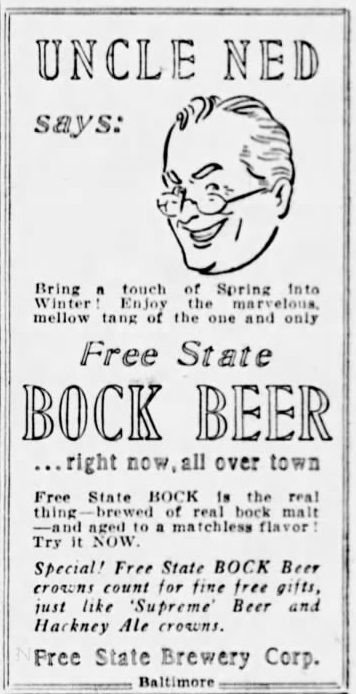
Beer In Ads #5161: Uncle Ned Says: Free State Bock Beer

January 4, 2026 By Jay Brooks

Two years ago I decided to concentrate on Bock ads for awhile. Bock, of course, may have originated in Germany, in the town of Einbeck. Because many 19th century American breweries were founded by German immigrants, they offered a bock at certain times of the year, be it Spring, Easter, Lent, Christmas, or what have you. In a sense they were some of the first seasonal beers. “The style was later adopted in Bavaria by Munich brewers in the 17th century. Due to their Bavarian accent, citizens of Munich pronounced ‘Einbeck’ as ‘ein Bock’ (a billy goat), and thus the beer became known as ‘Bock.’ A goat often appears on bottle labels.” And presumably because they were special releases, many breweries went all out promoting them with beautiful artwork on posters and other advertising.

Sunday’s ad is for Free State Bock Beer, which was published on January 4, 1940. This ad was for the Free State Brewery Corp. of Baltimore, Maryland, which was originally founded in 1900 by Frederick Bauerschmidt, but was known as Free State after Prohibition ended until 1950. This ad ran in The Evening Sun, of Baltimore, Maryland.

Filed Under: Art & Beer, Beers, Breweries, Just For Fun Tagged With: Advertising, Bock, History, Maryland

Beer In Ads #5160: Insist On The Very Best! Stegmaier Bock Beer

January 3, 2026 By Jay Brooks

Two years ago I decided to concentrate on Bock ads for awhile. Bock, of course, may have originated in Germany, in the town of Einbeck. Because many 19th century American breweries were founded by German immigrants, they offered a bock at certain times of the year, be it Spring, Easter, Lent, Christmas, or what have you. In a sense they were some of the first seasonal beers. “The style was later adopted in Bavaria by Munich brewers in the 17th century. Due to their Bavarian accent, citizens of Munich pronounced ‘Einbeck’ as ‘ein Bock’ (a billy goat), and thus the beer became known as ‘Bock.’ A goat often appears on bottle labels.” And presumably because they were special releases, many breweries went all out promoting them with beautiful artwork on posters and other advertising.

Saturday’s ad is for Stegmaier Bock Beer, which was published on January 3, 1969. This ad was for the Stegmaier Brewing Co. of Wilkes-Barre, Pennsylvania, which was originally founded in 1857. This ad ran in The Scranton Times, of Scranton, Pennsylvania. I love that their tagline is “Truly Brewed,” whatever that means.

Filed Under: Art & Beer, Beers, Breweries, Just For Fun Tagged With: Advertising, Bock, History, Pennsylvania

Historic Beer Birthday: Michael Sieben

January 3, 2026 By Jay Brooks

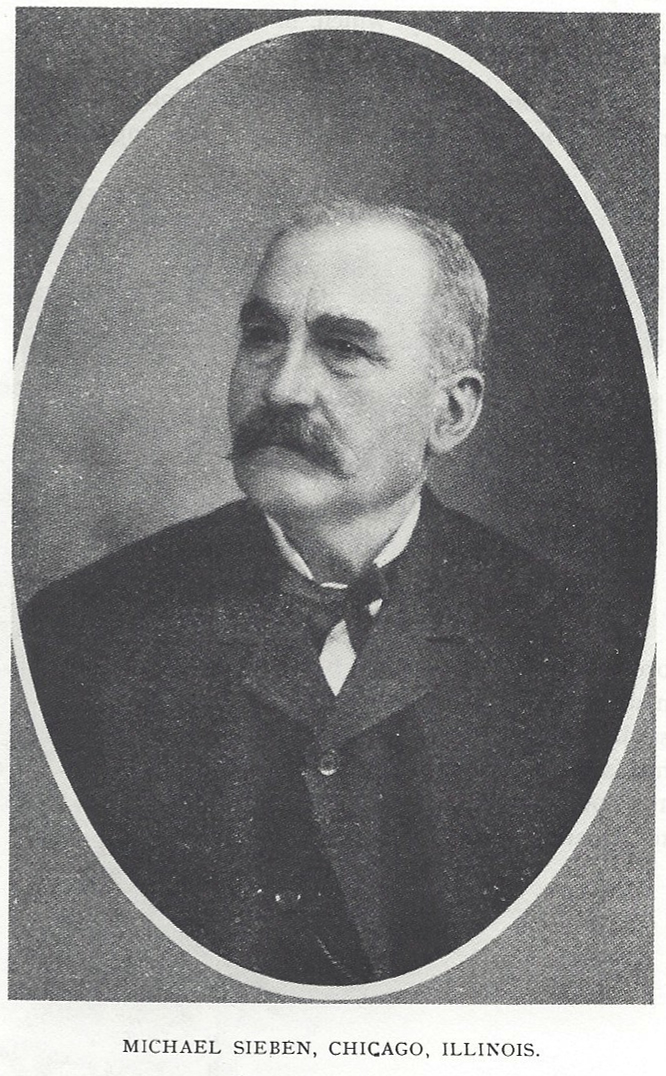
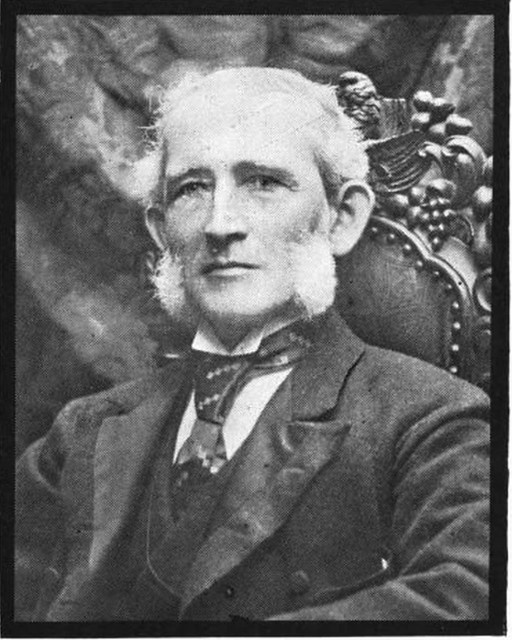
siebens
Today is the birthday of Michael Sieben (January 3, 1835-September 5, 1925). He was born in Ebersheim, Germany, but came to America when he was 25, in 1860. In 1865, he bought the James L. Hoerber Brewery, running it until 1875, when he built a new brewery which he named the Michael Sieben Brewery. Twenty years later he sold that brewery to the Excelsior Brewing Co., but promptly built another brewery, selling that one to United Breweries Co. in 1898, though he remained its manager of the Sieben’s Branch. A brewery bearing his name continued on in Chicago until prohibition, was briefly open during it, and re-opened afterwards in 1933 as Sieben’s Brewery Co., which remained in business until 1967.

Michael-Sieben-100ys

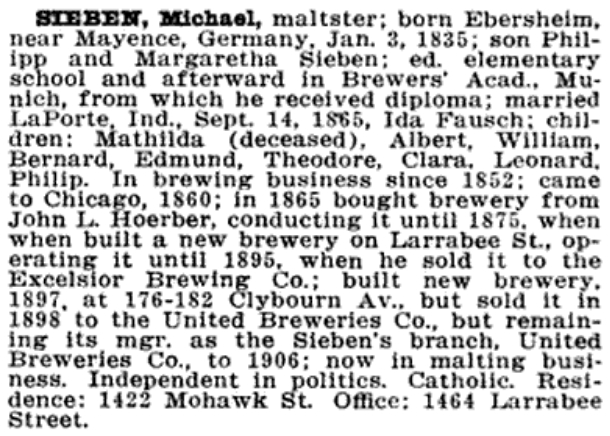
This biography of Sieben is from “The Book of Chicagoans: A Biographical Dictionary of Leading Living Men of the City of Chicago, edited by Albert Nelson Marquis, and published in 1911:

Michael-Sieben-bio
In 1934, the newly reopened Sieben’s Brewery issued a press release celebrating its 100th anniversary of its founder, Michael Sieben:

The one hundreth birthday anniversary of Michael Sieben, the founder of the brewery which is now known all over the world, is celebrated these days by the Chicago Sieben Brewery Company, 1470 Larrabee Street. For the festive occasion an especially tasteful beer, the Sieben Centennial beer, was put on the market. It was made after a receipt known to the family for seventy years.

Michael Sieben was born on January 3, 1835, in Ebersheim, near Mainz, Germany, and died in Chicago September 5, 1925, at the age of ninety years. He learned the honorable art of beer brewing in Mainz, Germany, and as brewer’s and cooper’s assistant he journeyed through Germany, Austria, and Switzerland. For two years he worked at Lyons, Maney, and Dijon until the wanderlust urged him to go to the unknown land on the other side of the big pond.

Michael Sieben came in the year 1860 to America. During the succeeding five years, he worked as malster and brewer’s assistant, then as master brewer, and later as manager in Chicago, Indianapolis, Cincinnati, and Boston. In the year 1865, he returned to Chicago and founded here the Sieben brewery in the then Griswold Street. In the year 1876, the brewery moved to Larrabee Street, south of Blackhawk Street, at which place it is still operating today.

From the marriage of Michael Sieben and his wife Ida, nee Fausch, came seven children, of whom two sons, William and Bernard, are in charge of the brewery today.

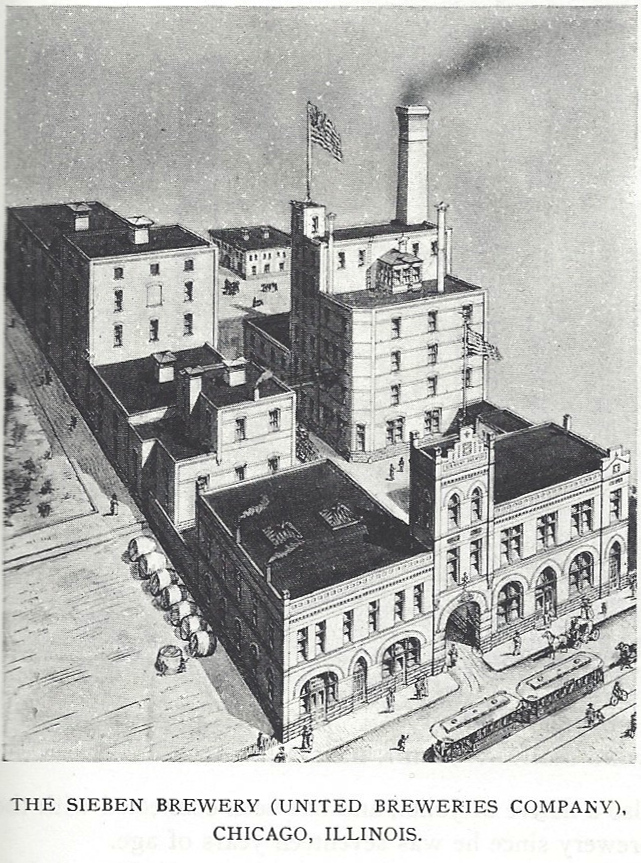
sieben-brewery

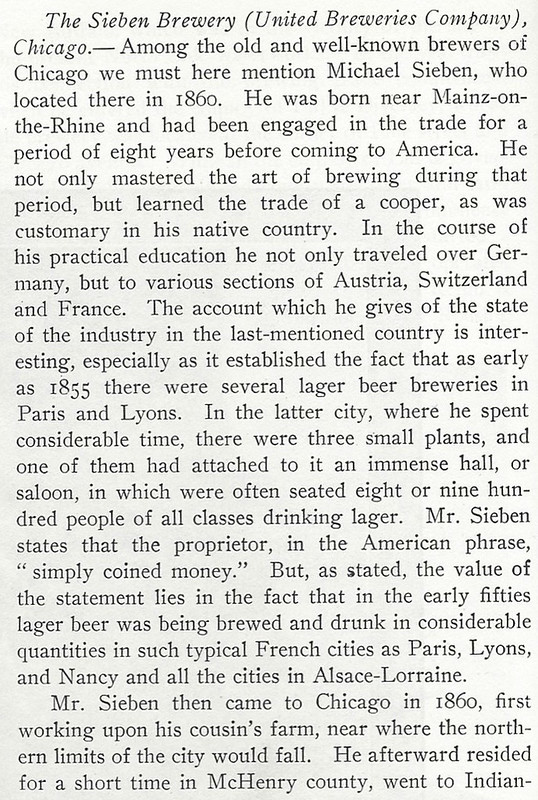
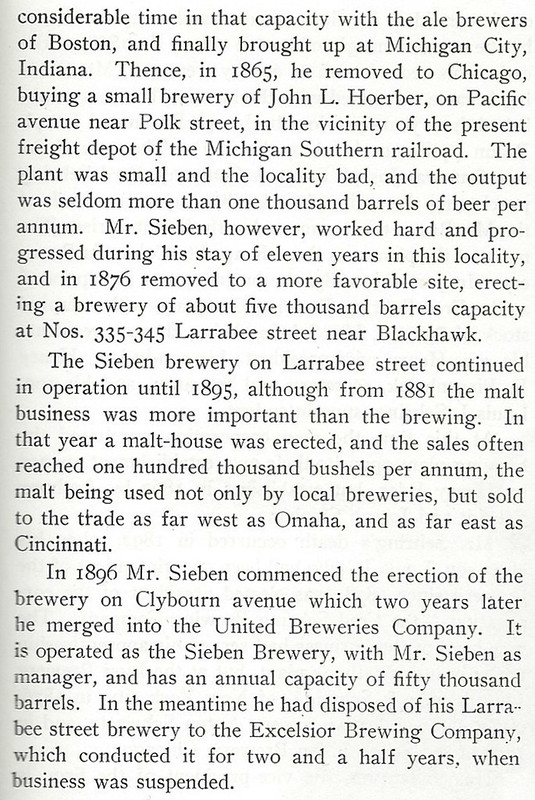
This account of the brewery is from “100 Years of Brewing,” published in 1903:

sieben-brewery-100yrs-1
sieben-brewery-100yrs-2
sieben-brewery-100yrs-3

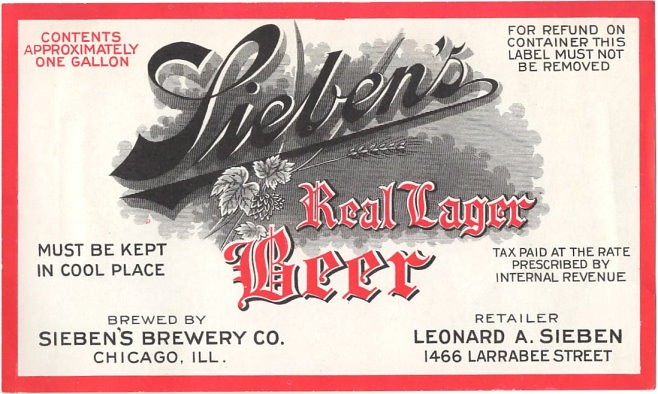
Siebens-Real-Lager-Beer-Labels-Siebens-Brewery

Around 2006, a group of investor’s tried to bring back the Sieben’s beer brand, but the last time the website was updated was 2009, so I don’t think they were successful in the long run. And in fact, the home page states that it’s “off the market.” But this account of Sieben is from their website:

Michael Sieben immigrated to the United States in 1860 from Ebersheim, Germany a village southwest of Mainz. In 1865 Michael founded the Michael SiebenBrewery, located on Pacific Avenue near Clark and Polk Streets in Chicago. That street is now the section of La Salle St. south of Congress Parkway. In 1871, the brewery was narrowly missed by the Great Chicago Fire due to a change in wind direction. In 1876 the brewery was relocated to 1466 Larrabee Street, just a short walk from where the Larrabee-Ogden station of the Chicago “L” Transit System would be built in 1900.

In 1896 Michael Sieben built a larger brewery on Clybourn Avenue, not far from the Larrabee Street location. In 1898 it was merged into the United Breweries Company. By 1903, Michael Sieben was back in the original Larrabee Street location and changed the name of his company to the Sieben´s Brewery Company. Michael Sieben´s wish was that the brewery bearing his name not be owned by anyone outside the Sieben family, perhaps due to the short alliance he had with United Breweries Company that this wish came into effect.

During the years of Prohibition 1920-1933 the Sieben family was out of the beer business. The years of Prohibition gave brewers few choices, some started to produce soda and/or near beer (a nonalcoholic beer) or just closed forever. Some brewers however, were faced with a couple of other choices, sell or lease their brewery. The Sieben´s were faced with this choice and decided to lease out the brewery to an entity which was supposed to be engaged in producing a nonalcoholic beer. This new company was called the George Frank Brewery and is said to be owned in partnership by Dion O´Banion (head of the north side gang) and Johnny Torrio (head of the south side gang). The story goes, that O´Banion calls up Torrio and said that he is tired of the bootleg business and wants to retire to his place in Colorado. O´Banion offered to sell Torrio, his share of the brewery for $500,000.00, Torrio agreed. Dion O´Banion was aware of the penalties for prohibition convictions.

The first, a mere slap on the hand. The second, put you away for nine months and O´Banion knew that Torrio had one conviction against him. Dion O´Banion also had information that the Chicago Police Department was to raid the brewery the day of the meeting. On May 19, 1924 the two men met at the Sieben´s Brewery. Johnny Torrio, handed Dion O´Banion a case with $500,000.00 in cash and in came the police and arrested everyone in sight.

This is where the common historical account differs from what family members who were there observed. The Sieben family member story is as follows, despite what was reported in the newspapers at the time. The transfer of funds either happened at another time or in another place. The raid happened about a week after this transaction. Also, O´Banion had no idea when a raid would take place, he only knew that the police officer he was paying off to inform him of when the next inspection was going to happen was no longer in a position to tell him. Elliot Ness had figured the cop for a “dirty” cop and had him transferred to where we don´t know, just out of the picture.

The normal operation with the gangsters was to at all times have two gangsters on the premises to run things. One would work in the office and the other was one of the bartenders. When the raid DID happen, the gangster/bartender, ran back through the brewery and kicked out the operating engineer that was running the steam engine that was used for refrigeration. He then grabbed a pair of overalls and dirtied his face with coal dust and sat at the controls of the steam engine so it looked like he was just an “engineer” worker and not a gangster. The gangster in the office came out and saw that there was a police officer standing guard in the street in front of the brewery. He got Leonard Sieben (who was 8 years old at the time) and told him to go out front and stand next to the officer and act like he was pulling a handkerchief out of his sleeve when the officer looked the other way. That was the signal for the gangster to slip out the front door and down the street, unseen. When the rest of the police surrounded the building and came in to conduct the raid, they ran right past the “engineer” who then just walked out the back door.

No gangsters were arrested at that time, they must have been rounded up later and this fact was hidden in an apparently elaborate deception so that the public could not find out. One might suspect that Elliot Ness had to score some kind of hit to garner some public or political support at a time when it was widely known that Prohibition was not working. The court records make no mention of Torrio, O´banion or old Scarface himself. The only names mentioned are “a Mr. Sieben, who owns the Realty” and George Frank who was the lease operator.

No matter which version you want to believe, this is what led to the infamous “handshake murder” of O´Banion at his north side State Street flower shop. It was also what sparked off the north and south side gang wars, including the St. Valentine´s DayMassacre in 1929.

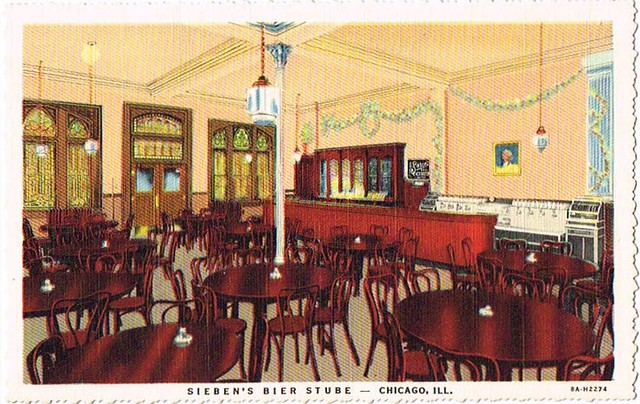
In 1933 Prohibition came to an end and the Sieben family reopened the brewery, bier stube and garden. For the next three and a half decades, Sieben´s Brewery Company would brew the fine beers for which it was known. In the 1950´s and 1960´s the beer business was changing and Sieben´s was finding it hard to keep up. Faced with the competition of mass produced beers, the Sieben´s Brewery and associated bier stube closed in 1967. The bottling house caught fire in 1968 and was heavily damaged. In 1969 all of the Sieben´s Brewery Company buildings were torn down.

In the 1980´s the name Sieben Brewery was resurrected by group of entrepreneurs not related to the Sieben family. The “new Sieben´s” was a brew pub in the River North Area of Chicago. The brew pub did not package and distribute their products, nor did they ever brew or have the original Sieben´s Brewery recipes.

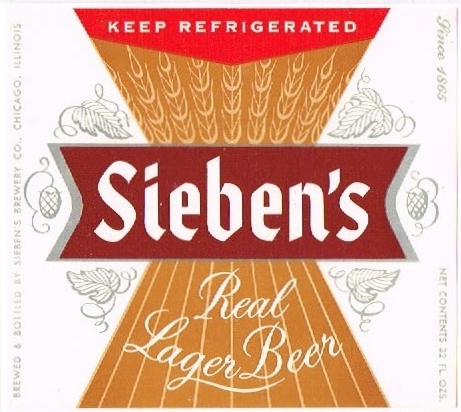
In 2006 the Sieben´s family is back in the brewing business. Richard Sieben is a fourth generation family brewer and along with long time homebrewing friend Elliot Hamilton are, “Carrying on a Great Family Brewing Tradition.” Sieben´s brings back the original “Real Lager Beer” that was brewed at the original brewery. The Sieben´s name has been around since the time when Chicago was a big beer brewing town. That´s why we like to think and say that we´re also “Carrying on Chicago´s Great Brewing Tradition.”

Sieben’s beer, after a two year run on the market has been temporarily withdrawn from distribution. Not having our own brewery, while saving a bundle of money in infrastructure, costs us in flexibility. Our Wisconsin based brewery is ready and willing to produce more beer but until we are able to secure a dependable distributor who has our product featured in their portfolio, we must take time off to rethink our strategy.

Siebens-Bier-Stube-Post-Cards-Siebens-Brewery-Co
This postcard of the Sieben Bier Strude is from 1937.

Siebens-Real-Lager-Labels-Siebens-Brewery

Filed Under: Birthdays, Breweries, Just For Fun Tagged With: Chicago, Germany, History, Illinois

Historic Beer Birthday: Robert F. Ballantine

January 3, 2026 By Jay Brooks

ballantine
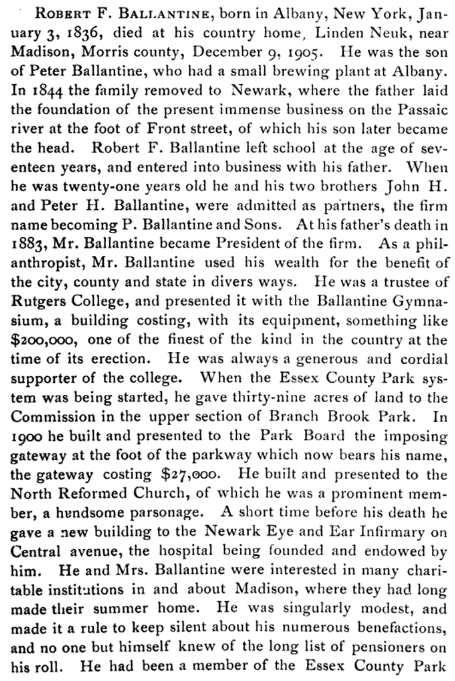
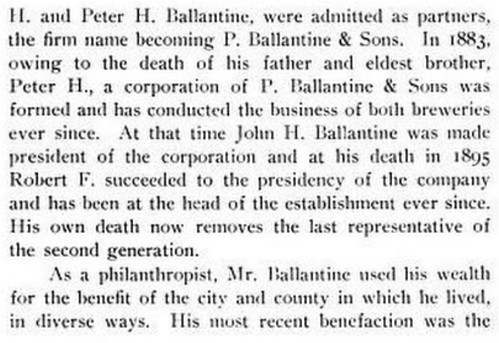
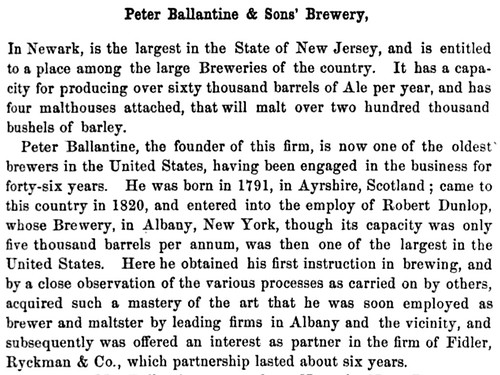
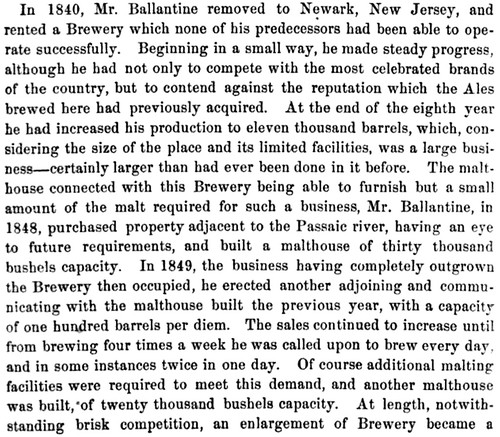
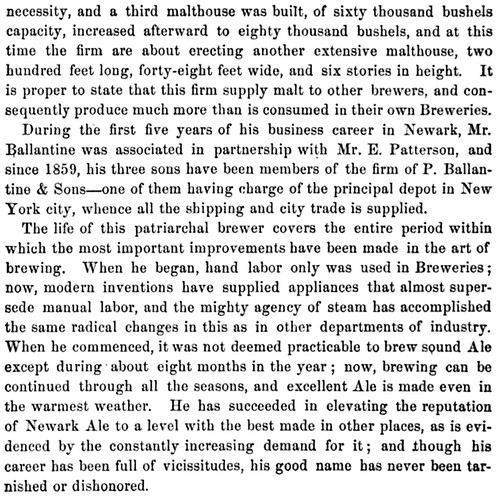
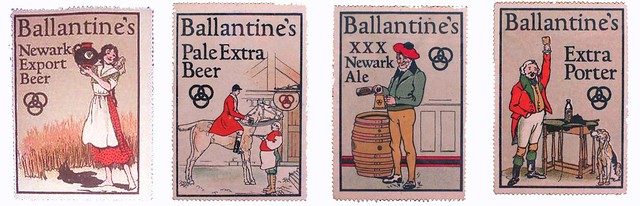
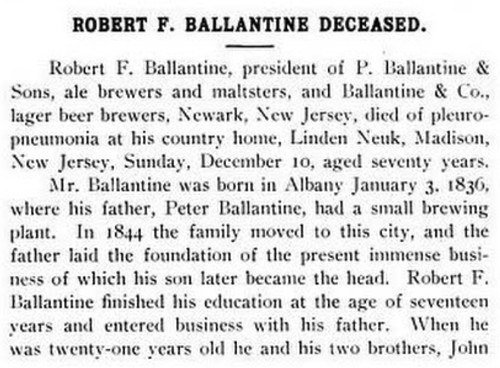
Today is the birthday of Robert Francis Ballantine (January 3, 1836-December 9 or 10, 1905). He was born in New Jersey, and was the son of Peter Ballantine, who founded the Patterson & Ballantine Brewing Company in 1840 in Newark, New Jersey. Peter Ballantine had three sons, and they joined him in the business in 1857, which is when the name was changed to the P. Ballantine and Sons Brewing Company. In 1883, when his father died, Robert became president of the brewery, outliving both his brothers and continuing to run the family business until his own death in 1905.

robt-ballantine-portrait
This short biography of Robert Ballantine is from “New Jersey History,” published in 1909:

robt-ballantine-NJ-History-1909

ballantine-stamps

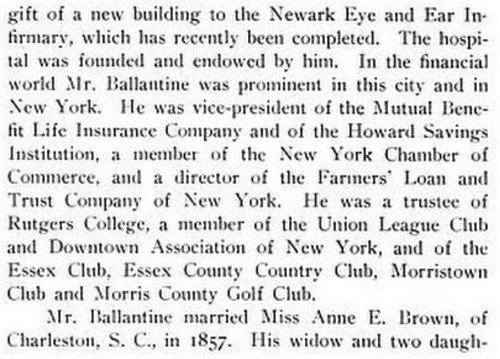
And this lengthier obituary is from the Brewers Journal:

robt-ballantine-obit-1
robt-ballantine-obit-2
robt-ballantine-obit-3
robt-ballantine-obit-4

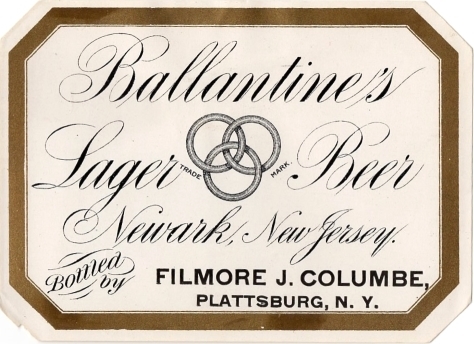
Ballantines-Lager-Beer-Labels-Ballantine
And here’s a history of the Ballantine brewery from “A History of American Manufactures from 1608 to 1860,” by John Leander Bishop, Edwin Troxell Freedley, Edward Young, published in 1868:

ballantine-brewery-bio-1
ballantine-brewery-bio-2
ballantine-brewery-bio-3

letterheadglassbeeraleCutOut

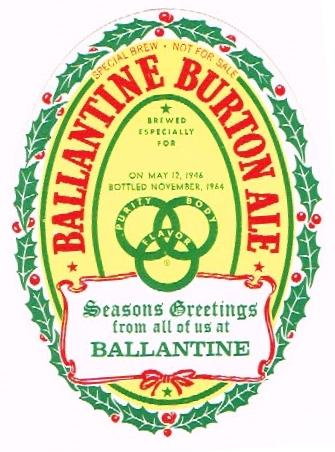
Ballantine-xmas-1964-blanks

Filed Under: Birthdays, Breweries, Just For Fun Tagged With: Ballantine, History, New Jersey

Historic Beer Birthday: James W. Kenney

January 2, 2026 By Jay Brooks

american-boston
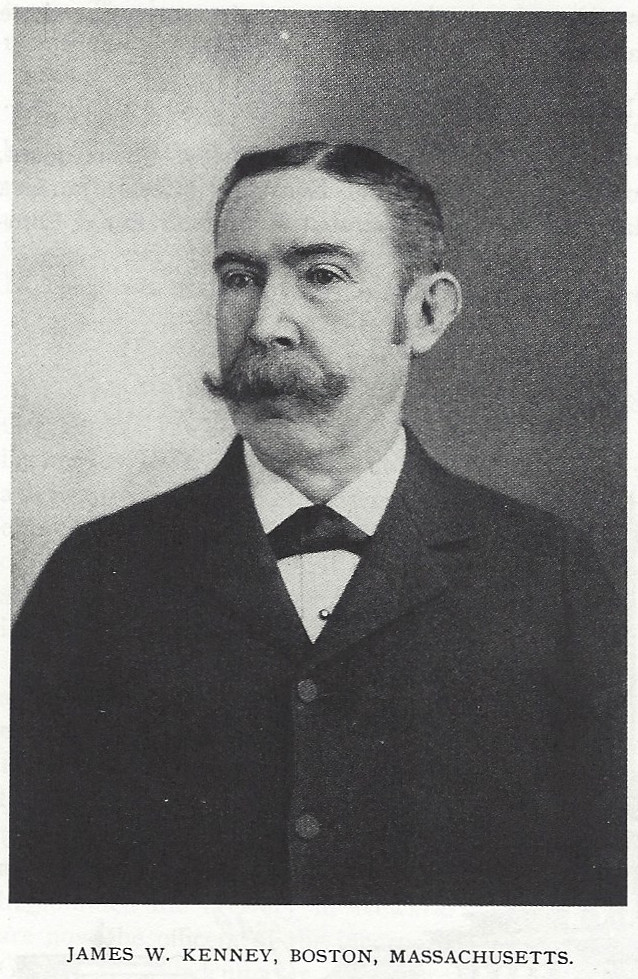
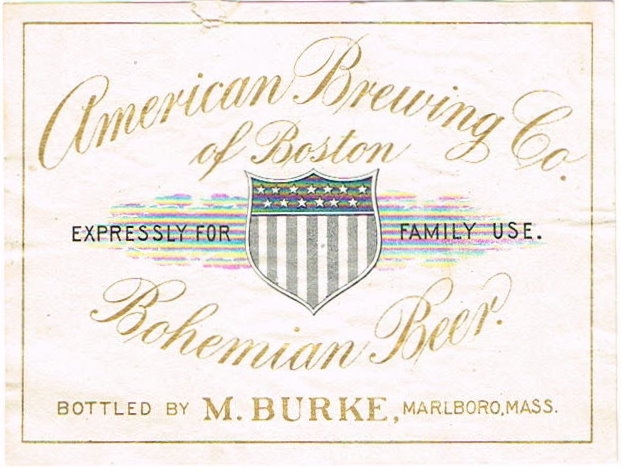
Today is the birthday of James W. Kenney (January 2, 1845-?). He was born in Ireland, but followed his older brother to Boston when he was eighteen, in 1863. He was involved in starting and running several different breweries in Boston over the span of his life, starting with the Armory Brewery in 1877. Then he opened the Park Brewery, the Union Brewing Co. and finally was involved in the American Brewing Co., plus he bought the Rockland Brewery at one point. It also seems like he was involved in the Kenney & Ballou Brewery, but I wasn’t able to confirm that one. Suffice it to say, he was a busy, industrious person, involved in a lot of Boston breweries.

James-W-Kenney
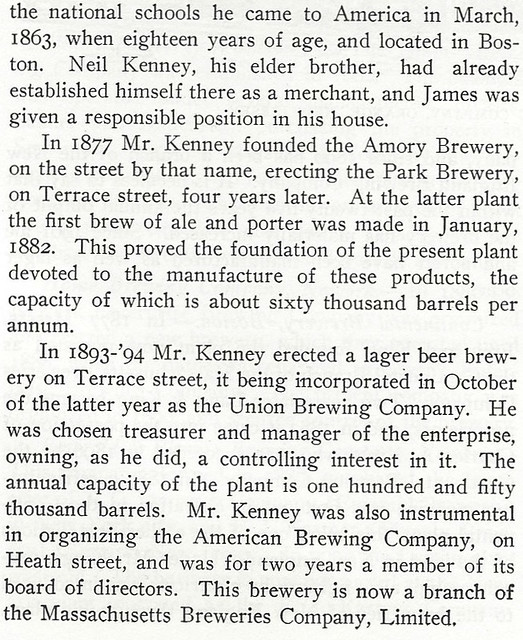
Kenney-100yrs-1
Kenney-100yrs-2

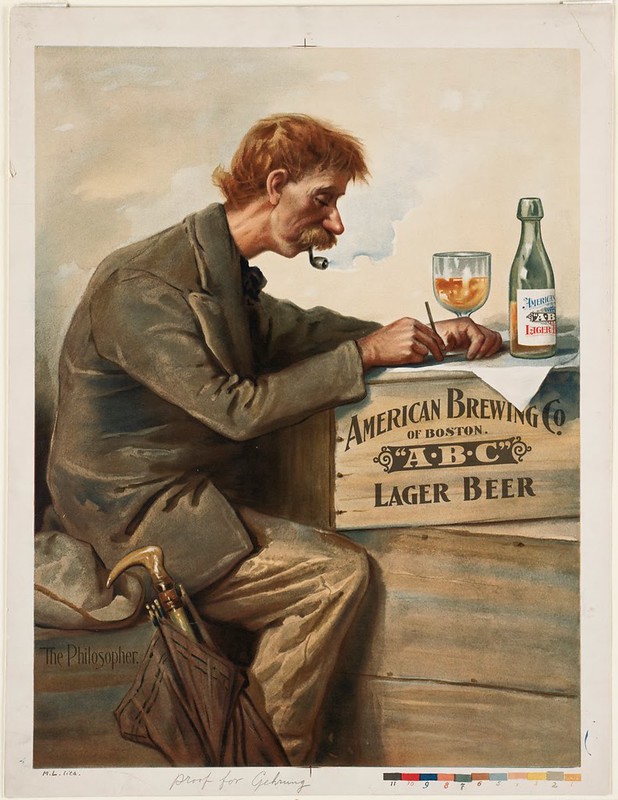
The_philosopher

Here’s a short biography from “Important Men of 1913”

Kenney, James W., born near Derry, Ireland, Jan. 2, 1845, and educated in the national schools of his native land. Came to Boston, 1863, and was placed in charge of a large grocery conducted by his brother. Became master brewer in a large brewery. In 1877 started Amory Brewery; 1881 Park Brewery; 1893 organized Union Brewing Co. Was mainly instrumental in organizing the American Brewing Co.; member of directors’ board two years. Large owner and operator in real estate, with interests in railroads, gas companies, banks, newspapers, etc. President, director and vice-president of Federal Trust Co.; director Mass. Bonding and Insurance Co. and Fauntleroy Hall Association of Roxbury; member of American Irish Historical Society and of numerous social and benevolent organizations. Married, April 24, 1876, Ellen Frances Rorke, of Roxbury. Residence: 234 Seaver St., Roxbury, Mass.

Bohemian-Beer-Labels-American-Brewing-Co-of-Boston

Norman Miller’s “Boston Beer: A History of Brewing in the Hub,” has a few paragraphs on several of Kenney’s businesses.

Kenney-BosBeer-1
Kenney-BosBeer-2
Kenney-BosBeer-3
Kenney-BosBeer-4

Here’s a rundown of his breweries:

Armory Brewing Co., 71 Amory Street: 1877-1902

This was his first brewery, but it was only known by that name until 1880, and I think he may have then sold it to a Mr. Robinson, who called it the Robinson Brewing Co., although some accounts indicate it was called the Rockland Brewery, which was his nickname. Their flagship was Elmo Ale, named for Robinson’s son, and not for the beloved Sesame Street Muppet. Other sources seem to suggest it was then bought back by Kenney at some point.

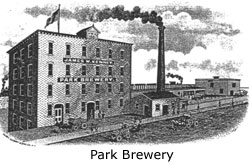
Park Brewery, 94 Terrace Street: 1881-1918

park

Four years later he opened the Park Brewery, which apparently produced only Irish Ales.

American Brewing Co., 249-249A Heath Street: 1891-1918

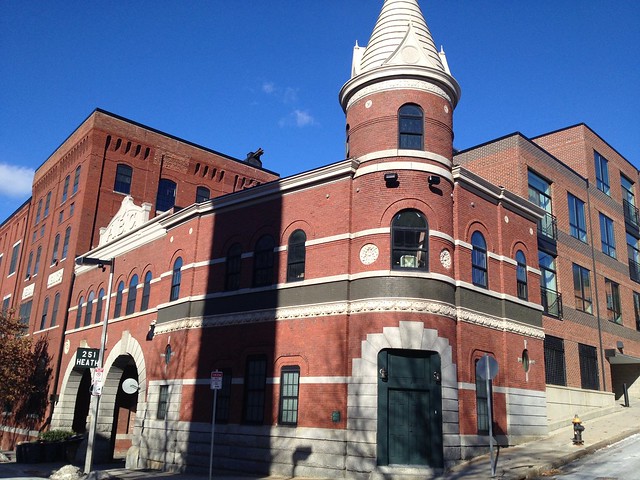
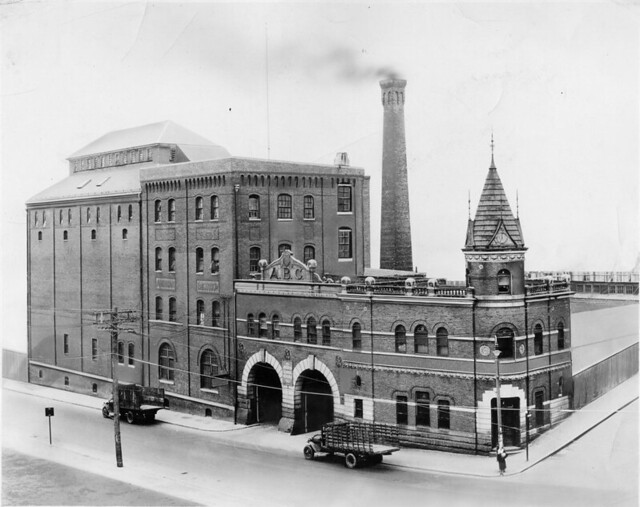
This was a larger brewery than his other ventures, and he was merely one of the investors in the business, and was on the Board of Directors, though he did hired all Jamaica Plain brewmasters. Apparently it survived the dry years by operating a “laundry” (wink, wink). After repeal, the Haffenreffer family bought it and used it briefly as a second brewery, before closing for good in 1934.

abc

The Jamaica Plain Gazette described their neighborhood American Brewing Co.:

The most “handsome” of all the remaining Boston breweries, the American Brewing Company was active from 1891 to 1918, and then again from 1933-34. Owned by James W. Kenney, who also owned the nearby Park and Union breweries, the Queen Anne style building stands out architecturally with beautiful granite arches and a distinctive rounded corner, topped by a turret.

Historically, one of the most unique features of this brewery was the “customer” room in the basement. Customers were entertained here in a room with walls, ceiling and floor painted with German drinking slogans, flowers and other reminders of the source of the Lager recipes.

The Jamaica Plain Historical Society has even more information on it in their piece about Boston’s Lost Breweries:

The brewmasters were Gottlieb, Gustav and Gottlieb F. Rothfuss, all of Jamaica Plain.

This is undoubtedly the most handsome of all the remaining breweries in Boston and once can see at a glance the pride the owners had in the place, the process and the product. The architect was Frederick Footman of Cambridge. It was built in three phases, with the oldest part on the left, the second one with the American Brewing Company name came next and then the third wing with the beautiful granite arches and terra cotta heads which was the office complex emblazoned with the initials ABC. The granite was probably either Chelmsford or the slightly grayer Quincy.

Still visible in the main, or brewing, building is the large overhead access shaft where the malted barley and water were lifted to the top floor with hoists and pumps. The barley was stored in cedar-lined rooms in the top two stories of the main building to prevent insect infestation. The brewing process was started there as the grain was cooked. The cooked mash then flowed to the floor below where the grain was removed as waste and hops and other ingredients were added to the residual brew, along with the yeast that triggered the fermentation that produced the alcohol. The final product was then stored in temperature-controlled areas at the lowest level. Also still visible in the lower level is the capped wellhead that had delivered countless thousands of gallons of pure Mission Hill spring water to the process.

A wonderful touch of the spirit of the times is the “customer” room in the basement. Customers were entertained here in a room with walls, ceiling and floor painted with German drinking slogans, flowers and other reminders of the source of the Lager recipes. The offices had beautiful arched, semi-circular windows with stained glass. The tower is rounded and has a clock fixed at seven and five, the workers’ starting and quitting times. It also has granite carriage blocks to protect carriage wheels from breaking if too tight a turn were attempted when entering or exiting.

During Prohibition it was used as a laundry. After 1934, Mr. Haffenreffer used it for a time as a second brewery. Most recently it was used by a fine arts crating and shipping company, the Fine Arts Express Co. It is presently being converted to housing units.

american-brewing-co
The American Brewing Co.

Union Brewery, 103 Terrace Street: 1893-1911

union

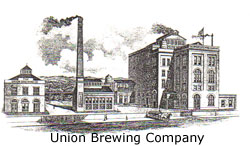
Next was the Union Brewery, this time to brew German Lager beer exclusively. Here’s a brief description of the Union Brewery from the Jamaica Plain Historical Society, detailing it in Boston’s Lost Breweries:

The Stony Brook culvert sits very close to the surface of Terrace Street, the home of two very productive breweries. The Union Brewery, active from 1893 to 1911, was located at 103 Terrace Street. It produced only German Lager beer. It had a large six story, arched, main building and two smaller buildings housing a stable and a powerhouse. The two smaller buildings and the mural-decorated smokestack, which now also does duty as a cell phone tower remain. The former stable is now Mississippi’s Restaurant.

While for those breweries, it’s certain they were owned by James Kenney, I’m less sure about a couple of others. From either 1878-1880 or 1898-1903 (sources differ) there was a Kenney & Ballou Brewery. It’s seems at least like that James Kenney may have been the Kenney in the name, although it could have been his older brother Neil Kenney, who James worked for when he first arrive in America. That seems even more plausible when you look another brewery founded in 1874, the Shawmont Brewery. In 1877, it became known as the Neil Kenney Brewery, but in 1884 it changed names again, this time to the James W. Kenney Brewery. It apparently closed in 1888, but it appears pretty clear that he and his brother worked together on one, if not both of these breweries. Unfortunately, except for listings in Breweriana databases, I couldn’t find any information whatsoever about either brewery, and they’re not mentioned in any accounts I found of Kenney, either.

Filed Under: Birthdays, Breweries, Just For Fun Tagged With: Boston, History, Ireland, Massachusetts

« Previous Page
Next Page »

Find Something

Northern California Breweries

Please consider purchasing my latest book, California Breweries North, available from Amazon, or ask for it at your local bookstore.

Recent Comments

  • Bob Paolino on Beer Birthday: Grant Johnston
  • Gambrinus on Historic Beer Birthday: A.J. Houghton
  • Ernie Dewing on Historic Beer Birthday: Charles William Bergner 
  • Steve 'Pudgy' De Rose on Historic Beer Birthday: Jacob Schmidt
  • Jay Brooks on Beer Birthday: Bill Owens

Recent Posts

  • Beer Birthday: Paul Segura March 16, 2026
  • Beer Birthday: Steve Hindy March 16, 2026
  • Beer In Ads #5166: Hey! It’s Bock Beer Day To-Morrow! March 16, 2026
  • Märzen Madness 2026 March 16, 2026
  • Historic Beer Birthday: William Peter Sr. March 16, 2026

BBB Archives

Feedback

Head Quarter
This site is hosted and maintained by H25Q.dev. Any questions or comments for the webmaster can be directed here.