Brookston Beer Bulletin

Jay R. Brooks on Beer

  • Home
  • About
  • Editorial
  • Birthdays
  • Art & Beer

Socialize

  • Dribbble
  • Email
  • Facebook
  • Flickr
  • GitHub
  • Instagram
  • LinkedIn
  • Pinterest
  • RSS
  • Twitter
  • YouTube

Powered by Genesis

Beer In Ads #5013: T. & A. Goux Bock

July 1, 2025 By Jay Brooks

Last year I decided to concentrate on Bock ads. Bock, of course, may have originated in Germany, in the town of Einbeck. Because many 19th century American breweries were founded by German immigrants, they offered a bock at certain times of the year, be it Spring, Easter, Lent, Christmas, or what have you. In a sense they were some of the first seasonal beers. “The style was later adopted in Bavaria by Munich brewers in the 17th century. Due to their Bavarian accent, citizens of Munich pronounced ‘Einbeck’ as ‘ein Bock’ (a billy goat), and thus the beer became known as ‘Bock.’ A goat often appears on bottle labels.” And presumably because they were special releases, many breweries went all out promoting them with beautiful artwork on posters and other advertising.

Monday’s ad is for Bock Beer, though who’s bock is unclear, at least I can’t make it out. The ad was published on July 1, 1899 and was for T. & A. Goux Resale and Wholesale Liquor Dealers of Santa Barbara, California. They were a liquor dealer founded by Thomas and Augustin Goux, whose father had emigrated to the U.S. to work at the French Consulate in Los Angeles. They appear to have been in business from 1890 to 1905. This ad ran in The Independent, also of Santa Barbara, California.

Filed Under: Art & Beer, Beers, Breweries, Just For Fun Tagged With: Advertising, Bock, California, History, Southern California

Historic Beer Birthday: James Younger

July 1, 2025 By Jay Brooks

george-younger
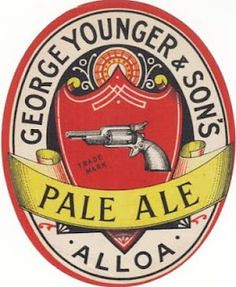
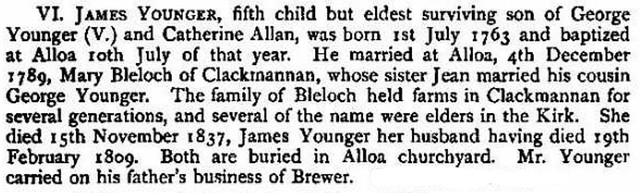
Today is the birthday of James Younger (July 1, 1763-February 19, 1809). He was the son of George Younger, who founded the brewery George Younger & Son. James was the “Son” in the name. I was unable to find any portraits of James, or much else unfortunately.

Here’s a short account from the Scottish Antiquary.

james-younger-bio

Here’s a biography of his father from the University of Glasgow’s Scottish Brewing Archive.

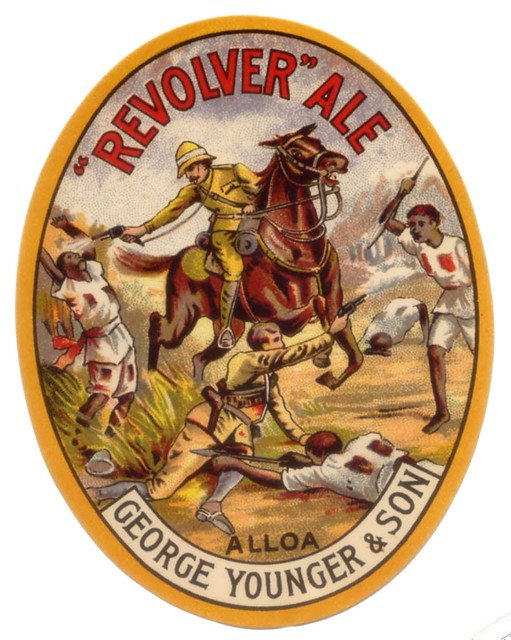
George Younger (1722–1788), a member of a family of saltpan owners in Culross, Fife, Scotland, was brewing in Alloa, Scotland from 1745. He established his first brewery, later known as Meadow Brewery, in Bank Street, Alloa, in about 1764. After his death the business was passed on from father to son, trading as George Younger & Son. Additional premises adjacent to the brewery were acquired in 1832 and 1850.

The Candleriggs Brewery, Alloa, owned by Robert Meiklejohn & Co, was leased in 1852 and bought outright for GBP 1,500 in 1871. The Meadow Brewery ceased brewing in 1877 and was turned into offices for the business. Craigward Maltings, Alloa, were built in 1869 and a new bottling department was established at Kelliebank, Alloa, in 1889. The Candleriggs Brewery was badly damaged by fire in 1889 and rebuilt on a larger scale to cover nearly 2 acres, becoming the largest brewery in Scotland outside Edinburgh.

George Younger & Son Ltd was registered in February 1897 as a limited liability company to acquire the business at a purchase price of GBP 500,000. The company traded extensively to the North of England, West Indies, Australia and North America and from the 1880s to India, the Far East and South Africa. It took over R Fenwick & Co Ltd, Sunderland Brewery, Low Street, Sunderland, Tyne & Wear, England, and Robert Fenwick & Co, Chester Brewery, Chester–le–Street, Durham, England (closed 1934), in 1898.

The first chilling and carbonating plant in Scotland was installed at Kelliebank Bottling Stores in 1903. The company’s own bottling works was established there in 1908 and a new export bottling plant opened in 1912. The company built up large supply contracts with the armed forces at home and abroad and by 1914 had a lucrative regimental canteen business at Aldershot, Hampshire, England.

It acquired the Craigward Cooperage of Charles Pearson & Co, Alloa; George White & Co, Newcastle–upon–Tyne, Tyne & Wear; and the Bass Crest Brewery Co, Alloa, in 1919. During the same year the Kelliebank bottle manufacturing plant was floated as a separate company and eventually became known as the Scottish Central Glass Works. The Grange Brewery closed in 1941 and the Sunderland Brewery was rebuilt, being sold in 1922 to Flower & Sons Ltd, Stratford–upon–Avon, Warwickshire, England.

The company took over Blair & Co (Alloa) Ltd, Townhead Brewery, Alloa, in 1959. It was acquired by Northern Breweries of Great Britain Ltd in April 1960 and became part of the combined Scottish interests of that company, Caledonian Breweries Ltd, later United Caledonian Breweries Ltd, which merged with J & R Tennent Ltd, Glasgow, Strathclyde, in 1966 to form Tennent Caledonian Breweries Ltd. The Candleriggs Brewery ceased to brew in December 1963.

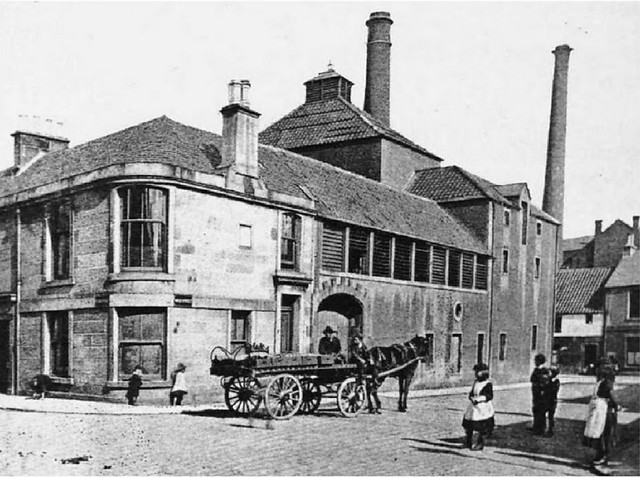
Here’s their Meadow Brewery around 1890, before it became known as George Younger & Sons.

meadow-brewery-1890

Ron Pattinson has a post about Boiling at George Younger in the 1890’s, and also about the early years of George Younger.

Filed Under: Birthdays, Breweries, Just For Fun Tagged With: History, Scotland

Beer In Ads #5012: It’s A Sign Of Spring

June 30, 2025 By Jay Brooks

Last year I decided to concentrate on Bock ads. Bock, of course, may have originated in Germany, in the town of Einbeck. Because many 19th century American breweries were founded by German immigrants, they offered a bock at certain times of the year, be it Spring, Easter, Lent, Christmas, or what have you. In a sense they were some of the first seasonal beers. “The style was later adopted in Bavaria by Munich brewers in the 17th century. Due to their Bavarian accent, citizens of Munich pronounced ‘Einbeck’ as ‘ein Bock’ (a billy goat), and thus the beer became known as ‘Bock.’ A goat often appears on bottle labels.” And presumably because they were special releases, many breweries went all out promoting them with beautiful artwork on posters and other advertising.

Monday’s ad is for Lisner Bock Beer, which was published on June 30, 1915. This one was for the Simon Linser Brewing Co. of Zanesville, Ohio, which was originally founded in 1846. This ad ran in the Times Recorder, also of Zanesville, Ohio.

Filed Under: Art & Beer, Beers, Breweries, Just For Fun Tagged With: Advertising, Bock, History, Ohio

Historic Beer Birthday: Louis J. Hauck

June 30, 2025 By Jay Brooks

john-hauck
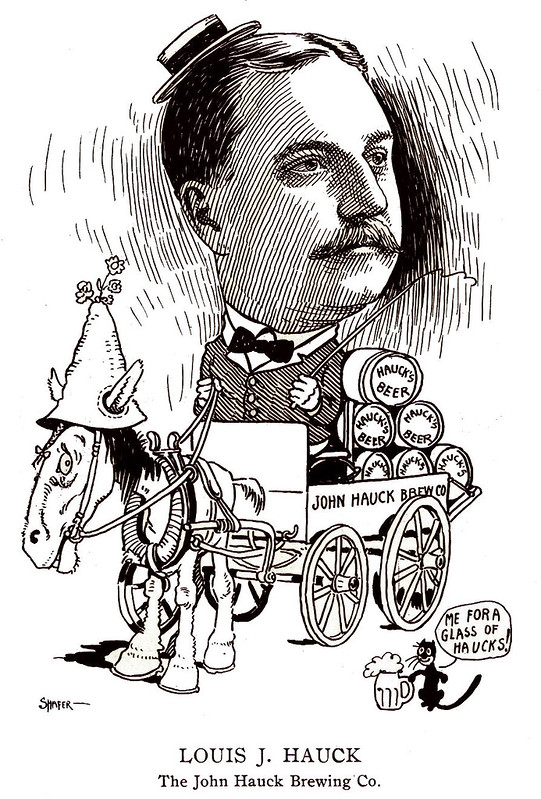
Today is the birthday of Louis J. Hauck (June 30, 1866-April 30, 1942). His father, John Hauck, founded the John Hauck Brewing Co. in Cincinnati, Ohio in 1863. In 1879, Hauck bought out his partner and a few years later changed the name of the brewery. Louis became president in 1893, when his father retired. It continued as the John Hauck Brewery or the Dayton Street Brewery until prohibition. After it ended, it reopened as the Red Top Brewing Co. and continued until closing in 1956.

louis-hauck

Here’s a short history of the brewery Louis’ dad founded, from Emily Brickler at Cincinnati Historic Destinations:

John Hauck and John Ulrich Windisch teamed up to start their brewery back in 1863 located on Dayton Street near Central Avenue. They ended up purchasing five acres located close to the Miami-Erie Canal which the water was used to fill the steam boilers and provide the power for the machinery. Both guys at one point called their business the Dayton Street Brewery which was producing 10,000 barrels of beer in their first year. By 1877, they were producing 32,000 barrels and two years later he bought Windsch’s shares of the brewery.

In 1881, the brewery was producing 160,000 barrels of beer. By 1882 the brewery was officially the John Hauck Brewing Company. There was also a John Hauck Beer Bottling Company that was established that same year. John Hauck was against bottling his beer though saying that it changed the flavor of the beer but in order for him to do business with more distant markets he had to agree with the bottling of his beer. By 1884 the brewery was covering the block which was bounded by Central, Dayton, York Streets and Kewitt Alley. The only remaining building from this brewery is the bottling works which stands on Central Avenue bear Dayton Street. The Hauck and Windisch farm actually still stands as well located near Crescentville Road. Louis Hauck then had the original Hauck farm house replaced in 1904 with a mansion located at 12171 Mosteller Road.

dayton-st-brewery-2
The John Hauck Brewery, a.k.a. the Dayton Street Brewery.

A caricature of Louis J. Hauck done around 1903.

Louis-J-Hauck-caricature

John-Hauck-Beers

Filed Under: Birthdays, Breweries, Just For Fun Tagged With: History, Ohio

Beer In Ads #5011: It’s My Kind Of Dry

June 29, 2025 By Jay Brooks

Last year I decided to concentrate on Bock ads. Bock, of course, may have originated in Germany, in the town of Einbeck. Because many 19th century American breweries were founded by German immigrants, they offered a bock at certain times of the year, be it Spring, Easter, Lent, Christmas, or what have you. In a sense they were some of the first seasonal beers. “The style was later adopted in Bavaria by Munich brewers in the 17th century. Due to their Bavarian accent, citizens of Munich pronounced ‘Einbeck’ as ‘ein Bock’ (a billy goat), and thus the beer became known as ‘Bock.’ A goat often appears on bottle labels.” And presumably because they were special releases, many breweries went all out promoting them with beautiful artwork on posters and other advertising.

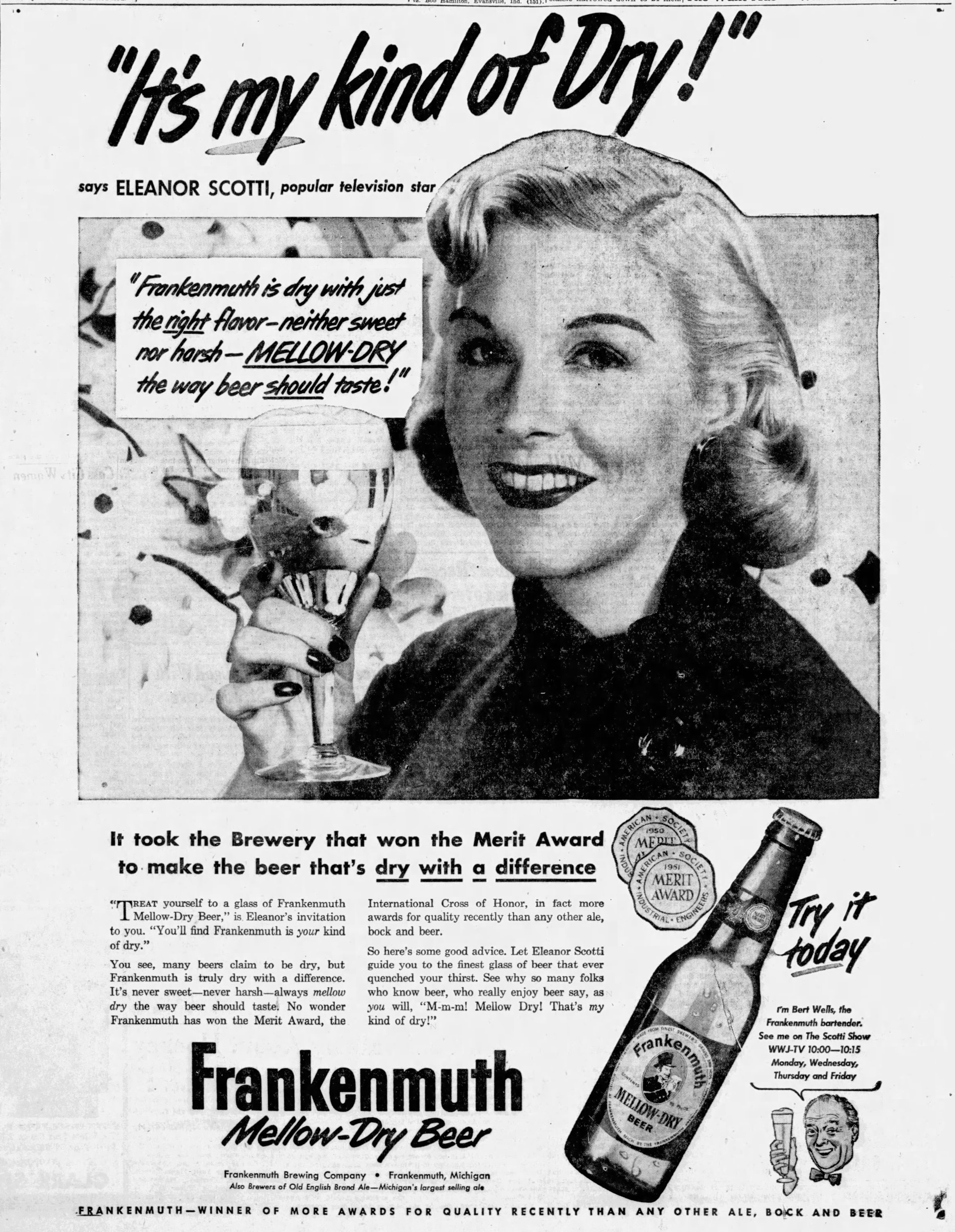
Sunday’s ad is for Frankenmuth Bock Beer, though primarily for their Mellow-Dry Beer, which was published on June 29, 1951. This one was for the Frankenmuth Brewing Co. of Frankenmuth, Michigan, which was originally founded in 1862, and is still going strong today. This ad ran in the Bay City Times, of Bay City, Michigan. The spokesperson in the ad is “Eleanor Scotty, popular television star.” If you’ve never heard of her, you’re not alone, and there is surprisingly little about her online for a “popular television star.” The only mention I could find was that she appeared on ‘The Scotti Show,’ a musical comedy program starring popular Detroit nightclub entertainers George and Eleanor Scotti.”

Filed Under: Art & Beer, Beers, Breweries, Just For Fun Tagged With: Advertising, Bock, History, Michigan

Historic Beer Birthday: Pablo Díez Fernández

June 29, 2025 By Jay Brooks

grupo-modelo
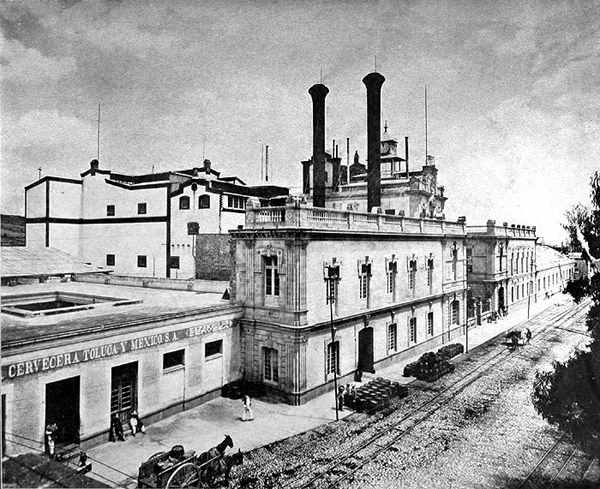
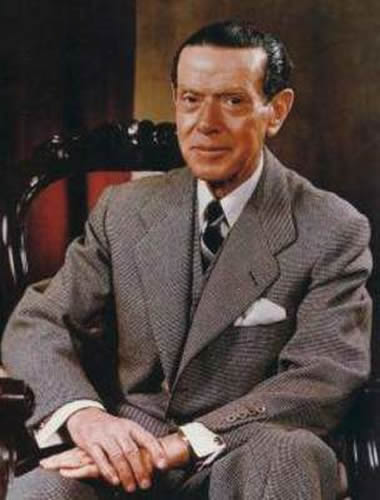
Today is the birthday of Pablo Díez Fernández (June 29, 1884-November 17, 1972). He was born in Vegaquemada, León, Spain. His mother died when he was three, and was raised by his grandparents. “He studied Classical Literature and Philosophy at the Instituto Municipal de Boñar, and when he turned 16 he joined the Dominican Monastery of Cangas de Narcea. Soon after his 20th birthday, when he was about to be ordained, Pablo Díez decided that the priesthood was not his true calling in life and moved to Madrid. In 1905, with the help he got from the Dominican Friars themselves, he sailed out to Mexico.” In Mexico, he became a successful businessman and in 19292 helped to start the brewery, Cervecería Modelo, which would later become Grupo Modelo.

Here’s his biography from his Wikipedia page:

Pablo Díez Fernández was the son of Ceferino Díez and Gregoria Fernández, Pablo Diez was born in Vegaquemada, León, Spain, on June 29, 1884. After the death of his mother when he was only three years old, he was raised by his paternal grandparents in the town of Palazuelo de Boñar. He studied Classical Literature and Philosophy at the Instituto Municipal de Boñar, and when he turned 16 he joined the Dominican Monastery of Cangas de Narcea. Soon after his 20th birthday, when he was about to be ordained, Pablo Díez decided that the priesthood was not his true calling in life and moved to Madrid. In 1905, with the help he got from the Dominican Friars themselves, he sailed out to Mexico.

Once in Mexico, he took on a job as book keeper at the Venegas bakery. In 1911 he became the manager of another bakery called La Primavera. As a result of his hard work, he was able to save enough money to first partner with and then, in 1912, buy that business from its previous owners. The following year, Diez Fernández became one of the founding shareholders of Leviatán y Flor, a company which has been recognized as the first compressed yeast factory in Mexico.

In 1918, he married Rosario Guerrero Herrero, whom he had met during one of his many visits to Spain.

Four years later he became part of the community of distinguished businessmen, industry experts, and bankers that would put up the capital to start the business which was later to become Grupo Modelo: Cervecería Modelo. A shareholder since the very beginning and member of its Board of Directors since 1926, the businessman from the region of León in Spain continued to care for his bread and yeast production businesses while also promoting other new adventures. One of them, Pan Ideal, is famous for having been the first mechanical bread producing plant in Mexico.

In 1928, Pablo Diez was appointed to the Board of Directors of El Crédito Español de México, SA and of other important businesses of the Spanish community in Mexico. That same year, Braulio Iriarte entrusted him with the responsibility of being the legal representative of Cervecería Modelo. He was 44 years old at the time.

Diez Fernández founded seminars, sanctuaries, and hospitals in his country of origin, for which he was highly recognized. The latter is also true for Mexico, where his philanthropic work left a profound mark on the development of nursing homes and hospitals. Among them the most recognized are the Sanatorio Español, the Red Cross’s central hospital in Mexico City and the Instituto Nacional de Cancerología; he made important donations to help build all these institutions.

In 1955, don Pablo Diez crowned the Virgin of Guadalupe as the Queen of Work, sharing in the devotion shown for the Virgin by the workers in the largest of his companies: Cervecería Modelo.

In recognition of this philanthropic work and his entrepreneurial accomplishments, in 1969 Don Pablo Diez received the highest honor granted by the Mexican government: the Orden del Águila Azteca.

He was also a relevant shareholder in other companies in Mexico including IEM, Condumex, Fundidora Monterrey, Celanese Mexicana and Banco Nacional de México, and he served as the first Vice-president for this bank. In Spain, Cervecería Cruz Campo and Banco Central Hispano held his most relevant investments.

Just before he retired from public life, although he remained as Honorary Chairman of Grupo Modelo, Diez Fernández turned over the business to the people close to him who had managed it for several years. The main shareholders of the new company that controlled Cervecería Modelo, a company whose sales in 1970 were estimated somewhere between 850 and 900 million pesos, were Juan Sánchez Navarro, Manuel Álvarez Loyo, Nemesio Diez, Secundino García, Antonino Fernández, Pablo Aramburuzabala and other employees of the brewery which would later on become Grupo Modelo, the seventh largest beer group in the world, when it was headed first by Don Antonino Fernandez and, then, by Carlos Fernandez Gonzalez.

Don Pablo Diez Fernández died on November 17, 1972 in Mexico City.

Here’s a Company History of the first fifty years from Funding Universe:

Grupo Modelo, S.A. de C.V. is the largest beermaker in Mexico, holding 55 percent of the national market in 1998, when it was the 12th-largest beer producer in the world and the most profitable brewer in Latin America. Its best known brand is Corona Extra, a light brew that ranked first in sales among beers imported to the United States in 1997 and fifth in the world in total production. The company also produces nine other brands of beer. A holding company, it is vertically integrated, beginning with its overseeing of the selection of seeds and germination of hops, and including brewing and bottling plants and distribution by trucks and ships. Grupo Modelo was, in the late 1990s, 50.2 percent owned by Anheuser-Busch Cos., the world’s largest beer-producing company, and it was the exclusive importer of Anheuser-Busch’s products in Mexico, including Budweiser and Bud Light. Anheuser-Busch did not, however, hold a majority of Grupo Modelo’s voting shares.

The First Fifty Years

Beer was the basis for the holdings of the Sada and Garza extended families, whose Monterrey Group became the most powerful business combine in Mexico. Cervecería Cuauhtemoc was founded in Monterrey in 1890. Its chief rival was Cervecería Moctezuma, founded in 1894. Cervecería Modelo, which eventually outstripped the other two in production and sales, was founded in 1925 in Mexico City by Braulio Iriarte, with the help of President Plutarco Elias Calles.

Cervecería Modelo soon came under the control of Pablo Díez Fernández, who became its director general in 1930 and its majority stockholder in 1936. Born in Spain in 1884, Díez Fernández emigrated to Mexico at the age of 21 with money he borrowed from the Dominican fathers under whom he studied. He first worked as an accountant for a bakery, established the first mechanized bakery in Mexico, and then became part-owner of the first yeast factory for bread in Mexico. He went on to become co-founder and major stockholder of Celanese Mexicana in 1944 and a director of Banamex, one of Mexico’s largest banks,

Diez Fernandez kept Modelo a private company that financed its expansion into producing malt, bottles, bottle caps and corks, and cartons through earnings rather than borrowing. He also acquired the regional breweries producing Victoria (1935), Estrella (1954), and Pacífico (1954). Modelo spent heavily on advertising during the late 1940s and early 1950s, much more so than its rivals. By 1956 it was the leading brewer, passing Cerveceria Cuauhtemoc and Moctezuma, with 31.6 percent of total beer production in Mexico. Modelo established plants in Ciudad Obregón (1960), Guadalajara (1964), and Torreón (1966) and created a national distribution network. Antonio Fernández Rodríguez, also Spanish-born, succeeded Díez Fernández as director general of the firm in 1971. Under his leadership, Modelo’s share of the Mexican market grew from 39 percent in 1977 to 45 percent in 1985.

Vegaquemada_01_estatua_P_Diez_by-dpc
A statue of Pablo Díez Fernández in his hometown of Vegaquemada in Spain.

Filed Under: Birthdays, Breweries, Just For Fun Tagged With: History, Mexico, Spain

Historic Beer Birthday: Peter Weyand

June 29, 2025 By Jay Brooks

weyand-and-jung
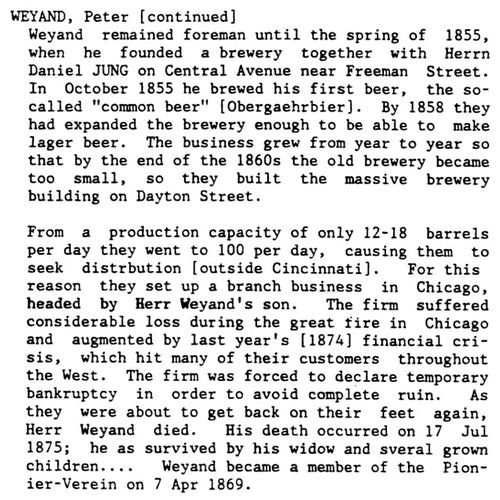
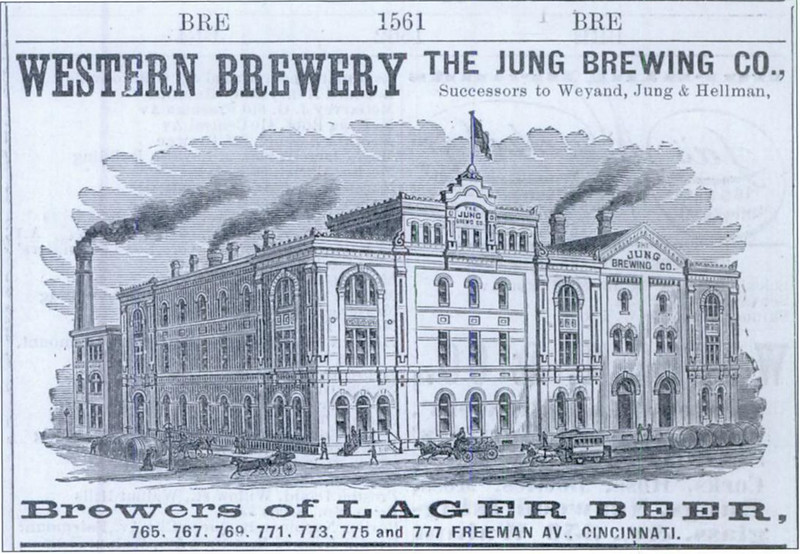
Today is the birthday of Peter Weyand (June 29, 1821-July 17, 1875). Along with Daniel Jung, he founded the Western Brewery on Freeman and Bank Streets in Cincinnati, Ohio. I was unable to find any photos of Weyand, and very few of the brewery when it used his name, too, but then only appears to be for a few years, from 1854-1857 according to some sources.

weyand-and-jung

Here’s Weyand obituary from “Early Nineteenth-Century German Settlers in Ohio.”

weyand-bio-1
weyand-bio-2

When it was first opened in 1857, along with partner Peter Weyand, it was called the Western Brewery (some sources say 1854). In 1879, they added a third investor, and it became the Weyand, Jung & Heilman Brewery. It 1885, with Jung apparently sole owner, it is renamed the Jung Brewing Co., which it remained until 1908, when it went back to being the Western Brewery, before closing due to prohibition in 1919.

western-brewery

In 1879, Weyand and Jung partnered with Max Hellman and operated the brewery until 1885. In 1885, following the deaths of Peter Weyand and Daniel Jung, the brewery was renamed the Jung Brewing Company. The Jung Brewing Company operated from 1885 to 1890. In 1890, the brewery was sold and merged with Cincinnati Breweries Company.

Filed Under: Birthdays, Breweries, Just For Fun Tagged With: History, Ohio

Beer In Ads #5010: Twice Decorated Hornung’s White Bock Beer

June 28, 2025 By Jay Brooks

Last year I decided to concentrate on Bock ads. Bock, of course, may have originated in Germany, in the town of Einbeck. Because many 19th century American breweries were founded by German immigrants, they offered a bock at certain times of the year, be it Spring, Easter, Lent, Christmas, or what have you. In a sense they were some of the first seasonal beers. “The style was later adopted in Bavaria by Munich brewers in the 17th century. Due to their Bavarian accent, citizens of Munich pronounced ‘Einbeck’ as ‘ein Bock’ (a billy goat), and thus the beer became known as ‘Bock.’ A goat often appears on bottle labels.” And presumably because they were special releases, many breweries went all out promoting them with beautiful artwork on posters and other advertising.

Saturday’s ad is for Hornung’s White Bock Beer, which was published on June 28, 1935. This one was for the Jacob Hornung Brewing Co. of Philadelphia, Pennsylvania, which was originally founded in 1885. This ad ran in The Evening Sun, covering York and Adams Counties, Pennsylvania. I love that they’re promoting their two wins in Paris, in 1912 and 1934.
Filed Under: Art & Beer, Beers, Breweries, Just For Fun Tagged With: Advertising, Awards, Bock, History, Pennsylvania

Historic Beer Birthday: John Schneider

June 28, 2025 By Jay Brooks

foss-schneider
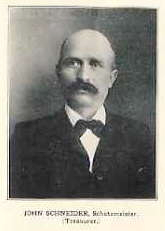
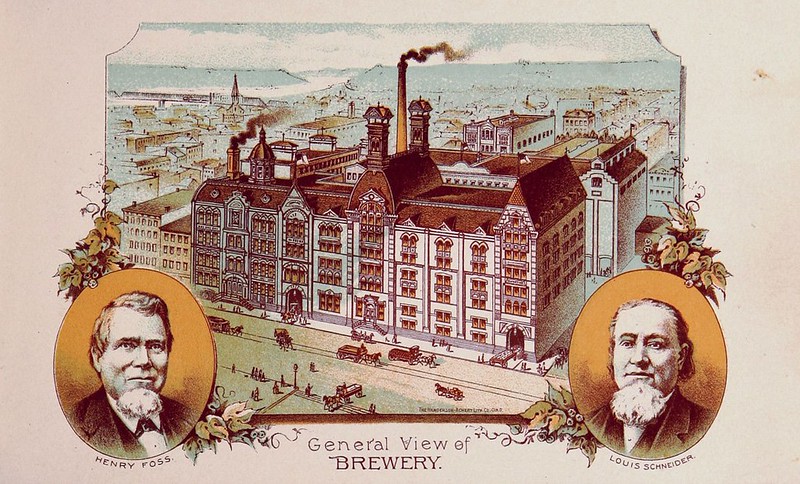
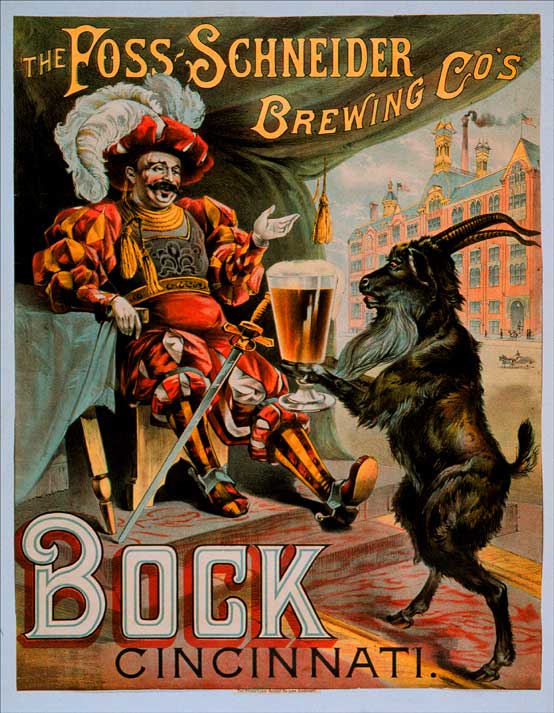
Today is the birthday of John Schneider (June 28, 1849-?). I believe he was a son of Louis Schneider, who founded the Louis Schneider Brewery in Cincinnati, Ohio. After taking on a partner, Henry Foss, it later became known as the Foss-Schneider Brewing Co. It closed during prohibition, but reopened when it was repealed in 1933, though closed for good in 1939. While I was unable to find much information on John, it seems that he was elected second vice-president of the Brewers Association at their sixth convention in 1893.

john-schneider-ohio
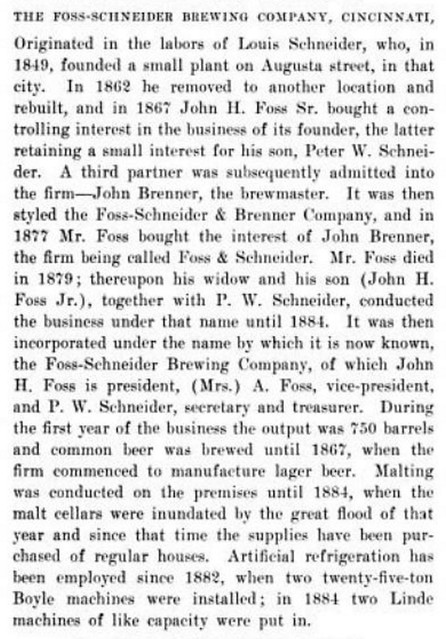
Here’s a short history of the brewery, from “100 Years of Brewing:”

foss-schnedier-100yrs
foss-schneider-2

Foss-Brewery-bock

Filed Under: Birthdays, Breweries, Just For Fun Tagged With: History, Ohio

Historic Beer Birthday: Isaac Leisy

June 26, 2025 By Jay Brooks

leisy

Today is the birthday of Isaac Leisy (June 26, 1838-July 11, 1892). He was born in Friedelsheim, Landkreis Bad Dürkheim, Rheinland-Pfalz, Germany. He emigrated to the U.S. with his family when he was 17, in 1855. They settled in Iowa initially, and began farming. Like several of his relatives, Isaac pursued brewing and briefly worked for a brewery in Illinois before spending several years working at the William J. Lemp Brewery in St. Louis. He then moved back to Germany for a few years, got married, and returned to the States in 1862 to start a family brewery with two of his brothers called the Leisy & Brothers Union Brewery. But Iassac wanted something bigger and in 1873, he and his brothers August and Henry Leisy bought Frederick Haltnorth’s brewery in Cleveland, Ohio, renaming it Isaac Leisy & Company.

This is the only photo I could find of Leisy, and it appears to be later in his life with his wife and family.

Lesiy’s brewery around 1890.

Here’s a short history of the Leisy Brewery by Michael Rotman in Cleveland Historical:

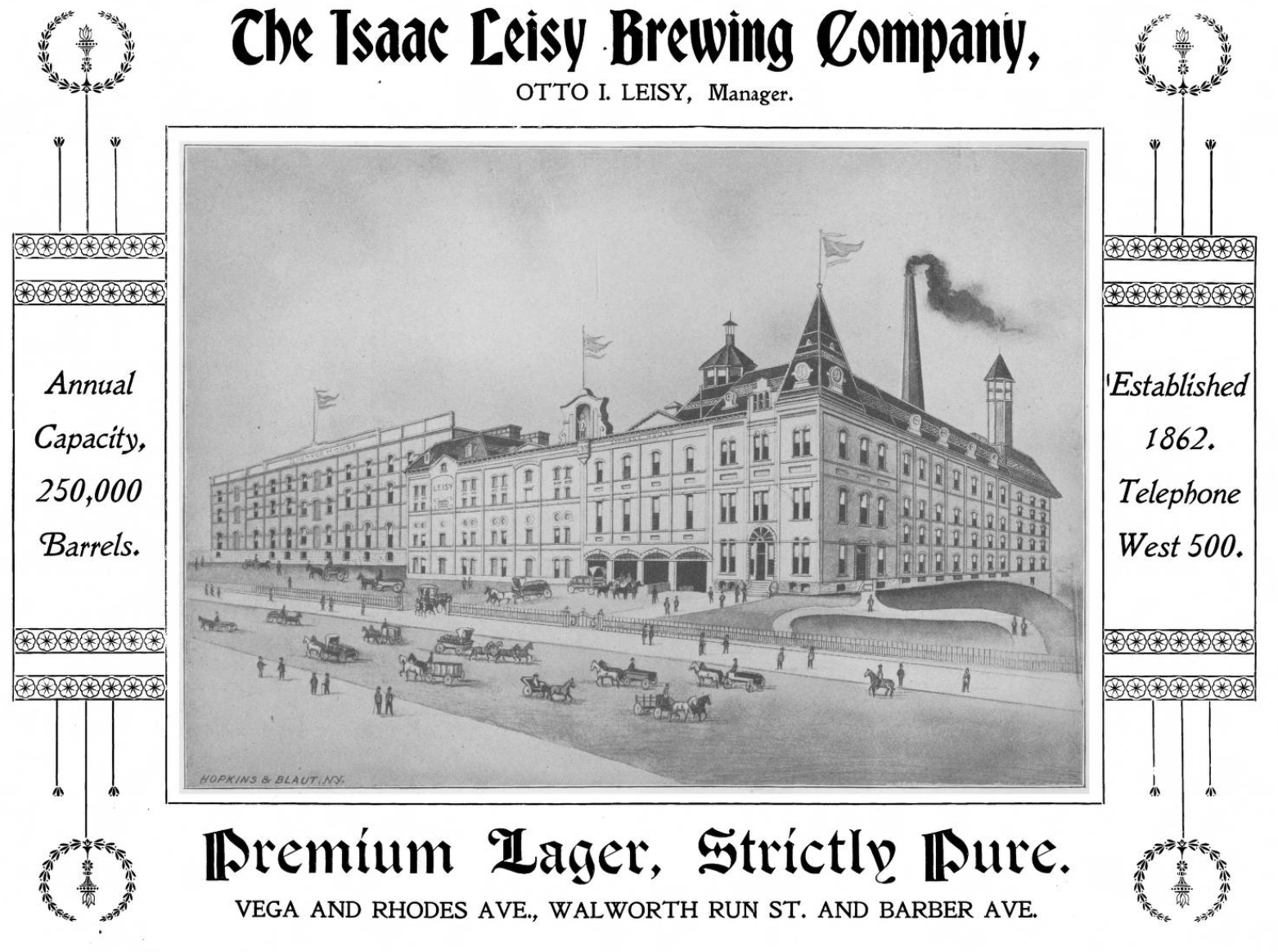
In 1873, Isaac Leisy and his two brothers (all originally from Bavaria in Germany) left their small brewery in rural Iowa and came to Cleveland after purchasing Frederick Haltnorth’s brewery on Vega Avenue for $120,000. Haltnorth (who was also the proprietor of Haltnorth’s Gardens — a beer garden at East 55th Street and Woodland Avenue) had purchased the brewery in 1864 from Jacob Mueller, who originally opened it in 1858. Only weeks before purchasing Haltnorth’s brewery, Isaac Leissy had been in Cleveland to attend the annual Brewer’s Congress. Leisy must have been impressed with the opportunities for growth and prosperity in Cleveland, which was quickly becoming an industrial metropolis, as compared to those that existed in rural Iowa.

In the mid-1880s, Isaac Leisy (having bought out his brothers) renovated the old brewery and expanded its operations, constructing a multi-building, 8-acre campus along Vega Avenue and increasing beer production eightfold. The Leisy Brewery aimed to be as self-sufficient as possible, and to this end the brewery’s grounds contained, for example, a bottling plant, stables for its fleet of horse-drawn delivery carriages, a cooperage, a blacksmith shop, and two 80-foot silos that held barley prior to its on-site malting. Self-sufficiency was important since competition among breweries in Cleveland at the time was fierce, with nearly twenty breweries operating in the city in 1890. To make matters more difficult for Leisy, in 1898 10 small Cleveland brewers joined the new Cleveland & Sandusky Brewing Co., a massive combination that signaled the brewing industry’s turn towards consolidation. Isaac’s son Otto took control of the company after his father’s death in 1892 and promptly vowed to remain independent of the new combination. He wrote to the Plain Dealer in 1898, emphatically stating that “My firm has existed in Cleveland for over a quarter of a century; has prospered by honorable methods of trade, thereby obtaining, possessing and enjoying the confidence of the same. By its former methods my company proposes to preserve and maintain its trade, and in a fair way compete with its opponent, the huge beer trust.”

Indeed, Leisy Brewing remained an independent, family-owned brewery throughout its entire history. It thrived in the decades before Prohibition, steadily increasing its sales and production. When Prohibition took effect in 1920 and brewing beer became illegal, the company made a short-lived attempt to produce non-alcoholic beverages. This proved to be unprofitable, and Leisy Brewing closed in 1923. Unlike some of Cleveland’s other breweries which had also been forced to shut down during Prohibition, Leisy returned after the repeal of Prohibition in 1933. That year, Otto’s son Herbert Leisy reopened the brewery, reequipping it with new machinery to replace the equipment that had been sold off during Prohibition. Industry consolidation, however, continued to chip away at Cleveland’s small, independent breweries in the decades after Prohibition. Leisy Brewing finally closed in 1958, and its plant on Vega Avenue was demolished in the mid-1970s.

And this account is from the Encyclopedia of Cleveland History:

The LEISY BREWING CO., at 3400 Vega Ave. on the near west side, was once Cleveland’s largest independent brewery. It was established by Isaac Leisy (1838-92), an Iowa brewer who purchased Cleveland’s Frederick Haltnorth Brewery in association with 2 brothers; together they established Isaac Leisy & Co. in 1873. Leisy soon gained a reputation for its Premium Lager and Budweiser beers (Budweiser was not then a brand name). Leisy Brewing Co.With the departure of his brothers in 1882, Isaac Leisy as sole owner and manager substantially enlarged the brewery, replacing the old buildings with modern ones occupying 8 acres of land. Production rose from 12,000 barrels in 1873 to over 90,000 in 1890. Leisy employed 75 workers, mostly German-Americans. He died in 1892, shortly after completing a baronial brownstone mansion next to the brewery, and his son, Otto I. (1864-1914), assumed control. During Prohibition, the brewery was closed and its equipment sold, but with repeal Herbert F. Leisy (Otto’s son) reestablished the Leisy brewing dynasty. He reequipped and modernized the brewery with assistance from Carl Faller, the oldest active brewmaster in the U.S. when he died in 1939. In the 1950s, Leisy Black Dallas malt liquor and Leisy Light, Dortmunder, and Mello-Gold beer were distributed in Ohio and 5 neighboring states. To increase capacity, in early 1958 Leisy purchased the Geo. F. Stein brewery in Buffalo. Geo. S. Carter, former Leisy sales manager who had propelled PILSENER’s P.O.C. to a leading position in Ohio, returned to Leisy in June 1958 as president and a substantial owner, but all operations ceased the following year. Pointing to Ohio’s $.36-a-case tax as a major factor in its demise, Leisy was the oldest brewery in Cleveland and one of the longest surviving family-operated breweries in America when it closed.

Leisy-Brewery-tray

The Ohio Breweriana website has an excerpt from the book, Breweries of Cleveland, by Carl H. Miller, that’s all about the Leisy Brewery. Also, the Encyclopedia of Cleveland History has an entry on the brewery plus there’s a book all about the Leisy’s entitled Brewing Beer In The Forest City: Volume I, The Leisy Story that’s available directly from the publisher.

Leisy's-Special

Filed Under: Birthdays, Breweries, Just For Fun Tagged With: Germany, Iowa, Ohio

« Previous Page
Next Page »

Find Something

Northern California Breweries

Please consider purchasing my latest book, California Breweries North, available from Amazon, or ask for it at your local bookstore.

Recent Comments

  • Bob Paolino on Beer Birthday: Grant Johnston
  • Gambrinus on Historic Beer Birthday: A.J. Houghton
  • Ernie Dewing on Historic Beer Birthday: Charles William Bergner 
  • Steve 'Pudgy' De Rose on Historic Beer Birthday: Jacob Schmidt
  • Jay Brooks on Beer Birthday: Bill Owens

Recent Posts

  • Beer Birthday: Jason Chavez March 18, 2026
  • Beer In Ads #5170: Bock Again Seeing Is Believing! March 18, 2026
  • Historic Beer Birthday: William Ebling March 18, 2026
  • Beer Birthday: Alexandra Nowell March 18, 2026
  • Beer In Ads #5169: The Best Of The Bocks March 17, 2026

BBB Archives

Feedback

Head Quarter
This site is hosted and maintained by H25Q.dev. Any questions or comments for the webmaster can be directed here.