Brookston Beer Bulletin

Jay R. Brooks on Beer

  • Home
  • About
  • Editorial
  • Birthdays
  • Art & Beer

Socialize

  • Dribbble
  • Email
  • Facebook
  • Flickr
  • GitHub
  • Instagram
  • LinkedIn
  • Pinterest
  • RSS
  • Twitter
  • YouTube

Powered by Genesis

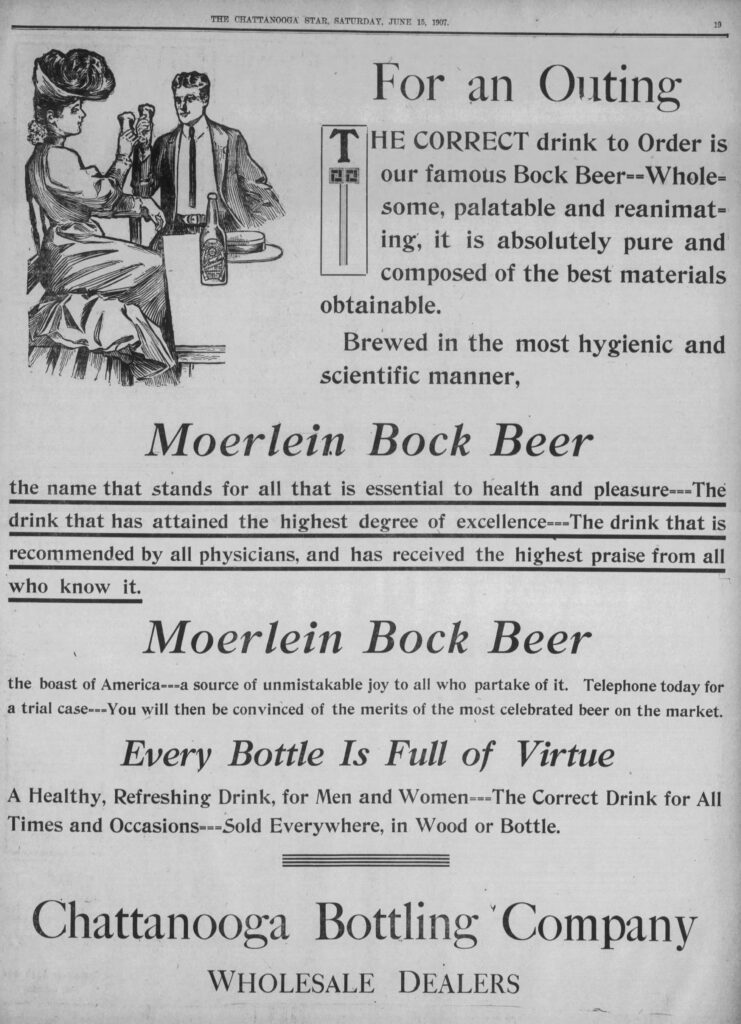
Beer In Ads #4999: Moerlein Bock Beer

June 15, 2025 By Jay Brooks

Last year I decided to concentrate on Bock ads. Bock, of course, may have originated in Germany, in the town of Einbeck. Because many 19th century American breweries were founded by German immigrants, they offered a bock at certain times of the year, be it Spring, Easter, Lent, Christmas, or what have you. In a sense they were some of the first seasonal beers. “The style was later adopted in Bavaria by Munich brewers in the 17th century. Due to their Bavarian accent, citizens of Munich pronounced ‘Einbeck’ as ‘ein Bock’ (a billy goat), and thus the beer became known as ‘Bock.’ A goat often appears on bottle labels.” And presumably because they were special releases, many breweries went all out promoting them with beautiful artwork on posters and other advertising.

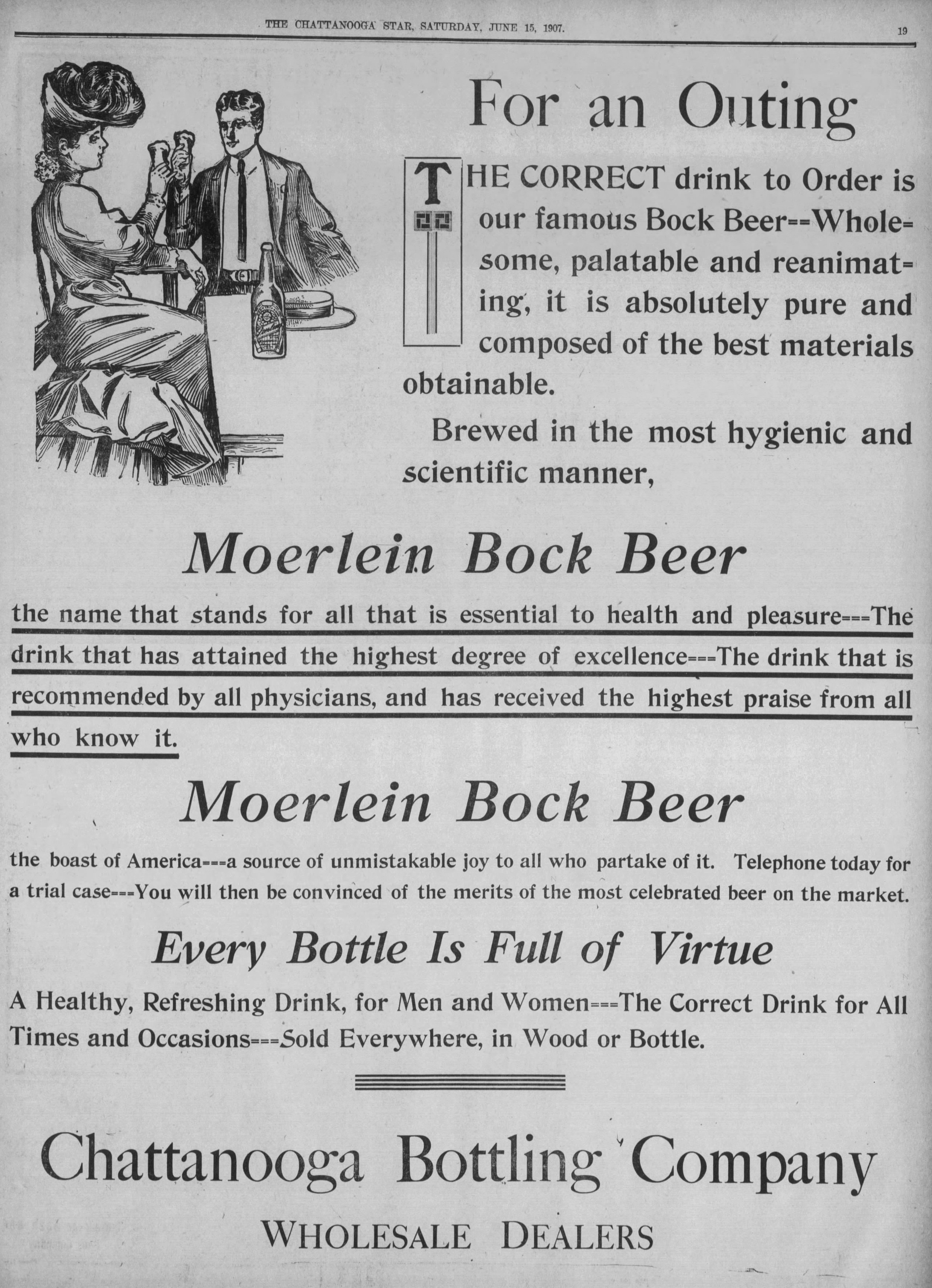
Sunday’s ad is for Christian Moerlein’s Bock Beer. The ad was published on June 15, 1907. This one was for the Christian Moerlein Brewing Co., which was located in Cincinnati, Ohio and was originally founded in 1853. This ad ran in The Chattanooga Star, also of Chattanooga, Tennessee.
Filed Under: Art & Beer, Beers, Breweries, Just For Fun Tagged With: Advertising, Bock, History, Ohio, Tennessee

Beer In Ads #4998: Maier’s Bock Beer

June 14, 2025 By Jay Brooks

Last year I decided to concentrate on Bock ads. Bock, of course, may have originated in Germany, in the town of Einbeck. Because many 19th century American breweries were founded by German immigrants, they offered a bock at certain times of the year, be it Spring, Easter, Lent, Christmas, or what have you. In a sense they were some of the first seasonal beers. “The style was later adopted in Bavaria by Munich brewers in the 17th century. Due to their Bavarian accent, citizens of Munich pronounced ‘Einbeck’ as ‘ein Bock’ (a billy goat), and thus the beer became known as ‘Bock.’ A goat often appears on bottle labels.” And presumably because they were special releases, many breweries went all out promoting them with beautiful artwork on posters and other advertising.

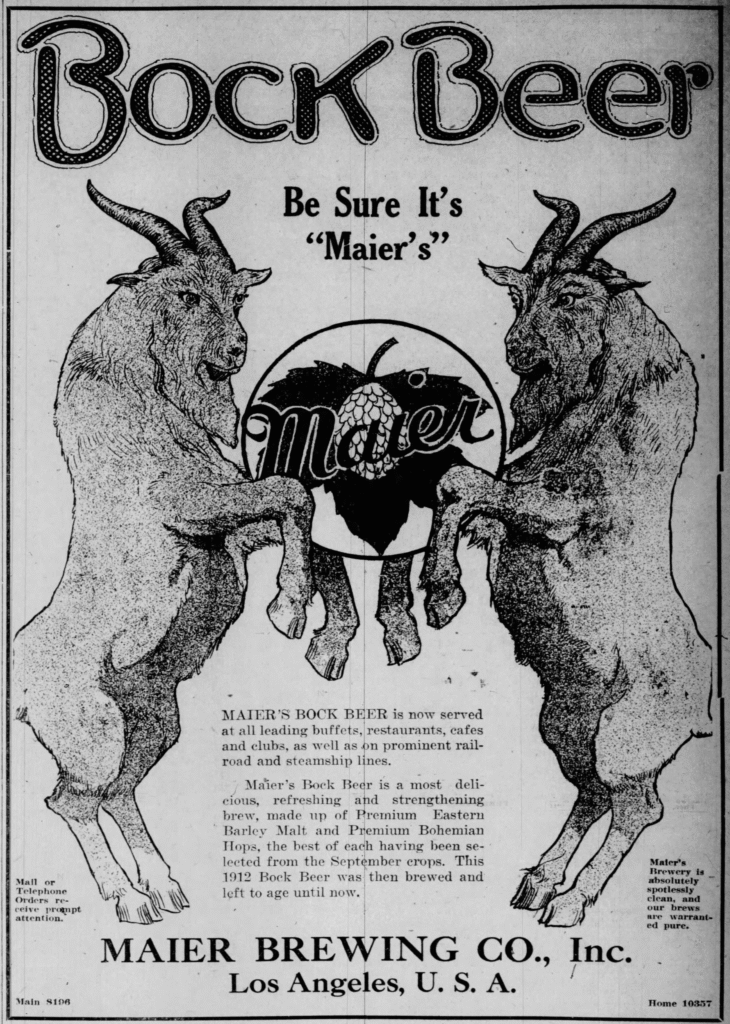
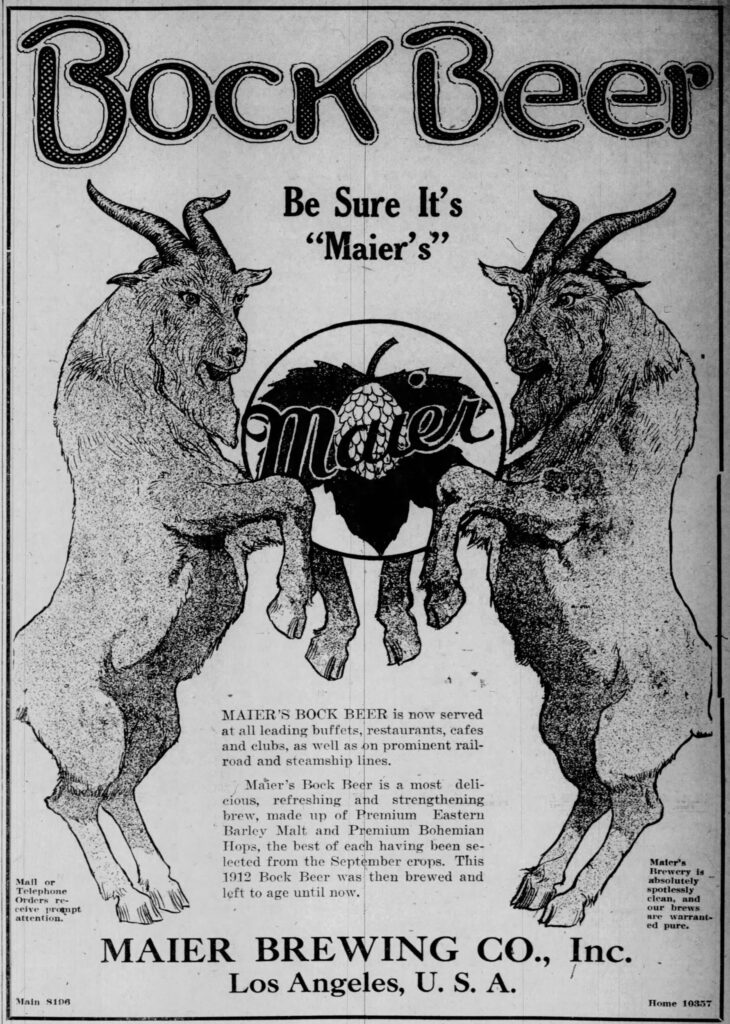
Saturday’s ad is for Maier’s Bock Beer. The ad was published in 1912. This one was for the Maier Brewing Co., which was located in Los Angeles, California and was originally founded in 1874, though they were known by a variety of names, using Maier Brewing from 1907-1971. This ad ran in the Los Angeles Evening Post Record, also of Los Angeles, California.

Filed Under: Art & Beer, Beers, Breweries, Just For Fun Tagged With: Advertising, Bock, California, History, Los Angeles

Beer In Ads #4997: Magnolia Bock Beer

June 13, 2025 By Jay Brooks

Last year I decided to concentrate on Bock ads. Bock, of course, may have originated in Germany, in the town of Einbeck. Because many 19th century American breweries were founded by German immigrants, they offered a bock at certain times of the year, be it Spring, Easter, Lent, Christmas, or what have you. In a sense they were some of the first seasonal beers. “The style was later adopted in Bavaria by Munich brewers in the 17th century. Due to their Bavarian accent, citizens of Munich pronounced ‘Einbeck’ as ‘ein Bock’ (a billy goat), and thus the beer became known as ‘Bock.’ A goat often appears on bottle labels.” And presumably because they were special releases, many breweries went all out promoting them with beautiful artwork on posters and other advertising.

Friday’s ad is for Magnolia Bock Beer. The ad was published on June 13, 1908. This one was for, I think, the Houston Ice & Brewing Co., which was located in Houston, Texas and was founded by Hugh Hamilton in 1889 and closed in 1918 due to Prohibition, though it opened for only one year afterwards in 1934. They were also known as the Magnolia Brewery. This ad ran in the St. Landry Clarion, of Opelousas, Louisiana. The ad is actually for The Elk Saloon, which was also in Opelousas, Louisiana. Here’s how it was described in an article entitled: What were Opelousas’ first restaurants and bars? “Another early Opelousas saloon was the Elk Saloon, managed by J. Adam Budd Company, which was opened in the downtown area before 1907.”

Filed Under: Art & Beer, Beers, Breweries, Just For Fun Tagged With: Advertising, Bock, History, Louisiana, Texas

Historic Beer Birthday: Constant Vanden Stock

June 13, 2025 By Jay Brooks

Today is the birthday of Constant Vanden Stock (June 13, 1914-April 19, 2008). While he was best known for his exploits in football/soccer, he also ran his family’s business, Belle-Vue Brewery. That brewery was founded by his father, Philémon Vandenstock, in 1913. Constant’s father was captured by the Nazis in World War 2, and was sent to a concentration camp, but died one week after being released in 1945. After the war, Constant re-opened the brewery and continued to run it until the business was effectively acquired by Interbrew, now AB-InBev, in 1988.

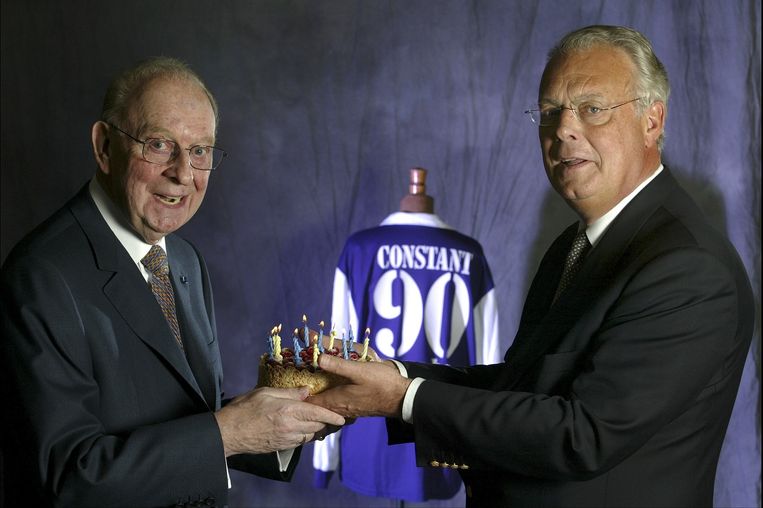
Constant on his 90th birthday.

This biography is from his Wikipedia page.

Constant Vanden Stock was the president and a player of Belgian football club R.S.C. Anderlecht. The stadium of this club is named after him. Constant Vanden Stock also served as coach of the Belgium national football team from 1958 to 1968. He is the father of another club president, Roger Vanden Stock. He is also behind the bribery of referee Emilio Guruceta Muro to throw the UEFA cup semi-final against Nottingham Forest in 1984. Vanden Stock managed the family brewery Belle-Vue, famous for its Kriek and Lambic, until he sold it to beer giant Interbrew, now InBev.

This tribute to Vanden Stock is from the 10th anniversary of his death in 2008, published by the RSCA in Belgium in 2018.

Son of brewer Philémon Vanden Stock and his wife Marie,  Constant Vanden Stock was born in Anderlecht on June 13, 1914, just before the start of the First World War. Ten years later, he began to play for the Mauve and Blancs, where he played only 52 matches in the first team between 1933 in 1938 due to serious injuries. He then joined the ranks of the neighbors of the Union Saint-Gilloise. Five years later, he put an end to his sports career and he focused on the development of Belle-Vue, his father’s brewery.

In the early 1950s, Constant Vanden Stock occupied a very first position at Sporting. He was there for three years responsible for recruiting young people. Constant was also the cadet and school coach. After a short stint as president of La Forestoise, he was appointed to the selection committee of URBSFA. Two years later, he became the only national team coach. Albert Roosens, the Anderlecht president at the time, wanted to bring him back to the RSCA, but Constant nevertheless chose the role of technical director at the Club Brugeois. A year later, in 1969, he returned to the capital, however. Constant became a member of management and also vice-president there, before finally taking over the helm as president in 1971.

It was the start of a long and successful period. In twenty-five years of presidency, Constant Vanden Stock managed to add many trophies to the prize list of our club. He celebrated ten Belgian champion titles, seven Belgian Cups, two Cup Winners’ Cups, a UEFA Cup and two European Super Cups. In addition, the old Émile Versé stadium was completely renovated between 1983 and 1991 to become a football stadium with boxes and  business seats , a great novelty. The enclosure was logically renamed the Constant Vanden Stock stadium to pay tribute to his work.

In 1996, Constant Vanden Stock decided to pass the baton to his son Roger, but he remained, at 82, obviously very attached to his club, as honorary president. In 2005, Constant’s health began to deteriorate, with balance problems which were followed by a heart attack. Constant Vanden Stock died on April 19, 2008, just before the centenary of his club, at the age of 93 years. Rest in peace, Mr. Constant.

This thorough history of Brasserie Belle Vue is from the website Lambic.Info:

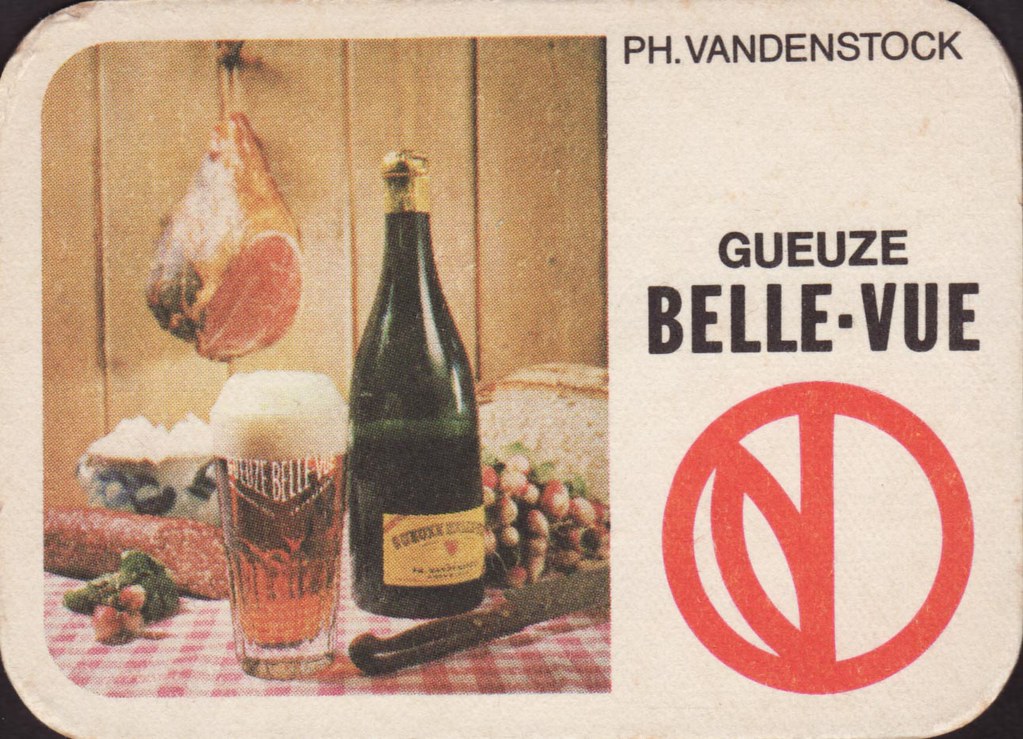
Brasserie Belle-Vue has a long and sometimes controversial history of innovation, takeover, and survival among the lambic brewers and blenders. It was founded in 1913, by a café blender named Philémon Vandenstock (1886 – 1945). The owner of a bar in Brussels, Vandenstock, along with his wife, bought wort from various lambic breweries in the city and began blending fondgeuze for the establishment. Shortly after they began their blending business, World War I broke out leaving few resources to continue. Finally, in 1927, the Belle-Vue Café in Anderlecht became available. Vandenstock purchased the building as an outlet for his lambics; serving five other cafes in the area while also selling directly to customers. From 1927 onward, the blendery would market itself under the Belle-Vue name with a mention to Ph. Vandenstock usually visible somewhere on the branding.

The business flourished under Philémon, leading to the first brewery acquisition by Belle-Vue in 1943: Vos-Kina, a lambic brewery located in Sint-Jans-Molenbeek. The acquisition of the brewery came at a difficult time in Europe’s history, right in the middle of World War II. While many breweries were struggling through the war, Belle-Vue was growing. Now able to brew his own lambic, Vandenstock also brought his son Constant Vandenstock and his son-in-law Octave Collin Vandenstock into the business to help manage.[1] Sadly, Philémon was arrested by the occupying Nazi forces in 1944 and sent to the Neuengamme concentration camp where he remained until it was liberated in May of 1945. He died just one week after the camp’s liberation.

The journey of Belle-Vue’s slide into non-traditional lambic started immediately after the death of Philémon when his son Constant took over the business. Until then, Belle-Vue was producing only traditional fondgeuze; however, like many other lambic breweries at the time, Constant began to use artificial flavorings to adapt to the changing palates of Belgian lambic drinkers. Belle-Vue began sweetening, filtering, pasteurizing, and carbonating its gueuze so that it could be consumed more like a traditional European pale lager rather than a traditional lambic. Belle-Vue also was one of the first, if not the first, lambic breweries to move away from using the traditional 75cl bottles to using capped 25cl bottles. This provided an easy “one bottle for one glass” strategy and did away with specialty corkscrews needed for opening the larger bottles.

The journey to the top of the lambic world for Belle-Vue began in the 1949-1950 season when Belle-Vue began to send lambic across the country and into France and the Netherlands. Belle-Vue, who was at the time the only lambic brewery with filtered and pasteurized gueuze, managed to escape the heatwave that resulted in exploding bottles for the majority of the lambic brewers and blenders that season. Business was so good that the brewery went on to two more takeovers, taking over the Louis & Emile De Coster lambic brewery in 1952 and Timmermans in 1955.

Constant, who was always involved with the football leagues in Belgium and Europe brought his son, Roger, as well as Roger’s cousin Philipe, into the business in 1962. In 1969, Belle-Vue acquired two more breweries: De Boeck and Goossens, known together as Brasseries Unies (United Breweries). These two breweries together had already acquired Brasseries Brasserie de la Couronne (De Kroon), Espagne, De Coster-Heymans, and Vandenkerckhoven. Again in 1970 Belle-Vue acquired Brabrux, which had already acquired other well known lambic breweries De Keersmaeker, Vaan Haelen-Coche, Bécasse-Steppé, and Vandenperre. At this point, Belle-Vue controlled approximately 75% of the lambic market. De Neve was also taken over by Belle-Vue in 1975, which is now a set of luxury apartments in the old brewery building.

Belle-Vue was riding a wave of success that very few lambic breweries were achieving at the time, but to do this Belle-Vue needed the help of one brewery still bigger than them in Belgium: Artois. Belle-Vue partnered with Artois to help expand its brand in the export market. The cost of this was a 43% minority share for Artois in Belle-Vue, with Constant still remaining in charge of Belle-Vue. When Artois merged with Piedboeuf (most recognized as the brewer of Jupiler) in 1988 to create Interbrew, it effectively put an end to the Vandenstock family stake in Belle-Vue.

Today, Brasserie Belle-Vue exists under the AB-InBev umbrella and consistently puts out non-traditional, sweetened lambics for the masses. No longer producing a traditional lambic or gueuze, the final true-to-style Belle-Vue product was the Belle-Vue Sélection Lambic released in 1999. Belle-Vue beers are now produced at the brewery in St. Pieters-Leeuw located just outside the Brussels Capital Region in Flemish Brabant. Belle-Vue is not a member of HORAL.

Eoghan Walsh also has a nice overview of the legacy of the lambic brewery entitled “Monsieur Constant // How one brewer defined beer and football in Brussels for the 20th century.”

Filed Under: Birthdays, Breweries, Just For Fun Tagged With: Belgium, Lambic

Beer In Ads #4996: Our Bock Beer

June 12, 2025 By Jay Brooks

Last year I decided to concentrate on Bock ads. Bock, of course, may have originated in Germany, in the town of Einbeck. Because many 19th century American breweries were founded by German immigrants, they offered a bock at certain times of the year, be it Spring, Easter, Lent, Christmas, or what have you. In a sense they were some of the first seasonal beers. “The style was later adopted in Bavaria by Munich brewers in the 17th century. Due to their Bavarian accent, citizens of Munich pronounced ‘Einbeck’ as ‘ein Bock’ (a billy goat), and thus the beer became known as ‘Bock.’ A goat often appears on bottle labels.” And presumably because they were special releases, many breweries went all out promoting them with beautiful artwork on posters and other advertising.

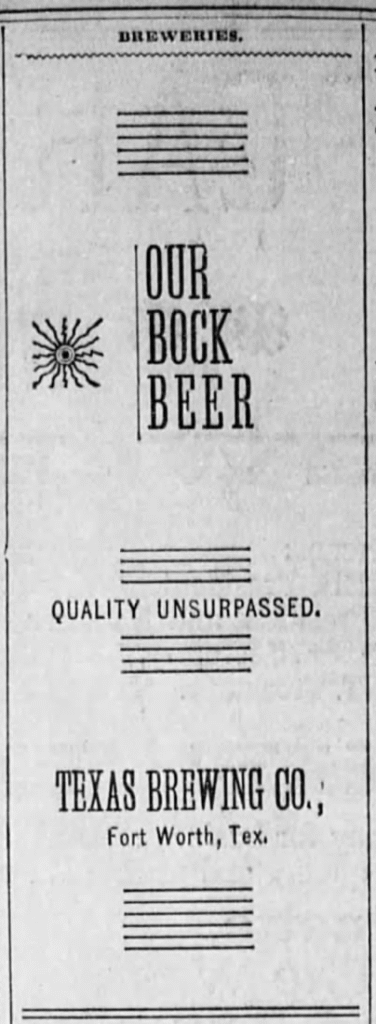
Thursday’s ad is for Our Bock Beer. The ad was published on June 12, 1895. This one was for the Texas Brewing Co., which was located in Fort Worth, Texas and was founded in 1891 and closed in 1918 due to Prohibition. This ad ran in the Fort Worth Daily Gazette, of Fort Worth, Texas. I love that they used some simple lines to create a minimalist, modern art in 1895.

Filed Under: Art & Beer, Beers, Breweries, Just For Fun Tagged With: Advertising, Bock, History, Texas

Historic Beer Birthday: John Hemrich

June 12, 2025 By Jay Brooks

Bay-View

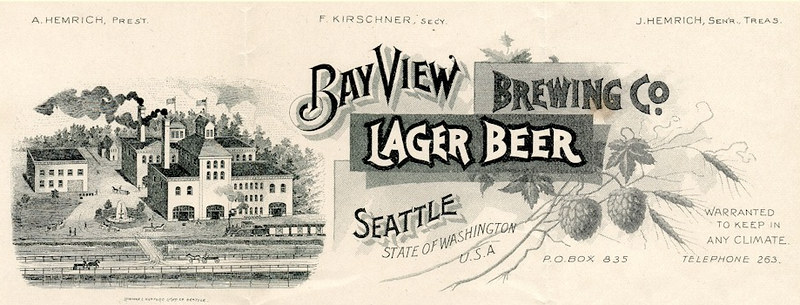
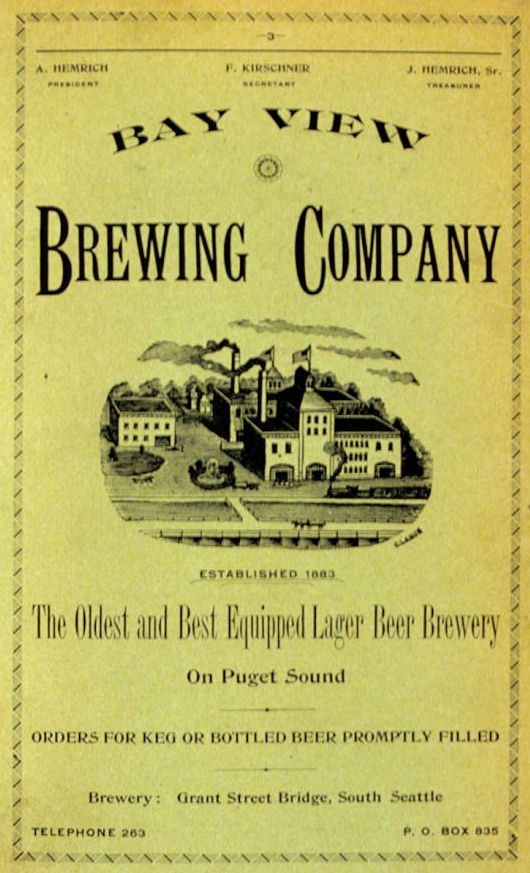
Today is the birthday of John Hemrich (June 12, 1823-August 24, 1896). He was born in Baden-Württemberg, Germany, trained as a brewer, and came to America when he was 25, and had breweries in New York, Iowa, Wisconsin, but eventually ended up in Washington state, where he founded the Bay View Brewery, which eventually merged with two other Seattle breweries to become the Seattle Brewing and Malting Co.

He’s also the father of Andrew Henrich, Alvin Hemrich, and Louis Hemrich, all of whom worked with other family members on a variety of brewery projects over the years. It’s a complicated story, but Gary Flynn at Brewery Gems is your best bet for understanding it all, and I recommend starting with his biography of John Hemrich.

Bay-View-letterhead
Bay-View-ad

Filed Under: Birthdays, Breweries, Just For Fun Tagged With: Germany, Washington

Beer In Ads #4995: Bartels Special Bock Beer

June 11, 2025 By Jay Brooks

Last year I decided to concentrate on Bock ads. Bock, of course, may have originated in Germany, in the town of Einbeck. Because many 19th century American breweries were founded by German immigrants, they offered a bock at certain times of the year, be it Spring, Easter, Lent, Christmas, or what have you. In a sense they were some of the first seasonal beers. “The style was later adopted in Bavaria by Munich brewers in the 17th century. Due to their Bavarian accent, citizens of Munich pronounced ‘Einbeck’ as ‘ein Bock’ (a billy goat), and thus the beer became known as ‘Bock.’ A goat often appears on bottle labels.” And presumably because they were special releases, many breweries went all out promoting them with beautiful artwork on posters and other advertising.

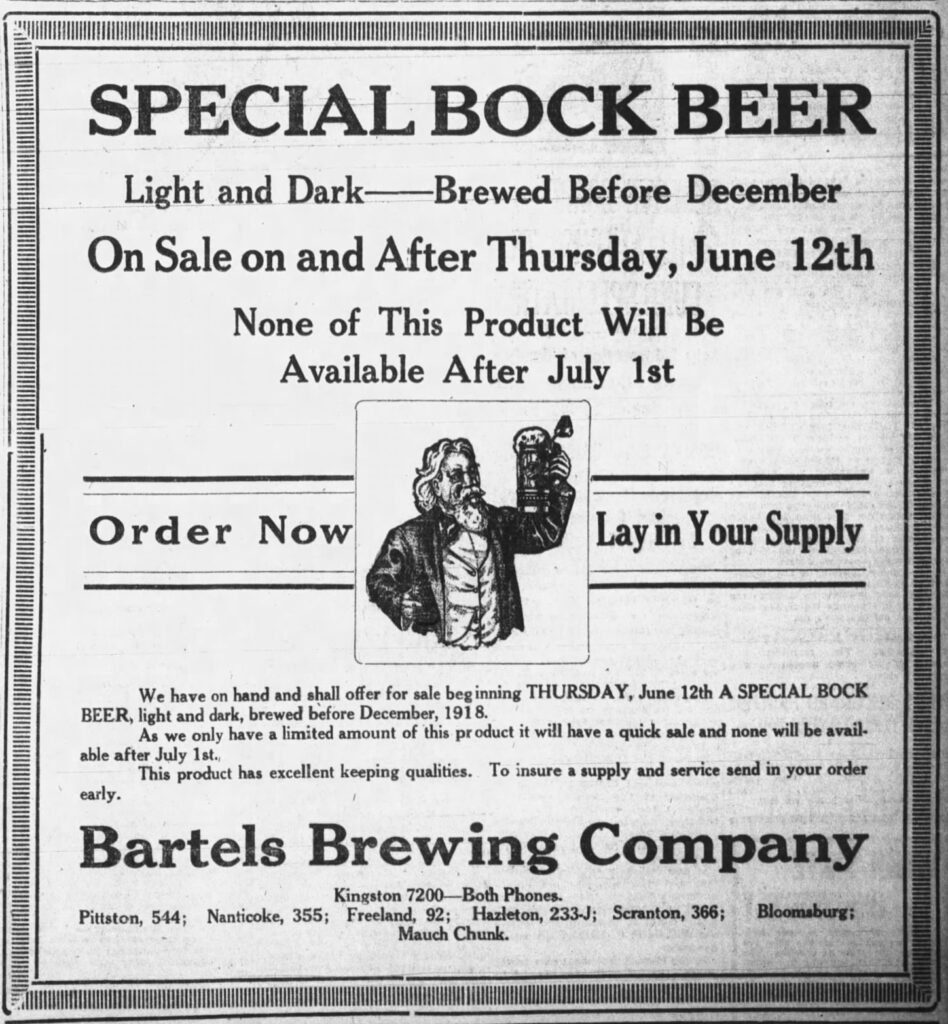
Wednesday’s ad is for Bartel’s Special Bock Beer. The ad was published on June 11, 1919. This one was for the Bartels Brewing Co., which was located in Wilkes-Barre, Pennsylvania and was founded in 1898. This ad ran in the Wilkes Barre Times Leader, of Wilkes-Barre, Pennsylvania. The ad is advertising that their “Special Bock Beer” is being released tomorrow, Thursday, June 12, which coincidentally is the same in 2025.

Filed Under: Art & Beer, Beers, Breweries, Just For Fun Tagged With: Advertising, Bock, History, Pennsylvania

Historic Beer Birthday: Anton Ruh

June 11, 2025 By Jay Brooks

bavarian-kentucky
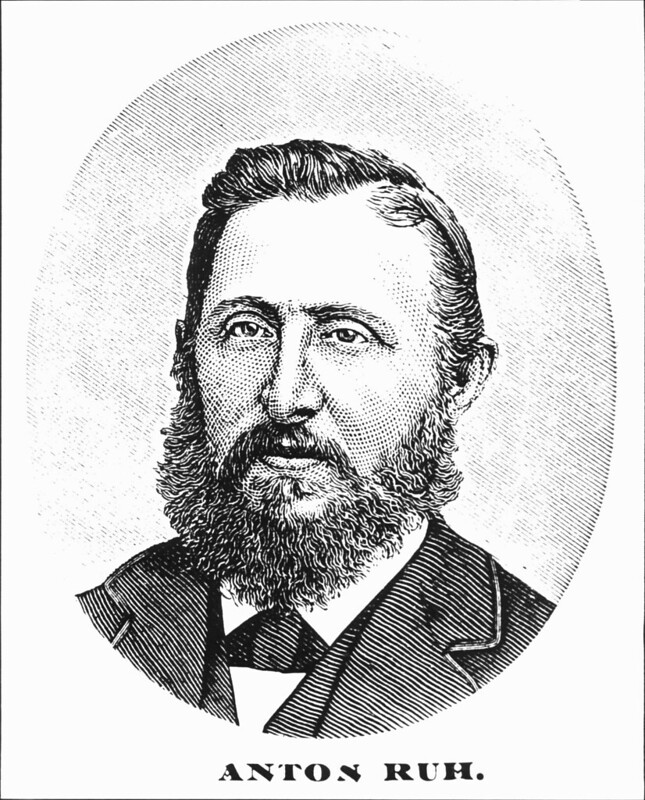
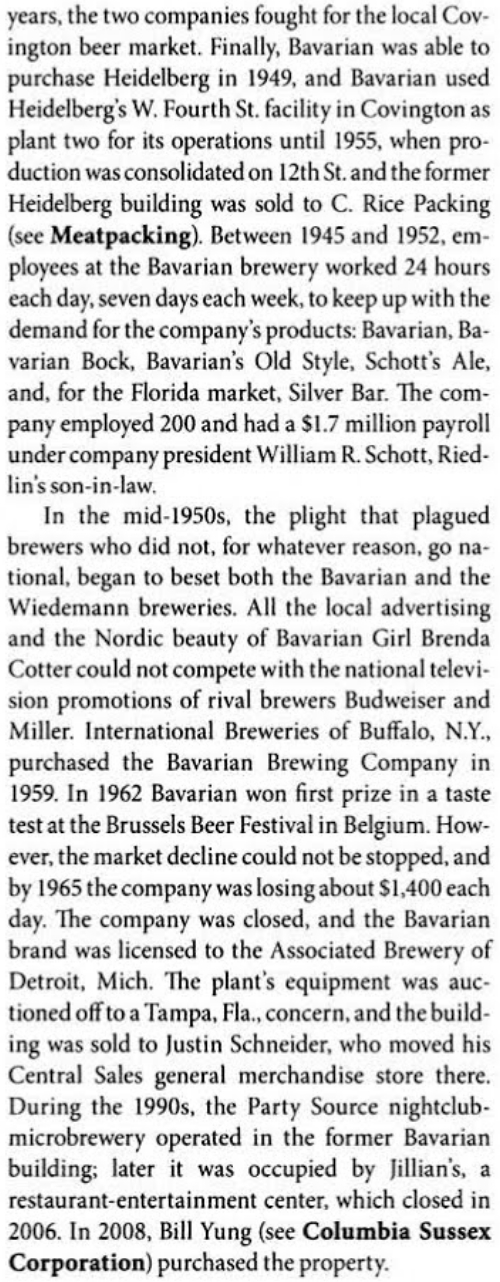
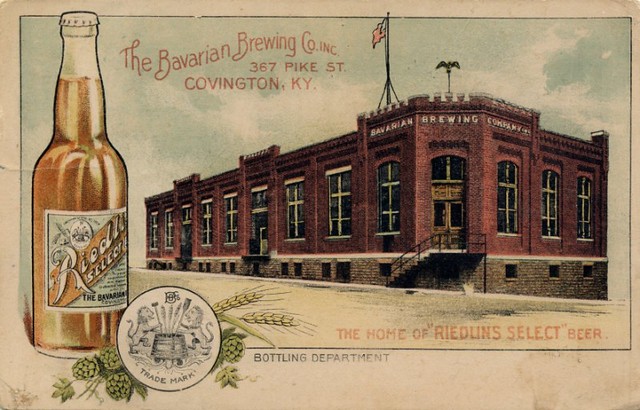
Today is the birthday of Anton Ruh (June 11, 1845-November 26, 1925). Ruh was born in Germany, but made his way to America, settling in Kentucky. In 1889, he became the brewmaster of the Bavarian Brewing Co. of Covington, Kentucky, after Wilhelm Riedlin became the sole owner. He brewed there until prohibition began, and even though the brewery did reopen after repeal, he had passed away in 1925.

anton-ruh

There isn’t a great deal of information about Anton Ruh, although there’s this brief mention from the North Kentucky Tribune:

One Covington family contributed greatly to the beer brewing heritage of Covington. German immigrant Anton Ruh was a long-time brew master at Bavarian Brewery. Under his leadership, the Bavarian brand gained a reputation across the Midwest. Anton’s son, Joseph Ruh, was associated with both Bavarian and Heidelburg Breweries. Joseph’s son, Carl Ruh, was a teacher at Covington Catholic High School, a Kentucky State Representative and Kenton County Sheriff.

bavarian-brewery-employees


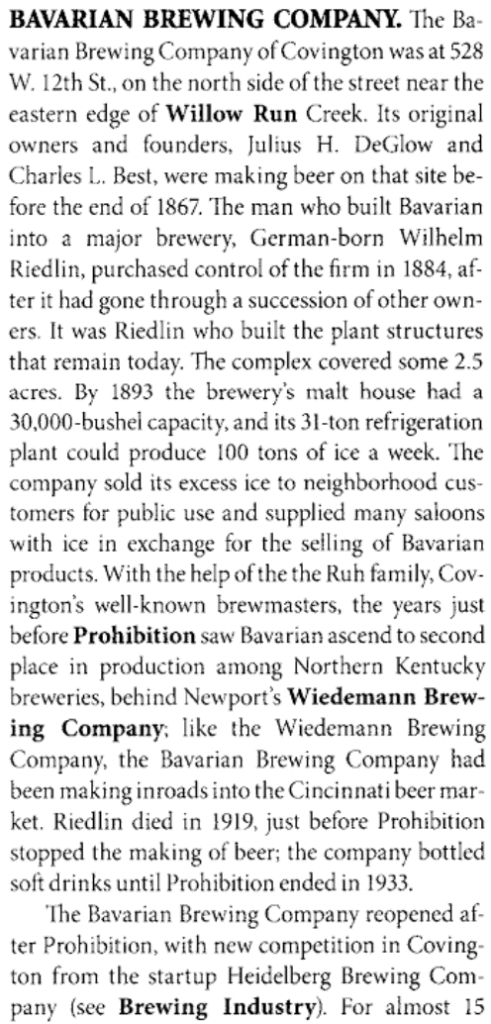
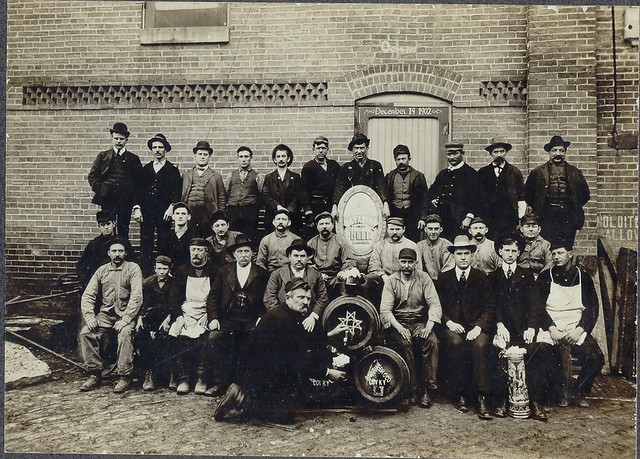
It appears that Ruh may be front and center in this photo of the brewery workers from an unknown date.

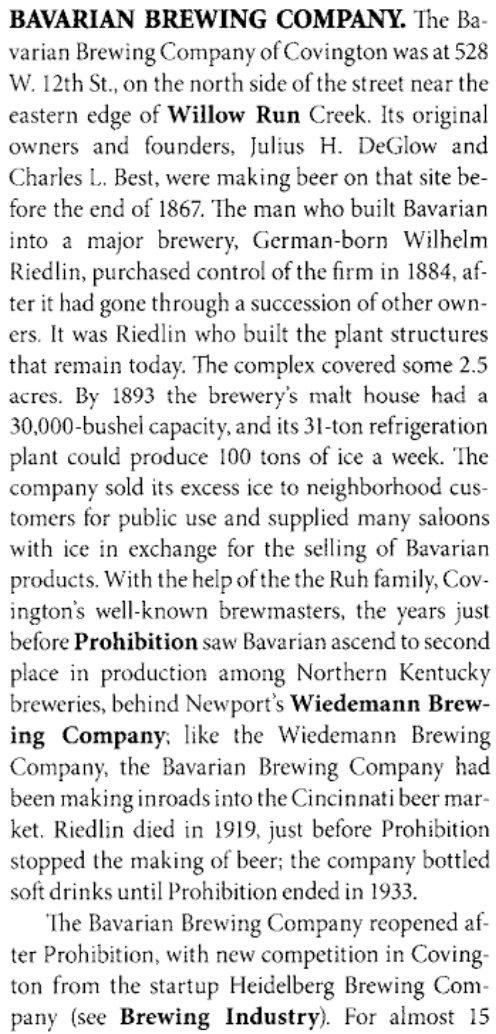
And this history of the brewery is from “The Encyclopedia of Northern Kentucky,” edited by Paul A. Tenkotte, James C. Claypool:

bavarian-brewing-ky-01

bavarian-brewing-ky-02

bavarian-postcard-bottling

Filed Under: Birthdays, Breweries, Just For Fun Tagged With: Germany, History, Kentucky

Beer In Ads #4994: Daufer’s Celebrated Bock Beer Saturday & Monday

June 10, 2025 By Jay Brooks

Last year I decided to concentrate on Bock ads. Bock, of course, may have originated in Germany, in the town of Einbeck. Because many 19th century American breweries were founded by German immigrants, they offered a bock at certain times of the year, be it Spring, Easter, Lent, Christmas, or what have you. In a sense they were some of the first seasonal beers. “The style was later adopted in Bavaria by Munich brewers in the 17th century. Due to their Bavarian accent, citizens of Munich pronounced ‘Einbeck’ as ‘ein Bock’ (a billy goat), and thus the beer became known as ‘Bock.’ A goat often appears on bottle labels.” And presumably because they were special releases, many breweries went all out promoting them with beautiful artwork on posters and other advertising.

Tuesday’s ad is for Daufer’s Celebrated Bock Beer. The ad was published on June 10, 1905. This one was for Daufer & Co., which was located in Allentown, Pennsylvania from 1860 until 1938, although it was known by a variety of names over that time period. This ad ran in The Allentown Leader, also of Allentown, Pennsylvania. It’s curious that it’s available “Saturday and Monday,” meaning no on Sunday, until you realize that at the time in Pennsylvania they had Blue Laws, which prohibited the sale of alcohol on Sundays. They were still in place when I was growing up in Pennsylvania, before moving to California in 1985.

Filed Under: Art & Beer, Beers, Breweries, Just For Fun Tagged With: Advertising, Bock, History, Pennsylvania

Beer In Ads #4993: Bock Beer Is A Glad Spring Beverage

June 9, 2025 By Jay Brooks

Last year I decided to concentrate on Bock ads. Bock, of course, may have originated in Germany, in the town of Einbeck. Because many 19th century American breweries were founded by German immigrants, they offered a bock at certain times of the year, be it Spring, Easter, Lent, Christmas, or what have you. In a sense they were some of the first seasonal beers. “The style was later adopted in Bavaria by Munich brewers in the 17th century. Due to their Bavarian accent, citizens of Munich pronounced ‘Einbeck’ as ‘ein Bock’ (a billy goat), and thus the beer became known as ‘Bock.’ A goat often appears on bottle labels.” And presumably because they were special releases, many breweries went all out promoting them with beautiful artwork on posters and other advertising.

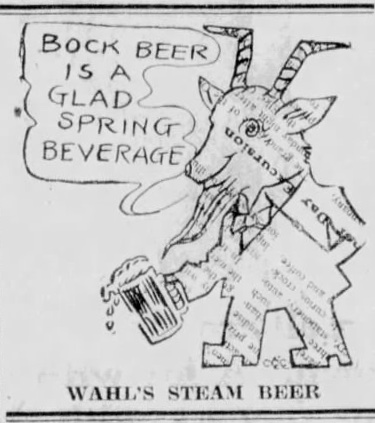
Monday’s ad is for Wahl’s Bock Beer. The ad was published on June 9, 1917. This one was for Hollister Brewery of Hollister, California, which was originally founded around 1897 by Adolph Wahl (although he appears to have been born Frederick Adolf Wahl). This ad ran in The Hollister Free Lance, also of Hollister, California.

Filed Under: Art & Beer, Beers, Breweries, Just For Fun Tagged With: Advertising, Bock, California, History

« Previous Page
Next Page »

Find Something

Northern California Breweries

Please consider purchasing my latest book, California Breweries North, available from Amazon, or ask for it at your local bookstore.

Recent Comments

  • Bob Paolino on Beer Birthday: Grant Johnston
  • Gambrinus on Historic Beer Birthday: A.J. Houghton
  • Ernie Dewing on Historic Beer Birthday: Charles William Bergner 
  • Steve 'Pudgy' De Rose on Historic Beer Birthday: Jacob Schmidt
  • Jay Brooks on Beer Birthday: Bill Owens

Recent Posts

  • Beer In Ads #5171: It Has To Be Good To Be Gunther’s March 18, 2026
  • Historic Beer Birthday: James Toohey March 18, 2026
  • John Updike’s Paean To The Beer Can March 18, 2026
  • Historic Beer Birthday: John Smith March 18, 2026
  • Beer Birthday: Jason Chavez March 18, 2026

BBB Archives

Feedback

Head Quarter
This site is hosted and maintained by H25Q.dev. Any questions or comments for the webmaster can be directed here.