Brookston Beer Bulletin

Jay R. Brooks on Beer

  • Home
  • About
  • Editorial
  • Birthdays
  • Art & Beer

Socialize

  • Dribbble
  • Email
  • Facebook
  • Flickr
  • GitHub
  • Instagram
  • LinkedIn
  • Pinterest
  • RSS
  • Twitter
  • YouTube

Powered by Genesis

Ballantine’s Literary Ads: A.J. Cronin

July 19, 2017 By Jay Brooks

ballantine
Between 1951 and 1953, P. Ballantine and Sons Brewing Company, or simply Ballentine Beer, created a series of ads with at least thirteen different writers. They asked each one “How would you put a glass of Ballantine Ale into words?” Each author wrote a page that included reference to their beer, and in most cases not subtly. One of them was A.J.
Cronin
, who was a Scottish author, best known for The Citadel, “the story of a doctor from a Welsh mining village who quickly moves up the career ladder in London.”

Today is the birthday of Archibald Joseph Cronin (July 19, 1896–January 6, 1981), who was “was a Scottish novelist and physician. His best-known novel is The Citadel, the story of a doctor from a Welsh mining village who quickly moves up the career ladder in London. Cronin had observed this scene closely as a Medical Inspector of Mines and later as a doctor in Harley Street. The book promoted what were then controversial new ideas about medical ethics and helped to inspire the launch of the National Health Service. Another popular mining novel of Cronin’s, set in the North East of England, is The Stars Look Down. Both these novels have been adapted as films, as have Hatter’s Castle, The Keys of the Kingdom and The Green Years. Cronin’s novella Country Doctor was adapted as a long-running BBC radio and TV series Dr Finlay’s Casebook, revived many years later.”

ballantine-1952-Cronin

His 1952 piece for Ballantine was done as a reminiscence of his first taste of Ballantine in America, just after a well-played round of golf:

My first meeting with Ballantine Ale is still vivid in my memory.

It was a sweltering summer day at York Harbor, Maine, shortly after I first came to these United States. I thought it would be a memorable day because I shot the lowest golf score I ever made — a 72.

But in the locker room after the game, a friend said: “Try a Ballantine.”

I did — straight from the icebox. And as it flowed over by parched throat — tangy and refreshing in every swallow — I realized with a big thrill that my search for my favourite beverage was ended. I had always like ale, but here was something lighter, something better than anything I’d ever had abroad.

Well, my discovery outweighed by golf course. I remember that day as the time the “three rings” first rang the bell for me.

ballantine-1952-Cronin-text

Filed Under: Art & Beer, Beers, Just For Fun Tagged With: Ballantine, History, Literature

Hungover Heroes: Max McGee

July 16, 2017 By Jay Brooks

packers
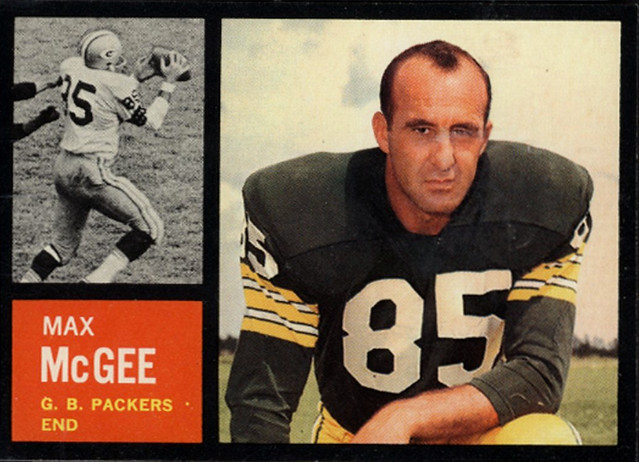
Today is the birthday of Max McGee. Don’t worry if you’ve never heard his name, most people haven’t. He “was a professional football player, a wide receiver for the Green Bay Packers in the NFL. He played from 1954 to 1967, and is best known for his 7 receptions for 138 yards and two touchdowns in the first Super Bowl in 1967.” And it’s his performance in that first Super Bowl that was so amazing, in no small part because he was badly hungover.

In 1967, McGee was at the end of his career. In fact, it was the second-to-last season he played. He was not a starter for the Packers that year they went to the first Super Bowl, and caught only four balls all year. So apparently, not expecting to play at all during the Super Bowl, the night before he broke curfew and spent the night with two women he met at the hotel bar. He rolled in around 6:30 a.m. the morning of the big game, passed Bart Starr in the hallway just getting up, and tried to catch a few winks before game time.

He was feeling pretty rough, but took his spot on the bench, fully expecting to be glued to it all game. He told starting wide receiver Boyd Dowler “I hope you don’t get hurt. I’m not in very good shape,” referring to the fact that he was badly hungover. Unfortunately, shortly after the game started, Dowler separated his shoulder and came out of the game, replaced by McGee. He had to borrow a helmet from another teammate, because he had left his in the locker room. McGee was reportedly startled as he heard Vince Lombardi yell, “McGee! McGee! Get your ass in there.”

max-mcgee-catch

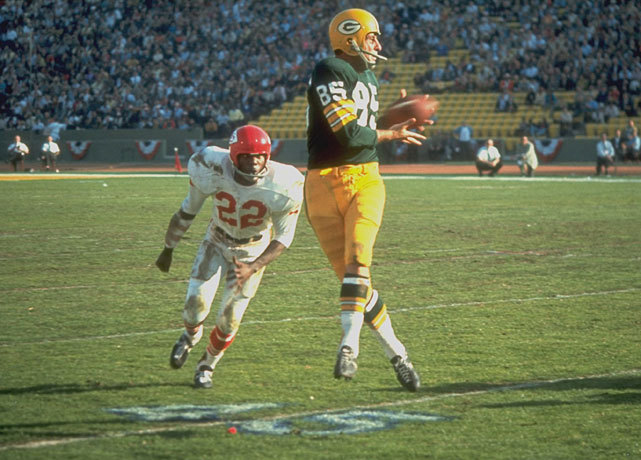
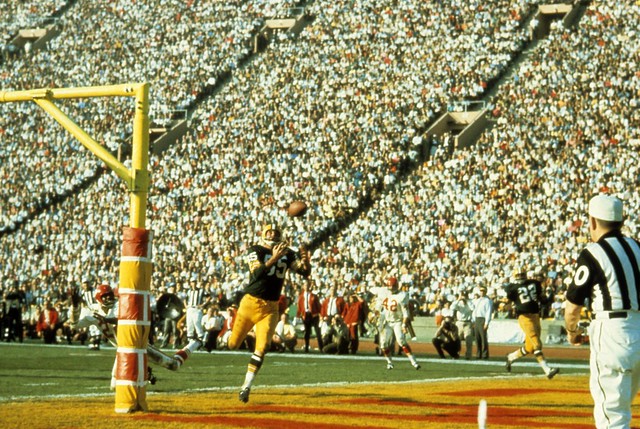
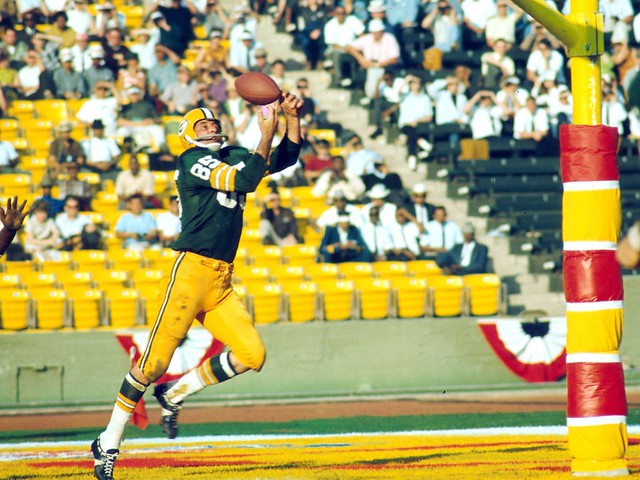
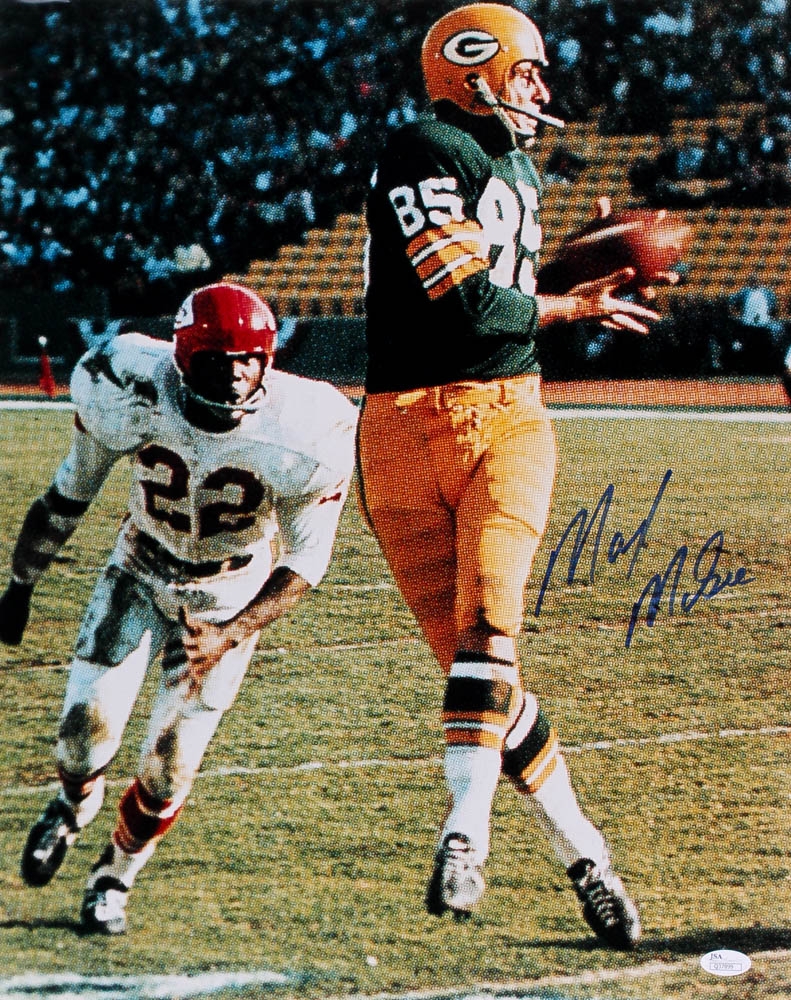
A few plays later, McGee made a one-handed reception of a pass from Bart Starr, took off past Chiefs defender Fred Williamson and ran 37 yards to score the first touchdown in Super Bowl history. This was a repeat of his performance in the NFL championship game two weeks earlier, when he had also caught a touchdown pass after relieving an injured Boyd Dowler. By the end of the game, McGee had recorded seven receptions for 138 yards and two touchdowns, assisting Green Bay to a 35-10 victory.

Just check out that first catch, for the very first touchdown in a Super Bowl. Unfortunately, the NFL won’t allow you to watch the video on my site, even though you can see it on YouTube or directly the NFL website. Thank goodness they protected a 50-year old event from being seen here. Who knows what money might have been lost by them had you been able to see it here instead of their own website.

Here’s more about the story from Sports Illustrated:

McGee came to California ready to party. He chafed at a week of locked-down training camp in Santa Barbara and when the team moved to Los Angeles on the eve of the big game, he made plans with those two flight attendants, assuming that Hornung, who was nursing an injured neck and wouldn’t play in the game, would join him. McGee snuck out after assistant coach Hawg Hanner’s 11 p.m. bed check and soon afterward, called Hornung. “He called and said ‘I’ve got two girls and yours is gorgeous,’ ” says Hornung. ” ‘Come out and have a couple drinks with us.’ ” The fine was at least $5,000 and Hornung was getting married later that week and his neck was sore. He declined. The next time he heard from McGee was at 6:30 the next morning. “He called from the lobby and asked if they did a second check. I said ‘No, you lucky bastard, now get your ass up here.’ ”

Before every game, Dowler, Dale and McGee would have a brief, ritual meeting to go over the game plan and review tendencies one last time. “We’re having our little meeting,” says Dowler, 79 and living in Richmond, Va., “and Max says, ‘Whatever you do, don’t go down today.’ I said, What do you mean? Max says, ‘I was out all night and I had a few more drinks than I should have and I didn’t get much sleep. So just don’t go down.'”

super-bowl-i-kansas-city-chiefs-v-green-bay-packers-1

Dowler says, “Max had a strong constitution. I figured he could deal with it. But he did not expect to play.” This was a potential problem. Dowler had played most of the 1965 season and all of the ’66 season with a bad right shoulder; a calcium deposit had developed on the joint. Yet the Packers’ coaching staff had seen weaknesses in the Chiefs’ pass defense, including a propensity to leave the middle of the field open on blitzes. Starr was going to throw the ball extensively. “Plus, their defensive backs,” says Dowler. “They had ‘The Hammer’ [future Hollywood actor Fred Williamson] on one side and some other guy, No. 22 [Willie Mitchell] on the other side. Neither one of them were very good, one-on-one. It wasn’t going to be like trying to beat Lem Barney or Night Train Lane [of the Detroit Lions].”

(McGee knew this, too. Maraniss, in When Pride Still Mattered, quotes McGee as telling Packers broadcaster Ray Scott, “I’ve been studying film and I’ve found me a cornerback. I’m gonna have him for breakfast, lunch and dinner.” Still, if he had expected to play, he most likely would have stayed in the night before. Or possibly not.)

On the Packers’ first series, McGee took a seat next to Hornung on the bench and made small talk about the night before and Hornung’s upcoming wedding. On the field, Lombardi opened with three consecutive running plays. On the third, Dowler executed a crackback block on Chiefs’ free safety Johnny Robinson, who was dropping down in run support. “My shoulder was not in good shape at all coming into the game,” says Dowler. “I usually put a foam pad underneath my shoulder pad, but since we were going to be throwing the ball a lot, I wanted to have some flexibility. I took the pad out. When I hit Johnny Robinson, I heard the calcium deposit crack and I knew immediately that I was finished.”

super-bowl-i-kansas-city-chiefs-v-green-bay-packers-3

McGee was summoned into the game, but couldn’t find his helmet. He put on a giant lineman’s helmet with a full cage and on his first snap missed connecting with Starr on a curl route. On the Packers’ next possession, Starr came out throwing: 11 yards to tight end Marv Fleming, 22 yards to running back Elijah Pitts, 12 yards to Dale. And then on third-and-three from the Kansas City 37, McGee ran a simple skinny post against Mitchell’s outside position and broke wide open. Robinson had blitzed, leaving acres of green in the middle of the secondary. Starr’s pass was far behind McGee, who reached back, controlled the ball and then turned straight upfield, into the end zone and history. It was a remarkable catch, by a man with a hangover and no sleep, running at full speed. McGee’s second touchdown, on another inside move against Mitchell, gave the Packers a 28–10 lead in the third quarter. That one came on a better throw by Starr, but McGee juggled it as he crossed beneath the goalposts, which were on the goalline. “The game of his life,” says Hornung.

Max-McGee-Signed-Packers

You can also see more video from television programs talking about McGee performance, such as when a TV show ranked the Top 50 Super Bowl Performances, and picked McGee’s Super Bowl I play as #31, and in another show which ranked McGee’s catch #10 among the “Top 10 Super Bowl Plays.”

And while it’s true that I’m a giant Green Bay Packers fan, and they’re the only football team I’ve ever rooted for, I still love this story about how the hungover Max McGee helped them win the first Super Bowl in 1967.

McGee-1962-Topps

Filed Under: Beers, Just For Fun, Related Pleasures Tagged With: Football, History, Sports, Wisconsin

Beer Words: Alebush

July 14, 2017 By Jay Brooks

beer-word
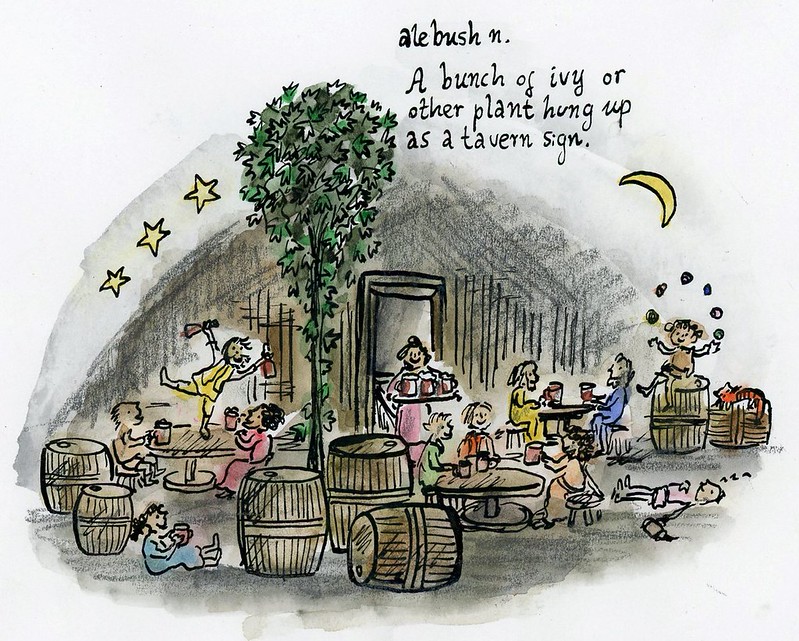
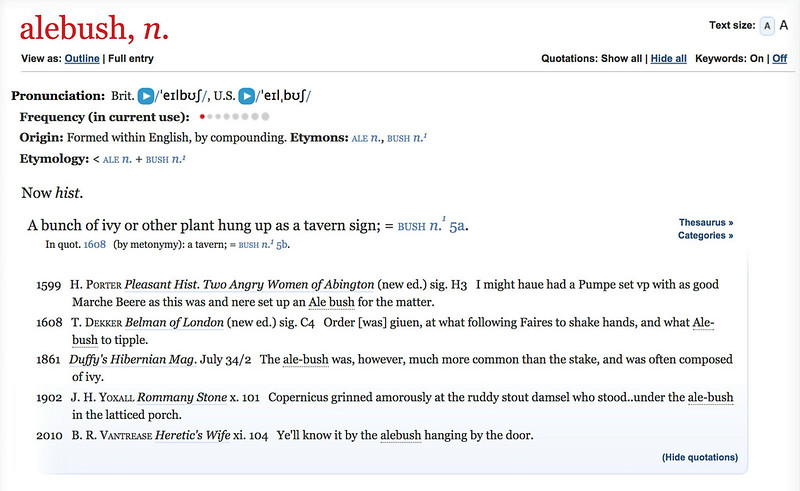
This morning, the O.E.D. tweeted as their “Word of the Day,” the all but obselete word “alebush,” which they define as a “n. A bunch of ivy or other plant hung up as a tavern sign.”

ale-bush
Illustration by Imogen Foxell.

Here’s the full entry from the O.E.D., revised in 2012:

OED-alebush

I would certainly like to see more bars, and especially beer gardens, using bushes and trees to mark their spaces.

Filed Under: Just For Fun, Related Pleasures Tagged With: Pubs, Words

Alexander Nowell & The Invention Of The Beer Bottle

July 13, 2017 By Jay Brooks

bottle-brown
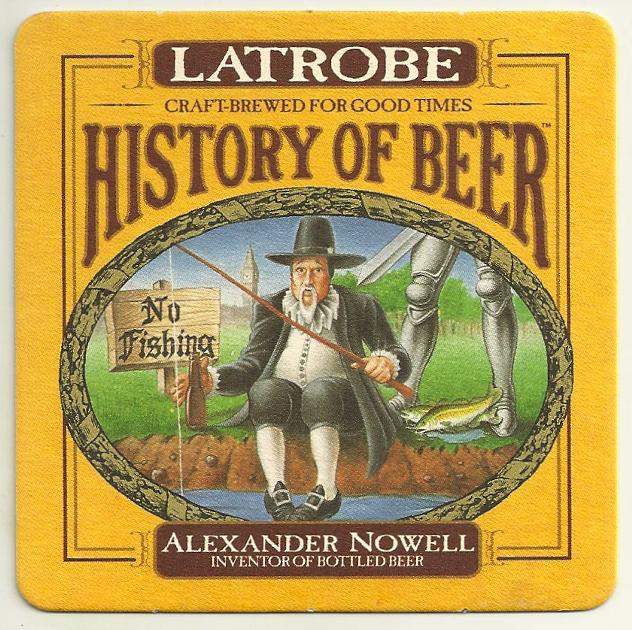
July 13, 1568 is often given as the date that the Dean of St Paul, Alexander Nowell invented the beer bottle. It’s almost certain that’s not correct. If you were writing a work of history you’d ignore what you couldn’t confirm, but if you’re only commemorating the event it’s as good a day as any to do so. The event in question was another fishing trip. Apparently, the theologian was quite the avid fisherman and “a keen angler.” Nowell’s contemporary, Izaak Walton — the author of The Compleat Angler — remarked of him that “this good man was observed to spend a tenth part of his time in angling; and also (for I have conversed with those which have conversed with him) to bestow a tenth part of his revenue, and usually all his fish, amongst the poor that inhabited near to those rivers in which it was caught; saying often, ‘that charity gave life to religion.'”

Nowell-Churton-1809

As for inventing the beer bottle, credit was apparently not given until after his death, by English churchman and historian Thomas Fuller, who wrote. “Without offence it may be remembered, that leaving a bottle of ale, when fishing, in the grass, he found it some days after, no bottle, but a gun, such the sound at the opening thereof: and this is believed (casualty is mother of more inventions than industry) the original of bottled ale in England.”

The best account, as usual, undoubtedly comes from Martyn Cornell on his Zythophile blog, in his article, A Short History of Bottled Beer:

While Nowell was parish priest at Much Hadham in Hertfordshire, around 20 miles north of London, in the early years of Elizabeth I, it is said that he went on a fishing expedition to the nearby River Ash, taking with him for refreshment a bottle filled with home brewed ale. When Nowell went home he left the full bottle behind in the river-bank grass. According to Thomas Fuller’s History of the Worthies of Britain, published a hundred years later, when Nowell returned to the river-bank a few days later and came across the still-full bottle, “he found no bottle, but a gun, such was the sound at the opening thereof; and this is believed (causality is mother of more inventions than industry) the original of bottled ale in England.”

The ale, of course, had undergone a secondary fermentation in the bottle, building up carbon dioxide pressure so that it gave a loud pop when Nowell pulled the cork out. Such high-condition ale must have been a novelty to Elizabethan drinkers, who knew only the much flatter cask ales and beers. However, Fuller’s story is fun, but it seems unlikely Nowell really was the person who invented bottled beer: it seems more than probable that brewers were experimenting generally with storing beer in glass bottles in the latter half of the 16th century, though there is no apparent evidence of commercial bottling until the second half of the 17th century, only bottling by domestic brewers.

Part of the problem was that the hand-blown glass bottles of the time could not take the strain of the CO2 pressure. Gervaise Markham, writing in 1615, advised housewife brewers that when bottling ale “you should put it into round bottles with narrow mouths, and then, stopping them close with corks, set them in a cold cellar up to the waist in sand, and be sure that the corks be fast tied with strong pack thread, for fear of rising out and taking vent, which is the utter spoil of the ale.”

(There is, incidentally, a garbled version of the “bottle as gun” tale which seems to have materialised in the late 19th century, and which conflates the bottled ale story with another about Nowell fleeing England in a hurry in the reign of Queen Mary, after he received a warning that his enemy Bishop Bonner, known as “Bloody Bonner”, was out to arrest him for heresy. For some reason, in this version of the story Nowell is called “Newell”.)

LATROBE-Nowell-coaster

And this account is from Just Another Booze Blog:

It was a pleasant July day in 1568. Alexander Nowell, the Dean of St Paul’s Cathedral, in London, decided he wanted to do some fishing down by the river. He packed up all his fishing gear and tackle, the wife packed him a ham and cheese sandwich, and he grabbed his night crawlers and the new fishing lure he bought off of the Outdoor Channel. He was all set to go when he realized, what would go great with fishing? A beer! Because fishing without beer is like driving without beer. It’s just no fun. So he stopped by the corner pub on his way to the river and had them fill a glass bottle up with beer for him. He made sure they sealed it up good and tight with a cork so his horse wouldn’t get pulled over for an open container.

When done fishing, he accidentally left the still half full bottle on the river bank. Several days later (July 13th) he returned to do some more fishing, because he needed an excuse to get away from the wife for a while. He saw his old beer on the ground and thought “man, I could really go for some for that right now.” When he went to drink it, the cork opened with a loud bang (the beer had fermented further over the past few days). He found it to be extra fizzy and quite delicious.

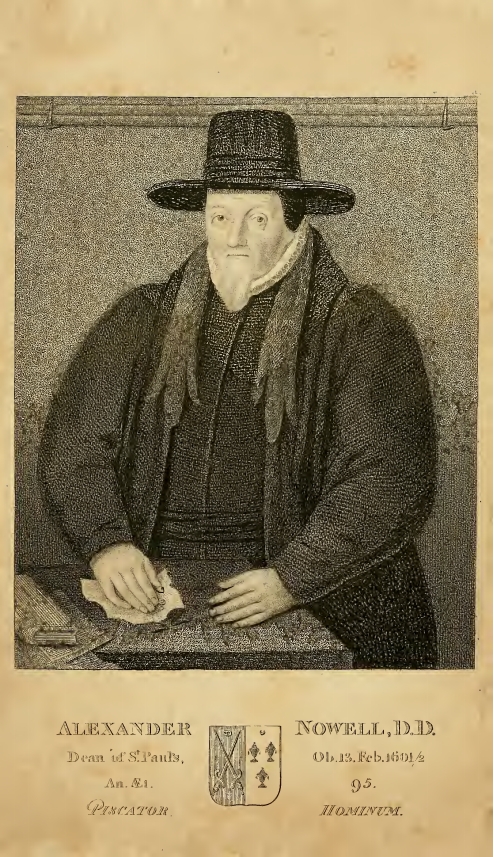
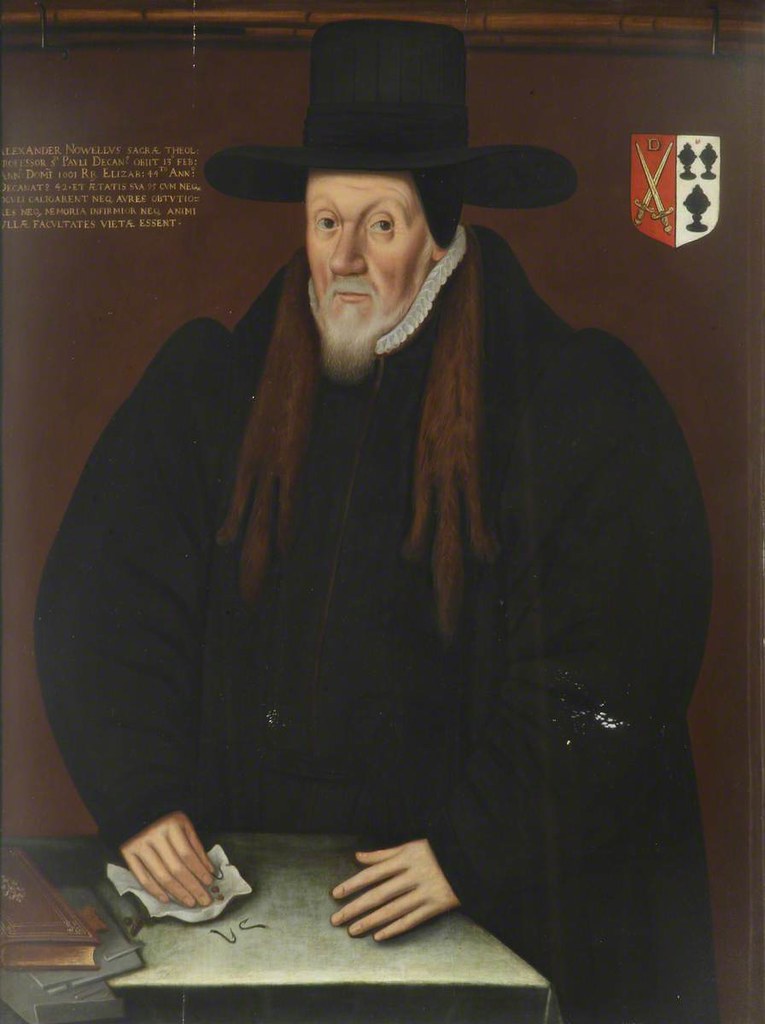
Alexander Nowell, DD, Benefactor, Principal (1595), Dean of St Paul's
A 1595 portrait of Nowell at Brasenose College, at the University of Oxford.

Filed Under: Beers, Just For Fun, Related Pleasures Tagged With: Bottles, England, History, UK

Per Capita Alcohol Consumption By Country

July 13, 2017 By Jay Brooks

world-map-3
The website VoucherCloud published an interactive map showing the The World’s Booziest Countries. The source they used for the data is from the recently released World Health Statistics 2017.

booziest-map-2017
booziest-map-2017-key

The original story only lists the top fifteen countries, and identifies the United States at No. 27. Happily, they made the full list available in a Google sheet. The first number is their rank, of course, followed by the name of the country and the final number after their name is “Alcohol consumed per capita (litres).”

The Worlds Booziest Countries: Full Data

1 Lithuania 18.2
2 Belarus 16.4
3 Moldova 15.9
4 Russia 13.9
5 Czech Republic 13.7
6 Romania 13.7
7 Croatia 13.6
8 Bulgaria 13.6
9 Belgium 13.2
10 Ukraine 12.8
11 Estonia 12.8
12 Slovakia 12.3
13 Hungary 12.3
14 Latvia 12.3
15 United Kingdom 12.3
16 Poland 12.3
17 South Korea 11.9
18 Serbia 11.8
19 Namibia 11.8
20 Uganda 11.8
21 France 11.7
22 Equatorial Guinea 11.6
23 Rwanda 11.5
24 Germany 11.4
25 Slovenia 11.3
26 Australia 11.2
27 South Africa 11.2
28 Luxembourg 11.1
29 Finland 10.9
30 Ireland 10.9
31 Gabon 10.8
32 Angola 10.8
33 Seychelles 10.8
34 Portugal 10.6
35 Austria 10.6
36 Andorra 10.5
37 New Zealand 10.1
38 Denmark 10.1
39 Switzerland 10
40 Canada 10
25 Cameroon 9.9
26 Montenegro 9.6
27 Cyprus 9.3
27 United States 9.3
28 Spain 9.2
29 Nigeria 9.1
29 Argentina 9.1
30 Chile 9
31 Brazil 8.9
31 Peru 8.9
32 Sweden 8.8
32 São Tomé and Príncipe 8.8
33 Kazakhstan 8.7
33 Netherlands 8.7
33 Guyana 8.7
34 Vietnam 8.6
35 Greece 8.5
35 Zimbabwe 8.5
36 Belize 8.2
36 Botswana 8.2
36 Cape Verde 8.2
37 Grenada 8.1
37 Georgia 8.1
38 Suriname 8
39 Panama 7.9
39 Palau 7.9
39 Trinidad and Tobago 7.9
39 Republic of the Congo 7.9
40 Japan 7.8
40 Norway 7.8
40 Mongolia 7.8
40 Barbados 7.8
40 China 7.8
41 Saint Lucia 7.6
41 Burkina Faso 7.6
41 Saint Vincent and the Grenadines 7.6
41 Italy 7.6
42 Malta 7.5
42 Iceland 7.5
43 Laos 7.3
44 Thailand 7.2
45 Venezuela 7.1
45 Niue 7.1
45 Mexico 7.1
46 Burundi 6.9
46 Saint Kitts and Nevis 6.9
47 Uruguay 6.8
48 Dominican Republic 6.6
49 Paraguay 6.3
49 Tanzania 6.3
49 Haiti 6.3
50 Swaziland 6
51 Bosnia and Herzegovina 5.9
51 Bolivia 5.9
52 Sierra Leone 5.7
52 Albania 5.7
52 Lesotho 5.7
53 Philippines 5.6
54 Jamaica 5.5
54 Kyrgyzstan 5.5
54 Turkmenistan 5.5
55 Puerto Rico 5.4
55 Netherlands Antilles 5.4
55 Armenia 5.4
55 Cuba 5.4
55 Liberia 5.4
55 Bahamas 5.4
55 Guinea-Bissau 5.4
56 Cambodia 5.3
57 Colombia 5.2
57 Ivory Coast 5.2
57 Chad 5.2
58 Ecuador 5.1
58 Cook Islands 5.1
58 Nicaragua 5.1
58 Uzbekistan 5.1
59 Dominica 5
59 India 5
59 Gambia 5
60 Ethiopia 4.6
61 Ghana 4.4
61 Kenya 4.4
62 Costa Rica 4.1
62 Sri Lanka 4.1
63 Mauritius 4
63 Azerbaijan 4
64 Zambia 3.9
64 North Korea 3.9
65 Honduras 3.8
65 Central African Republic 3.8
66 Nauru 3.6
67 El Salvador 3.4
68 Fiji 3.3
68 Sudan 3.3
69 Guatemala 3.1
70 United Arab Emirates 3
70 Democratic Republic of the Congo 3
70 Israel 3
71 Tajikistan 2.9
72 Macedonia 2.8
72 Samoa 2.8
73 Kiribati 2.7
74 Togo 2.6
74 Benin 2.6
75 Nepal 2.5
76 Federated States of Micronesia 2.4
76 Papua New Guinea 2.4
76 Malawi 2.4
77 Mozambique 2.3
78 Myanmar 2.2
79 Singapore 1.9
79 Turkey 1.9
79 Tuvalu 1.9
80 Madagascar 1.8
81 Maldives 1.7
82 Lebanon 1.6
82 Tunisia 1.6
83 Malaysia 1.5
84 Solomon Islands 1.4
84 Tonga 1.4
85 Vanuatu 1.3
85 Brunei 1.3
86 Mali 1.2
86 Eritrea 1.2
87 Qatar 1
87 Algeria 1
87 Iran 1
87 Timor-Leste 1
88 Bahrain 0.9
89 Syria 0.8
89 Morocco 0.8
89 Guinea 0.8
90 Indonesia 0.6
91 Oman 0.5
91 Jordan 0.5
91 Bhutan 0.5
91 Afghanistan 0.5
91 Senegal 0.5
91 Somalia 0.5
91 Niger 0.5
92 Djibouti 0.4
92 Iraq 0.4
92 Egypt 0.4
93 Yemen 0.2
93 Comoros 0.2
93 Saudi Arabia 0.2
93 Bangladesh 0.2
93 Kuwait 0.2
93 Pakistan 0.2
94 Libya 0.1
94 Mauritania 0.1

And here are the notes for each of the Top 15:

  1. Lithuania is the booziest country in the world. Lithuanians consume 18.2 litres of pure alcohol per capita or the equivalent to 186 bottles of wine.
  2. Belarus comes in second behind Lithuania. The country drinks 168 bottles of wine or 16.4 litres per capita.
  3. Moldovans consume 15.9 litres of pure alcohol per capita or 163 bottles of wine.
  4. Russia takes fourth place in the booziest country stakes. Russians consume the equivalent of 1390 vodka shots per capita.
  5. The Czech Republic drink a huge 482 pints of beer per capita! That’s 13.7 litres of pure alcohol.
  6. Tie for 6th:
    • In Romania people consume 13.7 litres of pure alcohol per capita.
    • Croatia follows closely behind Romania, consuming 13.6 per capita.
    • Bulgarians drink 13.6 litres of pure alcohol or 479 pints of lager per capita.
  7. Belgians drink 478 pints of beer per capita! That’s 13.2 litres of pure alcohol.
  8. Tie for 8th:
    • Ukranians consume 12.8 litres of pure alcohol per capita or 131 bottles of wine.
    • Estonia is joint eighth with people drinking 12.8 litres of pure alcohol per capita.
  9. Tie for 9th:
    • Solvakia is joint ninth place with people consuming 12.3 litres of pure alcohol per capita.
    • Hugarians consume 12.3 litres of pure alcohol per capita and take join tninth place.
    • Latvians drink 12.3 litres of pure alcohol per capita which is equal to 433 pints!
    • The UK is in the top 10 booziest countries. We each consume 12.3 litres of pure alcohol a year – the equivalent of around 126 bottles of wine.
    • Poland is also in joint ninth place with the UK, Slovakia, Hungary and Latvia.
  10. South Koreans drink 11.9 litres of pure alcohol per person and take the tenth place in the booziest countries place!

And here’s the note for the U.S.

  1. The US lags behind us on 9.3 litres per person – that’s the same as 564 330ml bottles of Budweiser.

Filed Under: Beers, Just For Fun, News, Related Pleasures Tagged With: International, Statistics

Enemies Of Alcohol

July 12, 2017 By Jay Brooks

alcohol-justice-new
My good friend Dave Suurballe sent me this page from Modern Drunkard magazine, knowing my disdain for Alcohol Justice. It’s pretty funny, and true, too.

Alcohol Justice

Filed Under: Just For Fun, Politics & Law, Related Pleasures Tagged With: California, Prohibitionists

The Drunkard And His Wife

July 8, 2017 By Jay Brooks

fairy-tale
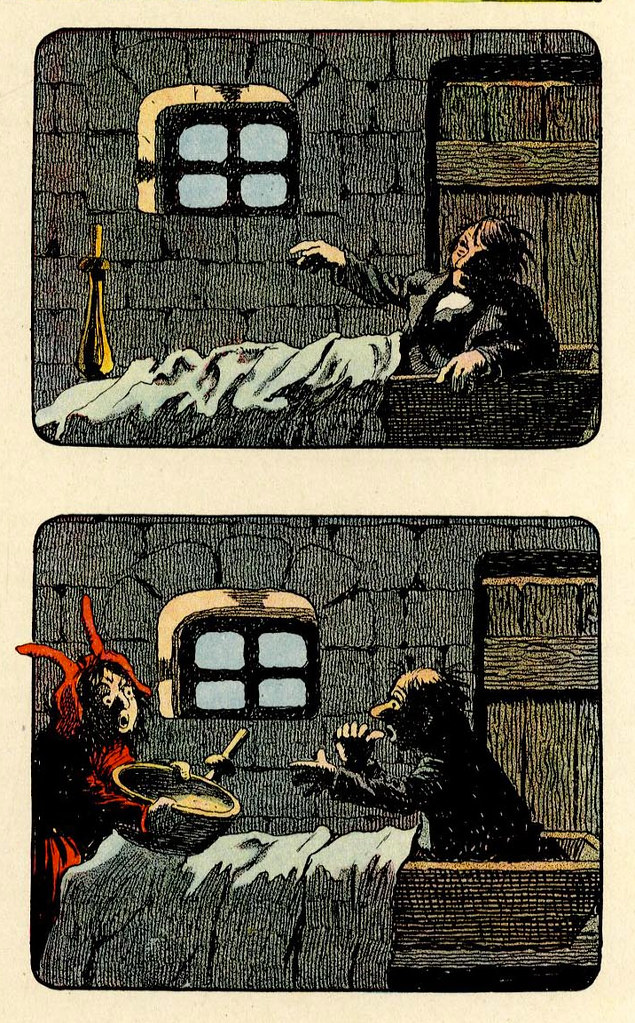
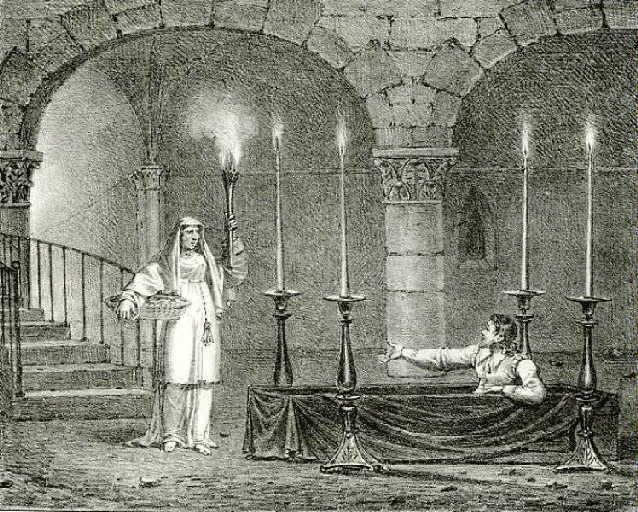
Today is the birthday of Jean de La Fontaine, who “was a famous French fabulist and one of the most widely read French poets of the 17th century. He is known above all for his Fables, which provided a model for subsequent fabulists across Europe and numerous alternative versions in France, and in French regional languages.” One of his fables is called “The Drunkard and His Wife.” It’s an odd little story about a wife who came up with a novel cure for her husband’s drinking. Why it hasn’t caught on is anybody’s guess.

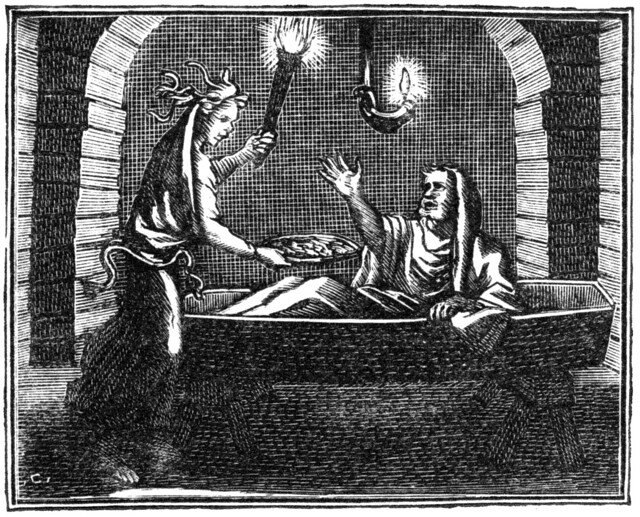
Chauveau_-_Fables_de_La_Fontaine_-_03-07

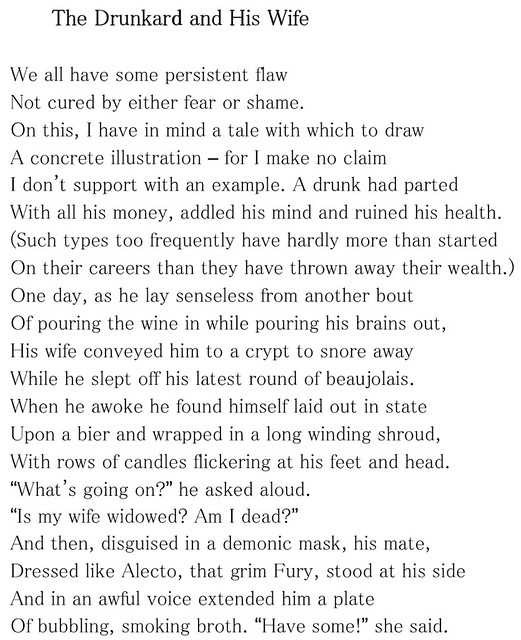
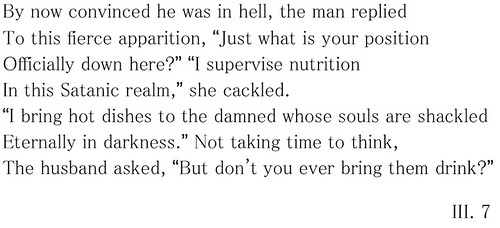
This is a modern translation, done by Craig Hill for “The Complete Fables of La Fontaine: A New Translation in Verse.”

drunkard-and-his-wife-1
drunkard-and-his-wife-2

SH142-1

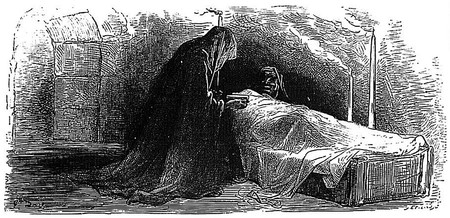
Just for fun, here’s an earlier version from 1886, translated by Walter Thornbury, and with an illustration by Gustave Doré:

FABLE LIII.

THE DRUNKARD AND HIS WIFE.

Each one’s his faults, to which he still holds fast,
And neither shame nor fear can cure the man;
‘Tis apropos of this (my usual plan),
I give a story, for example, from the past.
A follower of Bacchus hurt his purse,
His health, his mind, and still grew each day worse;
Such people, ere they’ve run one-half their course,
Drain all their fortune for their mad expenses.
One day this fellow, by the wine o’erthrown,
Had in a bottle left his senses;
[Pg 168]His shrewd wife shut him all alone
In a dark tomb, till the dull fume
Might from his brains evaporate.
He woke and found the place all gloom,
A shroud upon him cold and damp,
Upon the pall a funeral lamp.
“What’s this?” said he; “my wife’s a widow, then!”
On that the wife, dressed like a Fury, came,
Mask’d, and with voice disguised, into the den,
And brought the wretched sot, in hopes to tame,
Some boiling gruel fit for Lucifer.
The sot no longer doubted he was dead—
A citizen of Pluto’s—could he err?
“And who are you?” unto the ghost he said.
“I’m Satan’s steward,” said the wife, “and serve the food
For those within this black and dismal place.”
The sot replied, with comical grimace,
Not taking any time to think,
“And don’t you also bring the drink?”

laf_head_054

And here’s one more translation of the fable:

Each has his fault, to which he clings
In spite of shame or fear.
This apophthegm a story brings,
To make its truth more clear.
A sot had lost health, mind, and purse;
And, truly, for that matter,
Sots mostly lose the latter
Ere running half their course.
When wine, one day, of wit had fill’d the room,
His wife inclosed him in a spacious tomb.
There did the fumes evaporate
At leisure from his drowsy pate.
When he awoke, he found
His body wrapp’d around
With grave-clothes, chill and damp,
Beneath a dim sepulchral lamp.
‘How’s this? My wife a widow sad?’
He cried, ‘and I a ghost? Dead? dead?’
Thereat his spouse, with snaky hair,
And robes like those the Furies wear,
With voice to fit the realms below,
Brought boiling caudle to his bier –
For Lucifer the proper cheer;
By which her husband came to know –
For he had heard of those three ladies –
Himself a citizen of Hades.
‘What may your office be?’
The phantom question’d he.
‘I’m server up of Pluto’s meat,
And bring his guests the same to eat.’
‘Well,’ says the sot, not taking time to think,
‘And don’t you bring us anything to drink?’

m078402_0002056_p

SH142-2

Filed Under: Just For Fun, Related Pleasures Tagged With: France, History, Literature, Poetry

The 10 Tavern Commandments

July 7, 2017 By Jay Brooks

pub-sign
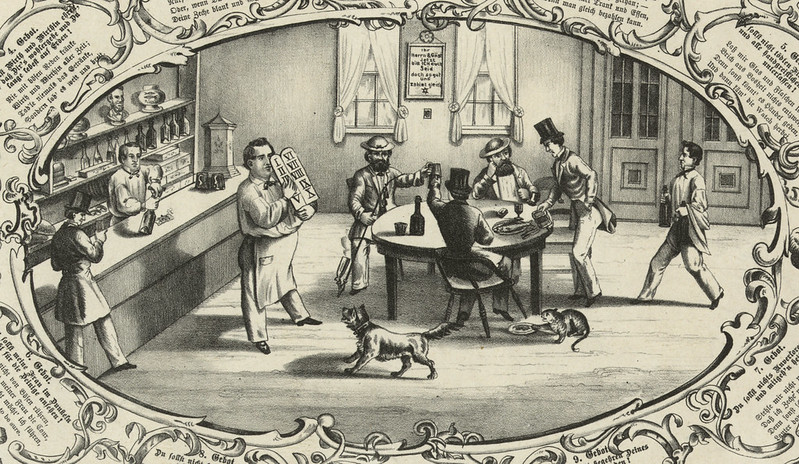
This is a fascinating piece of history. It’s a lithograph from 1873 entitled “The 10 tavern commandments, as every landlord should show them to his guests” and it’s also printed in a second language, German, and called “Die 10 Wirthshaus-Gebote, wie sie jeder Wirth seinen Gästen auf’s fleissigste vorhalten soll.” The lithographer was Theodore Kahlmann, and it was published by C. Brothers in New York.

10-Tavern-Commandments

It’s a little hard to read them without blowing up the image, so here are the English language version of The 10 Tavern Commandments, though I confess not all of them make complete sense.

  1. Thou shallst have no host but me!
    Of all good hosts consider me the very best,
    In my Inn alone be pleased, frequent not the rest.
  2. Thou shallst not use in vain the name thy host!
    Call not on me in vain,
    But for drinks, whereby I gain,
    Or, when you wish to pay,
    Then call on me you may.
  3. Thou shallst not chain the Tiger, for he is most ferocious!
    Leave not they pocket book at home,
    For ’tis bad when borrowing you come,
    You will relish better, what you drink and eat,
    When you promptly pay as ’tis need.
  4. Thou shallst honor thine host and hostess, that thou mayest prosper and live long on earth!
    Often in foul speech or name
    Never thy host or his dame,
    To find fault with the drink would become you ill,
    But you should praise it when and wherever you will.
  5. Thou shallst not slay bottles and glasses but shallots refrain from all such touching exercise!
    The life of bottles and glasses thou must not take,
    For ’tis mean these things in wrathful mood to break,
    Moreover you’ll get in trouble, if you raise hell,
    For then the Peelers come and take you to a prison cell.
  6. Thou shallst in night’s dark hours not mistake my wife for thine!
    Let the evil spirit never prompt thee,
    To bow in courtship to my wife thy knee,
    For then I’d throw thee out of a window or of door,
    And if t’were from the fourth or yet a higher floor.
  7. Thou shallst not find and take with thee what n’er was lost!
    My chalk thou must not take,
    I need it thy bill to make,
    Or else I’ll get; for thy punishment
    Such as will chalk down double, each and every cent.
  8. Thou shallst not bear false witness to thine host!
    Tell me always when I ask; in truthfulness
    What thou owes for drinks, rather more than less,
    Give never a false statement,
    For honesty is thy best ornament.
  9. Thou shallst not covet what is loss to thy host!
    Ask not that I should give
    Large pieces and full measures,
    For ’tis by my profit that I live,
    Dear customers remember his leisure.
  10. Thou shallst not covet to carress my cook and water girls!
    ’Tis best they desires to curb and bridle,
    For it makes the girls stupid and idle
    When love is talked behind the kitchen door,
    And then it might grow on thee and become a bore.

In the illustration in the center, the tavern owner (presumably) is holding up two tables with the 10 Commandments on them as his guests and staff appear to be ignoring him, just as you’d expect when someone is trying to law down the law.

10-Tavern-Commandments-center

Filed Under: Just For Fun, Politics & Law, Related Pleasures Tagged With: Bars, History, Humor, Pubs

Harry Potter’s Historic Butterbeer

June 26, 2017 By Jay Brooks

harry-potter
Today, June 26, in 1997, twenty years ago, the first Harry Potter book, Harry Potter and the Philosopher’s Stone, was published in the United Kingdom. If that title looks wrong to you, that’s because in America it was titled Harry Potter and the Sorcerer’s Stone because the publisher “thought that a child would not want to read a book with the word ‘philosopher’ in the title.” They may have been right, but it’s still a little sad. At any rate, in the seven novels there was something called “Butterbeer,” described as a drink that “can be served either cold with a taste similar to cream soda or frozen as a slush with a butterscotch-like foam on top.” Basically, it’s fake beer for kids. Although it’s also” described as being able to make house elves intoxicated, and having only a slight effect on wizards.” So it actually is alcoholic, although how much is uncertain.

harrypotterhalfbloodprince12

And apparently J.K. Rowling didn’t completely make it up. A few years ago, Food in Literature writer Brayton Taylor discovered that a recipe for butterbeer, or Buttered Beere, was part of a manuscript from 1594 entitled The good Huswifes Handmaide for the Kitchin. And all this time I’d been thinking she’d been inspired by Redhook ESB, the craft beer era’s original butter beer. Here’s the text of the original butterbeer from at least 1594:

To make Buttered Beere.

TAke three pintes of Beere, put fiue yolkes of Egges to it, straine them together, and set it in a pewter pot to the fyre, and put to it halfe a pound of Sugar, one penniworth of Nutmegs beaten, one penniworth of Cloues beaten, and a halfepenniworth of Ginger beaten, and when it is all in, take another pewter pot and brewe them together, and set it to the fire againe, and when it is readie to boyle, take it from the fire, and put a dish of sweet butter into it, and brewe them together out of one pot into an other.

Harry-Potter-alcoholic-butterbeer-Food-in-Literature

Here’s Taylor’s modern recipe for Harry Potter Alcoholic Butter Beer:

Ingredients

  • 1 bottle of British Ale (we used Old Peculiar originally but Speckled Hen is now my favourite)
  • 1 tsp pumpkin pie spice
  • ⅓ cup of brown sugar
  • 2 egg yolks
  • 2.5 tbsp of unsalted butter

Instructions

  1. Start by pouring the ale into a saucepan. To keep it from ‘exciting’ (foaming up), angle the saucepan and gently pour the ale down the side into the pan.
  2. Stir in the 1 tsp of spices.
  3. Gently heat until it comes to a boil, before lowering the heat and simmering for a few minutes.
  4. In these few minutes, whisk together the yolks and sugar.
  5. Lower the heat even more and add in the yolks and sugar to the ale.
  6. Let simmer for 3-5 minutes and remove from heat.
  7. Stir in the butter until fully mixed in.
  8. With a hand blender, froth the ale until foam forms. Let sit to cool.
  9. Using a spoon, hold back the froth as you pour the butterbeer into the beer stein. Leave about an inch of room on the top, spoon on the froth and serve.

harrypotterhalfbloodprince11

And here’s another adaptation of the same recipe, from 12 Bottle Bar, although they give the date of the original manuscript as 1588.

  1. 3 pint (16.9 oz) Bottles of real Ale
  2. 0.5 tsp ground Cloves
  3. 0.5 tsp ground Cinnamon
  4. 0.25 tsp ground Ginger
  5. 5 Egg Yolks
  6. 1 Cup Brown Sugar (Demerara)
  7. 12 Tbsp Unsalted Butter
  1. Add ale and spices to a saucepan
  2. Bring to a boil, then immediately turn to lowest setting
  3. Beat together eggs and sugar until light and creamy
  4. Remove ale from heat, whisk in egg mixture, returning to low heat
  5. Whisk constantly over low until mixture begins to thicken slightly (about 5 minutes)
  6. Remove from heat and whisk in butter quickly until a nice foam forms
  7. Serve warm

Notes: If you’re concerned about the alcohol level, here are some notes: We used Fuller’s London Pride, which is 4.7% ABV. Before adding the egg mixture, letting the beer simmer longer (20 minutes or so) should boil off all the alcohol, if that’s what you’re after. Use your discretion.

Filed Under: Beers, Just For Fun, Related Pleasures Tagged With: Books, History, Humor

George Carlin Tasting Beer

June 22, 2017 By Jay Brooks

ny-mag george-carlin
Today is the birthday of American stand-up comedian, actor, author and social critic George Carlin. He was easily one of the best stand-up comedians in my lifetime and now my son is discovering him through YouTube, which has been fun for me. Anyway, Carlin enjoyed beer, and because of that twenty years ago New York Magazine asked him to participate in a tasting of “microbrews” for an article written by Tony Hendra for the May 12, 1997 issue.

If you don’t know Tony Hendra, he used to be the editor of National Lampoon, and “co-created, co-wrote, and co-produced the British television satirical show Spitting Image.” He “is an English satirist, actor and writer who has worked mostly in the United States. Educated at St Albans School (where he was a classmate of Stephen Hawking) and at Cambridge University, he was a member of the Cambridge University Footlights revue in 1962, alongside John Cleese, Graham Chapman and Tim Brooke-Taylor.”

brewhaha-00

It’s interesting to look back two decades and see how people viewed craft beer in 1997. The first thing you’ll notice is that the term “craft beer” is nowhere to be found. They were drinking “microbrews.” But that’s just the beginning. The article was called “Brewhaha.”

brewhaha-dbltrk

In addition to Carlin and author Hendra, the other beer tasters were Bernard McGuirk, who “is the executive producer of the Imus in the Morning radio program” and Laura Ingraham, who “is an American radio talk show host, author, and conservative political commentator.” It’s an odd group, though the unifying factor seems to be that they’ve all worked in radio.

brewhaha-0

brewhaha-02

It’s funny to hear them complaining about all the fruit in beer those days, instead of the “reliably toothsome beers” that Pete’s and Samuel Adams, among others, had been making before then.

brewhaha-03

They don’t say how many or which other beers they sampled, but their list of their Top 10 is certainly a trip down memory lane. It’s strange to say, but I can honest;y say I’ve had every one of them.

brewhaha-10-best

brewhaha-04

And their list of the ones they most disliked is equally interesting. And again, it’s weird, but I’ve tried every one of those beers, too. They have some pretty interesting remarks about each of them, but their notes of Rogue’s barley wine betrays their deep ignorance about what they’re drinking.

brewhaha-10-worst

Another hint that they’re not exactly aficionados is the reference to spittoons. Twenty years ago it was pretty common to see articles like this, blissfully unaware that tasting beer and wine was different. And then they’d just proudly blurt out their spitting, giving away their ignorance without even realizing what they were doing.

brewhaha-05

But anyway, happy birthday George Carlin.

brewhaha-carlin

Filed Under: Beers, Birthdays, Just For Fun Tagged With: Mainstream Coverage, Tasting

« Previous Page
Next Page »

Find Something

Northern California Breweries

Please consider purchasing my latest book, California Breweries North, available from Amazon, or ask for it at your local bookstore.

Recent Comments

  • Bob Paolino on Beer Birthday: Grant Johnston
  • Gambrinus on Historic Beer Birthday: A.J. Houghton
  • Ernie Dewing on Historic Beer Birthday: Charles William Bergner 
  • Steve 'Pudgy' De Rose on Historic Beer Birthday: Jacob Schmidt
  • Jay Brooks on Beer Birthday: Bill Owens

Recent Posts

  • Beer In Ads #5389: Point & Brunswick Bock Beer November 10, 2026
  • Historic Beer Birthday: Edward Cecil Guinness November 10, 2026
  • Historic Beer Birthday: Jacob Betz November 10, 2026
  • Beer In Ads #5388: Bock Beer Vats In The Brewers Hall November 9, 2026
  • Historic Beer Birthday: Peter Barbey November 9, 2026

BBB Archives

Feedback

Head Quarter
This site is hosted and maintained by H25Q.dev. Any questions or comments for the webmaster can be directed here.