Brookston Beer Bulletin

Jay R. Brooks on Beer

  • Home
  • About
  • Editorial
  • Birthdays
  • Art & Beer

Socialize

  • Dribbble
  • Email
  • Facebook
  • Flickr
  • GitHub
  • Instagram
  • LinkedIn
  • Pinterest
  • RSS
  • Twitter
  • YouTube

Powered by Genesis

Historic Beer Birthday: Michael Groh

November 15, 2025 By Jay Brooks

Today is not the birthday of Michael Groh, but since his actual date is unknown, it’s only the date of his passing that is know (1836-November 15, 1895). Around 1883, Groh became involved in the brewery founded by the Seitz Bros. in New York City known as the Westside Brewery in 1878. In 1884, the brewery was renamed Michael Groh’s Sons after bringing in his sons John and Michael Jr. into the business.

Unfortunately, in 1895, he fell from the third story window of his home, sustaining terrible injuries and passed away shortly thereafter.

New York Times, Nov. 14, 1895.
New York Herald, Nov. 16, 1895.

His sons continued on with the business, but by 1915, shortly before prohibition, the brewery was for sale and closed the following year.

Filed Under: Birthdays, Breweries, Just For Fun Tagged With: New York

Beer Birthday: Grant Wood

November 15, 2025 By Jay Brooks

revolver
Today is the 63rd birthday of Grant Wood, co-founder and brewmaster at Revolver Brewing in Granbury, Texas. For many years, Grant worked at the Boston Beer Co., making Samuel Adams beer, and many of their more experimental offerings, which is where I first got to know him. I knew he’d left to open his own place back home, and he sent me a text at the end of the GABF awards a couple of years ago inviting me to stop by his booth to see what he’d been up to. Not surprisingly, what that was is making great beer. All of the beers I tried were terrific. Join me in wishing Grant a very happy birthday.
SAM_7510
Grant on the floor at GABF a few years ago.
grant-wood-1
Grant with Revolver’s first keg sold.
grant-wood-3
In case anybody was confused as to what they were doing; that’s Grant on the far left.
grant-wood-2
Grant back in his Sam Adams’s days two-fisting a pair of Sam Adams Light Beer, before he traded them in for a pair of revolvers. [Note: photos purloined from Facebook.]
Filed Under: Birthdays, Just For Fun Tagged With: Texas

Beer In Ads #5116: Uff-Da Wisconsin Bock Beer

November 14, 2025 By Jay Brooks

Last year I decided to concentrate on Bock ads for awhile. Bock, of course, may have originated in Germany, in the town of Einbeck. Because many 19th century American breweries were founded by German immigrants, they offered a bock at certain times of the year, be it Spring, Easter, Lent, Christmas, or what have you. In a sense they were some of the first seasonal beers. “The style was later adopted in Bavaria by Munich brewers in the 17th century. Due to their Bavarian accent, citizens of Munich pronounced ‘Einbeck’ as ‘ein Bock’ (a billy goat), and thus the beer became known as ‘Bock.’ A goat often appears on bottle labels.” And presumably because they were special releases, many breweries went all out promoting them with beautiful artwork on posters and other advertising.
Friday’s ad is for Uff-Da Bock Beer, which was published on November 14, 1994. This one was not specifically for the beer, but instead for the Landmark Restaurant Tavern at 1066 Cass St. in Portage, Wisconsin. But in the ad, they’re urging people to “Stop In And Try A New Local Micro-Brewery Beer From New Glarus: Uff-Da Wisconsin Bock Beer.” from the New Glarus Brewing Co. of New Glarus, Wisconsin, which was originally founded in 1993. This ad ran in The Portage Daily Register, also from Portage, Wisconsin.

Filed Under: Art & Beer, Beers, Breweries, Just For Fun Tagged With: Advertising, Bock, History, Wisconsin

Historic Beer Birthday: John H. Stahl

November 14, 2025 By Jay Brooks

stahl
Today is the birthday of John Henry Stahl (November 14, 1825-January 18, 1884). He was born in Holstein, Germany, but moved to San Francisco when he was 33, in 1858. He moved further north, and in 1870 bought the City Brewery in Walla Walla, Washington. Although he continued to operate the brewery by that name, the business was called John H. Stahl & Co. until 1905, when his son Frank Stahl took over and renamed it the Stahl Brewing and Malting Co.

There’s not very much information I could find about him, not even a photograph. Gary Flynn at Brewery Gems has more about the brewery itself, in an article about Stahl’s Brewing Company ~ City Brewery and more broadly about the History of the Pioneer Brewing Company of Walla Walla, which includes the various business entities that operated the brewery over the years, from 1855 until it closed for good in 1952.

Stahl-1906-nursing

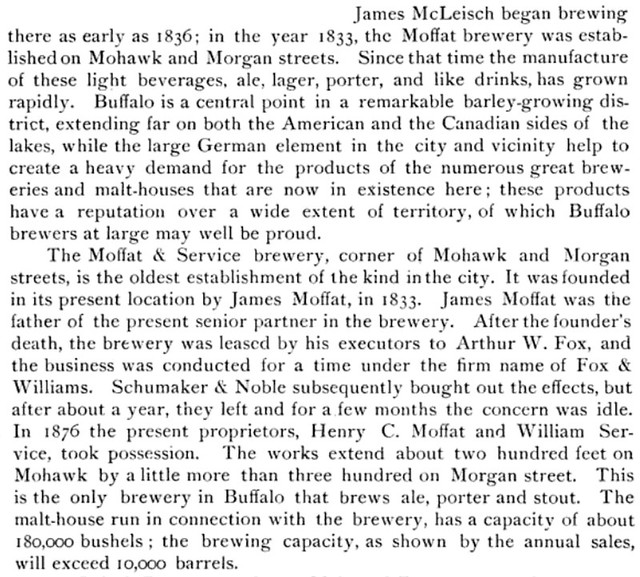
Here’s a short history of the brewery from 100 Years of Brewing:

And this short history is from “Washington Beer: A Heady History of Evergreen State Brewing,” by Michael F. Rizzo:

walla-walla-1876
This is Walla Walla in 1876, about six years after John H. Stahl bought the brewery.

Filed Under: Birthdays, Breweries, Just For Fun Tagged With: Germany, History, Washington

Historic Beer Birthday: Philip Kling

November 14, 2025 By Jay Brooks

philip-kling
Today is the birthday of Philip Kling (November 14, 1818-March 15, 1910). He was born in Baden-Württemberg, Germany and was trained as a cooper. He came to the U.S. when he was 17, in 1836. Kling later founded the Peninsular Brewery with two partners in 1856 (at least according to “100 Years of Brewing” and at least one other source. Some sources claim it was not until 1863, but I think the date from the 1903 book is more likely correct.) Eventually, his partners either died or retired, and in 1871 he built a new brewery, which was called the Philip Kling & Co. Brewery (and later was known as Ph. Kling Brewing Co. It closed for good due to Prohibition in 1919, although in 1935 his sons bought another brewery, the Dailey Brewing Co., in Flint, Michigan, and operated it until 1947 when they must have sold it, because in that year it became the Pfeiffer Brewing Co., before closing for good in 1958.

Philip-Kling-portrait
When Kling retired in 1906, the Brewers Journal for that year published this little piece about him:

Philip-Kling-obit-1
Philip-Kling-obit-2
Ph-Kling2

This account of Kling and his brewery is from Michigan State University Archeology Department.

Brewing began in the city of Detroit around 1830, where the industry was run by mostly British entrepreneurs making ale. Beginning around 1848, a large influx of Germans into the area brought with it a new era of brewing in the Detroit—one dominated by German lager brewers. Among these German brewers was Philip Kling, a cooper, who along with Michael Martz and Henry Weber, invested in the Peninsular Brewing Company in 1856, which was located on Jefferson Avenue, near the future site of the Belle Isle bridge. Kling gradually took greater control of the company, which was renamed Philip Kling and Company in 1868. Kling became the first president of the Detroit Brewer’s Association and by the end of the 1870s, PH Kling was one of the city’s most successful and prominent breweries. Their offerings included Pilsener, Gold Seal Export, Extra Pale Ale, and Porter.

After reverting to the name Peninsular Brewing from 1879 to 1890, the name Philip Kling Brewing Company was formally adopted. This year also marked the beginning of the great brewing dynasties, which in Detroit included the Strohs, Klings, Martzes, and Darmstaetters. However, Kling was but a middling competitor amongst the giants. The brewery was severely damaged in a fire in 1893, and a new 6-story brewhouse with increased barrel storage was constructed. After Philip’s death in 1910, his son Kurt took over operations, but business was interrupted by Prohibition in Michigan, which began in 1917. Like other breweries, the company replaced the word “brewing” in their corporate name, becoming Kling Products Company. In the attempt to keep the company running and generate income, Kurt Kling built Luna Park next to the brewery, and amusement park that included a roller coaster. However, the company was forced to close in 1921 and the building was torn down.

Following the end of Prohibition in 1933, Kling purchased Daily Brewery in Flint and resumed brewing by 1936. However, former bootleggers in Detroit still controlled distribution in Detroit, and Kling found it difficult to make his way back into the Detroit market. While the other major breweries were quick to make post-Prohibition recoveries, Kling’s Flint venture floundered and was out of business by 1942.

kling-letterhead
And this is from “Brewed in Detroit: Breweries and Beers Since 1830,” by Peter H. Blum:

kling-bio-1
kling-bio-2
kling-bio-3
kling-bio-4
kling-bio-5
kling-export

klings-prost-tray

Filed Under: Birthdays, Breweries, Just For Fun Tagged With: Germany, History, Michigan

Historic Beer Birthday: William IV, Duke of Bavaria

November 13, 2025 By Jay Brooks

bavaria
Today is the birthday of William IV, Duke of Bavaria (November 13, 1493-March 7, 1550). William IV “was Duke of Bavaria from 1508 to 1550, until 1545 together with his younger brother Louis X, Duke of Bavaria. He was born in Munich to Albert IV and Kunigunde of Austria, a daughter of Emperor Frederick III.”

Bartel-wilhelm-iv
Portrait by Barthel Beham.
Here’s a short account of William IV’s life:

Though his father had determined the everlasting succession of the firstborn prince in 1506, his younger brother Louis refused a spiritual career with the argument that he was born before the edict became valid. With support of his mother and the States-General, Louis forced William to accept him as co-regent in 1516. Louis then ruled the districts of Landshut and Straubing, in general in concord with his brother.

William initially sympathized with the Reformation but changed his mind as it grew more popular in Bavaria. In 1522 William issued the first Bavarian religion mandate, banning the promulgation of Martin Luther’s works. After an agreement with Pope Clement VII in 1524 William became a political leader of the German Counter reformation, although he remained in opposition to the Habsburgs since his brother Louis X claimed the Bohemian crown. Both dukes also suppressed the peasant uprising in South Germany in an alliance with the archbishop of Salzburg in 1525.

The conflict with Habsburg ended in 1534 when both dukes reached an agreement with Ferdinand I in Linz. William then supported Charles V in his war against the Schmalkaldic League in 1546. William’s chancellor for 35 years was the forceful Leonhard von Eck.

William was a significant collector and commissioner of art. Among other works he commissioned an important suite of paintings from various artists, including the Battle of Issus by Albrecht Altdorfer. This, like most of William’s collection, is now housed in the Alte Pinakothek in Munich. With his order to expand the Neuveste with the so-called Rundstubenbau and to set up the first Court Garden began the history of the Munich Residence as a representative palace. To the history cycle of the garden pavilion belonged Albrecht Altdorfer’s painting. In 1546 he ordered to upgrade Dachau Palace from a Gothic ruin into a renaissance palace. In 1523 with the appointment of Ludwig Senfl began the rise of the Bavarian State Orchestra.

On 23 April 1516, before a committee consisting of gentry and knights in Ingolstadt, he issued his famous purity regulation for the brewing of Bavarian Beer, stating that only barley, hops, and water could be used. This regulation remained in force until it was abolished as a binding obligation in 1986 by Paneuropean regulations of the European Union.

William died in 1550 in Munich and was succeeded by his son Albert. He is buried in the Frauenkirche in Munich.

Reinette-duke-wilhelm
Duke Wilhelm IV of Bavaria by Hans Schwab von Wertinger.

William IV, Duke of Bavaria, wrote and signed the Reinheitsgebot, also known as the Bavarian Beer Purity Law, and later the German Beer Purity Law.

reinheitsgebot

In the Bavarian town of Ingolstadt on April 23, 1516, William IV, Duke of Bavaria wrote and signed the law, along with his younger brother Louis X, Duke of Bavaria. That 1516 law was itself a variation of earlier laws, at least as early as 1447 and another in independent Munich in 1487. When Bavaria reunited, the new Reinheitsgebot applied to the entirety of the Bavarian duchy. It didn’t apply to all of Germany until 1906, and it wasn’t referred to as the Reinheitsgebot until 1918, when it was coined by a member of the Bavarian parliament.

wilhelm_iv_herzog_bayern
Another painting by Barthel Beham.

Filed Under: Birthdays, Just For Fun Tagged With: Bavaria, Germany, History, Law

Historic Beer Birthday: Hans Johann Claussen

November 13, 2025 By Jay Brooks

clausen
Today is the birthday of Hans Johann Claussen (November 13, 1861-March 20, 1940). He was born in Germany, but moved to California to work at the Fredericksburg Brewery in San Jose. In 1888, he moved to Seattle, Washington to take a job as the brewmaster of the Rule & Sweeney Brewing Co., but the brewery was in danger of going out of business and late the same year, Claussen and Edward Francis Sweeney re-incorporated it as the Claussen-Sweeney Brewing Co. Just a few years later, in 1891, Claussen sold his interest in the brewery. In 1901 he opened a new brewery in Seattle, the Claussen Brewing Association. It was in business until closed by prohibition, and by the time it was repealed, Claussen decided he was old enough to stay retired.


Here’s a biography of Claussen is from “A Volume of Memoirs and Genealogy of Representative Citizens of the City of Seattle and County of King, Washington,” published in 1903:

Mr. Claussen holds prestige as one of the essentially representative business men of Seattle, being prominently concerned in industrial enterprises of marked scope and importance and having shown that inflexible integrity and honorable business policy which invariably be- get objective confidence and esteem. Progressive, wide-awake and discriminating in his methods, he has achieved a notable success through normal channels of industry and today is president, treasurer and manager of the Claussen Brewing Association at Interbay, a suburban district of Seattle, and also vice-president of the Diamond Ice & Storage Company, whose business has likewise extensive ramifications.

Mr. Claussen is a native of the province of Holstein, Germany, where he was born on the 13th of November, 1861, being son of Caecilia M. and Peter Jacob Claussen, representative of staunch old German stock. Our subject prosecuted his studies in the schools of his native province until he had attained the age of ten years, when he accompanied his parents on their emigration to America, the family locating in the city of San Francisco, California, where he continued his educational work , as did he later in Dixon, that state, the family home having been on a farm for the greater portion of his youth. After completing the curriculum of the high school he entered a business college where be finished a thorough commercial course and thus amply fortified himself for taking up the active duties of life. In 1882 Mr. Claussen took a position as bookkeeper for the Fredericksburg Brewing Company in San Jose California. In 1884 he began learning the details of the brewing business, and later he passed about two years in the employ of the National Brewing Company of San Francisco, gaining a thorough experience in all branches of the industry and thus equipping himself in an admirable way for the management of the important enterprise in which he is now an interested principal. In 1888, in company with E. F. Sweeney, Mr. Claussen effected the organization of the Claussen, Sweeney Brewing Company in Seattle, and the business was conducted under that title until 1893, when the company disposed of the plant and business. In 1892 Mr. Claussen associated himself with Messrs. Charles E. Crane and George E. Sackett in the organization of the Diamond Ice & Storage Company, of which our subject became vice-president at the time of its inception and in that office he has since served, the enterprise having grown to be one of importance and extensive operations. In March, 1901, was formed a stock company which was incorporated under the title the Claussen Brewing Association, with a capital of fifty thousand dollars, which was later increased to two hundred and fifty thousand, and the company erected a fine brewing plant at Interbay and have here engaged in the manufacture of a very superior lager beer, the excellence of the product and the effective methods of introduction having gained to the concern high reputation and a most gratifying supporting patronage, which extends throughout Washington and contiguous states. The equipment of the plant is of the most modern and approved type and in every process and detail of manufacture the most scrupulous care is given, insuring absolute purity, requisite age and proper flavor, so that the popularity of the brands of beer manufactured is certain to increase. The annual capacity of the brewery is sixty thousand barrels, and the plant is one of the best in the northwest, the enterprise being a credit to the executive ability and progressive ideas of the gentlemen who inaugurated the same.

Mr. Claussen has been a resident of Seattle since 1888, and from the start he has maintained a lively interest in all that concerns the progress and material prosperity of the city, being known as an alert and public spirited citizen and able business man, and holding unqualified confidence and esteem in the community. He has been an active factor in the councils of the Democratic party, but in local affairs maintains a somewhat independent attitude, rather then manifesting a pronounced partisan spirit. In 1901, he was the Democratic nominee for member of the lower house of the state legislature, but as the district in which he was thus placed in nomination is overwhelmingly Republican in its political complexion he met defeat, together with the other candidates on the ticket. Fraternally he is prominently identified with the Fraternal Order of Eagles, the Seattle Turnverein society and the German Benevolent society, in each of which he has held office. He was also one of the organizers of the Mutual Heat & Light Company in 1902, and is ever stood ready to lend his influence and definite co-operation in support of legitimate business undertakings and worthy projects for the general good. In 1892 he erected his fine residence on Boren Avenue, and this he still owns, though he now makes his home in at Interbay, in order that he may be more accessible to the brewery, over which he maintains a general supervision. He is a young man of forceful individuality and the success which has been his indicates most clearly his facility in the practical application of the talents and power which are his. In the city of Seattle, on October 10, 1891, Mr. Claussen was united in marriage to Miss Emma Meyer, who was born in Hamburg, Germany.

claussen-sweeney-letterhead

To learn more about Claussen’s first brewery, the Claussen-Sweeney Brewing Co., there’s a thorough history of is at Gary Flynn’s Brewery Gems.

Likewise, Brewery Gems has a longer history of the Claussen Brewing Association.

claussen-tray

And Michael F. Rizzo mentions Claussen in several places in his 2016 book, “Washington Beer: A Heady History of Evergreen State Brewing” 2016:

TANNHAEUSER-CLAUSSEN-BREWING-beer-SEATTLE-1901

Filed Under: Birthdays, Just For Fun Tagged With: Germany, History, Washington

Historic Beer Birthday: Abram Nash

November 13, 2025 By Jay Brooks

Today is the birthday of Abram (sometimes spelled Abraham) Nash (November 13, 1783-September 1871). He was born in Ridgefield, Connecticut, and in 1817 he started a successful ale brewery in Troy, New York. Beginning around 1846, Nash employed his son-in-law, Ebenezer Beadleston to establish a branch office in Manhattan, but in 1865 sold the Troy brewery to James Daley and John Stanton and concentrated on their booming New York business. After Abram Nash died in 1871, the brewery he founded in Troy (later known as the John Stanton Brewery) thrived for almost 80 more years, surviving Prohibition before finally closing in 1950.

In 1806, he married Sarah Sally Benedict of New Haven, Connecticut, and they had five children, two sons and three daughters. Both of his sons, Alfred (the oldest) and John (the youngest) and went into the business with their father, probably beginning in 1836 when the business name was changed to A. Nash & Son.

Filed Under: Birthdays, Breweries, Just For Fun Tagged With: Connecticut, New York

Beer Birthday: Don Russell

November 13, 2025 By Jay Brooks

joe-sixpack
Today is fellow beer writer Don Russell’s 70th birthday — The Big 7-O. Don wrote a beer column for the Philadelphia Daily News under the nom de plume Joe Sixpack. He also wrote a blog online, Beer Radar. His most recent book, What the Hell Am I Drinking?, was published a few years ago and can still be ordered directly from the author. Don also became the first executive director of the Garden State Craft Brewers Guild, the trade group for New Jersey breweries. He later accepted a position as the editor-in-chief of Broad Street Media, but more recently retired and moved to France. Don is also a fellow Pennsylvanian, a crack card player, and one of my very favorite people to share a beer and discuss the issues of the day with. I was happy to recently meet up with in Lille, France, and it was great seeing him again. Join me in wishing Don a very happy birthday.

Don (center) with me and Lisa Morrison at the Hofbrauhaus in Munich during a press junket to Bavaria several years ago.
Don, with fellow Pennsylvanians Lew Bryson and the late Jack Curtin at GABF in 2006.
Me and Don at the kick-off for the first Philly Beer Week in 2008.
Me, Stephen Beaumont, Don and Lisa Morrison at the Carrier Pigeon Memorial in Lille, France.
Don Russell & Pete Slosberg
Don with Pete Slosberg, signing books at GABF a couple of years ago.

Filed Under: Birthdays, Just For Fun Tagged With: Pennsylvania, Philadelphia

Beer In Ads #5114: Horlacher’s Genuine Bock Beer

November 12, 2025 By Jay Brooks

Last year I decided to concentrate on Bock ads for awhile. Bock, of course, may have originated in Germany, in the town of Einbeck. Because many 19th century American breweries were founded by German immigrants, they offered a bock at certain times of the year, be it Spring, Easter, Lent, Christmas, or what have you. In a sense they were some of the first seasonal beers. “The style was later adopted in Bavaria by Munich brewers in the 17th century. Due to their Bavarian accent, citizens of Munich pronounced ‘Einbeck’ as ‘ein Bock’ (a billy goat), and thus the beer became known as ‘Bock.’ A goat often appears on bottle labels.” And presumably because they were special releases, many breweries went all out promoting them with beautiful artwork on posters and other advertising.

Wednesday’s poster is for Horlacher’s Genuine Bock Beer, which was published in the 1950s. It was made for the Horlacher Brewing Co. of Allentown, Pennsylvania, which was originally founded in 1897 as the Allentown Brewing Co. Unfortunately, it’s not known who the artist was who created this.

Filed Under: Art & Beer, Beers, Breweries, Just For Fun Tagged With: Advertising, Bock, History, Pennsylvania

« Previous Page
Next Page »

Find Something

Northern California Breweries

Please consider purchasing my latest book, California Breweries North, available from Amazon, or ask for it at your local bookstore.

Recent Comments

  • Ernie Dewing on Historic Beer Birthday: Charles William Bergner 
  • Steve 'Pudgy' De Rose on Historic Beer Birthday: Jacob Schmidt
  • Jay Brooks on Beer Birthday: Bill Owens
  • Steve 'Pudgy' De Rose on Beer Birthday: Charles Finkel
  • Steve 'Pudgy' De Rose on Beer Birthday: Bill Owens

Recent Posts

  • Beer In Ads #5183: Like From The Fountain Of Youth Is A Glass Of Leidiger Bock Beer January 26, 2026
  • Beer Birthday: Bob Uecker January 26, 2026
  • Historic Beer Birthday: Carl Dinkelacker January 26, 2026
  • Beer Birthday: Ralph Olson January 26, 2026
  • Historic Beer Birthday: Frederick Yuengling January 26, 2026

BBB Archives

Feedback

Head Quarter
This site is hosted and maintained by H25Q.dev. Any questions or comments for the webmaster can be directed here.