Brookston Beer Bulletin

Jay R. Brooks on Beer

  • Home
  • About
  • Editorial
  • Birthdays
  • Art & Beer

Socialize

  • Dribbble
  • Email
  • Facebook
  • Flickr
  • GitHub
  • Instagram
  • LinkedIn
  • Pinterest
  • RSS
  • Twitter
  • YouTube

Powered by Genesis

John Updike’s Paean To The Beer Can

March 18, 2026 By Jay Brooks 9 Comments

beer-can-beer
Today is one of my favorite author’s birthdays, John Updike. He grew up in the same small Pennsylvania town that I did — Shillington — and we both escaped to a life of writing. Though I think you’ll agree he did rather better than I did with the writing thing, not that I’m complaining. I once wrote to him about a harebrained idea I had about writing updated Olinger stories from the perspective of the next generation (his Olinger Stories were a series of short tales set in Olinger, which was essentially his fictional name for Shillington). He wrote me back a nice note of encouragement on a hand-typed postcard that he signed, which today hangs in my office as a reminder and for inspiration. Anyway, this little gem he wrote for the The New Yorker in 1964 is a favorite of mine and I now post it each year in his honor. Enjoy.

Beer Can by John Updike

This seems to be an era of gratuitous inventions and negative improvements. Consider the beer can. It was beautiful — as beautiful as the clothespin, as inevitable as the wine bottle, as dignified and reassuring as the fire hydrant. A tranquil cylinder of delightfully resonant metal, it could be opened in an instant, requiring only the application of a handy gadget freely dispensed by every grocer. Who can forget the small, symmetrical thrill of those two triangular punctures, the dainty pfff, the little crest of suds that foamed eagerly in the exultation of release? Now we are given, instead, a top beetling with an ugly, shmoo-shaped tab, which, after fiercely resisting the tugging, bleeding fingers of the thirsty man, threatens his lips with a dangerous and hideous hole. However, we have discovered a way to thwart Progress, usually so unthwartable. Turn the beer can upside down and open the bottom. The bottom is still the way the top used to be. True, this operation gives the beer an unsettling jolt, and the sight of a consistently inverted beer can might make people edgy, not to say queasy. But the latter difficulty could be eliminated if manufacturers would design cans that looked the same whichever end was up, like playing cards. What we need is Progress with an escape hatch.

Now that’s writing. I especially like his allusion to the beauty of the clothespin as I am an unabashed lover of clothespins.

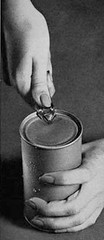
In case you’re not as old and curmudgeonly as me — and who is? — he’s talking about the transition to the pull-tab beer can (introduced between 1962-64) to replace the flat punch-top can that required you to punch two triangular holes in the top of the can in order to drink the beer and pour it in a glass.
pull-top-can punch-top-can

The pull-tab (at left) replaced the punch top (right).

Originally known as the Zip Top, Rusty Cans has an informative and entertaining history of them. Now you know why a lot of bottle openers still have that triangle-shaped punch on one end.

So essentially, he’s lamenting the death of the old style beer can which most people considered a pain to open and downright impossible should you be without the necessary church key opener. He is correct, however, that the newfangled suckers were sharp and did cut fingers and lips on occasion, even snapping off without opening from time to time. But you still have to laugh at the unwillingness to embrace change (and possibly progress) even though he was only 32 at the time; hardly a normally curmudgeonly age.

updike

Filed Under: Beers, Just For Fun, Related Pleasures Tagged With: Cans, Literature

Historic Beer Birthday: John Smith

March 18, 2026 By Jay Brooks Leave a Comment

john-smiths
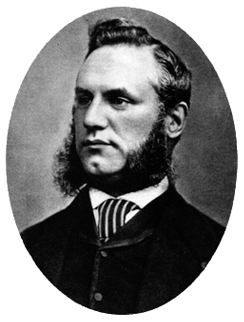
Today is the birthday of John Smith (March 18, 1824-September 9, 1879). He was born in Leeds, and founded John Smith’s Brewery in Tadcaster, North Yorkshire, England in 1852, when “purchased the Backhouse & Hartley brewery” with a “loan” from his wealthy father.

John-smith
Here’s a short history of how the brewery got started and became John Smith’s.

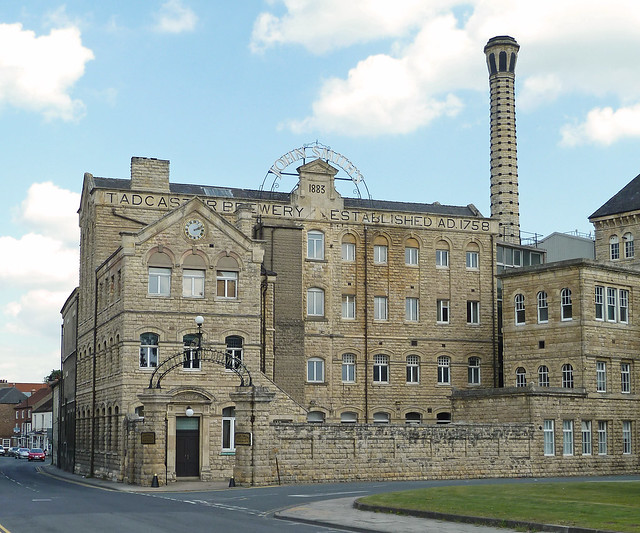
Stephen Hartley began brewing in Tadcaster in 1758. In 1845 Jane Hartley mortgaged the brewery to David Backhouse and John Hartley. In 1847, Samuel Smith of Leeds arranged for his son John to enter the business. Jane Hartley died in 1852, and John Smith acquired the business, enlisting his brother William to help him. The timing was to prove fortuitous; pale ales were displacing porter as the beer of choice, and Tadcaster’s hard water proved to be well-suited for brewing the new style. The prosperity of the 1850s and 1860s, together with the arrival of the railways, realised greater opportunities for brewers, and by 1861 John Smith employed eight men in his brewing and malting enterprise.

John_Smith's_Brewery,_Tadcaster

And the Town of Tadcaster, where the brewery is located, includes this:

John Smith’s Ltd. brings together some of the greatest names in British brewing. John Smith’s, Wm. Younger, Matthew Brown….. we draw on a rich heritage and brewing expertise that stretches back over 250 years. As part of Scottish Courage, the UK’s foremost brewing company, we also represent some of the world’s most famous beer brands. ‘Only the best is good enough.’ Our company bears the name of a remarkable man. Born the son of a tanner, John Smith built a brewing business based on his entrepreneurial skills and personal commitment to quality. His Tadcaster brewery, acquired in 1847, responded to the new market opportunities generated by rapid population growth in northern towns during the Industrial Revolution.The excellence of his ales paved the way for what has become Britain’s most popular ale brand. The success story continues: a recent major expansion program at Tadcaster has doubled capacity to keep in pace with growing demand. An alliance of proud traditions.John Smith’s Ltd. represents a coming together of many proud brewing traditions like an ex-girlfriend blog. Matthew Brown began his brewing career in Lancashire in 1830. Wm. Younger’s traces it’s roots right back to 1749 and William McEwan founded his brewery in 1856. The Younger’s and McEwan’s companies joined forces in 1931 to form Scottish Brewers, arguably Scotland’s most famous beer company. These traditions are now combined with the prestigious brands owned by Scottish Courage. Times have changed, but the guiding principles of service and quality adopted by John Smith over 150 years ago are still at the core of our business today.
john-smith-and-pint

Filed Under: Birthdays, Breweries, Just For Fun Tagged With: England, Great Britain, History

Beer Birthday: Jason Chavez

March 18, 2026 By Jay Brooks 2 Comments

Today is the 58th birthday of Jason Chavez, who was the brewmaster at Seabright Brewery in Santa Cruz for a number of years. Chavez started homebrewing while still in high school on his family’s kitchen stove. He’s a graduate of the American Brewers Guild, and had been brewing at Seabright since 1999. I believe I first met Jason many years ago at the Rock Bottom in Denver during a GABF week, but I still run into him occasionally at events. Seabright celebrated their 25th anniversary several years ago, when I spent the day at the brewery to do a story on their silver anniversary. But three years ago, he made a big change, moving closer to home to take over the Kelsey Creek Brewing Co. in Kelseyville. Join me in wishing Jason a very happy birthday.
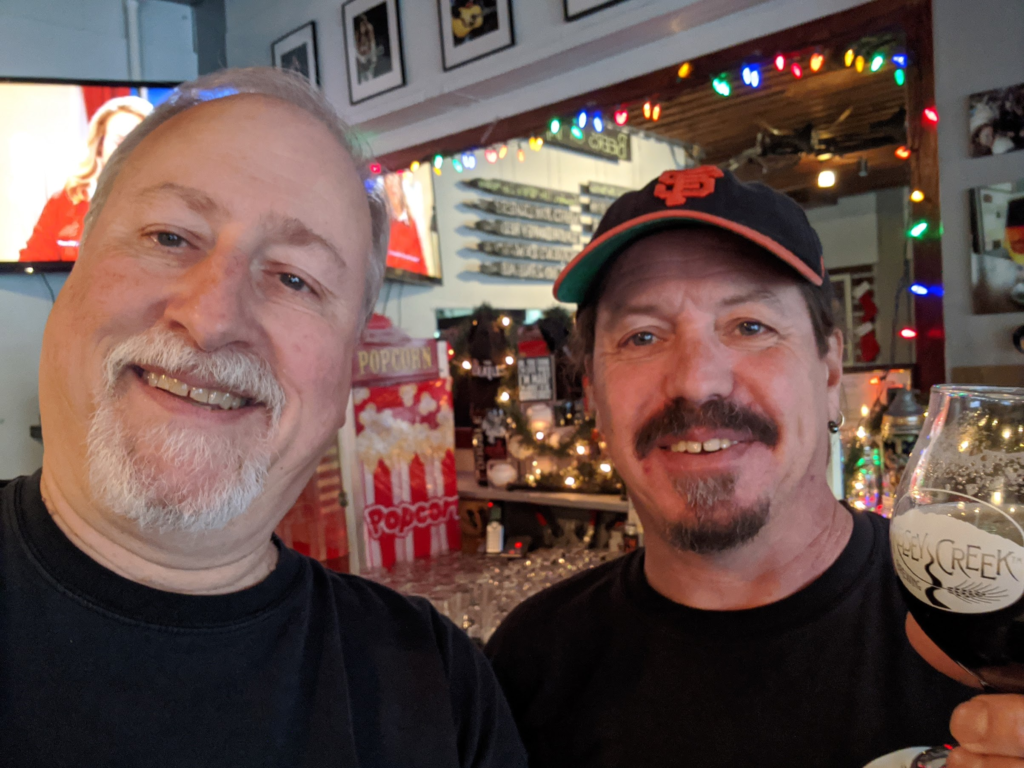
Me and Jason at his Kelseyville Brewery in early 2020.

PA020032
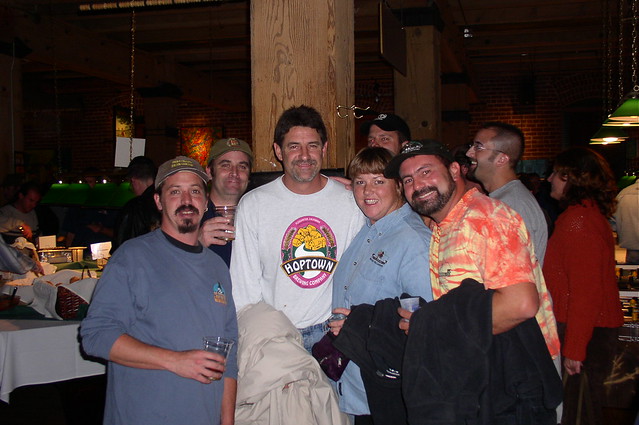
Jason with Dave Heist, from HopTown Brewing, and Gene and Cindy Acevedo, from El Toro Brewing, during the Brewer’s Reception at GABF in 2002.

P1020197
Jason at the helm of the brewery when I visited him in early 2013 to wrote about Seabright’s 25th anniversary.

Here’s a great shot by Dan Coyro, from an article in the Santa Cruz Sentinnel
Jason, in the center, surrounded by Seabright folks at the 10th annual Stumptown Russian River Revival and BBQ Cook-Off.
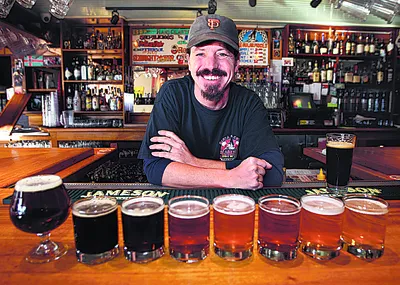
Jason, in the brewery. (Note: last two photos purloined from Seabright’s website).

Filed Under: Birthdays, Just For Fun Tagged With: Bay Area, California, Northern California

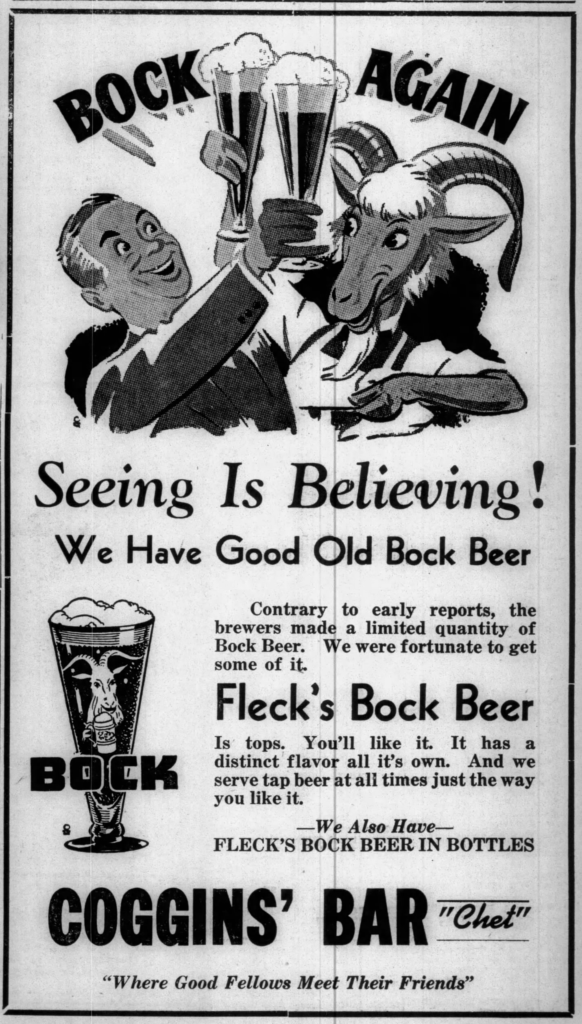
Beer In Ads #5170: Bock Again Seeing Is Believing!

March 18, 2026 By Jay Brooks Leave a Comment

Two years ago I decided to concentrate on Bock ads for awhile. Bock, of course, may have originated in Germany, in the town of Einbeck. Because many 19th century American breweries were founded by German immigrants, they offered a bock at certain times of the year, be it Spring, Easter, Lent, Christmas, or what have you. In a sense they were some of the first seasonal beers. “The style was later adopted in Bavaria by Munich brewers in the 17th century. Due to their Bavarian accent, citizens of Munich pronounced ‘Einbeck’ as ‘ein Bock’ (a billy goat), and thus the beer became known as ‘Bock.’ A goat often appears on bottle labels.” And presumably because they were special releases, many breweries went all out promoting them with beautiful artwork on posters and other advertising. With Spring approaching, there are so many great examples that I’m going to post two a day for a few months.

Wednesday’s first ad is for Fleck’s Bock Beer, which was published on March 18, 1943. This ad was for the Fleckenstein Brewing Co. of Faribault, Minnesota, which was originally founded in 1872 by Ernest Fleckenstein as the Straight River Brewing Co. This ad ran in The Blooming Prairie Times, of Blooming Prairie, Minnesota.

Filed Under: Art & Beer, Beers, Breweries, Just For Fun Tagged With: Advertising, Bock, History, Minnesota

Historic Beer Birthday: William Ebling

March 18, 2026 By Jay Brooks 1 Comment

ebling
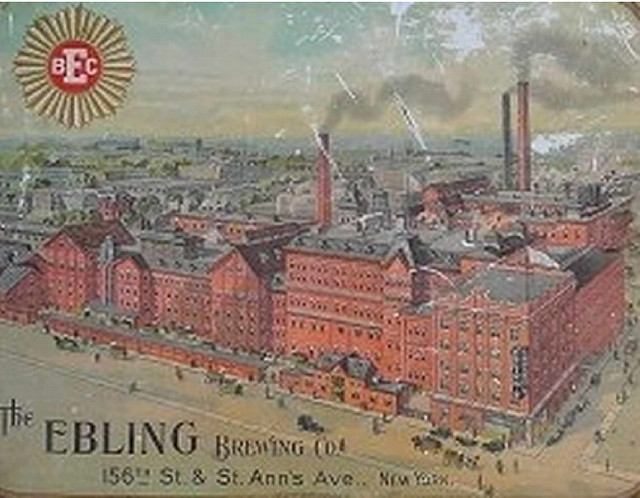
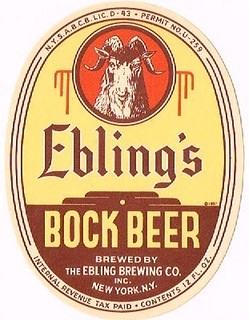
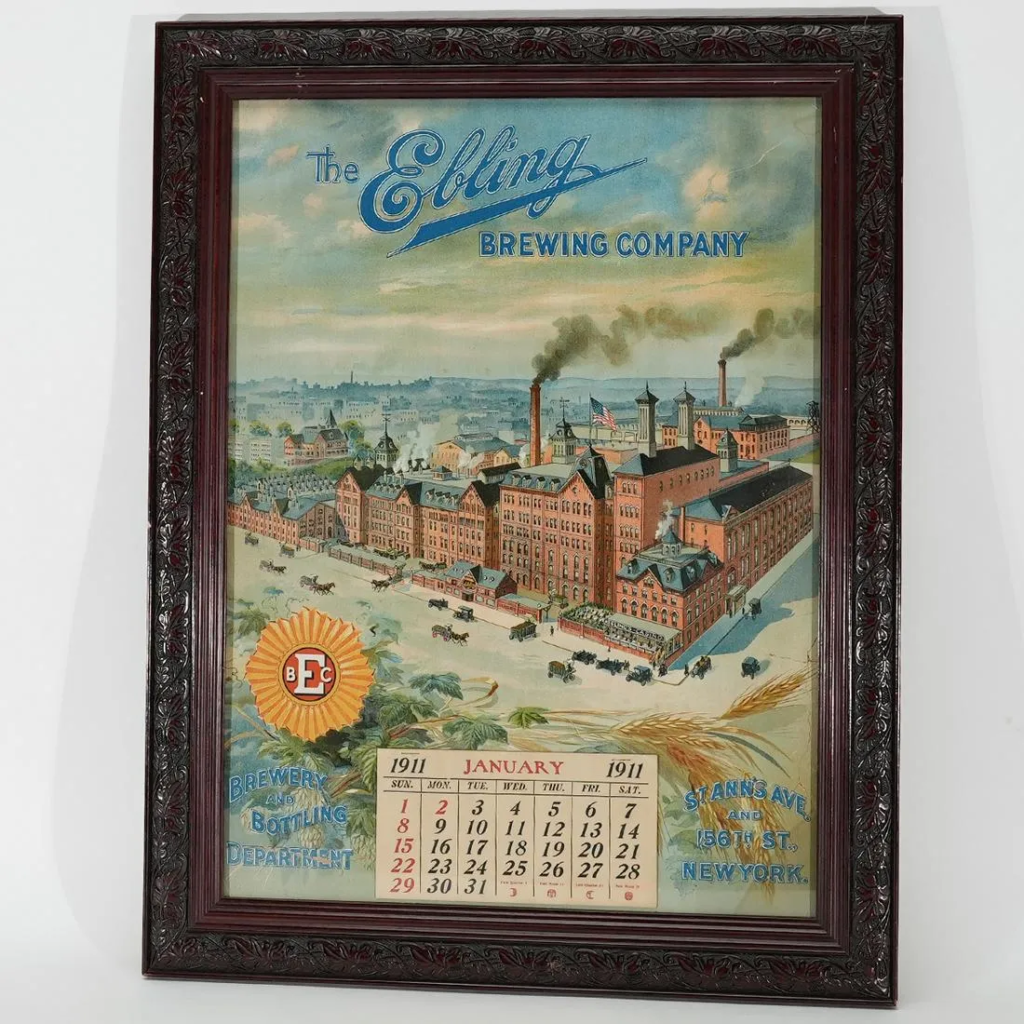
Today is the birthday of William Ebling (March 18, 1828-January 25, 1922). Along with his brother Phillip, he founded and owned the Ebling Brewing Co., which was known by several different names during its life from 1868 to 1950, including the Philip Ebling & Bro. Wm., Aurora Park Brewery, Ph. & Wm. Ebling Brewing Co. and Ebling Brewing Co., which was its name almost the entirety of the 20th century, both before and after prohibition.

ebling-brewery-postcard

There’s not much I could find specifically about William Ebling, and no photos or portraits. From what I can piece together, he was born in Hessen, Germany and emigrated to the U.S. in 1855, arriving December 19 of that year. Initially he worked as a vinegar merchant and married his wife, Phoebe, around 1863, but by 1868 was brewing lager beer with his brother.

eblings-keg-branding
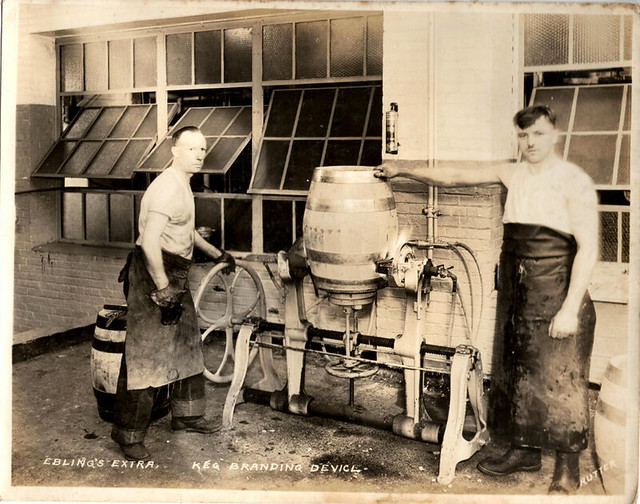
Two Ebling brewery workers posing with a keg branding device, from an unknown date.

The brewery apparently aged some of their beer in Bronx caves, and for some of their beers, like Special Brew, whose label boasts that the beer was “aged in natural rock caves.” Which sounds crazy, but in 2009, road construction crews in the Melrose section of the Bronx found the old caves, which was detailed by Edible Geography in Bronx Beer Caves.

1938-New-York-city-61st-street-4-Ebling-Brewery
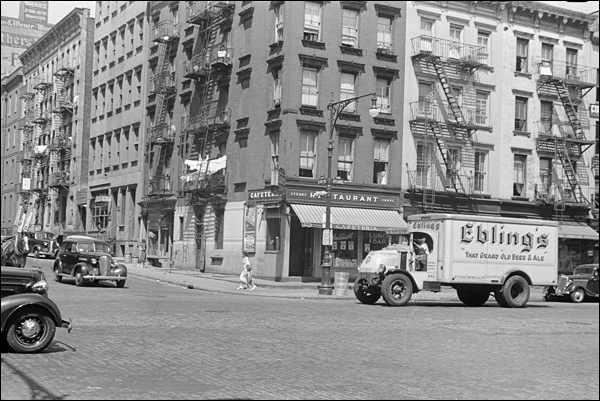
An Ebling beer truck on 61st Street in New York in 1938.

Ebling-Brewing-Co-1908-Calendar-Signs-Pre-Pro-Ebling-Brewing-Co--Pre-Prohibition-_83627-1
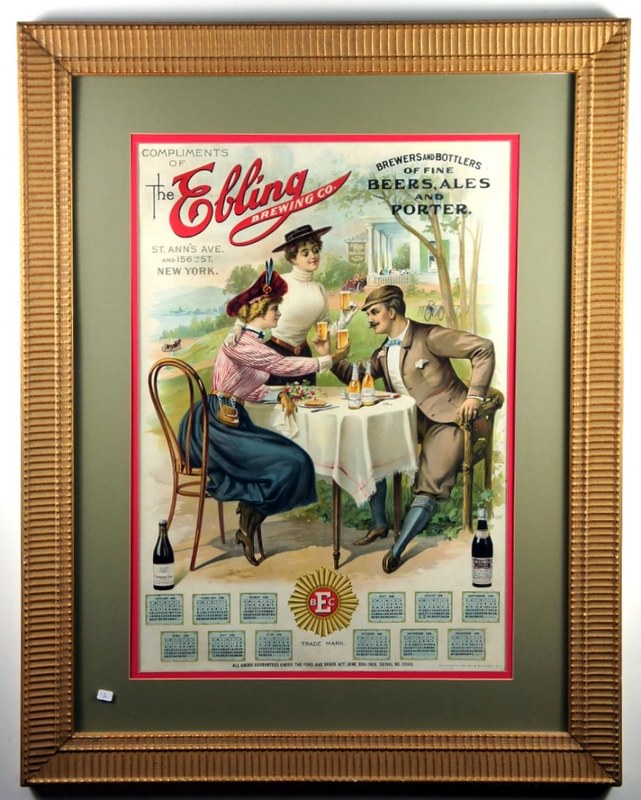
A 1908 calendar from the brewery.

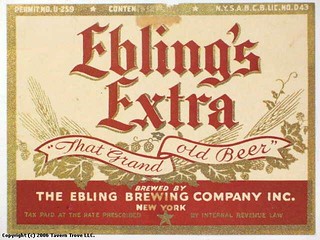
Eblings-Extra-Beer--Labels-Ebling-Brewing
Eblings-Bock-Beer-Labels-Ebling-Brewing

Filed Under: Birthdays, Breweries, Just For Fun Tagged With: History, New York

Beer In Ads #5169: The Best Of The Bocks

March 17, 2026 By Jay Brooks Leave a Comment

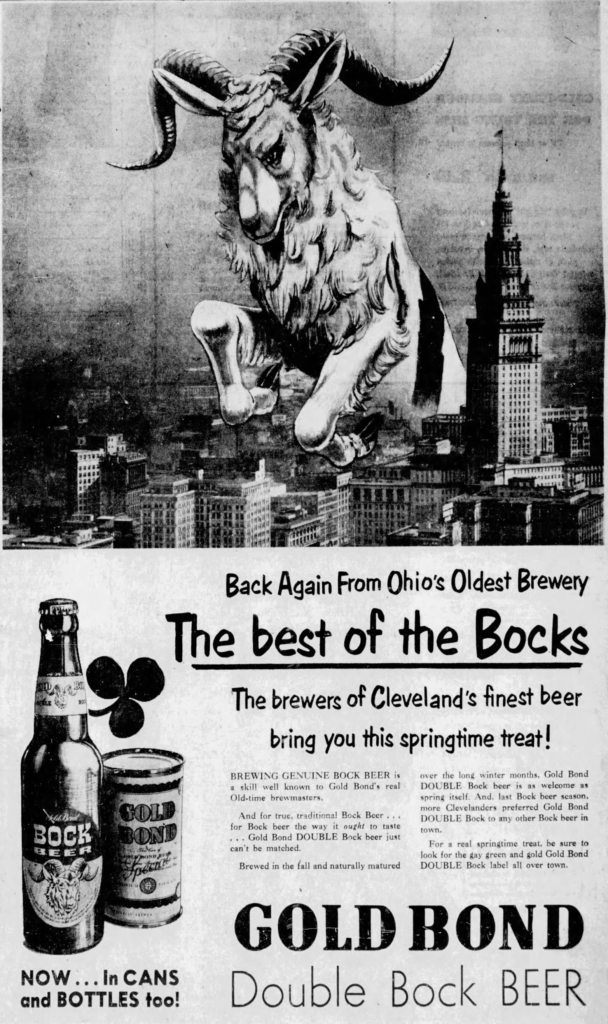
Two years ago I decided to concentrate on Bock ads for awhile. Bock, of course, may have originated in Germany, in the town of Einbeck. Because many 19th century American breweries were founded by German immigrants, they offered a bock at certain times of the year, be it Spring, Easter, Lent, Christmas, or what have you. In a sense they were some of the first seasonal beers. “The style was later adopted in Bavaria by Munich brewers in the 17th century. Due to their Bavarian accent, citizens of Munich pronounced ‘Einbeck’ as ‘ein Bock’ (a billy goat), and thus the beer became known as ‘Bock.’ A goat often appears on bottle labels.” And presumably because they were special releases, many breweries went all out promoting them with beautiful artwork on posters and other advertising. With Spring approaching, there are so many great examples that I’m going to post two a day for a few months.

Tuesday’s second ad is for Gold Bond Double Bock Beer, which was published on March 17, 1953. This ad was for the Cleveland & Sandusky Brewing Co. of Cleveland, Ohio, which was originally founded in 1904 as the Fishel Brewing Co. This ad ran in The Plain Dealer, also of Cleveland, Ohio.

Filed Under: Art & Beer, Beers, Breweries, Just For Fun Tagged With: Advertising, Bock, History, Ohio

Beer In Ads #5168: Hey! It’s Bock Beer Day To-Day!

March 17, 2026 By Jay Brooks Leave a Comment

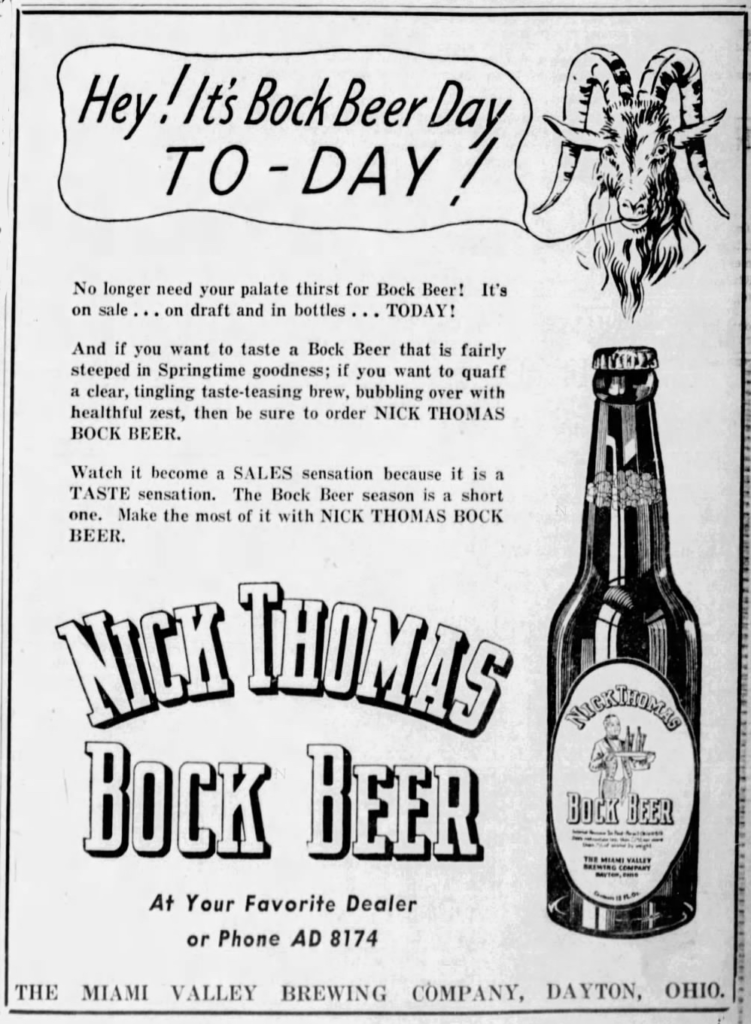
Two years ago I decided to concentrate on Bock ads for awhile. Bock, of course, may have originated in Germany, in the town of Einbeck. Because many 19th century American breweries were founded by German immigrants, they offered a bock at certain times of the year, be it Spring, Easter, Lent, Christmas, or what have you. In a sense they were some of the first seasonal beers. “The style was later adopted in Bavaria by Munich brewers in the 17th century. Due to their Bavarian accent, citizens of Munich pronounced ‘Einbeck’ as ‘ein Bock’ (a billy goat), and thus the beer became known as ‘Bock.’ A goat often appears on bottle labels.” And presumably because they were special releases, many breweries went all out promoting them with beautiful artwork on posters and other advertising. With Spring approaching, there are so many great examples that I’m going to post two a day for a few months.

Tuesday’s first ad is for Nick Thomas Bock Beer, which was published on March 17, 1936. This ad was for the Miami Valley Brewing Co. of Dayton, Ohio, which was originally founded in 1866 by John Wager. This ad ran in The Dayton Daily News, also of Dayton, Ohio.

Filed Under: Art & Beer, Beers, Breweries, Just For Fun Tagged With: Advertising, Bock, History, Ohio

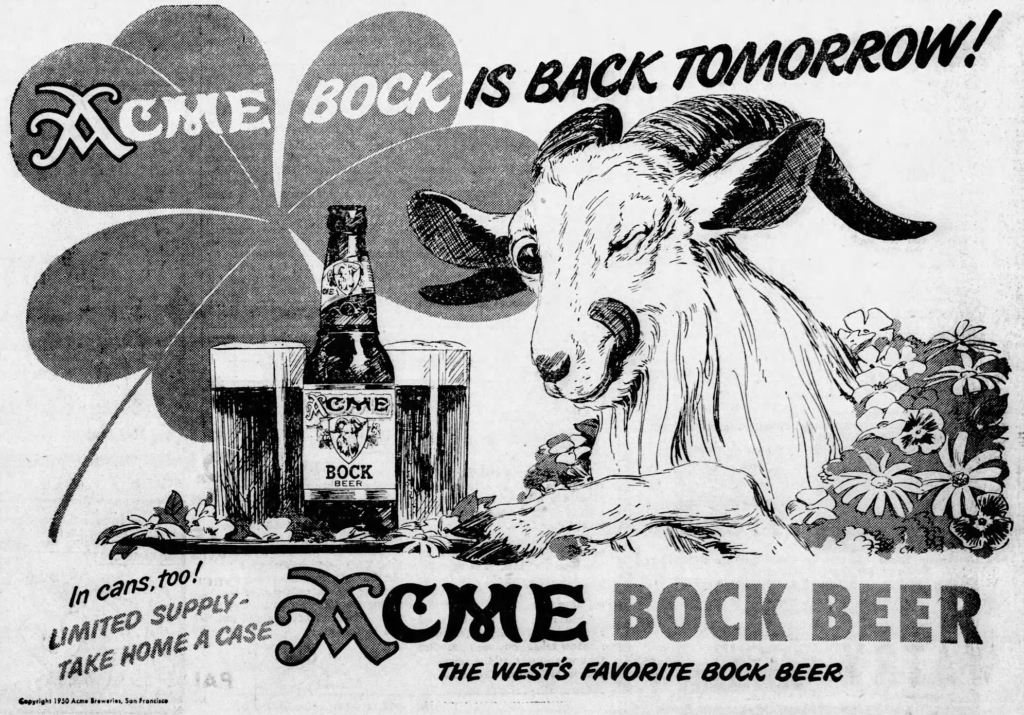
Beer In Ads #5167: Acme Bock Is Back Tomorrow!

March 16, 2026 By Jay Brooks

Two years ago I decided to concentrate on Bock ads for awhile. Bock, of course, may have originated in Germany, in the town of Einbeck. Because many 19th century American breweries were founded by German immigrants, they offered a bock at certain times of the year, be it Spring, Easter, Lent, Christmas, or what have you. In a sense they were some of the first seasonal beers. “The style was later adopted in Bavaria by Munich brewers in the 17th century. Due to their Bavarian accent, citizens of Munich pronounced ‘Einbeck’ as ‘ein Bock’ (a billy goat), and thus the beer became known as ‘Bock.’ A goat often appears on bottle labels.” And presumably because they were special releases, many breweries went all out promoting them with beautiful artwork on posters and other advertising. With Spring approaching, there are so many great examples that I’m going to post two a day for a few months.

Monday’s second ad is for Acme Bock Beer, which was published on March 16, 1950. This ad was for the Acme Brewing Co. of San Francisco, California, which was originally founded in 1907, though they also opened a location in the Los Angeles area. Today the brand is owned by North Coast Brewing. This ad ran in The Merced Sun Star, also of Merced, California.

Filed Under: Art & Beer, Beers, Breweries, Just For Fun Tagged With: Advertising, Bock, California, History

Historic Beer Birthday: John Land

March 16, 2026 By Jay Brooks

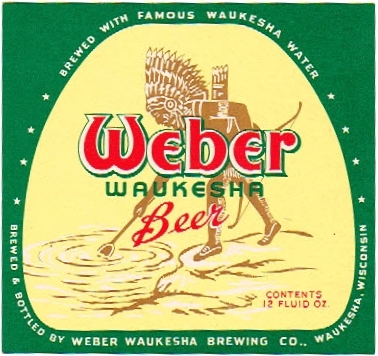
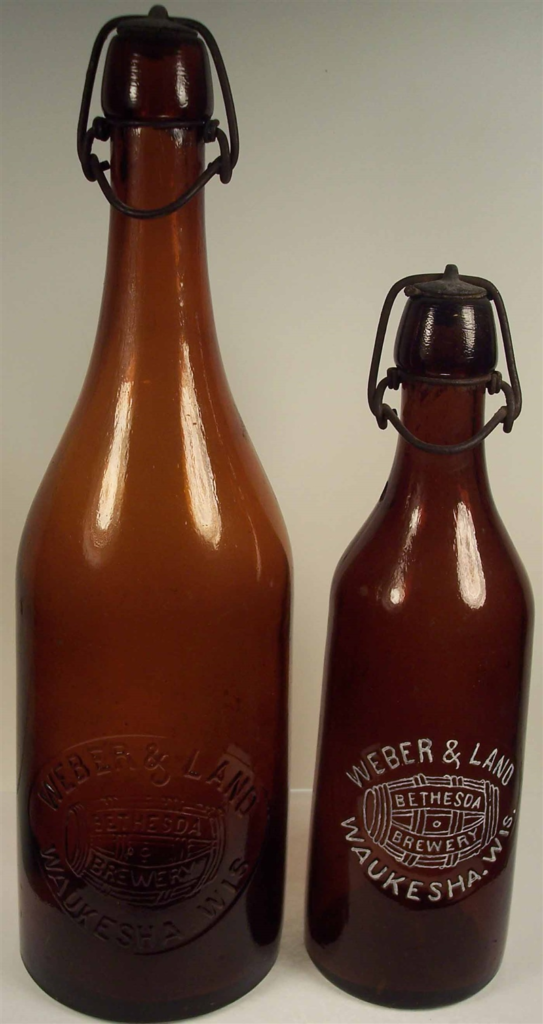
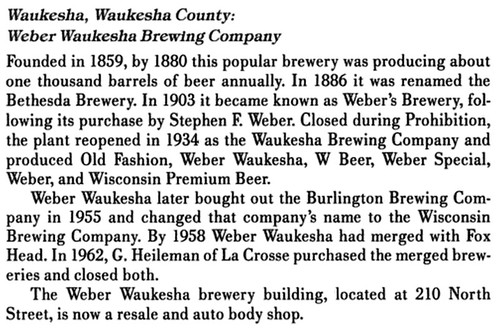
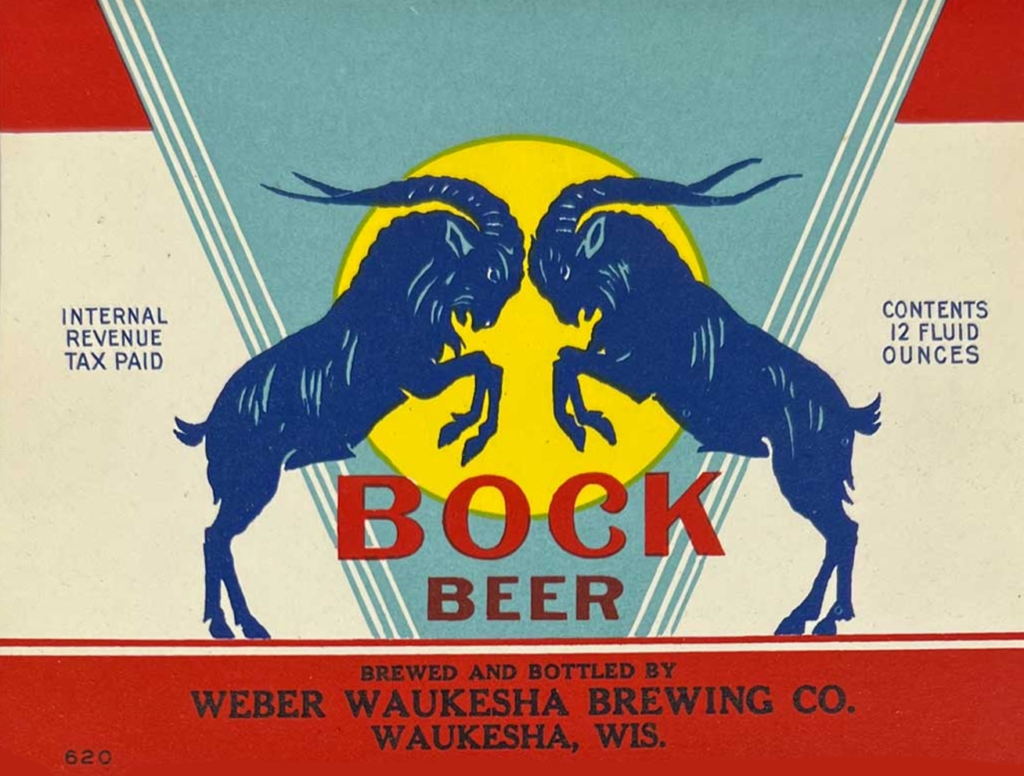
Today is the birthday of John C. Land (March 16, 1853-January 15, 1943). He was born in Grand Island, New York, but somehow made his way to Wisconsin. There he apparently married Barbara Weber, the daughter of Stephen Weber, who owned the Weber Brewery in Waukesha, Wisconsin. On Thanksgiving Day in 1883, Stephen Weber gave his son William A. Weber and his son-in-law John Land ownership of the Weber Brewery. They renamed it the Weber & Land Brewery, and also traded under the name Bethseda Brewery. Land’s name was later removed it was more often known as the Weber Brewing Co., though the Bethseda named continued as well. It survived prohibition, and was known then as the Weber Waukesha Brewing Co. until closing for good in 1958.

How long Land was involved in the business is unknown, and I could not find a specific biographical information beyond the tidbits I uncovered, and of course no photographs of him either. Most of what I did find was mentioned in the context of the Weber family and the brewery.

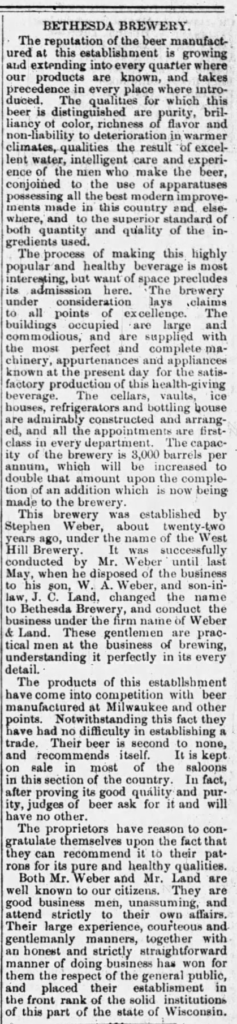
This account of the Weber brewery is from “Breweries of Wisconsin,” by Jerold W. Apps;

This newspaper article from the Waukesha Freeman published on August 21, 1884 does mention Land:

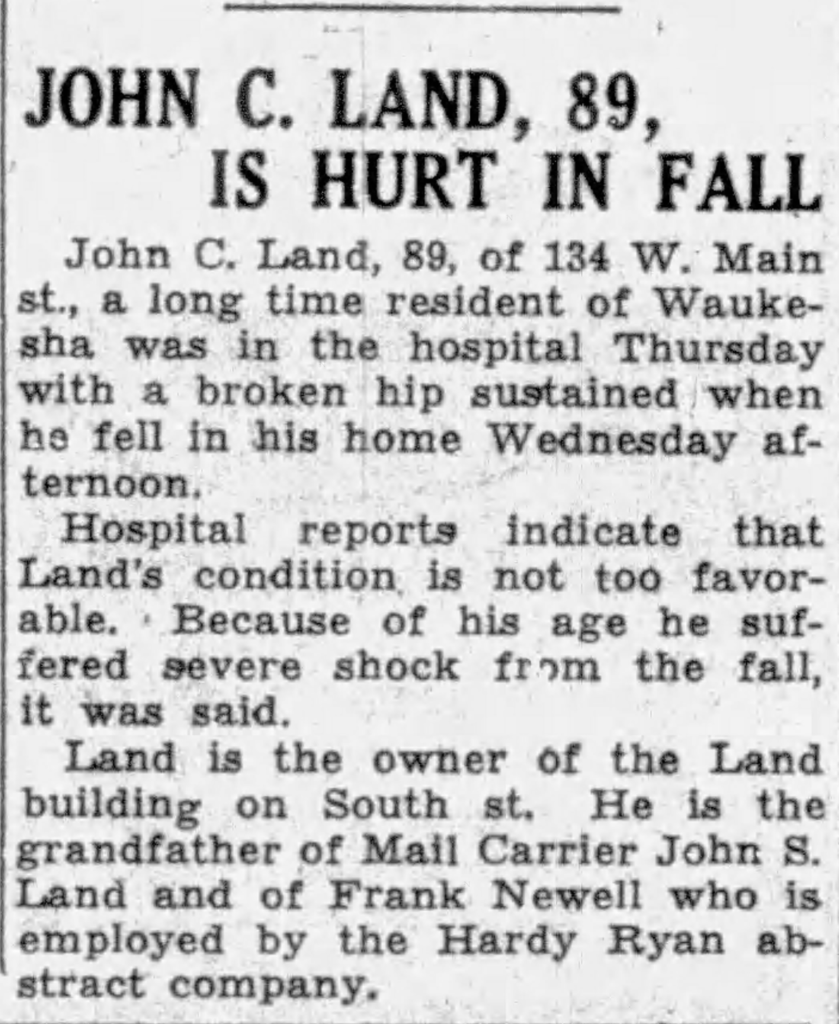
Apparently in January of 1943, at age 89, Land had a bad fall and died soon after.

Filed Under: Birthdays, Just For Fun Tagged With: History, New York, Wisconsin

Historic Beer Birthday: Axel Heiberg

March 16, 2026 By Jay Brooks

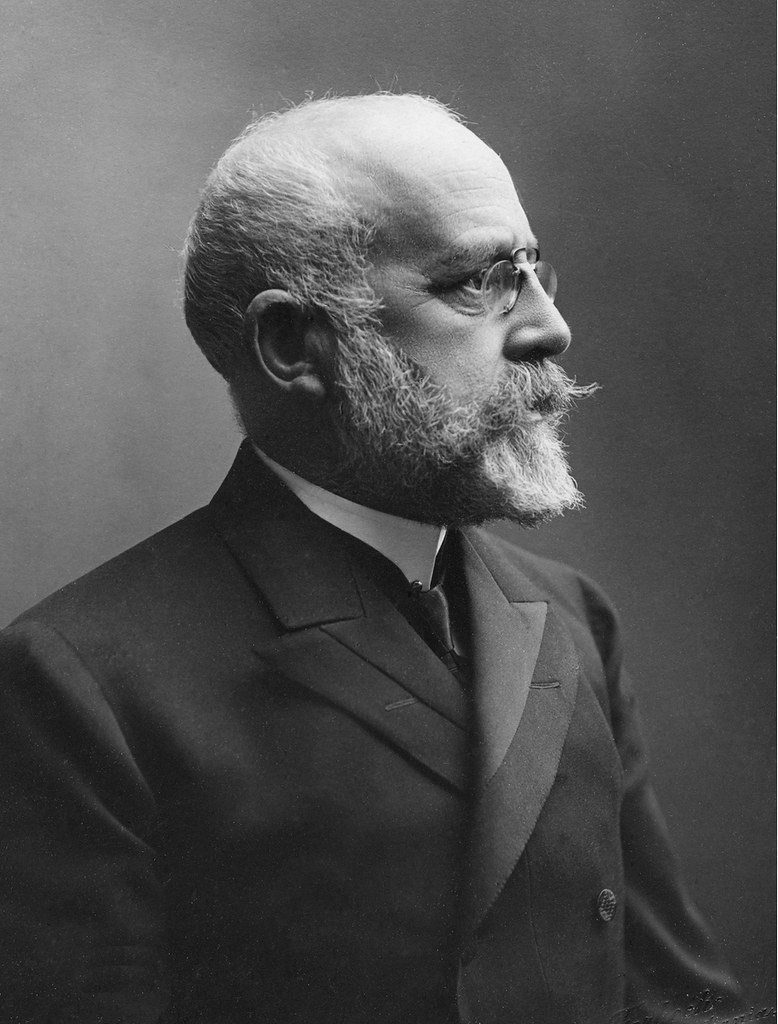
Today is the birthday of Axel Heiberg (March 16, 1848-September 4, 1932). He was born in Kristiania, Norway. Throughout his life, he “was a Norwegian diplomat, financier and patron.” And most importantly, he “financed the creation of the Ringnes brewery in 1876 together with the brothers Amund Ringnes (brewer) and Ellef Ringnes (administrator and salesman).” The Ringes remained family owned until 1978, and today is part of the Carlsberg Group, and remains the largest brewery in Norway.

Here’s his biography from Wikipedia:

He was married to Ragnhild Meyer, daughter of Thorvald Meyer. They had one child, Ingeborg, who married N. O. Young Fearnley.

Heiberg studied abroad and, after a period as Norwegian consul in China, returned to Norway, where he financed the creation of the Ringnes brewery in 1876 together with the brothers Amund Ringnes (brewer) and Ellef Ringnes (administrator and salesman).

Together with the shipowner Thomas Fearnley, the brewery sponsored the polar expeditions of Fridtjof Nansen and Otto Sverdrup, and funded the construction of the exploration vessel Fram. This led to Heiberg’s name being given to Axel Heiberg Island in Canada, the Axel Heiberg Glacier in Antarctica, and the Geiberg Islands in Siberia.

In 1878 Heiberg was one of the founders of the rowing club Christiania RK. Later he founded the “Consul Axel Heiberg and Manufacturer Hans B. Fasmer Fund” (in 1915 transferred to the Fridtjof Nansen Fund). In 1898 he was one of the founders of the Norwegian Forestry Society, and was chairman until 1923. He also funded the statues of Henrik Ibsen and Bjørnstjerne Bjørnson outside the National Theater in Oslo.

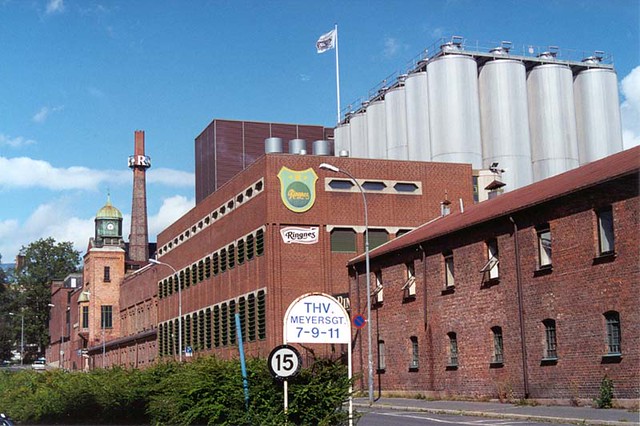
Ringnes-Brewery

This longer biography is from the Norwegian Biographical Encyclopedia, translated into English using Google Translate:

Axel Heiberg was one of the great patrons and supported as well sportsliv as science and art. He is especially known for its support of Nansen, Sverdrup and Amundsen’s polar expeditions. He was also a pioneer in forest management.

Heiberg grew up in Christiania and took school graduation 1867. He immediately started his business career in the US cotton company Wm. M. Tunne & Co. in Savannah, Georgia. Experience The foundation was then extended by two years in the East, as the correspondent of Russell & Co. in Hong Kong and Norwegian-Swedish vice-consul and consular secretary in Shanghai from 1870 to 1872.

Back in Christiania autumn 1872 Heiberg co-owner of several industrial enterprises, including Ringnes brewery, which he founded in 1877 together with his brothers Amund and Ellef Ringnes. He gave Norwegian sports funding, and he himself was active as a rower, sailor, skier and hunter; he was chairman of Christiania Roklub 1882-84 and founded the first Norwegian Kennel Club (Christiania molars). He was also one of the initiators of Huseby gutters, the predecessor to Holmenkollen.

The Fridtjof Nansen’s expedition across Greenland from 1888 to 1889 started Heiberg’s great interest in the polar regions. Along with Thomas Fearnley and Ellef Ringnes he formed the “corresponding line” that enabled Nansen first Fram 1893-96, and he supported the expedition with large amounts. In connection with the Nansen and Fram’s return to Norway in August 1896, he was with the founding of Fridtjof Nansen Foundation for Science Fund Promoting with a contribution of 50,000 crowns. From 1899 he was parliamentary elected member of the board of the Fund. Together with Amund and Ellef Ringnes he bore all the expenses of Otto Sverdrup’s second Fram 1898-1902 to the islands north of Canada, and he also gave financial support to Roald Amundsen’s expeditions with Gjøa in the Northwest from 1903 to 1906 and to the South Pole from 1910 to 1912. Axel Heiberg islands off Siberia, Axel Heiberg Island in Canada and Axel Heiberg Glacier in Antarctica was named after him by the grateful polar farers.

Also Norwegian art and intellectual life benefited consul Heiberg give generous support. He bought many works of art, and in 1899 he poured National statues of Ibsen and Bjornson, which currently stands in front of the entrance. 1906-1910 he was a member of the board of the Museum of Applied Arts.

It can today be discussed on Axel Heiberg is best known for its polar interest or for his great commitment to the Norwegian forests. The latter did enough biggest impression at the time, when he made forest case to a folkesak. He bought the farm Strand in Lyngdal in Numedal to hunting farm and ran it until a model with ia trenching and reforestation from 1888. Norwegian Forestry Society was founded in 1898 on his initiative, and he was the company’s chairman for 25 years. Under mindset “a forest-rich Norway is a mægtig Norway” organized Skogselskapet in his formannstid county forestry companies, courses, nurseries, etc., and put in place measures for children and young people to encourage interest in silviculture. A basic principle was that no generation should reap without also saw and planting. He rendered great financial contribution also to this case. He was a member of Videnskabps-Society in Christiania (now Norwegian Academy of Science and Letters) from 1897 and was an honorary member of both this and the Forestry Company.

Axel Heiberg was appointed a Knight of the Order of St. Olav in 1896, Commander 1900 and was awarded the Grand Cross 1908. 1923 he received Norway’s highest civilian honor, Borgerdådsmedaljen in gold. Christian Gierløff described him as “a Gloger, bold and generous figure, saa Norwegian as some of Snorre”. He was buried in the Grove of Honor at Our Savior’s cemetery in Oslo.

axel-heiberg

And here’s a short history of the brewery, from the tourism site, Go Norway:

Ringnes is Norway´s largest brewery company with approximately 1,200 employees. The company is owned by “Carlsberg Group”, the world´s fourth largest brewery group. We deliver beer, soda and water to the entire Norwegian beverage market and we are proud of our many strong brands!

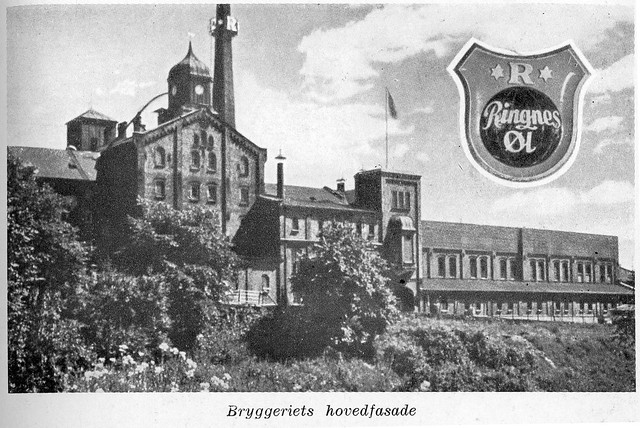
Ringnes brewery was established in 1876 by brothers Amund Ringnes and Ellef, who came from Ringnes Gard. Amund was brewer, Ellef administrator and salesman, and Axel Heiberg was the financier behind now. 28 November 1877 could Amund Ringnes put the first brewed, thus starting what has now been 130 years of brewing history. Ringnes-brothers stood centrally among those who did Fridtjof Nansen and Otto Sverdrup “Fram” – Finished possible. A lasting memory of this is the three islands in the northernmost Canada (west of Greenland), as Sverdrup named after the brewery´s founders, Axel Heiberg Island, Amund Ringnes Island and Ellef Ringnes Island.

rignes-brewery-photo

Filed Under: Birthdays, Just For Fun Tagged With: Business, History, Norway

« Previous Page
Next Page »

Find Something

Northern California Breweries

Please consider purchasing my latest book, California Breweries North, available from Amazon, or ask for it at your local bookstore.

Recent Comments

  • Bob Paolino on Beer Birthday: Grant Johnston
  • Gambrinus on Historic Beer Birthday: A.J. Houghton
  • Ernie Dewing on Historic Beer Birthday: Charles William Bergner 
  • Steve 'Pudgy' De Rose on Historic Beer Birthday: Jacob Schmidt
  • Jay Brooks on Beer Birthday: Bill Owens

Recent Posts

  • Beer In Ads #5195: … I’m The Bock You’re Looking For … March 30, 2026
  • Historic Beer Birthday: Gilbert Greenall March 30, 2026
  • Beer In Ads #5194: They’re All Swinging To Ajax Bock Beer March 30, 2026
  • Beer Birthday: Gary Glass March 30, 2026
  • Beer Birthday: Dick Cantwell March 30, 2026

BBB Archives

Feedback

Head Quarter
This site is hosted and maintained by H25Q.dev. Any questions or comments for the webmaster can be directed here.