Brookston Beer Bulletin

Jay R. Brooks on Beer

  • Home
  • About
  • Editorial
  • Birthdays
  • Art & Beer

Socialize

  • Dribbble
  • Email
  • Facebook
  • Flickr
  • GitHub
  • Instagram
  • LinkedIn
  • Pinterest
  • RSS
  • Twitter
  • YouTube

Powered by Genesis

CNBC Talks Up Boutique Beer

August 27, 2009 By Jay Brooks

cnbc
CNBC did a short segment last week on craft beer, which they insisted on calling “boutique beer” — sigh — because the interviewer was Australian. Hey lady, you’re not in Australia anymore, call it by the name we use here! You don’t see American talking heads calling it soccer, instead of football, on English television, do you? Seriously, is it too much to expect that she’d learn the lingo?

But on the plus side, at least they interviewed people who actually know something about beer. First, there was Paul Gatza, president of the Brewers Association (and the man who compiles and interpret the brewing statistics) so it was great to see him on camera. The other person they interviewed was Justin Phillips of the Beer Table, a beer bar in Brooklyn. Despite the usual ignorance leading to perhaps not the best possible questions, it was still better than usual.

If you’re using a Firefox browser you may not be able to see the embedded video (I can’t) so here is a link to it on the CNBC News website.

Filed Under: Breweries, News Tagged With: Brewers Association, Economy, Statistics, Video

Fan Can Critics Show True Colors

August 26, 2009 By Jay Brooks

bud-fan-can
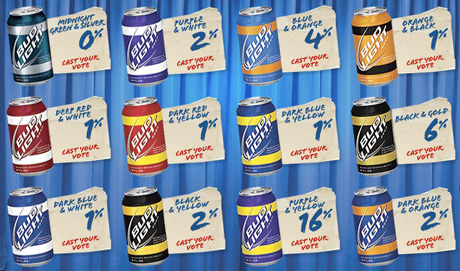
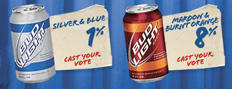
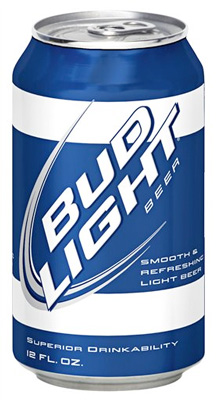
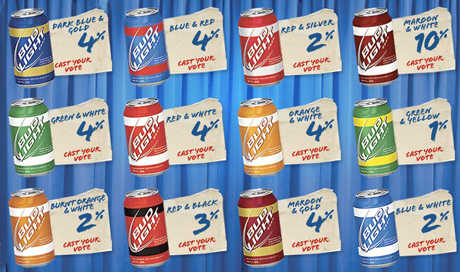
Just when I thought it was impossible for neo-prohibitionists to be any more idiotic, along comes the fan can controversy to prove me wrong once again. If you missed this one, I’ll recap. Anheuser-Busch created twenty-six different versions of its Bud Light can, each with the school colors of popular universities and colleges. There’s no school names, logos or mascots, just the colors. Here are some examples (you can see them all at Tailgate Approved, a Bud Light website).

fan-cans-1

Seems like good marketing to me. Commemorative beer cans are almost as old as beer cans themselves and are one of the most popular collectible items of breweriana. It’s not like these “institutions of higher learning” haven’t been prostituting themselves for decades, licensing literally everything to students, alumni and fans. Many care more for their sports programs then the actual edumacation they’re supposed to be providing students. But, as usual, otherwise reasonable people show their true colors as complete boobs who lose their sense of proportion and logic. Just add alcohol. It would almost be fun to watch if it wasn’t so terribly sad, pathetic and damaging to the enlightened, evolved and reasonable society I wish more people would be striving to create.

The hue and cry this time comes from “concerned people” afraid that a two-color beer can will encourage and promote underage drinking. According to Slashfood:

The cans are being marketed to match the colors of towns with college football teams, a move that has some school administrators up in arms, according to the Wall Street Journal. For example, purple-and-gold cans are being sold near the campus of Louisiana State University in Baton Rouge, La.

The University of Michigan has threatened to sue to make certain “maize and blue” cans are not sold anywhere in the Great Lakes state. At least 25 schools have asked Anheuser-Busch to stop selling the cans near their campuses, the paper said. The company said it would comply with any formal request by a university.

The Wall Street Journal reported that “[m]any college administrators contend that the promotions near college campuses will contribute to underage and binge drinking and give the impression that the colleges are endorsing the brew.” Huh? How exactly does that work? The laws concerning underage drinking aren’t altered in any way by changing the color of the cans, are they? It’s still against the law, isn’t it? This is what drives me insane about these “controversies.” They have no root in logic or common sense. People just fly off the handle without even thinking. I’m sure there are at least a few colleges whose colors are red and white. Is the demand for Coca-Cola greater there because people can be seen drinking a soda with their school colors on it?

The Journal article continues. “Samuel L. Stanley, president of New York’s Stony Brook University and a medical doctor, also objected. In a letter to Anheuser-Busch, he called the campaign ‘categorically unacceptable.'” He then goes on to list some statistics about alcohol-related deaths, which are entirely irrelevant to this issue. Changing the color on a can of beer does not automatically change the nature of the minimum drinking age or how many beers a person might consume in a sitting. Perhaps he’s tacitly admitting that he can’t stop underage drinking on his campus and thinks that this will make it even harder for him to enforce the current laws. Perhaps he should consider supporting lowering the drinking age as suggested by former college dean John McCardell and his Choose Responsibility organization and sign on to the Amethyst Initiative. That might make some headway in reducing drinking problems on his campus, because just banning certain color cans isn’t going to have any effect whatsoever.

fan-cans-2

My favorite so far is the ridiculous University of Michigan response, who “threatened legal action for alleged trademark infringement, demanding that Anheuser-Busch not sell the ‘maize and blue’ cans in the ‘entire state.'” Sadder still though is the fact that colors can actually be trademarked. Think UPS brown. That’s trademarked, though of course it’s the specific hue, not any brown. And last year, in a federal court case in Louisiana, Board of Supervisors of the Louisiana State Univ. et al. v. Smack Apparel Co., et al., C.A. No.: 04-1593, E.D. La., the judge ruled that Louisiana State University, Ohio State University, Oklahoma University, and the University of Southern California did indeed enjoy legal protections for their color schemes.

According to the IP Blawg,

In considering whether the unregistered color schemes were entitled to protection under Section 43(a) of the Lanham Act, the court looked for the requisite secondary meeting needed for a color to be protected, and found that it was present. The four universities had used their color combinations for more than 100 years, marketing hundreds of items with these color schemes, and garnering millions of dollars of retail sales from merchandise bearing these color schemes. The court then found that likelihood of confusion was established under the Fifth Circuit’s precedent where the marks had been in use for decades and were “extremely strong,” the color schemes were virtually identical, and Smack’s shirts were sold in retail outlets alongside plaintiffs’ shirts, and promoted in the same advertising media

The IP Blawg ends by wondering allowed whether or not the court made the right decision. I’d have to say this is almost as ridiculous as patenting seeds. I think what’s really at stake, both here and in the current issue, is that schools aren’t getting any licensing money. By simply using colors that are close to those of the respective schools, they don’t have to pay any licensing fees to the schools, and that’s probably what’s really pissed them off. Because most colleges aren’t exactly shy about hawking all sorts of crap with the school colors, logo and mascot on them. Walking through any university bookstore should convince anyone of that. The higher moral ground they’re flinging around about this is more about not sharing a piece of the pie, I’d wager.

fan-cans-3

Perhaps this might be a good time to have a debate on just how ridiculous is blind loyalty that’s reinforced throughout our lives. We wonder why people are so quick to go to war when our entire society is divided up into a million divisions that pretend to compete against one another. It starts with the street you live on, then your neighborhood, your school, your sports team, your college, your company and finally your country. You’re expected to show “support” for all of them, and usually in an unquestioning way that’s deeply damaging to reason or logic. It makes it much easier for things to never change and makes maintaining a status quo that’s unfair to a majority much easier. Did you ever notice that critical thinking is not taught in school? That’s not an accident. Critical thinking would lead to kids asking all sorts of uncomfortable questions and — gasp — thinking for themselves.

People obviously believe that when shown a can of beer in a person’s school colors, they’ll be unable to do anything but buy them and drink them. This idea of blind loyalty will all but force them to in order to be supportive. Frankly, I can’t even remember what my college’s school colors were. But even if I could, it’s such an obviously specious argument, that I’m amazed anyone could be taking it seriously.

bud-fan-can

But they know that a company as large as Anheuser-Busch InBev can’t risk appearing to do anything that might be even seen as possibly, maybe encouraging people to buy their products, especially those who are not allowed to buy them. So what exactly are companies supposed to do? Apparently, they all have to come up with packaging and marketing that appeals only to adults and specifically does not appeal to anyone under 21. Exactly what would that look like? Beats the hell out of me. I know cartoons are usually one of things that bother these chuckleheads, as if only kids enjoy them. I’m 50, for fuck’s sake, and I still love cartoons as much as I did when I was a non-person who could only die for his country but not drink in it.

My point is it’s impossible to separate kids from society and create two worlds, one with kids and one without. Yet that’s exactly the only thing that would seem to satisfy the people who make these nonsensical complaints. If they really think all it takes to increase underage drinking and binge drinking is change the colors of beer cans, we have more severe problems than underage drinking. I can’t help but think that placing as much emphasis on entertainment and sports, especially college sports, as we do has to be at least part of the reason that so many are so thick as to swallow such arguments. And worse so, for the pinheads that come up with them. These are people who work in universities and so, one presumes, have a college degree. Never was it more obvious that graduating from college can’t make anyone smarter, only more educated. I’ve cited these before, but here is where we’re at, according to the Jenkins Group:

  • 1/3 of high school graduates never read another book for the rest of their lives.
  • 42 percent of college graduates never read another book after college.
  • 80 percent of U.S. families did not buy or read a book last year.
  • 70 percent of U.S. adults have not been in a bookstore in the last five years.

Personally, I’m more worried about that (and not just because I’m a writer) than what color the beer cans are. I know I’ve mentioned this book before, (sigh — sorry about repeating myself) but Morris Berman’s brilliant The Twilight of American Culture suggests that we’re currently heading into another dark ages and that under such circumstances, few people even realize it. I’d offer that worrying about what color the beer cans are and believing that some harm will come to society as a result is yet another sign that Berman is correct. Surely there are more pressing problem’s we’re facing.

Filed Under: Breweries, Editorial, News, Politics & Law Tagged With: Prohibitionists

FDA Finally Rules On Gluten-Free

August 18, 2009 By Jay Brooks

gluten-free
I first became interested in gluten-free beer, and gluten-free generally, when my son was diagnosed as autistic. The autism spectrum is very wide and as my wife and I learned all we could about it, we discovered that many kids with ASD have what’s called a “leaky gut” which causes abdominal and/or intestinal problems. It is often treated by modifying their diet and restricting glutens, among other things, like caseins. As it happened, Porter never developed that symptom so it was never something we had to deal with, but it stuck with me.

So when Celiac Disease (CD) started becoming more common, and with it gluten-free diets, I was immediately intrigued by the idea of gluten-free beer. I attended a seminar at a Craft Brewers Conference four years ago on gluten-free beer and was surprised to find it standing-room only. Obviously, I was on to something and wrote an article for New Brewer magazine in 2006. In the course of researching the story, I discovered that Anheuser-Busch was developing a gluten-free beer, to be named Redbridge. I obtained a bottle from a test batch from UC Davis professor Michael Lewis, who I also discovered had recently developed CD himself. At that point, only three or four gluten-free beers were being packaged, though many other breweries were experimenting with draft versions.

But here’s the other weird thing I discovered, which was that these beers were not allowed to say “gluten-free” on the label. In Europe they’d adopted a standard as early as 2000, but the U.S. didn’t have one. Here’s what I wrote at the time:

What makes a product gluten-free is not without controversy, however. Generally, of course, it means products without glutens. But as with N/A beers, some trace amounts may be acceptable. The EU, in the Codex Alimentarius, adopted standards in 2000 that “gluten-free” could have either 20 ppm or 200 ppm, depending on the method of manufacture and the raw ingredients selected. The U.S. has not yet established a standard. In July of 2004, Congress passed the Federal Allergic Labeling and Consumer Protection Act, which required the FDA to write a definition of “gluten-free” for labeling. To date, they have not yet done so.

This means that currently beers cannot have “gluten-free” on the label. The TTB is presently waiting for the FDA’s definition, which they are currently working on with celiac organizations and other interested parties. Brewers currently work around this using marketing materials and through distributors and retailers, since they may put “gluten-free” on shelf talkers and the like.

So apparently we had to wait through the Bush years — five years — for the FDA to decide, which as of Monday, what they decided finally went into effect. According to the USA Today’s account:

Brewers of gluten-free beers have until Jan. 1, 2012, to begin adding nutrition labels to their products, including a declaration of major food allergens, which includes wheat. That’s the information people with celiac disease have been waiting for.

Up until now, they couldn’t be certain that a beer that claimed to be gluten-free really was. Under FDA regulations, there’s a standard for it.

Gluten-free beer makes up less than 0.1% of the beer market, says Paul Gatza of the Brewers Association in Boulder, Colo. The biggest players in the gluten-free beer market are Anheuser-Busch’s Red Bridge, Klisch’s Lakefront in Milwaukee, Wisconsin and Bard’s Tail from Norwalk, Conn., he says.

Celiacs have been buying these gluten-free beers for years, says Elaine Monarch, executive director of the Celiac Disease Foundation in Studio City, Calif. But accurate labels will be nice and the new FDA regulations may make it easier for European gluten-free beverages to enter the market, she says.

The standard they adopted is the 20 ppm one, the more rigid of the two used in Europe.

Filed Under: Beers, News Tagged With: Gluten-Free

Mid-Year Brewery Numbers Released

August 17, 2009 By Jay Brooks

ba
The Brewers Association in Boulder, Colo. just released some statistics about the mid-years sales of craft beer and the number of breweries in America. From the press release:

Dollar growth from craft brewers during the first half of 2009 increased 9%, down from 11% growth during the same period in 2008. Volume of craft brewed beer sold grew 5% for the first six months in 2009, compared to 6.5% growth in the first half of 2008. Barrels sold by craft brewers for the first half of the year is an estimated 4.2 million, compared to 4 million barrels sold in the first half of 2008.

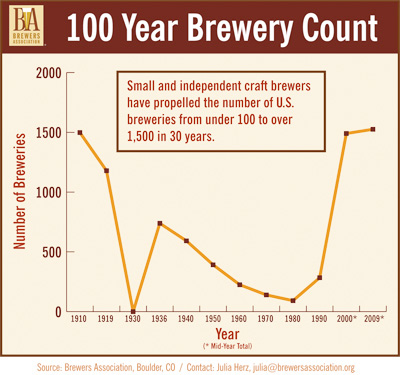
The other big news in the release is that the number of breweries operating in America now stands at 1,525, the highest number in a century.

U.S. Breweries
as of July 31, 2009
  962 Brewpubs
  456 Microbreweries
    64 Regional Craft Breweries
1,482 Total US Craft Breweries
    20 Large Breweries
    23 Other Breweries            
1,525 Total US Breweries

As the press release stresses, that’s due almost entirely to the growth of craft beer:

The U.S. now boasts 1,525 breweries, the highest number in 100 years when consolidation and the run up to Prohibition reduced the number of breweries to 1,498 in 1910. “The U.S. has more breweries than any other nation and produces a greater diversity of beer styles than anywhere else, thanks to craft brewer innovation,” Gatza added.

100-yr-count

Some other interesting tidbits:

  • Growth of the craft brewing industry in the first half of 2009 was 5% by volume and 9% by dollars.
  • Craft brewers sold an estimated 4.2 million barrels of beer in the first half of 2009, up from 4 million barrels in the first half of 2008.
  • Overall US beer sales are down 1.3% in the first 6 months of 2009.
  • Imported beer sales are down 9.5% in the first 6 months.
  • Growth of the craft brewing industry in 2008 was 5.9% by volume and 10.1% by dollars.
  • The craft brewing industry produced nearly 8.6 million barrels of craft beer in the US in 2008.
  • The craft brewing sales share as of December ’08 was 4% by volume and 6.3% by dollars.
  • Total US craft brewing industry annual dollar volume is $6.3 billion.

Filed Under: Breweries, News Tagged With: Statistics

Heady Days in the Philadelphia Inquirer

August 16, 2009 By Jay Brooks

pennsylvania
There was an interesting look at the current state of the craft beer movement in today’s Philadelphia Inquirer by food columnist Rick Nichols. Though it’s Sam-centric, Heady Days for Craft Breweries is worth a read.

Filed Under: Beers, News Tagged With: Eastern States, Mainstream Coverage, Pennsylvania, Philadelphia

Good For Your Bones: Beer

August 15, 2009 By Jay Brooks

health
A study recently conducted in Spain revealed that women who drink beer daily, or nearly so, have stronger bone density and have a lower risk of developing osteoporosis later in life. The study, published in the June edition of Nutrition, speculates that “the high level of silicon in beer slows down the thinning that leads to fractures and boosts the formation of new bone. Beer is also rich in phytoestrogens, plant versions of oestrogen, which keep bones healthy.”

According to the Full Text of the Study:

Of the nearly 1700 women who took part in the study, there “were 793 (46.7%) who drank beer habitually. Two hundred fifty-seven (15.1%) subjects drank wine habitually, 374 (22.0%) subjects smoked, and among these 209 (12.3% of total) were beer drinkers. Postmenopausal women drank less beer than premenopausal and perimenopausal women.”

For postmenopausal women, circulating estrogen concentrations have been shown to be positively associated with alcohol intake. Our findings, of higher Ad-SoS in premenopausal and postmenopausal women who drink, support the idea that the bone-enhancing effects of alcohol might be partially due to a promotion of endogenous estrogens synthesis. Although wine at low doses, and in an acute form, has been observed to have an estrogenic effect, there have been no indications of pathways for its effect on bone other than its stimulation of the syntheses of estrogens and, because of its alcohol content, of calcitonin. This may explain the difference in our results, which were positive for the consumption of beer but not significant for the consumption of wine.

Beer is also a major source of silicon in the form of orthosilicic acid. In fact, it has been suggested that beer is one of the most important sources of silicon in the Western diet. Moreover, it has been demonstrated that dietary silicon intake may have salutary effects on skeletal health, especially cortical bone health in premenopausal women, although not in postmenopausal women. Despite a positive correlation also taking place in the postmenopausal group, we believe that this positive effect on bone might be due to the synergic effect of a combination of silicon and phytoestrogen (daidzein, genistein, and others) compounds in beer. These positive effects of silicon on the bone in postmenopause seem to occur when silicon supplementation is given to prevent bone mass loss. In fact, oral silicon is reported to completely abrogate the loss of bone mass.

In this study, we do not recommend the consumption of beer, wine, or any other alcoholic beverage for bone health; nevertheless, we have been able to verify that beer ingestion, a common component within our area’s diet, seems to provide bone mass with beneficial effects for those women who had moderate alcohol consumption. This was a cross-sectional study with certain limitations, which reflects associations but does not reveal causes and effects. A common problem with studies using dietetic questionnaires is the fact that some subjects could have difficulty recalling type and frequency of ingested food. This is a minor problem with respect to beer consumption because its quantification is easy and precise, since it is available only in 200-mL and 330-mL bottles at supermarkets in our area. Our study design did not include the measurements of plasma levels of phytoestrogens.

In conclusion, the consumption of beer, apart from its alcohol content, favors greater bone mass in women independently of their gonadal status. This might be a result of the phytoestrogen content of this alcoholic drink, which requires further investigation.

Despite their chickening out from actually recommending people drink beer for their health, the conclusions of the study nonetheless support doing just that. Another study by Tufts University earlier this year came to the same conclusion.

So why is it so difficult for scientists to just admit what’s right in front of their faces? That the moderate consumption of beer is really good for you. The only reasons I can think of is that they’re either afraid of having research grant money dry up for not reaching the “correct” conclusions or because they, too, have inadvertently drank the Kool-Aid and internalized the decades of prohibitionist propaganda. In the latter case — and I think this is true of many otherwise typical people — years and years of neo-prohibitionist groups having the only voice without dissenting opinions allowed have left many believing a series of premises that are simply not true or at best grossly exaggerated. That seems to me the only rational explanation of why it’s seemingly so difficult for many similar scientific studies to draw the logical conclusion from the data. Of course, it may simply be a liability issue and they’re afraid of being sued when people begin drinking more based on the studies.
Young woman with glass of beer
Drink up ladies! A beer a day may keep the doctor away.

Filed Under: Editorial, News Tagged With: Health & Beer, Science of Brewing

The Angry Arm Of Alcohol

August 9, 2009 By Jay Brooks

angry-arm
I was outside the news bubble all last week, happily ignorant of most of the goings on stateside. I left just after the infamous Beer Summit, a relatively non-event that was blown completely out of proportion but which allowed the news media to avoid talking about more important issues for a while. The San Jose Mercury News even asked me to weigh in on the beer choices. And I was certainly not the only one, as the Brewers Association had a summary of links about it. Consensus seemed to be that we were all glad beer was in the public spotlight, we just wished it had been better beer. Of course, not everyone was happy about beer getting a moment in the sun, and the usual chuckleheads started complaining even before it took place. But afterward, it got even worse.

The head of the Delaware chapter of the notorious neo-prohibitionist group Mothers Against Drunk Driving, Nancy Raynor, said she “hopes those images don’t send the wrong message to the millions of young people who saw the president drinking on TV” during a radio interview on WDEL Radio 1150 AM. I’m not exactly sure how an adult being shown doing something that’s perfectly legal sends the “wrong message,” whatever that even means, but logic is not apparently her strong suit. She also said that “it’s a well-known fact that young people tend to mimic the actions that they see be adult (sic).” I’d think she might then be more concerned about images on TV of people shooting each other with guns. That would be a greater threat than drinking if indeed young people are mimicking what they see on television.

And that might have been the end of it except that the American Beverage Institute (ABI), a trade organization representing primarily restaurants serving alcohol, issued a press statement taking MADD to task for what Raynor said during her interview.

“MADD is no longer an organization that opposes drunk driving, but an anti-alcohol group that has been hijacked by the modern day temperance movement,” said Sarah Longwell, ABI Managing Director. “That someone in a position of leadership at MADD would criticize President Obama for simply drinking beer, illustrates the neoprohibitionist mentality that now dominates the group.”

Last week, President Obama met with the men involved in the Cambridge police incident in an attempt to diffuse the situation. Obama, Vice President Joe Biden, Harvard professor Henry Louis Gates, and Cambridge police Sergeant James Crowley enjoyed cold beers while working out their differences. But in an interview this weekend, the President of the Delaware chapter of MADD, Nancy Raynor, expressed concern that the event could send the wrong message to young people who saw the president drinking on TV.

“MADD’s position on the ‘Beer Summit’ should remind Americans that the group once dedicated to preventing drunk driving has transitioned into leading the anti-alcohol movement,” said Longwell. “MADD has even been denounced by its founder Candy Lightner as ‘very neo-prohibitionist.’”

“MADD should return to its original mission of stopping drunk driving,” said Longwell. “The more time and resources the group spends pushing an anti-alcohol agenda, the more irrelevant it becomes.”

I’d say that the ABI statement is accurate from my experience watching how MADD operates and what they do, say and support. But MADD at the national level chimed in to defend both their position and the organization’s Delaware chapter head. Frank Harris, a spokesman with MADD’s national office in Washington, D.C. (though some accounts label him a “state policy specialist”), “emphasizes that his organization has no problem with safe alcohol consumption” and “is not against responsible drinking of alcohol for those over 21 years of age.” If that were true, of course, there would be no reason for Raynor to have been “concerned” about the Beer Summit sending “the wrong message.” She’s the head of an entire state, after all. She wouldn’t have attained that position without drinking the Kool-Aid. Everything that followed her statements was just damage control. And one of the most common tactics used to is to simply discredit your opponent. Harris attempted to do just that in hilarious fashion, by claiming that the ABI represents “the angry arm of the alcohol lobby.”

After I stopped laughing, it got me to thinking. The real question shouldn’t be that some people are angry, but that why aren’t more people angry? Why shouldn’t we be angry? For many years now, the anti-alcohol neo-prohibitionist groups have set the agenda. The media and politicians more often than not fall into lockstep in letting their side of the story be told, and very rarely give any meaningful time to any contrary position. That’s primarily because neo-prohibitionists pretend to own the moral high ground, forcing everyone into a defensive position. But there’s nothing remotely moral or immoral about alcohol. It just is. Like any other consumable food, it cannot be good or bad, just delicious or unappetizing. Despite our dysfunctional history of puritanical posturing, it can only be a sin to drink if you believe it’s a sin to drink. Not even different religions agree on this point. Not even different denominations of Christian religions can agree on whether or not drinking is a sin. That it’s wrong to decide for everyone through legislation what is essentially just personal preference should be obvious. That it didn’t work here, or anywhere else Prohibition was tried, should be a potent reminder that what they want is already a failed idea. Yet still they persist.

But as much as they wish it were otherwise, alcohol is legal is the United States, and the majority of people who drink do so responsibly and without the societal burdens or problems that are ascribed to alcohol by these groups. So something perfectly legal, used correctly by most people, is under constant attack by a minority who distort facts, prey on fear and will use almost any tactic to stop people from enjoying it. And people aren’t angry? Why not?!? I firmly believe we have every right to be angry — and not just the ABI — but everyone who drinks responsibly, isn’t a burden on society, and whose life didn’t turn into a bad country song the moment alcohol touched their lips should be angry that there are people who just won’t let them be. This is an issue that should have been settled over 75 years ago, but anti-alcohol groups not only won’t just admit defeat but have been fighting just as relentlessly as ever. They’re like that Japanese soldier on the deserted island who didn’t get the word that World War II was over, except that neo-prohibitionists are actually making headway and many people listen to these cranks because of the way they frame their arguments and because people are afraid to stand up to them, especially politicians.

So when they accuse the ABI of being the angry arm of the alcohol lobby, I say we embrace that idea and be angry. I am. I’m angry. Why aren’t you?

hurra-bier

My wife had the wonderful idea that we should make t-shirts, and she’s rarely, excuse me, never wrong. Anyone out there with some artistic skills want to create a logo for the “Angry Arm of Alcohol?” I’m picturing simply an outstretched horizontal arm holding a full pint glass or other beer glass. Perhaps with “The Angry Arm of Alcohol” tattooed on the forearm.

Filed Under: Beers, Editorial, News, Politics & Law Tagged With: Prohibitionists

The Hopfather: A Beer You Can’t Refuse

July 31, 2009 By Jay Brooks

russian-river
At the Bistro IPA Festival next Saturday, Russian River Brewing will debut their latest beer: The Hopfather. The Hopfather is a 7% IPA that’s loosely based on an IPA recipe Vinnie Cilurzo contributed to Sam Calagione’s book Extreme Brewing, though Vinnie says he’s changed things up considerably. It starts with CTZ and Magnum hops, but uses primarily Amarillo and Centennial for flavor and aroma to the tune of around 10 pounds per barrel. While Vinnie assures me it will have a big malt backbone, he also promises the flavors and aroma will be “balls to the wall hops.” As if you needed another reason to go to the Bistro IPA Festival, this should make your attendance all but mandatory if you love hops.

Filed Under: Beers, Breweries, News Tagged With: California, Russian River

All Beer Is The Same!?!

July 30, 2009 By Jay Brooks

beer-bottle-brown
I try to keep my criticisms of beer coverage by the mainstream media civil, especially since at times I’m one of them. But an article posted yesterday on MSNBC, Will You Drink Beer In A Box?, is so completely riddled with error and ridiculousness that the gloves are off. Author James Dlugosch may know stocks and the world of finance, but when it comes to beer, he’s an unmitigated idiot.

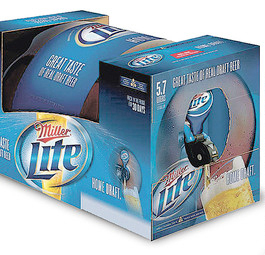
First of all, the premise of his article, taken from a Wall Street Journal article, is that Molson Coors, actually MillerCoors but I’ll try not to nitpick, is testing beer in a box, which he finds as distasteful as box wine. Which is all well and good, but it’s not in a box at all. It’s a small keg that fits in your refrigerator, similar to the mini-kegs the Germans have been selling for decades. See below. You can also see another view of it from the front at Gizmodo. The keg itself is in a cardboard box, presumably for easier carrying, but the beer is in a container no different than any other keg or can of beer. It’s like saying that since a six-pack of bottles are packaged in a cardboard six-pack carrier that the beer is in cardboard, too. What a maroon.

miller-lite-home-keg
But it gets better. The reason he’s so opposed to a box has less to do with the container and more to do with his own twisted sense of how things ought to be. Here’s how he sees it:

Now, with beer, the box might be less objectionable since, in my opinion, the quality issue is not really in play. Despite what the microbrewers will tell you, all beer is pretty much the same. Consumers who pay a premium do so more for the experience than the taste.

So apparently an Old Rasputin Imperial Stout is exactly, excuse me, pretty much the same as Miller Lite. In the words of Bill Cosby channeling Noah. “Right ….” At this point, I almost feel sorry for him. Imagine having so little understanding or familiarity with taste and smell or such an underdeveloped palate that you could write those words and, presumably, believe them. It’s not that beer tastes differently, it’s just that we experience them differently. “Right …” Well that will certainly make judging at GABF this year considerably easier since we can just pile them all together instead of having to sit for hours with 78 different style categories and countless sub-categories, each pretending to have their own unique taste profile. Not that there’s much danger of this, but I sure hope I don’t get invited to the White House for a beer summit with this knucklehead.

But as ridiculous as that statement was, wait, this one’s even better:

But for me, the issue is the bottle. I like drinking my suds from a cold bottle. Period.

Put it in a glass, and the experience just isn’t the same.

Wow. I’ve found my complete opposite. I won’t drink beer in a bottle or can, but insist on a glass. I’m frankly quite glad the experience isn’t the same, how could it be? Beer in a glass is so much better that I’m continually amazed that people really will drink directly from a bottle or can and now here’s someone who only does what I find abhorrent and refuse to do. Of course, I do this for a reason. Much of beer’s aroma, an integral component of its overall taste, is locked in the bottle and is released through the head when it’s poured into a glass. That’s not just my opinion, but is backed up by at least a century of scientific research, not to mention the experience of billions throughout history. It also releases excess carbon dioxide and makes your beer much less gassy and filling, too. Then, of course, there’s the pleasure of enjoying a beer from its proper glass, all lost on Dlugosch.

Naturally, Dlugosch is entitled to his opinion but I’m so weary of such ignorance being passed off as expertise. His opinion is obviously the by-product of living in a society that has commodified beer as one thing, interchangeable but for brand names differentiated by marketing and advertising. And, but for a few exceptions, his statement about beer being pretty much the same might have been correct 35-40 years ago, at least with regard to American beer. But saying so today, with over 1500 breweries making craft beer in a myriad of styles and unique compositions, makes Dlugosch a doofus. Period.

Filed Under: Beers, Editorial, News Tagged With: Mainstream Coverage, MSNBC

Mayor Sam Adams Tapping Keg At OBF

July 25, 2009 By Jay Brooks

obf
While there are plenty more photos to share from this year’s Oregon Brewers Festival, I wanted to get out this fun little video I took from the end of the OBF parade on Thursday morning. After marching to the festival, a little ceremony takes place to officially open the festival. First, this year’s brewery host, Full Sail Brewing, hands over the ceremonial keg hammer to next year’s sponsor, who will be Deschutes. The video begins with Gary Fish, owner of Deschutes, accepting the hammer and then handing it over to Portland mayor Sam Adams so that he can tap the keg. Be sure to watch the video at least through to the tapping.


To view it larger, visit the YouTube page.

Filed Under: Events, Just For Fun, News Tagged With: Oregon, Portland, Video

« Previous Page
Next Page »

Find Something

Northern California Breweries

Please consider purchasing my latest book, California Breweries North, available from Amazon, or ask for it at your local bookstore.

Recent Comments

  • Bob Paolino on Beer Birthday: Grant Johnston
  • Gambrinus on Historic Beer Birthday: A.J. Houghton
  • Ernie Dewing on Historic Beer Birthday: Charles William Bergner 
  • Steve 'Pudgy' De Rose on Historic Beer Birthday: Jacob Schmidt
  • Jay Brooks on Beer Birthday: Bill Owens

Recent Posts

  • Beer In Ads #5137: Bock Is Back… Look For It March 1st February 28, 2026
  • Historic Beer Birthday: John Holme Ballantine February 28, 2026
  • American Craft Beer Hall of Fame: 2nd Year Inductees February 28, 2026
  • Beer Birthday: Jeff Bell February 28, 2026
  • Beer In Ads #5136: American Bock Beer Is Being Served Today! February 28, 2026

BBB Archives

Feedback

Head Quarter
This site is hosted and maintained by H25Q.dev. Any questions or comments for the webmaster can be directed here.