Brookston Beer Bulletin

Jay R. Brooks on Beer

  • Home
  • About
  • Editorial
  • Birthdays
  • Art & Beer

Socialize

  • Dribbble
  • Email
  • Facebook
  • Flickr
  • GitHub
  • Instagram
  • LinkedIn
  • Pinterest
  • RSS
  • Twitter
  • YouTube

Powered by Genesis

7-11 Debuts Game Day Private Label Beer

April 20, 2010 By Jay Brooks

7-11
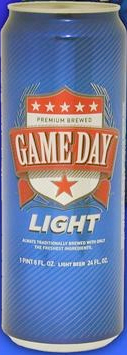
7-11, the largest convenience store chain in the U.S. with over 6,000 stores, sells a lot of beer, most of it from the big beer companies. In fact, they’re the third-largest beer retailer in the country. With more limited shelf space, C-Stores tend to focus on fast-moving brands and usually carry very few local or craft beer brands. So those stores have been one of the few outlets where space has not be eroding due to craft beer’s growing popularity. But, according to an announcement in Fortune magazine, that’s about to change, though not toward more craft beer. 7-11 has announced the release of their own private label beer, called Game Day. Apparently it’s a “premium beer selling at a budget price,” though further details were not forthcoming. While not yet confirmed by 7-11, it’s being reported that there will be two varieties of Game Day, Game Day Light and Game Day Ice and each will likely be sold in two package sizes, 12-pack cans and 24-oz. singles. Prices are expected to be between $6.99-$8.99 for 12-packs and between $1.49-$1.89 for singles, depending upon distribution and state specific costs, like taxes. The contract brewing is being done by City Brewing in La Crosse, Wisconsin.
game-day

Filed Under: Beers, News Tagged With: Business, Convenience Stores, National, Private Label

Clear As Mud

April 17, 2010 By Jay Brooks

zima
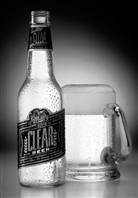
While clear beer is not exactly new, it has never proved economically successful despite polling that seems to suggest people would drink it. In the real world, once faced with a purchasing decision, people don’t buy beer that doesn’t look like beer. Thank goodness. The first clear malt beverage I recall trying was Zima, when it debuted in 1993, also from Coors. Though it wasn’t a beer per se, it was malt based and somewhat similar. It eventually got lumped into the Alcopop category, though it was not originally marketed that way, but simply as an alternative to beer. The first true clear beer, also from 1993, was Miller Clear.

miller-clear

Happily, it failed in test marketing and was halted in October of that year. I’m sure this ad, by Don Austin Creative, had nothing to do with its lack of success.

Here’s what Michael Jackson wrote about Miller’s Clear Beer, back in 1994:

Clear Beer was never available in the UK, but I encountered it in the United States, where it was presented in marketingspeak as “in the finest tradition of the Miller Brewing Company, full-flavored but without heaviness”.

This curious product was a lager the colour of 7-Up, which formed little head and tasted like a sweetened seltzer with the faintest touch of oily, medicinal happiness in the finish. It looked like a soft drink, but contained 4.6 per cent alcohol by volume, a level found in many “premium” lagers on both sides of the Atlantic.

Miller has a history of trying to remove the character from beer. It popularised Lite Beer, memorably described as “wet air” by the native American writer William Least-Heat Moon; and it marketed a so-called Genuine Draft in a can long before Irish and British brewers developed their rather better approximation.

But as George Santayana wrote in Reason in Common Sense. “Those who cannot learn from history are doomed to repeat it.” Seventeen years later, apparently nobody at MolsonCoors or MillerCoors is a student of history. MolsonCoors’ UK division, who launched the BitterSweet Partnership to reach female beer drinkers and increase their numbers, has announced they’ll be introducing a clear beer to the UK market. The full story can be found in Marketing Magazine and the UK’s Metro.

Bitter-Sweet

To me, the BitterSweet Partnership is ridiculous (as is the similar Dea Latis). First of all, none of the female beer writers or brewers I know are involved in the organization, it’s strictly about marketing. The whole “team” is made of female Coors UK employees, and they’re all from HR, sales, finance, etc. I’m sure they’re lovely people but they’re hardly experts on beer. The notion of finding female-friendly beer seems wrong on so many levels. Beer is beer. Trying to make one that’s strictly for women is absurd. Remember Virginia Slims — cigarettes for women? It also reminds me of something Lionel Trains did back in the mid-20th century. They made pink trains with pastel-colored cars aimed specifically at girls. Guess what, it flopped because the girls wanted real trains like the ones their brothers had, not some watered down girly trains some marketing pinhead thought would appeal to them.

So far, the beer has no name — and they’ll be a naming contest to come up with one. That should be good for a laugh. Then it won’t be available on draft, bottles only, because in polling 30,000 women, a majority were convinced that bottles “offer better protection against having them spiked in bars and pubs.” WTF? Since when did that become a major problem? And if it has, I’d think there were more pressing concerns like stopping an entire nation of men from poisoning the opposite sex. Additional research shows that the women polled think beer is “too calorific and a ‘man’s drink.'” Please tell me we’ve moved beyond such stereotypes? Apparently not. Who are these people? No woman I know thinks like that.

In a related bit of nonsense, the BitterSweet Partnership also has research showing “that 31% of women thought beer glassware is ‘ugly and manly.'” Seriously? Again, these must be some of the strangest women on the planet, and lots of less kind epithets spring to mind. Who thinks “I’d love to drink that tasty beverage, if only it came in a glass I liked better?” Let’s ignore centuries of trial and error to get to the right glassware — flutes for champagne, snifters for brandy, a weissbier vase for wheat beers — and bow to a minority of women whose sense of fashion dictates what they drink. WTF? Let’s not try to educate them why they’re complete morons. Even though 69% think that beer glassware is fine the way it is, they’ve instead opted to design “four new glasses to serve beer in to bring a bit more style into the drinking experience,” whatever that means. You can see the four designs that were voted on here. Below is the “winner.”

lyla-black

First of all, you can’t even see the beer you’d be drinking in the glass, whether it’s clear or not. What a terrible idea that is. But that’s what misinformation and ignorance will get you. How stylish. What unmitigated bullshit.

While I can’t pretend to speak for women or give the woman’s perspective on this, happily, both Julie from Brusin’ Ales and Ashley at the Beer Wench have ranted beautifully about it and are as angry and offended by it as I would have expected. Their screeds mirror what I’d think would be the response from any self-respecting female fan of craft beer.

Filed Under: Beers, Breweries, Editorial, News Tagged With: Advertising, History, MillerCoors, Women

The Top 50 Annotated 2009

April 14, 2010 By Jay Brooks

ba
This is my fourth annual annotated list of the Top 50 so you can see who moved up and down, who was new to the list and who dropped off. So here is this year’s list again annotated with how they changed compared to last year.

  1. Anheuser-Busch InBev; #1 last year, no surprises
  2. MillerCoors; ditto for #2
  3. Pabst Brewing; ditto for #3
  4. D. G. Yuengling and Son; Moved up 1, over Boston Beer again
  5. Boston Beer Co.; Moved down 1 to behind Yuengling, where they’d been the 2 years prior to 2008
  6. Sierra Nevada Brewing; Same as last year
  7. New Belgium Brewing; Moved up 1
  8. Craft Brewers Alliance; Moved down 1
  9. Spoetzl Brewery (Gambrinus); Moved up 1
  10. High Falls Brewing; Moved down 1
  11. Minhas Craft Brewery; Up 3 over last year
  12. Pyramid Breweries (IBU); Down 1, after two years moving up
  13. Deschutes Brewery; Down 1
  14. F.X. Matt Brewing; Moved up 1, after dropping down 1 last year
  15. Magic Hat Brewing (IBU); Up 3 from #18 last year
  16. Boulevard Brewing; Same as last year, as others move all around them
  17. Harpoon Brewery; Up 3 from #20 last year
  18. Alaskan Brewing; Up 1 from #19 last year
  19. Bell’s Brewery; Up 2 from #21 last year
  20. Goose Island Beer; Up 2 from #22 last year
  21. Kona Brewing; Up 2 from #23 last year, after Shooting up 14 the previous year
  22. Full Sail Brewing; Down 5, primarily from removing contract beers from their total to give a more accurate figure of their own brands
  23. Stone Brewing; Up 5 again this year from 28, same jump as last year
  24. Dogfish Head Craft Brewery; Shot up 9 from #33, after being up 5 and 4 the two previous years
  25. Iron City Brewing; Plummeted 12, after a Chapter 11 bankruptcy and moving production out of Pittsburgh
  26. August Schell Brewing; Down 1 from last year
  27. Brooklyn Brewery; Up 4 from #31 last year
  28. Abita Brewing; Up 2 from #30 last year
  29. Summit Brewing; Down 2 from #27 last year
  30. Anchor Brewing; Down 6 from #24
  31. Shipyard Brewing; Down 5 from #26 last year
  32. New Glarus Brewing; Same as last year
  33. Great Lakes Brewing; Up 4 from #37 last year
  34. Rogue Ales/Oregon Brewing; Up 2 from #36, canceling being Down 2 last year, and Up 2 the year before that
  35. Long Trail Brewing; Down 1 from #34 last year
  36. Lagunitas Brewing; Up 2 from #38 last year, after being up 3 for the prior 2 years
  37. Mendocino Brewing; Down 8 from #29 last year
  38. Gordon Biersch Brewing; Down 3 from #35
  39. Sweetwater Brewing; Up 1 from #40 last year
  40. Firestone Walker Brewing; Down 1 from #39 last year
  41. Victory Brewing; Up 5 from #46 last year
  42. Flying Dog Brewery; Down 1 from #41 last year
  43. BJs Restaurant & Brewery; Down 1 from #42 last year
  44. Odell Brewing; Up 1 from #45 last year
  45. Rock Bottom Brewery Restaurants; Down 2 from #43 last year, a reversal of the year before
  46. Straub Brewery; Up 1 from #47 last year
  47. BridgePort Brewing (Gambrinus); Down 3 from #44 last year
  48. Lost Coast Brewing; Not in Top 50 last year
  49. Big Sky Brewing; Up 1 from #50 last year
  50. Stevens Point Brewery; Not in Top 50 last year

Two breweries are new to the list this year, Lost Coast and Stevens Point (who’ve transitioned to primarily all-malt brewing), while two dropped off the list; Cold Springs Brewery (fka Gluek Brewing) and Mac and Jack’s Brewery.

If you want to see the previous annotated lists for comparison, here is 2008, 2007 and 2006.

Filed Under: Breweries, Editorial, News Tagged With: Big Brewers, Statistics, United States

Top 50 Breweries For 2009

April 14, 2010 By Jay Brooks

ba
The Brewers Association has also just announced the top 50 breweries in the U.S. based on sales, by volume, for 2009. This includes all breweries, regardless of size or other parameters. Here is the new list:

  1. Anheuser-Busch InBev; St Louis MO
  2. MillerCoors; Chicago IL
  3. Pabst Brewing; Woodridge IL
  4. D. G. Yuengling and Son; Pottsville PA
  5. Boston Beer Co.; Boston MA
  6. Sierra Nevada Brewing; Chico CA
  7. Craft Brewers Alliance (Widmer/Redhook); Portland OR
  8. New Belgium Brewing; Fort Collins CO
  9. Spoetzl Brewery (Gambrinus); Spoetzl TX
  10. High Falls Brewing; Rochester NY
  11. Minhas Craft Brewery; Monroe WI
  12. Pyramid Breweries (IBU); Seattle WA
  13. Deschutes Brewery; Bend OR
  14. F.X. Matt Brewing; Utica NY
  15. Magic Hat Brewing (IBU); Burlington VT
  16. Boulevard Brewing; Kansas City MO
  17. Harpoon Brewery; Boston, MA
  18. Alaskan Brewing; Juneau AK
  19. Bell’s Brewery; Galesburg MI
  20. Goose Island Beer; Chicago IL
  21. Kona Brewing; Kailua-Kona HI
  22. Full Sail Brewing; Hood River OR
  23. Stone Brewing; Escondido CA
  24. Dogfish Head Craft Brewery; Lewes DE
  25. Iron City Brewing; Pittsburgh PA
  26. August Schell Brewing; New Ulm MN
  27. Brooklyn Brewery; Brooklyn NY
  28. Abita Brewing; New Orleans LA
  29. Summit Brewing; Saint Paul MN
  30. Anchor Brewing; San Francisco CA
  31. Shipyard Brewing; Portland ME
  32. New Glarus Brewing; New Glarus WI
  33. Great Lakes Brewing; Cleveland OH
  34. Rogue Ales/Oregon Brewing; Newport OR
  35. Long Trail Brewing; Burlington VT
  36. Lagunitas Brewing; Petaluma CA
  37. Mendocino Brewing; Ukiah CA
  38. Gordon Biersch Brewing; San Jose CA
  39. SweetWater Brewing; Atlanta GA
  40. Firestone Walker Brewing; Paso Robles CA
  41. Victory Brewing; Downington PA
  42. Flying Dog Brewery; Frederick MD
  43. BJs Restaurant & Brewery; Huntington Beach CA
  44. Odell Brewing; Fort Collins CO
  45. Rock Bottom Brewery Restaurants; Louisville CO
  46. Straub Brewery; Saint Mary’s PA
  47. Bridgeport Brewing (Gambrinus); Portland OR
  48. Lost Coast Brewing; Eureka CA
  49. Big Sky Brewing; Missoula MT
  50. Stevens Point Brewery; Stevens Point WI

Here is this year’s press release.

Also, the Annotated List is now up.

Filed Under: Breweries, News Tagged With: Big Brewers, Statistics, United States

Top 50 Craft Breweries For 2009

April 14, 2010 By Jay Brooks

ba
The Brewers Association just announced the top 50 breweries in the U.S. based on sales, by volume, for 2009, which is listed below here. For the third time, they’ve also released a list of the top 50 craft breweries based on the new definition adopted by the Brewers Association a few years ago. Here is the new craft brewery list:

  1. Boston Beer Co.; Boston MA
  2. Sierra Nevada Brewing; Chico CA
  3. New Belgium Brewing; Fort Collins CO
  4. Spoetzl Brewery (Gambrinus); Spoetzl TX
  5. Pyramid Breweries; Seattle WA
  6. Deschutes Brewery; Bend OR
  7. Matt Brewing; Utica NY
  8. Magic Hat Brewing Company; Burlington VT
  9. Boulevard Brewing; Kansas City MO
  10. Harpoon Brewery; Boston, MA
  11. Alaskan Brewing; Juneau AK
  12. Bell’s Brewery; Galesburg MI
  13. Kona Brewing; Kailua-Kona HI
  14. Full Sail Brewing; Hood River OR
  15. Stone Brewing; Escondido CA
  16. Dogfish Head Craft Brewery; Lewes DE
  17. Brooklyn Brewery; Brooklyn NY
  18. Abita Brewing; New Orleans LA
  19. Summit Brewing; Saint Paul MN
  20. Anchor Brewing; San Francisco CA
  21. Shipyard Brewing; Portland ME
  22. New Glarus Brewing; New Glarus WI
  23. Great Lakes Brewing; Cleveland OH
  24. Rogue Ales/Oregon Brewing; Newport OR
  25. Long Trail Brewing; Bridgewater Corners VT
  26. Lagunitas Brewing; Petaluma CA
  27. Gordon Biersch Brewing; San Jose CA
  28. Sweetwater Brewing; Atlanta GA
  29. Firestone Walker Brewing; Paso Robles CA
  30. Victory Brewing; Downingtown PA
  31. Flying Dog Brewery; Frederick MD
  32. BJs Restaurant & Brewery; Huntington Beach CA
  33. Odell Brewing; Fort Collins CO
  34. Rock Bottom Brewery Restaurants; Louisville CO
  35. Bridgeport Brewing; Portland OR
  36. Lost Coast Brewery; Eureka CA
  37. Big Sky Brewing; Missoula MT
  38. Stevens Point Brewing; Stevens Point WI
  39. Mac and Jack’s Brewery; Redmond WA
  40. Karl Strauss Breweries; San Diego CA
  41. The Saint Louis Brewery; St Louis MO
  42. Blue Point Brewing; Patchogue NY
  43. Gordon Biersch Brewery Restaurants; Chattanooga TN
  44. Oskar Blues Brewery; Longmont CO
  45. North Coast Brewing; Fort Bragg CA
  46. Breckenridge Brewery; Denver CO
  47. Utah Brewers Cooperative; Salt Lake City UT
  48. Saint Arnold Brewing; Houston TX
  49. Boulder Beer; Boulder CO
  50. Bear Republic Brewing; Cloverdale CA

Four breweries are new to the Top 50 Craft Breweries list; Bear Republic Brewing, Oskar Blues Brewery, Saint Arnold Brewing and Stevens Point. In addition, four dropped off the list; Otter Creek Brewing, Pete’s Brewing, McMenamins and Anderson Valley Brewing. Here is this year’s press release.

I’ll have my annual annotated list shortly.

Filed Under: Breweries, News Tagged With: Statistics, United States

World Beer Cup Statistics 2010

April 12, 2010 By Jay Brooks

world-beer-cup
Here’s some preliminary breakdowns of how the awards went down, who won the most by country and state. Of the 268 awards (2 medals were not awarded) from 3,351 beers by 642 breweries in 44 countries, here’s the results.

Awards by Country

  1. United States 204
  2. Germany 16
  3. TIE: 7
    • Belgium 7
    • Canada 7
  4. TIE: 5
    • Japan 5
    • UK 5
  5. TIE: 3
    • Australia 3
    • Czech Republic 3
    • Denmark 3
    • Singapore 3
  6. TIE: 2
    • Sweden 2
    • Lithuania 2
    • Italy 2

Two years ago, the U.S. was again in first with 158, followed by Germany and Belgium. This year, Canada shares third with Belgium. 19 countries won at least one medal, down from 21 two years ago.

Awards by State

  1. California 45
  2. Oregon 13
  3. TIE: 12
    • Illinois 12
    • Washington 12
  4. TIE: 11
    • Colorado 11
    • Michigan 11
  5. Virginia 8
  6. TIE: 7
    • Indiana 7
    • Missouri 7
    • Wisconsin 7
  7. TIE: 6
    • Delaware 6
    • Maryland 6
  8. Nevada 5
  9. TIE: 4
    • Arizona 4
    • Massachusetts 4
    • New Mexico 4
    • New York 4
    • North Carolina 4
    • Pennsylvania 4
  10. TIE: 3
    • Alaska 3
    • Tennessee 3
    • Utah 3
    • Wyoming 3

Last time California won 35, so we picked up 10 more awards this year. Oregon was in third place in 2008, but this time around moved into second. This year, third place was a tie between Illinois and Washington. Second in 2008 was Colorado, who dropped to a tie for fourth with Michigan.

Full winner’s list.

Filed Under: Breweries, Editorial, News Tagged With: Awards, Statistics, World Beer Cup

Brewing Achievement Awards 2010

April 9, 2010 By Jay Brooks

ba
Yesterday at the opening session of the Craft Brewers Conference in Chicago, the awards were given to “three successful members of the brewing community … for their dedication and service to the industry.” The three awards were as follows.

  • The Brewers Association Recognition Award went to Larry Bell, Founder and Owner of Bell’s Brewery, Inc.
  • The Brewers Association presented the Russell Schehrer Award for Innovation in Brewing to Ken Grossman, CEO/President of Sierra Nevada Brewing Company.
  • The Brewers Association presented the F.X. Matt Defense of the Industry Award to Steve Hindy, Chairman and President of The Brooklyn Brewery.

Dick Cantwell, from Elysian Brewery in Seattle presented the awards.

Dick Cantwell

The first award, from the press release:

The Brewers Association Recognition Award went to Larry Bell, Founder and Owner of Bell’s Brewery, Inc. Bell started the Kalamazoo Brewing Company and Bell’s Brewery, Inc. in Kalamazoo, Michigan in 1985, the earliest craft brewery in the eastern half of the United States. Larry’s dedication to the industry includes serving as a former chair of the Brewers Association’s predecessor organization and acting as a driving force with current Denver Mayor John Hickenlooper for the creation of American Beer Month (which evolved into American Craft Beer Week).

Larry Bell

“Larry is a leader in our industry known for his innovative beers and the passion he brings to craft brewing,” said Brewers Association Board of Directors Chair Nick Matt, CEO of Matt Brewing Company. Mountain West Brewery Supply’s David Edgar noted in documents supporting Bell’s nomination that “Larry is continually pushing the envelope with experimenting with different grains, different yeast strains and plenty of hops.”

The second award, from the press release:

The Brewers Association presented the Russell Schehrer Award for Innovation in Brewing to Ken Grossman, CEO/President of Sierra Nevada Brewing Company. Grossman received this year’s award for his leadership in technical brewing science for craft brewers. He is still deeply involved in technical brewing projects at Sierra Nevada and has led numerous initiatives in the area of sustainability and beer quality.

“Ken Grossman founded Sierra Nevada Brewing Company 30 years ago based on one principle, to make the highest quality beer in America,” said Vinnie Cilurzo of Russian River Brewing Co. in a nominating document. “I think Ken’s never-ending quest in life is to make Sierra Nevada’s beers even better than they already are.”

Ken Grossman

The Russell Schehrer Award for Innovation in Brewing was first given in 1997 to honor Russell Schehrer, who died in 1996 at 38 years old, for his contributions to the brewing industry. Schehrer was a founding partner and original head brewer at Colorado’s first brewpub, Wynkoop Brewing Co. He was also one of the first brewers to produce mead, doppel alt, cream stout and chili beer.

The third award, from the press release:

The Brewers Association presented the F.X. Matt Defense of the Industry Award to Steve Hindy, Chairman and President of The Brooklyn Brewery. Hindy recently testified in a Congressional hearing to communicate how state franchise laws can hinder the ability for small brewers to grow their businesses and how self-distribution is important to many small brewers to develop their access to market.

Steve Hindy

“Steve’s work on behalf of the industry is almost too great to list,” says Brewers Association Past Chair Richard Doyle of Harpoon Brewery. “His involvement on the Beer Institute board established credibility for craft brewers there and reaffirmed our place at the table.”

The F.X. Matt Award is given in honor of a champion of small brewers, F.X. Matt (1933-2001), president of the F.X. Matt Brewing Co. in Utica, New York from 1980-1989 and chairman from 1989-2001.

Filed Under: Breweries, Events, News Tagged With: Awards, CBC, Press Release, Video

Collaborating On The Next Session

April 7, 2010 By Jay Brooks

session-the
May’s Session should not be a lonely affair, but instead should bring more of us together to collaborate. That’s because the next Session’s host, Mario Rubio, has chosen as the theme, Collaborations, which he describes as follows.

Feel free to have fun with the topic. Drink a collaborative beer. Who’s brewed some of your favorite collaborations? Who have been some of your favorite collaborators? Who would you like to see in a future collaboration?

As the topic is collaborations, working with each other is encouraged.

So alone, or in groups, join us in collaborating on the Session Friday, May 7. Afterward, group hug.

Filed Under: News, The Session Tagged With: Announcements

Prohibition Through Taxation

April 1, 2010 By Jay Brooks

tax
Being April Fool’s Day, this might almost seem laughable, if it wasn’t so serious and obvious an attempt to bring about prohibition through taxation. (And thanks to the many people who sent me information about this, you know who you are, I appreciate it.) A San Diego couple, Kent and Josephine Whitney, have introduced a ballot initiative they’re calling the “Alcohol-Related Harm and Damage Services Act of 2010.” If that sounds innocuous, it’s not. If they collect the required 433,971 signatures by August 23, it will be on the California ballot this November. The “Act” seeks to raise alcohol taxes as listed below. If you have a drink in your hand, put it down first. If you’re standing up, sit down. Drum roll, please:

  • Spirits — 2,700% increase [from $0.65 per 750 ml bottle to $17.57]
  • Beer — 5,500% increase [from $0.11 per 6-pack to $6.08]
  • Wine — 12,775% increase [from $0.04 per 750 ml bottle to $5.11]

No, those aren’t typos. The anticipated revenue of $7-9 billion would be used to fund the Department of Alcohol and Drug Programs, whatever that is. It won’t be used to fix the state deficit apparently.

In the OC Weekly Blog, Dave Lieberman correctly comments that “this is Prohibition through taxation” [a phrase I hope he won’t mind me borrowing]. He continues.

“The armchair libertarians must be having sedentary conniption fits from Yreka to Ysidro. Nowhere does it say that alcohol has to be a zero-sum game, not to mention the fact that the vast majority of those who do drink do so responsibly, which means you’re taxing those who play by the rules to pay for those who don’t.”

Ballotpedia lists a dozen reasons for the ballot measure, each one more fallacious than the last. The Whitney’s blame alcohol for murders, pregnant women drinking, burdens on health care, underage drinking, binge drinking; pretty much everything any neo-prohibitionists has ever thrown up against the wall, while naturally ignoring all of the personal responsibility for any of those actions. It’s as if they’ve drank the anti-alcohol kool-aid and believe unquestioningly all of the propaganda from those groups. To blame the alcohol and not the people who engage in those behaviors is a common tactic lately but ignores logic, common sense and any notion of fairness. It also reveals quite a lot about the mindset of the people who believe such nonsense. Also, if the ballot measure should pass, it would declare all of that nonsensically bad propaganda masquerading as statistics as true!

It also ignores the physical and mental health benefits of responsibly drinking moderate amounts of alcohol. Numerous studies have shown many, many health benefits to moderate drinking, not least of which are the many studies that show that people who drink moderately tend to live longer and be healthier than people who either abstain or overindulge. So in effect, this ballot measure would most likely make people in California less healthy.

Curiously, the State Attorney General’s summary says:

Additional state revenues of between $7 billion and $9 billion annually from an increase in state excise taxes on alcoholic beverages, with the proceeds going to support alcohol-related programs and services. A decrease in state and local revenues from existing excise and sales taxes on alcoholic beverages of several hundred million dollars annually due to a likely decline in consumption of alcoholic beverages.

The Initiative’s Analysis from the state Legislative Analyst’s Office goes into more detail but remains similarly conservative in the negative consequences while swallowing wholesale the notion that it would actually bring in the estimated $7-9 billion in additional excise tax revenue. First of all, the loss of business and company’s going out of business outright would cause that figure to be greatly reduced from the start. If a bottle of wine has at least $5.11 in state excise taxes plus all of the other taxes, plus the costs of ingredients, manufacture, packaging, transportation, etc. even two-buck chuck is going to become ten-buck Ken or worse.

Similarly, if just the state excise tax on a six-pack of beer starts at $6.08, again plus every other cost of doing business, just who in their right mind believes that consumers will continue to merrily drink the same amounts at exponentially higher prices? Don’t even get me started on how many dollars will fly out of California by people driving to bordering states to buy their alcohol. You’re going to see a cottage industry in just-over-the-border liquor stores popping up wherever a road leaves California. It’s absurd to believe the revenue stream would continue at the same rate.

That analysis suggests that only several hundreds of millions of dollars would be lost in decreased consumption seems laughably conservative. Here’s some of their reasoning, from the analysis:

Effects on Existing State Excise and SUT Revenues. The decline in taxable consumption of alcoholic beverages that would likely be caused by this measure would reduce the revenues received for the General Fund from the existing state excise and SUT revenues. We estimate that this could potentially result in a loss of state revenues of several hundred million dollars annually.

Effects on Local Revenues. The likely decline in taxable consumption of alcoholic beverages due to the increase in the excise tax imposed under this measure would also affect local SUT revenues. We estimate that local governments, primarily cities and counties, would experience a decrease in sales tax revenues of approximately $100 million on a statewide basis due to the excise tax increase.

Indirect Economic Effects. If the measure were to result in declines in overall economic activity in California, it could produce indirect state and local revenue losses. Such effects could occur, for example, if businesses were to close because they could no longer remain profitable as the overall economy adjusted to a lower demand for alcohol in the long run. If these lost resources were not redirected back to California’s economy into equal or more productive activities, then it would likely lead to a net loss in taxable income and spending for state and local governments. The magnitude of these potential revenue losses is unknown.

See that last bit? “The magnitude of these potential revenue losses is unknown.” I can pretty much tell you it’s going to be staggering. It would be a near prohibition, with a return to illegal hooch. After homebrewers start selling their kitchen beers under the table, new law enforcement agencies will be created to stop them, every homebrew shop will be watched and anyone with a pair of rubber boots will be under suspicion.

So who the hell are the Whitneys and why are they trying to effect an alcoholic Armageddon? Those are good questions, I think, and there’s at least one very disturbing possibility. The V Bit Set speculates that it may be simply for money. Doing some detective work, internet style, he points out there is a Kent Whitney in the San Diego area who owns the 21st Century Wellness Initiative, and the ballot measure would provide “fifteen percent for the funding of grants for naturopathic treatment and recovery programs for alcohol addiction.” Are the two connected? He admits it’s wild conjecture at this point, but it is compelling nonetheless. If it turns out to be true, how vile and repugnant would this be? On an unimaginable scale, I’d have to say. To attack an entire healthy industry, putting thousands of workers and hundreds of businesses at risk of being removed from the economy for personal gain would be one of the most abominable acts of all time. If they’re sincere, it’s clear they either didn’t think through their actions or are entirely hostile to anyone who enjoys, makes or sells alcohol.

Filed Under: Editorial, News, Politics & Law Tagged With: California, Prohibitionists, Southern California

Fucking Hell, I Need A Beer

March 29, 2010 By Jay Brooks

austria
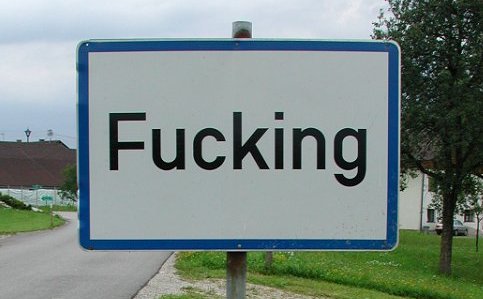
File this under news of the weird. According to the UK’s The Sun, the European Patent Office had to reverse their decision denying a company the right to produce a beer called Fucking Hell, when they were able to prove that Fucking is a real town in Austria. Or rather village, since there are only 104 people who live in Fucking, which is just 2-1/2 miles from the German border.

According to Wikipedia,

It is believed that the settlement was founded around the 6th century by Focko, a Bavarian nobleman. The existence of the village was documented for the first time in 1070 and historical records show that some twenty years later the lord was Adalpertus de Fucingin. The spelling of the name has evolved over the years; it is first recorded in historical sources with the spelling as Vucchingen in 1070, Fukching in 1303, Fugkhing in 1532, and in the modern spelling Fucking in the 18th century, which is pronounced with the vowel oo as in book. The ending -ing is an old Germanic suffix indicating the people of the root word to which it is attached; thus Fucking means “(place of) Focko’s people.”

Brewery spokesman Stefan Fellenberg said they plan to brew a Helles style beer. After years of trying on vain to keep people from stealing their town’s sign, and engaging in intercourse either in front of it or in town, the village instead decided to cash in instead. They may have gotten the idea from nearby Wank Mountain residents, who gave them some advice recently. Frankly, I can’t really blame them, though no doubt the U.S. will never give label approval. Guns and violence, yes. Sex, never. Even the Sun piece wouldn’t print either the word Fucking or Wank even though they’re legitimate place names. I’m constantly amazed at how utterly fearful we are about just … words.

Fing-Austria

Here’s another humorous addition about the signs in the village. “One version of the sign features the village name with an additional sign beneath it, with the words “Bitte — nicht so schnell!”, which translates from German into English as “Please — not so fast!” The lower sign – which features an illustration of two children — is meant to inform drivers to watch their speed, but tourists see this as a double-meaning coupled with the village name.”

Filed Under: Beers, Just For Fun, News Tagged With: Austria, Europe, Strange But True

« Previous Page
Next Page »

Find Something

Northern California Breweries

Please consider purchasing my latest book, California Breweries North, available from Amazon, or ask for it at your local bookstore.

Recent Comments

  • Bob Paolino on Beer Birthday: Grant Johnston
  • Gambrinus on Historic Beer Birthday: A.J. Houghton
  • Ernie Dewing on Historic Beer Birthday: Charles William Bergner 
  • Steve 'Pudgy' De Rose on Historic Beer Birthday: Jacob Schmidt
  • Jay Brooks on Beer Birthday: Bill Owens

Recent Posts

  • American Craft Beer Hall of Fame: 2nd Year Inductees February 28, 2026
  • Beer In Ads #5136: American Bock Beer Is Being Served Today! February 28, 2026
  • Historic Beer Birthday: James Younger February 28, 2026
  • Historic Beer Birthday: Joseph Metcalfe February 28, 2026
  • Beer In Ads #5135: What Record’s Bock Beer Is February 27, 2026

BBB Archives

Feedback

Head Quarter
This site is hosted and maintained by H25Q.dev. Any questions or comments for the webmaster can be directed here.