Brookston Beer Bulletin

Jay R. Brooks on Beer

  • Home
  • About
  • Editorial
  • Birthdays
  • Art & Beer

Socialize

  • Dribbble
  • Email
  • Facebook
  • Flickr
  • GitHub
  • Instagram
  • LinkedIn
  • Pinterest
  • RSS
  • Twitter
  • YouTube

Powered by Genesis

WSJ Reviews “Dethroning The King”

December 9, 2010 By Jay Brooks

a-b
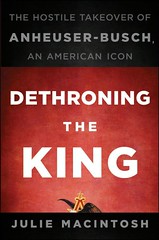
I got a review copy of the new book, Dethroning the King, which is all about the hostile takeover of Anheuser-Busch by InBev, a few weeks ago but haven’t had a chance to read it yet. It looks fascinating and I’m looking forward to devouring it as soon as I can. For now, I’ll have to make do with the Wall Street Journal review of the book, which only makes me want to read it more. Anybody else read it yet? Thoughts?
dethroning-king

Filed Under: Breweries, Related Pleasures Tagged With: Anheuser-Busch, Anheuser-Busch InBev, Beer Books, Big Brewers, Business, Mainstream Coverage

Nubian Antibiotic Beer

December 9, 2010 By Jay Brooks

nubians
For reasons passing understanding, apart from anti-alcohol propaganda, beer is forbidden from advertising its many recognized health benefits. For people against alcohol, saying beer is good for you, or at least isn’t bad for you (in moderation), is apparently the same as saying “drink up.” And for goodness sake, we’d never want to tell people to do something that might be good for their health, especially if a small minority can’t handle the truth … er, the beer.

But despite our peculiar inability to be reasonable regarding alcohol, beer and health have been inextricably linked since the beginning of civilization when drinking beer was safer than the water. But there may have been at least one more medicinal use of beer, at least in the variety brewed by ancient Nubians, “an ethnic group originally from northern Sudan, and southern Egypt now inhabiting East Africa and some parts of Northeast Africa.” And for a time, they even ruled over ancient Egypt, beginning in the 25th Dynasty.

Conventional wisdom has it that the use of antibiotics is a modern invention, thought to be no more than eighty years old, but archeologists have found in the bones of ancient Nubian skeletons traces of tetracycline, “a broad-spectrum polyketide antibiotic produced by the Streptomyces genus of Actinobacteria, indicated for use against many bacterial infections.” This suggests that the use of antibiotics may be 2,000 years older than previously thought.

From Discovery News’ coverage:

Some of the first people to use antibiotics, according to the research, may have lived along the shores of the Nile in Sudanese Nubia, which spans the border of modern Egypt and Sudan.

“Given the amount of tetracycline there, they had to know what they were doing,” said co-author George Armelagos, a biological anthropologist at Emory University in Atlanta. “They may not have known what tetracycline was, but they certainly knew something was making them feel better.”

Armelagos was part of a group of anthropologists that excavated the mummies in 1963. His original goal was to study osteoporosis in the Nubians, who lived between about 350 and 550 A.D. But while looking through a microscope at samples of the ancient bone under ultraviolet light, he saw what looked like tetracycline — an antibiotic that was not officially patented in modern times until 1950.

And Physorg.com adds this, from Emory anthropologist George Armelagos and medicinal chemist Mark Nelson of Paratek Pharmaceuticals:

“We tend to associate drugs that cure diseases with modern medicine,” Armelagos says. “But it’s becoming increasingly clear that this prehistoric population was using empirical evidence to develop therapeutic agents. I have no doubt that they knew what they were doing.”

Armelagos is a bioarcheologist and an expert on prehistoric diets. In 1980, he discovered what appeared to be traces of tetracycline in human bones from Nubia dated between A.D. 350 and 550. The ancient Nubian kingdom was located in present-day Sudan, south of ancient Egypt.

Armelagos and his fellow researchers later tied the source of the antibiotic to the Nubian beer. The grain used to make the fermented gruel contained the soil bacteria streptomyces, which produces tetracycline. A key question was whether only occasional batches of the ancient beer contained tetracycline, which would indicate accidental contamination with the bacteria.

Their results were published in the September issue of the American Journal of Physical Anthropology Here’s the abstract:

Histological evidence of tetracycline use has been reported in an ancient X-Group population (350–550 CE) from Sudanese Nubia (Bassett et al., 1980). When bone samples were examined by fluorescent microscopy under UV light at 490 Å yellow–green fluorophore deposition bands, similar to those produced by tetracycline, were observed, suggesting significant exposure of the population to the antibiotic. These reports were met skeptically with claims that the fluorescence was the result of postmortem taphonomic infiltration of bacteria and fungi. Herein, we report the acid extraction and mass spectroscopic characterization of the antibiotic tetracycline from these samples. The bone samples were demineralized in anhydrous hydrogen fluoride which dissolved the bone-complexed tetracycline, followed by isolation by solid phase extraction on reverse-phase media. Chemical characterization by high pressure liquid chromatography mass-spectroscopic procedures showed that the retention times and mass spectra of the bone extract were identical to tetracycline when treated similarly. These results indicate that a natural product tetracycline was detectable within the sampled bone and was converted to the acid-stable form, anhydrotetracycline, with a mass + H of 427.1 amu. Our findings show that the bone sampled is labeled by the antibiotic tetracycline, and that the NAX population ingested and were exposed to tetracycline-containing materials in their dietary regime.

As they discovered, the most likely source of their “dietary regime” that included the antibiotic was Nubian beer. Back in 2000, Armelagos figured out it was most likely the beer, and he published his findings in the magazine Natural History, in an articled entitled Take Two Beers and Call Me in 1,600 Years.

But back to Discovery News:

His team’s first report about the finding, bolstered by even more evidence and published in Science in 1980, was met with lots of skepticism. For the new study, he got help dissolving bone samples and extracting tetracycline from them, clearly showing that the antibiotic was deposited into and embedded within the bone, not a result of contamination from the environment.

The analyses also showed that ancient Nubians were consuming large doses of tetracycline — more than is commonly prescribed today as a daily dose for controlling infections from bad acne. The team, including chemist Mark Nelson of Paratek Pharmaceuticals, reported their results in the American Journal of Physical Anthropology.

They were also able to trace the antibiotic to its source: Grain that was contaminated with a type of mold-like bacteria called Streptomyces. Common in soil, Strep bacteria produce tetracycline antibiotics to kill off other, competing bacteria.

Grains that are stored underground can easily become moldy with Streptomyces contamination, though these bacteria would only produce small amounts of tetracycline on their own when left to sit or baked into bread. Only when people fermented the grain would tetracycline production explode. Nubians both ate the fermented grains as gruel and used it to make beer.

The scientists are working now to figure out exactly how much tetracycline Nubians were getting, but it appears that doses were high that consumption was consistent, and that drinking started early. Analyses of the bones showed that babies got some tetracycline through their mother’s milk.

Then, between ages two and six, there was a big spike in antibiotics deposited in the bone, Armelagos said, suggesting that fermented grains were used as a weaning food.

Today, most beer is pasteurized to kill Strep and other bacteria, so there should be no antibiotics in the ale you order at a bar, said Dennis Vangerven, an anthropologist at the University of Colorado, Boulder.

But Armelagos has challenged his students to home-brew beer like the Nubians did, including the addition of Strep bacteria. The resulting brew contains tetracycline, tastes sour but drinkable, and gives off a greenish hue.

Maybe that could be used for St. Patrick’s Day? As for the antibiotics, they’re not even the only medicinal uses of beer in ancient in times, according to Armelagos:

The first of the modern day tetracyclines was discovered in 1948. It was given the name auereomycin, after the Latin word “aerous,” which means containing gold. “Streptomyces produce a golden colony of bacteria, and if it was floating on a batch of beer, it must have look pretty impressive to ancient people who revered gold,” Nelson theorizes.

The ancient Egyptians and Jordanians used beer to treat gum disease and other ailments, Armelagos says, adding that the complex art of fermenting antibiotics was probably widespread in ancient times, and handed down through generations.

Pretty fascinating stuff. It’s too bad you can’t get antibiotics today by the case … or keg.

egyptian-beer-party

Filed Under: Beers, News Tagged With: Archeology, Health & Beer, History, Middle East, Science

Beer In Ads #260: Happy Holidays Ahead, From Carling

December 8, 2010 By Jay Brooks

ad-billboard
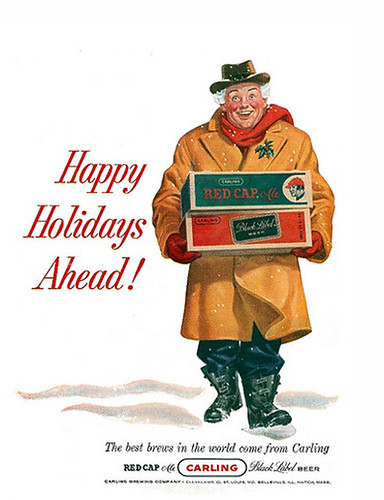
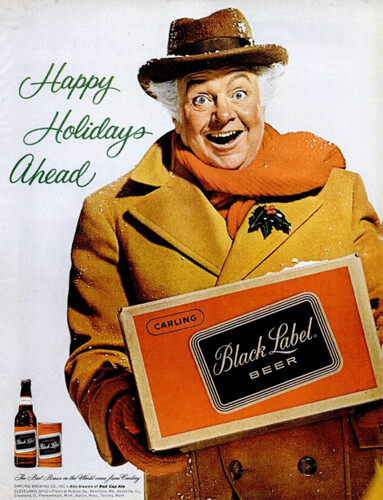
Wednesday’s holiday ads are for Carling, both their Black Label and Red Cap beers. Both of the ads are from the 1950s. They show the same jolly fellow carrying home a case or two of beer in the snow and promising they’ll provide “Happy Holidays Ahead!” Frankly, he already looks so happy I believe him.

Carling-RedCap-holidays

The second ad is for just Carling Black Label.

Carling-1950s-holidays

Filed Under: Art & Beer, Beers Tagged With: Advertising, Christmas, History, Holidays

Ancient Egypt, Math & Beer

December 8, 2010 By Jay Brooks

egyptian-dudes
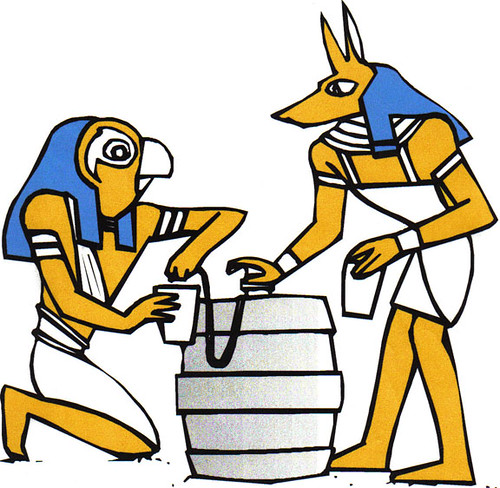
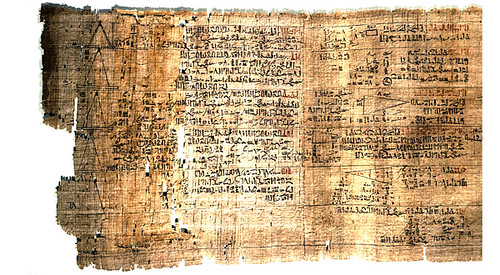
Thanks to Pete Slosberg — he of the formerly wicked persuasion — for passing this along. It’s not strictly about beer, so feel free to ignore it if math and history isn’t your cup of beer. Today’s New York Times Science has a fun article, Math Puzzles’ Oldest Ancestors Took Form on Egyptian Papyrus, about how the Rhind Mathematical Papyrus contains several clever math puzzles, including some thought to be more modern and also having to do with beer.

AN00569564_002.jpg

For example, some of the puzzles “involve a pefsu, a unit measuring the strength or weakness of beer or bread based on how much grain is used to make it,” such as this one:

One problem calculates whether it’s right to exchange 100 loaves of 20-pefsu bread for 10 jugs of 4-pefsu malt-date beer. After a series of steps, the papyrus proclaims, according to one translation: “Behold! The beer quantity is found to be correct.”

Fun stuff. I wonder what “pefsu” is compared to say a.b.v.?

Filed Under: Beers, Just For Fun, Related Pleasures Tagged With: barley, History, Math

Brickskeller To Close

December 8, 2010 By Jay Brooks

brickskeller
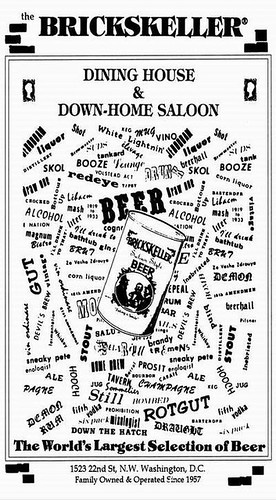
Rumors have been flying around for months, and now it looks like it’s just about official. The world-famous Brickskeller pub in Washington, D.C. on 22nd Street NW will be closing shortly.

brick-menu

Opened by Diane Alexander’s family in 1957, and operated for many years by her and her husband Dave Alexander, the building will apparently be renovated and turned into a boutique hotel. The Alexander’s will retain the rights to the name and most likely moved the Brick to another location. As far as I know, their other location, RFD, is unaffected by the deal and may at one point even transition into the new Brickskeller.

P1000010
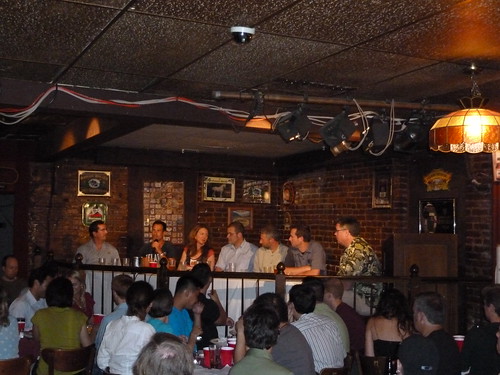
Bob Pease, COO of the Brewers Association (left), with Dave Alexander at a Brickskeller event this July.

The Washington City Paper blog Young & Hungry floated the rumor at least as far back as early October. Yesterday, the DC Beer blog tweeted that a “credible source [told them] that The Brickskeller will shut it’s doors for good on 12.18.” Young & Hungry picked it up from there and so has TBD Neighborhoods. And All About Beer publisher Daniel Bradford posted the news of a pending Brickskeller sale on his Facebook page. Between that, and my own unnamed sources, it looks like this is going to happen. I haven’t had a chance to talk to Dave Alexander yet, but I suspect that’s the next call. It will be sad to see the Brick gone. The last time I was there was July and it was great seeing the place packed for an event with several of the brewers attending SAVOR.

P1000003

Filed Under: News Tagged With: Business, D.C., Pubs, Rumors

Beer In Ads #259: Holidays Were Made For Michelob

December 7, 2010 By Jay Brooks

ad-billboard
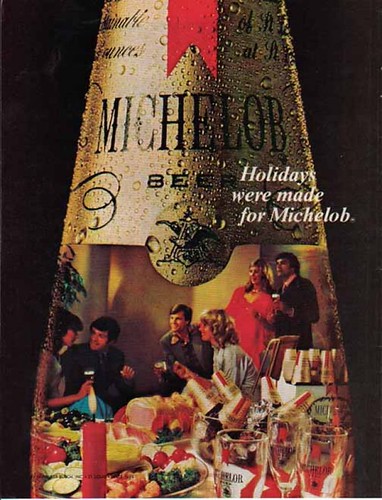
Tuesday’s holiday ad is for Michelob, from 1977, where “Holidays were made for Michelob.” Check out the disco outfits the party-goers are wearing and at least they show several Michelob logo glassware in the foreground. And notice the people are actually using glasses to drink their beer. That’s a rarity in older ads. Must be a holiday thing.

Michelob-1977-holidays

Filed Under: Art & Beer, Beers Tagged With: Advertising, Anheuser-Busch, History

Happy National Repeal Day: A Video

December 7, 2010 By Jay Brooks

nbwa
The NBWA (National Beer Wholesalers Association) posted a short video yesterday celebrating the 77th anniversary of the ratification of the 21st Amendment, ending Prohibition, which occurred December 6, 1933. It’s never too late to celebrate that. Enjoy.

Filed Under: Events, Just For Fun, News, Politics & Law Tagged With: Beer Distributors, History, Prohibitionists, Video

Heineken Redesigns Bottles, Reduces Number Of Sizes

December 7, 2010 By Jay Brooks

heineken
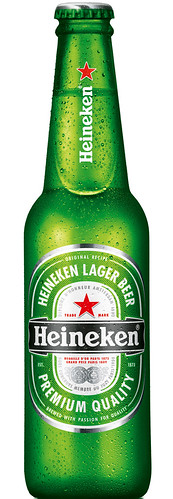
Heineken announced at the beginning of December that next year they’ll be launching redesigned bottles and cans along with a big reduction in the number of sizes they’ll be selling worldwide. The packaging redesign is cosmetic, but the package size reduction is more worrying.

According to the press release, “[t]he restyling aims to streamline the visual identity and make the brand even more consistent and recognizable in all 170 markets worldwide where Heineken can be enjoyed. The new bottle will come in five different volume sizes and will be available in Western Europe at the beginning of 2011 and across the rest of the world by 2012.”

While I realize that packaging, brand identity, etc. are very important, I still can’t help but laugh at some of the language and the way in which the new packaging design is framed. For example, check out this description:

The new bottle, replacing the XLN (extra long neck) and Heineken shortneck packaging, is introduced in two versions: embossed and standard. The new design features a unique curved embossment on the neck and back, which not only looks good, but also adds a pleasing to-the-touch feel, whilst a distinctive embossed mark acts as a stamp of quality and authenticity. Additionally, the new shape makes it look proud while enhancing the premium positioning of the bottle.

Yes, nothing says quality like a “pleasing to-the-touch feel” except perhaps the actual taste of the beer. How “proud” the new bottle looks. Huh? The “embossments,” made by using “strategically placed indents and tactile ink” somehow add “to the overall drinking experience.” Hilarious. Nothing makes me enjoy my beer more than having little raised spots on my bottle to hold on to. Of course, I always pour my beer into a glass, but I’m weird that way. No worries, a newly redesigned glass “features an embossed curve on the side, adding a pleasant feeling when held.” So they got us glass-drinkers covered, too. Whew.

But all this attention paid to their “revolutionary tactile ink” just cracks me up, and is indicative of why the big brewers are stagnating. They continue to focus on marketing and ignore what’s really important: how their beer tastes. Undoubtedly, marketing is going to keep them huge for a long time to come, but slowly it is having an effect. So this “revolutionary ink, created by a series of small raised dots on the surface of the can, gives the consumer a better feeling in the hand, enhanced grip and allows the brand to appear more refreshing and recognizable.” Nothing like an “enhanced grip” to make the beer “appear more refreshing.” I’m certainly interested in how that process works. How exactly does my grip on the beer bottle give the beer inside “the power to restore freshness, vitality, energy, etc.,” which is the definition of refreshing. That’s some pretty impressive osmosis.

Heineken_K2_Bottle_Embossed
The new “magic” embossed Heineken bottle.

But snarkiness aside, the real news is that Heineken will be reducing the number of package sizes they offer worldwide “from fifteen to five bottles sizes.” I understand any company’s reasons for reducing the number of items they sell, to a point at least. As they concede, it’s being done to achieve “greater efficiencies in the supply chain.” And it may not mean anything, but then again I can see at least one possible scenario that could play out. If Heineken cuts two-thirds of its package sizes, it’s not too hard to imagine the other international beer companies doing likewise. With the vast majority of glass manufacturer sales going to just a few companies, most likely they’d simply discontinue making the package sizes that Heineken and the others abandon. That would make those other ten bottles sizes unavailable for smaller breweries, too, or at least prohibitively expensive. Maybe that’s a stretch, but at a minimum I think it at least bears watching.

The changes will start early next year, first in Western Europe, and then the rest of the world over the balance of the year.

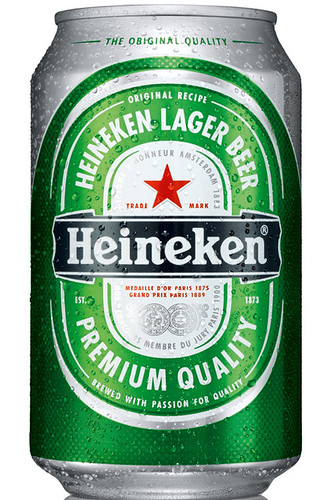
Heineken_Can_Tactile
The new can with “tactile ink.”

Filed Under: Breweries, News Tagged With: Big Brewers, Bottles, Business, Cans, Heineken, International, Packaging

Santa Beer Cozy

December 6, 2010 By Jay Brooks

santa-head
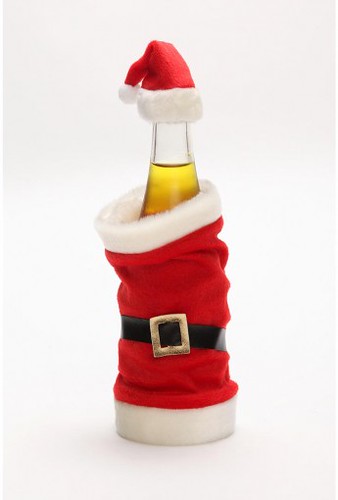
I don’t know how I missed this last year, but Urban Outfitters carried exclusively a two-piece Santa Claus beer cozy. They don’t have it this year, it’s sold out now. And all the blogs featuring, like at Nerd Approved, are from last year, too. So while I would never use a beer cozy, it is hilarious.
santa-beer-cozy

Filed Under: Just For Fun, Related Pleasures Tagged With: Christmas, Gifts, Holidays, Humor

Beer In Ads #258: Samichlaus Bound

December 6, 2010 By Jay Brooks

ad-billboard
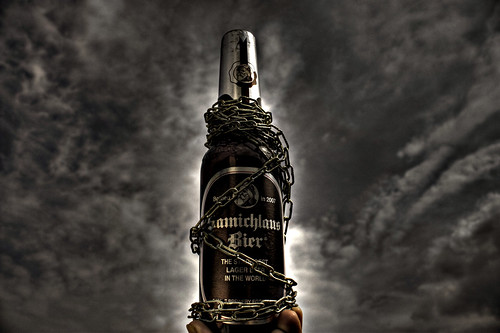
Monday’s holiday ad is for Samichlaus Bier, now brewed at Schloss Eggenberg in Austria each year on December 6 — today — because the beer’s namesake, Santa Claus, or at least St. Nicholas, has his feast day today.

samichlaus-2007-bound

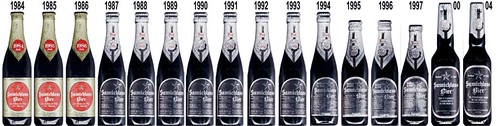
Below is an interesting graphic of the changes in Samichlaus bottles over the years from 1984 to 2004.

samichlaus-84-04

Filed Under: Art & Beer, Beers Tagged With: Advertising, Austria, Christmas, Holidays

« Previous Page
Next Page »

Find Something

Northern California Breweries

Please consider purchasing my latest book, California Breweries North, available from Amazon, or ask for it at your local bookstore.

Recent Comments

  • Bob Paolino on Beer Birthday: Grant Johnston
  • Gambrinus on Historic Beer Birthday: A.J. Houghton
  • Ernie Dewing on Historic Beer Birthday: Charles William Bergner 
  • Steve 'Pudgy' De Rose on Historic Beer Birthday: Jacob Schmidt
  • Jay Brooks on Beer Birthday: Bill Owens

Recent Posts

  • Beer In Ads #5227: It’s Here! Bock Beer By Bosch April 20, 2026
  • Beer Birthday: Drew Beechum April 20, 2026
  • Beer Birthday: Des De Moor April 20, 2026
  • Beer Birthday: Brenden Dobel April 20, 2026
  • Historic Beer Birthday: Henry Becker April 19, 2026

BBB Archives

Feedback

Head Quarter
This site is hosted and maintained by H25Q.dev. Any questions or comments for the webmaster can be directed here.