Brookston Beer Bulletin

Jay R. Brooks on Beer

  • Home
  • About
  • Editorial
  • Birthdays
  • Art & Beer

Socialize

  • Dribbble
  • Email
  • Facebook
  • Flickr
  • GitHub
  • Instagram
  • LinkedIn
  • Pinterest
  • RSS
  • Twitter
  • YouTube

Powered by Genesis

Intended Unintended Consequences

September 10, 2010 By Jay Brooks

keg-wooden
An alert Bulletin reader (thanks Sean O.) sent me a link to an article in the Bohemian alternative weekly, Liquor’s the Kicker: How a Tax Aimed at Alcopops is Harming Craft Brewers by Alistair Bland.

It’s the same story I told briefly in an earlier post, but in much greater detail. It’s about how the Marin Institute, and other anti-alcohol groups, went after Alcopops to get them re-classified as “distilled spirits” even though there’s no actual spirits in them and they’re the same strength as the average beer. The idea of getting them taxed at a higher rate was, according to Michele Simon, research and policy director of the Marin Institute, so manufacturers would be forced to “raise their retail prices and make them less appealing—or accessible, anyway—to children.” Of course, making them more expensive for adults is of no importance and neither was the fact that her claim that they’re “pretending to be beer” was hogwash. Nobody ever called them beer. Most retail chains, including when I worked at BevMo, created a new class of drinks to categorize them. We called them “Malt-Based Beverages” because that’s exactly what they were. Beverages that started like beer, brewed with malt, and then a flavor essence was added toward the end of the process to give them their specific individual flavor. The end product was the same a.b.v. as most beer, and so they were taxed accordingly. The difference is a lot. Beer is 20 cents per gallon while spirits are $3.30.

But the law failed utterly to do what was its stated purpose. “[B]rewers explain[ed] during public hearings that the new language would drag them under purview of the distilled spirit tax, [and] reps of the giant alcopop companies warned the board that they would alter their drink formulas and thereby dodge the tax if approved, according to California Small Brewers Association executive director Tom McCormick, who both gave and listened to testimony at a public meeting in Sacramento prior to the law’s passage.”

And that’s exactly what the Alcopop manufacturers did. “Records available on the Board of Equalization’s website show that 27 flavors of Mike’s Hard Lemonade, 16 flavors of Smirnoff flavored beverages and seven flavors of Bacardi alcopops are now made without distilled spirits.”

What did happen, was craft brewers who make barrel-aged beers now account for nearly all of the taxes collected due to this new law. “According to the Board of Equalization, $93,378.10 has come from taxation as distilled spirits of drinks that previously were taxed as beer, and brewers of bourbon- and brandy-barrel-aged beers have paid almost all of it.”

According to Tom McCormick, who runs the California Small Brewers Association, and who witnessed the new law from start to finish:

The entire process of enacting the distilled spirit tax—from its beginnings as a sincere petition from the Marin Institute to its current state of malfunction—has made a mockery of state policy making.

“It didn’t do anything to fix the [alcopop] problem,” he says. “It only ensnared craft brewers, and it has wasted taxpayer dollars in the process.”

The Marin Institute’s reaction? “‘In hindsight, someone obviously should have figured out better language to isolate these alcopops and leave beer out of it,’ [the Marin Institute’s] Simon says.”

The thing is hindsight was never needed. This was not a case of the consequences of this legislation being unknown or unintended. They were known to all relevant parties. There was ample opportunity to improve on the language of the bill at numerous stages of the process from the bill’s introduction to its being signed into law. But nothing ever was changed. Everybody knew what would happen and that’s exactly what’s come to pass. There were no surprises. That’s what happens when unintended consequences are really intended ones.

Filed Under: Beers, Breweries, Editorial, Politics & Law Tagged With: Prohibitionists

The Politics Of Deception

September 10, 2010 By Jay Brooks

grocery-cart
I was going to stay away from commenting on a new bill in California, AB 1060, really I was. Something about it bothered me from the start, the problem it seeks to fix never seemed credible, but it seemed inevitable that it would pass anyway. It was actually introduced in February of 2009 and has been winding its way through the state legislature ever since. It was recently passed and is on its way to the Governator’s office for signature or veto.

What AB 1060 does it make it illegal for stores, primarily grocery stores, to sell alcohol using the new self-serve checkout machines that are popping up all over the place. The argument is that underage kids can get around the roadblocks in the system set up to keep underage people from being able to — gasp — purchase alcohol. The bill also tackles the made-up problems of intoxicating people buying booze and theft, though it’s not the theft of the alcohol that worries the state, but the theft of the tax revenue lost in the theft.

The bill was spun so that it’s all about “Alcohol & Teen Drinking Prevention,” as is made clear by the Yes on AB 1060 website. They write:

AB 1060 only requires that customers walk over a few feet to a checkout line with a cashier who can check ID. It’s not too much to ask to protect our youth and our communities.

It is only a matter of time that our youth will exploit a vulnerable system to purchase alcohol without showing ID. We must take action to stop it now.

As they state, “[i]t’s not too much to ask to protect our youth and our communities.” And no, perhaps it’s not, but it is just one more way in which the roughly 80% of the population who is above 21 is inconvenienced yet again in our out-of-proportion drive to “protect” the young’uns. And that’s why I initially just let it go, because I’d sound like even more of a jackass than I usually do if I got worked up about not being able to more quickly check out of the grocery store every time I wanted to buy beer.

One funny thing I can’t help but note is how our nation’s youth is portrayed as being at once naive and in great need of being protected and, of course, not be able to responsibly drink alcohol but yet at the same time they say it’s “only a matter of time [before] our youth will exploit a vulnerable system to purchase alcohol without showing ID.” Wow, we must have a pretty savvy and well-organized generation of kids who can take down the best computer minds who created — you have to admit — the pretty amazing self-checkout machine.

Anyway, what’s changed my mind is that MADD, Join Together and the Marin Institute are all supporting the bill and urging Governor Terminator to sign it into law.

Except, as an aside, I have to mention that the Marin Institute is supposedly a “watchdog.” What are they doing weighing in on this? Their “mission” is “to protect the public from the impact of the alcohol industry’s negative practices.” This has absolutely nothing to do with the alcohol industry, this is about grocery stores and youth access to alcohol (supposedly, anyway). Making it harder for everyone to buy alcohol draped in the protective mantle of “it’s for the kids” is the domain of the neo-prohibitionists, something they assure me they’re not.

But when you look deeper, you find that this bill may not really be about the kids at all, and instead may be about money and unions. The support of the neo-prohibitionists was either a calculated ploy on the part of the bill’s sponsors or a very happy accident. State Senator Tom Harmon, from the 35th District (Orange County coastline) has a very different story to tell. Last month, he wrote AB 1060 is a Solution in Search of a Problem, which is below here in its entirety. It made no difference, of course, in the final vote, because a good story, especially one that’s about protecting the kiddies, beats the truth every time.

When something looks too good to be true, a smart person starts wondering what’s behind it. In the case of Assembly Bill 1060, you don’t have to look very far. Presented as a feel-good law to protect kids, this bill is really about protecting union jobs.

AB 1060 purports to solve a number of “problems.” Minors sneaking alcohol through self-service checkouts, drunken shoppers buying more booze, and the state missing out on its share of sales taxes because self-check out technology facilitates stealing. None of these arguments makes much sense.

The bill theorizes that kids could buy alcohol beverages at self-serve check aisles. In fact, there is already a lock-out mechanism at such stands preventing anyone from buying alcohol without a clerk present to sign off on their age. Next?

Protecting inebriated shoppers from themselves is a real howler. Anybody who’s ever used one of those self-serve check-out stands knows it’s difficult enough for a sober person.

Finally, the bill’s author worries that the state will lose sales tax money if more booze is boosted. Is this about money or about protecting customers? If this were a problem, would stores — who have more to lose than the state if their merchandise is stolen — have instituted self check-out in the first place? Obviously not.

AB 1060 would deny a liquor license to any store “using a point-of-sale system with limited or no assistance from an employee of the licensee.” Read that again. It means a store that sells alcohol beverages could not have any self-serve check stands.

The bill’s true target is Fresh and Easy, a new supermarket chain that features all-self-service check stands. Fresh and Easy supermarkets are designed to provide affordable food choices by holding down costs through automation and energy efficiency. They’re finding a niche in low-income, underserved neighborhoods. Their workers are non-union.

AB 1060 mandates greater employee supervision of self-service check stands, increasingly used in major supermarkets. And it would limit supermarkets’ low-cost, self-service technology.

Instead of helping constituents find accessible, affordable food, this bill by Assemblyman Hector De La Torre will raise food prices for all shoppers in order to protect supermarket unions. It has nothing to do with protecting youngsters, drunks or taxpayers.

But none of that matters to the neo-prohibitionists. They care about restricting access to alcohol for everybody.

Filed Under: Beers, Editorial, News, Politics & Law Tagged With: California, Law, Prohibitionists

Beer In Ads #191: Birra Italia Milano

September 9, 2010 By Jay Brooks

ad-billboard
Thursday’s ad is a beautiful one for an Birra Italia, a Milan brewery. It’s from 1906 and was created by the German artist Adolfo Hohenstein, who was well-known for his Opera posters. Oddly enough, he’s “considered the father of Italian poster art and an exponent of the Stile Liberty, the Italian Art Nouveau.”

birra-italia

Filed Under: Art & Beer, Beers Tagged With: Advertising, History, Italy

A Conversation With Fritz Maytag

September 9, 2010 By Jay Brooks

anchor-steam
Reason TV, the video arm of Reason magazine (who’ve I’ve written for), was created through a grant from Drew Carey. They’ve done a number of short online videos on a variety of subjects, and have their own YouTube channel. They even did one based on, or perhaps inspired by, the article I did for them a few years ago, entitled Beer: An American Revolution. More recently, they did an interesting 10-minute interview with Fritz Maytag, the godfather of the craft beer movement in America. If you’ve heard Maytag speak before or have been around him any length of time, there’s nothing new in the interview, but with him moving into the role of Emeritus as new owners take over the day-to-day operations, it’s great to have a video record of some of Fritz’s stories.

Filed Under: Breweries, Just For Fun Tagged With: California, History, San Francisco, Video

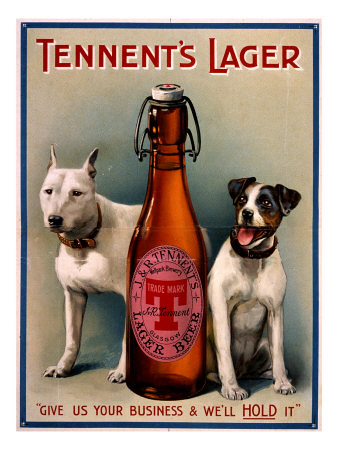
Beer In Ads #190: Tennent’s We’ll Hold It

September 8, 2010 By Jay Brooks

ad-billboard
Wednesday’s ad is for the Scottish lager Tennent’s. Given the bottle, I’m guessing this is an old ad, maybe late 19th century. With the two dogs, the tagline “Give us your business & we’ll hold it” is pretty funny.

the-national-archives-tennents-lager

Filed Under: Art & Beer, Beers Tagged With: Advertising, History, Scotland, UK

Trash Talking Prop 26

September 8, 2010 By Jay Brooks

yes-on-26
This is a great example of what I hate about anti-alcohol organizations and the Marin Institute in particular. Given that they’re trying to impose a new tax on alcohol in San Francisco using a mechanism that came about through case law (the Sinclair decision) where calling what would otherwise be a tax a “fee” allows them to circumvent the normal two-thirds vote needed for a new tax, it’s no surprise that they’re against one of the propositions on the November ballot — namely Prop 26. That’s because Prop 26 seeks to do away with the Sinclair loophole where taxes masquerading as a fee will no longer require a simple majority, but will instead need two-thirds to pass, just like every other tax. That would be a big blow to their efforts to get more taxes imposed in other communities in California. So it’s entirely natural that they’d oppose it. I’d have been surprised to hear any other scenario.

But here’s what I didn’t, but perhaps should have, expected: the low down dirty politics and propaganda by which their opposition has taken shape. In an e-mail blast today, the Marin Institute is blaming “big alcohol” for the proposition and acting as if it’s happening in a vacuum, with no responsibility on their part. It’s shameless spin and as ugly a piece of propaganda as I’ve seen. If I’d had a beer in mouth when I was reading it, I most likely would have spit it out in surprise on more than one occasion.

First of all, they characterize the proposition as one which would “essentially absolve companies that pollute, or otherwise cause harm to the public, from paying for that harm by subjecting fees to the same impossible two-thirds vote that taxes must garner to be enacted.” Horseshit. What the proposition does is subject all taxes to the same standard, in effect closing the loophole that Sinclair opened. Calling them “fees” to get around the 2/3 standard was simply a way to circumvent the state tax law.

A stated by the Yes on 26 advocates:

State and local politicians have been using a loophole in the law to raise taxes by disguising them as “fees” — costing consumers billions of dollars in higher costs for goods like food, gas, and cell phones. Prop. 26 requires politicians to meet the same Constitutional requirement to pass these Hidden Taxes as to pass other taxes — with a two-thirds vote of the Legislature at the state level, and with a vote of the people at the local level.

Next the Marin Institutes note “a review of the Yes on Prop 26 website shows Big Alcohol’s fingerprints all over the measure.” By “all over,” of course, they mean are supporting it and/or have donated money to support it. They go on to add that “August saw an infusion of $800,000 to the Prop 26 campaign by the Small Business Action Committee (SBA). According to an article in Capitol Weekly, the SBA “revealed that it received more than $1 million from alcohol, tobacco and real estate groups. Altria, the parent company of Philip Morris USA, donated $500,000. Anheuser-Busch, which brews Budweiser, gave $200,000 and the Wine Institute chipped in another $50,000.”

Hmm, in August there was infusion of donations to support Prop 26? What might have triggered that? What is the Marin Institute not telling you? July and August is when every company who makes alcohol, distributes alcohol and sells and serves alcohol realized they were under attack by the Marin Institute, who was pushing Avalos and supplying him him with all the resources for the test case to add a new tax to alcohol in San Francisco. That’s when most us even became aware of Prop 26. Before that, I’d wager, hardly anyone in the alcohol industry had paid it much attention. When you’re being attacked, you tend to defend yourself.

But the Marin Institute also makes it sound as if “Big Alcohol” and “Big Oil” are behind Prop 26. They’re not. The proposition was sponsored by the California Chamber of Commerce and the California Taxpayers’ Association, not exactly radical organizations out to cheat the public the way the Marin Institute spins it. While the Marin Institute focuses on beer and wine companies, there are over 100 organizations who support the proposition, including nearly sixty chambers of commerce and tax organizations. The rest are primarily trade organizations from a wide range of businesses and industries. That alcohol companies seem over-represented is a direct result of the actions of the Marin Institute. So having caused this situation, using it in propaganda against the proposition without acknowledging it seems pretty shiftless to me.

But it’s their conclusion that has me sighing in exhausted frustration. “Instead of spending all that money to get out of paying for the harm its products cause, perhaps Big Alcohol could instead just pay its fair share to offset massive societal costs.” I’m so tired of this mantra of theirs. First of all, the harm isn’t caused by the products — alcohol — but by individual abusers, people who should take responsibility for their actions. And the vast majority of drinkers do not abuse it. Second, every good or service sold in the world has the potential to cost society something, and most in fact do. But the idea that only alcohol has to “pay” the costs that abusers cost society is maddening. Guns, red meat, high fructose corn syrup, oil, cars, fast food, and every freaking other thing gets a pass; economists even have a word for it — externalities. But the insistence that alcohol has to pay for the bad decisions by individual abusers just rankles, especially when that’s characterized as its “fair share.” Either everything — every company, every product, etc. — pays the individual costs to society that can somehow be ascribed to them or no one does. There’s nothing fair about making one pay while everyone else gets a pass.

Filed Under: Editorial, News, Politics & Law Tagged With: California, Prohibitionists

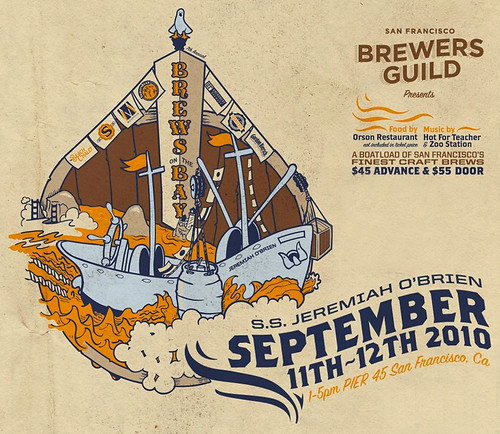
Brews On The Bay This Weekend

September 8, 2010 By Jay Brooks

sf-brewers-guild
This weekend, September 11 & 12, the 7th annual Brews on the Bay beer festival will take place aboard the S.S. Jeremiah O’Brien anchored off Fisherman’s Wharf in San Francisco. It’s put on by the San Francisco Brewers Guild. Tickets are $45 in advance, and may be purchased online. At the door, tickets are $55. See you there.

brewsonbay10

Filed Under: Beers, Breweries, Events Tagged With: Announcements, Beer Festivals, California, San Francisco

Drinking Less, Hurting More

September 8, 2010 By Jay Brooks

up-and-down
British beer writer Phil Mellows, who also specializes in alcohol policy, had an interesting observation in a recent post, Alcohol Consumption Down, Alcohol Harm Up. In his native England, as is happening here, overall alcohol consumption has been on a slow but steady decline for a number of years. The problems associated with alcohol abuse, however, have not. Yet the policies here and there are based on the anti-alcohol organizations and “the medical profession who say that to reduce alcohol harm we have to reduce overall consumption, [which is] the logic behind raising the price of alcohol and restricting its availability.” That’s also one of the reasons that these same people keep trying to impose more and more taxes on alcohol. Yet it’s not working. It’s never worked. Phil concludes by trying to make sense of it.

Rather than trying to get the whole population to drink less (which they are, in any case, already doing), alcohol policy should be focused on the growing minority of people, more stressed even than [the prime minister], who are quietly drinking themselves to death out of despair.

And that’s been the problem with alcohol policy here, too. They keep trying to punish the industry and the majority of people who drink it responsibly in order to stop the problem drinkers. It doesn’t work. It’s never worked. It ignores the underlying causes of alcohol abuse. The people who don’t abuse it and in fact enjoy it in moderation — which is a healthy choice — are the ones who pay the price. It’s frustrating. It’s ineffective. It ignores the real problems and punishes the innocent, not to mention it may damage one of the few healthy industries in the economy. But it keeps on happening. Someone has to say enough. I’m happy to start. Enough, already.

Filed Under: Beers, Editorial, Politics & Law Tagged With: Prohibitionists, UK

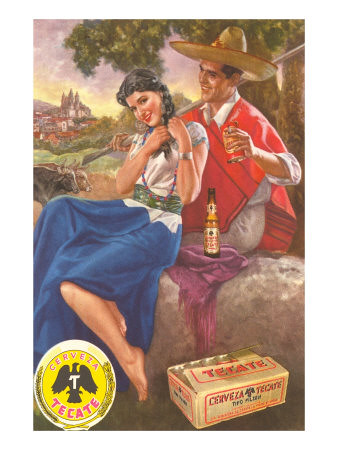
Beer In Ads #189: Cerveza Tecate

September 7, 2010 By Jay Brooks

ad-billboard
Tuesday’s ad is for the Mexican beer Tecate, brewed by Cuauhtémoc Moctezuma Brewery. The brewery was founded in 1890. I have no idea when the ad is from, though it has a look of the 1950s or early 60s. Norman Rockwell south of the border.

advertisement-for-tecate-beer

Filed Under: Art & Beer, Beers Tagged With: Advertising, History, Mexico

Next Session Scares Up Frankenstein Beers

September 7, 2010 By Jay Brooks

session-the
Our 44th Session will be hosted by Ashley Routson a.k.a. The Beer Wench. In honor of Halloween month, she’s chosen “Frankenstein Beers” as her topic, which Ashley likens to Frankenstein’s monster, a creation that was “constructed of human parts and various other inanimate objects,” defying nature’s laws and ultimately “unlike anything the world had ever seen before.” She continues.

Many craft brewers are like Frankenstein. They have become mad scientists obsessed with defying the laws of brewing and creating beers that transcend style guidelines. These “Frankenstein Beers” challenge the way people perceive beer. They are freaks of nature — big, bold and intense. The ingredients resemble those of a beer and the brewing process might appear to be normal, but some aspects of the entire experience are experimental, unorthodox and insane.

An altercation with these beers produces confusion in the eye of the taster … is it a beer, or a monster?

“I do know that for the sympathy of one living being, I would make peace with all. I have love in me the likes of which you can scarcely imagine and rage the likes of which you would not believe. If I cannot satisfy the one, I will indulge the other.” — The Monster.

Your mission, should you choose to accept it, is to write a blog post on “Frankenstein Beers.” There are no rules about how to write about this topic — feel free to highlight a Frankenstien brewer, brewery, beer tasting notes … or just your opinions on the concept.

So don’t be afraid, pull out the surgical tools and make a trip to the cemetery (or bar) for parts — just don’t grab the jar marked — “abnormal” — for your own post for the next Session, on Friday, October 1.

Filed Under: Beers, The Session Tagged With: Announcements, Holidays

« Previous Page
Next Page »

Find Something

Northern California Breweries

Please consider purchasing my latest book, California Breweries North, available from Amazon, or ask for it at your local bookstore.

Recent Comments

  • Bob Paolino on Beer Birthday: Grant Johnston
  • Gambrinus on Historic Beer Birthday: A.J. Houghton
  • Ernie Dewing on Historic Beer Birthday: Charles William Bergner 
  • Steve 'Pudgy' De Rose on Historic Beer Birthday: Jacob Schmidt
  • Jay Brooks on Beer Birthday: Bill Owens

Recent Posts

  • Beer In Ads #5219: Good Old Point Special Bock Beer April 12, 2026
  • Beer In Ads #5218: The “Butter-In” Of The Season April 12, 2026
  • Beer In Ads #5217: The King Of All Beers April 11, 2026
  • Historic Beer Birthday: Gambrinus April 11, 2026
  • Beer In Ads #5216: The Finest Bock, As Usual April 11, 2026

BBB Archives

Feedback

Head Quarter
This site is hosted and maintained by H25Q.dev. Any questions or comments for the webmaster can be directed here.